Physical Address
304 North Cardinal St.
Dorchester Center, MA 02124
Physical Address
304 North Cardinal St.
Dorchester Center, MA 02124

Your body faces an invisible battle every single day. While you go about your morning routine, commute to work, or enjoy a meal, countless invaders try to breach your defenses. Bacteria, viruses, and toxins lurk in the air you breathe and the food you eat, constantly seeking entry into your system.
But you rarely get sick. Why? Because a silent guardian works around the clock at your body’s front lines. This guardian is immunoglobulin A (IgA), the most abundant antibody protecting your mucous membranes. Recent research from Yale Medicine published in December 2025 revealed that IgA forms a sophisticated backup defense system in the gut that continuously adapts to neutralize threats.
In this guide, I will explain what makes IgA unique among antibodies, how its structure enables powerful protection, and why maintaining healthy IgA levels matters for your overall wellness. Whether you are curious about immune health, preparing for medical studies, or simply want to understand your body’s incredible defense systems, this comprehensive overview will give you clear answers.
| Properties | Functions |
|---|---|
| Secretory Component | Protect mucosal surfaces |
| Hinge Region | Enables flexibility in combining antigens |
| J-chain | Facilitates polymerization and secretion across epithelium |
| Epitope Specificity | Recognizes and binds to specific antigens |
| Resistant to proteases | Withstands enzymatic degradation in harsh environments |
Immunoglobulin A (IgA) serves as the primary antibody defending your mucosal surfaces. These surfaces line your respiratory tract, digestive system, and other areas exposed to the external environment. The antibody neutralizes pathogens directly and blocks their entry into your bloodstream, acting as both a shield and a weapon.

IgA exists in two distinct subclasses: IgA1 and IgA2. IgA1 dominates in mucosal surfaces and serum, while IgA2 concentrates primarily in the colon and external secretions. You will also find this antibody in saliva, tears, and breast milk, where it provides critical immune protection to newborns during early development. When IgA levels drop below normal ranges, susceptibility to infections increases significantly, and connections to autoimmune disorders often emerge.
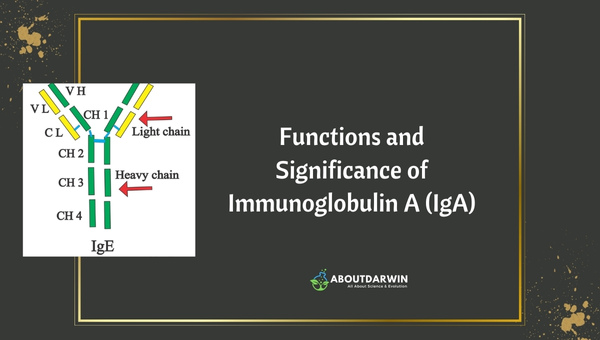
The molecular architecture of IgA reveals fascinating adaptations that enable its protective functions:
These structural features set the foundation for understanding how IgA operates differently from other immunoglobulins in your system.
Several distinctive characteristics enable IgA to perform its specialized role:
These properties explain why IgA handles mucosal defense so effectively compared to other antibody types. Its design perfectly suits the demanding environment of your body’s exposed surfaces.
Also Read: Exploring Differences: Gram Positive vs Gram Negative Bacteria
Immunoglobulin A divides into two distinct subclasses in humans: IgA1 and IgA2. Each subclass exhibits unique structural characteristics, distribution patterns, and functional specializations. Understanding these differences helps explain how IgA adapts to different anatomical locations and pathogen types.
| Feature | IgA1 | IgA2 |
|---|---|---|
| Prevalence | 80-90% in serum | 10-20% in serum |
| Hinge Region | Longer, more susceptible to cleavage | Shorter, more resistant to cleavage |
| Primary Function | Effective against protein antigens | Effective against polysaccharide antigens |
| Distribution | Predominantly in serum | Higher concentrations in secretions |
Both subclasses work together to maintain comprehensive immune defense at mucosal surfaces. Each subclass responds effectively to different pathogen types, creating a layered protection system that addresses diverse threats.
IgA serves as the cornerstone of mucosal immunity, protecting the vast surface area of your body’s exposed membranes. These surfaces cover approximately 400 square meters in an adult human, presenting a massive frontier that requires constant surveillance and defense.
As the most abundant immunoglobulin in mucosal secretions, IgA performs multiple critical functions that extend beyond simple pathogen neutralization. Recent studies published in Frontiers in Immunology during 2024 confirmed its pivotal role in maintaining gut barrier integrity and preventing inflammatory conditions.
The production of IgA proves vital for maintaining health, particularly in individuals with compromised immune systems. Conditions like selective IgA deficiency affect approximately 1 in 500 people of European ancestry, leading to increased susceptibility to respiratory and gastrointestinal infections.
Furthermore, specific IgA antibodies serve as biomarkers for various diseases including autoimmune disorders. IgA nephropathy, the most common glomerulonephritis worldwide, occurs when IgA deposits accumulate in the kidneys. Monitoring immunoglobulin A levels through blood tests provides valuable diagnostic information for clinicians assessing immune function.
IgA contributes significantly to both health maintenance and disease management through its unique structural properties and versatile functions. Its ability to operate quietly without triggering inflammation makes it particularly valuable for protecting sensitive mucosal tissues.
Also Read: Exploring TCBS Agar: Composition, Uses and Preparation
IgA performs several interconnected roles that strengthen your overall immune defense:
These functions demonstrate how IgA operates as an unsung hero within your immune system. Its contributions extend beyond fighting foreign invaders to actively maintaining health and supporting the delicate balance of your internal ecosystem.
Also Read: Isostatic Rebound: Uncovering Post-glacial Rebound Process
Healthcare providers routinely measure immunoglobulin A levels through blood tests to assess immune function. The normal range for serum IgA typically falls between 70-400 milligrams per deciliter, though reference ranges may vary slightly between laboratories.
Low IgA levels may indicate selective IgA deficiency, the most common primary immunodeficiency. Individuals with this condition often experience recurrent sinus infections, bronchitis, gastrointestinal infections, and allergic reactions. However, many people with IgA deficiency remain completely asymptomatic and require no treatment.
Elevated IgA levels can signal several conditions including chronic infections, liver disease, autoimmune disorders such as rheumatoid arthritis, or multiple myeloma. Your physician will interpret results alongside other clinical findings to determine appropriate next steps.
Abnormal IgA levels result from multiple factors. Genetic predisposition plays a significant role, as selective IgA deficiency often runs in families. Chronic illnesses such as kidney disease, liver cirrhosis, or gastrointestinal disorders affect production and metabolism. Autoimmune diseases including lupus and rheumatoid arthritis frequently alter immunoglobulin levels. Certain medications like immunosuppressants, corticosteroids, and anticonvulsants can reduce IgA production. Additionally, acute infections and stress may cause temporary fluctuations in measured levels. Your healthcare provider will evaluate these factors alongside your complete medical history when assessing test results.
Yes, individuals can live with IgA deficiency. Selective IgA deficiency affects approximately 1 in 500 people of European descent, making it the most common primary immunodeficiency. Many people with this condition experience no symptoms and lead completely normal lives. Others may face increased susceptibility to respiratory infections, gastrointestinal infections, or allergic conditions. Management typically involves treating infections promptly and maintaining good overall health. Most individuals with IgA deficiency have normal life expectancy. However, they should wear medical alert identification because blood transfusions containing IgA can trigger adverse reactions in severely deficient individuals.
Several lifestyle factors support healthy IgA production. Regular moderate exercise has been shown to enhance immune function and potentially increase secretory IgA levels in saliva. A balanced diet rich in fruits, vegetables, lean proteins, and whole grains provides essential nutrients for antibody production. Zinc, vitamin A, and vitamin D particularly support immune health. Adequate sleep (7-9 hours nightly) allows your immune system to regenerate and function optimally. Stress management through meditation, yoga, or other relaxation techniques helps because chronic stress suppresses immune function. Probiotic consumption may support gut health and mucosal immunity. However, individuals with diagnosed deficiencies should work with healthcare providers rather than relying solely on lifestyle modifications.
Yes, elevated IgA levels can indicate underlying health concerns requiring medical attention. Persistently high IgA may signal liver cirrhosis, chronic hepatitis, or other hepatic conditions. Autoimmune diseases including rheumatoid arthritis, systemic lupus erythematosus, and celiac disease frequently elevate immunoglobulin levels. Multiple myeloma, a cancer of plasma cells, produces monoclonal IgA and causes significant elevation. Chronic infections and inflammatory conditions also increase production. IgA nephropathy occurs when excess IgA deposits in kidney glomeruli, potentially leading to kidney dysfunction. If your blood tests show elevated IgA, your physician will conduct additional investigations to identify the underlying cause and develop an appropriate treatment plan.
Also Read: Post-Earthquake Guide: Safeguard Against Infectious Diseases
Immunoglobulin A represents one of the most remarkable components of your immune defense system. Throughout this guide, we have explored its unique Y-shaped structure, the distinct roles of IgA1 and IgA2 subclasses, and the five critical functions that protect your mucosal surfaces daily. The antibody’s ability to neutralize threats without triggering inflammation makes it perfectly suited for defending sensitive tissues in your respiratory and digestive tracts.
Recent scientific advances continue revealing new dimensions of IgA function. The December 2025 discovery of its backup defense mechanism in the gut demonstrates how much we still have to learn about this antibody. Whether you are a student studying biochemistry, a healthcare professional seeking reference material, or simply someone curious about your body’s inner workings, understanding IgA provides valuable insight into human health and immunity.
Take a moment to appreciate the silent work happening within your body right now. While you read these words, billions of IgA molecules stand guard at your mucosal surfaces, intercepting invaders and maintaining the delicate balance that keeps you healthy. This invisible army requires no conscious direction from you, yet it operates with precision and dedication every moment of every day. The next time you encounter terms like “mucosal immunity” or “secretory IgA” in medical discussions, you will understand exactly why this antibody deserves recognition as a cornerstone of human health.