Physical Address
304 North Cardinal St.
Dorchester Center, MA 02124
Physical Address
304 North Cardinal St.
Dorchester Center, MA 02124

British genealogy research has experienced a remarkable transformation over the past two decades. What once required countless hours browsing dusty archive boxes now sits at your fingertips through sophisticated online platforms. Whether you are just beginning to explore your family history or have been tracing ancestral lines for years, the internet offers unprecedented access to birth, marriage, and death records, census data spanning centuries, and parish registers that document the lives of ordinary people going back to the 1500s. The United Kingdom maintains one of the most comprehensive civil registration systems in the world, beginning with statutory births and deaths in 1837 and marriages shortly after, making British ancestry particularly well-documented compared to many other countries.
This guide explores the top UK genealogy websites for tracing ancestral lines, examining both free and subscription-based options that cater to different research needs and budgets. You will discover which platforms excel at particular record types, understand the true cost of genealogy subscriptions, and learn how to maximize your research efficiency whether you are investigating English, Scottish, Welsh, or Irish heritage. The journey into your past begins with choosing the right tools, and this article provides the comprehensive comparison you need to start that exploration with confidence.
Selecting the appropriate genealogy platform can significantly impact the depth and efficiency of your family history research. Each website offers distinct advantages, record collections, and pricing structures that appeal to different levels of experience and specific research goals.
The scope of historical records varies considerably across genealogy platforms. Ancestry.com hosts billions of records spanning global archives, while Findmypast specializes in British and Irish material with particularly strong newspaper collections. FamilySearch offers free access to an extensive international database supported by the Church of Jesus Christ of Latter-day Saints, making it invaluable for researchers working with limited budgets. Understanding which platform holds the records most relevant to your ancestral regions can save months of frustrating searching.
Genealogy websites typically operate under freemium or subscription-only models. Completely free platforms like FamilySearch and FreeUKGenealogy provide access to indexed records and community-contributed transcriptions without charge. Subscription services such as Ancestry and Findmypast require monthly or annual payments but offer access to proprietary record collections, advanced search algorithms, and additional features like family tree building tools. Many researchers use a combination approach, beginning with free platforms for initial searches before subscribing to paid services for targeted record retrieval.
Several major genealogy platforms now incorporate DNA testing as part of their service offerings. These genetic genealogy tests can reveal ethnic origin estimates, connect you with living relatives who share DNA segments, and break through genealogical brick walls where traditional records fail. However, DNA testing services vary significantly in their reference databases, testing methodologies, and the depth of information provided. Understanding these differences helps you select the most appropriate service for your research goals.
No single genealogy website covers all UK records equally. Some platforms hold extensive collections for England and Wales but have limited Scottish material, while others excel at Irish genealogy but lack certain English record types. Scotland’s People, for example, provides the most comprehensive access to Scottish records but operates independently from the major international platforms. Knowing each website’s regional strengths allows you to allocate your subscription budget more effectively and access the records most relevant to your ancestry.
The five platforms detailed below represent the most valuable resources for anyone researching British family history. Each offers unique strengths that cater to different research requirements, from free access to parish registers through to subscription-based access to exclusive archival collections.
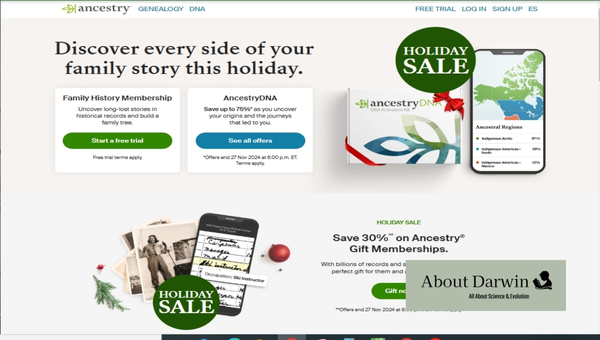
Ancestry.com stands as the largest genealogy platform globally, offering access to billions of historical records from dozens of countries. For UK researchers specifically, Ancestry provides extensive coverage of census records from 1841 through 1911, civil registration indexes for births, marriages, and deaths from 1837 onward, and military records including WWI and WWII service records. The platform’s strength lies in its intuitive family tree builder, which automatically suggests potential matches through its hint system, making it particularly accessible for beginners who are just starting to piece together their lineage.
The platform operates on a subscription model with several tiers designed to accommodate different research needs. Ancestry offers quarterly and annual subscription plans with varying levels of access to record collections. Many researchers find that the international record collections become valuable once they trace ancestry back several generations and discover immigration patterns leading to North America or Australia.
Ancestry provides multiple subscription levels for UK researchers. The core UK subscription typically starts around £10.99 per month for basic access, with premium tiers offering expanded record collections and enhanced research tools. Annual subscriptions provide substantial savings compared to monthly payments, often reducing the effective monthly cost by 30-40 percent. Free accounts allow limited access to the platform and family tree creation, though full record access requires an active subscription. Library access through participating public libraries offers free usage within library premises, a valuable option for researchers on tight budgets.
AncestryDNA uses autosomal DNA testing to estimate ethnic origins and connect users with genetic relatives across its extensive database of millions tested individuals. Results typically include ethnicity estimates broken down by region, with particularly strong coverage for British and Irish ancestry. The service can identify thousands of DNA matches, though the depth of genealogical information provided depends on whether those matches have uploaded family trees to the platform. For those seeking to understand their British heritage through genetics, AncestryDNA provides a comprehensive starting point with one of the largest reference databases available.
For a detailed comparison between Ancestry and other major platforms, see our MyHeritage vs Ancestry comparison which examines features, pricing, and record coverage across these genealogy giants.

Findmypast holds a distinguished position in British genealogy as a UK-based platform with deep roots in British and Irish record collections. The service distinguishes itself through partnerships with major archival institutions, including the British Newspaper Archive, which provides access to historical newspaper articles that can reveal the stories behind ancestors documented only through dry genealogical facts. Parish registers, military records, and the 1921 Census of England and Wales (the most detailed census ever taken) represent exclusive content available nowhere else online.
Findmypast excels particularly in newspaper research, a dimension of genealogy that brings ancestors to life through articles about local events, court proceedings, business announcements, and social news. Finding a great-grandfather mentioned in a local newspaper providing details about his occupation or community involvement transforms genealogical data points into real people with documented histories. The platform also offers particularly strong coverage of burial records and cemetery transcriptions, valuable for researchers whose ancestors lived in urban areas where churchyard space was limited.
Findmypast operates on a subscription model with multiple access tiers. Monthly subscriptions typically begin around £9.99 per month for basic access, with premium subscriptions offering expanded record visibility and advanced search features. Annual plans provide significant discounts, reducing the effective monthly cost considerably. The platform also offers pay-as-you-go options for specific record collections, allowing researchers to purchase access to particular documents without committing to full subscriptions. Library access through participating institutions provides free in-library access to full platform features.
The partnership between Findmypast and the British Newspaper Archive provides access to millions of historical newspaper pages dating from the 1700s through the 2000s. This collection proves invaluable for confirming dates of death (newspapers often published death announcements before civil registration became mandatory), understanding family business operations, and discovering social connections that do not appear in formal genealogical records. Many researchers consider this newspaper archive access worth the subscription cost alone, particularly for tracing ancestors in the 19th century when newspapers served as primary community information sources.
For an in-depth analysis of Findmypast features and current pricing, read our comprehensive FindMyPast review which covers subscription options and research strategies.
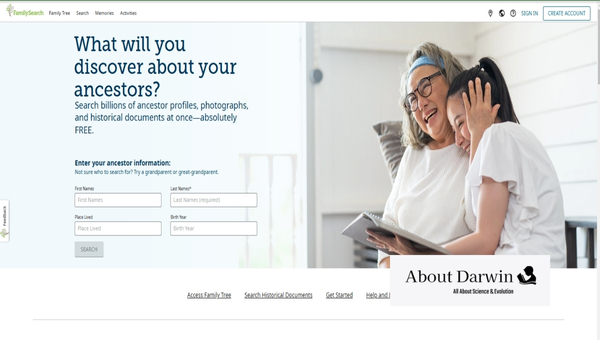
FamilySearch represents the most significant free genealogy resource available to researchers worldwide. Operated by the Church of Jesus Christ of Latter-day Saints, the platform provides free access to billions of historical records contributed and indexed by a global network of volunteers. For UK researchers specifically, FamilySearch offers extensive parish register collections, civil registration indexes, and census records that can be accessed completely without charge. The platform serves as an essential starting point for genealogists who want to explore their ancestry before committing to paid subscriptions.
FamilySearch operates differently from commercial genealogy platforms in that it relies heavily on volunteer indexing efforts to make historical records searchable. While this means some collections may be less complete or contain indexing errors compared to commercially curated databases, the sheer volume of accessible material makes it invaluable. The platform also maintains extensive international collections, proving particularly useful for researchers tracing ancestry back through immigration patterns or emigration to North America, Australia, or New Zealand.
FamilySearch provides free access to all record collections and family tree features. Users can create and maintain family trees, search billions of historical records, and connect with other researchers through the platform’s community forums. While some advanced features and consulting services require subscriptions, the core genealogy research capabilities remain completely free. This makes FamilySearch particularly valuable for beginners who want to start building their family tree without any initial financial commitment.
Through partnerships with archives and genealogical societies worldwide, FamilySearch provides digitized images of original documents that cannot be accessed through the records indexes alone. Many UK records are available as digitized microfilm copies that can be viewed online through the FamilySearch interface. However, access to these digitized images sometimes requires visiting a Family History Center or partner library in person, though some collections have become fully accessible online in recent years as digitization projects progress.
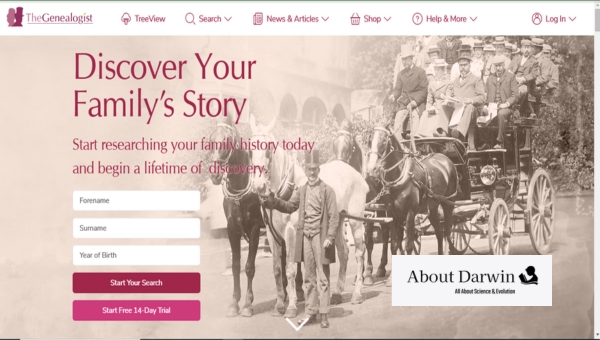
The Genealogist distinguishes itself through unique record collections unavailable on other major platforms. The service provides access to tithe records, which document land ownership and occupancy in England and Wales from the 1500s through the 1800s, offering insights into ancestral living conditions and social standing. The platform also features the Lloyd George Domesday Survey, covering millions of records for land and property across England and Wales from 1910, and comprehensive military collections that extend beyond the typical WWI and WWII focus to include earlier conflicts.
For researchers investigating specific aspects of English and Welsh ancestry, The Genealogist offers capabilities that the larger commercial platforms cannot match. The tithe record collections prove particularly valuable for researchers working with agricultural laborers or tenant farmers, who rarely appear in other record types but are well-documented in tithe surveys. These records can reveal not just names but precise land holdings, rental arrangements, and the names of landowners, providing context for family relationships that purely genealogical data cannot supply.
The Genealogist provides several subscription tiers designed for different research intensities. Individual subscriptions typically start around £12.95 per month for standard access, with premium tiers offering enhanced search capabilities and additional record collections. The platform also offers pay-per-view options for specific records, allowing researchers to purchase single document access without ongoing subscriptions. Annual subscriptions provide meaningful discounts compared to monthly rates.
The tithe records and Lloyd George Domesday Survey collections represent the standout offerings of The Genealogist. These land survey documents provide granular details about property occupancy, rental values, field patterns, and land use that prove invaluable for house history research and understanding ancestral socioeconomic conditions. Combined with the platform’s Nonconformist church records collection, which covers religious dissenters outside the established Church of England, The Genealogist offers research dimensions that complement the more generalized collections of larger competitors.
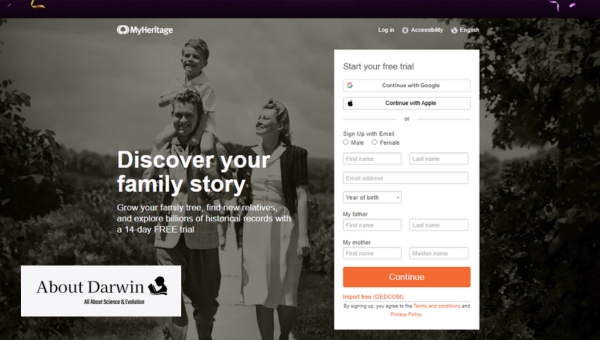
MyHeritage occupies a unique position in the genealogy landscape as a platform that combines traditional record research with sophisticated technology. The service launched its DNA testing product more recently than Ancestry but has rapidly built one of the largest DNA databases through aggressive marketing and international expansion. For UK researchers, MyHeritage provides access to billions of international records, with particular strength in European record collections that can prove valuable when tracing immigration or ancestry from continental Europe.
The platform’s Smart Matching technology automatically compares user family trees to identify potential connections and shared ancestors, while Record Matching alerts users when new records appear that might relate to their tree subjects. These automated features prove particularly valuable for researchers maintaining large family trees who might otherwise miss new record availability. The international focus of MyHeritage also makes it useful for British researchers who discover ancestors with European origins or who have family members who emigrated from continental Europe.
MyHeritage operates on a freemium model where basic registration remains free, but full record access requires subscription. The platform offers several subscription tiers including premium plans with enhanced features. DNA testing is available as a separate purchase, with various test types ranging from basic ethnicity estimates to comprehensive family health and ancestry packages. The combination of DNA testing plus subscription provides the most comprehensive research capability, though the costs accumulate quickly for researchers wanting both services.
MyHeritage DNA testing uses autosomal DNA analysis to provide ethnicity estimates and connect users with genetic relatives. The platform’s European database proves particularly strong for researchers with British ancestry, as MyHeritage has invested heavily in European market expansion. Compared to AncestryDNA, MyHeritage often provides more granular regional breakdowns for British Isles ancestry, with some users reporting more detailed county-level estimates. However, the overall size of the DNA database remains smaller than Ancestry’s, which can affect the number of distant relative connections available.
Understanding which genealogy resources are genuinely free versus those that operate on freemium models helps researchers allocate their budget effectively. Many platforms advertise free access but restrict the most valuable records behind paywalls, while genuinely free alternatives exist but require different search strategies.
FamilySearch stands as the most comprehensive free genealogy platform, offering billions of records without subscription requirements. The FreeUKGenealogy network provides free access to transcriptions of BMD (birth, marriage, death) indexes, parish registers, and census records through its family of sites including FreeBMD, FreeREG, and FreeCEN. These volunteer-maintained databases index millions of records and provide the essential building blocks for British genealogy research without any cost.
GENUKI serves as a comprehensive gateway to UK genealogical resources, providing guides, references, and links to both free and subscription-based services. The platform maintains detailed information about record availability by county, archive locations, and genealogical societies throughout the UK. For researchers new to British genealogy, GENUKI provides essential orientation to the landscape of available resources and how different record types interconnect.
While free resources provide essential starting points, subscription services offer several advantages that justify their cost for serious researchers. Original document images rather than just transcriptions provide context that transcription errors might obscure. Advanced search functionality allows complex queries across multiple record types simultaneously. Exclusive partnerships with archives provide access to records that have not been digitized elsewhere. For researchers with specific research goals and limited time, these advantages often outweigh the subscription costs.
The most cost-effective approach typically involves starting with free resources to build research skills and identify target ancestors, then subscribing temporarily when specific records need retrieval, and finally using DNA testing to break through genealogical brick walls that documentary research cannot resolve. This tiered approach maximizes research depth while minimizing unnecessary expenditure on records that might not yield relevant results.
DNA testing has transformed genealogy from purely documentary research into a multidimensional approach that can connect living relatives and reveal ancestry patterns invisible through traditional records alone. Understanding the differences between testing services helps researchers choose the most appropriate option for their goals.
AncestryDNA maintains the largest DNA database of any genealogy testing service, with over 20 million tested individuals as of 2026. This massive reference database increases the likelihood of finding close genetic relatives and provides more granular ethnicity estimates for British ancestry than smaller competitors. The service provides automated family tree building suggestions based on DNA matches who have uploaded trees, though the depth of genealogical information depends on whether matches have documented their ancestry thoroughly.
MyHeritage DNA has expanded rapidly to become one of the largest DNA databases, with particular strength in European coverage. The platform often provides more detailed regional breakdowns for British Isles ancestry compared to competitors, with some users reporting county-level estimates for English ancestry. Smart Matching technology connects DNA results with the platform’s family tree database, potentially revealing how genetic relatives relate to each other through documented family connections.
For UK researchers specifically, the choice between DNA testing services depends on research goals and existing family tree documentation. AncestryDNA’s larger database provides more relative connections on average, making it valuable for researchers seeking living family members or trying to break through genealogical barriers. MyHeritage’s more detailed European breakdown can assist researchers with ancestry from specific British regions or who have continental European ancestry mixed into their British heritage. Many researchers eventually test with multiple services to maximize their relative connections and compare ethnicity estimates across different reference populations.
For comprehensive guidance on DNA testing options, see our guide to the best genetic genealogy websites which provides detailed comparisons of testing services, features, and pricing.
Scotland and Ireland maintain distinct genealogical record systems that differ significantly from England and Wales. Understanding these differences helps researchers appropriately target their research efforts and manage expectations about available documentation.
Scotland’s People serves as the official government portal for Scottish genealogical records. The platform provides access to census records from 1841 through 1911, parish registers spanning the 16th through 19th centuries, and civil registration indexes for births, marriages, and deaths from 1855 onward. Unlike the integrated platforms that combine multiple record types, Scotland’s People focuses exclusively on Scottish documentation, providing the most comprehensive access to records specific to Scottish ancestry.
The service operates on a pay-per-view credits system, where users purchase credits to view original document images. This approach differs from subscription models, allowing occasional researchers to access specific records without ongoing payments. The 1841 and 1851 census records are freely searchable through indexes, though viewing actual images requires credits. Scottish parish registers represent some of the oldest genealogical documentation available for British research, with certain Kirk sessions records dating to the 1500s.
Irish genealogy presents particular challenges due to the catastrophic loss of many records during the Dublin Four Courts fire of 1922. However, surviving records and alternative documentation sources enable substantial research for those with Irish ancestry. The National Archives of Ireland provides some free online resources, while the General Register Office of Ireland maintains civil registration records from 1845 for marriages and 1864 for births and deaths (with some earlier Quarter Sessions records available).
Findmypast maintains particularly strong Irish record collections, including parish registers that survived the 1922 fire and digitized church records from various denominations. Griffith’s Valuation, a land survey conducted between 1847 and 1864, provides a valuable substitute for the destroyed census records, documenting millions of Irish households at a specific historical moment. The 1901 and 1911 census returns survived and are freely accessible online, providing detailed information about Irish households at the beginning of the 20th century.
Our related guide to Best UK and Irish Genealogy Websites provides additional resources for researching both British and Irish ancestry, including specialized platforms that focus specifically on Irish documentation.
Genealogy research inevitably involves challenges that test researcher patience and skills. Understanding common obstacles before you encounter them helps prepare strategies for overcoming these barriers when they inevitably arise.
Reading historical documents written in styles no longer taught requires developing new skills specific to genealogical research. Paleography, the study of historical handwriting, provides essential capabilities for accessing records predating standardized printing. Many online resources offer free training in reading old documents, including the National Archives tutorial programs and university-hosted courses. Starting with more recent documents and gradually working backward helps develop these skills progressively.
Historical documents use vocabulary and recording conventions that differ significantly from modern practice. Occupations, place names, relationship terms, and even given names have changed over time. The Society of Genealogists in London publishes specialized dictionaries and guides that help researchers interpret genealogical terminology. Community forums on platforms like FamilySearch also provide valuable assistance when encountering unfamiliar historical language.
Administrative boundaries in the UK have changed extensively over the past two centuries. Counties, parishes, registration districts, and civil parish boundaries have all undergone revision, meaning an ancestor recorded in one location might have lived in an area that subsequently changed administrative jurisdiction. Historical map resources help clarify these geographic transitions and ensure researchers search the correct jurisdictions for their target time periods. Online resources like Vision of Britain provide historical maps showing boundary changes across multiple time periods.
Researching common surnames presents particular difficulties, as the volume of potential matches overwhelms traditional search approaches. Focusing on specific time periods, geographic locations, and family context helps narrow searches for common-name ancestors. Looking for unique identifying details like occupations, specific birth locations, or literacy indicators can differentiate between multiple individuals with identical names living in the same area. DNA testing also proves particularly valuable for breaking through common-surname barriers by identifying genetic relatives regardless of name changes.
There is no single ‘best’ genealogy website as each platform excels in different areas. Ancestry offers the most intuitive family tree building, Findmypast provides superior newspaper archives and Irish records, FamilySearch is the best free option, and The Genealogist offers unique land records. Most researchers benefit from using multiple platforms to access different record collections.
Ancestry and MyHeritage serve different research needs. Ancestry offers a larger DNA database and more established family tree features, while MyHeritage provides more detailed European record collections and often more granular ethnicity estimates. For UK research specifically, Ancestry’s census and civil registration coverage is more comprehensive, but MyHeritage excels for researchers with continental European ancestry.
No, Ancestry provides global record collections, not just UK material. While the UK collections are extensive, the platform also hosts billions of records from North America, Europe, Australia, and other regions. This makes Ancestry particularly valuable for researchers who discover immigrant ancestors and need to trace their ancestry in destination countries.
Findmypast and Ancestry serve overlapping but distinct research needs. Findmypast offers superior newspaper archive access through its British Newspaper Archive partnership, exclusive 1921 Census coverage, and stronger Irish genealogy resources. Ancestry provides more intuitive family tree building, larger DNA database, and broader international record collections. The choice depends on specific research priorities.
Yes, substantial UK genealogy research is possible without paid subscriptions. FamilySearch provides free access to billions of records, FreeUKGenealogy sites offer free BMD indexes and parish register transcriptions, and the General Register Office provides free birth, marriage, and death index searches. However, accessing original document images and advanced search features typically requires subscription services.
Begin with yourself and work backward through time, documenting each generation with verifiable records before moving further back. Start with free platforms like FamilySearch to learn the basics of tree building and record searching. Record birth, marriage, and death information first, then use census records to extend ancestry generation by generation. DNA testing can help verify connections and discover previously unknown relatives.
Ancestry subscriptions for UK access typically start around £10.99 per month for basic access, with premium tiers offering expanded record collections. Annual subscriptions provide significant savings, often reducing the effective monthly cost by 30-40 percent. Library access through participating public libraries provides free in-branch access to full platform features.
Scotland’s People provides the most comprehensive official access to Scottish records including census, parish registers, and civil registration. For subscription platforms, Findmypast offers strong Irish and British coverage, while Ancestry provides good international connectivity. Free resources like Scotland’s People and the National Records of Scotland website should be the starting point for any Scottish genealogy research.
Tracing ancestral lines through UK genealogy websites opens windows into the lives of predecessors who might otherwise remain forever anonymous in historical records. The combination of free resources like FamilySearch and FreeUKGenealogy, paired with subscription services offering exclusive record access, provides researchers with unprecedented tools for discovering family history. Whether you begin with free platforms to develop research skills or dive directly into subscription services for comprehensive access, each record discovered adds another thread to the tapestry of your family’s unique story.
The journey through genealogy rarely follows a straight path. Ancestral brick walls, destroyed records, and genealogical dead ends frustrate every researcher at some point. However, the emergence of DNA testing as a mainstream genealogical tool has broken through many barriers that documentary research alone could not resolve. Connecting with genetic relatives, verifying family stories, and discovering ethnic origins adds dimensions to family history that pure record hunting cannot provide. Many researchers find that their initial interest in names and dates evolves into a deeper appreciation for the human stories underlying each generation.
As you begin or continue your genealogical journey, remember that patience and persistence yield rewards that cosmetic research never provides. Each discovered ancestor brings you closer to understanding the lives and circumstances that shaped your own existence. The UK genealogy websites profiled in this guide provide the starting points for this exploration, but the actual journey remains yours to undertake. Happy researching, and may your ancestors reveal themselves generously.
Once you have traced your family tree, you might be curious about fascinating connections within your ancestry. Discover if you’re related to royalty and explore the surprising links that DNA testing and genealogical research can reveal about your family’s remarkable journey through history.