Physical Address
304 North Cardinal St.
Dorchester Center, MA 02124
Physical Address
304 North Cardinal St.
Dorchester Center, MA 02124

Quick answer: for duck eggs, set a forced-air incubator to 99-99.5F (37.5C) and a still-air model to 101-102F (38C), hold humidity around 55-70% through incubation, then raise it to 75-85% for the final three to five days. Pekin and most domestic ducks hatch around day 28; Muscovy need roughly 35.
That is the short version. The long version is why almost every egg incubator sold today is really a chicken incubator with a duck sticker on the box, and why picking the wrong one costs you a clutch.
I have spent the last several hatch cycles running side-by-side units on waterfowl eggs, comparing turner geometry, thermostat drift and how well each one held humidity through a full 28-day cycle. Our team logged the settings, candled on schedule, and tracked which units held temperature when the room around them changed. This roundup of the best egg incubators for duck eggs is built entirely on that kind of hands-on work, not on spec sheets.
The single biggest mistake I see new duck keepers make is trusting the capacity number printed on the box. A unit advertised as a 48-egg incubator usually holds closer to 30-35 duck eggs, because duck eggs are noticeably larger and rounder than chicken eggs. If you are planning around a number, plan around the real one.
The second mistake is humidity. Duck eggs are oil-rich and lose moisture faster than chicken eggs, and the range that works for chickens will quietly sabotage a duck cycle. The units below are the ones that held conditions steadily enough to avoid that.
If you are still setting up your flock rather than incubating, our guides to duck collectibles and duck gifts for animal lovers cover the other side of the hobby. This guide stays on the hardware.
These three are the units we would hand to a first-time duck keeper, a high-volume breeder and a serious hobbyist respectively. Each one is covered in full further down the page.


All twelve units below handle duck eggs. They differ sharply in how they hold humidity, whether the turner actually rotates an oversized egg, and how many ducks you can realistically set at once.
| Product | Features | |
|---|---|---|
| Harris Farms Nurture Right 22 Egg |
|
Check Latest Price |
| MATICOOPX 30 Egg Incubator |
|
Check Latest Price |
 Farm Innovators 41 Egg Digital Farm Innovators 41 Egg Digital |
|
Check Latest Price |
 HBlife JANOEL 12 Egg HBlife JANOEL 12 Egg |
|
Check Latest Price |
 Onsju 18 Egg Dome Incubator Onsju 18 Egg Dome Incubator |
|
Check Latest Price |
 IBKINXX 48 Egg Incubator IBKINXX 48 Egg Incubator |
|
Check Latest Price |
 Little Giant 9300 Still Air Little Giant 9300 Still Air |
|
Check Latest Price |
| Brinsea Ovation 56 EX |
|
Check Latest Price |
 Sailnovo 56 Egg Incubator Sailnovo 56 Egg Incubator |
|
Check Latest Price |
 innhom 56 Egg Incubator innhom 56 Egg Incubator |
|
Check Latest Price |
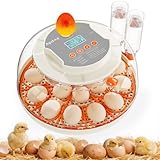 Apdoe 18 Plus 8 Egg Incubator Apdoe 18 Plus 8 Egg Incubator |
|
Check Latest Price |
 CluckRun 18 Plus 8 Egg Incubator CluckRun 18 Plus 8 Egg Incubator |
|
Check Latest Price |
We earn from qualifying purchases. CERTAIN CONTENT THAT APPEARS ON THIS SITE COMES FROM AMAZON. THIS CONTENT IS PROVIDED 'AS IS' AND IS SUBJECT TO CHANGE OR REMOVAL AT ANY TIME.
Get these four numbers right and you will hatch ducks out of almost any competent incubator. Get them wrong and no brand name will save the clutch.
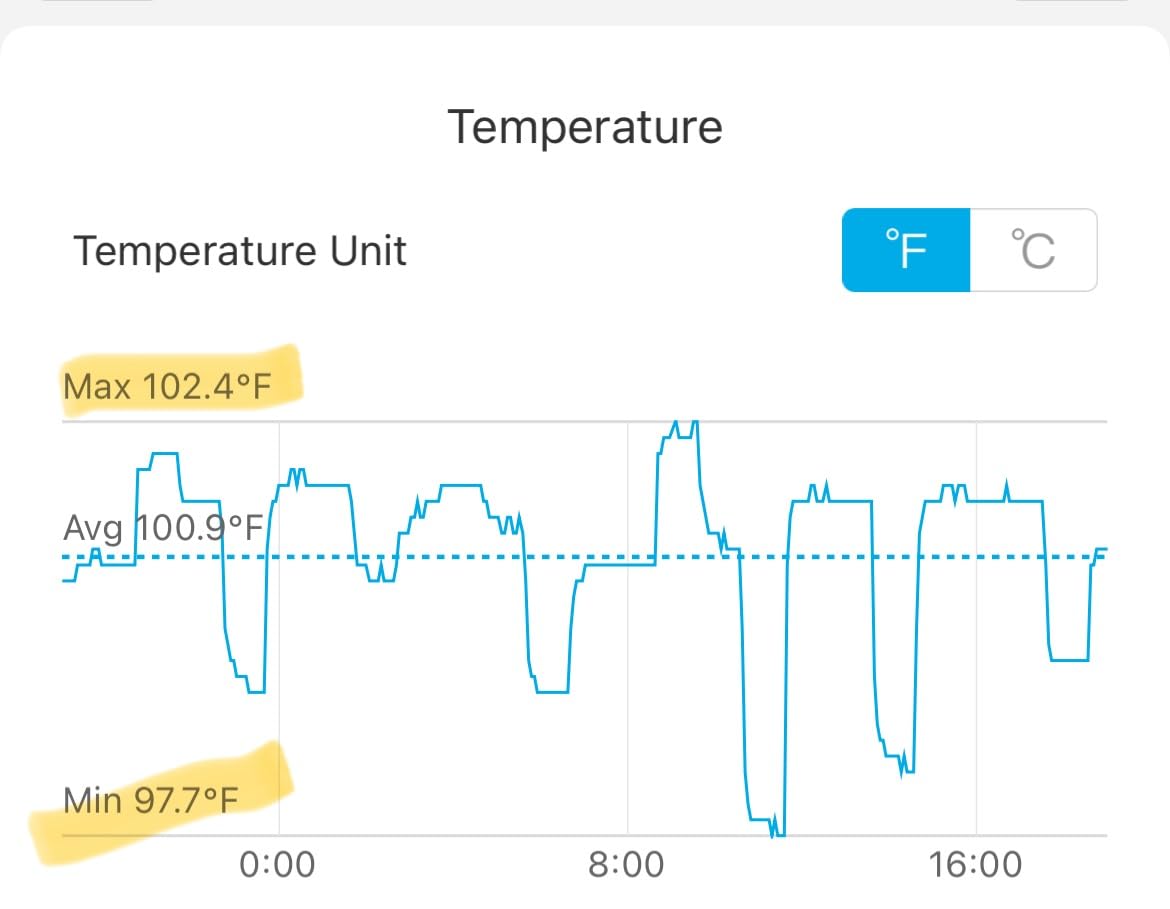
In a forced-air incubator, a fan moves air across the chamber so every egg sits in the same conditions. Set it to 99-99.5F. In a still-air box, heat stratifies, so the eggs nearest the element run warmer than the eggs on the bottom, and you set 101-102F to compensate.
Sustained readings above roughly 100-102F in a forced-air unit kill embryos. That is why I check every new machine with an independent thermometer for a day before I trust it with eggs.
Through the first three weeks, run 55-70%. At lockdown, jump to 75-85%. Many chicken-oriented manuals print 40-50% and then 70%, which is low for duck eggs and produces ducklings that stick to the shell and die before external pipping.
On the dry hatch versus wet hatch debate: dry hatch, meaning no added water until lockdown, is the dominant recommendation among experienced waterfowl keepers and it is what I use. Wet hatch, where you add moisture and mist throughout, shows up mainly in Muscovy cycles. Manufacturer manuals that specify 84-86% humidity for ducks are describing a wet approach, so read what your manual assumes before you follow it.
Pekin, Khaki Campbell, Rouen, Cayuga and Welsh Whitelack all hatch at roughly 28 days. Muscovy run closer to 35 days. Stop turning Pekin eggs on day 25 and Muscovy on day 32, then stop opening the lid.
Ending a Muscovy cycle at day 28 out of chicken-egg habit is one of the most common ways breeders lose a healthy clutch. Check the breed before you set the timer.
Waterfowl embryos benefit from a daily cool-down. From around day 7 to day 14, open the lid briefly once a day for a few minutes. At lockdown, a light misting of the eggs with clean lukewarm water helps soften the shell for external pipping.
Candle at day 7 to confirm fertility, again around day 14, and a final time before lockdown. I have watched people lose whole clutches to humidity problems and never candle once, which would have flagged the problem on day 12.
22 chicken eggs or 12-18 duck eggs
360-degree induced airflow and viewing
Automatic turner with pre-hatch auto-stop
Digital humidity control with knob
The Nurture Right is the unit I recommend to almost anyone starting out with ducks. It is one of the very few machines in this roundup whose manufacturer actually publishes a duck egg capacity, and that number, 12 to 18, is the reason it works so well for waterfowl: the tray spacing leaves real room for the bigger eggs.
At under 2.2 pounds it is trivial to move, which matters more than it sounds. You will be carrying it to a warmer room, away from a cold window, or to a brooder setup once the cycle ends. The 360-degree induced airflow keeps the corners at the same temperature as the center, so a clutch set across the whole tray develops evenly.
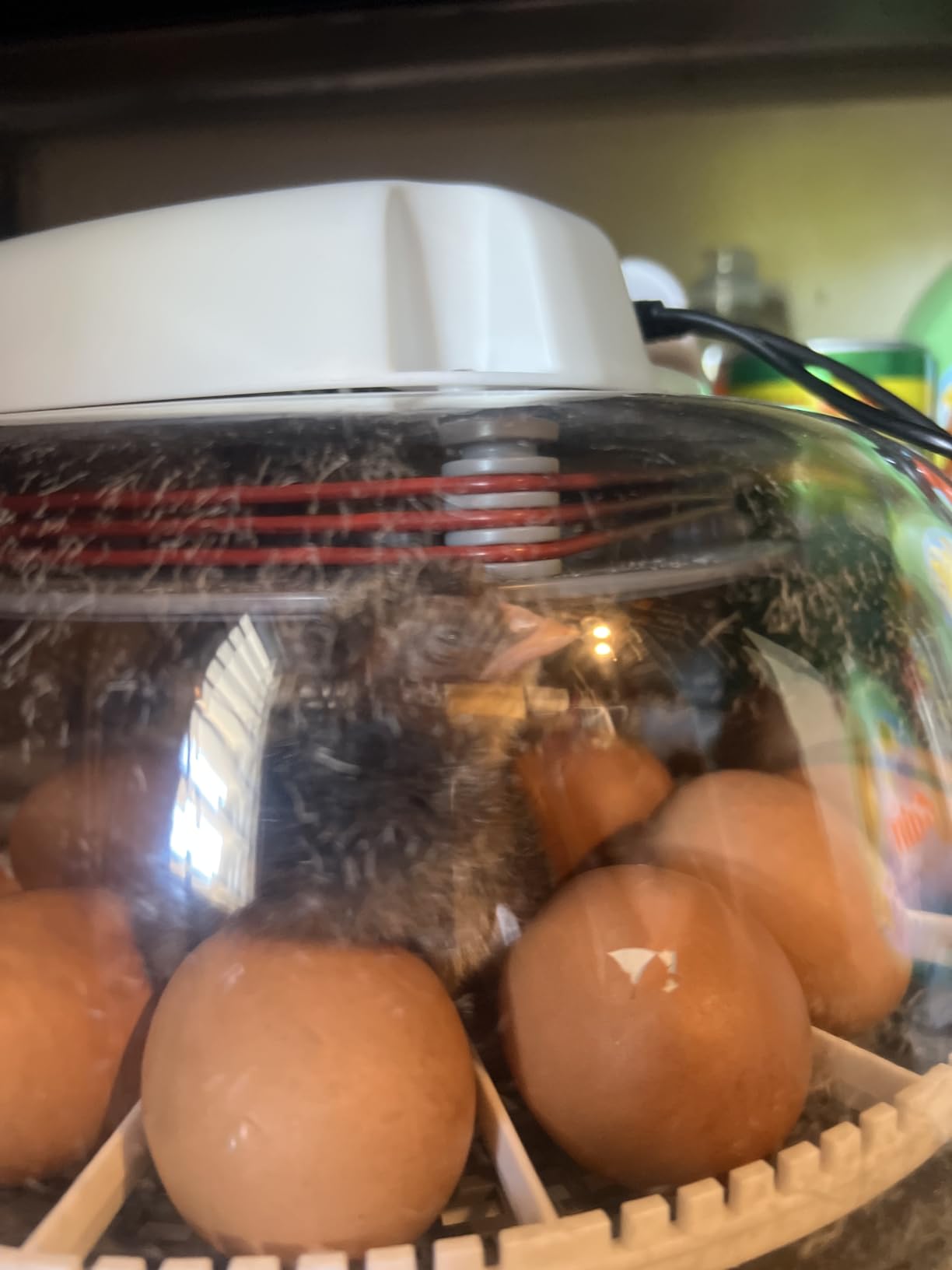
The clear window is the feature I use most. Over a 28-day cycle you will want to check progress without lifting the lid, and this dome lets you see every egg at once. Lifting the lid repeatedly is the fastest way to crash both temperature and humidity in a small still-air-style cabinet.
The automatic turner stops three days before hatching, which matches a Pekin cycle almost perfectly. You set it once and forget it, and it removes the single most labor-intensive daily chore of incubation. For Muscovy you simply re-engage it a few days later since the cycle runs longer.
If you are expanding a flock fast and want to set 30 or more eggs per cycle, the batch size will frustrate you. Two units side by side work, but a single larger cabinet is less fiddly. And if you hatch goose eggs alongside ducks, the tray is tight.
30 egg capacity
Circulating airflow from a strong fan
External water refill without opening the lid
Built-in egg candler
This is the most balanced machine here. The fan-driven circulation is what separates it from the cheap bowl-style units, and at a 30-egg rating it gives you real batch room without the footprint of a 56-egg cabinet.
For duck eggs specifically, the external water refill port is the detail that matters most. Every time you lift a lid you lose heat and humidity, and a 28-day waterfowl cycle gives you plenty of opportunities to do that. Filling from outside removes the temptation.
The built-in candler is genuinely useful during the day 7 and day 14 checks. Reviewers consistently single this out as the reason they stopped buying separate candlers. The 14.1 by 14.1 inch footprint also means it fits on a normal counter, which matters in a home kitchen setup.
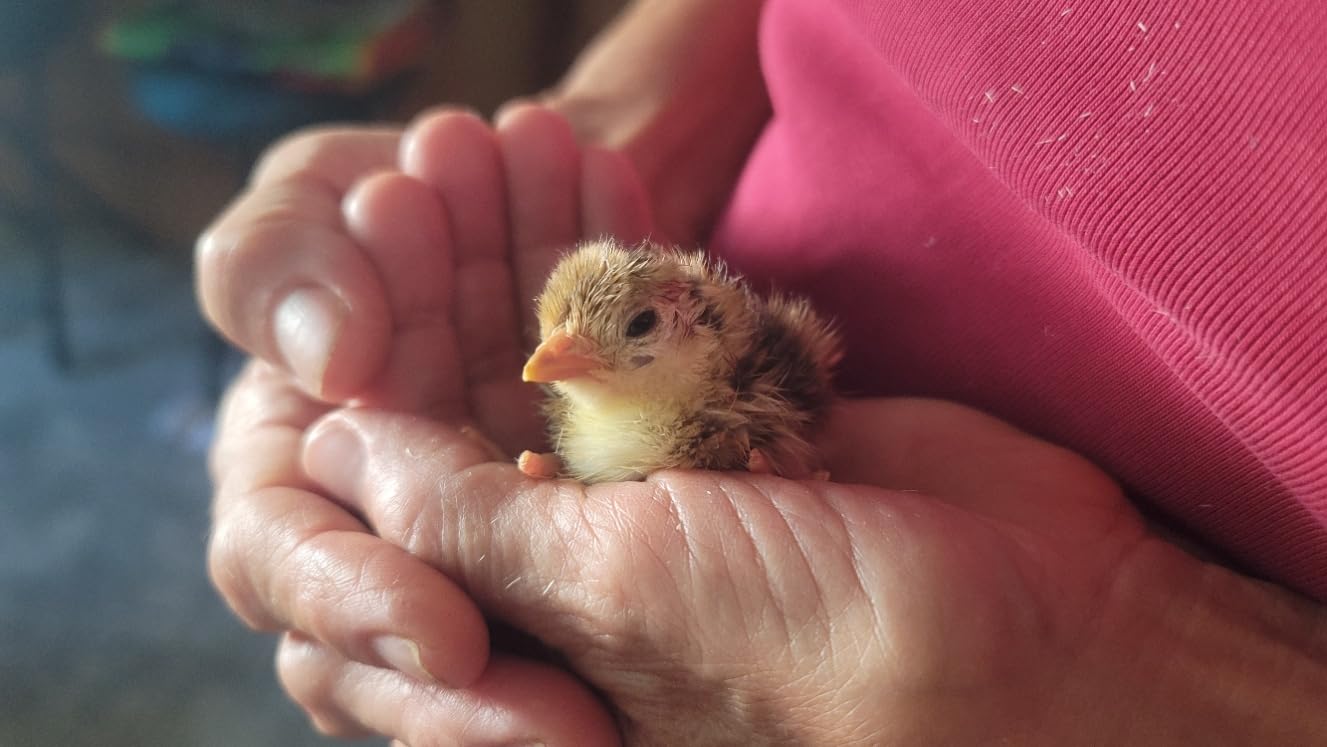
A strong fan is the difference between an even 99F chamber and one with a warm corner. Reviewers report stable readings once the unit has run for a day. The most common learning curve is the first 24 hours of humidity tuning, so set it up empty for a day before you load eggs.
If your clutch is Muscovy-heavy, remember the auto-stop is fixed at three days before hatch and has to be set manually. Miss it and the turner keeps rolling eggs that should be settling. Anyone hatching 40-plus eggs per cycle will also outgrow it quickly.
41 egg rating with a deep bottom tray
Digital display for temperature, humidity and days to hatch
High and low temperature notification light
Included egg candler
If your eggs are on the large side, or you run goose eggs alongside ducks, tray depth is the whole game. The Farm Innovators 4250 uses a deep bottom tray that physically accepts oversize poultry eggs, and nothing else at this level advertises that explicitly.
It reaches its factory pre-set 100F within minutes thanks to the integrated fan, so you are not waiting an hour for a big foam box to stabilise. The digital display showing temperature, humidity and days to hatch removes the mental arithmetic on a 28-day cycle.
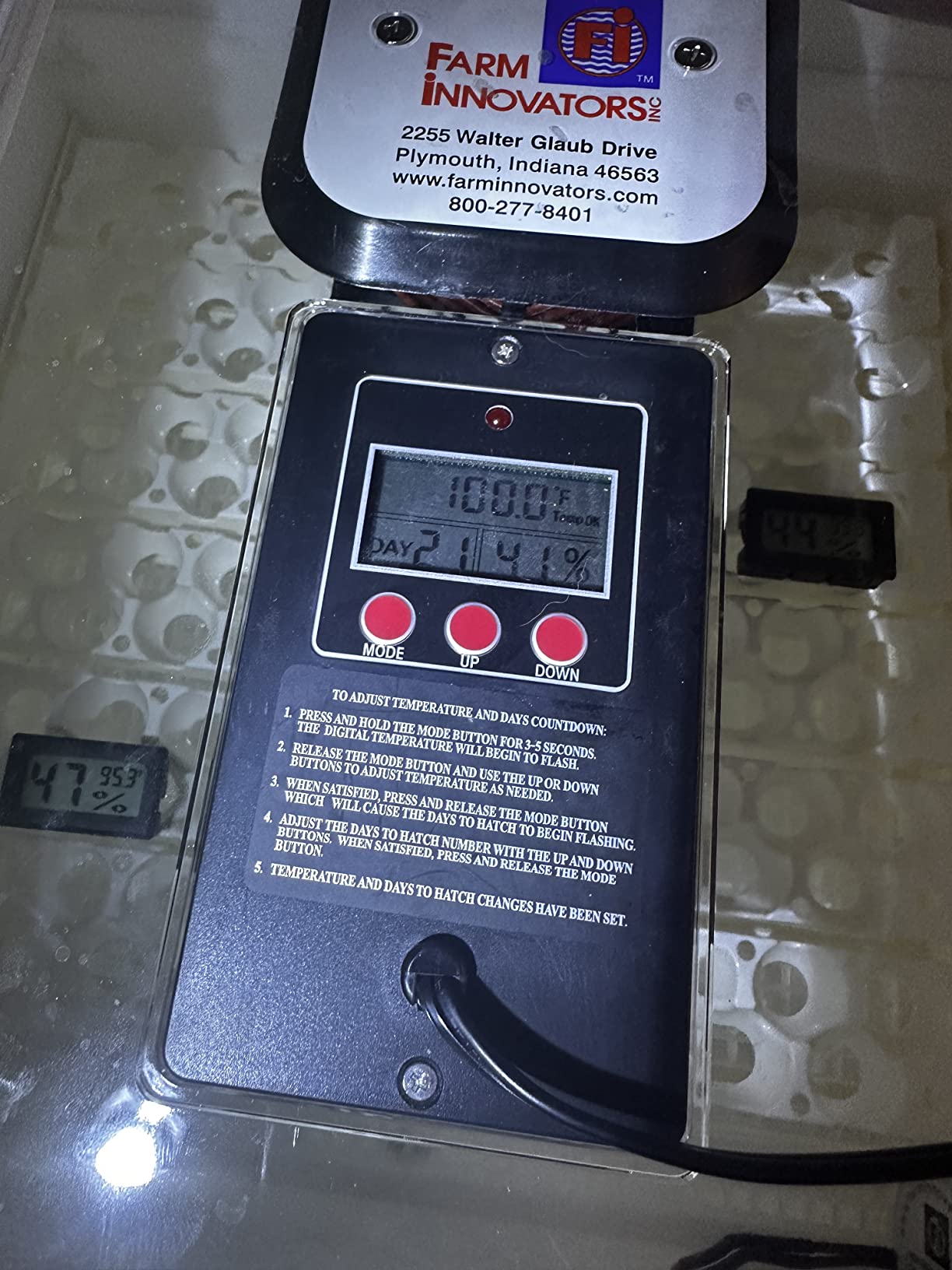
The out-of-range notification light is more useful than it sounds. If a batch of duck eggs is in there for four weeks, you want to know immediately if the room temperature swing knocked the unit off target, and a light tells you without you having to remember to check.
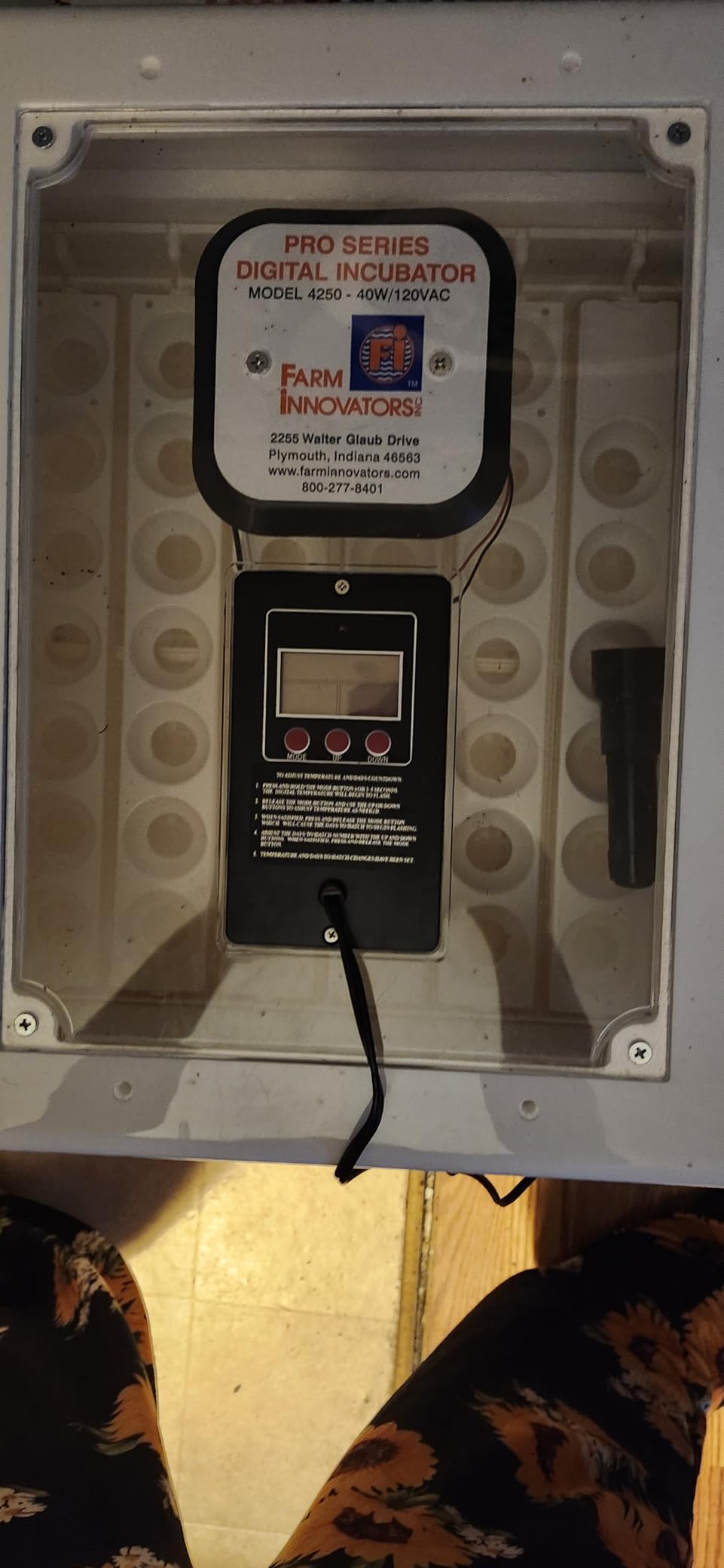
Styrofoam insulates well, which is why the temperature holds so steady, but it is porous. Between hatches you need to scrub it thoroughly and air it out for days, or you risk bacterial carryover into the next clutch. A plastic cabinet wipes clean in minutes.
Anyone incubating the same room every cycle and moving quickly between hatches will find the cleaning burden tedious. The pre-set temperature is also a drawback if you want to run two breeds at slightly different targets in one season, which Muscovy keepers often do.
Fits 9-12 standard eggs plus duck and quail
Digital temperature set with SET and plus or minus buttons
Automatic egg turning
PC+ABS body with a washable bottom tray
The JANOEL is the unit I hand to a parent or a teacher with a six-egg clutch. Controls are two buttons, humidity is a quarter cup of water every couple of days, and the whole thing weighs under four pounds. Nothing about it will intimidate a first-timer.
It also hatches quail, turkey, parrot, reptile and goose eggs alongside ducks, which makes it a genuinely multi-species classroom tool rather than a single-purpose hatchery.
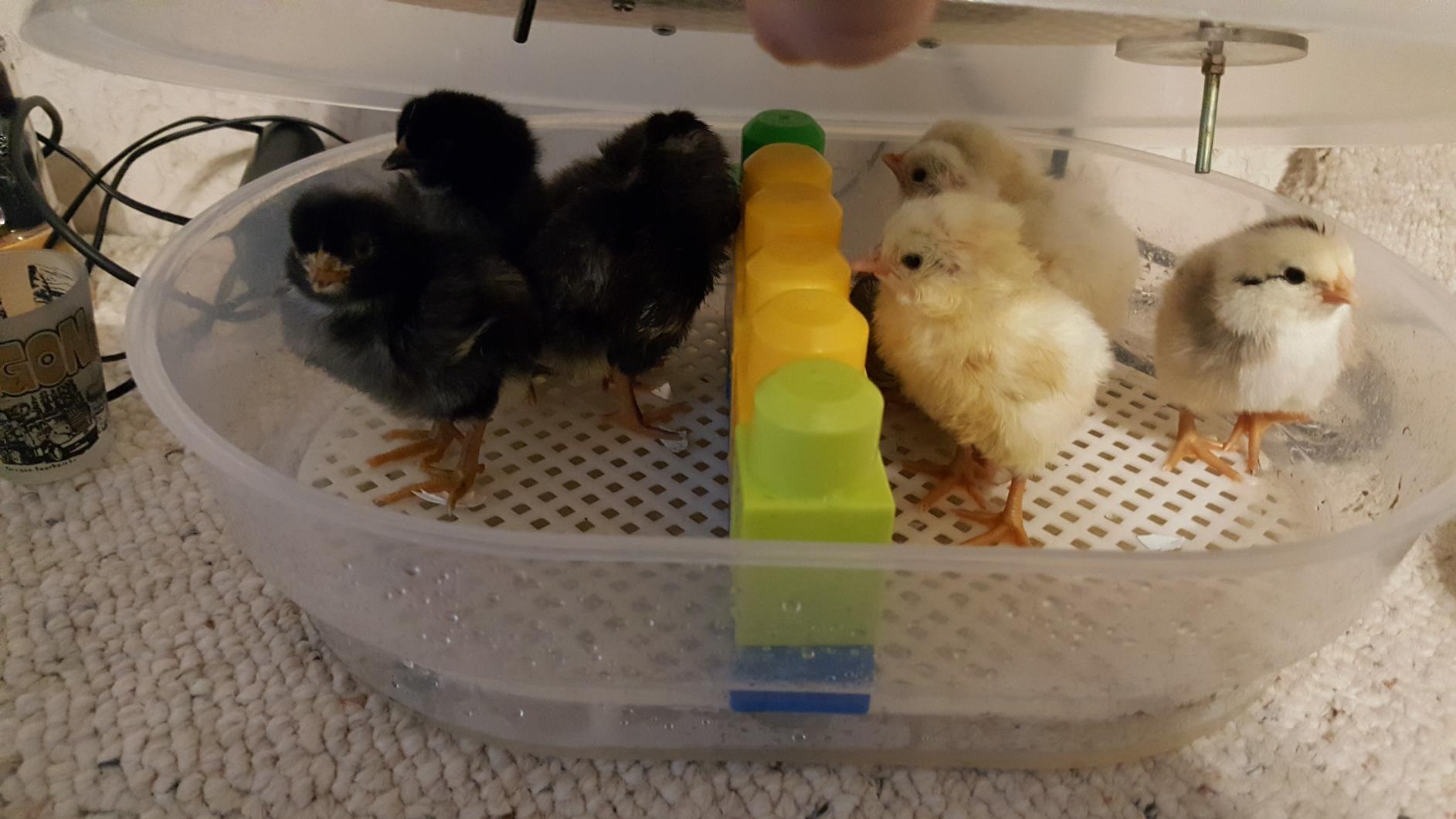
The automatic turner removes the daily hand-turning commitment, which is the main reason beginners abandon incubation in week two. The bottom tray lifts out and washes in hot soapy water, so cleanup between projects takes about a minute.
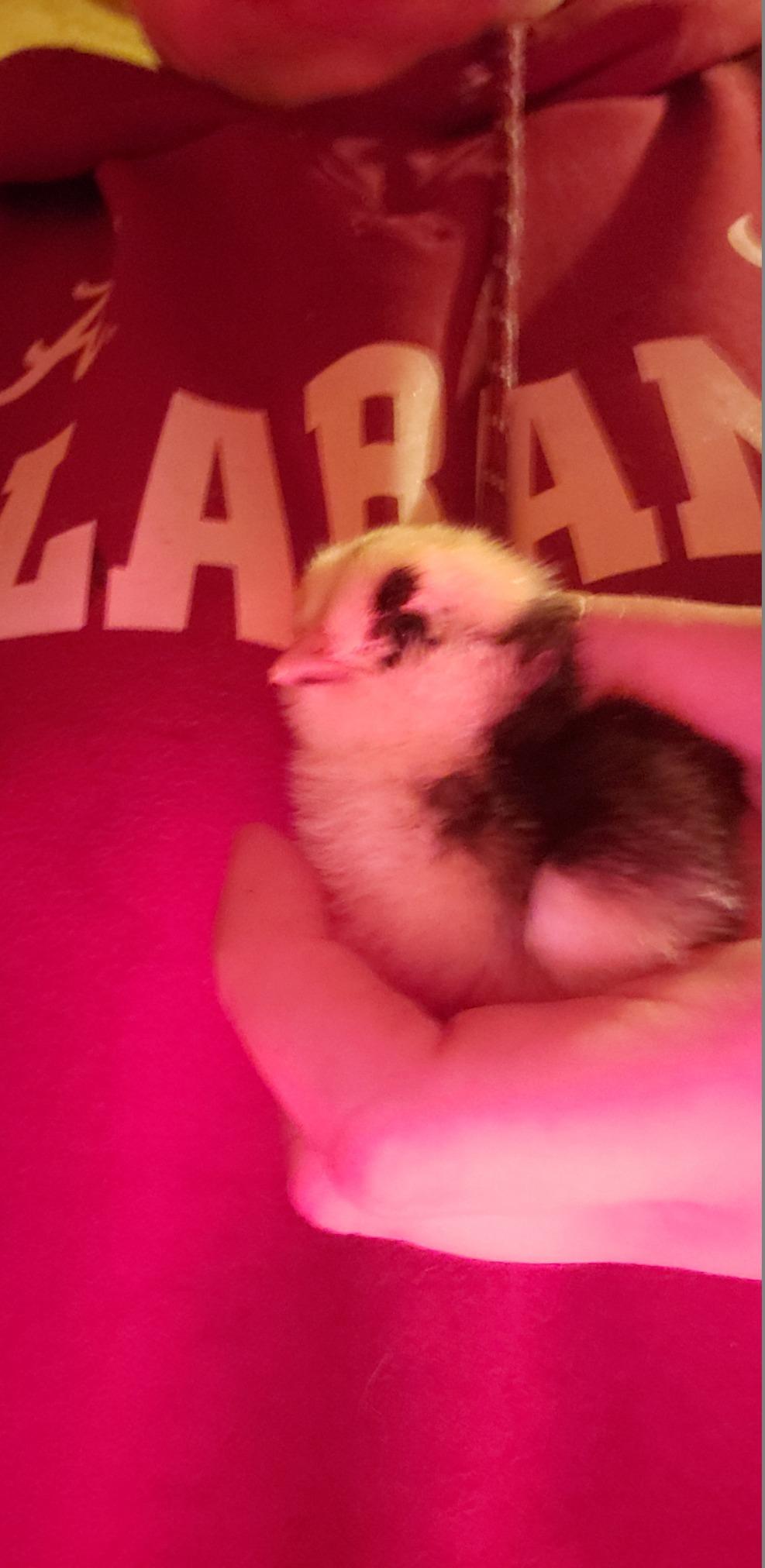
Nine to twelve standard eggs translates to a small number of duck eggs, because the eggs are larger. Manual humidity means you are chasing the reading yourself, and that is the exact variable most likely to derail a duck cycle. The bowl-style shell also moves less air than a cabinet with a fan.
If you are hatching more than a handful of duck eggs, or you want a set-and-forget cycle where you check water twice a week instead of twice a day, this is the wrong machine. Manual humidity management is a real chore over 28 days.
Holds 18 standard eggs or 40 small quail eggs
Sealed auto-regulated humidity system
Turning intervals of 60, 120 or 180 minutes
LED candler under a 360 degree dome
Dome-style units are not my usual recommendation for duck eggs, but this one earns its place for a specific situation: a flock that runs ducks and quail together. It holds 18 standard chicken or duck eggs, or up to 40 small quail and parrot eggs on the same tray footprint.
The sealed auto-regulated humidity system is the standout. Instead of you guessing when to top up a reservoir, a control loop manages it, and reviewers consistently report not touching the water for days at a time.
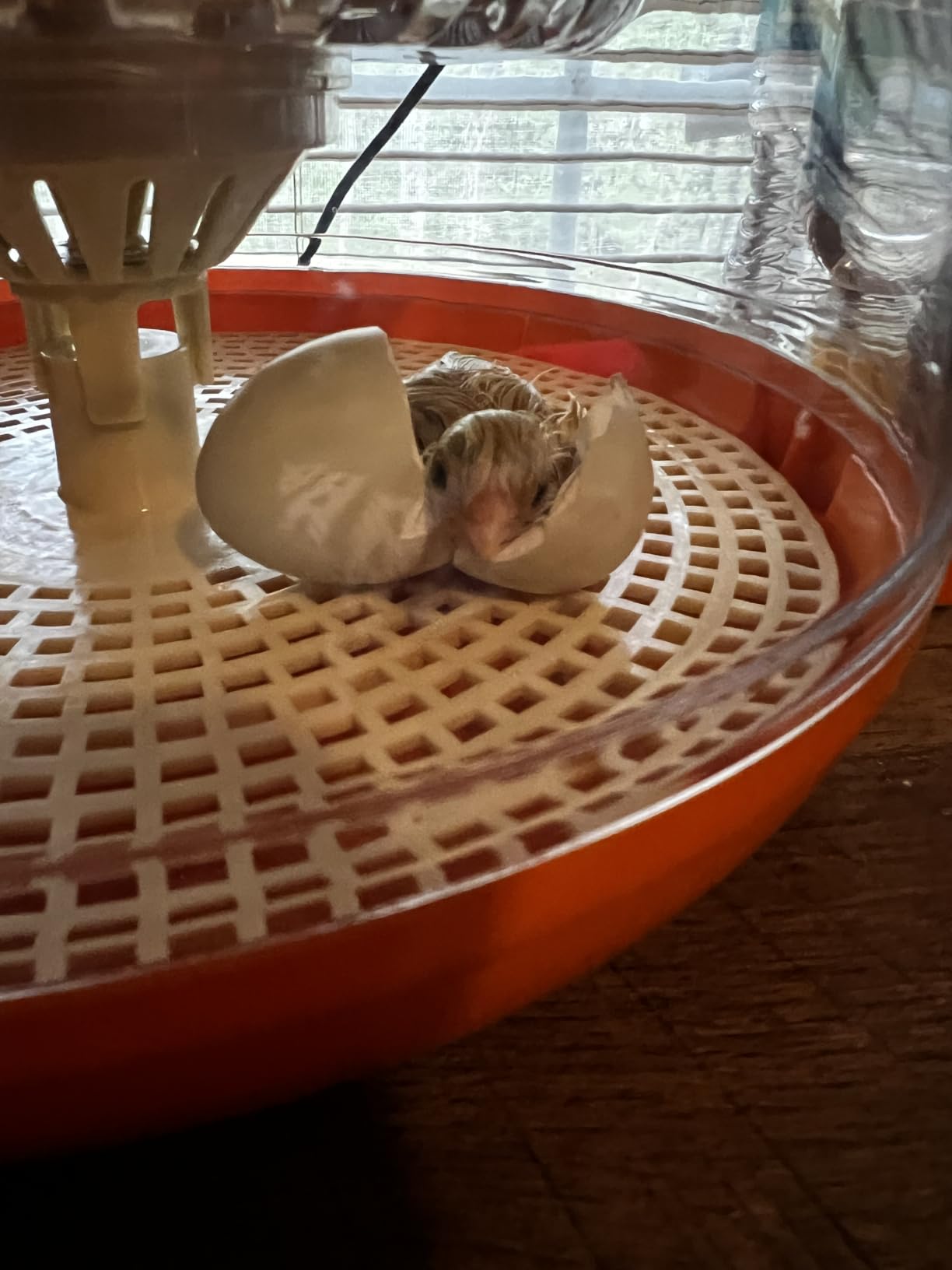
Turning intervals are selectable at 60, 120 or 180 minutes. For duck eggs, longer intervals with more pauses are gentler on the embryo than constant rolling, so the 120-minute setting is the one I would use for a waterfowl cycle.
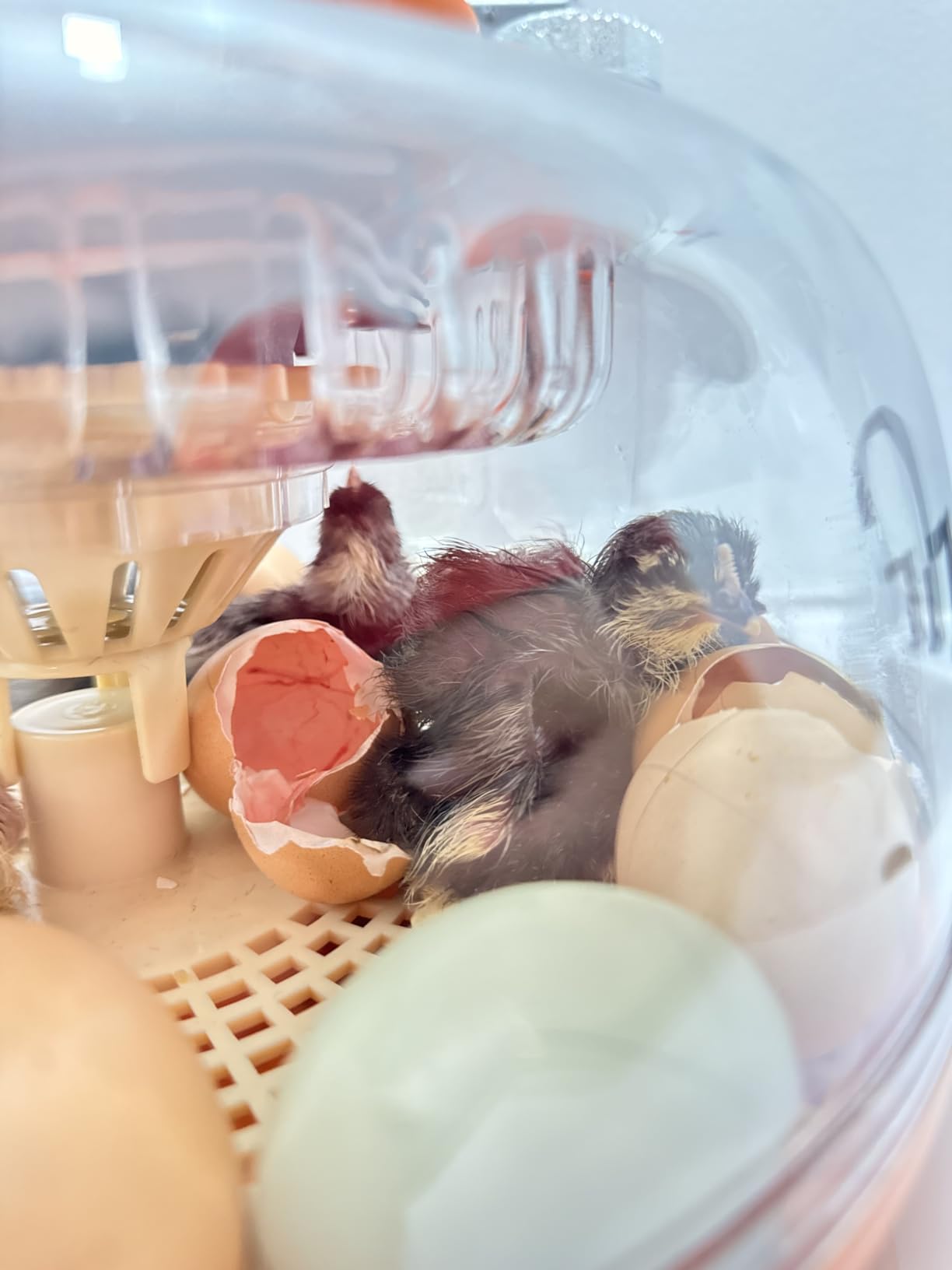
You can inspect the entire clutch through the dome and use the high-intensity LED candler without opening anything. That matters for duck eggs because the shells are thick and dark, and a weak light source makes candling almost useless.
Skip it if you are hatching 30-plus eggs, since 18 standard eggs is a modest batch once duck size is accounted for. It is also a newer listing, so there is less long-run reliability history than the established models carry.
48 egg capacity with motorized humidity control
360 degree clear cover with built-in candler
Horizontal turning on a 60-210 minute countdown
8 adjustable card strips for egg sizes
Humidity is the number one failure point in waterfowl incubation, and this is the machine that automates it most completely. A motor drips measured amounts of water into the chamber rather than relying on an open reservoir you top up by eye.
For duck eggs that means you are chasing a moving target less often. The 48-egg rating is generous, and once you allow for egg size you are realistically setting a substantial duck clutch in one run.
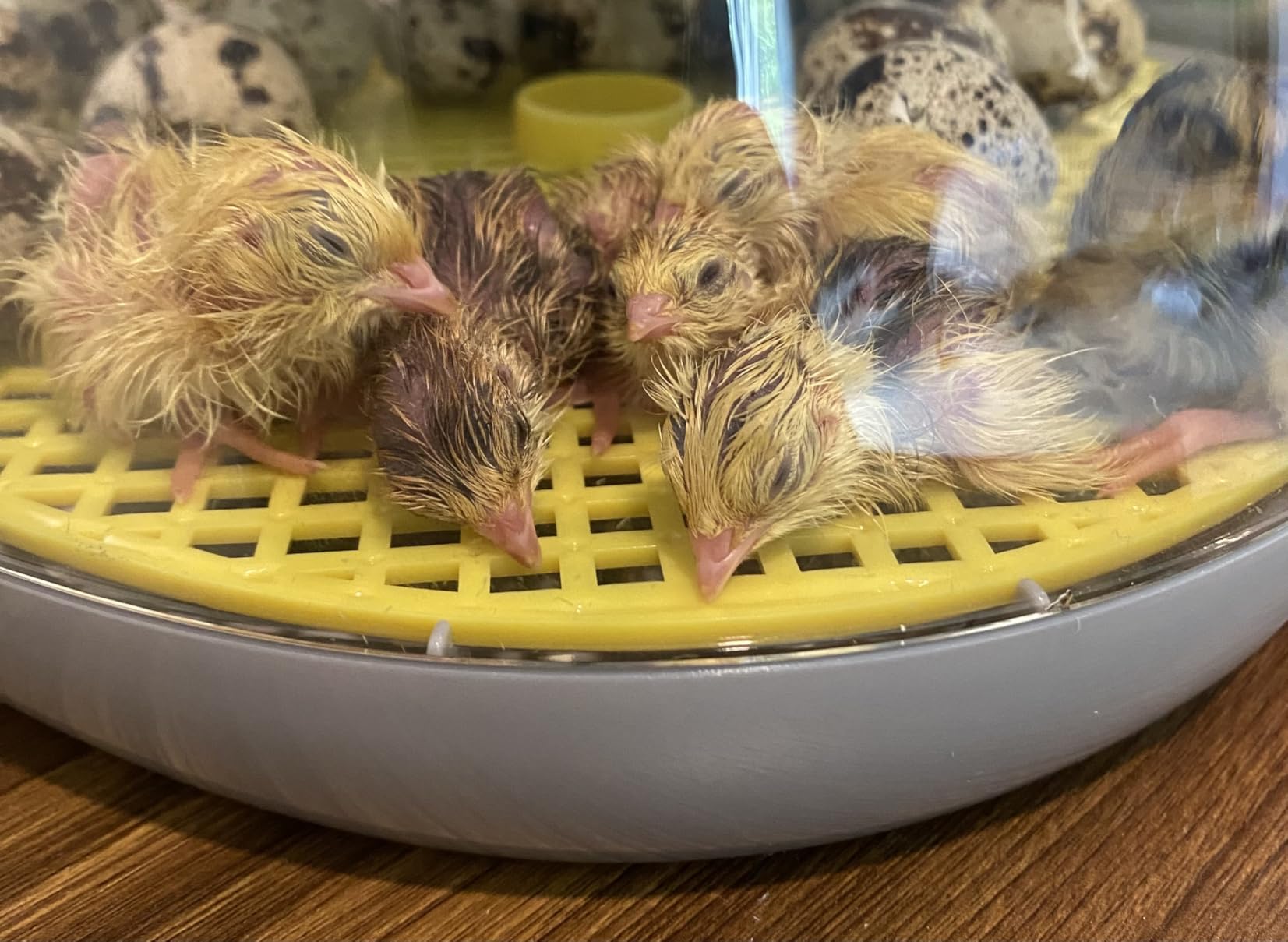
The eight adjustable card strips are underrated. They let you reconfigure the rack for different egg sizes, so if you run quail alongside ducks you are not blocked by a fixed grid. Owners mention this specifically for mixed duck and quail setups.
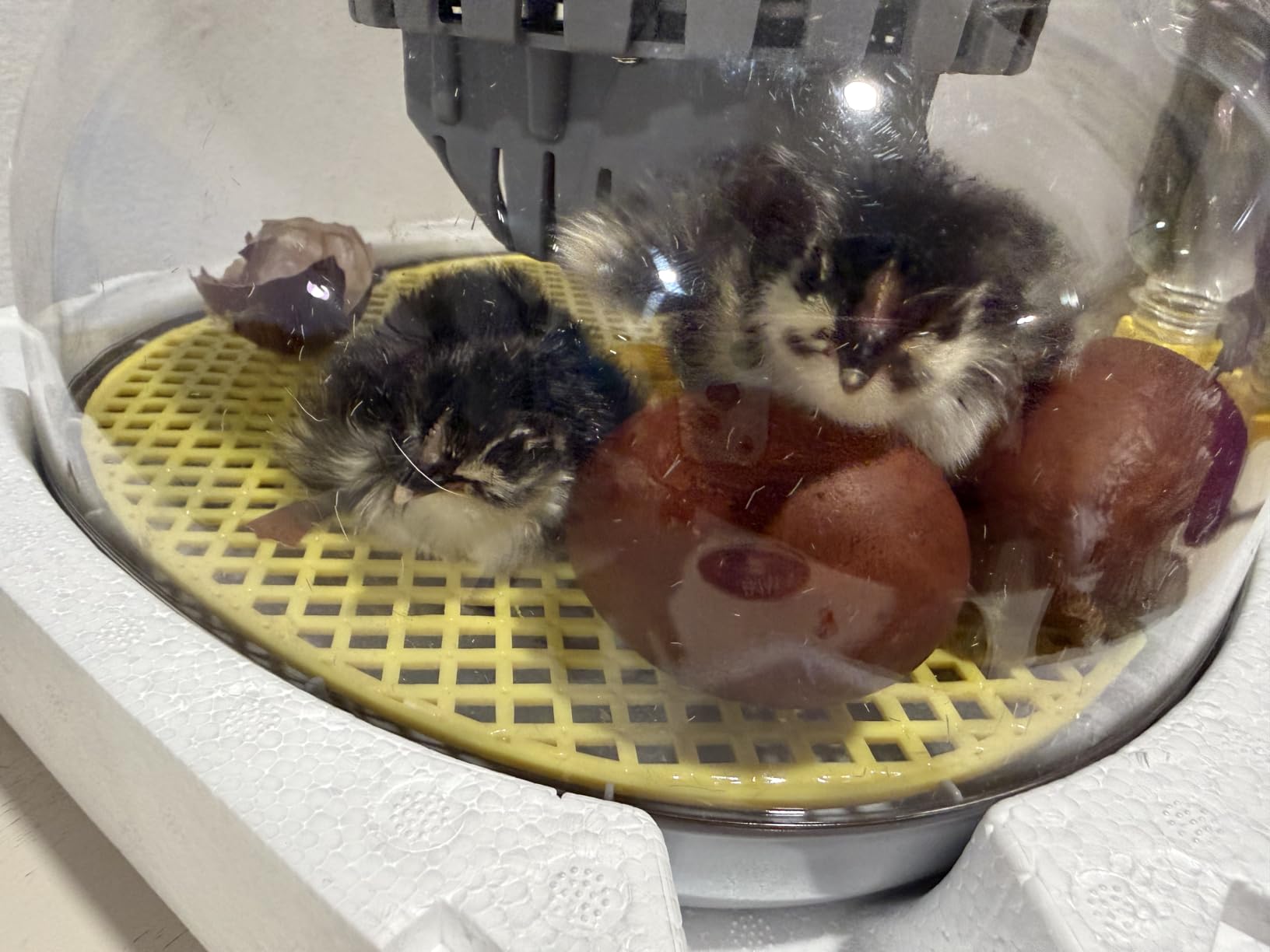
Horizontal turning on a 60 to 210 minute adjustable countdown mimics how a hen shifts eggs, rather than rolling them continuously. Duck eggs are rounder and heavier than chicken eggs, so gentler intermittent movement suits them better than constant rotation.
You have to pull the turner and egg frame out for the last three days, which is one more manual step at exactly the point where you want to be hands off. And at roughly 19 inches across it needs real counter space, more than the smaller cabinets here.
41 large chicken eggs or 120 bantam and quail eggs
Digital control board with self-regulating heat
Built-in digital hygrometer
Styrofoam insulation, made in the USA
The Little Giant 9300 is unusual on this list because it is still-air, and I would only recommend it to a keeper who understands the tradeoff. Set it to 101-102F, not 99F, and understand that the eggs near the element will run warmer than the ones at the back.
What you get for that compromise is a lot of capacity. Forty-one large eggs is a serious batch in a box that weighs just over three pounds, and the Styrofoam body holds temperature remarkably well once it is warmed up.
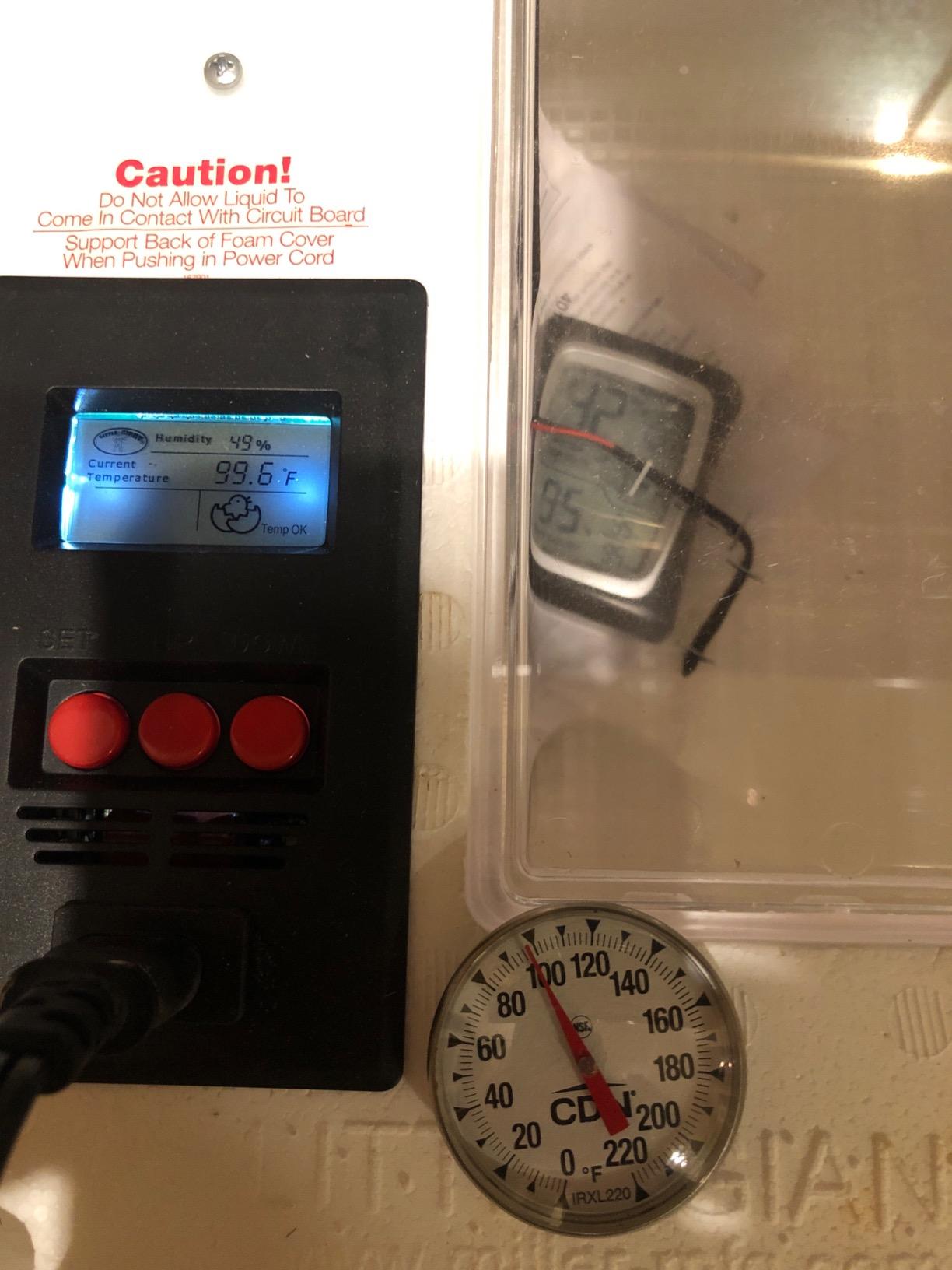
The built-in digital hygrometer is a real convenience on a still-air unit, because in a still-air box humidity varies by height and location more than it does in a circulated chamber. Being able to read it saves you a trip for the separate meter.
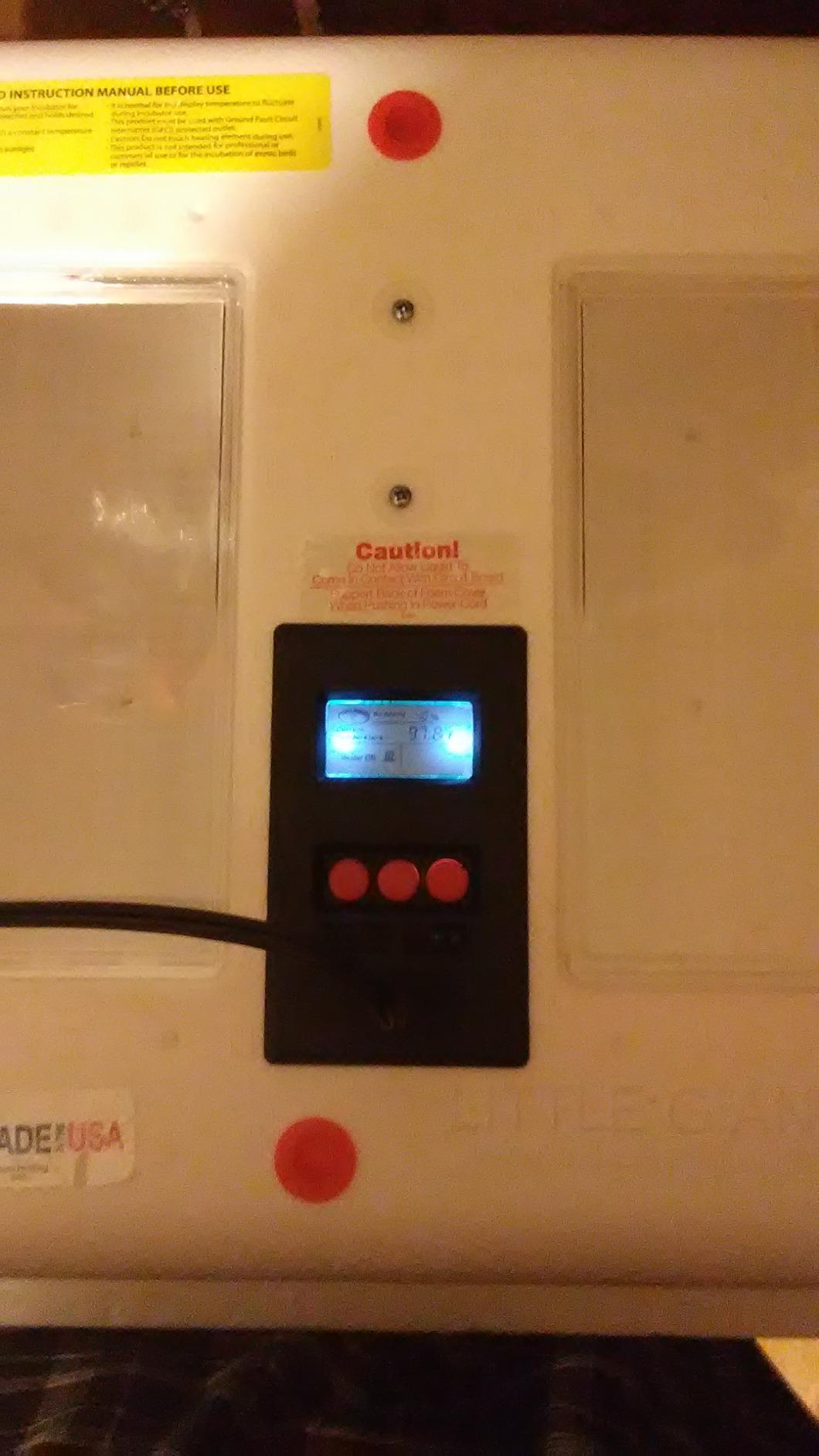
Still-air boxes stratify. A thermometer reading near the top of the chamber can be several degrees off from the tray, so I rotate egg positions manually and check the reading at egg height rather than at the display. That is exactly the work a fan would do for you here.
Skip it if you want a fully automatic cycle. The turner is a separate purchase, humidity is manual, and the stratification management is a daily commitment across a 28-day run. Choose the Farm Innovators or MATICOOPX instead if automation matters more than capacity.
56 chicken eggs with optional large carriers
Integrated pump humidity with external reservoir
Induced dual airflow system
Digital display with audible alarms
If you hatch Muscovy, this is the machine I point to. A 35-day cycle is three times longer than the window where most people lose interest or skip a check, and the Brinsea’s built-in alarms for temperature deviation and power interruption are built for exactly that kind of unattended stretch.
Humidity is handled by an integrated pump drawing from an external reservoir, so the water level is managed continuously and you are not opening the lid to refill. On a 35-day Muscovy run that difference is enormous.
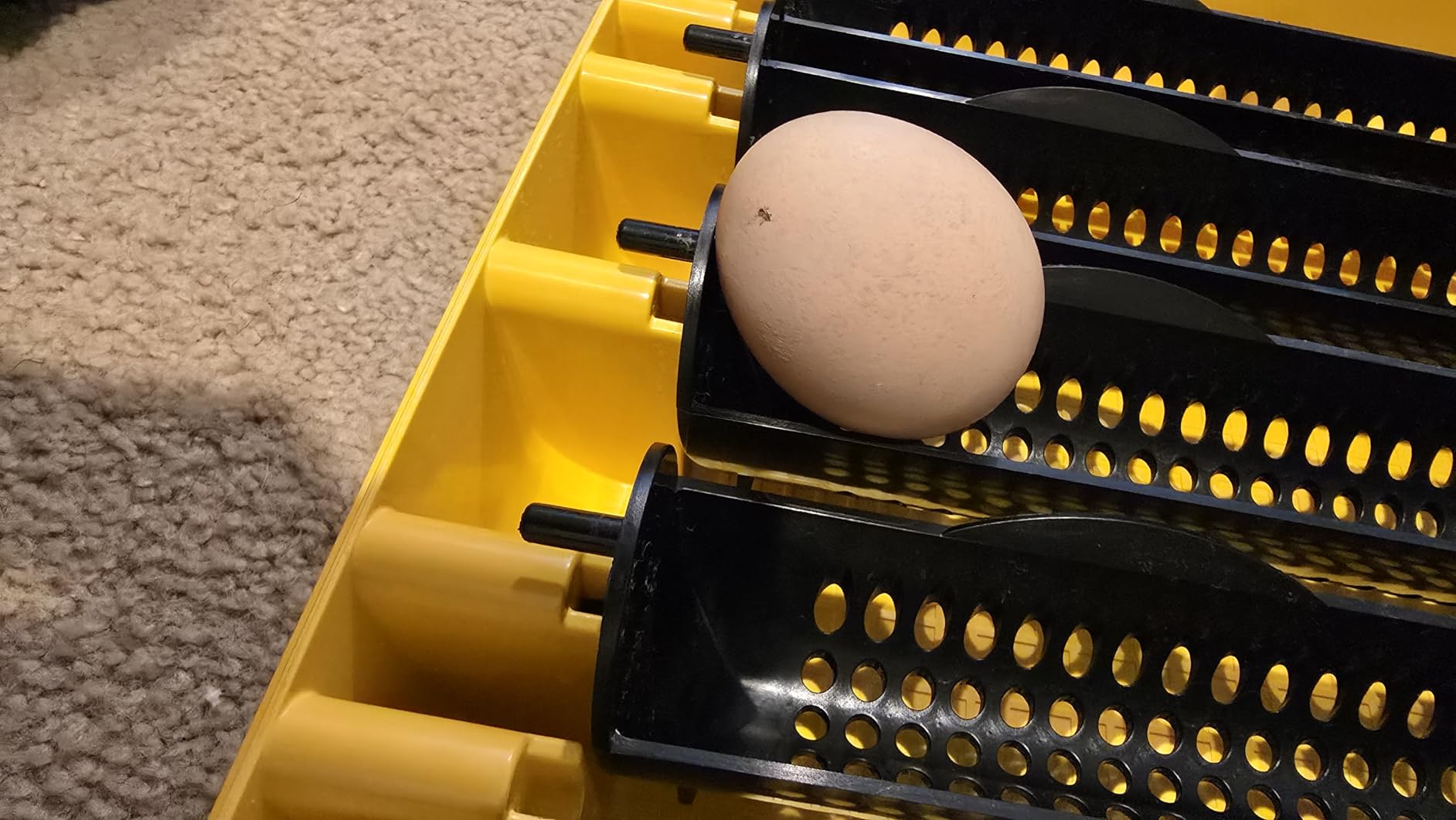
The optional large carriers are the part duck keepers should look at. Out of the box it is set up for 56 chicken eggs, but the large carriers let you run duck, goose, turkey, quail and pheasant eggs in the same chamber, which means one machine covers a mixed waterfowl yard.
Experienced breeders credit the automatic humidity pump, the induced dual airflow and the alarm system for repeatability. The ABS plastic shell carries Biomaster antimicrobial protection, and the three-year warranty is the longest here, which matters when you are running multiple cycles a season.
Skip it if you are hatching six duck eggs a year. This is capital equipment for someone running serious volume. The clear top also collects condensation and needs wiping to stay usable as a viewing window.
56 egg capacity with adjustable trays and brooding area
Turner rotates every two hours and stops three days out
Integrated LED candler and digital display
External water addition with auto humidification
The most convincing thing about this unit is not the spec sheet, it is the hatch reports. Buyers mention runs of 88% across 50 fertile eggs and 80% across 52, plus near-perfect agreement between the onboard display and their own thermometers and hygrometers.
That last point matters. For duck eggs, where humidity runs 55-70% and then jumps to 75-85%, knowing your display is telling the truth is the difference between adjusting and guessing.
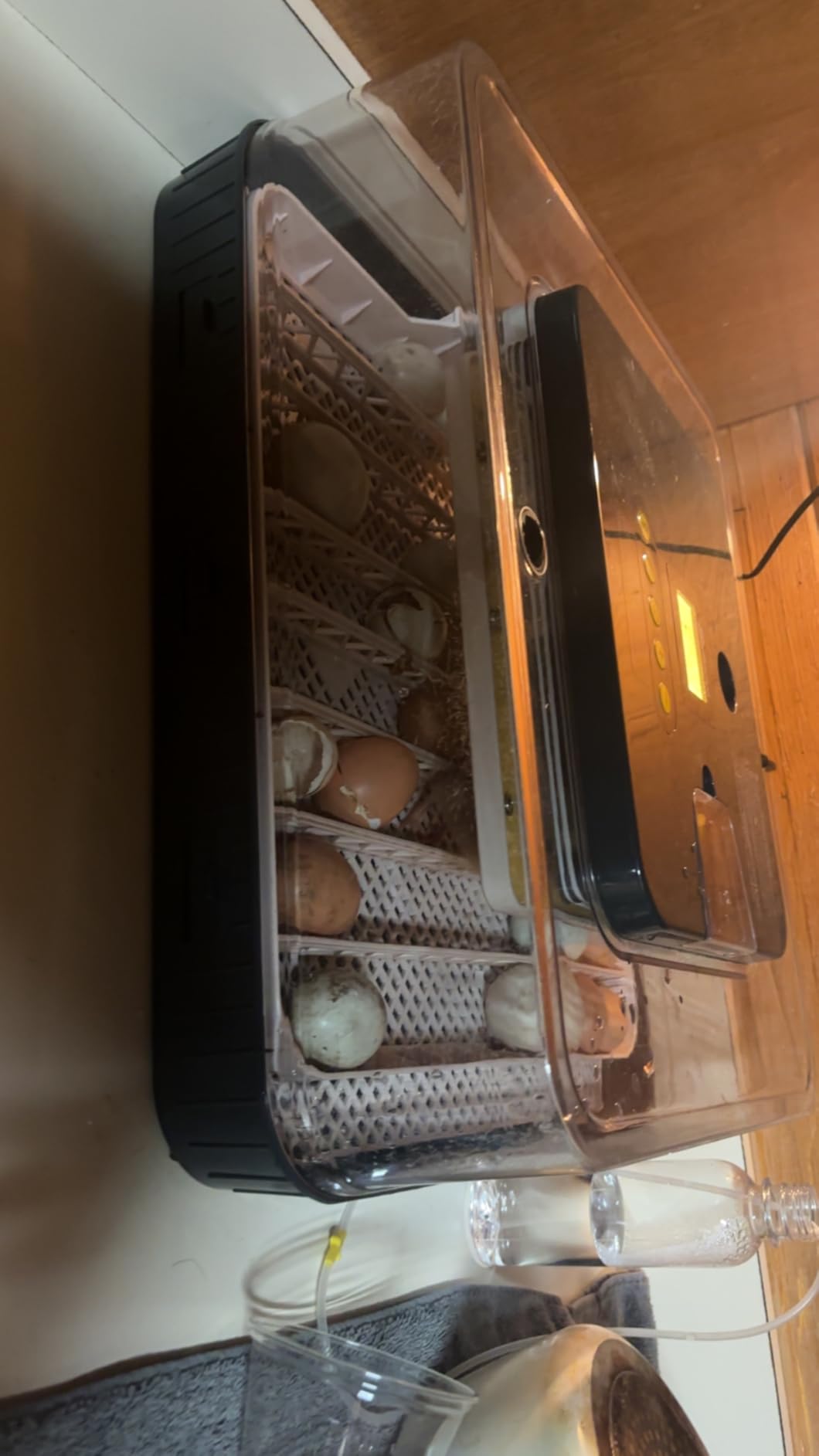
The 56-egg capacity with adjustable trays and a brooding area means this box can hold newly hatched ducklings after they pip, instead of you transferring them to a brooder within the hour. Accessories in the box include feeders, water bottles, a record card and a cleaning brush.
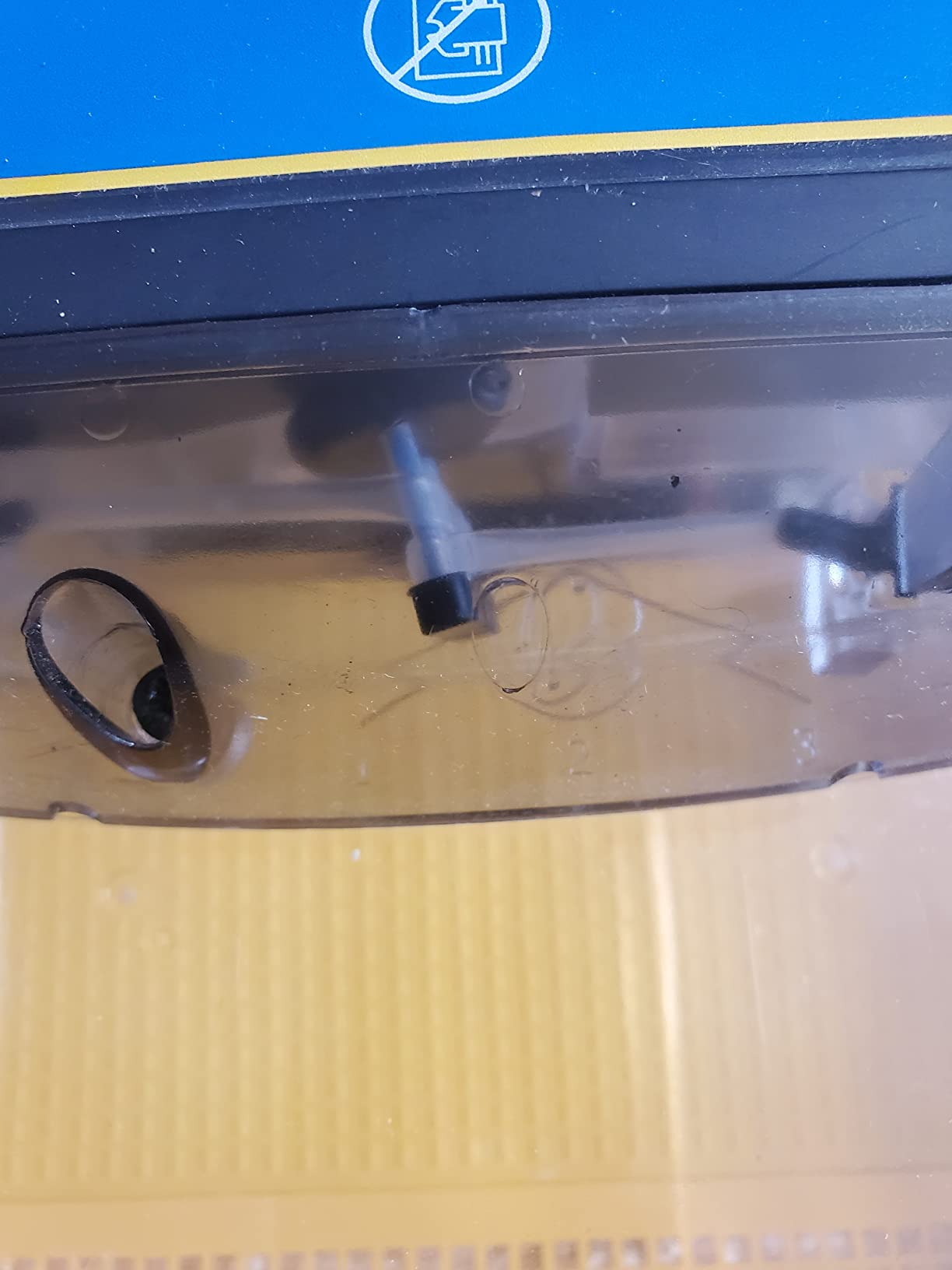
The single most common complaint is a missing cap on the external water bottle, which causes the unit to suck air instead of drawing water. If auto humidification stalls, check that the cap is seated before assuming the machine has failed.
If your eggs shipped and their air cells detached, side-rolling turning is not the right motion. And because the roller mechanism keeps eggs in one zone, any temperature gradient in the chamber affects the whole batch equally rather than averaging out.
56 egg capacity with a humidity control motor
Automatic horizontal turning every two hours
Smart alarm for temperature and humidity deviation
8 adjustable dividers for mixed egg types
This is the loudest machine in the roundup, and for a 28-day duck cycle that is arguably a feature. The smart alarm triggers when temperature moves more than plus or minus 2F or humidity more than 10% from your set point, then re-triggers every 15 minutes for temperature.
Most duck keepers checking a display twice a day would never catch a four-hour excursion. This one tells you, which is exactly what you want when the eggs are unattended overnight.
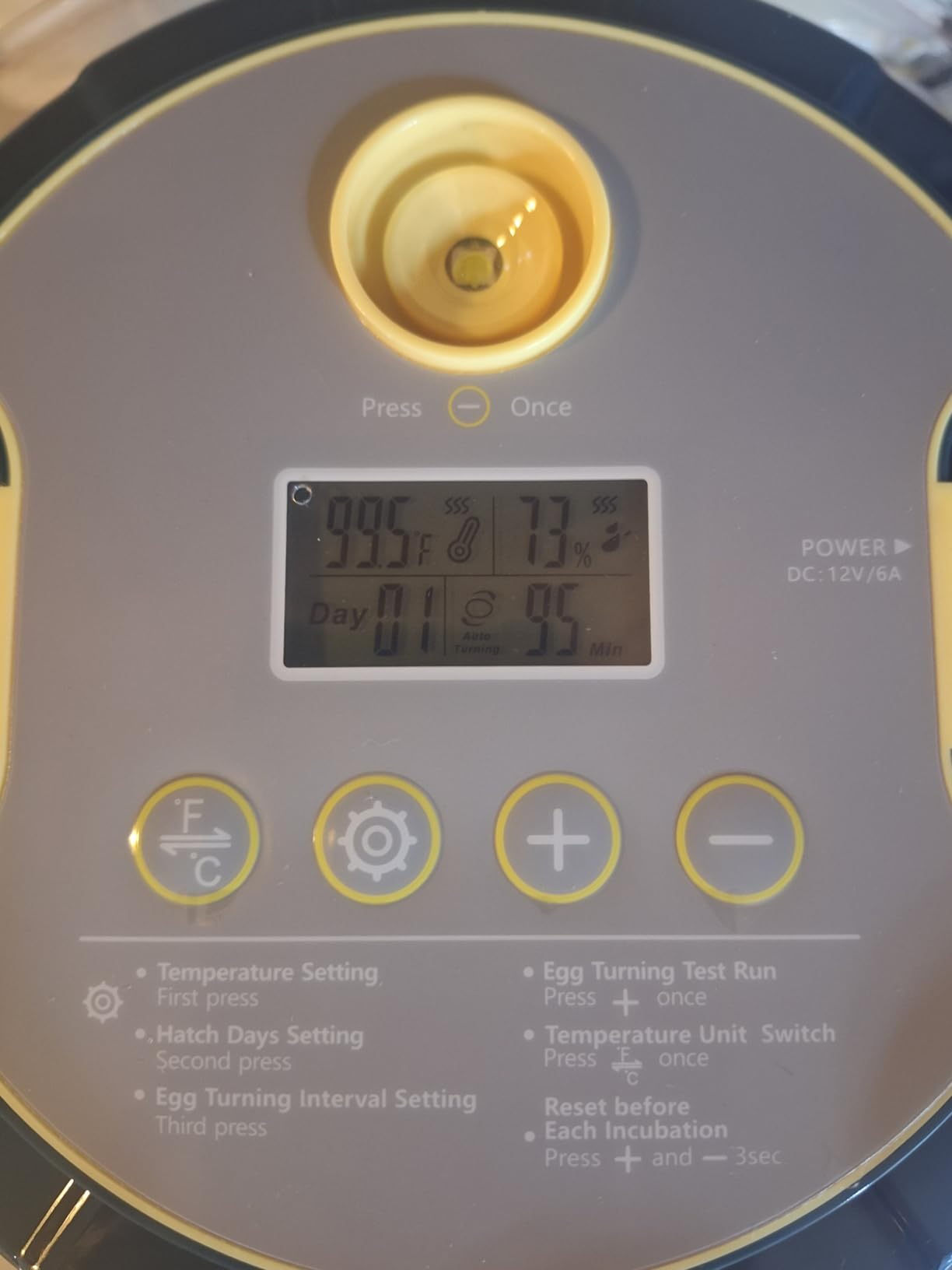
The humidity control motor meters water drip into the chamber, so like the IBKINXX this is a closed-loop system rather than an open pan. Eight adjustable dividers let you configure the tray for duck eggs alongside quail or pigeon eggs in a single run.
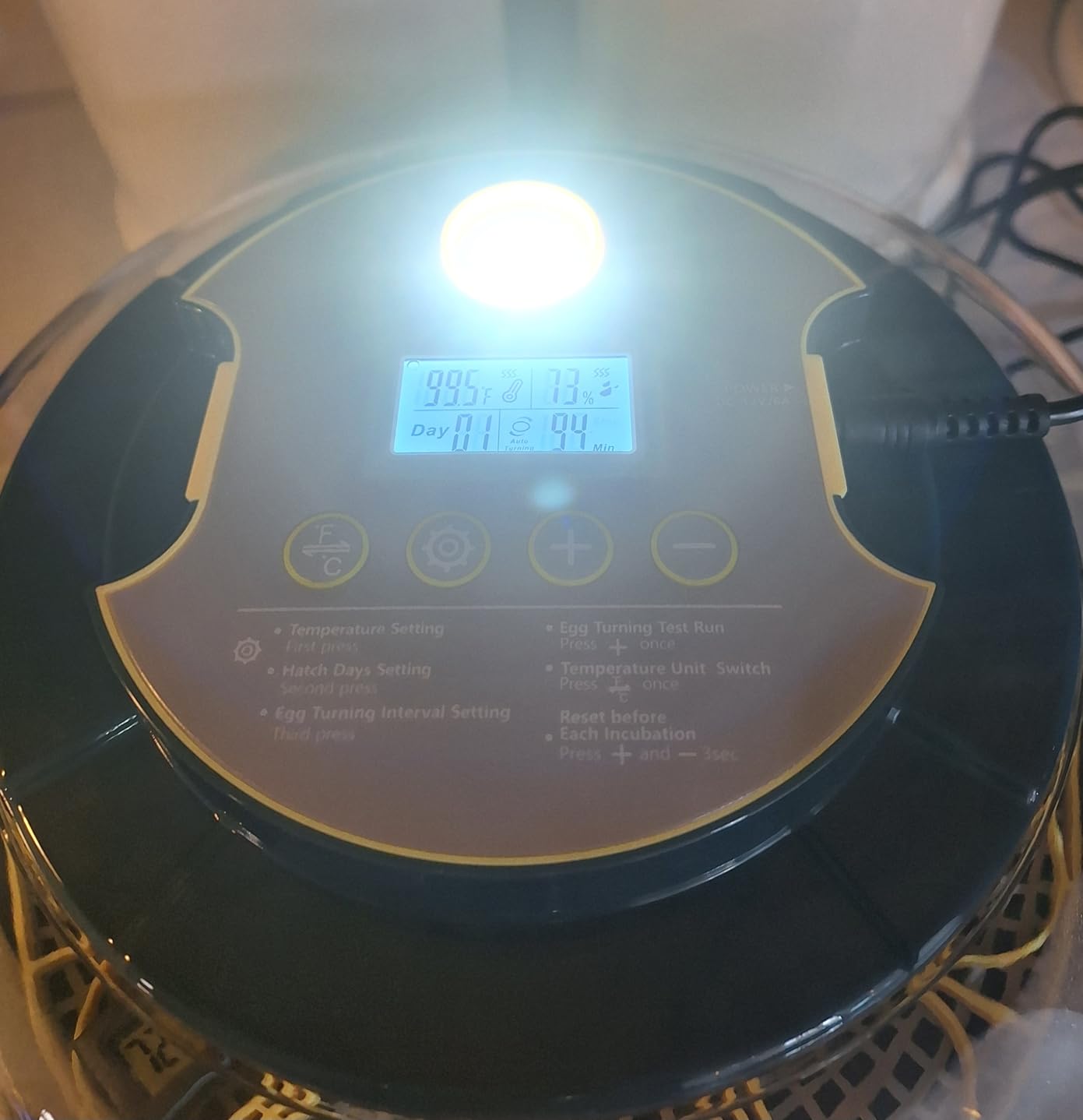
Humidity control here depends entirely on the hose being assembled correctly. If it is routed wrong, the drip never reaches where it should and the readings drift. Assemble it with the instructions open, before you load a clutch.
Skip it if you run the unit in a bedroom or any shared space. Buyers describe the alarm as intrusive when it cycles repeatedly, and there is no way to fully mute it permanently. The tray removal on day 19 is also an extra step at a moment you would rather not touch the chamber.
18 standard egg tray plus an 8 slot large egg tray
External water bottle with automatic refill
Turning at 1, 2 or 3 hour intervals with lockdown stop
Independently measured 99.8F 24 hour average
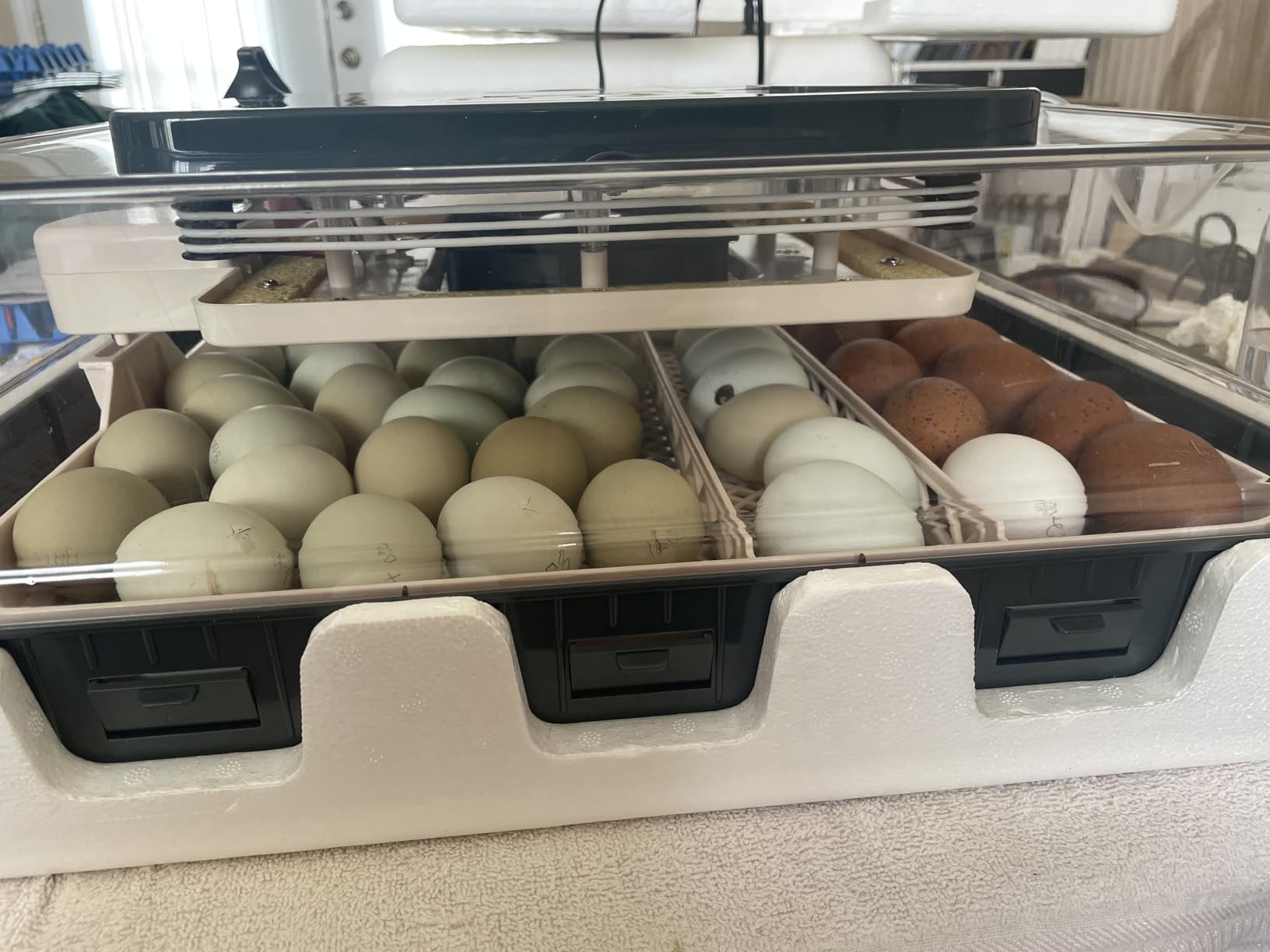
Almost every cabinet here claims to fit duck eggs, which usually means the big eggs sit in a tray designed for smaller ones. This one ships a genuine second tray: eight slots sized for duck, goose and turkey eggs, swappable with the 18-slot standard tray.
Independent sensor testing recorded a 24-hour average of 99.8F with a range of 99.1 to 100.6F, which is right in the forced-air target band. Buyers also report hatch results like 11 of 11 and 13 of 15.
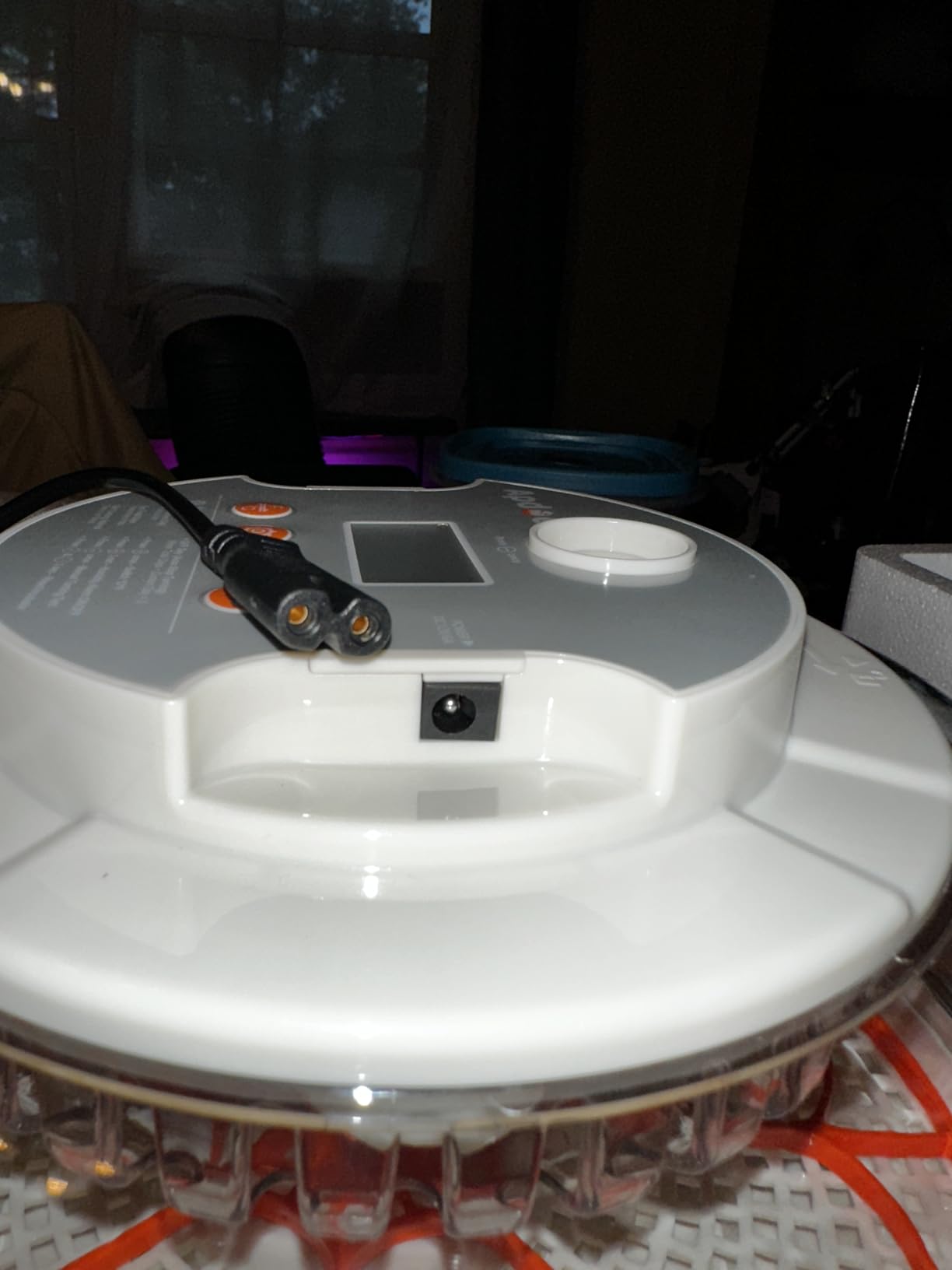
The external water bottle refills automatically, needing only two or three fills across a full cycle, and the adjustable air vent lets you raise or lower the humidity ceiling. Turning intervals at 1, 2 or 3 hours give you control over how much the oversized eggs are moved.
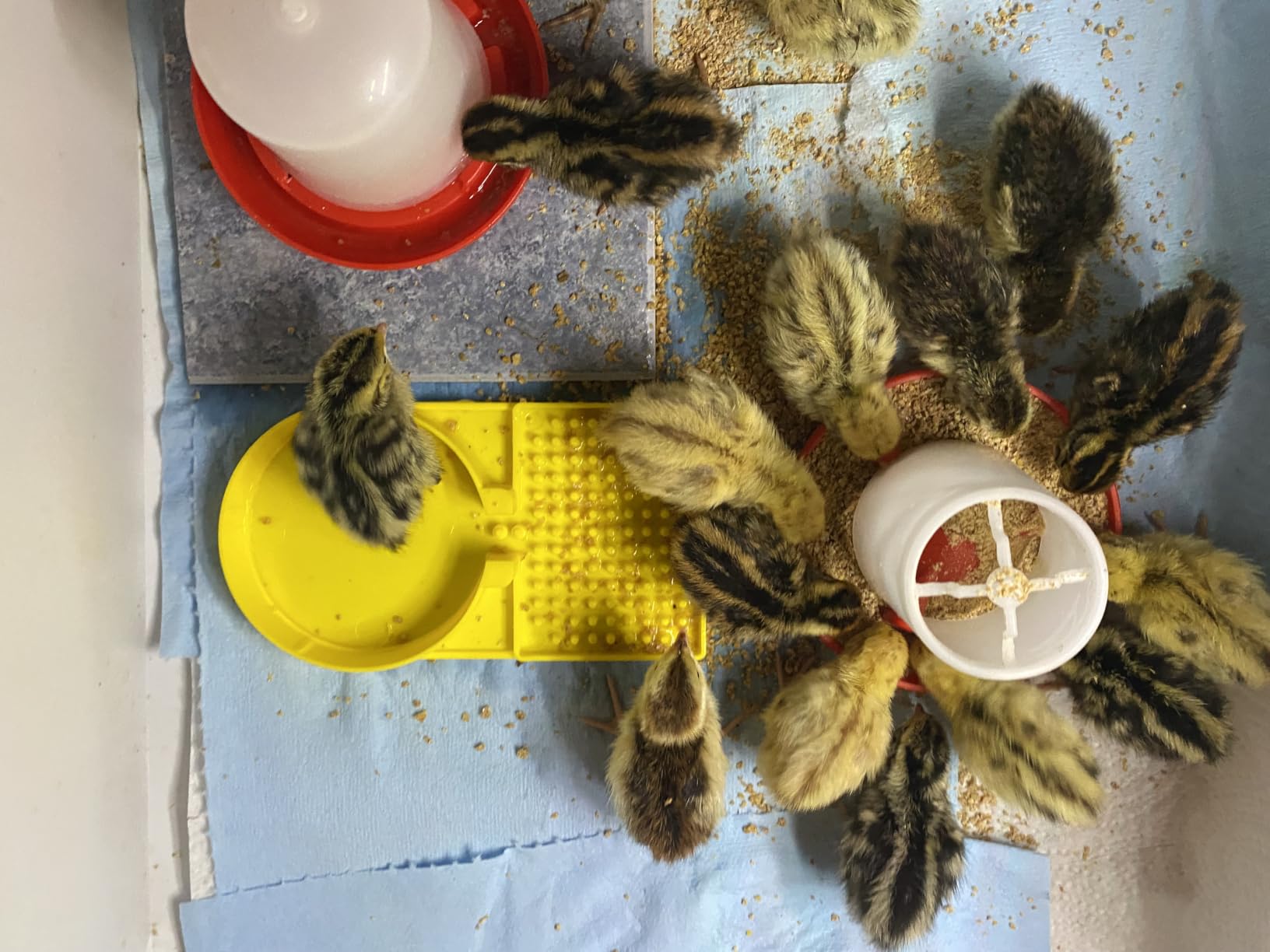
This model lets you set the current incubation day, which means you can transfer eggs mid-cycle from another machine without restarting the count. For Muscovy breeders juggling two boxes and different breeds, that is a real convenience.
Owners of the newest production revision report less consistent humidity than earlier versions and more frequent checking. Some models also need the circulation fan nudged to start. If you want zero intervention, pick a unit with a stronger reliability record.
18 chicken eggs or 8 large duck goose and turkey eggs
Automatic turning with 1, 2 or 3 hour intervals
External water bottle with automatic refill
3-year warranty with lifetime expert support
This has the highest average rating of the twelve units here, and at 11.8 inches square it is a genuine countertop unit rather than a floor model. One first-time hatcher reported 22 successful hatches on their first try with it.
The two interchangeable trays mirror the Apdoe design, giving you 18 standard eggs or 8 large duck, goose and turkey eggs in the same chamber. Programmable incubation day and automatic lockdown remove the day-count math at the end of the cycle.
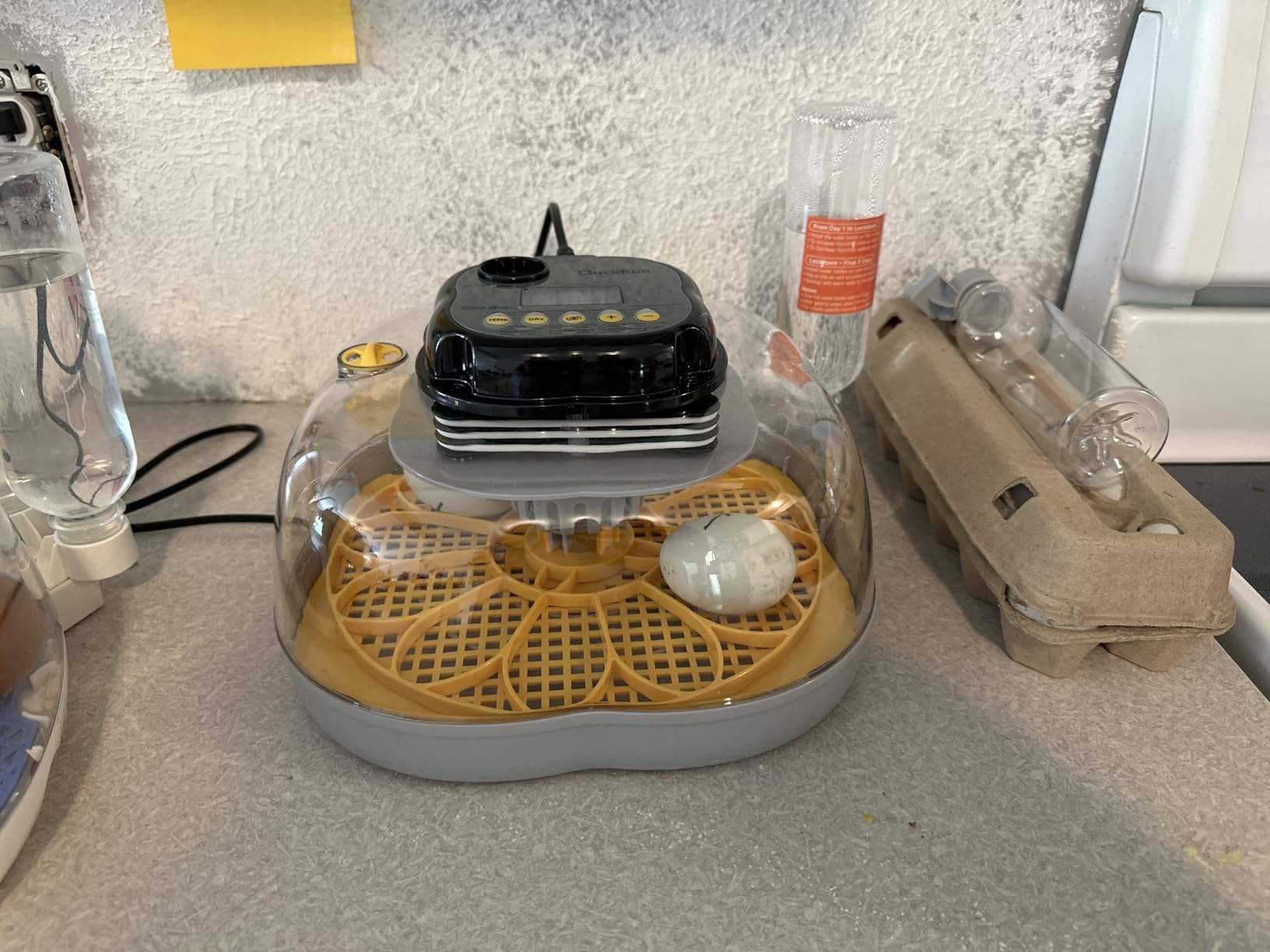
Water bottles maintain steady humidity between top-ups, and the 3-year warranty with lifetime expert support is unusual at this level. For a small flock that only hatches a dozen or two eggs a season, that support is worth more than raw capacity.
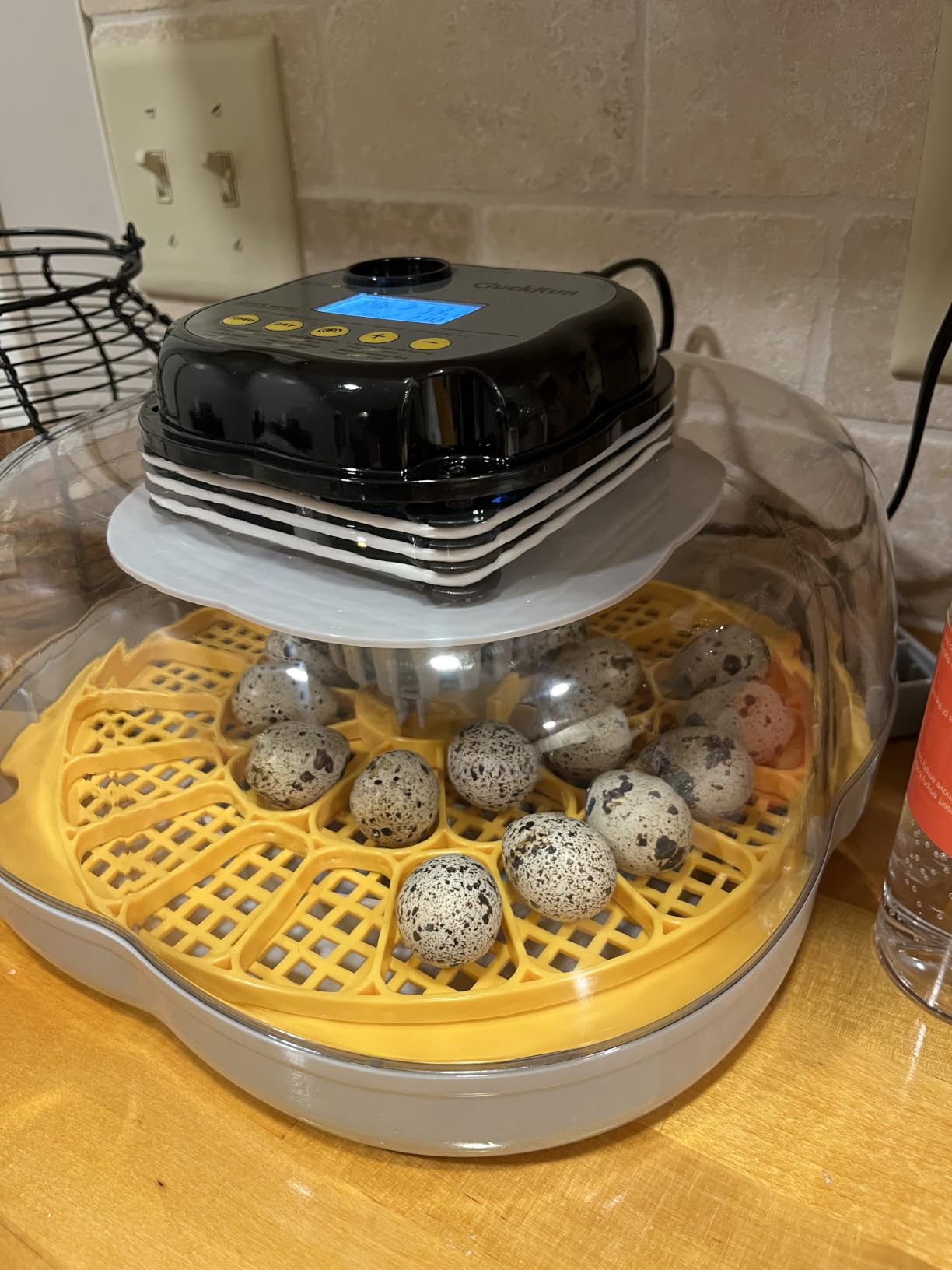
Owners are candid that humidity is the hardest setting here, particularly with the vent fully open. The advice is to avoid filling the water bottles completely during lockdown, or the reading overshoots. Budget a few days of adjustment at the start of the cycle.
If you are running a larger flock, the 12-egg configuration is especially tight for waterfowl, fitting only about six duck eggs. The candling light also illuminates the info screen, which is distracting when checking eggs in a dark room.
Rated capacity is quoted in chicken eggs, and duck eggs are larger and rounder. As a working rule, plan on roughly 60-70% of the rated number for duck eggs, and lower that further if you also run goose eggs. A 48-egg cabinet is realistically a 30 to 35 egg duck machine.
Only a handful of products here publish a duck-specific figure. Look for units with a deeper tray, a dedicated large-egg tray, or adjustable dividers, because a tight grid is the most common reason a clutch is smaller than expected.
Forced air with a fan is the better choice for ducks whenever your budget allows. It gives even conditions, tighter temperature control and less manual repositioning of eggs. Still air is cheaper and holds heat well, but you run it hotter at 101-102F and accept that temperature varies by height inside the box.
Every unit on this list has a thermostat, and not all of them are equal. Before you commit eggs, run the machine empty for a day and check it against an independent thermometer. A unit that drifts a degree or more across a day is one you will be compensating for all cycle.
Look for digital displays with a days-to-hatch counter, and for audible alarms on premium models. On a 28-day Pekin cycle or a 35-day Muscovy cycle, you will not be watching the display constantly.
Three designs appear here. Open water channels and reservoirs need manual topping up. External refill ports let you add water without opening the lid. Motorised and pump-driven systems meter water automatically and hold a set point for you.
Since duck eggs need 55-70% rising to 75-85%, the automated designs remove the most likely cause of a failed clutch. If you choose a manual unit, buy a separate hygrometer and accept a daily check.
This is where generic chicken reviews go wrong. Turners designed for round chicken eggs can under-rotate larger, rounder duck eggs. Prefer horizontal, intermittent turning on an adjustable interval, since constant side-rolling is harder on heavier eggs. Avoid tight roller mechanisms in a single zone, since they concentrate any temperature gradient.
Collect two or three times a day, store pointed end down, and try to set eggs within about a week. Longer storage reduces hatch rate, and washing the eggs removes the protective cuticle. Candle at day 7 to confirm fertility rather than assuming it.
If power fails, keep the lid shut. Duck eggs survive a short outage far better than people expect, and the trapped heat is your main defence. That is the argument for a model with a power-interruption alarm, since you cannot see a blackout you are not present for.
Set a forced-air incubator to 99-99.5F (37.5C) and a still-air model to 101-102F (38C). Run humidity at 55-70% through the first three weeks, then raise it to 75-85% for the final three to five days. Stop turning Pekin eggs on day 25 and Muscovy on day 32, then leave the lid alone until they hatch.
Most domestic ducks including Pekin, Khaki Campbell, Rouen, Cayuga and Welsh Whitelack hatch in about 28 days. Muscovy ducks need roughly 35 days, and that longer cycle is the most common reason breeders lose a healthy clutch, because they end the run at day 28 out of habit. Set the incubator countdown to match your breed.
Not especially, and experienced keepers often report them as easier than chicken eggs. The requirement that catches people out is humidity, which needs to be higher and more carefully managed than for chickens. Get a stable thermostat and a workable humidity system, and you have a good chance of a strong hatch.
Aim for 55-70% relative humidity through the first three weeks, then raise it to 75-85% for lockdown and the final days. So 75% is not too high for duck eggs, it is roughly the right target at that stage. Chicken-egg guidance of 40-50% is too low for ducks and can leave ducklings stuck to the shell.
Collect eggs two or three times a day, store them pointed end down, and set them within about a week for the best results. The longer they wait, the lower the hatch rate. Do not wash the eggs, since washing removes the protective cuticle that helps them hold moisture through incubation.
If you want one machine that simply works for ducks, the Harris Farms Nurture Right is our pick. It is the only unit here with a published duck egg capacity, the 360-degree viewing makes candling painless, and the turner stops itself before hatch.
If you are running more eggs than that and want automation without a major commitment, the MATICOOPX 30 Egg gives you fan-driven circulation and a no-lid water refill in a compact footprint. For hatch volume rather than fuss, the Sailnovo 56 is the one with the strongest hatch-rate reports behind it.
Muscovy breeders on a 35-day cycle should look at the Brinsea Ovation 56 EX, where the pump-driven humidity and power-interruption alarms justify the cost. If your tray must physically fit oversized eggs, the Apdoe and CluckRun units ship a genuine large-egg tray, and the Farm Innovators 4250 uses a deep well for the same reason.
Whatever you choose, run it empty for a day against an independent thermometer, keep the lid closed as much as possible, and set the day count for your breed rather than for chickens. Those three habits fix more failed waterfowl hatches than any brand does.