Physical Address
304 North Cardinal St.
Dorchester Center, MA 02124
Physical Address
304 North Cardinal St.
Dorchester Center, MA 02124

Yes, a 1-year-old can absolutely use a ride-on toy, but the toy that gets used is almost never the one on the box photo. The best ride on toys for 1 year olds at this age are the wheeled toys a baby either sits in and scoots with their own feet, or holds onto while an adult pushes from behind. Everything else, pedal bikes, sit-on cars, battery motors, tends to sit unused until a child is closer to three. After weeks of comparing specs, wheel materials, seat heights and weight limits across a dozen models, plus reading what parents actually report back after the first birthday, that is the single most useful thing to know before you buy.
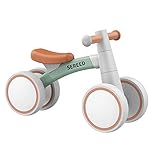
So which one wins? For most families the best all-round pick is the SEREED Baby Balance Bike. It is built for the 12-24 month window, the seat height is right for a newly walking one-year-old, the enclosed wheels are quiet on hardwood, and the 135-degree steering limit does most of the safety work for you.
That said, “best” depends on what your child is doing right now. A baby still cruising along furniture wants a push walker they can stand behind. A confident walker wants something with a seat they can drop into. And a family in a small apartment cares far more about floor damage and footprint than about working headlights. The picks below are grouped by riding style so you can match the toy to the stage rather than to the packaging.
One more expectation to set before we start: interest in a ride-on toy at this age often lasts a minute or two before the child wanders off to do something else. That is normal development, not a bad purchase. A toy that gets used for eight focused minutes a day for eighteen months is a good buy.
This is one of the most common questions in parent forums about this age, and the honest answer is that most one-year-olds are not developmentally ready to operate a self-propelled vehicle. Here are the four reasons it happens, and what actually fixes each one.
A ride-on car that lists “ages 1-3” often has a seat a 12-month-old cannot touch down from. The child then treats it as a push toy from behind, or climbs off within a minute. Measure the seat height against your child’s inseam, not the age label on the box.
Foot-to-floor riding asks for core strength and weight shift that most one-year-olds do not have. A balance bike that they straddle and push along the floor demands far less, which is why balance-bike-style toys dominate this age band.
Battery-powered cars with working horns, music and remote controls are among the most commonly returned gifts at this age, and parents describe children crying at the sight of a ride-on jeep. Save them for age three.
The single biggest fix. A convertible design that works as a push walker first and a ride-on later solves the whole problem, because the toy stays useful through the walking transition. Our best value pick, the Skip Hop 3-in-1, is built exactly this way.
These three cover the three genuinely different use cases at this age, and each one is a genuinely different design rather than a variation on the same shell.


Twelve models, side by side. The feature list for each tells you at a glance which of these actually suit a one-year-old, because the difference between a push-along and a foot-to-floor ride-on is the difference between a toy used daily and a toy used once.
| Product | Features | |
|---|---|---|
| SEREED Baby Balance Bike |
|
Check Latest Price |
| Skip Hop 3-in-1 Unicorn |
|
Check Latest Price |
| Gamfeiny Light-Up Balance Bike |
|
Check Latest Price |
 YBIKE Pewi Walker YBIKE Pewi Walker |
|
Check Latest Price |
 Mercedes G-Wagon Push Car Mercedes G-Wagon Push Car |
|
Check Latest Price |
 CAT Excavator Push Car CAT Excavator Push Car |
|
Check Latest Price |
 Little Tikes Tractor and Cart Little Tikes Tractor and Cart |
|
Check Latest Price |
 QDRAGON 3-in-1 Activity Walker QDRAGON 3-in-1 Activity Walker |
|
Check Latest Price |
 Fisher-Price Snack Cart Fisher-Price Snack Cart |
|
Check Latest Price |
 Little Tikes Rockin’ Dino Little Tikes Rockin’ Dino |
|
Check Latest Price |
 DOLU Walk and Drive Unicorn DOLU Walk and Drive Unicorn |
|
Check Latest Price |
 Fisher-Price Puppy Walker Fisher-Price Puppy Walker |
|
Check Latest Price |
We earn from qualifying purchases. CERTAIN CONTENT THAT APPEARS ON THIS SITE COMES FROM AMAZON. THIS CONTENT IS PROVIDED 'AS IS' AND IS SUBJECT TO CHANGE OR REMOVAL AT ANY TIME.
Ages 12-24 months
Four enclosed wheels, no pedal or brake
135-degree steering limit
3.5 pound aluminum frame
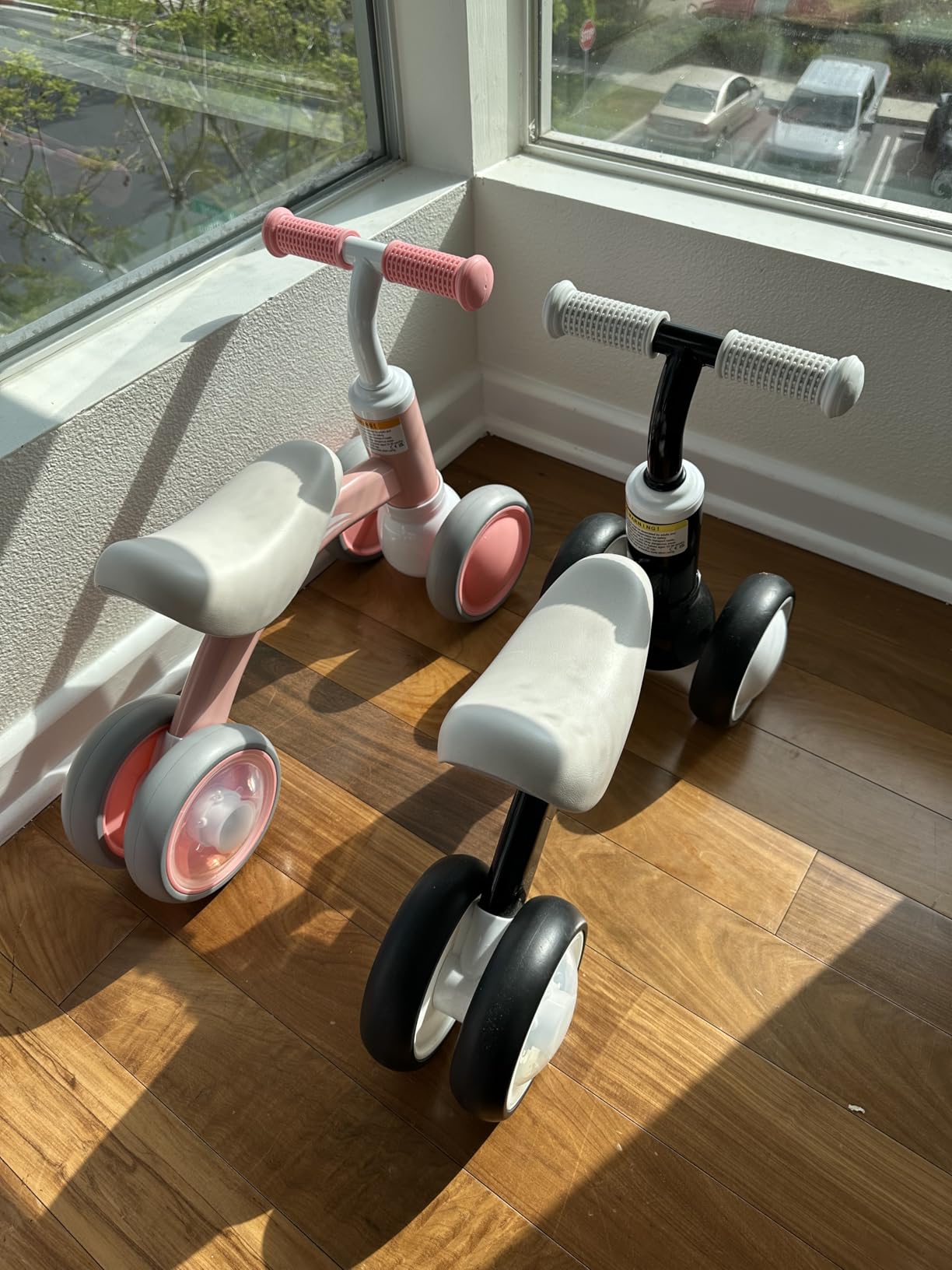
This is the toy we kept coming back to. The four enclosed wheels roll silently and never pinch a bare foot, which matters more than any of the headline features when the rider is a one-year-old in bare feet on a kitchen floor.
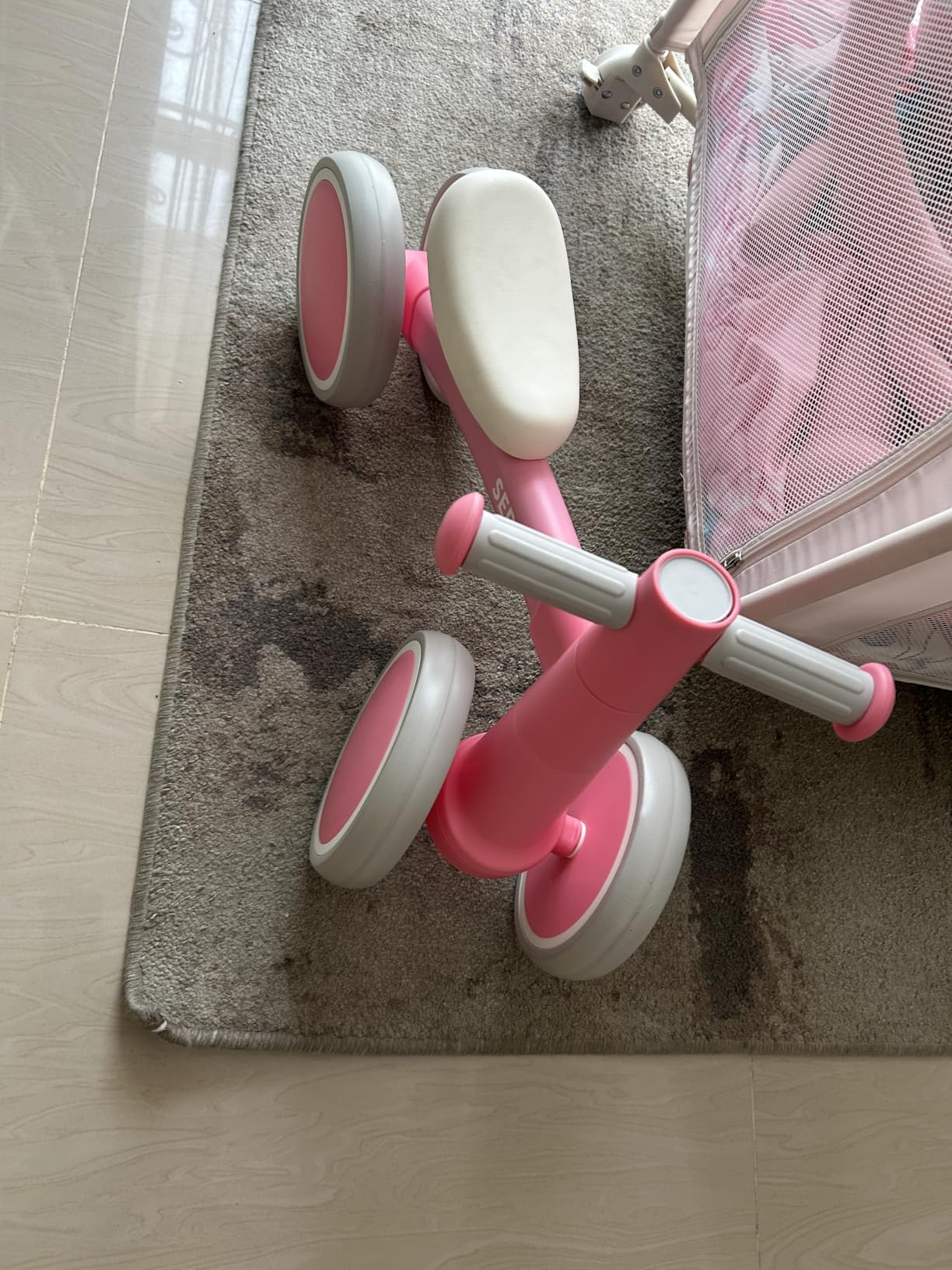
Owners consistently describe it as the right height for a first birthday and say their child was riding it from about 12 months and still using it well past two. The 135-degree steering limit with gravity steering is the quietly excellent feature: it physically prevents the handlebar turning far enough to put the bike on its side.
There is no pedal to catch a foot, and the wheels are fully widened and closed rather than open-spoked. That combination is the reason so many balance bikes in this category end up with scraped shins. The EVA tyre material rolls quietly enough for apartment living.
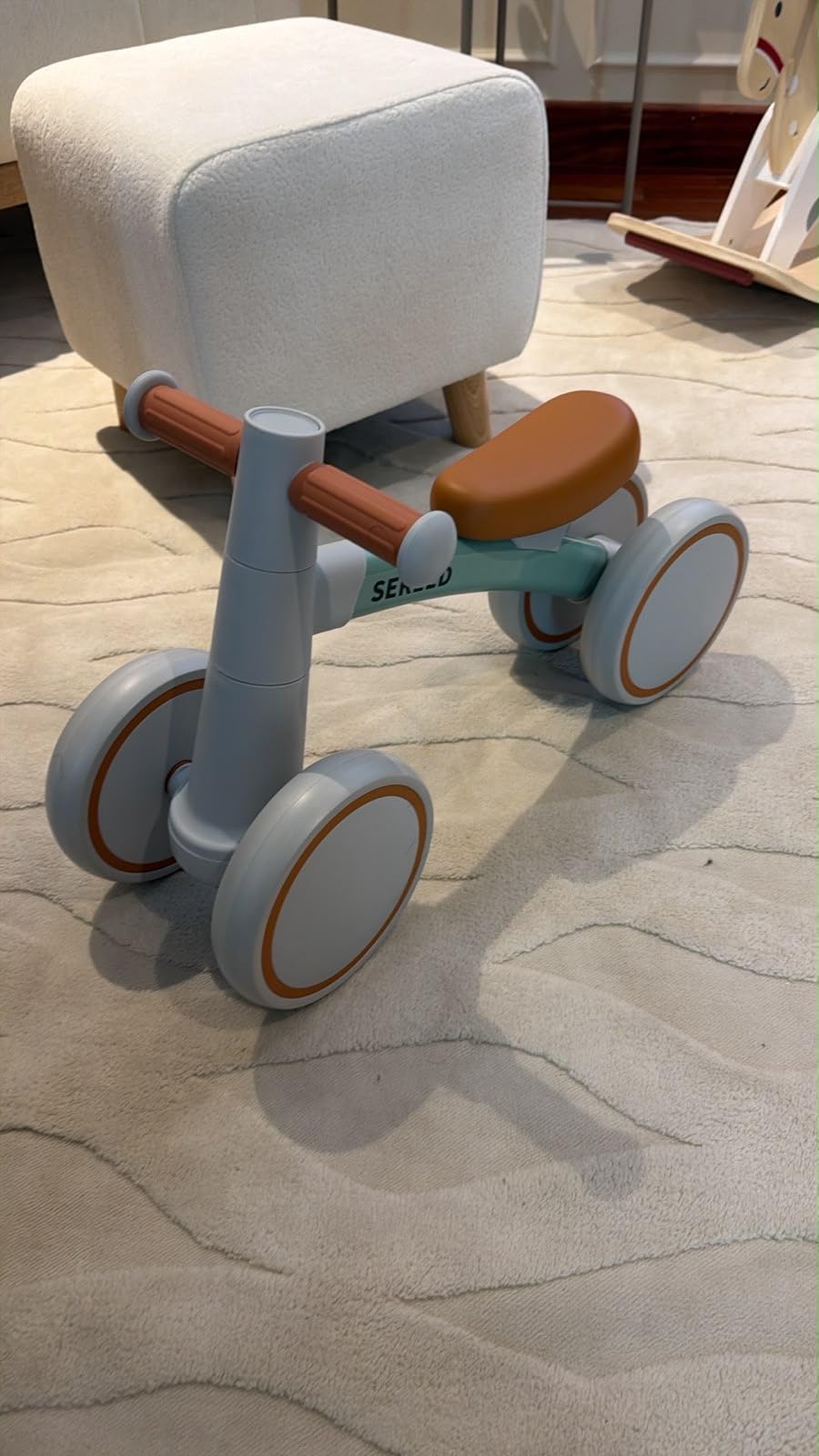
It is strictly a balance toy, with no brake and no pedals, so the day your child outgrows the four-wheel stage the toy is finished. Families who plan to move straight to a pedal bike will find that transition awkward. At 3.5 pounds it is also light enough that a running child can drag it into a wall, which cuts both ways as a safety feature.
Ages 12 months to 5 years
Walker then ride-on then scooter
50 pound capacity
Requires 3 AAA batteries, not included
The strongest argument for this toy is simple: it does not need replacing. A child starts on it as a push walker at 10 months, moves to the seated ride-on, then stands on it as a scooter well past two.
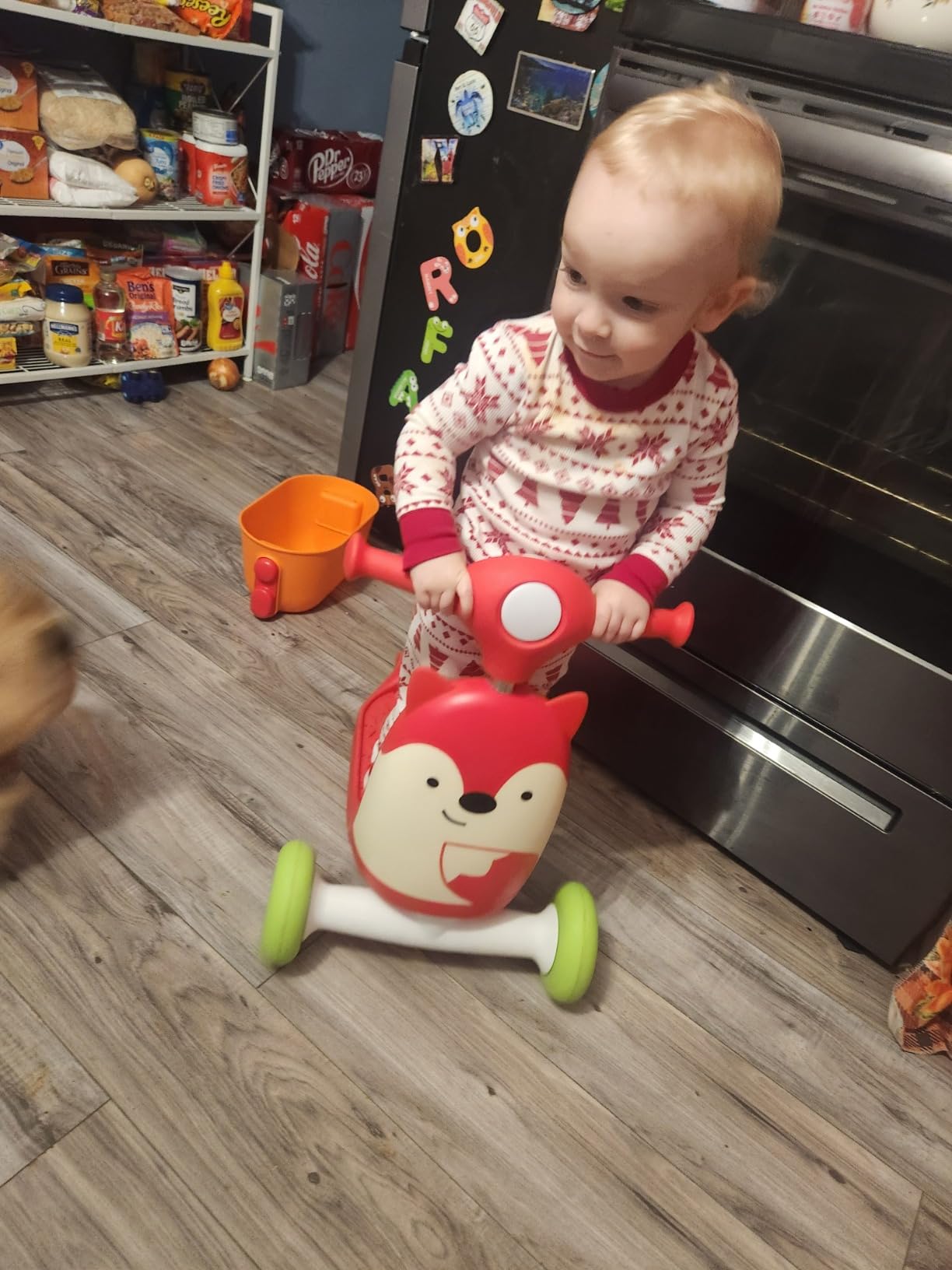
Parents treat it as one investment that spans the whole toddler walking phase rather than three separate purchases. The underseat storage tub is the detail that gets the most mention, because it turns into the seat itself and then carries toys around the garden afterwards.
The triangular wheel layout resists tipping and turns more easily than a four-wheel base, which matters for a child whose balance is still developing. It is a more forgiving toy on a smooth floor, provided an adult keeps a hand on the handle early on.
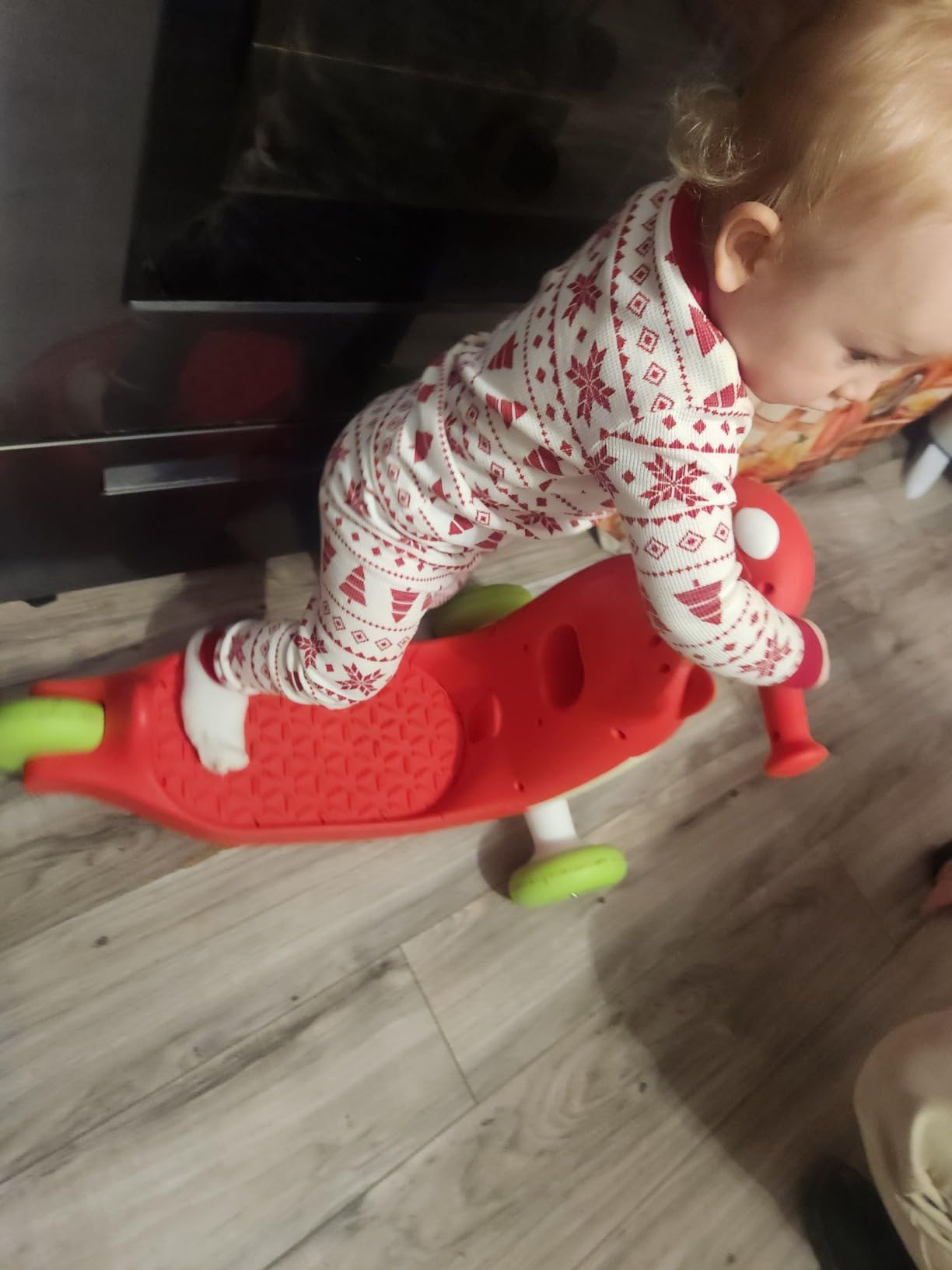
The repeated reservation is about weight. In walker mode it can slide away quickly on a smooth floor from a baby who is not yet steady on their feet, so keep a hand on it. It also needs three AAA batteries for the light and sounds, and they are not in the box.
Ages 10-36 months
Four closed wheels, no pedals
Rear wheel glows with no batteries
4.6 pound carbon steel frame
The glow is the hook, and it works better than it sounds. The rear wheel is lit through the spokes by the motion of spinning, so there is nothing to plug in, nothing to charge, and no battery compartment to lose.
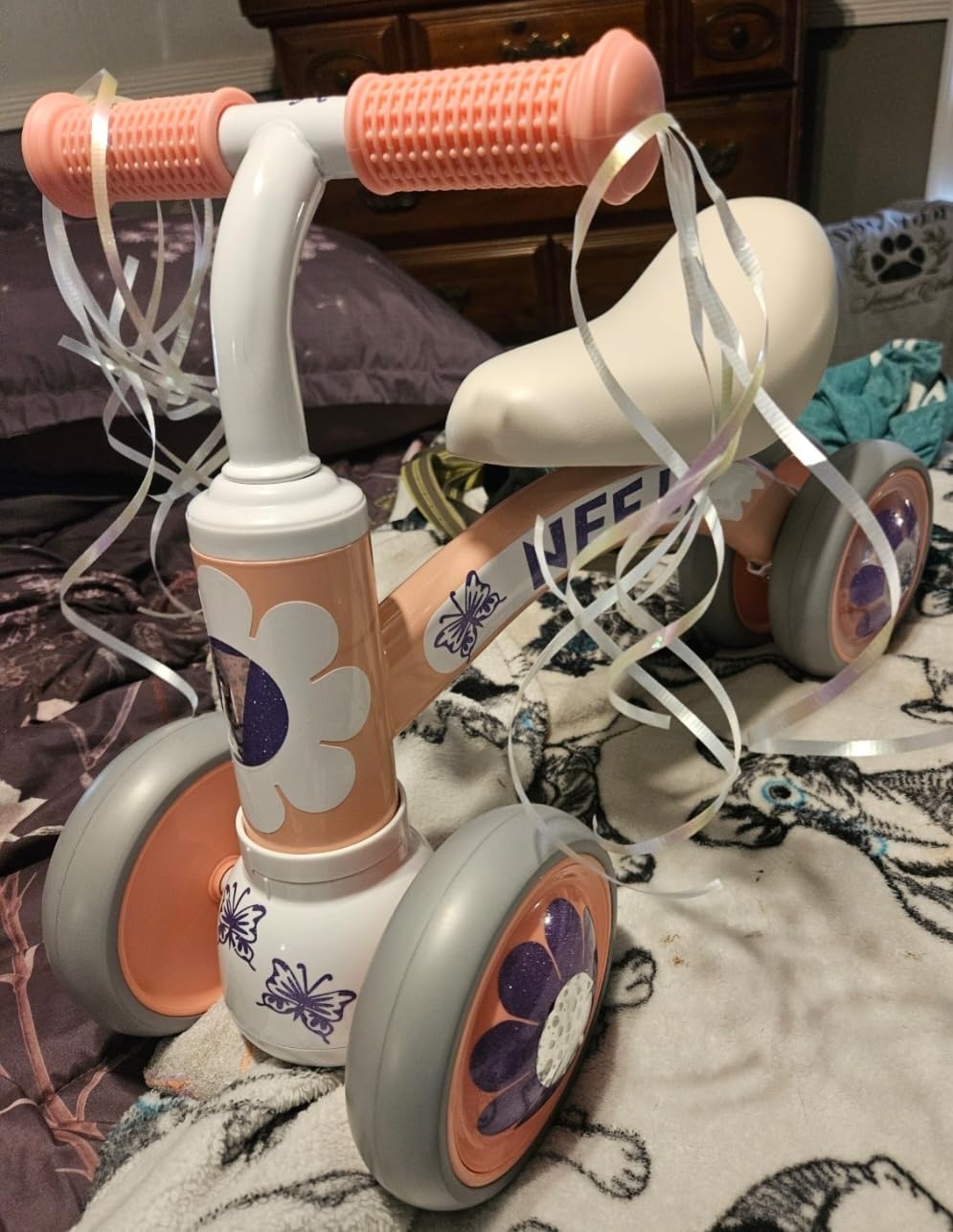
Several buyers report the frame is durable enough that much older siblings kept riding it, which is not what the 10-36 month label suggests. The same reviewers note that toddlers generally need a short adjustment period before they balance confidently rather than walking behind it.
The single most repeated warning in reviews is not a defect but an instruction gap. The handlebars mount facing the wrong way unless you check the picture, and the front wheel only locks into place when its notch is aligned. Budget five minutes rather than one.
The listed weight capacity of 4.6 pounds refers to the item weight rather than a rider limit, so treat the age range as the guide. The carbon steel frame is heavier than the aluminum alternative on our top pick but noticeably stiffer, which is why it survives being climbed on rather than ridden.
Ages 9 months to 3 years
44 pound capacity
21.5 x 17.5 x 17.5 inches
Non-marking 360-degree casters
This is the one we would hand to a family with a baby who is still furniture-cruising at twelve months. The design philosophy is different from everything else here: the child stands behind the seat and pushes it, so the toy supports a new walker on their feet instead of holding them in a plastic seat.
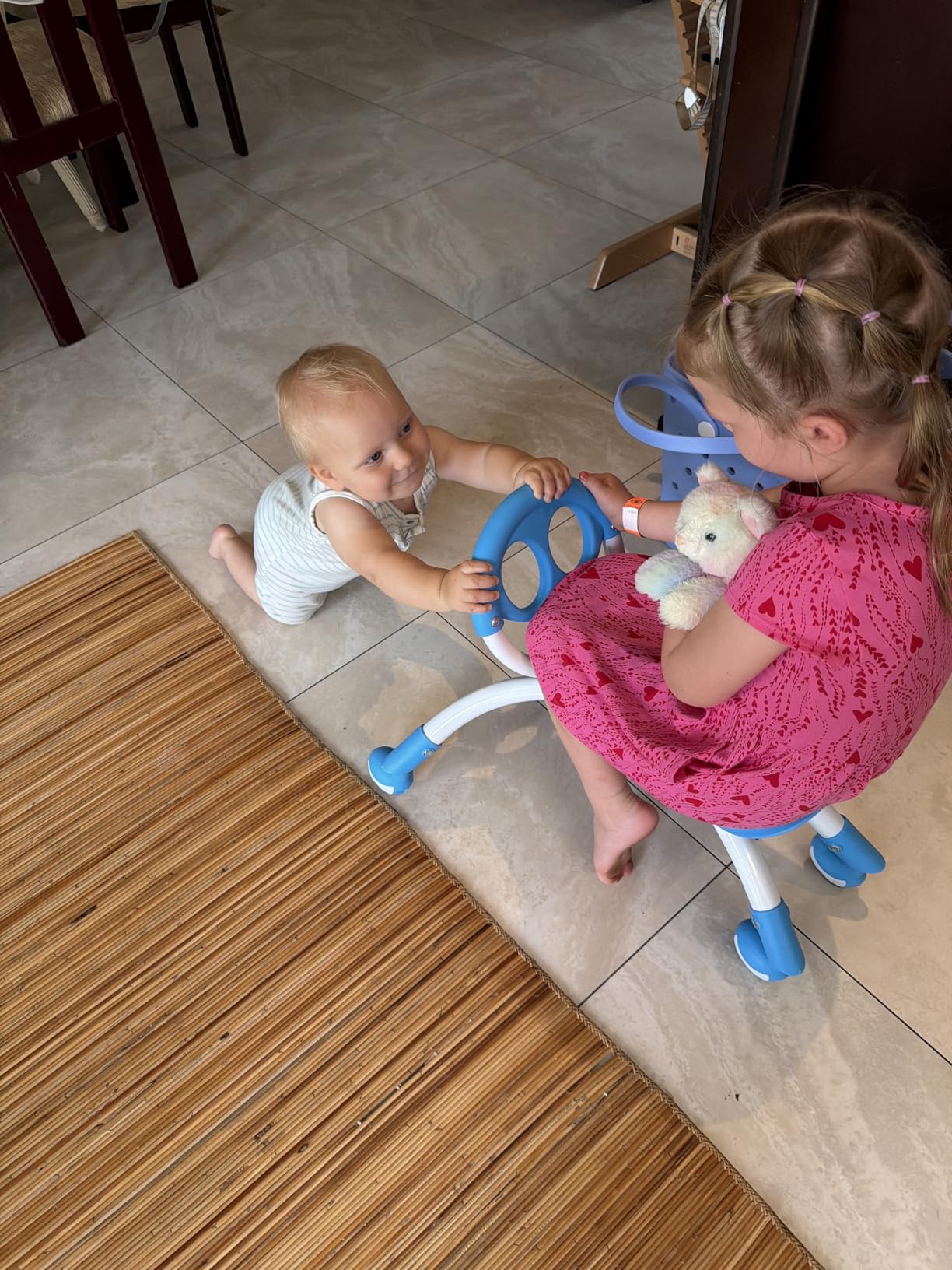
Owners are loyal repeat buyers who report the casters are genuinely non-marking on hardwood, and the alloy steel build surviving years and multiple children. That durability is why it shows up in so many second-hand listings still in working order.
Multi-directional casters mean the toy moves in any direction without the child having to steer, which suits a baby whose steering instinct has not developed yet. They also roll quietly enough for indoor use, which matters in an apartment.
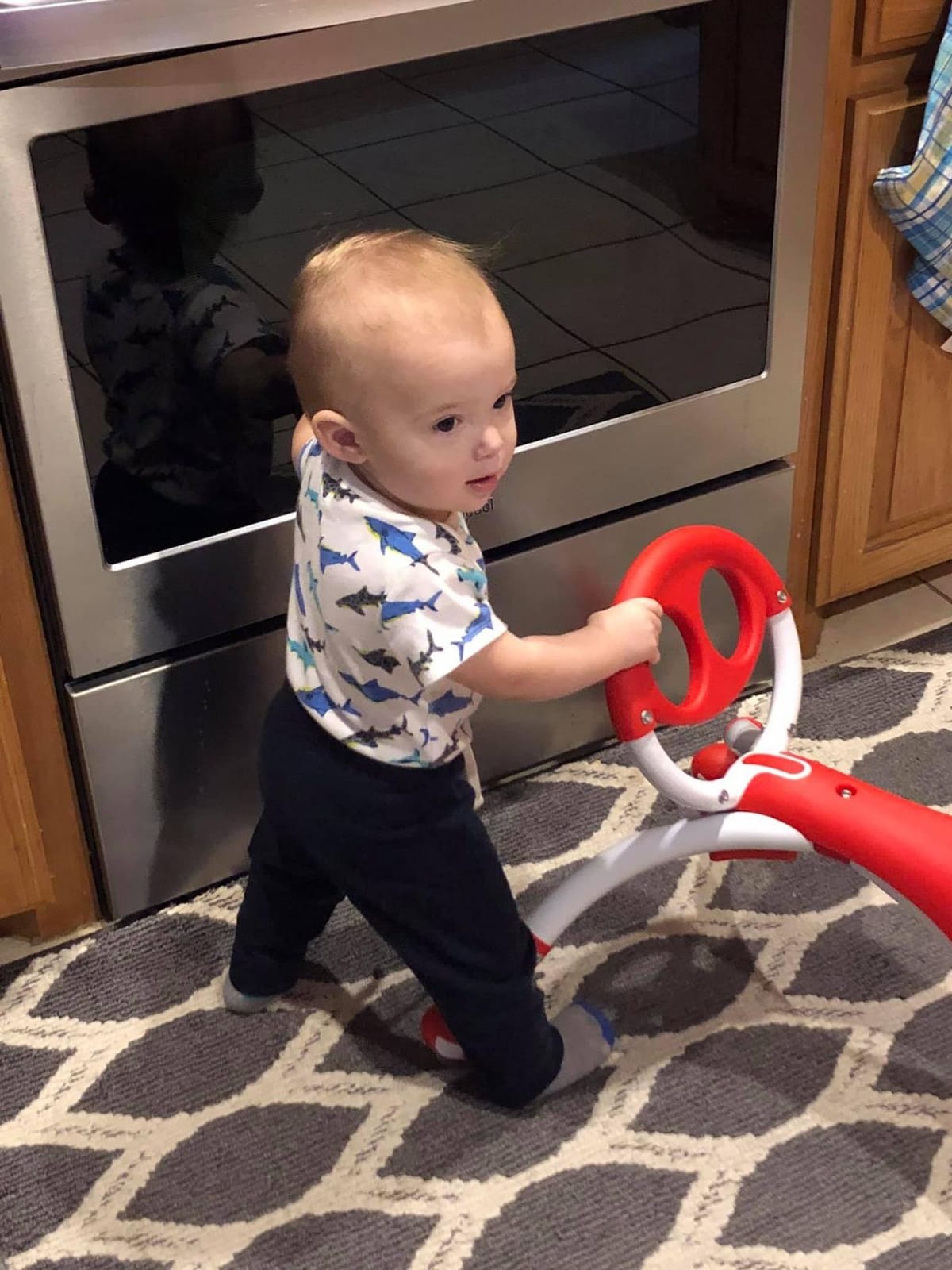
Several parents note the advertised 9-month rating is optimistic, with feet not reaching the floor until around 12-13 months even for a tall infant. If you buy at exactly twelve months, hold the handles until the child is steady, and expect about twenty minutes of assembly first.
Ages 1 to 3 years
55 pound capacity
26 x 12 x 12 inches and 8 pounds
Push handle, LED lights, horn, storage
At twelve months this is a toy a baby gets pushed around in, and that is exactly how reviewers describe using it. The parent push handle turns a ten-minute walk to the shop into something a one-year-old looks forward to rather than something you carry the child through.
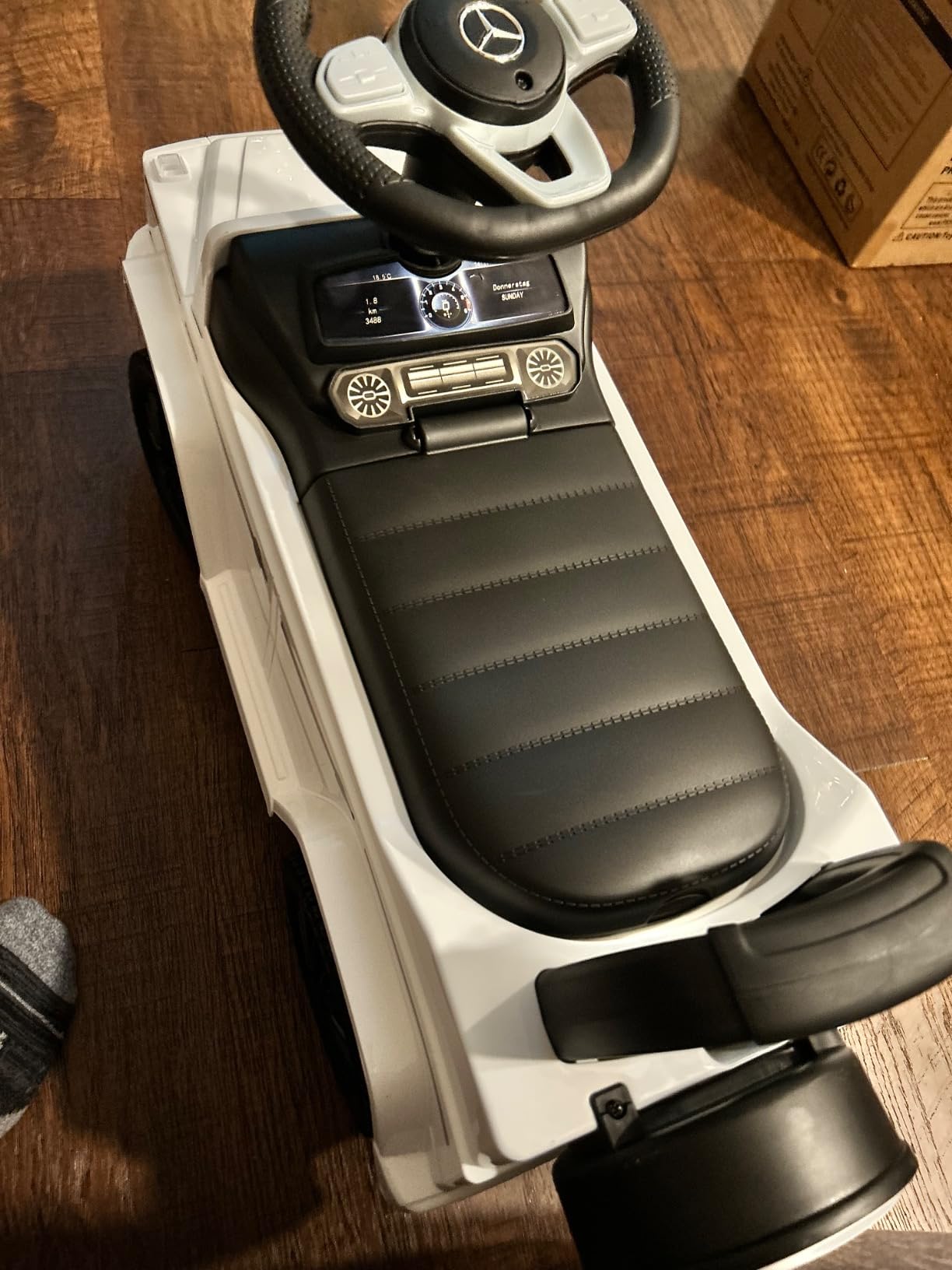
The styling is the other half of the appeal. Parents consistently report it sturdier and more premium-feeling than the specification list suggests, and the tufted faux-leather seat and working lights are what make it photograph well as a first-birthday gift.
The tall backrest and rear roll-board are doing the work that steering cannot at this age. They stop a child slumping sideways as the car moves and give a grip point while climbing up and down, which is where most falls happen with push cars.
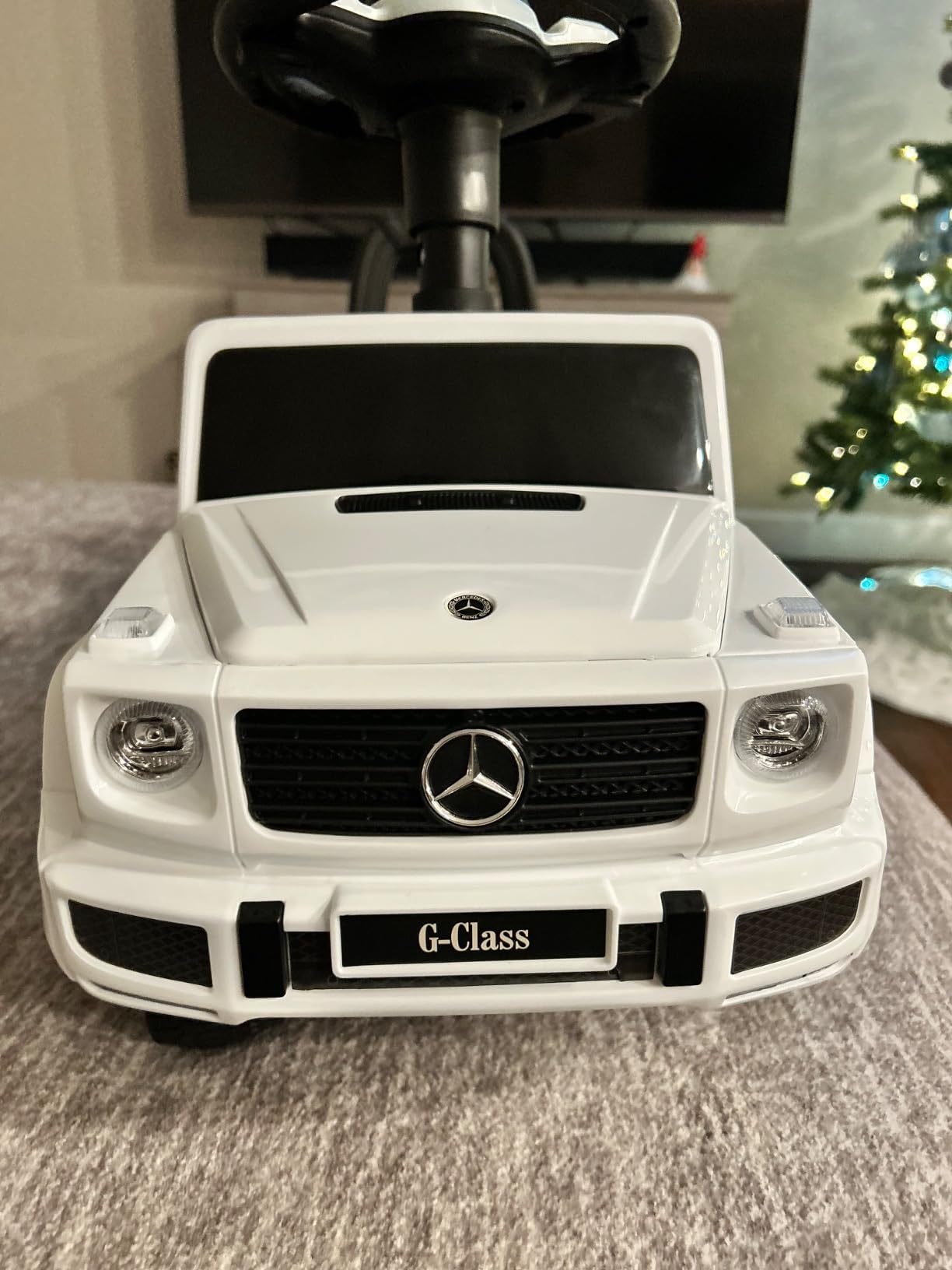
The consistent theme across reviews is that a 12-month-old needs an adult to push until their feet reach the floor. It is a toy a baby grows into rather than one they drive straight away, and the horn is genuinely loud on first contact.
Ages 18 months to 3 years
11 x 21 x 14.3 inches
6.2 pounds
Rotating front bucket with music and horn
If your child is fixated on diggers, this is the toy they will still be playing with a year from now. Parents of construction-loving toddlers report the licensed styling and functioning bucket driving daily repeat play well past the birthday it was bought for.
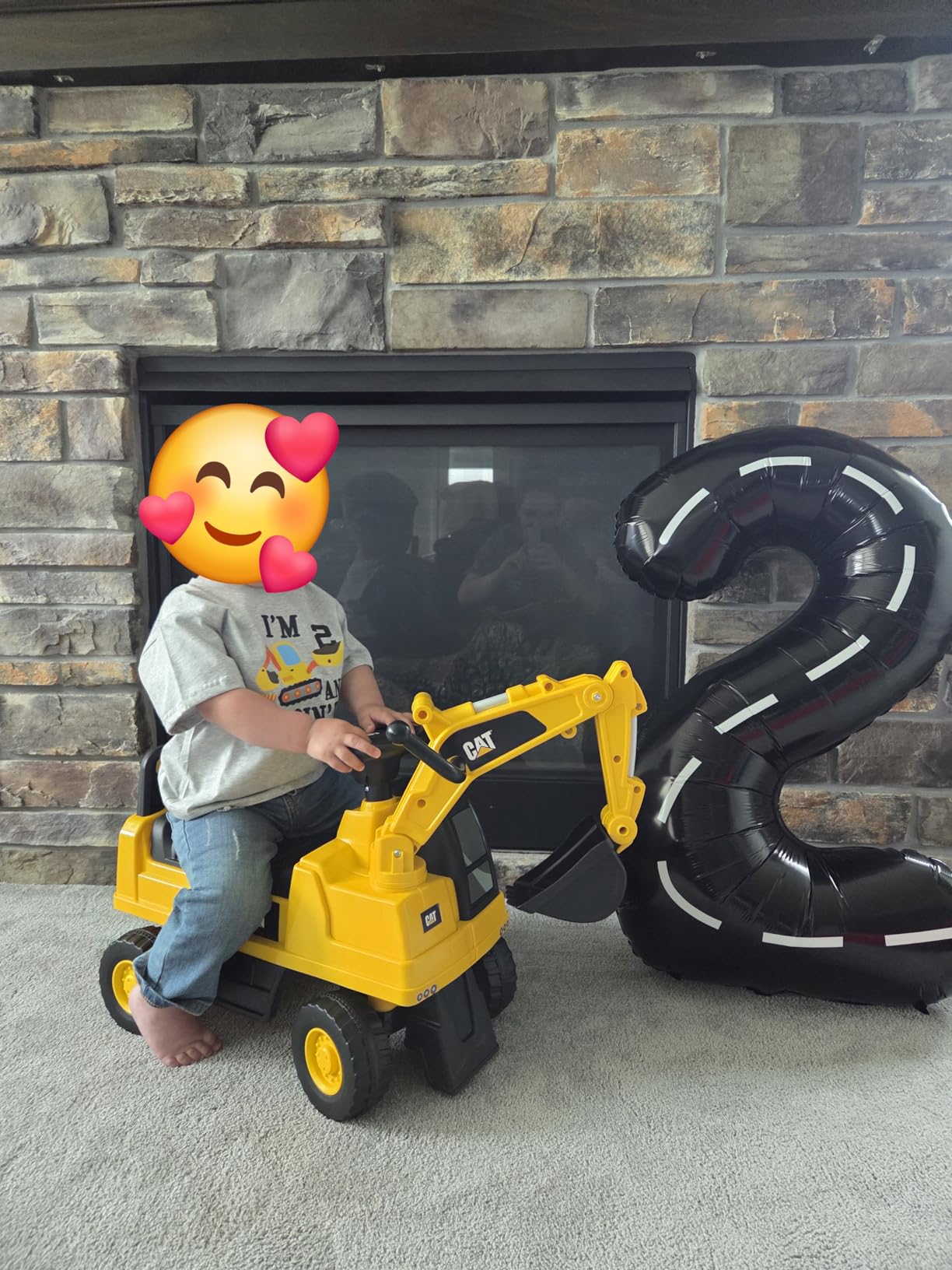
The bucket is the developmental hook as much as the fun one. Rotating it, filling it and tipping it is a repeated fine-motor sequence that needs more concentration than most ride-on toys at this age actually demand.
Two practical notes recur. The seat sits higher than most push cars, so around 11 months a child can manage sitting in it but not comfortably self-propelling. The bucket front also projects far enough to be a genuine bump hazard in a hallway, which is worth knowing before it becomes an obstacle course in a small home.
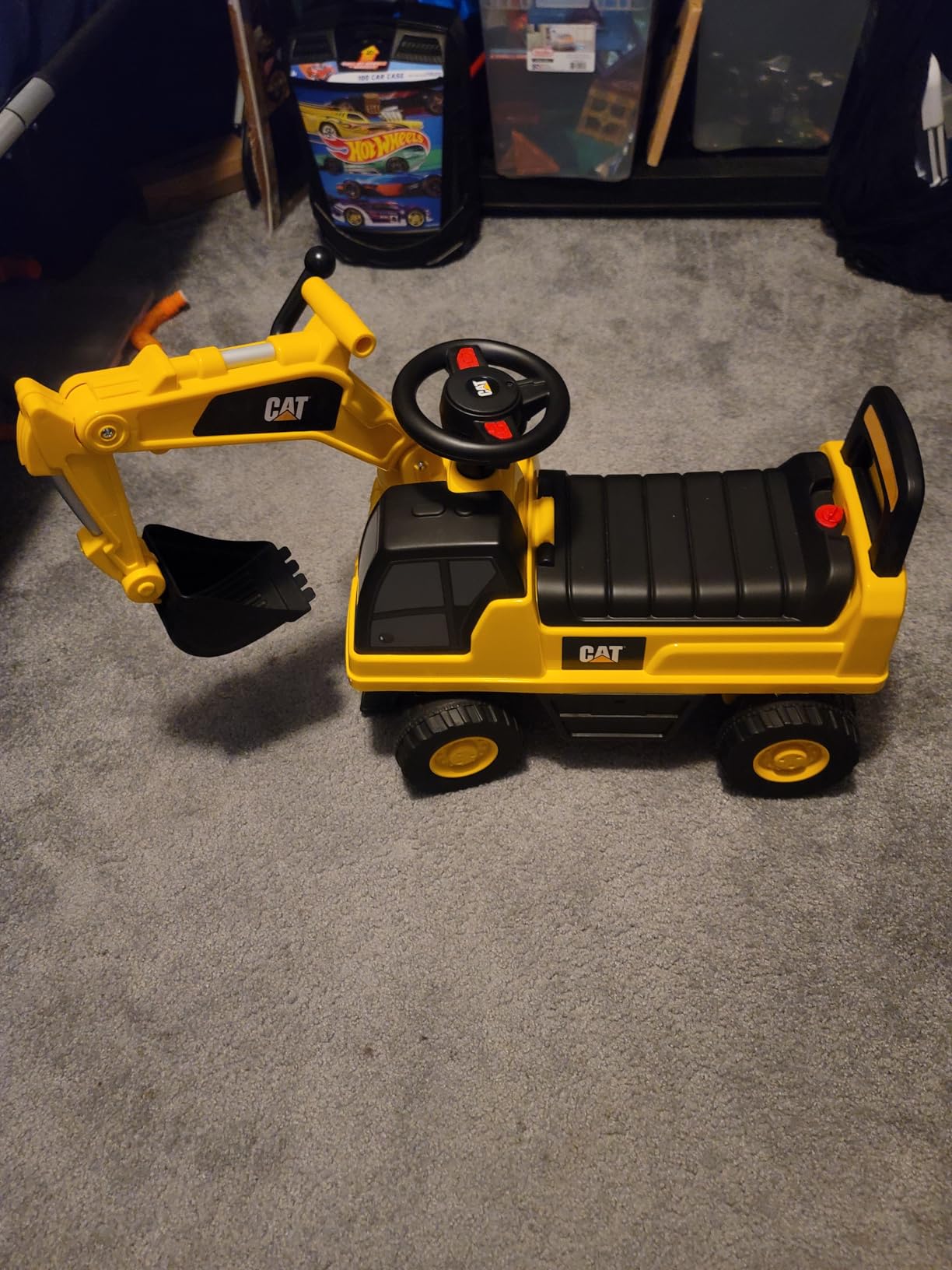
The steering wheel triggers music and a horn, which is the difference between a ride-on that gets used for a minute and one that gets revisited. The interactive element is doing more work here than the plastic body is.
Ages 1-5 years
50 pound capacity
22 x 16 x 12 inches
Foot-to-floor with an attachable cart
Foot-to-floor means the child sits and moves the toy by pushing their feet along the ground, with no pedals and no motor. It is the style where a one-year-old generates the movement themselves with their legs, and it directly builds the leg strength that walking depends on.
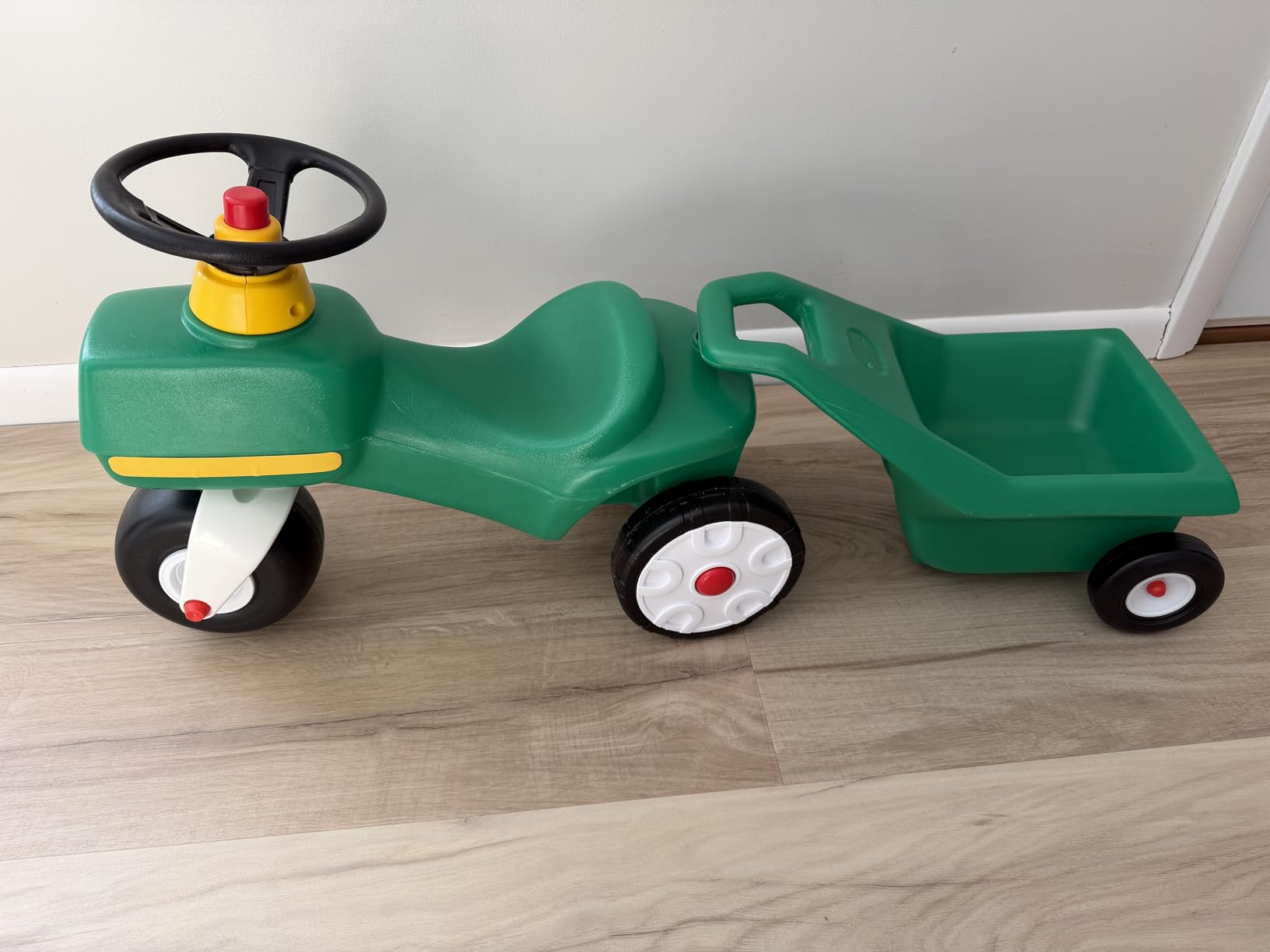
The age range here is genuinely wide, one to five, because the foot-to-floor position stays comfortable as a child grows. The cart attachment is what makes it a set rather than a single toy, and reviewers treat hauling things around the garden as half the appeal.
These are described as durable high-quality tires made for rugged outdoor play, and they behave that way on a driveway or a path. Indoors, the tractor plus cart measures close to 45 inches long, which is a meaningful footprint in a small apartment or a narrow hallway.
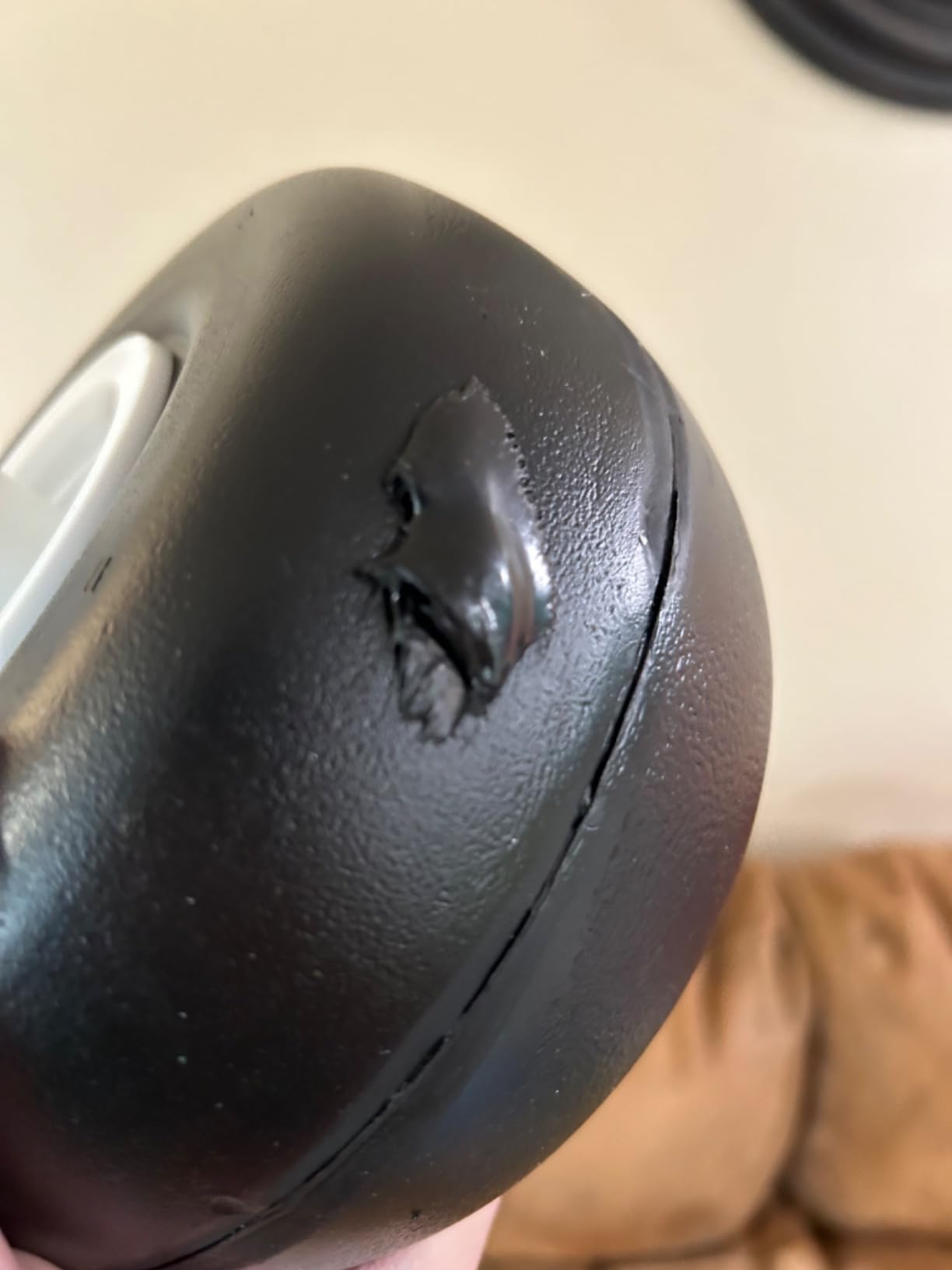
It needs a one-time adult assembly before play, which is the main setup step reviewers mention. Coming from a long-established ride-on brand, the shell and steering hardware are the parts most likely to outlast the child’s interest in tractors.
12-18 months
Walker then activity table then activity center
Fillable base tank
2 AAA for the piano, not included
The activity panel is what holds a one-year-old at this toy, and reviewers say so repeatedly. A turning cube, shape recognition block, turnable gear, beads, a basketball frame and an elephant-shaped electronic piano give a newly walking child something to do with their hands while their feet find the floor.
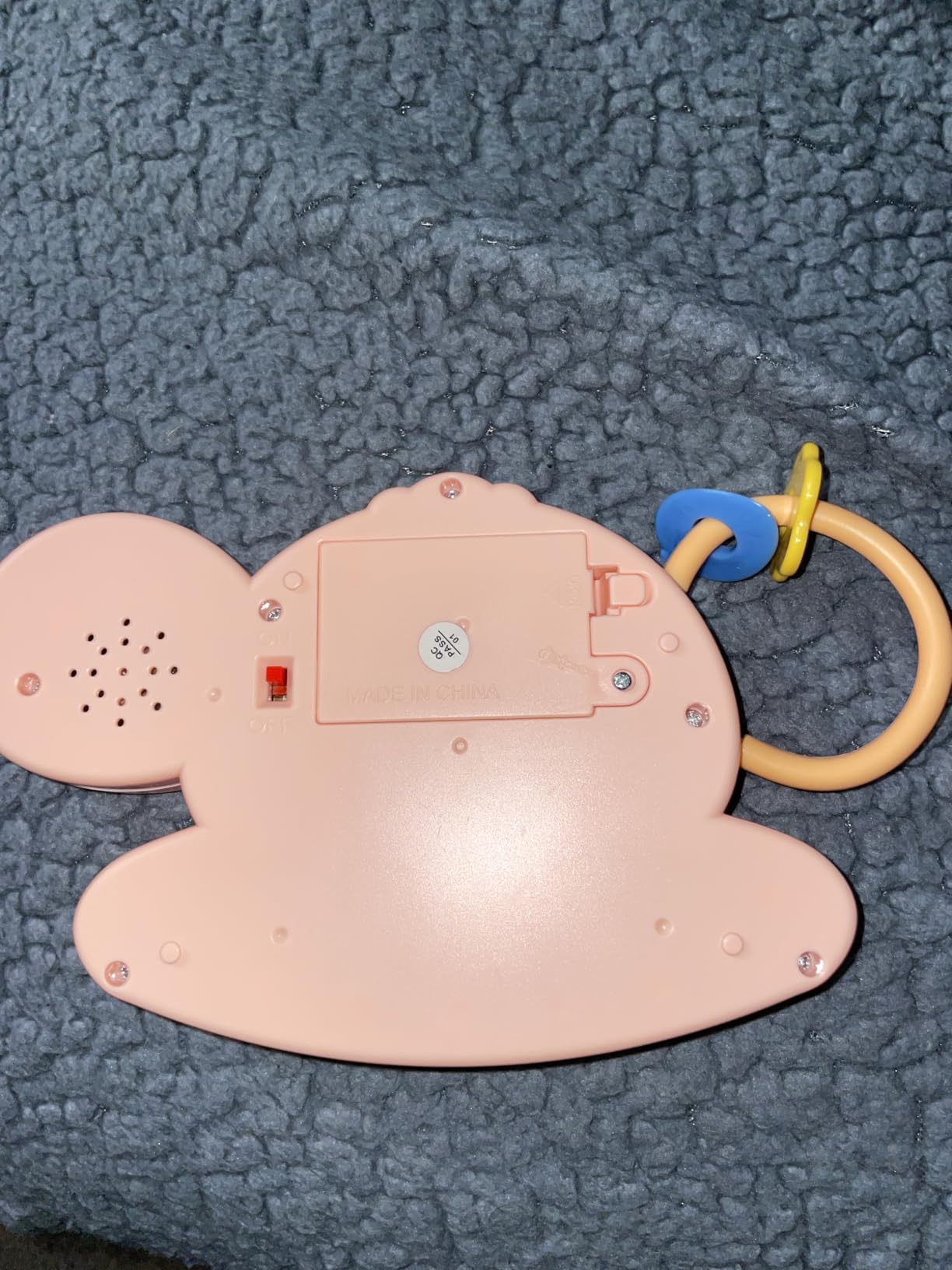
Several parents report the seller proactively replaced units, and for many it remains an affordable multi-mode option that does all three jobs. The water-or-sand base tank is a genuinely clever idea for a light plastic chassis, and it lowers the center of gravity enough to resist rolling over.
Small front wheels drag on carpet and high-pile rugs, so the walker mode performs poorly in a carpeted hallway or bedroom. It is a hardwood and tiled-floor toy, which narrows where you can realistically use it in a house that is carpeted throughout.
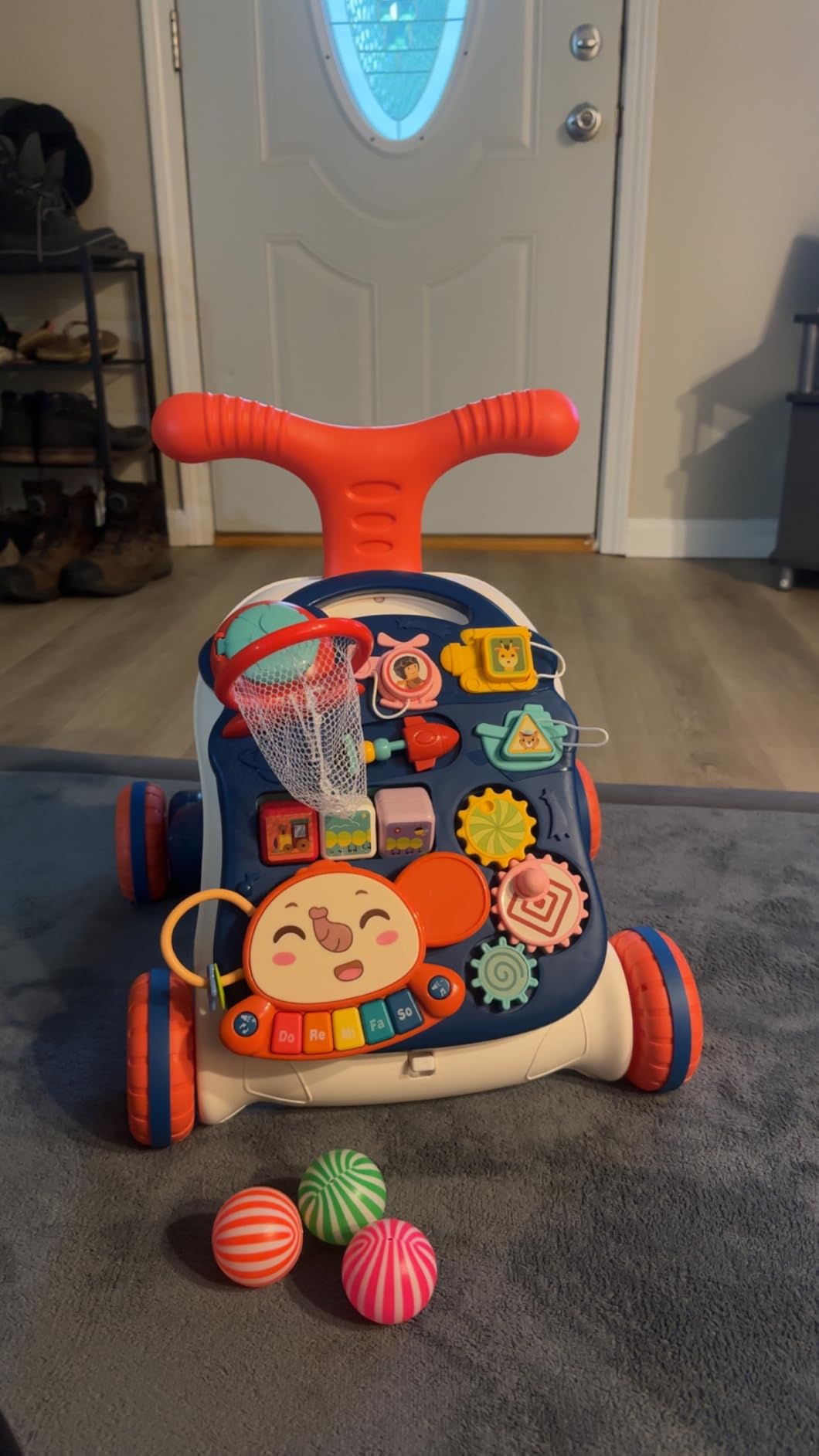
The tiny basketball-hoop balls are flagged repeatedly in reviews as a choking hazard for infants, and the hoop itself is easily broken off. This matters at exactly twelve months, when everything still goes into the mouth. Supervise, or remove the hoop panel before the walker stage ends.
Ages 6 months to 3 years
Four ways to play
Four selectable languages
135+ songs, sounds and phrases
This is technically a push walker rather than a ride-on, and we include it deliberately. A good push walker holds a new walker steady on their feet in a way a ride-on seat does not, and this one keeps working as a seated activity centre and a pretend shop long after walking is mastered.
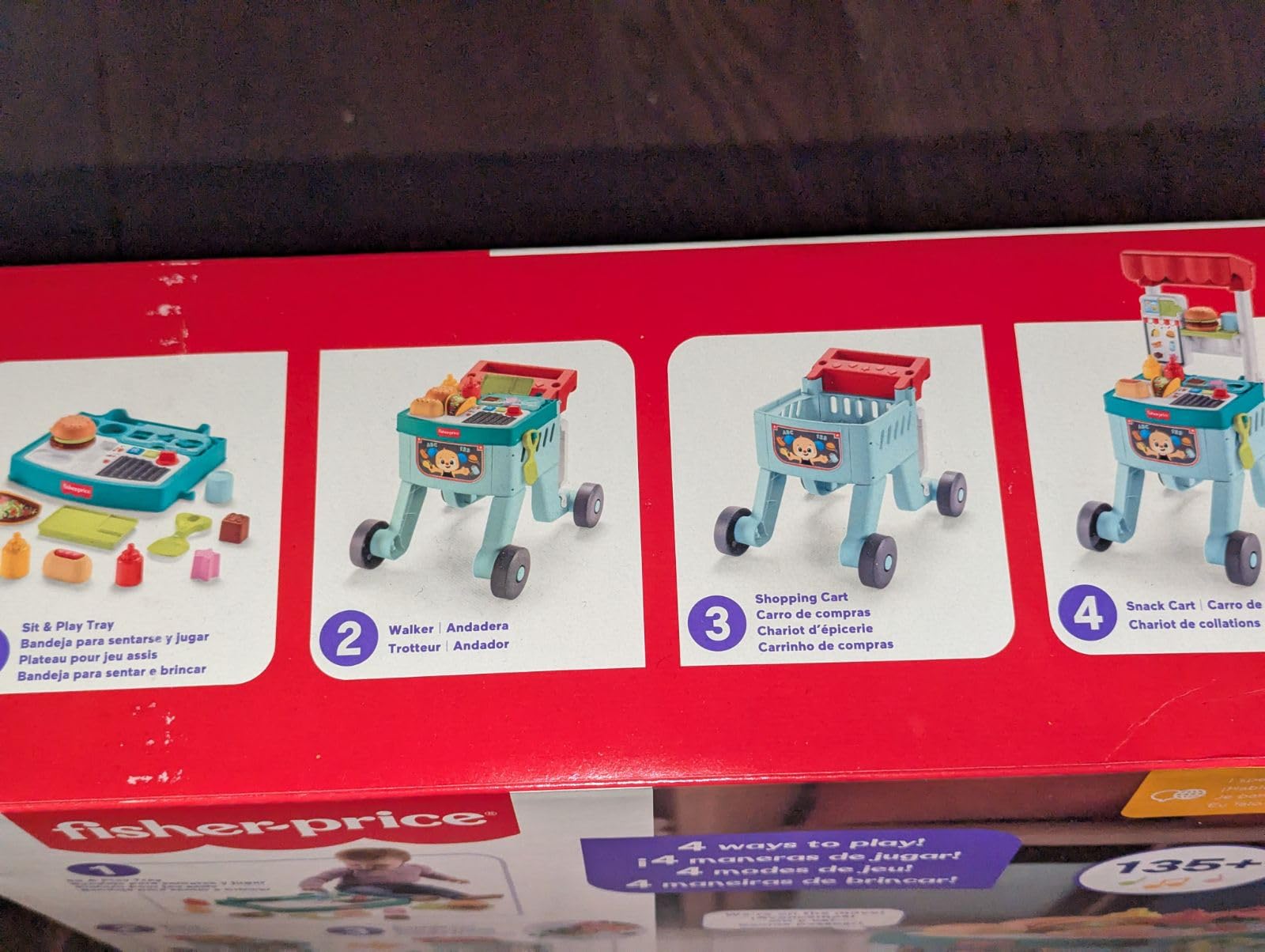
Grandparents and parents consistently praise how it grows with the child, describing a 1, 4 and even 5-year-old sharing it. The globe button that switches between English, Spanish, French and Brazilian Portuguese is the feature reviewers single out most often for value.
Smart Stages covers opposites, numbers and counting to ten, shapes and the alphabet. The 135-plus songs, sounds and phrases are triggered by pushing the cart, pressing buttons, turning the grill dial or opening the cooler door, so the child has to interact to get more.
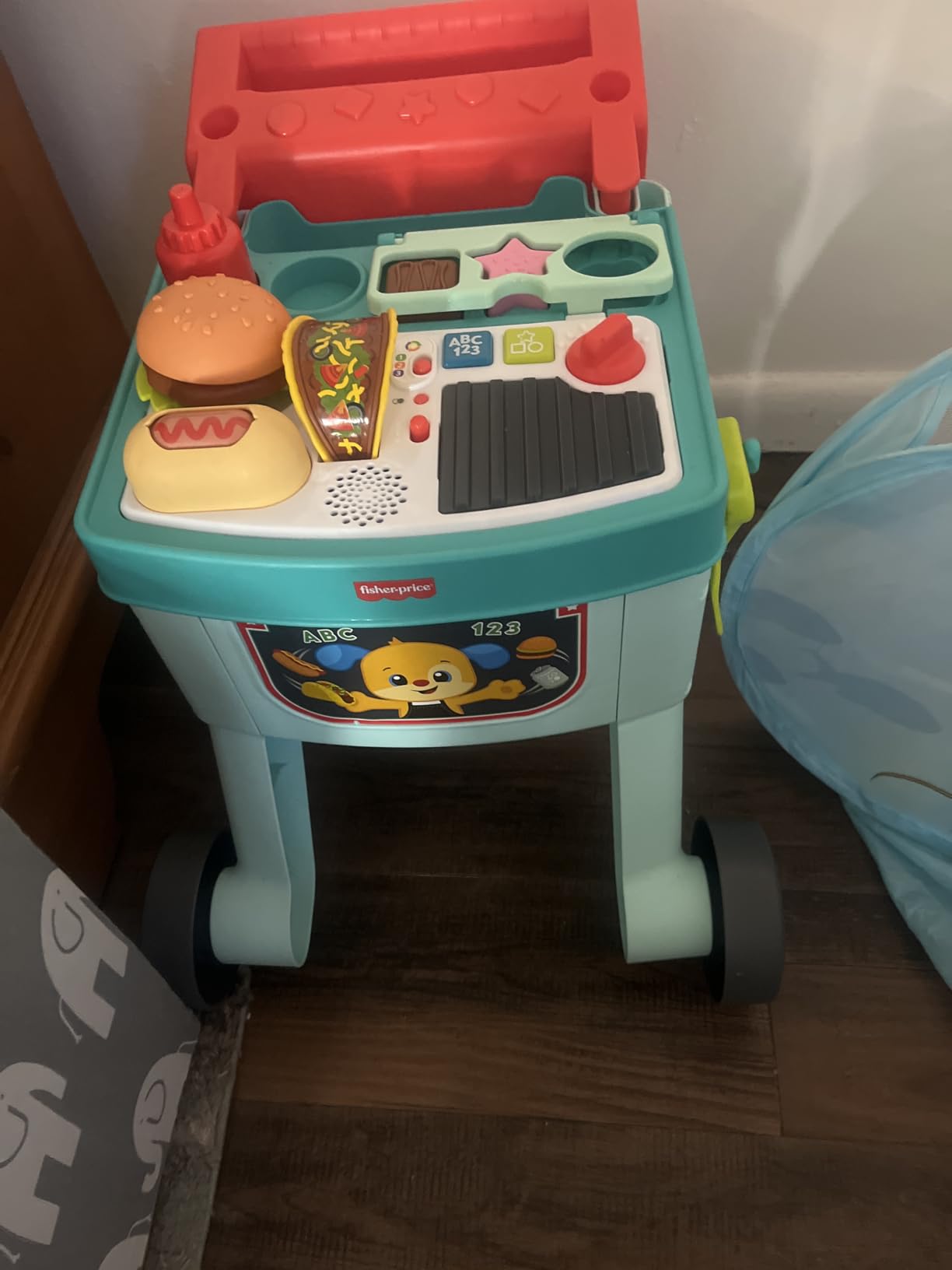
The wheels do not steer, so the cart can only travel in a straight line. That is a real limitation in a hallway, but it also stops a pre-walker steering into furniture.
Listed for ages 3 and up
23 x 8 x 12 inches
43 pound capacity
High back, handlebars and footrests
A rocking ride works by shifting weight, which is a different skill from propelling. That makes it a poor first ride-on for a one-year-old but a good one for a child who can already sit steadily without support and enjoys the back-and-forth rhythm.
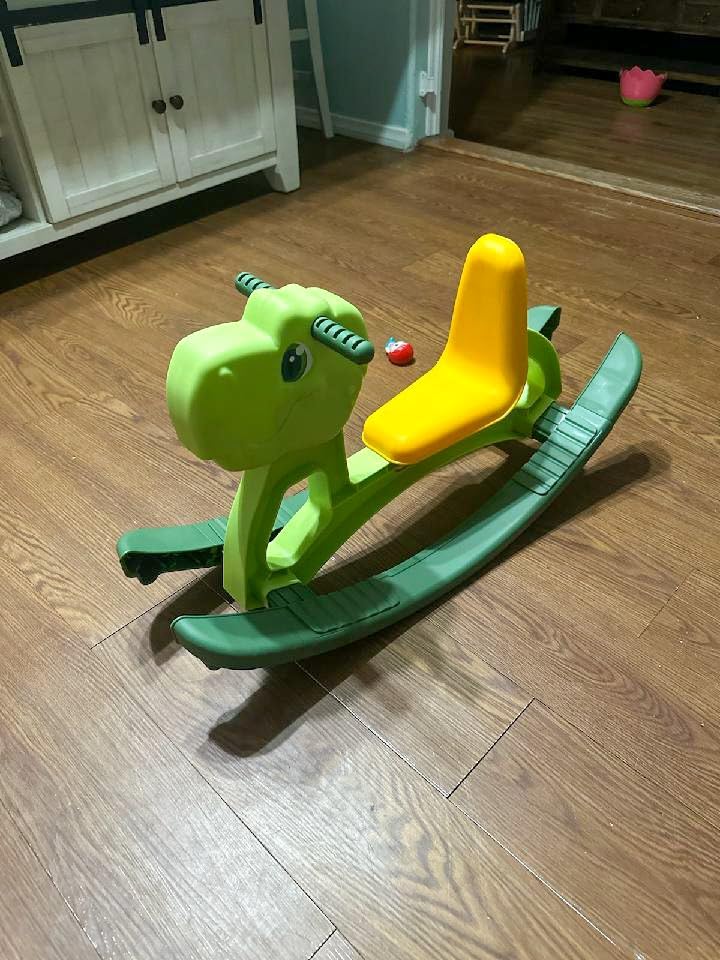
Reviewers rate it 4.3 out of 5 across 326 reviews, and they consistently cite the supportive high back, easy-to-hold handlebars and footrests as the reasons it works for toddlers learning to balance.
The listed manufacturer age starts at 3 and up, which sits above the one-year-old use case entirely, and the product title is the outlier that says 12 months to 3 years. We include it because parents searching for the best ride-on for babies keep finding it, but check the rocker suits your child before buying.
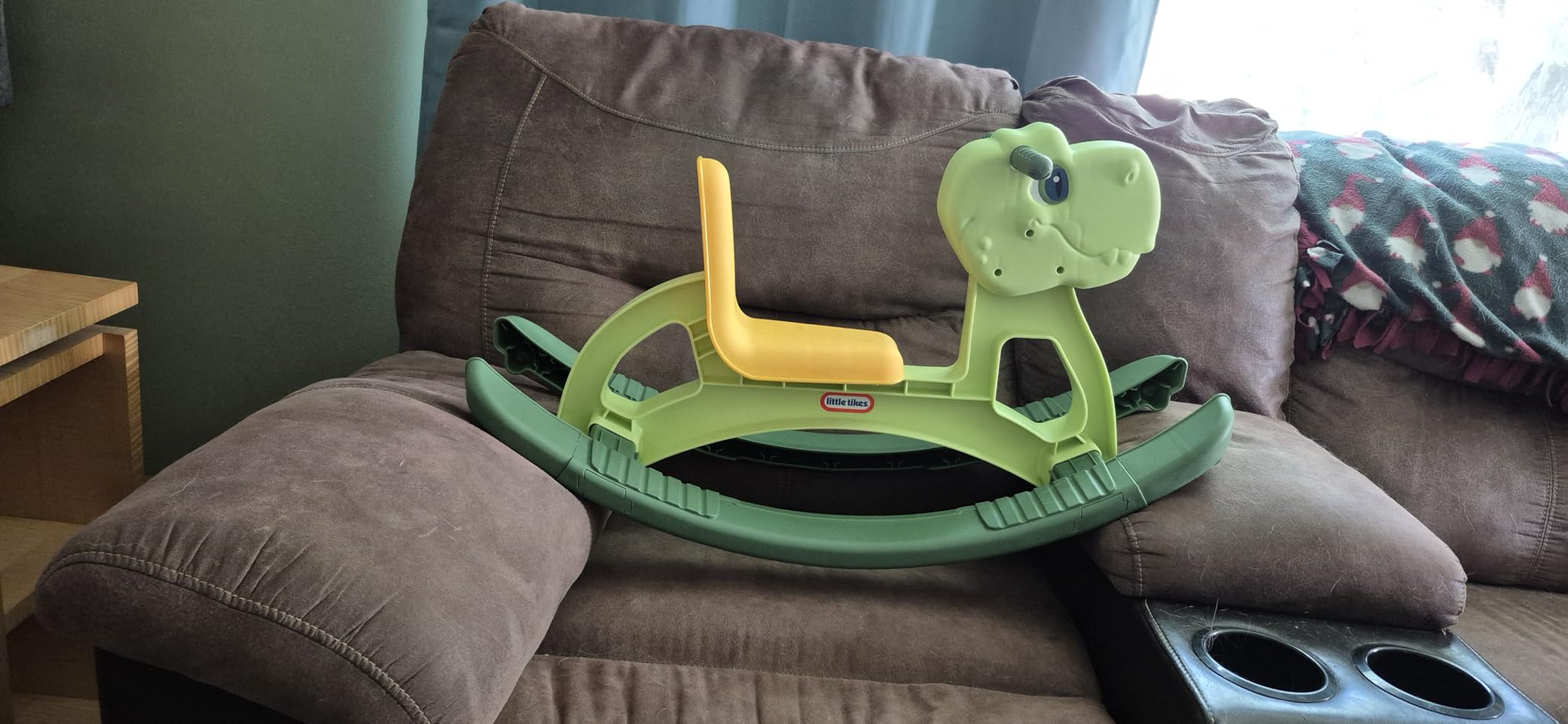
On a rocking ride the footrests are what stop a child’s legs sliding forward and tipping the balance. Reviewers repeatedly point to them as the reason the ride feels secure, so treat their presence as a real quality marker rather than decoration.
Ages 12 months to 3 years
50 pound capacity
Foot-to-floor with rear push handle
Horn and steering wheel
The dual mode is the entire pitch, and it works. A child who is not ready to sit uses it from behind like a push walker; a child whose feet reach the floor sits and scoots it along. It is a light, simple way to cover both stages at once.
It comes fully built, which means it can be handed to a child on the morning it arrives. For a first-birthday gift given by someone who cannot spend twenty minutes with allen keys, that is a real practical win over most of the metal-frame options here.
The recurring complaint set is consistent: the body feels light, which makes it harder for a baby to stand on and self-propel, and the front wheel and rear push handle can loosen with use. Several reviewers also describe the plastic as flimsy and note that it runs smaller than expected for older toddlers.
Ages 6-36 months
Sit and play or stand and walk
75+ songs, sounds and phrases
Bilingual English and Spanish
We end on a walker rather than a ride-on on purpose. With over 16,000 reviews averaging 4.7 out of 5, it has one of the strongest review records in the roundup, and parents report that babies pull up unaided within weeks of getting one.
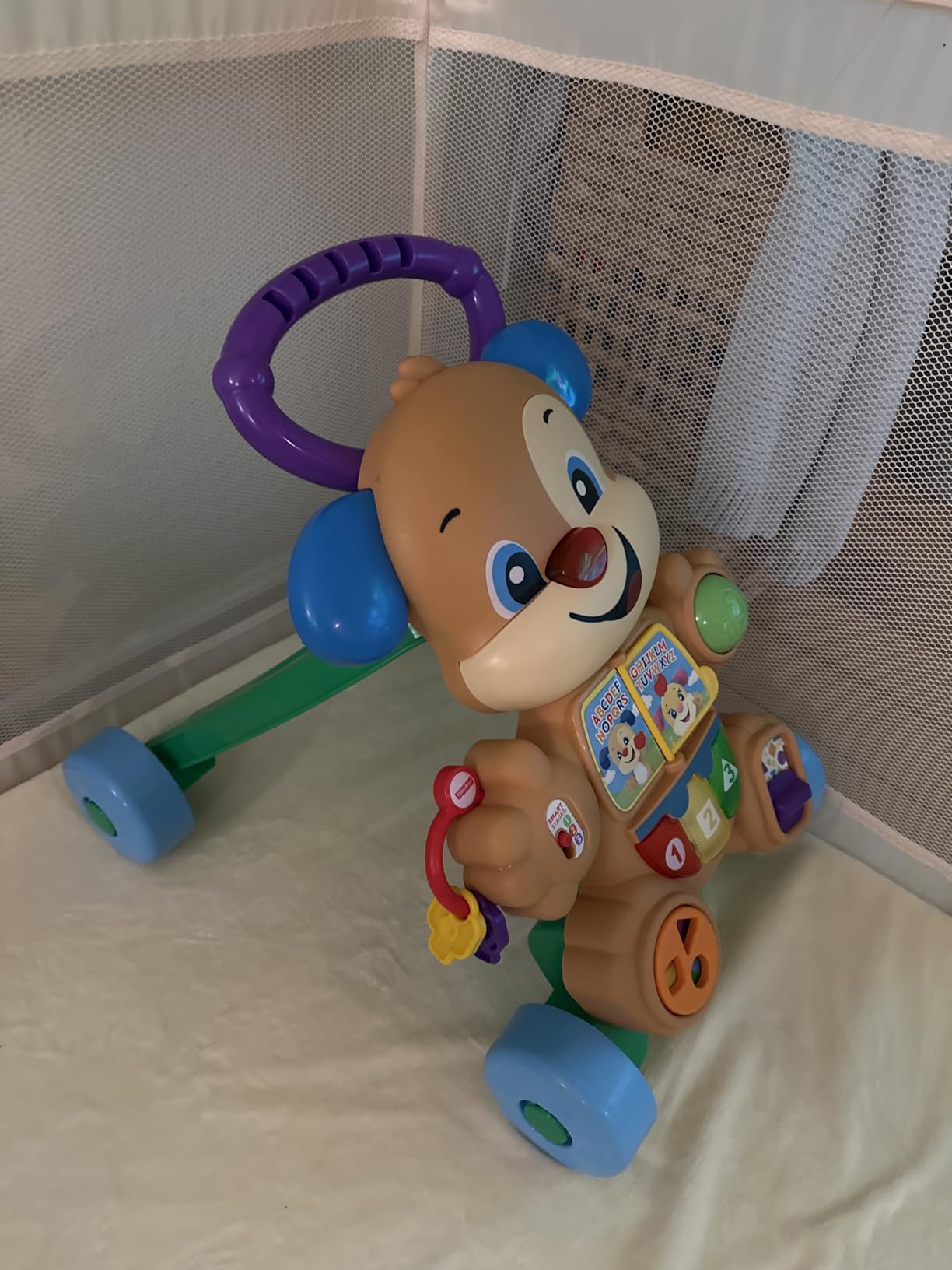
The sturdy four-wheel base and easy-grasp handle are what steady a first step, and reviewers describe that reassurance as the reason they bought a branded walker over a cheaper plastic one. Seven hands-on activities including light-up piano keys keep a baby at it long enough to practise standing.
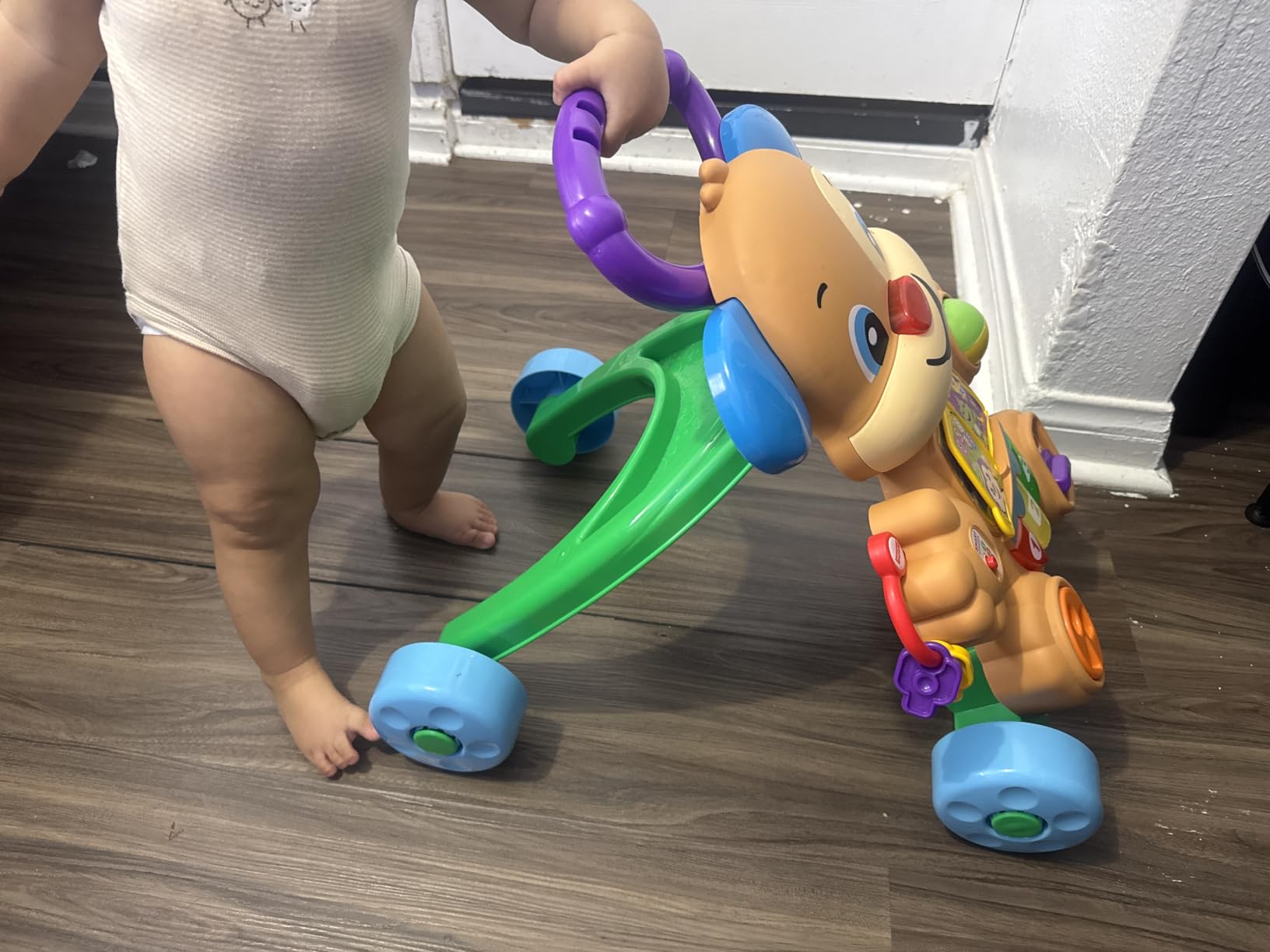
It works seated as an activity toy for a baby not yet walking, then switches to standing and walking. The bilingual content teaches letters, shapes, colors and numbers alongside Spanish words. The most common minor criticism is that the audio volume is low in a noisy room.
The decision comes down to four things: how your child moves today, whether you have the floor space, whether the toy needs to travel indoors, and how long you want it to last before the next stage. Here is how to work through them.
Four options exist and they suit different children. Push-along means the child stands and pushes the toy, which supports a new walker on their feet and is the right call before they can sit and scoot. Foot-to-floor means sitting and moving with the legs, which builds the leg strength for walking but needs a seat height their feet can reach. Balance bike means straddling and coasting, which requires the least coordination and is the safest first choice. Battery means a motor does the work, which is a three-year-old toy pretending to be a one-year-old one.
Age labels on ride-ons are optimistic across this entire category, with several parents in our research noting feet not reaching the floor until 12-13 months. If your child is at the younger end of a stated range, buy a convertible design with a push mode, or buy a size up. Parents consistently advise buying one age band up when a child is already at the top of the range.
Enclosed wheels, EVA tyres and non-marking casters are what keep a ride-on quiet and scuff-free on hardwood. Small hard plastic wheels scratch floors and make noise that a one-year-old’s nap schedule will punish. If you are indoors, treat wheel material as a hard requirement rather than a preference.
Look for compliance with the relevant children’s product standards, along with a stated weight capacity, a high back or guardrails, and no small parts loose enough to swallow. At twelve months specifically, check for anything small enough to choke on, because the QDRAGON’s basketball-hoop balls are a warning worth heeding. That check takes about a minute.
The sequence is push-along at 10-12 months, foot-to-floor sit-on at 18-24 months, then pedal or balance bike at 2-3 years. A convertible 3-in-1 or 4-in-1 model spans two of those stages in one purchase, which is usually better value than buying a cheap one and replacing it twice. Once your child is walking confidently and can steer, move up a band with our picks for the best ride-on and push toys for 2-year-olds. In the meantime, a ride-on pairs well with the open-ended building and pretend play in our one-year-old gift guide.
The best ride-on toy for a 1-year-old is a balance-bike or push-along design rather than a pedal or battery-powered car. At 12 months a child usually cannot pedal or steer a self-propelled vehicle, so the toys that get used are the ones they move with their own feet while sitting or standing, or that a parent pushes from behind by a handle. Look for enclosed or non-marking wheels, a seat height their feet can reach, and a low maximum speed.
Yes, in sit-on and push-along styles. A one-year-old can sit in a foot-to-floor ride-on and push along the floor, or sit in a push car with a parent steering from the handle behind. What they cannot do at this age is pedal, steer a self-propelled vehicle, or operate a battery motor. Most self-propelled styles only work reliably from about 3 years old.
There are four usual reasons. The seat is too high for their feet to reach the floor, so they cannot self-propel. The toy requires steering and balancing skills they have not developed. The toy is too advanced in the other direction, for example a battery-powered car with music and a horn. Or it is a sit-on-only design with no push mode. A convertible push-along or ride-on design solves the third and fourth problems at once.
Manual is better at this age. A manual foot-to-floor or push-along toy requires the child to generate the movement, which builds leg strength, balance and coordination while they are learning to walk. An electric ride-on does the work for them, teaches nothing about propulsion, and is usually ignored before age 3. Electric styles are worth considering at 3 years and up.
A good push walker for a 1-year-old has a low, stable frame the child can stand behind, non-marking 360-degree casters, and a seat low enough that their feet can eventually reach the floor. The YBIKE Pewi is the strongest all-round option because it converts from push walker to ride-on. The Fisher-Price Smart Stages Puppy Walker is the choice if you prioritise stability and bilingual learning content over riding.
The safest ride-on toys for 1-year-olds use enclosed wheels so feet cannot be pinched, a steering limit that prevents the toy flipping, non-marking soft wheels, and no small loose parts. Check the stated weight limit and look for compliance with children’s product safety standards such as ASTM F963 in the US or EN 71 in Europe. Avoid anything with detachable small components, and supervise any toy with a detachable play panel.
If your child is still furniture-cruising, buy the YBIKE Pewi, because a standing push mode is worth more at twelve months than any seat. If they are walking and want to sit, the SEREED Baby Balance Bike is our top pick and the gentlest first ride for a newly walking one-year-old.
If you want one toy that spans the whole walking phase, the Skip Hop 3-in-1 covers walker, ride-on and scooter stages in a single purchase. For outdoor foot-to-floor riding, the Little Tikes Tractor and Cart is built for a driveway and rough ground.
Whatever you choose, check the seat height against your child’s inseam before the birthday, and remember that a ride-on toy that gets eight focused minutes a day for a year and a half is a genuinely good buy. For a broader view of what else works at this stage, our picks for developmental toys for one-year-olds cover the sit-and-spin, stacking and activity toys that pair well with a first ride-on.