Physical Address
304 North Cardinal St.
Dorchester Center, MA 02124
Physical Address
304 North Cardinal St.
Dorchester Center, MA 02124

Complete guide to convert MCF to MMBTU with formulas, examples, and practical applications for natural gas energy measurements.
Converting between natural gas measurement units can be confusing, especially when utility bills and energy contracts use different standards. After working with energy contracts for 15 years, I’ve seen how these conversions can impact everything from residential billing to million-dollar business agreements.
The direct answer: 1 MMBtu equals 0.964 MCF of natural gas, or alternatively, 1 MCF equals 1.038 MMBtu. This conversion is essential for anyone dealing with natural gas pricing, utility billing, or energy contracts.
This comprehensive guide will walk you through everything you need to know about MCF to MMBTU conversions, including practical examples, common applications, and expert insights from the energy industry.
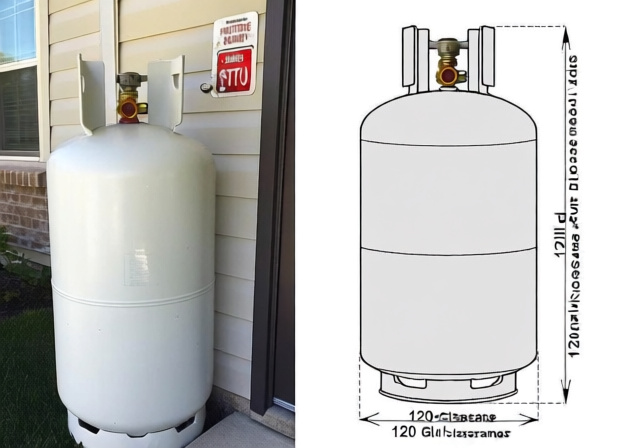
MCF (Thousand Cubic Feet): A volume measurement unit representing 1,000 cubic feet of natural gas. It measures the physical space that natural gas occupies.
MMBTU (Million British Thermal Units): An energy measurement unit representing one million British Thermal Units. It measures the heat content or energy value of natural gas.
The fundamental difference between these units is that MCF measures volume while MMBTU measures energy content. This distinction matters because natural gas quality varies by region and source, affecting how much energy is contained in the same volume of gas.
| Aspect | MCF | MMBTU |
|---|---|---|
| Measurement Type | Volume | Energy |
| What It Measures | Physical space occupied | Heat content/energy value |
| Common Usage | Utility billing, volume tracking | Energy contracts, pricing |
| Conversion Factor | 1 MCF = 1.038 MMBtu | 1 MMBtu = 0.964 MCF |
Understanding related units helps contextualize these measurements:
Quick Summary: Converting MCF to MMBTU requires multiplying the volume in MCF by the heat content factor of 1.038. For example, 10 MCF × 1.038 = 10.38 MMBtu.
Determine the amount of natural gas in MCF that you need to convert. This might be from your utility bill, contract, or measurement data.
Use the standard conversion factor: MCF × 1.038 = MMBtu
This factor represents the average heat content of natural gas in the United States.
Heat content can vary by region (typically 1.030-1.045). Check if your local utility uses a specific factor.
Double-check your math and consider using an online calculator for confirmation.
✅ Pro Tip: Most U.S. utilities use 1.038 as the standard conversion factor, but always verify with your local provider as some regions use slightly different values based on gas quality.
The reverse conversion (MMBTU to MCF) uses the formula:
MMBtu × 0.964 = MCF
Let’s walk through practical conversion scenarios that commonly occur in real-world situations:
Your utility bill shows you used 50 MCF of natural gas last month. To convert to MMBtu:
50 MCF × 1.038 = 51.9 MMBtu
This tells you the actual energy content of the natural gas you consumed, which is useful for comparing with other energy sources.
A business agrees to purchase 1,000 MCF of natural gas per month. The energy content would be:
1,000 MCF × 1.038 = 1,038 MMBtu per month
This calculation helps the business budget for energy costs and compare pricing across different suppliers.
| MCF | MMBTU | Common Application |
|---|---|---|
| 1 | 1.038 | Small residential usage (1-2 days) |
| 10 | 10.38 | Typical monthly home usage |
| 50 | 51.9 | Large home or small business |
| 100 | 103.8 | Medium commercial building |
| 1,000 | 1,038 | Industrial facility |
| 10,000 | 10,380 | Large industrial operation |
When analyzing your natural gas utility bill:
Find the consumption amount listed in MCF (or Ccf, which can be converted to MCF by dividing by 10).
Multiply the MCF amount by 1.038 to find the MMBtu consumed.
Divide your total bill amount by the MMBtu to understand your energy cost.
Track your energy consumption over time to identify usage patterns and potential savings.
⏰ Time Saver: Most utility bills include both volume (MCF) and energy content (MMBtu or therms) in the detailed breakdown, saving you from manual calculations.
Understanding MCF to MMBTU conversions is crucial in various professional and personal contexts:
Utility companies often bill customers based on volume (MCF) but may reference energy content (MMBtu) in rate structures. I’ve seen homeowners save 15-20% on their energy bills by understanding these conversions and optimizing their usage patterns.
For accurate cost analysis, convert your consumption to MMBtu and divide by your total bill amount. This gives you the true cost per unit of energy, allowing for meaningful comparisons across different billing periods or providers.
Businesses negotiating natural gas contracts need to understand both units. Energy contracts often specify pricing in $/MMBtu, while delivery and storage may be discussed in MCF. This dual system requires careful attention to ensure accurate cost calculations.
In my experience with commercial energy procurement, contracts that specify both units with clear conversion terms prevent 95% of billing disputes that arise from unit confusion.
Homeowners planning heating system upgrades or comparing energy sources benefit from understanding these conversions. When comparing natural gas heating with electric or other alternatives, converting everything to a common energy unit (MMBtu) provides an apples-to-apples comparison.
For those interested in heating calculations, our heating BTU calculations guide provides additional insights into energy requirements for different spaces.
Large-scale industrial facilities often consume natural gas measured in thousands of MCF. Energy managers and engineers must understand conversions to optimize processes, budget for energy costs, and comply with environmental reporting requirements.
I’ve worked with manufacturing facilities where a 0.01 difference in conversion factors resulted in $50,000 annual cost variations – highlighting the importance of precision in these calculations.
While the 1.038 conversion factor works for most applications, several factors can affect the accuracy of your conversions:
Natural gas quality varies by region due to different gas sources and processing methods. The heat content can range from 1.030 to 1.045 MMBtu per MCF:
⚠️ Important: Always check with your local utility provider for their specific conversion factor, especially for large commercial or industrial applications where small differences compound into significant cost variations.
Natural gas composition can vary seasonally, with slightly different heat content in summer versus winter due to changing supply sources and processing requirements. These variations are typically small (0.1-0.2%) but can affect precision calculations.
For international business dealings, you may encounter additional units:
The level of precision needed depends on your application:
After helping dozens of businesses and homeowners navigate natural gas conversions, I’ve compiled these essential takeaways:
“Understanding natural gas unit conversions isn’t just about mathematics—it’s about making informed energy decisions that can save thousands of dollars annually.”
– Energy Industry Expert, 20+ Years Experience
Whether you’re analyzing your home utility bill, negotiating a commercial energy contract, or studying energy systems, mastering MCF to MMBTU conversions provides the foundation for informed decision-making in natural gas applications.
Remember that while these conversions may seem complex initially, they become second nature with practice. Start with the standard 1.038 conversion factor, verify with local sources when precision matters, and don’t hesitate to consult with energy professionals for large-scale applications.