Physical Address
304 North Cardinal St.
Dorchester Center, MA 02124
Physical Address
304 North Cardinal St.
Dorchester Center, MA 02124

Discovering your family’s roots in early America opens a window into the lives of those who shaped the nation’s history. The golden rule of genealogy—always work from known to unknown—guides every successful journey through colonial records, Revolutionary War documents, and family Bibles that have survived centuries. In 2026, researchers have unprecedented access to digitized archives that were once buried in courthouse basements or church vaults across the thirteen colonies.
Early American genealogy traces family lineages from the first European settlements through the early republic period, roughly 1607 to 1850. This era presents unique research challenges: census records listed only heads of household before 1850, immigration documentation was sparse, and vital records were maintained by churches rather than governments. Yet for those who persist, the rewards include connecting to Mayflower passengers, Revolutionary War patriots, and the waves of immigrants who built colonial America.
In this guide, I’ll share practical strategies for navigating pre-1850 records, understanding colonial immigration patterns, and breaking through the brick walls that frustrate many family historians. Whether you’re seeking DAR membership, tracing German ancestors through Pennsylvania, or simply curious about your family’s role in early American history, these research methods will help you reconstruct your ancestral story.
Genealogy isn’t a modern fascination; it has its roots deeply embedded in human curiosity since ages past. However, early American genealogy takes us back to colonial America—a time when people understood the importance and necessity of keeping thorough records of births and deaths within families.
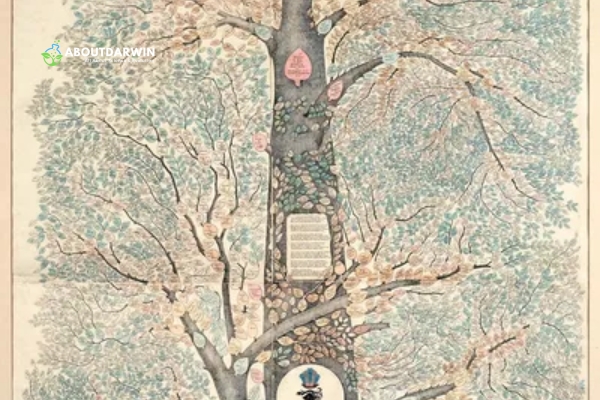
The initiation was simple—families recording birth dates or death dates in Bible margins; later those family Bibles turned out to be hallowed documents for historians unraveling family histories! Considered as personal documents initially due to religious habit or out of necessity (as there were no civic bodies for this job!), gradually it transcended beyond personal use having social importance which became obvious only several generations later!
Years down the lane with improvements in record-keeping—birth certificates, and marriage certificates introduced by service-providing institutions—a more organized approach replaced those raw yet honest recordings from those Bibles! Such adoptions also meant genealogy research became easier by doing away with legwork to involve more mouse clicks!
Genealogy’s journey from the margins of Bibles to digital screens—it’s as fascinating as those ancestors’ tales we’ve been keen on exploring! For comprehensive research resources, explore these free genealogy websites that offer colonial records and immigration databases.
Successful early American research requires mastering specific record types that differ significantly from modern genealogical sources. While DNA analysis offers supplemental insights, the foundation of colonial research rests on traditional documents: census records, vital statistics, land grants, and immigration lists. Understanding how to navigate these resources separates successful researchers from those who hit persistent brick walls.
The federal census began in 1790, but records from 1790 through 1840 present unique challenges: they list only heads of household by name, with other household members reduced to tick marks in age categories. This limited information frustrates many researchers, but strategic analysis can extract valuable clues about family composition and migration patterns.
To maximize pre-1850 census research, compare household tick marks across consecutive census years, tracking how age categories shift to reconstruct family units. Study neighbors carefully—colonial families often migrated in groups, making neighboring households potential relatives or family friends. Always cross-reference census locations with land records, as the 1840 census specifically identifies Revolutionary War pensioners, creating direct links to patriotic service.
The 1850 census marked a revolutionary change by listing every household member by name with age, birthplace, and relationship to head of household. Use 1850 as your anchor point, then work backward using pre-1850 records as supplementary evidence rather than primary identification tools. When a known ancestor appears as a head of household in 1840 but not 1850, search neighboring counties and states—migration was common as families sought better farmland or responded to westward expansion opportunities.
To start off, genealogical records are the go-to resource when beginning any journey into your family’s past. Historical records hold pertinent information about ancestors and can provide valuable insights into their lives. Personally, I’ve found that birth, marriage, and death certificates are some of the most informative types of documents.
Aside from these, wills and land records play a crucial part in tracing family heritage too. Wills can reveal family relationships and economic status while land records give away locations where ancestors might have lived as well as possible neighbors who could be relatives! It’s almost like being a detective hunting for clues on my own lineage!
Proving descent from Revolutionary War patriots or Mayflower passengers motivates many early American genealogists. These connections open doors to lineage societies like the Daughters of the American Revolution (DAR), Sons of the American Revolution (SAR), and the General Society of Mayflower Descendants. But establishing these links requires understanding specific record types and documentation standards.
For Revolutionary War research, start with the DAR Genealogical Research System (GRS), a free database containing proven lineages submitted by members. Military service records at the National Archives include Compiled Service Records (CSRs), pension applications, and bounty land warrants. Pension files are particularly valuable—they often contain affidavits from family members detailing birth dates, marriages, and residences. Don’t overlook state-level archives; many colonies maintained militia rolls and quartermaster records separate from federal collections.
Mayflower research requires connecting to one of fifty-one documented passengers who survived the first winter. The General Society of Mayflower Descendants maintains “Silver Books” documenting five generations of each passenger’s descendants. Before attempting lineage society membership, verify your connection through accepted genealogies—these societies demand rigorous documentation, including vital records at each generational step.
Understanding when and why immigrant groups arrived helps locate ancestral records. The Great Migration (1620-1640) brought approximately 20,000 English Puritans to New England, with passenger lists documented in the “Great Migration Begins” series. Chesapeake colonies (Virginia and Maryland) received English indentured servants through the 1600s, many arriving without formal passenger documentation.
German immigrants, primarily Palatines, flooded into Pennsylvania beginning in 1709, attracted by religious tolerance and available farmland. These “Pennsylvania Dutch” (a corruption of “Deutsch”) left records in church registers, often written in German Gothic script. The Scotch-Irish followed, migrating from Ulster to Pennsylvania’s frontiers in the 1700s before pushing south through the Great Wagon Road into the Carolinas and Virginia.
Later waves included Irish Catholics fleeing famine in the 1840s, French Huguenots seeking religious freedom, and Dutch settlers in New York’s Hudson Valley. Each group maintained distinct record-keeping traditions—Quakers in monthly meeting records, Anglicans in parish registers, and Presbyterians in session minutes. Identifying your ancestor’s ethnicity and religion dramatically narrows where to search for documentation.
DNA analysis provides supplementary insights for colonial research, though it works differently for deep ancestry than for recent genealogical questions. Autosomal DNA becomes unreliable beyond five or six generations—exactly the era of early American genealogy. However, mitochondrial DNA (passed from mothers) and Y-DNA (passed from fathers) can reveal ancient migration patterns and connect distant cousins working on the same colonial lineages.
Recent advancements allow us to identify matches with relatives working on common colonial ancestors, trace migration patterns of specific haplogroups, and verify paper trails when documentary evidence conflicts. When choosing a testing service, consult our guide to the best genetic genealogy websites for comparing database sizes and tools. However, DNA works best when combined with traditional records—it confirms or challenges documentary research but rarely replaces it for pre-1850 genealogy.
For the marriage between old-school record tracking and genetic analysis to succeed, build solid paper trails first, then use DNA to break through brick walls or confirm suspicious connections. Many colonial families experienced pedigree collapse—intermarriage within small communities—which can create confusing DNA patterns that require careful analysis alongside traditional documentation.
Delving into the study of early American genealogy is often like putting together a vast and complex puzzle. These pieces are scattered across generations, locations, and countless historical events. And more often than not, some of these crucial pieces are missing or exceedingly difficult to trace. An individual seeking their ancestry must be prepared for various challenges along the way, some of which can be quite formidable.
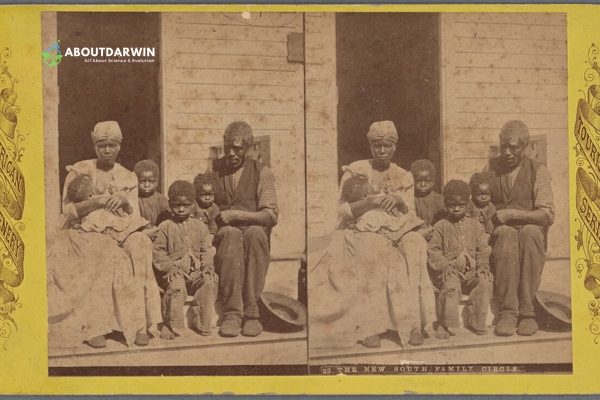
There’s no denying the thrill one gets from unearthing a long-forgotten ancestor or an unexpected familial tie. However, this quest can become arduous when met with factors such as incomplete or missing records and language or handwriting barriers. In the days before computers and systematic record keeping, documenting births, marriages, deaths or property transfers was indeed a daunting task.
Statistics tell us that many individuals immigrated to America without proper documentation; also documentation had been lost over time due to wars, fires or simply decaying over years frequently leaving researchers with large gaps in information. Furthermore, records from centuries ago were handwritten where penmanship varied greatly. Reading past scripts can be like learning a different language entirely; add translations into the mix if documents are written in archaic forms of foreign languages that your ancestors spoke but you do not!
Though these obstacles may seem daunting at first glance—thank heavens for modern-day resources! Here are a few tips on how you can get around roadblocks while researching your ancestry:
To manage the complexity of colonial research, learn how to organize your genealogy research with proper filing systems and digital tools. Remember—persistence is key! Even if some pieces of the puzzle are missing at first go, it doesn’t mean they won’t swing into view later on. Don’t be discouraged; the journey to self-discovery through delving into our roots is just as enlightening as the final result itself!
Before government vital records existed, families maintained their own documentation through what historian Karin Wulf calls “vernacular genealogy”—personal records created outside formal institutions. These sources often survive when official records have been lost, offering intimate glimpses into family relationships and daily life that census schedules cannot capture.
Family Bibles represent the most common vernacular source, with births, marriages, and deaths recorded on dedicated pages or flyleaves. These entries sometimes predate official records by decades and may include information about slave births, adoption, or illegitimate children that never appeared in public documents. When examining family Bible records, verify the publication date—entries made before the Bible was printed are suspect, while consistent handwriting across generations suggests an original contemporary record.
Family history samplers—embroidered textiles created by young girls as educational exercises—provide another unique source. These needlework pieces often display genealogical information, family coats of arms, or memorial verses for deceased relatives. Oral histories, passed through generations before being written down, capture stories of migration, occupations, and family legends that documentary evidence cannot confirm but researchers should investigate. For additional research guidance, check out genealogy books for early American research that cover vernacular sources.
Family stories of Native American ancestry circulate in many American families, but verifying these claims requires careful documentation. The process bears significant cultural, social, and legal implications for tribal recognition and cultural preservation efforts. Rigorous genealogical research, supplemented where appropriate with DNA analysis, serves as necessary steps in authenticating legitimate lineages while disproving common myths.
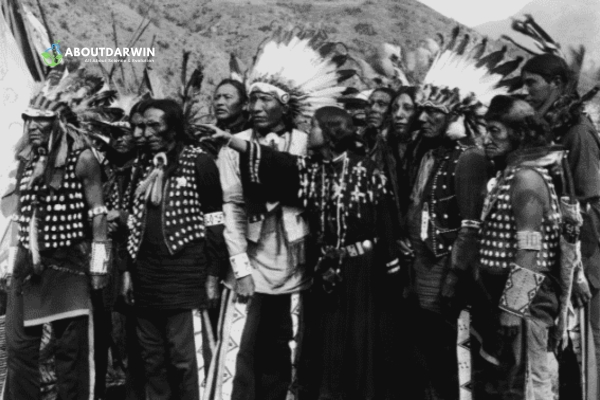
Government recognition is essential in upholding tribal autonomy and rights over land, resources, and laws. Being officially recognized allows tribes access to various federal benefits in healthcare, education, and housing. Exploring ancestry also plays a pivotal role in reviving lost cultural practices and breaking down misconceptions about indigenous culture that are often misrepresented in mainstream media.
Done correctly, tracing Native American heritage could prove instrumental in cultural revival—an important endeavor considering our innate desire to connect with our roots and enrich future generations’ understanding of who they truly are at core. We’d not just be tracing back our family tree, but essentially drawing the lineage of a culture that deserves accurate documentation and respect.
For additional resources, explore genealogy software options that can help track complex colonial and Native American lineages. You may also want to read about genealogy database comparison to choose the right platform for your research needs.
Common questions about early American genealogy research answered based on the latest research methods and historical records available in 2026.
The oldest documented European bloodlines in America belong to descendants of the Mayflower passengers who arrived in 1620, followed closely by families from the Jamestown settlement (1607). Among documented lineages, the descendants of John and Priscilla Alden (Mayflower passengers) represent one of the most thoroughly researched and extensive family lines, with millions of Americans today potentially tracing descent from this single couple. Indigenous bloodlines predate European settlement by thousands of years, with continuous Native American ancestry in the Southwest extending back over 10,000 years.
Mathematical models suggest that any two randomly chosen humans share common ancestors within the last 2,000-3,000 years, making most people 50th cousins or closer. For Americans with colonial ancestry, the connection is often much closer due to pedigree collapse—intermarriage within small colonial populations. Use our u003ca href=u0022https://www.aboutdarwin.com/cousin-calculator/u0022u003ecousin relationshipsu003c/au003e tool to calculate specific connections once you identify common ancestors through genealogical research.
Seven generations contain 5 u0022greatsu0022 in the ancestor title. The pattern follows: 1st generation (parent), 2nd (grandparent), 3rd (great-grandparent), 4th (great-great-grandparent), 5th (3rd great-grandparent), 6th (4th great-grandparent), and 7th (5th great-grandparent). For detailed guidance on u003ca href=u0022https://www.aboutdarwin.com/how-to-count-generations-in-your-family-tree/u0022u003ecounting generationsu003c/au003e and understanding generational distance in your family tree, refer to our comprehensive guide on generation counting methods used in genealogy.
The golden rule of genealogy is to always work from known to unknown. Start with yourself and verified family information, then methodically work backward one generation at a time, ensuring each connection is documented before moving further back. This fundamental principle prevents the common error of attaching your research to someone else’s documented—but potentially incorrect—lineage. Never skip generations or accept undocumented connections, as this creates false family trees that waste years of research effort.
Early American genealogy offers a profound connection to the nation’s founding era, rewarding patient researchers with discoveries that span from Mayflower decks to Revolutionary War battlefields. The key challenges—pre-1850 census limitations, scattered immigration records, and archaic handwriting—yield to systematic research methods and the golden rule of working from known to unknown ancestors.
As we progress through 2026, the digitization of colonial records, Revolutionary War pension files, and family Bibles continues to accelerate, making previously inaccessible archives available from home computers. Whether your ancestors arrived on the Mayflower, migrated through Pennsylvania’s German settlements, or carried Scotch-Irish traditions down the Great Wagon Road, the documentary evidence exists—it simply requires the right tools and persistence to uncover.
By combining traditional record analysis with emerging DNA technologies, navigating the complexities of early American genealogy becomes not just possible, but deeply rewarding. Each ancestor discovered adds another chapter to your family’s unique American story, connecting you to the generations who shaped—and were shaped by—the nation’s earliest history.