Physical Address
304 North Cardinal St.
Dorchester Center, MA 02124
Physical Address
304 North Cardinal St.
Dorchester Center, MA 02124

Exploring your heritage through genetic testing opens remarkable doors to the past. DNA testing for Jewish ancestry has become an increasingly popular tool for those seeking to confirm family legends, discover unknown connections, or simply understand their place within the broader Jewish diaspora. With advances in genetic genealogy over recent years, the insights available today far exceed what was possible even a decade ago.
Whether you grew up in a Jewish household with rich traditions or recently discovered a possible Jewish ancestor, genetic testing can provide clarity and context. The results often reveal surprises: some testers discover Ashkenazi roots they never knew existed, while others find connections to Sephardic or Mizrahi communities that rewrite their understanding of family history.
In this comprehensive guide, I will walk you through everything you need to know about DNA testing for Jewish ancestry. We will explore how these tests work, what makes Jewish genetic identification unique, which companies offer the best services for Jewish heritage discovery, and how to interpret your results accurately. By the end, you will have the knowledge needed to choose the right test and understand what your results truly mean.
Understanding DNA testing for Jewish ancestry requires familiarity with how genetic identification works. Unlike some ethnic groups that spread across wide geographic areas with constant outside intermarriage, Jewish populations maintained distinct genetic signatures due to historical factors like endogamy (marrying within the community). This creates both advantages and challenges when interpreting results.
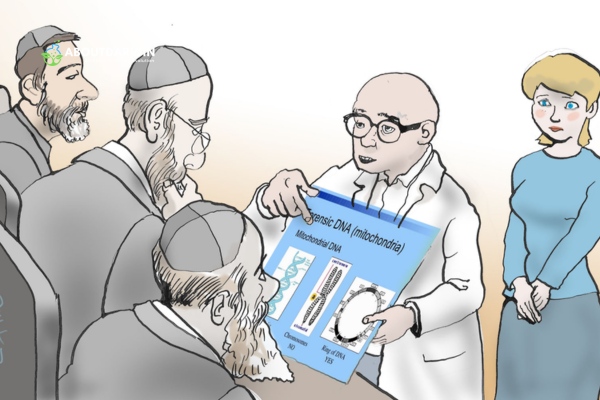
Three primary types of DNA tests exist for ancestry purposes, each offering different insights into your Jewish heritage:
Most people begin their genetic genealogy journey with an autosomal test, then pursue Y-DNA or mtDNA testing based on specific research goals. For a detailed analysis of one popular option, see our detailed AncestryDNA review.
Also Read: Ancestry DNA Review – Exploring Your Genetic Heritage
Exploring Jewish ancestry through DNA testing reveals connections spanning millennia. The Jewish people originated in the ancient Near East, with populations later dispersing across Europe, North Africa, the Middle East, and beyond through various migrations and historical events. Each major Jewish community developed distinct genetic characteristics while maintaining shared ancestral threads.

Genetic testing provides a window into these complex histories, helping individuals understand not just whether they have Jewish ancestry, but potentially which Jewish communities their ancestors belonged to and how they moved across continents over generations.
DNA testing for Jewish ancestry operates through sophisticated comparison of your genetic code against reference populations. When you submit a sample, laboratories analyze hundreds of thousands of genetic markers called single nucleotide polymorphisms (SNPs). These markers act as signposts throughout your genome, revealing patterns that match known Jewish genetic signatures.
Jewish populations, particularly Ashkenazi Jews, exhibit distinctive genetic patterns due to a phenomenon called endogamy. Endogamy refers to the historical practice of marrying within a specific group, which concentrates certain genetic markers over generations. For Jewish communities facing persecution and living in isolated areas, endogamy created identifiable genetic signatures that DNA tests can detect with relatively high confidence.
However, endogamy also creates unique challenges for genetic genealogists. Because Jewish populations were relatively small and intermarried extensively, DNA matches between Jewish testers often share more genetic material than matches from non-endogamous populations. A match showing 100 shared centimorgans (a unit of genetic measurement) might indicate a third cousin in general populations, but in Jewish DNA, the same amount could represent a fifth or sixth cousin due to multiple shared ancestors further back.
The major testing companies have developed increasingly refined algorithms to distinguish between different Jewish populations. Current 2026 capabilities include:
Understanding these distinctions helps set realistic expectations when receiving results. A result showing “European Jewish” strongly indicates Ashkenazi ancestry, while scattered Mediterranean or Middle Eastern percentages may suggest Sephardic or Mizrahi heritage requiring deeper investigation.
Beyond ethnicity estimates, DNA testing offers powerful tools for tracing specific ancestral lines. For Jewish genealogy, these tests carry special significance due to the historical importance of both matrilineal descent (for Jewish identity) and patrilineal traditions (for surnames and some religious roles).
These deep ancestry tests provide context that autosomal tests cannot, connecting you to ancient Jewish migrations and potentially clarifying family traditions about specific lineages.
Also Read: DNA Quest Reunites Family in Amazing New Zealand Tale
Selecting the right testing company significantly impacts your Jewish ancestry results. Each major provider offers different strengths regarding database size, Jewish population identification, testing methods, and additional features. Understanding these differences helps you choose the best option for your specific goals.
AncestryDNA maintains the largest consumer DNA database with over 25 million testers as of 2026. For Jewish ancestry specifically, AncestryDNA provides detailed ethnicity estimates showing “European Jewish” percentages, which typically indicates Ashkenazi ancestry. Their “Genetic Communities” feature can sometimes identify specific Jewish subgroups or migration patterns.
23andMe offers comprehensive ancestry reporting alongside health screening capabilities, making it particularly valuable for those concerned about Jewish genetic diseases. Their ancestry composition provides detailed breakdowns including Ashkenazi Jewish percentages and sometimes identifies Sephardic ancestry within broader Southern European or North African categories.
MyHeritage DNA excels specifically for Jewish ancestry testing, offering the most detailed Jewish ethnic breakdowns among major companies. They distinguish between Ashkenazi, Sephardic, Mizrahi, Ethiopian, and Yemenite Jewish populations. Additionally, MyHeritage’s headquarters in Israel means strong ties to Jewish genetic genealogy communities.
FamilyTreeDNA offers the most comprehensive DNA testing options for serious Jewish genealogists. They provide autosomal testing plus specialized Y-DNA and mtDNA tests unavailable from other major companies. FTDNA also maintains partnerships with JewishGen, the premier Jewish genealogy organization, making them particularly valuable for Jewish heritage research.
For those comparing MyHeritage and AncestryDNA specifically, we have explored these platforms in detail in our MyHeritage vs Ancestry comparison.
An often-overlooked consideration when choosing a DNA test involves the sample collection method. Companies typically use either saliva samples or cheek swabs:
For testing older relatives with Jewish ancestry, cheek swab methods often prove more practical and successful.
DNA testing for Jewish ancestry transcends mere statistics and percentages. The results often illuminate cultural connections, validate family traditions, and sometimes challenge long-held assumptions about ancestry. Understanding the genetic signatures of different Jewish communities adds depth to your results.
Jewish diaspora communities developed distinct traditions, languages, and customs while maintaining core religious and cultural practices. Your genetic results may reveal connections to specific branches of this global heritage.
Jewish populations worldwide exhibit fascinating genetic diversity reflecting their unique histories. Each major group carries distinctive markers that DNA tests can identify:
Your results may show percentages from multiple Jewish groups, reflecting the complex migrations and interconnections between communities over centuries. For those tracing European genealogy resources, understanding Ashkenazi origins proves particularly valuable.
Beyond ancestry, DNA testing carries significant health implications for those with Jewish heritage. Ashkenazi Jews face higher carrier rates for specific genetic disorders due to the same founder effects that created distinctive ancestry markers. Understanding these risks empowers informed family planning and health decisions.
Conditions particularly prevalent among Ashkenazi populations include:
23andMe includes screening for many of these conditions in their health reports. However, those planning families should consider comprehensive Jewish genetic panels offered through medical providers, which test for 18+ conditions common in Jewish populations.
Privacy concerns naturally arise when sharing genetic health information. Before testing, consider who might access your data and how results could affect insurance or employment. For guidance on protecting your information, read our article on protecting your DNA privacy.
Also Read: Debunking DNA Myths and Facts About DNA and Genealogy
Perhaps the most critical concept for interpreting Jewish DNA results is endogamy. This historical practice of marrying within a community creates distinctive patterns in your genetic matches that require careful interpretation.
Endogamy means Jewish populations reproduced largely within relatively small groups for generations. This creates what geneticists call “pedigree collapse”—the phenomenon where your family tree becomes more like a family web, with the same ancestors appearing multiple times through different branches.
Why does this matter for your results? Endogamy affects DNA matches in several important ways:
Experienced Jewish genetic genealogists recommend focusing on matches sharing 50+ centimorgans and using additional tools like chromosome browsers to verify relationships. Uploading results to third-party tools like GEDmatch can help identify true matches versus those created by endogamous population patterns.
Many Jews express surprise at receiving results showing 100% Ashkenazi Jewish ancestry with no other ethnicities. This pattern reflects the strength of endogamy—your ancestors married within the Jewish community so consistently that no outside DNA entered your lineage for many generations. Learn more about common DNA testing myths to avoid misinterpretations.
Yes, DNA tests can identify Jewish ancestry with varying degrees of precision. Autosomal tests detect Ashkenazi Jewish heritage with high accuracy, often showing as European Jewish in results. Sephardic and Mizrahi ancestry may appear as Southern European, North African, or Middle Eastern depending on the testing company. No test provides 100% certainty, and results should be interpreted alongside traditional genealogical research.
MyHeritage DNA offers the most detailed Jewish ethnicity breakdown, identifying Ashkenazi, Sephardic, Mizrahi, Ethiopian, and Yemenite Jewish populations. For health screening alongside ancestry, 23andMe provides the best option. For serious genealogists seeking Y-DNA and mtDNA testing, FamilyTreeDNA is unmatched. AncestryDNA provides the largest database for finding matches. The best choice depends on your specific goals.
Jewish identity is determined by religious law and community acceptance, not DNA percentages. Orthodox Judaism generally recognizes matrilineal descent or proper conversion. Reform and other progressive movements may accept patrilineal descent. DNA showing any Jewish ancestry indicates genetic heritage but does not confer religious or legal Jewish status. DNA testing cannot determine Jewish identity—it only reveals genetic connections to Jewish populations.
23andMe can identify Ashkenazi Jewish ancestry with high accuracy and may detect Sephardic heritage within broader categories. Their ancestry composition shows percentages of Ashkenazi Jewish ancestry and provides detailed haplogroup information. 23andMe also screens for genetic health conditions common in Jewish populations. However, like all DNA tests, 23andMe reveals genetic ancestry rather than religious or cultural identity.
Receiving 100% Ashkenazi results is common among Jewish testers due to endogamy, the historical practice of marrying within the community. For generations, your ancestors likely married other Ashkenazi Jews exclusively, creating a highly concentrated genetic signature. This pattern indicates strong Jewish heritage but does not mean your family lacked diversity—rather, it reflects the self-contained nature of Jewish communities in Europe where outside intermarriage was rare.
Not all Jews share identical genetic markers, though distinct patterns exist within major groups. Ashkenazi, Sephardic, and Mizrahi Jews each carry unique genetic signatures reflecting their different historical paths. Within these groups, genetic similarity is higher than between groups due to endogamy. However, Jewish genetics also show connections to ancient Levantine populations, creating shared threads across all Jewish communities alongside distinct subgroup markers.
No, DNA test results cannot establish legal or religious Jewish status. Jewish law (Halacha) determines Jewish identity primarily through matrilineal descent or conversion. DNA testing reveals genetic ancestry but cannot verify religious lineage or satisfy religious legal requirements. Some communities may use genetic testing as supplementary evidence in specific circumstances, but DNA alone never confers Jewish status. Learn more about common misconceptions in our article on DNA testing myths.
Yes, Ashkenazi Jews carry higher rates of specific genetic disorders including Tay-Sachs disease, Gaucher disease, cystic fibrosis, Canavan disease, Bloom syndrome, familial dysautonomia, and BRCA1/BRCA2 mutations associated with hereditary cancers. 23andMe screens for many of these conditions. For comprehensive testing, medical providers offer Jewish genetic disease panels screening for 18+ conditions. Carrier screening before having children is strongly recommended for those with Ashkenazi ancestry.
DNA testing accurately distinguishes major Jewish groups (Ashkenazi, Sephardic, Mizrahi) but identifying specific regional origins within these groups remains challenging. Ashkenazi DNA typically shows as broadly European Jewish without distinguishing between Polish, Russian, or German origins. Sephardic ancestry may appear as Southern European or North African. Testing companies continue improving regional specificity, but historical migrations and endogamy limit precision. Traditional genealogical research often provides clearer regional information.
Y-DNA testing can suggest possible Cohen or Levite ancestry through the Cohen Modal Haplotype (CMH), a genetic pattern appearing more frequently among men claiming Cohen lineage. However, the CMH also appears in non-Cohen populations, making it suggestive rather than definitive. No DNA test can conclusively prove priestly status. Family traditions, surname analysis, and synagogue records provide additional evidence, but absolute verification remains impossible through genetics alone.
Small percentages of Jewish ancestry (under 2%) require careful interpretation. They may indicate distant Jewish heritage from centuries ago, but could also reflect statistical noise or shared genetic patterns between populations. If your known family history includes Jewish ancestors, even small percentages likely represent real connections. Without known Jewish heritage, trace amounts should be viewed cautiously. Testing with multiple companies or having parents tested can help verify whether small percentages reflect genuine ancestry.
Birthright Israel eligibility requires recognized Jewish identity through matrilineal descent, conversion recognized by established Jewish denominations, or having at least one Jewish parent for those raised Jewish. DNA testing alone does not qualify someone for Birthright. However, DNA results supporting known Jewish ancestry might be considered supplementary evidence in specific cases. Applicants must meet religious/legal criteria established by Birthright Israel rather than genetic thresholds.
Also Read: Easy Privacy Musts for DNA Testers: Top 5 Tips
DNA testing for Jewish ancestry offers a fascinating window into your genetic heritage, connecting you to centuries of history and potentially thousands of relatives across the globe. Whether you seek to confirm family traditions, discover unknown Jewish roots, or simply understand your place in the broader Jewish diaspora, genetic testing provides powerful tools for exploration.
Remember that DNA represents just one thread in the complex tapestry of Jewish identity. Your results illuminate genetic connections but do not define your relationship to Jewish culture, religion, or community. Approach testing with realistic expectations, understanding both its remarkable capabilities and inherent limitations.
When choosing a testing company, consider your specific goals: MyHeritage DNA offers the most detailed Jewish ethnicity breakdown, 23andMe excels at health screening, AncestryDNA provides the largest database for matches, and FamilyTreeDNA offers specialized Y-DNA and mtDNA testing unavailable elsewhere. Many serious researchers eventually test with multiple companies and upload results to third-party tools for comprehensive analysis.
As genetic genealogy continues advancing in 2026, the insights available will only grow more sophisticated. Your DNA journey may reveal DNA success stories waiting to be discovered—cousins separated by continents, connections to ancient communities, or health information that shapes your family’s future. Approach the adventure with curiosity, respect for privacy, and an appreciation for the remarkable science that makes these discoveries possible.


