Physical Address
304 North Cardinal St.
Dorchester Center, MA 02124
Physical Address
304 North Cardinal St.
Dorchester Center, MA 02124

Learn how to convert CFM to CFH with our simple formula and calculator. Get practical examples, industry applications, and troubleshooting tips for accurate flow rate conversions.
Converting between cubic feet per minute (CFM) and cubic feet per hour (CFH) is essential for HVAC technicians, engineers, and industrial workers who need to calculate airflow rates over different time periods.
To convert CFM to CFH, multiply the CFM value by 60. The formula is: CFH = CFM × 60.
This simple conversion helps professionals design ventilation systems, specify equipment, and calculate total gas consumption for billing or inventory purposes. Whether you’re working with high CFM airflow fans or industrial compressors, understanding this conversion is fundamental to accurate system design.
In this comprehensive guide, I’ll walk you through everything you need to know about CFM to CFH conversion, including practical examples, common applications, and troubleshooting tips based on real-world experience.
Cubic Feet Per Minute (CFM) is a unit of measurement for volumetric flow rate, representing the volume of gas or air that passes through a point in one minute, measured in cubic feet.
CFM is the standard measurement used in HVAC systems, air compressors, and ventilation equipment because it provides a practical way to express airflow rates for real-time system operation and performance monitoring.
Most equipment specifications use CFM because it directly relates to the immediate performance of fans, blowers, and compressors. For example, a typical residential HVAC system might move 1,200 CFM, while industrial air compressors often range from 5-100 CFM depending on the application.
CFM measurements are particularly useful for sizing ductwork, selecting appropriate equipment, and balancing air distribution systems. They help engineers and technicians ensure that systems deliver the required airflow for proper ventilation, cooling, or process requirements.
Cubic Feet Per Hour (CFH) is a unit of measurement for volumetric flow rate, representing the volume of gas or air that passes through a point in one hour, measured in cubic feet.
CFH is commonly used for applications that require measuring total gas consumption over longer periods, such as billing calculations, inventory management, or system efficiency analysis.
The advantage of using CFH is that it provides a clearer picture of total volume moved over time, which is essential for cost calculations, system planning, and long-term performance evaluation. Many gas utilities and industrial processes use CFH for billing and resource planning purposes.
CFH is particularly relevant when you need to calculate total gas consumption for a shift, day, or billing cycle. It’s also useful for comparing different systems’ efficiency over extended periods rather than just their instantaneous flow rates.
Converting CFM to CFH is straightforward once you understand the relationship between minutes and hours. Since there are 60 minutes in an hour, you simply multiply the CFM value by 60 to get the equivalent CFH.
Conversion Formula: CFH = CFM × 60
For example, if you have an air compressor rated at 10 CFM, the calculation would be: 10 CFM × 60 = 600 CFH. This means the compressor moves 600 cubic feet of air per hour when running continuously.
⏰ Time Saver: When converting multiple CFM values, create a simple spreadsheet with the formula =A1*60 where A1 contains your CFM value.
The reverse conversion (CFH to CFM) is equally simple – just divide by 60: CFM = CFH ÷ 60. This is useful when you have total hourly consumption data and need to determine the required flow rate per minute.
While the formula is simple, having a quick reference calculator can save time when you need to make multiple conversions or work with different values throughout the day.
Quick Reference: 1 CFM = 60 CFH, 10 CFM = 600 CFH, 100 CFM = 6,000 CFH
| CFM | CFH | Common Application |
|---|---|---|
| 1 CFM | 60 CFH | Small pneumatic tools |
| 5 CFM | 300 CFH | Home workshop compressors |
| 10 CFM | 600 CFH | Medium industrial compressors |
| 25 CFM | 1,500 CFH | Large industrial systems |
| 50 CFM | 3,000 CFH | Commercial HVAC systems |
| 100 CFM | 6,000 CFH | Industrial ventilation |
| 500 CFM | 30,000 CFH | Large-scale HVAC |
| 1,000 CFM | 60,000 CFH | Commercial building systems |
This conversion table covers the most common CFM ranges you’ll encounter in practical applications. For values not shown in the table, simply multiply your CFM value by 60 to get the equivalent CFH.
Understanding the conversion formula is one thing, but seeing it applied to real-world scenarios helps solidify the concept and shows its practical value.
A typical 3-ton residential air conditioner moves approximately 1,200 CFM of air. To calculate the total hourly air movement:
1,200 CFM × 60 = 72,000 CFH
This means the system circulates the entire air volume of a 2,000 square foot home (approximately 16,000 cubic feet) more than 4 times per hour.
An industrial air compressor rated at 25 CFM running for an 8-hour shift would process:
25 CFM × 60 = 1,500 CFH per hour
1,500 CFH × 8 hours = 12,000 CFH per shift
This calculation helps facilities managers plan for compressed air needs and estimate operating costs.
A welding operation uses shielding gas at 15 CFM. For a 6-hour welding job:
15 CFM × 60 = 900 CFH per hour
900 CFH × 6 hours = 5,400 CFH total
This helps welders estimate gas consumption and ensure they have adequate supplies for the job.
A commercial kitchen exhaust fan moves 500 CFM. Over a 10-hour operating day:
500 CFM × 60 = 30,000 CFH per hour
30,000 CFH × 10 hours = 300,000 CFH per day
This massive air exchange rate demonstrates why proper ventilation is crucial for commercial kitchens.
⏰ Time Saver: Keep a small conversion chart in your workspace for quick reference during daily operations.
From my experience working with various industrial systems, the most common error is mixing up CFM and SCFM, which can lead to significant calculation errors in system design and equipment selection.
Understanding when and why to convert between CFM and CFH is crucial for professionals working with airflow systems. These conversions are essential across multiple industries and applications.
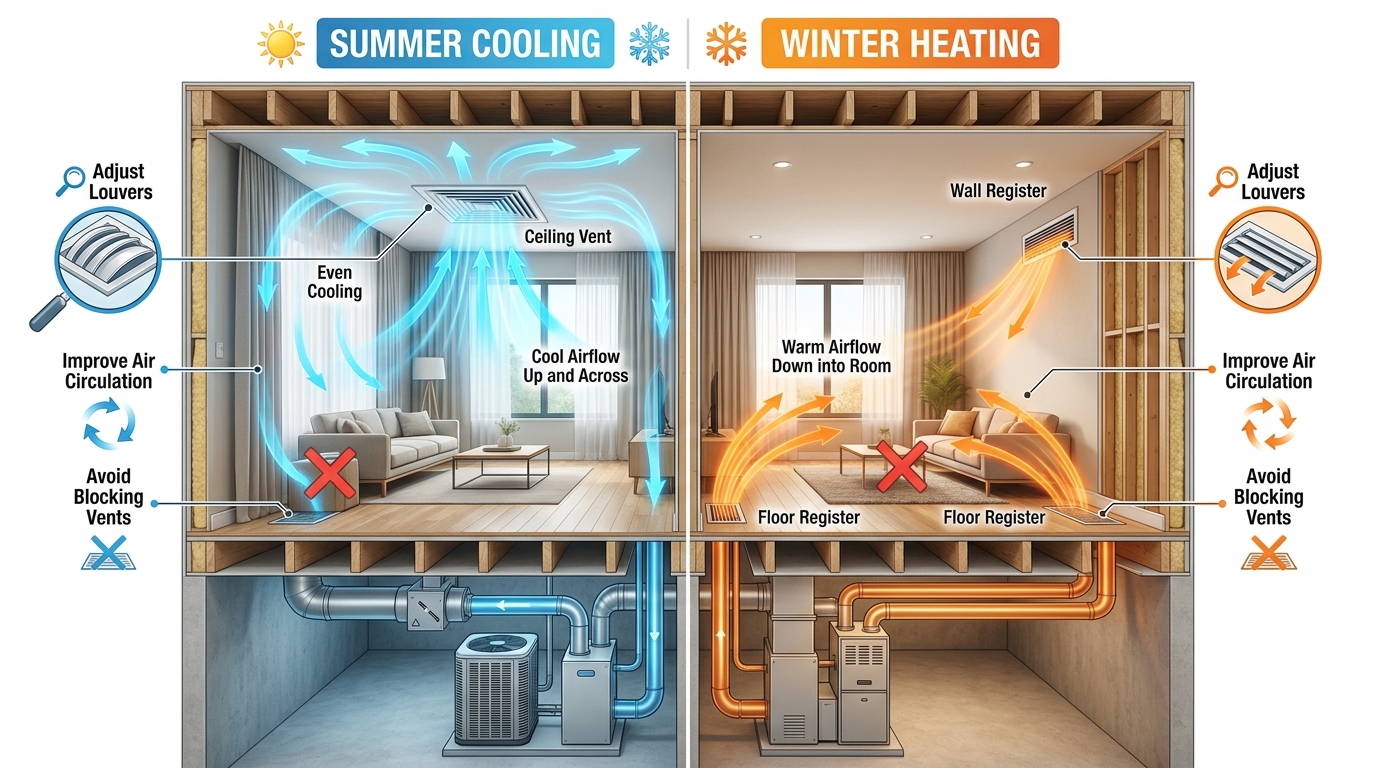
HVAC technicians and engineers regularly convert CFM to CFH when designing heating and cooling systems. This conversion helps calculate total air exchange rates, determine system runtimes, and estimate energy consumption. For proper system sizing, technicians need to understand both the instantaneous flow rate (CFM) and total volume moved over time (CFH).
When working with CFM ratings in HVAC equipment, accurate conversions ensure proper system matching and performance. I’ve seen cases where incorrect CFM to CFH calculations led to undersized equipment and poor system performance.
Manufacturing facilities use CFM to CFH conversions for compressed air system design, maintenance planning, and cost analysis. Compressed air is one of the most expensive utilities in industrial settings, so accurate consumption calculations are essential for cost control.
Facility managers use CFH calculations to plan compressor sizing, determine storage requirements, and schedule maintenance based on total system usage. This helps optimize energy efficiency and prevent costly downtime.
Gas utilities and industrial consumers use CFH measurements for billing and inventory management. Converting from equipment CFM ratings to total hourly consumption helps accurately estimate gas costs and plan supply deliveries.
This is particularly important for processes with variable flow rates, where averaging CFM values over time and converting to CFH provides a more accurate picture of total consumption than instantaneous readings alone.
Proper ventilation systems require careful calculation of air exchange rates. Converting CFM to CFH helps determine how many times air is replaced in a space per hour, which is crucial for maintaining air quality and meeting regulatory requirements.
For applications like CFM requirements for evaporative cooling, these conversions ensure systems provide adequate airflow for effective temperature control and ventilation.
Industrial processes often require precise flow rate control for quality and safety. Converting between CFM and CFH helps operators monitor total material flow, maintain process consistency, and detect deviations from normal operation.
Many automated systems use CFH calculations for inventory tracking, production planning, and quality control. This ensures processes run efficiently and maintain consistent output.
While CFM to CFH is a common conversion, professionals often need to work with other flow rate units depending on the application and industry standards.
Standard Cubic Feet Per Minute (SCFM) is CFM measured at standard conditions (typically 68°F, 14.7 psi, and 36% relative humidity). The conversion between CFM and SCFM depends on actual operating conditions:
This conversion is crucial when comparing equipment performance under different conditions or when specifying compressors for applications at varying altitudes or temperatures.
International applications often require converting between imperial and metric units:
These conversions are essential when working with international equipment specifications or collaborating with teams using metric systems.
Understanding these related conversions helps professionals work with different equipment specifications and industry standards across various applications.
To convert CFM to CFH, multiply the CFM value by 60. The formula is: CFH = CFM × 60. For example, 10 CFM equals 600 CFH (10 × 60 = 600).
1 CFM equals 60 CFH. Conversely, 1 CFH equals 0.0167 CFM (1 ÷ 60 = 0.0167).
To convert CFH to CFM, divide the CFH value by 60. The formula is: CFM = CFH ÷ 60. For example, 1,200 CFH equals 20 CFM (1,200 ÷ 60 = 20).
SCFM provides a standardized reference point that allows accurate comparison of equipment performance regardless of actual operating conditions. This is crucial for equipment selection and system design.
Convert CFM to SCFM using the formula: SCFM = CFM × (P_actual ÷ P_standard) × (T_standard ÷ T_actual), where P is pressure and T is temperature in absolute units.
CFM measures flow rate per minute (instantaneous), while CFH measures total volume per hour (cumulative). CFH = CFM × 60, making CFH useful for total consumption calculations.
Mastering CFM to CFH conversion is essential for anyone working with airflow systems, from HVAC technicians to industrial engineers. The simple formula (CFH = CFM × 60) provides a foundation for accurate system design, cost calculation, and performance monitoring.