Physical Address
304 North Cardinal St.
Dorchester Center, MA 02124
Physical Address
304 North Cardinal St.
Dorchester Center, MA 02124

Learn how to convert BTU to kWh with our complete guide. Includes conversion formula, examples, and practical applications for understanding energy consumption.
Quick Answer: One kilowatt-hour (kWh) equals exactly 3,412 British Thermal Units (BTUs). To convert BTU to kWh, multiply BTU by 0.000293071. This conversion helps compare heat energy and electrical energy across different applications.
Converting between BTU and kWh is essential for understanding energy consumption, comparing appliance efficiency, and calculating energy costs. Whether you’re sizing an air conditioner, evaluating heating systems, or analyzing your electricity bill, knowing how to convert between these energy units provides valuable insights into your energy usage patterns.
This comprehensive guide will walk you through everything you need to know about BTU to kWh conversion, from basic definitions to practical applications that can help you make informed energy decisions and potentially save money on utility bills.
BTU stands for British Thermal Unit, which measures heat energy. Specifically, one BTU is the amount of heat required to raise the temperature of one pound of water by one degree Fahrenheit. This measurement originated in British engineering and remains the standard unit for heat energy in many applications.
BTUs are commonly used to measure heating and cooling capacity in HVAC systems, heat output from furnaces and water heaters, and energy content in fuels like natural gas. When you see an air conditioner rated at 12,000 BTU, this indicates its cooling capacity per hour, not total energy consumption.
British Thermal Unit (BTU): The amount of heat energy required to raise 1 pound of water by 1°F. Commonly used for measuring heating/cooling capacity and heat energy content.
Understanding BTUs helps when comparing heating systems, sizing air conditioners, or evaluating fuel efficiency. For example, residential central air conditioners typically range from 18,000 to 60,000 BTU, while window units usually fall between 5,000 and 25,000 BTU.
A kilowatt-hour (kWh) is the standard unit for electrical energy consumption. One kWh represents the energy consumed by a 1,000-watt appliance running for one hour. This is the unit you’ll see on your electricity bill, making it crucial for understanding and managing electrical energy costs.
Unlike BTU, which measures heat energy, kWh specifically measures electrical energy. Your utility company charges based on the number of kilowatt-hours you consume each month. For context, the average American household uses approximately 900 kWh per month, according to the U.S. Energy Information Administration.
Kilowatt-Hour (kWh): The energy equivalent to 1 kilowatt (1,000 watts) of power used for 1 hour. Standard unit for electrical energy billing and consumption measurement.
Common household appliances use varying amounts of kilowatt-hours. A refrigerator might consume 1-2 kWh per day, while an electric water heater could use 10-15 kWh daily. Understanding kWh consumption helps identify energy-saving opportunities in your home.
Converting BTU to kWh is straightforward once you understand the conversion factor. The fundamental relationship is that 1 kWh equals exactly 3,412 BTU, derived from the definition of these energy units.
To convert BTU to kWh, use this formula:
kWh = BTU × 0.000293071
To convert in the opposite direction, use the reciprocal formula:
BTU = kWh × 3,412
Understanding BTU to kWh conversion has practical applications in various scenarios, from home energy management to professional HVAC calculations.
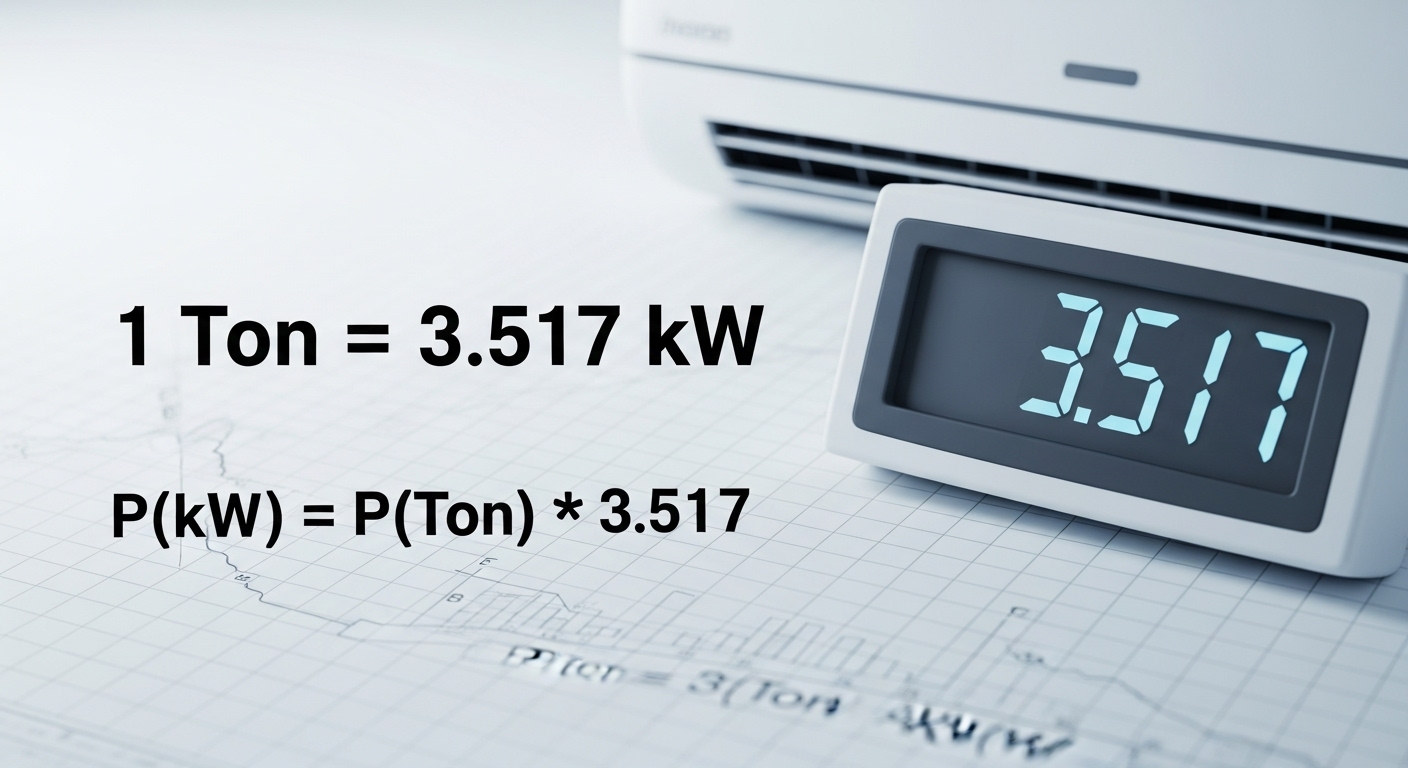
When evaluating air conditioner efficiency, converting BTU ratings to kWh helps estimate operating costs. A 12,000 BTU air conditioner running for 8 hours would consume approximately 28.14 kWh (3.517 kWh/hour × 8 hours). At $0.12 per kWh, this equals $3.37 in electricity costs.
This calculation helps homeowners understand the true cost of running their 14000 BTU air conditioner units and make informed decisions about energy usage and potential upgrades.
When comparing different heating options, BTU to kWh conversion allows for accurate efficiency comparisons. A 40,000 BTU natural gas furnace might be more efficient than an electric resistance heater producing the same heat output, once you factor in the conversion and efficiency losses.
This is particularly relevant when selecting the best heater for an uninsulated garage or comparing central heating systems.
Converting BTU to kWh enables accurate cost comparisons between different energy sources. For example, if natural gas costs $1.20 per therm (100,000 BTU) and electricity costs $0.12 per kWh, you can compare the true cost of heating with different fuels.
This analysis helps homeowners make informed decisions about fuel types and system upgrades, potentially saving hundreds of dollars annually on energy costs.
Professionals use BTU to kWh conversions to analyze system efficiency and identify improvement opportunities. An HVAC technician might convert system BTU ratings to kWh consumption to identify inefficiencies or recommend upgrades that could reduce energy consumption by 20-30%.
These calculations support decisions about upgrading to more efficient systems or implementing energy-saving measures like improved insulation or programmable thermostats.
When planning solar power systems, understanding BTU to kWh conversion helps size systems appropriately. A solar installer might calculate that a home requiring 30,000 BTU of cooling daily would need a solar system capable of producing approximately 8.8 kWh to offset that air conditioner usage.
This conversion is essential for accurate solar system sizing and understanding how renewable energy can offset conventional energy consumption.
This comprehensive conversion table provides quick reference for common BTU values and their kWh equivalents, useful for rapid calculations and comparisons.
| BTU | kWh | Common Application |
|---|---|---|
| 1,000 BTU | 0.293 kWh | Small space heater |
| 5,000 BTU | 1.465 kWh | Window air conditioner |
| 8,000 BTU | 2.345 kWh | Medium window AC |
| 10,000 BTU | 2.931 kWh | Large window AC |
| 12,000 BTU | 3.517 kWh | 1-ton central AC |
| 18,000 BTU | 5.275 kWh | 1.5-ton central AC |
| 24,000 BTU | 7.034 kWh | 2-ton central AC |
| 30,000 BTU | 8.792 kWh | Small central system |
| 36,000 BTU | 10.551 kWh | 3-ton central AC |
| 48,000 BTU | 14.068 kWh | 4-ton central AC |
| 60,000 BTU | 17.584 kWh | 5-ton central AC |
| 75,000 BTU | 21.980 kWh | Large residential furnace |
| 100,000 BTU | 29.307 kWh | Commercial system |
| 1,000,000 BTU | 293.071 kWh | 1 MMBTU (natural gas) |
⏰ Time Saver: Bookmark this conversion table for quick reference when comparing appliances or calculating energy costs. The most common residential values (5,000-24,000 BTU) are highlighted in the table.
To use this table effectively, locate your BTU value in the left column and find the corresponding kWh value in the middle column. The application column provides context for common usage scenarios, helping you understand whether your values fall within typical ranges for specific applications.
For example, if you’re evaluating a window air conditioner rated at 8,000 BTU, you can quickly determine it will consume approximately 2.345 kWh per hour of operation. This helps estimate daily operating costs: 2.345 kWh × 8 hours × $0.12/kWh = $2.25 per day.
One kilowatt-hour (kWh) contains exactly 3,412 British Thermal Units (BTUs) of energy. This exact conversion comes from the definition of both units – 1 BTU equals 1,055 joules, while 1 kWh equals 3,600,000 joules.
To convert BTU to kilowatts (kW), first convert BTU to kWh using the factor 0.000293071, then divide by the number of hours. For hourly rates, simply use BTU/hr ÷ 3,412 = kW. For example, 12,000 BTU/hr ÷ 3,412 = 3.52 kW.
A 12,000 BTU air conditioner rated per hour consumes approximately 3.52 kW of power (12,000 ÷ 3,412). However, actual energy consumption in kWh depends on runtime. If the AC runs for 8 hours, it would consume 28.16 kWh (3.52 kW × 8 hours).
1,500 watts equals approximately 5,118 BTU per hour (1,500 × 3.412). This conversion is useful when comparing electric heating elements to gas heating systems. For example, a 1,500W space heater produces the same heat output as a 5,118 BTU heater.
Converting BTU to kWh allows comparison between heat energy and electrical energy, helps calculate operating costs, enables efficiency comparisons between different fuel types, and supports proper system sizing. This conversion is essential for energy management and cost optimization.
Understanding BTU to kWh conversion is a valuable skill for anyone managing energy consumption, whether in residential, commercial, or industrial settings. This knowledge enables accurate cost calculations, efficiency comparisons, and informed decisions about energy systems and appliances.
By mastering these conversions, you can better understand your energy bills, evaluate appliance efficiency, compare different heating and cooling options, and make smarter decisions about energy use that can lead to significant cost savings and reduced environmental impact.
✅ Pro Tip: Keep a copy of the conversion factor (0.000293071) and the reciprocal (3,412) handy for quick calculations. Understanding these conversions will help you make better energy decisions and potentially save money on utility bills.
As energy costs continue to rise and efficiency standards become more important, the ability to understand and convert between different energy units becomes increasingly valuable for both personal and professional applications.