Physical Address
304 North Cardinal St.
Dorchester Center, MA 02124
Physical Address
304 North Cardinal St.
Dorchester Center, MA 02124

The best trivia games for adults are the ones where a bad guess still feels like a good night. After playing through a dozen boxes with groups ranging from couples to a fourteen-person table, Hygge Games’ I Should Have Known That! earned the most repeat requests, because it takes points away for wrong answers and hands the comeback to whoever is losing. The runners-up are Trivial Pursuit Classic Edition for groups that want a familiar board, and Chronology for anyone who would rather arrange events than answer questions.
Most adult groups do not need more facts. They need a reason to keep talking after someone gets one wrong. That is the whole divide in this category, and it is why classic knowledge-only trivia so often disappoints while mechanic-driven designs do not. A BoardGameGeek thread debating the best multiplayer trivia games split neatly into games for self-described trivia buffs and games for everyone else, and players on r/boardgames and r/AskReddit keep landing on the same conclusion: you can win through reasoning and nerve, so the non-expert at the table stays in the game.
I have been testing trivia boxes with mixed-ability adult groups for years, mostly on Friday nights when half the room is competent and half is along for the ride. The twelve below are the ones that came back out of the box again. I scored each on how fast a group learns the rules, how much noise the mechanic generates, how well it holds up when a fifth or sixth player joins, and whether the question bank survives a second play.
Before you read further, if you are shopping for the room rather than for yourself, the [12 best trivia night gifts our team tested](https://www.aboutdarwin.com/best-gifts-for-trivia-night-regulars/) list covers the same format from the gift-giver side, and our [best party adult games roundup](https://www.aboutdarwin.com/the-best-party-adult-games/) goes wider on non-quiz party mechanics. Everything here is a quiz. Everything there is not.
One thing to name early: Trivial Pursuit is still the default at most tables, and it is not a bad game. It is just slower and more repetitive than adults expect. I explain where that grip loosens in the entry below.

Every title below appears in the individual reviews that follow. The table is the fastest way to match a game to your room size and your patience for teaching rules.
| Product | Features | |
|---|---|---|
| I Should Have Known That! |
|
Check Latest Price |
| Trivial Pursuit Classic Edition |
|
Check Latest Price |
 Lyrically Correct 90s and 2000s Lyrically Correct 90s and 2000s |
|
Check Latest Price |
| Chronology |
|
Check Latest Price |
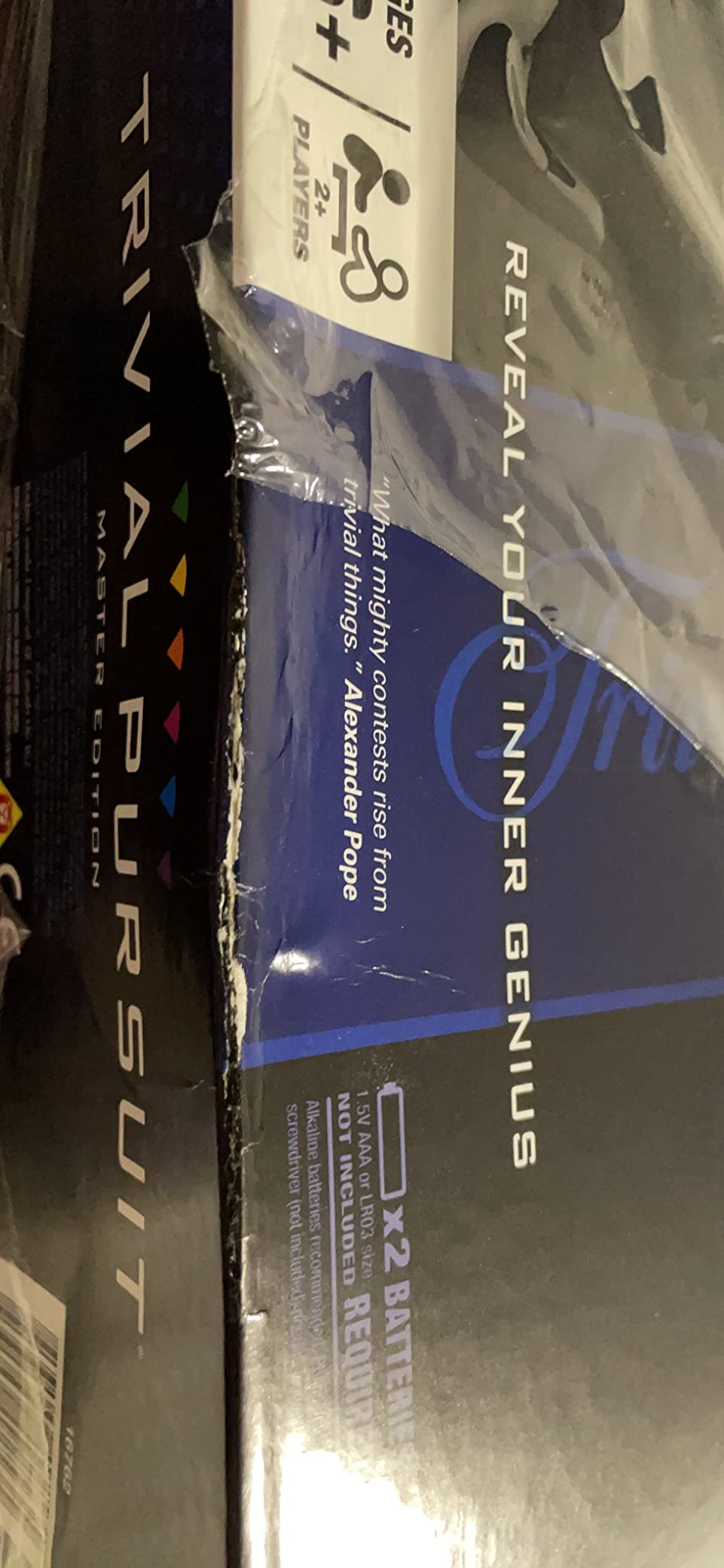
 Trivial Pursuit Master Edition Trivial Pursuit Master Edition |
|
Check Latest Price |
 Urban Trivia Urban Trivia |
|
Check Latest Price |
 Jumbo Hitster Jumbo Hitster |
|
Check Latest Price |
 Wit’s End Wit’s End |
|
Check Latest Price |
 Wits and Wagers Deluxe Wits and Wagers Deluxe |
|
Check Latest Price |
 HISTORY Channel Trivia Game HISTORY Channel Trivia Game |
|
Check Latest Price |
 Super Trivia for Adults Super Trivia for Adults |
|
Check Latest Price |
 Ultimate Pub Trivia Ultimate Pub Trivia |
|
Check Latest Price |
We earn from qualifying purchases. CERTAIN CONTENT THAT APPEARS ON THIS SITE COMES FROM AMAZON. THIS CONTENT IS PROVIDED 'AS IS' AND IS SUBJECT TO CHANGE OR REMOVAL AT ANY TIME.
110 cards
400 plus questions
Points subtracted for wrong answers
Ages 14 and up
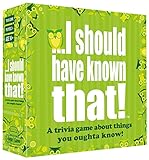
This is the game I keep recommending to the group that contains one encyclopedic person and six people who would rather be anywhere else. Instead of awarding points for correct answers, it takes them away for every wrong one, so the leader is never safe and the quietest player at the table usually has a real shot.
On our first night with six players, the person who knew the most facts finished third. That is the entire pitch. Hygge Games describes the format as producing that involuntary “ahhh, I should have known that” reaction, and it lands hard enough that a group that had quietly been counting down the minutes to bed time asked to go again.
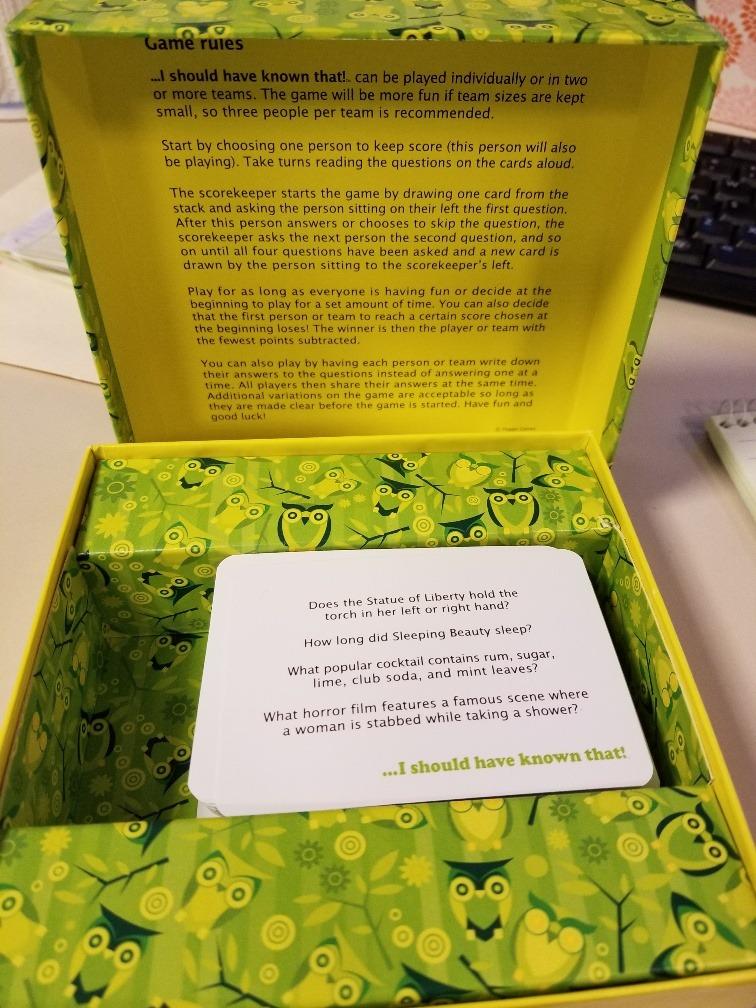
The box is also genuinely small, which matters more than it sounds. It travels in a backpack, a carry-on, or a glovebox, and the whole setup is a deck and a notepad rather than a board that needs a table cleared.
Inverted scoring changes who the game is for. In a standard quiz, a strong knowledge player banks points early and coastes. Here, every confident wrong answer costs you, which means the group stays alert through the whole deck instead of settling after the first few rounds.
The scoring also rewards nerve rather than recall. A player who has no idea can still place a guess and gamble that fewer people will be wrong, which is a different kind of skill and a genuinely social one. That is the mechanic that keeps mixed groups talking, and it is why mechanic-driven designs keep beating knowledge-only trivia in community picks.
The 110 cards carry more than 400 questions, which is a lot of material for a game that fits in one hand. Our six-player group got through roughly a third of it in a single evening, so two nights of fresh questions come out of the box before anything starts feeling stale.
The question style skews toward general knowledge that most adults think they should know, which is the source of both the humor and the sting. Some questions stumped the younger half of our group, and the age guidance reads 14 and up, so it works best with adults and teens together rather than with small children.
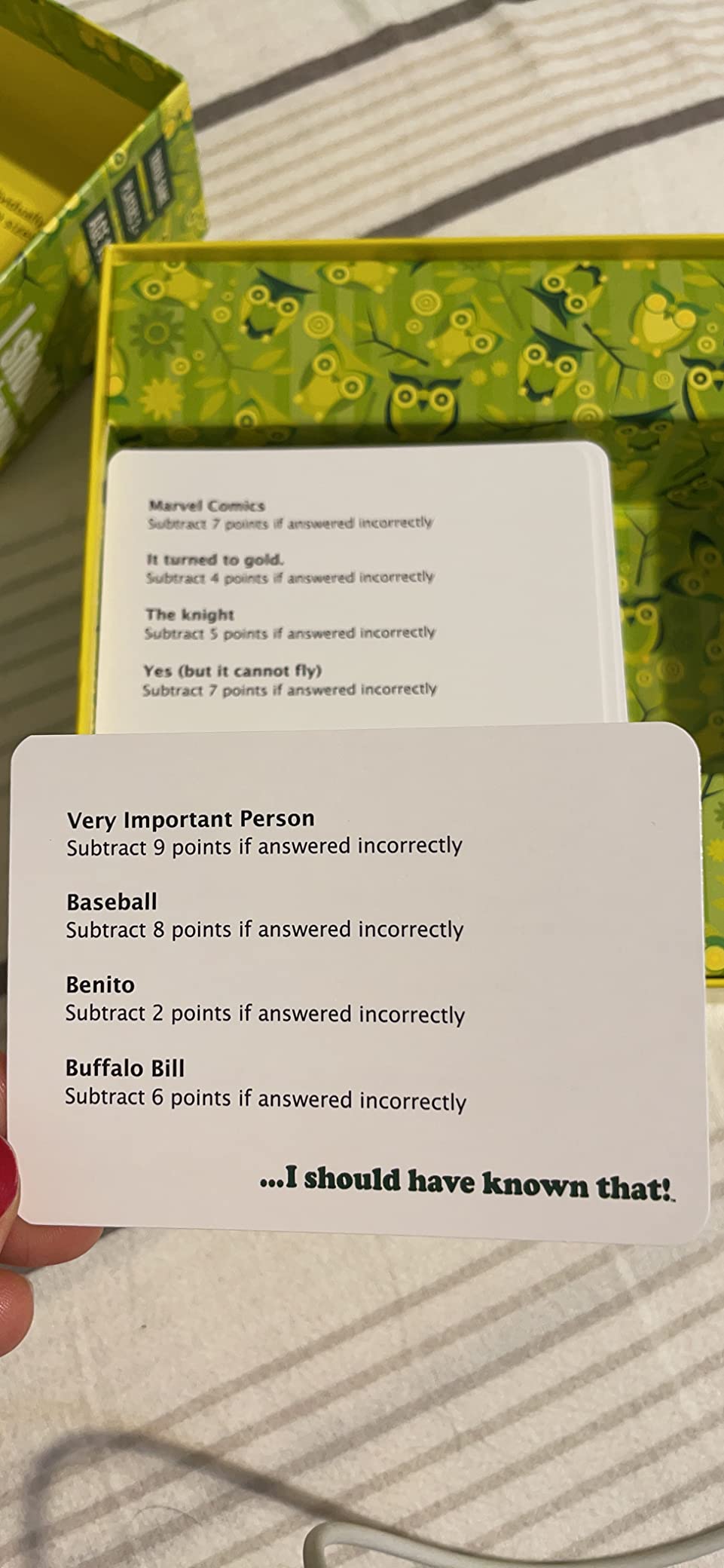
One warning for hosts: a bad round genuinely hurts, and that can end a streak of luck for someone in a way that feels personal. In our groups it produced more laughter than resentment, but a table that dislikes losing will feel it more than a table that enjoys a story.
2400 questions
6 categories
2 to 6 players
Ages 16 and up
About 60 minutes
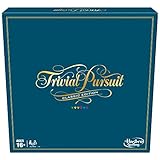
Trivial Pursuit is the reason most adults already know the rules, and that is a real asset on a night when nobody wants to sit through a teach. Move around the board, land on a category, roll the die, answer to take the wedge, collect six to win.
The Classic Edition is the version I recommend over the deluxe boxes because it is fast to set up and the box actually contains everything you need. The buzzer, the one-minute timer and the score pad are in there, which removes the small scramble for a phone timer that derails the first round in most households.
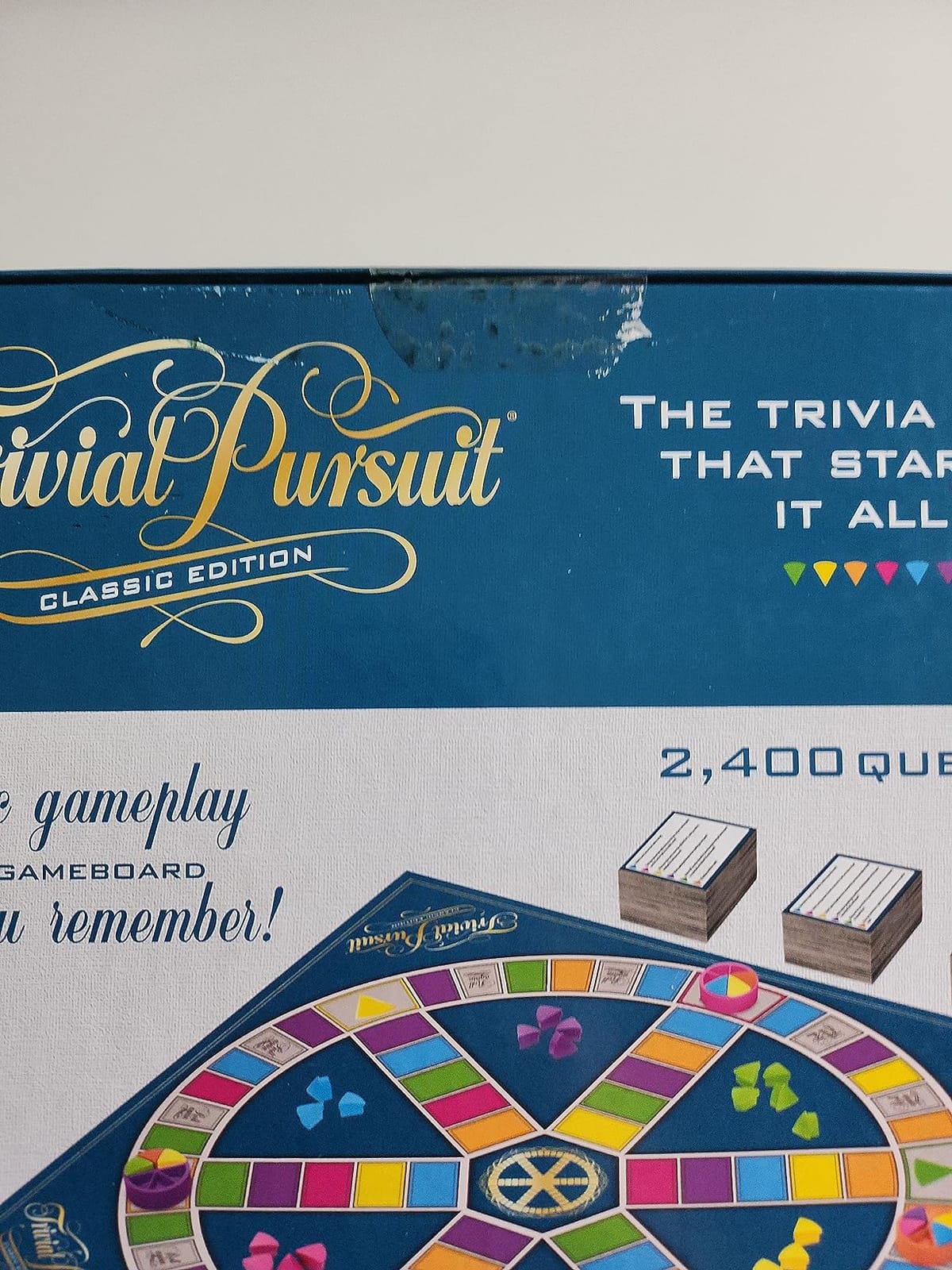
With 2400 questions across six traditional categories, covering geography, entertainment, history, art and literature, science and nature, and sports and leisure, the bank is deep enough to survive a full evening even with a repeat-happy group. The category structure is also the reason a group of non-experts can participate: nobody is out of their depth in every category at once.
For a group of six that plays once or twice a year, this is the safe, familiar choice. It is rated 4.7 stars across more than 8000 reviews, and that consistency comes from how little it asks of the group beyond showing up.
Here is the honest adult critique that most roundups skip. Movement is slow because a turn is a die roll plus a question read aloud, and a wrong answer can send you back around the hub. On a large board with small groups, a single round can feel like a meeting.
Teams also make it uneven. A strong pair covers four categories between them, so the person who knows art and literature carries a teammate who knows nothing about either. Mixed ages create the same gap in reverse, with a knowledge gap between a younger player and a parent rather than between two friends.
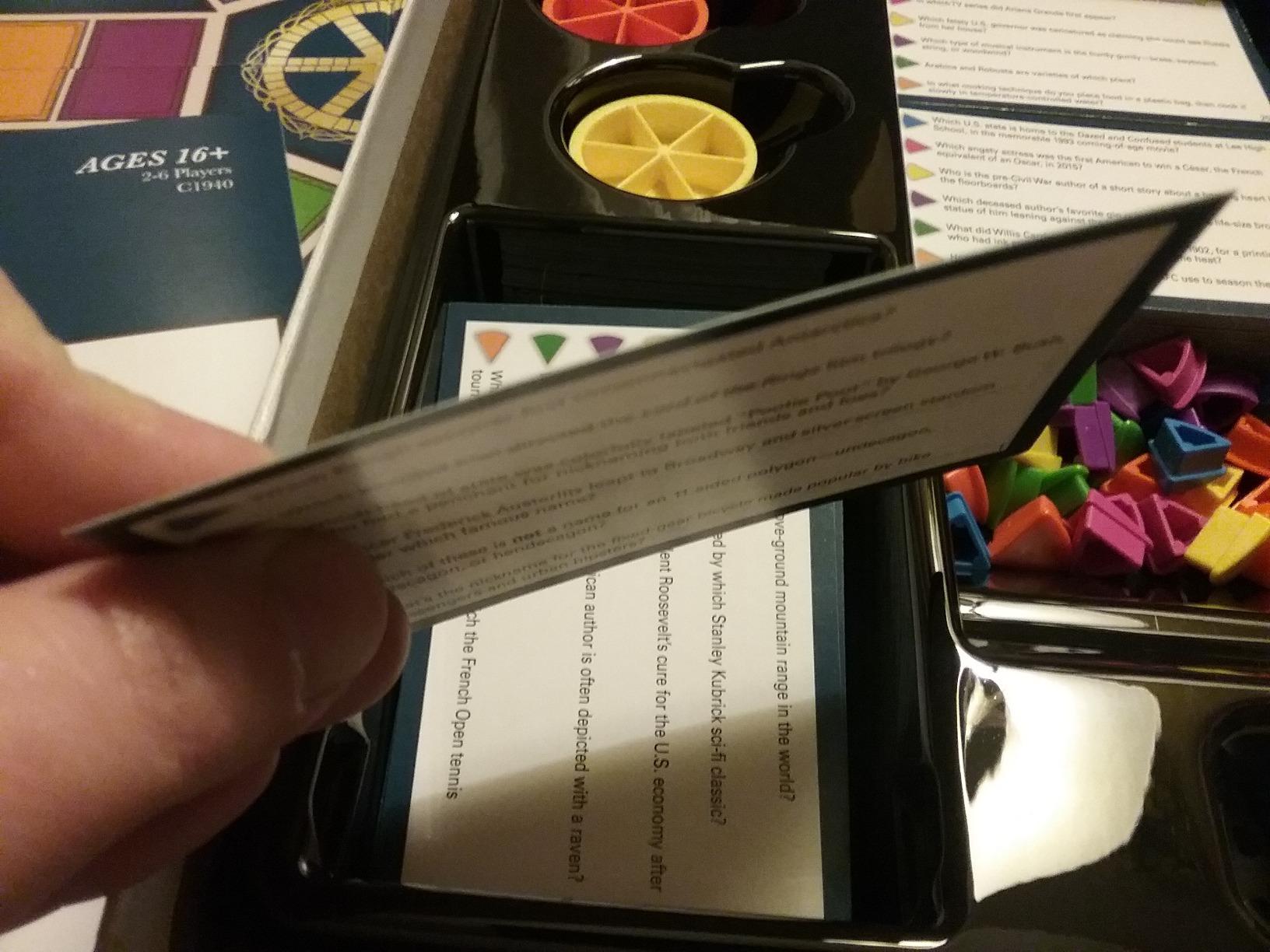
Cards also have to be read closely, and the smaller type on older cards strains some groups. If your night is short, or if the group has played Trivial Pursuit so often that the deck is half memorized, this is the moment to switch formats rather than buy a second edition.
140 cards plus 10 challenge cards
Finish the lyric
2 or more players
Ages 13 and up
Music trivia that asks you to finish a lyric instead of pick an answer changes the whole texture of a game night. There is no multiple choice to reason about, so the win comes from a memory that surfaces at exactly the right moment, and that produces a reaction no quiz question gets out of the room.
This one is built specifically around 90s and 2000s hip-hop and R and B, with artists like TLC, Mary J. Blige, Outkast, Usher, Missy Elliott, Notorious B.I.G. and Wu-Tang Clan in the mix. In our group it worked best as the second game of the night, after the quiz portion had worn everyone out.
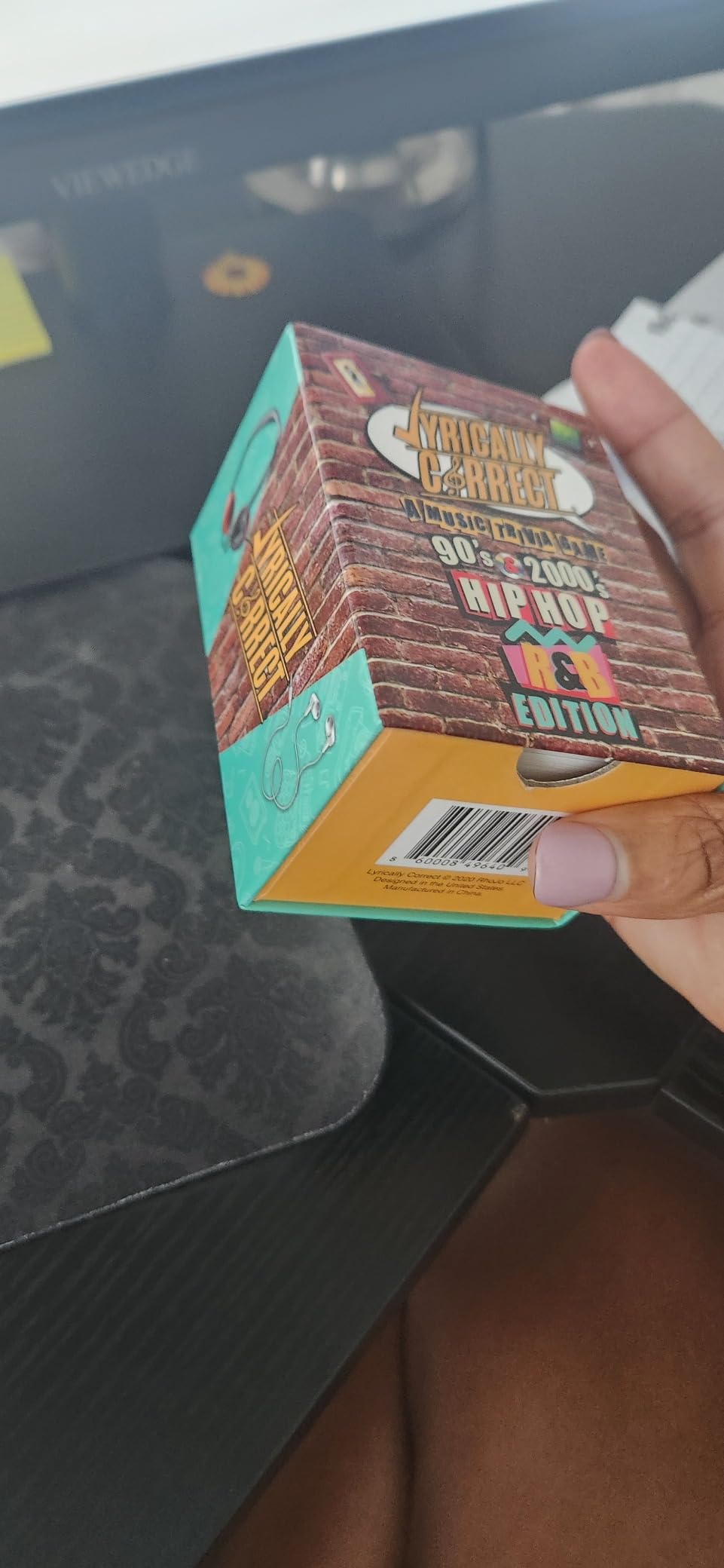
There are 140 trivia cards plus 10 challenge cards that add surprise twists to the format. The card stock is thick enough to shuffle repeatedly without feeling flimsy, which matters more than it sounds when a group is handling the same deck for two hours.
Because the answer is a specific line rather than a fact, a knowledgeable player does not automatically win. Someone who watches music videos but never studied trivia can hold their own, and someone with a strong music memory but no interest in competitive quiz games still engages. That is the level-playing-field effect adults keep asking for.
A narrow genre is a feature for the right room and a wall for the wrong one. If your group spans rock, country, pop and older listeners, the deck loses people fast, and a turn can stall while someone explains the chorus they are supposed to complete.
The box lists 2 or more players, so it works for a couple on a sofa and for a big table equally, and the physical size of 3 by 2 by 3 inches makes it a genuine travel pick. It is rated 4.6 across more than 4500 reviews, and reviewers repeatedly cite reunions, cookouts and birthdays as where it lands best.
800 real events
Build a timeline of 10 cards
2 to 8 players
Ages 14 and up
Chronology never asks a question. It hands you a card with a real historical event on it and makes you decide where it belongs in a timeline, which means nobody has to have memorized a fact to compete. You are playing on ordering and intuition, and the group plays within a few minutes of opening the box.
It rates 4.8 stars across 3659 reviews with 87 percent five-star ratings, among the strongest rating averages here, and the reason is that the format keeps working when people expect it to wear out. Once you have ordered ten cards correctly, you want to know what the next event is.
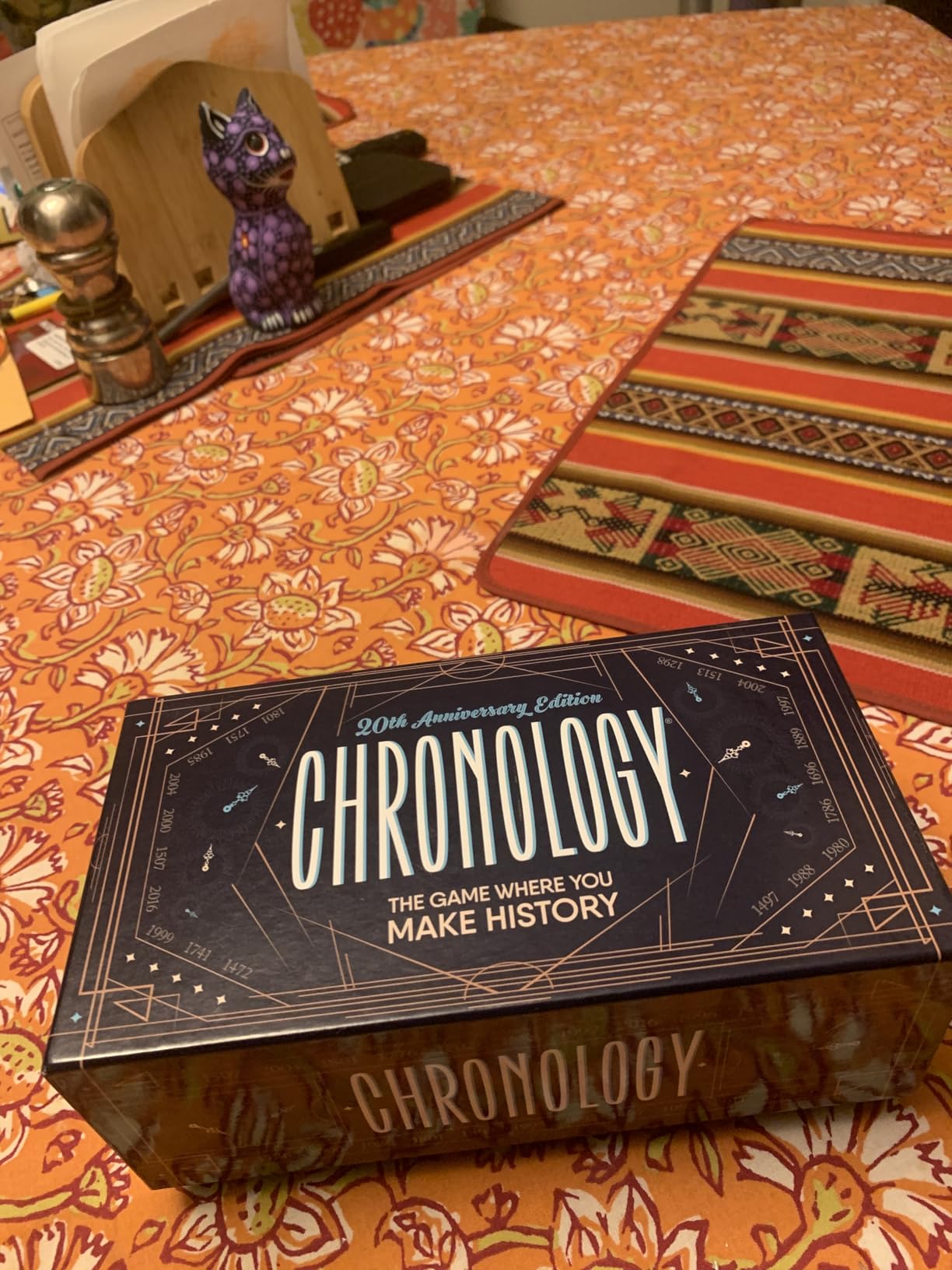
The 20th Anniversary Edition carries 800 unique true events spanning 2000 years, and the content is updated through 2024. A newer print run means fewer of the same ancient-civilization cards than the version most of us grew up with, which matters if you replay it.
The scoring is pure sequence. Get the card in the right position and the round continues; get it wrong and you take it back, which means a group can stall for a while on a stretch of nineteenth-century dates if nobody is a history reader. That is the main tension in an otherwise frictionless game.
Two players works, and so does a full table of eight, so the box scales from a couple to a group without splitting anyone up or rotating players in. The board and pieces are plastic and paper rather than cardboard-heavy, and the whole thing is 2 by 8 by 10.63 inches, so it stores flat in a closet and comes out for a family visit without a production.
Reviewers mention the same payoff we saw: people leave knowing more than they knew coming in, and arguing about a date is half the entertainment. If your group wants a general-knowledge quiz instead, this will feel narrow, and that is a preference problem rather than a flaw.
2950 questions
Classic or fast wedge rules
Electronic timer
2 to 6 players
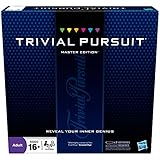
When the group genuinely wants a knowledge exam, this is the version I hand over. Hasbro Gaming calls it the edition for the trivia buff who likes to show off, and the reason is the 2950 questions, the largest bank here, plus a rule change that lets you take a wedge on any correct answer rather than only on a wedge space.
That second mode matters more than the question count. When a group is hungry for competition, fast wedge rules turn every answer into a scoring opportunity and the game gets louder and shorter. When the group wants the slow ceremonial version, the traditional rules are still there.
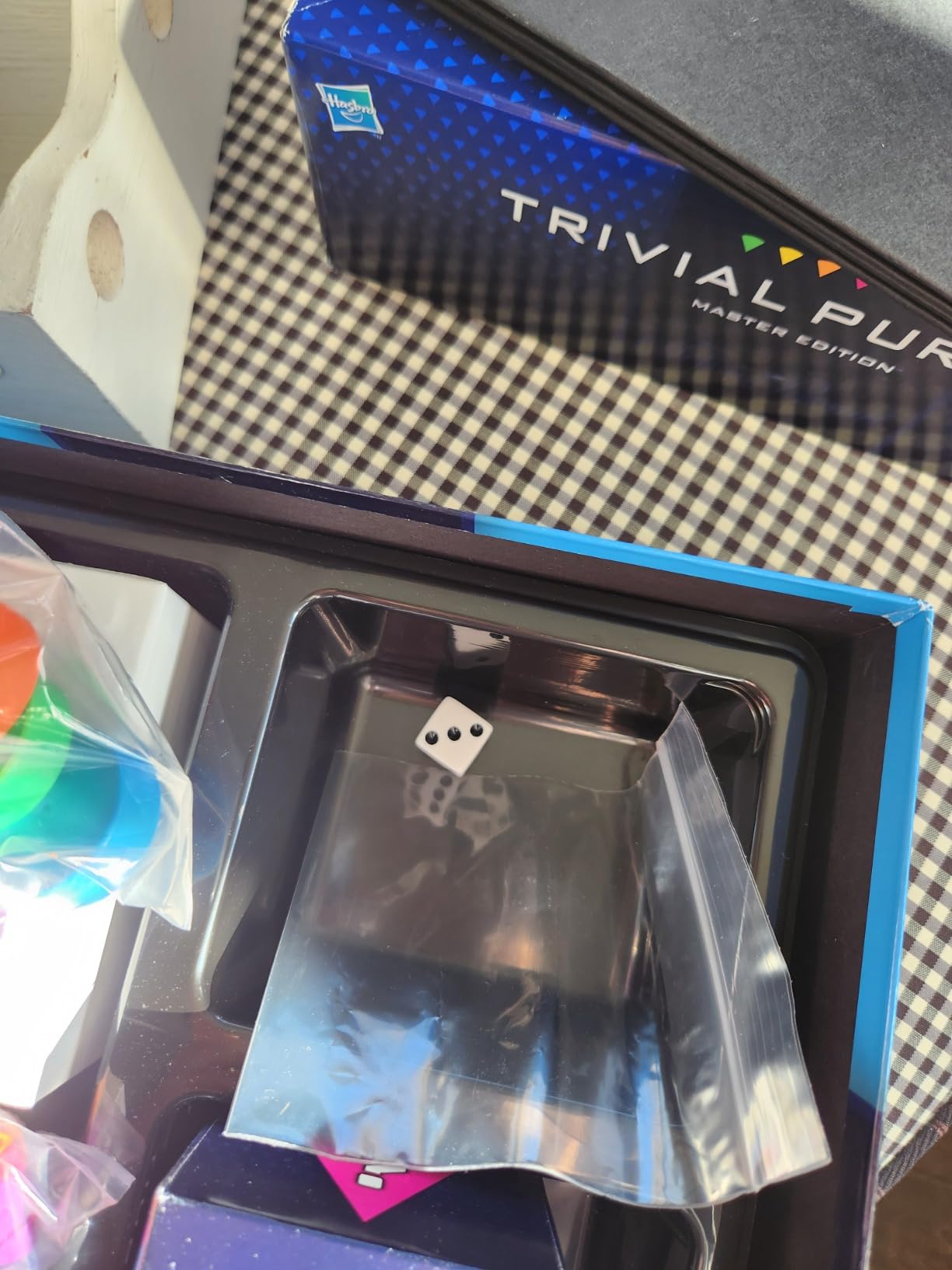
The categories are the same six familiar wedges, so nothing here surprises anyone, and the questions are described as challenging and sometimes humorous. The electronic timer keeps a round from dragging when one person is deliberating over a question nobody else wanted, which in our experience is the main way Trivial Pursuit stalls.
It runs 4.6 stars across 3330 reviews, and reviewers specifically credit the flexibility of the speed-up rule and the timer for holding attention in serious trivia groups. If your group enjoys the format, the depth of the bank is what keeps the tenth session interesting.
Two AAA batteries power the timer, and the electronic timing is one of the most-praised features, so pack spares if you are bringing this somewhere unfamiliar. The board is also heavier than the card options here at 2 pounds, with a footprint a little over 10 inches square, so it wants a real table rather than a coffee table.
Sessions run longer than the card games here, which is a fair trade for a deeper question pool but a problem on a weeknight. If your group is new to trivia, start with the Classic Edition and move up to this one once you know you want the deeper bank.
Black culture categories
4 to 20 players
Card stock deck
Ages 13 and up
This is the answer for a large table that would break most trivia games. Urban Trivia lists support for 4 to 20 players in a single deck, so an office outing or a family reunion can play one game without splitting into teams or arguing about a second box.
The subject is Black culture across television, movies, music, sports and growing up, and the questions were researched from the creators’ man-on-the-street social media series. That origin shows in the tone, which reads conversational rather than academic, and it gave our group a lot of stories to tell afterward.
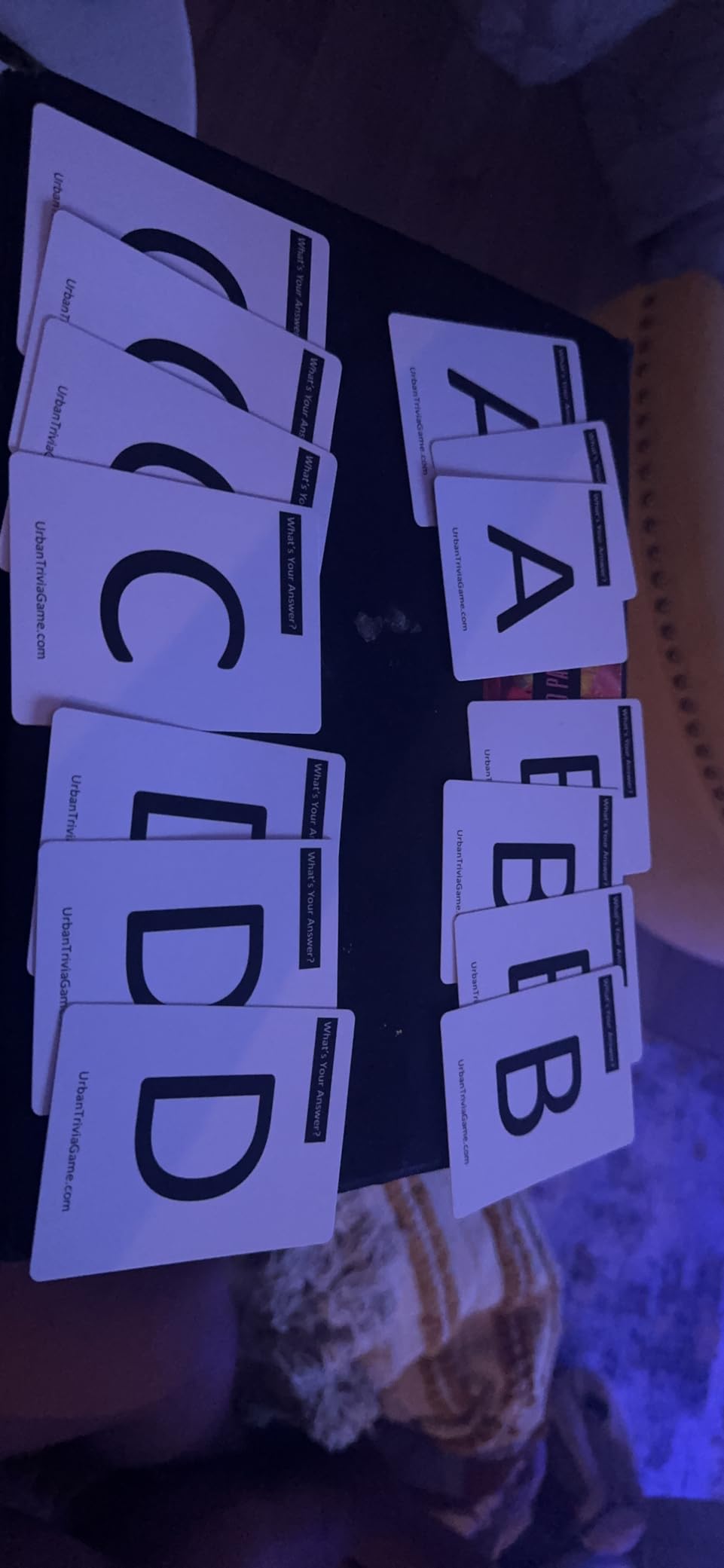
Large-group trivia usually fails because everyone has to hear the question and wait through a queue of answers. A card deck that lives at the head of the table and passes around keeps a fourteen-person group moving, and the 2.7 by 1 by 3.6 inch deck is small enough to hold in one hand while reading.
It rates 4.6 across 3232 reviews with 76 percent five-star, and reviewers repeatedly mention gatherings and family game night as the setting where it works. Card stock also survives a big table better than a paper-thin deck would.
Narrow subject matter is not a defect here, it is the point, and the same narrowness is why it will not serve a table that wants a general quiz. A minority of reviewers note that the question set skews toward players aged 45 and older, so a room of younger adults will not automatically connect with it.
Check who is actually at your table before buying this one for a crowd. If the culture is the appeal, the specificity is what makes it memorable, and reviewers describe it as a bridge that starts conversations rather than a test.
300 plus songs
QR code app play
2 to 10 players
App assisted
Hitster is the one in this group that plays audio instead of text. You pick a music card, scan the QR code, and the app plays something for the room, so the game is built around recognizing a song rather than answering a written question. That makes it one of the easiest games here to teach across a wide age range.
It rates 4.8 stars across 1907 reviews with 90 percent five-star, and the reason is the setup time. Rules take roughly three minutes to explain, the app connects fast, and the first song starts before anyone has finished settling in.
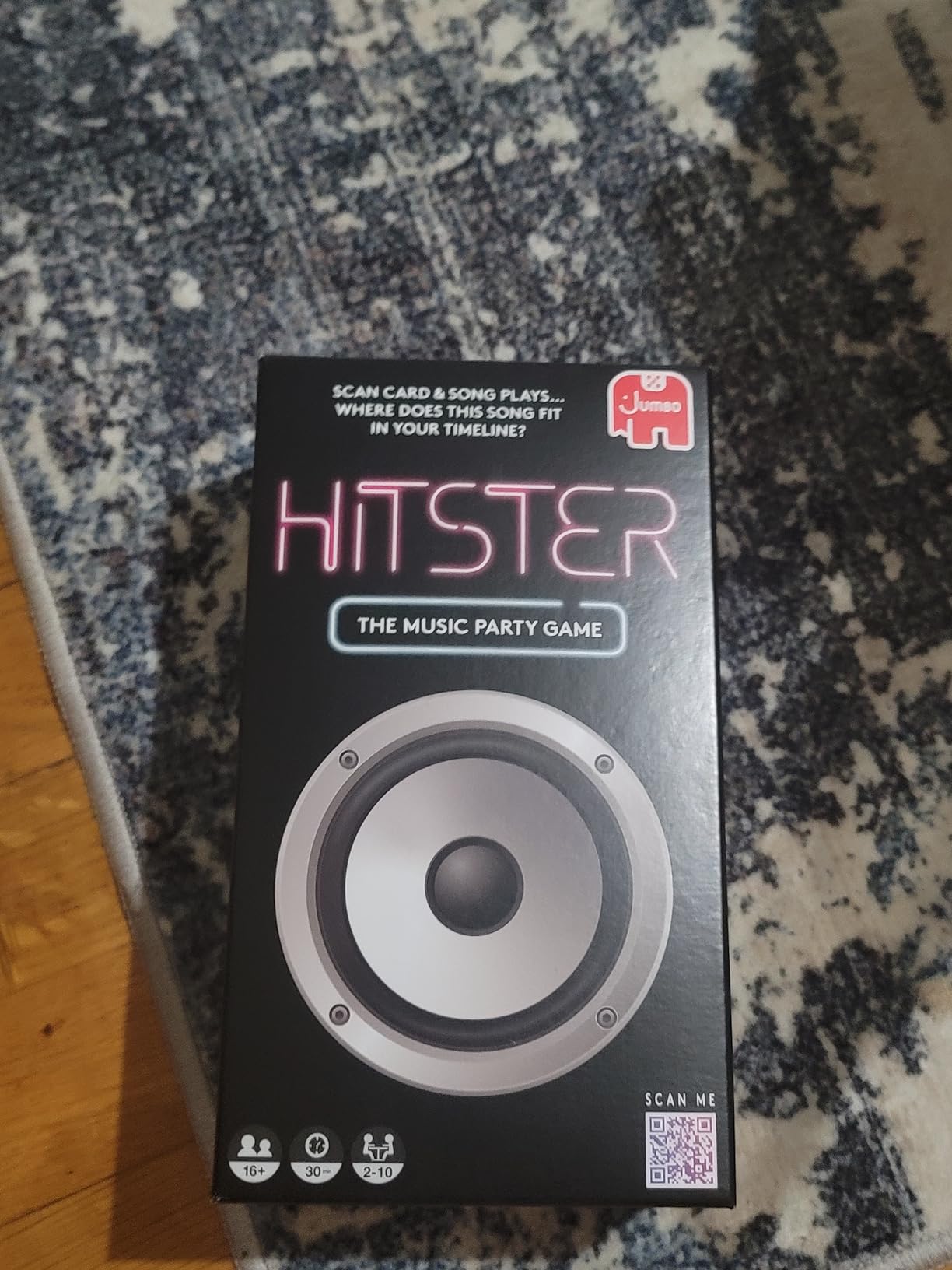
Over 300 music cards span roughly 1920 to the present, so consecutive rounds land in different decades without anyone choosing a category. The included 37 chips add risk to your guess, and the box offers competitive, cooperative and solo modes depending on how the group feels that night.
For mixed-age and mixed-generation groups this is close to ideal. Younger players contribute style and era knowledge, older players contribute song knowledge, and neither side is excluded by the format. The box supports 2 to 10 players.
QR playback runs through the free Hitster app, and reviewers note that non-Spotify users may get only a short clip rather than the full song. That changes how some rounds feel, and it is the single most common caveat in the reviews.
Some cards also contain explicit lyrics, which several families remove before playing, and the catalog is radio-focused, so musical theater and Disney material is absent. Check the deck before a mixed-age gathering and expect to set a few cards aside.
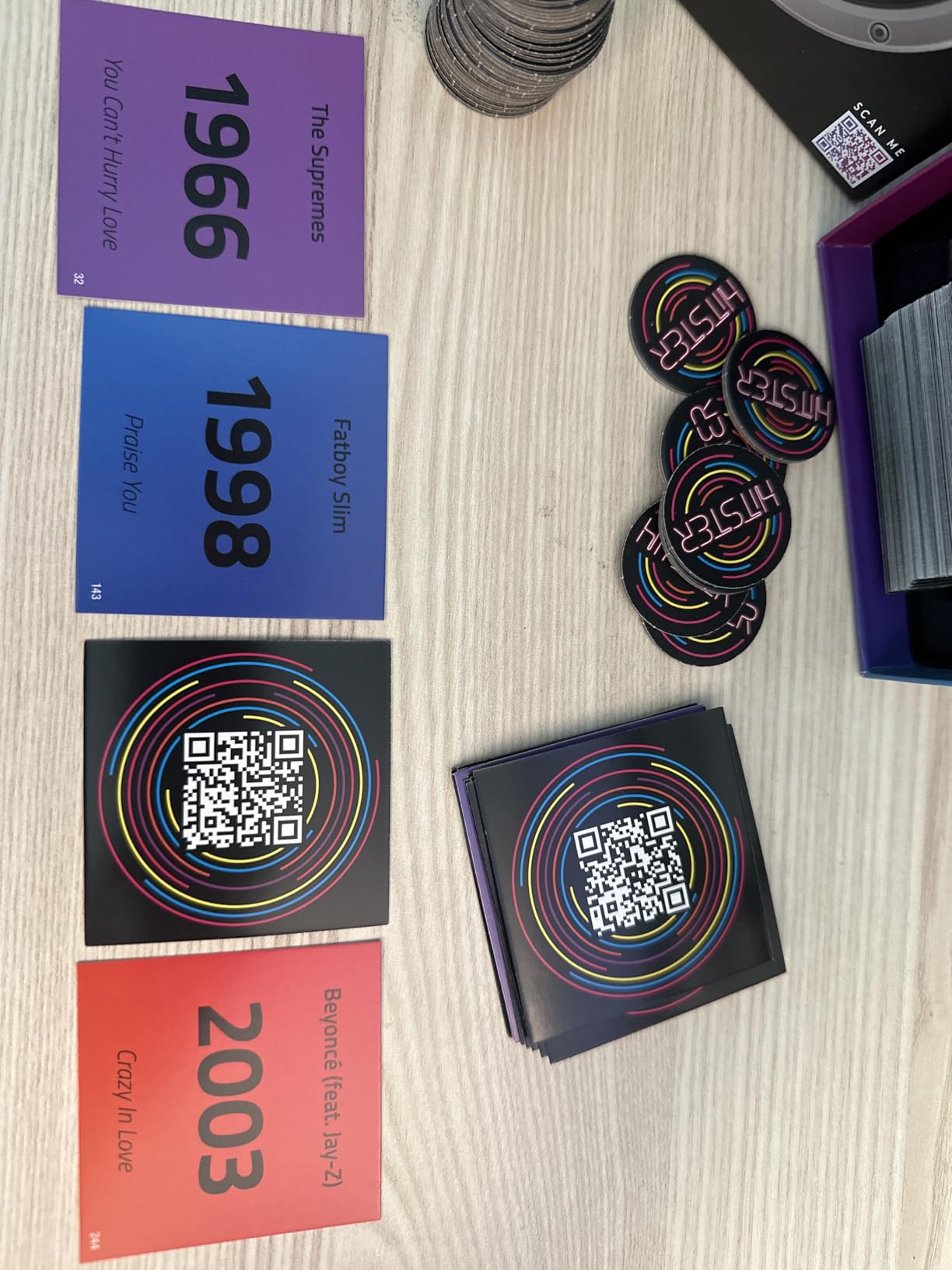
Teaser, Odd-1-Out, Sequence and Wild Card
2 to 6 players
Ages 16 and up
About 60 minutes
Wit’s End solves a problem most trivia decks ignore: repetition. Instead of a single format, it runs Teaser rhyming riddles, Odd-1-Out, Sequence ordering and a Wild Card that mixes brain trivia, word puzzles and true or false, so a group asking the same style of question over and over never happens.
It plays for 2 to 6 players or teams, racers move up a board, and a wrong answer can send you back a level. The stated age is 16 and up, and the estimated play time is about an hour, which makes it a proper sitting-down game rather than a filler.
The Sequence category is the standout because it asks you to order films by release date, cities by distance or events by year without asking a single trivia question. Groups that claim to hate trivia tend to enjoy it precisely because there is no fact to memorize.
Mixing open-ended and multiple-choice answers also blunts the lucky guesser. When a player can reason out an Odd-1-Out answer, they can win a round without knowing the topic at all, and that keeps the same person from running the table all night.
The recurring complaint in reviews is weighting, with a large share of questions turning on history and dates, which bores players who care about the why rather than the when. Some editions of the deck also show repeats after a full pass through the questions, so a heavy group can burn it faster than expected.
The board itself is described as plain, and the product details note regular print updates adding new questions, with the most recent print copyrighted 2025. It rates 4.5 across 1998 reviews with 72 percent five-star, and owners mostly call it an accessible challenge for mixed-ability and mixed-age groups.
Betting and guessing
Felt mat and wagering chips
4 or more players
About 30 minutes
This is the game I bring when the group includes non-gamers. Everyone writes down a guess, everyone bets chips on whose guess is closest, and nobody is eliminated and nobody sits out. The knowledge of the answer matters far less than reading the table and picking the right person to trust.
It rates 4.7 across 1260 reviews with 84 percent five-star and only 3 percent one-star, and the deluxe components are singled out repeatedly: heavy wagering chips, a crease-free felt betting mat and dry-erase answer boards with markers that have built-in erasers.
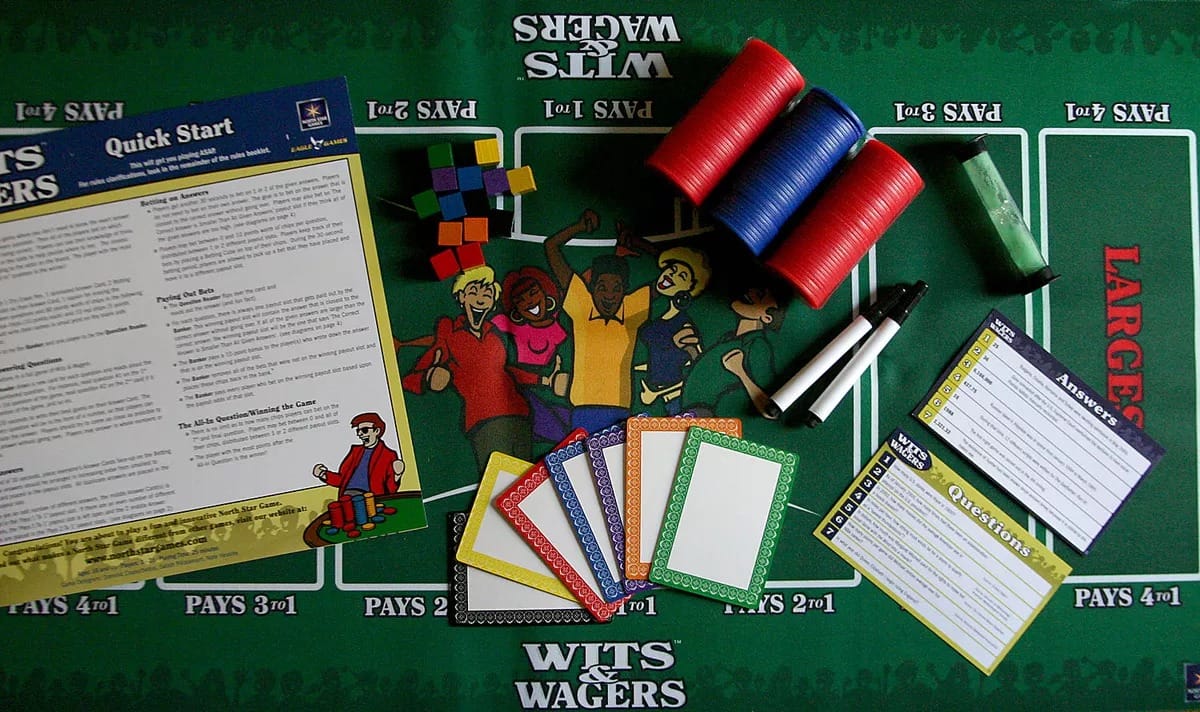
The whole scoring loop is social. A player who never gets a question right can win a round by correctly betting on the most convincing liar in the room, and the table spends its energy reading faces instead of racing to buzz. Estimated play time is about 30 minutes, and it is learnable in a single round.
For adults who say they hate trivia, this is usually the conversion. Our least enthusiastic player at the table was the loudest by the third game, purely because the wagering gave them a role. The stated age range is 10 and up, which also makes it one of the most intergenerational options in the roundup.
The deluxe physical package is the upgrade worth taking over a standard box. The felt mat sets the tone immediately, and dry-erase boards mean cleanup takes seconds rather than a stack of loose paper.
Two limitations are worth planning around. Betting chips are limited in number and can run out in games with fewer than four players, and the design is built for 4 or more, so a two-player night needs a different game. Questions are also in English with imperial units, and one person has to read them aloud.

2000 plus questions
5 categories
2 or more players
Ages 14 and up
30 to 45 minutes
Made in partnership with The HISTORY Channel, this deck trades the board for a question bank large enough to matter. Over 2000 questions sit in five categories covering arts and culture, sports and recreation, science and technology, geography and landmarks, and people and events, with sessions running 30 to 45 minutes.
It plays for 2 or more players, so it works for a couple as easily as a party, and the box measures 10 by 10 by 2 inches with a card stock build. Reviewers repeatedly note that a bank this size makes repeats unlikely across many sessions, which is the single biggest replayability complaint in this category.
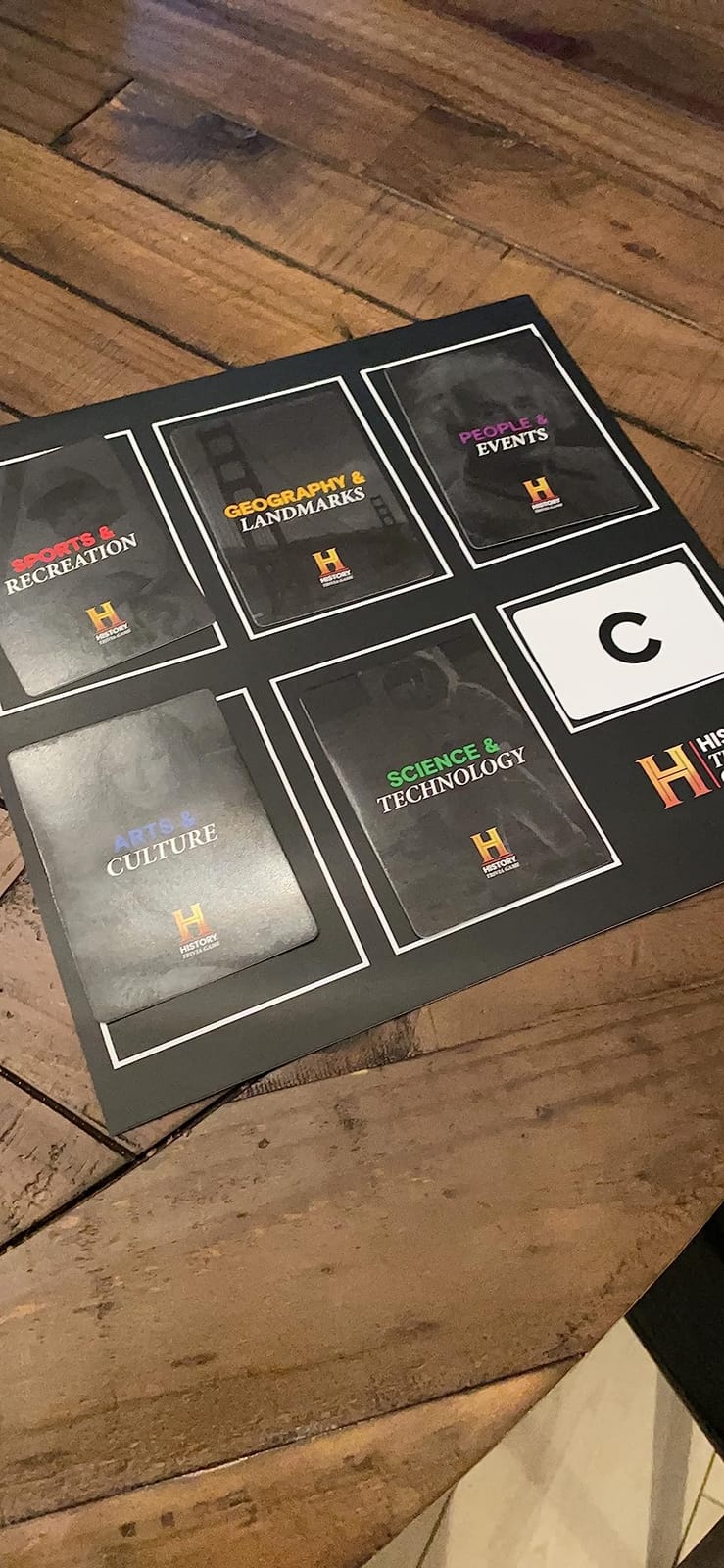
Adults play the same handful of trivia games repeatedly, and small question pools are the fastest way to kill a game night. With over 2000 questions and category cards that let players steer toward their strongest topics, this is the option here most likely to survive a full year of monthly gatherings.
It also rates 4.6 across 1024 reviews with 80 percent five-star, and reviewers frequently mention that the questions start conversations rather than just scoring points, which is what keeps a group talking between rounds.
The difficulty spread is wide, from easy to hard, and plenty of reviewers note the questions are harder than anticipated. Adults and history enthusiasts tend to love that, while tweens and younger teens can find it punishing, which matches the 14-and-up guidance.
A minority of low-star reviews flag a U.S. history skew and the assumption of fairly technical English vocabulary. If your group includes players who are newer to English, or wants a light night, pair it with a mechanic game rather than running the evening on difficulty.
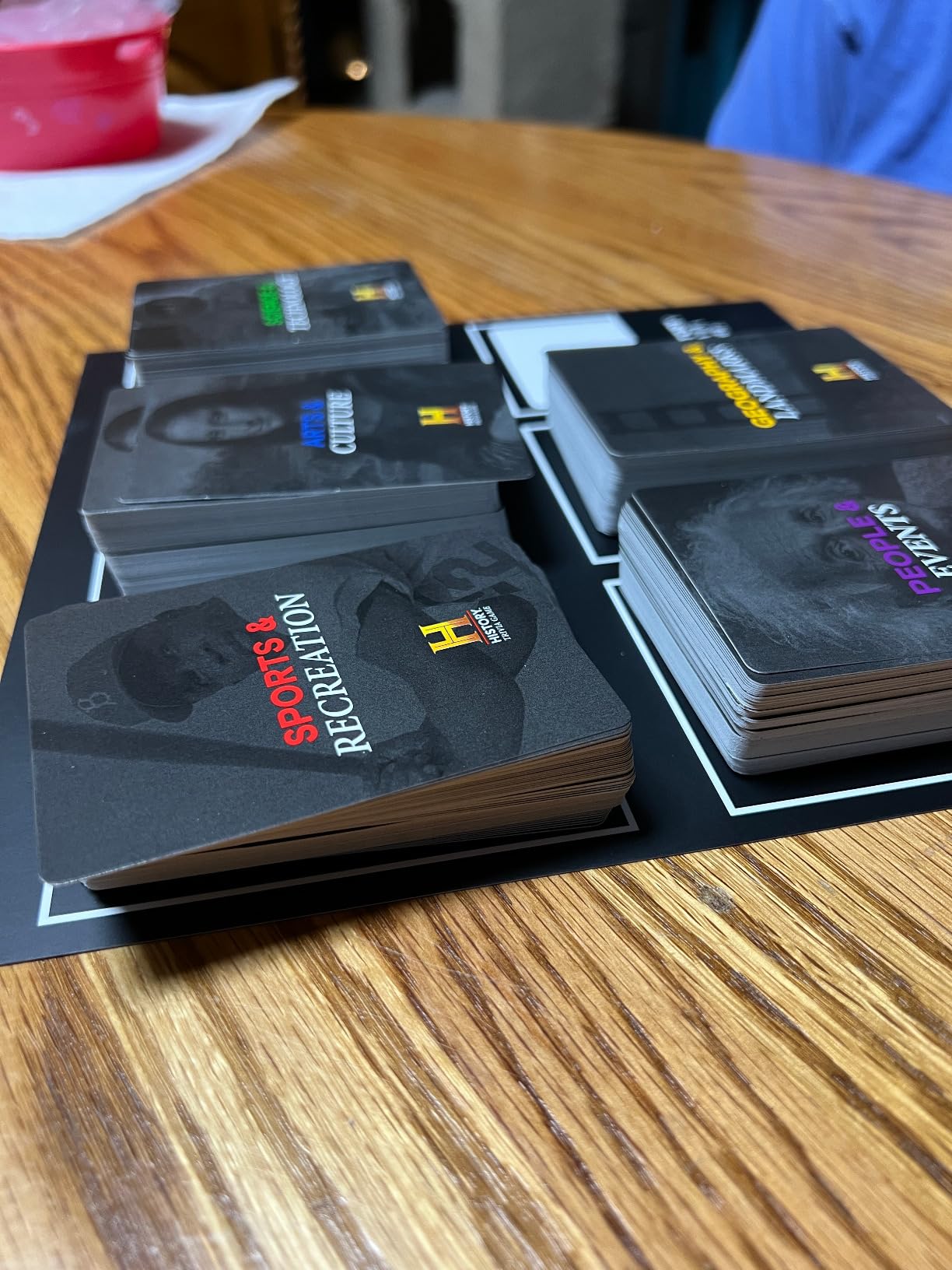
1200 questions
202 cards plus a die
6 question types
2 to 6 players
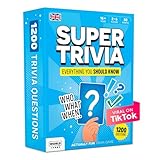
Super Trivia is the one I pack for a car. The box is 7.99 by 5.79 by 1.77 inches, the whole game is 202 cards and a single die, and it plays for 2 to 6 players with no board, no timer and no electronics to lose in a car seat.
It carries 1200 general knowledge questions across daily life, culture, history, natural science and geography, with six question types including 200 picture questions that ask for an estimate rather than a fact. That picture category does more for a mixed group than the written questions do.
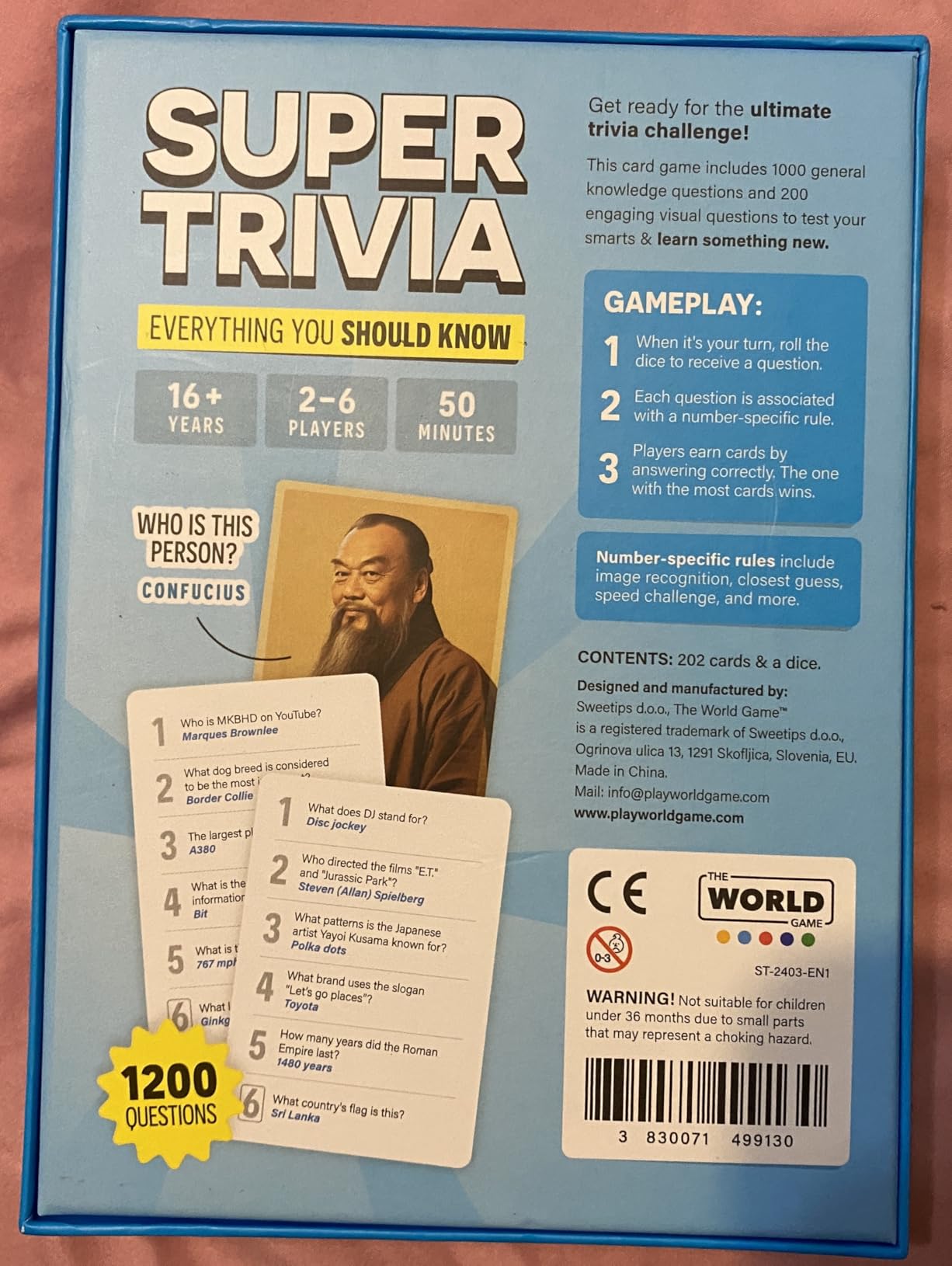
Rolling to choose a question is a small design choice with a large effect on variety. Because the same card can be used several different ways depending on the roll, players do not know the format until the die lands, and that unpredictability keeps them paying attention to cards they would otherwise tune out.
Reviewers most often describe the difficulty as well balanced, neither too easy nor too hard, which is rarer in this category than it should be. It rates 4.7 across 886 reviews with 80 percent five-star and 1 percent one-star, among the most consistent ratings in the roundup.
Road trips, camping and holiday gatherings are where this earns its place, and reviewers mention classrooms as a secondary use, where a die and a deck handle downtime better than a full board. The age guidance is 16 and up, and the tone of some questions is more adult than a family with preteens may want.
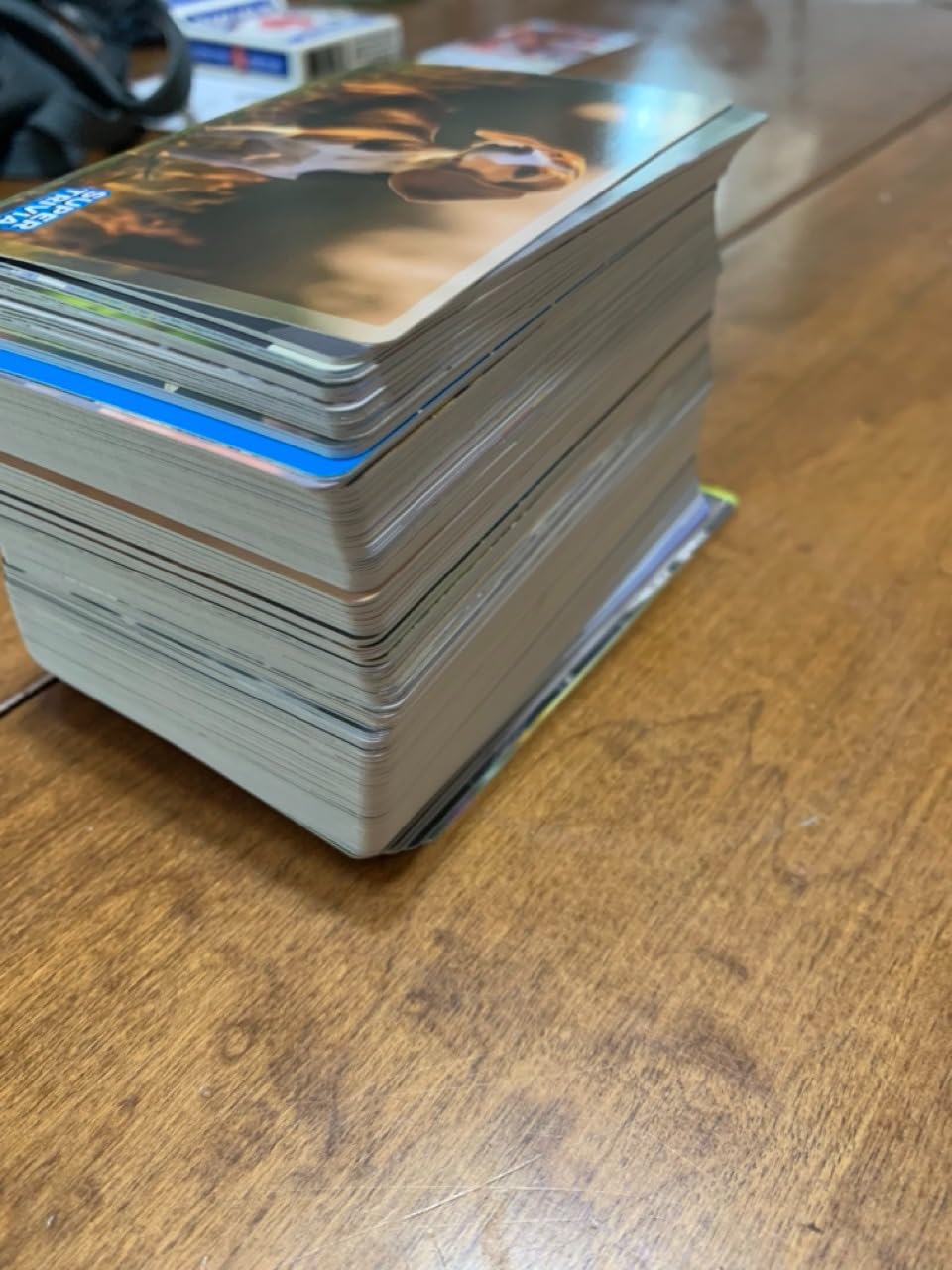
The bank of 1200 questions is honest but not unlimited, and repeat-heavy groups report exhausting it sooner than expected. If your group plays weekly, the HISTORY Channel deck or the Master Edition is the longer-lasting investment.
1100 questions
5 categories
4 or more players in teams
Host-run format
Ultimate Pub Trivia is the closest you can get to a hosted bar quiz without leaving the house. It is designed for 4 or more players working in teams, and the box includes 10 score sheets, 200 team answer sheets, 4 pencils and a question card sleeve, so a quizmaster has everything needed to run the night properly.
It carries 1100 original questions across six topics in five categories, plus a drawing round and multi-answer questions. That drawing round is the detail that makes it feel like a real pub quiz rather than a deck of cards.
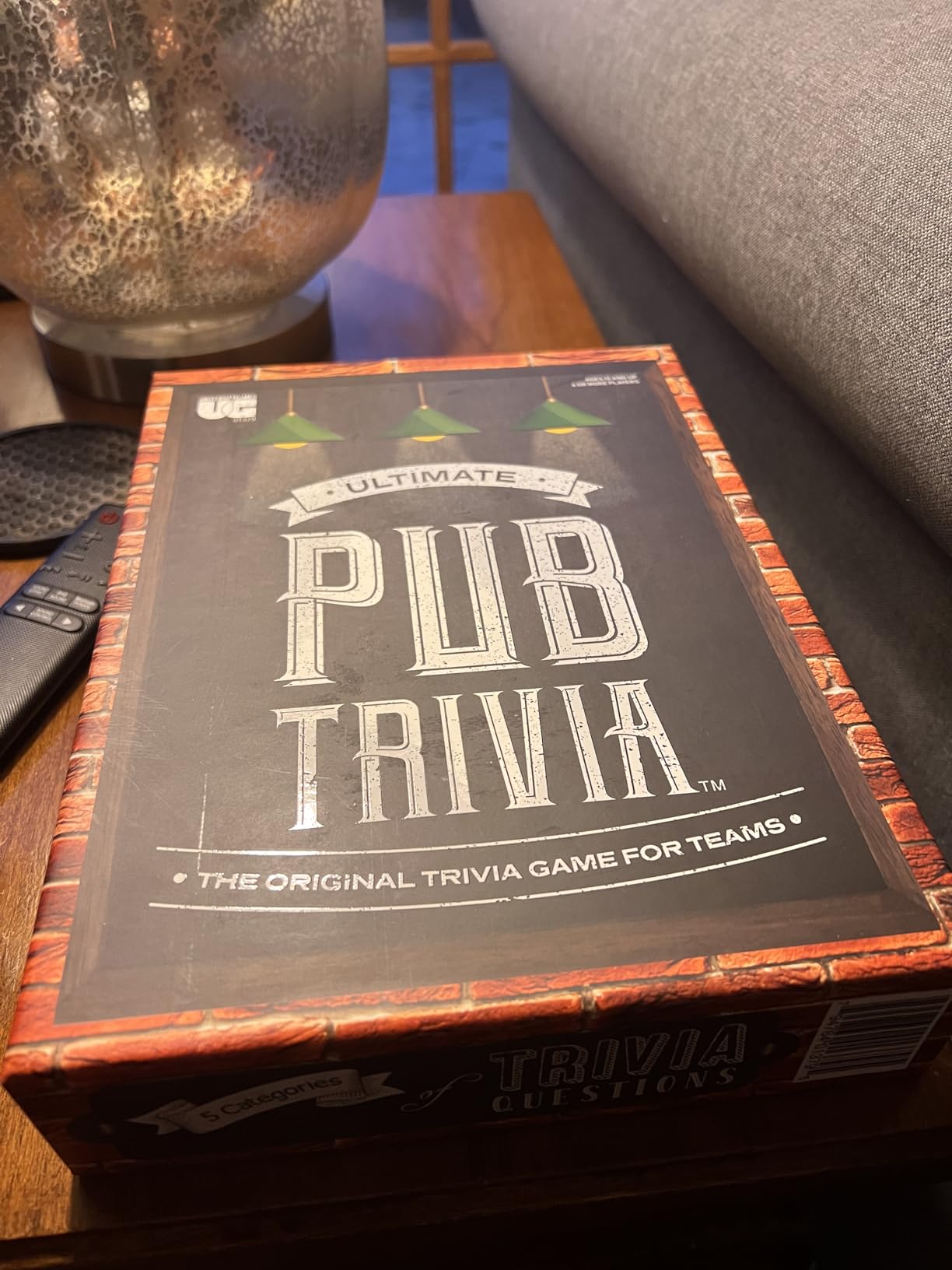
The included host material is the real feature. Because a question is read to the room rather than handed around, every team deliberates at once, which produces exactly the noisy argument and collaboration that makes pub trivia worth recreating. The game is rated for ages 12 and up and needs no batteries.
Reviewers mention using it for host-run and live-streamed quiz nights, and the compact 2.75 by 10.5 by 10.5 inch box is easy to move. Drinking is optional, and plenty of groups play it dry, which is worth knowing if you are buying it for an office rather than a bar.
At 4.4 stars across 690 reviews, this is the lowest-rated product in the roundup, and the reviews explain why. Questions skew difficult, the content is oriented toward the British Commonwealth, and some answers are fixed as of 2014, which dates the facts in categories that change quickly.
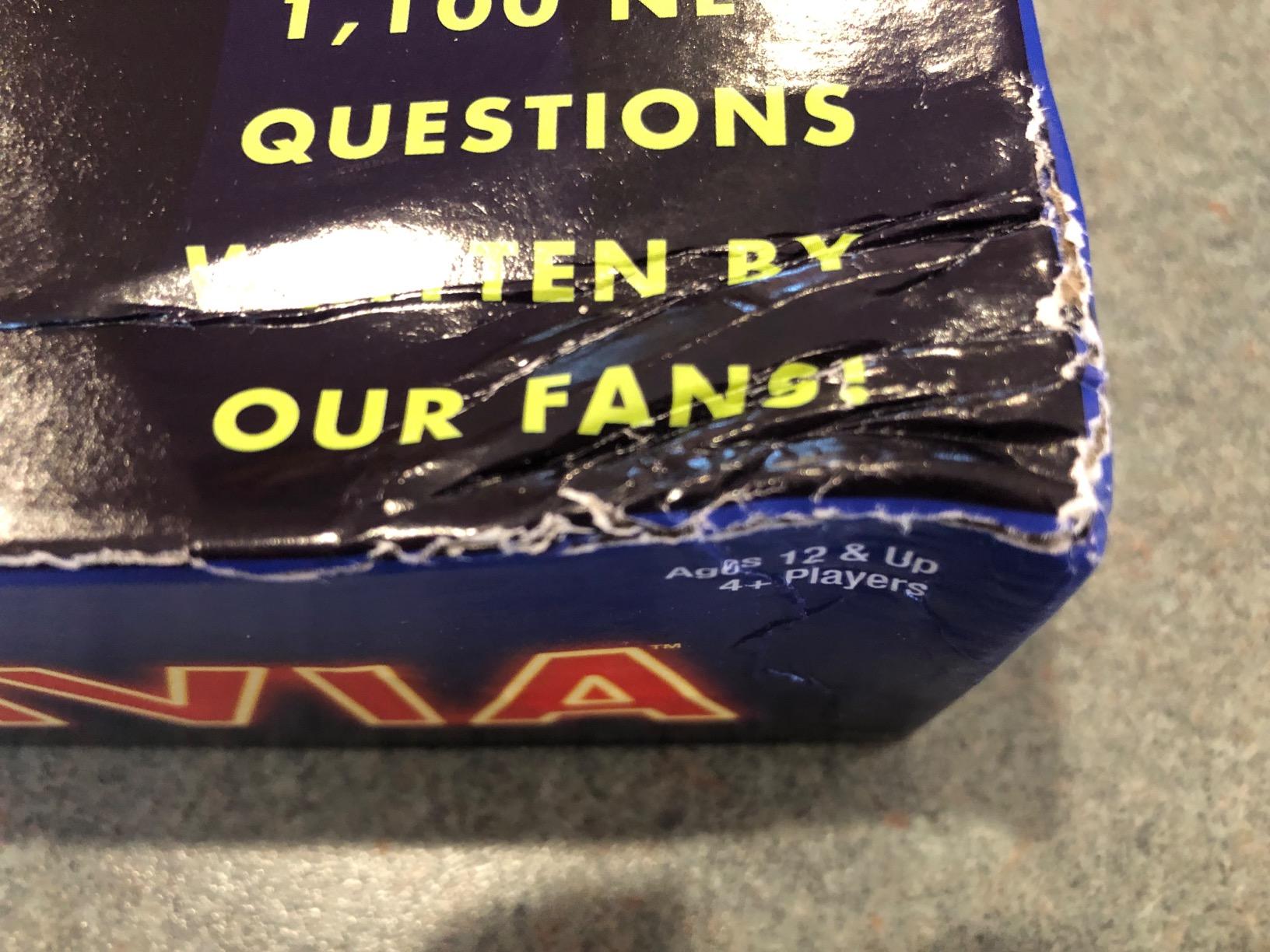
There is also a cardboard organizer inside the box with too few category slots, so one stack does not fit, and a small number of buyers reported incomplete sets. If your group wants current American pop culture, this is not the deck, but for a themed dinner or a holiday quiz night the format earns its keep.
Pick by mechanic before you pick by theme. Nearly every complaint we heard from players, on forums and in person, comes from a knowledge question that a confident player answered and a non-player quietly abandoned. Games where you bet on other people, build a sequence, or guess a number solve that; pure question-and-answer decks do not.
If your group is competitive and every person at the table enjoys showing off knowledge, a question bank will serve you well. Trivial Pursuit Master Edition for depth, the HISTORY Channel deck for longevity, or Chronology if they like ordering over recalling. If your group is mixed and half the table would rather be drinking than answering, wagering and bluffing games win, and Wits and Wagers is the most reliable of them because nobody sits out.
For large gatherings where not everyone knows each other well, team formats reduce the awkwardness of a knowledge mismatch, which is why Ultimate Pub Trivia and Urban Trivia both work at fifteen and twenty players while most decks stop at six.
Two players narrows the field sharply. Chronology, the HISTORY Channel deck and Super Trivia all handle a couple, while Wits and Wagers needs 4 or more and is the one entry here that will not work for two. For 13-plus tables, check the listed player count before you buy, because the majority of trivia decks stop at six and the box will not scale.
Adults play the same games repeatedly, and a small deck is the fastest way to end a game night. Divide questions by realistic annual plays to estimate how long a box stays fresh, and weight large banks higher if your group meets monthly. Replaces and updated print runs matter as much as raw count, which is why Chronology’s content updated through 2024 is worth more than a static number suggests.
Card games teach in under two minutes and travel well. Boards give the night a focal point but need a table, more setup and usually more time. App-assisted games like Hitster add sound and range but tie playback to a phone and an app, so check streaming and content before committing, particularly for a mixed-age gathering. A useful side note if your table skews younger: our [card games for families guide](https://www.aboutdarwin.com/best-card-games-for-families/) covers the formats that scale down without losing the adult crowd.
For couples, a card deck with a large bank beats a board game every time. For crowds above ten, plan two games rather than one, because attention drops after an hour. For mixed ages, favor mechanics over difficulty, and give the older relatives a format where knowledge gaps do not translate directly into score gaps, which is exactly what the wagering and picture-question formats do. If your group mostly wants a gift rather than a night, our [wooden puzzles for adults roundup](https://www.aboutdarwin.com/best-wooden-puzzles-for-adults/) covers the same no-shouting crowd-pleaser idea in a different format, and our [stocking stuffers for adults list](https://www.aboutdarwin.com/best-stocking-stuffers-for-adults/) is built for the same problem at a smaller size.
The most recommended trivia games for adults are Hygge Games I Should Have Known That!, Trivial Pursuit Classic Edition, Chronology, Trivial Pursuit Master Edition, Lyrically Correct, Urban Trivia, Jumbo Hitster, Wit’s End, Wits and Wagers Deluxe and the HISTORY Channel Trivia Game. The first two work for nearly any group, while the rest cover specific needs like large crowds, music nights, history fans and bluffing.
Good adult trivia games avoid feeling juvenile and keep non-experts engaged. Mechanic-driven designs such as I Should Have Known That!, Wits and Wagers and Chronology let players win through nerve, reading the table or arranging events, rather than memorized facts alone. That is why they suit mixed-ability adult groups better than knowledge-only question decks.
Card options include I Should Have Known That! with 110 cards and more than 400 questions, Urban Trivia for groups of up to 20 players, Lyrically Correct for 90s and 2000s music fans, Jumbo Hitster for app-assisted audio play, and the HISTORY Channel Trivia Game with over 2000 questions in five categories. Cards teach faster than boards and travel better.
For parties, prioritize games with loud mechanics over silent ones. Wits and Wagers Deluxe works well for groups of 4 or more because players wager on each other, Hitster gets a mixed-age room singing along within minutes, and Ultimate Pub Trivia runs team-based with drawing rounds that force people to talk. For a group that does not consider itself gamers, these work better than a standard question deck.
For groups above ten players, Urban Trivia is the strongest option, supporting 4 to 20 players from a single card deck. Ultimate Pub Trivia is the other large-group choice, built for 4 or more players working in teams with score sheets included. Most other trivia decks cap at six players, so plan two games rather than one for a very large table.
Adults want game night that does not feel juvenile, and the mechanics matter more than the difficulty. A good adult trivia game has enough question volume to avoid repeats, teaches its rules in a couple of minutes, and gives non-experts a way to win. Games where you bet on another player, order events or guess a number keep a whole table engaged.
If your group has one strong personality and five people along for the ride, buy I Should Have Known That! and let the penalty scoring do the work. If you want a familiar evening with a buzzer and a timer and a shorter learning curve, the Trivial Pursuit Classic Edition is the reliable buy. For a knowledge-first crowd that wants depth, go with the Trivial Pursuit Master Edition or the HISTORY Channel deck, which will still be fresh next year.
If the group is loud, competitive and mostly not quizzers, Wits and Wagers Deluxe is the better call, and it needs four or more players. If the table is older than thirty, Chronology and Jumbo Hitster carry a whole night without requiring anyone to know a fact. For a room that only ever wants one category, Lyrically Correct or Urban Trivia will beat anything general-purpose, and for anything above ten players, plan on Urban Trivia or Ultimate Pub Trivia plus a second box.
Whichever one you take off the shelf, bring it to the table in 2026 and give it two nights before you judge it. These are the best trivia games for adults precisely because they get asked for again, and that is the only review score that really matters.