Physical Address
304 North Cardinal St.
Dorchester Center, MA 02124
Physical Address
304 North Cardinal St.
Dorchester Center, MA 02124

Search for the best tow behind spreaders for riding mowers and you will hit the same wall we did: a wall of near-identical listings, every one of them rated somewhere between 3.3 and 4.2 stars, none of them obviously better than the next. There is no five-star champion in this category. What there is, once you look past the badges, is a small set of real engineering differences: a cast aluminum gear drive instead of a nylon one, a hopper big enough to finish a half acre in one fill, a gate lever you can reach from the seat without dismounting, a hitch pin that actually fits your zero-turn.
We spent weeks putting eight tow-behind spreaders side by side, matching published specifications, manuals and warranty terms against thousands of owner reviews, and we cross-checked the failure patterns that show up in lawn care forums. We paid particular attention to the things that ruin a spreading job: uneven pattern, a gate that keeps dumping material after you stop, a flow control you cannot reach, and a hitch that does not match your mower.
The short answer to who makes the best tow behind spreader: Agri-Fab builds the most popular homeowner models in the country, Brinly makes the only true combo aerator-spreader worth towing and the highest-capacity broadcast hopper here, and Yard Commander is the only one in the group pairing a metal gear drive with 12 inch pneumatic tires. Nobody makes a flawless unit. These three make the fewest compromises.
Everything below is written for people who already own a riding mower, lawn tractor or zero-turn and want to stop walking a push spreader across the same lawn four times a year. If your yard is under a third of an acre and mostly surrounded by trees and flower beds, read the wide-deck walk-behind comparison first and save yourself the storage space. If you are shopping the mower itself, our zero-turn guide for large properties covers the platform these spreaders hang off of.


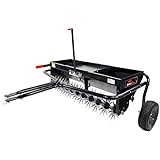
These are the three that earned the most goodwill from owners across seasons rather than weeks. The Agri-Fab 130 lb wins on the combination of rating and install base, the 85 lb wins on weight and price per pound of capacity, and the Brinly combo is the only pick here that perforates soil while it spreads.
Read the full reviews below before you commit. Every one of these has a documented weakness, and the right spreader for a half acre of open turf is a different machine than the right spreader for a bumpy two-acre plot with slope on three sides.
| Product | Features | |
|---|---|---|
| Agri-Fab 45-0463 130 lb Tow Behind Spreader |
|
Check Latest Price |
| Brinly 40 Inch Combo Aerator Spreader |
|
Check Latest Price |
| Agri-Fab 45-0530 85 lb Tow Behind Spreader |
|
Check Latest Price |
 Craftsman 110 lb Pull-Behind Broadcast Spreader Craftsman 110 lb Pull-Behind Broadcast Spreader |
|
Check Latest Price |
 Brinly BS36BH-A 175 lb Tow Behind Spreader Brinly BS36BH-A 175 lb Tow Behind Spreader |
|
Check Latest Price |
 Yard Commander 125 lb Broadcast Spreader Yard Commander 125 lb Broadcast Spreader |
|
Check Latest Price |
 Craftsman 85 lb Universal Tow Behind Spreader Craftsman 85 lb Universal Tow Behind Spreader |
|
Check Latest Price |
 AugFir 130 lb Tow Behind Broadcast Spreader AugFir 130 lb Tow Behind Broadcast Spreader |
|
Check Latest Price |
We earn from qualifying purchases. CERTAIN CONTENT THAT APPEARS ON THIS SITE COMES FROM AMAZON. THIS CONTENT IS PROVIDED 'AS IS' AND IS SUBJECT TO CHANGE OR REMOVAL AT ANY TIME.
A note on the numbers in that table: the square footages come from manufacturer claims, and manufacturer claims are optimistic. A 130 lb hopper filled with a dense pelletized lime will cover meaningfully less ground than the same hopper filled with a lightweight granular fertilizer, and one owner of the 110 lb Craftsman reports that a 60 lb fertilizer bag nearly fills it. Treat capacity as a ceiling, not a promise.
130 lb poly hopper,10-12 ft spread,13 in pneumatic tires,29.4 lb unit weight,3-year limited warranty
This is the model that shows up again and again in owner conversations. In one r/lawncare thread on tow-behind recommendations, a poster put it simply: they had been happy with their Agri-Fab 130 lb spreader. That kind of unprompted long-term loyalty is rare in a category where people tend to abandon a spreader the first time the gate sticks.
The 130 lb hopper is the reason it keeps winning. It covers a half acre or 25000 sq ft in a single fill, which means one trip back to the bag for most suburban lots. The frame is 1 inch steel tubing with an enclosed gear house and a poly hopper, and it rides on 13 inch by 4 inch pneumatic tires, which is a wider footprint than most of the field and noticeably calmer over seedbed rough ground.
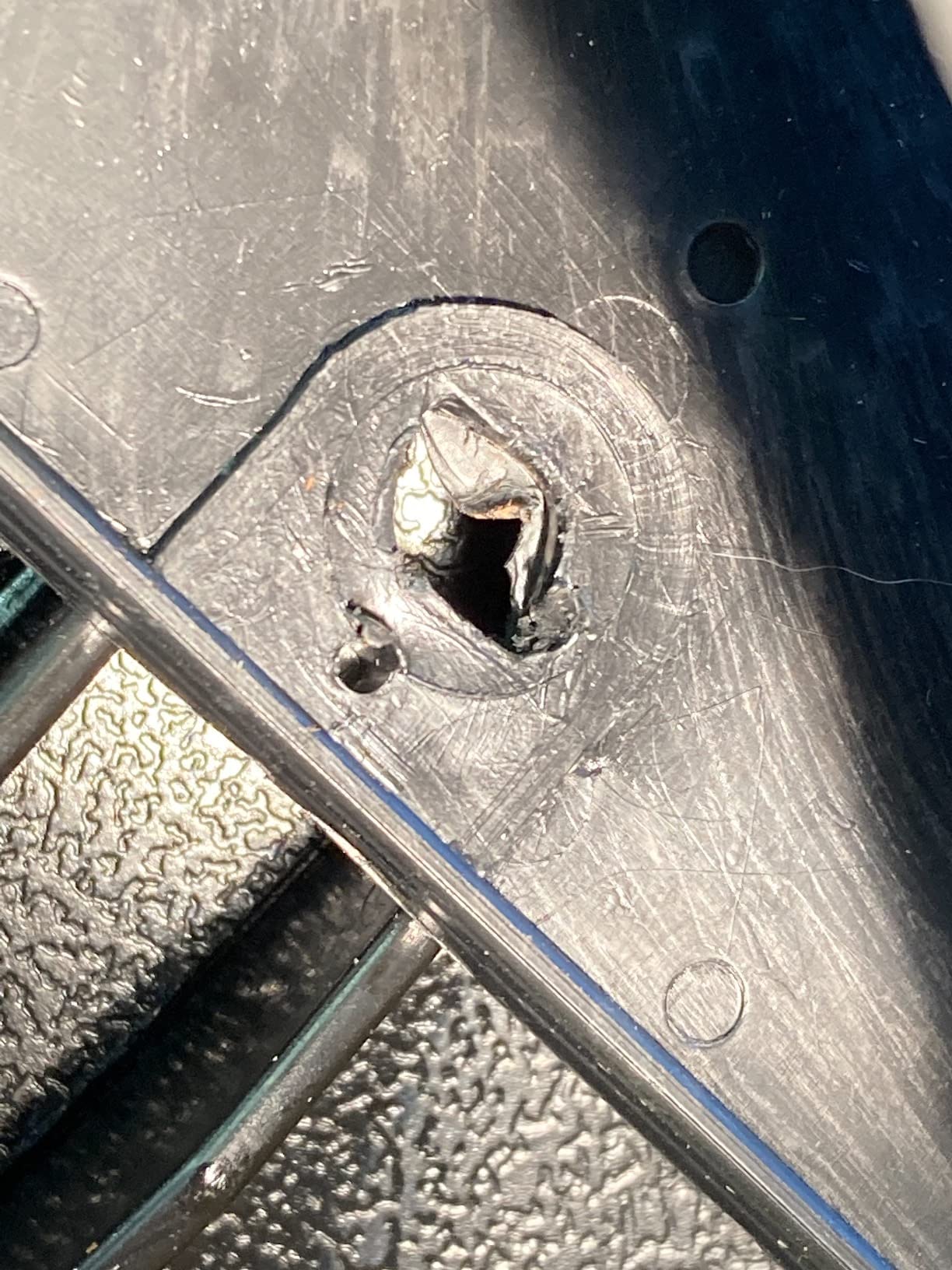
Those 13 inch tires are the quiet advantage. The unit weighs 29.4 pounds empty, so a full load puts well over 100 pounds of shifting weight behind the mower, and a wider tire rolls over ruts and seedbed lumps instead of skipping and dropping the pattern.
The manufacturer rates this hopper at 130 lb covering up to half an acre or 25000 sq ft. In practice, a standard nitrogen blend at a typical per-1000-square-foot rate gets you close to that on a single application. Lime is the material that exposes the gap, because pelletized lime is heavy and a hopper filled with it runs out of square footage long before it runs out of pounds.
Our sizing rule: if your lawn is a half acre of open turf, this is the smallest hopper that lets you finish without a mid-job refill.
Agri-Fab rates the fan at 10 to 12 feet. That is a wide throw for a homeowner unit and it means fewer passes across a rectangular lawn. The trade-off of any wide-fan broadcast is the same at every price point: the edges of the pattern are thinner than the center, so you have to overlap your passes deliberately rather than driving the spread width apart.
Owners who report clean, even results usually describe the same habit: closing the gate on every turn and shutting it off while the spreader is stopped, then correcting with a hand spreader along the edges.
This is the single most important spec on any tow-behind, and it is also where this spreader draws its most common complaint. There is no automatic flow shutoff. Material keeps feeding while the tractor is stopped, which means a pile at every turn and a wasted handful of product every time you stop.
Work around it by treating the lever as something you throw before you brake, not after. A separate hands-free shutoff kit can be added, which is worth doing if you routinely work around trees or driveways.
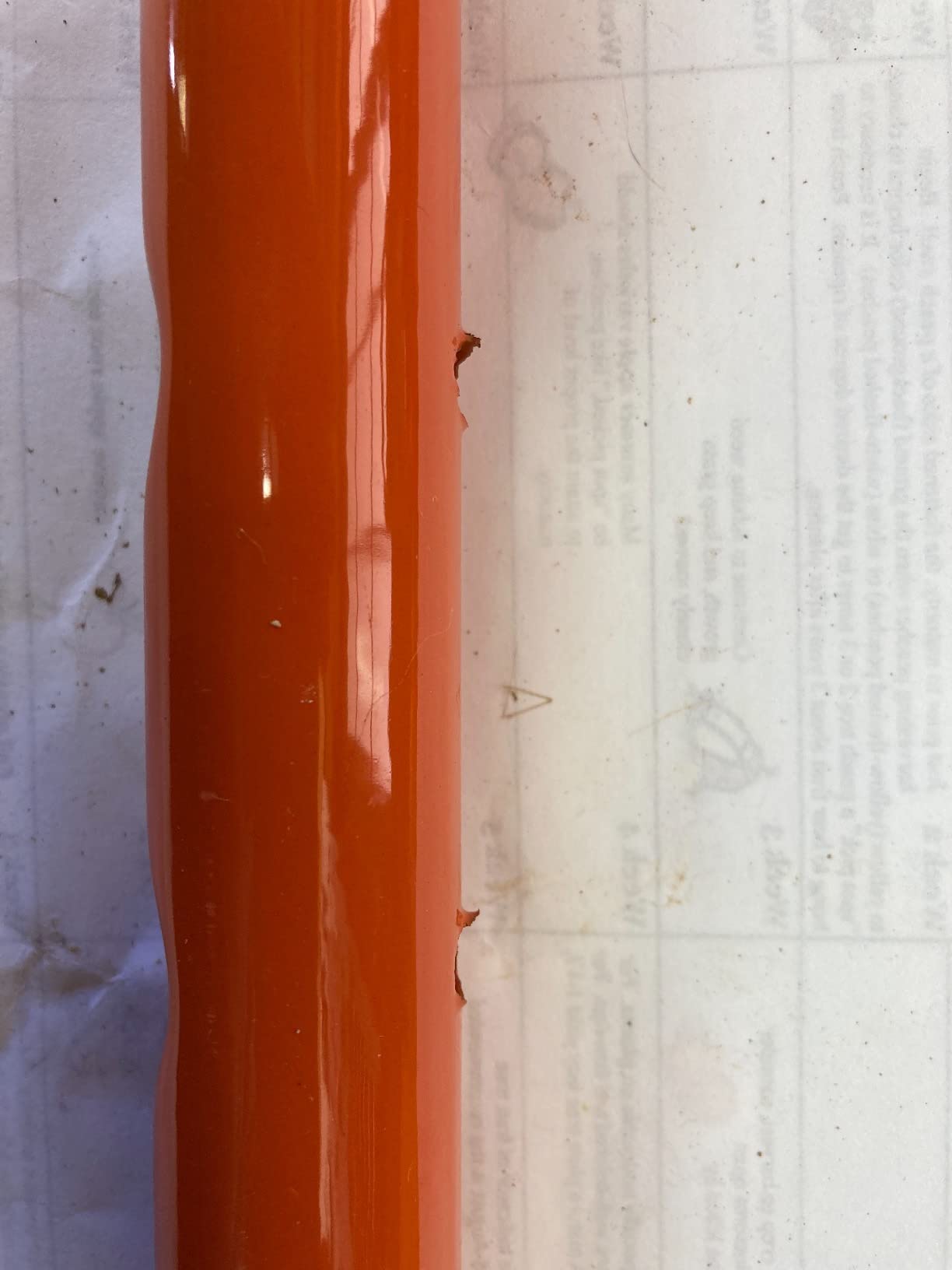
Assembly is one of the better-documented in the category, with clear illustrated instructions and a video guide. The real assembly job is greasing the cast aluminum gears before the first use. They arrive dry, and owners who skipped this step are the same owners reporting binding and stripped gears a season later.
There is an enclosed gear house, which keeps fertilizer dust out of the drive, and a 3-year limited warranty from a company that builds in Sullivan, Illinois. A small share of units arrive with a defective gearbox or a missing spring pin, so check the hardware bag before you walk away from the box.
Combo aerator and spreader,100 lb steel hopper,75 lb weight tray,132 tine tips to 2 in deep
If your lawn is bare in patches, compacted from years of traffic, or due for both an overseed and a spring feeding, this is the only pick in the lineup that does both in one pass. The 132 tine tips on 8 inch steel stars perforate the soil while the hopper meters seed or fertilizer behind the same pass, which saves you a second trip with a separate aerator.
It is also the heaviest unit we tested at 77.8 pounds, and that weight is not an accident. A rigid steel weight tray accepts up to 75 lb of added weight specifically so you can push the tines deeper into compacted ground. Owners adding weight report the difference is obvious on soil that has never been aerated.
The patent-pending 3-D galvanized steel tines are rated to perforate soil up to 2 inches deep. Galvanizing is the right call for a tool that lives in wet soil, and reviewers consistently single out the tines as the part that holds up in compacted conditions where cheaper tines bend and fold.
Two things to know. First, a combo tool is a compromise: the tine star and the spreader star share a shaft, so a very aggressive aeration setting can starve the flow. Second, the aerator benefits far more from the weight tray than the spreader does.
The hopper is 100 lb of all-steel construction, which resists the twisting and flexing that cracks poly hoppers when you load them unevenly. Rated capacity is 1.74 cubic feet, and the adjustable flow-control stop gives you a repeatable setting rather than an open-ended lever.
The tray is the star. A 75 lb allowance means concrete blocks or a sandbag set works for depth on hardpacked soil, and forum owners adding weight to a John Deere tow-behind describe the same result on their own machines.
A single-lever transport mode lifts the tine star and lets the whole unit roll on its 10 inch pneumatic wheels across driveways and sidewalks without tearing up the concrete edge. Without it, you are dragging spikes over every paved surface between the lawn and the shed.
The flip side is that 77.8 pounds is a genuine two-person lift into a truck bed, and a 100 lb load on top of that is not a one-person job. If you cannot load it unloaded, you will resent it every spring.
Skip this one if you have an established, well-aerated lawn and only need to fertilize. The tines add weight, drag and cost without helping, and you are paying for a second function you do not use. It also carries a rating just under 4.0 with a meaningful share of 1-star feedback, so inspect the assembly carefully at delivery.
85 lb hopper covers 14000 sq ft,10 ft spread width,17 lb unit weight,seat-reachable on/off control
The most-reviewed listing in the entire group at more than 4300 ratings, and the reason is simple: it is the spreader people buy when they want a tow-behind without a loading problem. At 17 pounds empty, one adult lifts it into a truck bed without recruiting help, and 85 lb of capacity is roughly 14000 square feet, which is most quarter-acre lawns in a single fill.
It also has the feature we rank highest overall: an on/off flow control you can reach from the tractor seat. On a spreader this light, that is the difference between a fast job and a job you have to climb down for every pass.
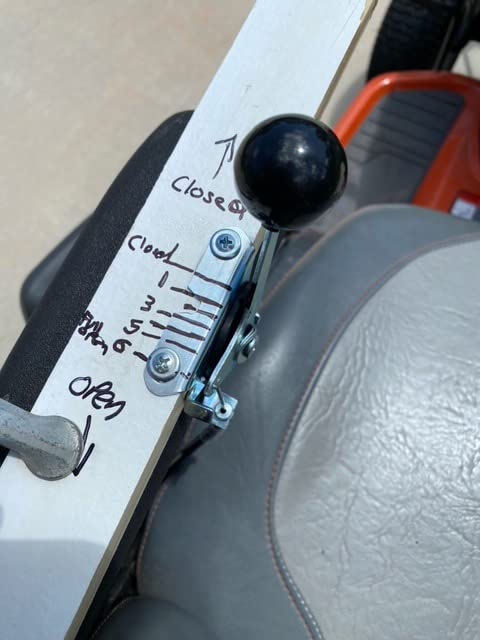
An 85 lb hopper on a quarter acre is the sweet spot of this category. You are not hauling more weight than the frame and tires were designed to carry, and you are not stopping every third pass. Below 85 lb you are refilling constantly; above it you are carrying dead weight around a small yard.
The catch is that the 85 lb figure is a ceiling. Owners using dense pelletized lime report getting noticeably less than the advertised quarter acre out of a full load, which is normal but worth knowing before you plan a day around it.
Reachability is the spec nobody else in this group nails as cleanly, and it changes how you work. Every pass start and stop happens from the seat, so you do not walk forward ten times per strip to throw a lever. On a broadcast spreader the difference between opening the gate at the right moment and opening it ten feet late is a visible dark line.
The on/off design is deliberately simple rather than graduated, which is a limitation if you are mixing two products in one pass. For a single material across a lawn, it is the right control.
The 10 inch tubeless tires and alloy steel frame keep the whole unit at 17 pounds, and that low mass is genuinely helpful on a side slope. A heavy loaded spreader pushes a riding mower downhill or loads the downhill tires enough to lift the inside wheels on uneven ground; at 85 lb loaded you are much less likely to have that conversation with your mower.
The trade-off is traction on soft ground. Narrow 10 inch tires sink into a wet spring lawn, and a spinning tire changes your ground speed, which changes the application rate. On a lawn that is regularly wet, look at a wider tire.
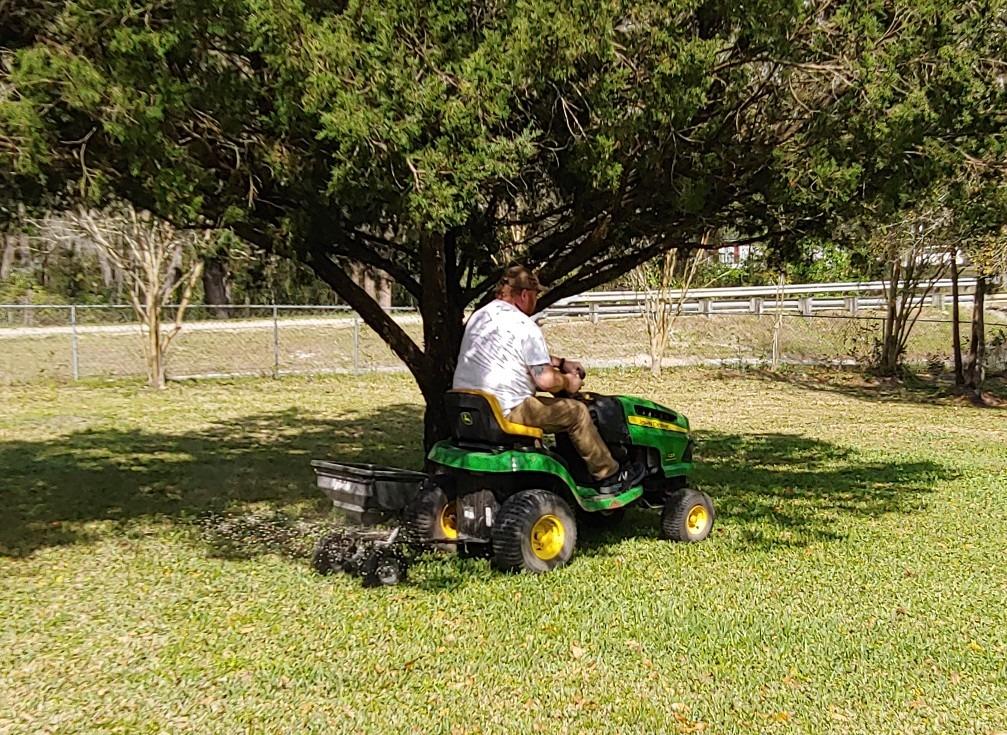
Buy it if you have a quarter acre or less, you are the only one who will load it, and you want the lowest-cost path to a tow-behind. Do not buy it if you have an acre, if you plan to spread lime every fall, or if the 3.7 average worries you. This model number has also been superseded by a newer version, so check what you are actually buying.
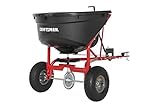
110 lb hopper covers 17500 sq ft,10 ft pattern,10 in x 4 in pneumatic tires,3-year warranty
This is the one to look at if your lawn has more personality than a rectangle. Rough ground, thin areas, a slight slope, ground that has never been properly worked. The steel rod flow control and the enclosed gearbox are the story here, and owners spreading nitrogen on pasture rate it well for holding up under abuse.
It is also built by Agri-Fab in Sullivan, Illinois, the same plant behind the two Agri-Fab models above, and it carries the same 3-year limited warranty. That shared manufacturing is a real advantage over private-label spreaders with no name on the warranty paperwork.
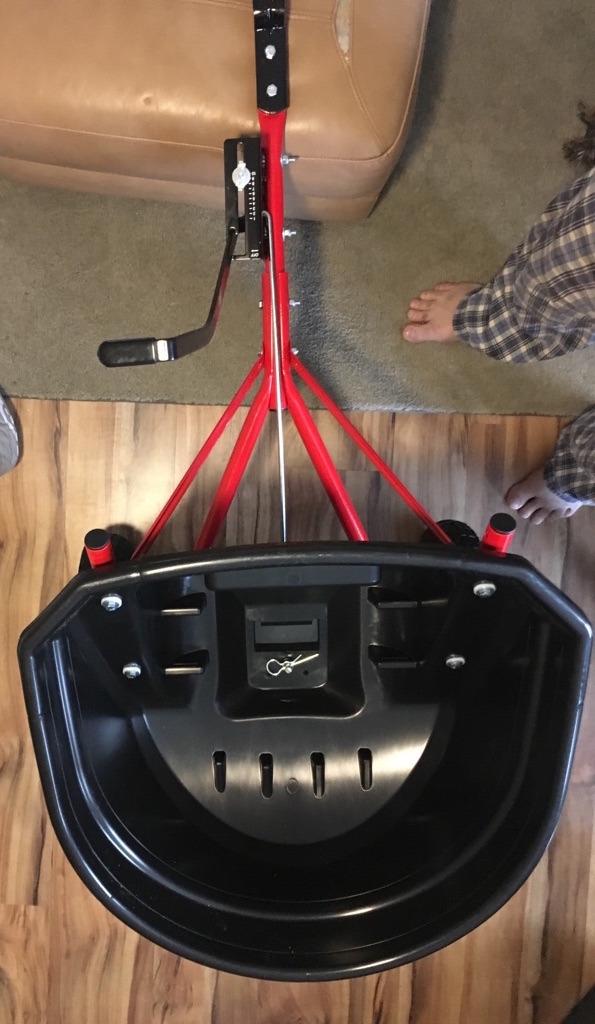
The manufacturer rates this at 110 lb covering a third of an acre or 17500 square feet. The most repeated owner complaint is capacity honesty: a 60 lb bag of fertilizer nearly fills the hopper. Rated capacity assumes a specific material density, and heavier products like pelletized lime eat into your square footage fast.
There is a second, more specific capacity issue: internal hopper ribs can trap the last of the load so material stops flowing even though the hopper looks empty. If you hit that, tilt and shake the frame before concluding the gate is broken.
A steel rod flow control is heavier and less convenient than a plastic lever, and it is the right part for a spreader that will bounce over uneven ground and hit things. Plastic levers snap at exactly the moment you are trying to make a fine adjustment on a slope.
The trade-off is reach. This lever cannot be reached from a single rider without an extension rod, which is the same complaint that makes some owners move to a different brand. Budget for the extension if you will be working alone.
The 10 inch by 4 inch pneumatic tires are decent, but the wheel track is narrow, and a narrow track with 110 lb of shifting load is what makes it tippy on side slopes. If your property has cross-slopes, slow down on the angle and do not fill the hopper completely before a sloped section.
Terrain handling is still the strong suit. Owners on rough fields report better performance than with plastic-framed units, which crack rather than flex under repeated impact.
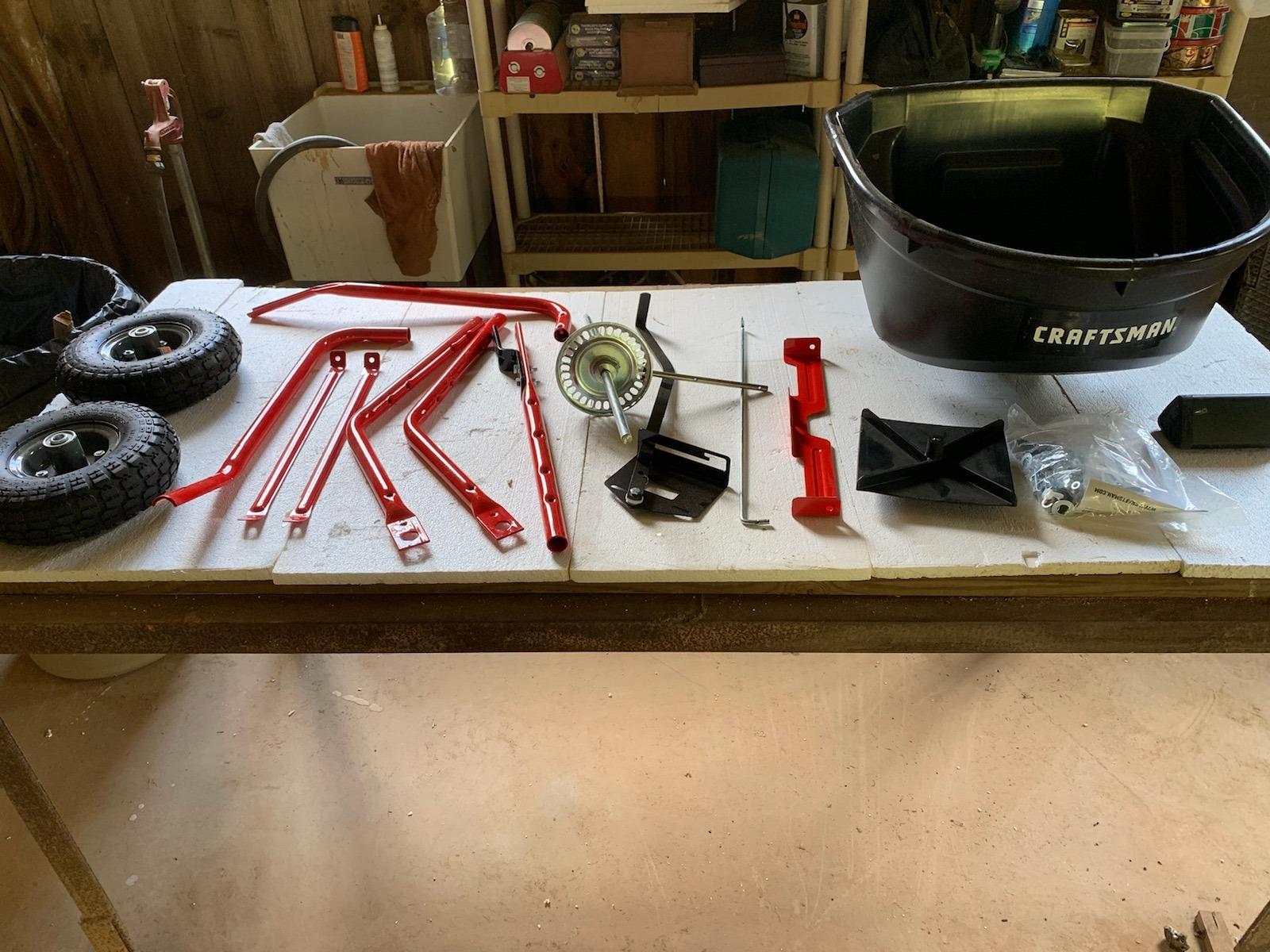
Assembly instructions are somewhat convoluted, and the hopper braces go together in an order that does not match the way most people hold the frame. Budget an unhurried hour the first time. Support is a genuine strength: Agri-Fab warranty service draws explicit praise from owners, which matters more when a part fails mid-season.
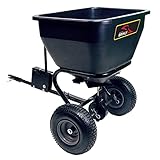
175 lb poly hopper,stainless spinner shaft and agitator,enclosed nylon gearbox,locking calibration dial
This is the one that fixes the complaint we heard most in our research: material keeps pouring out when you stop. The patented autoflow shuts the feed off when the tractor stops, which means no pile at every turn and no wasted handful of nitrogen at each stop. On a large property with many obstacles, that feature alone justifies the hopper.
The 175 lb poly hopper, 3.5 cubic feet, is rated for an acre or larger. The poly is rust- and dent-proof, so corrosive blends will not eat through it, and the stainless steel spinner shaft and agitator are the parts that actually touch the material.
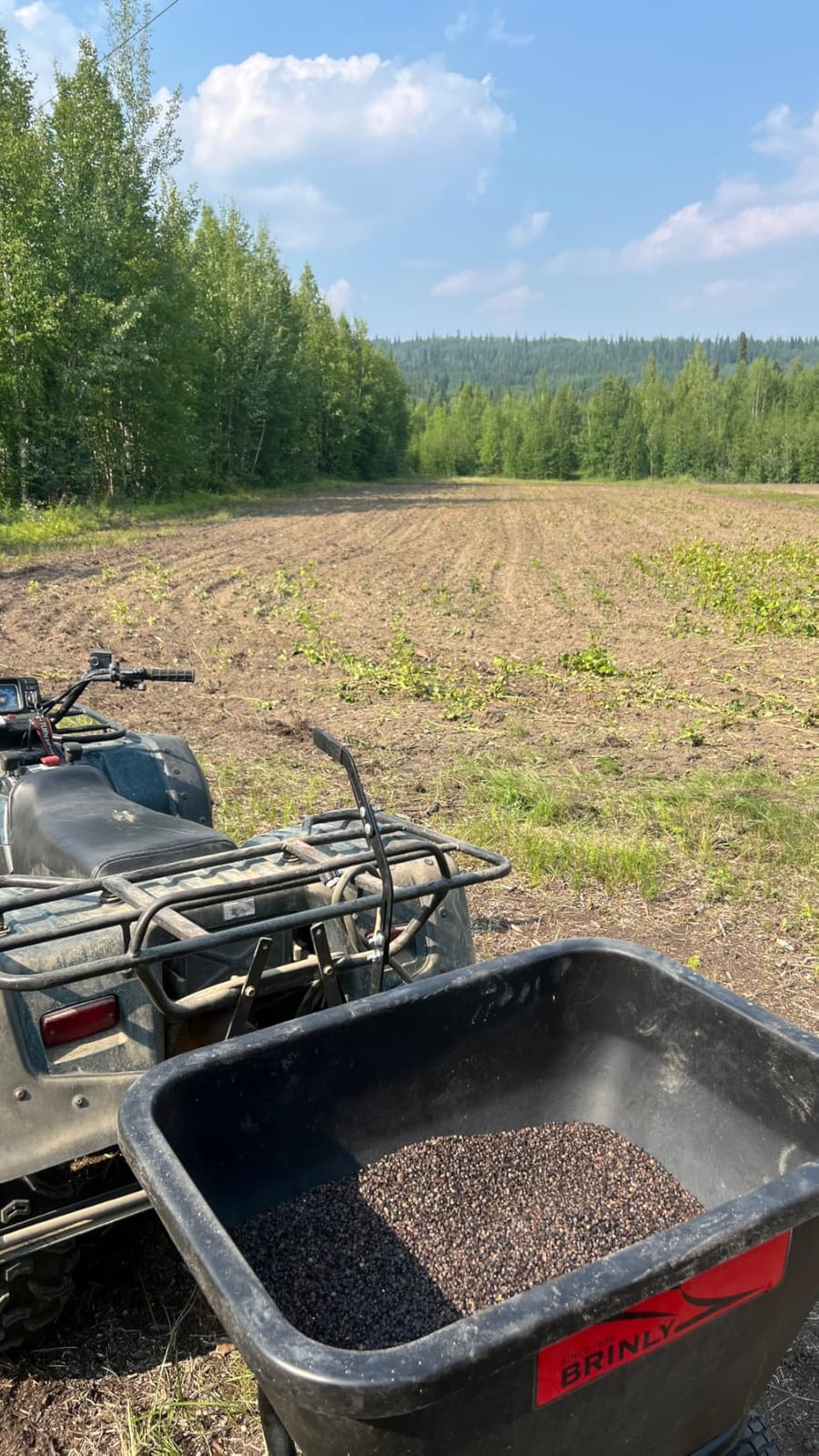
Autoflow is the reason this spreader earns its place. Every other unit in this lineup, including our top pick, keeps feeding until you close the gate yourself. On a two-acre property with driveways, trees and a lot, that difference is the difference between a clean job and a cleanup.
The chute also moves side to side, which lets you center the throw. Broadcast patterns are never perfectly symmetric, and a chute that shifts corrects a bias you would otherwise fight with a narrower overlap all season.
Glass-filled nylon gears in a fully enclosed nylon gearbox will not rust, and they run quietly. They will also wear faster than the cast aluminum drive on the Yard Commander or the metal gearing in the Agri-Fab units. If you spread heavy lime every year for a decade, that difference adds up.
Against that, stainless steel where it counts keeps corrosive fertilizer from degrading the shaft and agitator, and Brinly customer service is repeatedly praised for resolving issues quickly with free parts. Replaceable parts beat a cheaper unit you throw away.
The locking calibration dial with pre-calibrated settings is a genuine improvement over a bare lever, and locking it means a bump on rough ground does not silently change your rate. One owner reported the thin steel calibration stop bending on first use and skewing the dispense rate, so treat that stop as a consumable and check it early in the season.
Assembly is rated at 30 minutes with a pictorial manual and skin-packed fasteners, which is the best hardware organization in this group. In practice, several owners report the process running longer and needing re-tapped or re-drilled hardware, and some units arrive with cracked spinner parts. Inspect before you start.
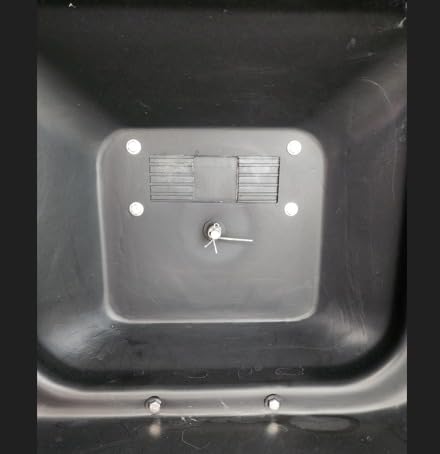
This is the pick for anyone with an acre or more, or for a half acre that includes hard-packed driveway edges and heavy traffic lanes where a shutoff genuinely matters. At 45 pounds empty, loading is a two-person job, and the nylon drive means you are buying convenience over longevity.
125 lb composite hopper,cast aluminum gear drive,10-12 ft broadcast width,12 in pneumatic tires
The Yard Commander is the feature-per-dollar answer in this group. It is one of only two units here that pair a metal gear drive with large pneumatic tires, it ships with a weather-resistant hopper cover that most competitors charge extra for or omit, and it holds a 4.2 rating, tied for the best in the lineup.
What it does not have is history. Fifty-five ratings is a thin base, and every long-term durability claim in this category ultimately rests on years of feedback, not months. Buy it knowing you are early to the product.
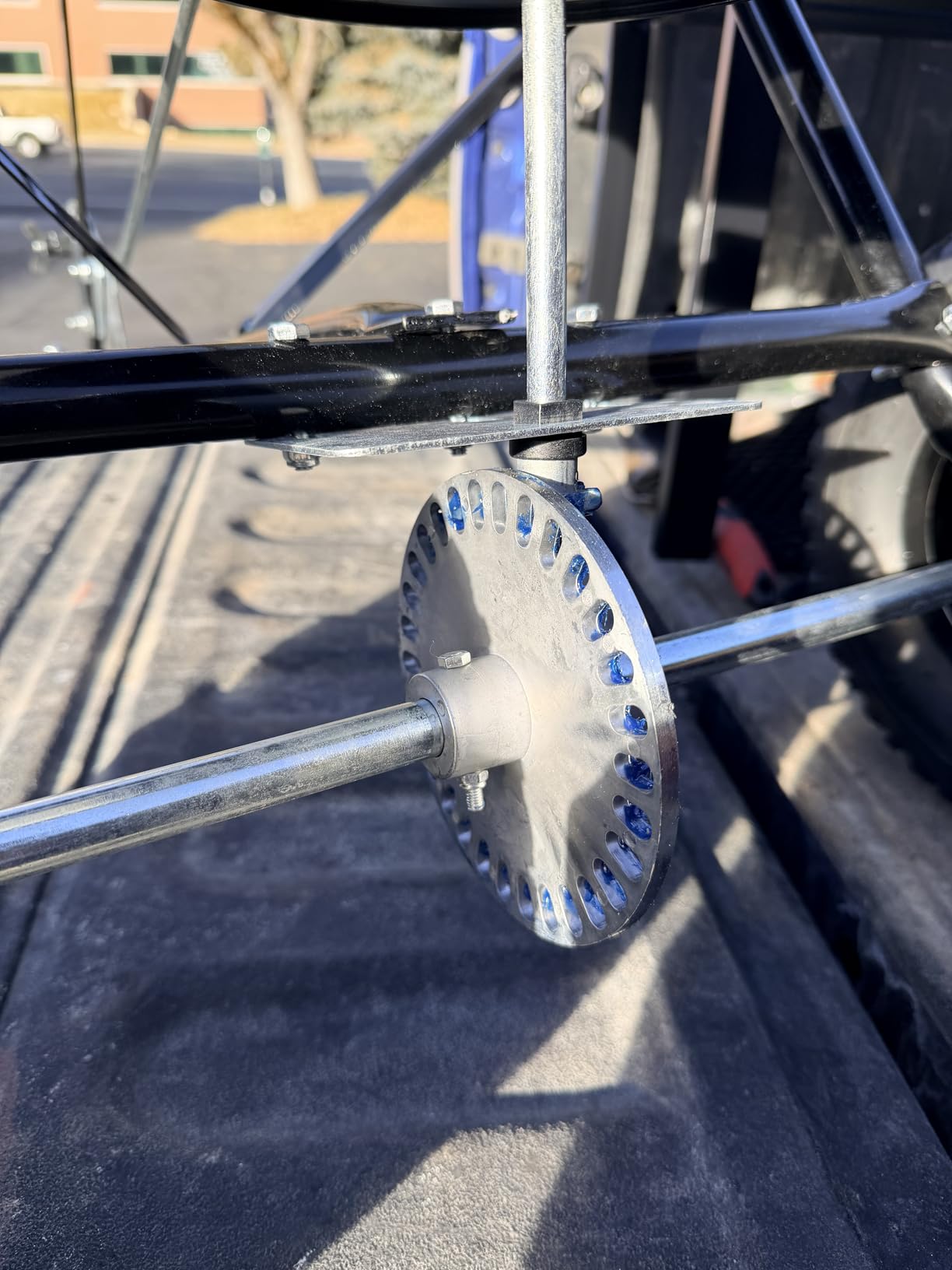
Cast aluminum is the sweet spot in this category: it resists the corrosion that destroys untreated steel and it outlasts glass-filled nylon by years. When a spreader carries 125 lb of shifting weight over rough ground all season, the drive train is the component most likely to fail, and this is the only mid-range unit here that addresses it directly.
The trade-off is weight. Aluminum gears add mass that the nylon units do not, which is part of why this sits at 32 pounds rather than the 17 pounds of the 85 lb Agri-Fab.
The 12 inch pneumatic tires are the second metal-and-rubber story and the reason this unit handles wet spring conditions better than most. A wider, larger-diameter tire floats over soft turf instead of sinking, which protects your ground speed, and ground speed is what actually determines your application rate.
If you have any low areas that stay wet into April, tire flotation is a feature you will notice. It is also the reason the 10-12 ft broadcast width stays consistent across those areas instead of collapsing where the tires spin.
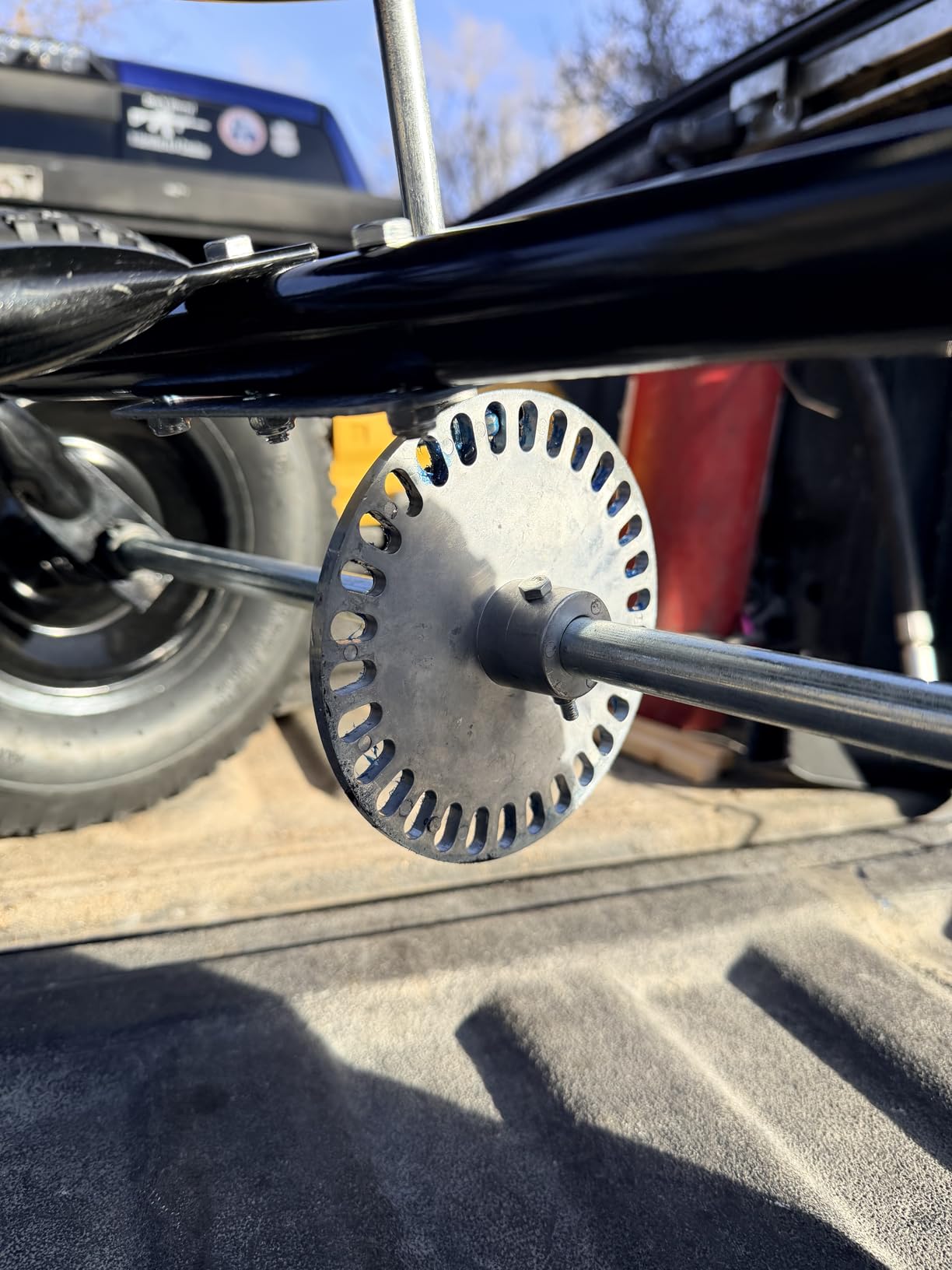
A weather-resistant hopper cover is included, which almost nobody else in this group does. If you are spreading in early spring with a chance of rain, or storing the spreader on a wet patio, the cover keeps product out of the hopper and keeps water from pooling against the steel frame.
It is a small thing, and it is the kind of small thing that stops a spreader from developing a chalky crust of fertilizer residue after one missed session.
Two cautions. The warranty is one year, against the 3-year limited warranty on the Agri-Fab-built units, so register it and keep the receipt. And with only 55 ratings, you are relying on specification rather than evidence for the long-term claims, which is the honest framing for this pick.
85 lb poly hopper,8 ft spread pattern,19.9 lb weight,assembles in under 15 minutes
This is the only unit in the lineup that promises you can be spreading the afternoon you unbox it. The claim is assembly in under 15 minutes, and the welded steel tubular frame with a bolt-together design is genuinely simple compared with the hopper-brace assembly on the 110 lb Craftsman.
It is also the weakest-rated product we tested, at 3.3 stars with roughly a quarter of the ratings landing at one star. We include it because the category has no five-star options, but we would only recommend it for a small lawn where the 8 foot pattern is not a problem.
An 8 foot spread is narrow for a tow-behind. On a quarter acre you are making noticeably more passes than with a 10 to 12 foot unit, and every additional pass is another chance to overlap unevenly and put a dark line into the pattern.
The hopper holds about 14000 square feet of material, which lines up with a quarter acre. Combined with the narrow throw, this is a small-lawn machine, and treating it as anything larger is where the one-star reviews come from.
The direct rod flow control is adjustable from the tractor seat, which is the right layout and matches what you want from a tow-behind. The recurring complaint is not the layout but the metering: owners report the flow control accuracy as inconsistent, meaning the setting you calibrated to does not reliably reproduce run to run.
That is a calibration problem, not a hardware problem, and the practical fix is to catch and weigh your output over a measured area before you treat the whole lawn.
The build is sensible for the money: a heavy-duty polyethylene hopper on a welded steel tubular frame, at 19.9 pounds, covered by Agri-Fab’s 3-year limited warranty despite the Craftsman branding. Assembly time and weight are its genuine strengths.
Skip it if accuracy matters more than convenience, or if you have more than a quarter acre. The 8 foot pattern and inconsistent flow control will cost you more time than the fast assembly saves.
130 lb hopper,12 ft spread width,five discharge ports,hitch extender and handle rod included
The AugFir is here on one specific strength: it ships with both a hitch extender and a handle extension rod. Reach is a recurring problem across this category. If your riding mower’s hitch sits low or far forward, the lever ends up behind you and you either buy an extension or you get off the seat for every pass. This one includes the fix.
On paper it is also the best capacity figure per dollar in the group: a 130 lb hopper and a 12 foot spread, with five adjustable discharge ports on a trapezoidal hopper. Food plot and large seed load owners report it works well when loaded heavy. Quality control is what separates the owners who like it from the ones who do not.
The operating rod and flow-control lever are the components that show up in complaint after complaint. The hopper also does not fully close, leaving the spinner exposed so material can spill during transport, which is a design choice you have to plan around rather than a defect.
Before your first full season, grease the control pivot and check the rod for play. If you notice a lot of slop in the lever, that is the part to photograph for a warranty claim.
Five adjustable discharge ports let you tune the throw for different materials, from a dense pelletized lime to a light seed blend, and the trapezoidal hopper shape keeps product moving toward the agitator rather than sitting in corners. The manual explicitly warns against overfilling, and with a 12.5 inch tire stance and a 41.9 pound frame, overfilling hurts handling more than on a lighter unit.
Tire condition is the other thing to check on arrival. At least one owner received a tire that would not hold air, so inflate and test all four before you trust the unit on soft ground.
Customer service replaced a complete unit at no cost when parts could not be fixed, which is the strongest support story in this group and offsets a lot of the assembly frustration. With 49 ratings and a 3.5 average, this is a unit you buy on specification and keep with a quick inspection each season.
This is the question riding-mower owners ask most and almost nobody answers properly. A universal hitch on the box does not guarantee the spreader will clear your mower, and a spreader that fits does not mean your mower is rated to pull it loaded.
Three checks, in order. First, hitch type: the common universal or quick-attach pin hitch on every unit in this group fits a standard rear receiver on riding mowers, lawn tractors, zero-turns, ATVs and UTVs. What varies is the drop distance from the pin to the spreader frame.
Second, clearance. A 175 lb hopper at 45 pounds empty and 43 inches tall is a different object to maneuver around than an 85 lb unit at 17 pounds and 27 inches tall. On a mower with a low deck and a sloping rear, taller spreaders can strike the deck on a transition from flat to slope. That is where the included hitch extender helps, by moving the hitch point up and back.
Third, and the one nobody publishes: loaded weight. An empty spreader is a towable object. A full one is a shifting mass of 85 to 175 pounds riding behind a machine that may have a modest towing rating. Keep the hopper at or below its rated capacity, go slower on grades than feels necessary, and avoid abrupt steering while loaded. If your property has real side slopes, the lower-tongue-weight units are the safer choice, and our guide to riding mowers for hills and slopes covers the platform side of that equation.
On zero-turn mowers specifically: yes, they tow these fine, and owners in lawn care forums ask about pull-behind attachments constantly because there is very little factory guidance. The two things to respect are ground speed and trail geometry. A zero-turn turns on a single wheel, so a full spreader swinging wide behind it during a tight turn will push the machine off its arc. Make wide, deliberate turns with the gate closed. If your zero-turn is electric, check the electric riding mower guide for tow rating before loading it up.
Stripes are the most cited complaint in this entire category, and the mechanism behind them is simple: application rate is not set by the dial alone, it is set by the dial multiplied by your ground speed. Drive faster and you lay less per square foot. Tire spin, slope and a partially empty hopper all change your speed without you noticing.
Settings do not convert between brands, and they do not reliably convert between a push spreader and a tow-behind, because the ground speed variable is completely different. Catch and weigh is the only method that works: set the dial to a mid-range number, run it over a measured area of known size, collect what comes out, and weigh it. Adjust the dial until the weight matches the label rate divided by the area.
For a lawn product, the useful rule is pounds of product per 1000 square feet, and the number is on the bag. A 20-0-20 blend at a typical feeding rate is a fraction of a pound per 1000 square feet, which tells you how little you are actually metering and how sensitive the setting is.
Once you know your correct full-rate setting, cut it in half and make two passes at perpendicular directions, the second set overlapping the first. You end up at the full rate, but each individual pass lays half as much, so the difference between a heavy pass and a light one is halved too. This is the single most effective fix for striping and it costs you nothing but time.
Most units in this group have no automatic shutoff, including our top pick. Get into the habit of throwing the lever as you lift off the throttle rather than after the tractor has stopped, and you will stop leaving a pile of nitrogen at every turn. If you work around obstacles constantly, adding a hands-free shutoff kit is worth the small effort.
Pick a gear and a throttle setting on the first pass and do not change it. Overlap each pass by the width of the outermost thin edge of the fan, not by the full rated spread width, and use the product’s rate chart as a starting point. On slopes, drive slower and accept that you will need to make up coverage on the next pass.
Match the hopper to the job you actually have. An 85 lb unit is right for a quarter acre and light enough for one person to load. A 110 to 130 lb unit covers a third to a half acre and is the sweet spot for most suburban lots. A 175 lb unit is for an acre or more, or for a property where you refuse to stop mid-application.
Oversizing is the most common buying mistake in this category. A hopper you fill to the brim on a small lawn is a 150 pound object you have to load, pull around trees and store.
Only two units in this lineup put the on/off control where you can reach it from the seat without a separate extension: the 85 lb Agri-Fab and the 85 lb Craftsman, both with rod or lever layouts designed for exactly that. Everything else requires an extension rod, or requires you to climb down.
You will open and close that control dozens of times per job. It is the most-reached control on the machine and the one most worth getting right.
Cast aluminum drives, as on the Yard Commander, outlast glass-filled nylon, as on the 175 lb Brinly. Metal is heavier and can corrode if not sealed; nylon runs quietly and never rusts. If you spread heavy lime or salt every year for a decade, pay for metal. If you fertilize a couple of times a season, nylon with replaceable parts is fine.
Tire diameter and width decide whether you sink or float. 10 to 13 inch pneumatic tires cover most lawns. If you spread in early spring on ground that stays wet, or you have soft low areas, prioritize flotation, because a spinning or sinking tire changes your ground speed and therefore your application rate.
Three years is the good number in this category, and the Agri-Fab-built units, the 110 lb Craftsman and the 85 lb Craftsman, all carry it. One year, as on the Yard Commander, means any part failure becomes your problem sooner. Also check whether replacement parts are sold separately. A spreader with a published gear, lever and agitator is a spreader you repair instead of replace.
Under a third of an acre with a lot of trees, beds, and tight corners, a push spreader is faster in real terms because you are not hitching, unhitching and maneuvering a 40 pound trailer through a side yard. A tow-behind earns its keep on open turf you can drive straight lines across, and a lawn that fits in a straight-line pass plan is the whole buying case.
Every one of these tools will last longer with fifteen minutes of care after each job. Rinse the hopper and the underside of the spinner plate with a hose, because fertilizer residue left in a warm poly hopper turns into a concrete crust that will block the ports by next season.
Dry it fully before you store it, and do not store it with product in the hopper. Salt and ice melt are the most aggressive materials you can put in a spreader; if you use them, rinse the same day rather than at the end of the winter.
Grease the gearbox and the flow control pivot on the metal-drive units, and check the gear lash on the nylon-drive Brinly models, since a nylon gearbox can develop slop before anything visibly breaks. Inflate tires to the pressure on the sidewall, and on pneumatic models check for a slow leak at the start of each season rather than after you find a flat mid-application.
Agri-Fab makes the most popular homeowner models, with a 130 lb tow-behind rated 4.2 stars across more than 3400 reviews. Brinly makes the only true combo aerator-spreader in this class and the highest-capacity broadcast hopper at 175 lb. Yard Commander is the only mid-range option pairing a cast aluminum gear drive with 12 inch pneumatic tires. No unit in this category reaches five stars, so the right pick depends on your lawn size, ground conditions and how reachable you need the flow control.
Yes, a zero-turn can tow any of these spreaders using the standard rear receiver hitch, and owners regularly do it. Two things to respect: make wide, deliberate turns with the gate closed, because a loaded spreader swinging wide pushes a zero-turn off its single-wheel arc, and stay within your mower’s tow rating with the hopper filled only to its rated capacity. Loaded tow-behinds weigh 100 to 200 pounds with shifting load.
Almost always, because nearly every unit in this category uses the same universal or quick-attach pin hitch that fits riding mowers, lawn tractors, ATVs and UTVs. The variable is clearance: taller hoppers on a low-deck mower can strike the deck on a transition from flat ground to a slope. Check the drop distance from the hitch pin to the spreader frame, and consider a hitch extender if the lever ends up out of reach from the seat.
Broadcast is better for open, obstacle-free turf because the spinning fan throws material 8 to 12 feet in every direction, so you cover ground far faster. Drop is better along edges, under fences and around beds because gravity alone places material in a controlled band, with no overspray onto paving or plantings. A combo aerator-spreader adds a second function, perforating soil while it spreads, which suits overseeding bare or compacted areas.
Stripes happen because application rate depends on ground speed, not just the dial. Fix it by calibrating with the catch-and-weigh method over a measured area, then cutting your rate in half and making two passes in perpendicular directions, the second overlapping the first. Hold one gear and throttle setting for every pass, and close the gate before you stop rather than after.
An 85 lb hopper covers roughly a quarter acre or 14000 square feet per fill, 110 to 130 lb covers a third to a half acre, and 175 lb covers an acre or more. Note that these figures assume a specific material density, so dense pelletized lime and rock salt will cover less ground than the same hopper of granular fertilizer. Pick the smallest hopper that finishes your lawn without a mid-job refill, because a full oversized hopper is a heavy object to load and maneuver.
If you have a half acre of open turf and want the best balance of rating, capacity and proven longevity, the Agri-Fab 45-0463 with its 130 lb hopper is the pick, and the owner loyalty behind it is the strongest signal in this category. It is the one we recommend to someone buying their first tow-behind.
If you need fewer refills, more than an acre, or you work around a lot of obstacles where material keeps pouring out when you stop, the Brinly 175 lb is the answer, because the autoflow shutoff is a feature no other unit in this group offers.
If you are reseeding bare, compacted ground and want one tool to do both jobs, the Brinly 40 inch combo aerator-spreader earns its place, and you should be prepared to load it with a second person. If you have a quarter acre and want the least hassle, the Agri-Fab 85 lb is the cheapest path to a working tow-behind, at 17 pounds it is the only one in the lineup one person can lift easily.
Whichever one you choose, grease the gearbox before the first use, calibrate with the catch-and-weigh method rather than the printed chart, and keep the gate lever within arm’s reach of the seat. Those three habits matter more to the quality of the job than any feature on the spec sheet. For the mower itself, our zero-turn riding mower picks are worth reading before you buy the platform this hangs off of.