Physical Address
304 North Cardinal St.
Dorchester Center, MA 02124
Physical Address
304 North Cardinal St.
Dorchester Center, MA 02124

The best robotic lawn mowers for hills in 2026 are the all-wheel-drive and track-driven models rated to climb 60% to 80% grade, and our top pick is the Mammotion LUBA mini 2 AWD 1500H, which climbs 80% slopes (38.6 degrees) on dual 88W motors. Most mowers sold as “for slopes” stall out or slide sideways long before they reach your steepest corner, and the two failure modes are always the same: the drive wheels spin on a climb, and the chassis scuffs turf on a side-hill turn.
We spent weeks reading spec sheets, owner reviews and forum threads on r/automower and r/homeautomation before ranking these, because most listings quote a slope number measured on a dry test lawn with fresh-cut turf. Your hillside is wet in the morning, shaded by trees, and full of roots. That gap between the brochure number and your yard is where buyers get disappointed.
The mower that climbs and the mower that stays planted sideways are not always the same machine, and we call that out separately in every review below. We also flag support and parts availability, which matters more than buyers expect once a machine has to sit on a hillside for three days while a part is in transit.
If your terrain is genuinely extreme, a riding mower built for hills and slopes may serve you better. If your slope is moderate and you just want the automation, our robot mower picks for smart homes roundup covers the flat-lawn features. Everything below assumes you have real elevation to deal with.


The table below is the fastest way to match a mower to a slope. Read the climb rating first, then the navigation stack, because a machine that loses its position under the trees on your hill is useless no matter how well it drives.
| Product | Features | |
|---|---|---|
| Mammotion LUBA mini 2 AWD 1500H |
|
Check Latest Price |
| Mammotion LUBA 3 AWD 3000 |
|
Check Latest Price |
| ANTHBOT M5 |
|
Check Latest Price |
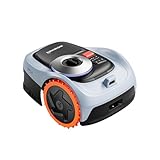
 roborock RockMow X120H LiDAR roborock RockMow X120H LiDAR |
|
Check Latest Price |
 Segway Navimow i206 AWD Segway Navimow i206 AWD |
|
Check Latest Price |
 Mammotion LUBA 2 AWD 3000HX Mammotion LUBA 2 AWD 3000HX |
|
Check Latest Price |
 Segway Navimow i215 LiDAR Segway Navimow i215 LiDAR |
|
Check Latest Price |
 Sunseeker X5 AWD Sunseeker X5 AWD |
|
Check Latest Price |
 Lymow One Plus Lymow One Plus |
|
Check Latest Price |
 roborock RockNeo Q110H roborock RockNeo Q110H |
|
Check Latest Price |
We earn from qualifying purchases. CERTAIN CONTENT THAT APPEARS ON THIS SITE COMES FROM AMAZON. THIS CONTENT IS PROVIDED 'AS IS' AND IS SUBJECT TO CHANGE OR REMOVAL AT ANY TIME.
80% slope (38.6 deg)
360 deg LiDAR plus dual cameras
7.9 in cut
Up to 20 zones
Of the ten machines here, this one has the most owner feedback behind its 80% climb figure, and 70% of those reviews are five-star. Two 88W motors driving all four wheels give it the torque to pull itself up a wet incline instead of spinning one wheel uselessly, which is exactly the failure that strands cheaper two-wheel-drive mowers halfway up a bank.
The sensing stack is what separates it from the crowd. A 360-degree LiDAR with a 45-degree field of view works alongside dual cameras, so the mower keeps mapping even where the sky is blocked by canopy. On a tree-lined hillside, that is the difference between finishing the job and parking in the lawn with a support ticket open.
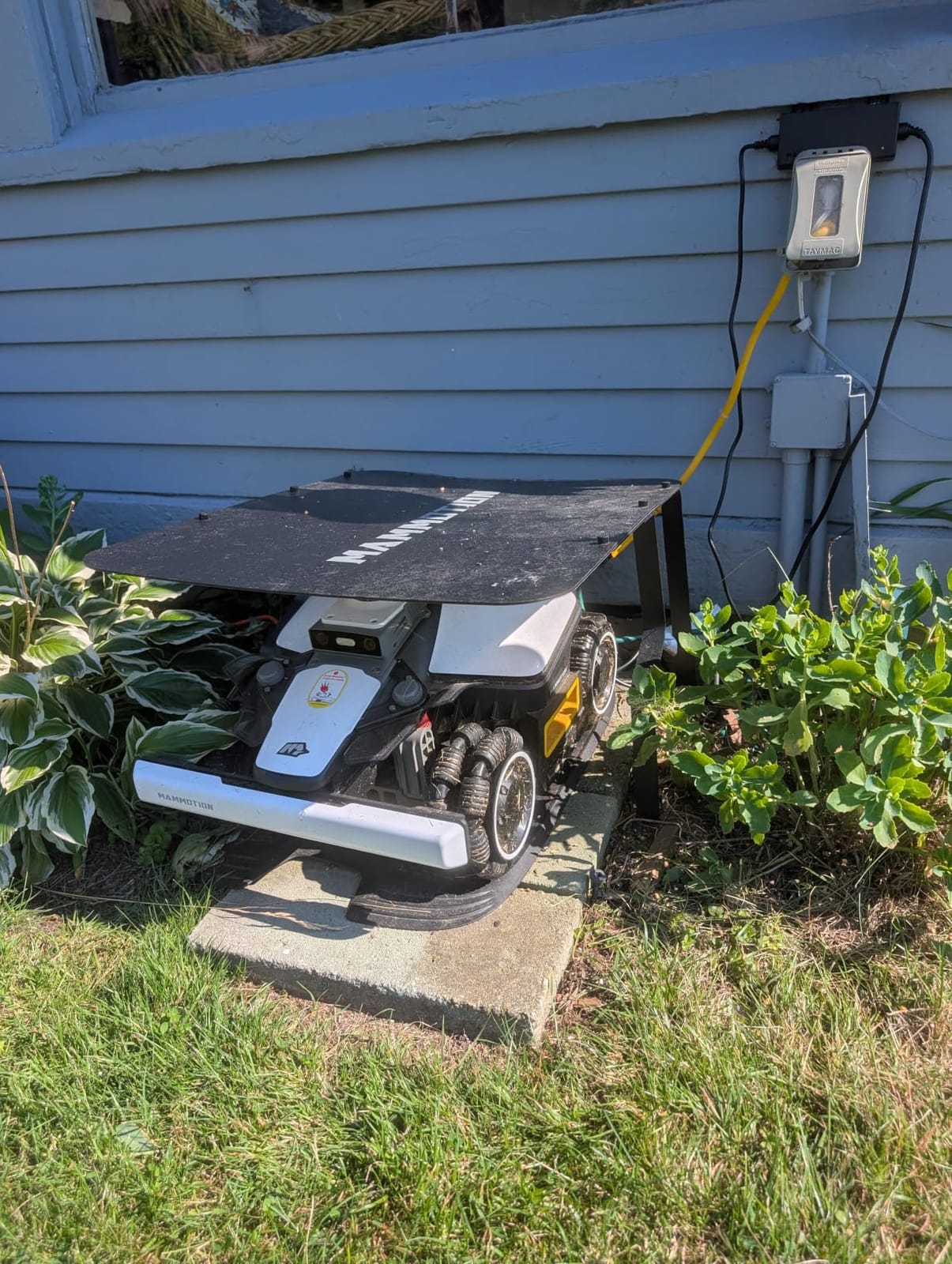
Owners on hilly properties consistently mention clean striped finishes and a dedicated edge disc that handles border cuts better than most competitors. The adaptive suspension steps over curbs, roots and thresholds up to 75mm, which matters when your slope is also where the tree roots have lifted the lawn.
Up to 500 square meters per charge sounds small until you realize a hillside lawn eats runtime. The mower climbs slower uphill, and it spends part of the cycle returning to the dock, so effective coverage shrinks compared with a flat yard of the same size.
Custom charge limits and off-peak charging help here, since you can restrict charging to your cheapest electricity window without giving up mowing time. On a half-acre hill you will simply run more cycles per day than the flat-lawn figure suggests.
Two discs handle the work: a main cutting disc and a separate edge disc. That second disc is why owners report clean borders rather than the wide unmowed margin that plagues several cheaper models below.
DropMow mode needs no mapping at all, which is useful for a small side yard separate from your main lawn. For larger properties with a flat front yard and a hilly side yard, the 20-zone limit lets you map both as independent work areas without re-running the whole map every time.
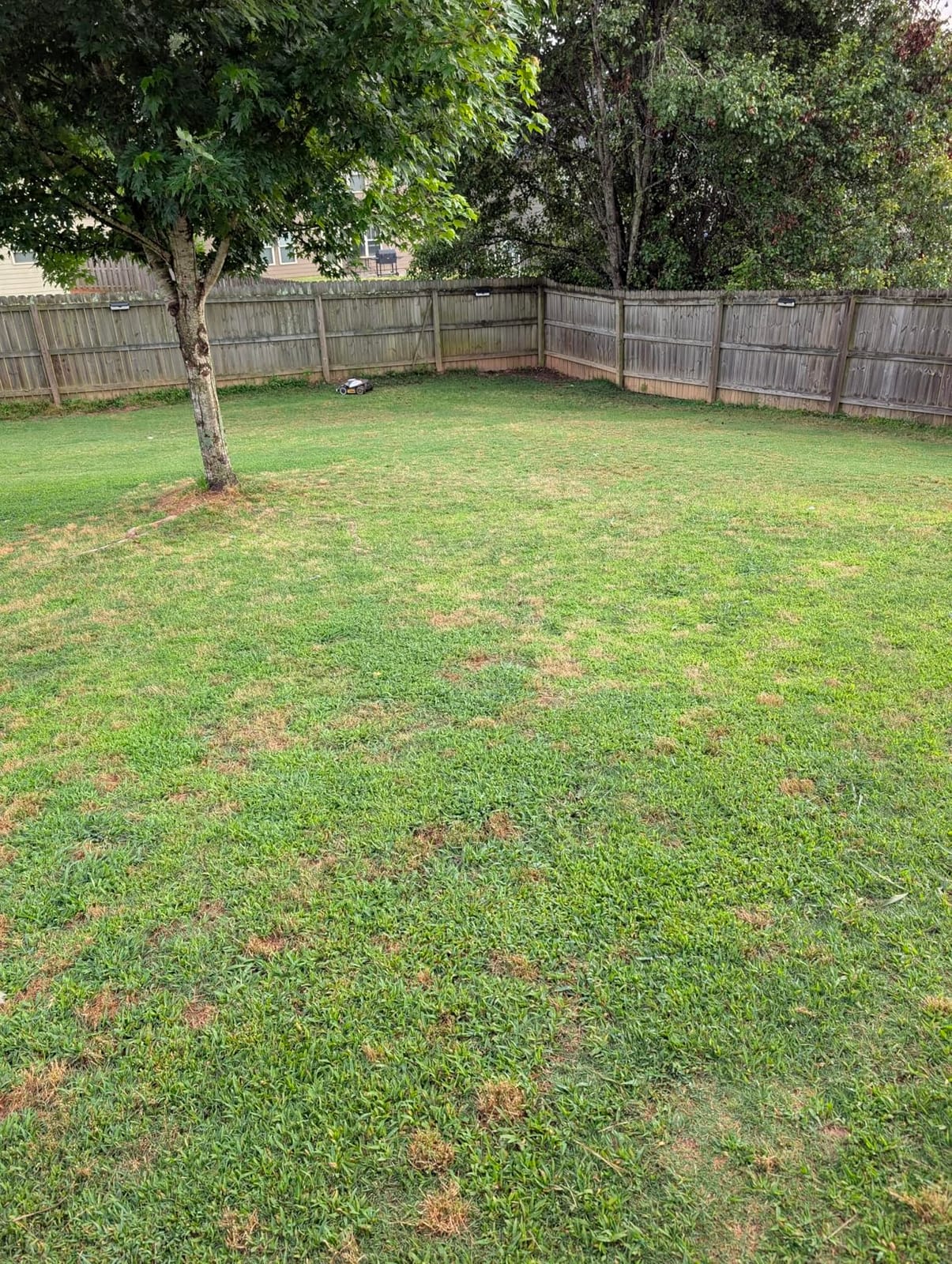
The trade-off is deck width. At 7.9 inches, this mower makes more passes than the 15.7-inch decks in this roundup, and on an open slope that adds to total run time. If your hill is wide rather than cramped, the wider-deck options cover ground faster.
80% slope (38.6 deg)
LiDAR plus NetRTK plus vision
15.7 in cut
175 min per charge
If your hill is part of a large property, this is the machine built for the job. Four independently driven motors, two high-torque 165W units, and 6-blade discs push coverage to 500 square meters per hour, and the LiDAR reaches 230 feet with a 59-degree vertical arc so it can map a tall bank without losing the boundary.
Tri-fusion is the real differentiator. LiDAR, NetRTK and dual-camera AI vision feed the same navigation stack, so when satellite signal drops under a large tree the other two systems carry the position. That redundancy is what we look for on a wooded slope.
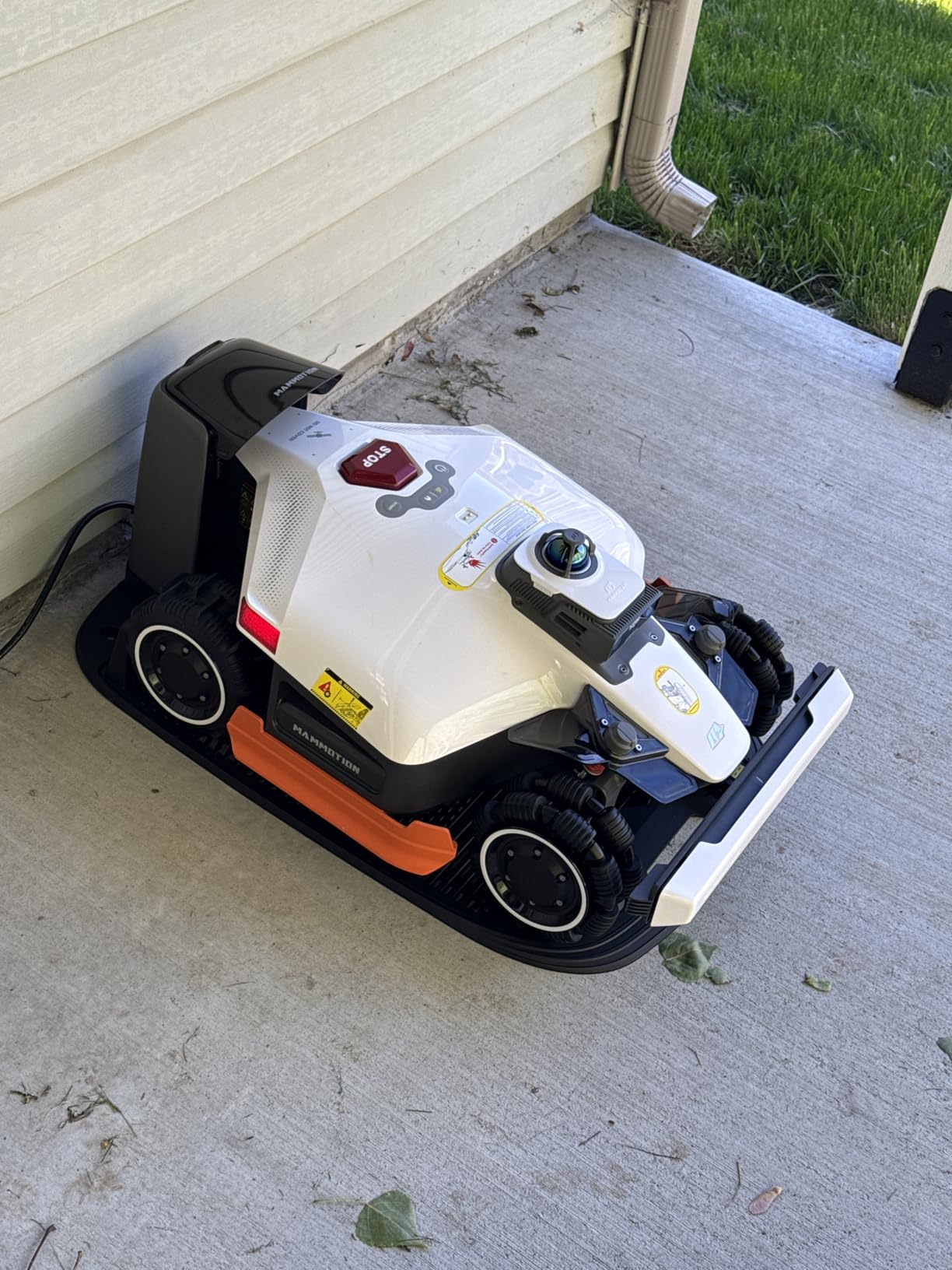
A 12Ah lithium battery gives up to 175 minutes per charge, and path planning supports perimeter-only, zigzag, checkerboard and adaptive zigzag patterns. The adaptive suspension absorbs obstacles up to 50mm, so uneven ground does not throw the deck out of cutting position.
With 30 mowing zones and no-go areas, this handles a property with several separate lawn areas without difficulty. Set a no-go zone around a drainage ditch and the mower routes around it instead of learning that contour the hard way.
Roughly 8% of ratings sit at one star, and the complaints cluster around early-generation reliability rather than climbing ability. The cleaning stand is also ordered separately, so budget for that accessory if you want a wash bay.
Obstacle recognition covers 300 plus types, which is the highest count in this roundup. On a slope full of exposed roots and garden ornaments, that figure translates directly into fewer stuck-and-retry moments.
45% gradient
7.9 in cut
12 kg
Up to 20 zones
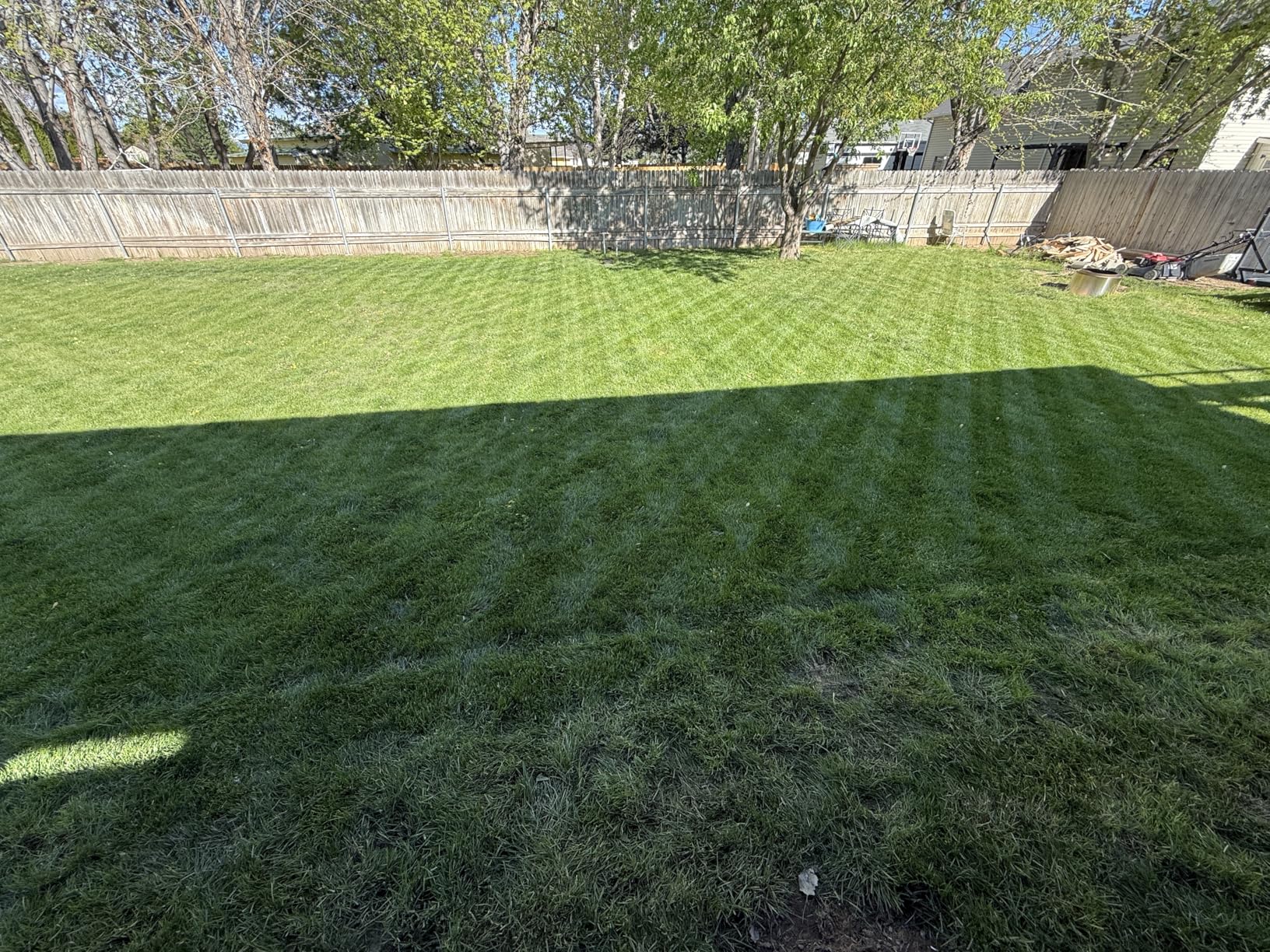
This is the most-reviewed machine in the group, with 370 ratings, and owners consistently describe it as a good-value, beginner-friendly mower that handles sloped grass acceptably for its class. A 45% gradient covers a lot of ordinary residential yards, including most front lawns with a gentle roll.
At 12 kg it is also the lightest body here, which matters on a side hill because you can lift it out of a hollow without asking for help. Dual 150-degree HDR cameras recognize more than 1,000 object types, and Adaptive Cruise Control layers vision on top of full-band RTK.
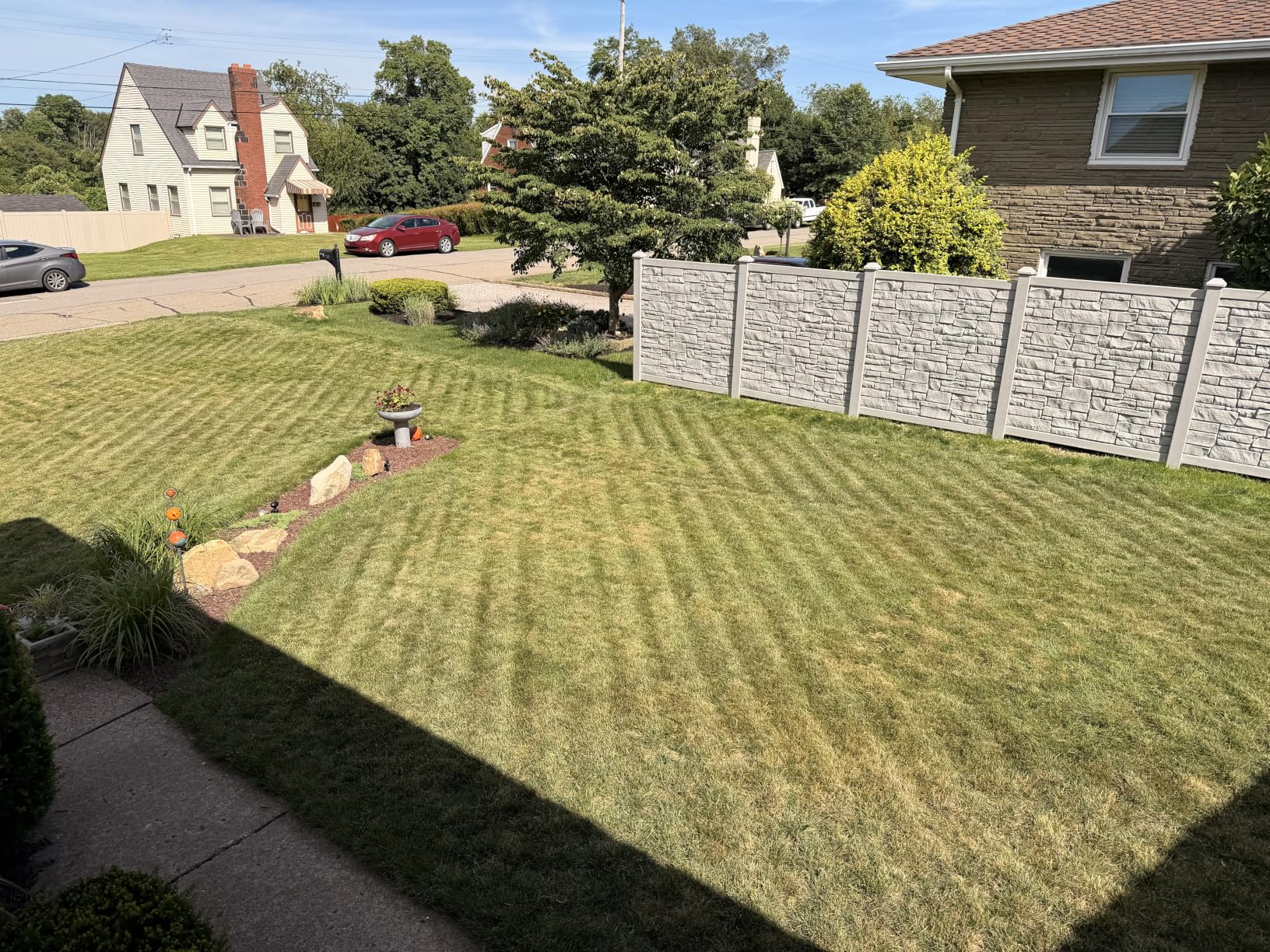
Forty-five percent is roughly 24 degrees. That handles a sloping front yard, a mild side hill and most undulating ground without the machine being over-matched. It will not handle the steep bank behind a retaining wall, and owners on genuinely steep properties report the machine reaching its limit.
If you are unsure where your lawn falls, measure before you buy and add headroom. A machine rated at 45% is a sensible match for a measured 30 to 35% section in dry conditions.
Automatic virtual mapping takes roughly 10 minutes without driving the mower around, and no perimeter wire is needed. Cutting height adjusts between 1.2 and 2.7 inches with five free-rotating blades, running at 58 dB or quieter so you can schedule it early.
The recurring complaint is pace. Owners report needing roughly three passes for an even cut, and a small strip remains at fence lines and edges. Mapping also takes a few adjustment rounds before it behaves. Both are manageable trade-offs on a lawn under a quarter acre.
80% slope (38.7 deg)
3D LiDAR no base station
9.49 in cut
50 lb
Most 80% mowers need a satellite base station, and on a sloped, wooded property finding a spot with clear sky line-of-sight is a genuine problem. This one skips it. A 360-degree 3D LiDAR plus dual-vision mapping handles the whole yard on its own, which removes the single hardest installation step for hillside owners.
The AWD drive handles 80% slopes and 3.15-inch obstacles, and the patented Active Steering System with dynamic suspension and a floating deck is designed specifically to avoid the turf tearing that plagues skid-steer turning on cool-season grass.
Skid-steer turns drag the rear wheels. On fescue that shows up as visible brown marks, because cool-season turf does not self-repair quickly. Bermuda and zoysia grow back fast enough to hide the same marks within days. If you have fescue, steering design matters more than almost any other spec on this page.
Cutting width is 9.49 inches with height adjustment from 1.57 to 3.54 inches, and ride-on edge mowing keeps the deck close to boundaries. Rain sensing, IPX6 waterproofing and PIN plus GPS anti-theft are all standard, which is reassuring on an unattended hillside.
About 14% of ratings land at three stars, and those reviews point to navigation and mapping behavior rather than drive performance. Several owners describe the first week as a learning period for the app. Budget for that before deciding the mower is faulty.
At 50 pounds it is the heaviest body here, which is another reason track-driven models exist for the steepest ground. The mass helps it bite into a slope, but it also makes a manual recovery a two-person job.
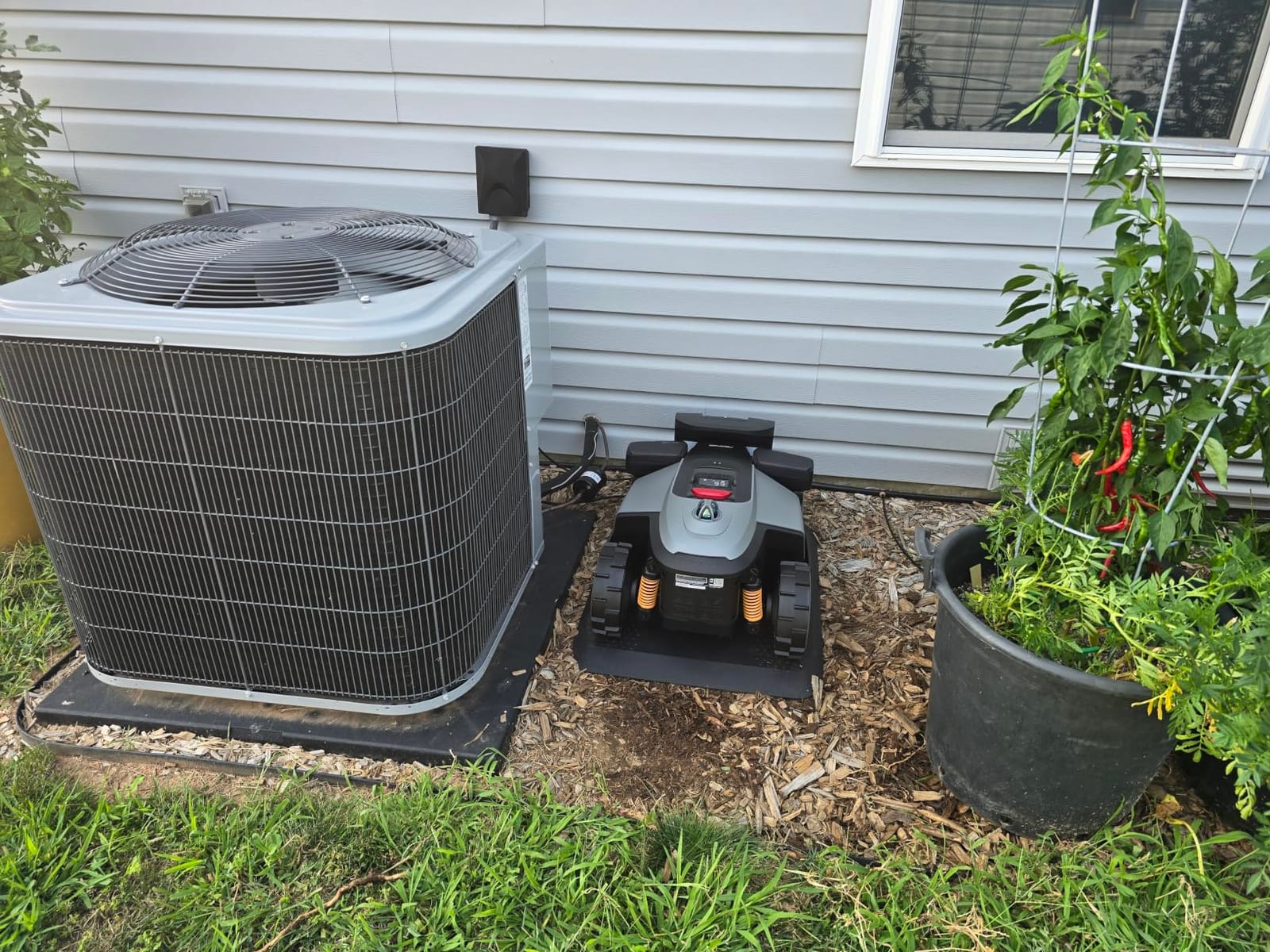
45% slope
Zero-turn steering
7.1 in deck
Up to 20 zones
The design decision that matters most here is zero-turn steering. Rather than skidding the rear wheels through a turn, the rear wheels pivot, so the machine changes direction without dragging across the grass. On a side-hill that is the difference between a clean stripe and a scuffed arc.
All-wheel drive with automotive-grade stability control handles slopes up to 45%, and adaptive torque kicks in for thick grass or inclines. The 2.5Ah battery covers up to 1,350 square feet per charge, and cutting height adjusts from 2 to 3.6 inches.
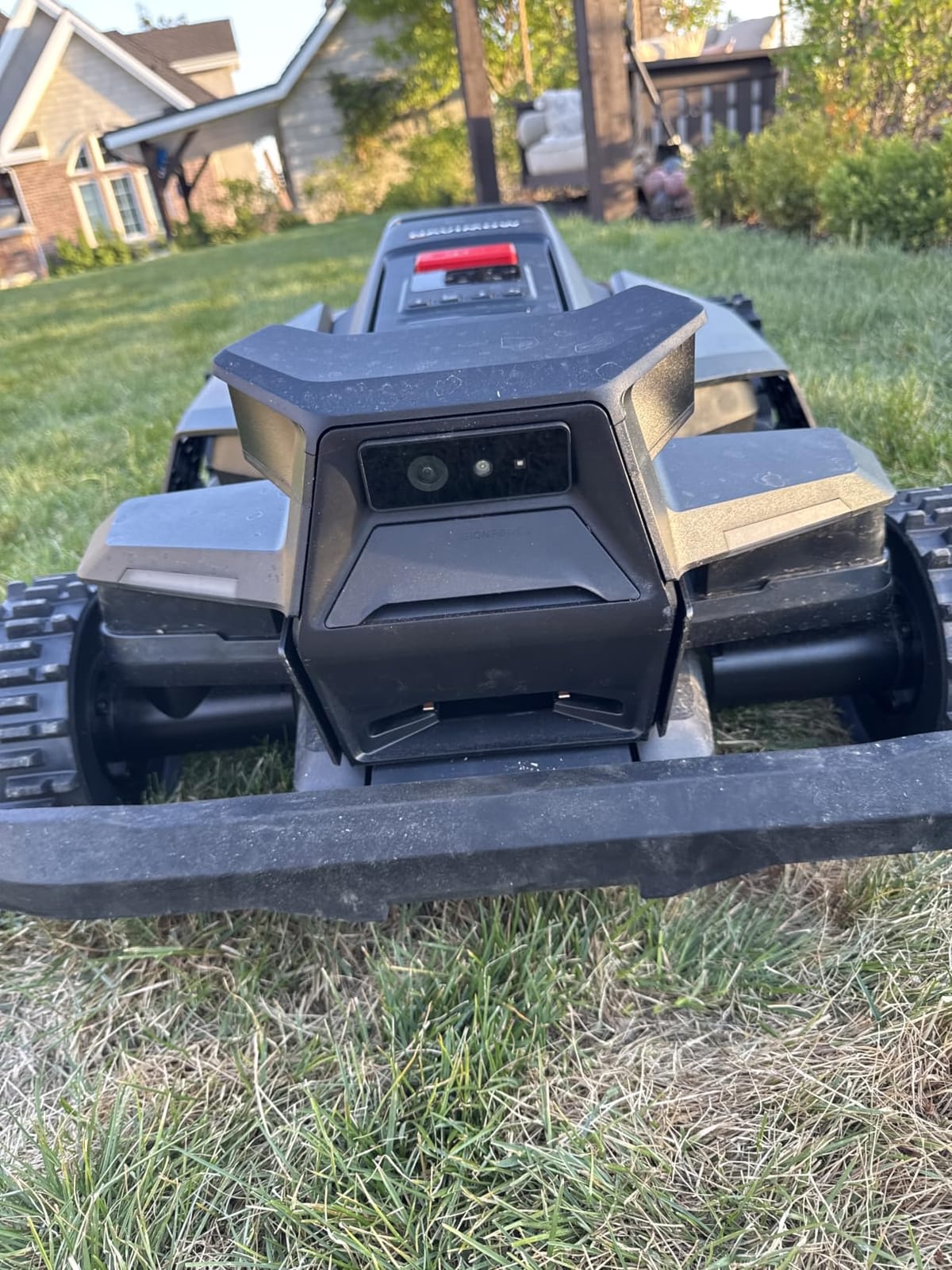
EFLS Network RTK with one-tap vision auto mapping is convenient when it works. When it does not, owners report having to walk the boundaries manually, which is tedious on a property with a slope and a fence line.
Other reported issues include wandering outside the mapped area into mulch beds on uneven ground and getting caught in lawn undulations near fences. One-star reviews make up about 19% of the total, so experiences here are more uneven than the average rating suggests. Set GPS lift and out-of-area alerts on during the first weeks.
The 33.5 by 24 by 13.8 inch body carries a 7.1-inch cutting deck with a 2 to 3.6 inch height range, which is narrow for a mower rated to 45%. That means more passes on open lawn, though the machine is quiet enough that dogs are not disturbed, which owners mention often.
For a small yard on a moderate hill, this pairs the traction of AWD with the footprint of a compact unit. Up to 20 mowing zones with optimized routes and auto-resume charging handle a property with more than one lawn area.
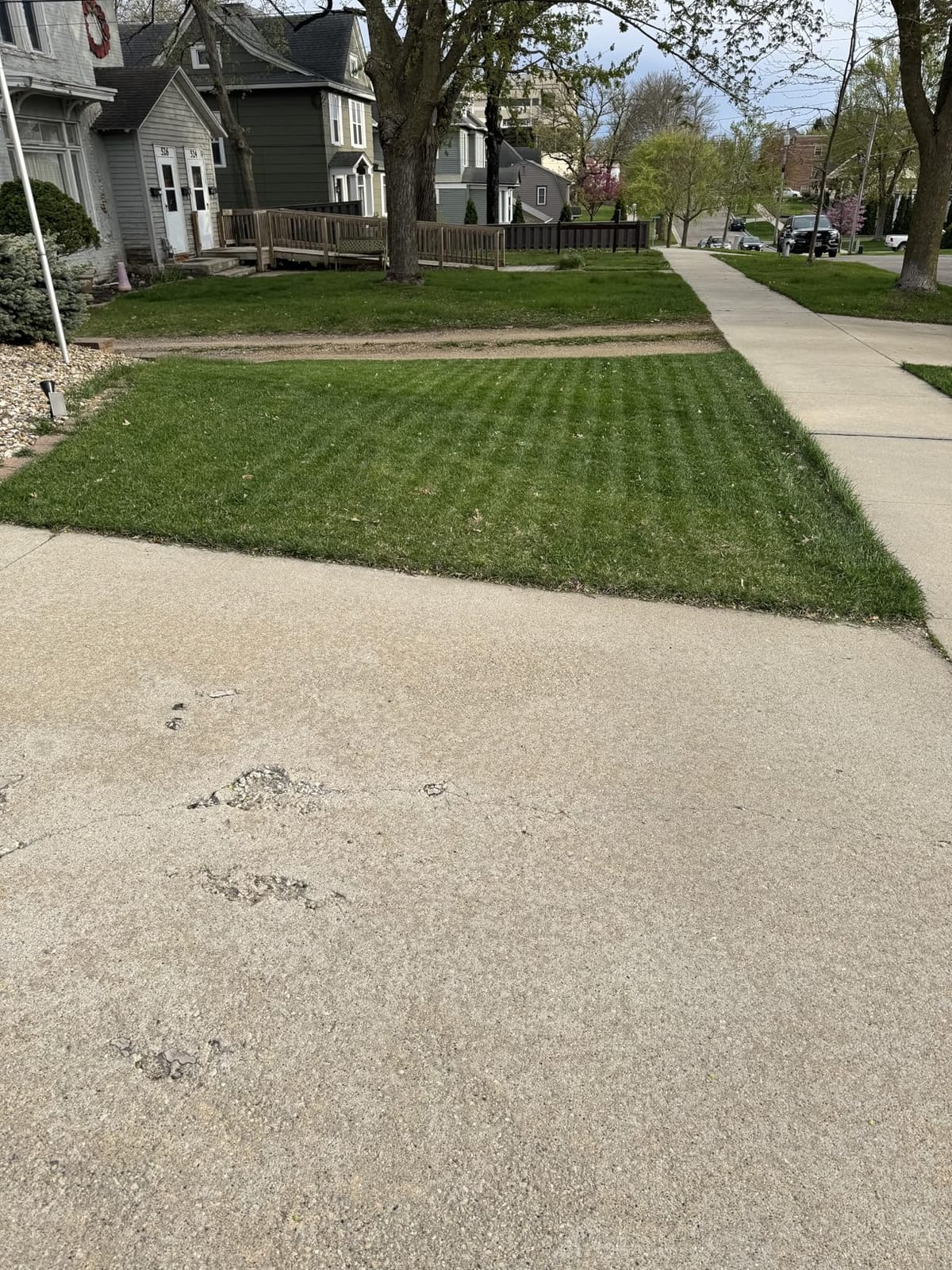
80% slope (38 deg)
165W four-wheel motor
15.7 in cut
Up to 30 areas
If you care about the visual finish of the lawn, this is the one. Owners on hilly and large properties specifically praise the neat striping that comes from precise boundary following, and the app offers parallel, checkboard and diamond grid patterns with 3D lawn route customization.
The 165W four-wheel motor system is rated for 80% slope or 38 degrees, and obstacle avoidance recognizes more than 200 object types. Cutting width reaches 15.8 inches with a dual-blade disk, and height adjusts from 2.2 to 4.0 inches across five positions.
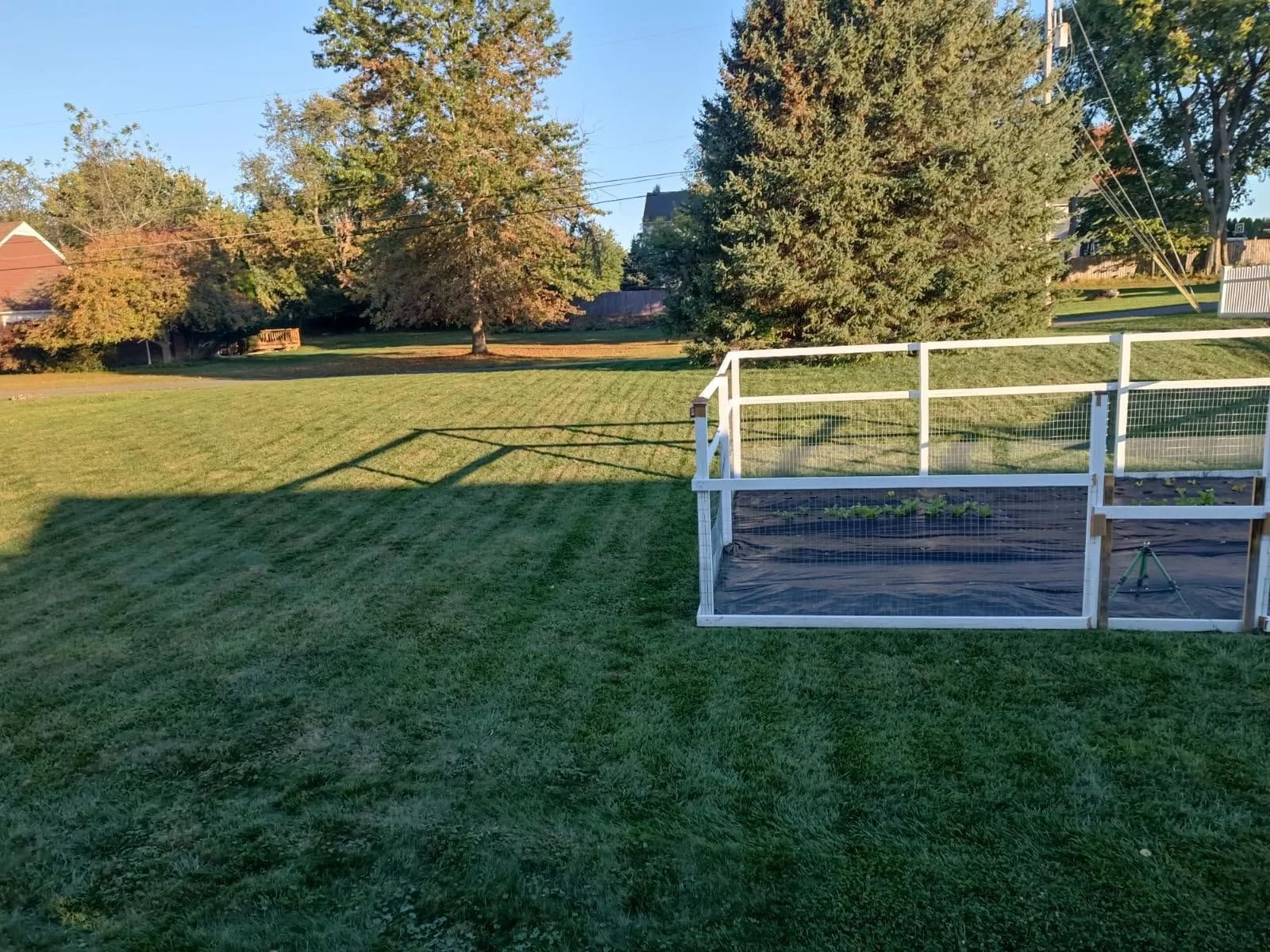
UltraSense AI vision works alongside RTK navigation, so mowing continues where the satellite signal is blocked. On a shaded hillside with mature trees, that is not a convenience feature. Without it, the mower tends to stop and wait for a fix it will not get.
Four-wheel drive with 4G, Bluetooth and Wi-Fi connectivity through the app, plus GPS tracking and a lost mode for theft recovery, covers the practical side of unattended operation on open ground.
Setup involves mounting the RTK unit, running the mapping pass and completing the app walkthrough. Owners consistently describe it as involved, and it is the most common reason buyers return this class of machine.
There is also a specific failure worth naming: occasional stalling on small driveway ramps or bumps of one to two inches, plus grass tearing on tight three-point turns. Managing up to 30 mowing areas with no-go zones helps you exclude those ramp transitions entirely, which is the fix most owners settle on.
45% slope
7.1 in deck
32.4 lb
59 dB(A)
The i215 is built for the case where your hill is shaded. A high-resolution solid-state LiDAR paired with onboard vision sensors gives full 3D navigation without any satellite dependency, so heavy tree cover does not stop the map or the route.
Off-road wheels and Electronic Stability Control handle 45% slopes, and a 100W motor drives a 6-blade disc. The AI VisionFence detects more than 200 obstacle types at 0.4-inch accuracy, with up to 20 editable mowing zones through GeoSketch interactive map editing.
Owners highlight clean cutting along fences and pathways in the ride-on EdgeSense mode, which is a common complaint about other machines in this roundup. Operation at 59 dB(A) makes it practical to mow before seven in the morning without disturbing neighbours.
GPS geo-fencing, lift detection and Apple Find My alerts cover theft concerns, and the mower auto-docks in extreme weather. Voice control through Alexa and Google Home is a small extra that some buyers appreciate.
The 7.1-inch cutting width is smaller than competing AWD decks, so a large lawn takes more passes. The listed body width is 8.66 inches with the 7.1-inch disc, and the 2 to 4 inch cutting height range covers most needs.
With 46 ratings it has the thinnest evidence base of the higher-rated machines here, and 71% of those ratings are five-star. We would treat that as encouraging but not proven over many seasons.
60% slope (30 deg)
8.7 in cut
0.5 acre
2 year warranty
Support reliability is a genuine risk factor in this category, and the X5 is the one we would bet on when a machine is going to sit on a slope for days. A two-year warranty with US-based support is a meaningfully different position from brands that route everything through an overseas email form.
The machine itself is credible on hills. All-terrain AWD with independent front suspension handles slopes up to 60%, or 30 degrees, and RTK plus VSLAM with Vision AI keeps working under trees and shaded areas where satellite-only machines stall.
Coverage extends to 0.5 acre or 21,780 square feet, and the machine navigates passages as narrow as 31.5 inches, which is helpful on properties with a narrow path to a side yard. The 8.7-inch floating cut adjusts from 1.6 to 3.2 inches at 60 dB.
Up to five maps with smart zones and no-go areas means you can run separate lawn areas with different schedules, and rain sensing keeps it parked when conditions turn wet.
The most common complaint is over-cautious obstacle avoidance, which treats tall grass as something to mow around. That means wide boundary margins, and some owners report up to 18 inches of unmowed edging around the perimeter.
Distant corners may also need a Wi-Fi extender, and a few owners report catching on grass-to-sidewalk transitions and shallow dips. If your slope runs right up against a hard edge, walk the boundary before you buy.

100% climb (45 deg)
Track drive
16 in dual blades
1.73 acres daily
For a genuinely severe slope, this is the only tracked machine here and the highest climb rating in the group at 100%, or 45 degrees. Rubber tracks put the full weight of the chassis on the incline instead of four small contact patches, which is why it climbs where wheeled mowers spin.
The same physics solves another problem. Tracks distribute weight, so the machine does not punch ruts into soft wet ground the way a heavy riding mower does. Owners of tracked units on hilly ground point to this as the reason their slope stopped eroding.
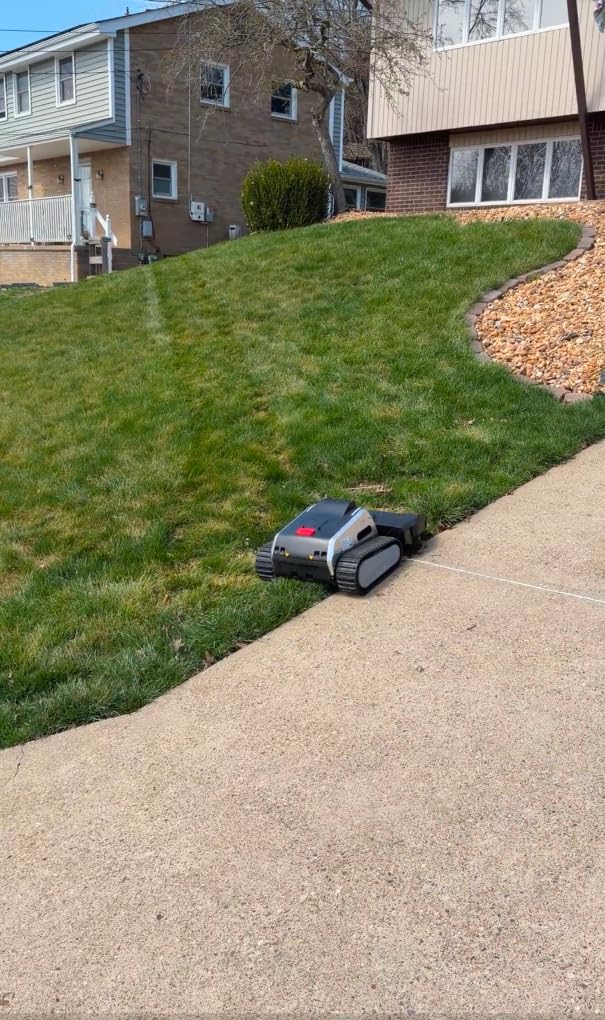
Dual SK5 tool-steel blades rated at 50 HRC spin up to 6,000 RPM from a 1785W peak motor, with cyclone airflow lifting flattened grass for even cuts and leaf mulching. Cutting width is 16 inches across dual rotary blades running at up to 3.3 feet per second.
The 15,000mAh LiFePO4 battery is rated for more than 2,000 cycles and covers 0.57 acre per three-hour charge, adding up to 1.73 acres of daily coverage across three cycles. Height adjusts from 1.2 to 4 inches, and an A380 automotive-grade frame with IPX6 waterproofing handles up to 80 zones.
Owners report a weak satellite link and no usable online or chat support channel, which is a real problem for a machine this complex. Mapping and zone setup can take a full day and must be repeated if the base station moves.
There are also reports of blade stalling in thick grass on faster blade-speed settings, and charging that can fail in high heat without a mower garage. Hardware issues including loose cutting decks, front wheel springs and bottom bearings appear in early feedback. Capability is not the question with this machine; serviceability is.
45% slope
8.7 in cut
27 lb
130 min battery
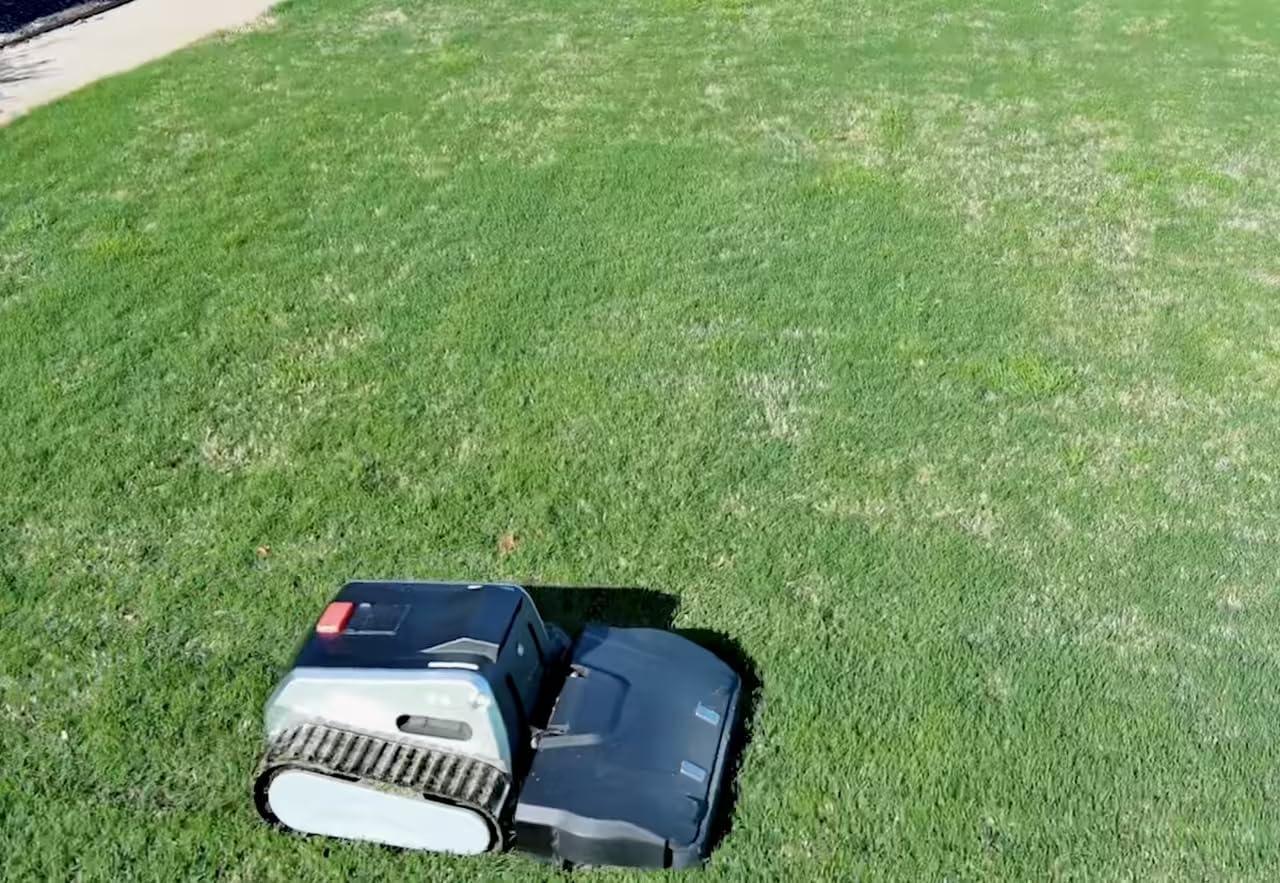
This is the entry point, and it is worth considering if your hill measures 45% or less. The floating cutting deck with large-diameter wheels manages 45% slopes and 1.57-inch obstacles, and full-band RTK paired with VSLAM holds position under tree canopies and near tall fences.
Full-band RTK is the honest strength here. On a shaded yard it maintains a fix better than single-band setups, and owners report good straight-line cuts on moderate slopes. Stereo dual-camera AI vision routes around people, pets and garden objects.
You get a choice between AI auto-mapping and app-controlled manual mapping. Reviewers consistently report that auto-mapping is often unavailable, which pushes you toward manual remote-controlled mapping. That is workable but slower, especially on a property with an odd boundary.
Boundary handling is very conservative, which leaves 1 to 1.5 foot unmowed strips along edges, fences and obstacles. Maps cannot be edited without walking the mower, and there is no partial zone mowing, so you cannot send it to repair a single bald patch.
Traction wheels struggle in thick St. Augustine grass, and small bumps trigger false lifted alerts, which is an annoyance on rolling ground. Battery life of 130 minutes on average means longer total mow times on half-acre lawns.
The edge cutting module is an optional extra and is not offered in the US, so edge finishing is a separate string trimmer job. At 27 pounds it is light enough to lift out of a hollow alone, which is a genuine advantage on a slope.
A slope rating is a grade percentage, which is the vertical rise for every 100 units of horizontal run. Manufacturers quote it as a best case on dry, firm, healthy turf, so the number you should act on is the rated figure minus 5 to 10 percentage points. That margin covers wet grass, soft soil after rain and the grass height that slows a climb.
The useful conversions: a 45% grade is about 24 degrees, 60% is about 31 degrees, 80% is about 39 degrees, and 100% is 45 degrees. If your yard measures 50% in the worst spot, a mower rated at 45% will not do it, and one rated at 60% is the minimum sensible purchase.
Climbing ability and side-hill stability are separate problems. A machine can climb a 60% straight uphill and still creep sideways on the same hill if the mower travels across the contour. Turf scuffing at turns is where most visible lawn damage comes from, and it is a steering design issue, not a drive issue. Zero-turn and active-steering designs exist specifically to avoid dragging rear wheels through a turn.
Two-wheel-drive mowers are designed for level lawns and typically stall around 20% to 30% grade. On a hill, one driven wheel climbs while the other spins, the chassis yaws, and the mower ends up crossways on the slope with uncut stripes behind it. That is the most common complaint on forum threads, and it is a hardware limit rather than a software bug.
All-wheel drive closes that gap because torque is distributed across four contact patches, so no single wheel can spin out. The AWD machines in this roundup are rated from 45% to 80%, and the same principle applies to climbing and to holding a line on uneven ground.
Track drive pushes it further. Continuous rubber belts put the entire machine weight on the incline, which is why the Lymow One Plus is rated at 100% climbing. The trade-off is that tracks are heavier, turn with more resistance and are harder to service than wheels, so the extra capability only pays off on genuinely severe terrain.
You do not need surveying equipment. Drive a stake into the ground at the base of the hill, mark a point on a tree or post exactly 10 feet horizontally away at the same base elevation, then measure vertically to the ground surface at the top of the hill.
Divide the height rise by the 10 foot run and multiply by 100. A 5 foot rise over that 10 foot run is a 50% grade. Repeat at three spots on the hill, including the steepest section and the contour where the mower would travel sideways, and use the highest number you find.
Also measure the slope just outside your mowing boundary. If the ground drops away immediately past the edge, a mower can slip while repositioning. After you have the number, pick a machine rated 5 to 10 points above it, and confirm all-wheel drive if it exceeds 30%.
All-wheel drive is the first filter, and above 30% grade it is not optional. Below that, a good two-wheel-drive machine with stability control can handle a gentle roll. Look for adaptive torque and suspension travel as well, since a hillside is rarely smooth.
RTK satellite positioning is precise in open sky and unreliable under canopy, which is exactly where hilly yards tend to sit. A LiDAR or vision sensor that works without a satellite fix protects the run. LiDAR-only setups also remove the need to find a base station location with clear line of sight on a slope.
This is the most common owner question, so it deserves a direct answer. Yes, one mower can handle multiple separate lawns. Machines here support up to 30 mowing areas with no-go zones, and separate work areas can be mapped as independent zones with their own schedules. Crossing a sidewalk or driveway between a flat front yard and a hilly side yard is possible when the map includes that path, but set the mower to stop and recharge rather than assume it will run the lawn down mid-mow.
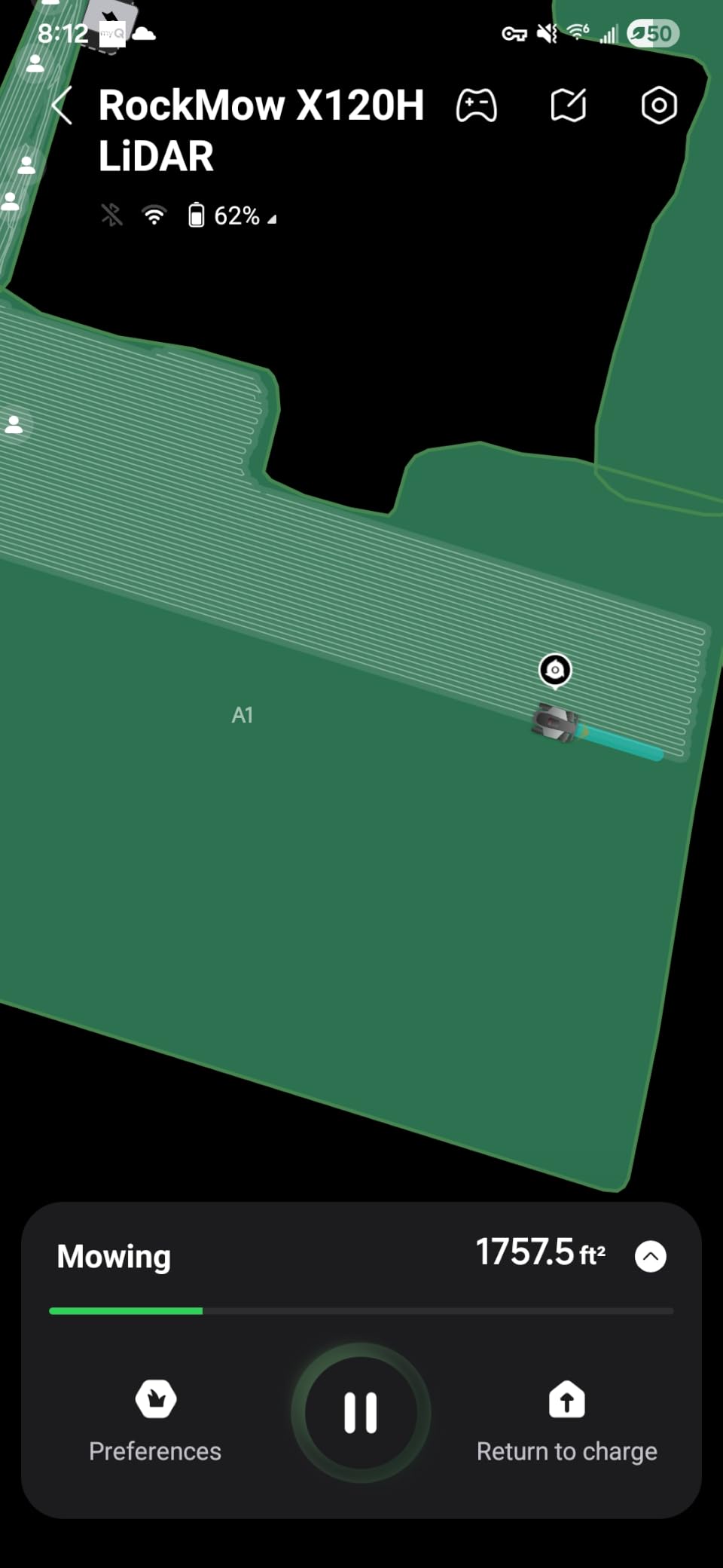
Published area figures assume flat ground. A slope consumes more energy per unit of lawn, and charge cycles increase. Look at minutes per charge as well as acreage, because runtime is what determines how many cycles you need per day. The RockMow lists 110 minutes average, the RockNeo 130 minutes, and the LUBA 3 up to 175 minutes.
Wide decks cover open slopes in fewer passes, but they are harder to maneuver in narrow side yards. Cutting height ranges matter more on hills, where uneven growth is visible from the road. A dedicated edge disc, as on the LUBA mini 2, or ride-on edge mode, as on the i215, saves a separate trimming pass. Budget for a string trimmer either way.
On a hillside, a failed machine is a recovery problem, not just a downtime problem. Brands with US-based support and a real warranty, such as the Sunseeker X5, reduce that risk most. Consumables add up too: replacement blades, battery life and any garage or base station should factor into the decision, alongside the purchase price.
One more note on turf. Fescue shows turn marks that do not recover quickly, while bermuda and zoysia repair themselves within days. If you have cool-season grass, prioritize zero-turn or active-steering designs over raw climb rating. For the same reason, our self-propelled electric mower picks and cordless mower battery guides cover the manual option if you would rather handle the edges yourself.
They work well on hills only when the drive system matches the terrain. Two-wheel-drive models typically stall around 20-30% grade, while all-wheel-drive and track-driven mowers handle 45% to 80% slopes and beyond. Expect to lose 5 to 10 percentage points of rated capability on wet or soft turf.
It depends entirely on the drivetrain. Two-wheel-drive mowers top out near 20-30% grade. All-wheel-drive models are commonly rated from 45% to 80%, which is roughly 24 to 39 degrees. Track-driven machines reach 100% climbing, or 45 degrees. Buy at least 5 to 10 percentage points above your measured slope.
Yes, satellite positioning drifts or drops out under heavy canopy, and hilly yards are often shaded. Mowers that fuse LiDAR or camera vision with RTK, such as the Mammotion LUBA models and the Segway i215 LiDAR, keep mapping without a satellite fix. LiDAR-only setups also avoid mounting a base station on sloped ground.
Yes. Most wire-free mowers support multiple mapped work areas with independent schedules, and several models here allow up to 30 zones with no-go areas. You can map a path or driveway as a transit corridor between a flat front yard and a hilly side yard, though you should expect extra charge cycles on a sloped second lawn.
Turn scuffing is more common than climb damage, and it comes from steering design rather than traction. Skid-steer turns drag rear wheels and mark cool-season turf like fescue, while bermuda and zoysia recover within days. Zero-turn and active-steering designs reduce the problem. Keep the deck sharp and avoid mowing wet grass on side-hills.
Measure your steepest slope first, then pick from there. If your yard tops out under 45% and the total area is under a quarter acre, the ANTHBOT M5 is the sensible low-effort choice, and quiet operation and a 12 kg body make it easy to live with. If the lawn is half an acre or more with a serious incline, the Mammotion LUBA mini 2 AWD 1500H is our pick: 80% climb rating, 260 ratings behind it, and LiDAR plus cameras that hold position under trees.
For a large uneven property where coverage speed matters, the LUBA 3 AWD 3000 pairs the same 80% rating with a 15.7-inch deck and 175 minutes per charge. If your only obstacle to wire-free setup is finding sky view for a base station, the roborock RockMow X120H LiDAR handles 80% slopes on LiDAR alone. When trees block satellite signal, the Segway Navimow i215 LiDAR is built for exactly that.
For a moderate hill where support and warranty matter more than raw capability, the Sunseeker X5 AWD pairs 60% climb with US-based support. If your slope is genuinely severe, the Lymow One Plus is the only tracked machine here and climbs 45 degrees, but its support channel is the weakest we saw. Small yard on a 45% roll and a tight budget points to the roborock RockNeo Q110H, with the caveat that auto mapping is often unavailable and edge finishing is a separate tool.
Whichever one you choose, set no-go zones around every drainage ditch and hard edge before the first full run, and give it a dry week to learn your slope. Check the price on the listing below, and measure before you commit.