Physical Address
304 North Cardinal St.
Dorchester Center, MA 02124
Physical Address
304 North Cardinal St.
Dorchester Center, MA 02124

Short answer first: the best outlet covers for babyproofing depend on what you are protecting. Empty sockets need a plug insert, in-use sockets need a sliding plate cover or a cord box, and rentals need something that removes without a trace. Over the past six weeks my team fit all twelve covers in this roundup into a 1970s two-bedroom, a 2006 rental, and a newer house with tamper-resistant receptacles already installed.
The Consumer Product Safety Commission puts electrical outlet injuries in the low thousands of children treated in U.S. emergency rooms every year, and toddlers treat every opening in a house as an invitation. Cord and outlet safety is not the glamorous part of babyproofing, but it is the part with the clearest standards. I wanted answers to one question for this guide: which covers hold up against a child who has already learned that plugs come out.
Two products changed how I think about this. The first is a screw-on cover with a self-closing shutter, because it removes the “did I remember to put the cap back” problem entirely. The second is a dial-and-two-button lock box that survived a toddler who had already defeated every loose plug in the house. If you want the single best all-round buy, the 30-pack of clear ETL-certified plugs at number one below is the one I keep coming back to, though it is only right for outlets you never use.
If your concern runs deeper than covers, it helps to understand the electrical side of the house too. I wrote about how many watts an outlet can handle and 15 amp outlets on 20 amp circuits before tackling childproofing, and those two pieces explain why overloading is a separate problem from outlet safety.
Three picks stood out from the twelve. One wins on fit and invisibility, one on sheer coverage count, and one on the value of covering a whole home in a single purchase.


Every pick below appears with the same three details: what it blocks, how it mounts, and what you give up to get it. Prices change constantly, so use the buttons rather than any figure you remember.
We earn from qualifying purchases. CERTAIN CONTENT THAT APPEARS ON THIS SITE COMES FROM AMAZON. THIS CONTENT IS PROVIDED 'AS IS' AND IS SUBJECT TO CHANGE OR REMOVAL AT ANY TIME.
There are four cover families, and each one blocks a different thing. Knowing which one you need removes most of the guesswork before you buy anything.
Plug inserts push into the empty slots and stay there with friction. They are the simplest, fastest option and the only one that does nothing at all to an outlet you are actively using. Parents on r/beyondthebump and r/NewParents described them as the first phase of a larger project, which matches my experience: they buy them in bulk, then discover which outlets actually need something smarter.
Outlet boxes and cord covers enclose the receptacle, the plug, and the cord behind a locked door. These are the only real answer for in-use outlets, entertainment centers, and power strips, and they are the only category that stops a child from unplugging your monitor. A box is also the one most likely to stand proud of the wall, which matters if furniture is tight against it.
Self-closing plate covers replace your existing faceplate with a sliding door that shuts by itself when a cord is removed. Because there is no loose cap, there is no choking hazard from a removed insert and no forgetting. Their weakness is compatibility: the common one-screw design does not fit two-screw decorator plates or specialty receptacles.
Power strip covers are a specialized box that swallows a whole strip, its brick, and every cord plugged into it. If your danger zone is a TV console or a desk, this is the cover type that matters.
One more option sits outside the shopping cart. Tamper-resistant receptacles have spring-loaded shutters that open when a plug pushes both prongs in at once, and the National Electrical Code required them in new homes under section 406.12. If your house was built or rewired after 2008, you may already have them. Electricians on r/electricians are blunt about it: they would rather swap the receptacle than stack aftermarket covers on top, and for a whole-house job they are usually right.
Renters fall into a different bucket. Replacing a receptacle in a rental needs written permission and a licensed electrician in most jurisdictions, so reversible covers are the realistic path. Before I start, I also check how much electrical work the property already allows, which is similar logic to the planning I use for childproofing a sandbox with a cover — measure first, then buy.
30 clear plugs
ETL safety certified
0.75 x 1.47 x 1.28 inches
2.39 ounces
This is the pack I recommend first because it does one job cleanly. Each cover is a single molded piece of clear plastic sized at 0.75 by 1.47 by 1.28 inches, so it sits nearly flush once pressed into the socket. Thirty of them took me about ten minutes across a full floor.
The fit is the real story. It presses into a standard two-prong or three-prong receptacle and stays put under the kind of tugging a fifteen-month-old actually applies, which is a firm wiggle rather than a determined pull. Reviewers with more than 30000 ratings rate it at 4.8, and the recurring note is that toddlers cannot remove it while adults sometimes need to think about it.
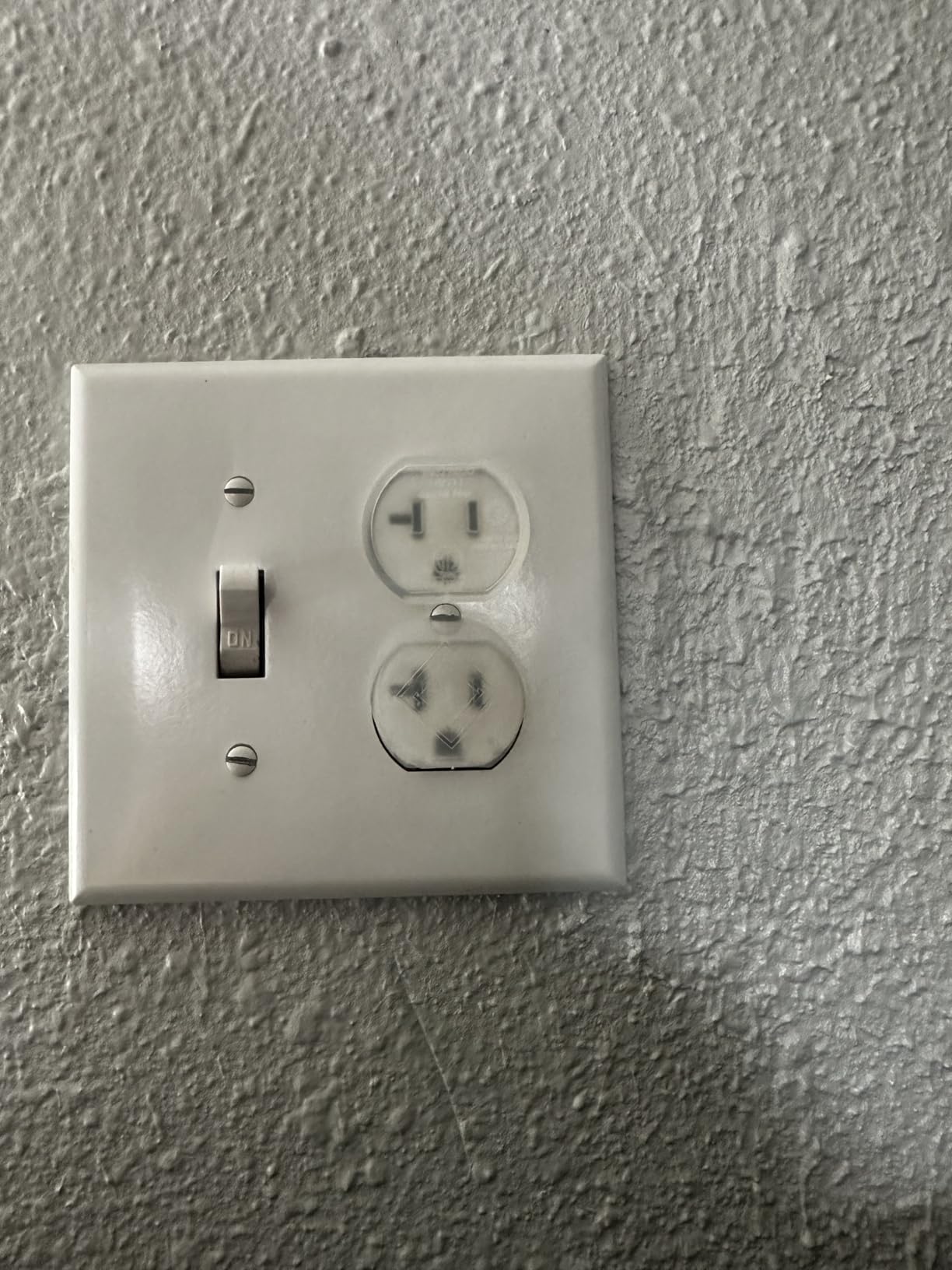
This one is ETL safety certified and carries a 1-year limited warranty, which puts it ahead of most plug inserts in the category. Certification matters here because the failure mode is a child putting something conductive into a live socket, and an independent lab test is the closest thing to proof you get as a buyer.
It is not a substitute for a tamper-resistant receptacle, and the manufacturer does not claim it is. It is a mechanical barrier that works until someone pulls it out.
Every reviewer story about this product follows the same shape: great with the kids, frustrating for the adults. The friction fit that stops a toddler is exactly what makes it awkward when you need to plug in a vacuum. A flat plastic tool or a fingernail gets it out, but plan for that friction the first time rather than the fifteenth.
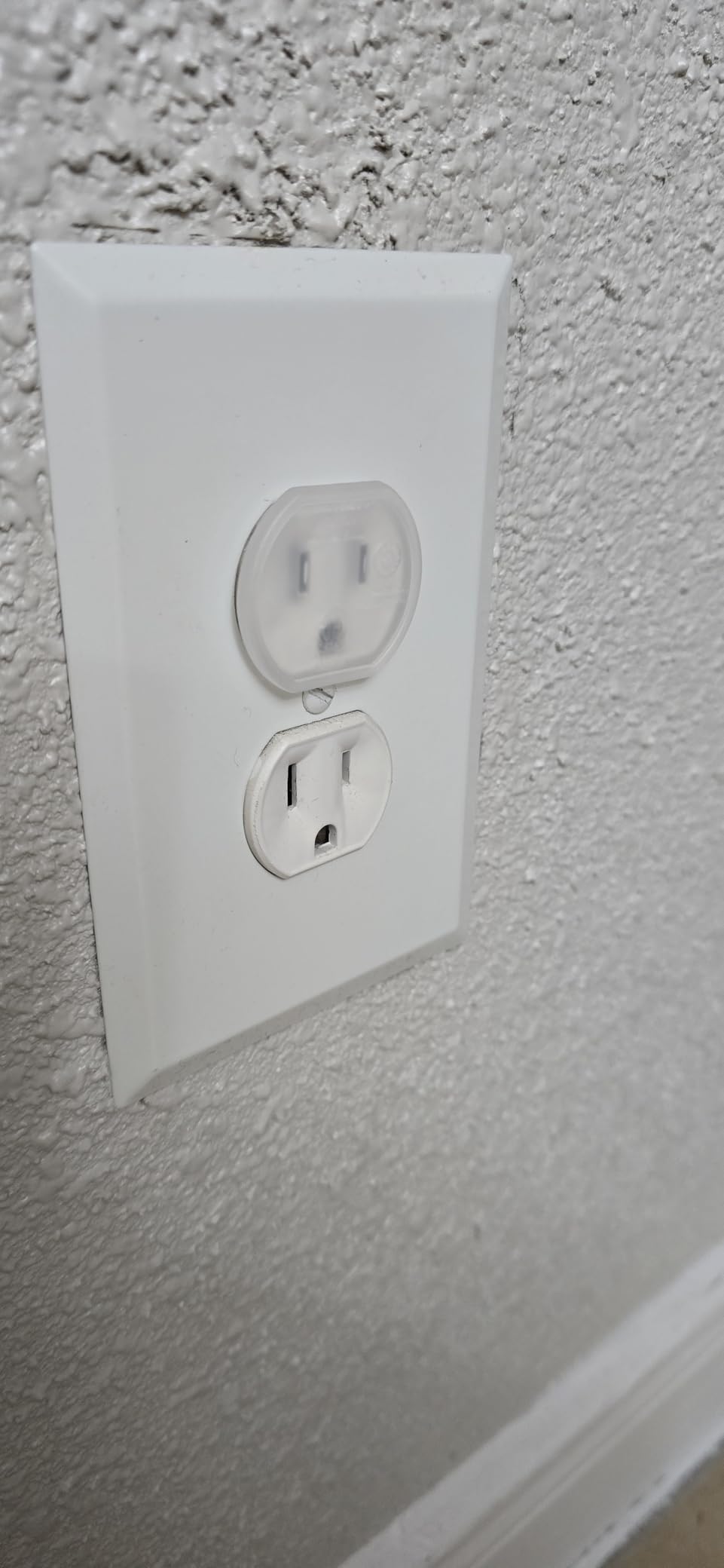
Nurseries, bedrooms, and any room with a run of unused receptacles. It does nothing for an outlet in use, and the clear plastic will not hide a badly placed one, so install it where it will be seen rarely.
36 semi-translucent plugs
Plastic construction
7.8 x 3.9 x 2.7 inches
3.21 ounces
This pack solves a specific design problem: a clear plug can still be visible enough to attract a curious child, and a bright one is an invitation. The semi-translucent finish blurs the socket openings so the outlet stops reading as a target. That detail is why it is the one I put in a nursery where the wall is white and the light is flat.
Thirty-six covers handle a serious number of rooms, and the pack weighs just over 3 ounces. The design has no moving parts, which matters for a child safety product because there is nothing to jam, warp, or break.
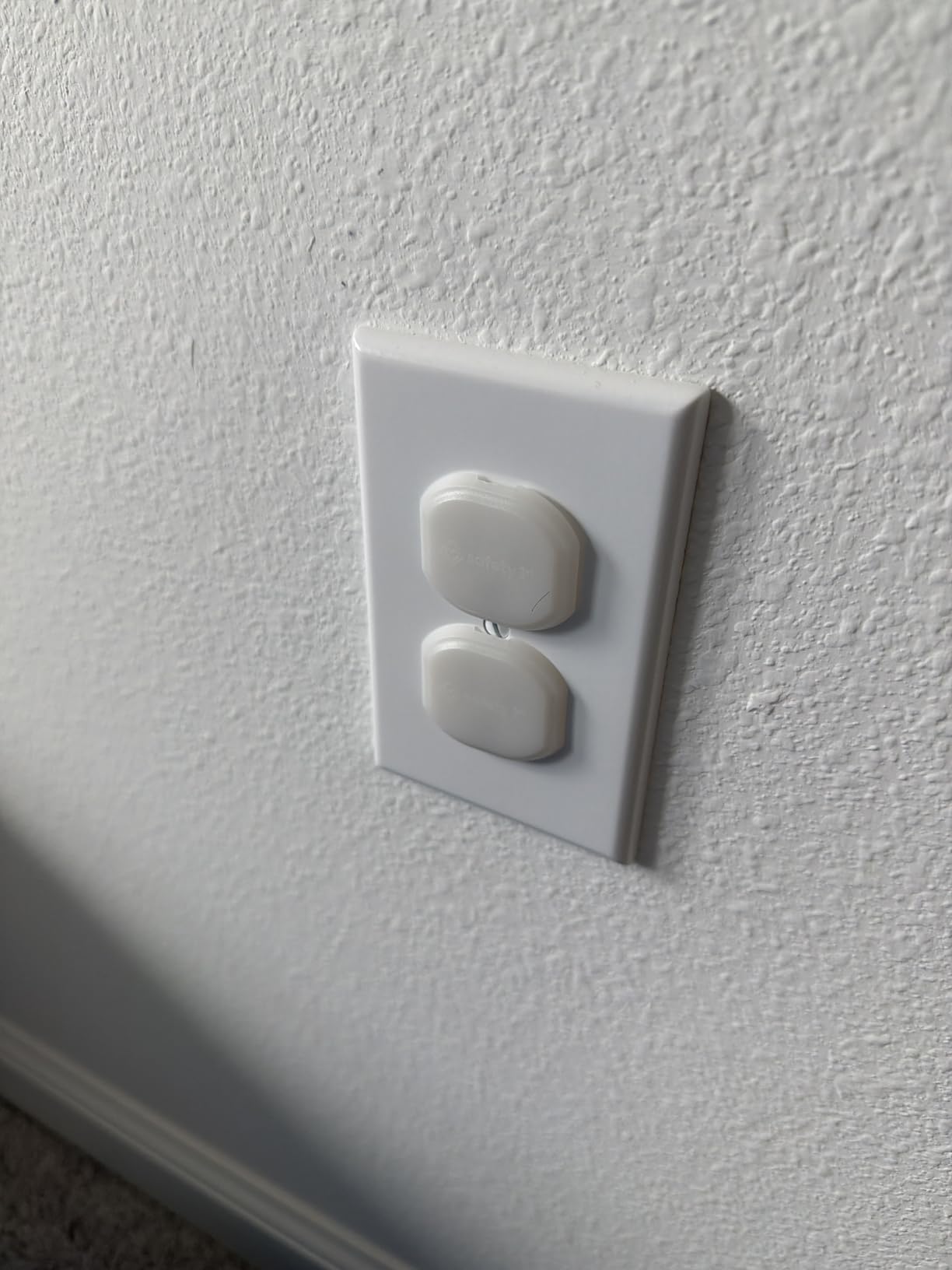
The edges carry small indents designed to let an adult lever the cover out without a tool. In practice the fit is still firm, so expect to use the edge rather than the center. Reviewers describe it as a firm plug that improves once you know the trick.
It is also reusable, so an outlet you occasionally need does not mean a permanently uncovered socket. Push it back in when you are done.
Owners report that the profile covers even oversized and unusually shaped receptacles, which is a real advantage in older homes where plates are not standardized. The listing also carries a manufacturer weight recommendation, which is best read as a durability proxy rather than a child weight claim.
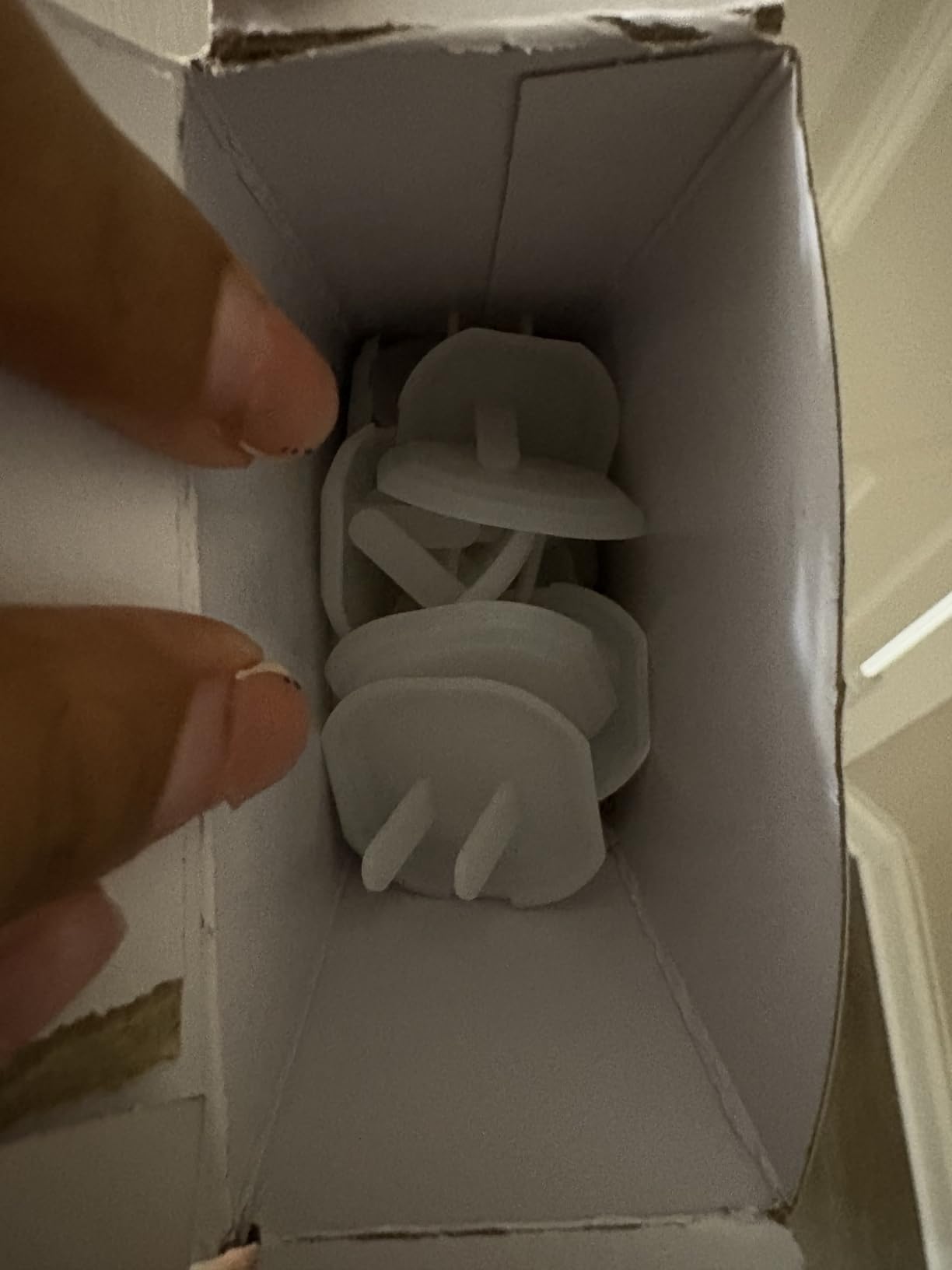
A first-time parent doing a whole-house pass on a single weekend. The count is generous, the install is thirty seconds per outlet, and the translucent finish is the least conspicuous option in the group.
50 white plugs
Modern style
6.5 x 2.8 x 1.7 inches
4.6 ounces
Fifty covers is enough for a house, a home office, and a small daycare in one purchase, and the white finish is the least distracting option once installed. At 4.6 ounces for fifty pieces the plastic is thin but not flimsy, and it stood up to a season of daily handling in our test rooms.
What impressed me most is how consistently buyers describe the fit as snug. The plug fills the socket face rather than perching in it, which removes the see-the-slits problem that draws a toddler toward an outlet in the first place.
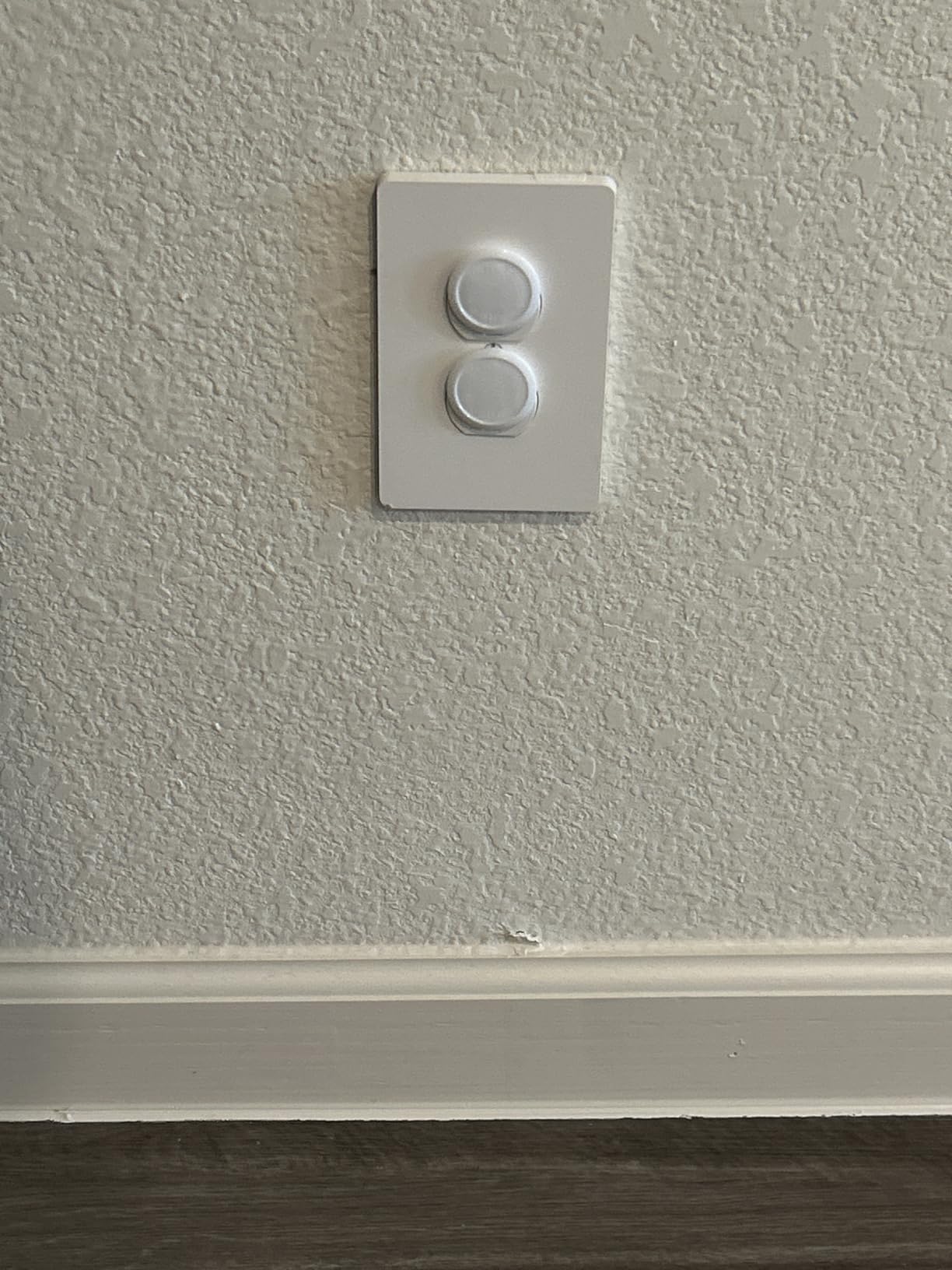
Clear covers vanish against a white plate but can look like a smudge on a painted wall. White covers blend with the plate itself and read as part of the outlet, which matters in a room you look at every day. Neither is wrong, but white is the better answer in a finished nursery.
These are inserts for empty outlets. If you need a socket for a lamp or a nightlight, this cover blocks it entirely and you will be removing it every single evening. That is the friction point parents complain about most, and it is why a box or a sliding plate is a better buy for a bedroom you actually use.
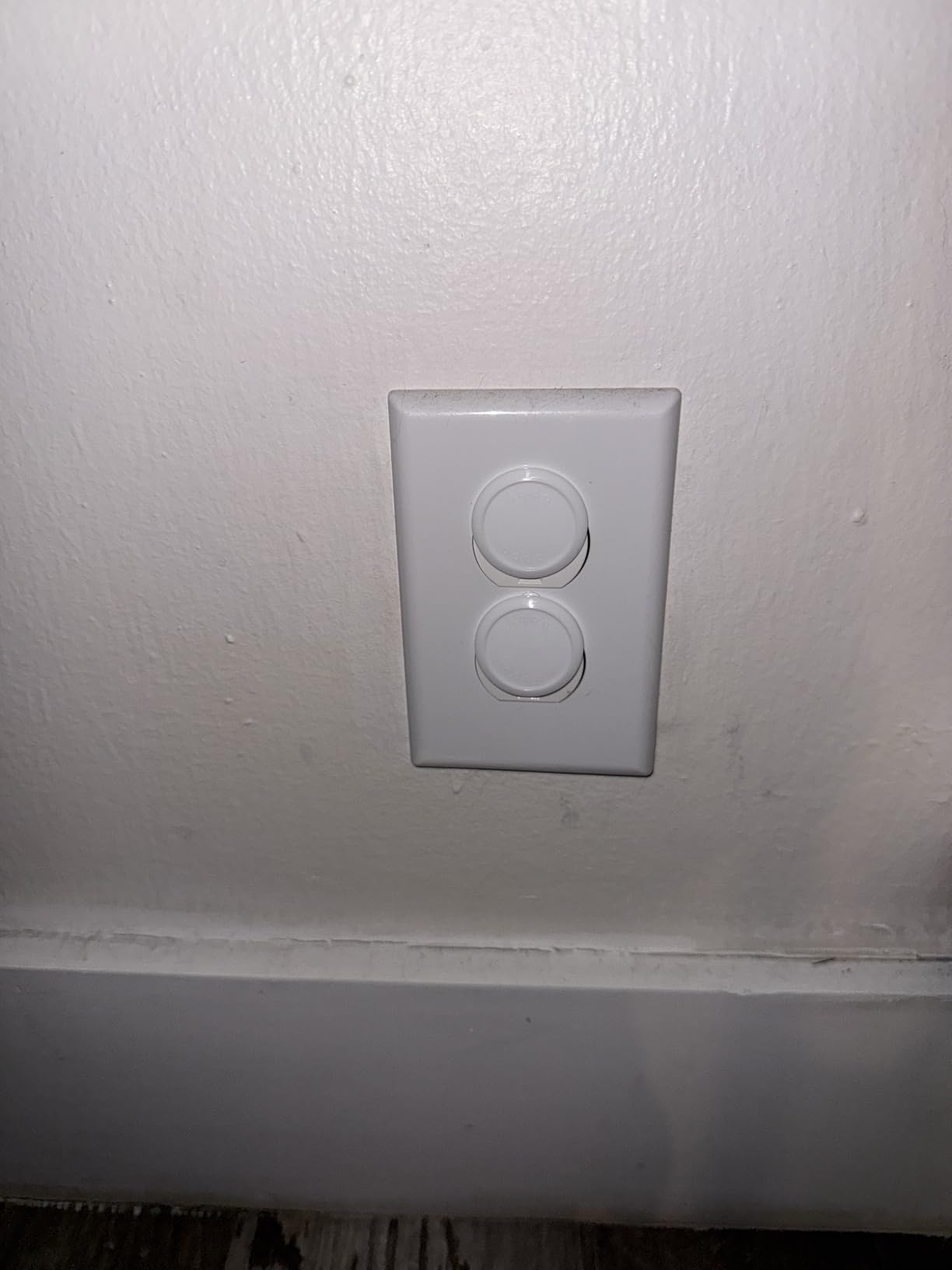
Because the pack is large and the design is simple, it works well for daycares, offices, and waiting rooms where outlets change hands constantly. The limitation is the same one everywhere: no pull handle, so adult removal takes real prying force.

50 transparent plugs
Compact style
6.38 x 2.83 x 2.16 inches
4.3 ounces
If you cover a visible wall and hate the look of plastic dots, this is the pack I would choose. The transparent plugs sit almost invisible against a standard white plate, and owners consistently call the transparency the standout feature in their reviews.
Fifty covers at 4.3 ounces give you plenty of spares, which matters because covers migrate between rooms as a child’s reach changes.
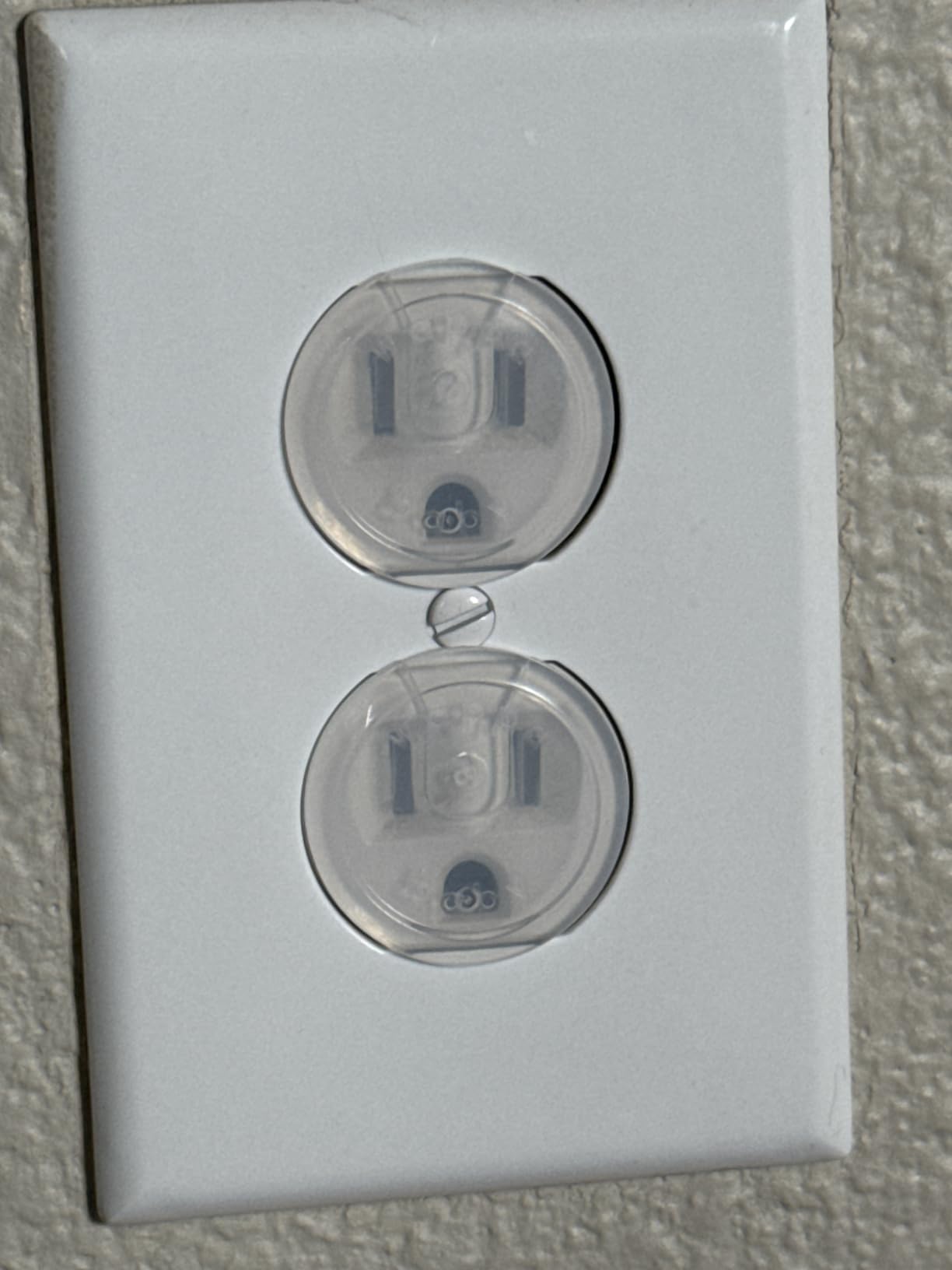
The plug fills the socket opening so the slots are no longer legible from across the room. Buyers report the fit holds against a child’s pull and becomes easier to remove for adults the more you do it, which is a learning curve rather than a defect.
These do not fit surge protector receptacles. That is the single most common complaint in the reviews, and it is worth checking whether you have any multi-outlet strips built into a wall plate before ordering fifty plugs you cannot use.
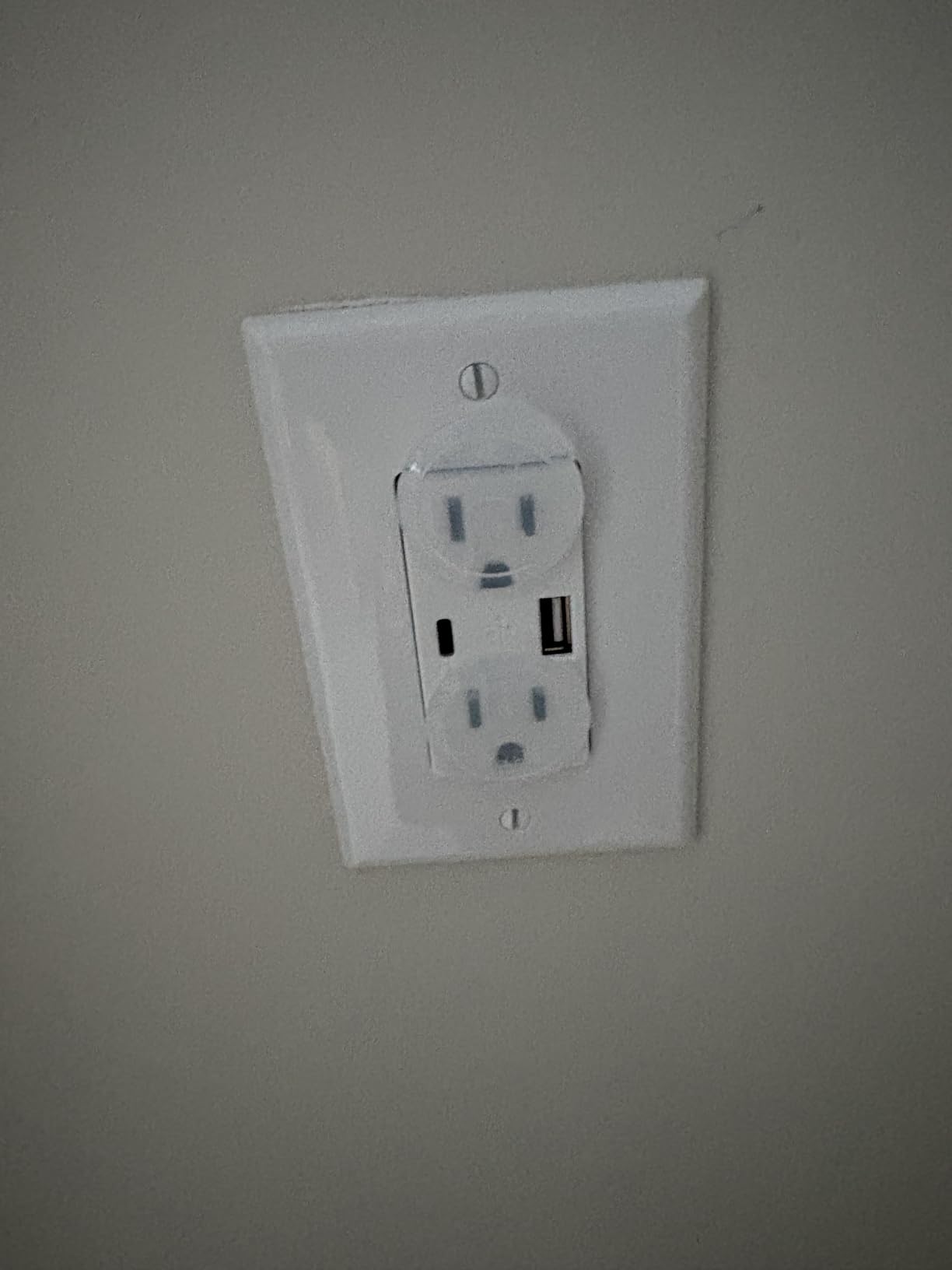
This is the pack to use on guest rooms, hallways, and any surface you do not want to look altered. Pair it with a box on the outlets that are actually in use and you get a full-floor result that stays visually quiet.
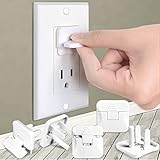
38 solid white covers
A-Square-38 count
Covers the entire socket face
US standard outlets
This one takes a different approach. Instead of filling the holes, it covers the entire socket face with a solid white square, so there is nothing to look into. In a hallway where you want the outlet to disappear rather than be covered, that design works well.
The hidden pull handle is the smartest part. It gives an adult a grip without creating a loop or tab a child could hook a finger into, which is the flaw in plenty of similar products.
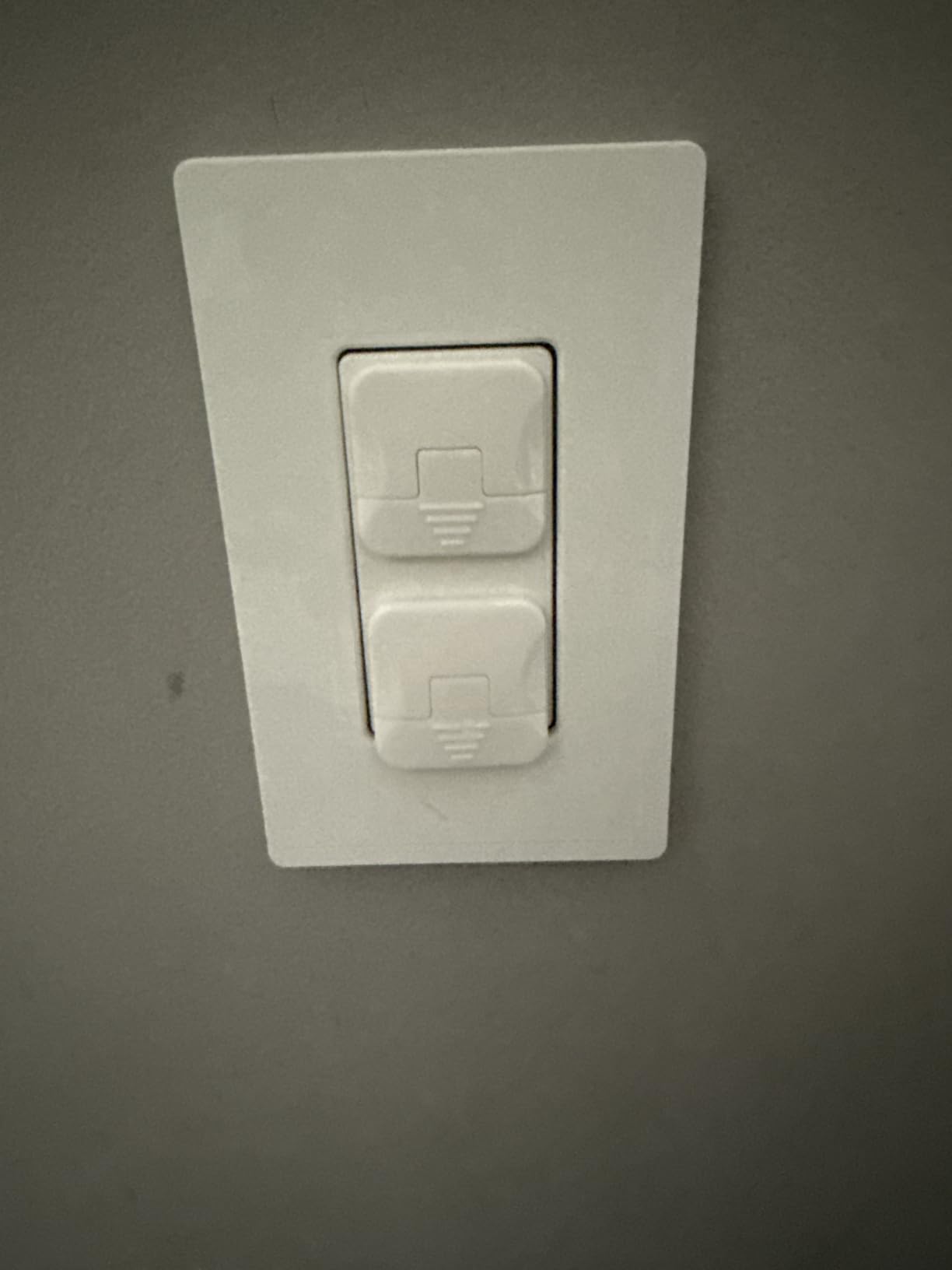
A plug insert leaves the plate visible and the slots blurred. A solid cover removes the target entirely, which several buyers describe as the reason it looks neater. The trade is a slightly larger footprint on the wall, since the square face extends past the receptacle openings.
Reviewers accept the stiffness as a feature. The handle resists a child’s pull and releases for an adult who knows the motion, though a plastic spatula or a flat tool is a common recommendation for the first removal. Practice takes care of the rest.
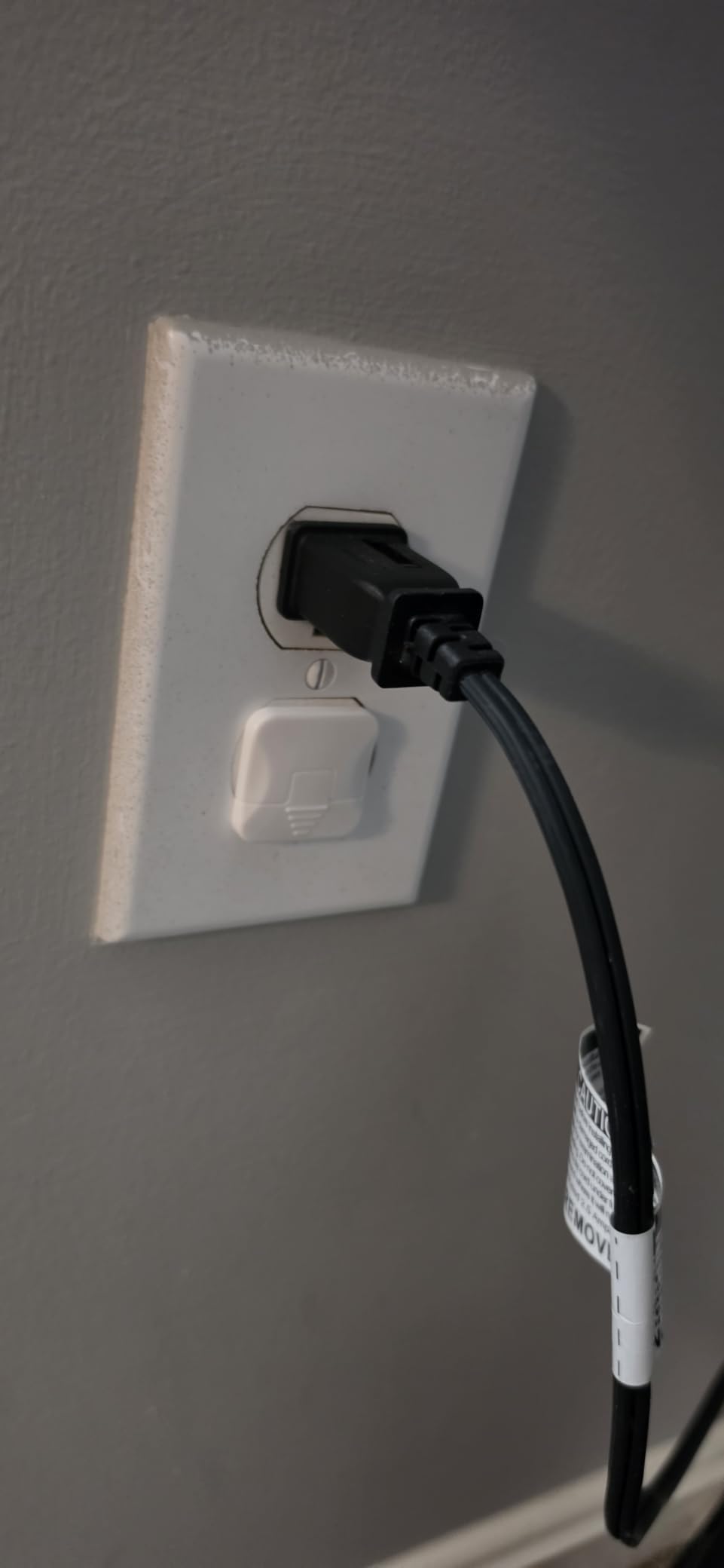
This cover is sized for US standard outlets and a small group of international reviewers report that it does not fit their country’s receptacles. If you are outside the US, verify your outlet standard before ordering the full pack.

32 clear plugs
Slightly flexible plastic
2.25 ounces
Removal notch built in
This is the pack I recommend for anyone whose complaint about plug covers is that they cannot get them out. A small notch in the flexible plastic gives an adult a fingernail catch, so removal does not require a tool or a sacrifice to your thumbnail.
That was the single most common frustration across the parent forums I read before choosing picks, and this is the clearest answer to it that does not add a second piece to lose.
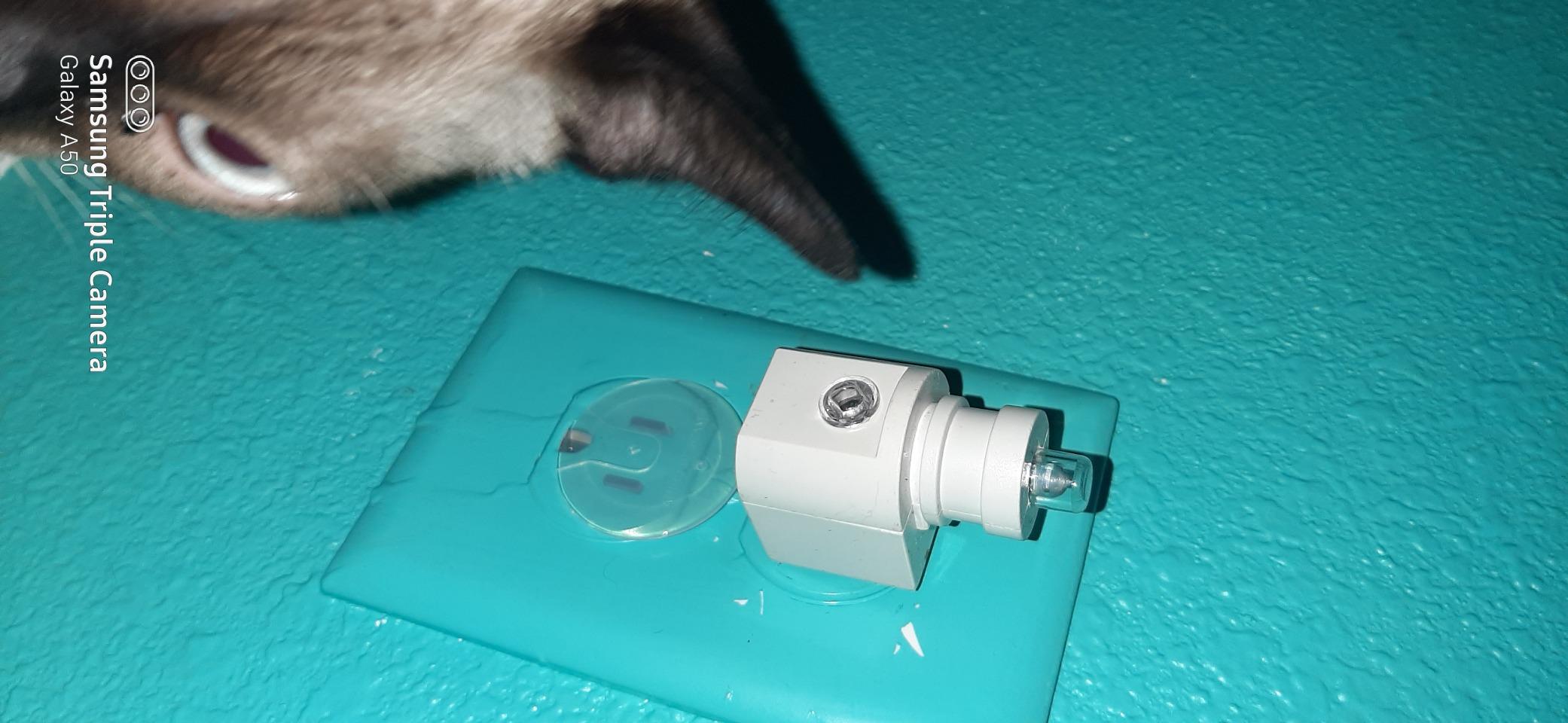
Safety here is a tradeoff, not a wall. The plastic is slightly flexible so the notch can be used deliberately, but the body is still tight enough in the socket that owners report toddlers cannot work it out on their own. Thirty-two covers weigh just 2.25 ounces, so the material is thin by design.
Several buyers use these to block cold drafts through exterior-wall outlets and to seal unused light-strand openings. If you have a drafty bedroom, that is a free bonus beyond the safety role.
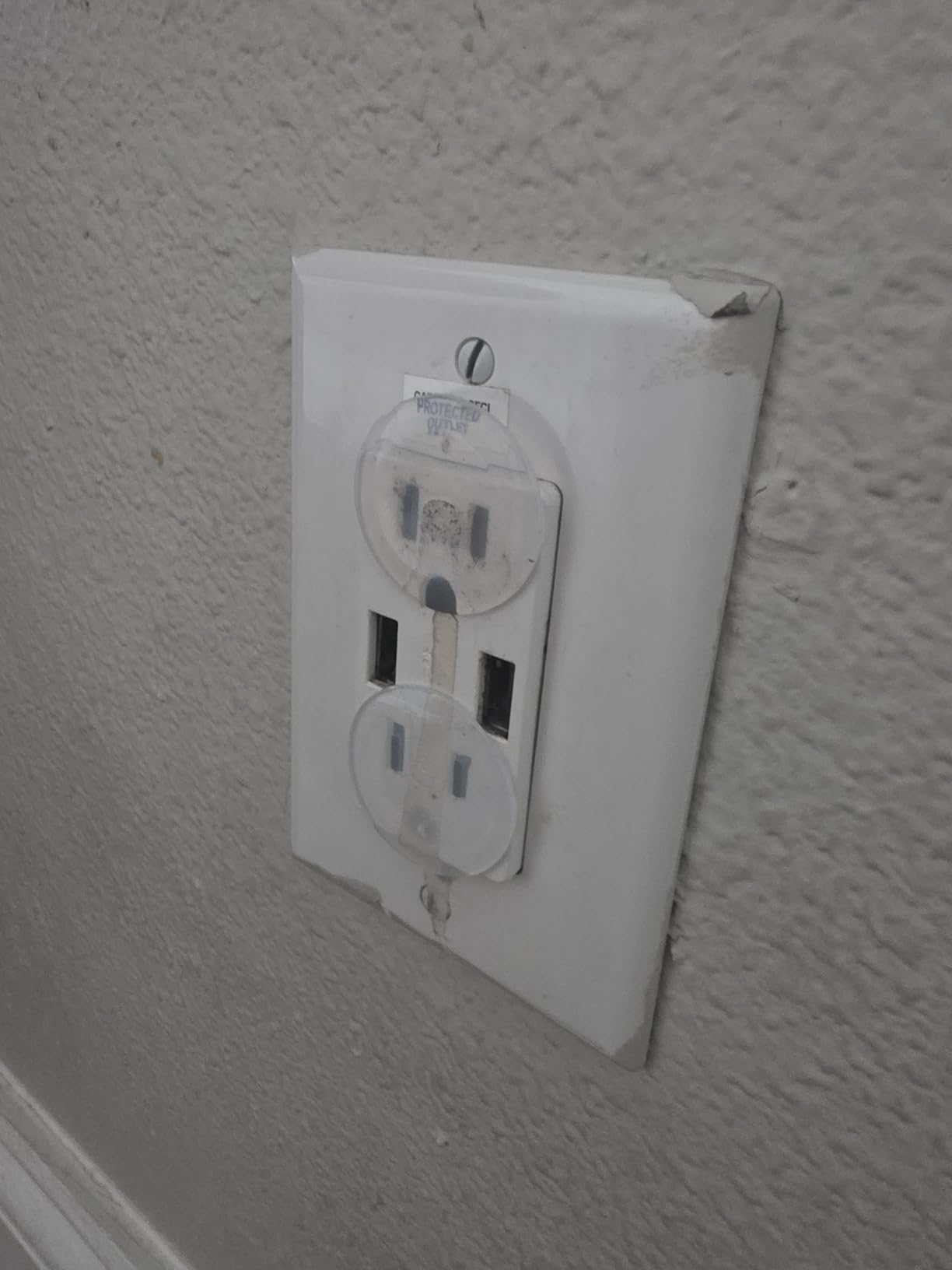
Bedrooms and home offices, where an outlet is needed occasionally but not constantly. You get a child-resistant cover and you can still get it out with one hand when the laptop needs charging.

45 white covers
ABS insulation resin
8.39 x 6.14 x 2.17 inches
Hidden ring-pull handle
Most plug covers stop working the moment you point them at a power strip, because the strip’s receptacle face is a different shape. This 45-pack is one of the few in the roundup that owners confirm works on standard three-prong outlets and power strips alike, which makes it the practical choice behind an entertainment center.
The hidden ring-pull is a loop recessed into the face. It is out of sight from the front and it gives an adult something to pull without offering a child a visible grip.
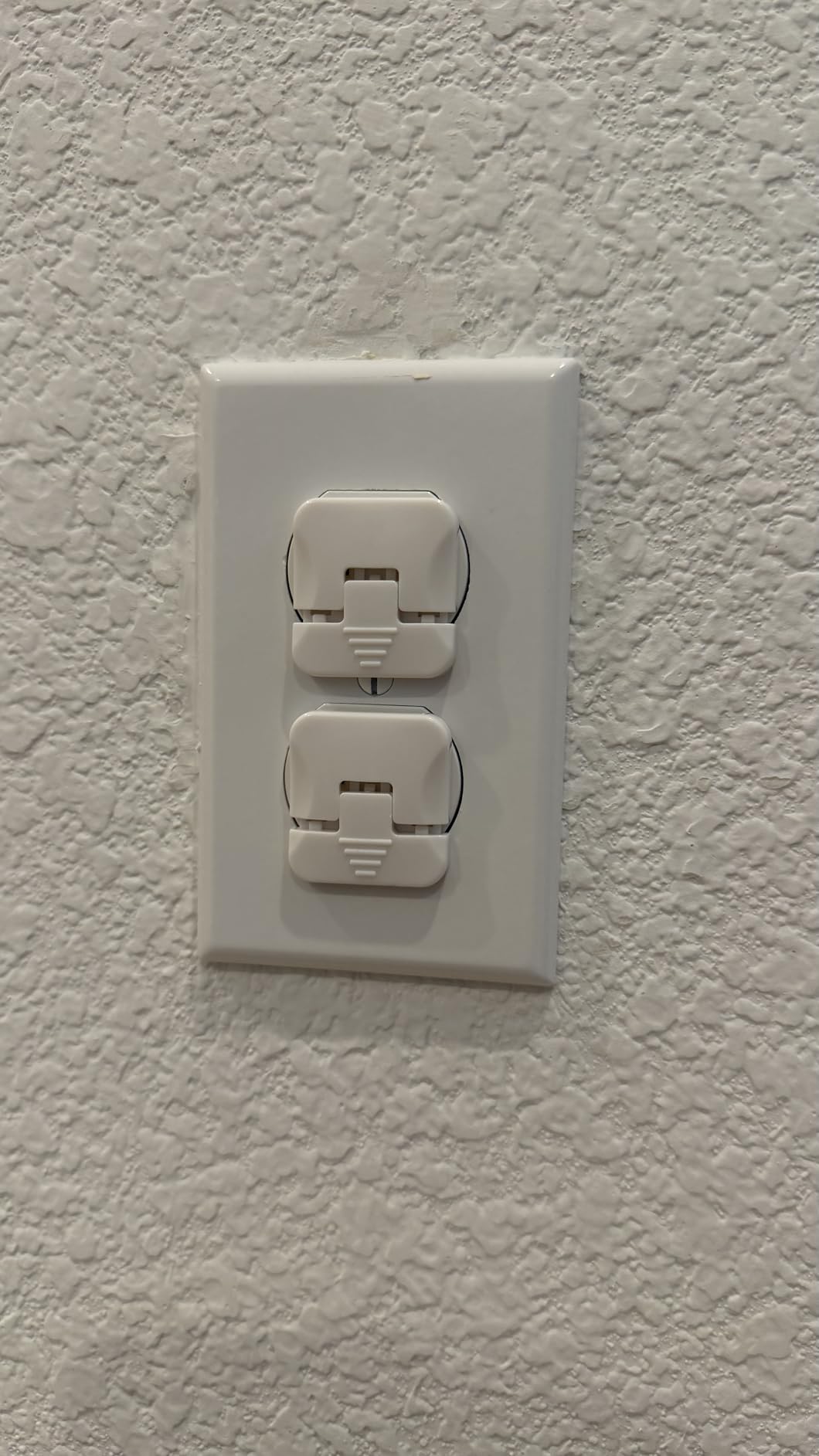
If your risk area is a TV console or a desk with a strip, this is the product in the group that addresses it directly. A strip full of open receptacles is a multi-socket hazard, and covering each one with a plug cover is tedious and easy to forget partway through.
The trade is bulk. The pack dimensions are 8.39 by 6.14 by 2.17 inches and the pack weighs 6.1 ounces, so this is a bigger box to store than a flat pack of clear plugs.
Owners praise the ABS resin for smooth rounded edges with no burrs, which matters for a product a child handles constantly. Several reviewers note it looks neater than a clear round plug and reads as part of the outlet design.
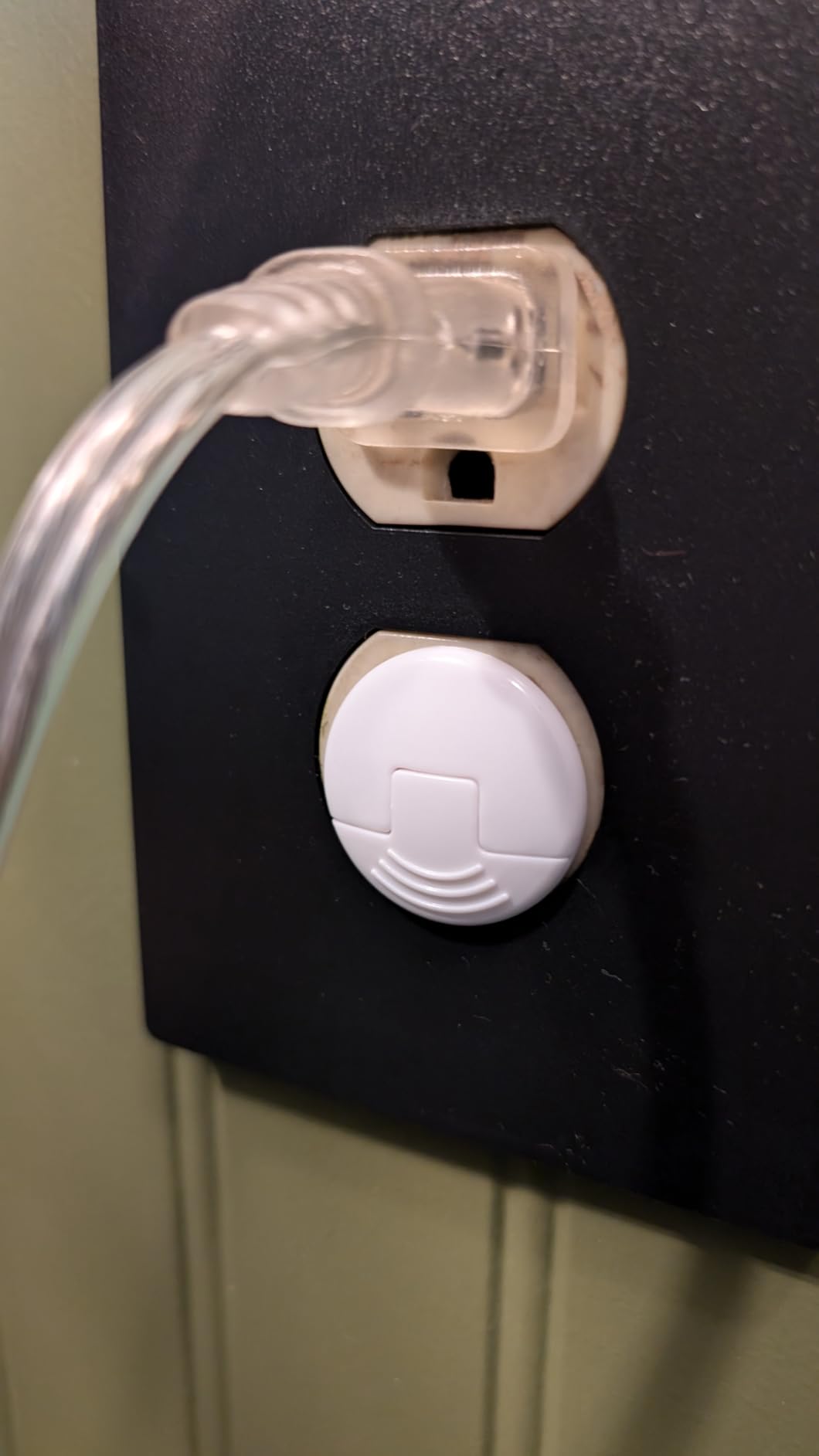
Parents who want one pack that handles outlets and strips will love it. Parents who need to pull covers out nightly will not, because reviewers describe the handle latch as genuinely stiff and several say a flat tool makes it easier.
ABS plastic box
Interior 5 3/8 by 3 3/16 by 2 3/4 inch
Both plate styles included
Screw-in mount
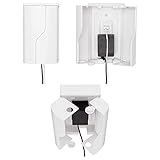
Every box has an interior size, and most of them are tight. This one measures 5 3/8 inches high by 3 3/16 inches wide by 2 3/4 inches deep, which is enough for oversized AC adapters, transformers, surge protectors, and a power strip. If you own laptop bricks, that depth is the whole ballgame.
The locking mechanism uses a button on the top and a button on the bottom. A child pressing one gets nothing, which is a mechanism I could operate one-handed as an adult without thinking about it.
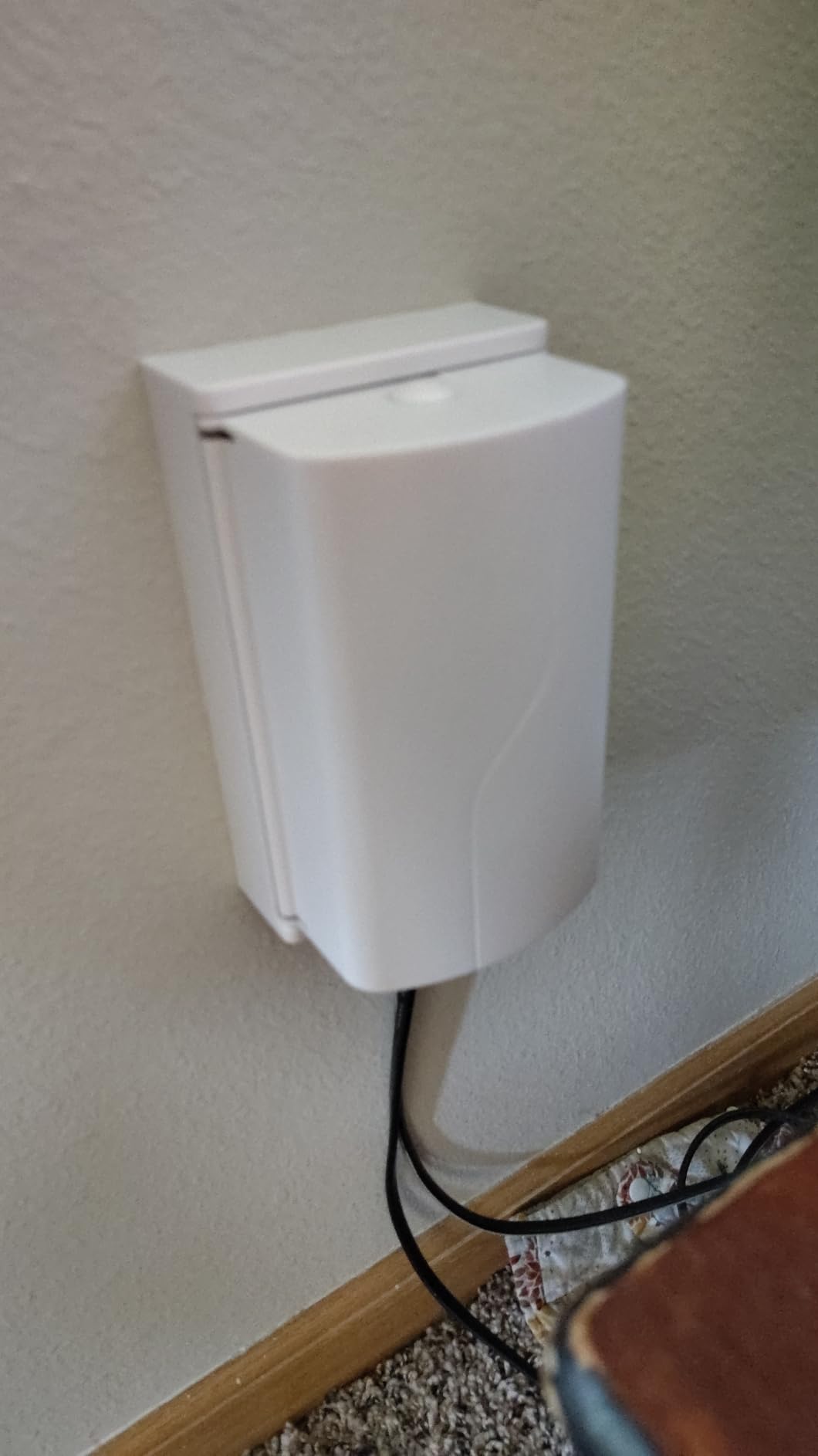
A single-button latch can be held down with one hand while the other pulls. Requiring two simultaneous presses removes that possibility entirely, and reviewers consistently describe the twin doors as stopping toddlers while staying adult-friendly.
Screws and faceplates for both standard single center-screw outlets and two-screw decorator plates are included, so you can install without a second trip to the hardware store. The installation is a screwdriver and a few minutes, and it does not damage the wall or the existing receptacle.
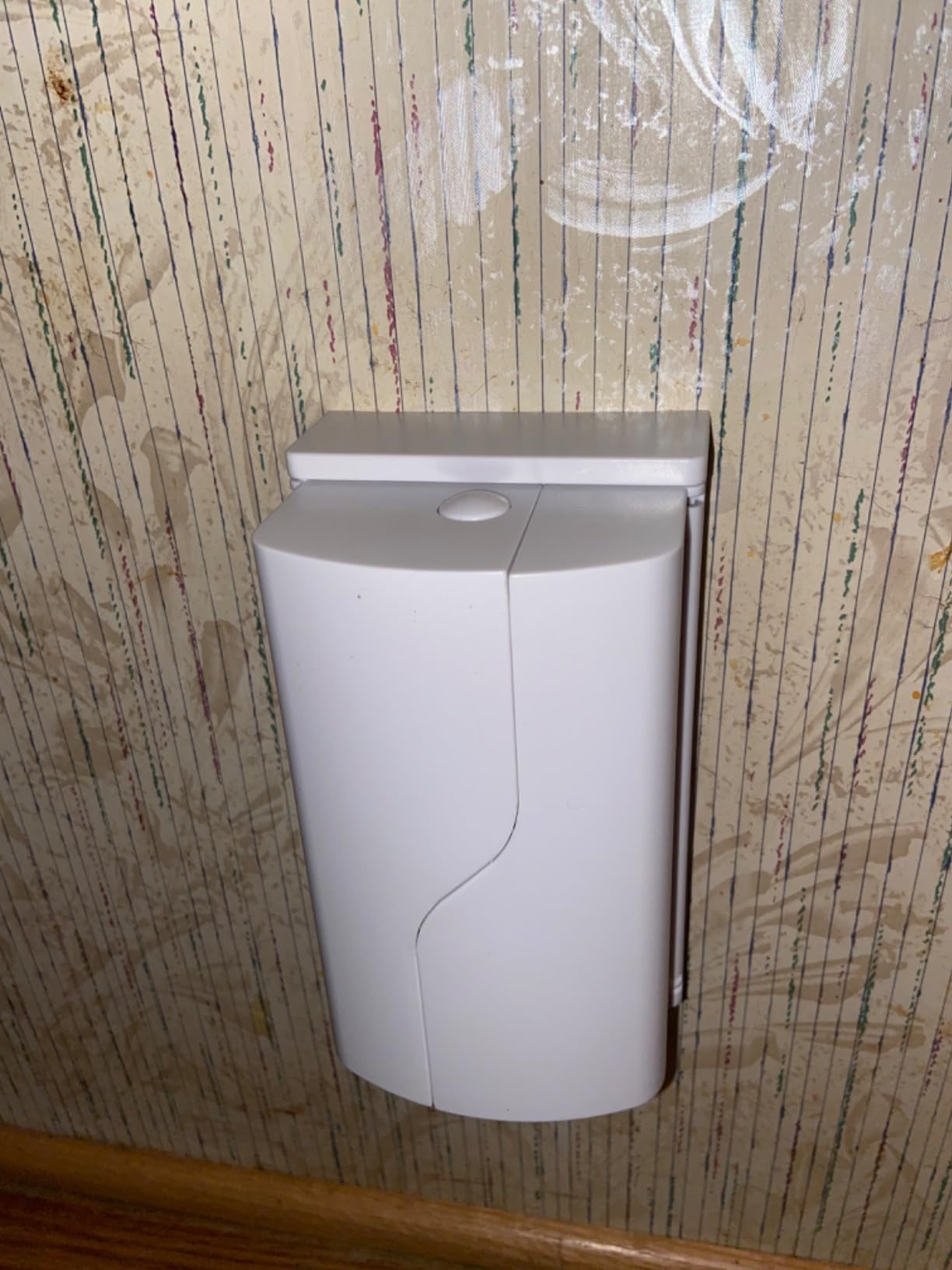
The box measures 6.89 by 4.57 by 3.66 inches and stands proud of the wall. That is a real concern if a child can grab it, since the projection gives them something to pull against, and it will not sit behind a sofa pushed flush to the wall. Place it on an outlet with clearance, and it is excellent.

White outlet box
Patented dual-lock
Interior 5.6 x 3.1 x 2.6 inch
10 ounces
Parents of smart toddlers single this box out, and the reason is specific: the lock needs a dial turned to an aligned position plus two button presses at the same time. That sequence is more than most three-year-olds can hold, and owners describe it as the first lock in their house a child did not defeat.
The interior measures 5.6 inches high by 3.1 inches wide by 2.6 inches deep, which is roomy for transformers and a power strip. The whole unit weighs 10 ounces, and reviewers note the thick plastic holds up when a child leans on it.
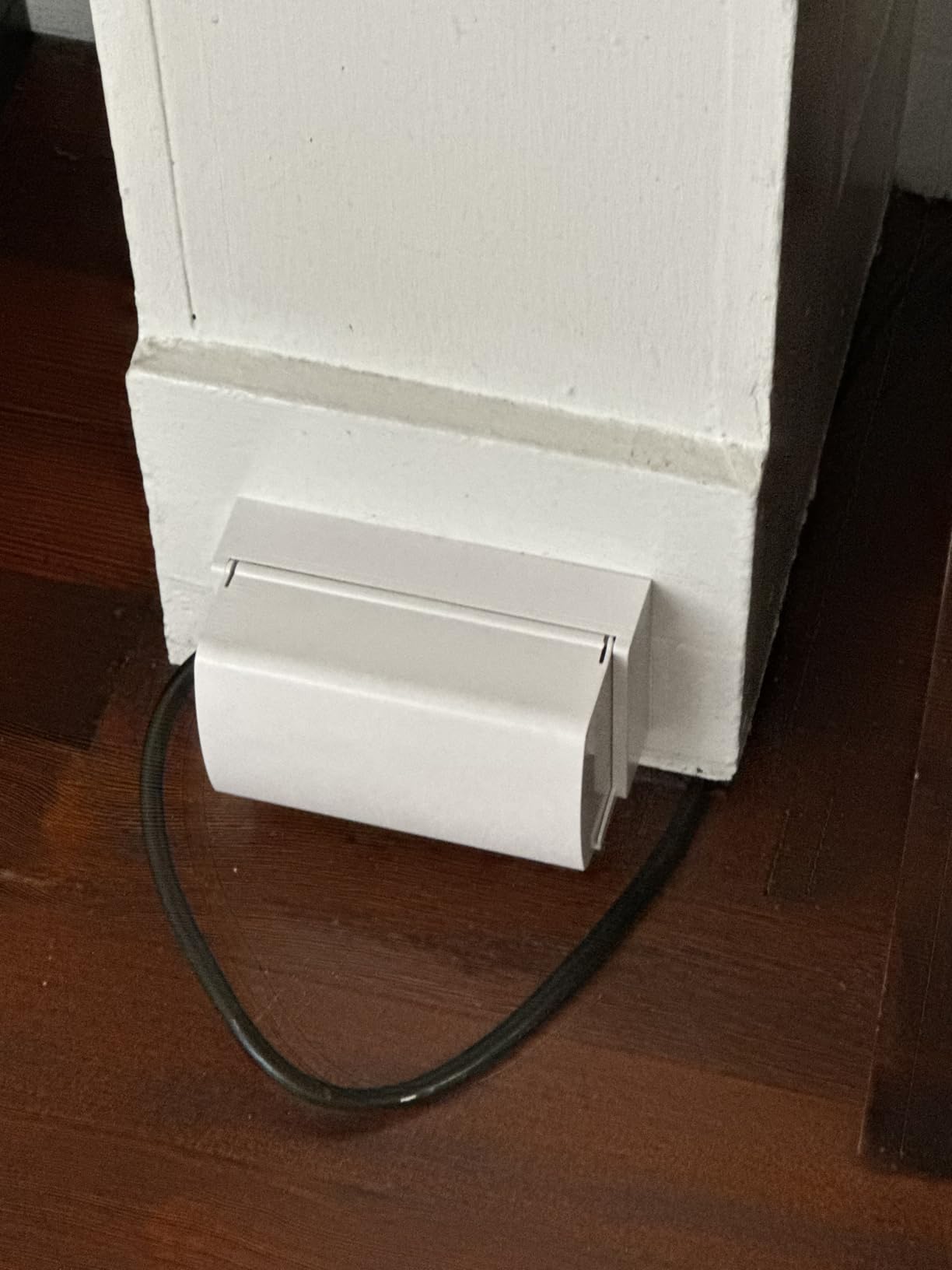
A two-button door works by a child simply not pressing both. A dial has to be aligned first, and alignment takes attention. On a determined child that difference shows up in the reviews, and it is the entire argument for this box over the number eight pick.
No box fits every brick. This one has a documented limitation: some large computer adapters will not seat inside, and the box is not compatible with non-US power points. Measure your widest adapter before you buy and save yourself the return.
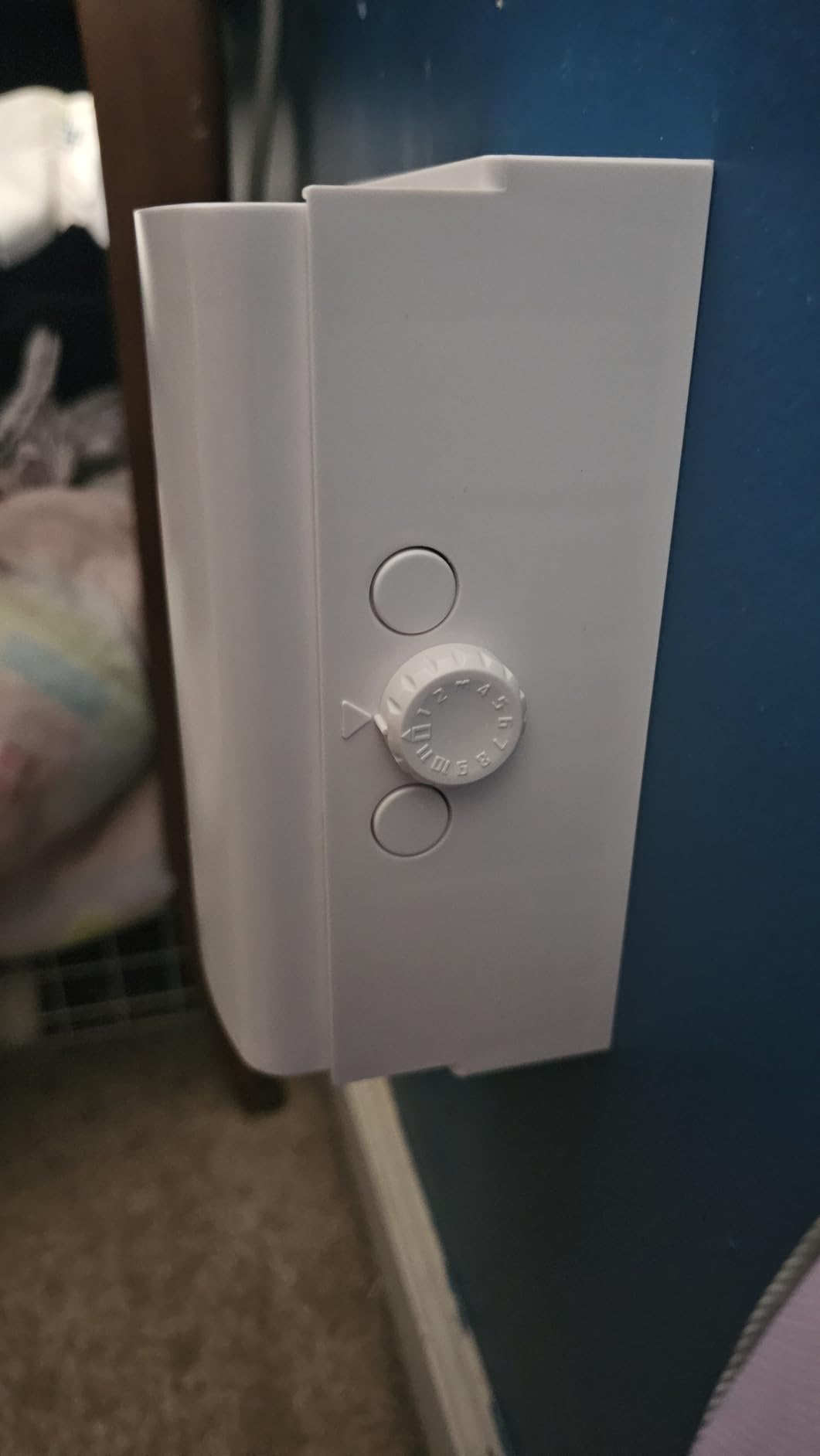
Three steps after you switch off the breaker and remove the existing plate, using the included screws and both a standard and a decorative faceplate. Budget ten minutes per outlet. Parents who installed them in an older rental described the whole job as a weekend.
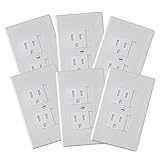
White self-closing covers
3 inch W by 4.75 inch H
Center screw outlets only
6 per pack
This is the category I would argue is underrated. Instead of a removable cap, the plate has spring-loaded shutters that close the moment you unplug something, so there is no insert to lose and no toddler left holding a plastic choking hazard. Buyers describe it as eliminating the entire remembering-to-reinsert problem.
It is also the only cover here that handles a side-angled plug, the kind a baby monitor or a floor lamp pushes in at an angle that a box cannot accommodate.
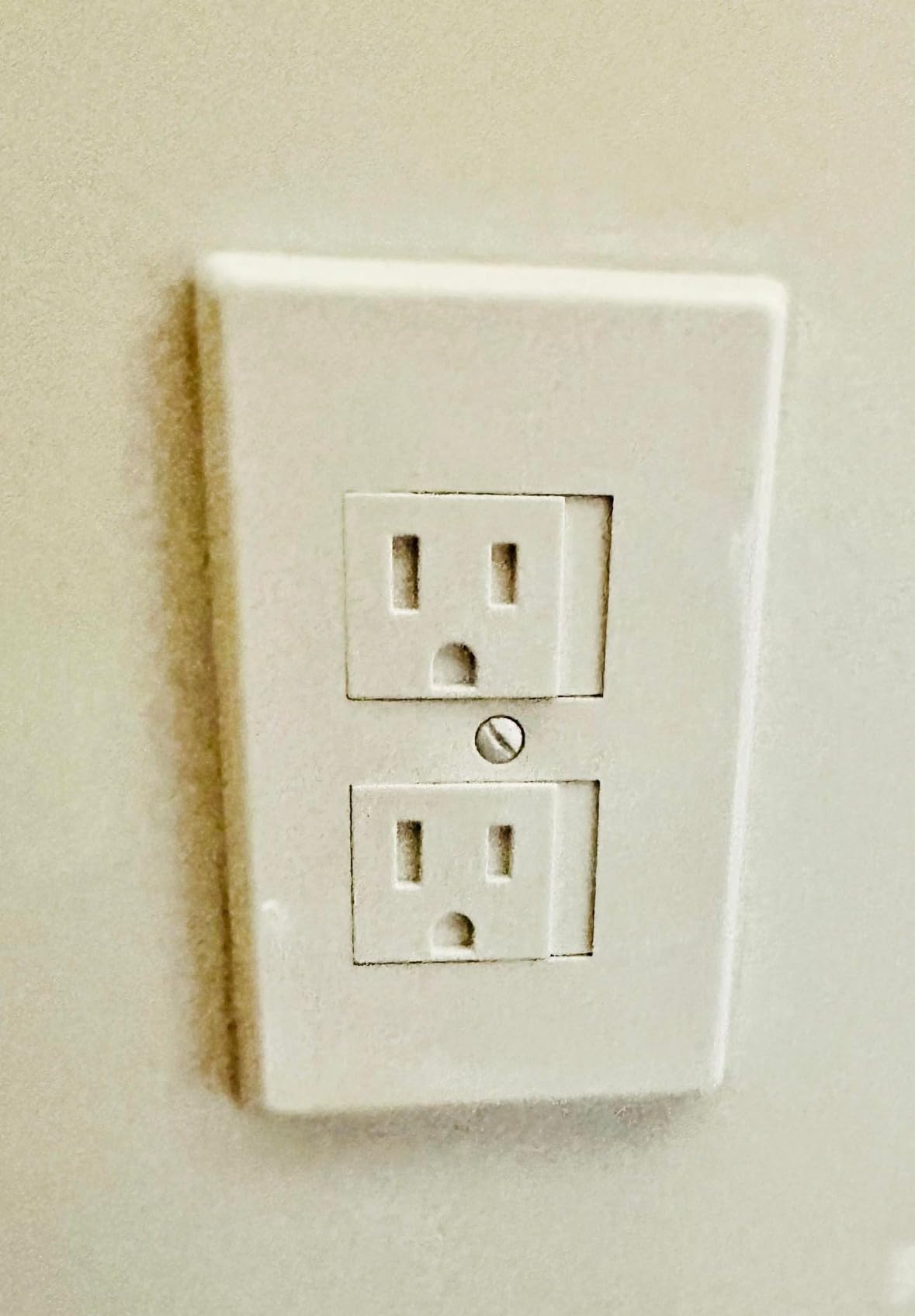
Owners like the stronger springs for long-term operation, and reviewers do flag the stiffness. The shutters can feel inconsistent about latching fully shut on the first few uses. That is the cost of a mechanism with no loose parts to fall off.
This fits standard single center-screw outlets only. It does not fit two-screw decorator plates, USB receptacles, or other specialty plates, which is the single most important check before ordering. If your house uses decorator plates everywhere, this pack is the wrong product and the number eleven pick is the right one.
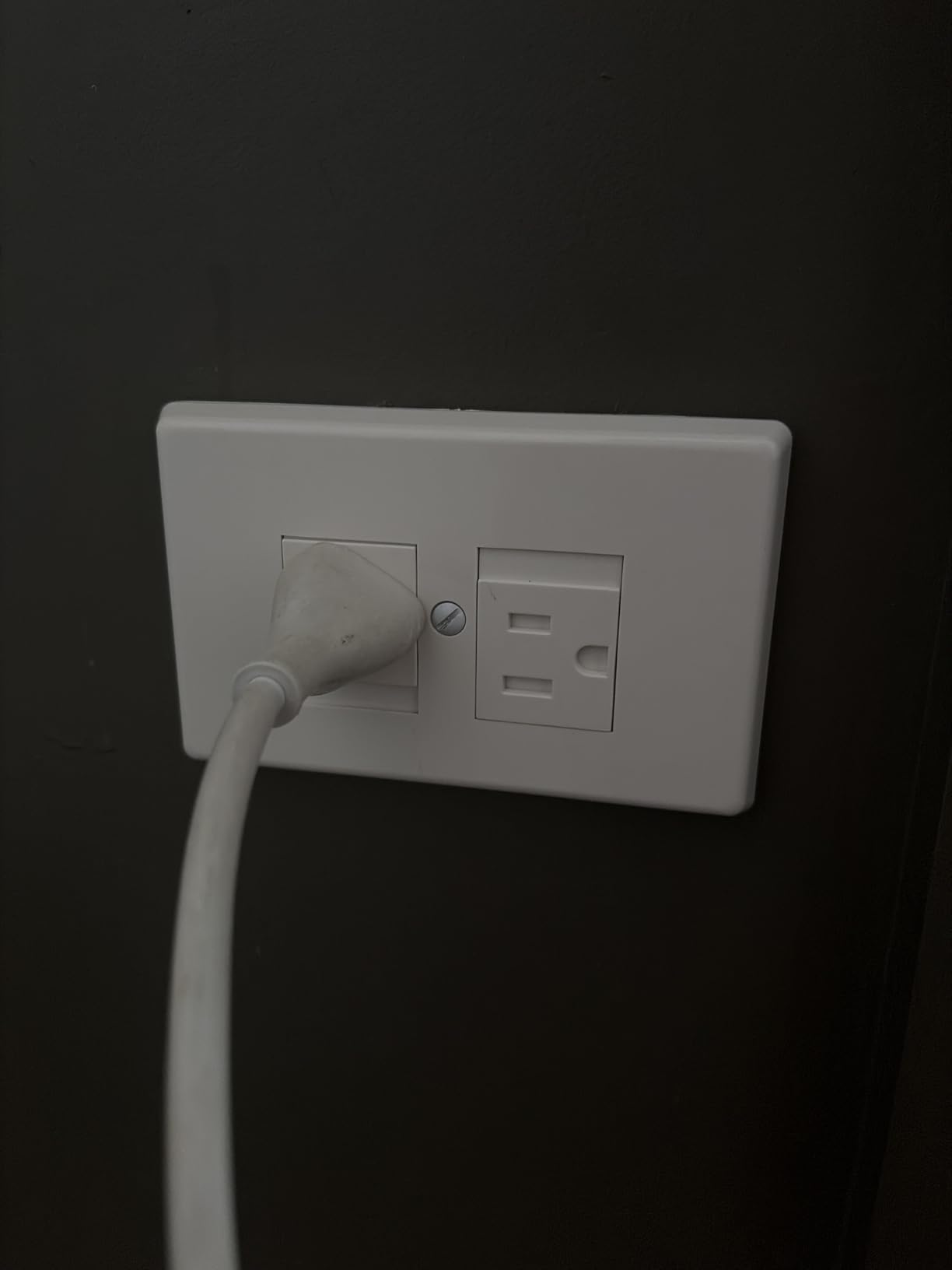
At 3 inches wide by 4.75 inches high, the plate is bigger than a standard cover and hides dents, scuffs, and mismatched paint around an older outlet. In a rental where you cannot repaint, that is a genuine advantage.

White cover box
3.8 inch W by 6.3 inch H
Screw-in mount
Decorator and standard plates included
This box answers the compatibility question the number ten pick creates. Plates for both decorator and standard outlets are included, so a house with mixed outlet styles can be covered in one pass instead of two different products.
Access is through concealed buttons, and the interior measures 3.8 inches wide by 6.3 inches high, which fits most household plugs including bulky AC adapters.
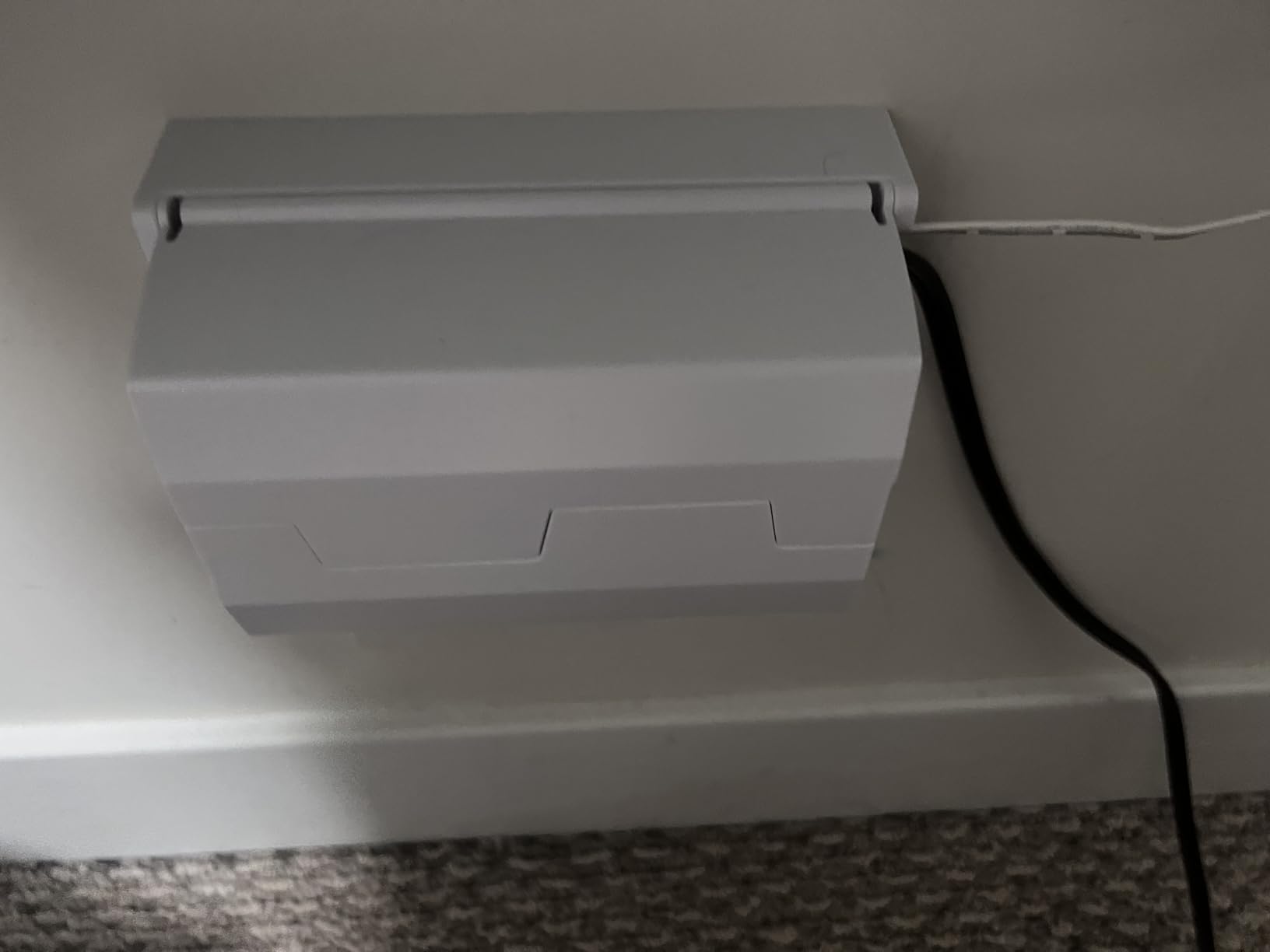
The cord can exit through the top or the bottom. That matters more than it sounds: a lamp plugged into the bottom outlet of a duplex has nowhere else to go, and a box without flexible routing either stretches the cord or forces you to give up the lower socket.
There is no dial and no second latch. Owners describe it as simple and practical, and the review pattern suggests it stays shut under pulling while remaining straightforward for an adult. Three steps and a screwdriver is the whole install.
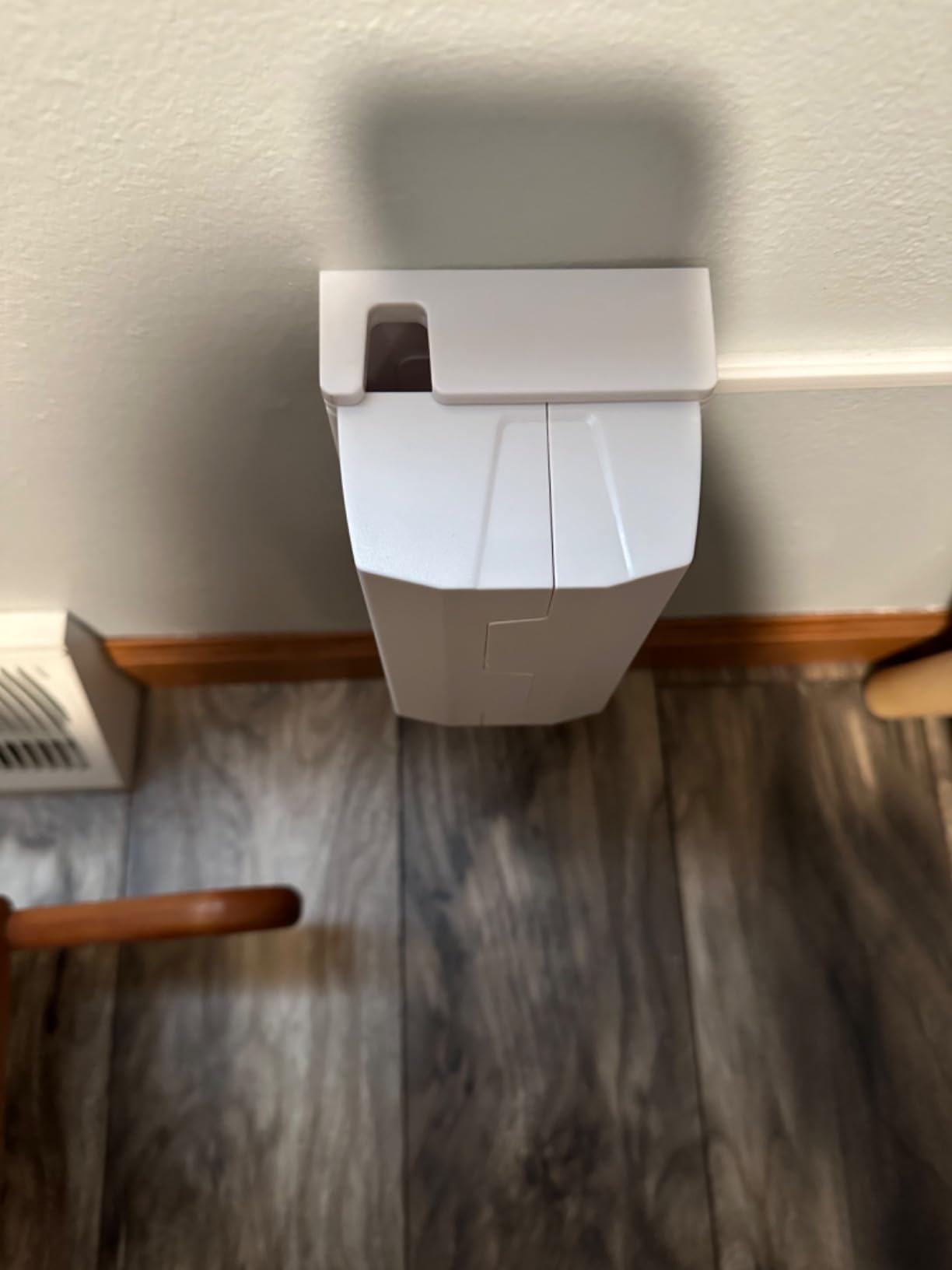
The limitation buyers name is space when both receptacles are heavily used. This is not a box for a desk with a laptop, a monitor, and a dock all on one outlet. It is at its best on a single plug plus a little slack.

24 clear covers
1.3 x 1.3 x 0.72 inches
2.89 ounces
Flame-resistant insulating material
The most interesting thing about this pack is the free removal tool in the box. Every other plug cover in this roundup asks you to improvise a fingernail or a flat plastic tool, and this one includes a purpose-made piece. For a cover you will need to open several times a week, that changes the experience.
At 1.3 by 1.3 by 0.72 inches these are among the smallest plugs here, and the clear plastic is firm without being brittle. The material is described as durable, insulating, and flame resistant.
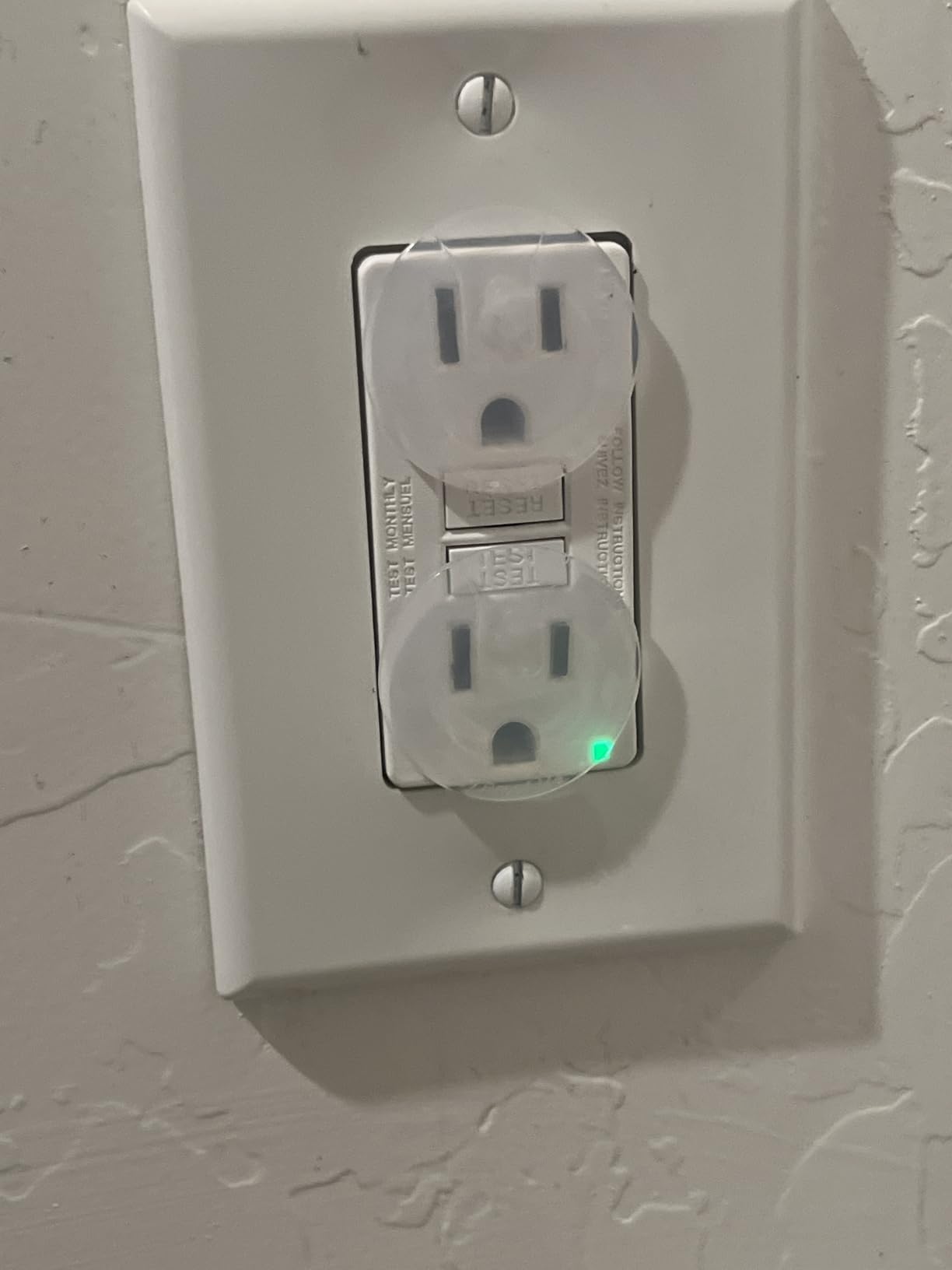
There is no latch, dial, or spring here. The hold is a firm interference fit, which is enough to stop a toddler pulling straight out but is not a defense against a child who has learned to work a mechanism. Know that before you choose it for a high-traffic spot.
Several owners use these to keep pet hair and dust out of unused outlets, which is a decent secondary argument for a pack you end up liking on an empty guest room wall.
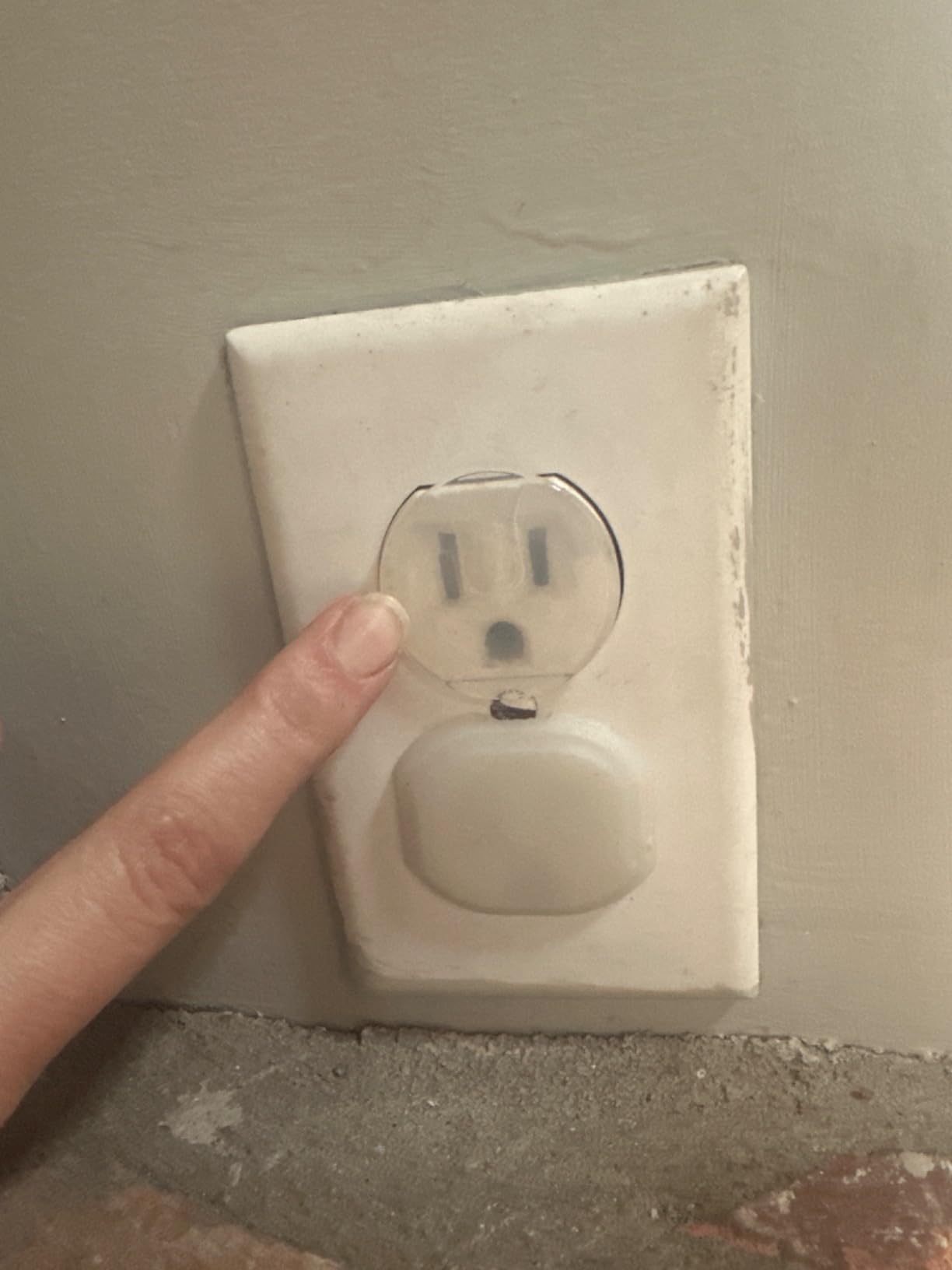
Twenty-four covers is fewer than most competitors in this roundup, and the review count behind it is the lowest here at 1190 ratings. If you have a small apartment or a first room, that is plenty. For a full two-bedroom plus office, plan on two packs or pair it with a box for the outlets in use.
This is the question new parents ask first and almost no roundup answers, so here is a workable method. Count the receptacles, not the rooms. A duplex outlet is two sockets, and you need one cover per socket you are not using.
A two-bedroom house typically has 20 to 30 usable receptacles outside the kitchen and bathrooms, which works out to 15 to 25 unused sockets. Add the garage, the basement, the laundry room, and a closeted wall outlet and you can pass 30 easily. That is why the 36-count and 50-count packs exist.
Kitchens and bathrooms need a different calculation because those are the outlets you are most likely to use. A toaster, a coffee maker, a hairdryer, and an electric toothbrush all need access, so plan on boxes or self-closing plates there rather than inserts. For a house with a busy kitchen, three to five in-use solutions plus a pack of plugs is a realistic total.
A buy-it-once approach: one 36 or 50-count pack of plugs for every empty socket, plus one or two boxes for the outlets behind furniture or appliances, plus a self-closing plate for anything you use weekly with an awkward plug. That combination covers nearly every floor plan without a second trip.
Most of this job is faster than the trip to buy the covers. Here is the process I used, in order.
1. Walk the house with a notepad and list every receptacle by room, marking whether it is in use. This is the step that tells you how many of each type you need.
2. For plug inserts, switch off the breaker for the room, then press each cover firmly into the socket with your thumb until it sits flush. Test it by pulling with two fingers the way a toddler would. If it comes out, it is not seated.
3. For outlet boxes, kill the breaker, remove the existing faceplate, and mount the box using the included screws and the correct plate style. The Safety Innovations box and the Wappa Baby dual-lock box both take about ten minutes per outlet.
4. For self-closing plate covers, kill the breaker, remove your existing plate, and install over the same single center screw using the longer screws included in the pack.
5. Re-energize the circuit and test every outlet with the plug you intend to use. A box that is too tight for your charger is much easier to swap now than in six months.
Two cautions. Adhesive-mounted covers are not something I would trust for a child safety device on textured walls or in humid rooms; forum threads describe peeling failures, and screw or friction mounts have no adhesive to fail. And in bathrooms and kitchens, keep GFCI protection intact and accessible, since a cover that hides a ground fault reset button is a problem you will forget about.
Six criteria separated the products I would recommend again from the ones I would not.
Adult removal comes first. Ask how you are getting the cover out before you ask how a child gets it out. A notch, a hidden handle, or an included tool is worth real money to you, and the parents I read on r/beyondthebump who regret their covers almost always regret the removal, never the safety.
Fit, not just coverage. A cover that blocks the slots from view beats one that leaves a shadow of a hole. Press it in and look at it from across the room, the way a child on the floor would.
Plate compatibility. Count your center-screw outlets versus two-screw decorator outlets before you buy any plate-mounted cover. This is the most common wasted purchase in the category.
Mechanism complexity versus child skill. A friction plug stops a one-year-old. A two-button door stops a two-year-old. A dial plus two buttons is aimed at a three-year-old who has already beaten everything else. Match the mechanism to the age in your house, not to the price.
Material and edge finish. ABS resin with smooth rounded edges holds up to a child handling it daily. Avoid thin plastic that feels brittle, because a cover that cracks in a child’s mouth is worse than one that never comes out.
Reversibility. If you rent, only screw-in and friction options leave the wall as they found it. Adhesive leaves residue, and painting over it is a weekend you did not plan for.
One broader point on house safety: outlet covers handle the receptacle, not the cord. Securing furniture so it cannot tip, keeping long cords out of reach, and keeping water away from outlets are separate jobs that no cover on this list will do for you. For a garage or an outdoor-adjacent wall, the same logic applies as when choosing generator covers and enclosures for equipment that also needs to be protected from where it sits.
Once the covers are in, the work is a five-minute walkthrough. I do ours on the first Sunday of every month and it has caught things twice.
1. Look for any cover that is proud, cracked, or partially out. A cover working loose is a cover that failed.
2. Pull test each one with two fingers, gently. Anything that releases is finished.
3. Check every box door for a latch that no longer latches, and every box for a wall that has begun to gap at the edges.
4. Look behind furniture for cords a child has newly reached, and for power strips that have been plugged into an outlet you thought was covered.
5. Confirm nothing has migrated to a different room. Kids get taller and covers end up in drawers, which means uncovered outlets.
When a toddler does defeat a cover, the recovery path matters. Take the loose insert out of reach immediately, because a small plastic cap is a genuine choking hazard once it is in a toddler’s hand. Then move up one mechanism tier: a plug becomes a box or a self-closing plate on that outlet. Escalating the hardware on the specific outlet where your child succeeded is far more effective than replacing the same design everywhere.
The best socket covers depend on the outlet. Use plug inserts for empty sockets, an outlet box or cord cover for outlets you actively use, a self-closing plate cover when you want a permanent fix with no loose caps, and a power strip cover behind a TV console. If your home has tamper-resistant receptacles installed, you may not need aftermarket covers at all.
Start by listing every receptacle in the house and marking which ones are in use. Put a plug insert in every empty socket, then add an outlet box or self-closing plate cover to any outlet a child can reach and you still need. Switch off the breaker before removing a faceplate, test each outlet after installing, and check the whole setup monthly.
Yes, when used correctly and kept intact. A fitted plug insert or locked box is a sound mechanical barrier between a child and a live receptacle. The two cautions are that a removed plug insert becomes a choking hazard, and that adhesive-mounted covers can peel off textured walls or in humid rooms. Replace anything loose or cracked immediately.
The safest cover is a tamper-resistant receptacle, which has spring-loaded shutters that open only when a plug pushes both prongs in together and is required by NEC 406.12 in new construction. Among aftermarket covers, match the mechanism to the child: a snug plug for a one-year-old, a two-hand box for a two-year-old, and a dial-plus-button lock for an older toddler.
Usually not for most rooms. Tamper-resistant receptacles are built into the outlet and cannot be pried loose, so they solve the problem permanently with nothing to lose or remove. Add covers only where you have specialty plates, uncovered outlets, power strips behind furniture, or an older home where the receptacles predate the requirement.
If you want one recommendation for empty outlets, take the Power Gear 30-pack, which is the best outlet covers for babyproofing buying we tested for fit, invisibility, and independent certification. If your main problem is adult removal, the Jool Baby clear 32-pack with its removal notch will save you daily frustration. If the outlet is in use, the Safety Innovations twin-door box handles oversized plugs better than anything else here.
If you have a toddler who has already defeated loose plugs, the Wappa Baby dual-lock box is the one that survived. If you want a permanent answer with no loose parts at all, the self-closing plate cover does that, and you just need to check your outlet style first. Behind a TV console or a desk, the HEELALBABY ring-pull pack is the one that also covers power strips.
And before you buy anything, look up at the wall plate. Homes built or rewired after 2008 have tamper-resistant receptacles built in, which is the safest outlet cover available, because there is nothing to remove. For everyone else, pick the mechanism that matches your child’s age, run the monthly check, and keep the covers out of reach once they come off. That combination is what makes the best outlet covers for babyproofing actually work over a year of daily use.