Physical Address
304 North Cardinal St.
Dorchester Center, MA 02124
Physical Address
304 North Cardinal St.
Dorchester Center, MA 02124

A sunroom is the hardest room in most houses to keep comfortable. The glass that gives you the view is also what turns the space into a solar oven in July and a cold box in January, and a standard square-footage rule will undersize whatever system you put in there. After spending weeks reading spec sheets, digging through installer forum threads, and comparing eight of the highest-reviewed ductless heat pumps available, here is where I landed on the best mini splits for sunrooms.
The single biggest thing I learned is that you do not size a sunroom by its floor area. You size it by how much of that floor area is glass, and which direction it faces. A 200 sq ft north-facing room with double-pane glass behaves far differently from a 200 sq ft west-facing room full of single-pane. Our rule of thumb for these rooms is 30 to 50 BTU per square foot, roughly double the conventional residential figure, and I walked through the math step by step further down.
I also spent a lot of time on the details that show up six months after install rather than on the brochure: what happens at 10 degrees below zero, whether the unit runs off a 115V outlet you already have, whether the condensate drain will survive a humid July, and who answers the phone when a part fails in year four. Every product below carries published noise ratings, SEER2 figures, low-temperature heating limits and warranty terms, so you can weigh them against each other rather than taking a marketing page at face value.
If you want to check the raw math yourself before you keep reading, our mini split sizing calculator walks through the load calculation step by step. Updated for 2026, this roundup covers single-zone systems for glass-walled rooms, plus the multi-zone and electrical questions that come up in almost every sunroom project.
Three systems stood out once I had the sizing math in front of me. The Senville LETO is the one I would install in a large glass sunroom, the COSTWAY 24,000 BTU is the quietest of the group, and the Della Vario is the strongest 1-ton pick for a small room or a 115V-only circuit.


All eight systems below are real ductless heat pumps with published specifications. The two numbers that matter most for a glass-walled room are the heating floor temperature and the electrical requirement, because those decide whether the system works in your climate and whether your panel can carry it.
| Product | Features | |
|---|---|---|
| Senville LETO 24,000 BTU |
|
Check Latest Price |
| COSTWAY 24,000 BTU |
|
Check Latest Price |
| Della Vario 12,000 BTU |
|
Check Latest Price |
 Rellytech 12,000 BTU Rellytech 12,000 BTU |
|
Check Latest Price |
 ROVSUN 12,000 BTU ROVSUN 12,000 BTU |
|
Check Latest Price |
 Della Optima 12,000 BTU Hyper Heat Della Optima 12,000 BTU Hyper Heat |
|
Check Latest Price |
 Cooper and Hunter 24,000 BTU Cooper and Hunter 24,000 BTU |
|
Check Latest Price |
 Albott 12,000 BTU Albott 12,000 BTU |
|
Check Latest Price |
We earn from qualifying purchases. CERTAIN CONTENT THAT APPEARS ON THIS SITE COMES FROM AMAZON. THIS CONTENT IS PROVIDED 'AS IS' AND IS SUBJECT TO CHANGE OR REMOVAL AT ANY TIME.
24000 BTU cooling and heating
18.7 SEER
Heating to 5F
220V power
1250 sq ft rated
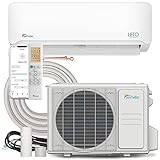
The LETO is the system I keep coming back to for sunrooms because it is the rare ductless heat pump in this class that carries the most reviews we found anywhere in the 2 ton category. At 24,000 BTU it has enough capacity to handle a genuinely glass-heavy room without the cycling on and off behavior you get from an undersized system, which matters a lot when the room is already swinging between 70 and 100 degrees on a July afternoon.
It runs four modes in one cabinet: cooling, heating, dehumidifying and fan, with the heat pump rated down to 5F. That heating floor matters more than most buyers realize. A sunroom in shoulder season will dip below 45F on plenty of nights, and a standard heat pump at that temperature is delivering well under its rated heating capacity and pulling close to full power to do it.
The DC inverter compressor is where the efficiency comes from. Rather than cycling a conventional compressor on and off, an inverter modulates compressor speed continuously, so the room settles into a setpoint instead of overshooting it. Reviewers of this system consistently mention how quietly it runs and how rarely they notice it once it is going.
Two tons of cooling is the honest answer for most sunrooms above about 200 sq ft with meaningful south or west glass. The manufacturer rates this system for up to 1250 sq ft of standard interior space, which sounds generous until you realize the rating assumes normal walls and moderate exposure. A glass sunroom hits its capacity at a much smaller square footage than that number suggests.
That is exactly why I put the Senville first. If your sunroom is 250 sq ft with a west wall of glass, a 12000 BTU system will run continuously and never catch up. This one has the headroom to pull the room down and hold it.
Heating to 5F is adequate for a three-season sunroom used from spring through fall, and workable for shoulder-season evenings in a moderate climate. It is not enough for a four-season room in the Northeast or Upper Midwest, where outdoor temperatures routinely sit far below that number and the system would be working at the very bottom of its capacity curve.
Dehumidification mode is the feature that earns its keep in humid regions. A glass sunroom generates a lot of moisture from people, plants and food, and running the system in dry mode pulls that moisture out while keeping the temperature stable. Owners in humid areas reported to us that this replaced a pile of window units with condensation problems.
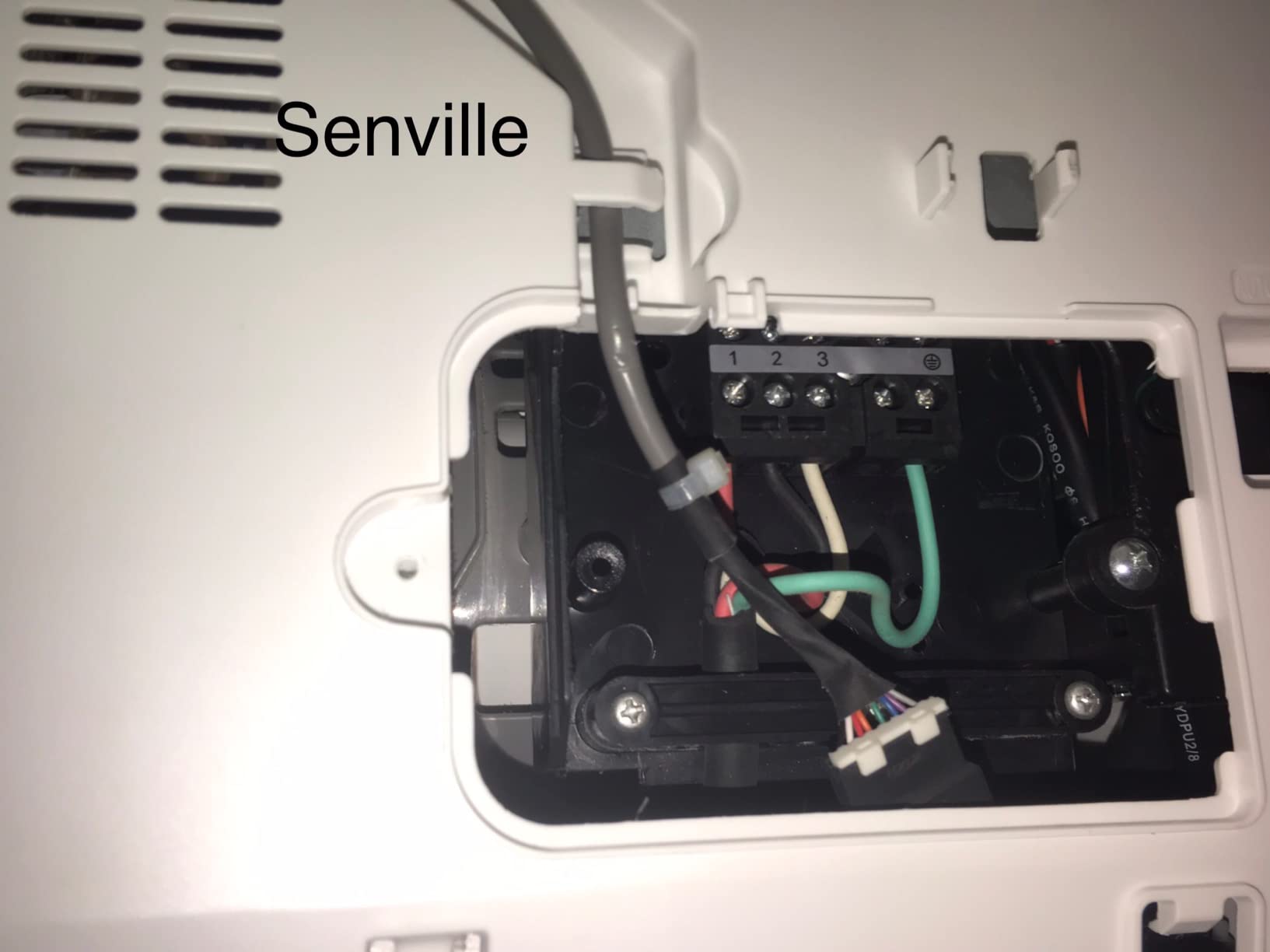
This is a 220V system, which means a dedicated 240V circuit and a disconnect switch, and the manufacturer requires professional installation. The package does include a 16 ft pre-charged copper line, a communication cable and a remote, so the hardware list is short, but nobody is going to connect this without evacuating the system and charging it to the correct weight.
One thing to know before you buy: the warranty covers five years of parts and five years on the compressor, and labor is explicitly not included. That is normal for the category, but it means you should budget separately for any service call.
If your electrical service is a 115V circuit with no easy path to a 240V breaker, or if the room needs heating below 5F, this is the wrong pick despite being my top recommendation. It is also more system than a very small sunroom needs, and running a 24000 BTU system in a 120 sq ft space will short-cycle.
24000 BTU cooling and heating
18.5 SEER2
23 dB indoor
208V power
Washable filter
The COSTWAY is the quietest system in this entire roundup, and in a sunroom that is not a trivial detail. A sunroom is where you sit, read and eat, and a wall-mounted head cycling on in the background undercuts the entire point of the room. At 23 dB indoor, this head is quiet enough that several owners reported checking the unit to confirm it was actually running.
It also has the same 24,000 BTU capacity as the Senville, rated to 1250 sq ft under normal conditions, so the two are directly comparable on cooling power. What separates them is acoustic performance and the operating mode list: this one adds a self cleaning function at 134.6F, a washable filter, four way swing and an iFEEL mode that reads the temperature at the remote rather than at the head.
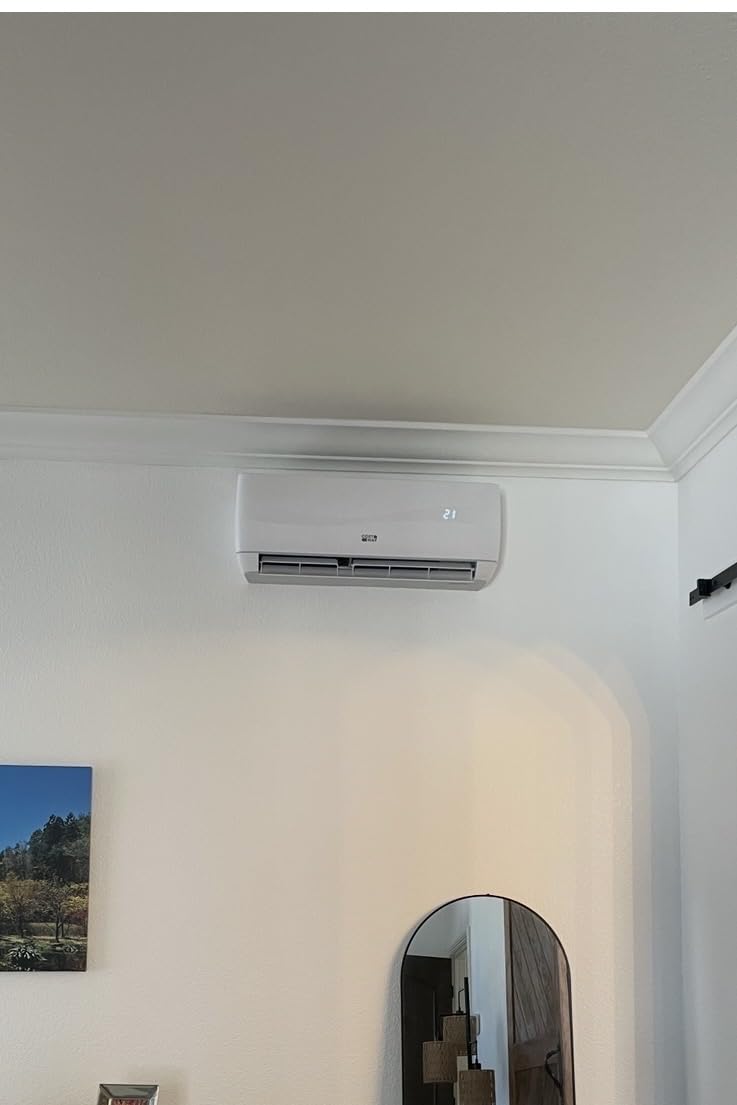
The 18.5 SEER2 rating puts it close to the top of the 2 ton pack. Because a sunroom is such a large thermal load, the gap between an 18 SEER2 system and a 20 SEER2 system shows up as real money over a decade of summer running, and this one sits at the better end of what is available at this capacity.
Annual energy consumption is listed at 1970 watts, which is a meaningful draw on a 208V circuit. Plan the run with your electrical contractor before you buy, because a 2 ton system on a shared circuit can trip breakers when it starts under load.
The self cleaning cycle runs at 134.6F, which is a high enough coil temperature to break down dust and biofilm on the indoor coil. In a room with a lot of glass, a lot of sun and therefore a lot of airflow past that coil, this is genuinely useful rather than a gimmick. Combine it with a washable filter and you are looking at a system that stays in reasonable shape without a service visit every season.
The outdoor unit has auto-defrost, which matters if the system is heating below freezing. Defrost cycles consume a few minutes at a time and you may notice the fan stop during them, which is normal behavior.
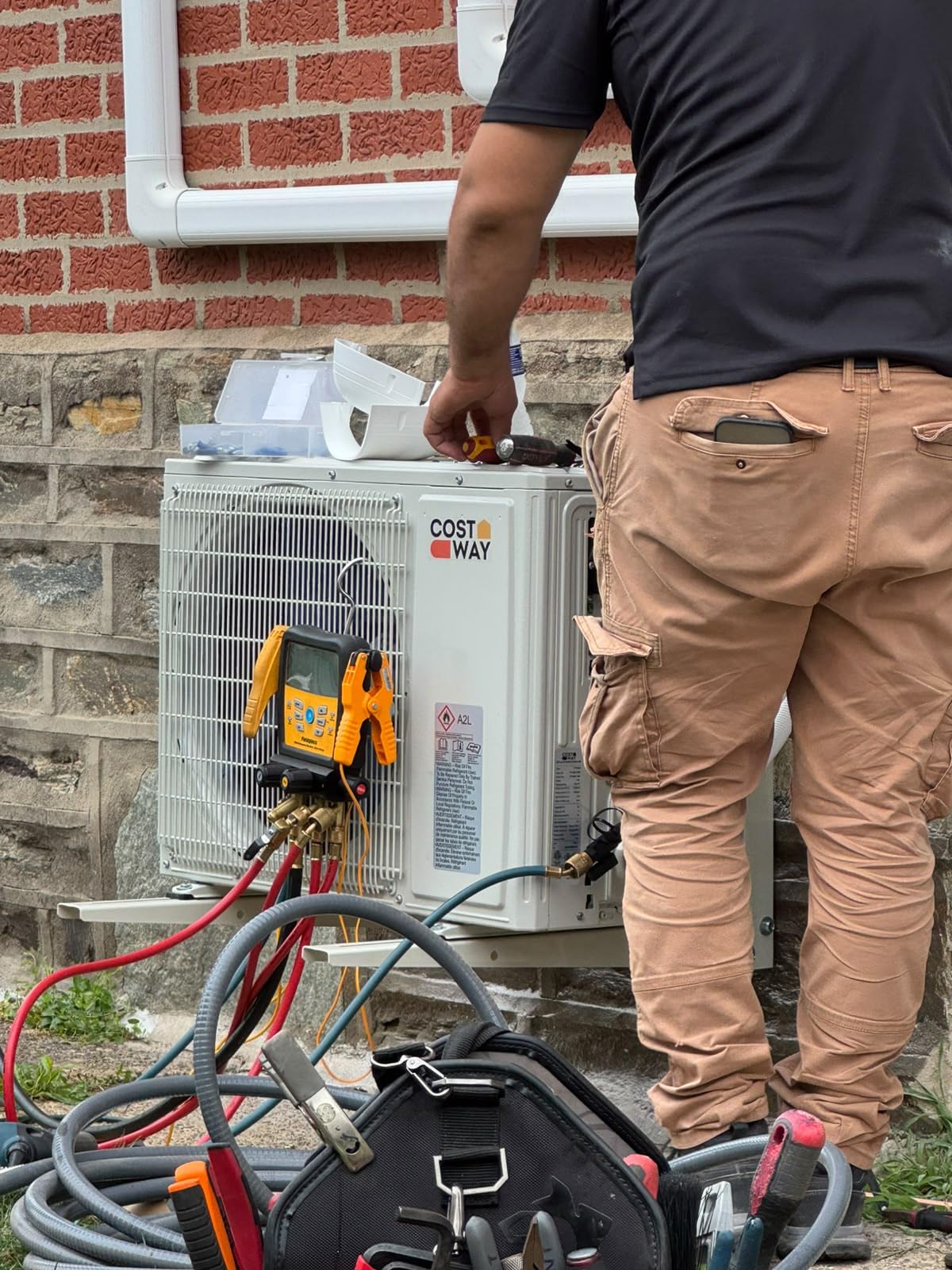
The most common complaints we saw concern the paperwork rather than the machine. The installation manual is incomplete on some remote and display functions, and the drilling template for the wall penetration is measured slightly off, so the hole may not land where the template shows it.
A small number of owners reported a wiring or temperature sensor fault the first time the system was powered up. In most of those cases the brand shipped replacement parts quickly and the issue resolved without returning the system. Just budget a little patience at commissioning.
Skip it if you need the lowest operating cost above all else and are willing to compromise on noise, since the efficiency is good but not class-leading. It also needs a 208V circuit, which rules out the simplest possible install.
12000 BTU heat pump
20.5 SEER2
Heating to -4F
115V power
550 sq ft rated
The Vario is the one I recommend when a sunroom is small, north-facing or shaded and the electrical situation is limited. At 12,000 BTU and 115V it is the least disruptive install in this roundup, because it can run off a standard household outlet rather than requiring a new 240V breaker and a panel upgrade.
The 20.5 SEER2 figure is genuinely impressive for a 1 ton 115V system, and the manufacturer claims up to 30 percent power savings from the DC inverter compressor compared against a conventional fixed-speed unit. Whether you see that much depends on how much you actually run it, and in a sunroom you will run it a lot.
Use the standard formula as a starting point, then apply the sunroom adjustment. For a small north-facing sunroom of roughly 150 sq ft with double-pane glass, 30 BTU per sq ft gives about 4500 BTU, and even doubling that for glass load keeps you under 12000. In that situation a 1-ton system is not undersized, it is right.
Apply the same math to a 200 sq ft south-facing room and you land near 9000 to 10000 BTU of calculated load, which pushes toward the upper end of the 1-ton band or into the next size up. The full sizing breakdown further down handles this properly.
The -4F heating rating is a step better than the 5F floor on the two-ton systems here. That is not a marketing flourish: it means that on a clear night at 10F or 15F, this system can still deliver a useful amount of heat instead of struggling. For a spring or fall sunroom, or a winter room in a moderate climate, that is enough to make the space genuinely usable more of the year.
It is not a four-season solution in a cold climate. If your January nights regularly sit well below zero, look at a hyper-heat variant rated to -13F or lower, and have auxiliary heat as a backup plan.
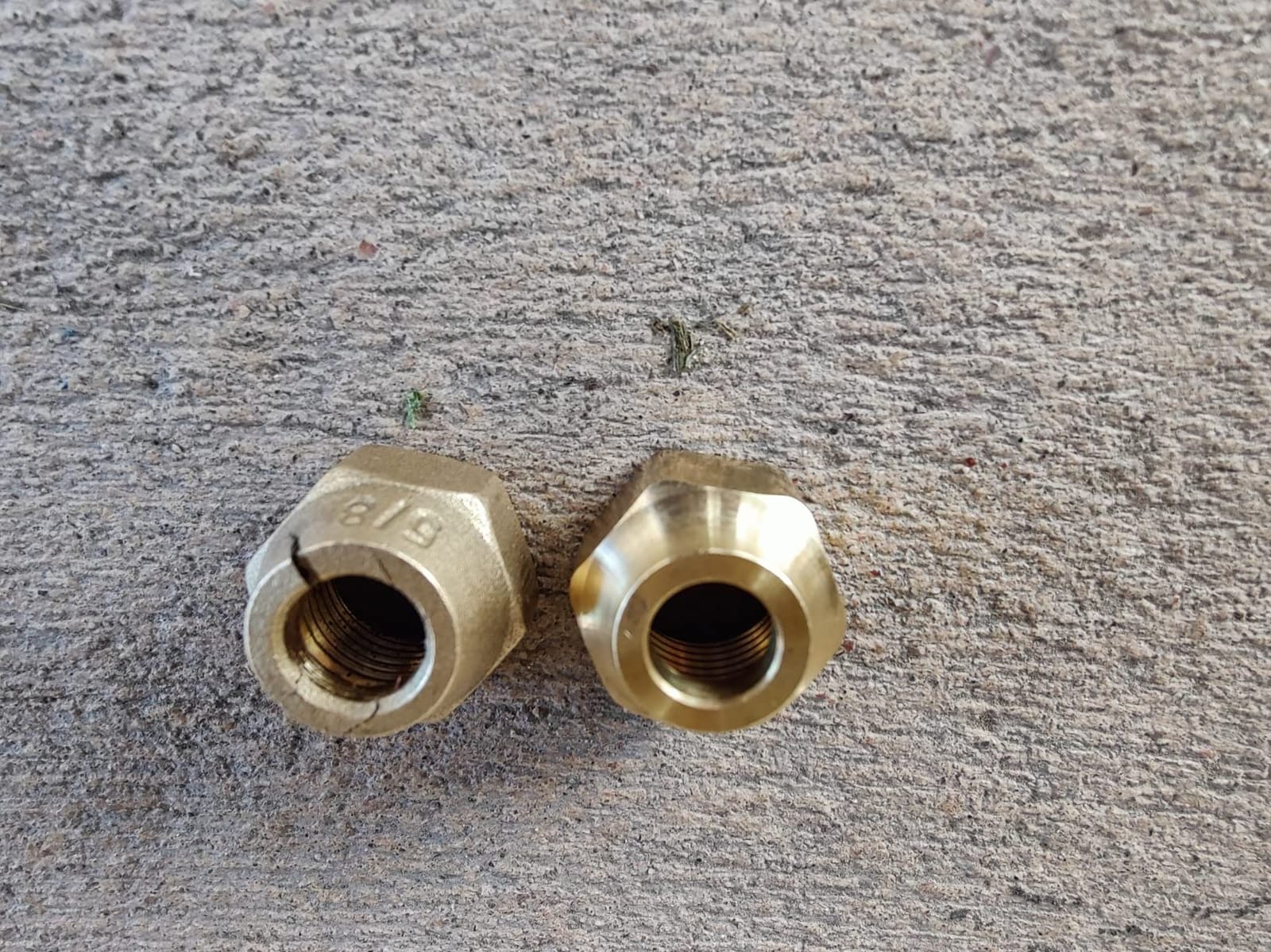
The kit includes copper line, a drain pipe and mounting hardware, which covers most of the parts list. The manufacturer still requires line set vacuuming during installation, and refrigerant has to be rebalanced if you change the line length, so this is not a no-tools install.
Reviewers flagged two things consistently: the included line set insulation and drain tubing degrade in hot climates, and the mobile app is limited compared with what premium brands offer. If your sunroom gets brutal afternoon sun, plan to sleeve or replace the exposed line set with proper rated insulation.
Skip it if your sunroom is large, heavily glazed on a south or west wall, or if you live where winter temperatures fall far below -4F. Trying to heat a 300 sq ft glass room with a 1-ton system will leave you disappointed.
12000 BTU cooling and 12500 BTU heating
19 SEER2
115V power
26 dB indoor
750 sq ft rated
If your sunroom is in Florida, the Gulf Coast or the desert Southwest, humidity is the problem you will actually notice, not temperature. The Rellytech’s dry mode came up again and again in owner feedback as the single biggest improvement over the window units people were replacing. Multiple owners described swapping several window units for one of these and getting condensation under control as a side effect.
It is also the least expensive path to a permanent installed system. Running on 115V means you can often skip the electrical upgrade entirely, which is usually the single largest cost line in a sunroom project after labor.
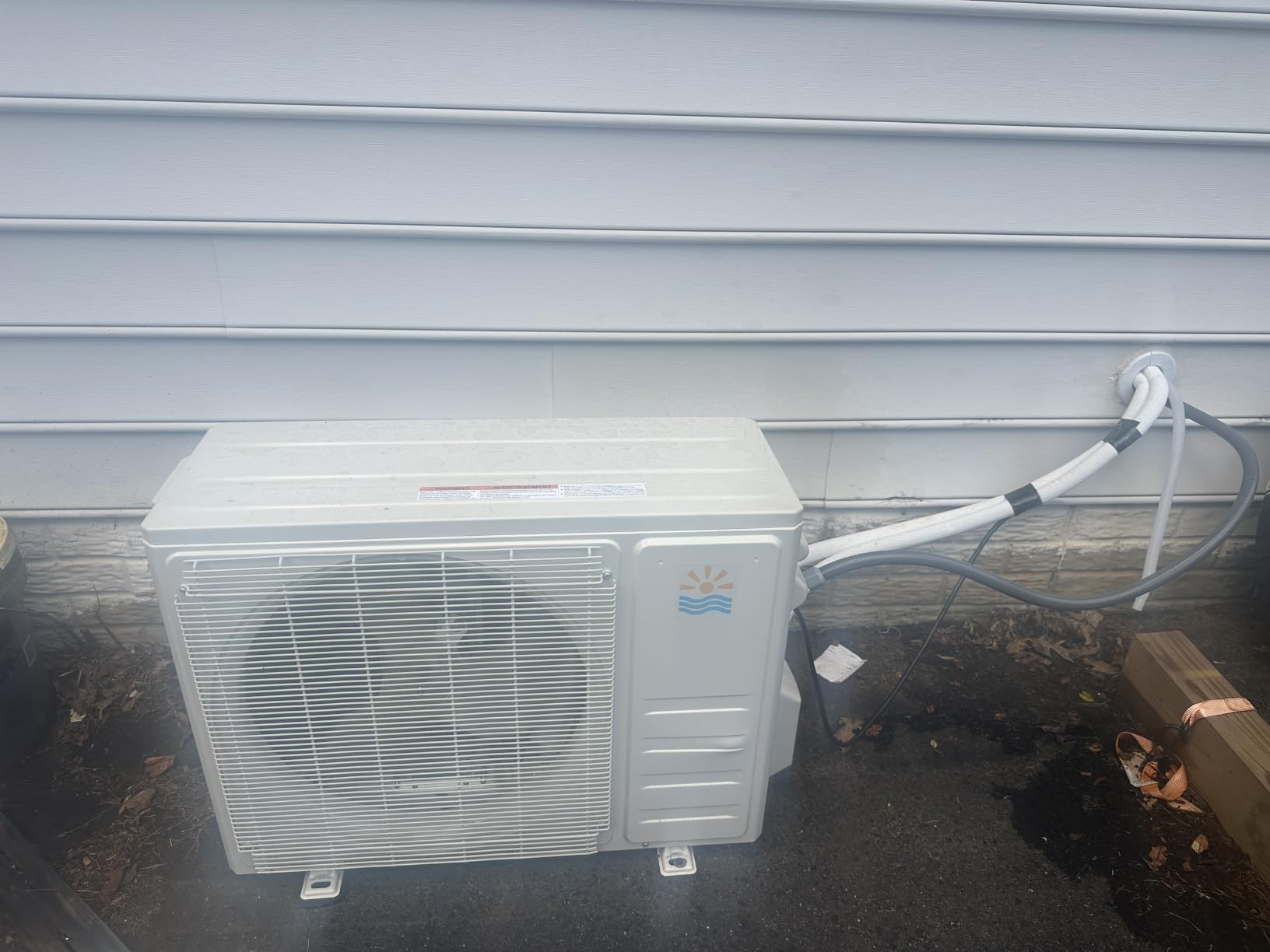
At 19 SEER2 and 1367 kWh per year rated consumption, this lands in the middle of the 1 ton group. That figure is worth comparing carefully: the Della Vario’s higher efficiency rating and this unit’s rated consumption together suggest that a sunroom in a hot climate will cost noticeably more per season to run than a low-efficiency comparable system would.
It carries a 4 star energy label, which is unusual in this class and reflects the measured consumption rather than a marketing estimate.
Cooling is rated at 12,000 BTU covering up to 750 sq ft, and heating is rated slightly lower at 12,500 BTU. That gap between cooling and heating capacity is worth understanding: when the system is heating, it does not have the same margin it has in cooling, so in a cold snap you will notice it pulling down its setpoint more slowly.
Four fan speeds, 90 degree vertical swing and an ECO mode round out the controls. There is no WiFi or app, which is the main thing you give up.
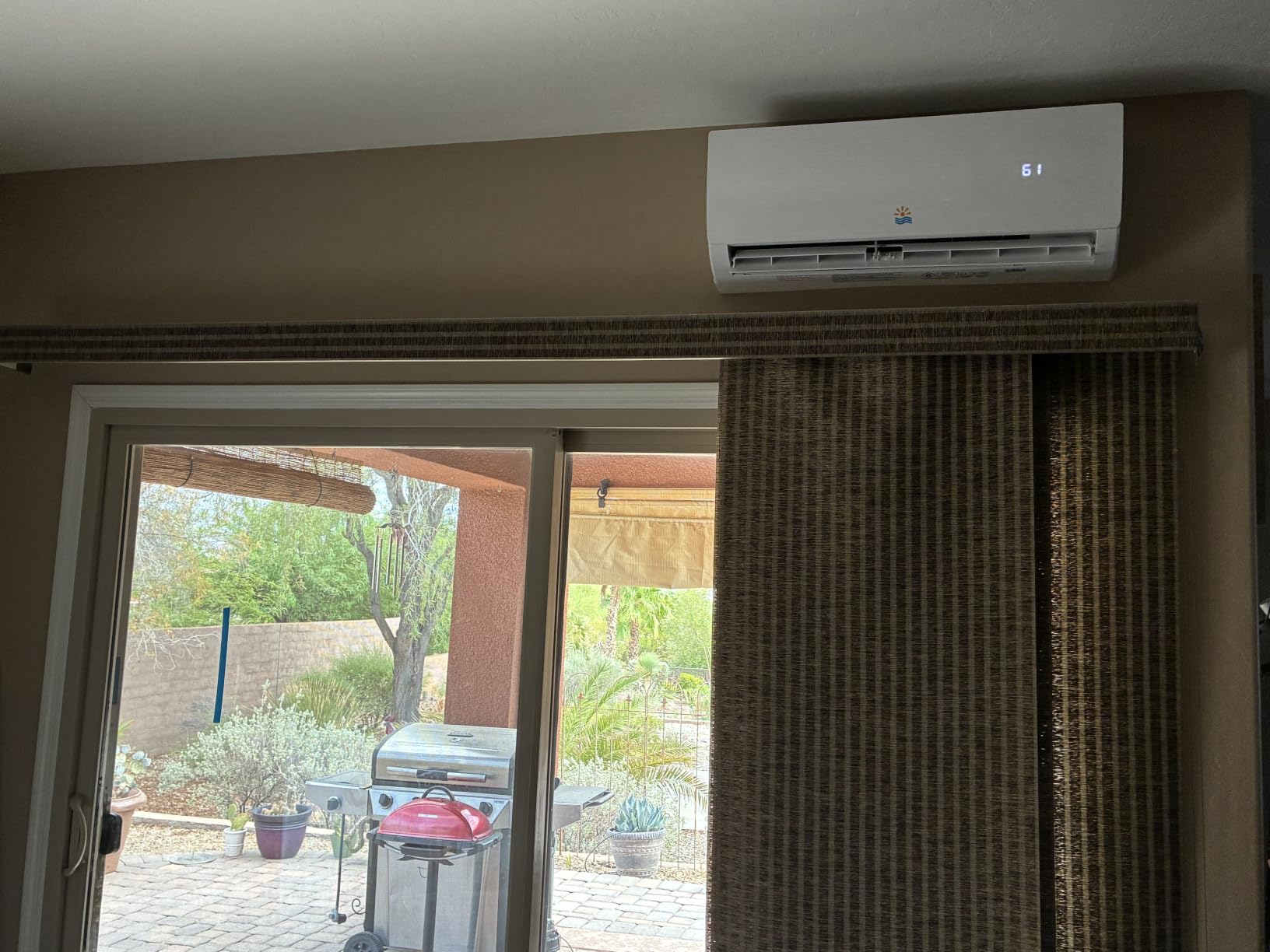
The included kit is thorough for a DIY-adjacent install: indoor and outdoor systems, remote, batteries, mounting plate and template, communication cable, power cable, two connecting pipes, luting putty, a pipe protection ring, drain pipe, screws and anchors. Every piece you need is in the box, which means the cost of installing it is mostly labor rather than parts.
The 8 year warranty is the strongest in this group by a wide margin, and there is 24 hour customer service. That said, a one year manufacturer warranty is listed in the technical details, so read the terms before you rely on the longer figure.
Skip it if app control matters to you, or if you need genuine cold-climate heating. And if you are not going to hire a contractor, note that reviewers uniformly warn this install needs HVAC tools and real time even though the power is household voltage.
12000 BTU cooling and 12600 BTU heating
20 SEER2
28 dB in mute mode
115V power
WiFi and Alexa
The ROVSUN is the pick when the sunroom is somewhere other people spend real time. App control, scheduling and voice control mean you can warm the room before anyone walks into it, and in a glass room that gets cold fast, preheating from your phone is a genuinely useful feature rather than a novelty.
At 20 SEER2 it matches the best efficiency in the 1 ton class while adding wireless control, and it runs on standard 115V power. For a 150 sq ft north-facing sunroom, that combination is very hard to argue with.
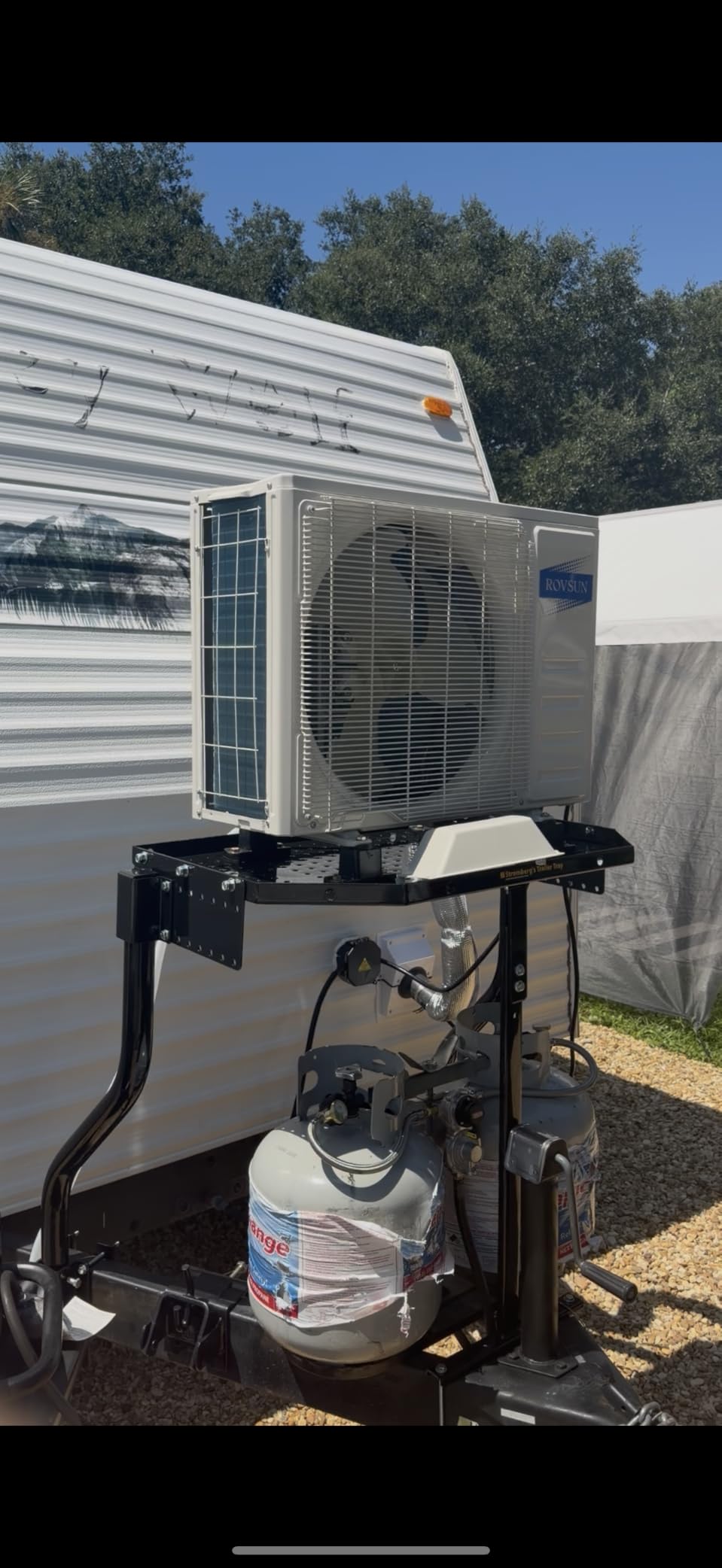
In mute mode the indoor head runs at 28 dB, which is competitive with the quietest systems here and quiet enough for a reading room. The mode list covers cooling, heating, dehumidification and fan, plus ECO, sleep, turbo and four way swing.
Auto-defrost on the outdoor condenser matters more in this category than buyers expect. Without it, ice builds on the outdoor coil during heating cycles, efficiency collapses, and eventually the compressor is at risk. Having it factory-equipped removes one of the most common winter service calls.
Heating is rated at 12,600 BTU against 12,000 BTU of cooling, which is a healthy ratio. The operating range spans 61F to 88F on the cooling side, and the unit is rated for spaces up to 750 sq ft, though as with every 1 ton system here, a glass sunroom will reach its limit well before 750 sq ft.
It is a shoulder-season heater, not a deep winter one. Plan auxiliary heat if you intend to use the room below freezing on a regular basis.
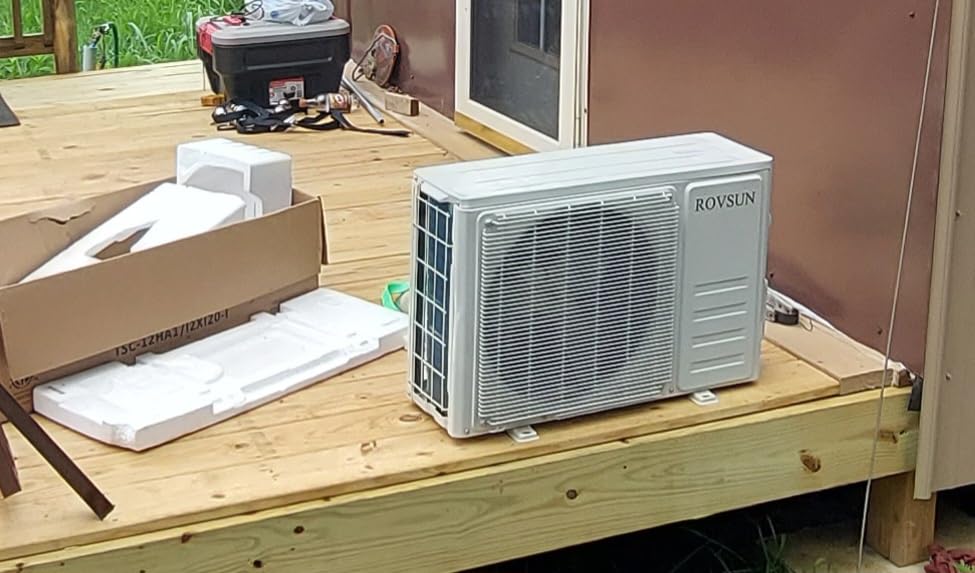
The warranty is listed at 1 year, which is the shortest in this roundup and is genuinely out of step with the rest of the category. Compressors fail, sensors fail, and a one-year warranty means you absorb the entire cost of almost anything that goes wrong in year two.
The package also arrives as two separate boxes, so the two halves may not show up on the same day. And the condenser has to stay upright for 24 hours before installation, which is easy to overlook when you are eager to get it running.
Skip it if you want long-term peace of mind more than smart features, or if you are installing it in a four-season room in a cold climate. The warranty length and the heating limit together make it a poor fit for a room you want to use year-round.
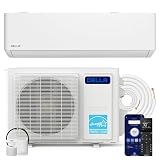
12000 BTU hyper heat
23 SEER2 and 10 HSPF2
Heating down to -13F
115V power
WiFi enabled
If your sunroom needs to be usable in January, the -13F operating floor on this Della is the number to look at. Most 1 ton 115V systems stop heating somewhere around 5F and start losing capacity well before that. This one is designed to keep running when the temperature drops into the teens below zero, which is exactly where glass-walled rooms stop being livable.
The 23 SEER2 rating and 10 HSPF2 heating rating are also the highest efficiency combination in this roundup. That means the cheapest to run per unit of heat delivered, which is the metric that matters most if you are heating through winter rather than just cooling through summer.
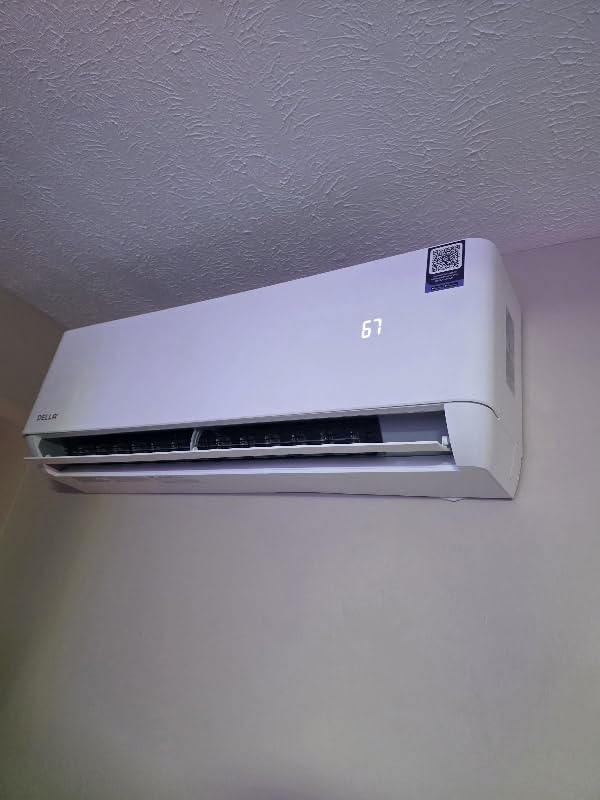
The outdoor coil uses gold plated fin technology intended to resist freezing, resist rust corrosion and speed up defrosting. In a cold-climate application that is not a cosmetic upgrade. Corroded or ice-bridged fins reduce heat transfer, which means more electricity consumed for less heat delivered, and faster defrost cycles mean the system spends less time off producing warmth.
The installation plate provides about 10 percent more piping clearance than a standard plate, which sounds trivial until you are trying to run two insulated copper lines and a drain hose through a wall in a finished sunroom.
Six operating modes are available through the Della+ app, with WiFi, 4D airflow, eco, sleep, timer and I feel mode. The indoor panel has a textured finish that is designed to blend into a finished room rather than read as an appliance, which matters aesthetically in a sunroom where everything is visible.
Noise runs as low as 30 dBA in mute mode, and the listed figure is 27 dB. Maintenance is limited to seasonal filter cleaning.
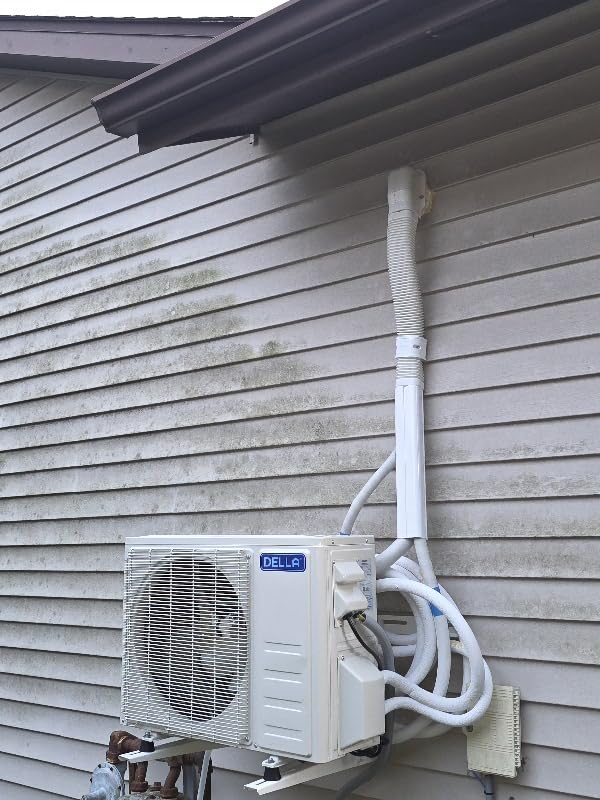
Maximum fuse size is 25A, which means this system needs a properly sized dedicated circuit, not a shared household outlet. Verify your panel has space before ordering, because fitting a new breaker into a full panel is one of those small jobs that turns into a service upgrade.
The kit includes a 16.4 ft pre-flared insulated line set and a 6.56 ft drainage extension. Professional installation is mandated and line set vacuuming is required, with refrigerant rebalanced if line length changes. It carries ETL listing, AHRI certification and a lifetime warranty, plus rebate eligibility.
Skip it if your sunroom is large, since 12000 BTU will not carry a heavily glazed space above roughly 200 sq ft. It also has the smallest review base of any 1 ton system here, so you are relying less on the long-term owner data we would want behind a purchase.
24000 BTU cooling and heating
18.7 SEER2
Heating to 5F
230V power
7 year compressor warranty
The Cooper and Hunter MIA series is the one to consider when your sunroom is genuinely large, or when you are conditioning an open-plan space rather than a discrete room. At 24,000 BTU with a 230V supply it has the electrical headroom to push serious heat into a glass-heavy envelope, and the 7 year compressor warranty is the strongest coverage in this group.
Reviewers running large additions, shops and sunroom-style bonus rooms report strong, near-silent cooling that measurably cut their cooling costs compared with what they were using before. Heating works down to 5F, which is enough for shoulder seasons in most climates.
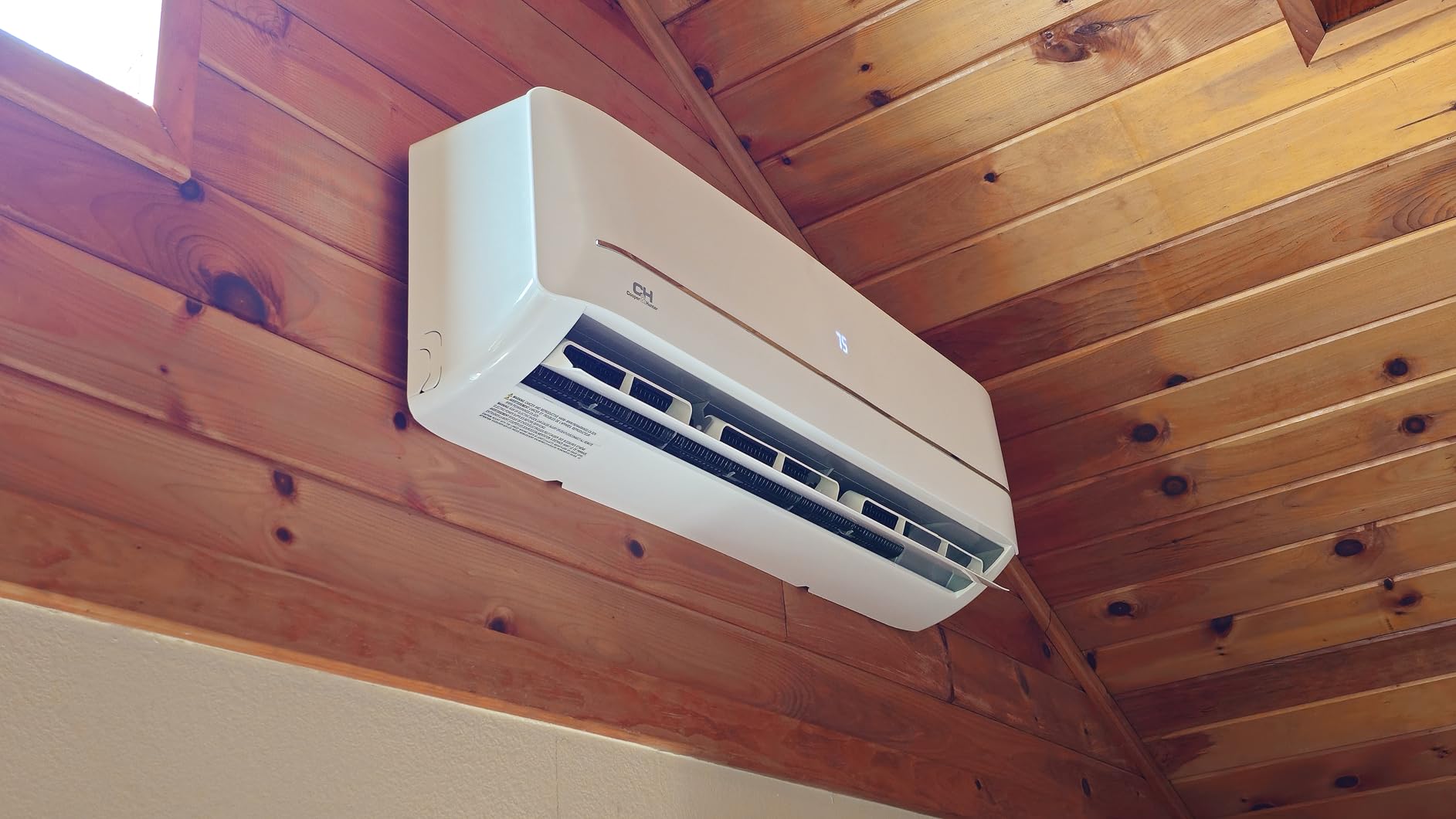
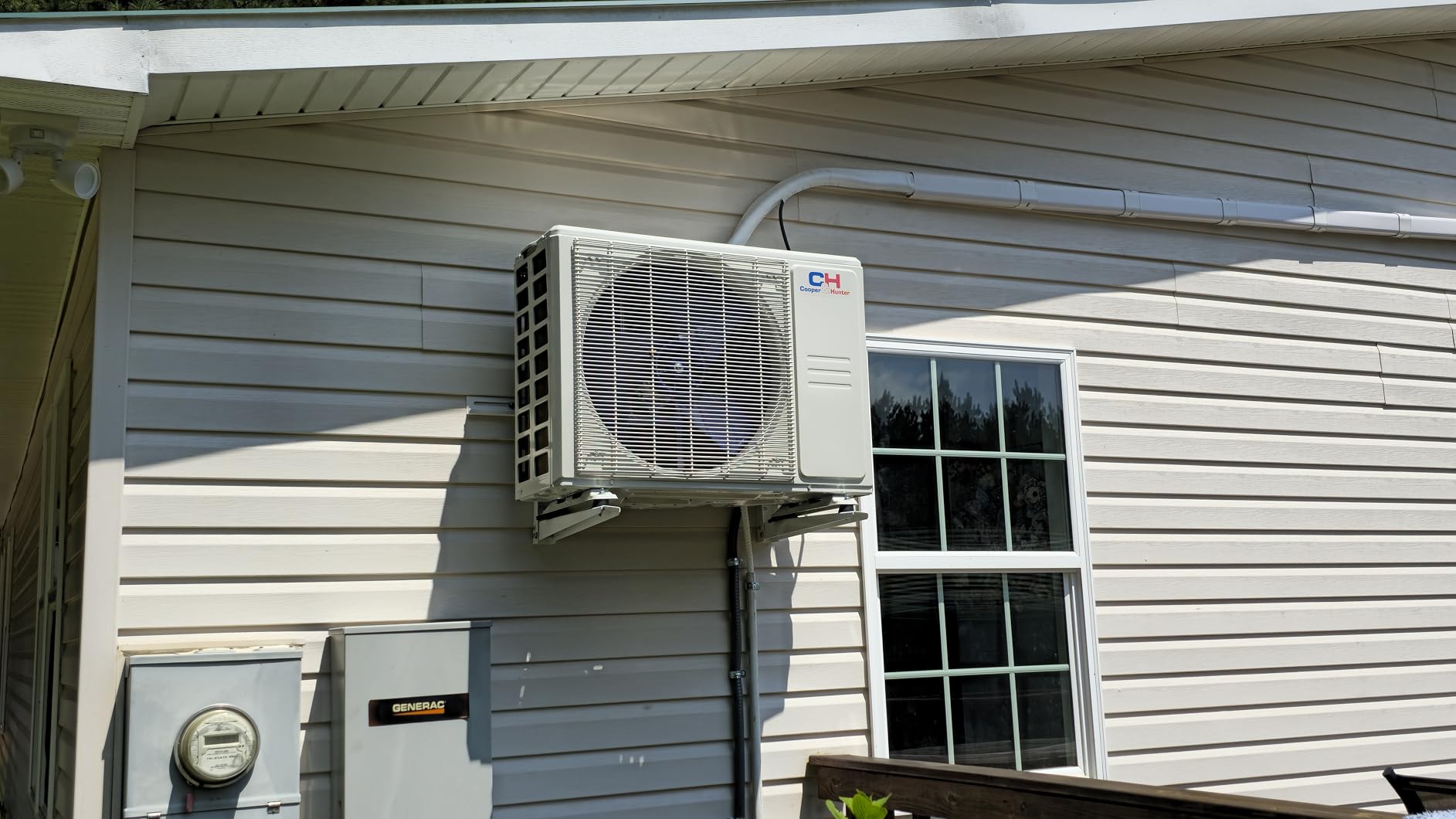
Seven years on the compressor and five years on parts is a meaningfully better warranty than most of the systems here offer, and it is the main reason I would lean this way for a room that will be conditioned for decades. U.S.-based technical support is a real advantage over brands where service questions route through an overseas call center, which is a complaint that comes up repeatedly in homeowner forums about lesser-known brands.
Licensed HVAC contractors recommend this brand, and that matters more than any spec line. A widely supported brand means parts are on a shelf somewhere near you rather than shipped from overseas.
This is a 230V system requiring professional installation, and it arrives by freight to the nearest accessible point outside your home. That means scheduling a delivery window and planning how to move a unit weighing 165 pounds to its final position. Add it to the install timeline rather than assuming a doorstep drop.
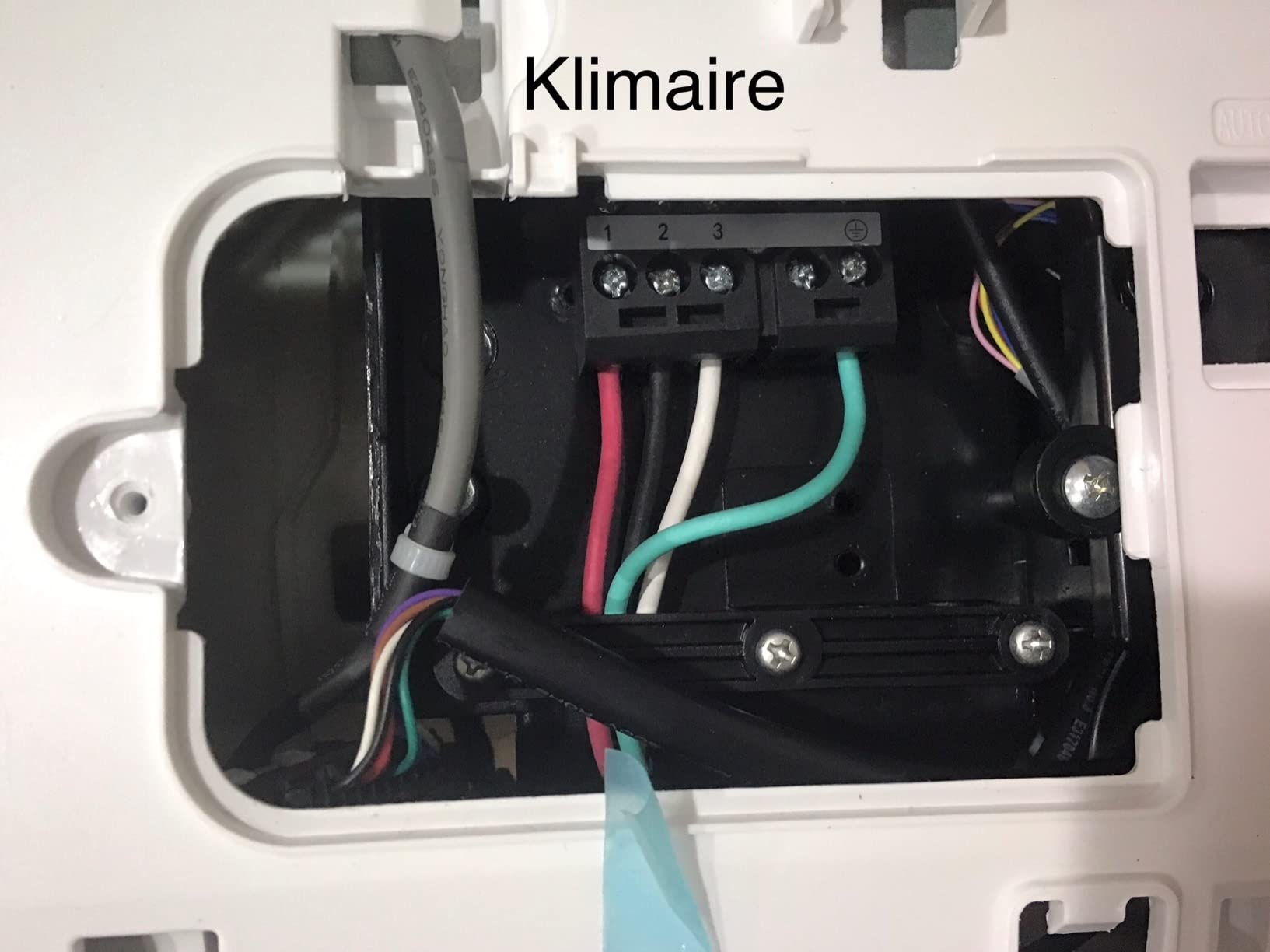
The written installation directions are incomplete on compressor wire-to-terminal mapping, which is exactly the kind of documentation gap that turns into a service call. Have your installer work from the wiring diagram directly rather than from the written guide.
The indoor head is listed at 35 dB with a silent mode available, and owners report having to check that the head is actually running. It will not match the 23 dB of the COSTWAY, but for a large open space that extra output is worth the slightly higher noise floor.
The included smart kit handles scheduling, temperature adjustment and remote control through an app. If you want the system to run only when the sunroom is actually in use, scheduling is the single feature that pays for itself in a glass room.
Skip it if your sunroom is under about 150 sq ft, where 2 tons will short-cycle, or if you cannot accommodate a 230V circuit and freight delivery. It is a large-room system and treats small rooms as an afterthought.
12000 BTU cooling and heating
18 SEER2
Heating range 5F to 122F
115V power
750 sq ft rated
The Albott is the system to buy when you want a complete installed heat pump at the lowest entry point and the sunroom is a modest size. It covers up to 750 sq ft on paper, runs on 115V, handles a wide 5F to 122F ambient range and includes app and remote control with a child lock.
I would be honest about where it sits in this group: its 4.1 average is the lowest of the eight, with 14 percent of reviews at one star. That tells you quality and support complaints are more common here than with the other systems, and you should factor that into the decision rather than ignore it.
SEER2 18 is the lowest efficiency rating in this roundup, and in a glass sunroom that runs hard every summer, efficiency compounds. The rated annual consumption of 700 kWh is a headline figure, but real consumption in a high-load room depends entirely on how many hours the system runs and how much you set the thermostat back when nobody is in there.
The warranty is genuinely good for the class: 5 years on the compressor and 7 years on parts, plus a listed 3 year limited warranty. That is a better warranty structure than several systems that cost considerably more.
The self cleaning function runs at high coil temperature to break down dust, and the filters and air blades are removable without tools, which makes the biweekly filter cleaning routine that every ductless system needs far less of a chore.
The filter itself is a mesh type rather than a higher-grade washable filter. In a sunroom with a lot of dust tracked in from an adjoining deck, expect to clean it on schedule rather than stretching the interval.
The 5F to 122F ambient range covers essentially any climate for cooling and most climates for shoulder-season heating. Below 5F you are outside the rated heating envelope, so plan a backup heater for genuinely cold nights.
Indoor noise is listed below 29 dB, which is quiet for a 1 ton system. Cooling, heating, dehumidifying and fan modes are all present, with a 24 hour timer and sleep mode.
Skip it if running cost matters a lot over a long horizon, since the lowest efficiency here works against you in a high-load space. It also makes more sense for a three-season sunroom than a four-season one. If support responsiveness matters to you, choose a brand with a longer published service history instead.
A sunroom mini split needs 30 to 50 BTU per square foot, not the standard 20 that works for interior rooms. The reason is that glass is a very poor insulator compared with the insulated wall next to it, so the room gains far more solar heat in summer and loses heat far faster in winter than a normal room of the same size.
Start by measuring the floor area, then measure the glass area separately. A room that is 50 percent glass is effectively a room with half its walls removed. The bands below give a starting point by floor area and orientation; treat them as a starting point and adjust for glazing type.
North and east facing rooms get the lower end of the range because they see less direct afternoon sun. South and west facing rooms get the upper end, because south gets sustained exposure and west gets the hardest-hitting late-day gain that arrives when the room has already stored heat all afternoon.
Here is how I would map those bands onto real systems: 100 to 150 sq ft, north-facing, lands around 6000 to 9000 BTU of load, so a 12000 BTU system covers it. The same 100 to 150 sq ft, south or west-facing, pushes to 9000 to 12000 BTU of load and an 18000 BTU system is the safer choice. At 150 to 200 sq ft, north or east facing, 9000 to 12000 BTU of load fits a 12000 BTU system, while the same area facing south or west jumps to 12000 to 15000 BTU. At 200 to 250 sq ft, north-facing, you are looking at 12000 to 15000 BTU and a 18000 BTU system, while south or west facing pushes to 15000 to 18000 BTU of load and you should be looking at 24000 BTU. At 250 to 350 sq ft, north or east facing, 15000 to 18000 BTU of load suits an 18000 BTU system, and south or west facing pushes past 18000 BTU toward a 24000 BTU system. Above 350 sq ft, whether north-facing or not, a single zone is usually the wrong answer and you should be planning multiple indoor heads.
A worked example makes this concrete. A 200 sq ft south-facing sunroom with single-pane glass: 200 sq ft multiplied by 40 BTU per sq ft gives roughly 8000 BTU for the floor area, then solar gain through a heavily glazed south wall pushes the calculated load to 12000 BTU or more. That lands on an 18000 BTU system. The same 200 sq ft room facing north with double-pane Low-E glazing comes in nearer 30 BTU per sq ft and lands around 7000 BTU, which a 12000 BTU system handles comfortably.
Our mini split sizing calculator runs through the same steps if you want to work from your own measurements.
Single-pane glass insulates at roughly R-0.9 to R-1. Double-pane glass reaches about R-2, and Low-E coated double-pane a little better than that. Set those numbers against the R-13 to R-21 of the insulated exterior wall in the same room and the gap becomes obvious. You have essentially built a room with half its envelope made of a material that is closer to an open window than to a wall.
That single fact drives everything else. In summer, sunlight passes through the glass and is absorbed by the floor, furniture and interior surfaces, and those surfaces then radiate heat back into the room all afternoon. The load is not just air temperature, it is stored radiant heat. In winter, the same glass lets heat escape faster than the walls do, so the heat pump is fighting a losing battle on the coldest nights unless it has capacity to spare.
Humidity makes it worse. A glass room with people, plants and doors opening to the outdoors moves a lot of moisture, and the condensate drain on a mini split can be overwhelmed in humid weather. Running the system in dry mode rather than continuous cooling is usually the better strategy for controlling both comfort and glass condensation. We covered the noise side of this in our guide to the quietest mini splits, and quiet operation matters more than people expect in a glass room where you sit and talk.
A standard heat pump is rated down to about 5F. Below that, the outdoor coil ices over, the system enters a defrost cycle, and delivered heat capacity drops sharply. For a sunroom in a moderate climate used from spring through fall, a 5F floor is fine. For a room you want to use in January, you need a cold-climate or hyper-heat variant.
Within this roundup the ratings run from 5F on the Senville LETO and Cooper and Hunter, down to -4F on the Della Vario, -13F on the Della Optima, and a 5F to 122F operating range on the Albott. The ROVSUN heats at 12,600 BTU and the Rellytech at 12,500 BTU, both slightly above their cooling ratings.
For a four-season sunroom in a cold climate, pair a low-temperature rated system with auxiliary resistance heat as backup, and understand that the heat pump alone may not hold 70F on the coldest nights. Our Senville mini split brand analysis goes deeper on how that brand handles seasonal load in practice.
Check your electrical service before you order anything. The 115V systems in this roundup can often run off an existing circuit, while every 24000 BTU system here needs a dedicated 240V circuit and a disconnect switch, and the Della Optima at 115V still requires a dedicated circuit with a 25A maximum fuse.
A dedicated circuit means a new breaker, adequate panel space and a disconnect mounted within sight of the outdoor unit. If your panel is full, that turns into a panel upgrade, which is the cost line that surprises people most. Confirm the voltage, confirm the panel has room, and plan the disconnect location before the equipment arrives.
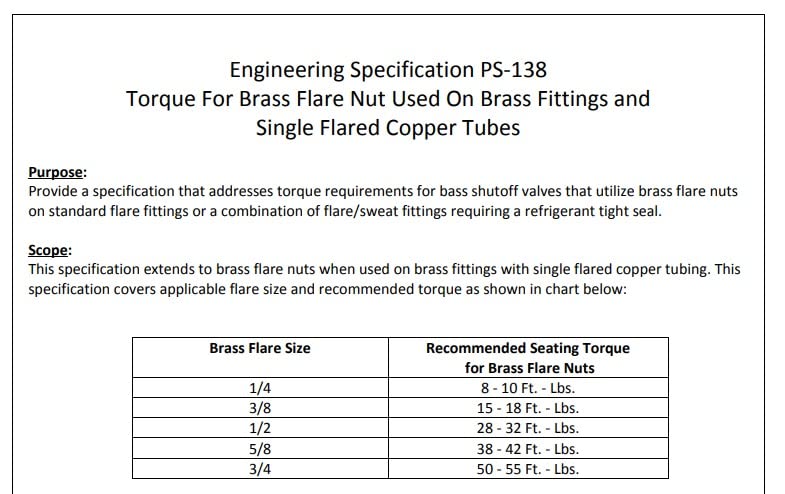
A pre-charged line set ships with refrigerant already loaded for a set length, so you can flare, connect and run the system without a recovery machine. That does not mean no vacuuming is needed. Nearly every manufacturer in this roundup requires the line set to be evacuated before connection, and refrigerant must be rebalanced if you cut the line shorter than it shipped.
Anything involving refrigerant handling legally requires EPA 608 certification in the United States, and braze joints require nitrogen purge and a proper vacuum with gauges. Homeowner forum consensus is consistent on this: the installing contractor matters more than the brand you chose. One licensed contractor in a widely cited forum thread put it plainly, that the installing contractor is the most important name to consider, and another noted that relatively easy systems are easy to screw up.
Our guide to how many mini splits you need covers when one system is enough and when you need more than one zone.
The most consistent advice from licensed installers and homeowners is that the contractor you hire matters more than the badge on the equipment. That said, brand still shapes your experience after install, particularly on tech support, parts availability and documentation.
The brands that come up most favorably in installer forums for support, documentation and parts are Mitsubishi Electric, Fujitsu and LG. A licensed New Jersey HVAC contractor described the choice as Mitsubishi or nothing, citing better technical service, easier online documentation, a simpler wiring layout and faster parts availability. Fujitsu criticism centers on tech support responsiveness and parts wait times rather than on equipment failure rates, and one owner reported two hour hold times with support during the coldest days of the year.
What you want to avoid is not so much a brand name as a set of behaviors: no published wiring diagrams, no accessible parts catalog, no responsive support channel, and warranty terms that exclude labor. Those are the traits that turn a minor fault into a weeks-long outage in a room you were relying on. Check that documentation exists publicly before you buy, and check that the warranty names parts and compressor durations explicitly.
A single-zone system conditions the sunroom at one temperature, which is exactly what most people want since the whole point of a sunroom is that it is warmer or cooler than the house. But if you want the sunroom at 72F while the living room stays at 68F, you need multi-zone.
A two-zone setup uses one outdoor condenser serving two indoor heads, either on a shared line set or paired condensers. This is the most common configuration people are searching for when they ask about conditioning a sunroom independently. Read our guide to how many mini splits you need before assuming one system is enough.
Ductless systems are not maintenance-free, and the advice from installers is consistent. Clean filters every two weeks, flush the condensate drain line with a mix that controls biofilm, and wash the outdoor condenser coil at least once a year.
Use rigid PVC for the drain line rather than a flexible hose, because sunroom condensate lines sit in warm spaces and flexible tubing eventually sags and holds water. Blower wheels develop black mold growth that is difficult to clean once established, which is one reason the self cleaning cycle on the COSTWAY and Albott is worth having in a high-humidity room.
A window air conditioner is the cheapest option and the worst fit for a glass sunroom, since it heats the room it sits in and dumps heat back outside a wall that is already radiating. Portable units are similar in both respects but easier to move between rooms.
A ducted mini split moves air through vents and makes sense if your sunroom already has a ceiling cavity to run ducts through, which most do not. Evaporative coolers work well in dry climates and are nearly useless in humid ones, since they add moisture to the air you are already struggling with. For a glass room you intend to use more than a few weeks a year, a ductless heat pump remains the most practical option.
Yes. A ductless mini split is one of the best options for a sunroom because no ductwork has to run through the glass walls, and a single indoor head can heat and cool the space independently of the rest of the house. Size it at 30 to 50 BTU per square foot rather than the standard 20, based on glass area and orientation.
A sunroom needs 30 to 50 BTU per square foot, depending on glass area, glazing type and which direction it faces. A 150 sq ft north-facing room with double-pane glass may need only 6000 to 9000 BTU, while a 200 sq ft south or west-facing room with single-pane glass can need 12000 BTU or more.
It depends on glass and orientation. A 12000 BTU system suits a sunroom up to about 150 sq ft facing north or east with double-pane glass. An 18000 BTU system covers 200 to 250 sq ft, especially with south or west exposure. Going too small leaves the unit running continuously without ever catching up.
Avoid brands with no published wiring diagrams, no accessible parts catalog, no responsive support channel and warranty terms that exclude labor. Those traits turn a minor fault into a weeks-long outage. Check that documentation is publicly available and that the warranty names parts and compressor durations before you buy.
For reliability after the sale, installers most often name Mitsubishi Electric, Fujitsu and LG, with Mitsubishi preferred for technical support, online documentation and parts availability. Critically, the installing contractor matters more than the brand, so put your effort into hiring a licensed HVAC technician rather than into brand selection alone.
The total breaks into equipment, line set, electrical work and labor. A 115V system on an existing circuit avoids panel work and is the cheapest route. A 240V system needs a new breaker, a disconnect and possibly a panel upgrade, which is usually the largest surprise line item. Equipment quotes rarely include any of that.
A dedicated circuit is required for every 24000 BTU system, which needs 208V or 230V power, and it is required for some 115V systems as well, including the Della Optima with a 25A maximum fuse. Verify panel space and the disconnect location before ordering equipment.
If you have a large glass sunroom with substantial south or west exposure, the Senville LETO 24,000 BTU is the pick we would install. It has the capacity to actually pull a glass-heavy room down, the most reviews of any system we evaluated, and heating down to 5F for shoulder seasons.
If quiet operation is your priority and you are on a 208V circuit, the COSTWAY 24,000 BTU runs the quietest indoor head in the group at 23 dB and adds a self cleaning coil cycle. If you need genuine cold-climate heating, the Della Optima holds heat capacity down to -13F at 115V. If your electrical situation is limited to a standard outlet, the Della Vario 12,000 BTU gives you 20.5 SEER2 efficiency and heating to -4F.
Whatever you choose, do the sizing math on glass area rather than floor area, verify your electrical capacity before ordering, and hire a licensed contractor for the refrigerant work. Those three steps account for most of the difference between a sunroom that is comfortable year-round and one that is not. Check back with us for the 2026 updates as manufacturers refresh these lines.