Physical Address
304 North Cardinal St.
Dorchester Center, MA 02124
Physical Address
304 North Cardinal St.
Dorchester Center, MA 02124

When you are hunting for the best egg candlers for hatching, one thing decides almost every candling session: how well the light seals against the shell. A modest beam behind a tight rubber cup shows you more than a blazing flashlight held at arm’s length, because room light leaking in around the egg washes out everything you are trying to see.
I keep backyard chickens and have spent multiple hatch cycles comparing these lights. My quick picks, if you want the answer now: the Titan Incubators high-intensity LED is the strongest all-round tool, the Magicfly corded candler is the most proven pick, and the Incu-Bright Ultra Bright is the one to buy if you hatch waterfowl alongside chickens.
Best overall: Titan Incubators High Intensity LED Candler — the output that gets through a chocolate Maran shell.
Best value and most proven: Magicfly Bright Cool LED Egg Candler — thousands of reviews, two sealing tips, and a cord that never dies mid-batch.
Best for duck and goose eggs: Incu-Bright Ultra Bright LED Egg Candler — 250-lumen CREE bulb in a durable aluminium body.
Best cordless option: Magicfly Rechargeable Egg Candler — USB rechargeable with rubber covers for quail through goose.
Best budget buy: NestEcho Egg Candler Light Tester — three brightness modes and a rechargeable cell at the bottom of the range.
The best egg candler overall is the Titan Incubators High Intensity LED, because it pairs the highest output in this group with a ring stand that holds the egg steady. The Magicfly corded model is the safest default for chicken keepers, with the deepest review base and two rubber tips that seal cleanly. Whichever you pick, buy for the aperture first and the lumens second.
One caveat before the reviews: candling is an observation tool, not a fertility test. Nothing you do with a light changes the outcome of an egg.


| Product | Features | |
|---|---|---|
| Titan Incubators High Intensity LED Chicken Egg Candler |
|
Check Latest Price |
| Incu-Bright Ultra Bright LED Egg Candler |
|
Check Latest Price |
| Magicfly Bright Cool LED Egg Candler |
|
Check Latest Price |
 HBlife Wired LED Egg Candler HBlife Wired LED Egg Candler |
|
Check Latest Price |
 ZZBUY Rechargeable USB Egg Candling Light ZZBUY Rechargeable USB Egg Candling Light |
|
Check Latest Price |
 NestEcho Egg Candler Light Tester NestEcho Egg Candler Light Tester |
|
Check Latest Price |
 Magicfly Rechargeable Egg Candler Magicfly Rechargeable Egg Candler |
|
Check Latest Price |
 Sonew Egg Candler Tester Sonew Egg Candler Tester |
|
Check Latest Price |
 GOOD MOTHER Bright Cool LED Egg Candler GOOD MOTHER Bright Cool LED Egg Candler |
|
Check Latest Price |
 Little Giant Egg Candler Little Giant Egg Candler |
|
Check Latest Price |
We earn from qualifying purchases. CERTAIN CONTENT THAT APPEARS ON THIS SITE COMES FROM AMAZON. THIS CONTENT IS PROVIDED 'AS IS' AND IS SUBJECT TO CHANGE OR REMOVAL AT ANY TIME.
High intensity cold LED
Ring shoulder stand
Two light-width fittings
4 AA batteries included
Dark shells are where most budget candlers disappoint, and the Titan is the one I reach for when a batch of French Copper Maran or Olive Egger eggs comes through. Owners repeatedly report it as the only light they tried that penetrated thick, chocolate-brown shells.
What sold me was the stand. The black ring shoulder holds the egg at the right height, so you are not juggling egg and light with two tired hands at midnight.
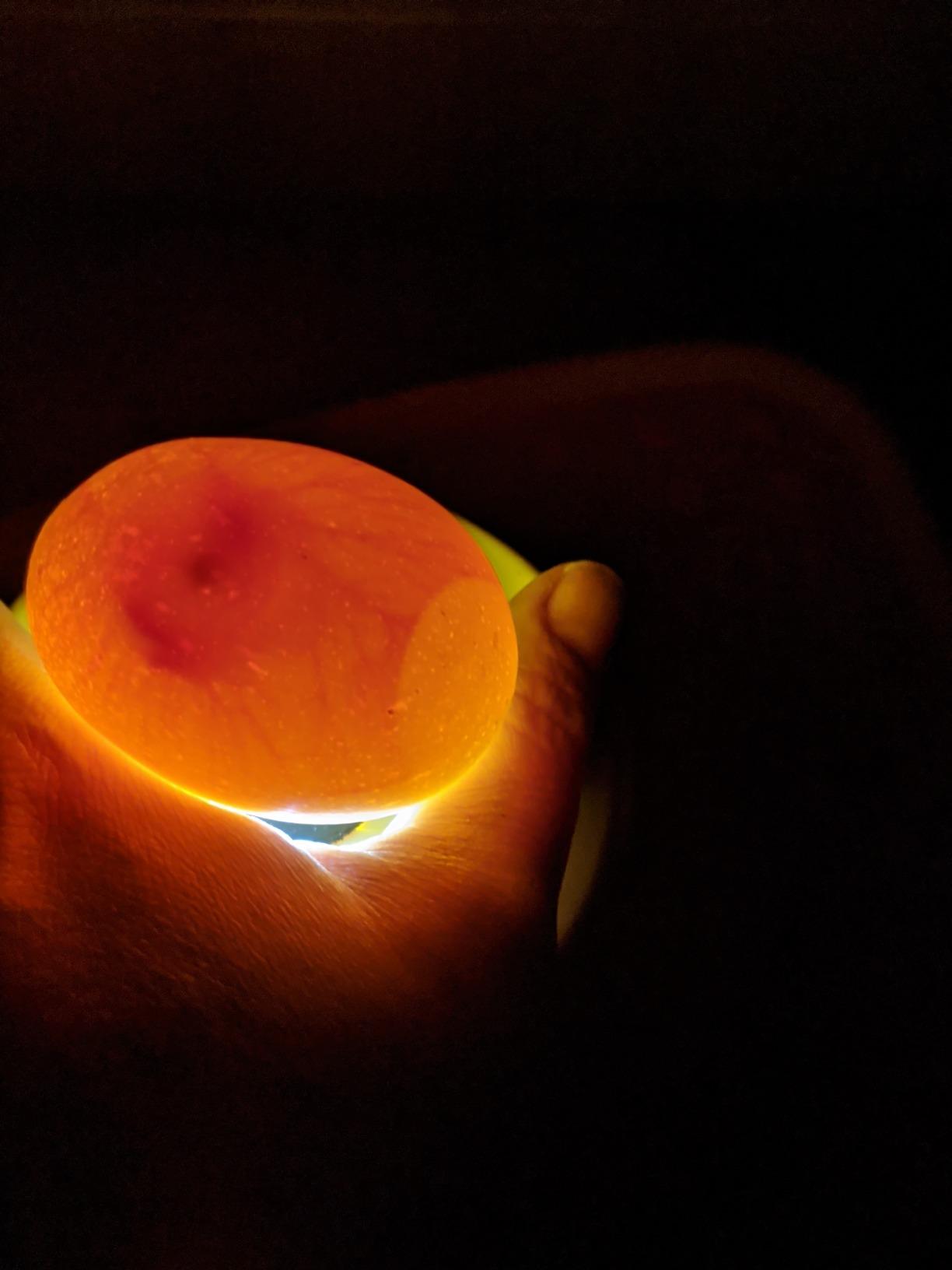
Owners name brightness as the deciding factor rather than a secondary feature, and one reviewer pairs it with a second light to read week-three viability in a near-black egg. That headroom is the reason it leads my list. The honest ceiling is that no light makes a heavily pigmented shell fully transparent.
The stand is a moulded shoulder rather than a separate accessory, so it adds nothing to your packing volume and reduces how often you set an egg down. The two fittings let you switch aperture width, covering a quail egg and a goose egg from one tool.
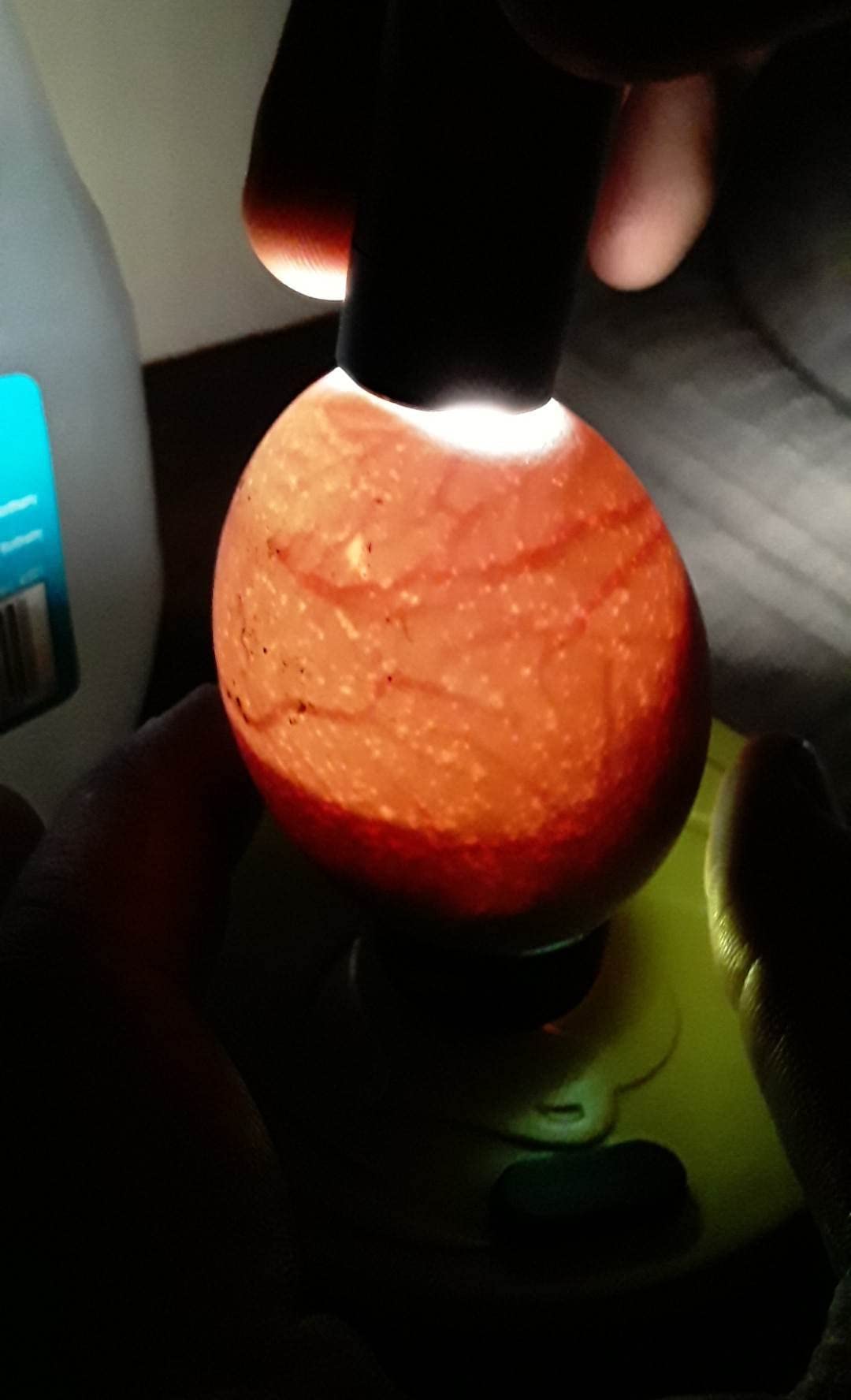
Four AA cells carry you comfortably through a hatch, though they do get consumed over a long run. Cordless power also means you can work at the nest rather than at a bench. This light performs best in a genuinely darkened space, and a bright kitchen will undercut it no matter how good the bulb is.
250-lumen CREE LED
Aluminum case
Cordless AAA power
One-year guarantee
This carries the second-highest customer score in the group, and the reason is unglamorous: a 250-lumen CREE bulb in an aluminium case reaches further through thick shells than the plastic-bodied lights it costs barely more than. If your flock includes waterfowl, that is the deciding factor.
Several owners bought it after an incubator’s built-in lamp failed, which is a common story with refurbished units. Cordless AAA power also means no cable snagged across straw.
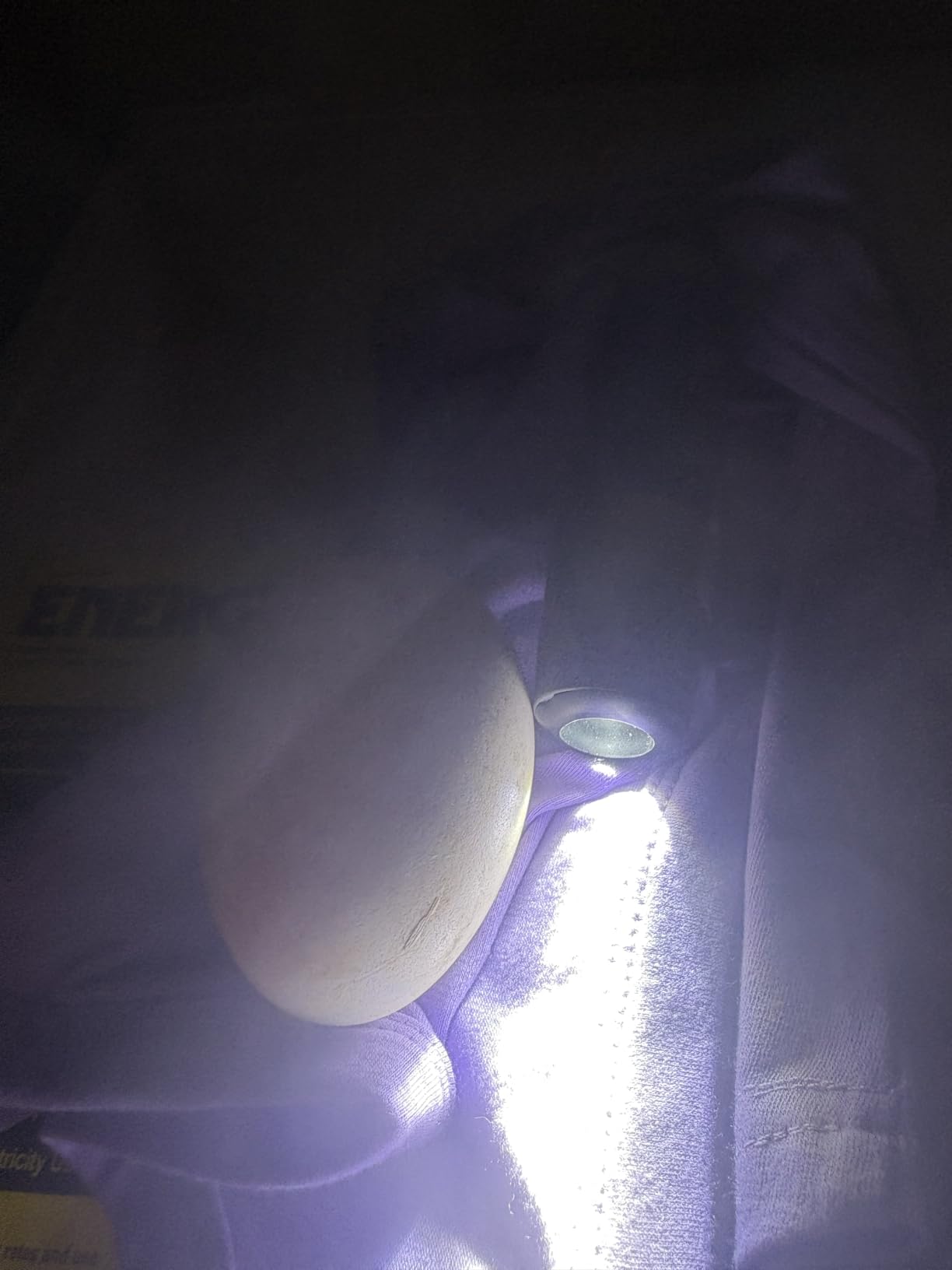
Duck and goose eggs have thicker, denser shells than chicken eggs, and the difference shows up exactly where you need detail. Owners report it holding up on goose eggs that cheaper lights simply cannot read. For chicken-only operations it is more light than you strictly need, for very little extra outlay.
The aluminium case is what ages well. It does not crack when dropped in a straw-filled coop, and at 3.52 ounces with package dimensions near 5.4 by 1.9 by 1.3 inches it disappears into a coat pocket between checks.
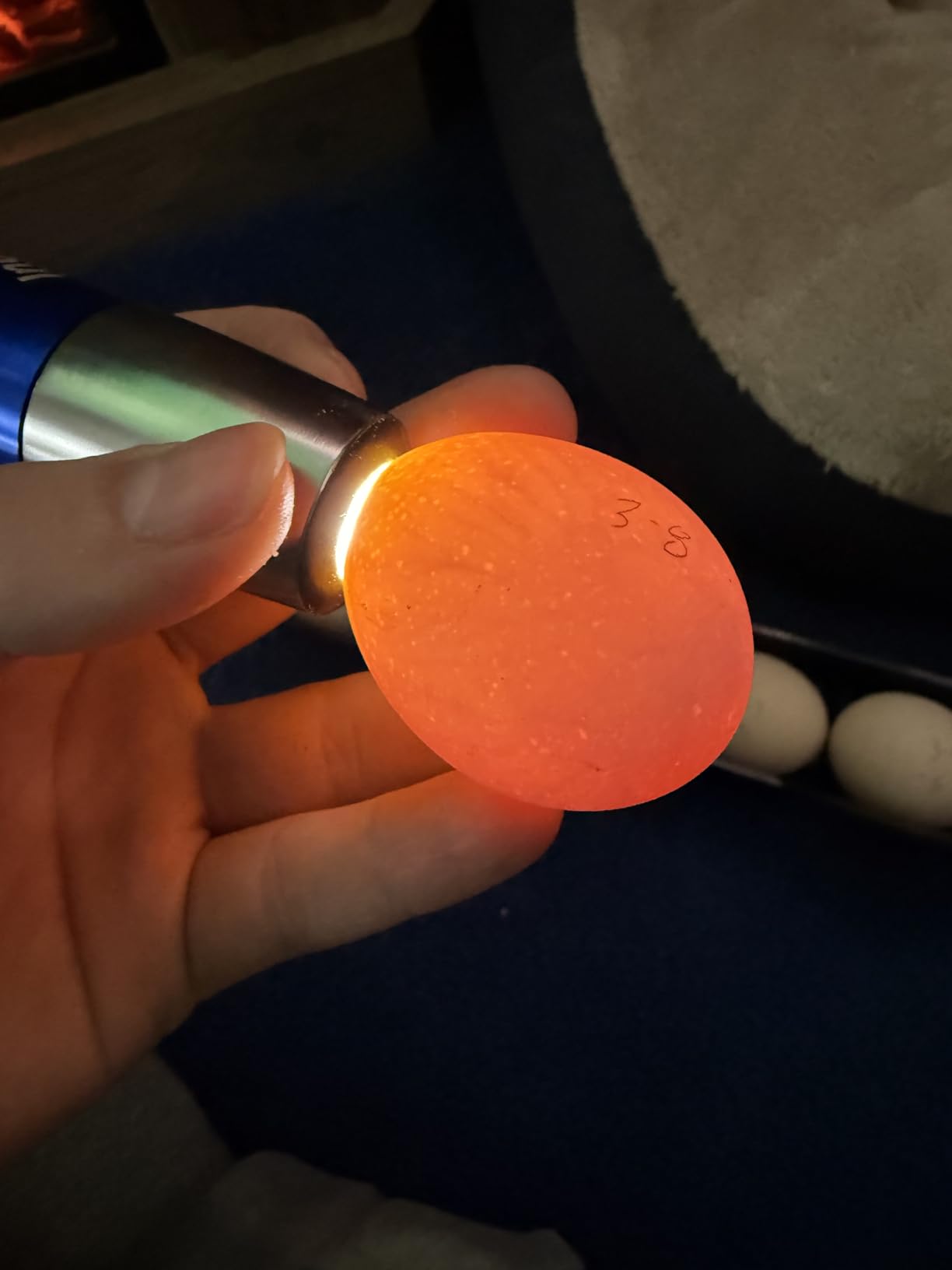
AAA cells are the ongoing cost of this design, and the recurring complaint is that they are not reliably included even where the listing suggests otherwise. Keep a spare pack near the incubator. The rubber ring at the top protects the shell but is not a true light seal, so a very dark room matters more here than with a fitted cup.
Two sealing rubber tips
Corded power supply
Slim body fits in incubator
Includes phase chart
This is the most reviewed candler here by a wide margin, which matters in a category where keepers routinely warn each other off listings with seven reviews. It is also the name that surfaces most in backyard chicken forums, usually because it does two jobs.
The two rubber tips are why a moderate lumen output feels far brighter in use. Press the tip flat against the shell, the glare drops away, and the same two sizes cover a quail egg and a large duck egg.
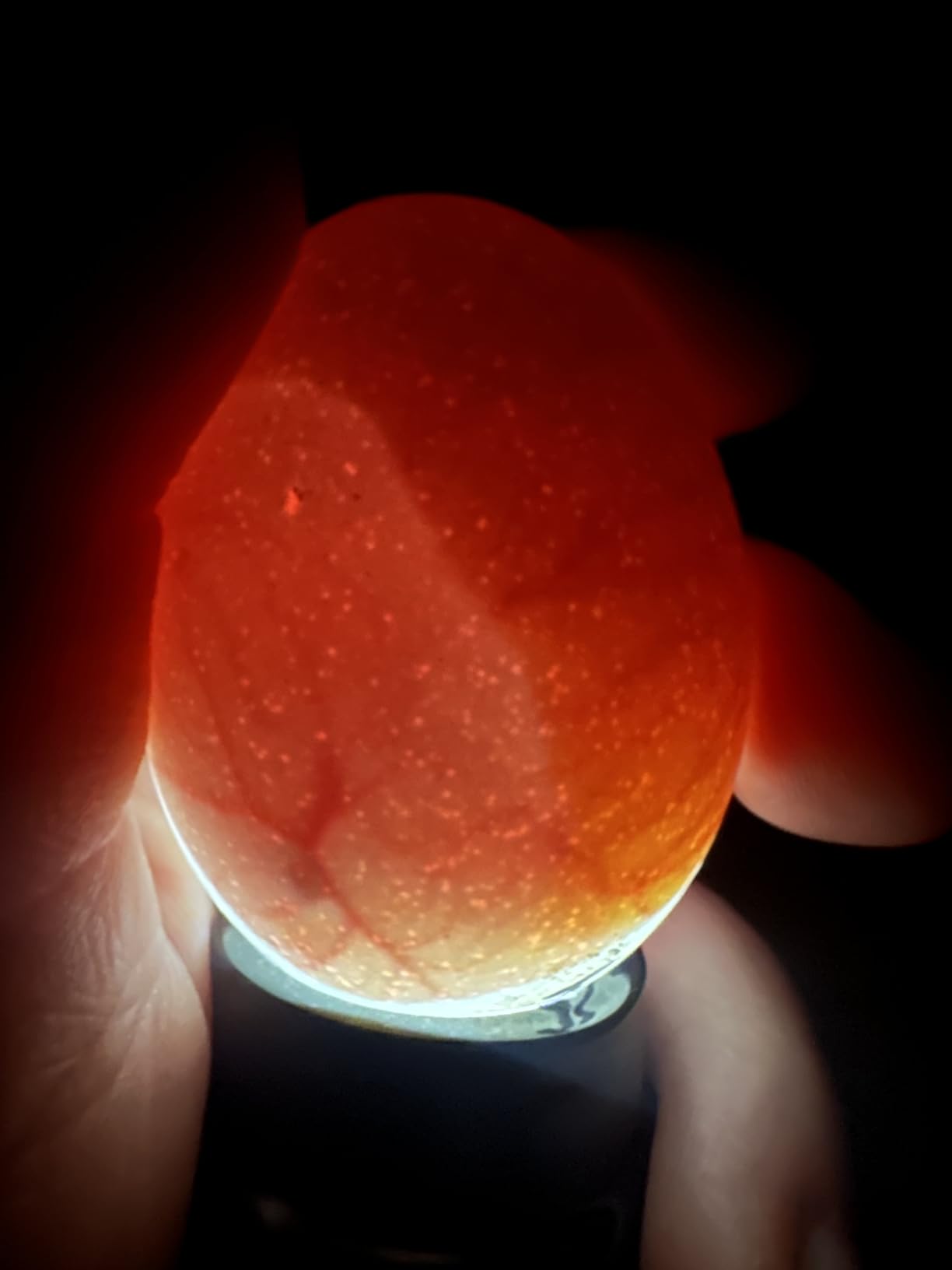
Users credit the tips for sealing light against the shell, which is the practical difference between reading an egg and squinting at a glowing blob. It is also why this light performs on shells that defeat brighter, unsealed lights.
The slim body slides into an incubator without lifting eggs onto a table first, which across 21 days means fewer transfers and less time with the lid open. The included development stage chart also gives a beginner something concrete to compare against.
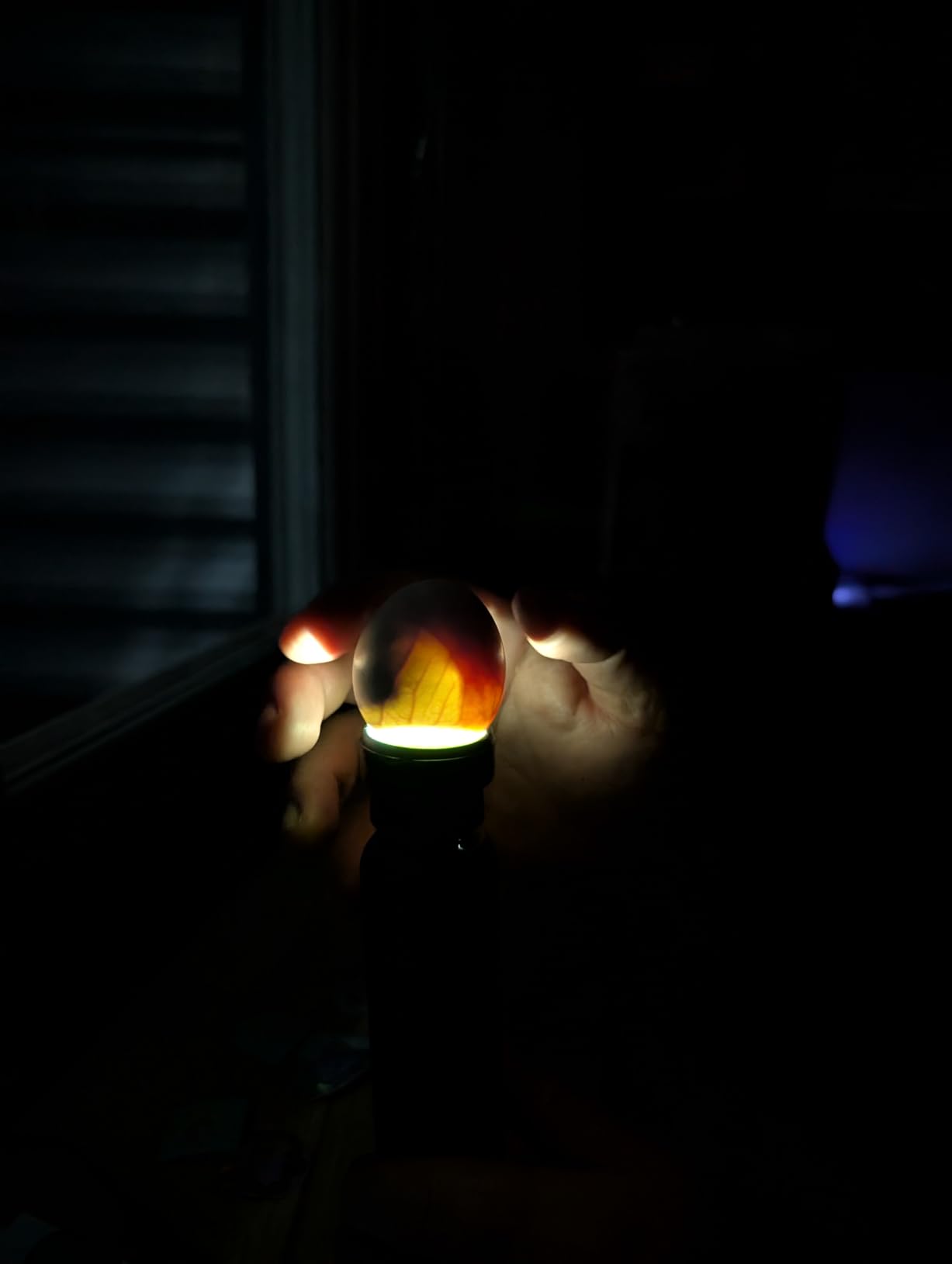
The most common complaint by a distance is cord length, particularly when candling while standing. If your outlet is far from the incubator, plan for an extension cord. A smaller thread concerns durability, with a few owners reporting the switch or LED failing after roughly three months of daily use, offset by the manufacturer replacing defective units.
Two soft rubber ends
39.3 inch cord
Phase guide included
Corded electric
The HBlife does the same job as the corded Magicfly at similar weight of review evidence, and the soft rubber ends are the detail people mention most. They conform to the curve of the egg, grip it without cracking, and seal the light, which is three jobs in one moulded piece.
This is the one I would hand to a classroom or a 4-H project. One-button operation is genuinely simple, and the phase guide gives a beginner something concrete to compare against.
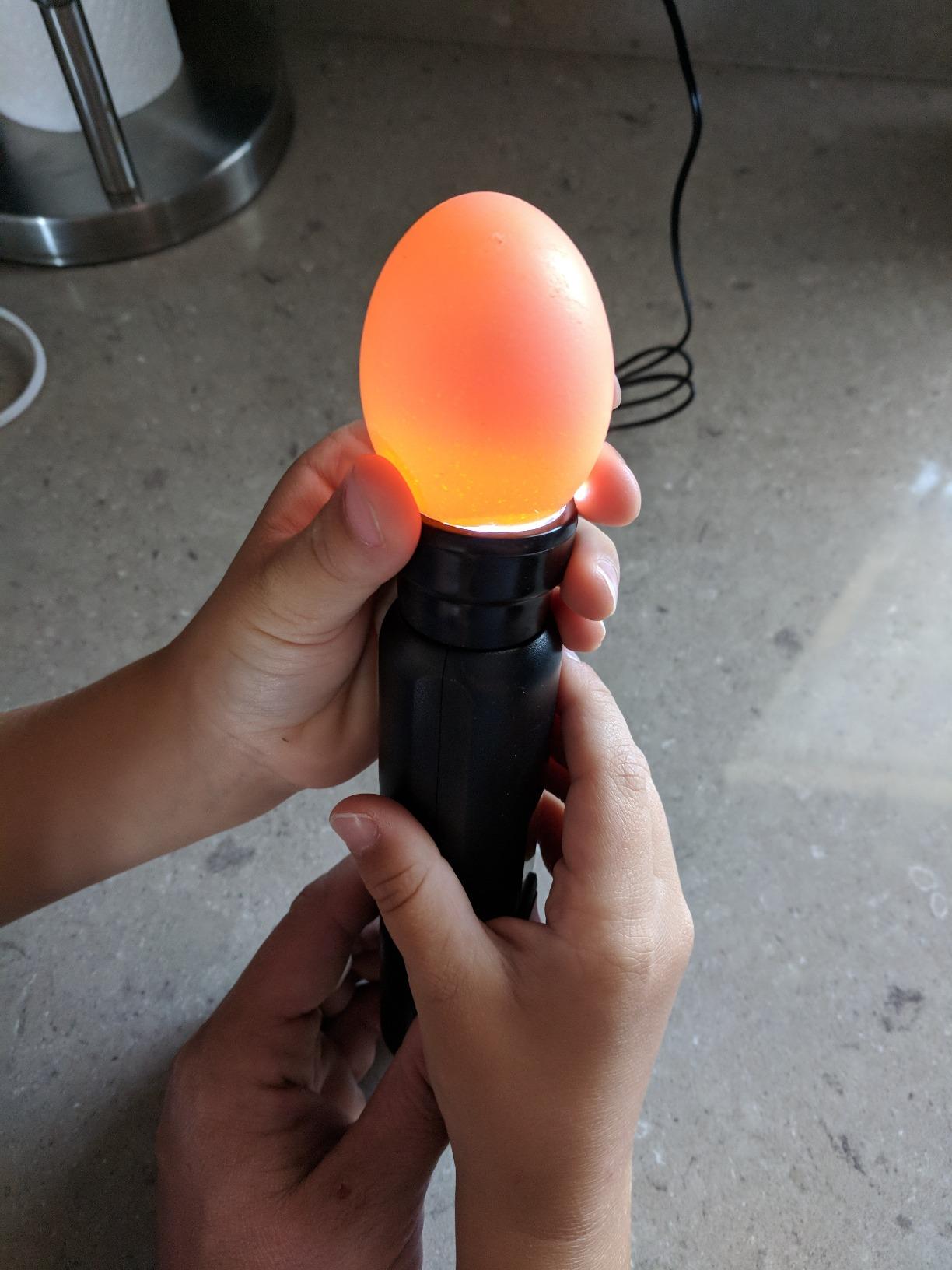
Unlike a hard plastic rim, a soft rubber end spreads contact across more shell and will not chip a thin egg if you fumble it. Buyers comment on grip and seal in the same breath, which is the ideal pairing, and the two ends cover a mixed chicken and quail flock without an adapter.
The 39.3 inch cord removes the most common anxiety in this category, which is a light dying halfway through a tray. It is still short for candling inside a large incubator cabinet, so plan the cable route before you start.
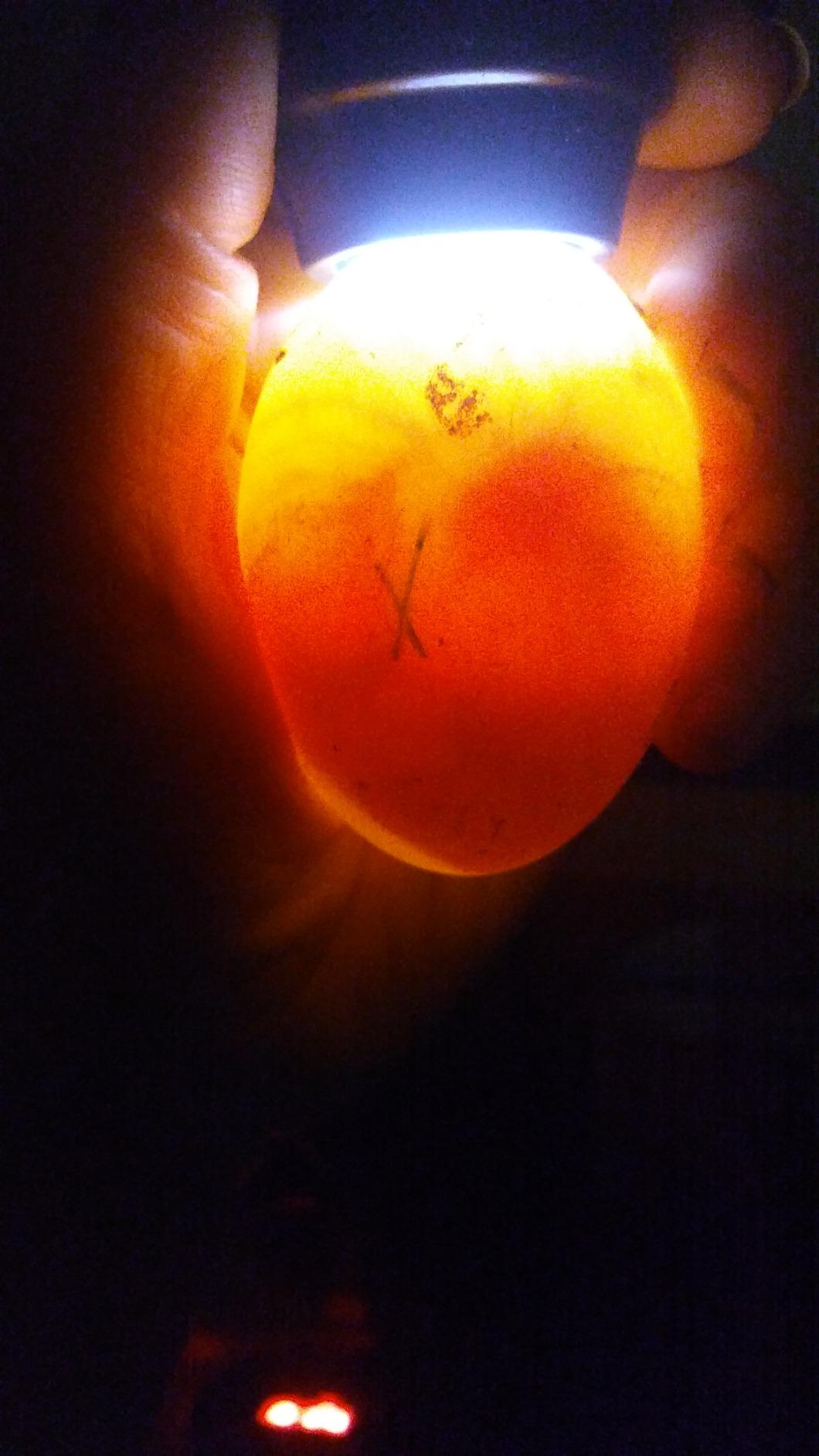
Brightness is the honest limitation, with several reviews noting it struggles on very dark or thick shells. If Marans and Olive Eggers are your focus, buy a higher-output unit instead. The rubber tips are also easily knocked off and lost in straw, which will not affect anyone candling indoors at a desk.
1200mAh rechargeable battery
Five lighting modes
Aluminum alloy body
Hand rope included
The ZZBUY solves what bothers me most about small rechargeable candlers: battery anxiety. A 1200mAh cell carries you through weeks of intermittent use, so you charge it once at the start of a hatch and forget about it, which owners of smaller cells openly envy.
It is also one of the few units reviewers say reads dark eggs clearly, and five lighting modes let you drop to a low setting for late checks instead of blasting the egg every time.
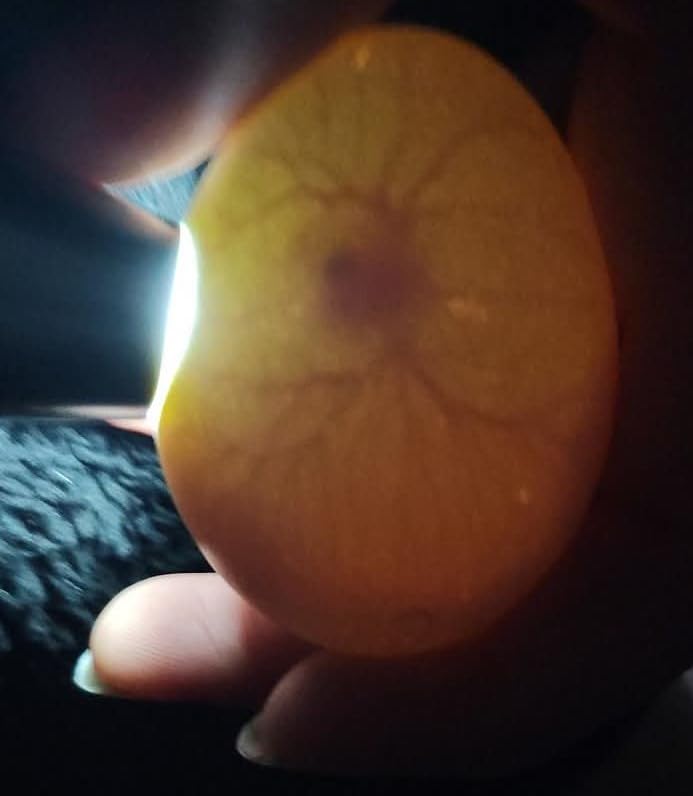
Reviews concentrate on two things: it reads dark eggs clearly, and it holds a charge. The common failure mode in budget candlers is a bright light that resolves nothing through a brown shell, and this avoids it. Medium and low modes are useful for a quick second look late in incubation.
The aluminium alloy body is a step up from the plastic shells most competitors use, and it resists being dropped in straw. A hand rope is included for carrying it between coop and bench. The trade-off is that a sealed rechargeable body means you cannot swap in a spare cell when it finally dies.
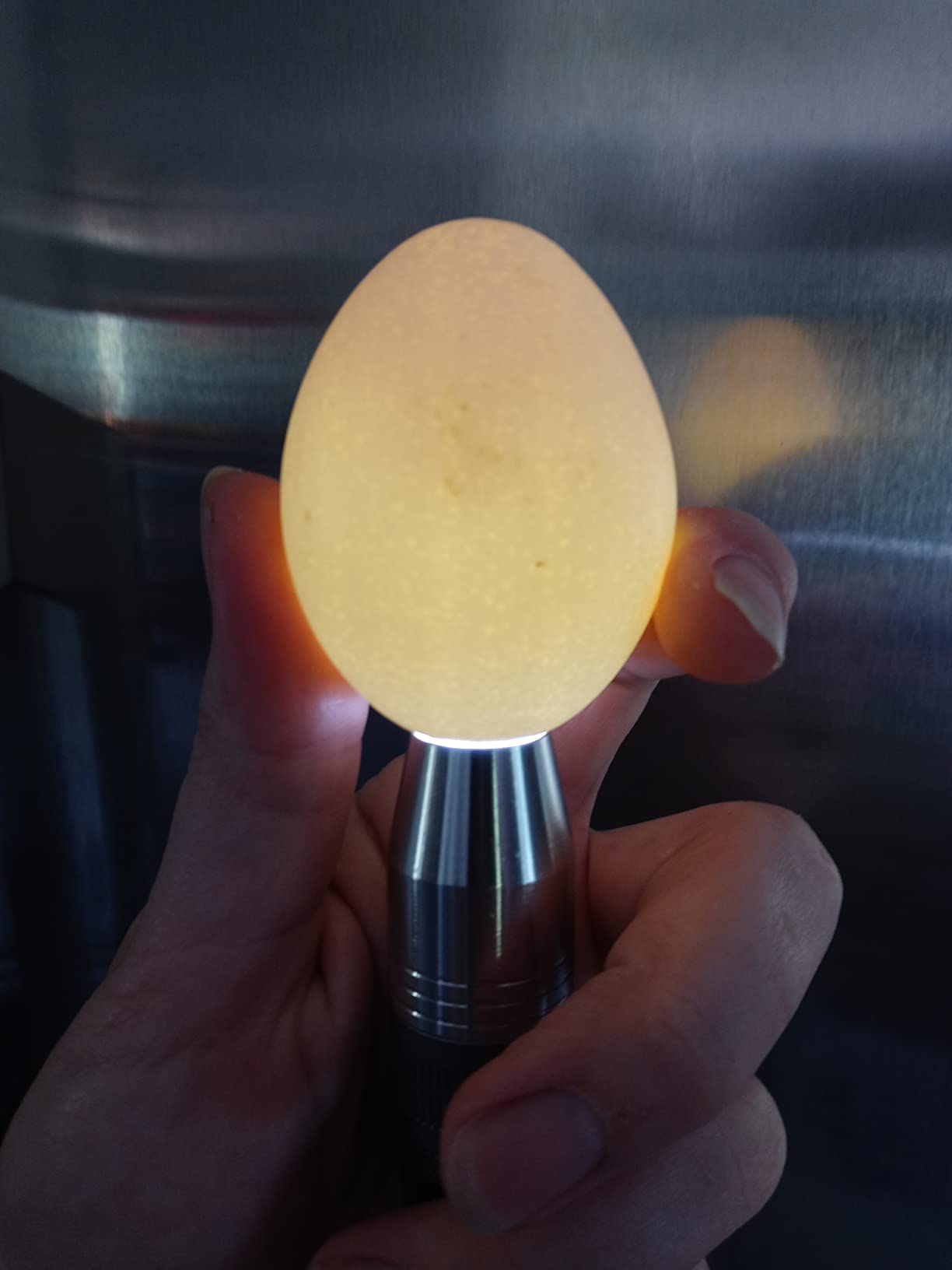
Know what you are buying. One reviewer received a unit with a loose weld that the seller did not resolve, and the listing is sold by a third party rather than the platform itself, which affects how a problem gets handled. It also carries far fewer reviews than the leaders, so long-term reliability is less proven.
Three lighting modes
Rechargeable with charger
Low intensity and flash modes
All poultry eggs
The NestEcho is the pick if your hatch is small and you want rechargeable power without paying for a premium brand. Three modes from the end button, a rechargeable cell and a charger in the box is a lot of function at the bottom of the range.
Owners use it for goose eggs more often than you would expect, and the low and flash modes are genuinely useful for late checks where you want to see movement without full output against the shell.
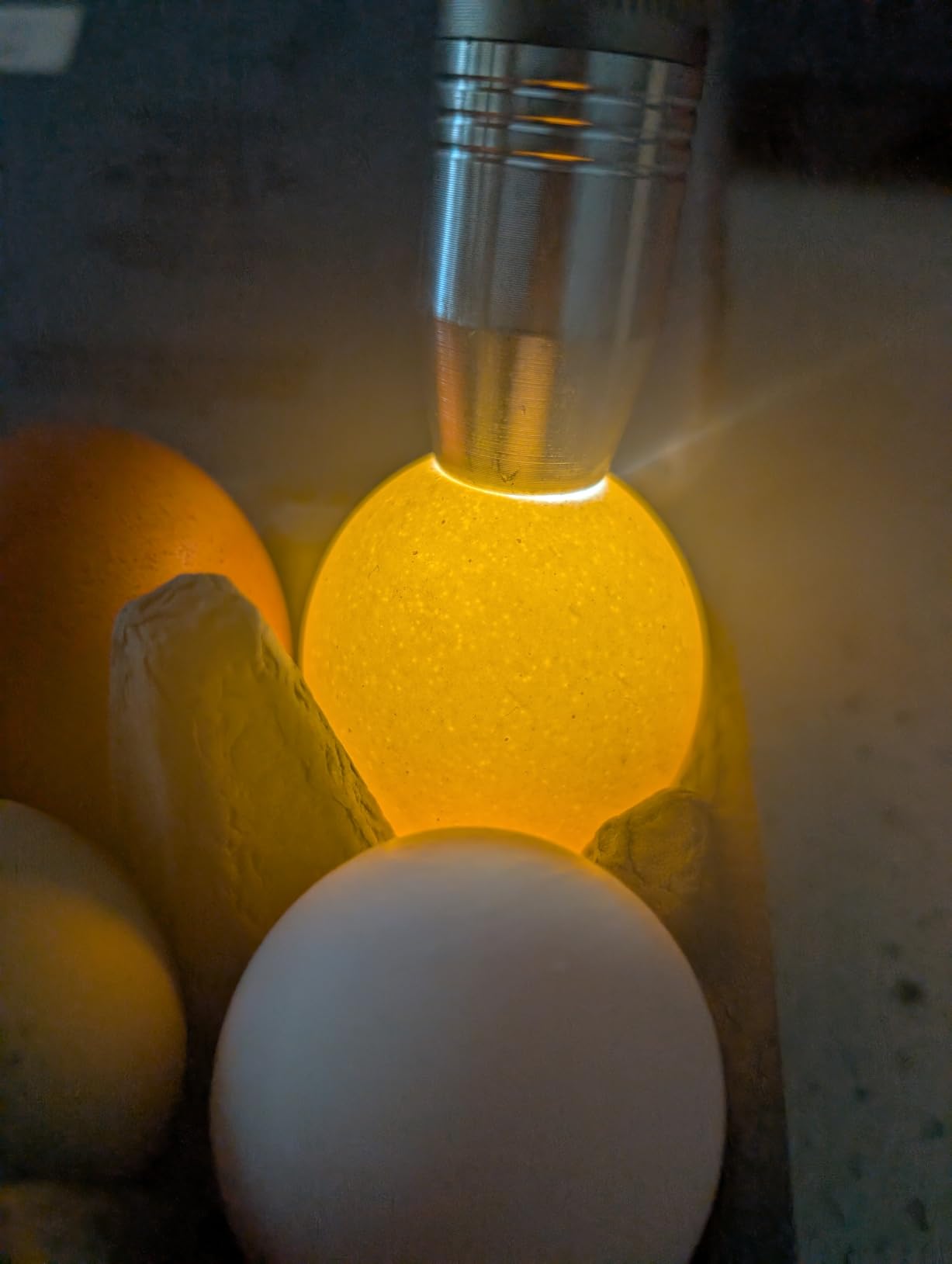
High intensity is for the early fertility check when you need detail. Low intensity is easier on your eyes at 2am and cuts the glare that hides fine vessels. Flash mode is the one people discover late and never stop using, because it makes movement obvious without washing out the image.
The aperture is narrow, and several users initially dislike it. In practice most describe it as a learning curve rather than a flaw, because you seat the egg against the lamp mouth rather than pushing it into an opening. The narrow mouth also helps block stray light, which is why it still reads darker eggs acceptably.
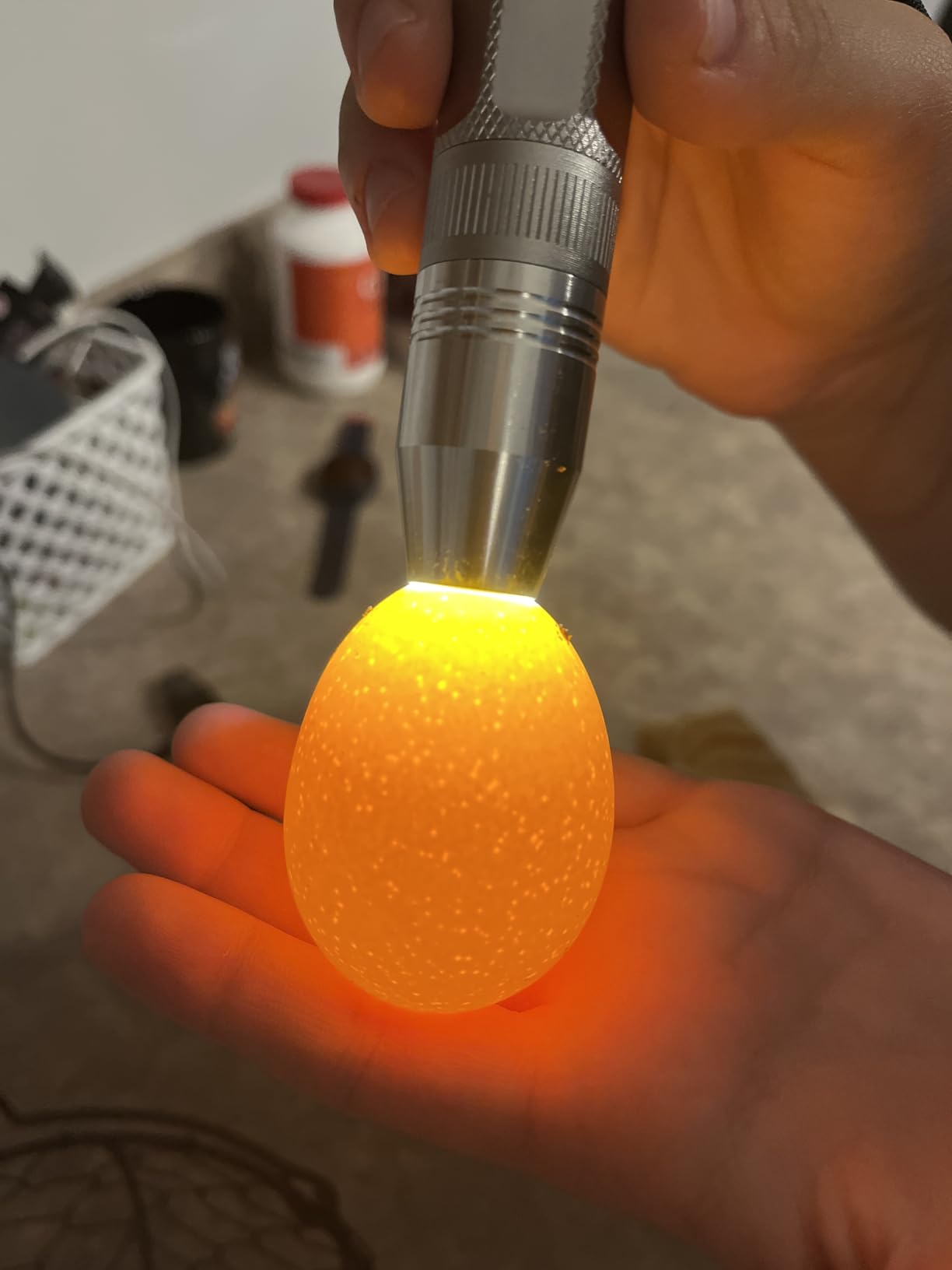
Output is not enough for fine embryo detail, so do not expect to read blood vessels in a heavily pigmented Maran. If dark shells are your main problem, you need brighter light, not a brighter claim. The bundled charger plug does not fit non-US sockets, and the listing copy and photography are noticeably sloppy.
USB rechargeable battery
Rubberized sealing end
Top mounted switch
6.7 inch long
This is the same brand and the same sealing idea as the corded Magicfly, reworked for people candling away from an outlet. The rubberised end cups the egg and forms a proper seal, and the two covers span quail through goose, so nothing is lost except constant power.
Many owners who moved to it from a plain flashlight report seeing veins and movement even in dark shells, which is the step up that made them convert.
The manufacturer quotes about six hours of continuous use from a three-hour charge, and reviewers say the real figure is shorter under normal candling duty. The practical advice is to top it up between checks. A steadier concern is a minority of reviews describing a unit that stopped accepting a charge within weeks, offset by customer service that is praised for replacing failed units.
The rubberised end does two things at once, cupping the egg for a seal and protecting the shell. The top-mounted switch matters more than it sounds, because a side switch shakes the light and throws off the image you are trying to read. Two covers covering quail to goose means one tool for a mixed flock.
At 1.2 by 6.7 by 1.2 inches this is longer and clumsier than pen-style units, and it rewards being seated in a palm rather than gripped with fingertips. The flip side is that it also works as a general flashlight, which owners mention as a bonus for checking the coop at night.
All metal smooth casing
Blocks light leakage
Cool LED light
Corded push button
The Sonew is the odd one out in two ways. It is the only candler here with a fully metal casing that will not scratch a shell, and it also carries the lowest score at 4.0 stars. Both facts follow from the same design choice, and both are worth knowing before you commit.
Positive reviews focus on the casing and on sealing well enough to read development in a dark room. The complaints are about output lagging the high-intensity models, and about a narrow body that is harder to line up with an egg.
Every plastic-bodied candler here has at least one review mentioning a worried grip. A smooth metal casing does not chip a thin or cracked egg the way a hard rim can, which matters if your eggs came through shipping. That is the strongest reason to consider it despite the lower score.
The body is designed to block light leakage and channel the beam inward, which partly compensates for lower raw output when the room is properly dark. In a well-darkened space it performs closer to its rating than the star figure suggests, and in a room with ambient light the deficit against a high-output LED becomes obvious quickly.
The 4.0 average is the weakest here, with reviewers pointing to the narrow diameter and lower output rather than a single defect. For chicken eggs in a proper dark room the trade-off is defensible. If you need to read a Maran shell, buy output instead.
Two rubber candler covers
Corded with power adapter
Compact ergonomic body
Cool LED
This is the most complete package in the group: candler, two rubber covers and the power adapter in the box, nothing else to buy. Several owners report successful hatches after daily use, and the compact body is comfortable for one-handed work at a bench.
It sits at 4.4 stars, the third-lowest score here, and the reasons are consistent. The cord is called too short, and the light is reported as ineffective on dark shells and inconsistent on goose eggs.
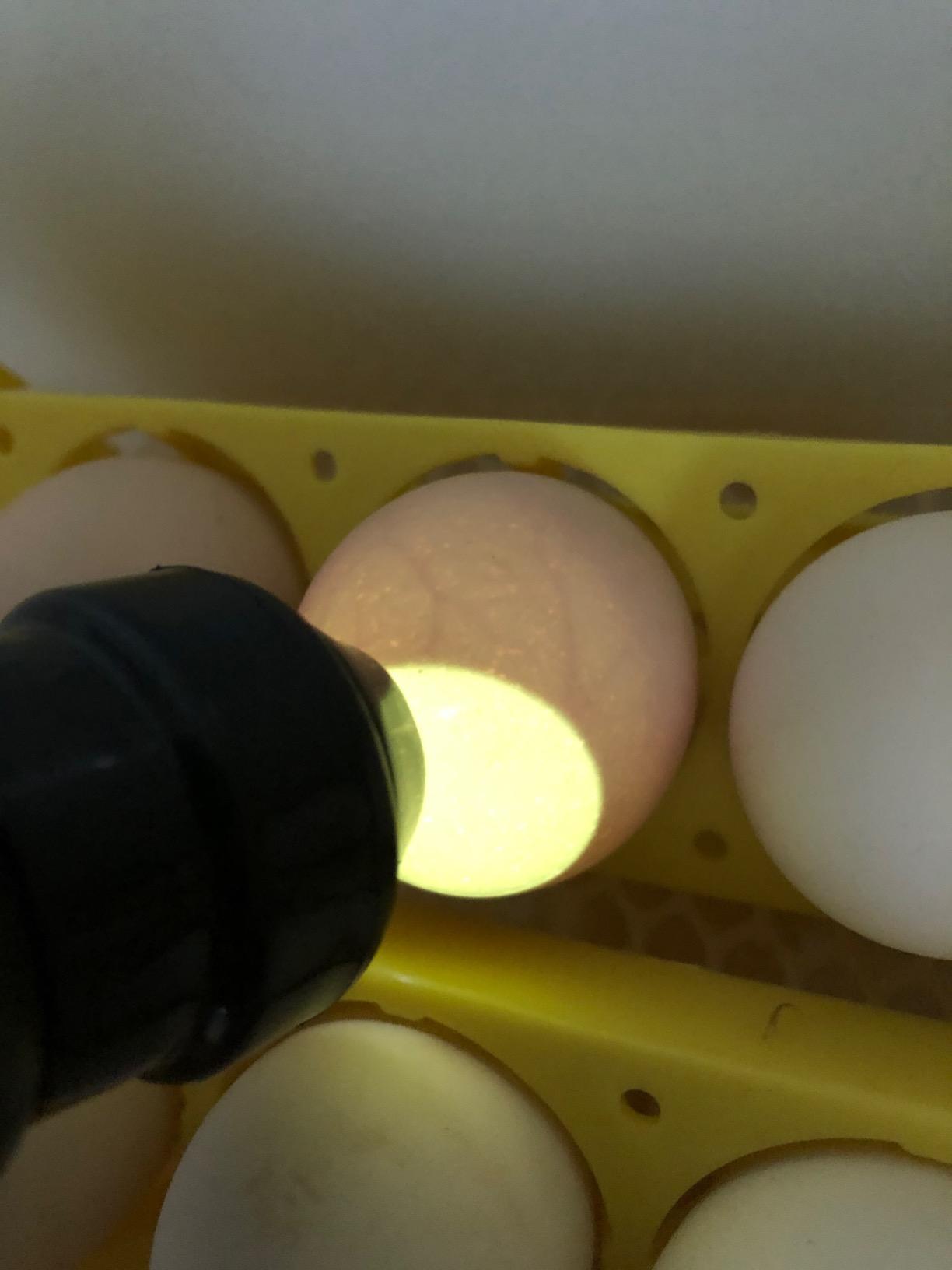
The covers span chicken, duck, goose, quail and most bird eggs according to the manufacturer, which makes this a plausible single-tool answer for a small mixed flock. Fit and seal are the strong part of this package, and for a beginner who wants one box to open, that completeness has real value.
Corded power means no mid-hatch dead light, which is the main reliability complaint elsewhere in this list. The trade-off is the cable, and the recurring advice is to run an extension cord to wherever you actually work.
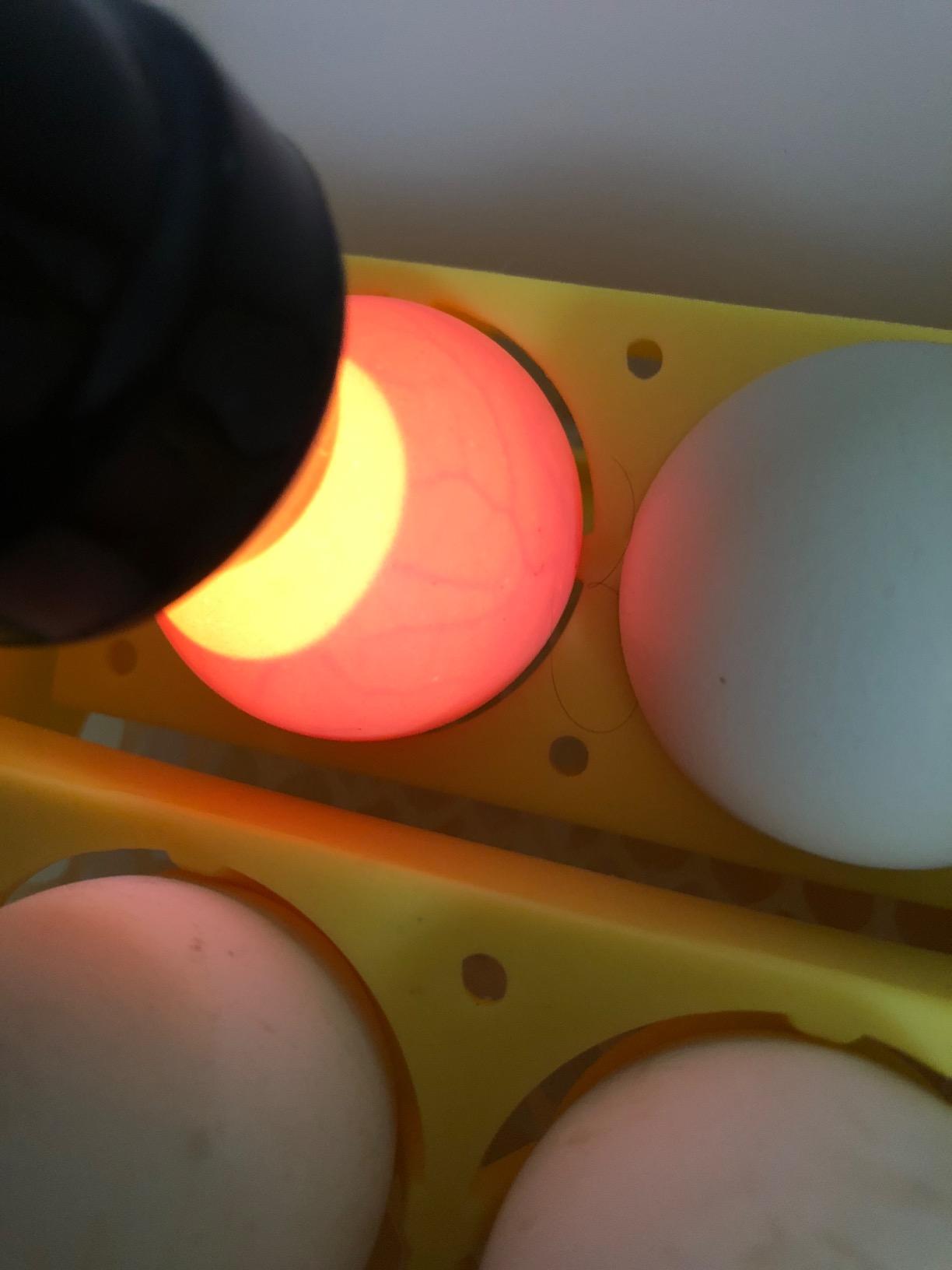
This is not the candler for dark Marans, Olive Eggers or heavily speckled shells, and the reviews are direct about that. Goose eggs are described as inconsistent rather than unreadable. A dark environment remains necessary, and the 4.4 average reflects a straightforward light tool rather than a specialist one.
Compact handheld flashlight style
One AAA included
Wrist strap
7.5 inch tall
The Little Giant is the one I would describe honestly as a pocket check rather than a candling tool. At 2.4 ounces and 7.5 inches tall with a wrist strap, it lives in a coat pocket and comes out for a ten-second viability glance at the nest.
Opinions split sharply, and that split is the review. Buyers who like it value portability and the included AAA. Critics say the output is too weak to candle even white eggs and recommend a general LED flashlight instead.
The wrist strap is not a gimmick here. It stops you dropping a light onto eggs you are holding, and it lets you hang the tool near the nest. Some users report it working in daylight for a fast glance, which is exactly the use it is suited to.
Two buyers received units that stopped working entirely, and the push-button switch is described as unreliable enough that some owners unscrew the body to turn it off. There is no manufacturer warranty, so a dead unit is simply a dead unit. At 130 reviews it also has the thinnest evidence base in this roundup, and community advice here is consistent about distrusting thin review counts.
Only as a secondary tool. If you already own something that can resolve an embryo, the Little Giant is a useful pocket companion. As your only candler, a general LED flashlight will serve you better for the same money. The 4.2 average reflects a mismatch between what people hope it is and what it is.
Most wrong purchases here come down to buying brightness when the problem was fit, or a wide aperture for eggs that need a narrow one. Work through these five decisions in order and the choice makes itself.
A quail egg needs an opening close to an inch across, a standard chicken egg wants roughly 1.5 to 2 inches, a duck egg sits around 2.25 inches, turkey near 2.75, and goose eggs need 4 to 5 inches. A chicken-sized opening simply will not seal around a quail egg, and every bit of leaked room light ruins the view. That is why two tip sizes or an adjustable aperture matter more than anything else on a listing.
A bright flashlight held away from the egg leaks light around the shell and washes out the image, which is why a 250-lumen candler with a fitted cup can beat a brighter general light. What matters is light concentration at the shell and how completely the aperture blocks ambient light. For Marans and Olive Eggers, treat fit and focus as deciding factors, and accept that no candler makes a heavily pigmented shell fully transparent.
Corded units never fail mid-batch but tie you to an outlet, and the most common cord complaint here is length. Battery units are portable but need fresh cells mid-hatch, and reviewers note batteries are not always included. For a permanent hatch station near an outlet, corded is the low-stress choice; the 1200mAh cell in one of the picks above carries a full hatch on one charge.
Most mid-range incubators ship with a small built-in lamp, usually adequate for light shells. The recurring complaint is that refurbished units often have weak built-in candlers, which is why several owners bought a standalone unit after theirs failed. Buy one if you hatch dark breeds or move eggs to a bench. Skip it if your incubator has a good port and you keep light-coloured birds.
Experienced keepers agree that a listing with a handful of reviews tells you almost nothing, and the well-reviewed options here run into the thousands. That is why the corded Magicfly keeps surfacing as the default despite not being the brightest. Also weigh after-sales support: a manufacturer willing to replace a defective unit matters more over five hatch seasons than a modest gain in output.
A strong flashlight is genuinely enough if you only hatch light-shelled birds, and the backyard chicken community recommends doing it that way more often than any dedicated candler. The shared advice is to pair a bright handheld with a shroud or dark cloth to block stray light rather than buying an expensive unit.
A dedicated candler still wins on seal and repeatability. A flashlight held at arm’s length leaks light around the shell, and the image changes every time you move, which makes subtle signs like early vascularisation hard to judge consistently. A candler gives you the same view every time.
If you already own a bright flashlight, use it for a first season. Buy a candler when you add dark breeds, when you start screening a larger flock, or when you want the same reading on the same egg at day 7 and day 14. A light that also checks eggs for cracks before you sell them is a light that earns its place, which is the argument for a general-purpose tool over a single-purpose one.
Darken the room first. A garage, a closed shed or a closet beats a lit kitchen by a wide margin, and keepers say the room matters as much as the device.
Take the egg out briefly and hold it by the wide end. You want the narrow end of the candler against the wide end of the egg so light passes through the widest part of the contents.
Seat the aperture and seal it. Press the rubber tip or cup flat against the shell until light stops leaking around the edge.
Keep it under about 30 seconds. Community advice is consistent here, and repeated candling stresses the embryo and risks dropping eggs.
Rotate the egg slowly. Look for blood vessels, an embryo, movement in later stages, a blood ring, a crack, or the air cell.
Return it promptly, pointed end down. Put eggs back the way you found them and close the incubator quickly.
On timing, day 4 is early but not wasted for a light-shelled egg, though many keepers wait until day 7 or 8 for a clearer read. A second check before lockdown is the one most people find most useful, and daily candling is the mistake that costs the most.
Most confusion in this hobby comes from not knowing what a dead egg looks like, and it leads to discarding viable eggs or keeping dead ones for three more weeks. There are four outcomes to recognise.
You will see fine blood vessels spreading from one spot, and in later stages a distinct embryo that moves when you rotate the egg. Put it straight back.
The egg looks uniformly clear and pale, sometimes with a single spot, with no vessels and no movement. It is harmless, but it occupies incubator space and can tip the humidity balance, so most keepers remove it after the early check.
A thin red ring of blood with no developing embryo means fertilisation started and the embryo died very early. Leaving these in is a common mistake because they resemble promising veins at a glance.
A crack that catches a fingernail, or an air cell sitting oddly away from the wide end, means the egg will not hatch. Cracks are worth catching before setting, or at the first check, rather than at lockdown.
Whatever you see, the limits are honest: candling is an observation aid, not proof of fertility, and the same egg looks different on day 4 than on day 18.
This is the hardest candling problem, and it is where most budget lights let you down. If you keep Marans, Olive Eggers or Easter Eggers, the steps below are the difference between a useful check and a glowing blob.
Go darker than feels necessary. Even dim hallway light ruins the image through a pigmented shell, which is why owners of the highest-output picks here still insist on a fully darkened room.
Prioritise seal over lumen count. A close-fitting rubber cup beats a brighter light with a loose rim, because leaked ambient light washes out everything behind the shell.
Use the highest output mode for the check. A low mode is comfortable at midnight but will not resolve a Maran shell. Drop to low only for a quick late-stage movement check.
Accept partial visibility as normal. You are looking for a dark mass, a few vessels and movement, not a full internal portrait.
Check early and check once. More candling does not make a dark egg more readable. A day 7 to 8 check and a pre-lockdown check are enough.
The practical alternative, and one experienced keepers recommend, is a bright flashlight paired with a dark cloth or shroud over your head to cut stray light. It costs nothing and it works reasonably well on Marans, just far less consistently egg to egg than a fitted candler.
The Titan Incubators High Intensity LED is the best all-round egg candler because it pairs the highest output in this group with a ring stand that holds the egg steady. The Magicfly corded candler is the safest default for chicken keepers, with the largest review base and two sealing rubber tips. Choose on aperture fit first and brightness second.
Day 4 is not too early, but the view is limited. A first check around day 7 or 8 gives a clearer read on blood vessels and fertility. Candling repeatedly stresses the embryo, so two checks are usually enough: one early and one before lockdown.
A bright cool-white LED handheld with a focused beam works well for light-shelled eggs, especially paired with a dark cloth or shroud to block stray light. A dedicated candler is worth adding when you keep dark breeds, or when you want the same reading on the same egg every time.
Darken the room as much as you can, seal a close-fitting rubber cup flat against the shell, and use the highest brightness mode. Look for a dark mass, a few blood vessels and movement rather than a full internal image. No candler makes a heavily pigmented Maran or olive shell fully transparent.
Three signs matter: a uniform clear interior with no vessels and no movement means infertile, a thin red ring of blood with no embryo means early embryonic death, and a visible crack or a detached air cell means the egg will not hatch. A developing egg shows branching blood vessels and an embryo that moves when rotated.
The most common mistakes are candling in a room that is not dark enough, holding the egg against the candler too long, and candling repeatedly. Keep each check under about 30 seconds, return eggs pointed end down, and limit yourself to two sessions per hatch. Handling eggs too often stresses the embryo and risks dropping them.
If you keep dark breeds or a mixed flock, buy the Titan Incubators high-intensity candler. It resolves Maran and olive shells better than anything else in this roundup, and the ring stand makes long batches easier on your hands.
If you want the safest, most proven option for ordinary chicken eggs, the Magicfly corded candler has the deepest review base and two tip sizes covering quail through duck. Budget constraints point to the NestEcho rechargeable, and mixed waterfowl operations point to the Incu-Bright with its 250-lumen CREE bulb.
Whichever you settle on, workflow matters as much as the tool: a genuinely dark room, a sealed aperture, checks kept under 30 seconds, and two sessions per hatch rather than a daily habit. Get those four right and almost any of these will tell you what you need to know. If you are still working out the rest of the setup, our picks for practical egg-related gifts and hanging egg chairs for patios cover the rest.