Physical Address
304 North Cardinal St.
Dorchester Center, MA 02124
Physical Address
304 North Cardinal St.
Dorchester Center, MA 02124

The buying decision most parents get wrong happens about eighteen months in. You buy a high chair for a baby who cannot yet sit up, and by the time your child is a toddler the seat is too deep, the tray is at chin height, and the footrest is nowhere to be found. Searching for the best convertible high chairs for toddlers means starting from the toddler stage and working backwards, which is the opposite of how most roundups are organised.
I have spent the last few months going through convertible seats with the toddler question first: does the tray come off cleanly, is there a footrest at a height a two-year-old can actually push against, does the seat reach a standard dining table, and can you remove the harness without losing the tray. Those four questions eliminate more chairs than any spec sheet, and they are the framework I used across all twelve picks below.
What survived that filter is a fairly specific group. Multi-mode plastic chairs dominate on conversion range, wooden frames win on stability, and only a handful actually solve the foot-support problem. A few convert into something genuinely useful past the booster stage, which is where the real cost-per-year argument lives. If you are still building a registry, our picks for climbing toys for toddlers and educational toys for toddlers tend to age just as well, and the same shortlist logic applies.
One note before we start. None of the chairs here were photographed in our studio, so this roundup is built from manufacturer specifications, published dimensions, and the patterns that show up repeatedly across thousands of buyer reviews. Where reviewers disagree, I say so rather than picking a side. Everything below was re-checked in 2026, and dimensions are quoted exactly as the manufacturers publish them because seat height is the number parents most often cannot find.
The 90-90-90 rule describes correct sitting posture for a toddler at mealtimes: hips, knees and ankles each bent at roughly 90 degrees, with feet resting on a footrest or chair rung rather than dangling. A seat that gets those three joints right lets a child sit comfortably for a full meal and supports self-feeding, while a seat that misses them creates the slouched, shifting behaviour parents often misread as bad behaviour.
Test it yourself by sitting your child in the chair and checking whether their feet reach a rung, a footrest or the floor. If they cannot, the chair works for an infant and fails for a toddler, and that is the most common reason a perfectly good convertible seat gets replaced at 18 months.


These three are not the flashiest chairs in the roundup, and that is deliberate. They are the ones where the toddler conversion actually works, the cleaning is realistic, and the review volume is large enough that the failure modes are well documented rather than anecdotal. If you want the short answer, start at number one and work down.
| Product | Features | |
|---|---|---|
| Graco Made2Grow 5-in-1 |
|
Check Latest Price |
| Evenflo Eat and Grow 4-in-1 |
|
Check Latest Price |
| Baby Trend Sit Right 2.0 |
|
Check Latest Price |
 Graco Blossom 6-in-1 Graco Blossom 6-in-1 |
|
Check Latest Price |
 Graco DuoDiner DLX 6-in-1 Graco DuoDiner DLX 6-in-1 |
|
Check Latest Price |
 Ingenuity SmartClean Trio Elite Ingenuity SmartClean Trio Elite |
|
Check Latest Price |
 Ingenuity Full Course 6-in-1 Ingenuity Full Course 6-in-1 |
|
Check Latest Price |
 UNISWAN 6-in-1 UNISWAN 6-in-1 |
|
Check Latest Price |
 Skip Hop Sit-to-Step 2-in-1 Skip Hop Sit-to-Step 2-in-1 |
|
Check Latest Price |
 Dream On Me TableTalk 2-in-1 Dream On Me TableTalk 2-in-1 |
|
Check Latest Price |
 Evolur Zoodle 2-in-1 Evolur Zoodle 2-in-1 |
|
Check Latest Price |
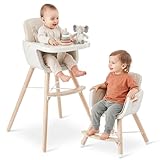 Mallify 3-in-1 Wooden Mallify 3-in-1 Wooden |
|
Check Latest Price |
We earn from qualifying purchases. CERTAIN CONTENT THAT APPEARS ON THIS SITE COMES FROM AMAZON. THIS CONTENT IS PROVIDED 'AS IS' AND IS SUBJECT TO CHANGE OR REMOVAL AT ANY TIME.
5-in-1 conversion
3-position recline
Dishwasher-safe tray insert
Machine-washable seat pad
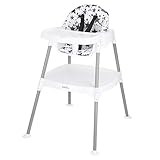
Of everything I looked at, this is the chair I would hand to a parent who just wants one purchase to cover the whole messy middle. The five stages are genuinely distinct rather than marketing labels: infant recline, baby highchair, toddler booster, youth stool and big kid chair. The toddler booster stage is the one that matters for this article, and it is the stage most two-year-olds will actually sit through.
The 27,089 reviews at a 4.7 average give this more real-world coverage than anything else in the roundup, and the complaints are consistent rather than scattered. Parents in r/Buyingforbaby name Graco as the default recommendation precisely because the Made2Grow is the model most households have already lived with, and the pattern across reviews is that the cleaning story is what holds up: the seat pad goes in the washing machine and the tray insert goes in the dishwasher.
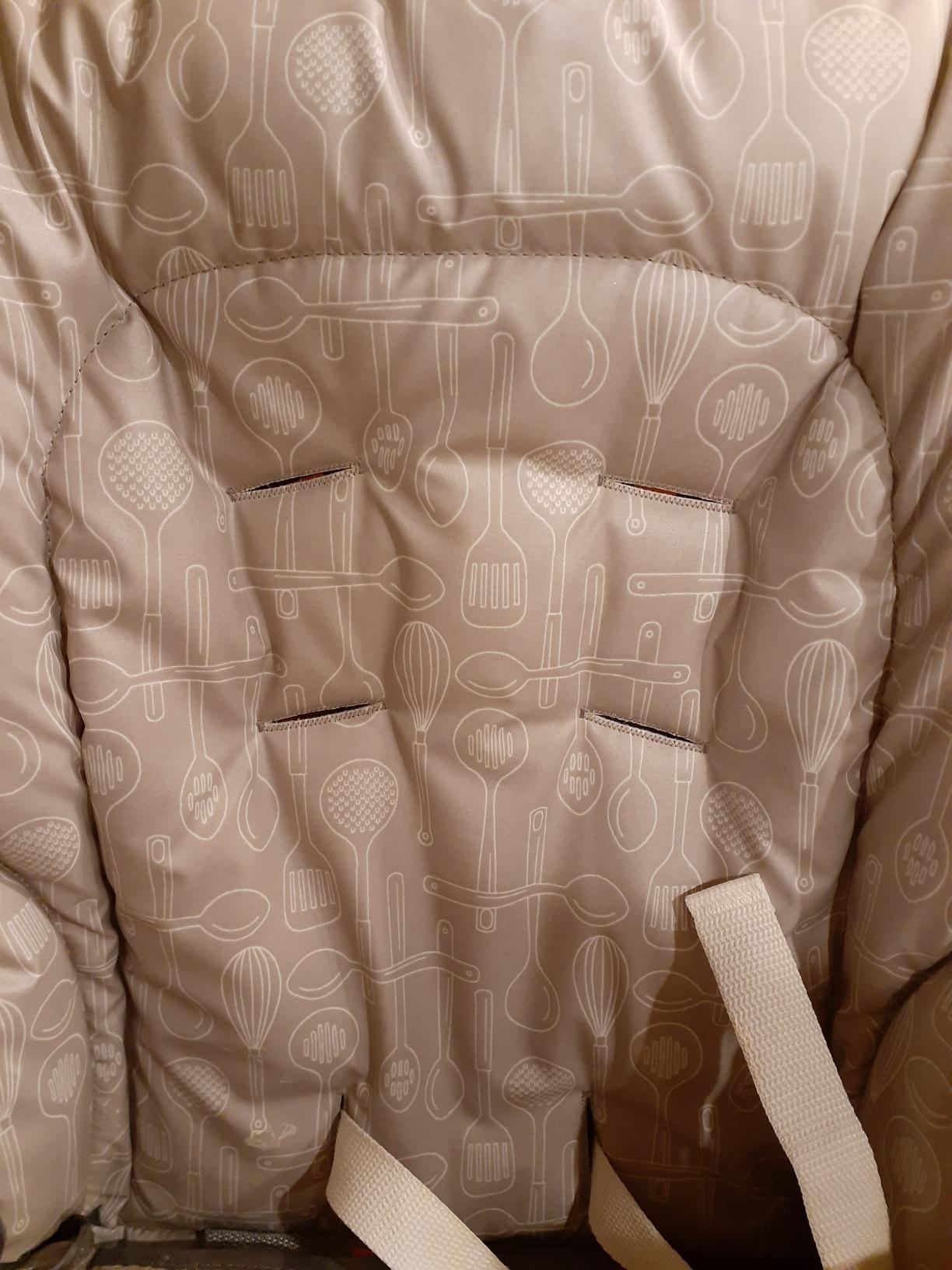
The useful thing about a 5-in-1 claim is that you can verify each stage against the manufacturer’s own description. Infant recline, baby highchair, toddler booster, youth stool and big kid chair are all named specifically, which means you know what your child will be sitting in at 20 months and at four years. Chairs that advertise eight modes usually cannot tell you what four of them are.
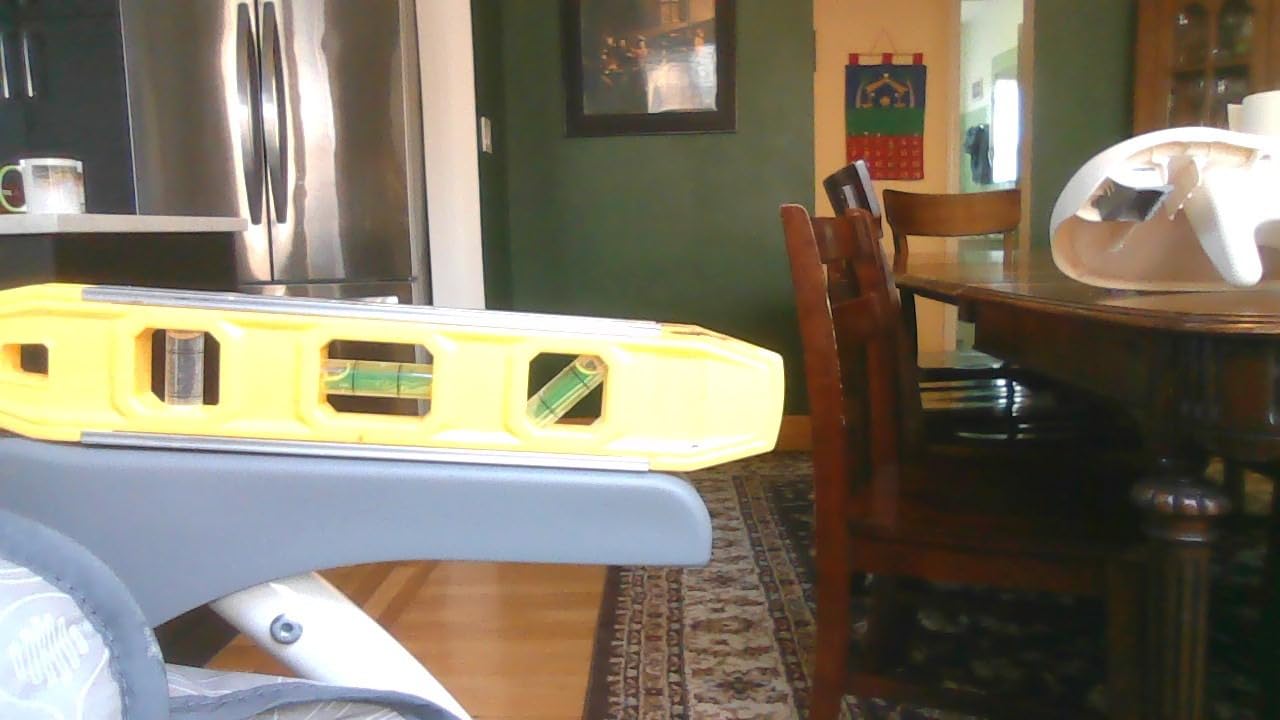
Three recline positions cover infant feeding through a semi-upright sit, and the recline is what lets the same chair work for a six-month-old and an upright toddler. The seat pad is both machine-washable and wipeable, which matters when the same cushion has to survive porridge, yogurt and a week of floor eating.
Two wheels at the front is the compromise. It is stable but it means moving the chair between kitchen and dining room is a lift rather than a roll, and in a small open-plan flat that gets old by week three. If you need wheels, look at the Blossom or the Ingenuity Trio Elite below.
Reviewers describe the booster stage as the one that extends the useful life most, and the recycled One Planet fabrics come up as a small but genuine plus for parents who care about materials. The frame is plastic rather than wood, so it is lighter to move than a hardwood chair but will not have the same rack-and-pine visual weight in a dining room.
4-in-1 conversion to 50 lb
5-point harness
Tool-free assembly
Breaks down for transport
This is the chair to buy if your kitchen is small, your child is already past the reclining stage, and you want something you can actually carry. Assembly is tool-free and takes two to three minutes, and the whole thing breaks down for transport, which matters more than it sounds if you are visiting grandparents or moving apartments mid-stage.
The four modes are honest. Infant highchair becomes a toddler dining chair with tray, then a standalone toddler chair, and finally a big kid table and chair set. That last mode is unusual at this level and it means the chair is still doing something useful when your child reaches five.
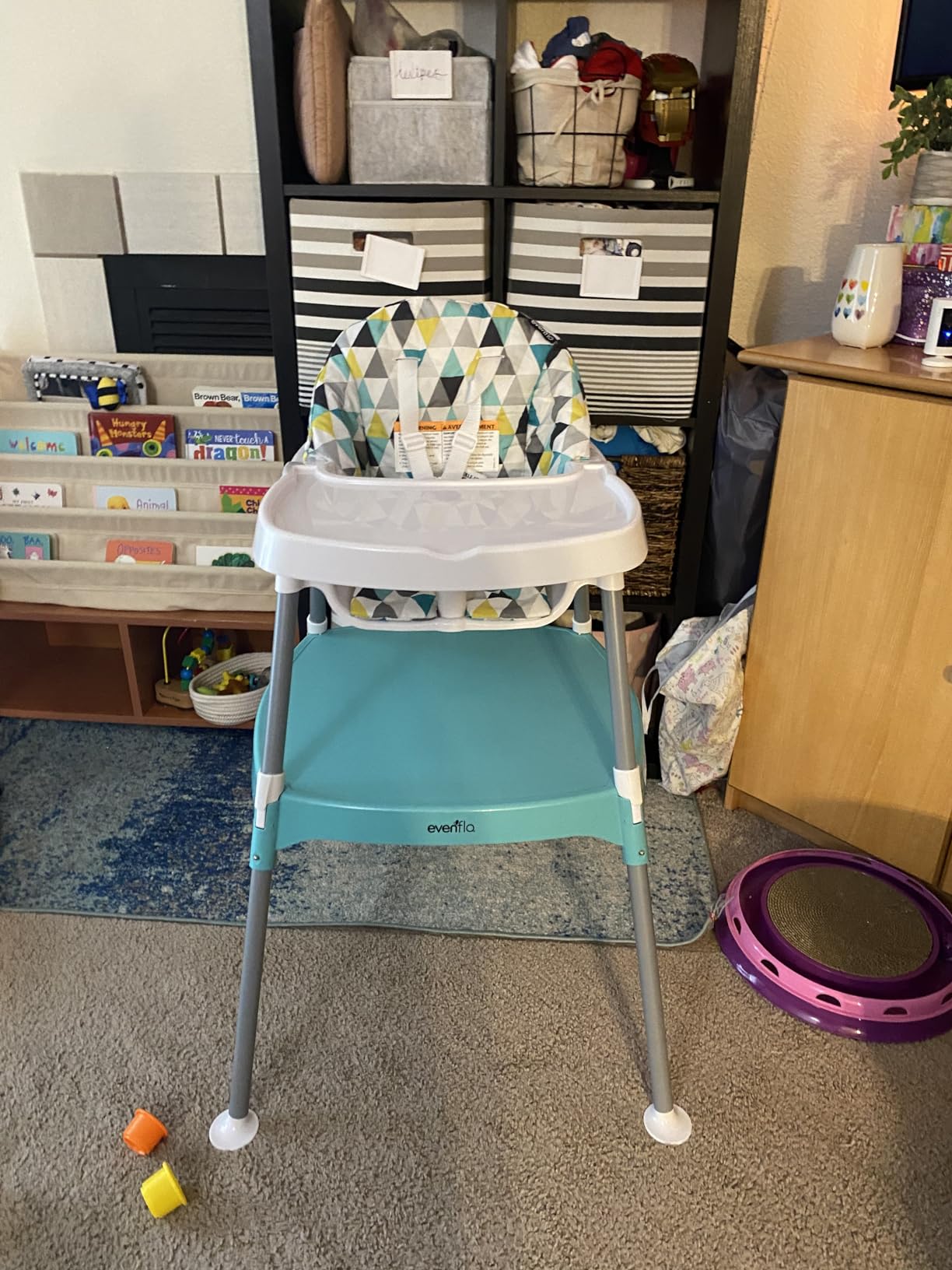
There is no recline on this chair, and that is the single most repeated limitation in the reviews. If your child is six months old and still gassing or spitting up, an upright seat is a real drawback. If your child is a toddler who sits up reliably, the recline is a feature you will never touch, and skipping it buys you a lighter, simpler chair.
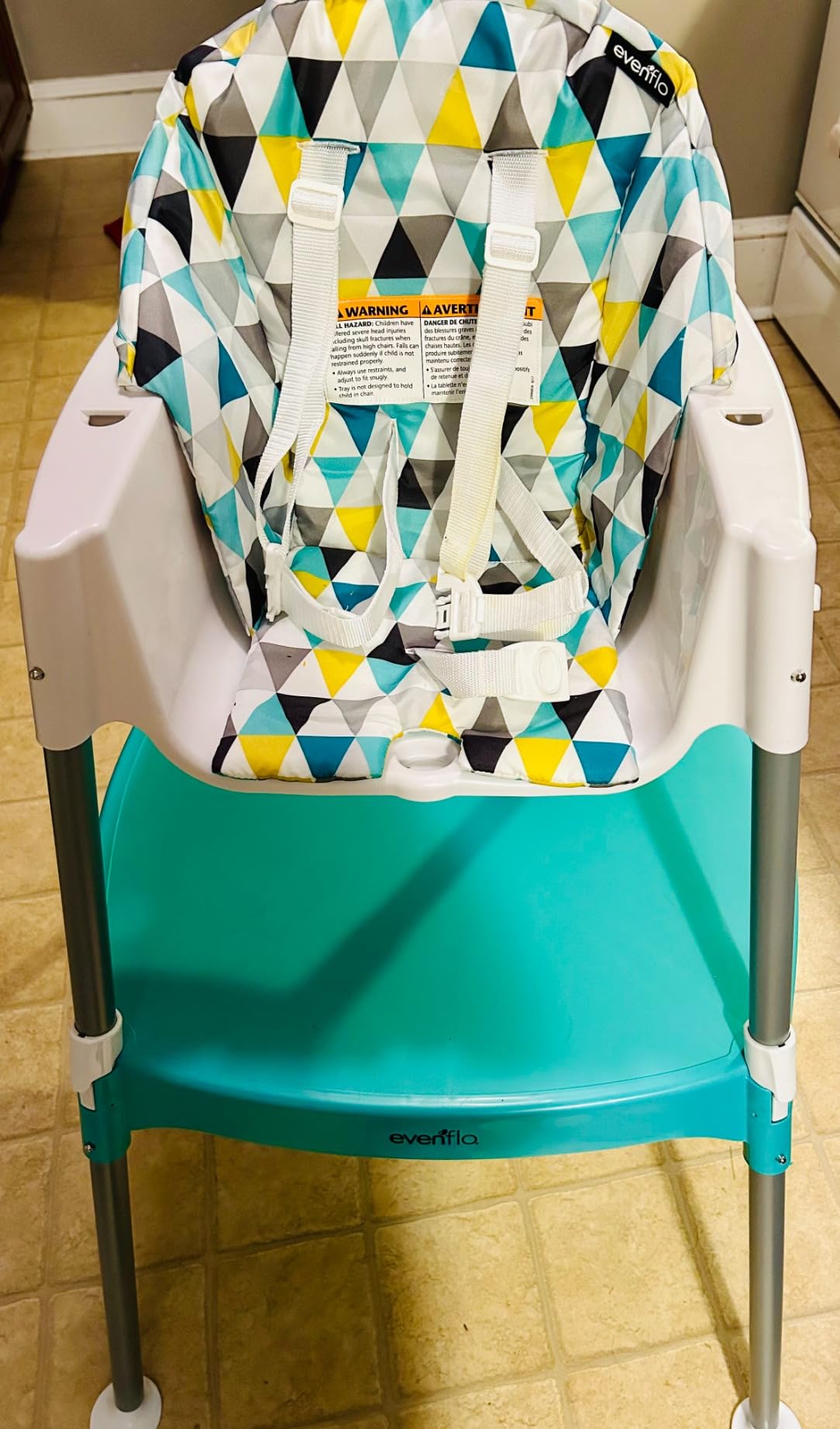
Reviewers consistently praise the surface design. There are few crevices, the seat pad is machine-washable, and the tray lifts off for wiping, so there is nowhere for yoghurt to hide. In a chair with a padded cover and a stitched tray rim, the same cleanup takes twice as long.
Two honest limitations. The tray is thin and flexible, so it does not feel as solid under a toddler who leans on it hard, and the frame is not heavy enough to feel planted when a large toddler shifts their weight. The wide footprint takes up real floor space, which sits awkwardly with the small-space recommendation. Take this chair if you need lightness and easy breakdown, not if you need a rock-solid base.
6 stages
6-position height adjustment
3-position footrest
3 removable trays
This is the only chair in the roundup that solves the 90-90-90 problem properly, with a three-position footrest that a toddler can actually reach. Combined with six height positions, it is the pick for a tall or long-legged toddler, and for anyone whose child squirms out of a chair that has no place to push.
At 4.8 stars across 4,598 reviews it is the highest-rated chair here, and reviewers consistently single out the wheels, the recline and the two-child seating. The three removable trays are a small detail that parents appreciate more than expected, because it means you can hand the child the clean tray while the used one is in the dishwasher.
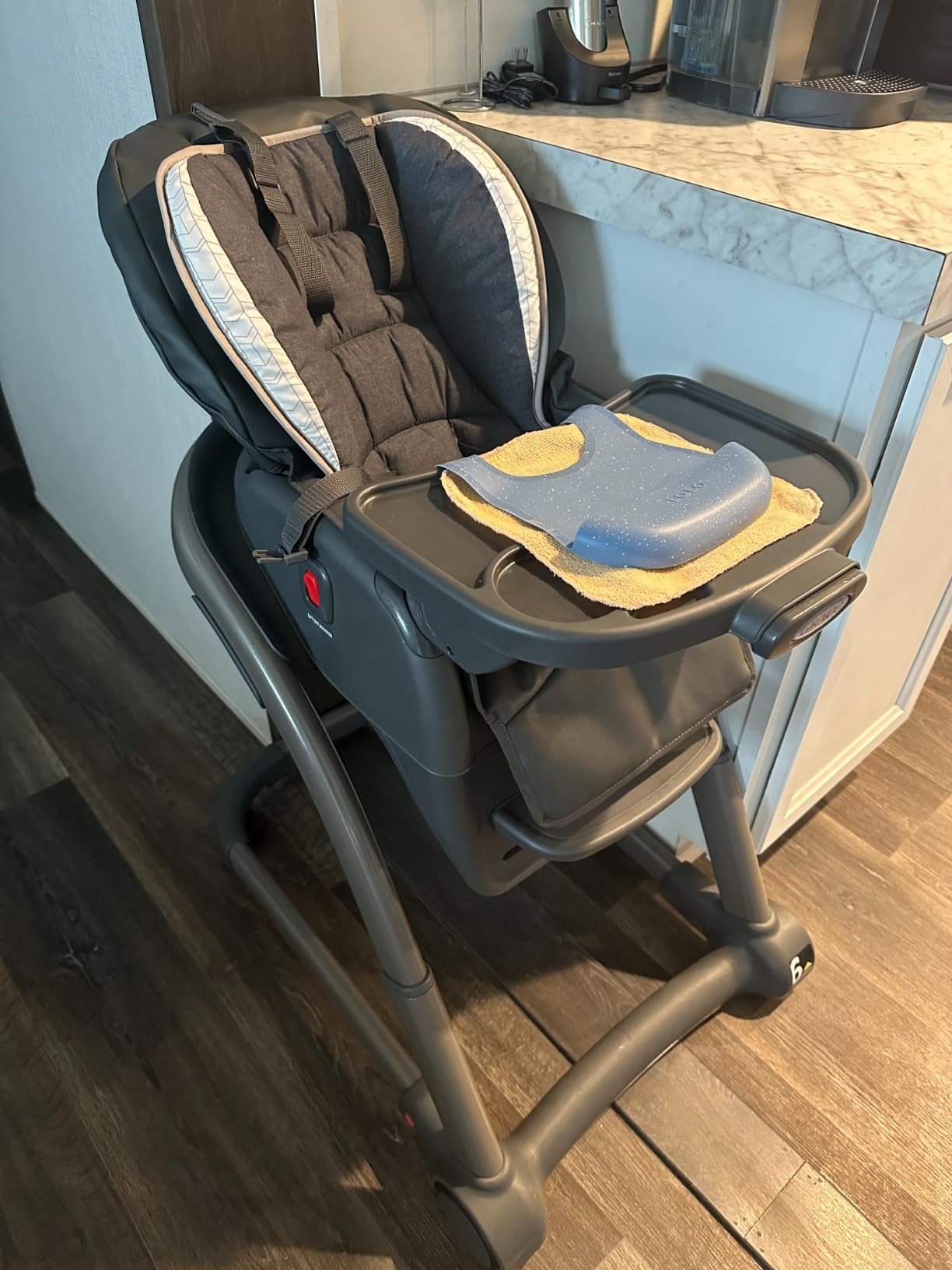
Three footrest positions spread across the chair’s height range mean there is a setting that matches your toddler rather than one compromise position. This is the difference between a chair that works for two years and one that works for one. The footrest is fiddly to pop out, which is the price of the mechanism, but once it is in place it is stable.
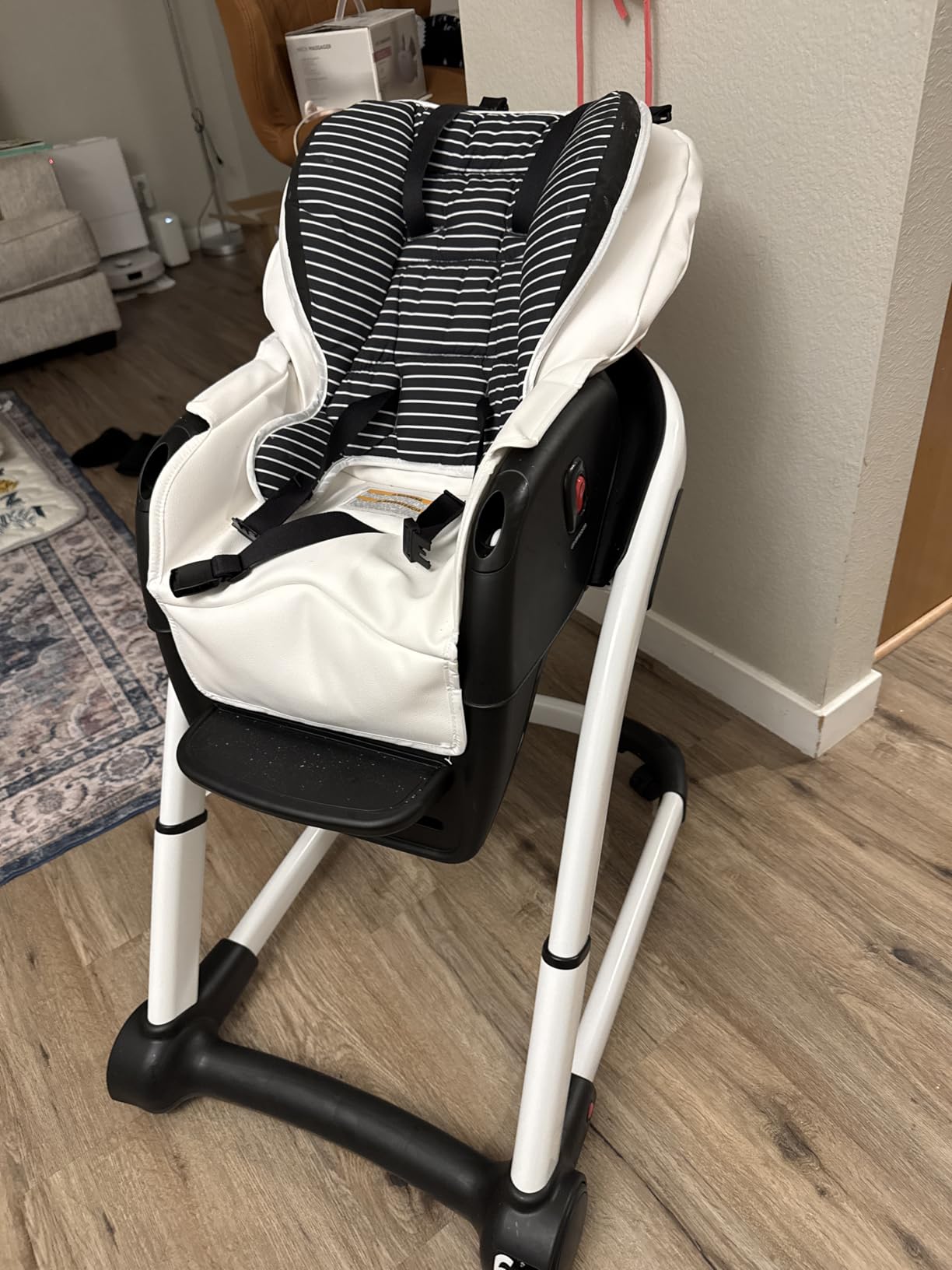
Stage six seats a baby and a toddler simultaneously using the booster and stool together. That solves the two-under-five problem outright, and it is a genuine advantage over chairs that force you to borrow a second seat for a few years. The infant feeder and toddler booster stages use the same hardware, so there is no separate kit to lose.
It does not fold, so it stays where you put it permanently, and the width across the tray will be noticeable in a small dining nook. The white leatherette finish is also the most maintenance-sensitive surface in this roundup: reviewers report pigment-heavy foods such as tomato sauce and beetroot staining it, and the stitching collects crumbs that need picking out rather than wiping away.
If you want foot support, this is the chair. If you want foot support and a chair that folds, those two requirements pull in opposite directions, and the foot support should win because the toddler stage is longer.
3 modes
3-position recline
One-hand dishwasher-safe tray
Multi-height adjustment
The Sit Right 2.0 is designed around a single idea: a high chair with fewer nooks and crannies. That sounds unglamorous until you have cleaned a tray with a stitched rim and a padded cover after a toddler meal, and it is why this chair keeps showing up in cleanup conversations.
Three modes cover the practical range. Infant highchair uses the reclined seat position, traditional highchair is the upright middle, and the toddler chair is the same seat with the tray removed at the lowest position. The tray removes with one hand and goes in the dishwasher, and the seat adjusts through multiple height positions.
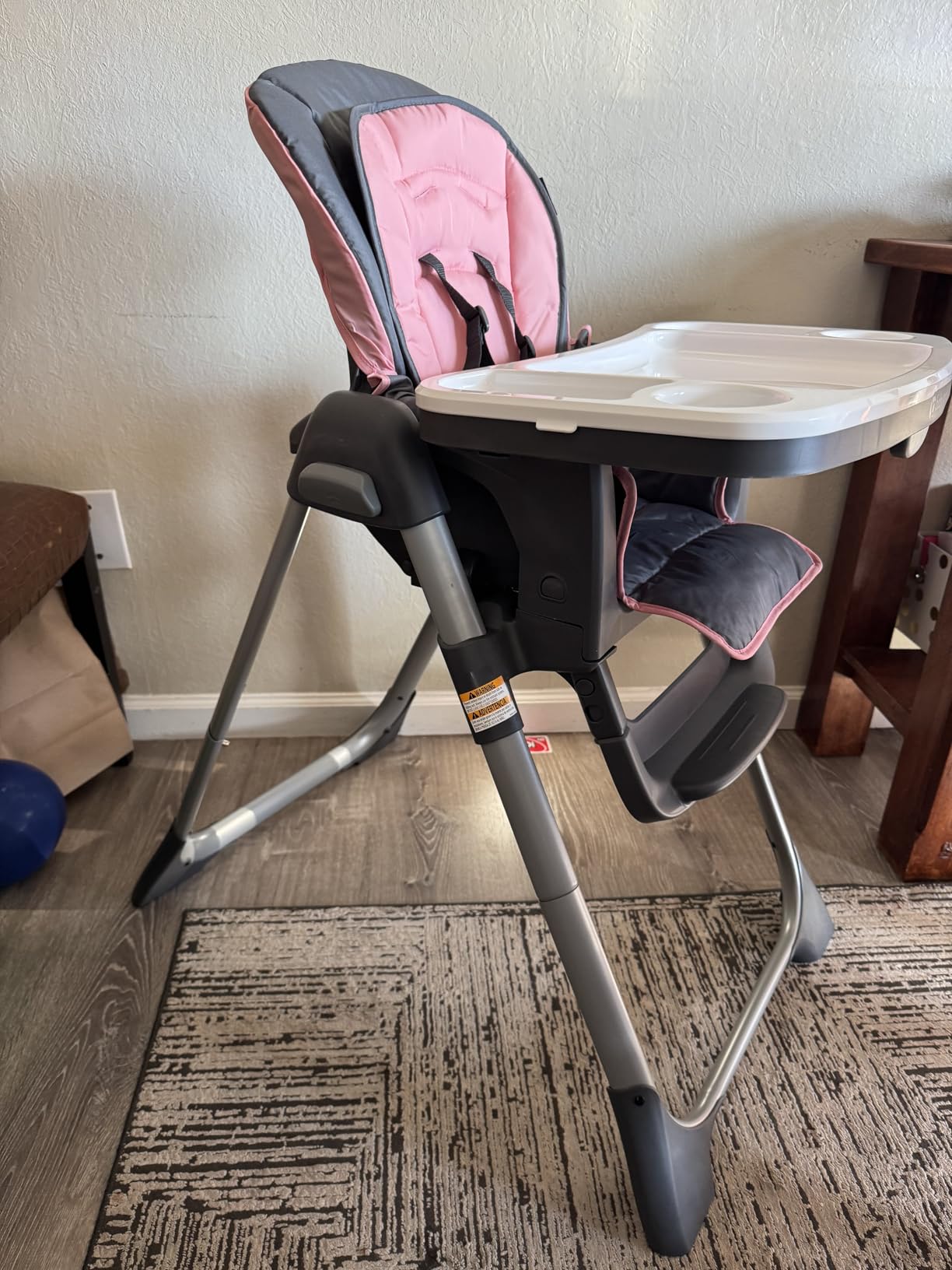
Parents are right to be sceptical of large mode counts, and this chair is the proof. Three honest stages that work beat six labels where two of them are unusable. If your plan is infant to around age four with the tray off, three modes covers the entire window and you skip the marketing inflation.

Three recline positions and a three-position tray give enough range for a six-month-old and a toddler without turning the adjustment into a puzzle. The tray is single-piece rather than a detachable two-part design, so there is no secondary rim to wash separately, which is where the cleanup advantage really comes from.
There is no footrest to speak of, so a toddler using this chair at table height will dangle unless their feet reach a rung. The build is also simpler than the Graco and Ingenuity models, with a lighter tray feel. For a child who is messy, eats independently at around 18 to 30 months and then moves to a booster, that is a good trade.
6 growing stages
Seats two children
Infant booster clips to a dining chair
3-position recline
The DuoDiner DLX exists for a specific household: two children close enough in age that you are feeding them at the same time, which is the situation the later stages solve by combining a booster and a stool. For a family with a toddler and a baby six months apart, that is the whole argument.
Infant highchair, traditional highchair, infant booster, toddler booster, and the combined booster-plus-stool configuration give six stages in total. The infant booster attaching to a standard dining chair is the mode parents use most, because it lets a baby reach the table without another frame on the floor.
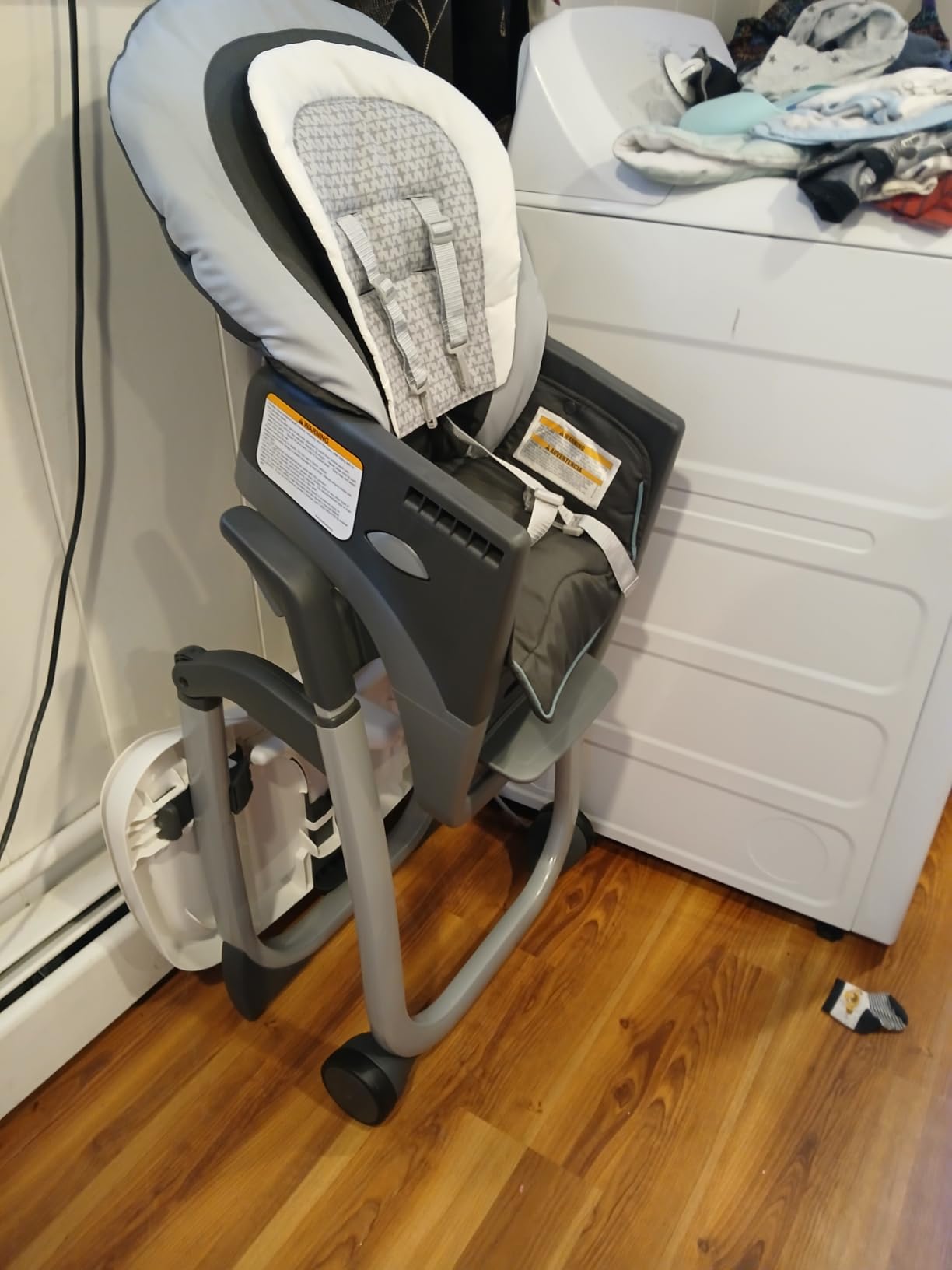
Buyers consistently highlight the two-child capability as the reason to buy it. The alternative is buying a booster separately later, and for a narrow dining space the single combined frame is easier than two chairs competing for the same spot. The trade is storage, because the booster and stool are separate pieces that need a home between uses.
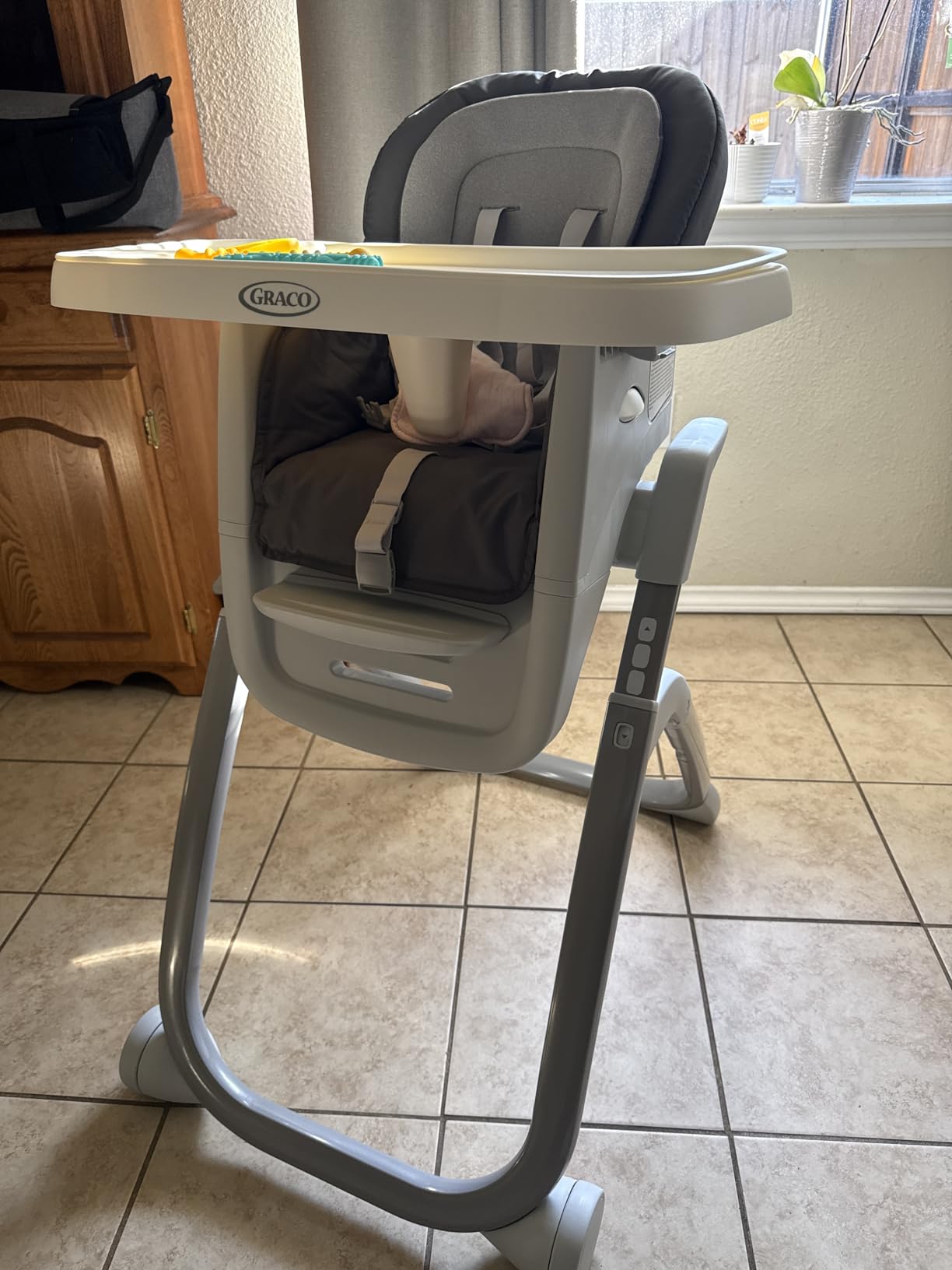
The toddler booster is portable in a way the main frame is not, which is why reviewers mention using it on the go. Combined with the infant booster that clips onto a dining chair, you have two seat positions that travel without a highchair in the car boot.
This is a wide chair. It has a larger footprint than the simpler two-in-one and three-in-one models here, and it does not fold. In a flat where floor space is the binding constraint, that is a genuine cost, and the 2-in-1 chairs further down this list are the better fit.
6 months to 5 years
No fabric seat covers
Wipeable frame
Dishwasher-safe one-hand tray
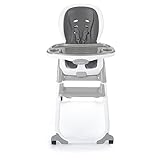
The SmartClean Trio Elite solves cleanup by removing the problem instead of managing it. There are no fabric seat covers at all. The seat is a moulded surface with a removable EVA foam insert, and both wipe down, so a week of food residue comes off with a cloth rather than needing a washing machine.
It converts from a traditional highchair at six months to a chair-top booster and then a standalone toddler seat, with a stated range of six months to five years. The 5-point harness has three adjustable shoulder heights and the seat reclines through three positions, which is more adjustability than most fabric-covered chairs offer.
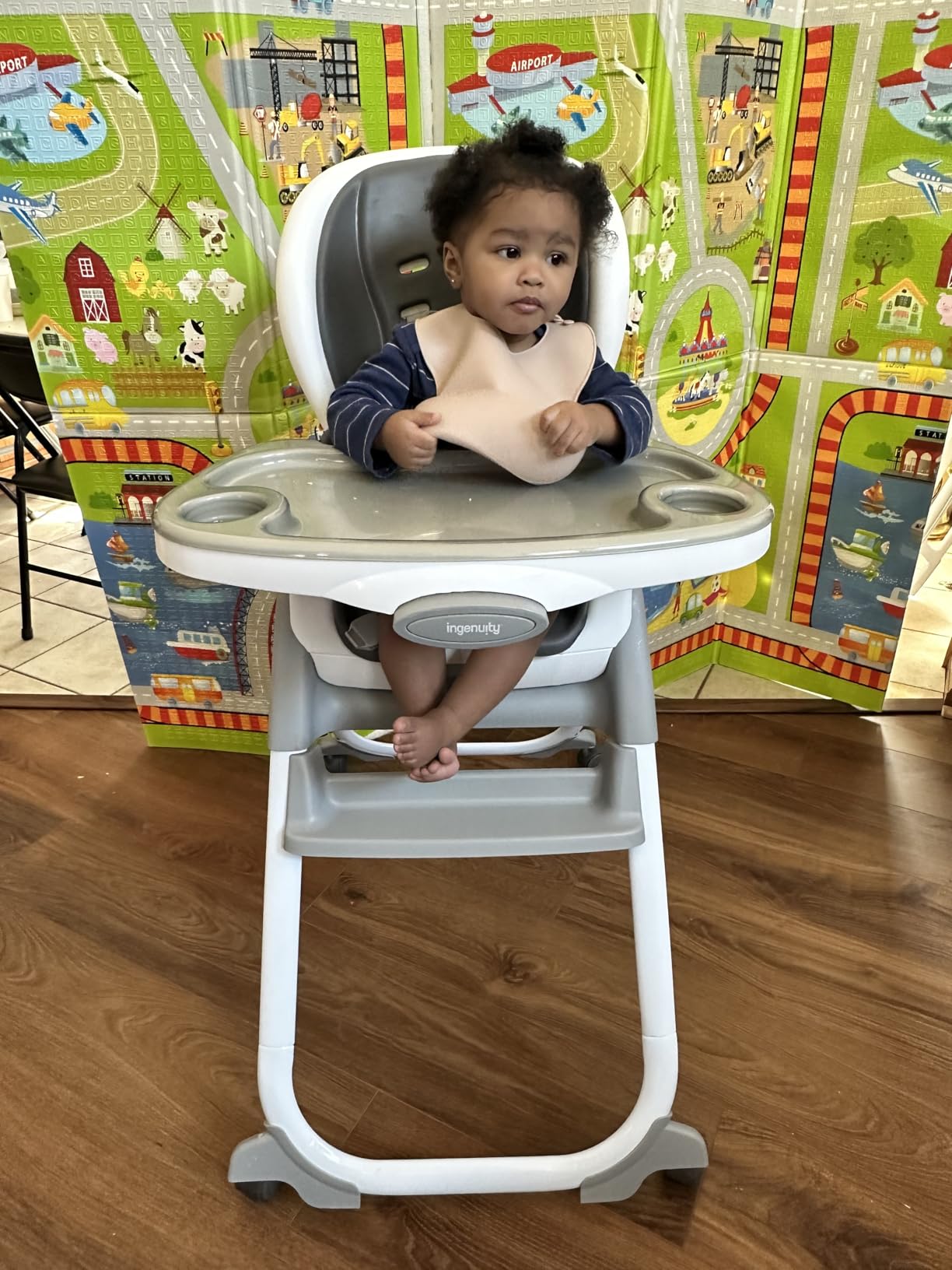
Fabric absorbs. A wipeable moulded seat does not, and the difference compounds over a year of daily use. The removable foam insert is the only textile here, and it lifts out for cleaning. The dishwasher-safe tray releases with one hand, which is the detail that matters when you are trying to clear a table with a toddler watching.
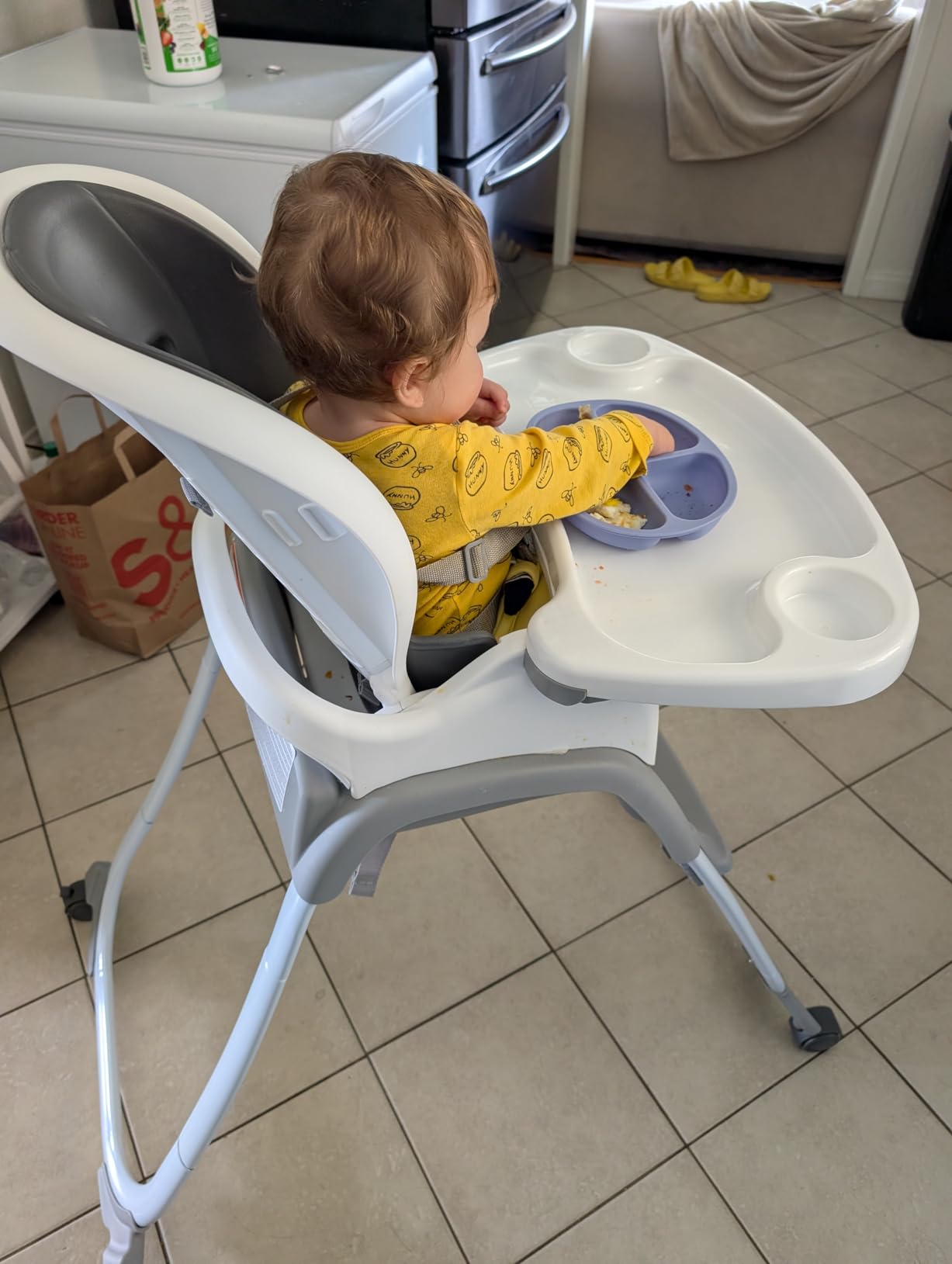
The lightweight rolling base means you can move the chair from kitchen to dining room to living room without lifting, which is useful when meal times are not in one fixed place. The trade-off is that it does not fold, so it is always a permanent object on the floor rather than something that goes away in a cupboard.
Fully assembled it measures 32.2 by 21.6 by 42.1 inches, which gives you a realistic figure to check against your dining space. The overall height means the toddler stages bring the seat down toward a standard table, and the moulded seat keeps a toddler from slipping forward onto the tray edge, which helps with the hip positioning the 90-90-90 rule depends on.
6 convertible modes
Feed Easy mini tray
2 recline positions
5-point harness to 50 lb
The Full Course has a feature none of the other chairs here does: a small Feed Easy tray that clips onto the main tray. For a child doing baby-led weaning it puts a portion of finger food at a height a small hand can reach, and it moves the tray close enough to the parent for a shared meal.
The six modes run from a first-foods chair through a traditional highchair, a chair-top booster, a dining chair and a toddler seat, and the booster-plus-toddler-chair combination seats two children. Fitted for six months to toddlers up to 50 pounds, with two recline positions and a 5-point harness.
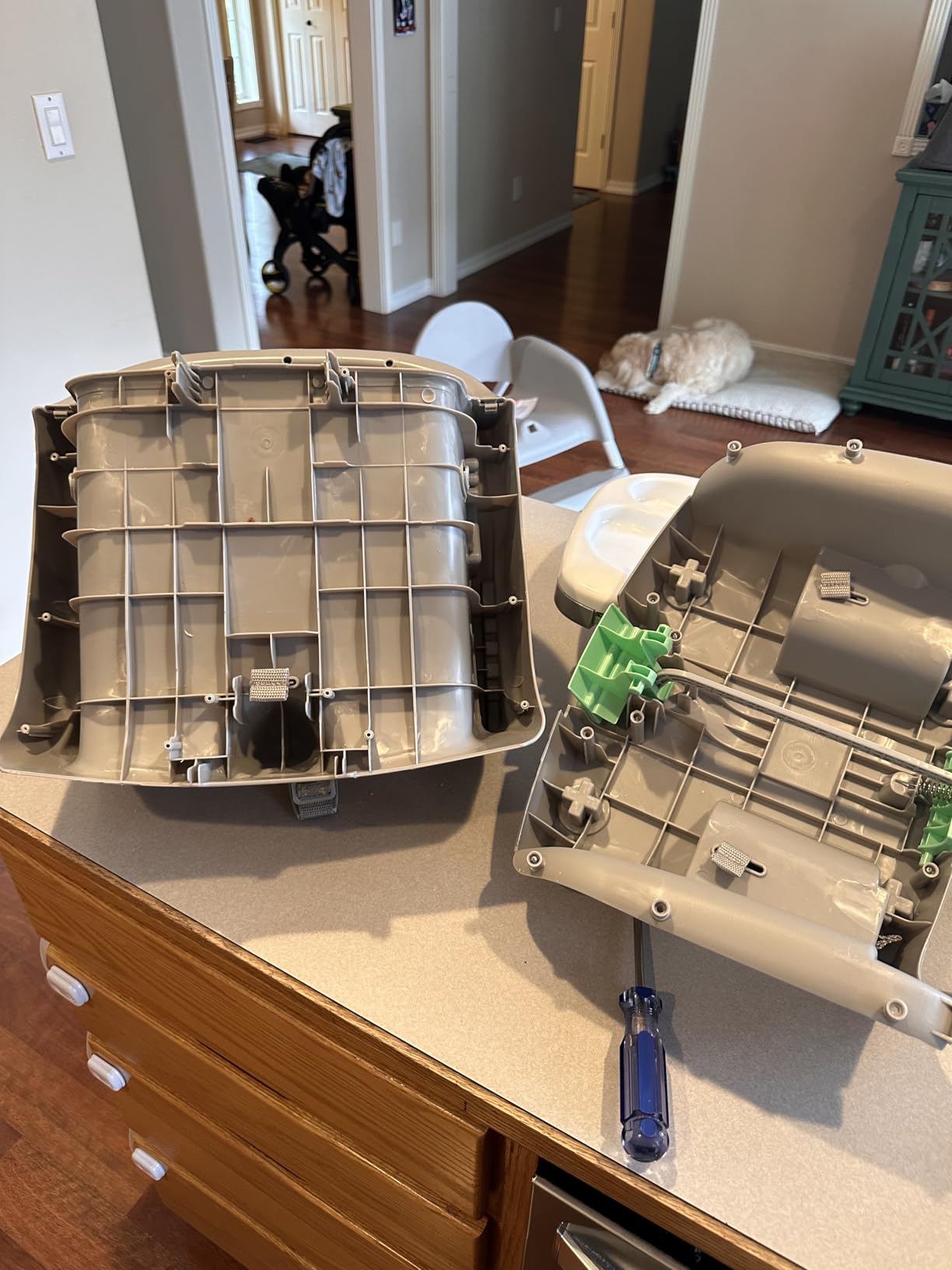
Both trays slide out with a pinch, so you can hand a toddler a clean surface without breaking the meal. Parents doing baby-led weaning mention the mini tray as the reason the chair worked at all, because it solves the problem of a six-month-old holding a full-size plate they cannot lift or aim.
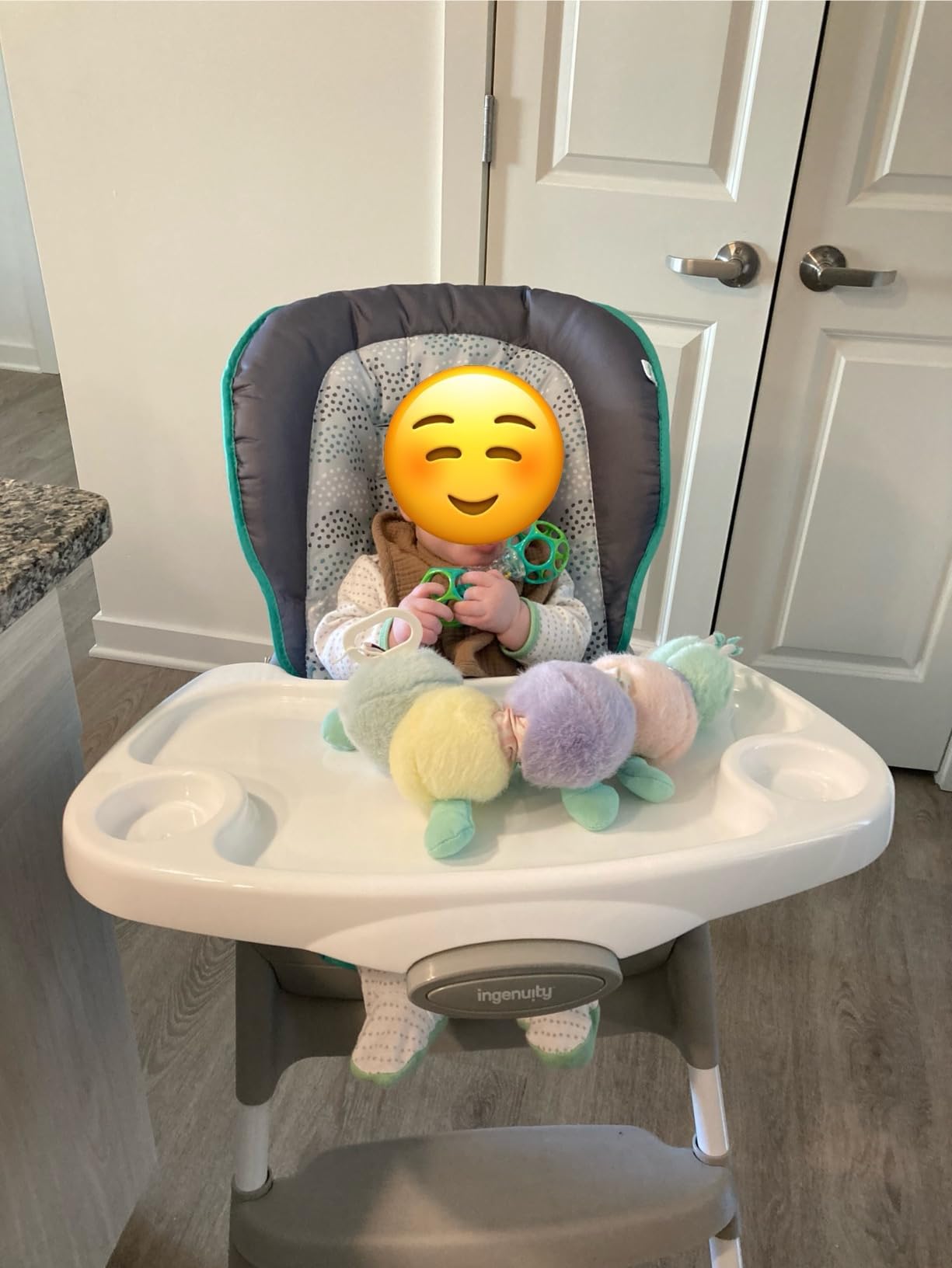
Harness straps and the fabric seat pad are machine-washable, and both trays are dishwasher safe. That is the most complete cleaning spec in the roundup, with the caveat that reviewers report the main tray is too large for many domestic dishwashers, so check your rack before you rely on it.
This is the largest chair in the roundup at 40.9 by 21.7 by 38.2 inches assembled, and it does not fold. Reviewers describe it as a tripping hazard in small rooms, and with only two front wheels and no height adjustment, moving it around a compact kitchen takes effort. For a large open-plan room with a big table, the footprint is manageable; anywhere else it is the first thing to consider skipping.
6 months to 6+ years
CPSIA and ASTM approved
Food-grade PP
Tool-free assembly
The UNISWAN does something unusual: the modes keep going after the toddler stage. Beyond highchair, booster, dining chair and padded toddler chair, it converts into a learning table and chair and a block table and chair, giving a stated range of six months to six years and older. That is the longest usable span of any chair here.
At 4.8 stars the rating is joint highest in the roundup, and reviewers single out the stability above everything else. The pyramid base with anti-slip pads does not wobble, which is a meaningful difference in a chair whose whole job is resisting a toddler who pushes back.
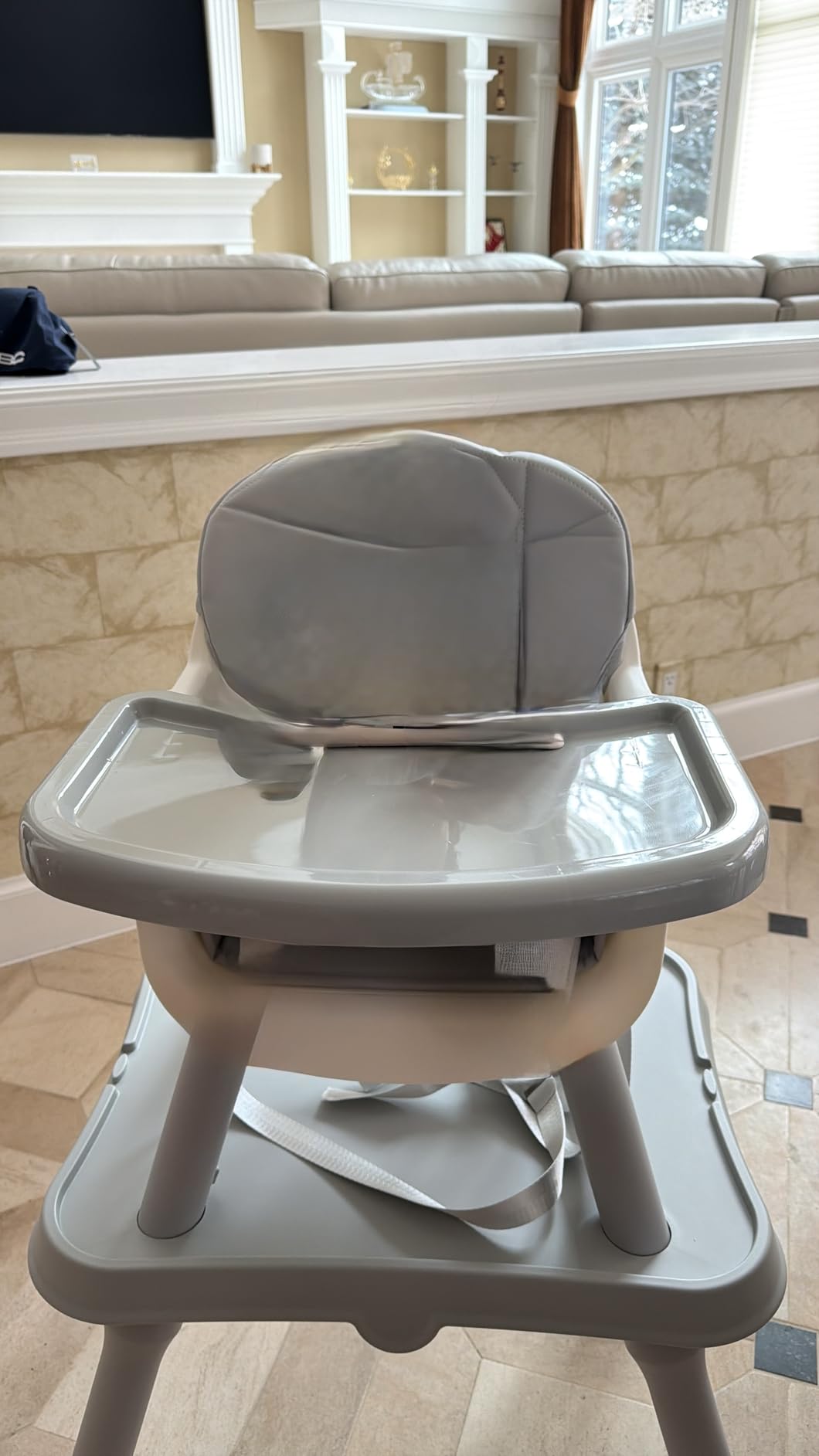
This is the only chair in the roundup that states its certification plainly on the technical spec: US CPSIA and ASTM approved, food-grade PP, and free of BPA, PVC, phthalates, lead, latex and formaldehyde. It is also tested and described for stability, asphyxiation, load and shear. Buyers who are uneasy about marketplace brands generally point at this labelling as the reason for trust.
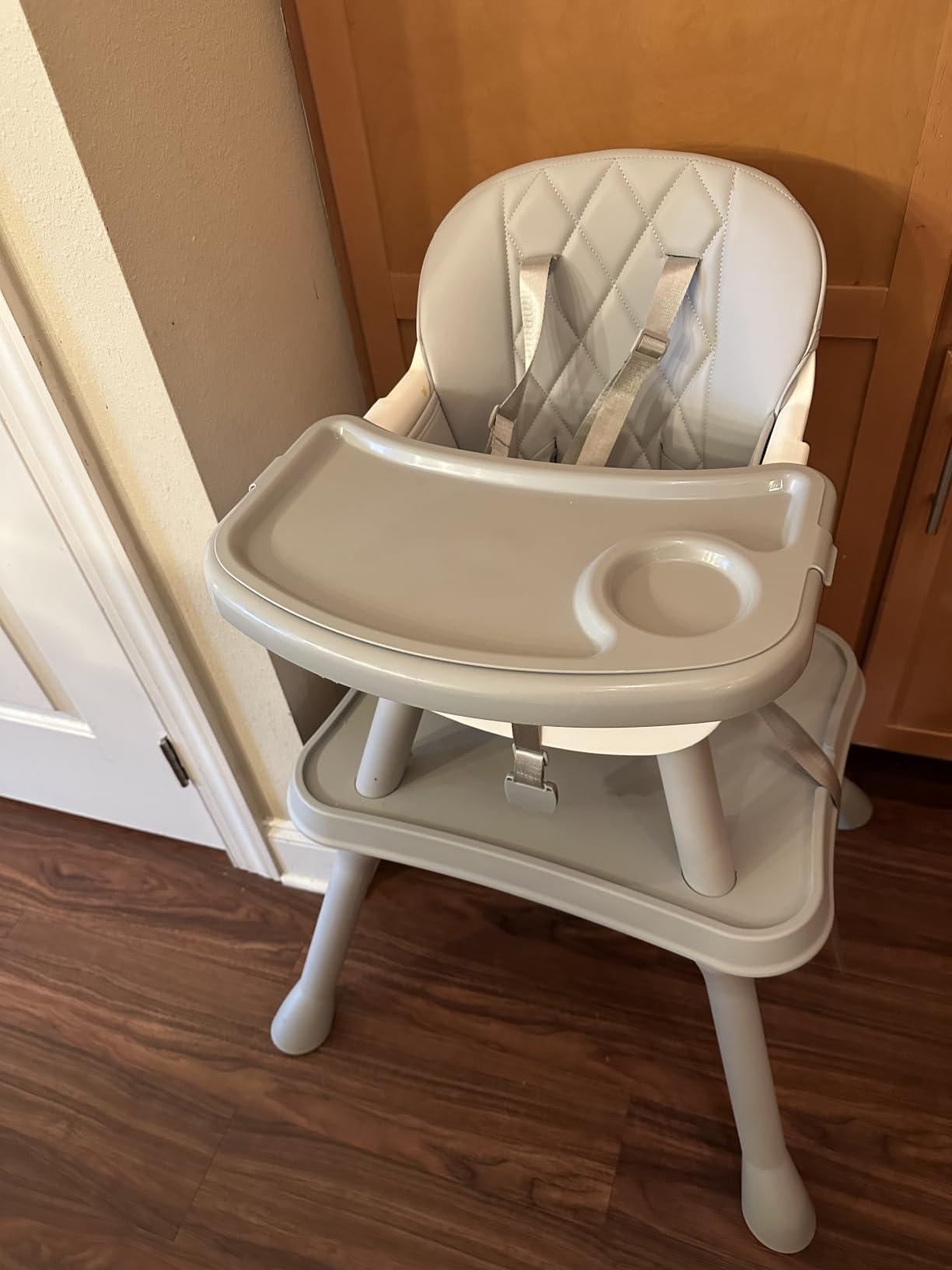
Tool-free self-locking assembly in about five minutes removes the most common complaint about flat-pack furniture, which is the hour spent on unclear instructions. There is also an under-chair platform that doubles as a storage shelf, useful for keeping the harness and tray together rather than losing them in a cupboard.
Two reported issues. Booster attachment straps cannot be removed when unused, so they stay threaded behind the seat permanently. And some units arrived without printed instructions, so check the box contents immediately rather than assuming a manual is inside. The base does not fold, so plan a permanent spot for it.
2-in-1 sit-to-step design
Folds flat
3 recline positions
Removable washable cover
Only two modes, and that is the point. Rather than stacking on booster and stool configurations, the Sit-to-Step converts into a toddler kitchen helper, which is the single most useful second life a highchair can have. It pulls up to a counter, stands independently, and supports a child up to 200 pounds.
For most of this roundup the toddler stage ends around four years old. This one keeps working until a child is ready for a full kitchen stool, which changes the cost-per-year maths completely. It also folds flat, which none of the six-in-one chairs here do.
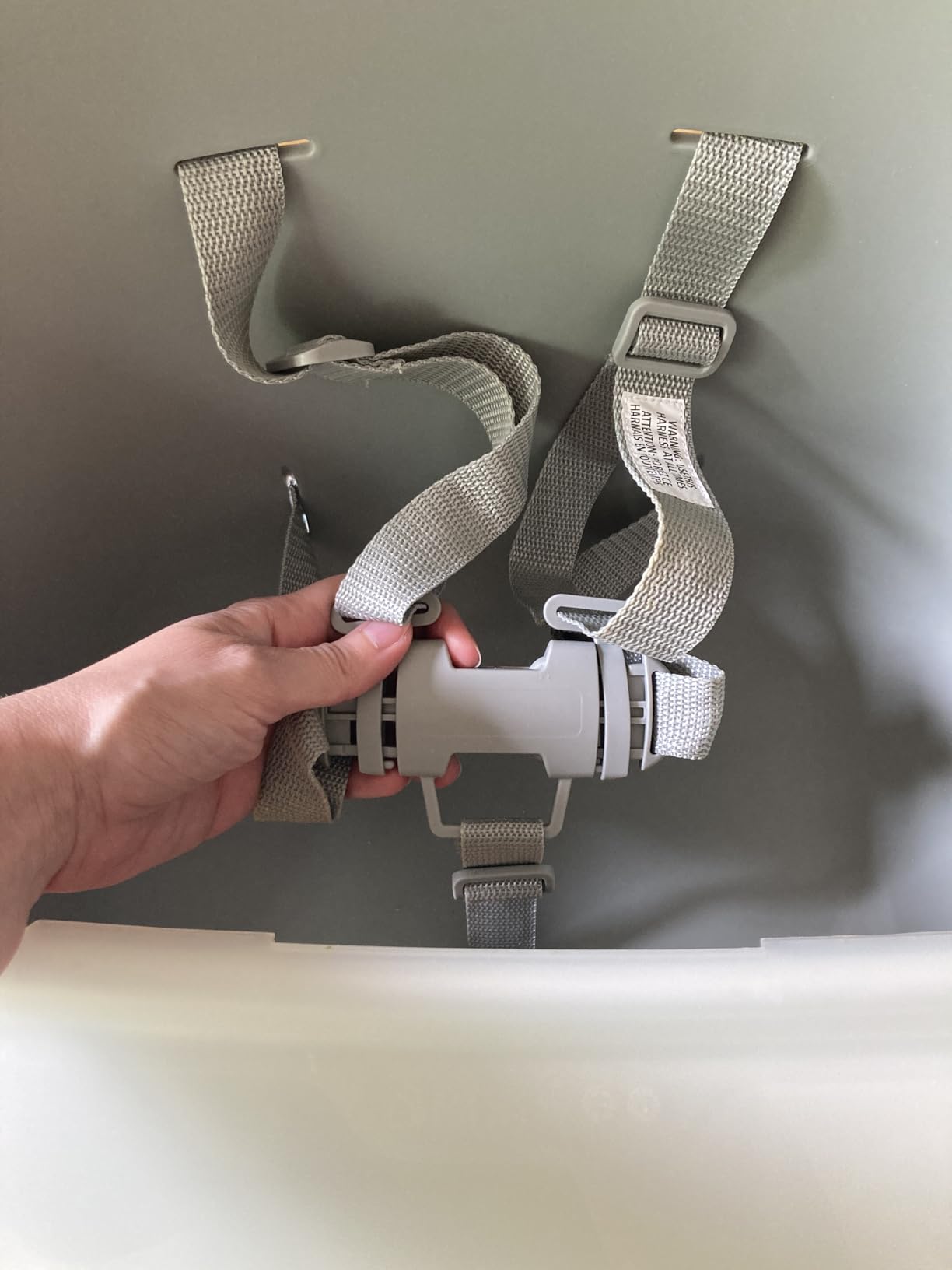
The seat reclines through three angled positions and the height adjustment pulls the chair up to the table rather than adjusting within a narrow band. At 32 by 20.25 by 44 inches in highchair mode, it is a tall chair, and the depth is comparable to other wooden frames here rather than the deeper plastic bases.
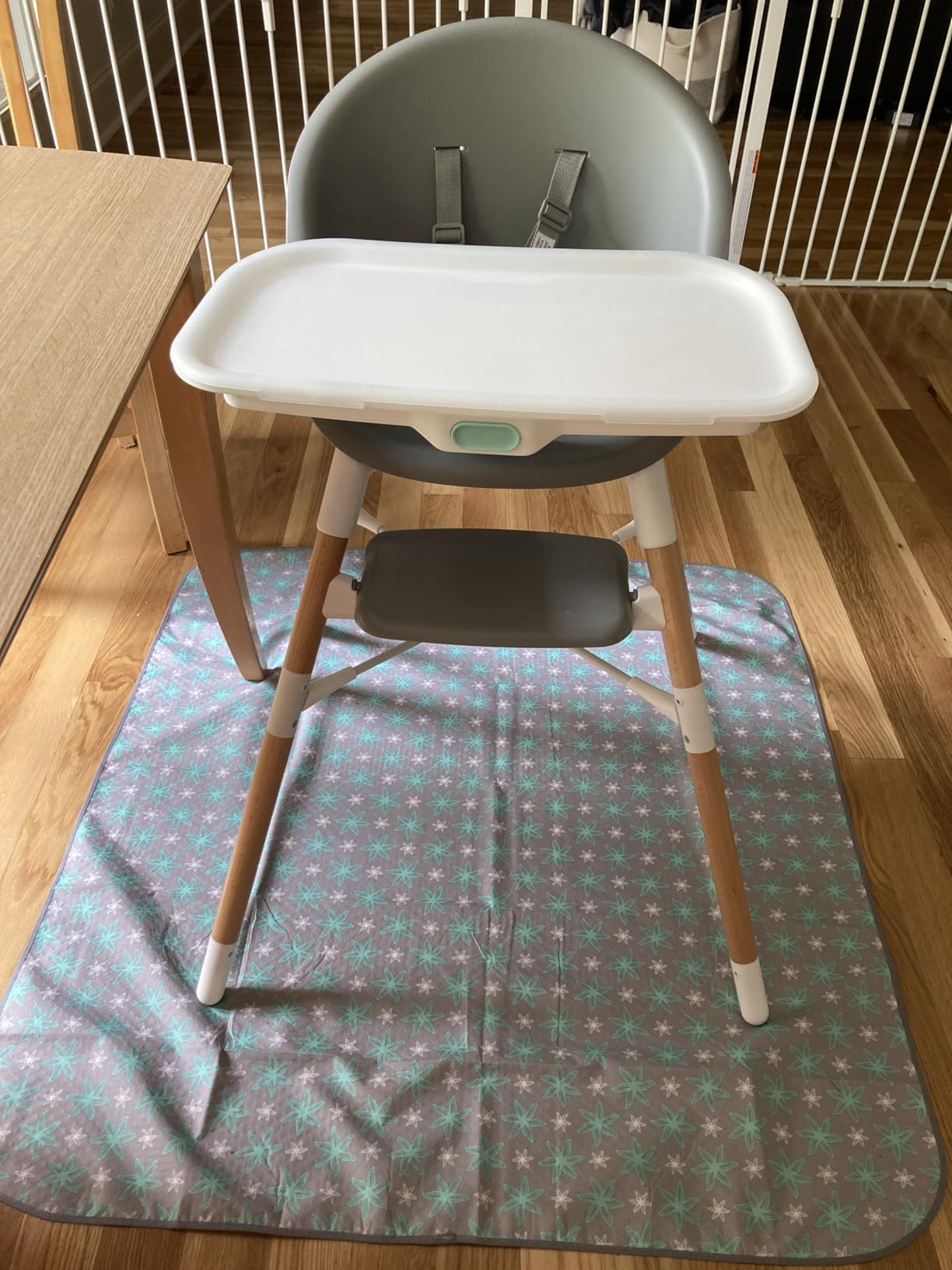
The frame folds for storage, and in kitchen-helper mode it stands at 34 inches, which is a realistic counter height for a toddler. Cleaning is handled by a removable machine-washable wipe-clean cover, a removable 5-point harness and a dishwasher-safe tray insert, so the same parts that matter in highchair mode come out in helper mode too.
Owners consistently mention the price as the trade-off for a two-mode chair, and the tilting inset wheels, which roll in a straight line but do not swivel freely. Beechwood accents, a back bib hook and built-in storage are the details that make it look like furniture rather than equipment.
2-in-1 with conversion kit
Folds flat with tray storage
Dual trays
ASTM and CPSC tested
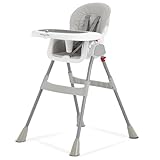
Few chairs fold flat, and among those that do, few store their own tray. The TableTalk’s quick-fold mechanism collapses the frame and the removable top tray stores on the back of the chair, so the whole thing goes into a corner or a narrow hallway cupboard as one object rather than three.
It converts from a baby feeding chair to a toddler chair with a conversion kit included, rated for six months to three years up to 33 pounds, with a 5-point harness. The published dimensions are unusually useful: 38 by 28 by 23 inches as a highchair and 24 by 17.5 by 16 inches as a junior chair.

Both figures are given, which is rare and genuinely helpful. Twenty-eight inches of width is wider than it sounds in a small dining nook, so measure before committing, and check the junior chair dimensions too since that is the mode you will live with for the longest stretch of the toddler stage.
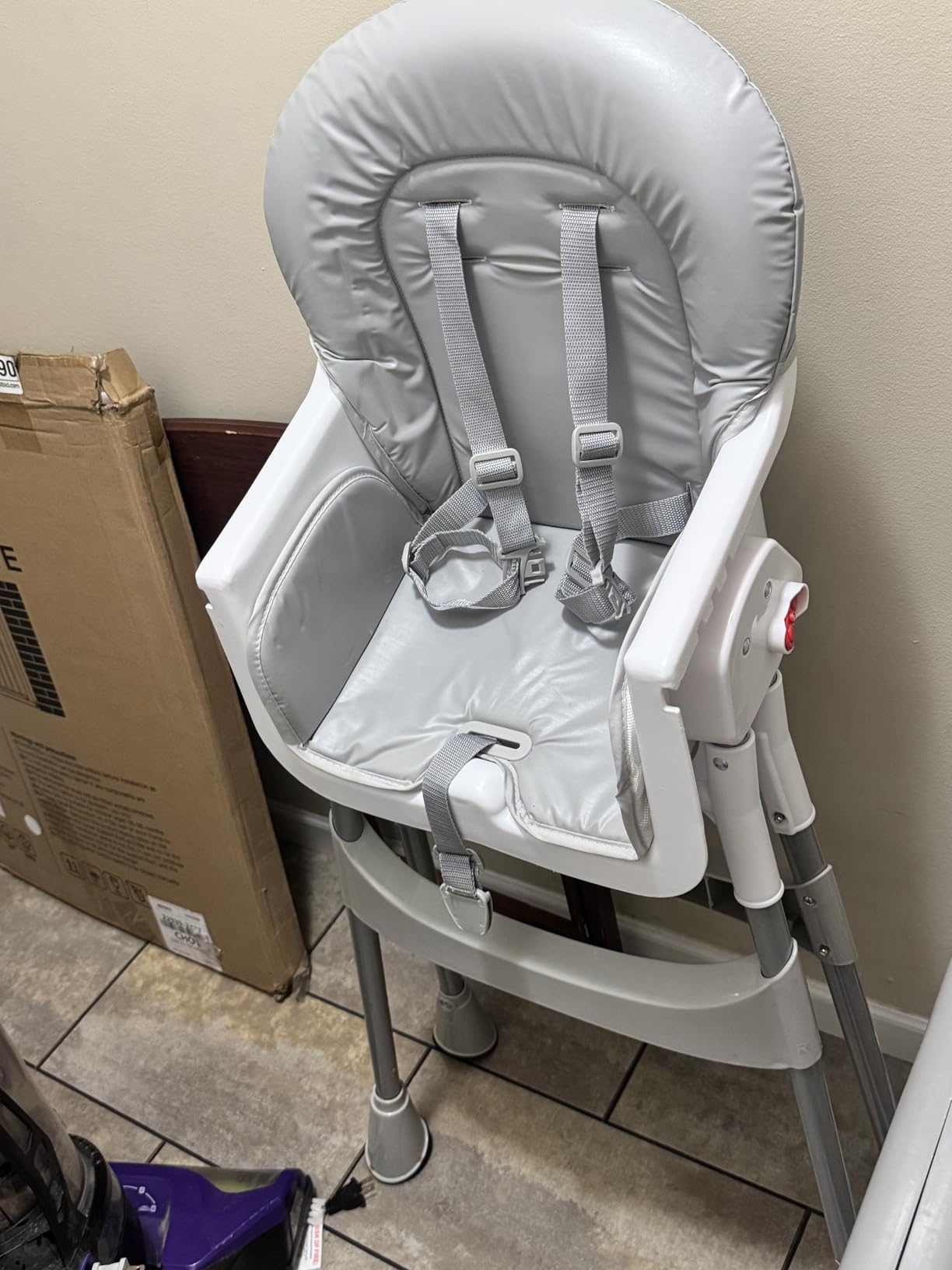
There are dual trays: a removable dishwasher-safe top tray that lifts off, plus a fixed base tray underneath. In toddler mode with the top tray removed, the base tray still functions as a placemat surface, which is a quieter way of keeping a toddler contained at the table.
Buyers report the tray can stick during removal and re-seating, which is the most annoying thing about an otherwise tidy design. The frame also feels lighter and less rigid than solid-wood alternatives, and the recline mechanism is not clearly explained in the documentation. One year of warranty coverage is the shortest guarantee listed here.
2-in-1 with conversion kit
Solid beechwood legs
About 15 lb
Two footrest positions
The Zoodle is the chair to buy when it has to live in two places. At about fifteen pounds, one adult can carry it up stairs, into a car and set it up at a grandparent’s house or a holiday rental without disassembling anything.
It converts from a baby feeding chair to a toddler chair with a conversion kit included, and the two adjustable footrest positions are the feature that separates it from other two-in-one wooden frames here. Anti-skid foot stoppers keep the legs planted on carpet or tile.
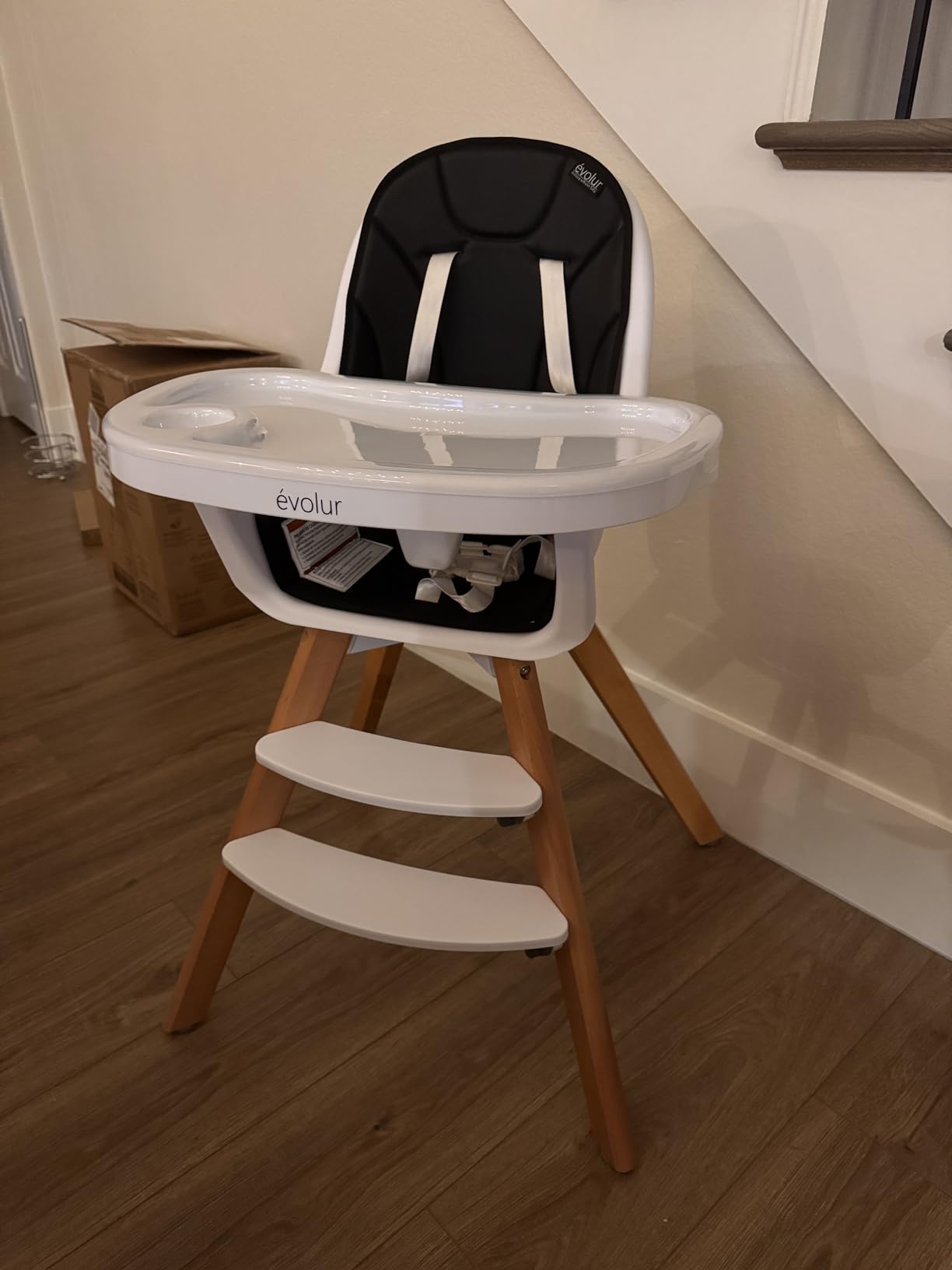
Two positions is less than the Blossom’s three, but far more than the chairs here with no foot support at all. For a toddler transitioning from being carried to sitting independently, having somewhere to put the feet changes how long a meal lasts. The beechwood legs with anti-skid stoppers also keep the chair stable when a toddler pushes against the tray.
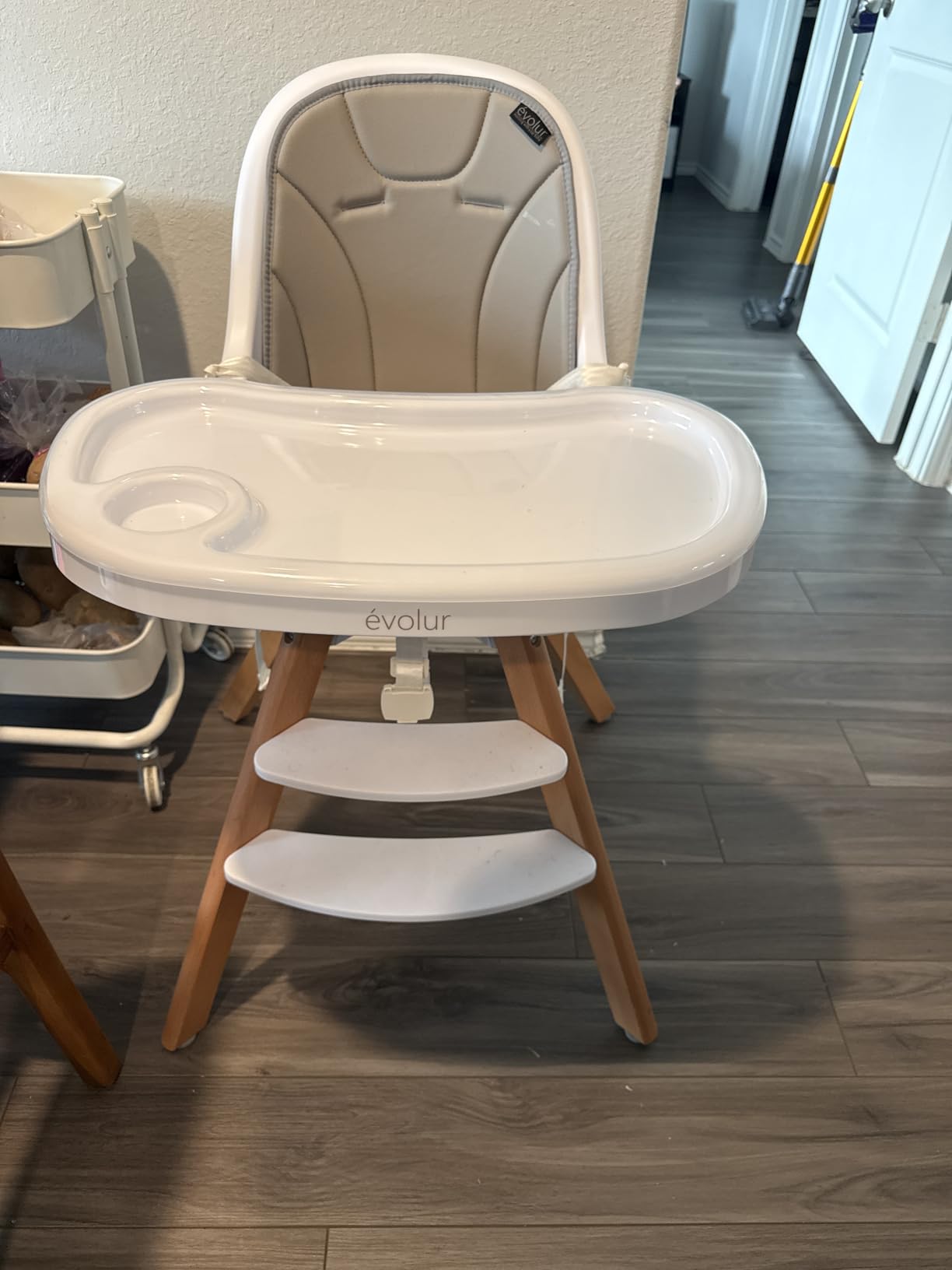
Thirty by twenty-five by thirty-nine inches in highchair mode, converting to a toddler chair of 15 by 14.5 by 24 inches. The toddler chair dimensions are the useful number for a home with a standard table, since that is the surface the seat has to reach.
Be clear-eyed about this. A 2-in-1 with no height adjustment and no recline does two things well and stops there. It suits a family with one child, a preference for wood, and a need to move the chair between rooms. It does not cover a long timeline the way the six-mode chairs do, so if this is your only highchair and you want to keep it past four years old, look further up the list.
3-in-1 conversion
Solid hardwood A-frame
3-position tray
Removable 5-point harness
This chair exists to look like a dining chair. The solid hardwood A-frame with cross support reads as furniture in a way that no plastic convertible in this roundup does, and for parents who refuse to have a highchair visible in a finished dining room that is not a small consideration.
The conversion is 3-in-1 and includes a toddler chair, with a three-position adjustable tray, a removable 5-point harness and a wipe-clean premium leatherette cushion. It is compact relative to a typical highchair, which counters the main complaint about wooden convertible frames.
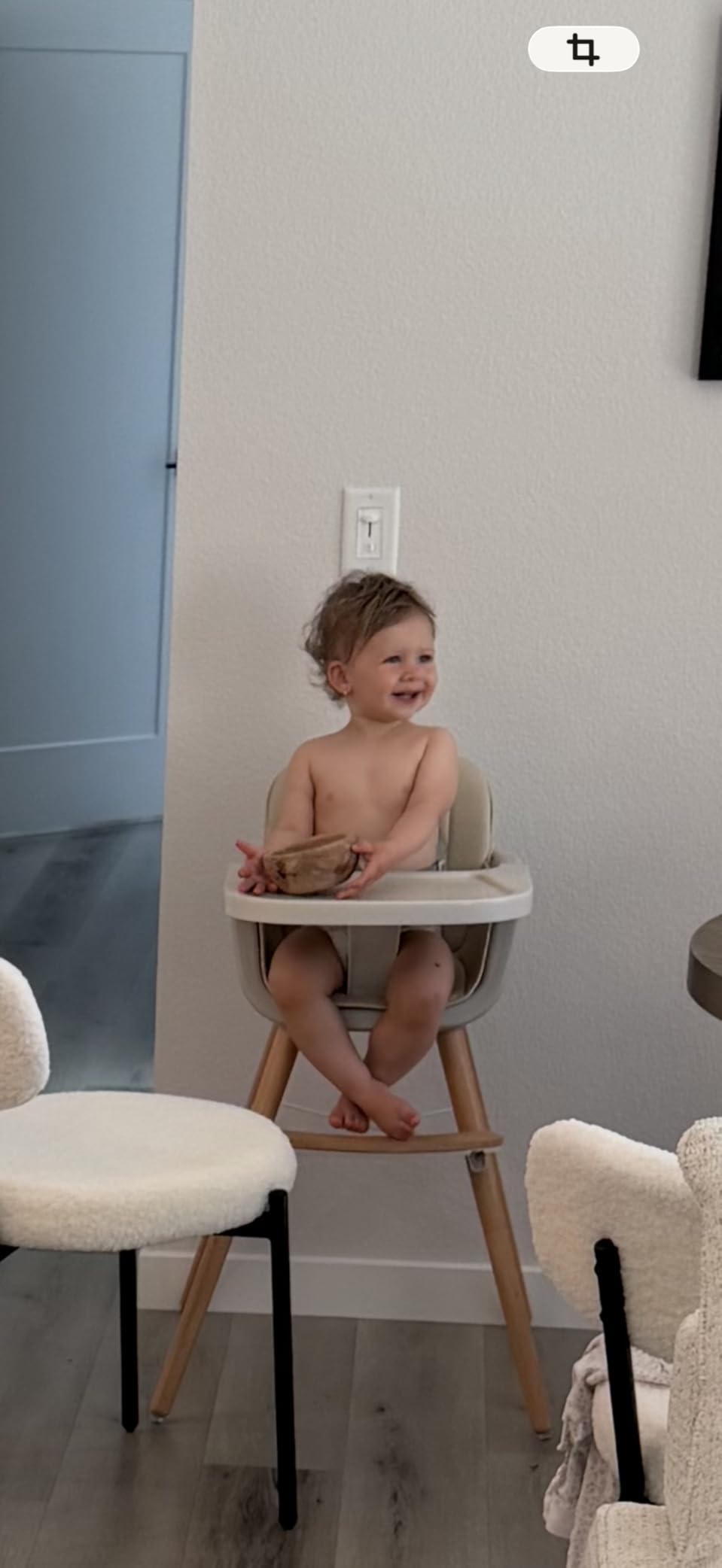
There is no height adjustment and no recline, and those two absences cascade. The seat is low, the footrest sits too far down for many children to reach, and the tray ends up higher than ideal for a small torso, which pushes the child forward instead of holding them back. The seat itself is small, and the tray is small, which limits portion size and how much a toddler can knock over.
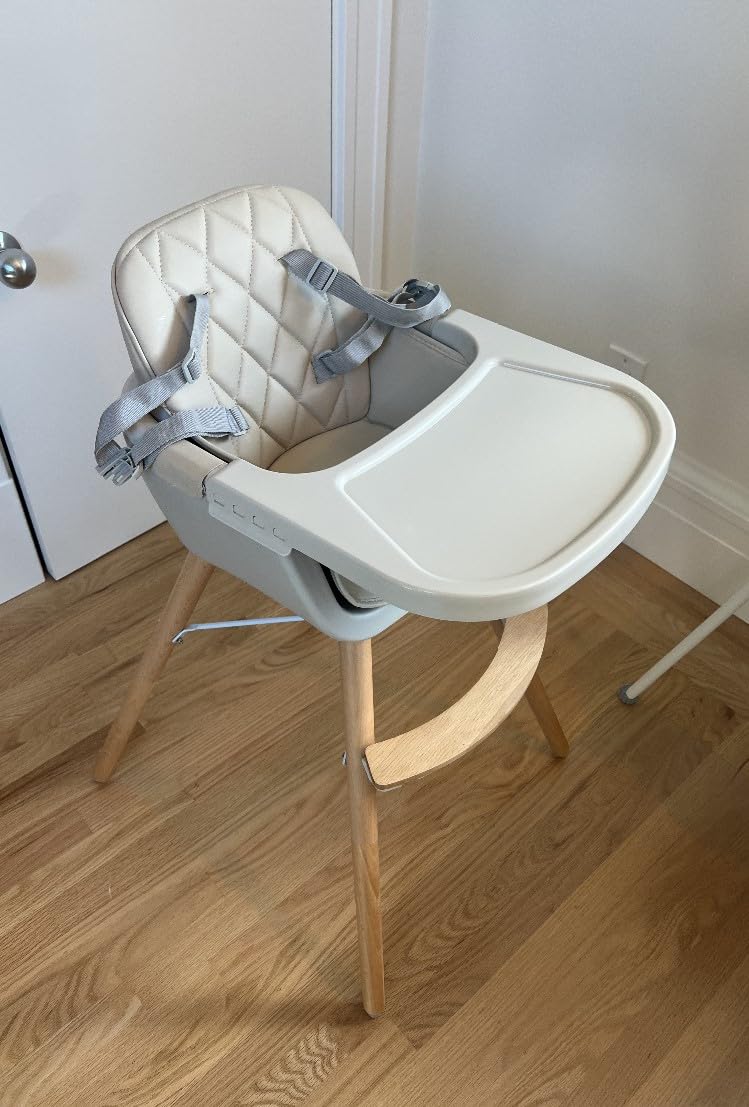
Most reviews are positive about appearance and cleanup, but the critical ones repeat three specific problems: legs that are wobbly or unbalanced after assembly, cushion material tearing within months, and thin instructions that do not clarify the order in which the legs attach. Check the frame on a flat surface before your child uses it, and keep the hardware bag for the first fortnight.
Take this one if appearance is a hard requirement and your child is a confident eater who will be moving to a booster seat soon. Skip it if you are still feeding a six-month-old, because the lack of recline and back support makes it a poor infant seat. It is the most style-driven pick in the roundup and the least forgiving one.
Eight questions decide this purchase, and only two of them are about features. Here is how I would work through them in order, starting with the toddler constraints rather than the infant ones.
A 2-in-1 means the tray comes off and the child sits at the table. A 3-in-1 usually adds a booster that clips to an adult chair. A 4-in-1 often adds a separate child table and chair set. Six-in-one and eight-in-one counts usually mean combinations of a booster, a stool and a second-child setup, and the manufacturer’s own description is the only reliable way to know what they are. Count the modes you will actually use, not the modes on the box.
This is the single most repeated complaint in parent discussions, and it is the one spec most listings bury. If your child will eat at table height, check that the footrest has a position that matches your toddler’s leg length, not just that a footrest exists. The Graco Blossom has three positions, the Evolur Zoodle has two, and most of the rest of this roundup has none.
Standard dining tables sit around 29 to 30 inches, and a convertible highchair often reaches well past that in its highchair mode. The toddler modes with the tray removed are the ones that need to fit, so check the toddler-stage height rather than the maximum height. Where manufacturers publish full assembled dimensions, we have quoted them above so you can measure before buying.
A 5-point harness with adjustable shoulder height is the safest configuration and every chair in this roundup has one at the infant stage. The decision point comes later, when your child can stand and wants out. Removable harness straps are worth paying attention to, because a harness you cannot detach turns a toddler chair back into a highchair with a tray you keep removing.
These are different claims and listings blur them. Machine-washable means the pad or cover goes in a washing machine. Dishwasher safe means the tray can handle a wash cycle, and many reviewers report trays clouding, cracking or warping after repeated cycles. A removable EVA foam insert that wipes down beats a fabric cover in daily use, and a single-piece tray beats a detachable two-part rim.
Measure the footprint before you commit, and check the depth as well as the width. A non-folding base in a small kitchen is a permanent obstacle in the middle of the room, and two front wheels mean a lift rather than a roll. Folding frames exist in this roundup, and they are the ones to shortlist in an apartment.
Solid hardwood or solid beechwood legs with anti-skid stoppers outlast plastic frames, and a cross-braced A-frame resists the rocking that comes from a toddler leaning back. Look for an explicit certification statement rather than an implied one: ASTM F833, ASTM and CPSC, or US CPSIA and ASTM appear on specific chairs above, and a chair that names its testing is easier to trust than one that only says safe and durable.
Decide now how long you need this chair to last. A chair that converts to a kitchen helper or a learning table earns its keep for years. A chair that tops out at a youth stool effectively ends at four or five, and at that point a booster seat on an existing dining chair is a cheaper and less space-hungry answer. Our picks for other toddler gear, like our guide to seesaws for toddlers, follow the same logic of buying for the stage after next, not just the stage you are in now.
Most children are ready to move to a booster or a toddler chair between two and three years old, and the sign is not age but posture. If your child can sit independently, feet flat on a footrest, and eat steadily without the tray holding them in place, the highchair has finished its job.
Look for these signs before you change anything:
Moving on does not mean buying something new. A booster that clips to your existing dining chair does the same job as the booster stage of a convertible chair, and it takes up no floor space at all.
Parents worry about recalls more than they talk about them, and the worry is reasonable: a Bugaboo Giraffe recall surfaced in parent communities, and r/parentsofmultiples threads circulated the details. Checking takes two minutes and is worth doing for every chair on your shortlist.
Five checks, in order:
For the positioning side, the 90-90-90 check earlier is a safety question as much as a comfort one. A toddler whose feet dangle for an hour at every meal is being asked to hold a posture their body cannot sustain, and that shows up in how long they can sit safely at the table.
Yes, if your child still needs the seat for positioning. A two-year-old benefits from a convertible chair with a footrest, because sitting with feet unsupported is uncomfortable and they cannot sustain it. Many parents keep the highchair mode with the tray on through age three, then move to a booster. Move on when your child can sit independently, climbs out on their own, and eats faster without the tray.
The 90-90-90 rule means a toddler sits with hips, knees and ankles each bent at about 90 degrees, with feet resting on a footrest or rung rather than dangling. A chair that hits all three angles lets a child sit comfortably through a full meal and supports self-feeding. Check it by sitting your child in the chair and seeing whether their feet reach a support at a usable height.
For most two-year-olds the Graco Made2Grow 5-in-1 is the strongest all-round choice, with five genuine stages and washable parts. If your child is tall or long-legged, the Graco Blossom has the only three-position footrest in this roundup. If cleanup is the daily reality, the Ingenuity Trio Elite has no fabric covers at all. All three convert to a booster or toddler chair rather than a toy.
Pediatric guidance consistently points toward three things: a five-point safety harness, a seat that supports feet so the child can sit comfortably through a meal, and a chair that positions the child upright rather than reclined for toddler eating. Rather than endorsing one brand, most advice frames the choice around fit and safety certification. Check for a named ASTM or CPSC standard on any chair you consider.
The Evenflo Eat and Grow 4-in-1 is the strongest value pick, converting through four real stages up to 50 pounds with tool-free assembly and machine-washable parts. Below that tier, the Baby Trend Sit Right 2.0 does three honest modes with a dishwasher-safe tray. The cheapest chairs often have no height adjustment and no foot support, so value means usable stages rather than a low sticker figure.
If you want one chair that handles every stage without drama, take the Graco Made2Grow 5-in-1. Five genuine stages, a three-position recline, washable parts and the largest review base in this roundup make it the least likely purchase to disappoint. If your kitchen is small or you need to move the chair between rooms, the Evenflo Eat and Grow 4-in-1 breaks down in minutes and carries a lighter frame. If feet off the floor is your main worry, the Graco Blossom 6-in-1 is the only chair here with a real three-position footrest.
For two children close in age, the DuoDiner DLX seats a baby and a toddler at the same table. For a chair that must travel to a second house, the Evolur Zoodle weighs about 15 pounds and carries footrests. For a chair that folds away entirely, the Dream On Me TableTalk stores its own tray on the frame. For a finish that looks like dining furniture, the Mallify hardwood A-frame is the one, with the understanding that it has no height adjustment and no recline.
Whichever you choose, test the 90-90-90 position before the first real meal. Sit your child in the chair, check that their feet reach something solid, and make sure the tray meets the torso rather than the chin. Every one of the best convertible high chairs for toddlers in 2026 on this list will serve you well, and only the foot-support check will tell you whether the toddler stage is going to last or whether you will be shopping again at eighteen months.