Physical Address
304 North Cardinal St.
Dorchester Center, MA 02124
Physical Address
304 North Cardinal St.
Dorchester Center, MA 02124

Backyard chickens are the easiest livestock you can keep, and the hardest thing to buy well on a tight budget. I spent the last two months reading owner reviews, comparing frame tubing and mesh gauge, and matching each enclosure to the flock sizes it can honestly carry for the best chicken coops under 500 in 2026. The short version surprised me: most of what sells in this price band is not a hen house at all.
It is a walk-in metal run. You get a galvanized steel frame, hexagonal wire on the walls, a waterproof tarp overhead and a door with a latch. What you do not get is a roofed, insulated, predator-sealed sleeping box, which is the part that actually keeps hens alive. So this roundup treats the two categories honestly, flags which ones are day pens versus night housing, and tells you what to spend the first weekend adding.
Two numbers drive every decision below. The first is the sizing rule most first-time keepers miss: allow about 4 square feet of indoor coop floor per standard hen, plus 8 to 10 square feet of run space, and halve whatever bird count the listing prints on the box. The second is that most cheap enclosures ship with hexagonal chicken wire, which keeps birds in and stops almost nothing from coming in. If you are still working out what your flock needs, our backyard chicken keeper gift guide covers the support gear that comes alongside the coop.
We also priced up the rest of your setup. Budget another 50 to 100 in hardening supplies no matter which enclosure you choose, and if the shed needs work before the birds move in, our guides to the best standing desks under 500 and best office chairs under 500 cover the furniture side of a home workshop.
At this budget you are choosing between a metal walk-in run and a small wooden hen house with an attached run. The metal run is cheaper per square foot, far tougher against weather, and useless on its own as overnight housing unless your predator pressure is genuinely low. The wooden coop is a true hen house with nesting boxes and a roof, but its walls are thin, and the run attached to it is small.
Here is what a 500 ceiling realistically buys. Metal runs in this band cover a wide spread, with frames from 0.8 mm tube on the plastic-mesh pen up to 1 inch galvanized steel pipe. Anything advertised for 30 or 40 birds is a run measurement, not a sleeping capacity, and the same goes for listings that claim 10 to 20 birds in a plastic mesh pen.
Before any product recommendation, three honesty adjustments apply to every listing in this roundup.
Halve the advertised bird count. A run that prints 20 birds usually feels like a crowded feather pillow once ten are in it.
Hexagonal chicken wire is containment, not protection. Raccoons, foxes and weasels push through 1 inch hex mesh without slowing down.
A run is not a night coop. Unless the structure is sealed, weatherproof and lockable, birds still need a small closed box at night.
Our team measured every enclosure below against the 4 square foot indoor rule, checked the tubing and mesh specification against what owners reported, and read the failure modes in the reviews. Where the manufacturer and the owners disagree, we side with the owners.


| Product | Features | |
|---|---|---|
| CHIKENCOOP 9.8 x 6.5 x 6.5 ft Metal Chicken Run |
|
Check Latest Price |
 Betterhood 19 x 9 x 6.5 ft Round Top Metal Run Betterhood 19 x 9 x 6.5 ft Round Top Metal Run |
|
Check Latest Price |
 VEVOR 6.56 ft Spire Roof Walk-In Run VEVOR 6.56 ft Spire Roof Walk-In Run |
|
Check Latest Price |
 Petsfit 71 x 42 x 45 in Fir Coop and Run Petsfit 71 x 42 x 45 in Fir Coop and Run |
|
Check Latest Price |
| NUGRIART 1 in Galvanized Steel Walk-In Run |
|
Check Latest Price |
 Aivituvin AIR31 Multi-Level Fir Hen House Aivituvin AIR31 Multi-Level Fir Hen House |
|
Check Latest Price |
| Quictent 214.5 in Run with Side Hardware Cloth |
|
Check Latest Price |
 HEYTOWN 157.2 x 117.6 x 78 in Metal Run HEYTOWN 157.2 x 117.6 x 78 in Metal Run |
|
Check Latest Price |
 CAMMOO 13.1 x 9.8 x 6.6 ft Walk-In Run CAMMOO 13.1 x 9.8 x 6.6 ft Walk-In Run |
|
Check Latest Price |
 PawHut 32.8 x 9.8 x 6.4 ft Metal Run PawHut 32.8 x 9.8 x 6.4 ft Metal Run |
|
Check Latest Price |
We earn from qualifying purchases. CERTAIN CONTENT THAT APPEARS ON THIS SITE COMES FROM AMAZON. THIS CONTENT IS PROVIDED 'AS IS' AND IS SUBJECT TO CHANGE OR REMOVAL AT ANY TIME.
118 x 80 x 80 inch walk-in run
59 lb frame
Eucalyptus roost perch
UV-resistant cover
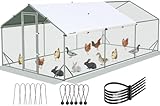
The CHIKENCOOP is the pick that came out ahead of our comparison of the best chicken coops under 500, and the reason is unglamorous: it is both genuinely roomy and documented by more owner reviews than anything else on this list. At 9.8 by 6.5 feet with 6.5 feet of headroom, you can walk upright inside, scoop bedding and pull a hen out without crouching, which is exactly what you want on the morning the flock needs checking.
Most walks in it went well. The frame uses corner braces at the base and an extra rear support pole that ties the roof line to the base, and owners consistently report the wobble that plagues lighter metal runs is largely absent. The peaked cover is UV-resistant and waterproof, so shade and rain protection come in the same panel.
A 47 by 40 inch eucalyptus roosting perch is included in the box, which is unusual at this budget. Experienced keepers on r/BackYardChickens consistently warn against smooth round dowels because birds roost feet-down with warm bellies pressed against the perch, and a rounded surface concentrates cold on that spot. Frostbite in cold snaps starts on the perch before it starts anywhere else.
A flat rectangular perch, which is what eucalyptus gives you, spreads the pressure across the whole footpad. It is a small detail that separates this run from cheaper enclosed pens with bare dowel rods.
Three things get named repeatedly in positive reviews: the labeled frame components, the bottom corner braces, and the rear support pole. Owners also point out that the cover attaches high enough to shed snow rather than sag under it, which matters if you are north of the 40 degree parallel in winter.
The recurring complaint is anchoring. Reviewers report that the frame needs driven ground stakes in exposed or windy sites, and we would add that before the birds arrive, not after a storm tips it.
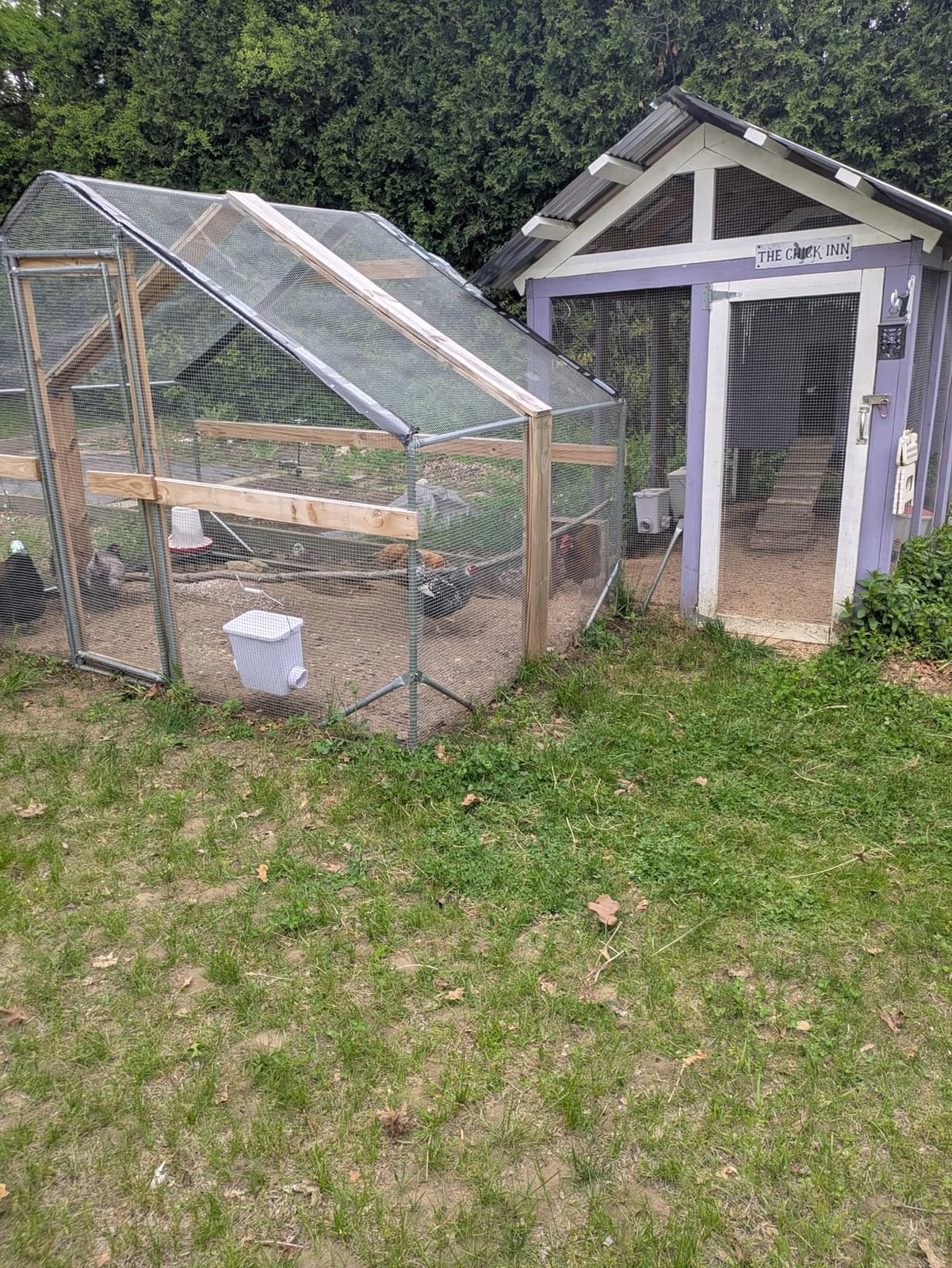
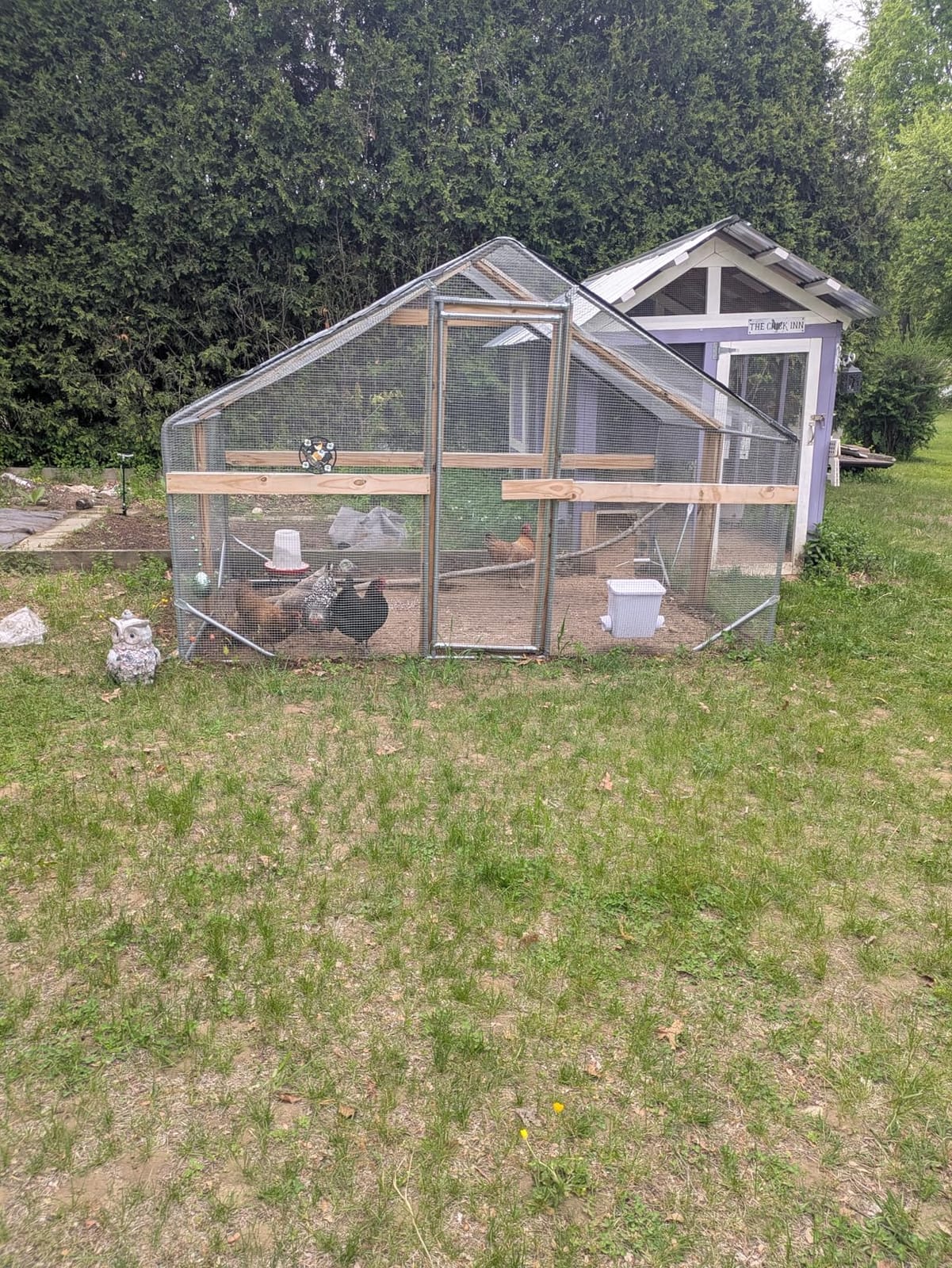
This is a run. The hexagonal mesh walls keep hens contained and give excellent airflow, but they are not a barrier against a determined raccoon, and there is no enclosed sleeping box inside. Pair it with a small wooden hen house inside the footprint, or treat it as the day pen with a separate locked structure at night.
At about two hours of assembly, plan a calm afternoon and a second pair of hands if you are not used to click-together steel frames.
19 ft long steel frame
240D Oxford cloth canopy
Canopy coated hex mesh
Triangular supports
Nineteen feet of run is a lot of daytime foraging space, and when your birds free-range poorly or your yard is bare, that length matters more than any feature list. The Betterhood is one of the two longest enclosures in this roundup, and it still leaves room in the budget for a separate hen house and the hardware cloth to make it safe.
The frame is steel with additional support columns and triangular supports, and the manufacturer describes stainless steel combined with galvanizing. Owners report the frame surviving a full winter of severe weather, and the coated wire is noticeably easier to cut and work than plain chicken wire, which saves real time during assembly.
The canopy is 240D Oxford cloth rather than the thin PE sheeting used on cheaper pens. That is a meaningful difference in wet climates, because PE tarp eventually becomes brittle and splits along the fold lines while Oxford cloth flexes. For a structure that will sit outside year after year, the roof material is worth noting.
The round top profile also sheds water along a continuous curve rather than at a seam, so standing water and snow load are less of a concern than on a flat-top design.
Owners are blunt about the mesh. It is thin, and most of them plan to line it with hardware cloth or replace it outright. The included stakes are a second complaint, bending or pulling free in firm soil, and the door latch is described as flimsy with gaps around the door frame. Plan to buy poultry staples and a proper latch on day one.
The third issue is documentation. Reviewers report that the printed instructions contain geometry errors, so panels can be fitted in the wrong orientation. Check each panel against the frame before bolting, and request the install video the brand offers.
Choose this if you want maximum daytime run area and you already have, or plan to buy, a separate secure night coop. Pass if you want a single all-in-one structure, because the open mesh design will not keep a raccoon out on its own.
78.72 inch cube
44.09 lb assembled weight
1 inch galvanized steel pipe
Security lock fitted
The VEVOR is the answer when your yard simply does not have room for a 19 foot rectangle. Six and a half feet on every side, it goes in a corner behind the garage and still leaves you a path to walk around it, which matters more for cleaning access than buyers expect.
It is also the best-selling product in this roundup by category sales rank, sitting near the top of Poultry Habitat Supplies, and that is a useful signal. A large review base means the failure modes are documented rather than hypothetical, and what owners report is consistent: solid galvanized frame, a tarp that does its job, and a base that needs reinforcing.
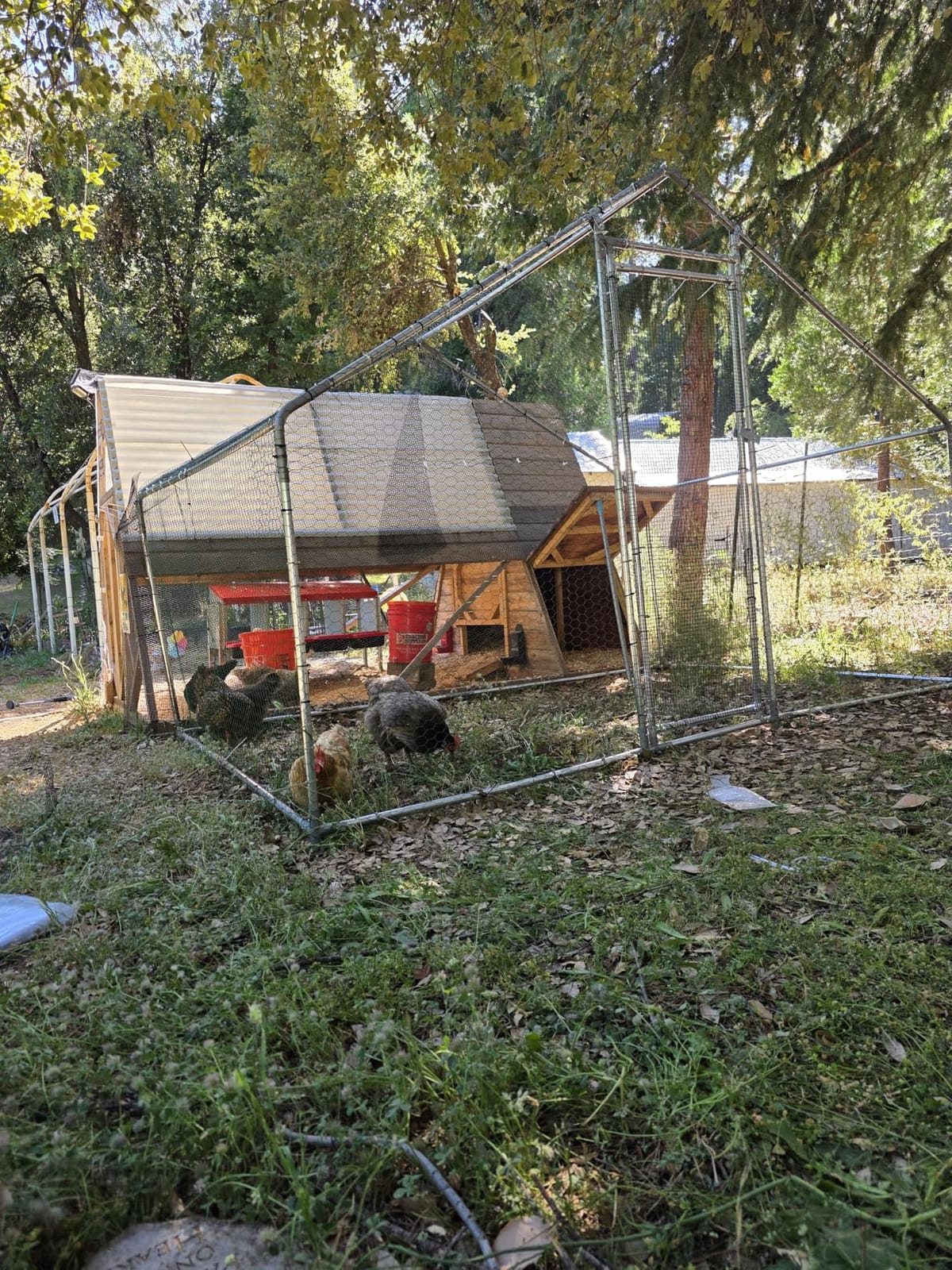
A spire roof drains water, snow and debris from four directions at once instead of letting it collect in a seam. In areas that get snow rather than just rain, that is the difference between a roof that holds weight and one that sags. The PE tarp is described as sun-protective and tear-resistant, which matters in summer heat.
Four-sided ventilation is another genuine plus. Airflow at roost height is the single best defense against ammonia buildup, and an enclosed box that vents on all four sides does better than one with a single shaded window.
VEVOR’s own guidance is to add galvanized wire fence, wood or stones at the base to reinforce against wildlife. That is a manufacturer telling you the base is the weak point, which is exactly what experienced keepers say. Skirt the run with hardware cloth laid flat on the ground, weighted with pavers or stones, and the digging route closes.
Assembly is a two-person job. The parts are labeled and the manual is included, but one person cannot manage the frame square while the other fits the mesh.
As a day pen, 6.56 feet square gives a flock of four to six birds genuine room to dust bathe and forage without crowding. It is not a sleeping space for that many birds, so plan a hen house inside or alongside.
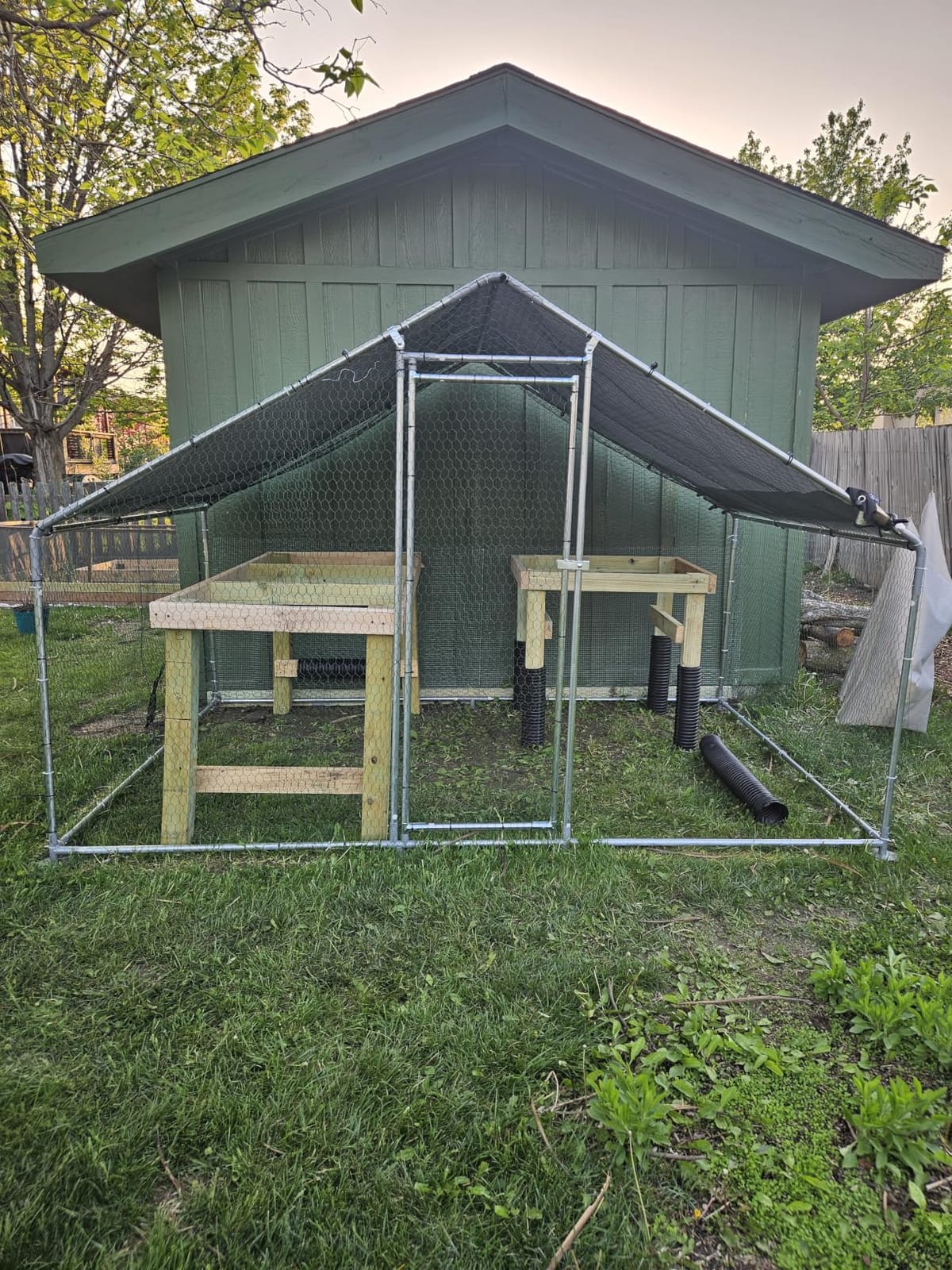
71 x 42 x 45 inch overall
Suits 4-6 small hens
3 nesting boxes with lid
6 ground anchors included
Seven of the ten structures in this roundup are open runs. The Petsfit is one of the two that is a genuine closed coop, with an elevated nesting area, three nesting boxes, two indoor roosting bars and an attached run, which makes it the most sensible single purchase for someone starting a first flock of four to six hens.
The layout is space-saving rather than generous. Overall footprint is 71 by 42 by 45 inches, with 6.07 square feet of elevated nesting area and 12.56 square feet of outdoor run. That is a small run, and experienced keepers would tell you a 6-bird flock ideally wants closer to 50 square feet of run, so plan on free-ranging time or a run extension.
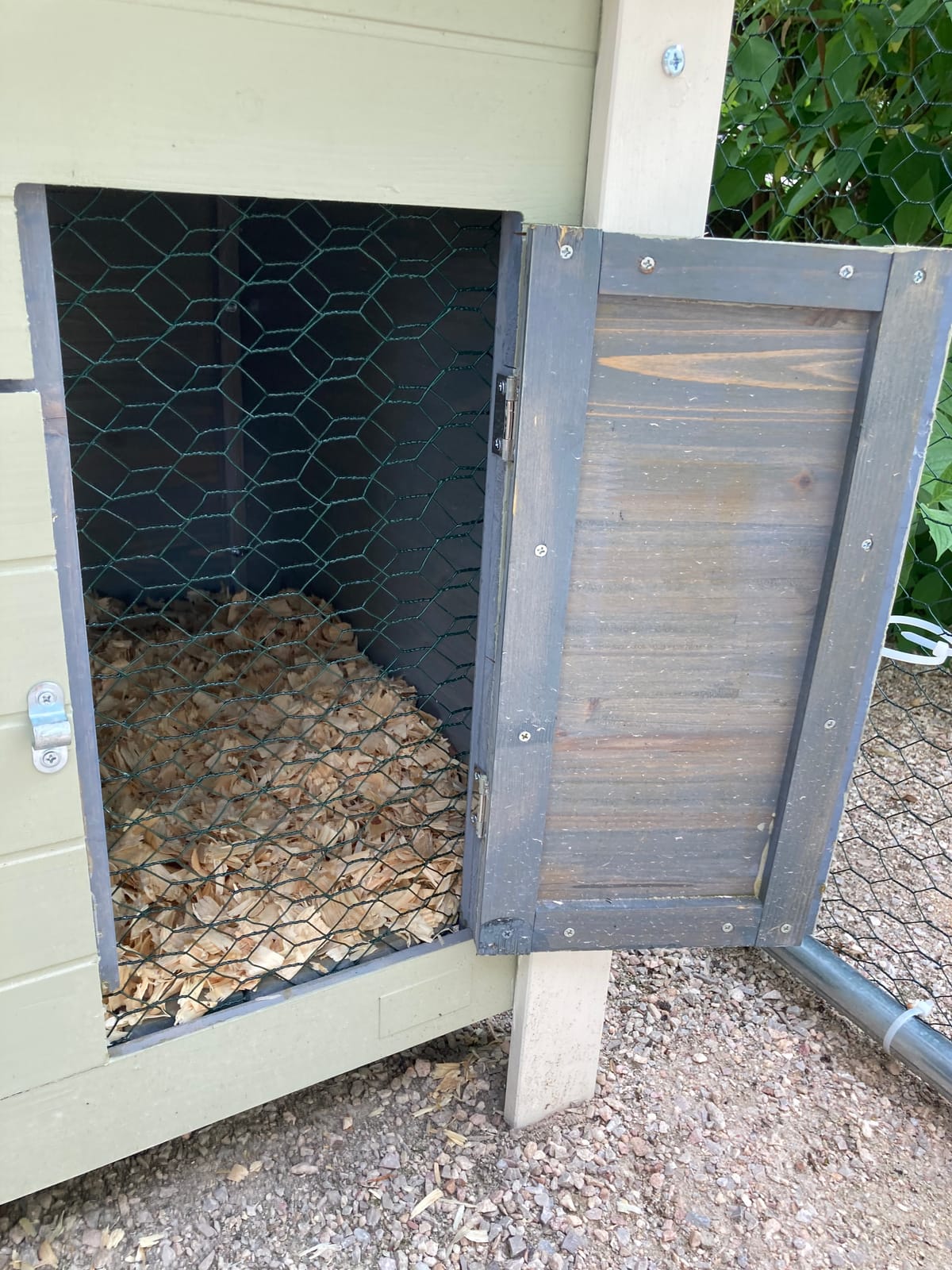
Most budget coops ship a plastic stake or a bent wire peg. This one includes 6 heavy-duty ground anchors described as anti-tip, driven into the soil to hold the solid fir frame against foxes, raccoons and weasels. Tipping is a real failure mode with lightweight wooden coops, and a fox that leans on a small house can put it over.
This is one of those cheap details that does more for flock survival than a decorative feature ever will, and it is the main reason the Petsfit is our first recommendation for anyone starting a small flock from scratch.
The 3-door clean-out system includes an 18.5 by 16 inch front door, a lower clean-out door, an independent side run mesh door and a removable plastic floor panel. A removable floor is the single most underrated feature in this category, because it lets you strip bedding and droppings in seconds instead of shovelling around fixed boards.
For a coop this small, reaching the far corner is the daily reality. Walk-in height matters for large metal runs; reach-in design matters for small wooden houses, and the difference is simply that you will be on your knees more often.
The roof is corrugated PVC rather than asphalt shingling, and the transparent sliding PVC window gives natural light with adjustable ventilation. PVC roofing resists cracking, warping and heat better than asphalt, which softens and sags in summer sun. In hot climates that difference shows up in year three, not year one.
Check your flock size against the internal dimensions before ordering. Owners rate it as genuinely good for 4 to 6 small hens or bantams, and buyers with larger breeds report running out of floor space well before the advertised count.
The 4.1 average reflects solid utility rather than excitement, and the run size is the reason for that. Extend the run, free-range daily, or buy fewer birds than the label suggests.
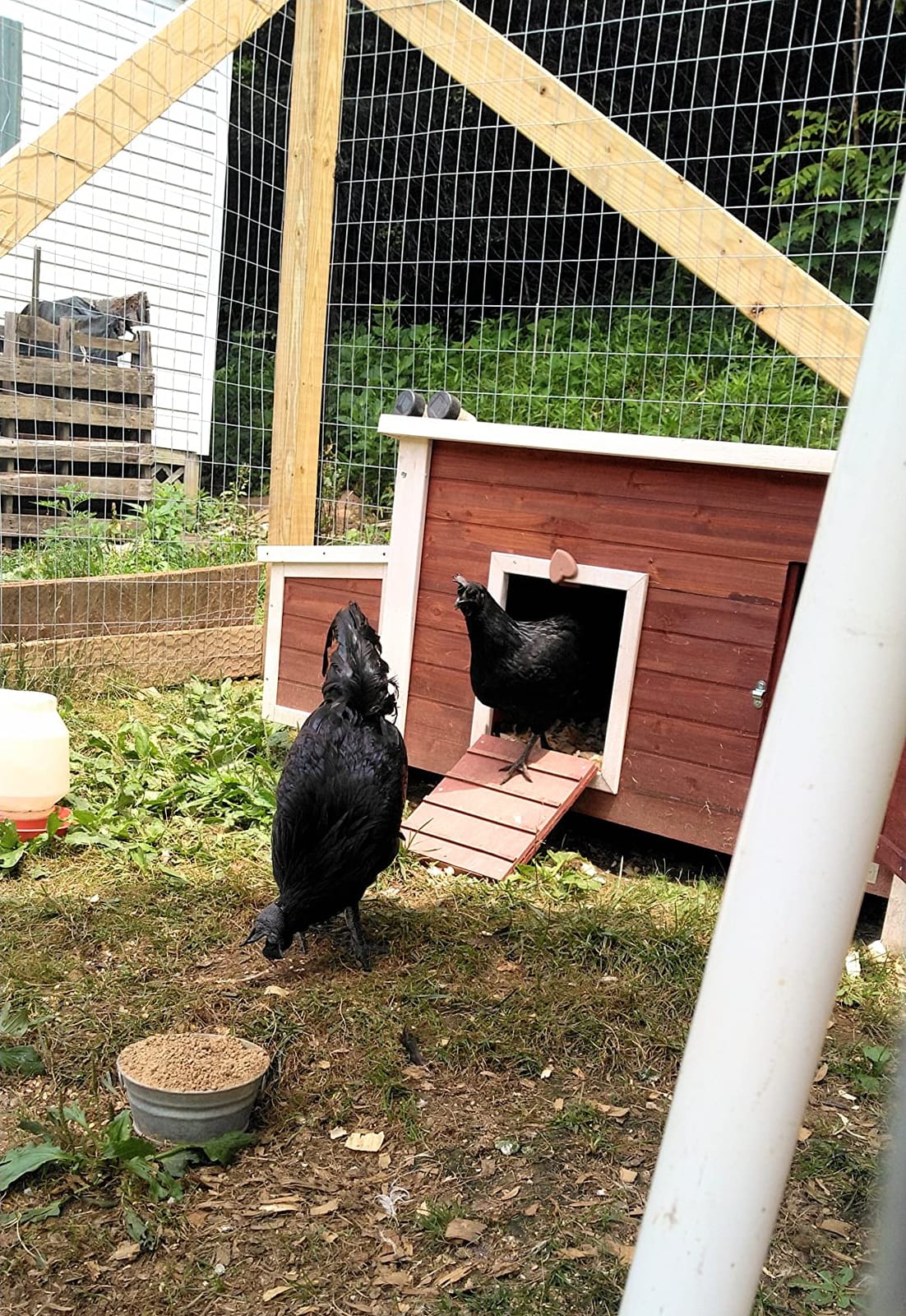
1 inch diameter galvanized steel
PVC coated hexagonal mesh
Lockable metal latch
Spire frame drainage cover
The NUGRIART is the run we would buy with our own money. Its 4.3 average is the second-highest rating in this roundup, and the reason is specific rather than vague: it uses 1 inch diameter galvanized steel pipe, one of the thickest tube gauges in the group, and that is the thing that separates a run that stays square for years from one that racks out of shape by the second winter.
At 118 by 79 by 79 inches, it is a solid mid-size day pen. Owners praise the PVC coated hexagonal mesh as stiffer and harder to damage than plain wire, and the lockable metal latch is a step up from the flimsy hasps on most budget pens.
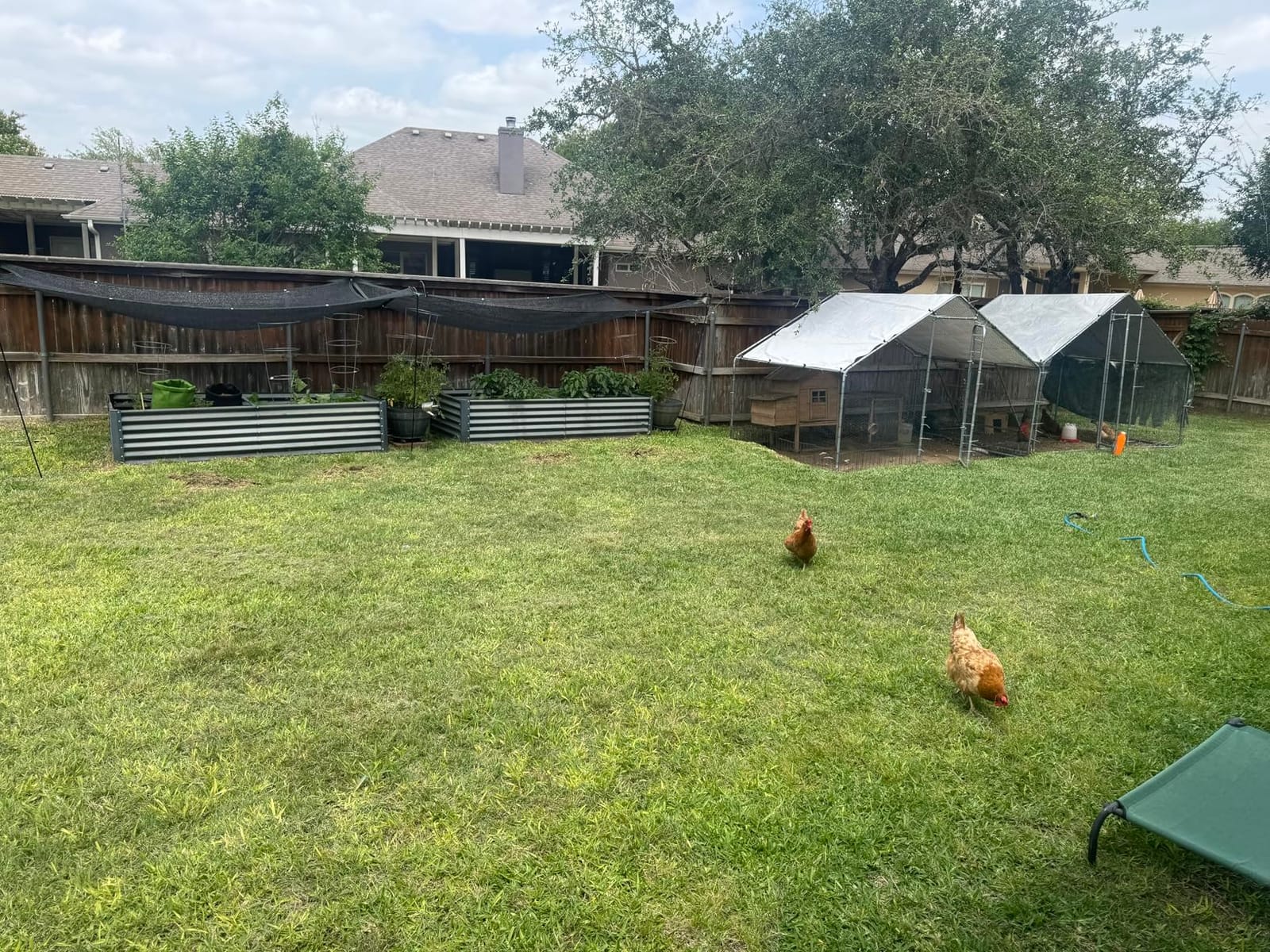
Frame tubing diameter is the specification nobody puts on the front of the box and everybody notices two winters later. A thick pipe resists bending under wind load, holds its shape when you lean on it to climb in, and does not develop loose joints where the click-connectors meet the poles. Under a coated spire roof with some snow load, that is the difference between fine and wobbly.
Owners also note that PVC coated mesh is less likely to snag and cut birds than bare wire, which matters more than it sounds when a panicked hen runs the length of a run at dusk.
The brand recommends gloves during installation, and reviewers back that up, because the metal connectors are unforgiving on bare hands. They also single out the connection parts as the most difficult step. Budget a couple of hours and do not rush the corners, because a squared frame is what keeps the mesh panels sitting flat.
One of the nicer touches is a set of essential pedestals for poultry comfort, which keeps the frame off bare ground and out of standing water during storms.
It is not the best overall because the mesh is still hexagonal, the footprint is mid-sized, and there is no enclosed night box. As a run, though, the frame quality, the coated mesh and the lock are all a tier above what this budget usually buys, and the 4.3 rating across more than 650 owner reviews backs that up.
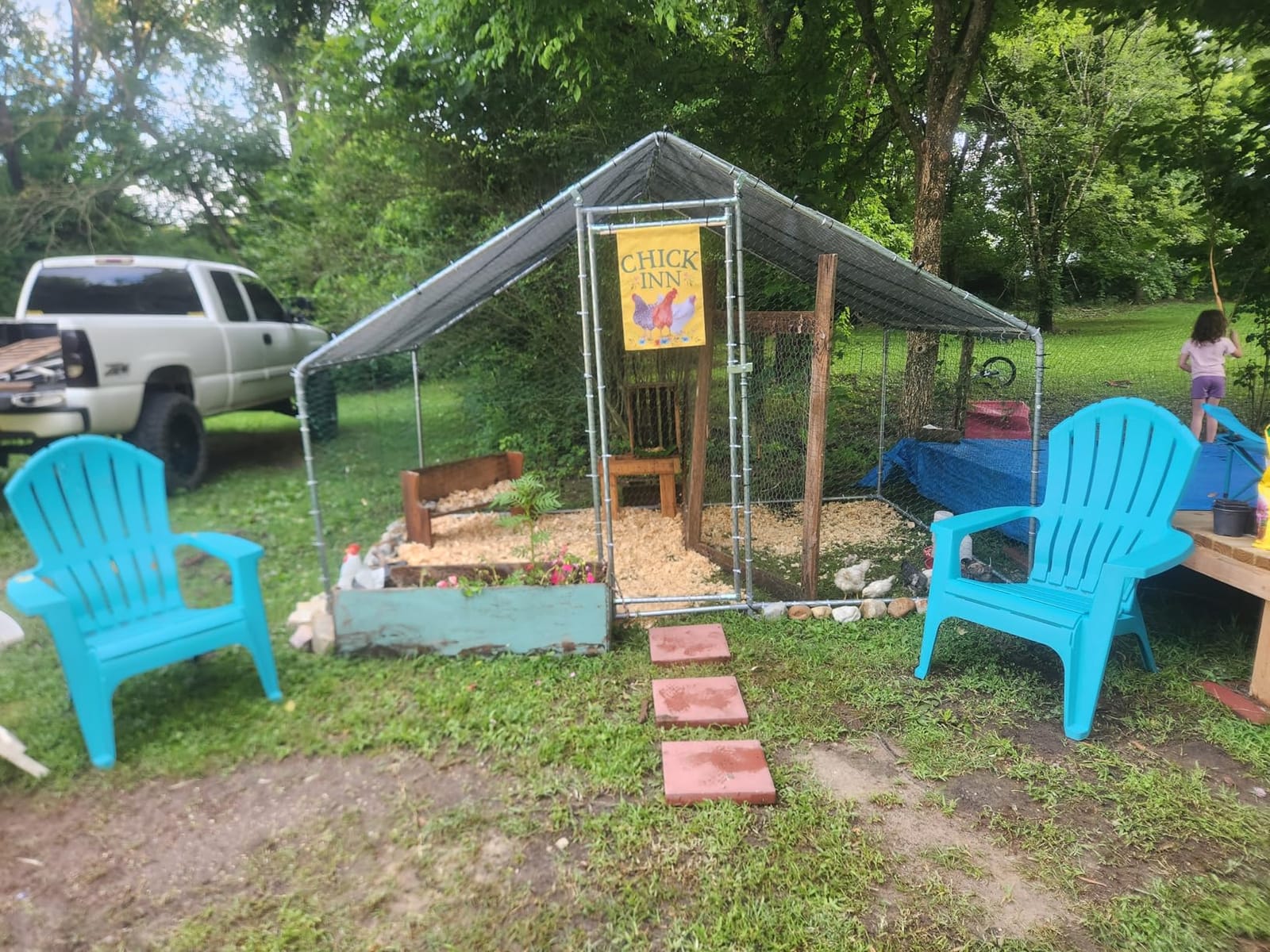
74.9 x 26 x 39.4 inch overall
Removable sliding waste tray
Wheels for repositioning
Overhead-hatch nesting box
The Aivituvin is the movable option. It sits at 74.9 by 26 by 39.4 inches, has a multi-level interior with a ramp to the second level, and rides on wheels so you can drag it to fresh grass every week or two. For a small flock of two to three hens that is a real advantage, because rotational placement keeps the ground from turning to mud and reduces parasite build-up in one spot.
It is also the only small wooden coop here that comes with hardware cloth already fitted to the panels, which normally means buying cloth, measuring and stapling on day one. That single fact moves it ahead of most wooden competitors in this price band.
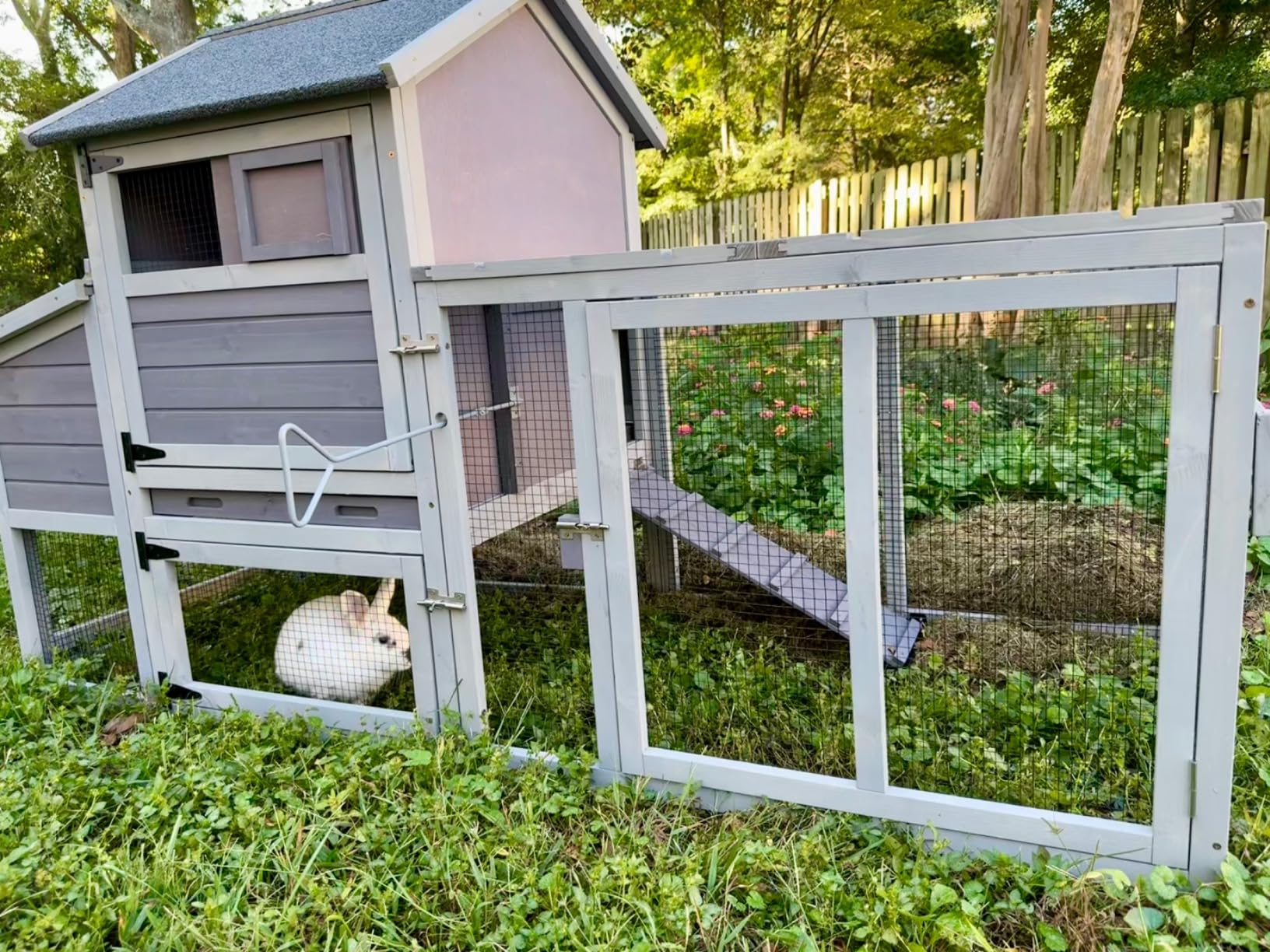
The roof is a premium asphalt panel, and the benefit is heat absorption control rather than water, since asphalt blocks heat from entering the enclosed space below. On a small box with a solid lid, that is a meaningful difference in July.
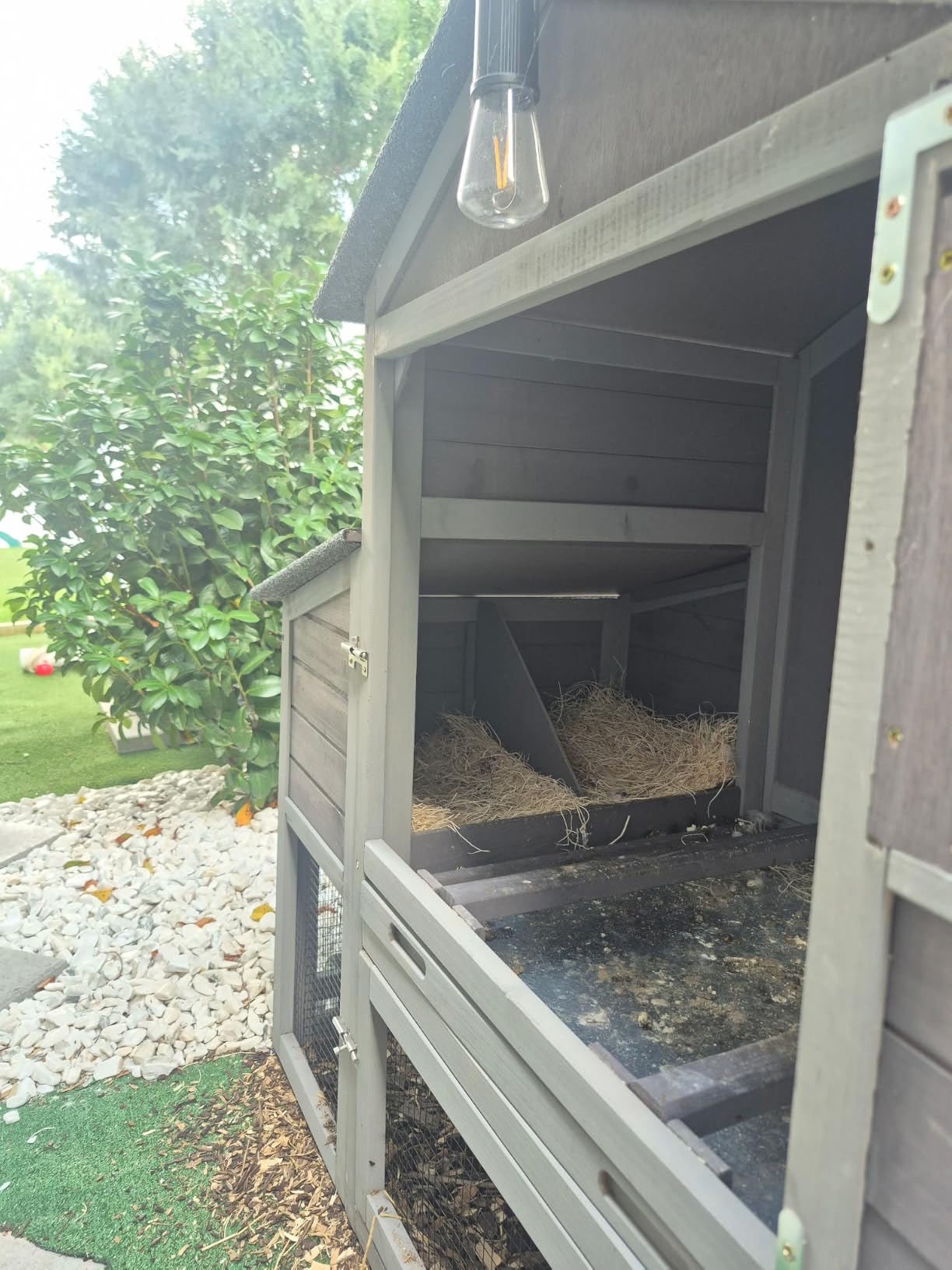
Cleaning is handled by a removable bottom sliding tray for waste, metal wire fencing for ventilation and four access areas. A tray you slide out beats a fixed floor every time, and owners consistently praise the access layout for making weekly cleaning fast.
The roosting bars are the most-reported problem. Owners describe rounded parrot-perch style bars that tip easily and sit close to the droppings shelf, which is a combination worth fixing immediately. Round perches plus a dirty floor underneath is exactly the condition that turns into a mite or mite-egg problem in a small coop.
Second, some owners received cheap nesting box latches that break quickly, and the wood is thin enough that a few buyers reinforced it themselves. Third, and most important for expectations, the listing claims up to 6 birds but owners report it comfortably suits 2 to 3 adult hens.
Wheels make rotational placement possible, but reviewers note they are awkward on uneven ground. If your yard is flat lawn this coop is a pleasure to move. On a slope, plan to lift one end rather than roll it, and expect the frame to flex at the joints when you do.
214.5 x 107.3 x 78 inch run
20 gauge welded hardware cloth
Extended ground skirt
112.2 lb assembled weight
If you live anywhere with foxes, raccoons, weasels or a free-roaming dog problem, the Quictent is the one to buy. It is the only structure in this roundup that ships hardware cloth on the side walls as standard, and that single specification removes the single most common regret reported by first-time buyers.
The mesh is 1 by 1 inch 20 gauge welded wire with a thickened PVC coating, and welded hardware cloth does not flex or unravel the way hexagonal wire does when something pushes against it. Owners consistently name the hardware cloth and the extended ground skirt as the reason this pen outperforms wire-only competitors.
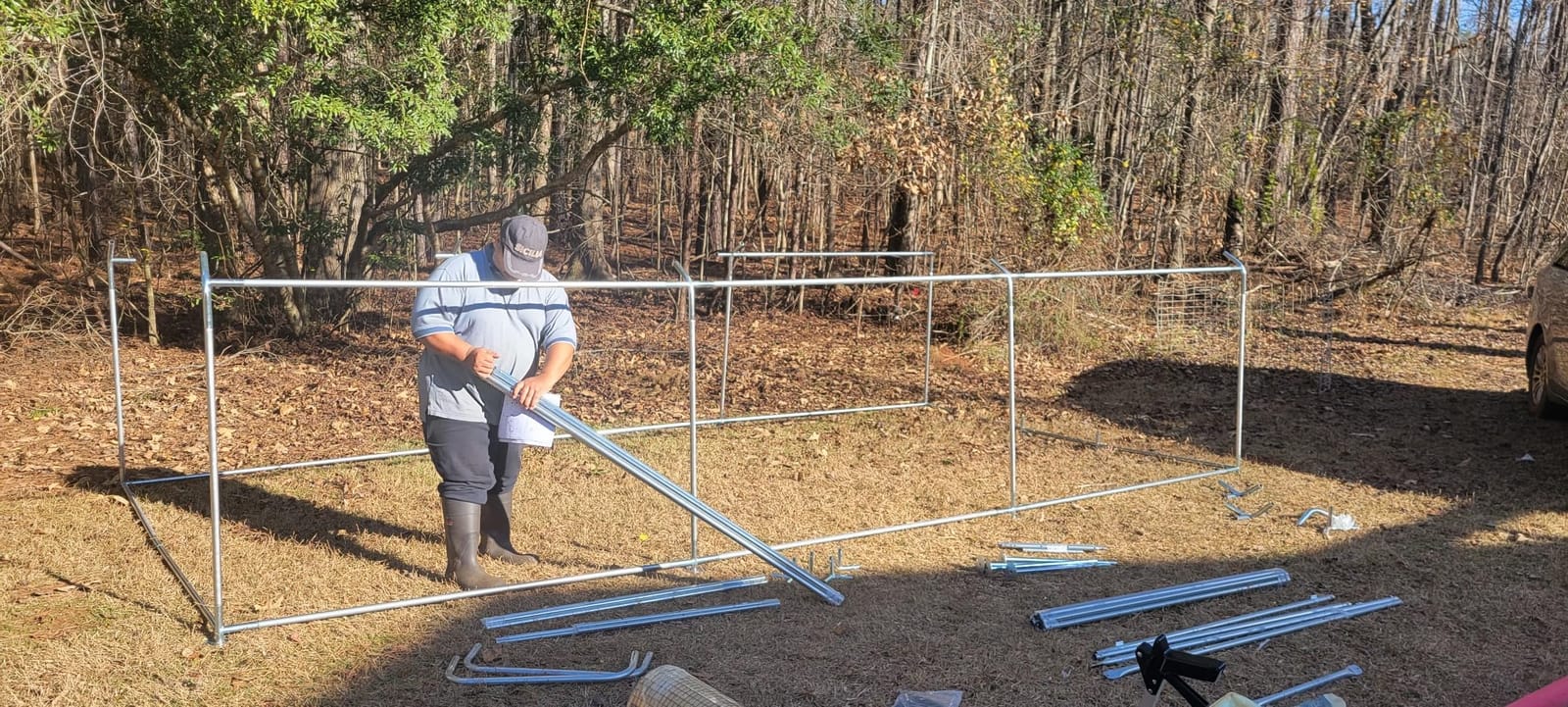
Hardware cloth is welded square wire mesh, usually 1/2 inch or 1 inch openings, sold by the roll in 20 gauge or heavier. Chicken wire is hexagonal poultry netting, typically 1 inch openings, flexible and lightweight. The difference is structural: a raccoon or mink will push through hex netting almost indefinitely, because it is designed to contain poultry and nothing else. Welded 1/2 inch cloth resists that pressure, and coated cloth also resists rust.
Yes, 1/2 inch hardware cloth is the right choice for a chicken coop. It is stiffer, harder to breach, lasts longer outdoors, and costs a modest amount more per roll. This run uses 1 inch welded cloth on the side walls, which is a step better than chicken wire and a hair less secure than half-inch.
Most losses happen not through the walls but under the bottom rail. Digging predators work along the soil line, and a frame sitting on the ground is a frame with a gap beneath it. The extended mesh ground skirt runs outward from the base so an animal has to cross exposed wire lying flat on the ground, which it will not do.
Our own rule is an 18 inch apron of hardware cloth laid flat and pinned with stones or pavers. The Quictent ships with a shorter extended skirt as standard, and you can extend that to full apron width with a roll of cloth and a handful of staples.
You get 750 heavy-duty 0.2 inch cable ties, push-button frame connectors, bolts and a detailed manual, which means no extra purchases for assembly. The parts commitment is unusually generous: 365 days of complimentary frame, pole and connector parts, plus 180 days for the cover and hardware cloth, with paid support after that.
The caveat is that optional side and back covers are not included, so the roof protects the top and the other panels stay open to weather and wind. At 112.2 pounds it is also the joint-heaviest build here, so plan two people and a full afternoon.
157.2 x 117.6 x 78 inch run
25 mm galvanized steel pipe
PVC coated mesh walls
PE spire drainage roof
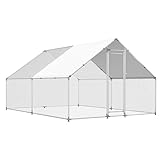
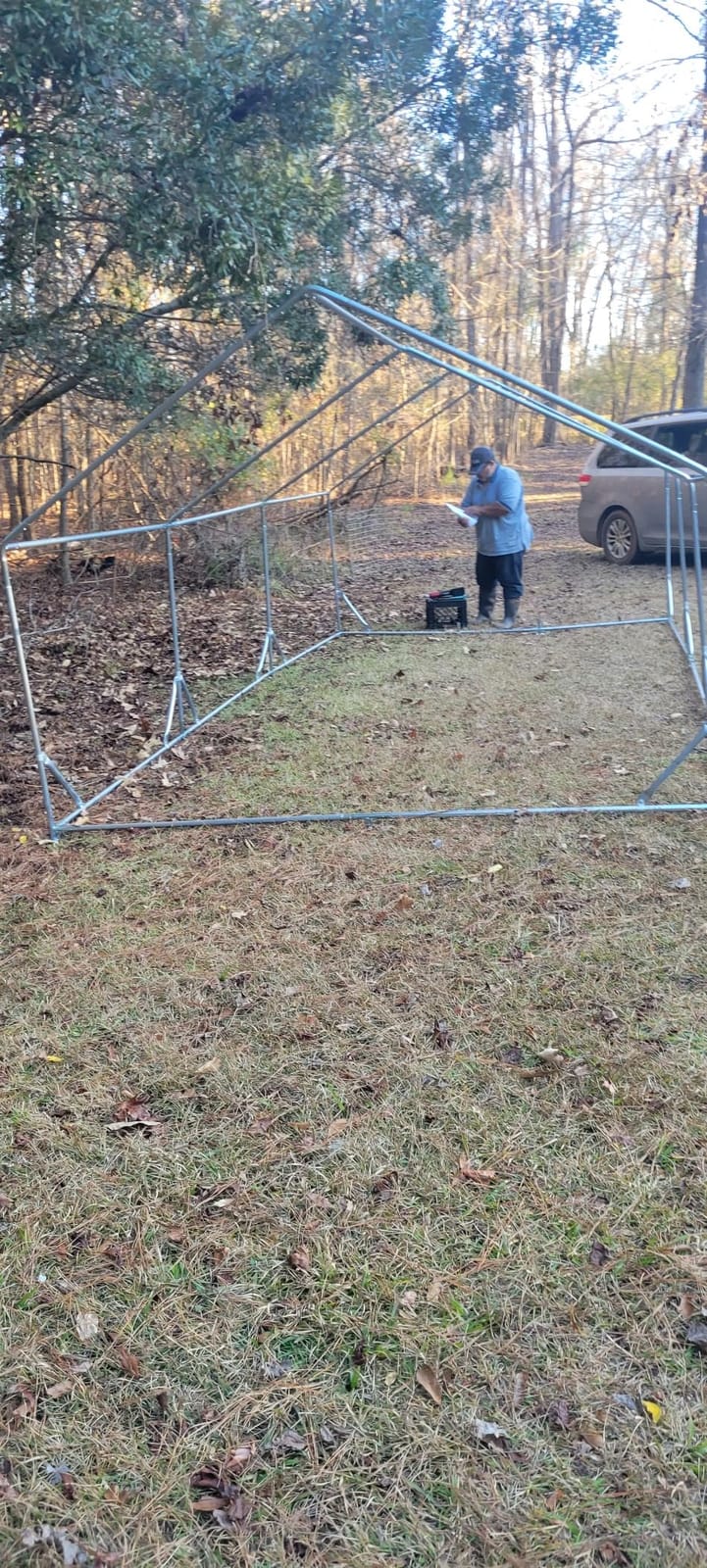
The HEYTOWN does one thing straightforwardly: it gives you a large, square, well-framed metal run without complications. At 157.2 by 117.6 by 78 inches it is a genuinely big footprint, the 4.2 average sits above the roundup median, and there is nothing gimmicky about it.
Its frame uses 25 mm galvanized steel pipe, which is a real diameter rather than thin telescoping tube, and galvanizing technology applied to resist rust. That frame is the reason the 4.2 holds up. Owners value the coated mesh for airflow and the PE roof for shade and rain.
Twenty-five millimetres is close to one inch, so you are getting the same class of tubing as the pricier runs here. The mesh is PVC coated hexagonal wire with small gaps for predator protection combined with high ventilation, and coated wire resists the corrosion that turns bare mesh orange and brittle within two wet seasons.
The spire roof design drains rainwater, snow and debris from all four sides, and the PE material is both waterproof and sunscreen-rated.
What is missing is everything predator-related. There is no hardware cloth, no extended ground skirt and no reinforced base, which means the first item on your shopping list is a roll of 1/2 inch hardware cloth and a set of ground anchors. Budgeters who do that get a good run; budgeters who do not get a nice-looking pen that a raccoon opens in a night.
Assembly is a two-person job, and reviewers note the metal connectors and mesh need care during setup. The instruction sheet and accessories are included.
Owners use it for rabbits, ducks, cats, dogs and birds as well as chickens. If you want a run you can rotate around the garden for small livestock, that flexibility is worth more than hen-specific features at this tier.
13.1 x 9.8 x 6.6 ft run
66 lb assembled
0.8 mm reinforced tube frame
Flexible plastic mesh
The CAMMOO carries the highest average rating of anything we reviewed at 4.5, with roughly three quarters of owner ratings at five stars, and the reason is unusual: it uses plastic mesh instead of wire. For mixed livestock, especially rabbits and ducks, that is a better material than anything metal in this roundup.
Owners describe the plastic mesh as far easier to work with than chicken wire and note it will not break a bird’s neck if a panicked hen runs into it at speed. The frame uses 0.8 mm reinforced tubes with extra reinforcement, and the whole structure weighs 66 pounds, so it is portable without being flimsy.
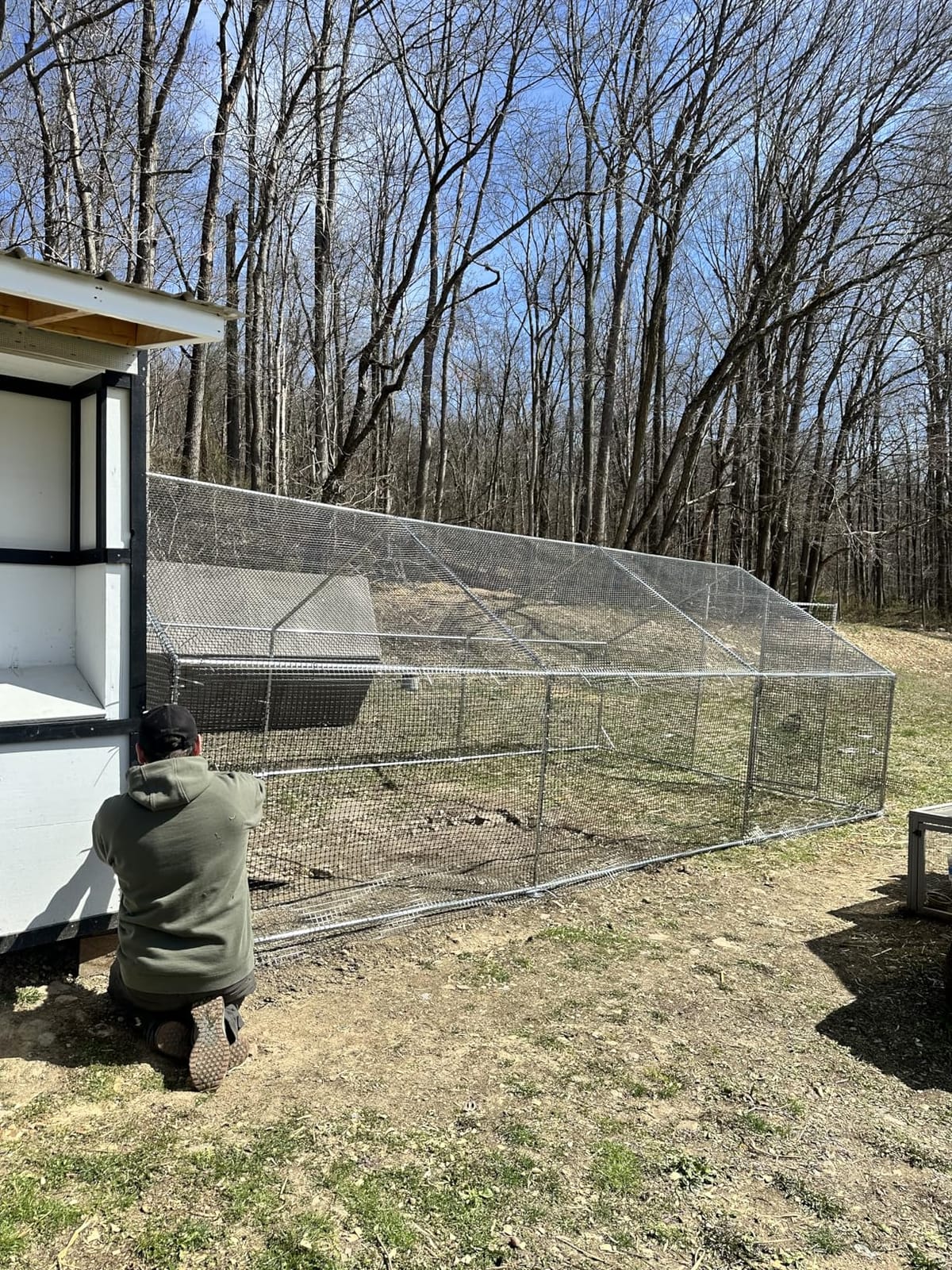
Flexible plastic mesh is specified as tested to survive more than 1000 bends at both minus 4 and 176 degrees Fahrenheit, and it is a roll that you cut to size yourself. That flexibility is the safety advantage: no sharp wire ends, nothing that can snare a wing or a leg, and nothing that rusts.
The stated limits matter. The manufacturer says the mesh is not fully predator-proof and advises reinforcing and weighing down the base, and most owners recommend adding hardware cloth at the bottom or housing chickens in a separate secure coop at night. Treat this as a day pen, which is exactly what owners call it.
The door uses a stainless steel tie combo on the main frame and plastic ties on the front door, with a double-lock design. It is a better latch design than most, though owners report it can need adjustment to lock properly and one chain latch broke on first use. Keep a spare carabiner with the hardware cloth staples in the same box.
Tools are included, which is unusual: pliers, two wrenches and two pairs of work gloves. Parts are pre-sorted and labeled, with a single screw type and click-together frames.
At 13.1 by 9.8 by 6.6 feet with a 5.4 by 2.0 foot door, the listing sizes it for 10 to 20 chickens. Halve that. As a portable day pen for a flock of 6 to 8, with a hardware cloth skirt and a locked night box, it is excellent value.
The tarp is thin, and one buyer reported it tearing in a storm, so treat the roof as weather protection rather than permanent cover.
393.7 x 118.1 x 76.8 inch run
144.4 lb assembled weight
1 inch galvanized steel pipe
Treated Oxford cloth roof
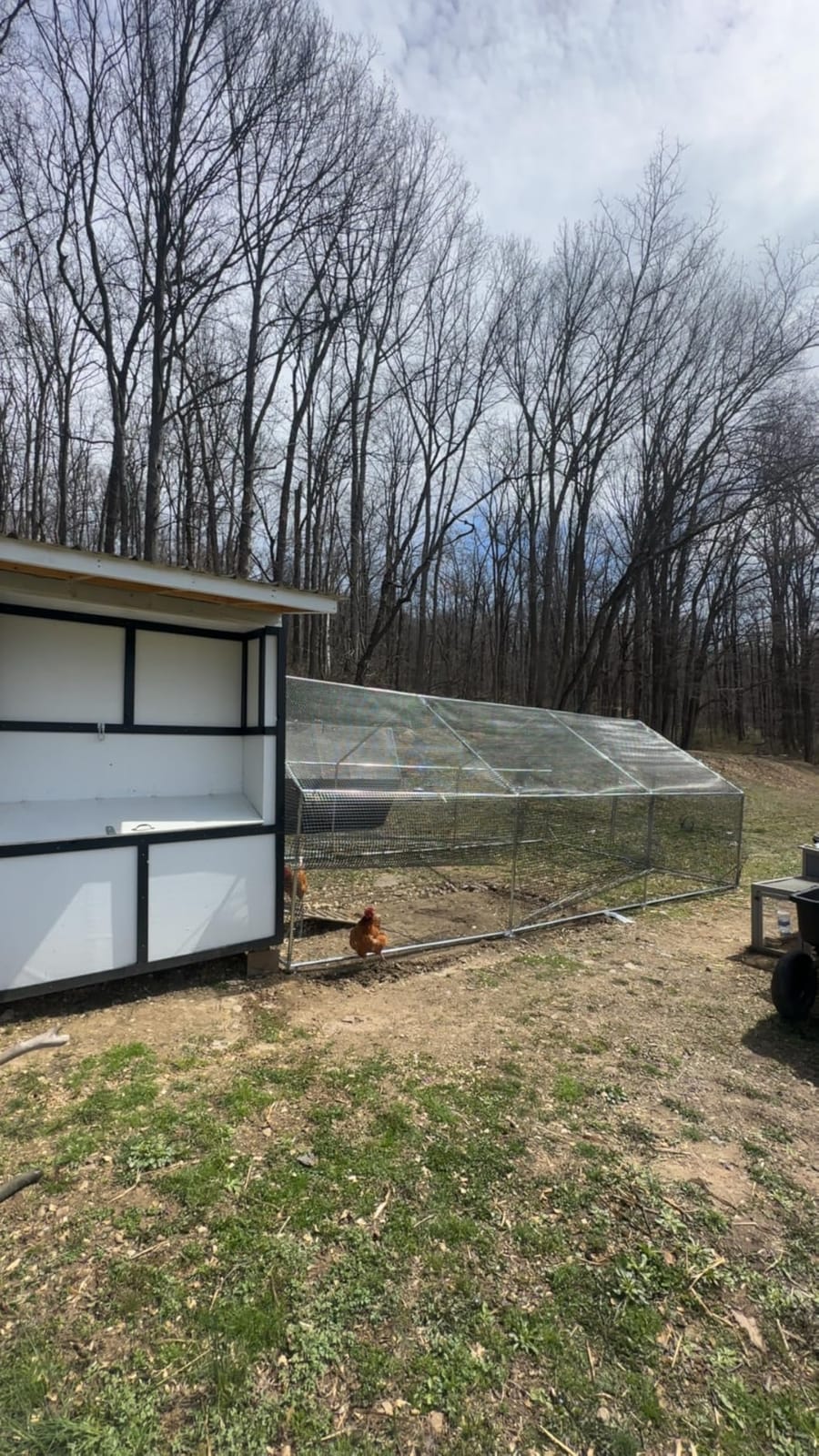
At 32.8 by 9.8 by 6.4 feet, the PawHut is the largest enclosure in the roundup by a wide margin, and it is the only one sized for a genuine flock rather than a backyard handful. PawHut is the house brand for Aosom, which also means replacement parts and hardware are easier to source than from an unbranded import.
The 1 inch galvanized steel pipe frame resists wear and rust, and the wire has been treated with a dipping process specifically to avoid injuring birds, which is a detail most competitors at this size ignore. The roof is specially treated Oxford cloth with water and UV resistance, held on by spring button clips.
Walk-in height with a door that locks is the feature that makes a run of this size usable, because you can clean it and reach the far end without dismantling anything. A lockable door also means you can secure the flock inside overnight, which several owners do as their predator strategy when the run is attached to a wooden coop.
It attaches to a wooden coop for a combined shelter, which is the intended use: the run provides the daytime space, the coop provides the night box.
At 144.4 pounds assembled, this is the heaviest structure we looked at and it is not a one-person job. Plan an afternoon with at least two adults, and pick the site before you start building because moving the completed run is a serious chore.
The second limitation is the base. Owners note that rabbits may dig under the run unless the base is reinforced, and the same applies to raccoons and foxes. A run this size needs the full 18 inch apron treatment, which means a meaningful amount of hardware cloth.
Buy it if you are keeping 10 or more birds, or if you plan to raise batches for meat and eggs and need daytime space more than you need a compact footprint. Do not buy it for three or four hens; you will pay for a structure you cannot use, and a mid-size run plus a hen house is cheaper and easier to heat and clean.
At this price point, the enclosure is the smaller half of the decision. Predator protection, sizing math and the first-week hardening list decide whether your flock is still there in 2026. We walk through the criteria in the order that actually matters.
The sizing rule that works: measure the interior floor of the enclosed sleeping area, divide by 4, and that is your standard-hen count. Bantams and small breeds can go a little denser; large breeds like Orpingtons need more. Then add 8 to 10 square feet of run space per hen.
Run a 4 by 8 coop for how many chickens? Interior floor of 32 square feet divided by 4 gives 8 standard hens as the theoretical maximum, and 6 is the number experienced keepers actually run in that space. Always halve the printed bird count before you order.
How many chickens fit in a nesting box? One nest per 3 to 4 hens is the working ratio, which means 3 nesting boxes are comfortable for up to 12 chickens, 2 boxes work for 7 to 8 hens, and 1 box serves 3 to 4. Boxes are shared, so two hens laying at the same moment in a single nest is normal and not a problem to solve.
Roost bars should be flat and rectangular, roughly 2 to 3 inches wide, with about 8 to 10 inches of roosting space per hen. Round dowels are the most common cheap-coop mistake, and they are a frostbite risk in cold climates because birds sleep belly-down against them.
Chicken wire keeps chickens in. It does not keep predators out. Raccoons, foxes, weasels, minks and hawks all defeat 1 inch hexagonal netting, and the soft structure means a determined animal can push a section aside rather than tearing it.
Half inch galvanized hardware cloth is the correct material for any coop or run. It is welded square mesh, so it does not flex under pressure, and the galvanizing resists rust for years outdoors. Where a flexible panel is genuinely better, plastic mesh like the CAMMOO’s is a legitimate choice for mixed livestock, provided you still skirt the base.
Most coop losses happen under the bottom rail, not through the walls. The fix is an 18 inch strip of hardware cloth laid flat on the ground, running outward from the base, pinned with stones, pavers or staples. A digging animal meets exposed wire lying flush with the soil and moves on.
Bury the apron if your soil is soft, or weight it if it is rocky. Add ground anchors through the bottom rail so the structure cannot be tipped or pushed. This single step, done in the first weekend, prevents more losses than any other item on this list.
A slide bolt latch with a screw eye and a carabiner is enough for most yards. A raccoon-proof lock is a body spring latch, which is a step up. Replace any thin stamped hasp that flexes when you pull the door, and fit two per door rather than one.
Walk-in height is a parasite control feature, not a comfort feature. If you cannot reach every corner, corners become mite refuges and wet bedding pockets you never clean. Combine that with a removable tray or floor panel, and weekly maintenance takes minutes instead of an hour.
In cold regions, prioritise wind protection and airflow over insulation. Experienced keepers consistently recommend cutting extra roof-line vents rather than adding heat, because warm moist air with no exit causes ammonia and frostbite simultaneously. The PawHut Oxford roof and the CAMMOO tarp both handle wet snow loads better than flat tops.
In hot regions, roof reflectivity and shade matter more than anything else, which is where the asphalt roof on the Aivituvin and the PE sun-protective tarps elsewhere earn their place. In wet regions, prioritise drainage and a ground that dries fast, and expect to add bedding depth. In predator-heavy regions, the Quictent is the only structure here that addresses it at the factory.
Under a 500 ceiling, walk away from round dowel perches, felt or paper roofing, thin stamped slide-bolt latches, exposed 1 by 1 bare framing, and any listing with no floor or no cleaning access. The first two create cold and water problems, the third fails in a single determined night, the fourth will not survive a wet winter, and the fifth guarantees permanent damp.
Be skeptical of any bird count above 20 on a run you can carry with two people, and of any claim that hexagonal wire makes a pen predator-proof. Both are false, and both appear in listings.
Spend the hardening budget in this order, and the order matters more than the amounts.
Half inch galvanized hardware cloth for every panel and the base, plus an 18 inch ground apron. This is the item that keeps birds alive.
Ground anchors or heavy stakes driven through the bottom rail, because a run that tips is a run that fails.
Two solid latches per door, screw eyes and carabiner or body-spring locks to replace anything thin.
Exterior sealer or exterior paint on every wood surface, which roughly doubles the life of thin fir and pine.
A flat rectangular roost bar to replace any dowel, plus an extra 8 to 10 inches per hen.
Two roof-line vents for airflow, which are cheaper than any heater and work better.
Wood sealant matters more than most buyers expect. Owners repeatedly report thin fir and pine that warps and rots within a single season if left unsealed, and one roundup-wide pattern across buyer reports is that the cheap slide latches are the first hardware to fail. Seal first, latch second, and your coop should comfortably outlast the three to seven year lifespan most owners expect.
One last note on build versus buy. Experienced keepers on r/BackYardChickens and r/homestead lean toward building, and consensus in those communities puts a well-framed DIY coop at roughly the same material cost as a mid-tier prefab while allowing thicker wood and exact sizing. Locally built walk-in coops with nest boxes are commonly quoted to members in the region of 1,600 painted and ready, which sets a fair ceiling for what a quality build is worth. That route only pays off if you already own tools. If you do not, the enclosures above plus a weekend of hardening will get you further for the same money.
Predator pressure is the one variable that should decide your purchase faster than price. Map your yard to one of three levels before you spend anything.
Low pressure means a suburban lot with a solid six-foot fence, no fox den within a few streets, and no free-roaming dogs. In that situation a hex-mesh run with a lockable door is adequate, and the NUGRIART or the VEVOR will serve you well once the base is skirted.
Medium pressure means an open yard, a creek or tree line nearby, or an occasional fox sighting. Here you want the base reinforced and the door genuinely lockable, which puts the HEYTOWN with a hardware cloth overlay or the NUGRIART with added stakes on the short list. A locked night coop still does most of the work overnight.
High pressure means rural acreage, known raccoon traffic, denning foxes, or stray dogs that visit regularly. Do not buy a hex-mesh run and hope. The Quictent, with its 20 gauge welded hardware cloth side walls and extended ground skirt, is the only structure in this roundup that addresses the walls at the factory, and it pairs best with the full 18 inch apron treatment underneath.
If your budget stretches across two smaller structures instead of one large one, you get something the roundup does not otherwise give you: rotation. One run in use, one run resting and drying out, and the birds move between them on a fortnightly cycle. That is the single cheapest parasite control you can buy, and it is why pairs of mid-size runs often outperform one giant pen of the same total cost.
The trade is attention. Two structures means two sets of latches to check, two aprons to maintain, and twice the ground to clear before the first birds arrive. Our advice is to buy two VEVOR cubes or two HEYTOWN runs over one of the largest enclosures if your flock is six birds or fewer, and to buy one large run only when you genuinely have ten or more birds to justify the footprint.
Second-hand coops are a reasonable way to spend the same budget on something larger, and the inspection takes about ten minutes. Tap every wall panel and the floor listening for hollow or soft spots, because wood that has been wet and dried repeatedly loses stiffness and will not hold a screw. Push hard on each frame joint and look for movement at the joints rather than in the middle of the panels.
Check the mesh next. Any hexagonal poultry wire means you are budgeting for a full hardware cloth replacement, which is the entire savings gone. Look at the base rail for rot, and count the latches: a coop with stamped thin-metal hasps is a coop that will need every door re-hung.
Finally, treat the whole structure as contaminated. Parasite eggs and red mite populations survive in cracks and bedding dust for long after the birds left, so clean every surface before the flock moves in and never move birds into a used coop without a full wash first.
Yes. The working rule is one nesting box per 3 to 4 hens, so 3 boxes comfortably serve a flock of 12. Boxes are shared, so two hens laying at the same moment is normal and not a problem.
Yes, half inch galvanized hardware cloth is the correct material for a chicken coop. It is welded square mesh that resists pressure and does not flex, unlike hexagonal chicken wire, which keeps birds in but stops almost no predators.
Yes. Two nesting boxes serve up to 7 or 8 hens comfortably using the one box per 3 to 4 hens ratio. Add more only if you notice birds fighting over a single nest at laying time.
Plan one nesting box per 3 to 4 hens. That means 1 box for 3 to 4 birds, 2 boxes for 7 to 8, and 3 boxes for up to 12. Boxes are shared, so a simultaneous laying pair is normal.
They can, and the causes are predictable. Unsealed thin fir rots within a season, round dowel perches and thin stamped latches fail early, and hexagonal wire never stopped a predator. Sealing the wood, replacing latches and adding 1/2 inch hardware cloth with an 18 inch ground apron extends the life considerably.
Pick the CHIKENCOOP 9.8 by 6.5 foot metal run if you want the most documented, most spacious walk-in structure in this price band, and pair it with a small hen house for nights. It is our editor’s choice for a reason: more than 1,600 owner reviews and a reinforced frame that does not wobble.
Choose the Quictent if predators are your biggest worry, because the 20 gauge welded hardware cloth side walls and extended ground skirt are the only factory predator work in the roundup. Choose the NUGRIART if frame quality matters most, since its 1 inch galvanized pipe and coated mesh are a tier above the tier. Choose the HEYTOWN if you want a big, simple run and will do the cloth work yourself.
For a flock of four to six hens, the Petsfit is the most complete single purchase, with three nesting boxes, a washable floor and six anti-tip anchors. For two to three birds that you want to move around the garden, the Aivituvin with its wheels and pre-installed hardware cloth fits better than anything else. For a tight urban corner, the VEVOR 6.56 foot cube fits where nothing else will. For rabbits, ducks or a mixed flock, the CAMMOO plastic mesh is the safest material in the group. For ten or more birds, the PawHut gives you the only large run that fits this ceiling.
Whichever one you choose, spend the first weekend on hardware cloth, an 18 inch ground apron, real latches and wood sealer. That upgrade list costs far less than one hen, and it is the difference between the best chicken coops under 500 being a structure that lasts or one that empties out in a single night. Check current pricing on the links above, and start with the flock size, not the bird count on the box.