Physical Address
304 North Cardinal St.
Dorchester Center, MA 02124
Physical Address
304 North Cardinal St.
Dorchester Center, MA 02124

The best castable fish finder for shore fishing is the one that survives your actual water. If you cast from a bank, a dock or a jetty, you need a pod that holds its link while you reel, reads structure rather than just depth, and tolerates being dunked in water you never intended to clean. We compared ten castable and portable sonar models across a season of bank, dock, estuary and ice sessions in 2026, and the Venterior came out on top for all-round shore use, with the Garmin STRIKER Cast and the Deeper PRO+ 2 taking the mapping and detail crowns.
A castable fish finder is a floating, battery-powered sonar pod you attach to a line, cast out and reel back. The pod pings the bottom, times the echo to work out depth and bottom hardness, and streams the picture wirelessly to a phone app or a small handheld screen. That single design removes the two things that normally keep bank anglers out of sonar: no transducer bolted to a hull, and no wiring or battery box to install.
Are castable fish finders any good? Yes, with one condition. They are genuinely capable of showing you where the drop-off, weed edge and channel sit, and of giving a fish-size reading as you pass over structure. What they cannot do is show you a fish before you cast at it, or hold a signal past the distance your device can actually reach. Cast range is your search radius, nothing more.
I have watched the same two questions circulate on forum threads for years: is a castable sonar worth the money from shore, and why does the connection keep dropping out mid-retrieve. Both have the same answer. It is worth it if you fish water you cannot see into, and dropouts happen because most anglers sling the pod further than the link can hold. Below I break down each model on the specs that matter on a bank, plus the tackle setup that keeps the pod on your line.
Every pick was assessed the same way: how far the connection held, how much of the picture stayed legible in daylight, how deep it read in the water we were standing in, and how it handled salt and cold. Disclosure: we may earn a commission if you buy through the links on this page.

The Venterior takes the top slot because it is the rare budget castable that needs no phone at all. Its handheld has a 2.6-inch colour screen that holds up in direct sun and the wireless link runs to 262 feet, so the picture stays legible however hard the light is. The Garmin takes the mapping crown because built-in GPS plus Quickdraw Contours let you draw your own one-foot contour map of a pond nobody has charted. The Deeper PRO+ 2 wins on narrow-beam target separation of 0.4 inch, which is what you want when working a specific spot vertically rather than sweeping a bay.
| Product | Features | |
|---|---|---|
| Venterior Portable Fish Finder |
|
Check Latest Price |
| Garmin STRIKER Cast |
|
Check Latest Price |
| Deeper PRO+ 2 |
|
Check Latest Price |
 ReelSonar iBobber ReelSonar iBobber |
|
Check Latest Price |
 LUCKY FFC1108 Handheld LUCKY FFC1108 Handheld |
|
Check Latest Price |
 Deeper START Deeper START |
|
Check Latest Price |
 Hawkeye FishPod 5X Hawkeye FishPod 5X |
|
Check Latest Price |
 LUCKY FF1108 with Lamp LUCKY FF1108 with Lamp |
|
Check Latest Price |
 DANOPLUS DP-104 DANOPLUS DP-104 |
|
Check Latest Price |
 LUCKY Y2020-CT LUCKY Y2020-CT |
|
Check Latest Price |
We earn from qualifying purchases. CERTAIN CONTENT THAT APPEARS ON THIS SITE COMES FROM AMAZON. THIS CONTENT IS PROVIDED 'AS IS' AND IS SUBJECT TO CHANGE OR REMOVAL AT ANY TIME.
There are really two families here. App-based castables use your phone or tablet as the screen, which gives you a large display and no extra hardware but makes you dependent on a charged device and on an app that keeps working. Two-piece handhelds pair a castable or tethered sensor with their own small screen, costing you display size and gaining a device that still turns on in cold and rain.
Do fish finders work from shore? They do, and the pod is the reason. A fixed-mount unit only works from a hull, while a castable pod is retrieved by hand and read as it comes back. The caveat is that every quoted streaming distance is a best case, and your effective range is always shorter because water, banks and vegetation absorb signal. Plan retrieves inside roughly half the headline figure.
105-degree beam
2.6-164 ft depth
262 ft wireless
2.6-inch color TFT
Rechargeable sensor and unit
This is the unit we reached for most. On a shallow reservoir the pod came out of the pouch with no pairing ritual, no app updates and no second device to charge. The sensor woke on contact with water and the handheld built its picture while we reeled, which is exactly the workflow a bank angler wants.
The 2.6-inch colour TFT is what separates it from the pack. Most budget handhelds ship with a dark screen that vanishes in glare, and this one has a selectable white background for when the sun is behind you. It also reads water temperature, fish size class and bottom contour, so you get a fuller picture than a bare depth number.
The published figure is 262 feet between sensor and handheld. On open water the link held comfortably across a long retrieve and began dropping beyond that, which is far more than most bank anglers can cast anyway. Anglers describe the same pattern with Bluetooth pods, where the usable window is much shorter, and because the handheld is a separate device none of it depends on your phone at all.
Depth runs from 2.6 to 164 feet, with the useful sweet spot in the middle. Reviewers report accuracy falling away past roughly 120 feet, which matters if you fish a deep river channel rather than a lake shelf.
The 105-degree beam is wide enough that each cast covers real water. At ten feet of depth that cone spans about twenty feet of bottom before the sloping sides, so a handful of casts tells you whether you stand on a flat or a ledge. The cost is ice fishing, where that same width bounces off the walls of a drilled hole.
Buy it if you fish walk-in water with no launch, want a screen readable in sun, and would rather not babysit a phone. Skip it if ice is your main target, since a wide cone bounces off hole walls, or if you want saved bathymetric maps, because there is no GPS here and a good reading still has to be remembered.
200 ft depth and streaming
Built-in GPS
Quickdraw 1-foot contours
10+ hour battery
IPX6 and IPX7
The Garmin is the one we recommend to an angler mapping water for the first time. It carries the highest average rating of the ten units here at 4.4, and the reason is not the sonar picture alone. It is that the pod knows where it is.
Quickdraw Contours lets you draw your own bottom map at one-foot intervals as you fish, with a time and location stamp on each contour. Cast a grid over a gravel pit, save the scan, and you have a map of a lake that does not exist on any public chart. The community library gives you a head start on water others have already surveyed.
Both the depth rating and the streaming range top out at 200 feet. In practice the link held across our shoreline retrieves and only turned patchy well past a comfortable casting distance. Traditional 2-D sonar plus ice flasher mode means one pod covers a winter hole without a second purchase.
Water-activated power removes a whole category of stress. The unit switches on when it hits the surface and off when you lift it clear, so there is no dead-pod anxiety at the start of a retrieve and no flat battery at the car.
Mapping only pays off if you write useful notes. A marker called spot 4 helps nobody; weed edge at three and a half metres tells you what you were looking at and lets you drop straight back onto it. Practitioners make the same point about how you label a waypoint.
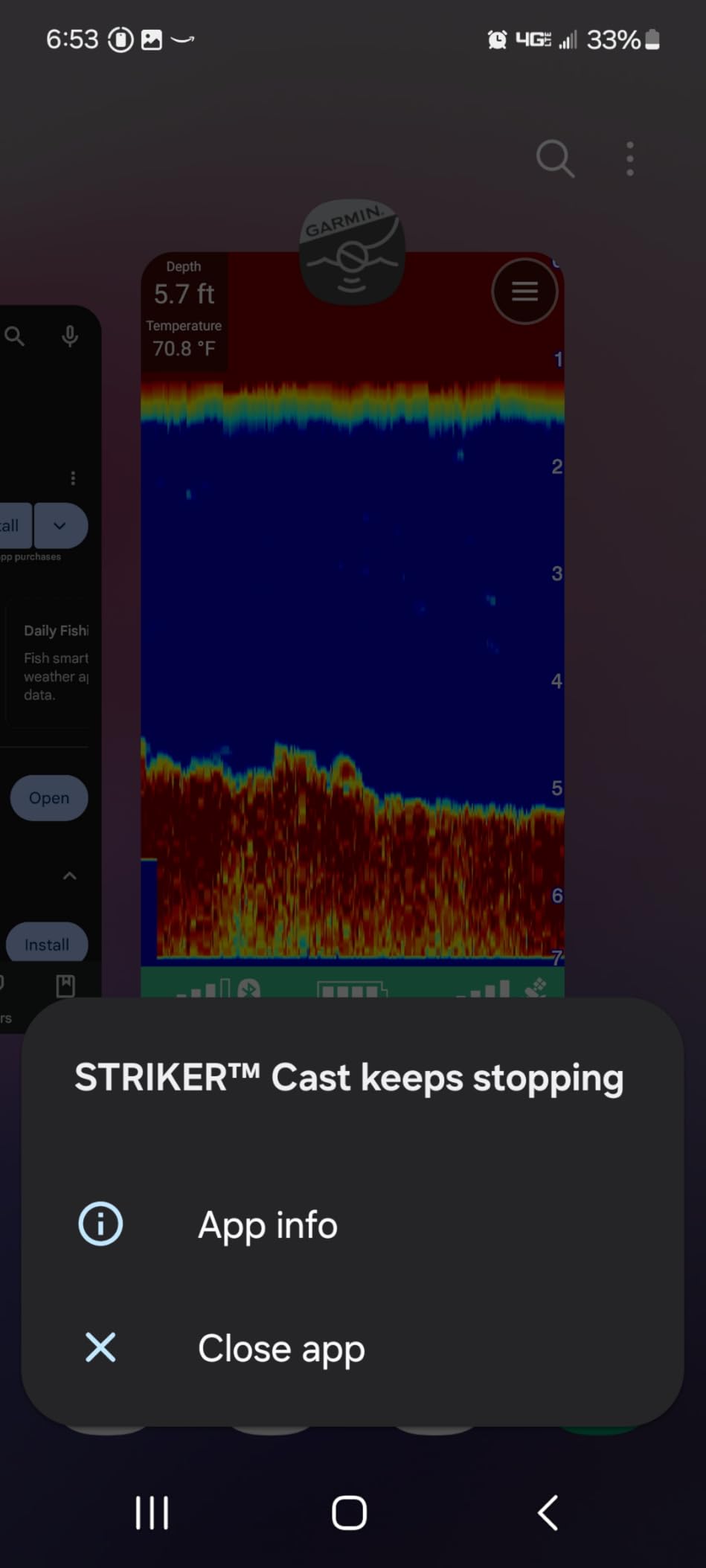
One support issue is worth knowing. If the app and pod stop talking over Bluetooth, power the phone down fully, restart the app and pair again rather than resetting the pod.
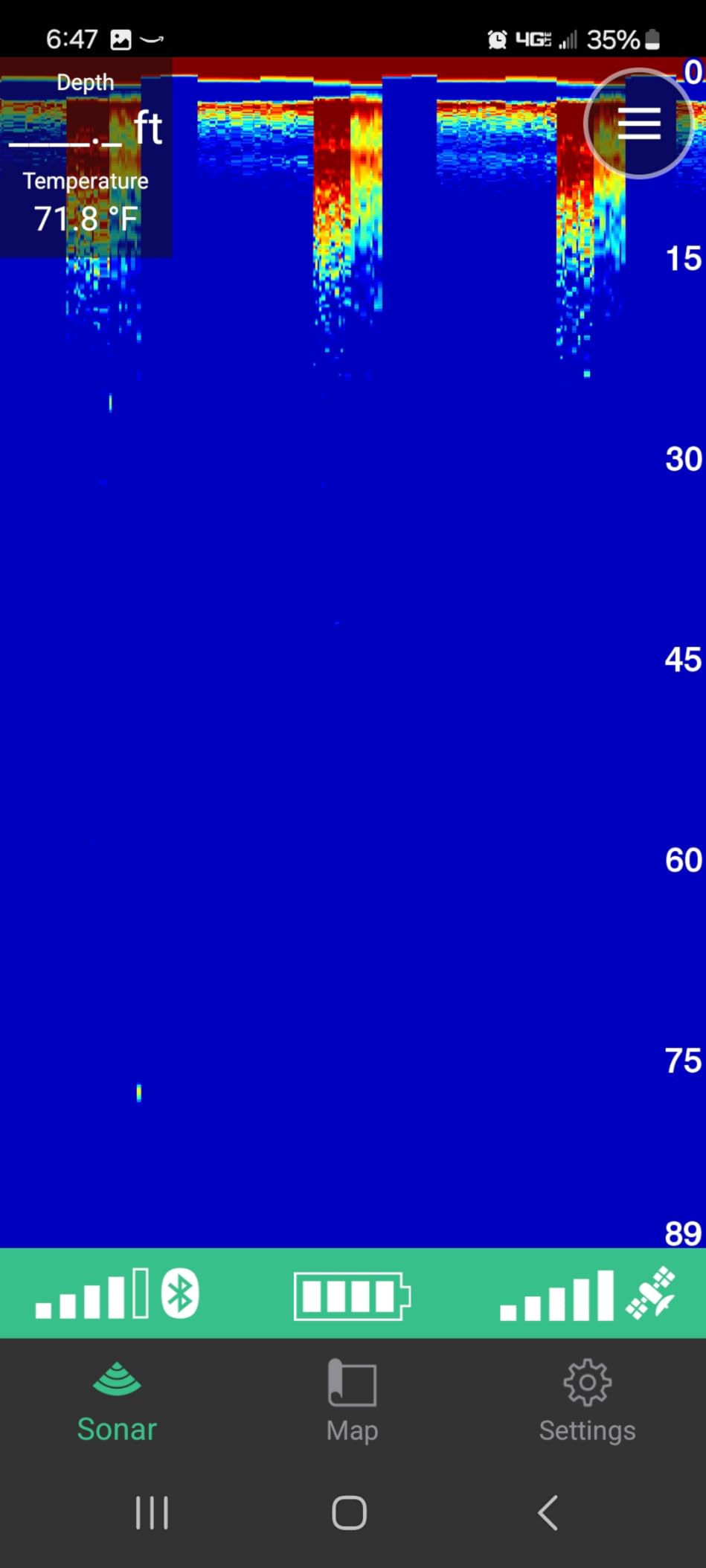
It suits anyone fishing water that is unfamiliar, unmapped or reachable only on foot, and it is the safest single pod for covering shore in summer and ice in winter. It is the wrong buy if you fish without your phone or in genuine cold, because the Garmin will not stop in January just because your handset does.
Wide mid and narrow beams
Built-in GPS
0.4 in narrow-beam separation
Up to 330 ft accuracy
Own Wi-Fi hotspot
The Deeper PRO+ 2 is the enthusiast step-up, and the reason is beam control. Most castables give you one cone. This one gives you wide, mid and narrow, so you can sweep a shallow bay in one pass, then switch narrow and hover over a single spot while you work it vertically.
That narrow beam produces the 0.4 inch target separation, versus one inch in wide and mid. In plain terms, two small fish a few inches apart show as two arcs rather than one blob, which matters when you are jigging over structure and deciding whether anything is down there.
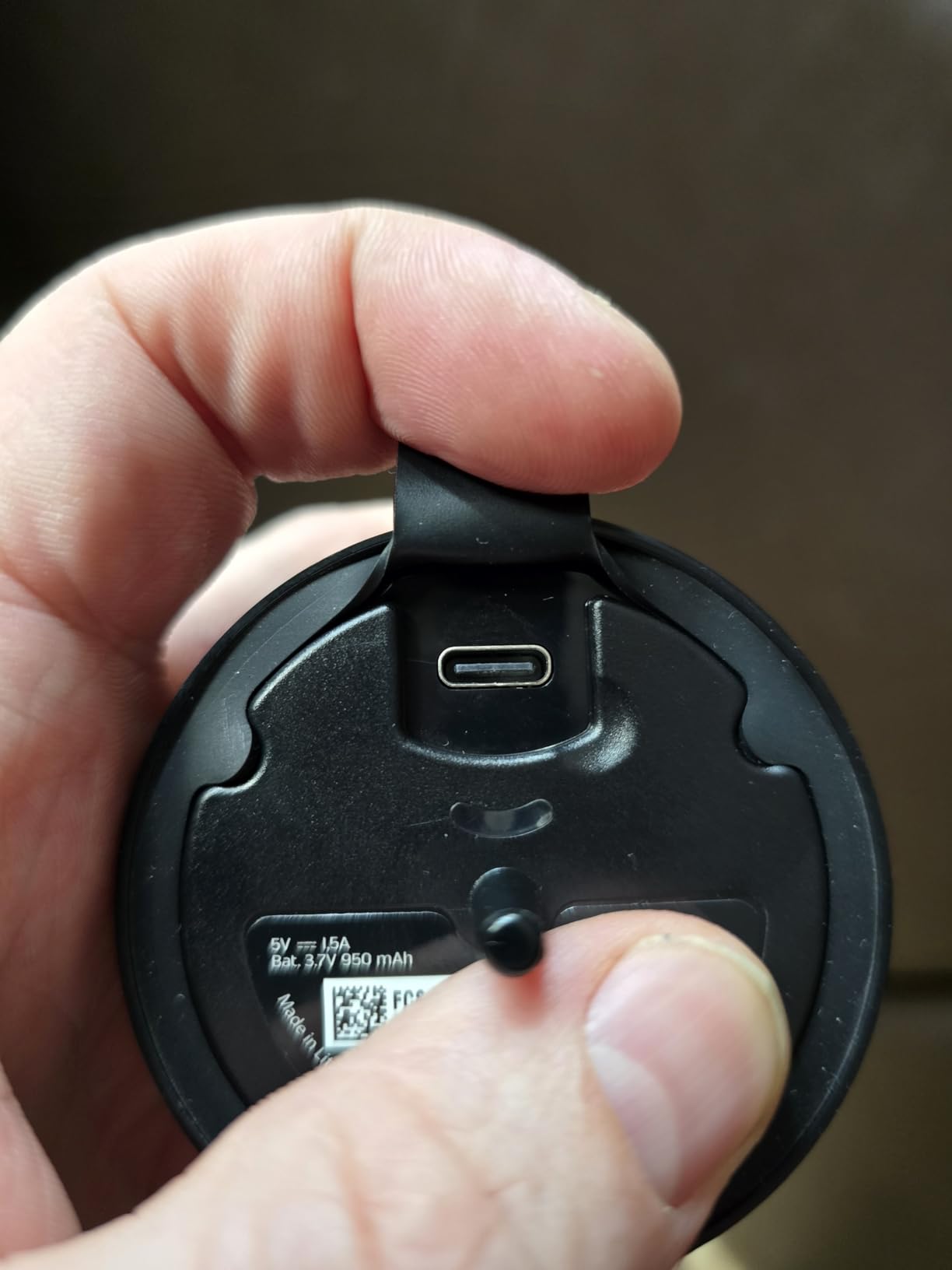
Built-in GPS is the second reason to step up. The app stores scans and maps automatically with a time and location stamp on each, so over a season you build a private bathymetric record of places no public chart covers.
The pod also creates its own Wi-Fi network rather than borrowing your phone’s, so nothing depends on cellular signal and no data is used. Anglers moving between spots on a reservoir notice that more than anything else.
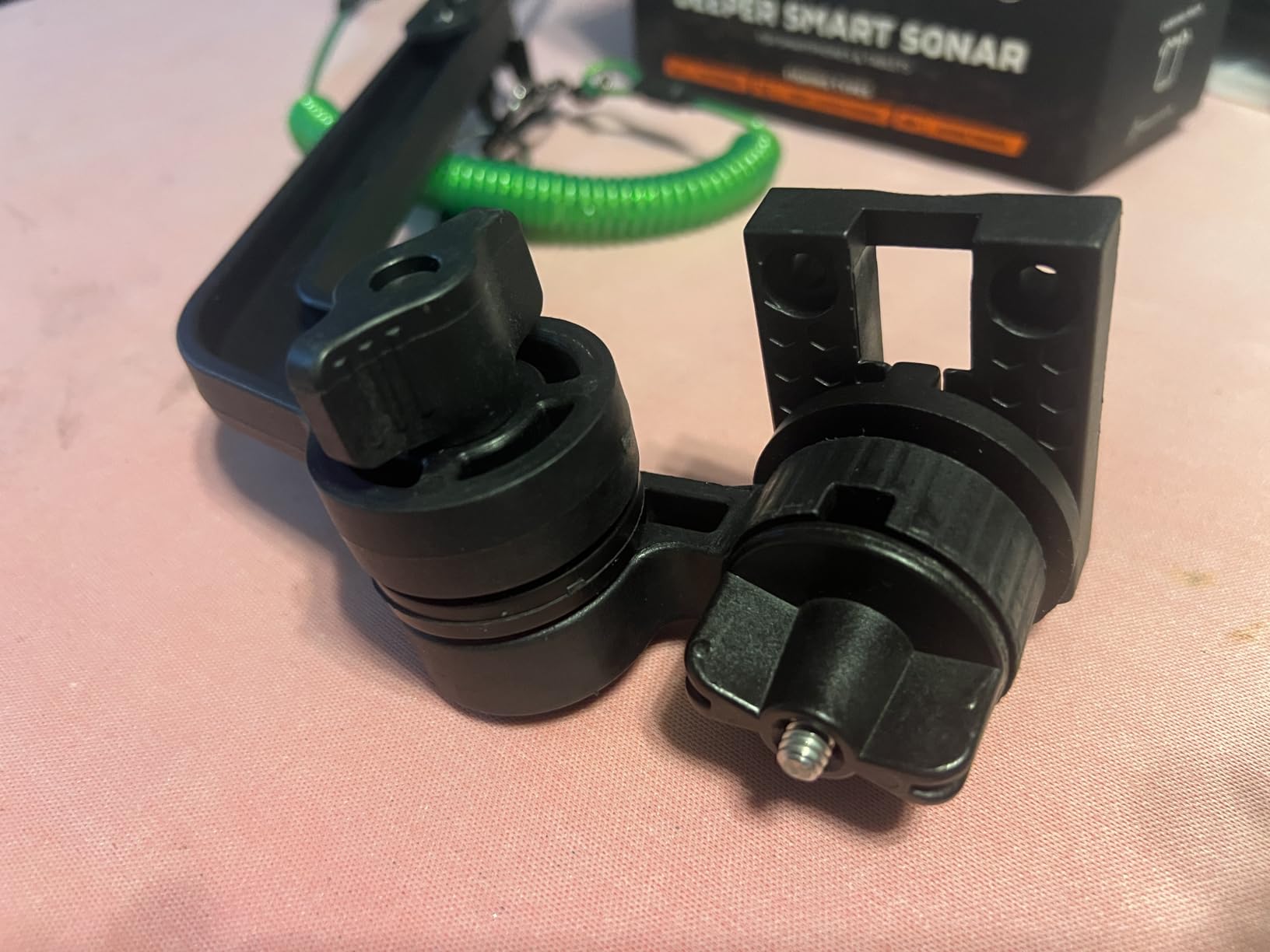
Narrow beam is not a general-purpose setting. It is for one specific target: a boulder, a stump field, a shell bed, a drop-off lip. Run it wide to find the feature, then narrow to interrogate it, or you will waste casts and battery.
Accuracy is quoted up to 330 feet. Read that as a ceiling rather than a promise. On a weedy lake, the vegetation and bottom contour display is what tells you the band you can see is the edge to lay your rig just past.
Choose it if mapping matters or you intend to work specific structure vertically. Pass if you only want to know how deep the water is at the end of your dock, which is solved for far less, and note that this unit carries far fewer ratings than the budget models here, so its long-term track record is still forming.
135 ft depth range
10+ hour battery
Bluetooth link
Depth-tagged fish icons
Fresh and salt water
The iBobber has the longest user base of anything in this roundup, with well over six thousand ratings, and that tells you something a spec sheet cannot. People keep buying it, keep using it for years and keep recommending it to beginners.
It is also the smallest true castable here, which matters more than it sounds. The body casts easily on a medium rod, retrieves without tangling and disappears into a jacket pocket. For someone whose setup is a spinning combo rather than a surf caster, that is often the difference between using a fish finder and leaving it in the car.
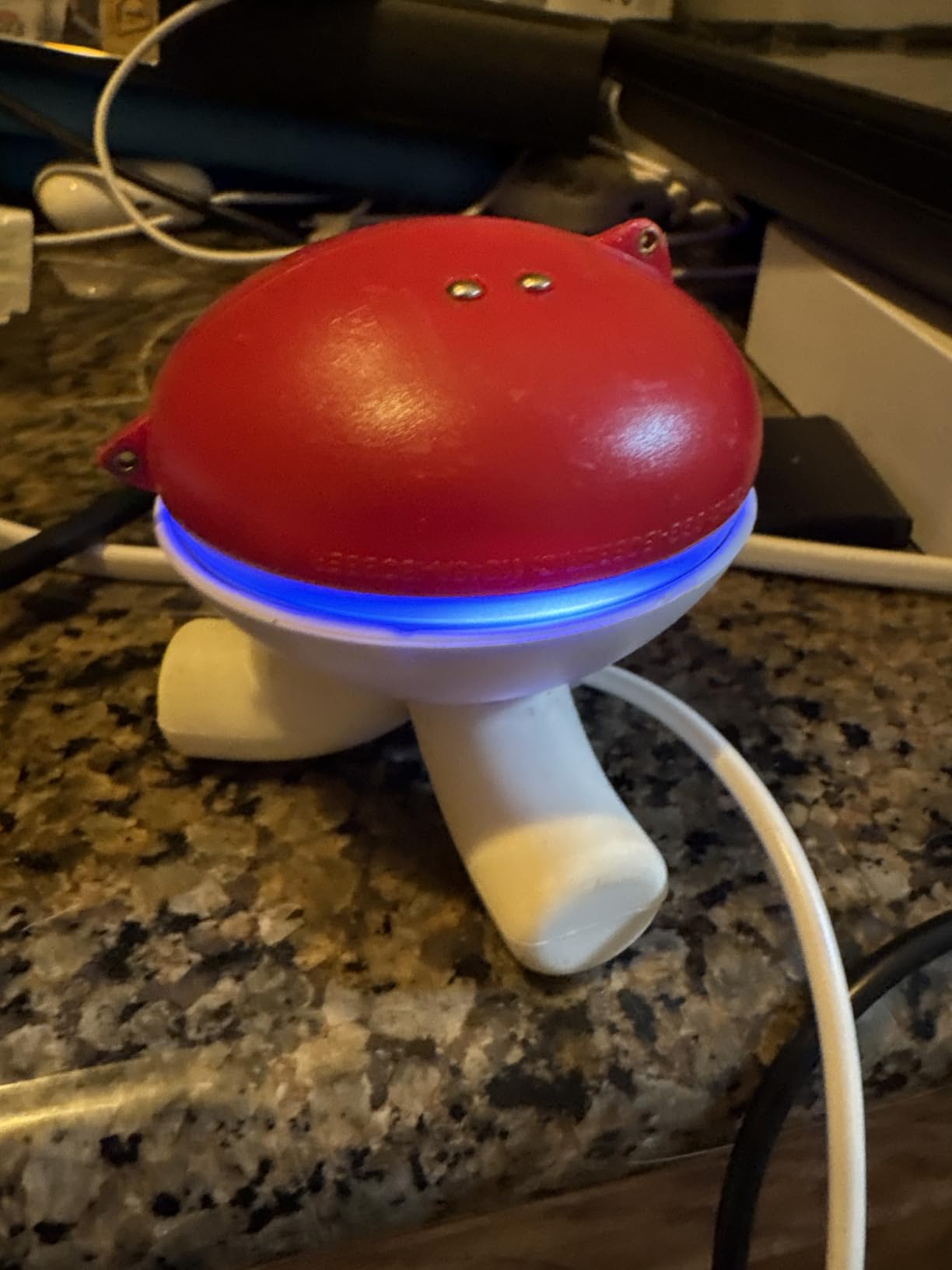
Ten-plus hours on the pod is among the longest runtimes here, so the real limit is almost always your handset. Over Bluetooth with the screen at full brightness in sun, the phone dies first, which reviewers call out repeatedly. A small power bank solves it.
Bluetooth range is the second constraint, and the reason this did not take our top slot. Owners report dropouts at roughly 40 to 70 feet, worse when the phone is not in line of sight with the pod. Enough for dock work and short bank casts, not enough for a long surf retrieve.
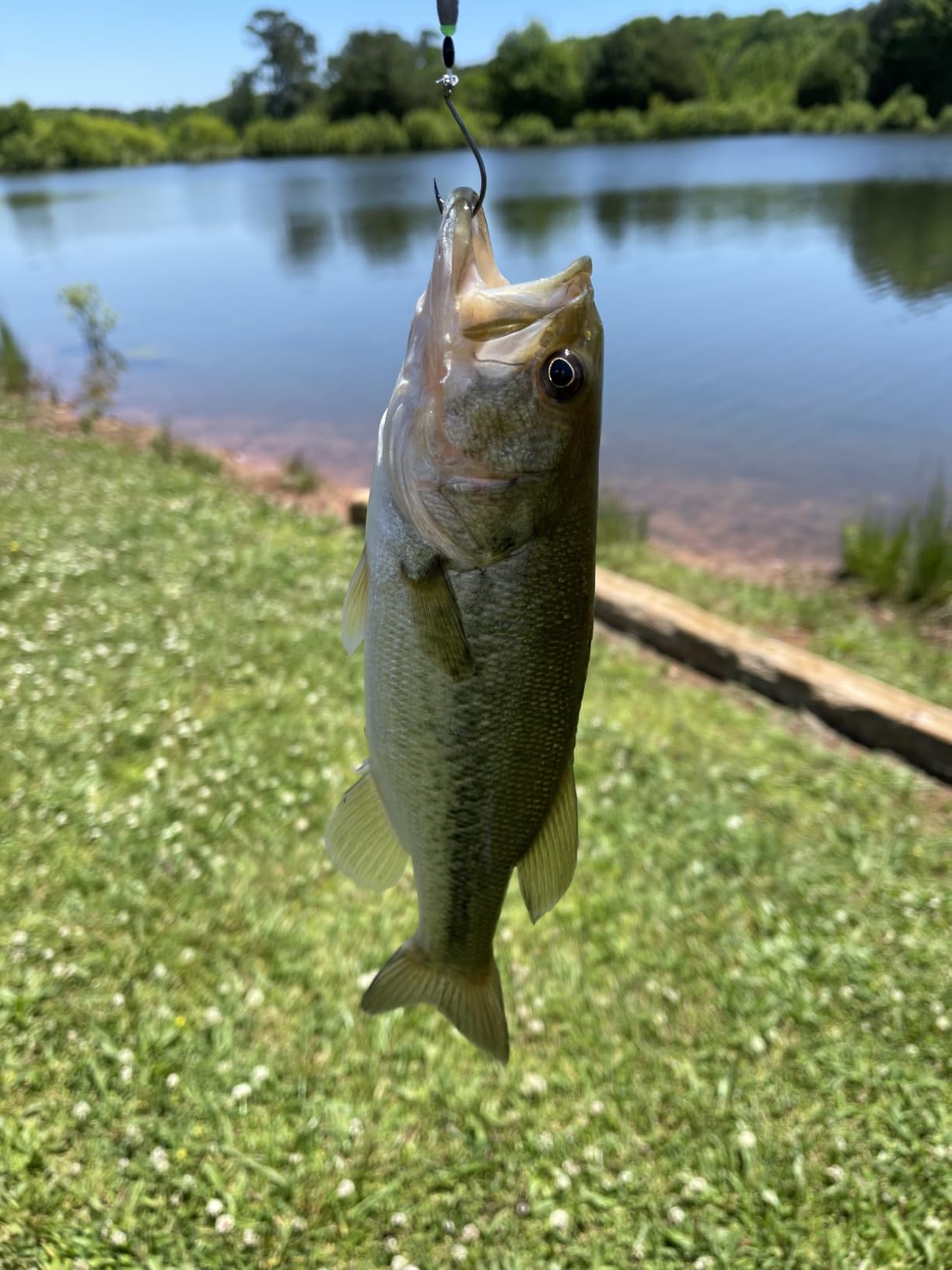
This pod needs roughly three and a half to five feet of water to read properly. That rules it out on shallow creeks, wade margins and the drawdown edges of a pond in late summer, so check your typical depth before buying.
The fish alarm and strike alert are what turn this from a depth gauge into something you can fish with, because they tell you when an arc enters the cone while your attention is on the line. The reversed depth scale on the terrain view is a display convention, not a fault, but it takes an afternoon to stop misreading.
Buy it if you want the lowest-effort entry into castable sonar, you mostly fish close to a dock or short bank, and your water is deeper than five feet. Pass if you need to reach past 70 feet or work very shallow margins, where the Venterior or the Deeper START will serve you better.
3 ft to 328 ft depth
2-inch backlit LCD
Weed sand and rock readout
Five sensitivity levels
Neck strap included
The LUCKY FFC1108 earns its place on price and on bottom composition. It is the cheapest unit in this roundup, and it tells you whether you are over sand, rock or weeds, which is the most useful readout for finding a drop-off from a bank.
Be clear-eyed about what it is. This is a through-hull transducer with a handheld receiver, which makes it a natural fit for a kayak or small boat rather than a shore angler casting a pod at a gravel pit. Users report accurate ledge and depth readings from a kayak, where the transducer mounts below the hull.
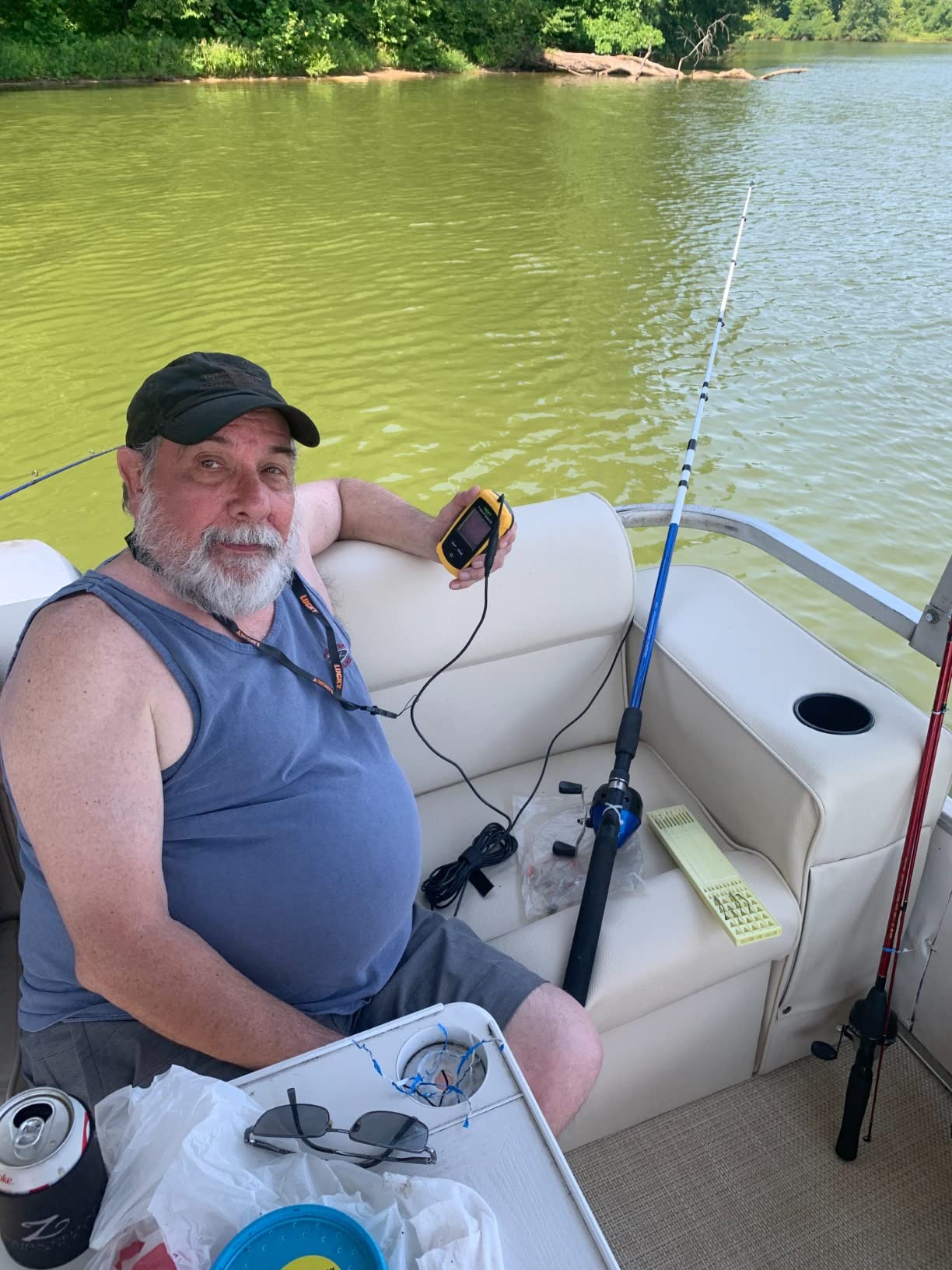
Detection runs from 3 feet to 328 feet, with a bottom readout for weeds, sand and rock. On a bar or a spit it tells you what you are over before you commit to a swim, and the wide spread covers everything from a shallow margin to a deep channel.
The five sensitivity settings matter more than they sound. Turbid water and heavy vegetation bury real fish in clutter, and dialling sensitivity down is how you get a readable screen out of a weedy margin instead of a wall of noise.
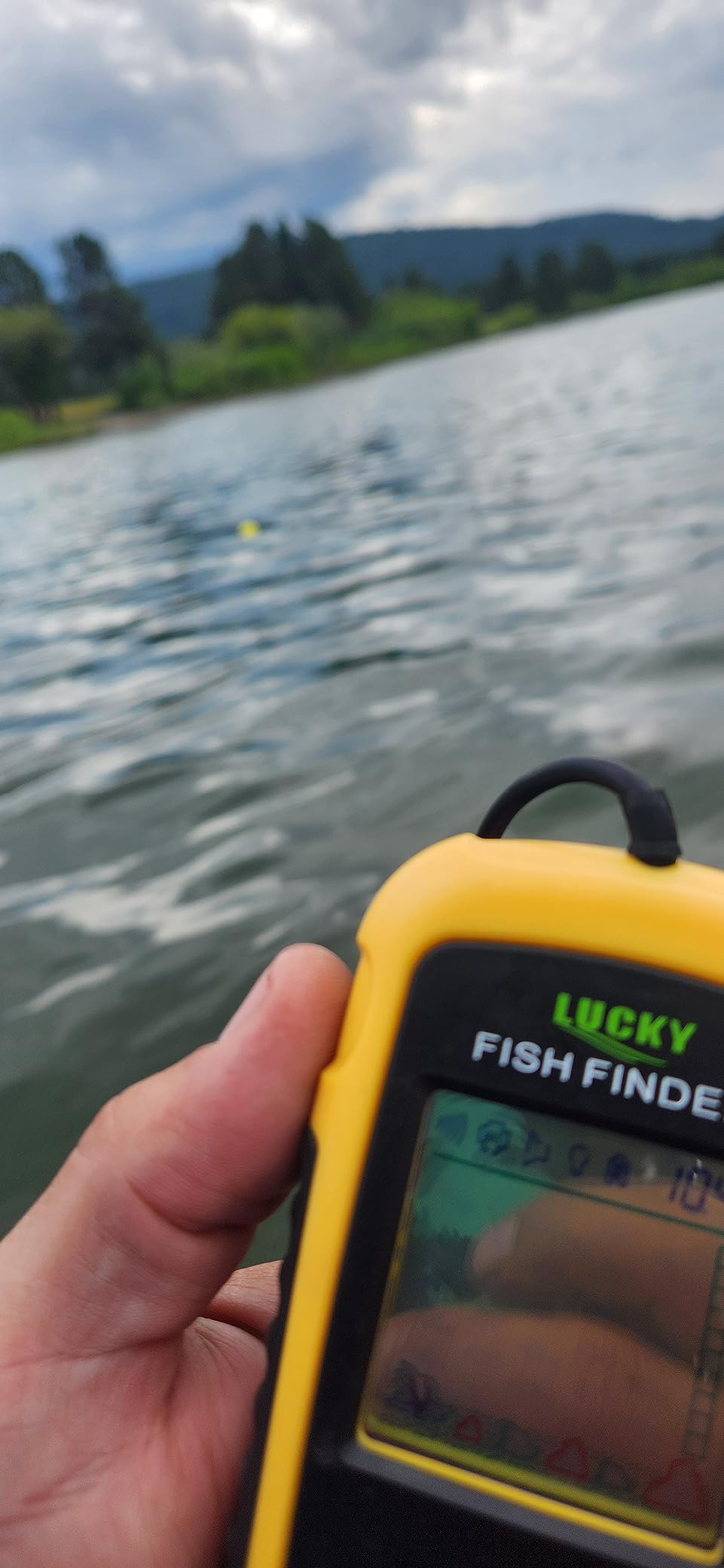
For a shore angler the awkward part is the tether. You are deploying a cable-mounted transducer from a bank rather than flicking a self-contained pod, and the sensor will not read through a fiberglass hull, which rules out a lot of small boats outright.
What it will not do is size a fish. There is no size differentiation, so minnows and bait register the same as a bass. For structure hunting that is a fine limitation; for reading arcs you want to size, it is not.
This is the budget pick for a kayak angler, or for anyone who wants to know bottom type under a boat ramp. Do not buy it as a bank fishing answer: the dedicated castables here cost less than a decent rod and reel combo together, and they will do what you actually came for.
165 ft cast and scan range
40-degree beam
Own Wi-Fi hotspot
6 hour battery
Night fishing mode
The Deeper START is the one we would hand to somebody who has never used sonar. There is nothing to mount, nothing to wire and no separate screen to charge. You download the app, cast the pod, and the picture builds as you reel.
The body is cable-free and self-powered, which is the whole design brief for a shore angler. It casts and retrieves cleanly, and six hours of battery covers a day of fishing from one charge. The app also saves each scan with a time and location stamp, which stops you trying to remember the productive cast and pushes you towards re-fishing the one you recorded.
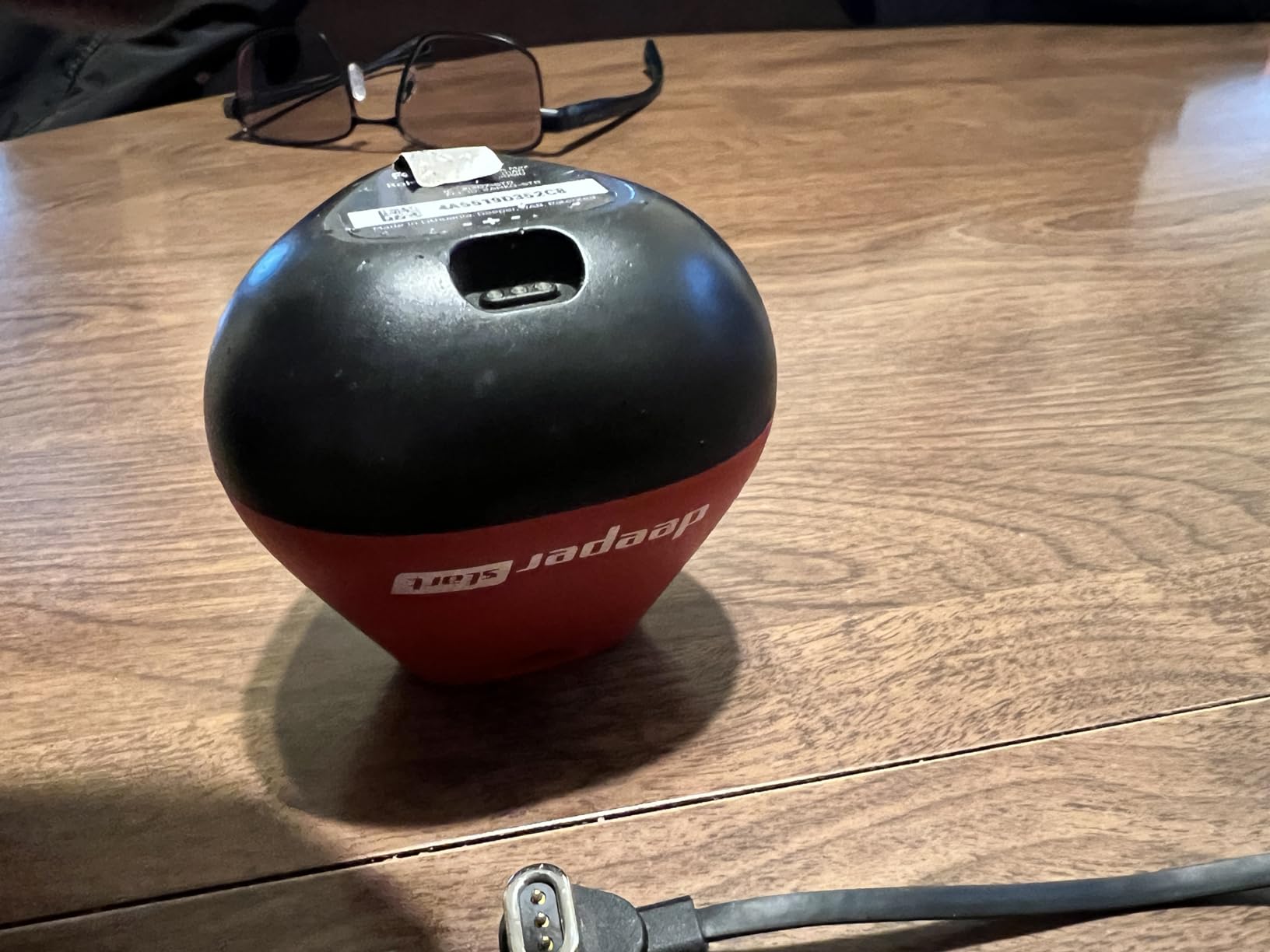
The 40-degree beam is narrower than most of the competition, which means more detail per cast and less water covered per cast. On a steep bank that is a good trade. On a wide shallow flat you will work harder to survey the same ground.
Both casting range and scanning depth reach 165 feet. For lake edges, docks and estuaries that is ample, and it is comfortably past the point where a castable stops being a structure tool.
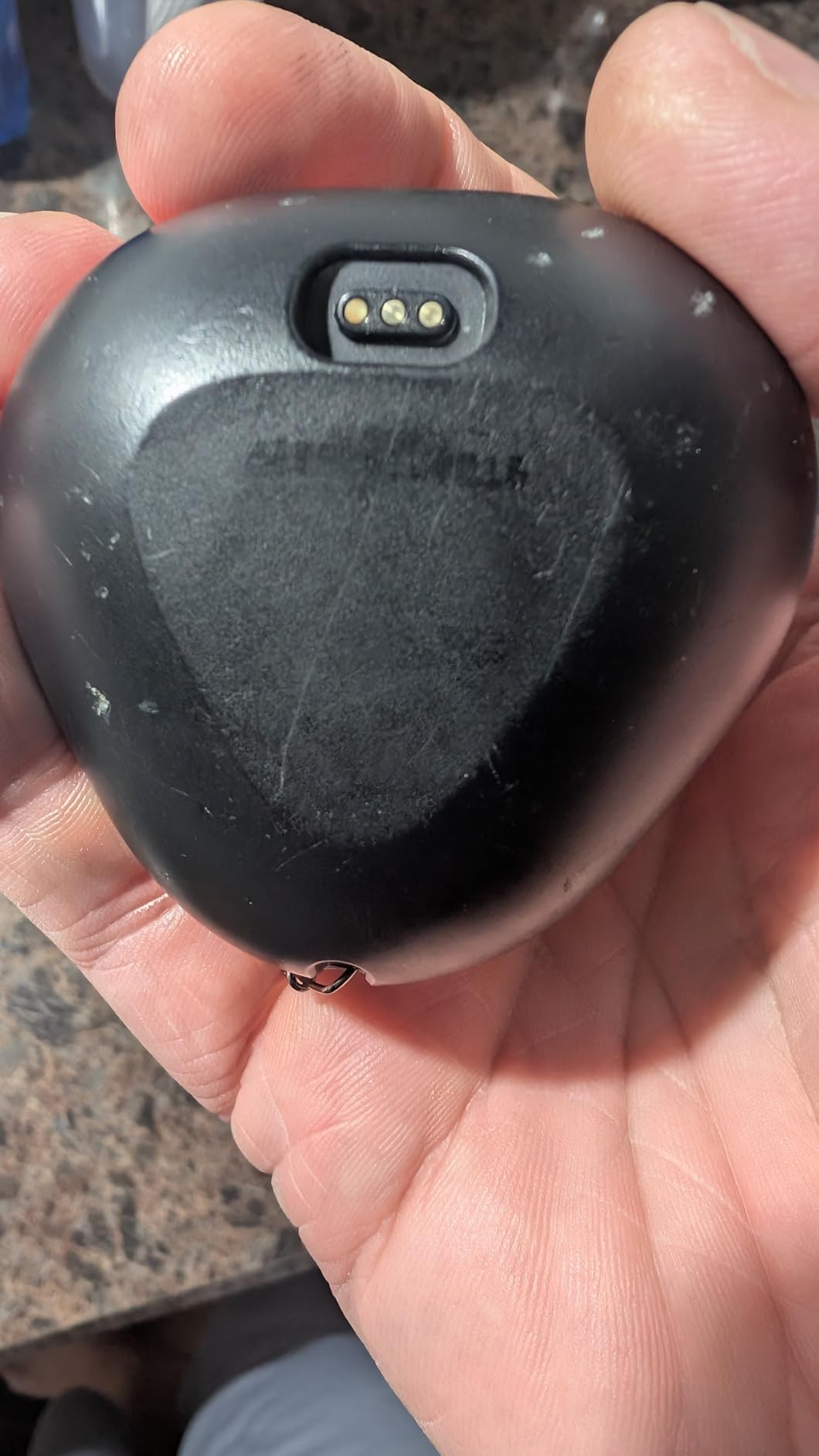
Generating its own Wi-Fi means the unit does not eat mobile data and does not care whether you have signal. It also means the app is the entire interface, so an app that stops being supported ends your access to saved scans. That risk grows with product age and is worth weighing if the maps matter to you.
Screen readability is the other phone constraint. Direct sun washes out most phone screens at maximum brightness, and a tablet fixes it at the cost of a bigger, shorter-lived battery. A night fishing mode helps the other end of the day.
Buy the Deeper START if you are new to sonar, you fish with a phone, and you want the simplest path to seeing bottom contour and vegetation. Step up to the PRO+ 2 if you plan to map regularly or want narrow-beam detail, because that gap is beam control and GPS.
199 ft maximum depth
Four preset operating modes
FishEcho clutter filter
BottomScan vegetation split
5-inch app display
The FishPod 5X targets one problem harder than the rest of this group: telling a fish apart from a weed. Owners fishing heavy vegetation report the default setting filling the screen with arcs that are not fish, and the filtered mode cleaning the picture up dramatically. Rather than dialling sensitivity by hand, you pick a preset aimed at fish by size, by depth or by schooling behaviour and the unit adjusts the screen for you.
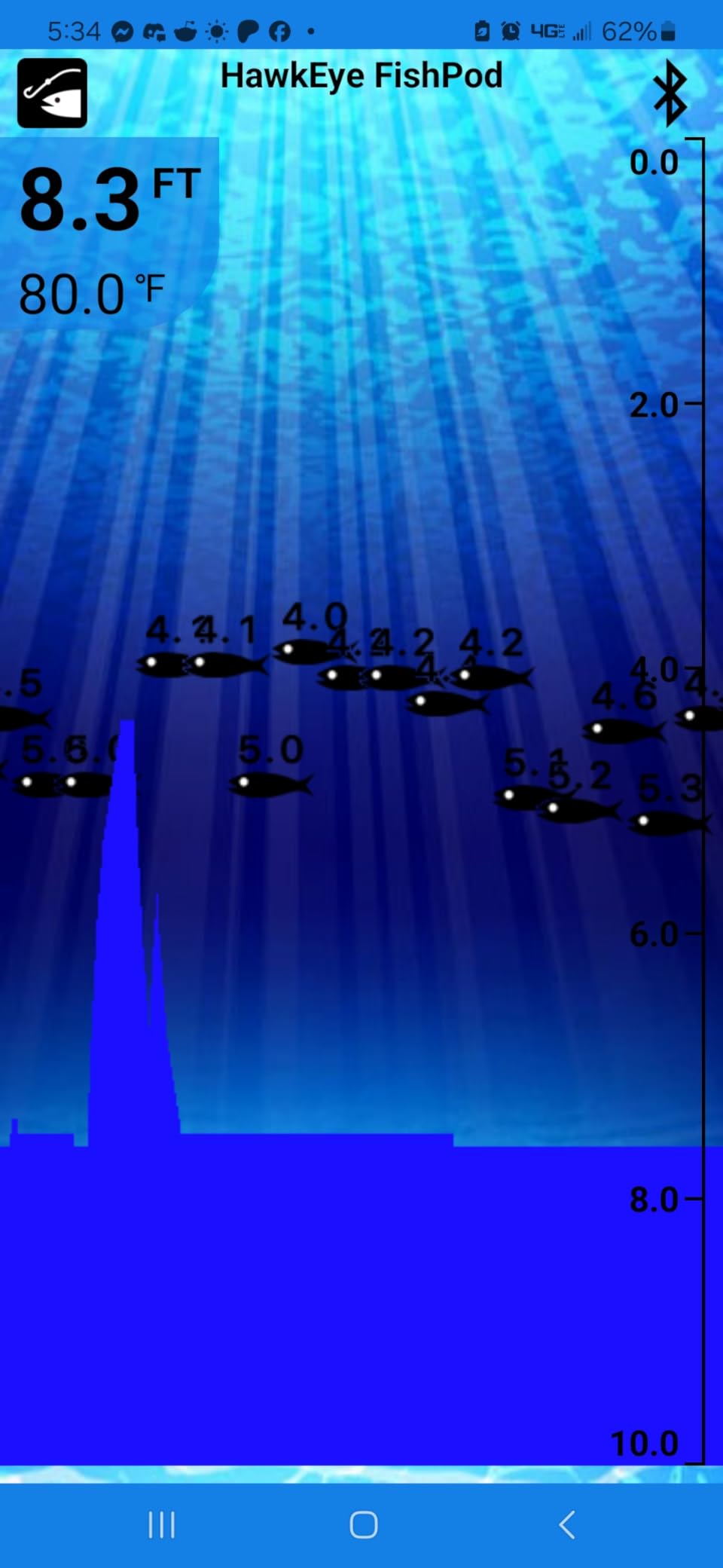
Owners report depth readings matching a boat-mounted Lowrance down to three and four feet, a cross-check worth more than any spec sheet number. Maximum detection is 199 feet, which covers most shore water.
The FishPod 5X has the most explicitly named anti-clutter tools in this group: a FishEcho tuning mode that filters false echoes, and BottomScan that separates vegetation from soft and hard bottom. On a lake where fish hold right on the edge of a weed bed, that distinction is the whole reason to use sonar from shore, and the TraxNut mount fits standard quarter-twenty brackets so the pod can live on a kayak rail.
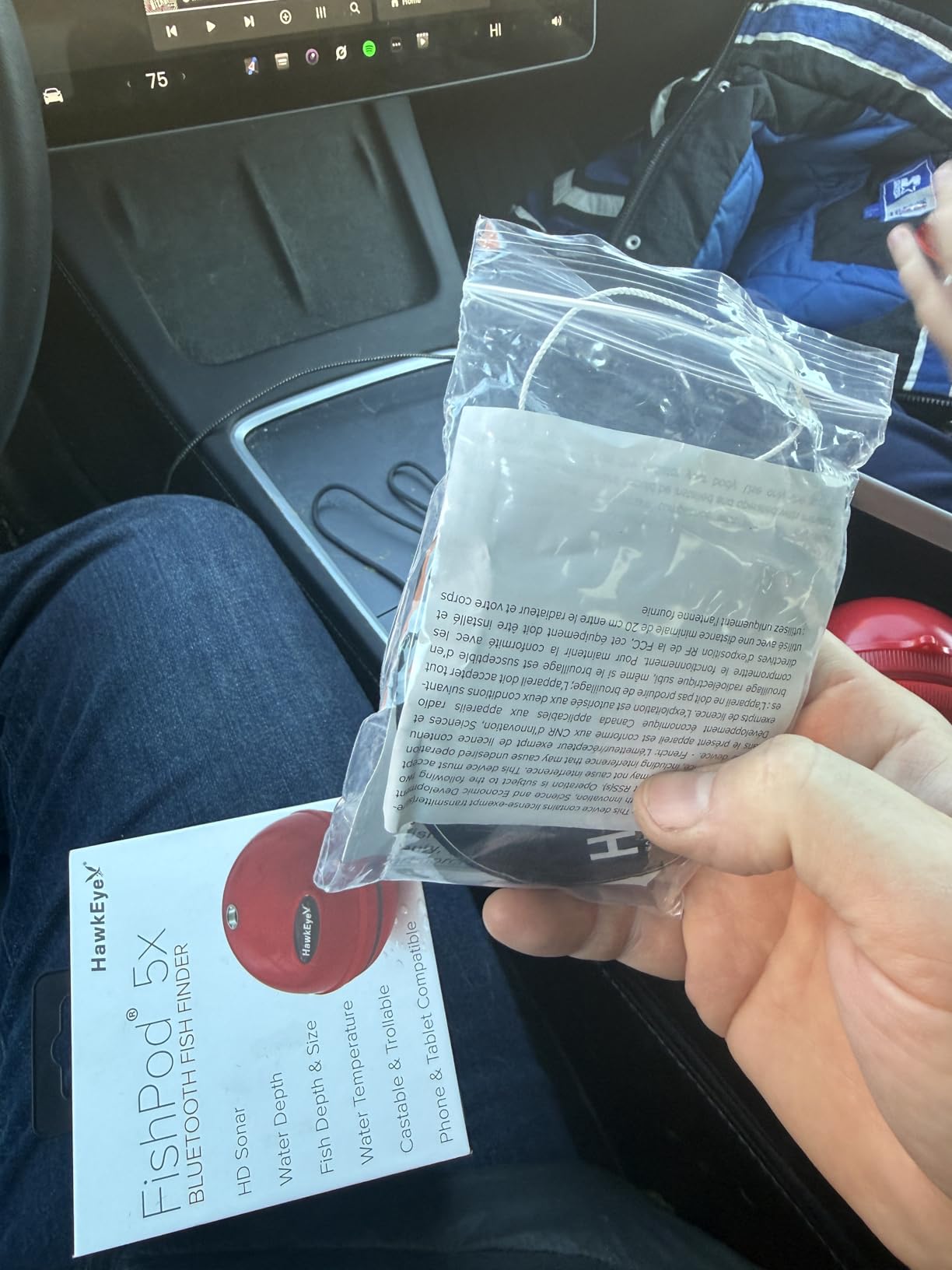
The link holds to roughly 50 to 70 feet from the bank, which covers dock fishing and moderate casts but not a long surf retrieve. Troll the pod behind a moving hull and the connection breaks every few seconds as water laps over the sensor, so treat it as a shore and kayak tool.
The most common complaint is that the battery appears to charge to around 80 to 85 percent and then drains faster than the number suggests. Budget a top-up during the day rather than planning a single full charge, and note the plastic line eyelet feels flimsy enough to knot carefully.
Choose the FishPod 5X if you fish weedy or vegetated water, or if ice is part of your year and you want a vertical flasher mode to switch to. Pass if you need to reach past 70 feet from the bank or if you already have a mounted unit doing this job on a boat.
492 ft wireless range
147 ft depth
2.4-inch color TFT
Built-in fish lamp
Rechargeable handheld and sensor
The headline number here is 492 feet of wireless range, further than any other unit in this roundup. It matters not because you will use it all, but because it means the link is never the limiting factor. Whatever you can physically cast, you can read.
The reason we like it is the lamp. The sensor carries a built-in fish-attractive light behind a transparent cover, so you can see the pod working at night and help draw fish toward it. For summer sessions on a river or an estuary that is a different experience from squinting at a grayscale arc.
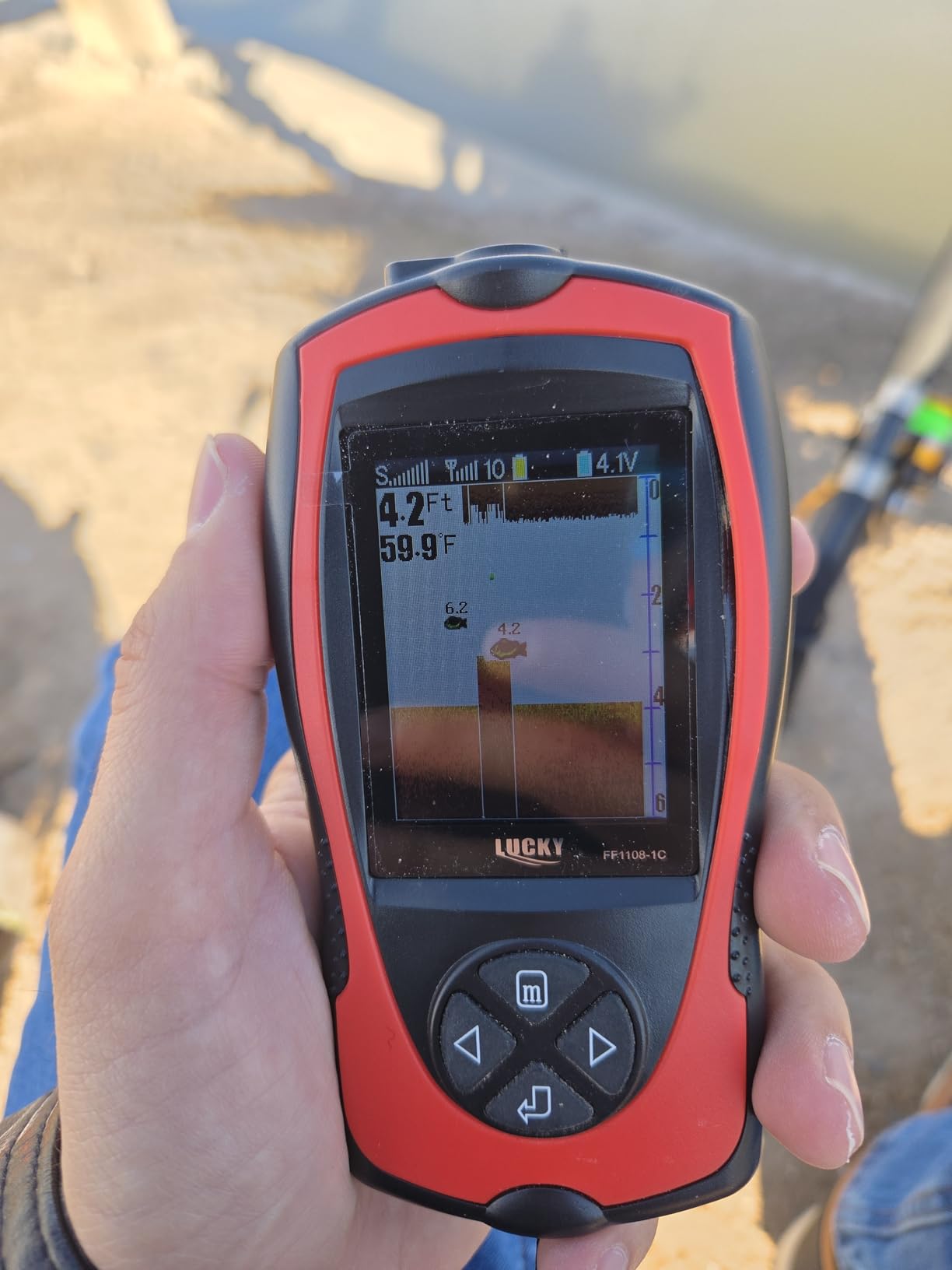
Detection runs to 147 feet and the 2.4-inch TFT colour screen is bright enough for daylight and dimmable enough for a night bank. The rechargeable handheld lasts about four hours while the sensor runs around ten, so the screen-side device is what ends a long session.
The settings list is unusually deep for a handheld at this level: sensitivity, brightness, depth range, zoom, depth alarm, fish alarm, units and language. Zoom helps when you find something at 100 feet and want a closer look at what it actually is.
The design flaw worth knowing is that the sensor is unweighted. It floats high, it tilts, and an angled sensor sends back a false signal. In calm water it is fine; in chop, expect noise until you add a sinker above the tie point.
Because the attachment point sits to one side rather than directly above the sensor, it stays slightly angled all session. Use a shock leader and a knot you trust rather than a supplied snap swivel, partly for that reason and partly because swivel failures are how expensive electronics end up on a gravel bed. Small rocks can also register as fish arches, so learn your bottom type on a known sandy spot first.
Pick it for night fishing, long casts across a wide estuary, or any session where a sensor light matters. Skip it if you fish rough water with no way to weight the sensor, or if you need to read past 147 feet, where the Venterior reaches further with a better-behaved body.
147 ft depth
90-degree cone
2.4-inch color LCD
21 languages
Sensor activates in water
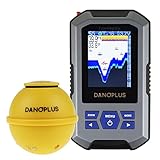
The DANOPLUS DP-104 is a small, tidy two-piece unit that does the fundamentals properly. It carries a 4.3 average, and the feature set is longer than the price would suggest. The 90-degree cone is the sensible middle of this pack, wider than the Deeper START for coverage and narrower than the Venterior for definition.
The display shows a fish size icon with its depth, plus water temperature, total depth, bottom contour and the water surface reading. Having the surface line there sounds trivial until you drop into a hole much deeper than the number suggested.
Detection runs to 147 feet across the 90-degree cone, and the sensor wakes on contact with water, removing the last of the pre-fishing faff. The integrated lamp and the audible fish alarm make it workable after dark on an estuary or a river.
At ten feet of depth, a 90-degree cone spans roughly twenty feet of bottom, so four or five casts tell you whether you are on a flat or approaching a drop. That makes it a good match for gravel pit and estuary work rather than very tight structure hunting.
Twenty-one operating languages is broad support in this category, and it matters if you are not reading English or if you share the device. It is one of the few budget handhelds with a properly localised menu rather than a token language setting.
The limitation is the 2.4-inch screen. Bright and colourful, but you cannot hold much of the trace at once, so you pan through the picture more than you would on the Venterior. With only a few hundred ratings behind it, its long-term reliability is among the least documented of the ten.
Buy the DP-104 if you want a simple handheld with a colour screen, a fish alarm and an integrated lamp, and you are not fishing water deeper than about 140 feet. Pass if you need deep range or a large screen, since both are available elsewhere here for a modest step up.
328 ft maximum depth
200KHz 45-degree beam
Waterproof floating handheld
25 ft extension cable
USB rechargeable
The Y2020-CT is the odd one out and we include it deliberately. It is a tethered unit with a fully waterproof handheld that floats, which makes it a forgiving design for anyone who regularly drops expensive electronics into water.
The 45-degree beam is narrower than most of the castables on this list, so each reading is a focused look at a single spot rather than a broad sweep. Combined with a 328 foot depth rating, that makes it a precision tool for ice holes, drop-off lips and deep structure.
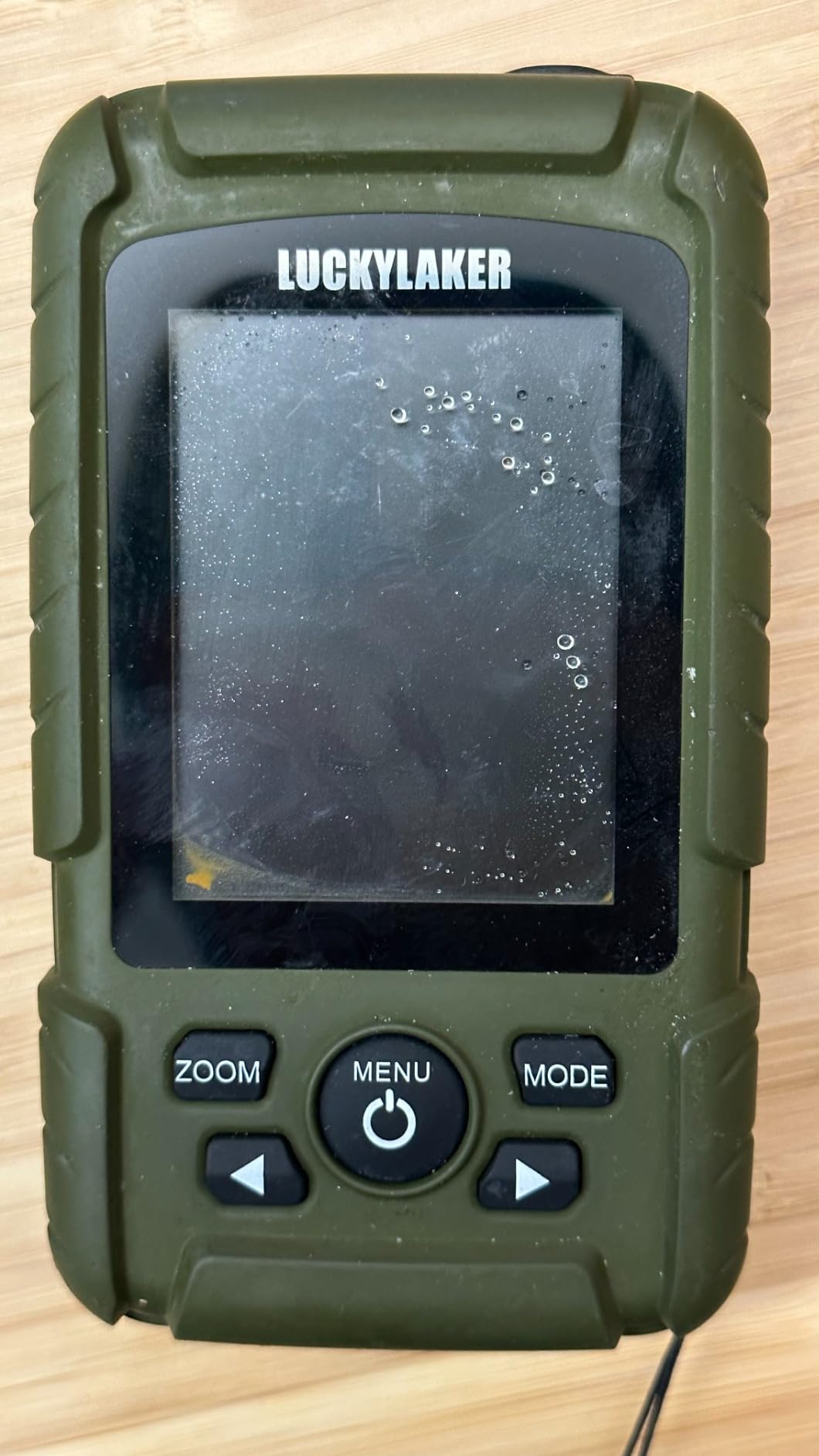
It works in fresh and salt water, and the sealed handheld is easy to rinse under a tap after a beach session. One maintenance note is real: bring it back into open air after fishing, because the swing between a cold transducer and a warm hand creates internal condensation if you leave it sealed in a closed car.
Battery runtime is five to six hours, extending past ten in battery save mode, and the anti-fish-bite plastic float on the 25 foot cable keeps curious fish from picking the exposed transducer off the line.
The transducer floats, which is helpful in shallow water and a problem over anything deep. You will need a sinker above it or fish it from a fixed position, which is why this is a boat, kayak and ice tool more than a bank casting tool.
For a shore angler who wants to check a deep channel or a rock ledge and does not mind a tethered deployment, that is a fair trade for a beam that picks out small structure the wide-beam castables blur together.
Buy it if you fish from a kayak or small boat, work ice, need 45-degree precision on deep structure, or simply want a handheld that survives being dropped in salt water. Pass if you want to cast from a bank and read as you reel, because the tether and floating sensor make that workflow clumsy.
Are fish finders worth the investment? For an angler who fishes water they cannot see into, yes. The value is not catching more fish directly. It is removing the guesswork from where to fish, marking the productive spot, and being able to return to it. Work through these six decisions in order, because each one eliminates units that do not fit your water or your habits.
This is the most common confusion in the category. Cast range is how far the signal travels between pod and display. Depth range is how far the sonar reads below the surface. A unit can offer a 262 foot cast range and only reach 164 feet down, and that is fine, because most shore water is not deep.
Plan around depth. Ask how deep your water actually gets at the drop-off, then pick a unit that reads comfortably past it. A 50 foot reach on a lake whose bank drops to 20 feet is plenty. The same reach on a reservoir with a 90 foot wall is not.
Beam angle is the width of the sonar cone, and the arithmetic is the most useful number nobody quotes. Multiply the depth by roughly 2.00 for a 90-degree cone, by about 1.00 for a 60-degree cone, and by around 0.35 for a 20-degree cone to get the width of bottom coverage in feet.
At ten feet of depth a 90-degree cone covers about 20 feet of bottom, while a 20-degree cone covers roughly 3.5 feet. That is the difference between surveying a bay in four casts and surveying it in twenty. Use a wide beam to find features, then narrow to interrogate one. Ice is the exception: a very wide cone bounces off the walls of a drilled hole and returns at the wrong angle, so narrow beams read better through ice.
Own-Wi-Fi units create their own network and hold a signal much further. Bluetooth units typically give you a reliable 40 to 70 feet, which is fine for a dock and short for a long bank. Wi-Fi has a second cost: it drains your phone battery fast, especially with the screen at full brightness in sun, while a Bluetooth pod barely touches the phone at all.
There is a harder constraint with app-based units in winter. Apple publishes an operating range of roughly 32 to 95 degrees Fahrenheit for iPhone, so in genuine cold the handset itself may misbehave, not just the radio. If your season is ice and snow, a two-piece handheld sidesteps the problem entirely.
App-based castables give you a large, bright display and built-in mapping at no extra hardware cost. The price is dependency: a charged device, an app that keeps being supported, and a screen that is still hard to read in direct sun at full brightness. Two-piece handhelds trade display size for a device that works in the cold and the dark with no phone in the equation.
Target separation tells you how close two fish can be and still show as two arcs. The Deeper PRO+ 2 manages 0.4 inch on narrow beam, fine enough for vertical jigging. Budget units often cannot tell a fish from a rock, so treat their arcs as structure indicators rather than fish IDs.
Bottom composition matters more than most buyers expect, because weed, sand and rock readouts tell you whether you are over a productive edge or a barren flat. Water temperature helps on big lakes and in early spring. If you fish for carp or coarse species, an automatic fish alarm is worth having.
Pod runtime is rarely the constraint; ten hours covers far more fishing than anyone manages in a day. The limiting device is usually your phone, running a bright screen, a radio and an app at once over Wi-Fi. Budget for a power bank as standard equipment.
For handhelds, do the arithmetic on the receiver instead. The LUCKY FF1108 handheld runs about four hours while its sensor runs ten, and the Y2020-CT runs five to six hours, or more than ten in battery save mode. The screen-side device is the bottleneck in both cases.
The fastest way to narrow the list is to name your water. On a shallow farm pond, minimum depth matters most, which rules out anything needing five feet. On a gravel pit or reservoir, beam angle and mapping matter most, and the Garmin or Deeper PRO+ 2 earn their place. On a river or canal, you need a weighted sensor and a steady retrieve, because chop produces false readings. On an estuary, rinse after every session and pick a narrow beam for definition. On a jetty or surf, you want the longest wireless reach you can get, because your casts will be long.
Five steps make the difference between a clean reading and a connection that drops out.
1. Use a medium-heavy fiberglass rod of decent length. Practitioners agree a bass rod is entirely sufficient, with a stout tip and enough length to push the pod past your target.
2. Tie a shock leader between your main line and the pod. A verified field tester lost an entire unit at a supplied snap swivel before switching to a shock leader and a proper knot, and that advice repeats across every angling forum we read.
3. Cast past your target. Landing a fist-sized block of plastic on top of structure will spook the fish you came to find. Retrieve back to it.
4. Retrieve at a slow, steady speed. Too fast and the pod wiggles, producing the wormy, erratic readings beginners blame on the unit. Let it settle for a second if it stops.
5. Cast inside roughly half the published wireless range. Every headline distance is a best-case figure, and working short of it is the most effective fix for the dropouts that drive people back to a boat.
Whatever you buy, rinse the pod in fresh water after a saltwater session and let it air dry before charging. Corrosion at the eyelet is what ends these units, not the sonar. If you are still putting together the rest of the bank-side setup, our picks for automatic fish feeders cover the hours while you work a spot you only found because you could see the bottom.
Yes, with one condition: they work from shore because the pod is cast, retrieved and read as it comes back. They reliably show depth, bottom contour, vegetation, temperature and approximate fish size. What they cannot do is show a fish before you cast at it, or hold a signal beyond your device’s real wireless range. Cast range is your search radius, not a claim about the whole lake.
For most shore anglers the Venterior portable unit is the best all-round choice, because it works without a phone, reads to 164 feet and holds a 262 foot wireless link. Choose the Garmin STRIKER Cast if you want built-in GPS and custom contour mapping, and the Deeper PRO+ 2 if narrow-beam target separation matters more to you than screen size.
Yes. A fixed-mount unit needs a boat hull, which is why most bank anglers own nothing. A castable pod is deployed by hand, floats, and builds a sonar picture during the retrieve. Work inside roughly half the published wireless range, retrieve slowly, and treat the quoted range as a best-case ceiling rather than a working distance.
No, and it is not trying to. A mounted unit gives you a live forward picture and a much larger screen while you fish. A castable sonar tells you where the structure is so you can fish it deliberately. The two work together: use the pod to scout a bank or a bay, then use a mounted unit to fish it.
Only if you want saved maps. GPS lets a pod record bathymetric contours with time and location stamps, so you can build your own map of a gravel pit or a pond nobody has charted and return to the same spot later. Without it, good readings still have to be written down or remembered, which is fine for a single afternoon and frustrating over a season.
Pick a unit that reads comfortably past the deepest water you intend to fish. Most productive shoreline structure sits between 4 and 30 feet, and 100-plus foot depth ratings exist for offshore and channel work. Check minimum depth too: some Bluetooth castables need about five feet of water before they read properly, which rules out shallow drawdown margins and small creeks.
If you read nothing else, start here. The Venterior takes the general shore crown because it holds a long wireless link and needs no phone. The Garmin STRIKER Cast is the choice for anyone mapping unfamiliar water, because built-in GPS and Quickdraw Contours turn a season of casting into a chart you own. The Deeper PRO+ 2 is for anglers working specific structure, since its narrow beam and 0.4 inch target separation show what a wide cone blurs together.
Then narrow by habitat. On a shallow pond, avoid anything needing five feet or more of water. On a gravel pit or reservoir, mapping wins, so the Garmin or the Deeper PRO+ 2. On a river with current, use a weighted sensor and a steady retrieve, and the LUCKY FF1108 gives you the reach. Among weedy water and ice, the Hawkeye FishPod 5X filters clutter better than the rest and adds a vertical flasher mode. On a saltwater shore, rinse after every session and pick something narrow-beamed and sealed, which is how the LUCKY Y2020-CT earned its place.
Whichever you choose, spend the ten minutes setting it up properly. A shock leader, a knot you trust, a rod you can push past the target and a retrieve slower than feels natural will fix more problems than any spec on any box. If you are still building out the rest of the bank-side setup, our picks for automatic fish feeders cover the hours while you work a spot you only found because you could see the bottom.
Sonar is also a sociable tool, and a good marker from a mate is worth more than a lucky guess. If you fish with someone who is always losing the same spot, or you want to send them something after a session, our guides to angler fish gifts for animal lovers and trout themed jewelry cover the end-of-session hours without adding another box to the garage.
A castable sonar will not make you a better angler on its own. It will make you a far better informed one, and in water you cannot see into that is the difference between fishing a place and fishing a spot. Pick the unit that matches your water, learn to read the arcs, and mark what you find.