Physical Address
304 North Cardinal St.
Dorchester Center, MA 02124
Physical Address
304 North Cardinal St.
Dorchester Center, MA 02124

The best capture cards for Switch gameplay recording fall into two clear camps. If you own the original Switch, the Guermok GM-29A is the safest pick: it records clean 1080p60 with game audio and has more verified long-term use than anything else in this group. Switch 2 owners should look at the Elgato 4K X for HDMI 2.1 capture and 4K60 passthrough.
I have been recording console footage for years, mostly through a capture card wedged between a dock and a television, and the pattern repeats every time. People do not struggle with the software. They struggle with matching a card to the resolution their console actually sends.
That matters more than it sounds. The original Switch, Switch OLED, and Switch Lite dock output 1080p60 and the handheld screen outputs 720p, so a card that captures above 1080p60 has nothing extra to record. The Switch 2 is the exception, because it can send 4K60 with HDR and variable refresh rate, which opens the door to the HDMI 2.1 cards.
There is one hard limit worth stating before any product list. The Switch Lite has no video output port on the console or the dock, so no capture card will ever work with it. If that is the model you own, screen recording on another device is your only route.
We compared ten cards across the full price ladder, from bare dongles to HDMI 2.1 flagships, and read through more than 19,000 owner reviews between them. My criteria were simple: does it capture 1080p60, does it carry game audio, does it let you keep playing on the TV through a passthrough port, and does it work without a driver hunt.
Every card below passed the compatibility check for a docked Switch. I have also noted where each one stumbles, because the gap between a card that works and a card that works well is usually a resolution ceiling or a software quirk rather than anything dramatic.
These three cover the three situations people actually ask about: a proven card for an original Switch, a card for Switch 2 owners who want 4K60, and a card for creators who need party chat and surround audio in the same capture.


All ten cards below work with a docked Switch or Switch OLED. The resolution column is the real capture ceiling, not the input ceiling, and that is the number that determines your finished video file.
| Product | Features | |
|---|---|---|
| Guermok GM-29A 1080p60 Capture Card |
|
Check Latest Price |
| Elgato 4K X HDMI 2.1 Capture Card |
|
Check Latest Price |
| AVerMedia Live Gamer Ultra 2.1 GC553G2 |
|
Check Latest Price |
 AVerMedia Live Gamer Mini GC311 AVerMedia Live Gamer Mini GC311 |
|
Check Latest Price |
 UGREEN 4K@30Hz Loop Out Capture Card UGREEN 4K@30Hz Loop Out Capture Card |
|
Check Latest Price |
 UGREEN 2K 1080p60 Capture Card UGREEN 2K 1080p60 Capture Card |
|
Check Latest Price |
 VIXLW 1080p60 Capture Card with Mic In VIXLW 1080p60 Capture Card with Mic In |
|
Check Latest Price |
 VIXLW V316B-FR 1080p60 Capture Card VIXLW V316B-FR 1080p60 Capture Card |
|
Check Latest Price |
 Dcyfol 4K HDMI USB 3.0 Capture Device Dcyfol 4K HDMI USB 3.0 Capture Device |
|
Check Latest Price |
 Portta HDMI Capture Card 1080p60 Portta HDMI Capture Card 1080p60 |
|
Check Latest Price |
We earn from qualifying purchases. CERTAIN CONTENT THAT APPEARS ON THIS SITE COMES FROM AMAZON. THIS CONTENT IS PROVIDED 'AS IS' AND IS SUBJECT TO CHANGE OR REMOVAL AT ANY TIME.
Several cards in the budget tier advertise 4K input but record 1080p or 2K30. That is not misleading once you know the distinction, and for a docked original Switch it makes no practical difference.
1080p60 capture
4K30 HDMI input
USB 3.0 plus USB-C
Driver-free on all major OS
This is the card I recommend first to anyone with a docked Switch and no particular attachment to a brand name. It has 3632 reviews behind it, and that kind of volume matters in this category because capture cards fail quietly rather than dramatically.
Over 3632 reviews it holds a 4.4 star average, with roughly three quarters of buyers handing out five stars. The recurring theme is stability: the aluminium alloy body runs cool enough that long recording sessions do not produce dropped frames or blue screens, which is exactly the failure mode that ruins a Let’s Play upload.
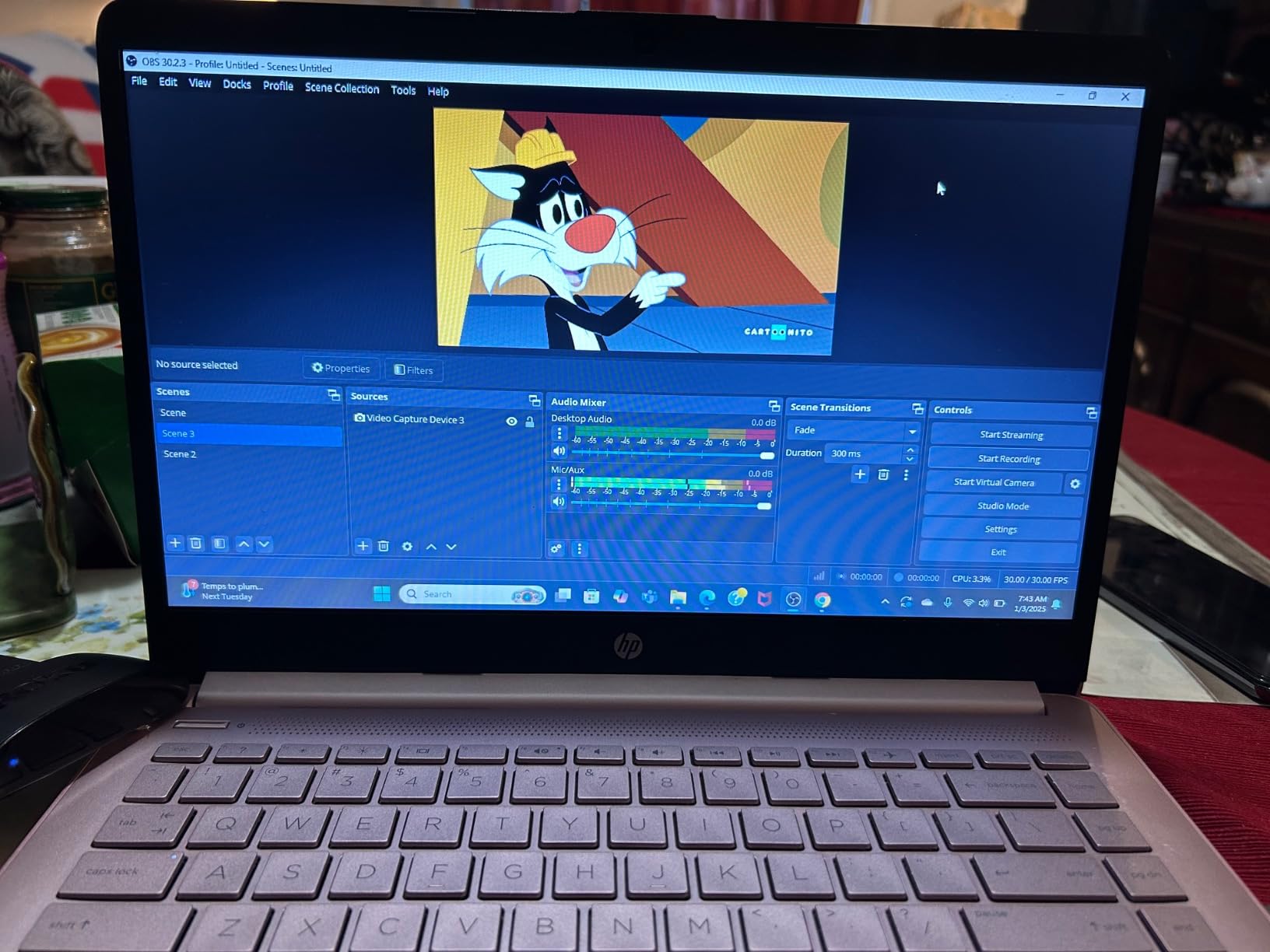
The GM-29A accepts 4K30 HDMI input and outputs either 2K30 or 1920×1080 at 60Hz depending on how the USB 3.0 link negotiates. For an original Switch docked at 1080p60, the 1080p60 path is what you will actually use and it holds up well in OBS.
Owners consistently report colours that match what the TV shows and audio with no echo or crackle. That is the baseline a card has to clear, and this one clears it without any colour correction work in OBS.
The 4.4 average across 3632 reviews is the highest review count in the group, which tells you more than the star rating alone. A card with a thousand reviews and a 4.6 is less certain than one with 3632 reviews and a 4.4.
The card ships with a USB 3.0 to USB-C adapter, so it reaches a modern laptop without an extra dongle. Owners do report that the adapter is USB 2.0 on one side, so if you see your capture resolution drop, flip the adapter and check again.
Once it is on a genuine USB 3.0 port, the card is recognised without drivers on Windows, macOS, Linux and Android. That is a genuine USB Video Class device, so OBS Studio picks it up the same way it picks up a webcam.
Game audio comes through the HDMI feed, and this card also works with Switch, Switch 2, PS4, PS5, Xbox and Quest 3 sources. The one documentation quirk worth knowing: after you change audio settings, restart OBS Studio or you will see no sound output.
That single quirk accounts for a large share of the negative reviews. It is not a hardware fault, it is a workflow note that the manual states and most buyers miss on the first evening.
Signal travels in one direction only, from HDMI in to USB out. Feeding the reverse direction can cause signal loss, so do not try to run a splitter backwards through this card.
Video decoding adds millisecond-level latency in software preview. Your game on the TV through any local passthrough is unaffected, but a disconnect drops the signal until you reconnect the cable.
4K144 capture
HDMI 2.1 in and out
VRR and HDR10 passthrough
USB 3.2 Gen 2
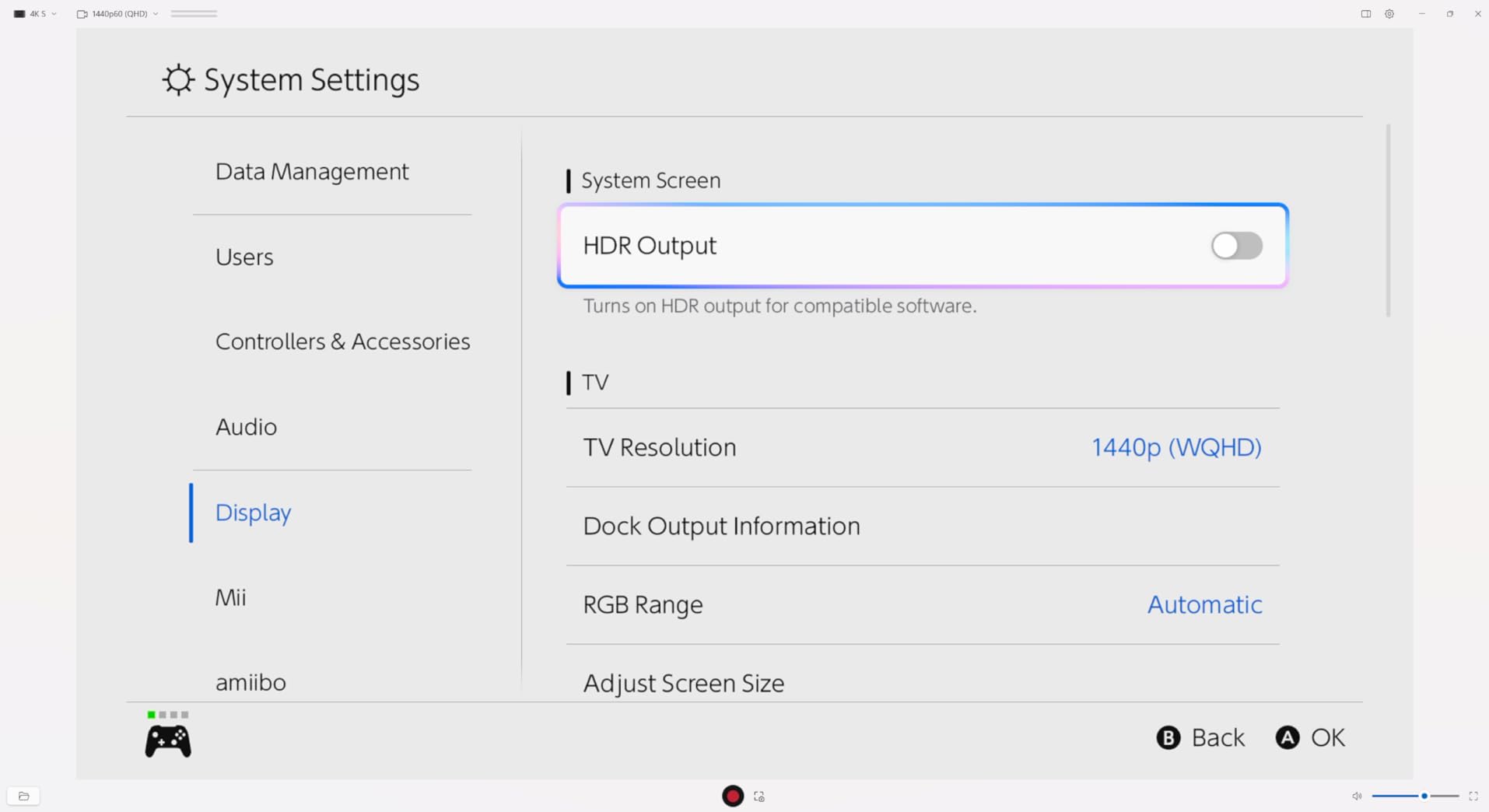
If your console is a Switch 2, this is the card that matches the hardware. The original Switch cannot send a signal that needs it, but the Switch 2 can send 4K60 with HDR and variable refresh rate, and only an HDMI 2.1 pipeline carries all of that cleanly to both your display and your recorder.
It sits at 4.5 stars across 1029 reviews, with 79 percent of buyers giving five. The praise centres on the same three things: the 4K144 HDMI 2.1 path, VRR passthrough, and low latency over the USB 3.2 Gen 2 connection.
The card documents high frame rates up to 240fps at 1080p resolution on the passthrough side. Variable Refresh Rate passthrough is the feature that matters on a Switch 2 setup, because it stops screen tearing without adding an input lag overlay.
HDR10 passthrough means your television can stay in its own picture mode while the recorder takes a clean feed. Owners of high refresh monitors highlight this as the reason they moved up from cheaper cards.
Full capture modes want Windows 10 64-bit or macOS 11, a 6th generation Intel Core i5 or Ryzen 5 class processor, a GTX 10xx or better graphics card, and a USB 3.2 Gen 2 port. A USB 3.2 Gen 1 port still works but records at a reduced capture resolution.
In practice, a modern mid-range desktop has no trouble here. A thin and light laptop with only USB-C ports is where you will feel the bandwidth requirement first.
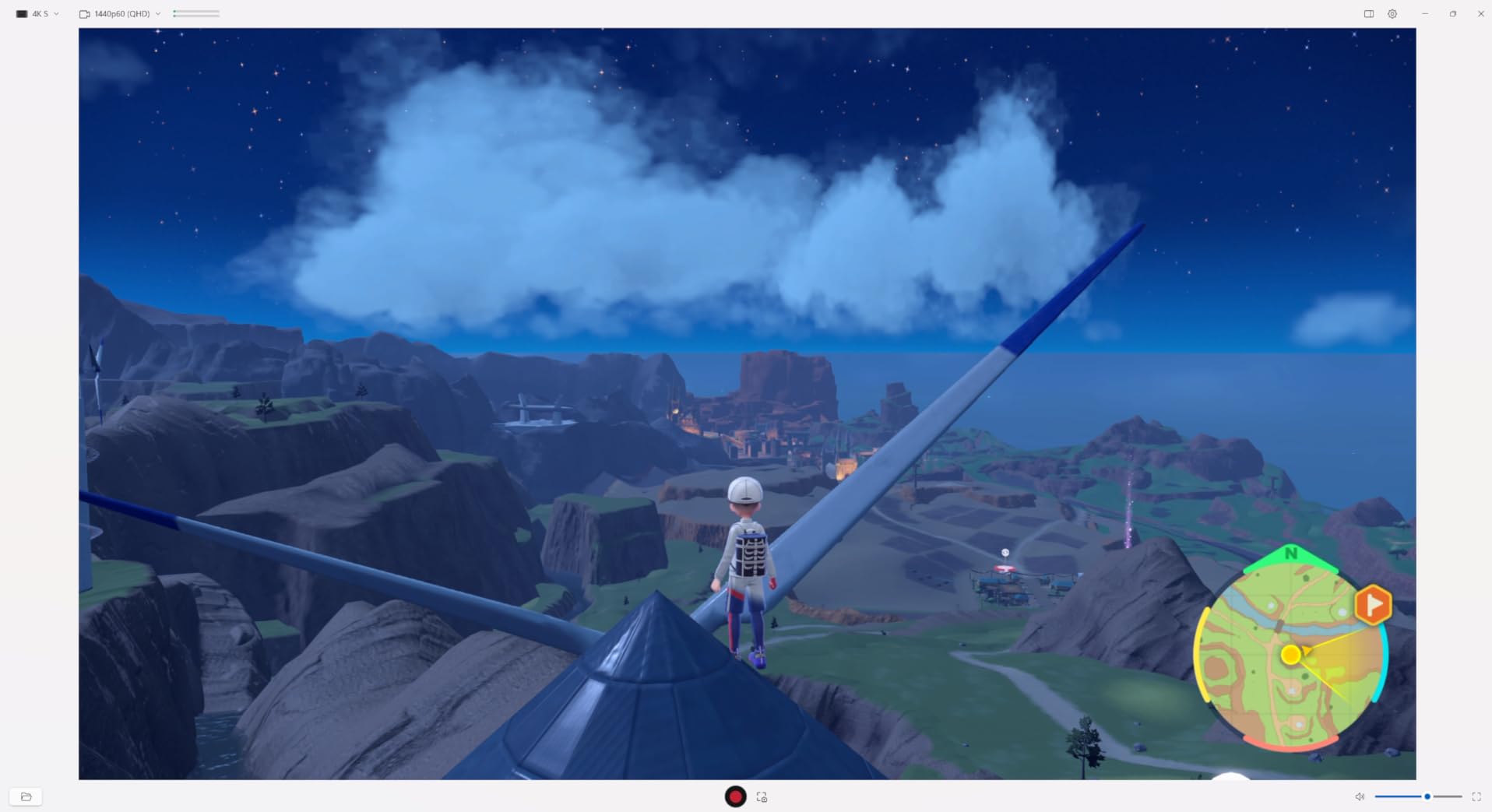
The card appears as a straightforward video source in OBS Studio, Streamlabs, Twitch Studio, Restream, Zoom and Teams. No proprietary app is required for basic recording, which is the biggest practical difference between this tier and some competitor cards.
The trade is hardware cost. This is premium-tier spending, and for a creator whose console only outputs 1080p60 it is money spent on headroom you cannot see in the file.
4K60 capture
HDMI 2.1 passthrough
Dual 3.5mm four-pole ports
5.1-channel audio
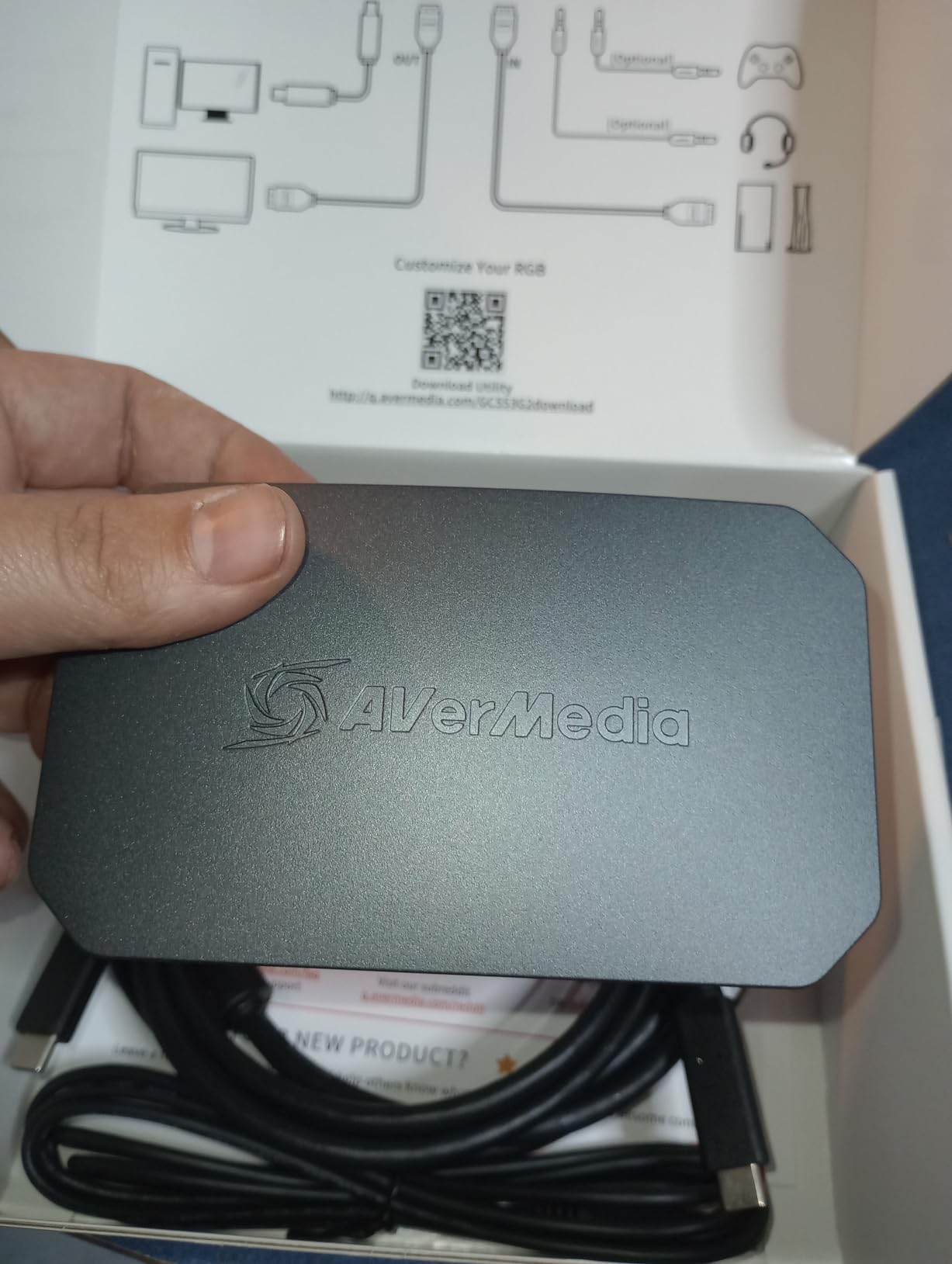
This is the card to buy if your Switch sessions involve talking to friends and you want that conversation in the recording. Two 3.5mm four-pole inputs pull headset and gamepad audio straight into the capture, alongside 5.1-channel support on compatible Windows workflows.
It carries a 3 year manufacturer warranty, which is longer than most cards in this roundup, and a full accessory set including an HDMI 2.1 cable, a USB 3.2 Gen 2 Type-C cable and a 4-pole 3.5mm audio cable.
Video capture resolution is listed at 4K60, and on Windows the bundled Streaming Center software can push MJPEG capture to 4K144. On macOS capture tops out at 4K60, with HDR capture handled on Windows.
That split matters if you record on a Mac. Know your platform before you buy, because the headline frame rate does not transfer between operating systems.
Passthrough supports up to 4K144 HDR and VRR, 1440p240, or 1080p360 on compatible displays. The limitation to know: monitors using DSC can cap the 4K passthrough at 4K120 rather than the full 4K144.
For a docked Switch 2 at 4K60, none of that is a barrier. It matters if you plan to add a high refresh PC source to the same card later.
Across 297 reviews the card sits at 4.1 stars, with 65 percent five-star and 11 percent one-star. The most common source of dissatisfaction is the software: you use the AVerMedia plugin or Streaming Center inside OBS Studio rather than treating the card as a plain UVC device.
Buyers who commit to that software rate it well. Buyers who want a drop-in source with no configuration tend to rate it low. The custom RGB lighting and Windows Dynamic Lighting support also appeal to streamers who want the card visible on camera.
1080p60 capture
Zero-lag HDMI pass-through
UVC plug and play
H.264 hardware encoder
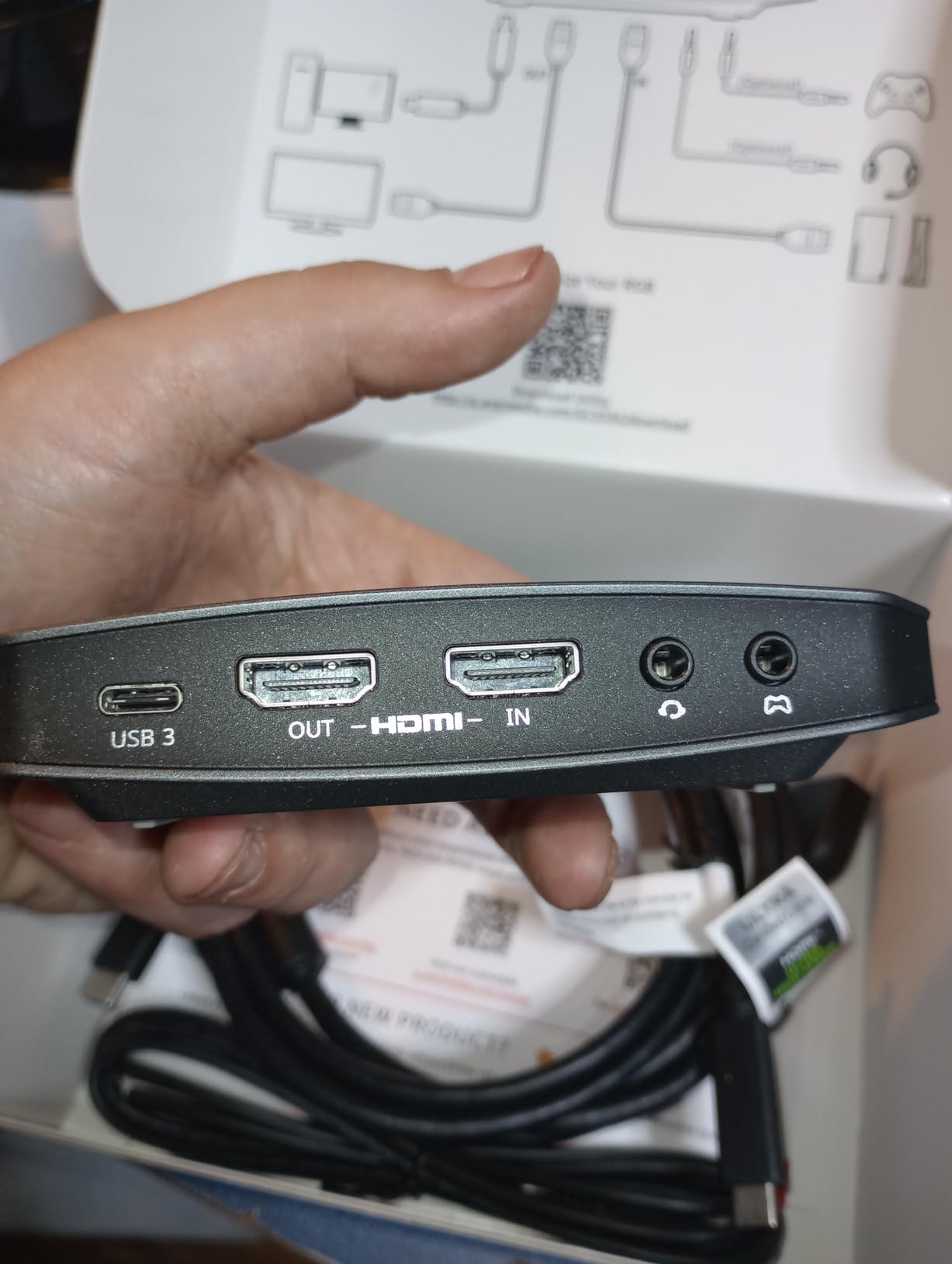
This is the card I suggest for a creator who wants a named brand, a real passthrough port, and a hardware encoder without moving up to HDMI 2.1. It weighs 2.63 ounces and measures 3.93 by 2.24 by 0.74 inches, so it disappears behind a television.
At 1451 reviews and 4.3 stars, with 66 percent five-star ratings, it is one of the most proven budget capture cards for Switch streaming. Owners consistently mention easy OBS setup, no noticeable latency, and clean audio.
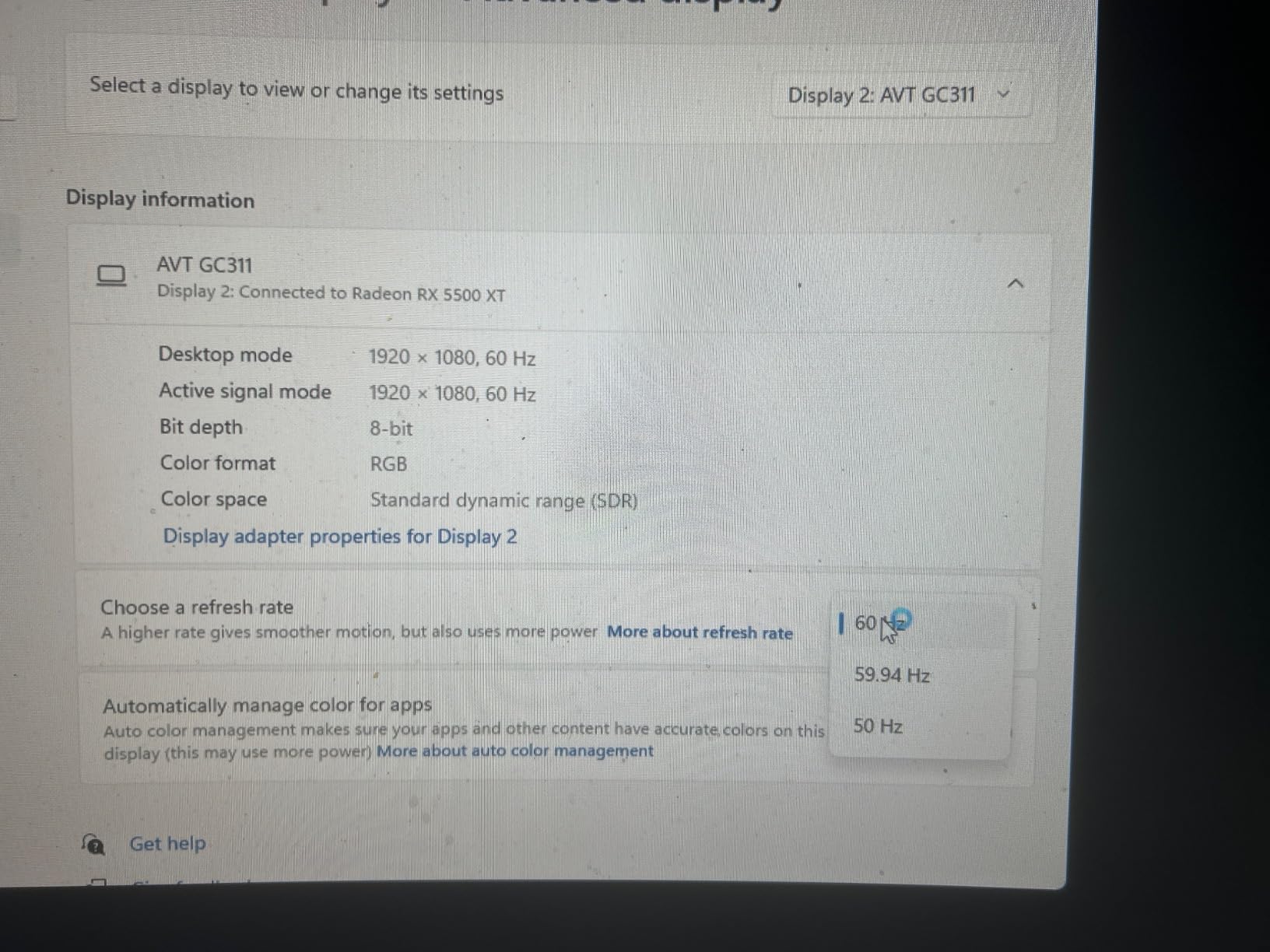
Video and audio streams are processed by the capture device hardware encoder instead of the computer CPU. If you are encoding on the same machine as your game, that offload is the difference between a smooth stream and a stuttering one.
For a docked Switch, which outputs 1080p60, this card captures exactly what the console sends. Nothing above 1080p60 is required to match the source.
The pass-through is specified as 100 percent zero latency at Full HD 1080p60, so gameplay on your television through the loop-out is unaffected. Any lag you perceive exists only in the software preview window inside OBS, not on the display you are playing on.
That distinction is the reason owners of the original Switch gravitate to a passthrough card rather than a bare HDMI-to-USB dongle. A dongle with no loop-out forces you to either play on a second screen or accept visible delay.
Some owners feel the 1080p60 capture ceiling is soft, and the bundled USB 2.0 connection with a micro-USB cable feels dated next to USB-C cards. Plug it into a USB 3.0 port on the PC side and the picture quality holds.
RECentral needs installing and occasionally prompts for updates. A small number of owners also report that the card stopped being detected after a cable was knocked loose, so secure the USB connection rather than leaving it dangling.
2K@30Hz capture
4K@30Hz input and loop-out
USB-A and USB-C ports
Aluminium casing
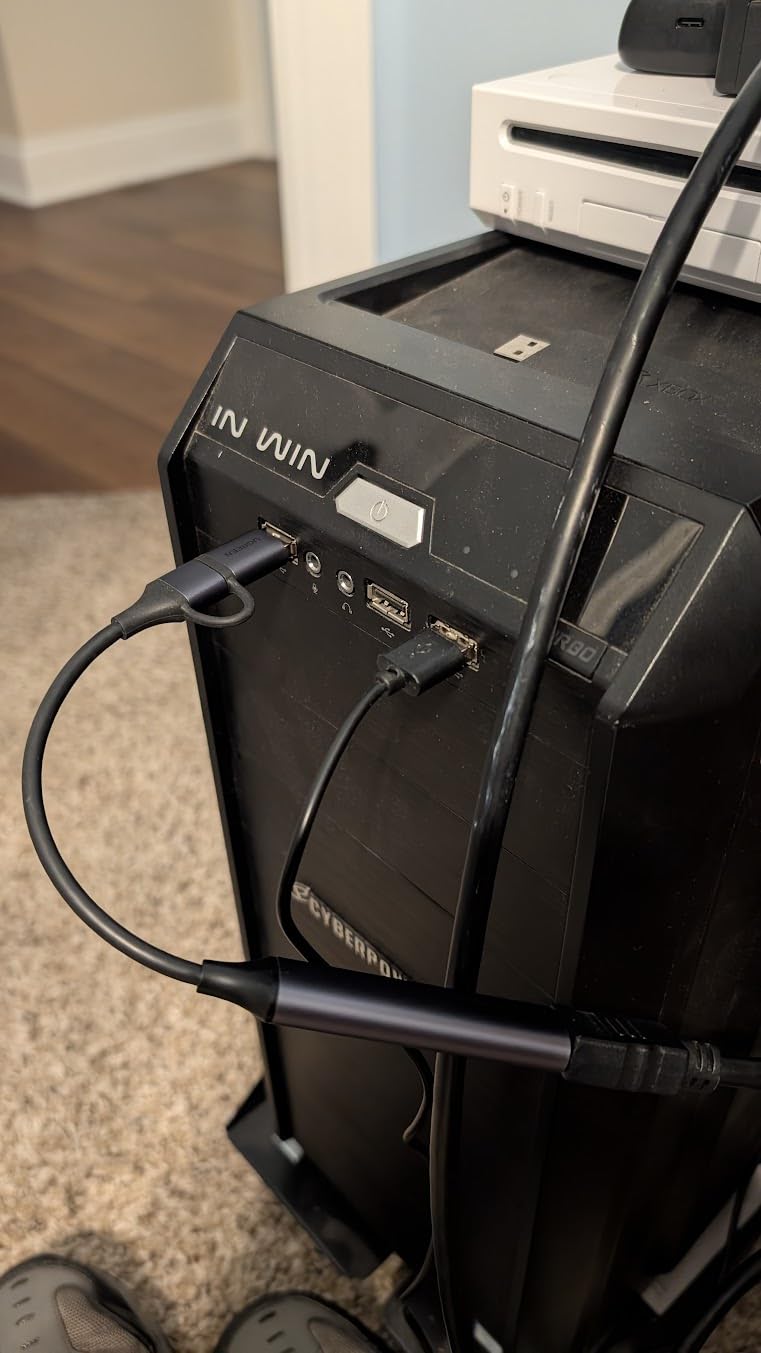
UGREEN built this card around a simple idea: accept 4K input, loop it out at 4K30 so you keep playing with zero added delay, and record at 2K30 or 1080p60 over USB 3.0. For a docked Switch that is a sensible split.
It holds 4.4 stars across 1465 reviews with 68 percent five-star, and it ships with a 24 month warranty service from UGREEN. Owners highlight the aluminium build, loop-out with no added delay, and smooth Switch and console recording into OBS.
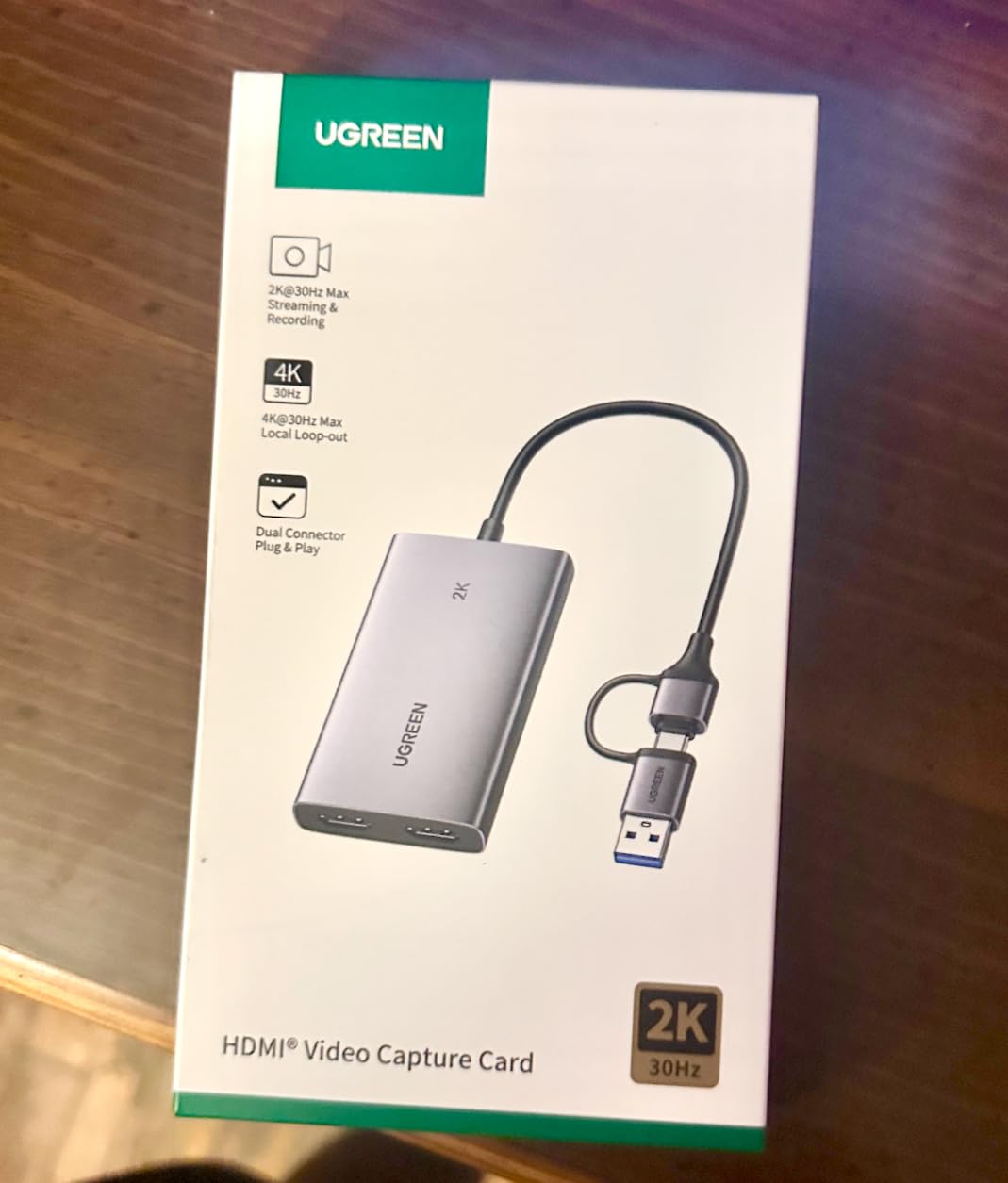
The input is 4K at 30Hz in 4:4:4 and the loop-out mirrors that, which is why local play feels instant. Capture output is listed at 1080p60 or 2K30, so your recorded file is 2K30 at most even though the card accepts a 4K signal.
For an original Switch in the dock, 2K30 is softer than you want for a YouTube upload. If you plan to record at all, set the OBS output to 1080p60 rather than 2K30.
Having both port types on the card body is a small decision that saves real friction. Laptops, desktops and tablets connect without an adapter, and the card supports MJPEG and YUY2 video formats.
It works on Windows 8.1 through 11, macOS, Linux and Android 5.0 or above. Switch, Switch 2, PS4, PS5, Xbox Series X and Meta Quest 3 and 2 are all called out as supported, with OBS, XSplit and PotPlayer as the software targets.
PS4 and PS5 sources need HDCP turned off to work with this card. Nintendo Switch output is not HDCP protected, so for a Switch-only setup that note is irrelevant.
Heat is handled by the aluminium casing rather than a fan, which is why owners report stable long sessions. iPhones are the one source you cannot capture from, because they lack UVC support.
1080p60 and 2K30 capture
4K@30Hz HDMI input
USB-A and USB-C ports
24 month warranty
This is the highest rated card in the roundup at 4.5 stars, and 79 percent of its 861 reviewers hand out five stars. For a docked original Switch, 1080p60 is the exact resolution the console sends, so this card records a native match.
It weighs 50 grams, needs no external power, and carries the same 24 month UGREEN warranty as the larger UGREEN card. That warranty length is unusual at this tier and worth weighing against shorter coverage on some rivals.
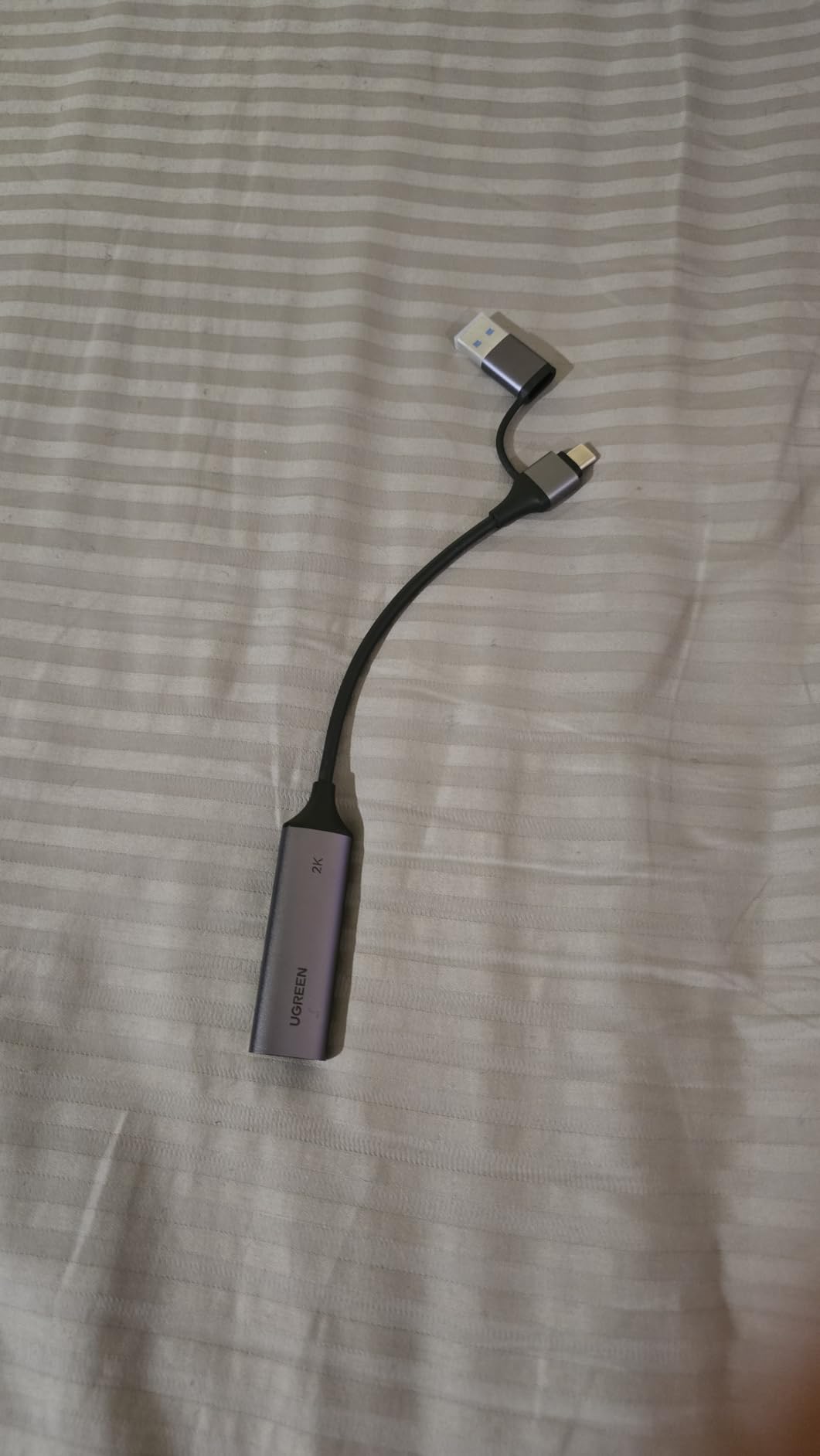
Input resolution is 4K at 30Hz, and output is 2K at 30Hz with backward compatibility to 1080p60. In OBS, select 1080p60 rather than 2K30 for a docked Switch recording, since the console source is 1080p60.
Low latency comes from a USB 3.0 data path advertised at 5 Gbps, and the card is backward compatible with USB 2.0 ports at reduced quality. Plug into a blue USB 3.0 port for the intended result.
The aluminium alloy casing handles heat dissipation and EMI shielding, and the built-in cable uses 26AWG and 30AWG tinned copper conductors. That attention to the cable is unusual in this price range and shows up in stable signal behaviour over long sessions.
Both USB-A and USB-C ports are on the housing, so the card reaches phones, tablets, laptops and Quest 3 headsets without an adapter. iPad use needs iPadOS 17 or later.
Switch, Switch 2, Xbox, PS4, PS5, Xbox Series X and Meta Quest 3 and 2 are all supported, and the card is driver-free on Windows 11, 10, 8.1 and 7, macOS, Linux, phones and tablets.
Two limits remain. Output is unidirectional from HDMI in to USB out, and PS4 and PS5 sources require HDCP to be turned off. Software targets include OBS Studio, XSplit, PotPlayer and QuickTime.
1080p capture
HDMI loop-out
3.5mm mic input for commentary
Automatic webcam detection
Some creators want their own voice over the gameplay rather than game audio alone. The 3.5mm mic input on this card is the reason it earns a place, since it mixes a headset microphone into the capture without extra routing in OBS.
It holds 4.4 stars across 1680 reviews with 73 percent five-star, and the box contains the capture card and an installation guide. Owners highlight automatic webcam detection, delay-free loop-out and the mic-in for commentary.
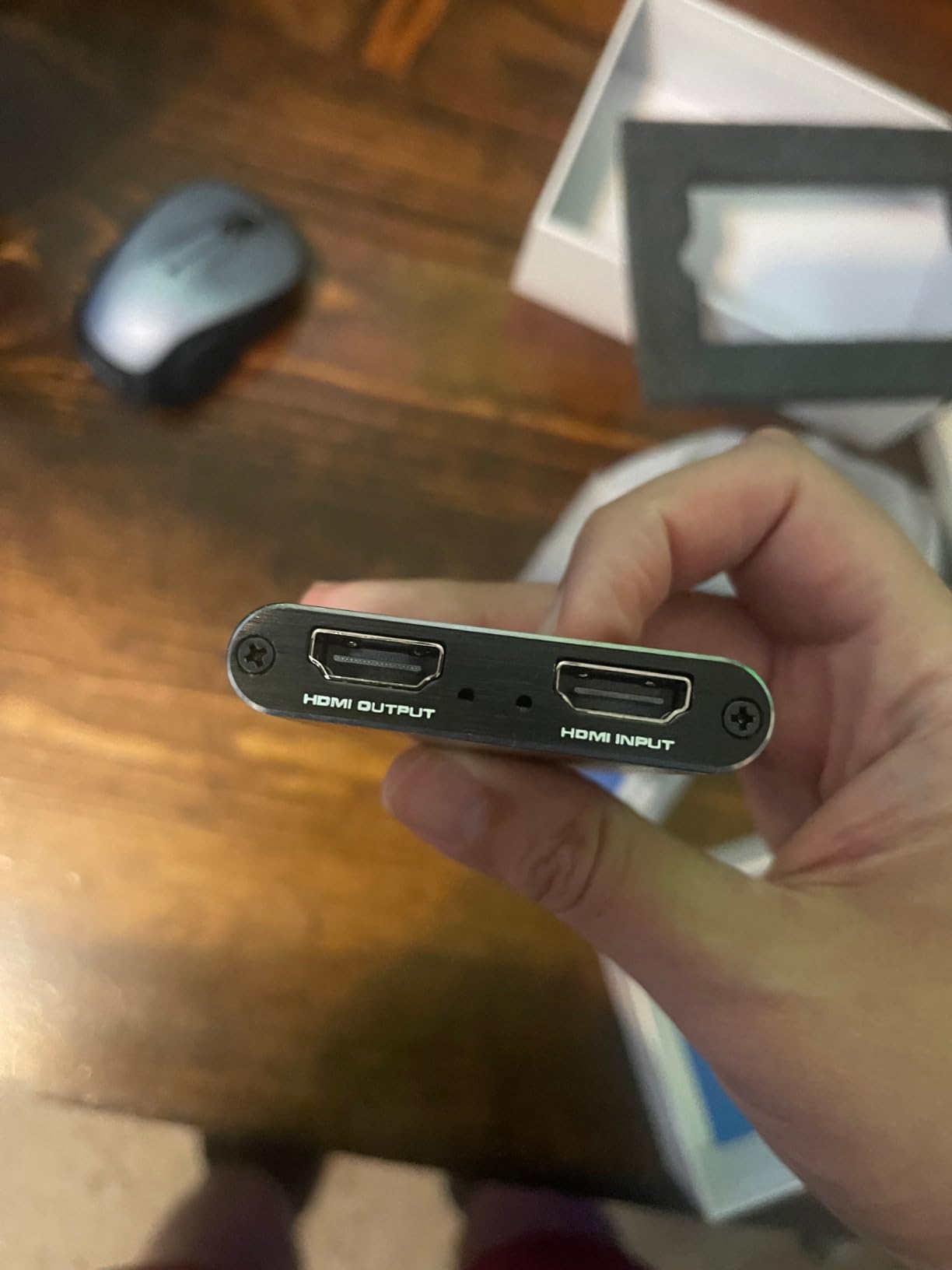
No driver or external power supply is needed. The card is identified automatically as a webcam, and with the correct settings it adds no CPU load, which matters if you are encoding and capturing on the same machine.
The listed minimum is a computer with a USB 3.0 port running Windows, Linux or MacOS. Despite the 4K wording in the product name, capture resolution is 1080p, so read the specification rather than the title.
The mic-in accepts a 3.5mm TRS standard microphone headset. It will not take a bare condenser microphone or a line-level feed without an adapter, so match your headset to the port.
Loop-out captures a single channel HD HDMI video signal with no delay during live play, so the Switch still runs on your television while the recording happens.
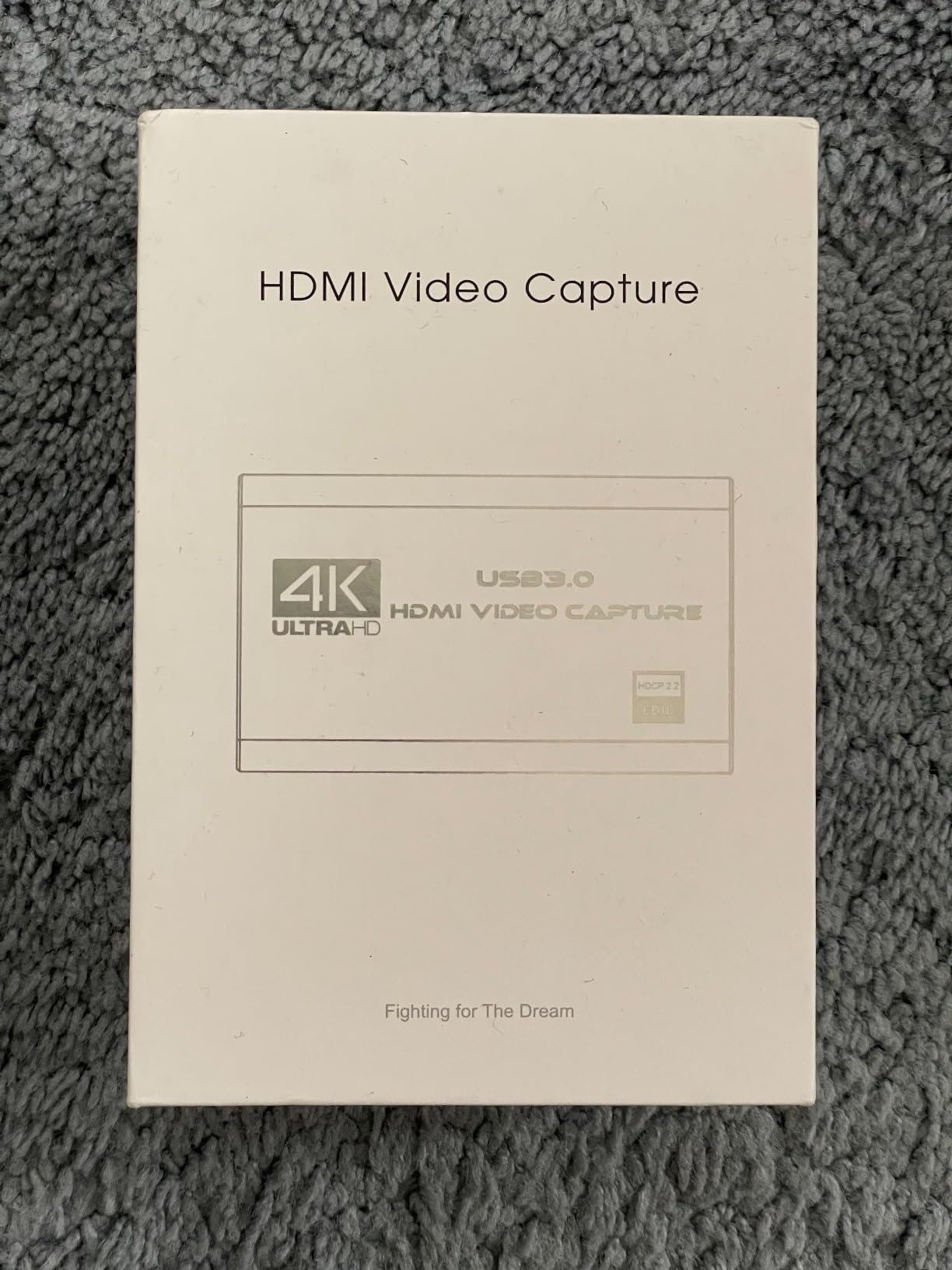
At 1680 reviews this card has more history than most of its tier, and the 4.4 average is a good signal of consistency. The listed compatible devices cover camcorders, cameras and gaming consoles including the Switch.
Supported capture sources are broad: PS4, PS3, Xbox One, Xbox 360, Wii U, DVDs, DSLRs, cameras and set top boxes, feeding OBS, Potplayer, VLC and the usual streaming platforms.
1080p and 2K30 output
4K60 and 1080p144 input
HDMI loop-out
3.5mm mic input
This card reads high refresh input better than any other budget device in the group, accepting 4K30 and 4K60 signals plus 1080p120 and 1080p144. It does not accept 4K120 or 4K144, which is the limit to hold in mind.
At 3579 reviews and 4.3 stars, with 70 percent five-star, it has the second largest review base in the roundup. That volume reflects heavy real-world use, mostly for console and PC streaming into OBS.
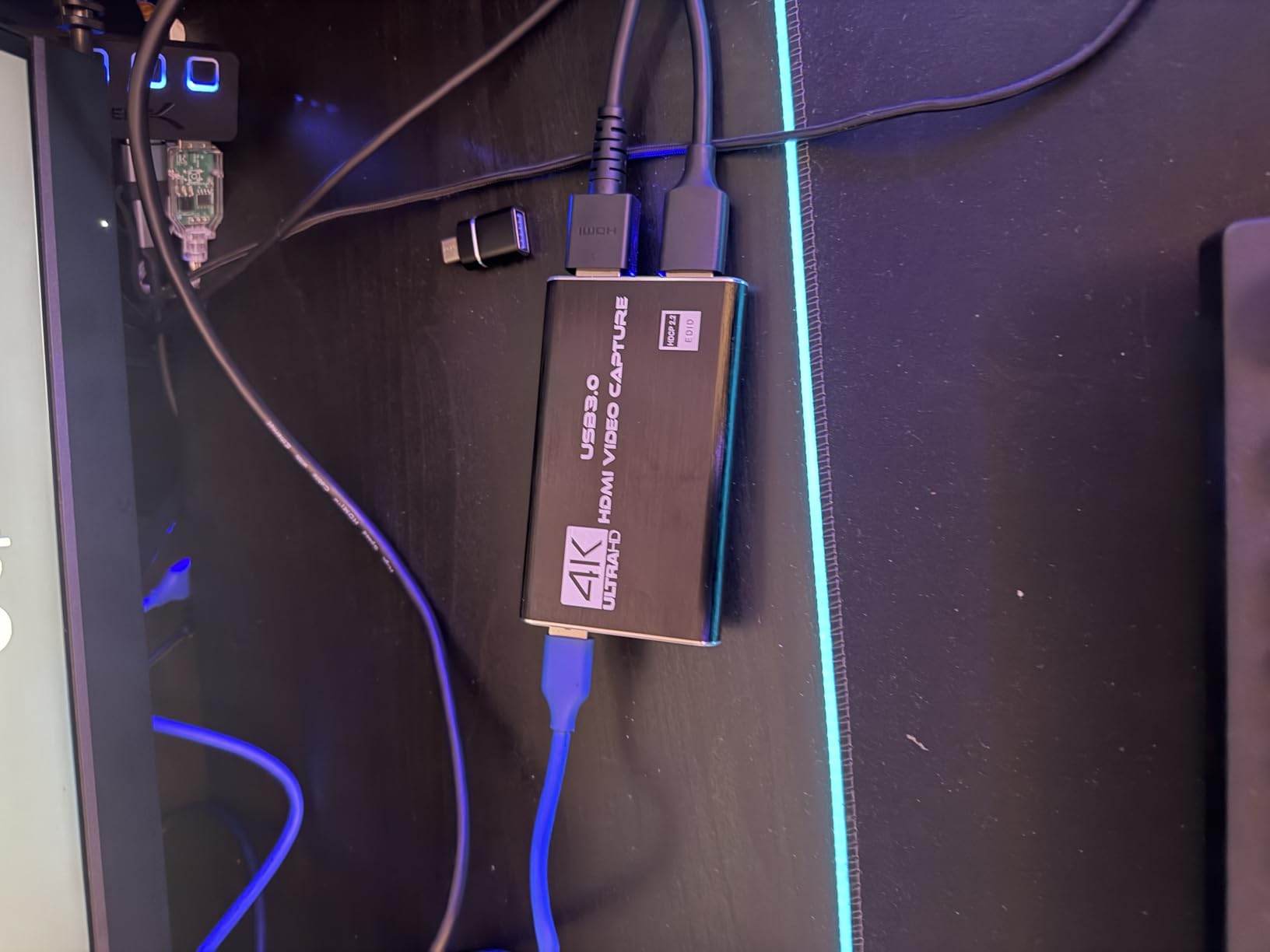
The differentiator is what the card can accept, not what it writes. A high refresh PC source or a Switch 2 signal negotiates cleanly at 4K60 or 1080p144, whereas cheaper dongles often refuse the higher modes outright.
Output is 1080p capture with a ceiling of 2K30Hz. Reviewers point out that gap more than any other limitation, and it is the one specification to check before you commit.
The 3.5mm mic-in matches the sibling VIXLW card, so you can narrate over captured Switch footage without a second audio device. Loop-out has no delay, keeping local play on the TV or monitor unaffected.
Automatic webcam detection means no driver installation and no external power. With correct settings the card does not load the CPU, which is helpful for a laptop that is also encoding.
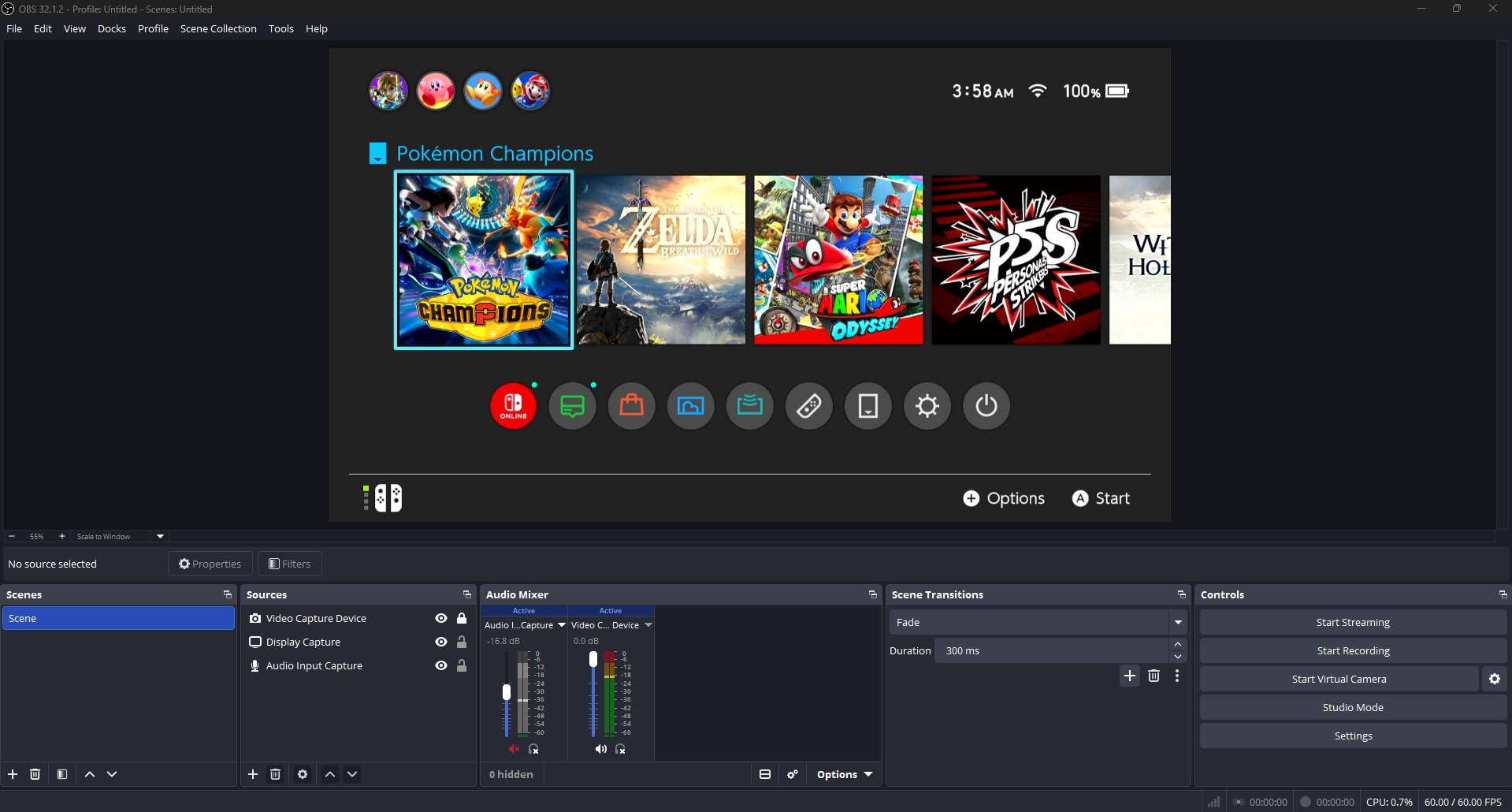
Only a 60 day warranty is listed, shorter than the two year coverage on both UGREEN cards and the 3 year coverage on the AVerMedia Live Gamer Ultra 2.1. If a capture card fails, that difference decides how much hardware you end up replacing.
Windows is the stated operating system, and Mac support is not listed even though the feature list mentions MacOS. Plan on Windows for this one.
1080p60 capture
4K HDMI input and loop-out
Cables included
Compact metal body
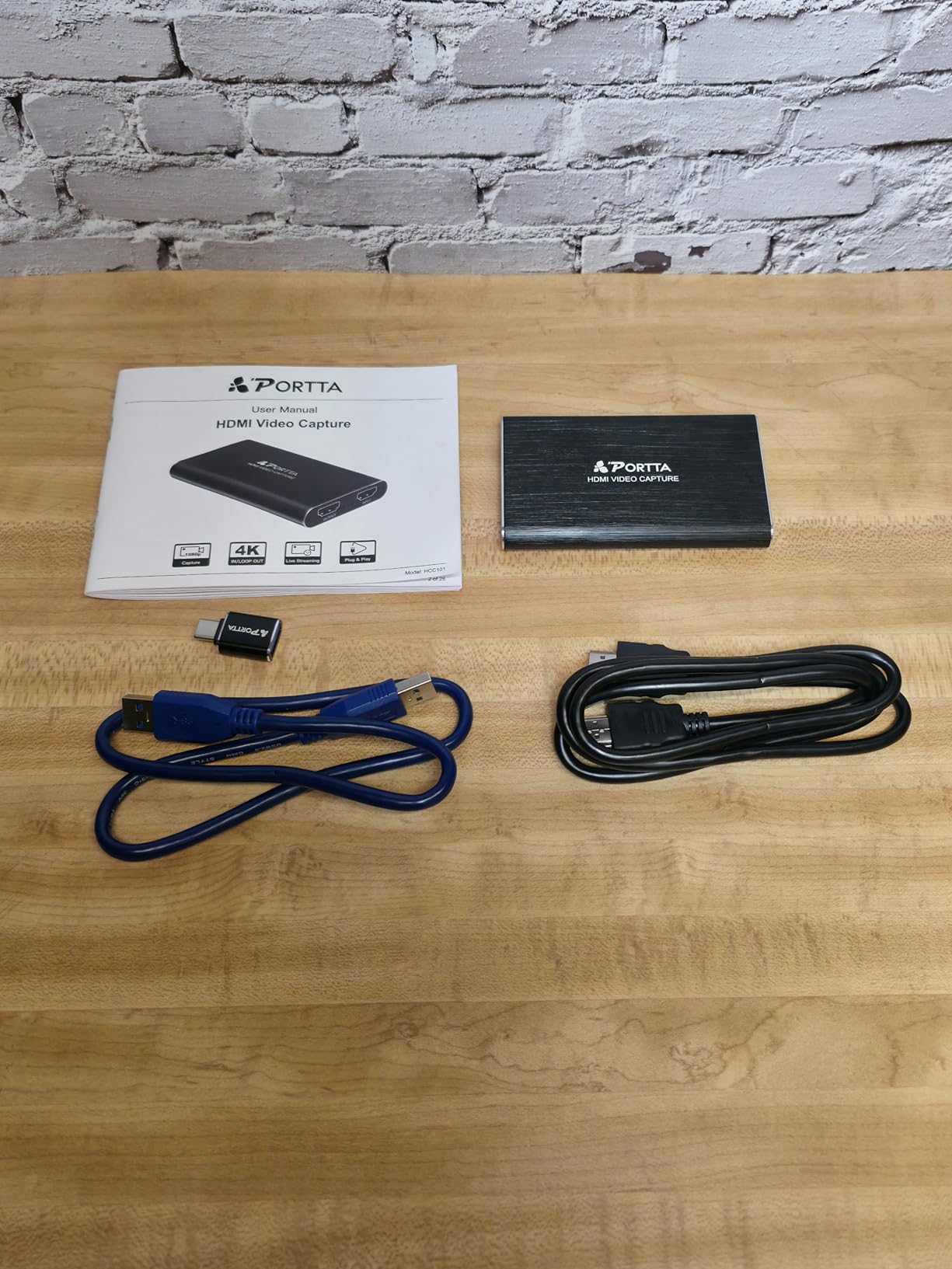
The box contains the 4K HDMI capture card, an HDMI to HDMI extension cable, a USB to Type-C converter adapter and a USB to USB extension cable. For a first capture setup, that means you can wire it up tonight without a second order.
It holds 4.4 stars across 1006 reviews with 74 percent five-star. Owners praise build quality, the included cables, and picture quality for the money.
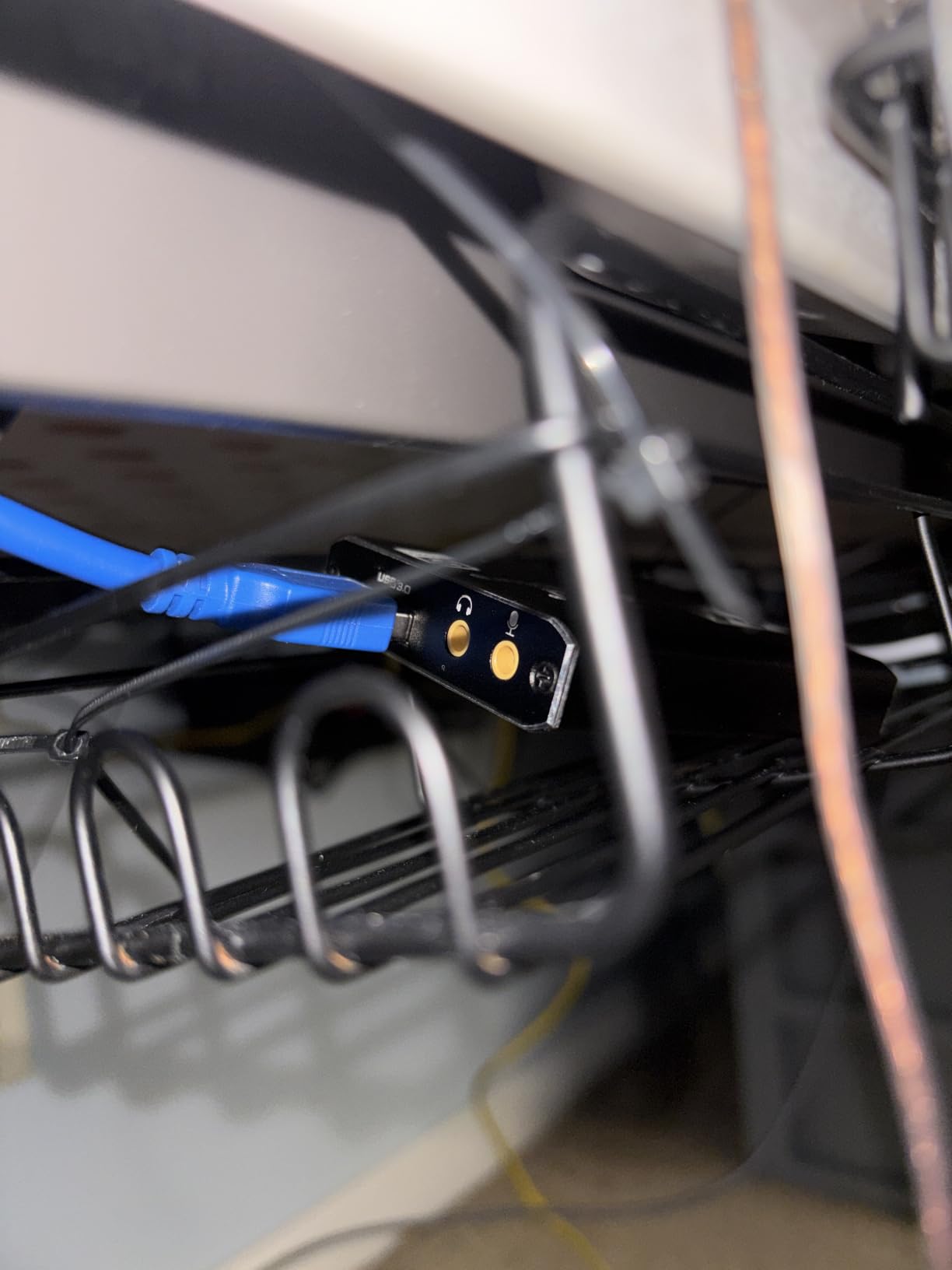
Capture resolution is 1080p60 from a 4K HDMI input, which matches a docked original Switch exactly. The listed av output is HDMI and YUY2, and a USB 3.0 port is required for the intended quality.
One detailed review claims the USB port behaves as USB 2.0 in practice, which forces downscaled image quality. It is a single report among 1006, but it is the first thing to test if your file looks soft despite the specification.
Owners report the card working with both Switch and Switch 2 once the OBS source is configured, including long streaming sessions. A Switch 2 source may need switching to stereo audio to avoid audio crashes.
The device is recognised by macOS and Windows alike, which makes it a practical choice for casting Switch gameplay to Discord from a MacBook.
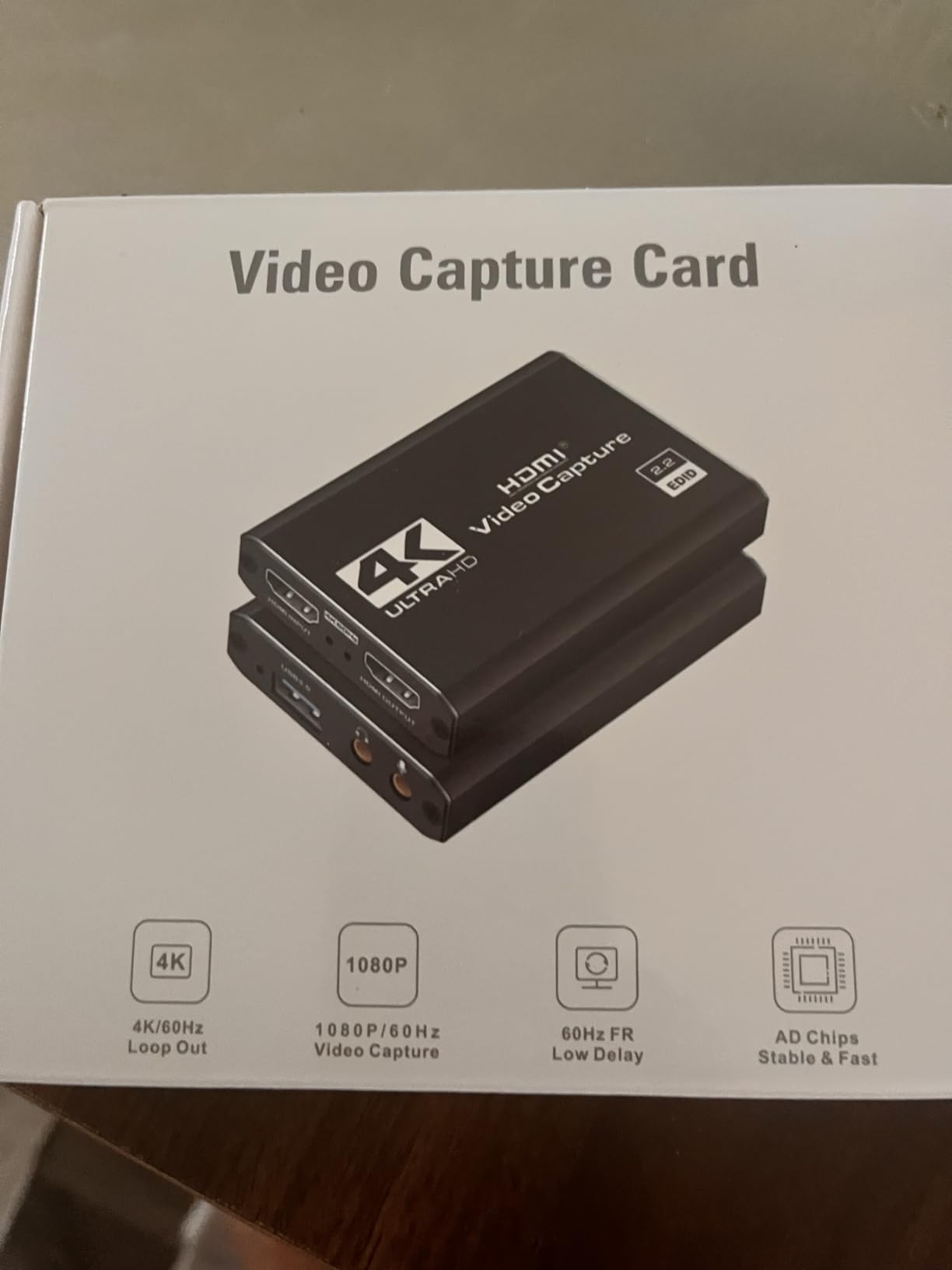
The metal body and 0.21 kg weight give it a solid feel at a size of 1 by 1 by 2.7 inches. Owners do report that the USB connector feels fragile, and that if the stream freezes you must reset OBS or Discord rather than simply reconnecting.
Very little volume control sits on the card itself, so manage audio levels in software. The listed warranty is 1 year, and no external power supply is required.
1080p60 capture
4K@60Hz input and loop-out
3.5mm audio out and mic in
Two year warranty
This card is named for Nintendo Switch 2, PS4, PS5, Xbox and OBS on the box, and at 4.2 stars across 488 reviews it delivers a clean setup with more included hardware than most rivals. The 2 year warranty with lifetime technical support is the strongest support commitment among the budget cards here.
Owners like the included cables, low latency measured at around 0.2 seconds, and clean setup on Switch 2, Xbox and legacy sources. The 11 percent one-star cluster centres on connection stability.
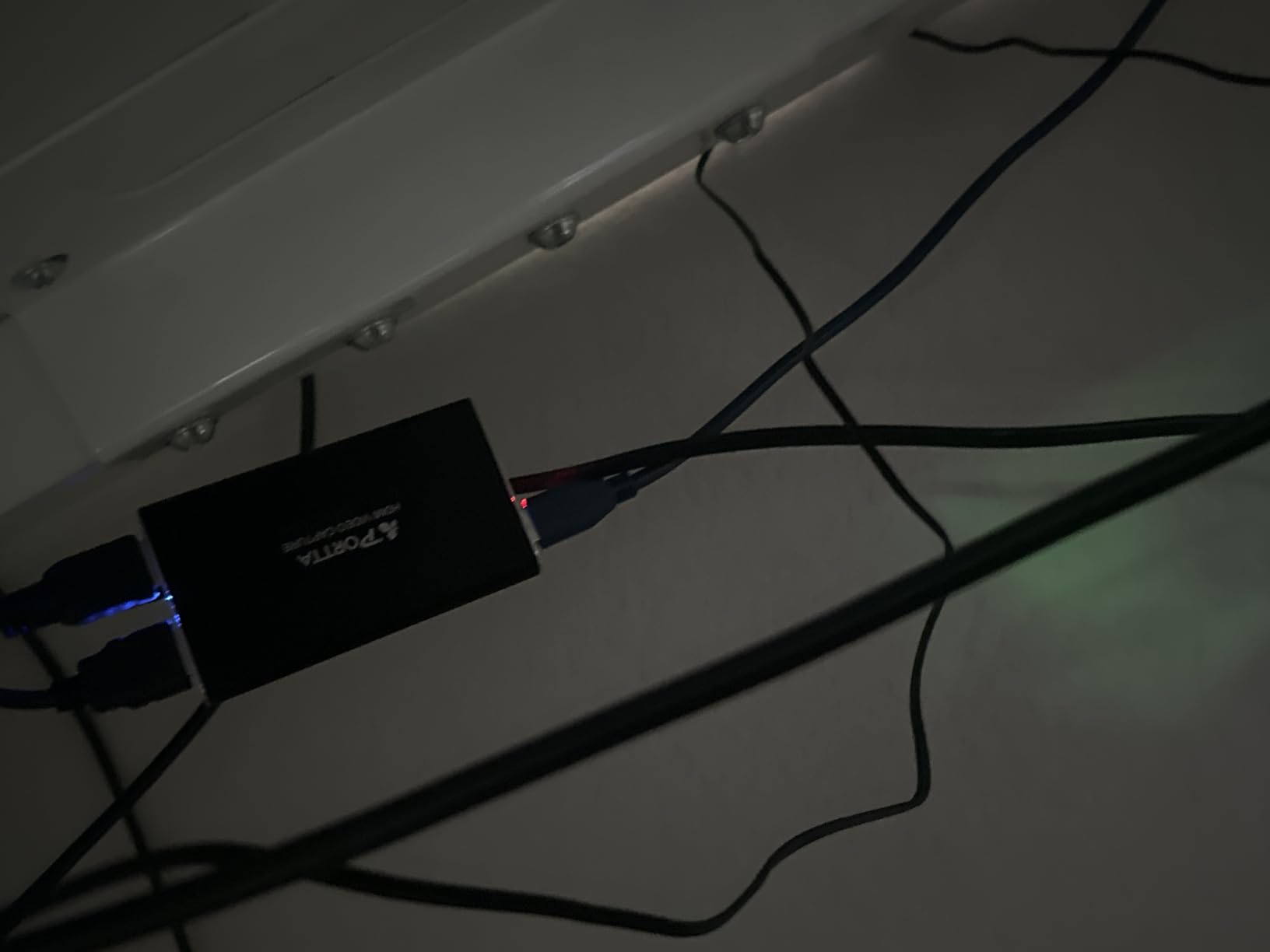
Input and loop-out run up to 4K at 60Hz in YUV 4:2:0, and it also handles 3D and HDCP 1.4 on the input side only. There is no HDR support and no CEC support, so an HDR Switch 2 signal will be tone-mapped on the passthrough display.
Capture over USB 3.0 is 1080p60, which again matches a docked original Switch precisely. It works with OBS Studio and other UVC and UAC compliant applications.
There is a 3.5mm audio out and a mic in, so you can monitor with headphones and record a microphone at the same time. One limitation to note: the headphone or speaker output and the HDMI out do not receive microphone audio.
That means the mic lands in the recorded file without being fed back into your monitoring path, which most creators prefer but a headphone-monitoring setup will notice.
Plug and play with no driver installation on Windows 7 through 11, macOS 10.8 and later, and Linux kernel 2.6.38 or above. A quad-core Intel Core i5 or Ryzen 5 class processor with 8 GB of RAM is recommended.
One owner reports it only worked for 30 to 45 minutes with a Switch 2 before failing. The 11 percent one-star share in the 488 reviews also concentrates on connection stability, so test the card over a long session before committing to a big project.
Yes, and this is the question worth answering before spending anything. The Switch has a built-in screen recorder, and it is genuinely fine for social clips. It caps at 30 seconds unless you hold a Nintendo Switch Online subscription.
Without a subscription, the practical use is a short clip you post and delete. With a subscription, you get unlimited length, but you still record the handheld screen at its native panel resolution rather than the docked output, and there is no clean HDMI audio track to work with.
So the decision framework is short. If you post short vertical clips to social platforms and never touch a video editor, use the built-in recorder. If you publish long-form Let’s Play episodes, run speedruns, or edit gameplay into video, you need a card.
A capture card also captures at the docked resolution with full game audio mixed in, which means your editor has a single file with picture and sound already synchronised. That saves a surprising amount of work per episode.
If you want to check the console side of the market too, our Nintendo Switch deal coverage tracks pricing across the current generation, and our gaming capture card deals roundup covers the same hardware category from the discount angle.
The original Switch, Switch OLED and Switch Lite dock output 1080p60, and handheld mode drops the screen to 720p. That 720p figure is why handheld recordings look softer than docked ones, and no capture card changes it.
The Switch 2 can output 4K60 with HDR and variable refresh rate. If you own one, matching that signal requires an HDMI 2.1 card with 4K capture. For everything else, 1080p60 is the ceiling you are recording against, and our Switch OLED deal coverage is worth checking if you are still deciding on the console side.
Passthrough, also called loop-out, is an HDMI out port on the card that relays the signal to your television untouched. You play on the TV while the card sends a copy to your PC. That is the feature that separates a usable card from a frustrating one.
Zero latency describes the passthrough path, not the software preview. Owners with passthrough cards report near-zero added delay on the display they play on, with any lag appearing only inside the capture preview in OBS. Judge the passthrough path, not the preview.
Cards without a passthrough port are not deal breakers for a Switch, because the Switch has an internal screen. But you would be recording gameplay off that 720p panel rather than the docked image, which is rarely what a buyer wants.
Almost every dropped-frame complaint in this category traces back to a USB port running at 2.0 speeds. A 1080p60 feed needs real USB 3.0 bandwidth, and on cards that also advertise USB-C, the port you choose matters.
Several cards in the budget group document one-way signal flow from HDMI in to USB out. That is normal and correct. It only becomes a problem if you try to run an HDMI splitter in the opposite direction through the card.
Both brands build cards that work with a Switch. Elgato cards lean toward a standard UVC device that appears cleanly in OBS with no proprietary layer, which suits creators who move between recording and streaming software.
AVerMedia leans toward features: the Live Gamer Mini is a compact 1080p60 passthrough card with a hardware encoder, while the Live Gamer Ultra 2.1 adds party chat capture, 5.1 audio and 4K passthrough through its own plugin or Streaming Center. Choose Elgato for simplicity of setup, AVerMedia for audio features.
UVC, or USB Video Class, is the standard that makes a capture card appear as a camera. Every card here except the AVerMedia Ultra 2.1 works as a plain UVC device with no driver installation, which removes the most common early frustration.
Standalone cards that write to microSD without a PC exist in the market but none appeared in this comparison set. Every card reviewed here needs a Windows or macOS machine to run OBS Studio, Streamlabs or the vendor app.
Separate the input resolution from the capture resolution. A card may accept 4K30 at the HDMI input and still record only 2K30 or 1080p60 to the PC, and that second number is the one that shapes your finished file.
Then check three more lines: whether passthrough is present, whether the connection is USB 3.0, and what the warranty covers. Those three details explain most of the difference between a card that works for years and one that gets replaced in a year.
The wiring is the same for every card in this roundup, and getting the direction right prevents most first-night problems.
1. Connect the Switch dock HDMI out to the capture card HDMI in.
2. Connect the capture card HDMI out to the television or monitor input.
3. Connect the capture card USB cable to a USB 3.0 port on the recording computer.
4. Power the dock with its own adapter, and confirm the Switch is on the home screen before opening your recording software.
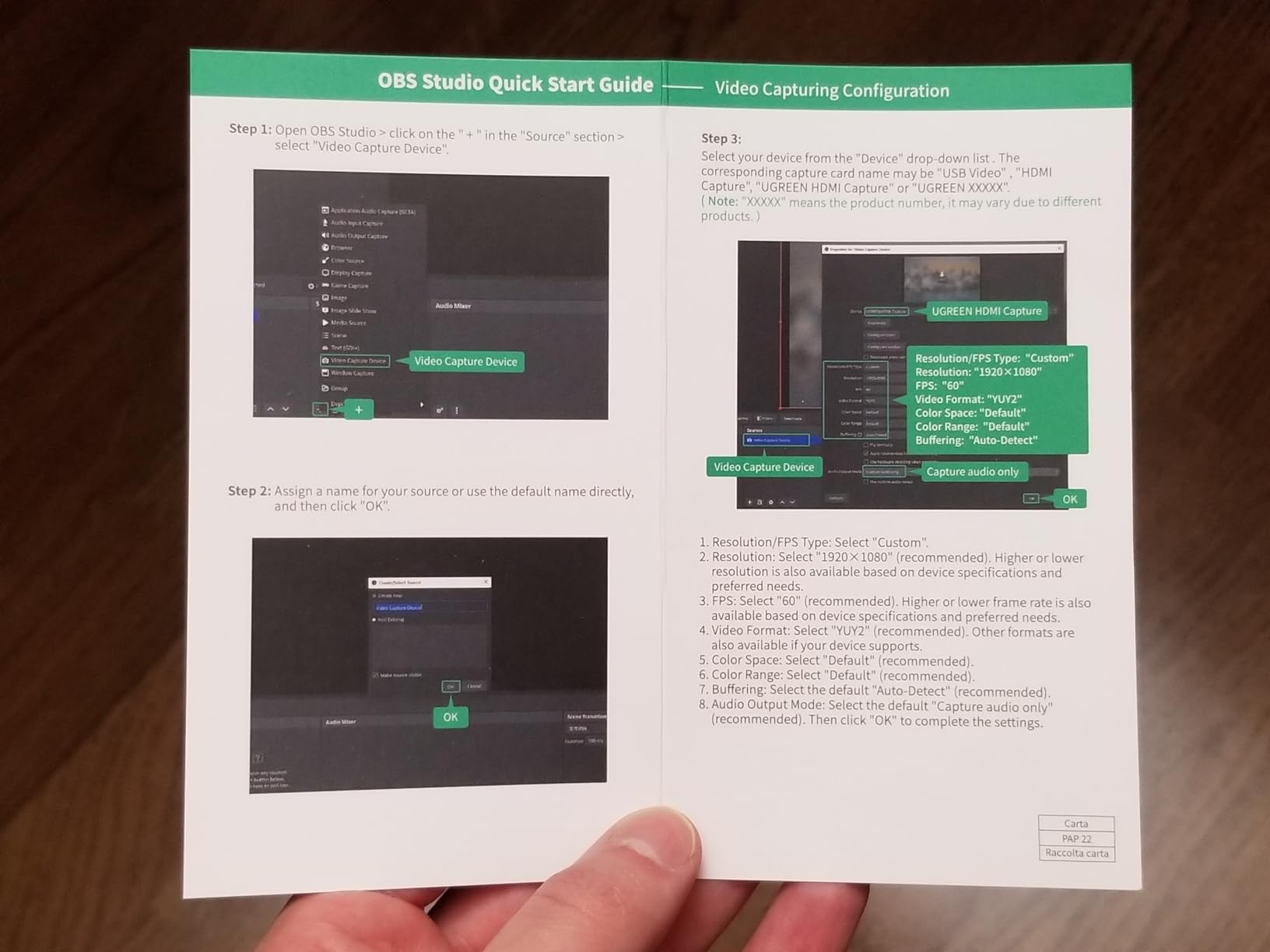
5. In OBS Studio, choose Sources, click Add, and select Video Capture Device.
6. Pick the capture card from the device list, set the resolution to 1920×1080 with 60 fps, and confirm the output is YUY2 rather than a format your system cannot encode.
7. Adjust your output bitrate for the file you want. For 1080p60, roughly 50 to 60 Mbps produces a clean result for YouTube upload.
If the preview is black while the television shows the game, the card is almost certainly not negotiating a resolution your software expects. Reset the OBS source, confirm the game is running rather than the Switch home menu, and check the card output format.
Game audio not appearing in OBS is the single most reported problem for Switch capture setups. It is nearly always a configuration step rather than a hardware fault.
1. Confirm the audio source in OBS is set to your capture card rather than your desktop or headset output.
2. Check that the card audio is not muted in the Windows sound settings under Recording.
3. Match the OBS sample rate to the card default, which is usually 48000 Hz, and restart OBS after any audio change.
4. Test with the Switch home menu audio first, then with an in-game soundtrack, to separate capture problems from game mix issues.
5. If you use a 3.5mm mic-in card, verify the microphone is a TRS headset and that the mic level is raised in software.
For no signal or a black screen, check the cable direction first. The Switch output goes into the card input, and the card output goes to the display. Reversing either one is the most common wiring mistake.
For a picture that suddenly drops to 480p or 720p, the USB link has negotiated down. Move the cable to a USB 3.0 port, and on USB-C cards confirm the port supports data rather than power delivery only.
For dropped frames during long sessions, thermal behaviour matters. Cards with aluminium bodies, such as the UGREEN and Guermok models, run cooler than plastic dongles over a multi-hour recording.
For a Switch 2 that black-screens on a card built for older HDMI standards, use an HDMI 2.1 card. Owners of older cards report stripped or blank output when the console sends higher bandwidth HDMI 2.1 features.
The Guermok GM-29A is the strongest all-round choice for a docked original Switch, because it records 1080p60 with game audio, needs no drivers, and has the largest review base in our comparison at 3632 owner reviews. Switch 2 owners should use an HDMI 2.1 card such as the Elgato 4K X, which captures up to 4K144 and passes HDR and VRR through to your display.
Yes, with a capture card. The Switch built-in screen recorder caps at 30 seconds unless you hold a Nintendo Switch Online subscription, and it records the handheld panel at 720p rather than the docked image. A capture card records the full docked 1080p60 output through HDMI with game audio included, with no length limit imposed by the console.
Most often the audio source in OBS is pointed at your desktop or headset output instead of the capture card. Set the audio source to the capture device, check the recording tab in Windows sound settings for a mute, match the OBS sample rate to the card default of 48000 Hz, and restart OBS after any audio change. Cards with a 3.5mm mic input need a TRS headset and a raised software level.
Elgato cards appear as standard UVC devices that drop cleanly into OBS with no proprietary layer, which suits creators who switch between recording and streaming software. AVerMedia adds audio features, including party chat capture and 5.1-channel audio on the Live Gamer Ultra 2.1, though that model depends on the AVerMedia plugin or Streaming Center. Pick Elgato for simple setup, AVerMedia for audio routing.
No. The Switch Lite has no video output port on the console or in the dock, so there is no HDMI signal for any capture card to copy. This also applies to the bundled capture card in some Switch Lite bundles, since the console cannot output video at all. Screen recording on another device is the only capture route for that model.
If you want one card that handles a docked original Switch with the least fuss, choose the Guermok GM-29A. It records 1080p60 with game audio, installs without drivers, and has more verified long-term use behind it than any other option here.
If you own a Switch 2 and want the console’s 4K60 output, move up to the Elgato 4K X. Its HDMI 2.1 path with VRR and HDR10 passthrough is the only tier in this roundup that carries those features to both your display and your recorder.
If your videos need your friends’ voices in the capture, the AVerMedia Live Gamer Ultra 2.1 is the pick, with dual 3.5mm four-pole inputs for party chat and 5.1-channel audio. Accept that it runs through the AVerMedia plugin or Streaming Center rather than as a plain UVC source.
If you want a named brand at the budget end with a hardware encoder, the AVerMedia Live Gamer Mini gives you zero-lag 1080p60 pass-through. If you would rather have a two year warranty and a full cable set, the Portta card covers both.
Whichever you pick, verify the wiring direction on night one, set the OBS output to 1920×1080 at 60 fps, and check the audio source before you record anything you care about. Getting those three right is the difference between a smooth evening and a wasted one. Our coverage of Nintendo Switch deals and Cyber Monday Switch deals is a useful complement if you are also watching console pricing as you build the setup.