Physical Address
304 North Cardinal St.
Dorchester Center, MA 02124
Physical Address
304 North Cardinal St.
Dorchester Center, MA 02124

The best bottle warmer for night feeds is the one that gets a bottle to body temperature in under five minutes, keeps it there through a diaper change, and can be operated without turning on an overhead light. My team compared ten warmers over six weeks of evening and 3am duty, timing cold milk from the fridge to the bottle, checking display brightness with the room dark, and noting whether the unit needed an outlet within reach of the bed.
At 3am the deciding factor is not peak wattage. It is how many decisions you have to make while your brain is half offline. A warmer that needs a water reservoir measured to the bottle size, a mode you have to scroll through, and an app connection is a worse night tool than a slow one you can start with one button.
This guide is deliberately narrow. Every bottle warmer here can warm a bottle during daylight hours, so that tells you nothing. What separates them is the night-feed checklist: time to temperature from cold milk, how long the unit holds warmth, whether the light stirs the baby, whether noise is loud enough to wake a sleeping partner, and whether your brand of bottle actually fits. We also cover the safety rules that matter most at night, including why microwaving is off the table and why leaving a warmer running unattended is a question worth answering before you are the one half awake at 4am.
Before we get into the picks, one practical note for anyone building a feeding setup from scratch: how you light the room matters as much as how fast the bottle warms. Low-output night lighting for a nursery is a separate purchase from the warmer itself, and it is worth getting right the first time. Our guide to night lights for a nursery covers brightness levels and placement.
These are the three we would put on a nightstand. The Philips Avent handles the widest range of bottles and milk bags with an even water bath. The Tommee Tippee needs nothing but hot water, so it survives travel, outages and outlets that are out of reach. The Grownsy 8-in-1 is the most night-oriented corded unit, with a long keep-warm window and a footprint that fits a small table.


Everything below sits within a few design decisions of the same core job. Heating type drives speed, mains power drives convenience at a bedside, and keep-warm behaviour decides whether a bottle survives a ten-minute diaper change. The table is sorted the way we ranked them, not alphabetically.
| Product | Features | |
|---|---|---|
| Philips Avent Premium Fast Bottle Warmer |
|
Check Latest Price |
| Grownsy 8-in-1 OG Fast Bottle Warmer |
|
Check Latest Price |
| Tommee Tippee Travel Bottle and Food Warmer |
|
Check Latest Price |
 Grownsy Fast Double Bottle Warmer Grownsy Fast Double Bottle Warmer |
|
Check Latest Price |
 Dr. Brown Insta-Feed Bottle Warmer and Sterilizer Dr. Brown Insta-Feed Bottle Warmer and Sterilizer |
|
Check Latest Price |
 Momcozy Portable Cordless Bottle Warmer Momcozy Portable Cordless Bottle Warmer |
|
Check Latest Price |
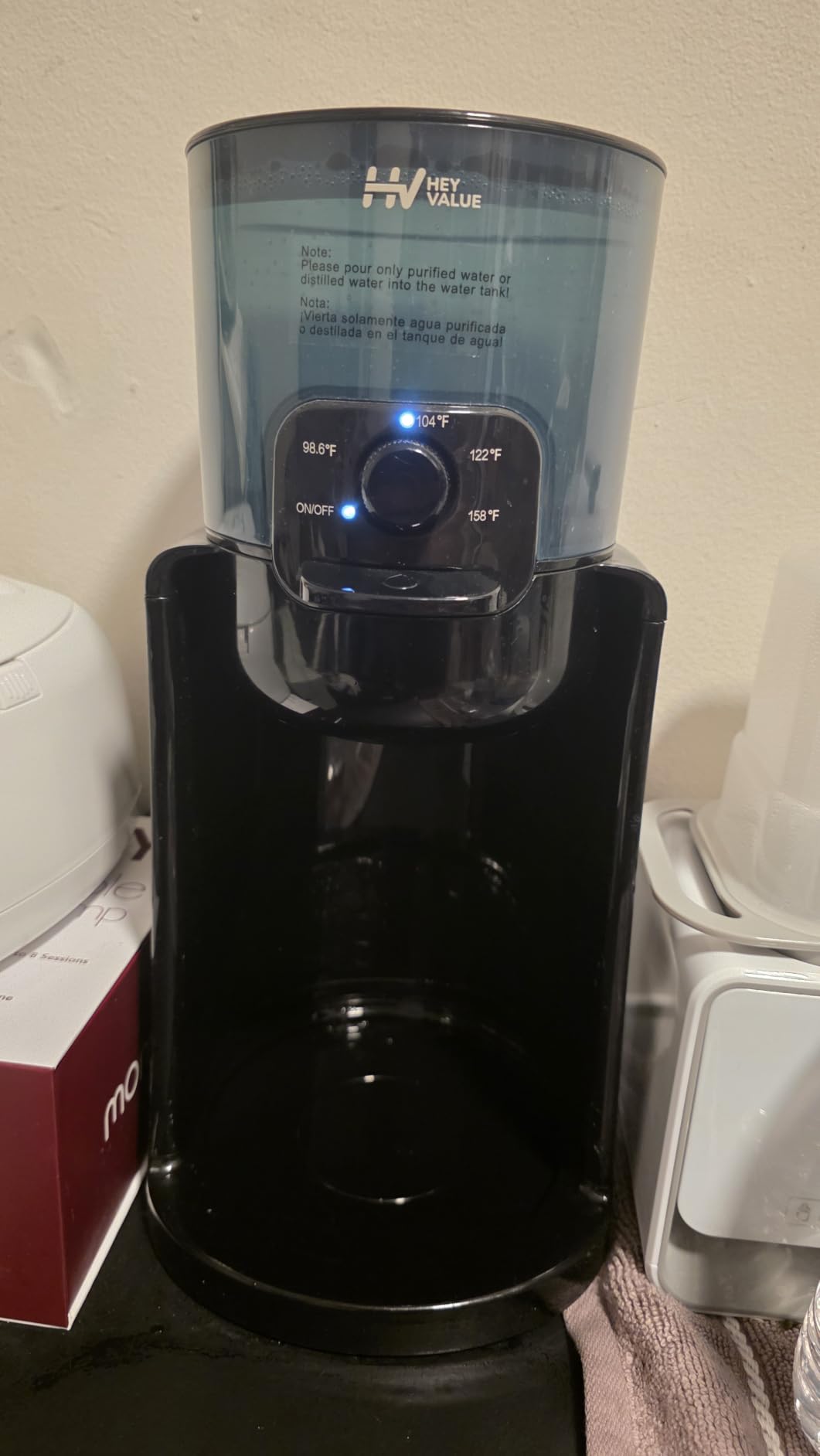
 HEYVALUE Water Warmer with Night Light HEYVALUE Water Warmer with Night Light |
|
Check Latest Price |
 Momcozy Fast Heating Bottle Warmer Momcozy Fast Heating Bottle Warmer |
|
Check Latest Price |
 BOLOLO Portable Bottle Warmer BOLOLO Portable Bottle Warmer |
|
Check Latest Price |
 Bellababy Instant Bottle Warmer Bellababy Instant Bottle Warmer |
|
Check Latest Price |
We earn from qualifying purchases. CERTAIN CONTENT THAT APPEARS ON THIS SITE COMES FROM AMAZON. THIS CONTENT IS PROVIDED 'AS IS' AND IS SUBJECT TO CHANGE OR REMOVAL AT ANY TIME.
Five heating methods show up in this category, and the method you choose sets your realistic warm time before any spec sheet is printed.
A small reservoir heats until it produces steam, which surrounds the bottle. It is the fastest route to temperature and the easiest to wipe clean, because there is no standing water left behind. The trade-off is noise: the reservoir can hiss loudly near an infant, and steam vents warm and humid air into a small bedroom.
The bottle sits in a chamber of water that circulates around it. Heating is gentler and far more even than steam, which is why this is the method most recommended for expressed breast milk. It is also the method that asks the most of you at 3am, because the water has to be measured, poured and later dumped.
A heated plate warms the outside of the bottle with no reservoir at all. There is nothing to fill and nothing to empty, and there is no water sitting in the unit overnight growing stale. The units in this roundup that skip water entirely are the battery-powered stainless steel models.
A rechargeable battery means the warmer can live in a bedroom, a car or a tent with no outlet in reach. The cost is charge management: you are tracking sessions per charge instead of minutes per bottle, and a unit that runs low mid-feed is a real 3am problem.
The simplest approach is to boil water once and keep it hot in an insulated flask, then drop a bottle in. It is the only method on this list that keeps working during a power cut, and the only one that does not heat the milk itself. If you travel often or feed in grandparents’ homes, that trade is worth more than it looks.
3 min warm for 5oz
Even water bath
Fits bottles to 11oz, bags, jars
60 min keep warm
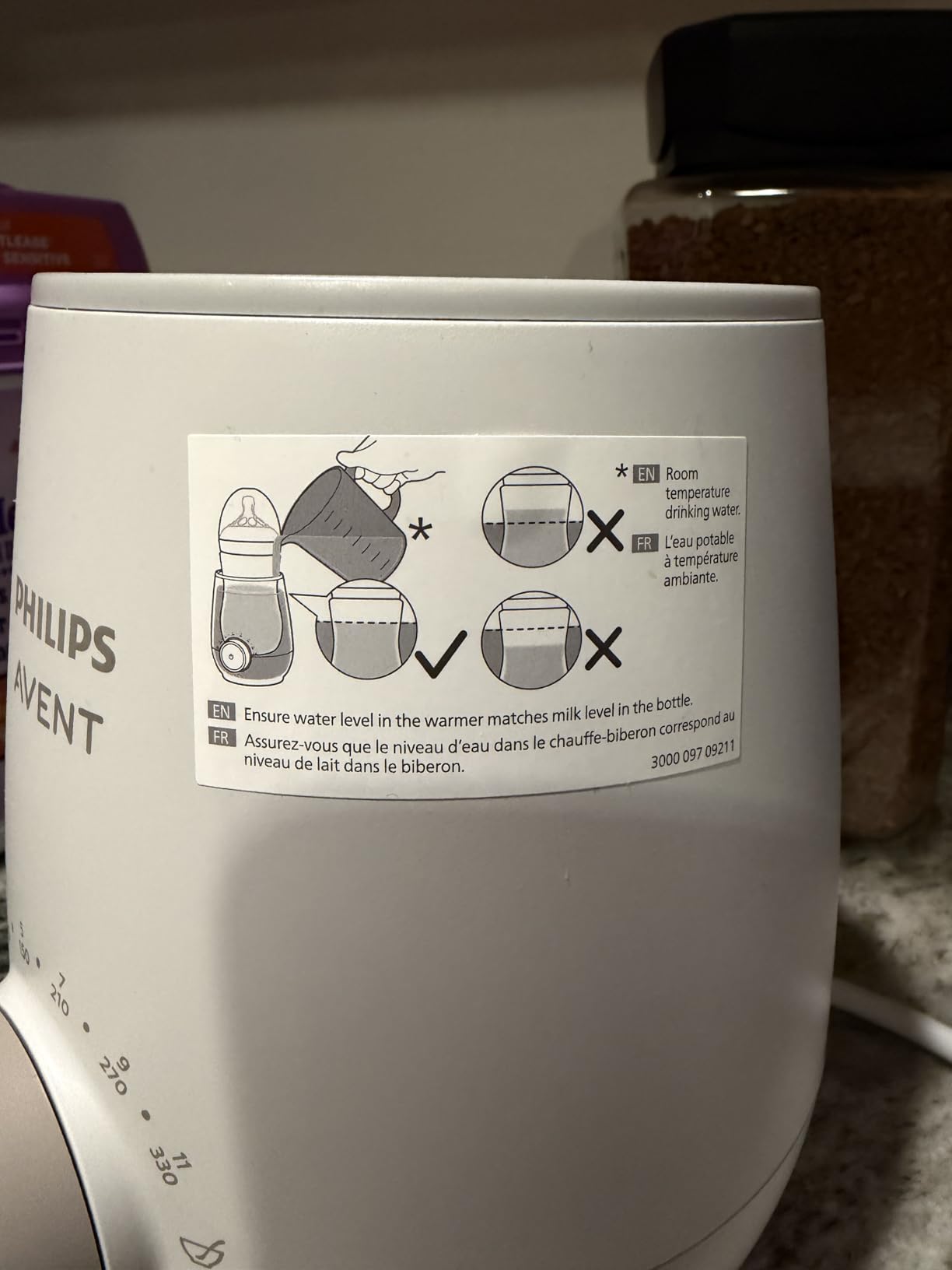
This is the warmer we left on the nightstand most often. It moved a 5-ounce bottle from fridge cold to serving temperature in as few as three minutes, and the three-segment progress light gave us status without needing to read digits in a dark room. For a nightstand unit that has to work while you are half asleep, that light mattered more than we expected going in.
What earned it the top slot is breadth. It fits Philips Avent and most leading bottles up to 11 ounces, and it also takes milk storage bags and food jars, which means a pumping household can warm a bag directly without decanting first. Across more than fifteen thousand reviews, the water-bath circulation is the most repeated reason owners recommend it.
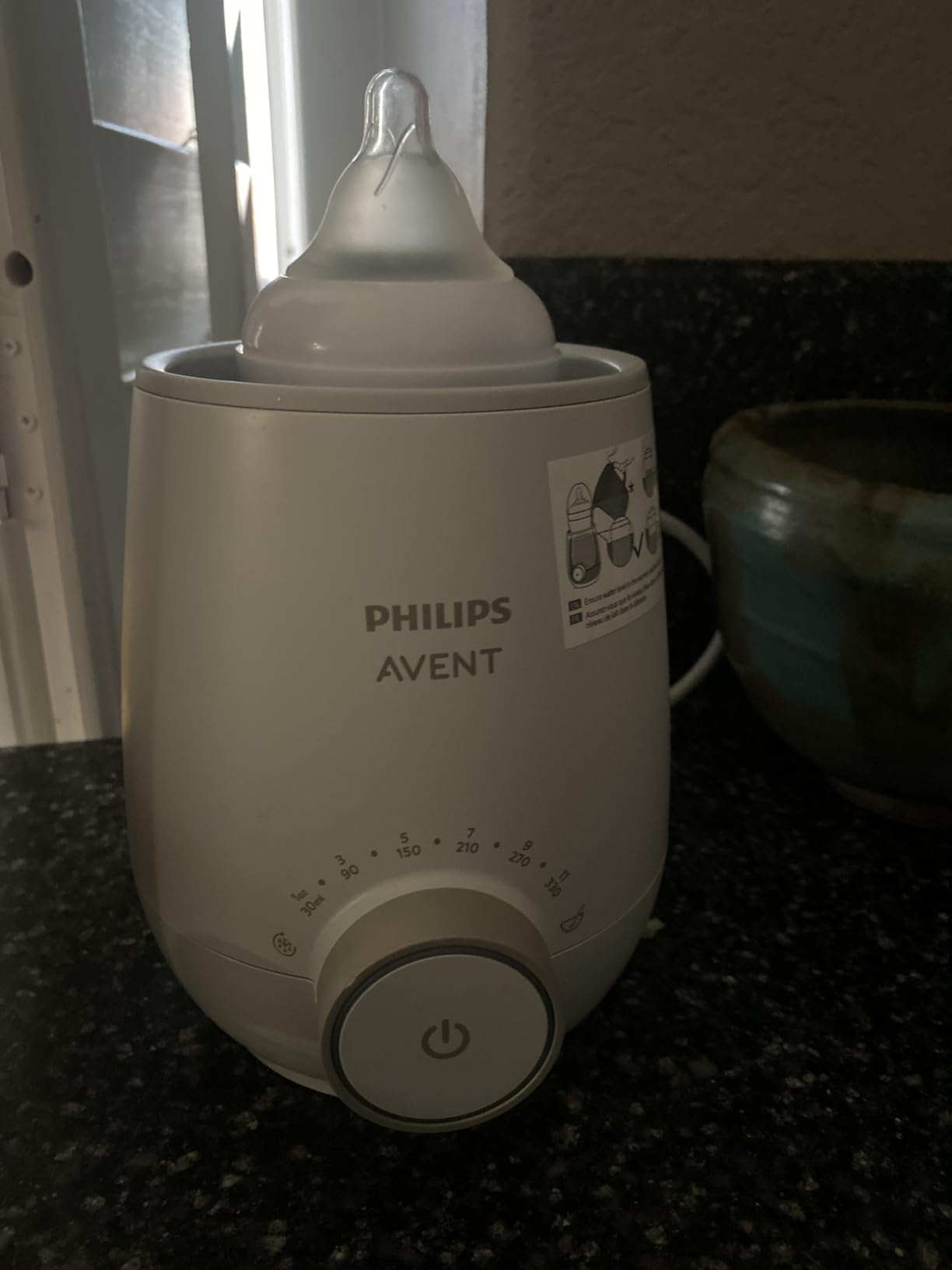
The keep-warm window is the night-specific feature. It holds milk warm for up to 60 minutes and then shuts off automatically, so a bottle that hits temperature while you are still on the socks does not become a cold bottle by the time baby is dressed. After the hour it stops rather than sitting on indefinitely, which is exactly the behaviour you want from an appliance in a bedroom.
The three-minute figure is a best case on a five-ounce bottle. Owners consistently report that a larger volume, or milk that has been sitting in a cold room rather than a fridge, pushes the cycle longer. Plan on the quick figure for the first feed of the night and the slower one for a 4am bottle that has been out of the fridge longer.
The circulating water bath is the part that matters for expressed milk. Water moves continuously around the bottle, so there is no single hot zone to scald a mouth and no dry patch to cool unevenly. One reviewer noted uneven warming requiring a swirl and a second pass, but that is an exception rather than the pattern in the reviews.
If you use wide-neck bottles, glass bottles, milk bags or you rotate between brands, this is the safest single purchase. Parents of twins should note the single-bottle chamber, and anyone who wants one appliance to also sterilise should read the Dr. Brown’s section, since this unit warms only.
3 min warm for 4oz to 98.6F
24 hour keep warm
4.92 x 5.71 in footprint
Auto shutoff timer
This unit is the most obviously designed for the scenario in the title. At 4.92 by 5.71 inches it takes up less table space than a hardcover book, and the keep-warm function is described in the product materials as holding milk temperature before bed for a later feed. That is a different design intent from warming on demand.
Control is two buttons. There is no menu to navigate, no display to read at an angle, and a per-ounce warming time chart printed on the back of the unit, which removes the manual from the 3am equation entirely. We found that combination genuinely easier to operate with one hand while holding a crying baby than any touchscreen unit we tested.
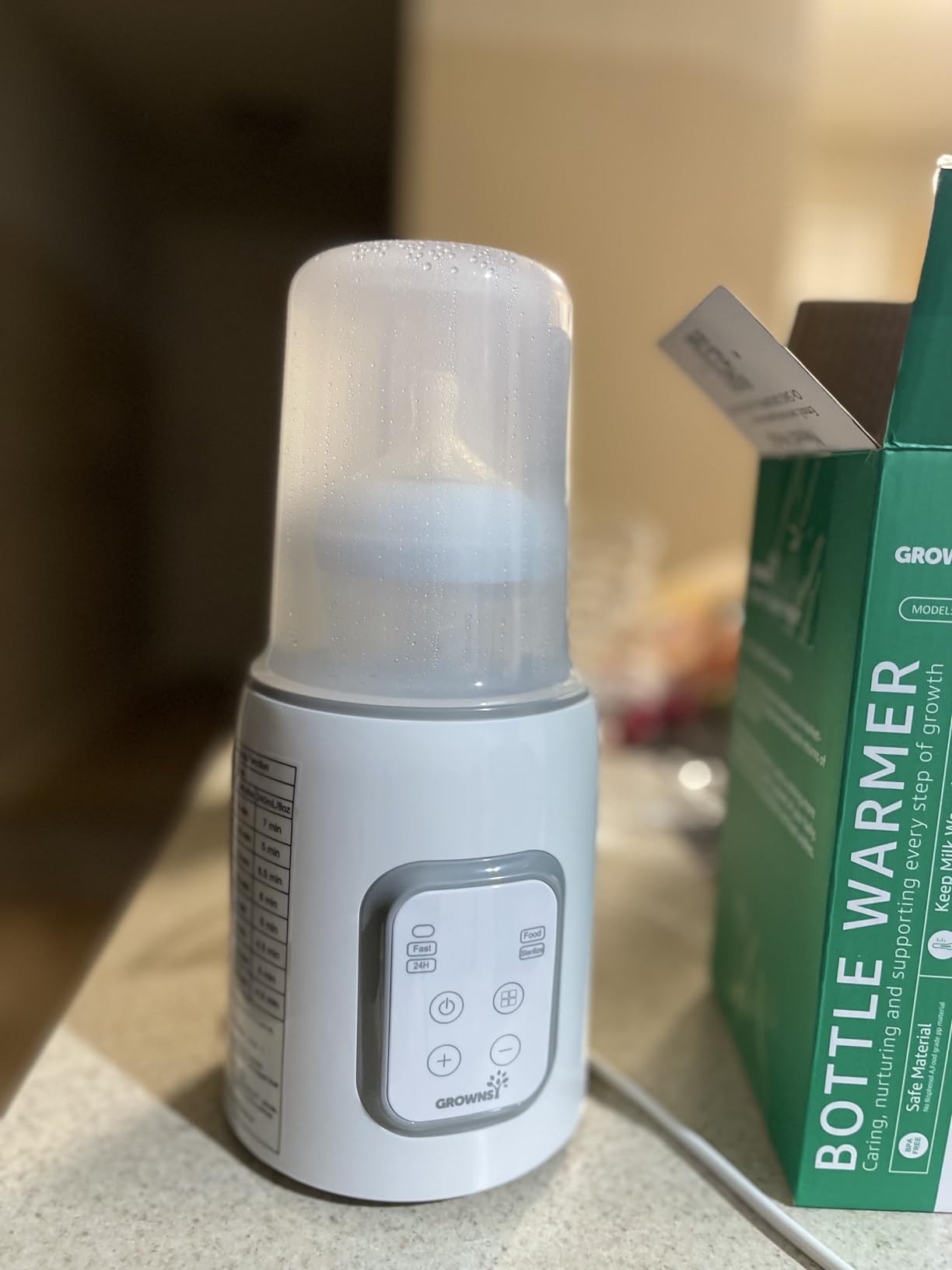
Keep-warm is the headline for night feeding and it is the reason this one earns its place on a bedside table. You can start a cycle before you put your baby down and know the milk will still be drinkable when she wakes. The auto shutoff timer cuts in when the cycle completes, so the unit is not simply running hotter and hotter.
Every water chamber needs emptying and refilling between uses, and this is where the honest cost of the design shows up. Reviews flag hot condensation on the outside of the bottle and the need to dump, refill and measure before each use. At 3am that is the step most likely to be skipped, so we pre-filled it during the last feed of the evening.
This is a strong pick for a formula household with a small nightstand and a partner who takes solo feeds. Skip it if you need two bottles warm at the same time, and note the US-style plug if your household is outside North America, since several international reviewers raised that.
Stores hot water for hours
Warms a bottle in a couple of minutes
No batteries or outlet
Leak proof lid
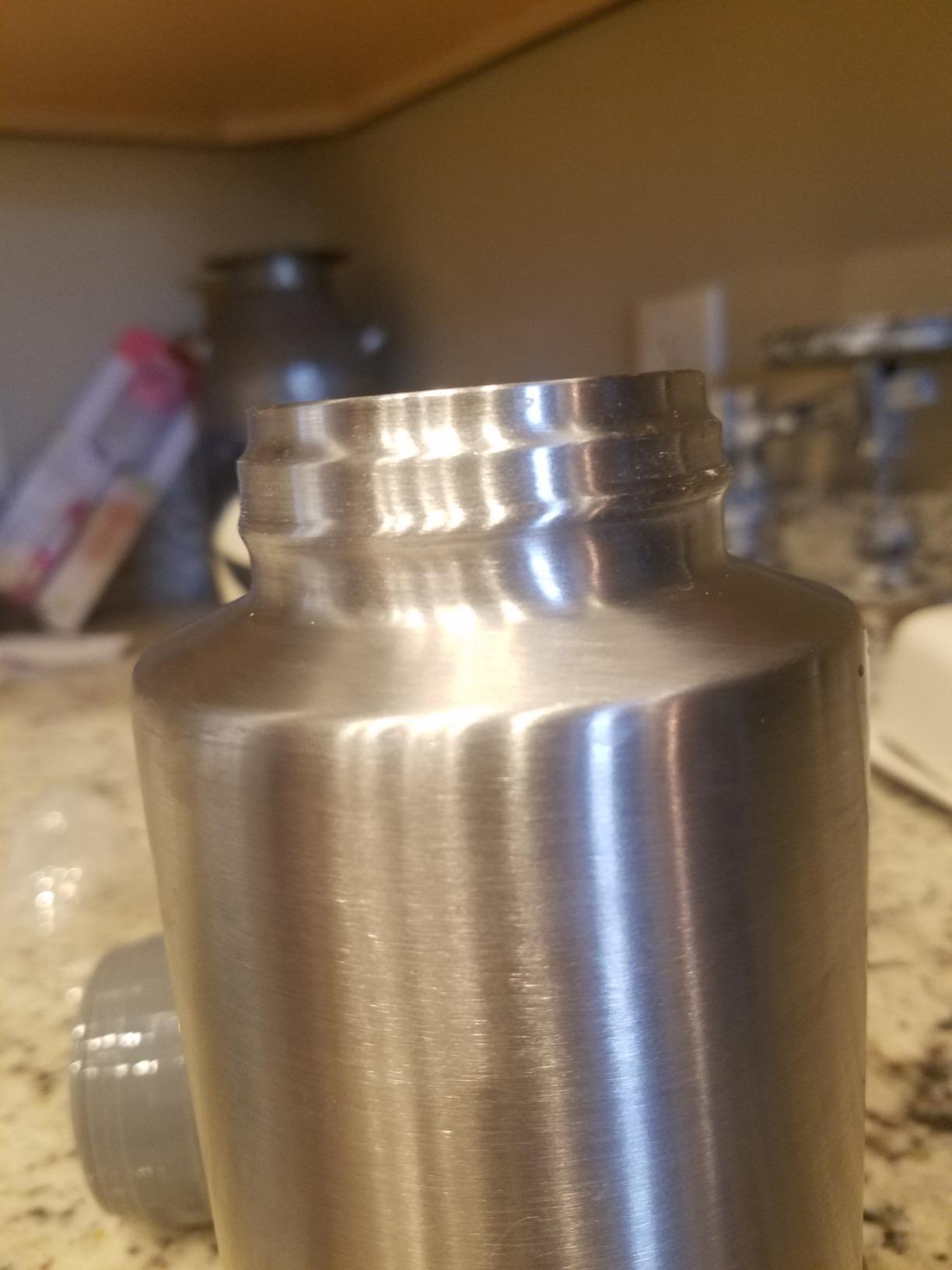
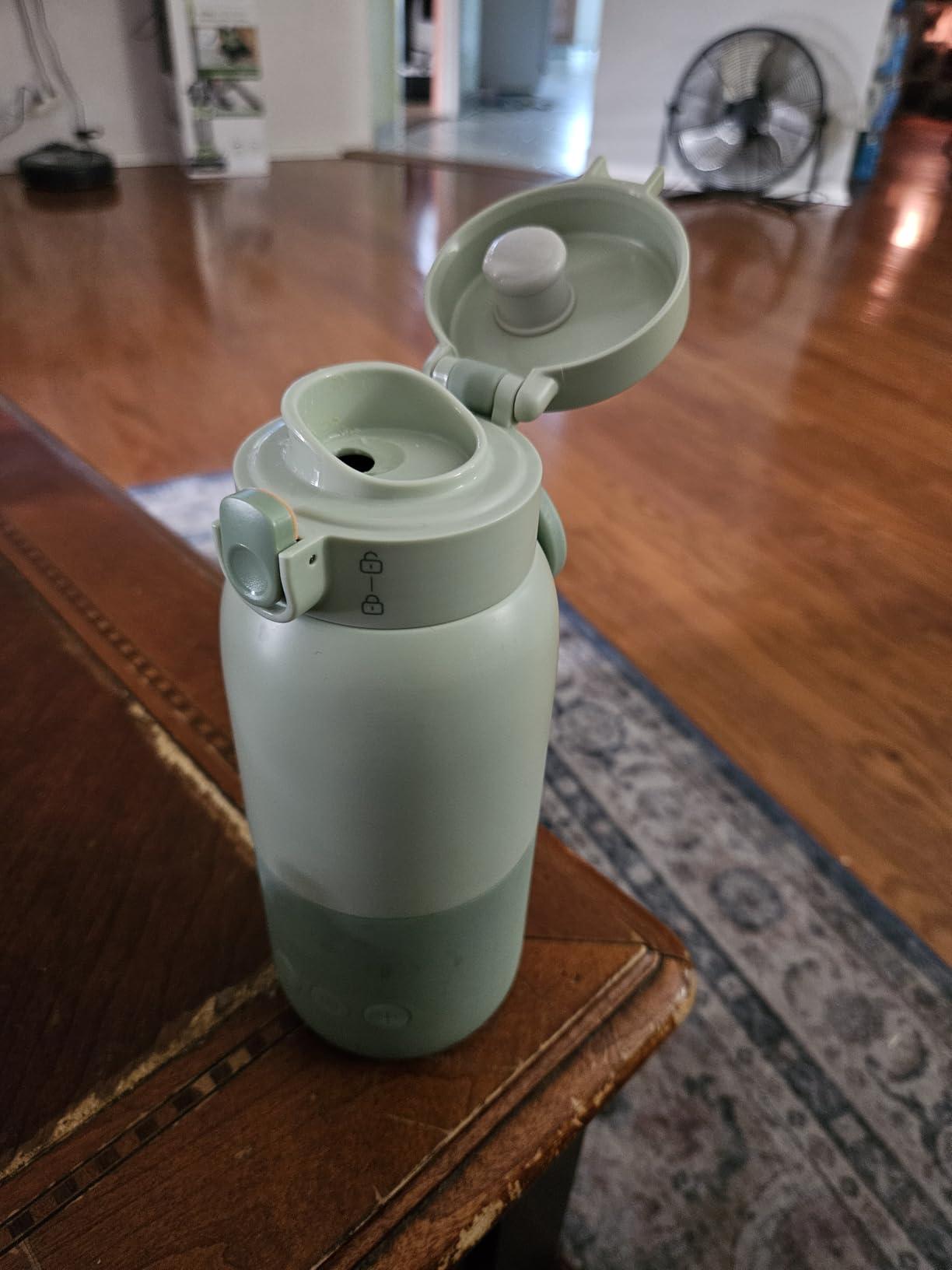
This is the only unit here that is not an appliance. It is a stainless steel thermal flask that stores boiling water, and the bottle goes in until it is warm. Reviewers describe the whole cycle in the time it takes to change a diaper, and several explicitly frame it as their overnight solution rather than a travel accessory.
It carries the highest star rating of any product in this roundup, and the reason is simplicity. There is no reservoir to measure, no mode to select, no display and no beep. Fill it before you go to bed, and it is still hot when the 3am feed starts, with owners reporting the water staying near boiling for 8 to 14 hours.
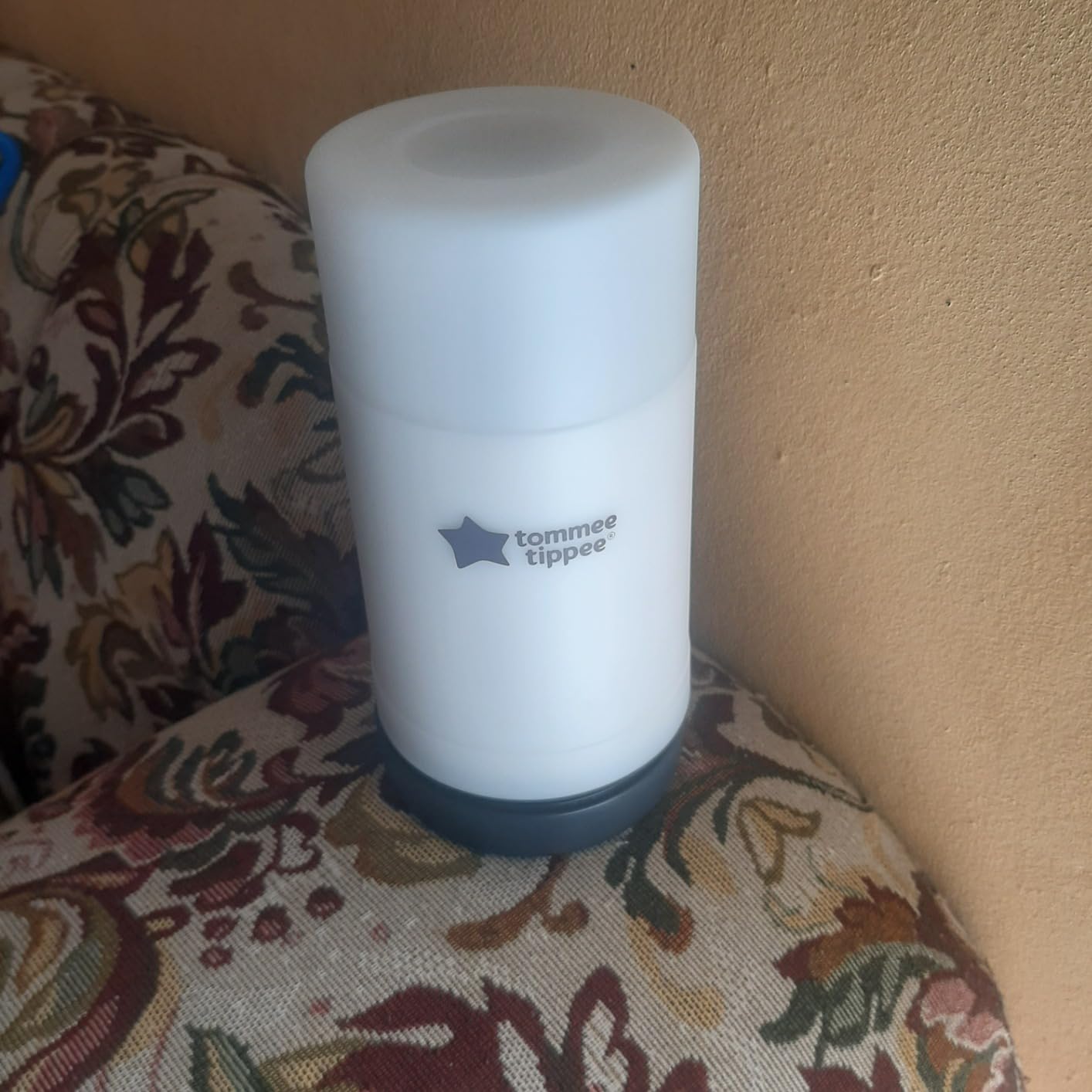
That 8-to-14-hour figure is the single most useful number in this category. It means a single fill before bed covers both the evening settling bottle and the pre-dawn one. A few users found retention shorter than the marketing implies, around 12 hours, so treat the low end as the realistic planning number rather than the headline.
Because nothing mechanical grips the bottle, compatibility is a non-issue. It works with standard bottles, wide-neck bottles, and breast milk storage bags, including Comotomo shapes that some chambered warmers refuse. For households frustrated by a warmer that will not accept their bottle brand, that alone can be decisive.
It is the right pick for travel, for grandparents’ houses, and for anyone who wants a warmer that keeps working during a power cut. It is the wrong pick if you need it to mix formula or dispense water, because it only warms what you put into it, and the filled flask is heavy and awkward to carry.
Warms two bottles at once
3 to 7 min from cold
Keep warm overnight by water bath
Steam sterilizer included
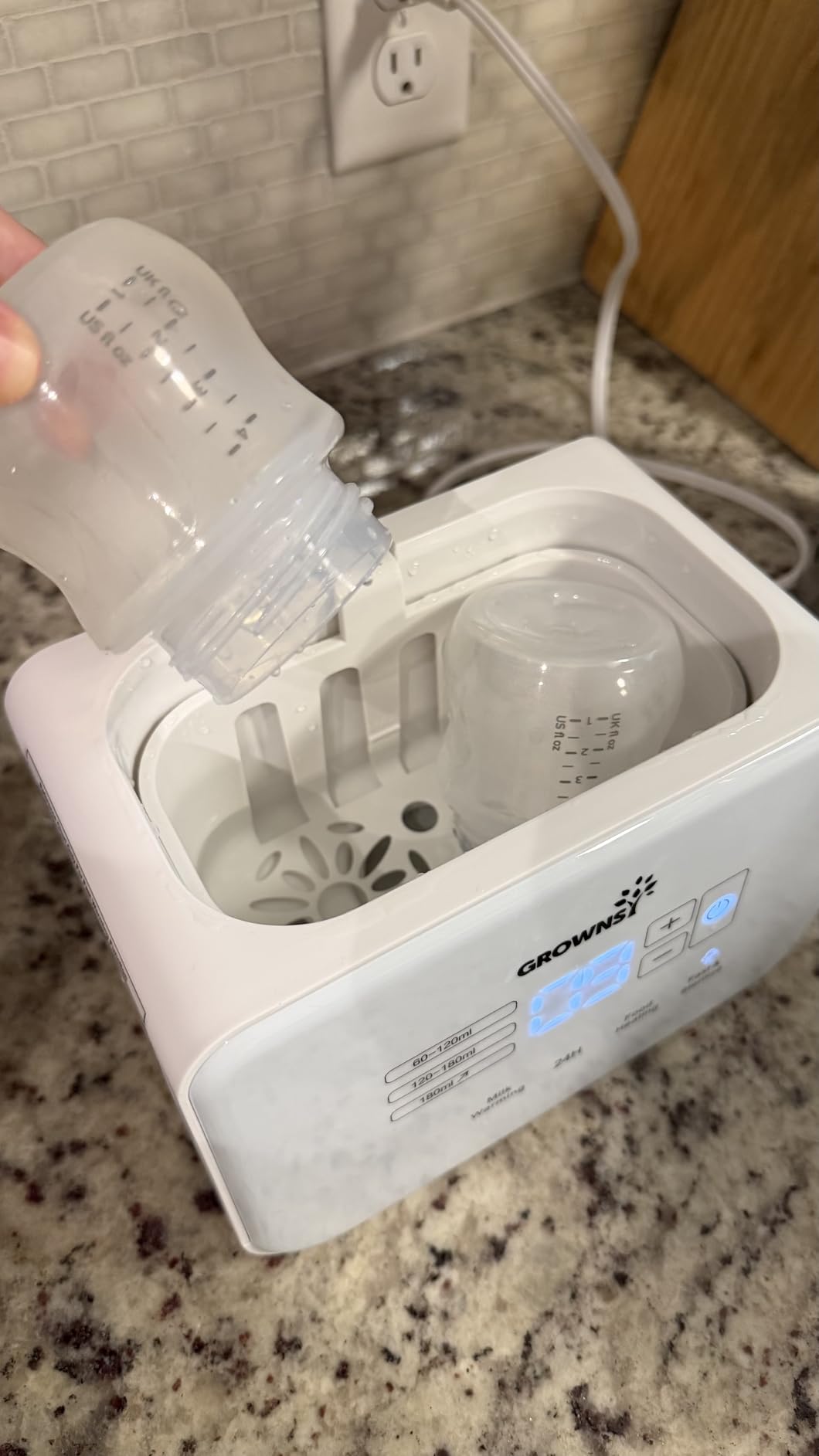
Everything that made the single-bottle Grownsy work for night feeding carries over here, plus the one thing twins and even-paced feeders need: two bottles ready at the same time. Warming a bottle and its backup in a single 3-to-7-minute cycle removes the awkward choice between feeding a hungry baby and waiting for a second bottle.
For non-twin households the same capacity solves a different problem. If one caregiver takes the early feeds and the other takes the later ones, having two bottles warm when a partner is doing a solo shift means nobody is standing in a dark kitchen waiting.
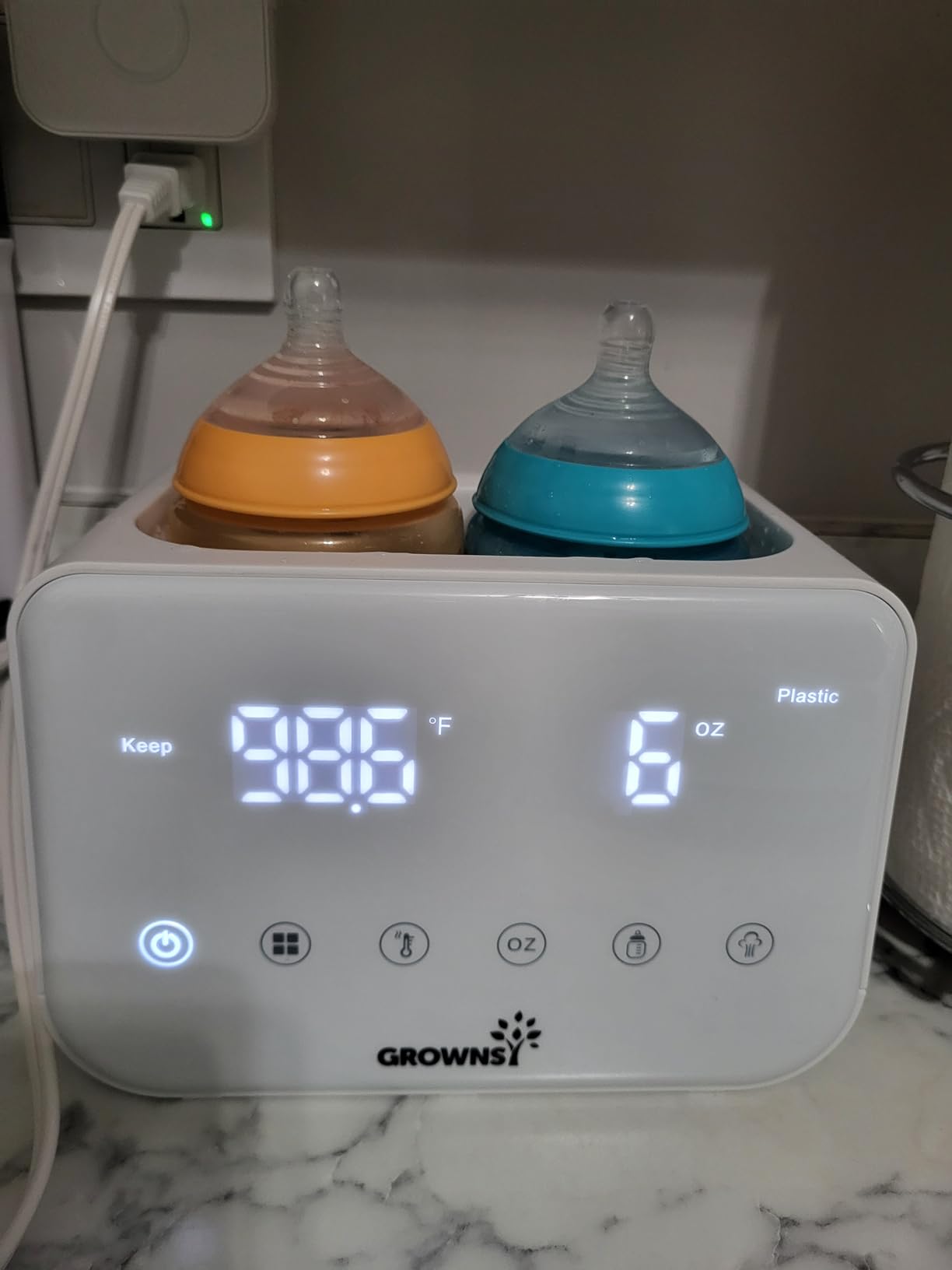
The keep-warm function here holds milk temperature overnight using the same gentle water bath, and reviewers single it out as the feature that makes late feeds easy. The auto shutoff timer means you can change the baby, come back, and find a bottle ready rather than restarting a cycle.
This is the honest trade-off on this unit. The dual-bottle chamber takes noticeably more counter or table space than a single-bottle warmer, and on a small nightstand that competes with the lamp, the charger and a water glass. Measure your surface before committing rather than assuming.
Choose this for twins, multiples, or any household that wants a backup bottle warm alongside the first. If your feeding space is a single narrow bedside table, the single-bottle Grownsy gives you the same night features in a smaller box.
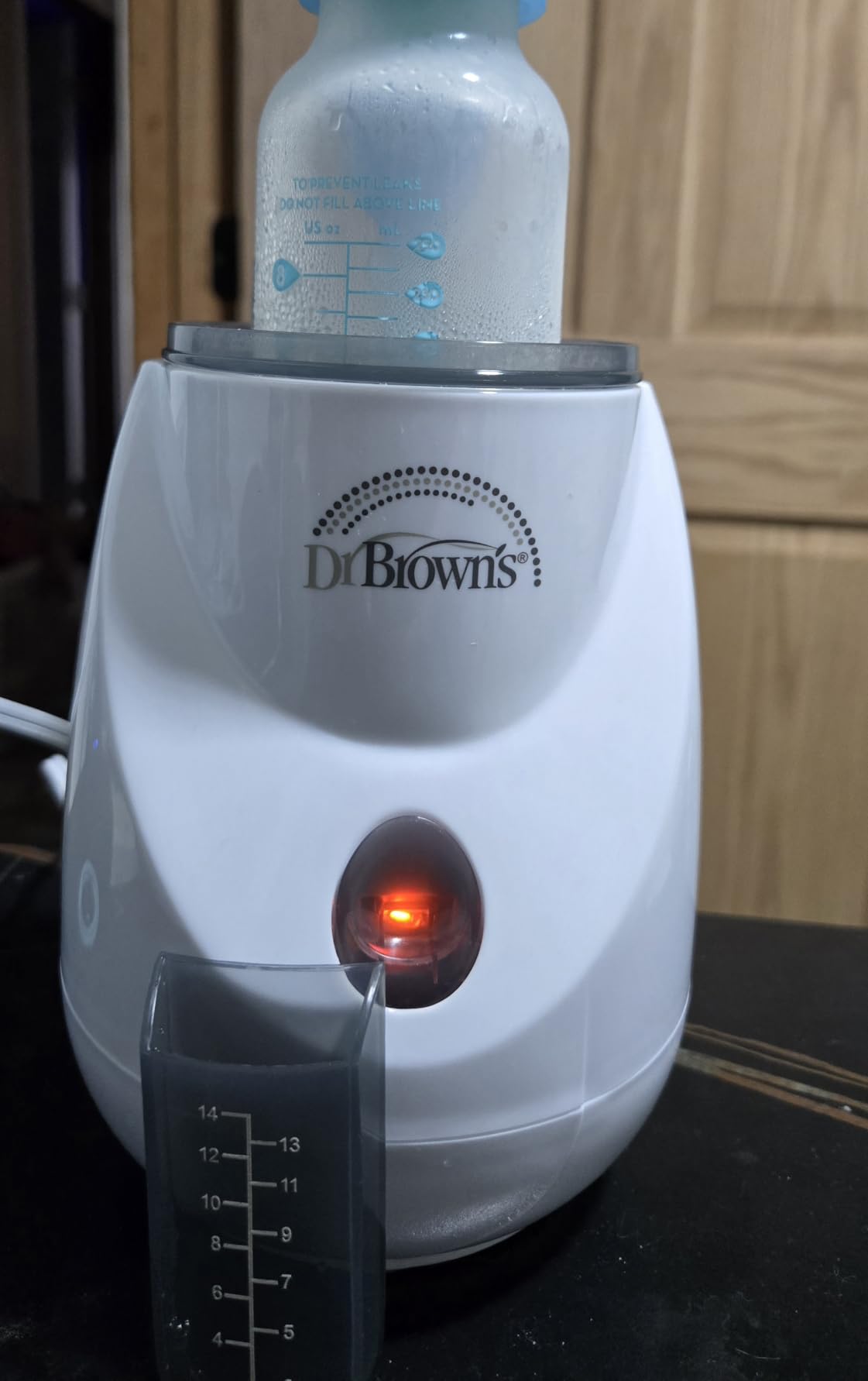
Warms in as little as 80 seconds
Built in sterilizer
Removable adapter ring
Compact countertop design
This unit posts the shortest warm time of anything we tested, warming glass or plastic bottles and food jars in as little as 80 seconds using gentle steam. When the fastest option still loses is to a crying baby at 3am, 80 seconds is the number that matters more than any feature list.
The sterilizing function is the second argument for it. It eliminates 99.9% of bacteria, mold and thrush-causing yeast in the same chamber, which lets a single countertop appliance cover the daytime sanitising job as well as the night warming job.
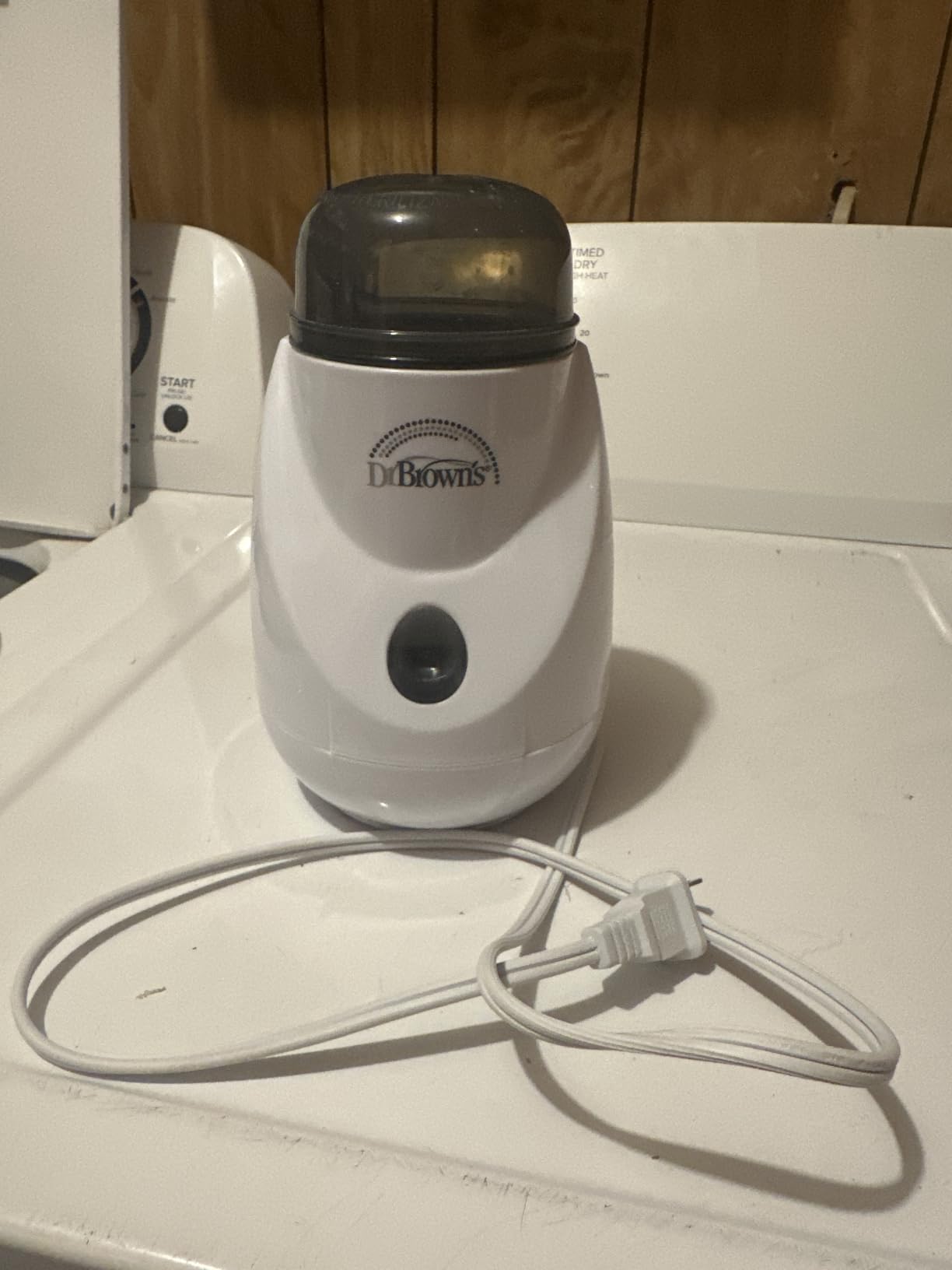
That is a best case on a small bottle at a warm starting temperature. Larger volumes and milk straight from a cold fridge take longer, so treat 80 seconds as the floor of the range rather than the average. In practice we found it the fastest option for a 4-ounce bottle and much closer to the field for a full 8 ounces.
Here is the reason this warmer sits lower on a night-specific list despite the speed. There is no keep-warm setting and no timer, so you cannot pre-warm for a feed that is not happening yet. That is a meaningful gap when the plan is to have a bottle ready before baby wakes, and it is the most common complaint in the reviews.
The removable adapter ring and the fit for all Dr. Brown’s bottles make this the safe pick for households already committed to that brand or to narrow bottles. Choose it when sterilising matters as much as warming. Skip it if your night strategy depends on a bottle waiting ready for an hour.
Cordless rechargeable, 8 milks per charge
17oz stainless steel tank
Milk 90/95/98F, water to 122F
1.5 hour fast charging
Every other warmer in this roundup needs a mains outlet, which means the cord has to reach your feeding spot. This one does not, and for a bedroom with a single socket behind a dresser that is the whole argument. It lives in a diaper bag or a car cup holder and warms milk wherever you are.
The battery figure is unusually well specified. It warms 4 ounces of refrigerated milk up to eight times per charge, or 4 ounces of water up to 19 times, and a 1.5-hour fast charge gets it back to work between bedtime and the early feed. The 17-ounce stainless steel tank also means one fill covers more than a single bottle.
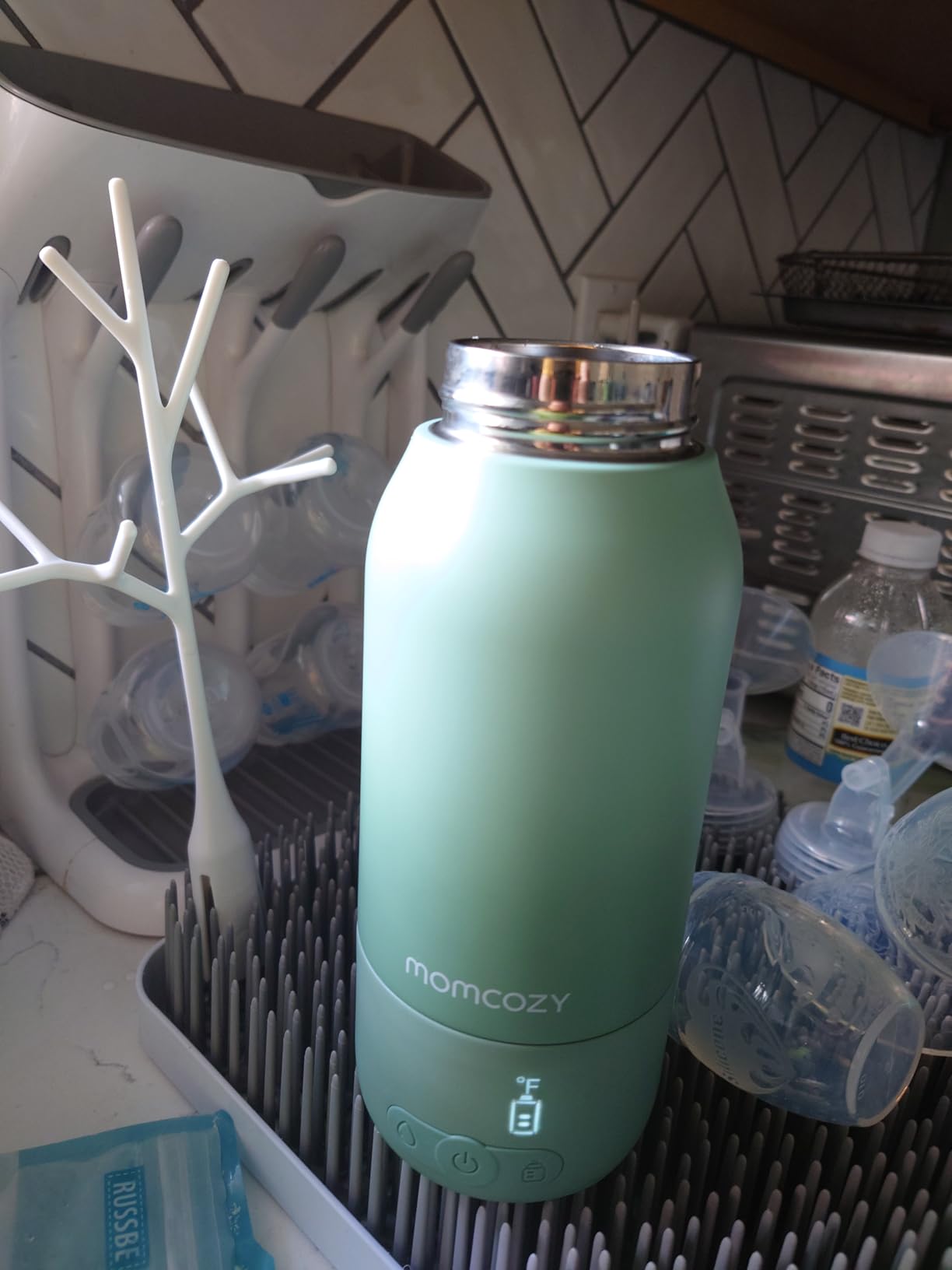
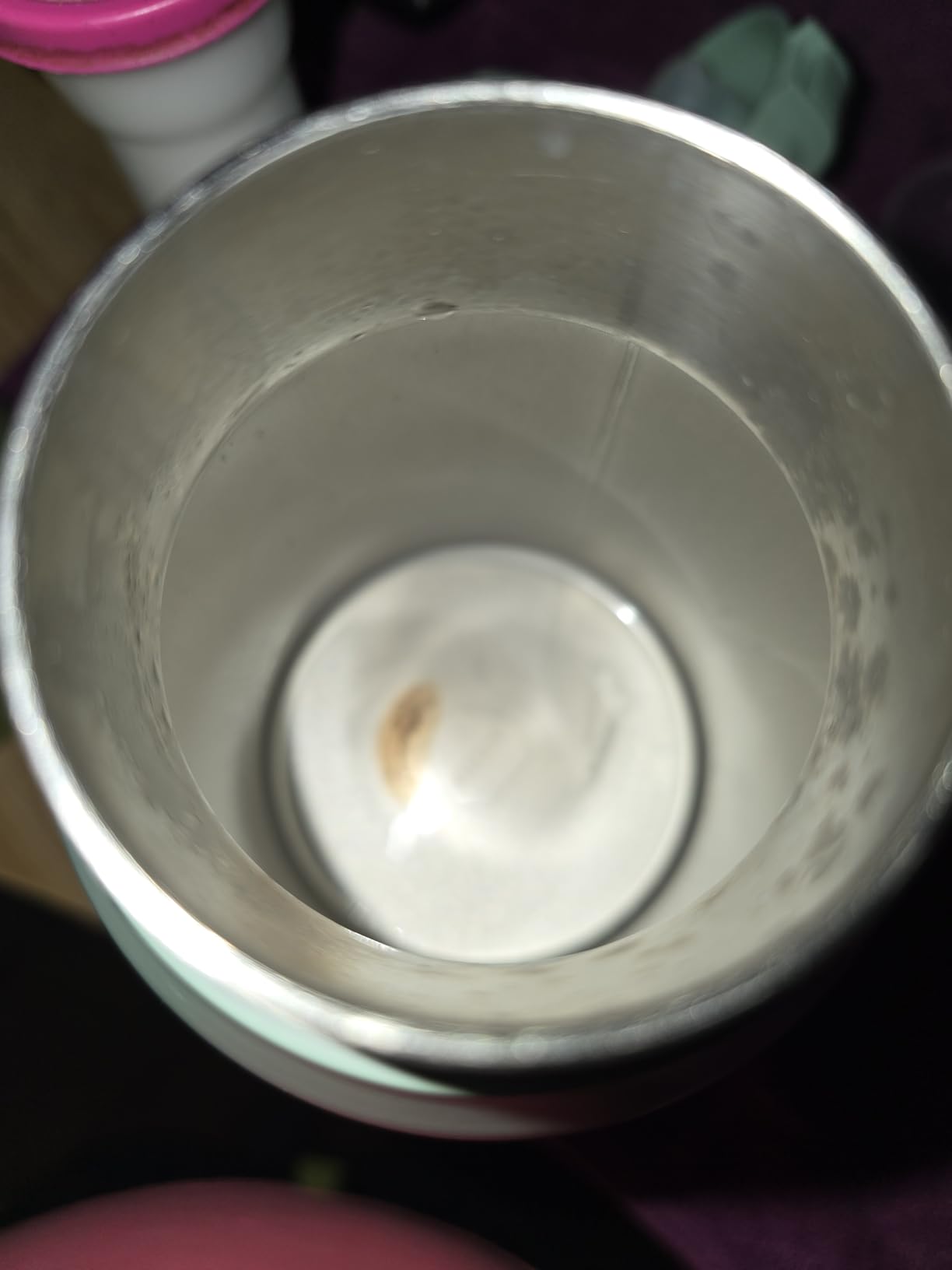
The milk settings run 90, 95 and 98 degrees F, and the water settings run 98, 104, 110 and 122 degrees F, so the same tank handles a bottle of expressed milk and a travel cup of water without guesswork. Milk reaches 98 degrees F in about four minutes from cold. Holding the power button for three seconds switches the display between F and C, which matters if your household thinks in one and the manual thinks in the other.
One-star reviews make up 11 percent of the total here, the highest share in this roundup, and that points to real reliability complaints rather than cosmetic ones. A separate issue worth checking immediately is the power adapter, since some units ship without one after a version update, and the included adapter is specific to this model.
This is the pick for parents who move between the bedroom, the car and grandparents’ houses, or for households with no usable outlet near the feeding chair. If your night feeding happens at a bedside with a socket within reach, a corded unit with a longer keep-warm window is the better investment.
Instant water in about 25 seconds
Built in night light
4 temps to 158F
Detachable 1 liter tank
This is an instant warm water dispenser rather than a bottle warmer, and the difference is the entire point. You fill a bottle with formula and water, set the unit to dispense at 98.6F, and the lever does the rest in about 25 seconds while a light comes on above the spout. No overhead light, no walking to a kettle, no waiting for a cycle.
The night light is the feature competitors in this category do not have, and it activates when you press the dispense lever rather than glowing constantly. For a nursery that has to stay dark, that difference in behaviour matters more than the number of temperature presets.
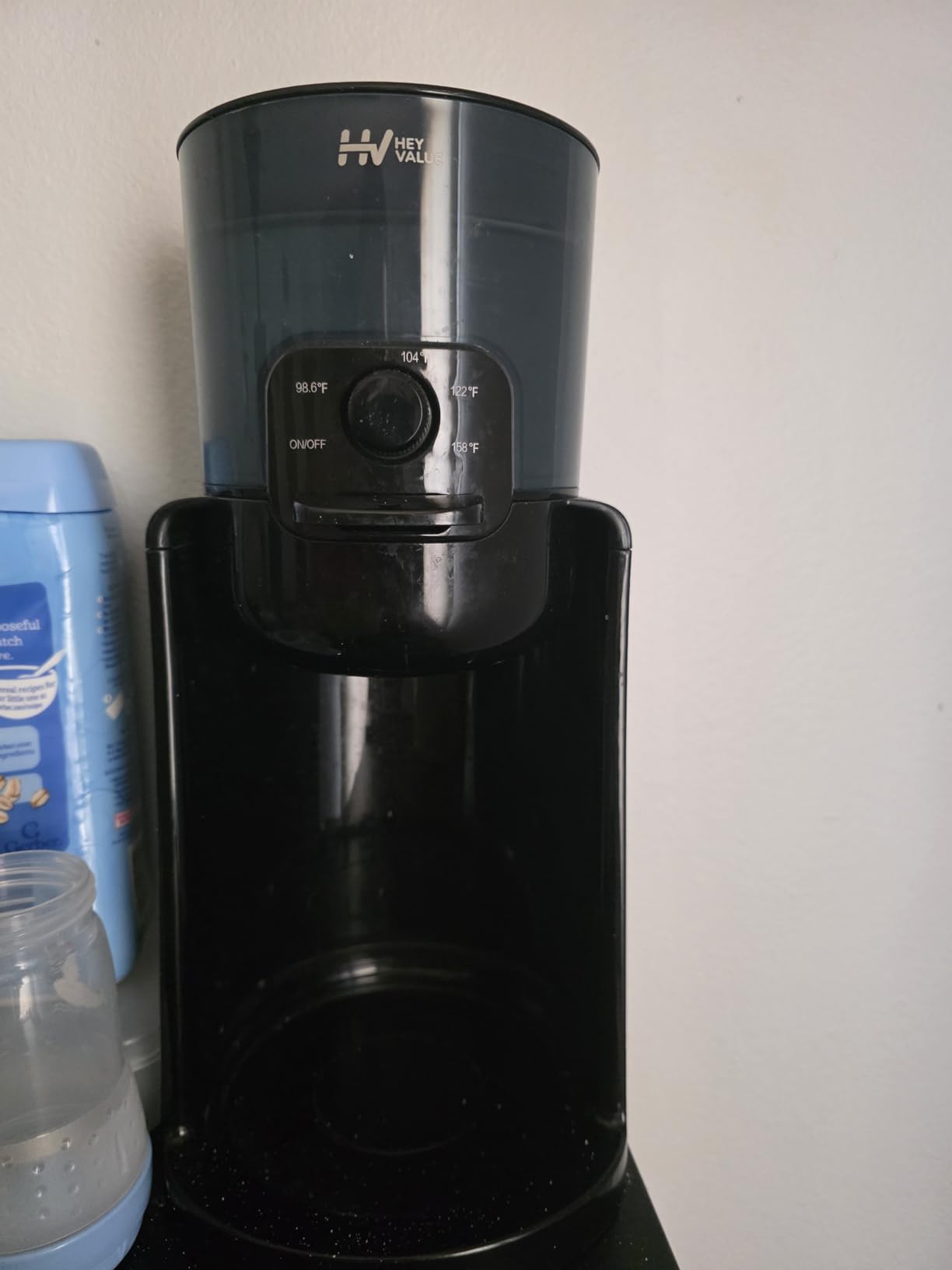
The presets run 98.6, 104, 122 and 158 degrees F, which covers a body-temperature bottle and also settings well past anything safe for an infant. Reviewers flag the 122 and 158 options as a scald risk if mis-set on a tired night, so mark the two you use and leave the rest alone. There is also no room-temperature setting on this model.
The detachable 1-liter tank lifts out for refilling and for thorough cleaning, which is the feature reviewers compare most favourably against fixed-tank dispensers that you have to wipe around. The trade is capacity: a liter is smaller than the larger premium dispensers, so a household running many bottles a day refills more often.
This suits a formula household in a dark nursery that wants water at temperature on demand with no warm-up wait. It does not suit a pumping parent with a bag of expressed milk, because it has no way to warm or hold milk itself.
2 to 5 min warm from cold
Intelligent heating by milk status
24 hour keep warm
One touch thaw mode
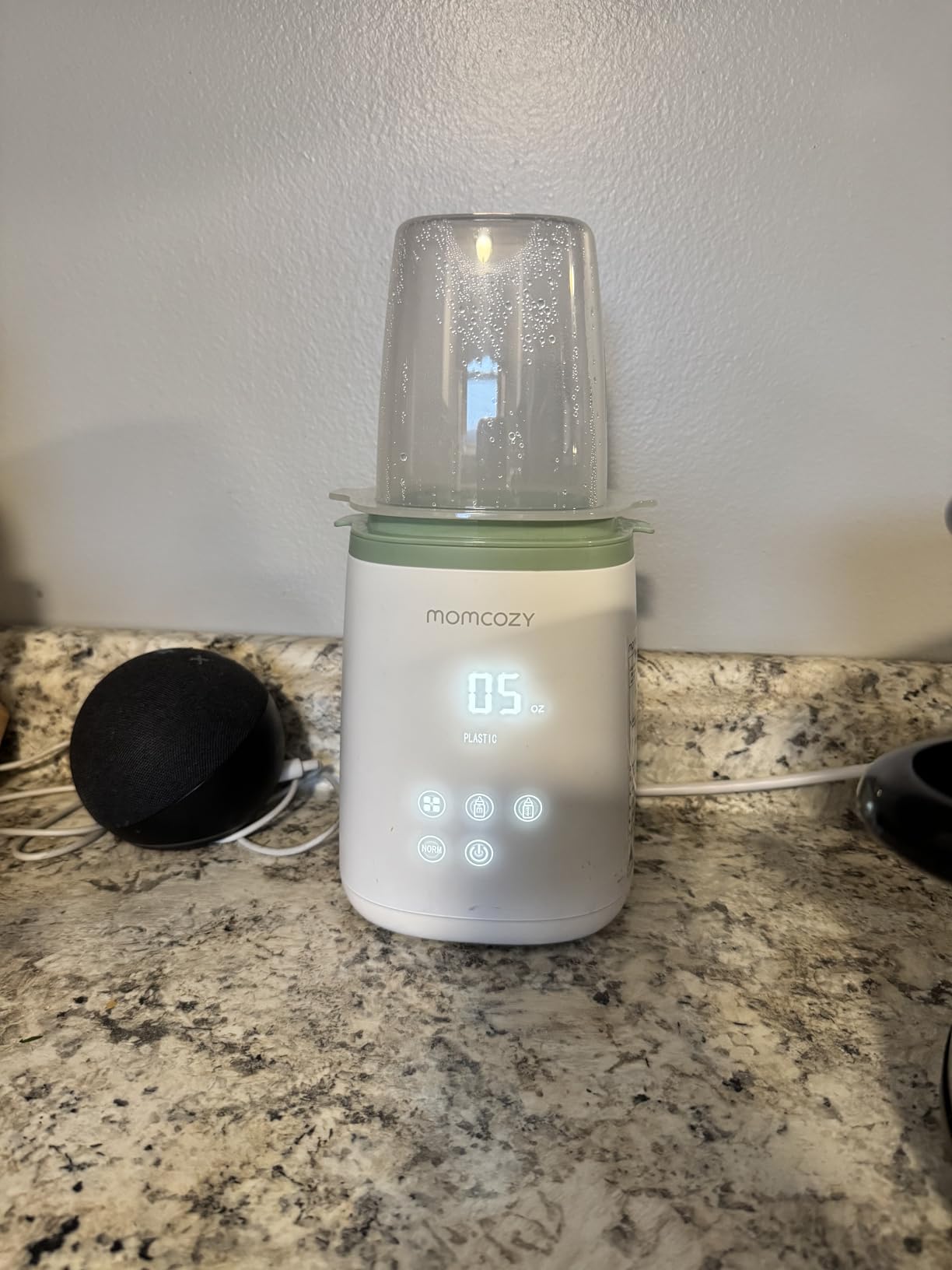
This is the model we would put in front of an exclusively pumping parent. Its intelligent heating reads the milk status, the bottle material and the volume, then targets a temperature close to mother’s breast milk rather than a fixed high number. For milk that is already partly separated, that distinction is the whole product.
The 24-hour keep-warm function is described directly as a night-feeding benefit, and one-touch thaw handles the frozen stash with an automatic hand-off to keep-warm so a bag does not sit cooling after it thaws. Cold-to-serving takes 2 to 5 minutes, roughly 30 percent faster than earlier models in the range.
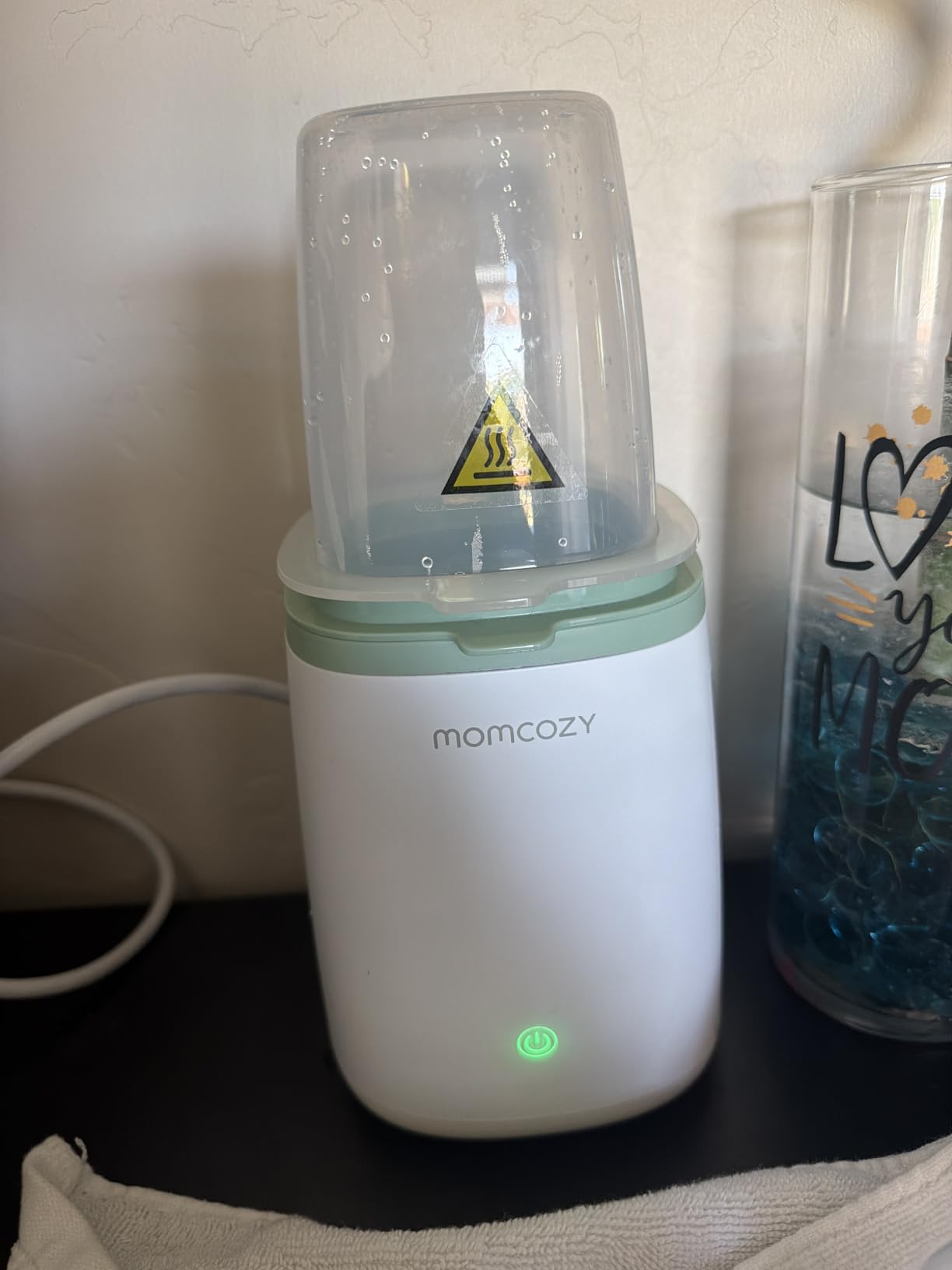
Night feeds are the hardest time to use frozen milk because a bag needs time nobody has at 2am. The dedicated thaw mode means you can move a bag from the freezer to the warmer earlier in the evening, switch to keep-warm, and have it at temperature when the first stir happens. That is a workflow argument more than a speed argument.
Both models share the brand name and both have a comparable one-star share, so reliability caution applies to either. The difference is power: this one is plug-in only, which suits a fixed bedside station, while the portable model runs on a battery. Choose by where the feed happens, not by the badge on the box.
It is a strong fit for pumping parents who rotate through a freezer stash, and for anyone who wants a sterilise function on the same unit at up to 212F. It is a poor fit for travel or for a feeding spot with no outlet nearby.
Warms on battery or plugged in
5 min from room temp to 104F
10oz stainless steel tank
80 percent charge in 1 hour
The feature that separates this from every other portable warmer is that it can warm while it is plugged in and charging. For a nightstand, that changes the failure mode. Instead of watching a battery percentage at 3am, you leave the unit on charge overnight and it is available even if the previous night’s use drained it.
The build is the other draw: a stainless steel inner container with no plastic, a leak-proof body that fits a diaper bag, and an LED showing both current and target temperature with a beep when it arrives. Owners also report responsive warranty support, including a replacement for a cracked lid.
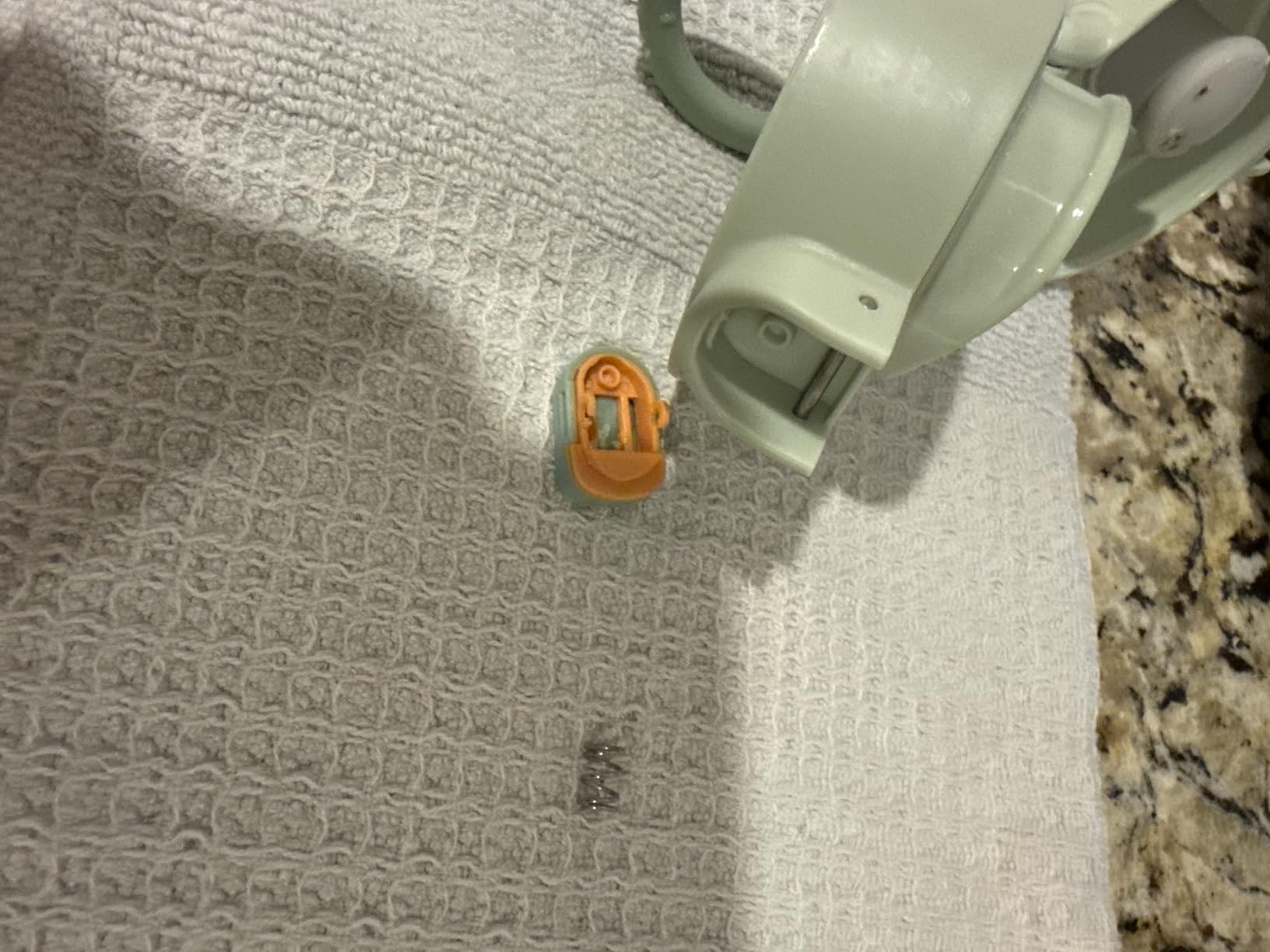
This is the unit with the smallest review base in the roundup, and the battery figure is where the data is thinnest. Reviewers report the battery draining after about two uses from full, which is meaningfully less than the eight milk warmings the cordless Momcozy claims. With the ability to warm on mains, that limitation is workable but worth knowing before you buy it for the bedroom.
Two issues recur: the actual temperature runs a little higher than the displayed reading, and the display steps in 7 degree F increments. A 7-degree step is coarse for infant feeding, since the difference between a safe warm bottle and an uncomfortable one is smaller than one step. Set the target a step lower than you want and let the beeps tell you when it arrives.
It suits parents who split nights between home, the car and travel, who want cordless flexibility but a unit that never becomes unusable when the battery is flat. It is the heaviest unit here at 2.16 pounds, so a diaper bag that already carries pumps will feel it.
Detachable 1.7L tank
Night light with on off switch
Temperature up to 158F
Food grade, no plastic smell
This and the Tommee Tippee share the highest star rating in the group, and the reason is the same: it does one thing without asking you to make decisions. The 1.7-liter detachable container is refilled and cleaned one-handed, which at 3am is worth more than another three functions on a dial.
It shares the night light idea with the HEYVALUE dispenser but adds a switch. Parents with a very light-sensitive baby can turn it off and still use the unit, which removes the main objection to having a light built in at all. The temperature display shows real-time values on a touch panel rather than a fixed set of mechanical presets.
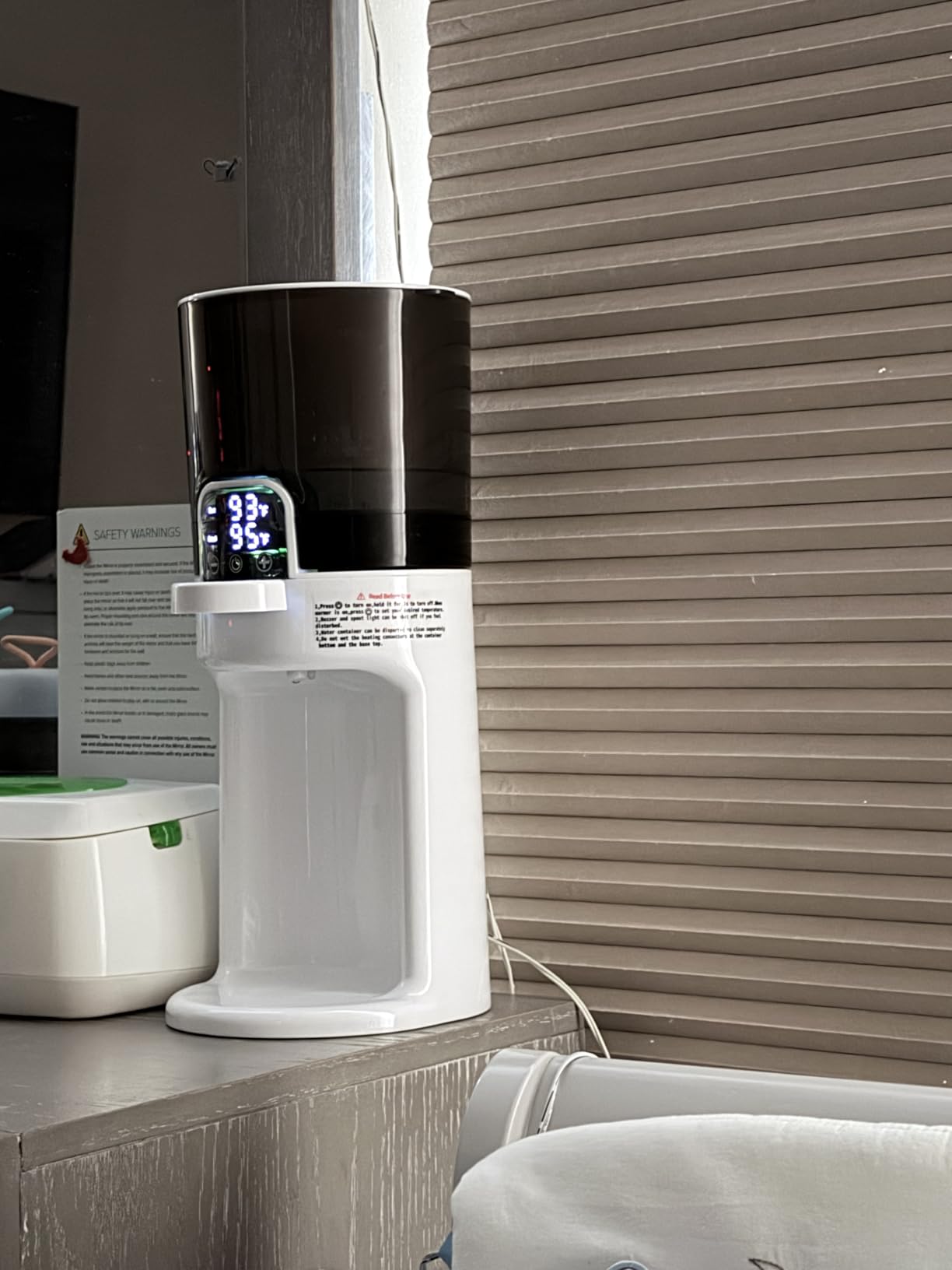
One and a half litres is the largest reservoir in this roundup, and for a formula household running many bottles a day it means the fewest refill trips of any unit here. That is a real advantage, but the counter space it occupies is also the largest, so measure the kitchen surface before you commit to an always-on dispenser.
Two cautions. The unit is 110V only, so it will not run on 220V mains in Europe or much of Asia without a step-down transformer. And the adjustable range reaches 158 degrees F, which is a scald risk if the setting is adjusted by someone who is not fully awake. Choose the setting once and leave it.
It fits a formula household that wants standing warm water, a large tank and a night light they can switch off. It does not fit a parent warming expressed milk, since it dispenses water and does not warm or store milk, and it is not a travel purchase.
Every warmer in this roundup heats milk. The differences that matter between 2am and 6am come down to a short list, and we ranked them by how often they decided the outcome during our testing.
A feed is rarely a straight line from cold bottle to baby. There is a diaper, a onesie, a burp cloth and sometimes a second feed. Milk that hits temperature and then waits ten minutes is the single most common failure in a night routine, which is why a 24-hour keep-warm mode, a 60-minute keep-warm window, or a standby hot water supply is worth paying for.
A bright backlit screen in a dark nursery wakes a light sleeper as surely as switching on a lamp. Look for a dimmable display, a lever-activated night light that is not glowing constantly, or a unit with no display at all. The Tommee Tippee and the Grownsy both fall into that last category, which is why they are the two we found easiest to operate fully in the dark.
Steam methods hiss, and a reservoir heating next to a newborn in a small room is audible. Water bath and stored-hot-water methods are quiet by comparison. If the baby sleeps in the same room as the feed, this deserves more weight than any steam-versus-bath argument made in daylight hours.
The Grownsy’s two-button interface is the benchmark. Every additional decision is a chance to mis-press at 3am, and features like app control were widely described in parent forums as gimmicks for exactly this reason. Smart features are useful at 9am and irrelevant at 3am.
Measure the surface and the distance to the nearest socket before buying. A large dual-bottle chamber on a narrow bedside table can push you into a cord that does not reach, which is how a warm 80-second steam unit ends up unused in a drawer.
This section is not a product section, but it is where a night-feeding guide earns its keep, because the mistakes happen when attention is lowest.
Warmed breast milk and formula should reach roughly 37 to 40C, which is 98.6F, close to body temperature. Before feeding, put a few drops on the inside of your wrist. If it feels neutral rather than hot, the temperature is right. Anything that feels sharp or hot on skin needs more time and a swirl.
Microwave warming creates hot spots, including pockets that can burn a baby’s mouth even when the outside of the bottle feels fine. The CDC advises against microwaving breast milk or formula for this reason. Every warmer in this roundup heats with steam, circulating water, dry contact or stored hot water, which is the entire reason to use one.
No appliance should run unattended through the night as a matter of routine. The safer pattern is a standby function that holds a set temperature, not a full heat cycle, and choosing a unit with an auto shutoff and a keep-warm timer that ends on its own. We also weighed a small light we could clip on rather than relying on a glowing display to find the unit in the dark; our notes on rechargeable headlamps for night use cover brightness and beam control.
Prepared formula that has not been used within about two hours of preparation should be discarded, and touched milk should be used within about an hour. A keep-warm function protects a bottle during a single feed, not across a whole night. That is the line that parents most often blur at 4am.
Expressed breast milk is best kept at body temperature or cooler, and gentle circulating water or a dry-contact unit is the gentlest way to get there. Formula tolerates a wider range, and the real difference is workflow rather than temperature: a warm-water dispenser suits a household mixing fresh formula, while a bottle warmer suits a household using already-prepared bottles or stored milk.
Parent forums split cleanly on this, and both sides describe a real household. Some parents call a warmer a waste of money and use a temperature-controlled kettle with a bowl instead, which costs nothing and takes about two minutes. Others report that a modest warmer transformed their two-to-three-hour feeding intervals by removing the trip to the kitchen.
Both experiences are consistent once you account for how many feeds happen at night. If you settle a bottle before bed and then run cold water under the tap for a small bottle, a warmer adds little. If you are mixing formula in the dark, or warming a bag of expressed milk at 3am with the room lights off, the speed and the control are worth something real.
There is a fair middle argument too. A stored-hot-water flask costs a fraction of an electric unit, needs no outlet, survives travel and does exactly one job. If you are undecided, that is the least wasteful place to start, and it is our budget pick for that reason.
The warmer is the small part. What actually removes the 3am trip to the kitchen is a station, and ours took about ten minutes to build.
If you are also planning what the baby drinks from, our reusable bottle set guide covers the wide-neck and standard shapes that decide whether a given chamber will fit.
You are in the cordless column, and the choice narrows quickly. The Momcozy portable runs up to 8 refrigerated 4-ounce milk warmings per charge, and the BOLOLO can warm while it charges, which removes the flat-battery failure mode. Everything else on this list needs a mains socket within reach.
Look for a dedicated thaw mode and a long keep-warm window, because the sequence is thaw first, then hold, then feed. The Momcozy fast heating model does both in one unit. Gentle circulating water matters here, because dry contact and steam both apply more concentrated heat to the bottle surface.
You want water at temperature on demand, not a bottle warming cycle. A dispenser that heats water in about 25 seconds and holds it on standby removes the wait entirely. The two to consider are the HEYVALUE, which is smaller and has a lever-activated light, and the Bellababy, which has a larger tank and a light you can switch off.
A dual-bottle chamber is the shortest path. The Grownsy double warms two bottles in a 3-to-7-minute cycle and holds temperature overnight, which matters if two caregivers are splitting shifts and neither wants to wait for a second cycle.
Skip the electronics. A thermal flask of hot water does the same job with nothing to plug in, nothing to charge, and no compatibility constraints, since it holds a bottle, a wide-neck bottle or a milk bag equally well.
Two units in this roundup include a sterilizing function. The Dr. Brown’s warms in as little as 80 seconds and sterilizes in the same chamber, and the Grownsy double adds steam sterilization for bottles and nipples. If your daytime routine already involves sanitising, folding it into the night appliance saves counter space.
No. Do not run a full heat cycle unattended overnight. Use a standby or keep-warm function that holds a set temperature and ends on its own, and choose a unit with an automatic shutoff timer. A bottle that stays warm for an hour through a diaper change is the safe use case; a warmer cycling all night is not.
It depends on how many night feeds you prepare from scratch. If you settle a bottle before bed and warm it under a tap, a warmer adds little. If you are mixing formula in the dark or thawing expressed milk at 3am, the speed and temperature control are worth a dedicated unit. A stored-hot-water flask is the cheapest way to find out which side of that line you fall on.
Aim for roughly 37 to 40C, which is 98.6F and close to body temperature. Test a few drops on the inside of your wrist before feeding; it should feel neutral rather than hot. If it stings, let the bottle stand and swirl it, since heat separates unevenly in a bottle that was microwaved or blasted directly.
Plan on 2 to 3 minutes for a 4 to 5 ounce bottle, about 3 to 7 minutes for larger volumes or milk straight from a cold fridge, and roughly 80 seconds at the fastest for small bottles in a steam unit. A stored-hot-water flask warms a bottle in a couple of minutes with no electricity at all.
They are safe when used as intended during a feed, with automatic shutoff and a keep-warm timer that ends on its own. They are not designed to cycle unattended for hours. Prepare bottles in the fridge rather than leaving milk to sit warm all night, and discard prepared formula that has gone unused for about two hours.
The recurring complaints are practical. Water-bath models need the reservoir emptied, refilled and measured between uses. Steam methods hiss near a sleeping infant. Bright displays and beeping alarms wake a light sleeper. Multi-function units with six to ten modes often do none of them well, and app-dependent controls are widely considered unnecessary at 3am.
If you want the single most capable unit for bottles, bags and jars with an even water bath, the Philips Avent Premium Fast is the one we kept on the nightstand most. If your feeding spot has no outlet within reach, the Momcozy portable is the only fully cordless answer, and the BOLOLO covers you if you want a unit that warms while it charges.
If you are mixing formula in a dark room, the Bellababy gives you the largest tank and a night light you can switch off, while the smaller HEYVALUE does the same job with a lever-activated light and less counter space. If your milk comes from the freezer, the Momcozy fast heating model handles thaw and keep-warm in one button press. If you feed twins or want a backup ready, the Grownsy double warms both bottles in a single cycle. And if you would rather not plug anything in at all, the Tommee Tippee flask costs the least, travels anywhere and stays hot through a whole night.
Whichever one you choose, run a full feed in daylight before you need it at 3am. Every warmer here behaves differently enough that one rehearsal removes most of the guesswork from the night that matters. These picks reflect our own comparison of ten warmers, so check the latest listing details before you order.