Physical Address
304 North Cardinal St.
Dorchester Center, MA 02124
Physical Address
304 North Cardinal St.
Dorchester Center, MA 02124

A racing style gaming chair looks the part, but looks are the least interesting thing about it. The reason to buy one instead of a standard office chair is geometry: the side bolsters hold your shoulders and hips in place when you load up a corner, the raised seat edge keeps your knees at a workable angle, and the backrest holds a set angle while your hands are busy. I spent several months putting the best racing style gaming chairs for sim racing through desk setups and wheel stands, comparing how they behave under load-cell braking rather than how they look in a product photo.
Before we get into the list, one thing needs saying plainly. About half of what follows are bucket seats and cockpits you bolt a wheel to, and the other half are rolling racing style gaming chairs meant for a desk. That is not a flaw in the list, it is the reality of the category. A desk chair is the right answer for console racers on a PS5 and for anyone who works at the same desk eight hours a day. A bolted seat is the right answer once you own a direct-drive wheel and start caring about brake consistency. If you are still choosing, our office chair guide for gaming and work covers the ergonomic end of the market.
I have ranked everything below by how well it holds a driver in position, how rigid the base is, and whether the seat height can be matched to a pedal set. Those three things decide whether a braking point is repeatable. Everything else, including the headrest pillow, is decoration.
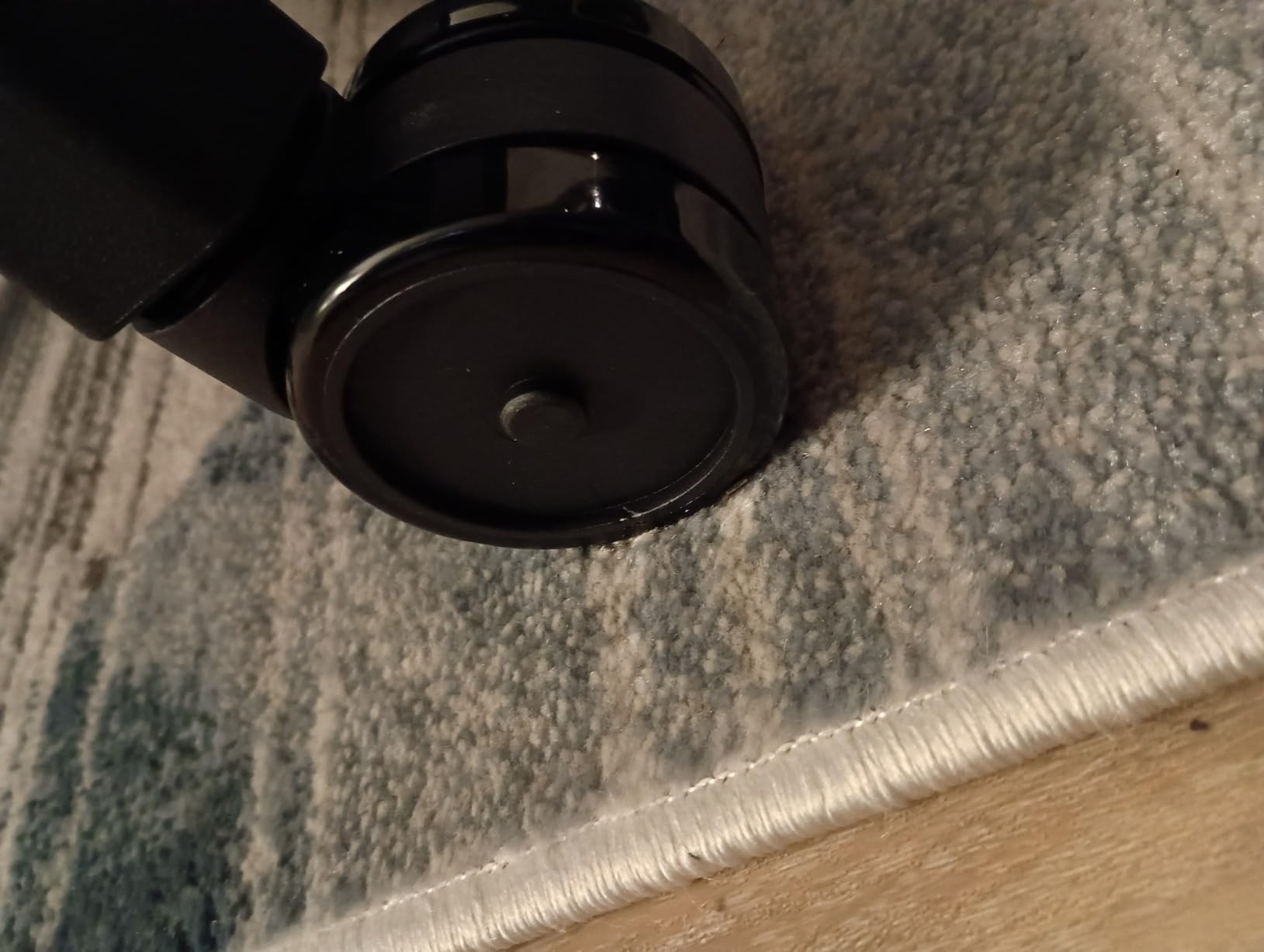
Yes. A gaming chair works for sim racing as long as you can lock it in place, and the locking is the part people skip. A rolling office-style base lets the whole chair creep backwards when you hit a load-cell brake, which changes the feel of every stop and makes a rig feel unsafe. If you have a wheel stand or a desk-mounted wheel, put locking casters under the chair or fit a strap between the chair and the wheel frame.
That advice comes straight from the sim racing community rather than a spec sheet. A long-running OverTake.gg thread on office chairs for sim racing has owners describing exactly this problem, including one user who runs webbing straps with carabiner clips between the chair and the stand because cheap quick-release buckles pop open under load. Another OverTake.gg poster has kept the same gaming chair for five years after swapping its rolling casters for fixed feet, precisely so it will not roll while braking.
What a chair cannot give you is rigidity. A bolted carbon steel cockpit transmits every Newton-meter a direct-drive wheel produces. A chair on a five-star base absorbs some of it, and that is fine for a budget wheel and terrible for a high-torque unit. Know which one you are running before you pick.


Every pick below appears in this table with the specification that matters most for pedal geometry and support. No competitor publishes a full seat height range for this category, so where a manufacturer has not stated one we say so rather than guessing.
| Product | Features | |
|---|---|---|
| GTRACING Racing Style Gaming Chair |
|
Check Latest Price |
| Playseat Trophy Logitech G Edition |
|
Check Latest Price |
| Playseat Challenge Actifit |
|
Check Latest Price |
 GTPLAYER Big and Tall Racing Bucket Chair GTPLAYER Big and Tall Racing Bucket Chair |
|
Check Latest Price |
 Next Level Racing ERS3 Elite Series Seat Next Level Racing ERS3 Elite Series Seat |
|
Check Latest Price |
 NRG Innovations FRP-301 Fiberglass Bucket Seat NRG Innovations FRP-301 Fiberglass Bucket Seat |
|
Check Latest Price |
 ARES WING Racing Simulator Cockpit ARES WING Racing Simulator Cockpit |
|
Check Latest Price |
 cirearoa Sim Racing Cockpit with Seat cirearoa Sim Racing Cockpit with Seat |
|
Check Latest Price |
 RACGTING Foldable Racing Simulator Cockpit RACGTING Foldable Racing Simulator Cockpit |
|
Check Latest Price |
 OpenWheeler Advanced Racing Simulator Seat OpenWheeler Advanced Racing Simulator Seat |
|
Check Latest Price |
 WOTSTA Racing Style Chair with Footrest WOTSTA Racing Style Chair with Footrest |
|
Check Latest Price |
 Goplus Massage Racing Style Recliner Goplus Massage Racing Style Recliner |
|
Check Latest Price |
We earn from qualifying purchases. CERTAIN CONTENT THAT APPEARS ON THIS SITE COMES FROM AMAZON. THIS CONTENT IS PROVIDED 'AS IS' AND IS SUBJECT TO CHANGE OR REMOVAL AT ANY TIME.
Reclines 90-155 degrees
Class 3 gas lift
3D armrests
Adjustable headrest and lumbar
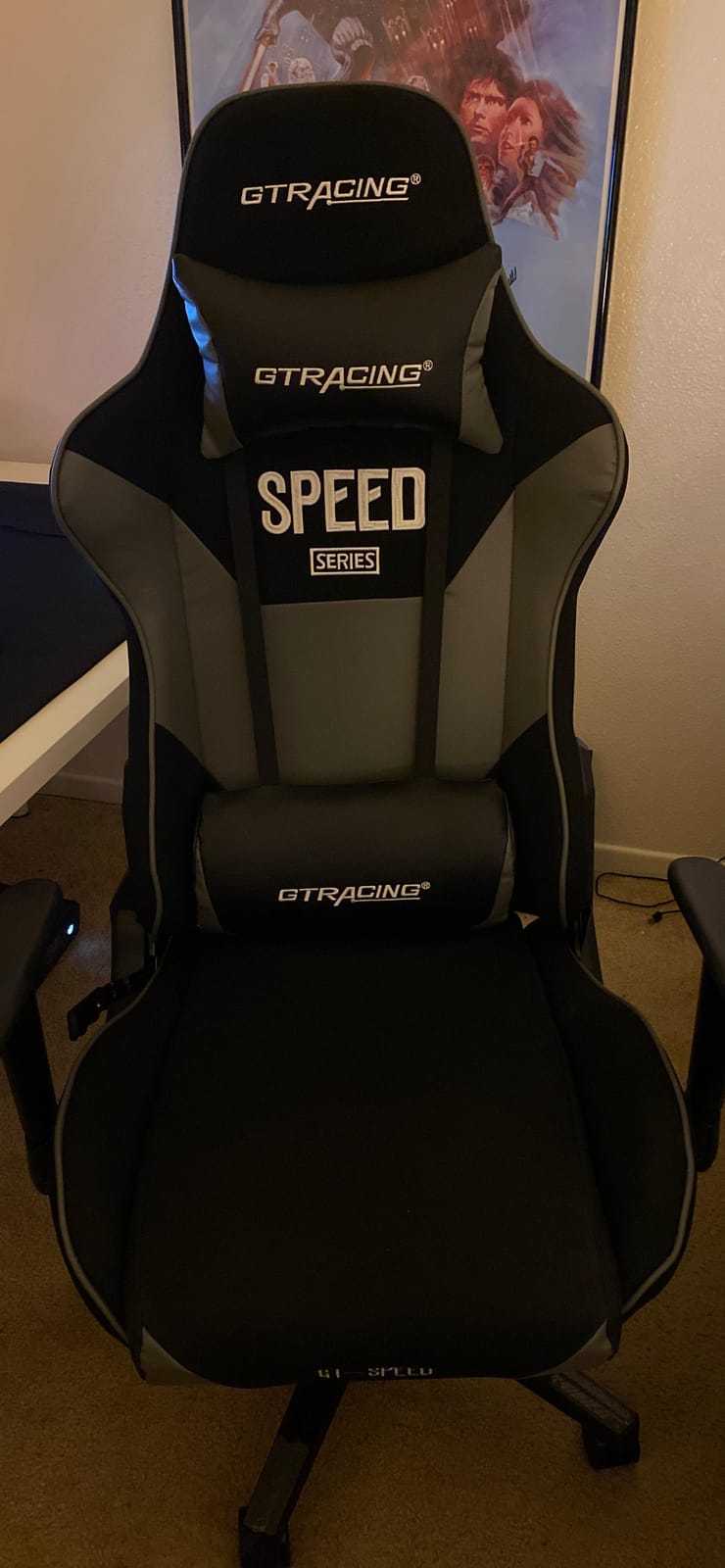
This is the chair I recommend first to anyone whose sim racing happens at a desk, and the reasoning is unglamorous. The recline runs from 90 to 155 degrees, which is the widest range in this group, so you can sit upright for a qualifying lap and drop back between stints without leaving the seat. The 3D armrests adjust in multiple directions, which matters when the desk edge is at a fixed height and the armrests are what stop you drifting toward the wheel.
Height comes from a Class 3 gas lift, and that gives you the one lever that decides pedal angle. Push it up and your knees rise relative to the pedals; drop it and your legs extend. Neither extreme is correct, but having continuous control is what lets you match your wheel stand to your body rather than working around it.
The 90 to 155 degree sweep is genuinely useful in a way spec sheets usually miss. Most gaming chairs stop around 135 degrees, which is upright enough to work at and too upright to rest in. At the top of this range you can sit back during a formation lap or a pit stop screen and still be in position when the next stint starts.
The trade-off is that the same mechanism that lets you recline also means the backrest can move when you load it up. With a rim or a mid-torque wheel, check the wheel torque setting before you lean on it.
The separate lumbar cushion and adjustable headrest are the features owners mention most, and they are the reason this chair works for a dual-purpose desk. A pillow on a racer bucket can slide out mid-corner; a fitted lumbar support stays where it is.
One owner in the broader set of reviews for racing style chairs reports that a cheap gaming chair destroyed his lower back over an eight-hour workday, and that the fix was a genuinely supportive ergonomic seat rather than another bucket. If sciatica is in your history, test this one for a full working day before committing.
There are no wheel or pedal mounting points, so this is a desk chair and nothing more. If your setup is a wheel stand, that is fine. If you are planning a direct-drive wheel and a proper rig later, this chair is a desk seat for the days in between.
PU leather also runs warm. Over a two-hour endurance race in a warm room you will feel it, and mesh panels would be the single biggest upgrade you could not make without replacing the chair.
37 lb carbon steel frame
Boltable wheel and pedal plates
Adjustable lumbar
163 kg capacity
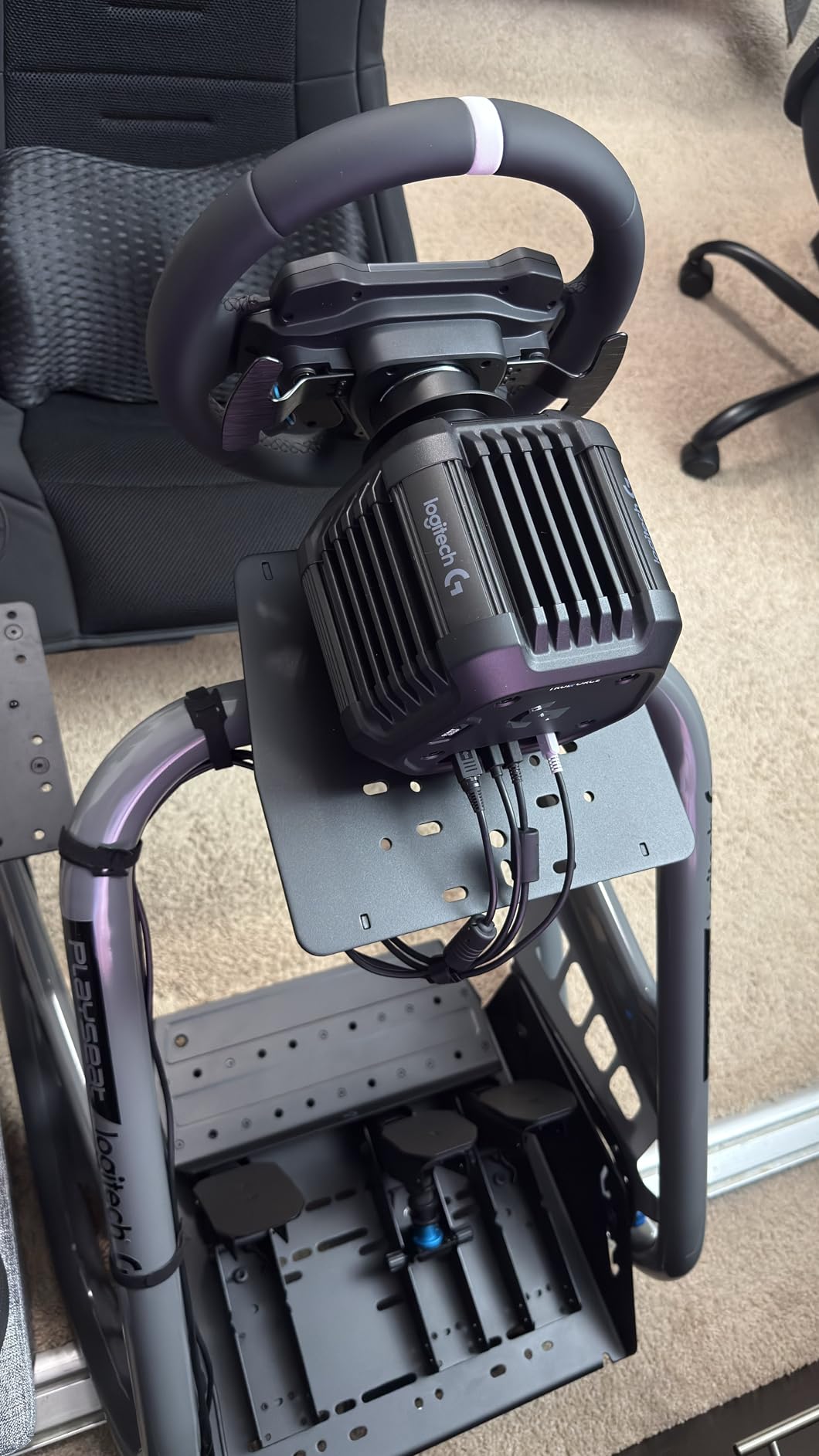
The Trophy is the pick for anyone whose wheel can genuinely hurt. Owners describe standing on the brakes with no measurable frame flex, and that rigidity is the whole point. A direct-drive wheelbase with a torque setting above about 6 Nm will feel meaningfully different bolted to a carbon steel frame than it will through a desk chair base or a folding tube rig.
At 37 pounds it is also the easiest cockpit in this list to move. It rolls on its own casters with the wheel and pedals attached and can be stood on end, which matters in a flat you use for other things.
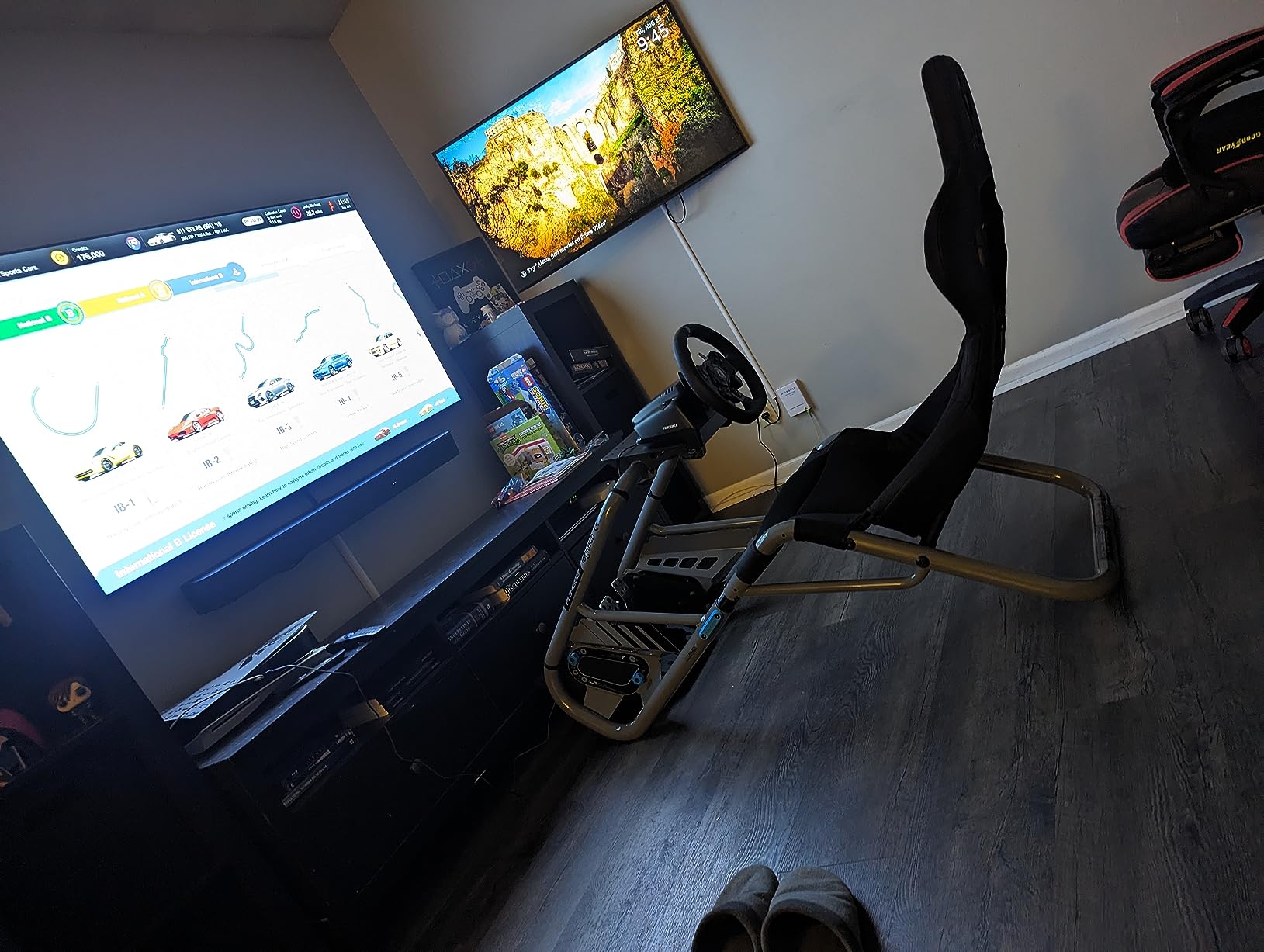
The frame is lightweight carbon steel with a powder-coated finish and anodised aluminium hardware, and the wheel and pedal plates bolt down rather than clamp. Once you have set your position and tightened the bolts, nothing moves. Repeatability across a two-hour stint comes from exactly this: the same input produces the same output because nothing is flexing under you.
The pedal plate tilts forward and back and moves up and down, so you can set a knee angle that suits you rather than one dictated by the frame. For load-cell users that consistency is the difference between a brake pressure you can learn and one you cannot.
The backrest reclines separately from the seat and has its own adjustable lumbar support, which is rare at this level. The Actifit foam is reported as comfortable and it dissipates heat, a real advantage over solid PU over a long race.
The compromise is getting in and out. The deep seat and low hip point make this awkward for older or larger drivers, and the lower and mid-back support is thin enough that tall drivers often add extra lumbar padding. If you are 6 foot 3 or above, budget time to test the shoulder area before you commit.
8.5 kg total weight
Folds in about 10 seconds
Adjustable seat and pedal plates
Drivers 120-220 cm
This is the answer for a small apartment, a shared room, or anyone who cannot justify leaving a full footprint of aluminium on the living room floor. It weighs 8.5 kg and folds or sets up in about ten seconds with the gear still attached. That single number changes how often you actually race.
Owners consistently position it as a step up from a desk chair rather than a step toward a full rig. It suits a belt-and-pedal-force setup, a Thrustmaster T248, or a Logitech entry wheel, and it pairs fine with a PS5 or an Xbox.
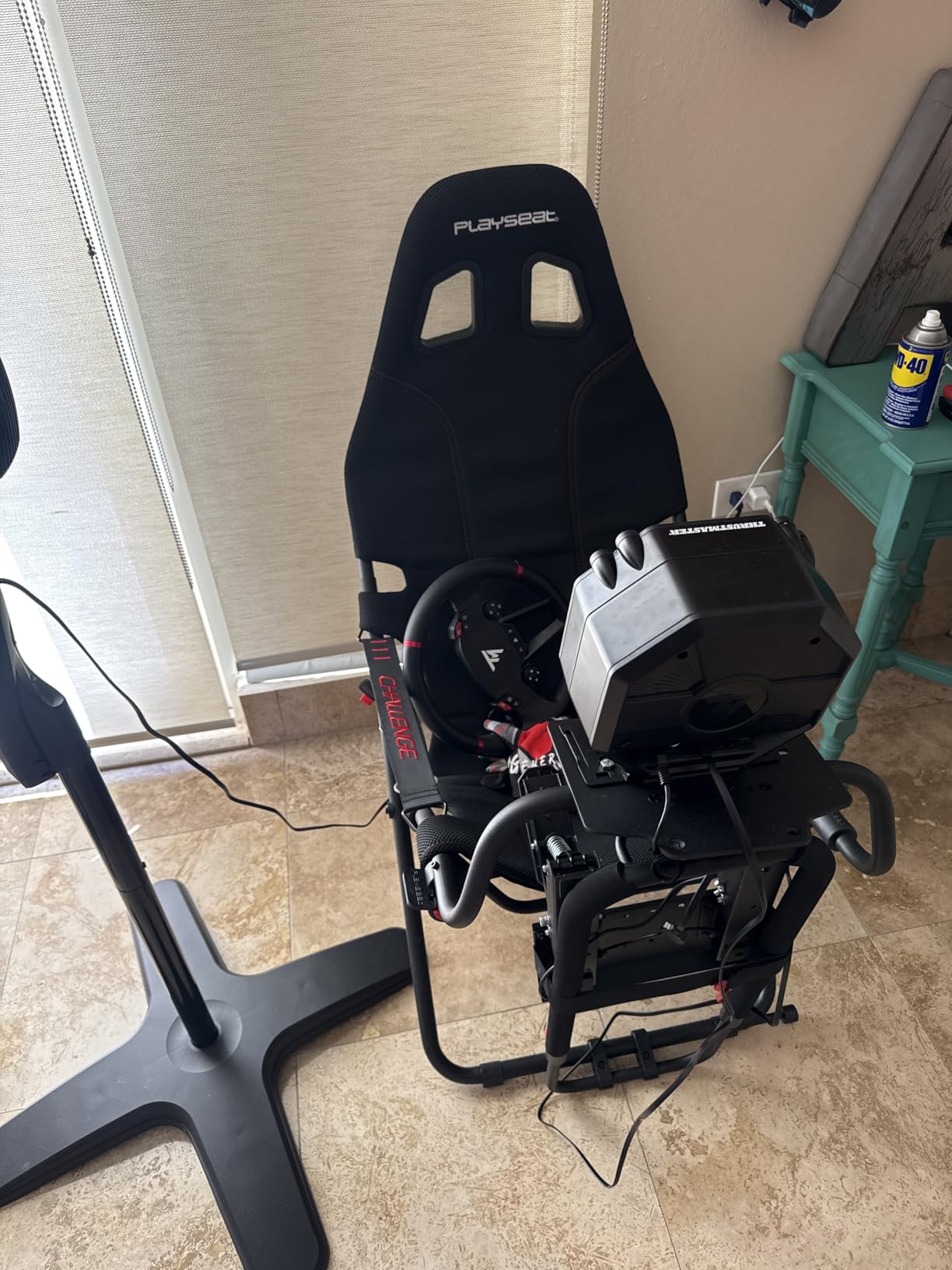
The fold is not a gimmick. Storage is the reason most people never build a proper cockpit, and a rig that disappears between sessions gets used far more often than one that dominates a room. The seat and pedal plates adjust between an F1-style position and a GT-style one, so the same frame covers open-wheel and endurance games.
Recommended driver height runs from 120 to 220 cm, which is one of the widest published ranges in this category and makes it a safe choice for a household where more than one person drives.
Here is the honest limitation. A frame this light and this folding transmits less force feedback than a rigid steel cockpit, and it is not the right platform for a high-torque direct-drive wheelbase. Owners of entry and mid-level wheels report it feels fine; owners of direct-drive units tend to move on once they need brake consistency at the limit.
Lumbar and recline adjustment are also basic. Over a short session you will not notice. Over a three-hour endurance race you will, particularly in the lower back.
400 lb capacity
Dual-stage foam cushion
Mesh panels in wings and back
Retractable steel footrest
Most racing style gaming chairs are designed for a narrow slice of body sizes, and the most common complaint in reviews of this genre is that the bolsters squeeze you. This one is built the other way round, with a 400 lb rating, a high-wrap bucket shape and thickened side bolsters intended for larger frames.
It is also the only chair in this group with genuine airflow in the wings and back. Over a long stint that matters more than most people expect, and it is the feature that separates it from the all-PU designs.

The cushion is a plush top layer over a firm supportive base, which is a sensible way to build a seat you sit in for hours. The soft layer takes pressure off your sit bones and the base stops you bottoming out when you load up on a kerb or a bump. The adjustable pocket spring lumbar pillow is a genuine spring rather than foam, and owners replacing the flat stock pillow report a real improvement in lower back relief.
The backrest locks anywhere from 90 to 150 degrees. That is a useful range for a desk chair, and a wide window to find a driving angle that keeps your head over the wheel.
Mesh panels in the side wings and back, combined with PU leather elsewhere, make this the coolest-running chair here. Anyone who sweats through a two-hour race will notice the difference immediately, and it is the honest answer to the breathability question that almost no editorial competitor covers.
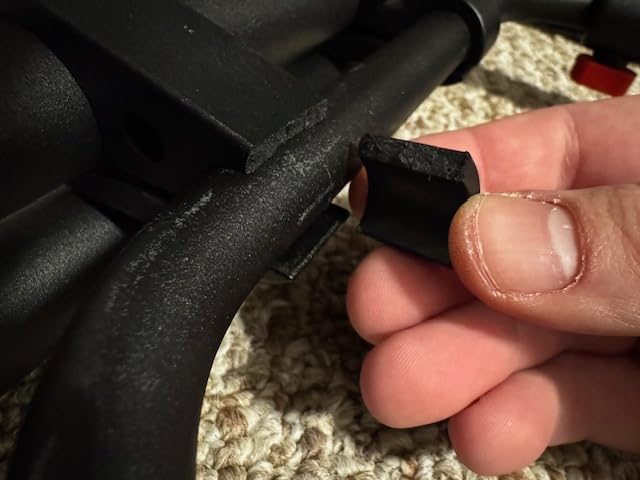
The durability story is weaker. The armrests mount on L-brackets that loosen repeatedly and need weekly tightening, and owners report the armrest upholstery and plastic caster housings delaminating or cracking after roughly two years. The cushion foam also eventually compresses. Plan on treating the armrests as consumable and checking them before a race weekend.
Double recliner mechanism
Open-feel seat shape
Wide cushioning for larger drivers
Side mount bracket fitting
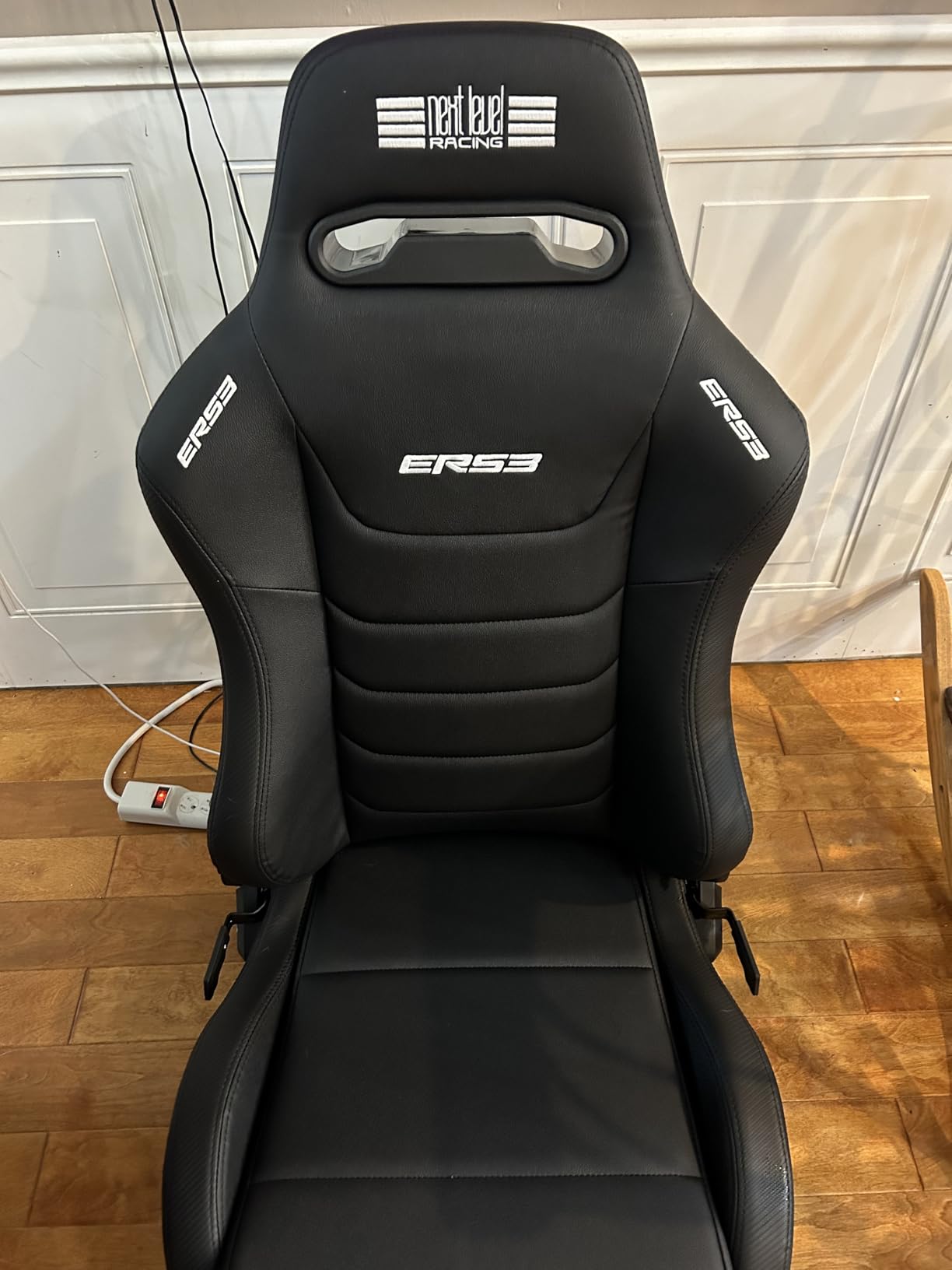
This is the seat to look at if a narrow F1-style bucket pinches your shoulders. The ERS3 is deliberately open-feel, sized and shaped for GT cars, trucks and farming sims as much as open-wheel, and the wider seating area means most drivers can sit in it without feeling held in place.
The double recliner mechanism is the reason it belongs here. Two recliners acting on the backrest make it markedly stiffer than a single-hinge seat, and owners report it holding completely rigid under load-cell braking, including setups with a 200 kg load-cell brake and a 100 kg driver.
When a load-cell brake is pressed, the load path runs through your spine into the backrest and then into the frame. A single-recliner backrest flexes measurably under that, and the flex reads to the driver as brake inconsistency. Two recliners spread the load and largely remove it.
Several owners specifically report this seat solving lower back pain they had with narrower seats. If you have sciatica or a history of back problems, a rigid open seat is a better bet than a soft compact bucket.
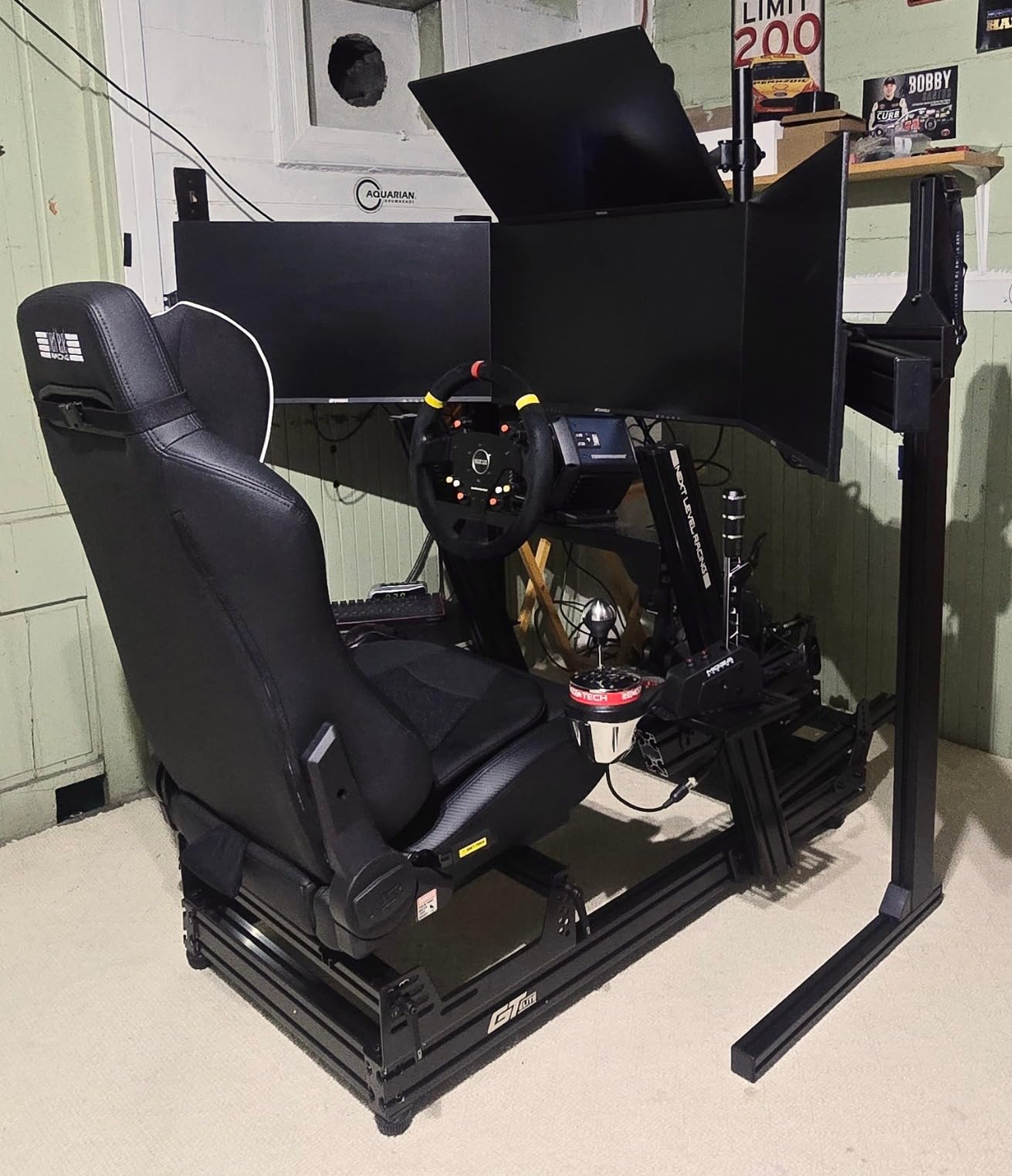
It bolts to Next Level Racing frames using side mount brackets, and the existing slider is used on most frame combinations, so it drops into an F-GT or GT Track setup. Custom frames work too, as long as you have standard side brackets.
Two practical notes. The seat slider is generally not included, so budget for that separately. And because it is a fixed seat rather than a folding cockpit, it stays where you put it, which is fine in a dedicated room and awkward in a shared one.
Fiberglass reinforced shell
23 inch shoulder width
Deep thigh bolsters
4-point harness holes
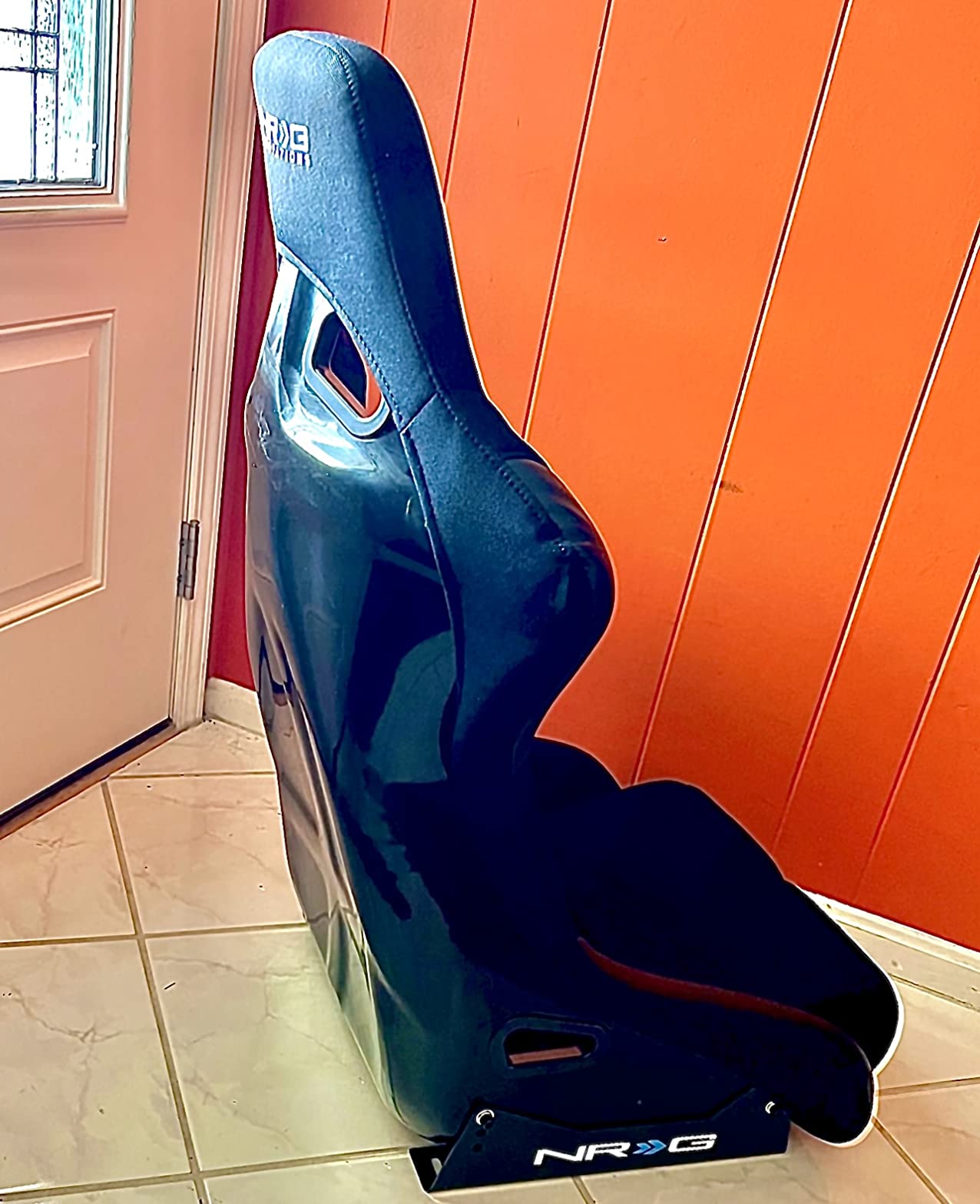
Everything else on this list is either a desk chair or a complete cockpit. This is a real automotive bucket seat that happens to bolt to a sim frame, and for some setups that is exactly what you want. The fiberglass shell takes standard side mount brackets, so it fits essentially any rig you build or buy.
It is also the coolest-running upholstery in the group. Woven microfiber over injection-molded foam breathes far better than PU or PVC, and it does not have the damp-back-of-legs problem that reviewers of cheaper leather chairs describe.
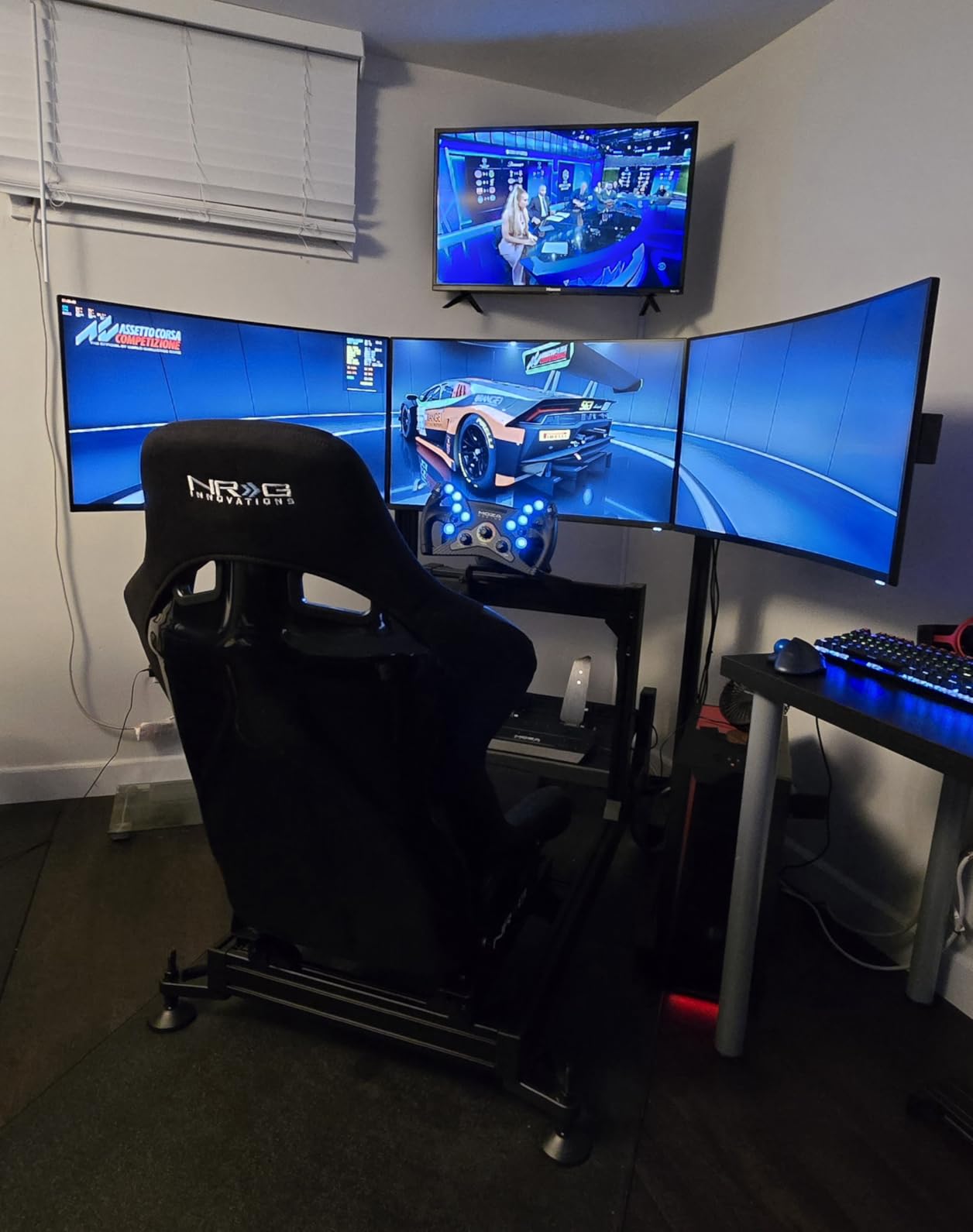
A fiberglass shell does not flex and does not creak the way a folding aluminium profile can. The side brackets are included, and the standard mounting pattern is what makes this seat so adaptable, but note that no seat slider is included, so you will need to source one or fix the seat to your frame directly.
One detail catches people out: the rear mounting hole sits high, which can make bracket alignment awkward on certain frames. Check your frame’s hole pattern against the seat before you commit to a build.
This is the large size at 23 inches across the shoulders, and it suits drivers roughly 5 foot 9 to 6 foot 1 for hours at a time. Beyond that range the shoulder area tightens, and owners around 6 foot 3 and 240 lb report it feels cramped. Measure before buying, because the small version is a different seat entirely.
The back is fixed, so there is no recline to adjust. That is a real limitation for anyone who wants to sit back between stints, and the lumbar is thin enough that many owners add their own cushion. For a driver who wants the race feel and nothing else, those are acceptable trade-offs.
Reinforced powder-coated steel frame
Eight non-slip support feet
7.1 inch seat slide
90-150 degree recline
Owners buy this as the step up from an entry-level folding rig, and the review profile reflects that: strong marks for frame rigidity, anti-slip stability and a wide adjustment range, with specific praise for holding a high-torque direct-drive wheel such as a Fanatec Pro.
It is a full-size fixed cockpit, not a folding one, and that decision buys the rigidity. The eight non-slip support feet under the seat base are the detail worth noting, because they directly address the shifting problem that rolling bases create under aggressive cornering loads.
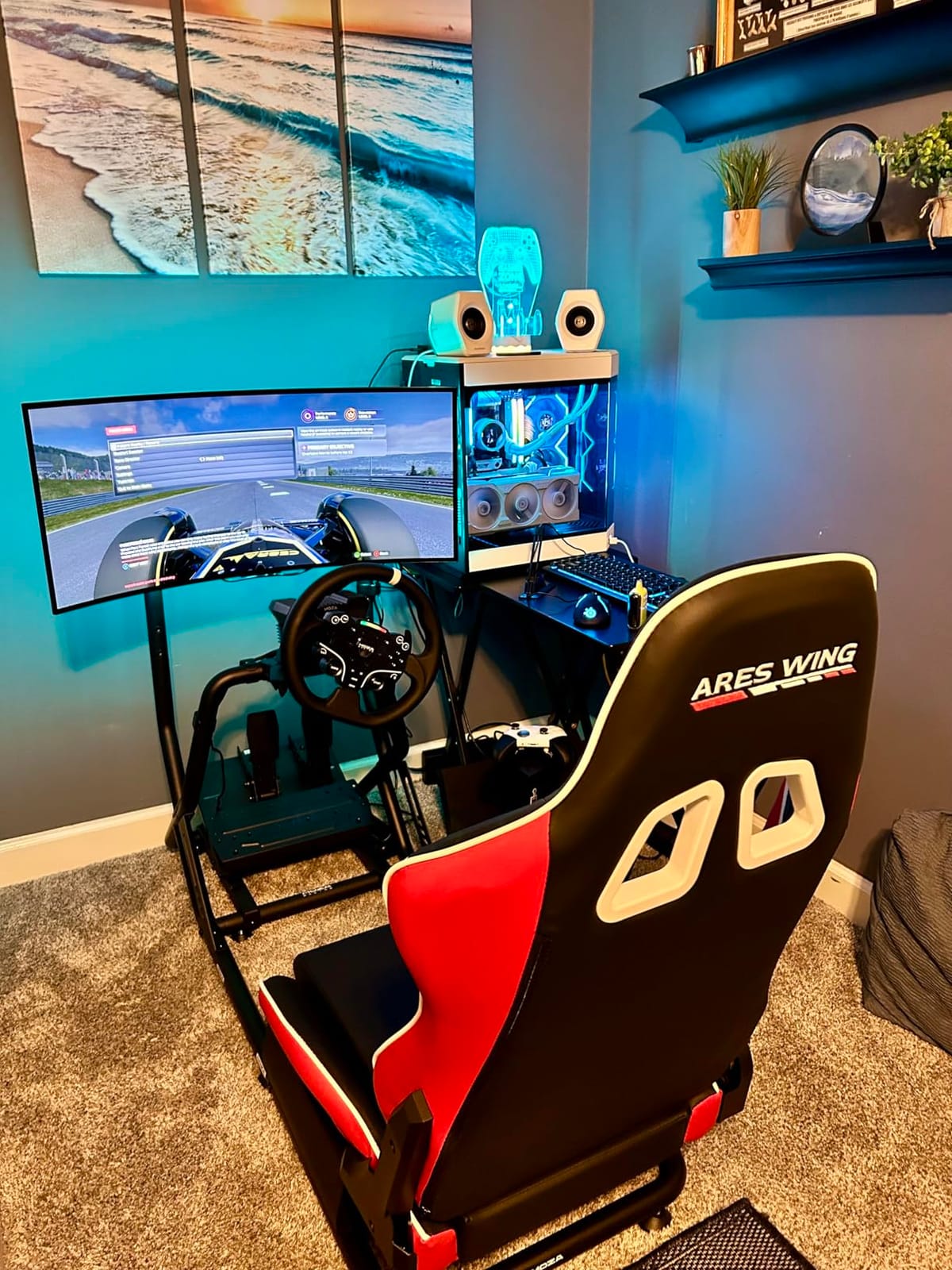
Eight non-slip feet spread the load across the base and stop the whole rig walking when you load a kerb or trail-brake into a corner. On a load-cell brake this is the difference between a consistent pedal reading and one that drifts as the rig moves.
Add a short strap between the seat and the wheel plate if you run a very stiff wheelbase. It takes two minutes and removes the last of the movement.
The seat slides 7.1 inches fore and aft and the backrest reclines from 90 to 150 degrees, which is a generous range that covers a wide spread of driver heights. Wheel, pedals and shifter all adjust, and the shifter mount can be fitted on either side for a right-hand-drive setup.
Two caveats. At 56.9 lb it is heavy and awkward to reposition if you want to use the space for something else. And the wide, aggressively bolstered seat can feel restrictive for smaller drivers, so this is a poor choice if you are below average frame size.
Alloy steel powder-coated frame
Adjustable pedal angle and wheel height
330 lb capacity
Floor mat included
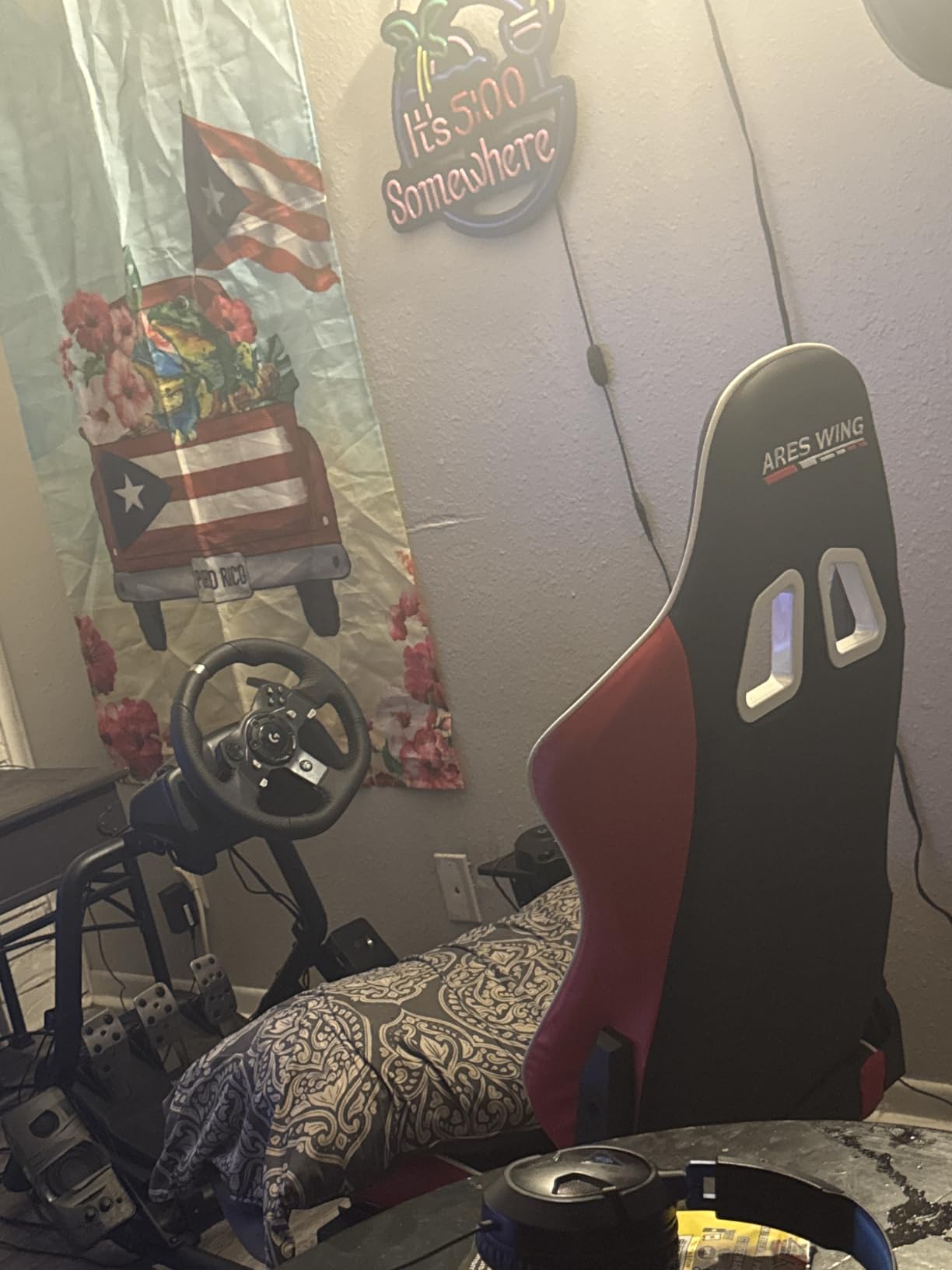
This cockpit sits in the interesting middle ground where the frame is real steel but the components are not. Owners comparing it to a Playseat find the adjustability range genuinely competitive, and the seat is reported to hold up for three to six hour daily sessions. Assembly takes about half an hour and the floor mat is included.
It also accepts an entry-level direct-drive wheelbase with load-cell pedals, which is a meaningful capability at this level. Just set expectations on the hardware holding still.
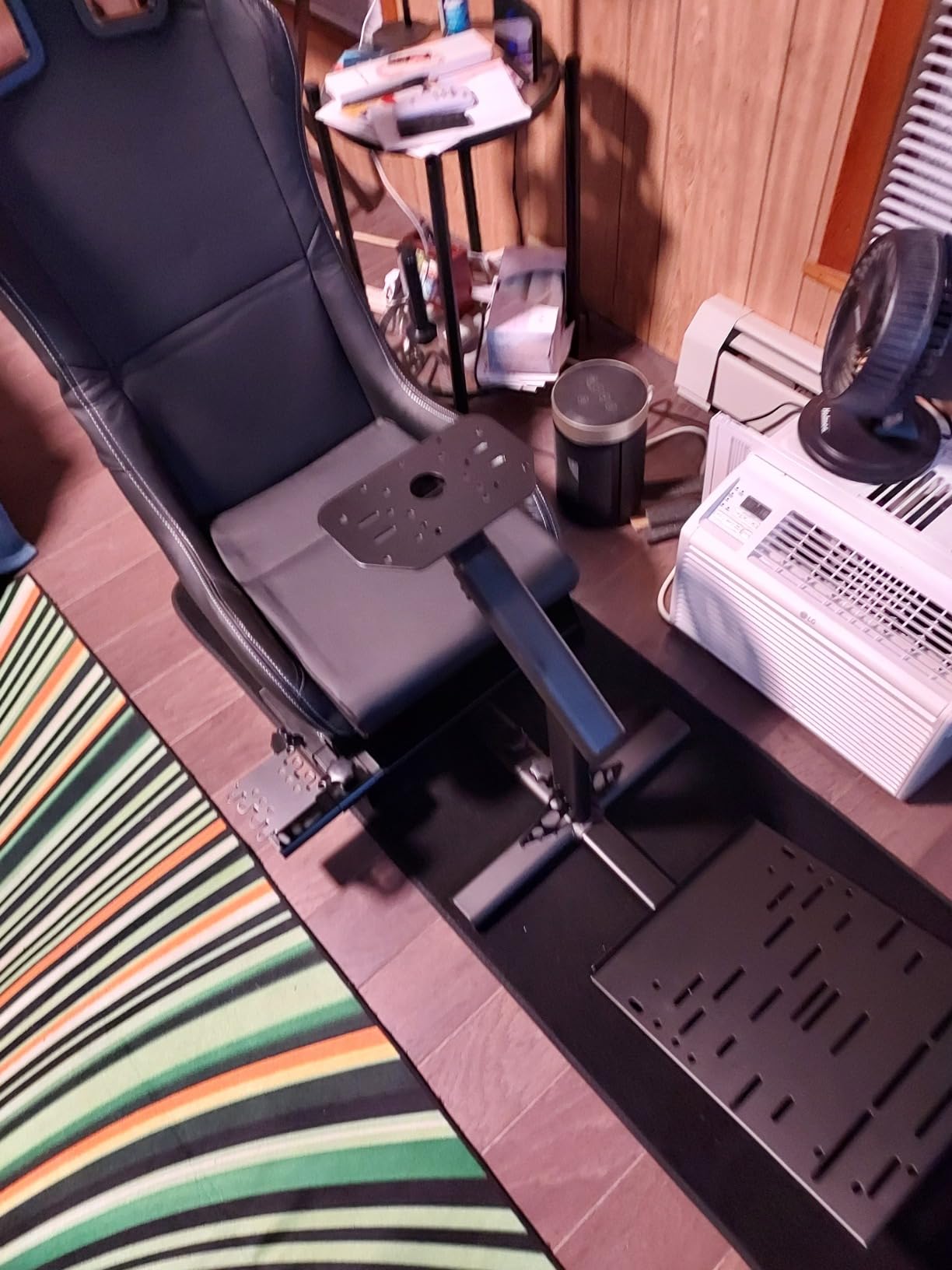
All three recurring complaints are the same problem wearing different clothes. The wheel mount has side-to-side play, the pedal plate flexes, and the adjustment bar between the seat and the pedals drifts so the pedals creep away under sustained force. Adjuster screws also loosen during use and let the wheel and shifter move forward.
None of that is dangerous, and all of it is fixable. Tighten everything with a torque driver before your first session, mark the adjuster positions with tape, and re-check them between races. Owners who do this report a dramatically better experience than those who do not.
You get adjustable seat position, wheel distance, wheel height and pedal angle, which is the full set of variables that determine knee angle. The rating is 330 lb. A floor mat is included to protect carpet and hard flooring, which is a small thing you will appreciate if your setup lives in a carpeted room.
One ergonomic note: the mounting arm between the legs can be caught by your heels during heel-and-toe downshifting, and the seat has no sliding adjustment, so it is not the most comfortable place for a very long stint. It is a good value platform to grow from, not an endpoint.
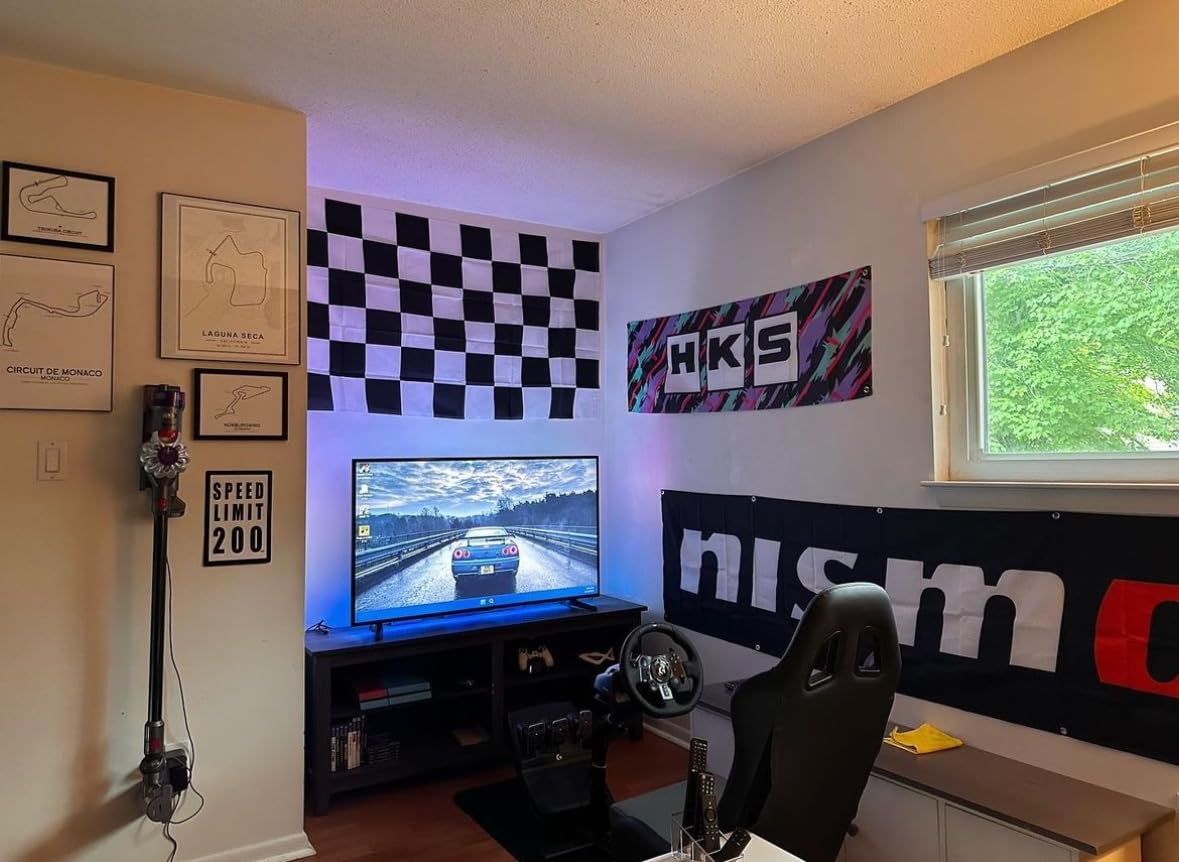
Foldable steel frame
About 90 percent pre-assembled
Adjustable pedal distance and seat angle
Either-hand shifter mount
You are buying two things here: a fold and a compatibility list. The frame folds flat for storage, which is the reason most buyers choose it, and the stated wheel support covers Logitech, Thrustmaster, Fanatec, MOZA and SIMAGIC across their current ranges. Roughly 90 percent of it comes pre-assembled, so setup is fast.
The centre shifter position is worth calling out. Mounting the shifter low and central feels closer to a real console than a side-mounted unit, and it does not eat into your leg movement.
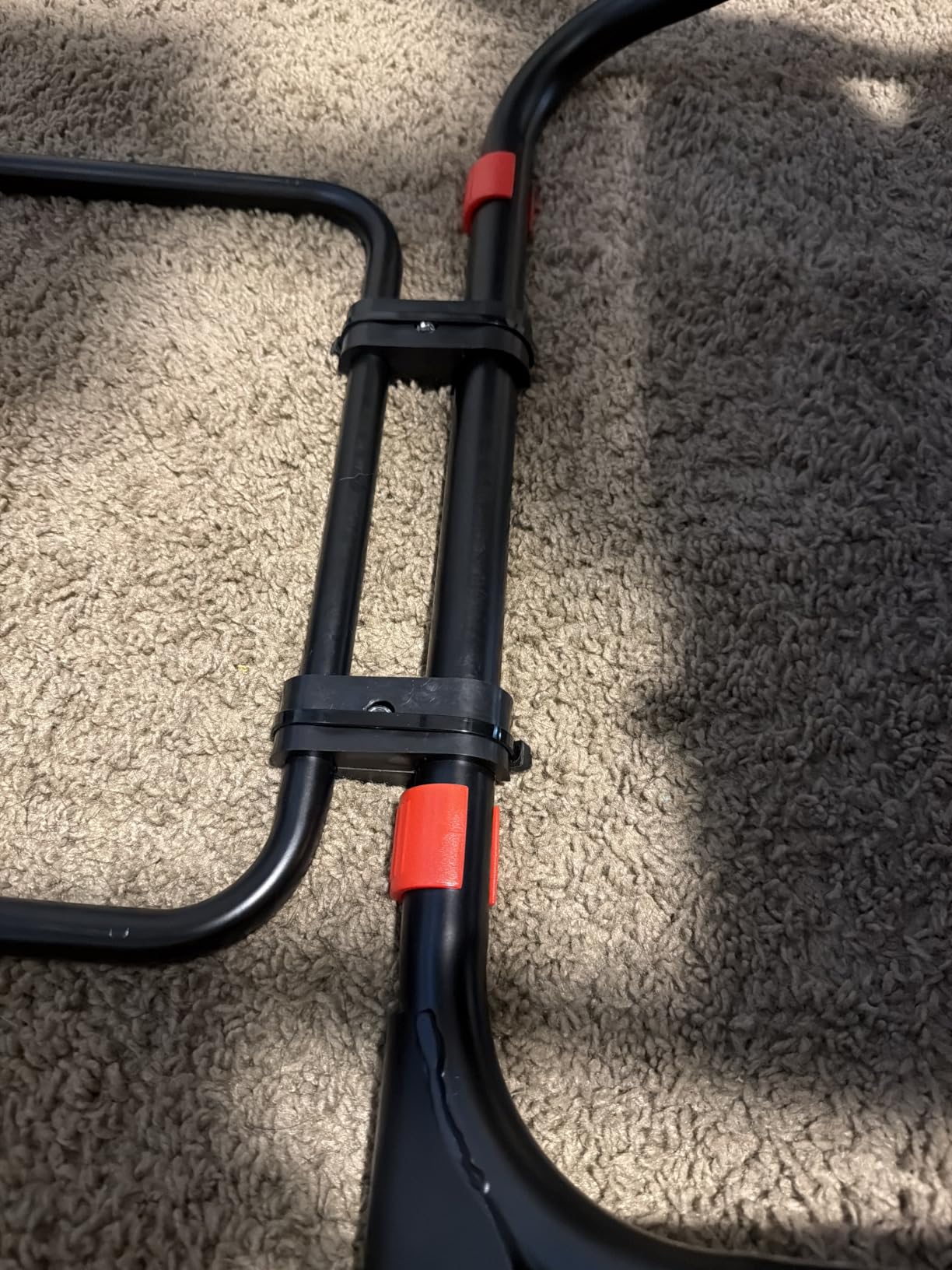
The pedal plate is held by plastic clips that can pop off under heavy braking, and the rubber-tooth grip on the wheel base can let the assembly lift under force. These are the two things to check first after assembly, and both are cheap to fix with a spare clip or a dab of thread lock on the base bolts.
Pedal bolt holes do not always line up with some Logitech pedal sets, so verify before your first session rather than after. Finish quality also varies a little between units, and some owners find the ratcheting support bolts longer than the tube frame, which weakens the frame if over-tightened.
Pedal distance, shifter position, seat angle and wheel tilt all adjust without taking the cockpit apart, which makes switching drivers painless. That is a real advantage in a shared household and a genuine saving if two people share one setup.
What you do not get is fine wheel placement. Steering wheel distance and angle adjustment is minimal, so the wheel can block a monitor at eye level depending on your screen height. Plan your monitor position around that before you build.
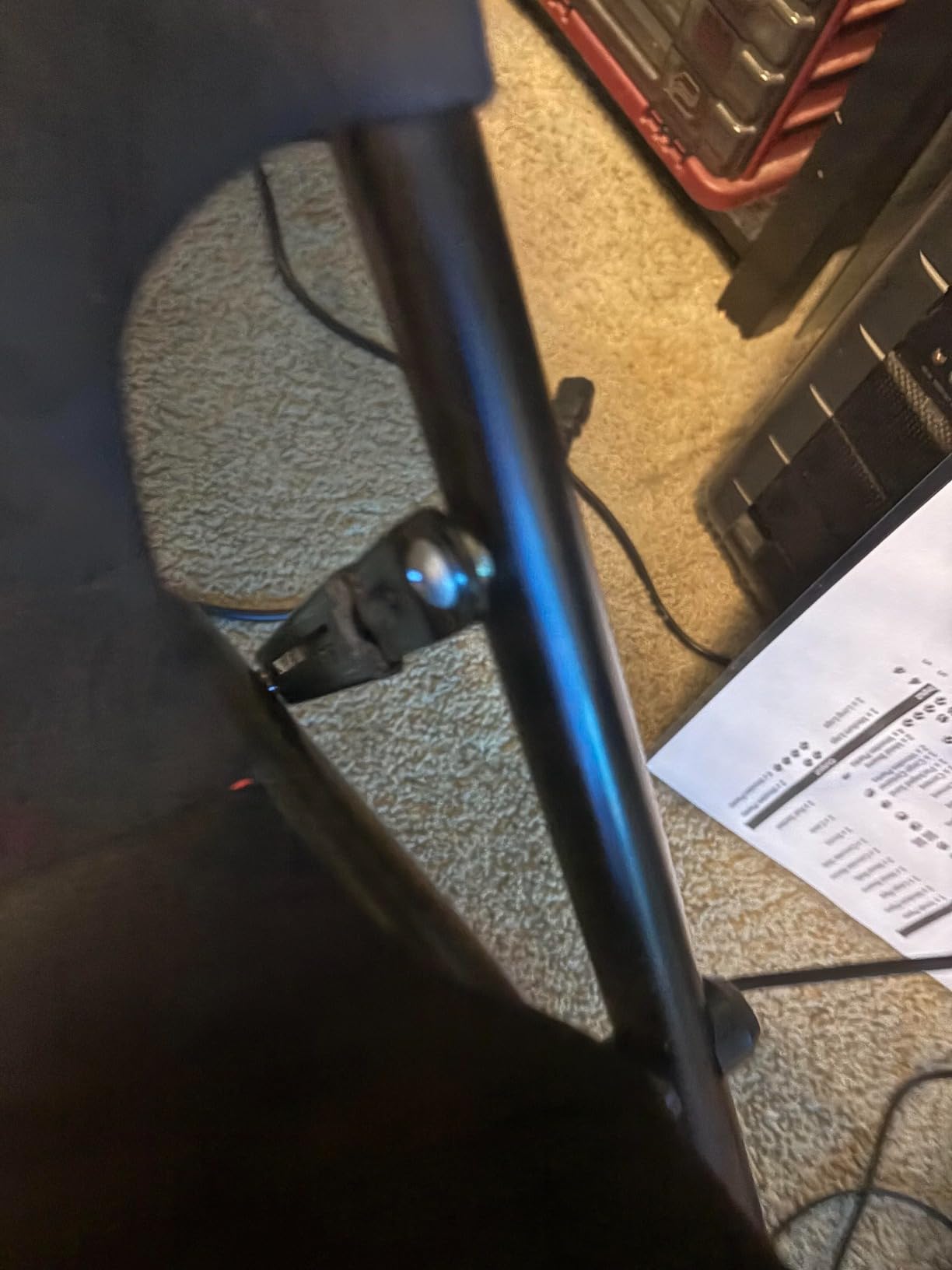
Steel frame with integrated control rails
Either-hand shifter mount
Detachable seat
Weighs 55 lb
The highest-rated product in this group on our reading, and the one with the most enthusiastic owner feedback about build quality. The steel frame does not flex when a wheel is force-fed, and the pre-drilled mounting holes fit mainstream Logitech, Thrustmaster, Fanatec and Mad Catz hardware without drilling anything yourself.
It is also the most versatile physically. The seat separates from the control rails with a single knob, so the same unit is a sim rig during the week and a normal seat for the rest of the time.
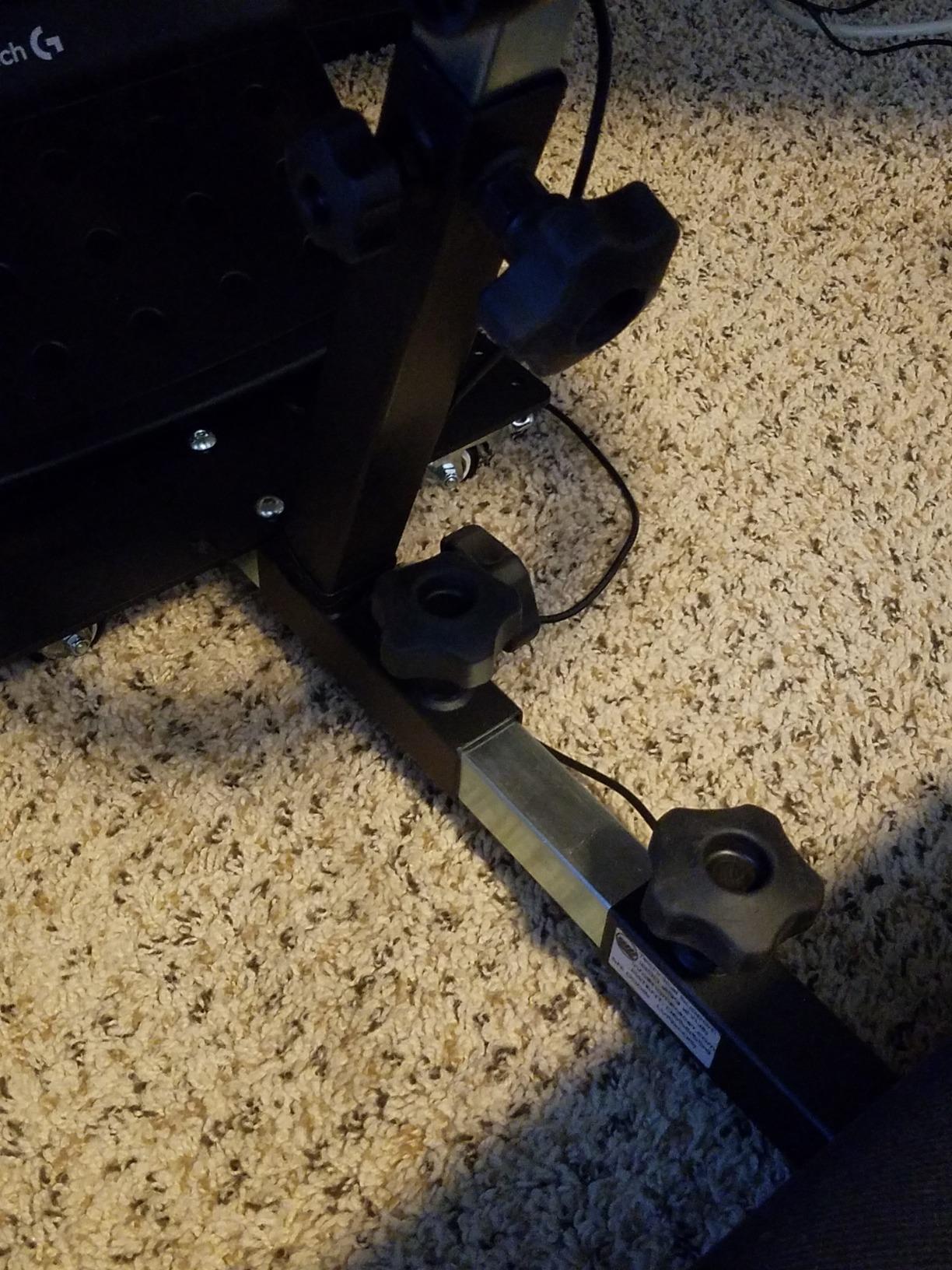
Wide quick adjustments cover seat position, wheel distance and angle, and pedal placement. The shifter bracket mounts on either hand side, so it works for a right-hand-drive setup without a different frame. This is the rig that adapts when you move from a GT game to an open-wheel one without rebuilding anything.
What it does not do is change the pedal plate angle. If you need a different knee angle for a specific car, you change the pedal set or the riser height instead of the rig.
Two ergonomics complaints recur. The low seating position is genuinely awkward to enter and exit without twisting, which is harder than it sounds for anyone with mobility limits. And the centre post between the legs can interfere with heel-and-toe shifting, so this rig suits a driver who keeps the left foot planted more than a heel-and-toe shifter.
The polyester upholstery needs time to break in and can feel stiff for long early sessions, which is a fair trade for a surface that will not peel like cheap PU. Owners also single out the manufacturer support as responsive, including replacement parts sent quickly.
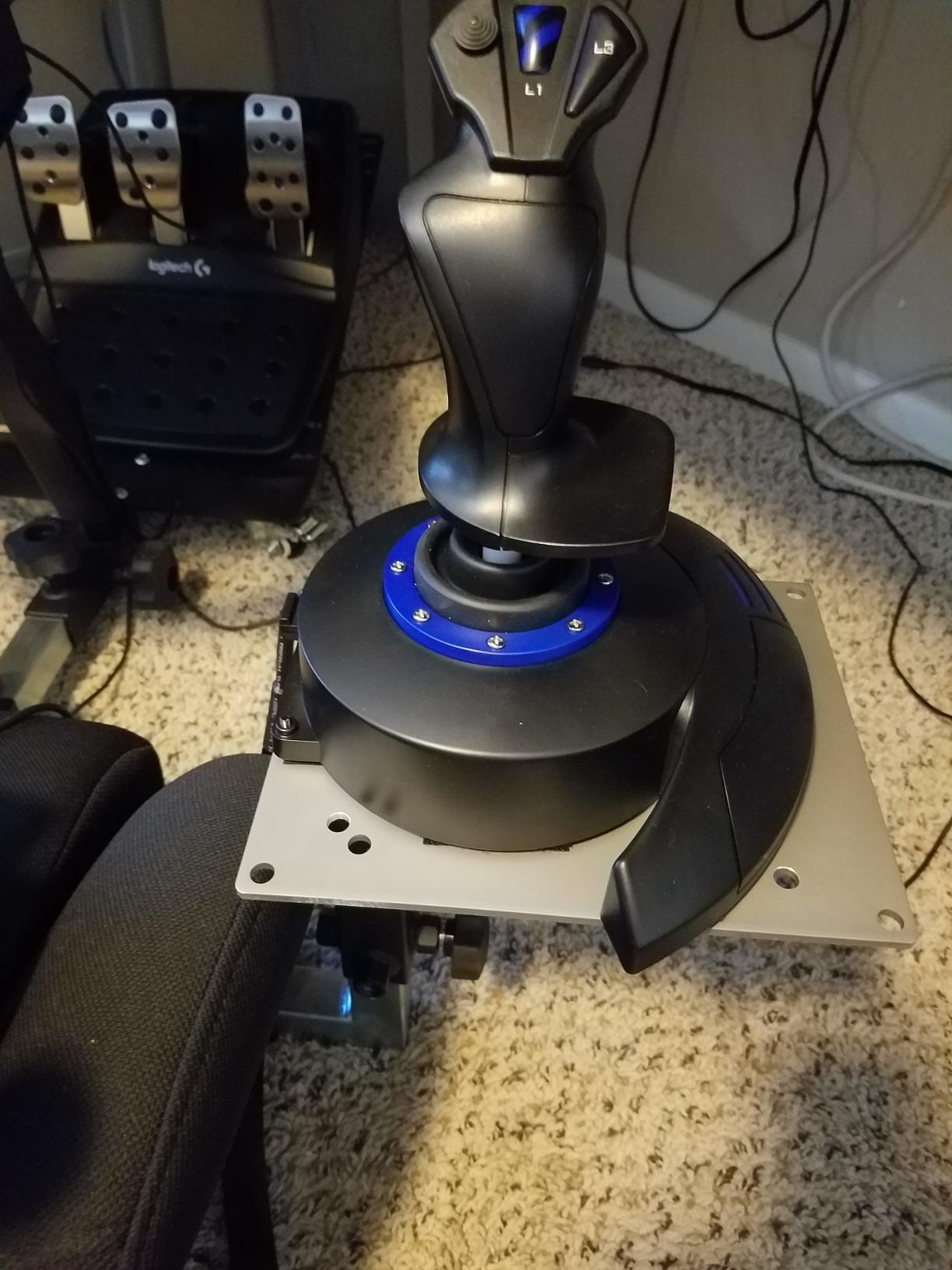
90-135 degree single-lever recline
Retractable pull-out footrest
300 lb caster base
Three-zone neck lumbar and spine support
This is a desk chair first, and it wins its place here for one reason: a genuine reclining position. The pull-out footrest extends the chair into a full lounger, which is exactly what you want after a long race, and at this level you rarely see both a footrest and a real recline range together.
A single lever controls both height and recline from 90 to 135 degrees, and three-zone support covers neck, lower back and spine. It is a chair that also works for a workday, which is why it keeps showing up in desk-based sim setups.
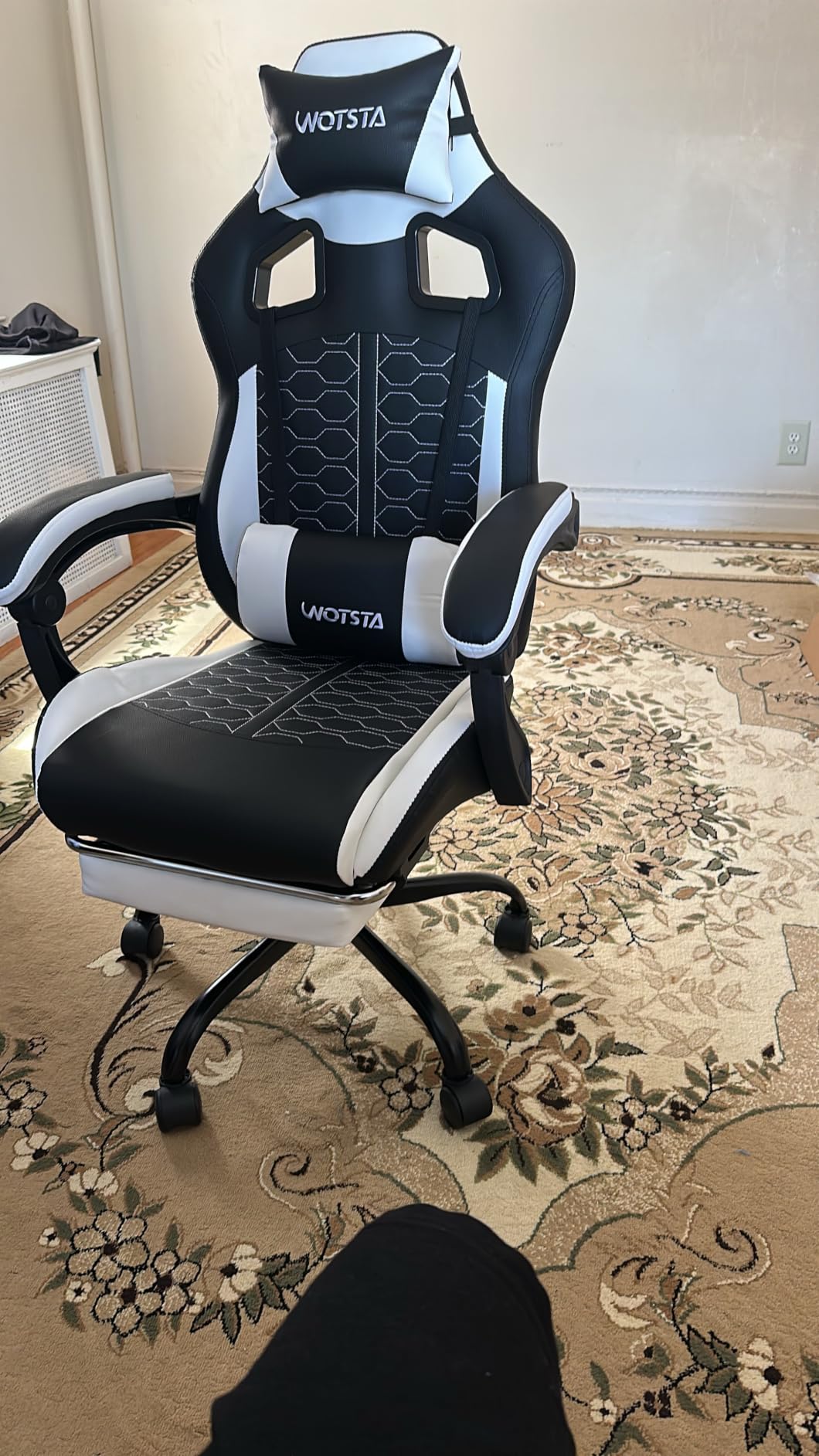
With a desk-mounted wheel, your pedal angle depends almost entirely on where the seat height sits relative to the desk height. The single-lever control makes it easy to experiment, and a body-curved seat shape with thick padding spreads pressure across your thighs rather than concentrating it.
The floor-friendly casters are rated to 300 lb and roll smoothly on hard flooring. Fit locking casters or rubber feet before you race on it, because a rolling base under a desk is the most common brake-consistency problem we see.
PVC does not breathe. Owners report damp backs of the legs during long sits, and for a two-to-three hour endurance race on a racing style chair that is uncomfortable. The GTPLAYER above solves it with mesh panels in the wings and back; this one does not.
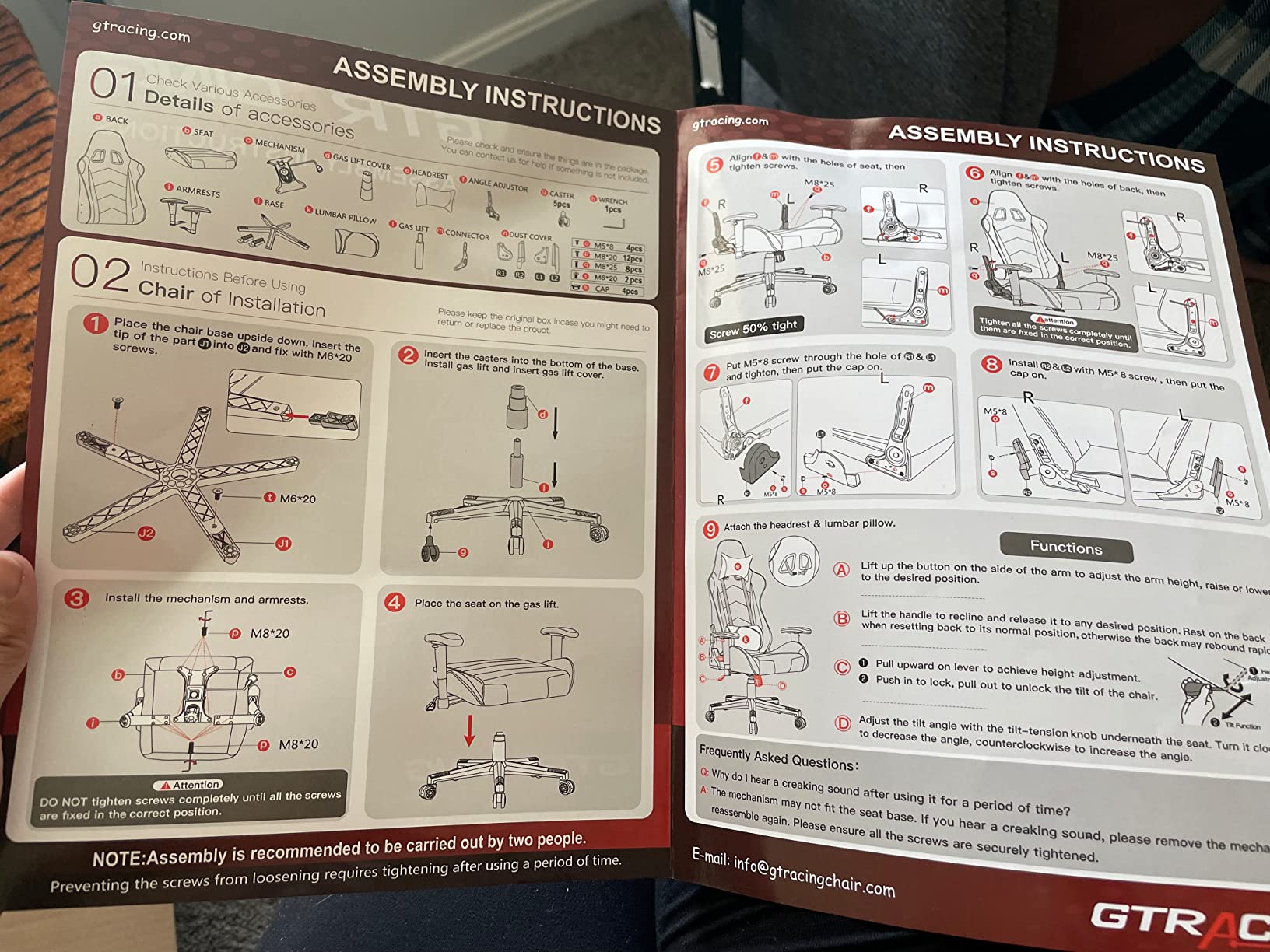
Fit varies a lot by body size. Smaller users describe the seat as narrow and firm, sometimes uncomfortably so. The included lumbar pillow has a massage function, but reviewers are consistent that it is a weak, off-centre motor rather than a therapeutic device. Assembly instructions are poor, so budget an extra half hour and a video tutorial.
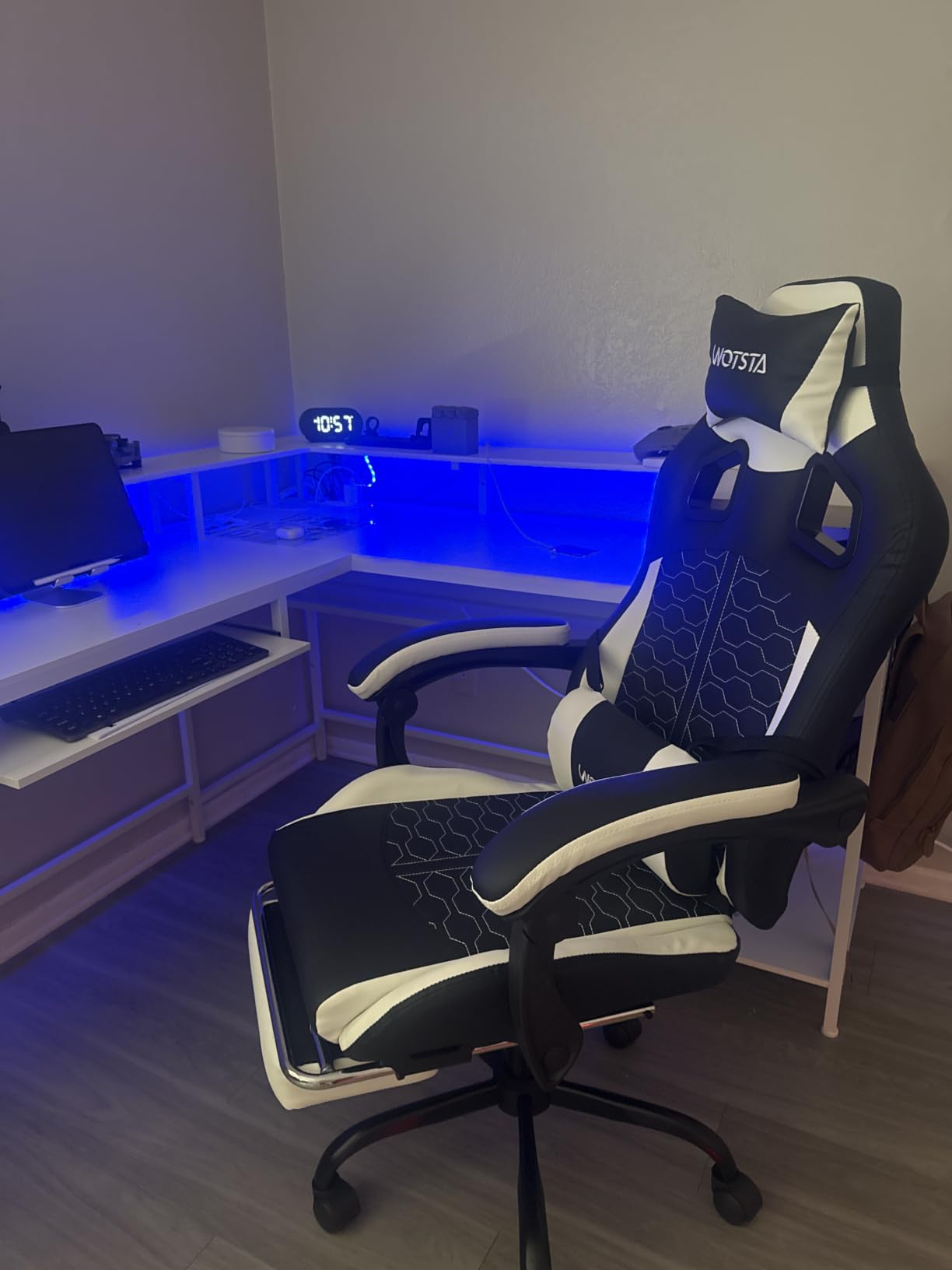
90-140 degree backrest
Independent footrest lever
Built-in massage module
360 degree swivel iron base
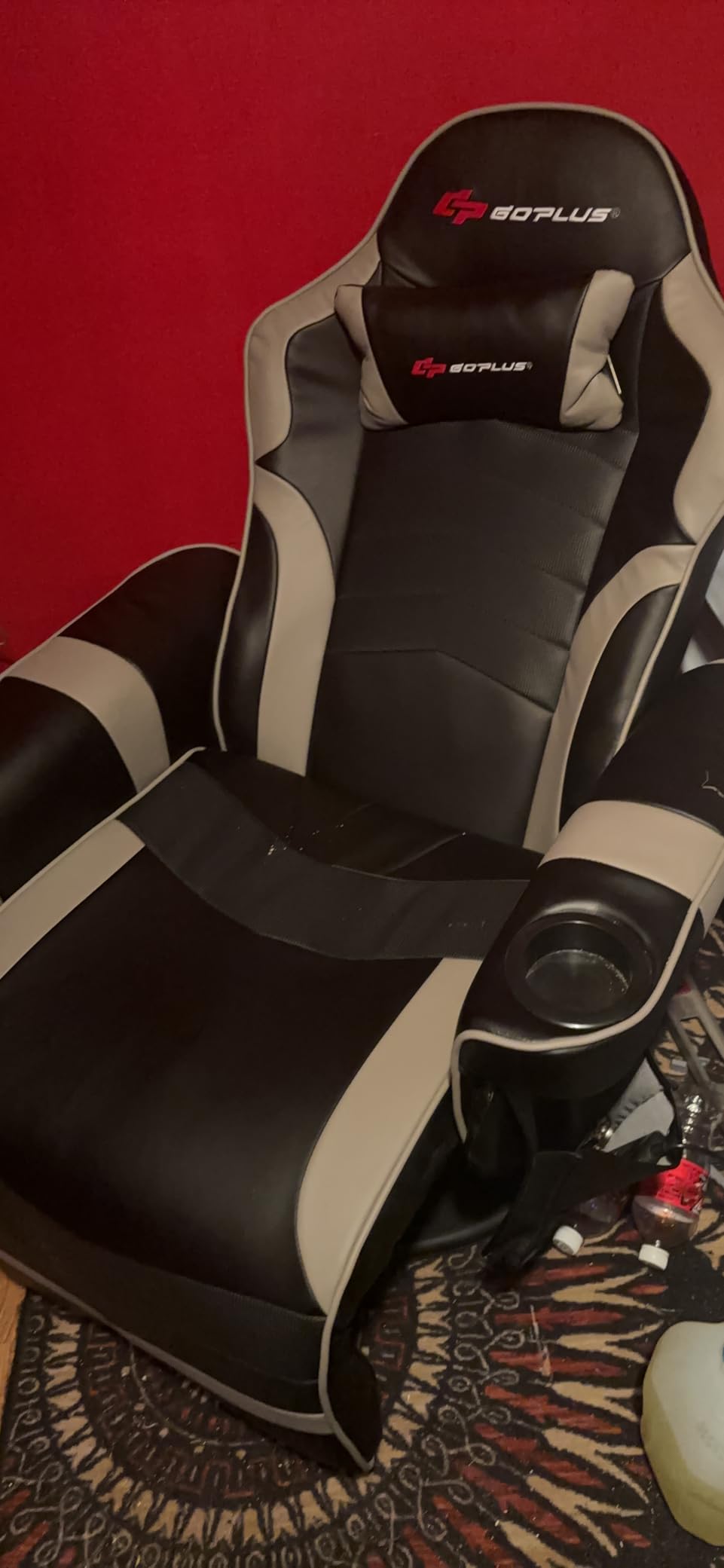
The last pick is the least about racing and the most about what happens afterwards. The built-in massage module, the independent footrest lever and the soft PU over high-density sponge padding make this the most genuinely comfortable chair here for sitting still after a session, and owners report the vibration reaching the mid and lower back rather than staying in the lumbar.
It is also a dual-purpose chair. The cup holder in one armrest and a side pouch for a controller or phone are small things that make it work as a living room chair as well as a racing seat.
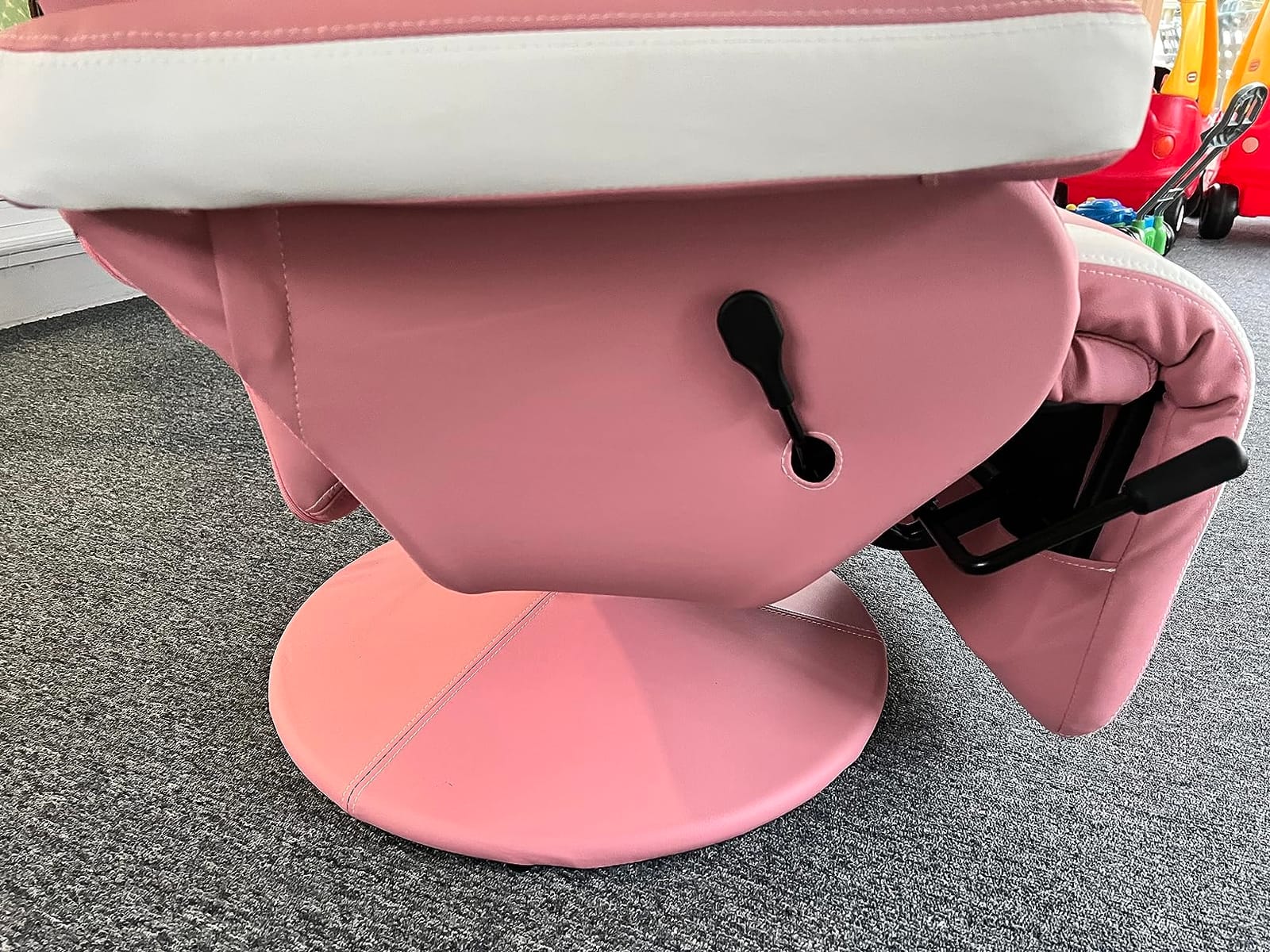
The base sits low, and the height is not adjustable, so this suits shorter drivers. Many owners retrofit a taller gas cylinder to solve it, which is a straightforward job and restores the pedal geometry that a desk-mounted wheel needs.
That is the single most important thing to know before buying this chair for sim racing. A seat that is too low puts your knees up and cramps your thighs over a long stint, and a low seat cannot be corrected by leaning forward.
The backrest adjusts between 90 and 140 degrees and the footrest has its own lever, so you can set them independently, which is genuinely useful for finding a position that works for both racing and relaxing. The swivel base is solid iron with a 264.5 lb capacity and rotates 360 degrees for moving between monitors.
The armrests are fixed and sit low, which many owners say pressures the shoulders and neck at a desk. The reclining footrest does not always stay engaged and can drop under load, and the side upholstery tears easily during assembly if it is not stretched carefully. Packaging is thin, so transit damage is common enough to inspect on arrival.
Seat height is the most decisive spec in this category and the one nobody publishes properly. Almost no manufacturer lists a minimum and maximum in inches, so you have to infer it from whether the chair uses a gas lift, a fixed steel frame, or a slider on rails.
Why it matters: your thigh should slope slightly downward from hip to knee when the foot is on the pedal, roughly 105 to 115 degrees at the knee. Sit too high and your knees point up, which cramps your thighs and loads your lower back. Sit too low and your legs are over-extended at the hip. A gas lift gives you a continuous range to correct for either. If you can, measure your hip-to-heel distance with the pedals in position and set the seat so your legs have a small bend rather than a locked knee.
For driving you want a fixed back angle, not a free-floating recline. A backrest that rocks when you load it up absorbs force feedback and changes your wheel feel, so a lockable recline is worth more than a wide range. Between stints, a deeper recline is a genuine comfort benefit on a two or three hour race.
Check whether the lock is a real detent or a friction clutch. A detent holds; a friction clutch creeps under a hard brake.
Bolsters stop you sliding sideways under cornering load, and the width of the shoulder area decides whether that feels supportive or restrictive. Narrow F1-style shapes suit smaller drivers and pinch wider frames. Open-feel GT shapes suit everyone except a dedicated single-seater enthusiast. Bolsters that are too soft do nothing at all.
This is the single most common complaint in reviews of racing style gaming chairs, and the reason tall drivers in particular should test before they buy.
Two or three hours in a bucket is harder on your lower back than most people expect, because the seat edge presses behind your thighs and your lower back is held away from anything. Look for an adjustable lumbar support rather than a fixed pad, and treat a loose pillow as temporary. A pocket spring lumbar is a step up from foam on a chair at this level.
Bolting to a frame solves the problem entirely. If you are on a chair, you have to solve it yourself, and there are three approaches in order of preference.
First, replace the rolling casters with locking casters or fixed rubber feet. This is the cheapest fix and the one an experienced OverTake.gg owner calls the reason he has kept his gaming chair for five years. Second, strap the chair to the wheel stand or desk frame with 20 to 25 mm webbing and carabiner clips rather than cheap quick-release buckles, which pop open under load. Third, put the chair and the wheel stand on a single non-slip mat. Test the fix by leaning hard on the brake and seeing whether the chair moves at all.
PU and PVC leather wipe clean and resist stains, which is why almost every chair in this category uses it. They also do not breathe, and reviewers consistently report damp, uncomfortable long sits on all-leather designs. Mesh panels in the side wings and back are the single best upgrade available, and the GTPLAYER in this list is the only pick that has them.
Woven microfiber, as used on the NRG fiberglass bucket, breathes better still and does not peel. If you race more than once a week for two hours or more, that is worth considering over a wipe-clean surface.
A chair is enough if your wheel is belt-driven, entry-level, or console-only, and if your total setup is in a shared or small space. It is also enough if you work at the same desk and want one seat for both jobs. A desk-mounted wheel plus a racing style gaming chair with locking feet will serve most console and casual PC racers completely.
You need a full cockpit once you own a direct-drive wheel. Above roughly 5 Nm of torque, frame flex stops being a comfort issue and becomes a performance one, because the wheel moves relative to your hands under load and your brake inputs become inconsistent. Load-cell pedals make this more acute still, and the sliding-and-creeping problems we see on budget chair bases are directly caused by the moving base. A bolted frame, non-slip feet and a strap solve all three at once.
A second trigger is pedal angle. If you cannot get your knees below roughly hip level with the seat at its lowest, you need a riser or a rig that lets you set the geometry properly. Chair height is a coarse adjustment; a frame gives you the resolution to match your legs exactly.
Our rule of thumb: buy the chair first if you are still on a console wheel or a Logitech entry model, and move to a cockpit when you add direct drive or when brake consistency starts bothering you. Do not buy a folding cockpit as a permanent answer if you cannot store it, because a rig you have to move every time is a rig you stop using.
The best racing style gaming chair for sim racing depends on your setup. For a desk-mounted wheel, a chair with a gas lift, a lockable recline and adjustable lumbar support is the right choice, because seat height sets your knee angle and a fixed back keeps your wheel feel consistent. For a direct-drive wheel, a bolted steel frame is worth the extra cost, since a chair base flexes under high torque and makes braking inconsistent. Lock the chair down with fixed feet or a strap either way.
Yes, a gaming chair works for sim racing provided you can stop it moving. The most common complaint is a rolling base creeping backwards when you press a load-cell brake, which makes braking feel unsafe and inconsistent. Fit locking casters or fixed rubber feet, or strap the chair to the wheel stand with webbing and carabiner clips. What a chair cannot give you is rigidity, so upgrade to a bolted cockpit when you move to a high-torque direct-drive wheel.
For a desk setup, look for a chair with a gas lift so you can match seat height to pedal angle, a lockable recline, and armrests that clear the desk edge. A racing style gaming chair with side bolsters keeps you planted at a desk-mounted wheel, and mesh panels in the wings and back help during long stints. Avoid armrests that sit low enough to press your shoulders, and expect to remove or raise them if the desk edge is in the way.
The most comfortable seat over a two-to-three hour race is one with a wide, open-feel shape rather than a narrow single-seater bucket, because narrow shoulder bolsters pinch wider drivers. Look for an adjustable lumbar support and breathable upholstery, since leather runs warm. A double recliner mechanism also stiffens the backrest, which removes lower back fatigue and keeps load-cell braking consistent. Test for at least a full session before buying.
A real fiberglass automotive bucket seat is the most authentic option, because the shell is rigid and the standard side mount brackets bolt to almost any sim frame. It suits drivers who want a race feel and nothing else, and woven microfiber upholstery stays cooler than PU or PVC. Keep in mind most have a fixed back with no recline, thin lumbar support, and a sizing range that will not fit every frame, so measure your shoulders before ordering.
If your setup is a desk, start with the GTRACING chair in this list. Its gas lift gives you the height range to match your pedals, the 90 to 155 degree recline lets you recover between stints, and the adjustable lumbar and headrest make it survivable as a work chair too. Fit locking casters before your first session.
If you have a small room or share your space, the Playseat Challenge folds away in ten seconds and weighs under 20 pounds. Pair it with a belt-and-pedal-force wheel and it is a complete, honest setup that gets used more often than an expensive rig you cannot put away.
If you own a direct-drive wheel, the Playseat Trophy is where we would put our money. Rigid carbon steel, lockable plates, and a 37 lb weight you can move single-handed make it the most complete package in this roundup. Heavier drivers and wider frames should look at the Next Level Racing ERS3 for its open shape, and anyone above average size who prefers a chair should look at the GTPLAYER for its 400 lb rating and mesh panels.
Whichever you choose, measure your hip-to-heel distance with the pedals in place and set your seat height before you judge anything else. That one adjustment explains more about sim racing comfort than any headrest or pillow. Our 2026 guide covers all twelve options above, and every one of them is a better seat than the office chair it replaces, provided you lock it to the floor.