Physical Address
304 North Cardinal St.
Dorchester Center, MA 02124
Physical Address
304 North Cardinal St.
Dorchester Center, MA 02124

The best chick starter feeders for brooders are shallow, low-profile units that hold feed above damp bedding and give hatchlings a feeding edge they can actually reach. For most backyard broods, a gravity-fed feeder with a pointed or no-perch lid wins on waste control, while a plain plastic trough wins on price and access. I compared ten of them below on port design, capacity, cleanability, and how well they hold up to chicks climbing on top.
Our brooder is a plywood box in a garage, and we run batches of 20 to 30 chicks each spring. That experience is why this list is heavy on things you can wash out daily and light on cast-metal parts with deep crevices. We also leaned on the sizing rule keepers trust most: the Colorado State University 4-H poultry guide recommends 1 inch of feeder space per chick through four weeks of age, and the University of Alaska Fairbanks Extension guide puts broilers at 1 linear inch up to two weeks, 2 linear inches from two to six weeks, and 3 linear inches after six weeks.
That math is the fastest way to size anything on this list. A 12-inch trough edge serves about 24 chicks in the first month, and a 1-quart jar feeder is comfortable for roughly 1 to 12 chicks. Getting that right up front prevents the two most common brooder feeder problems: crowding at a single unit, and dominant chicks guarding it. If you are also selecting the rest of a first-time setup, our aquarium starter kit guide follows the same pick-a-right-size-the-first-time logic we apply here.


The Lixit unit takes the top slot because it has the deepest review history of anything we tested and does double duty as a waterer when you flip the base. The ZenxyHoC set is the value pick because the anti-drown waterer solves a real brooder problem in one purchase. The Little Giant base is the pick if you want steel that will outlast several broods and already own Mason jars.
| Product | Features | |
|---|---|---|
| Lixit Baby Chick Feeder or Waterer |
|
Check Latest Price |
| ZenxyHoC 2-in-1 Chick Starter Set |
|
Check Latest Price |
| Little Giant Baby Chick Feeder Base |
|
Check Latest Price |
 Eggluuz Chick Feeder and Waterer Kit Eggluuz Chick Feeder and Waterer Kit |
|
Check Latest Price |
 Lil’Clucker 1L Feeder and 1.5L Waterer Kit Lil’Clucker 1L Feeder and 1.5L Waterer Kit |
|
Check Latest Price |
 TGEYD 1L Feeder and Waterer Set TGEYD 1L Feeder and Waterer Set |
|
Check Latest Price |
 MACGOAL Flip Top Chick Feeder Trough MACGOAL Flip Top Chick Feeder Trough |
|
Check Latest Price |
 NAOEDEAH 1L Feeder and Waterer Set NAOEDEAH 1L Feeder and Waterer Set |
|
Check Latest Price |
 Hen’s Choice 6.5 lb Feeder and Waterer Set Hen’s Choice 6.5 lb Feeder and Waterer Set |
|
Check Latest Price |
 Kculehtlla Waterer and Two Trough Kit Kculehtlla Waterer and Two Trough Kit |
|
Check Latest Price |
We earn from qualifying purchases. CERTAIN CONTENT THAT APPEARS ON THIS SITE COMES FROM AMAZON. THIS CONTENT IS PROVIDED 'AS IS' AND IS SUBJECT TO CHANGE OR REMOVAL AT ANY TIME.
The table below covers capacity, port design, and the chick age each unit suits. Two products here are kits that include a waterer, and one is a steel base that needs your own jar, so read the notes before you count feeders for your brooder.
Holds 32 oz of water or 4 lb of food
Reversible base
7.25 x 3.75 x 7 inch
5.6 oz
This is the unit we keep coming back to in our own brooder. The design is simple: a jar of feed, a base, and a screw ring that holds them together. Unscrew the reservoir, flip the base, and the same piece becomes a waterer, which is genuinely useful in a garage brooder where you do not want two nearly identical plastic parts to keep track of.
Capacity is the one thing to plan around. It holds 4 lb of food, and with chicks eating steadily from about week one, a brood of 20 will push through that faster than you might expect. We treat it as one unit per 12 to 15 chicks in the first three weeks and pair it with a second feeder once the flock spreads out.
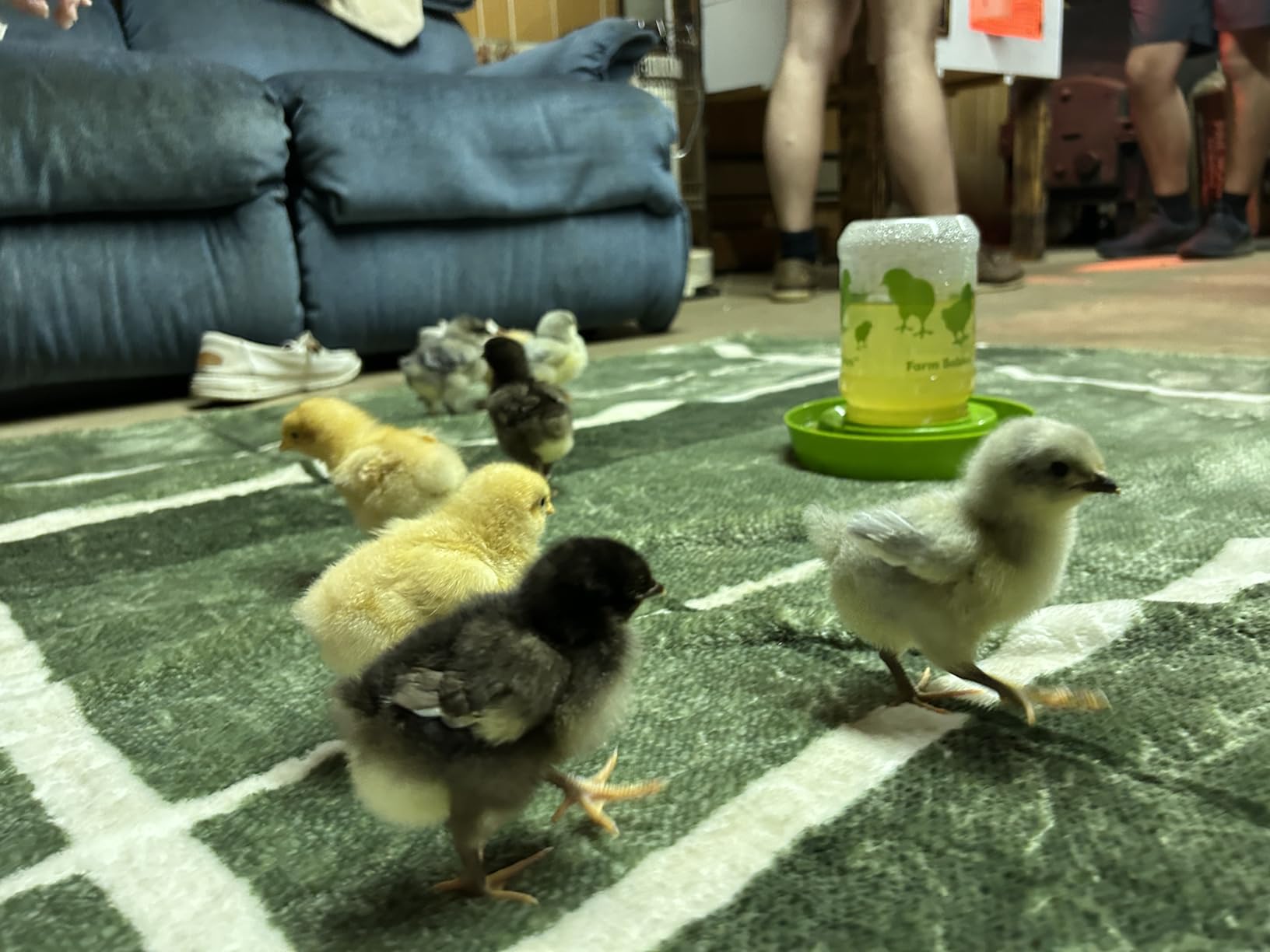
The screw-together design has no motor, no seals, and nothing that wears out. In our brooder we run it as a feeder and keep a second one flipped for water, which means morning checks take under a minute. That matters more than it sounds, because a feeder you are willing to pick up and rinse is a feeder that does not develop caked feed.
It is hand wash only, so put it in the sink rather than the dishwasher, and expect some surface scratching after a few broods. Nothing we have seen has cracked, which is the part that matters for a tool that gets bumped by bouncing chicks every night.
Capacity is the honest weakness. At 32 oz it is a small reservoir, and in a 25-plus chick brooder you will be refilling it more than once a day. Owners with larger broods tend to move up to a 1.5 kg unit partway through the brooding stage.
It also gives a whole brood a short feeding edge to share, so treat it as a week one to week three tool and pair it with a wider trough once the birds grow.
0.3 gal feeder plus 0.4 gal waterer
Three waterer height settings
13.4 oz
3.94 x 9.84 x 3.94 inch
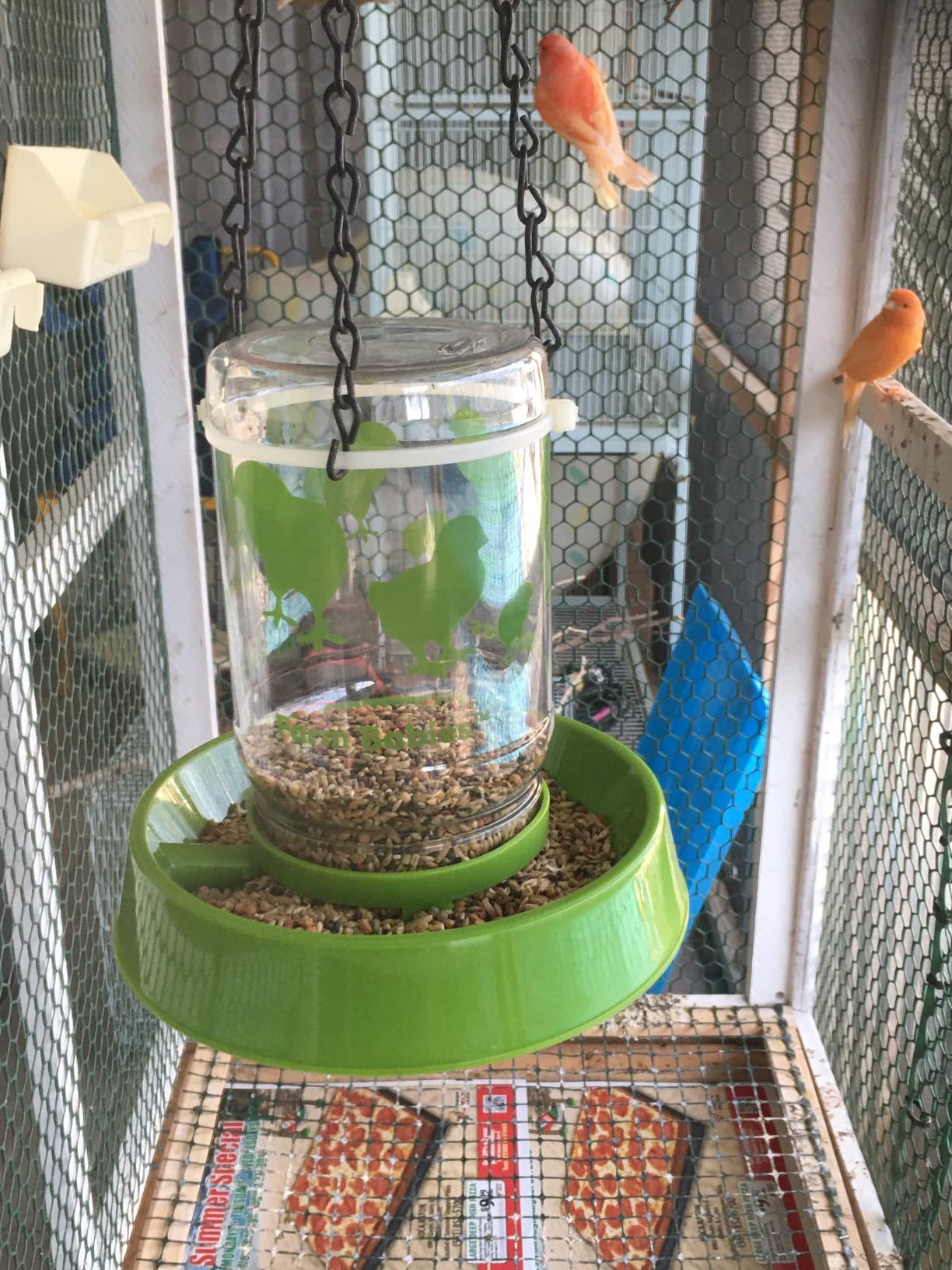
If you are setting up a brooder from nothing, this set removes the most common early purchase decision: whether to buy a feeder and a waterer separately. It arrives as a 0.3 gallon feeder and a 0.4 gallon waterer, both with hanging hooks, and the pair covers the full day-one kit for a small brood.
What sold us is the waterer trough shape. It is taller and narrower than most shallow trays, which cuts down on the day-old chicks that hop in and drown, and three height settings let you raise it as they grow so bedding stays out.
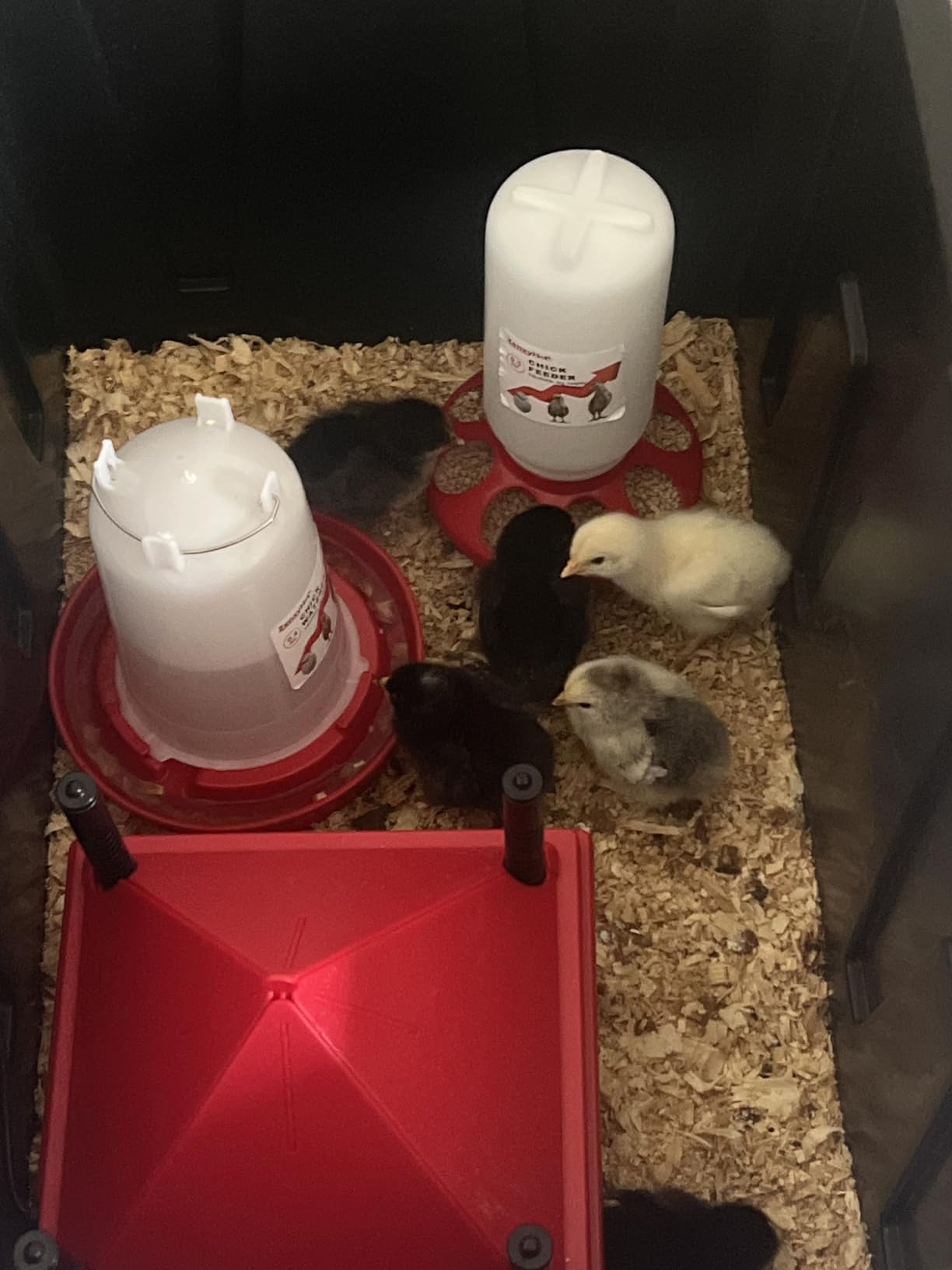
The tripod leg base and the narrow trough are the two details that separate this from a cheap two-piece set. Raising the waterer also raises the feed edge, and in a damp brooder that keeps shavings and droppings out of both units. Reviewers single out those height settings more than anything else on the set.
The semi-transparent bodies are a small daily convenience. You can see feed and water levels from across the brooder without unscrewing anything, which means fewer times you disturb a settled flock.
Both reservoirs are small. A dozen chicks is a comfortable fit, and beyond roughly 15 birds you will be refilling the feeder more than once a day for the first couple of weeks. Chicks also tend to outgrow the set faster than the body size suggests, since the shell stays the same while the birds keep growing.
For broods above 20, plan on buying a second feeder within the first fortnight. Two sets up front is often the simpler plan.
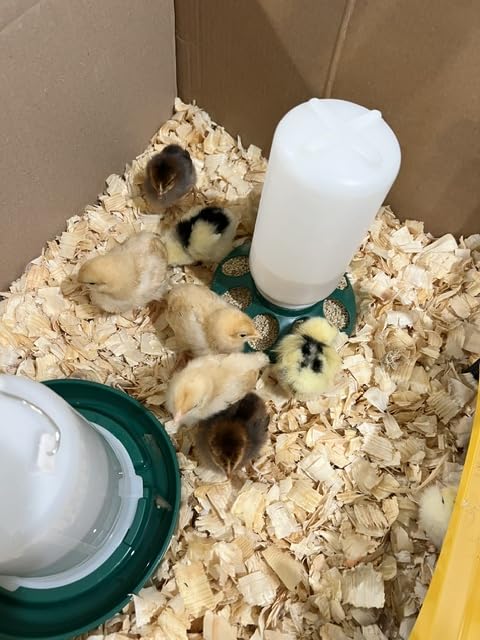
Fits a standard 1-quart Mason jar
Eight feeding holes
6 x 6 x 2.5 inch
1.6 oz
This is the one we would still own in ten years. The base is heavy-gauge galvanized steel, it screws onto a standard wide-mouth Mason jar like a lid, and then you invert the whole thing for gravity feeding. If you already have jars in the cupboard, this is a steel feeder that will far outlast a plastic one.
Eight feeding holes mean a small group can eat at once without lining up, and the feed sits low enough that hatchlings reach it on their first day. The rounded embossed edge is a small safety detail that keeps chicks from chafing their necks on the rim.
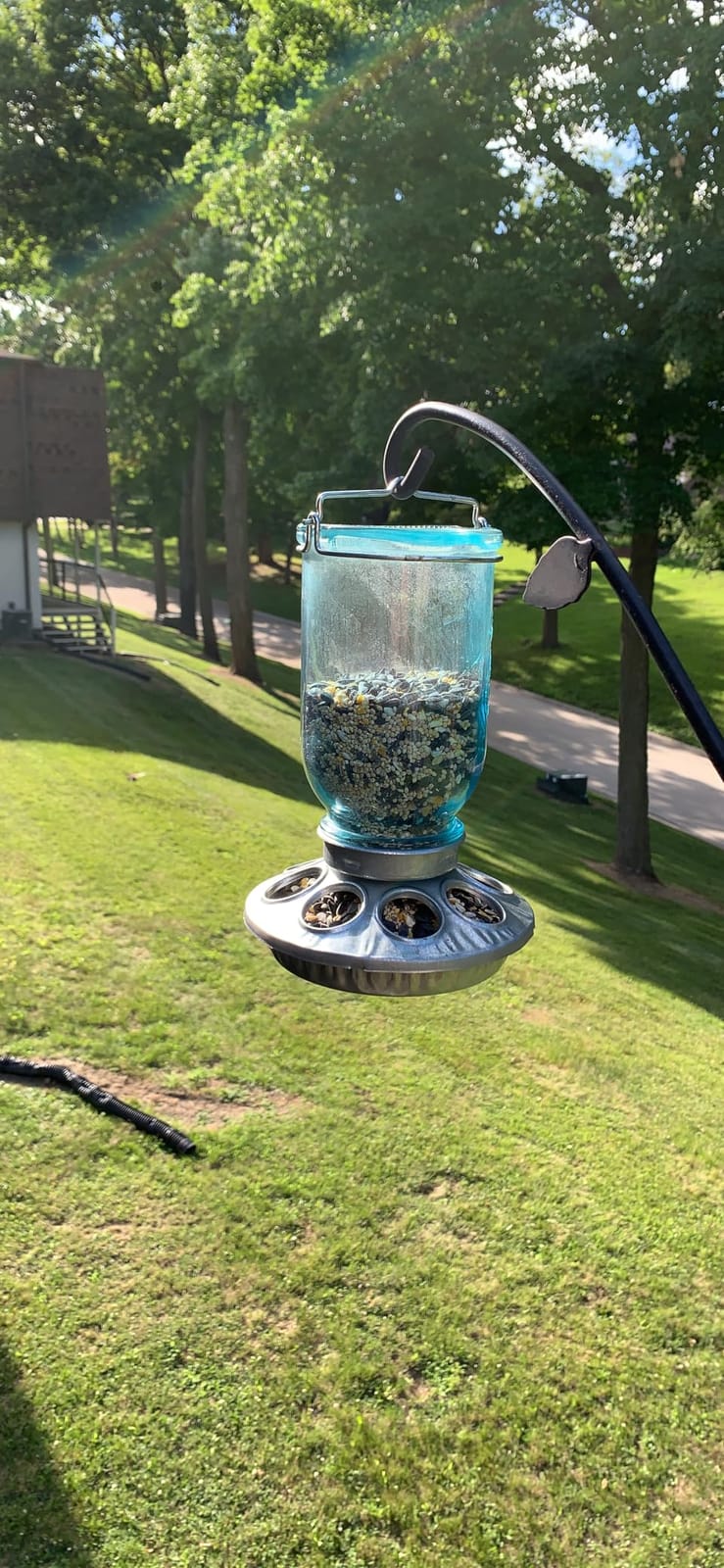
The jar standard is the quiet advantage here. A quart jar of crumbles is a known volume you can eyeball, and when you empty it you can wash it and use it for something else. Metal does not scratch the way plastic does, and it does not flex or tip when a chick lands on it.
The trade-off is handling. Because the base does not fully separate from the jar, you flip the whole unit to refill, which means catching feed that falls out. Some owners put a canning lid over the holes to slow the flow once the chicks get older, which is a reasonable second-stage fix.
A 32 oz Mason jar makes a comfortable feeder for roughly 1 to 12 chicks. Past that, feed drains fast and bedding can find its way into the holes, so we would run two of these for a brood in the 20-plus range rather than trying to stretch one.
Bedding clogging the holes is the most common operational annoyance. Checking the base twice a day and keeping the jar slightly fuller than you think you need both help.
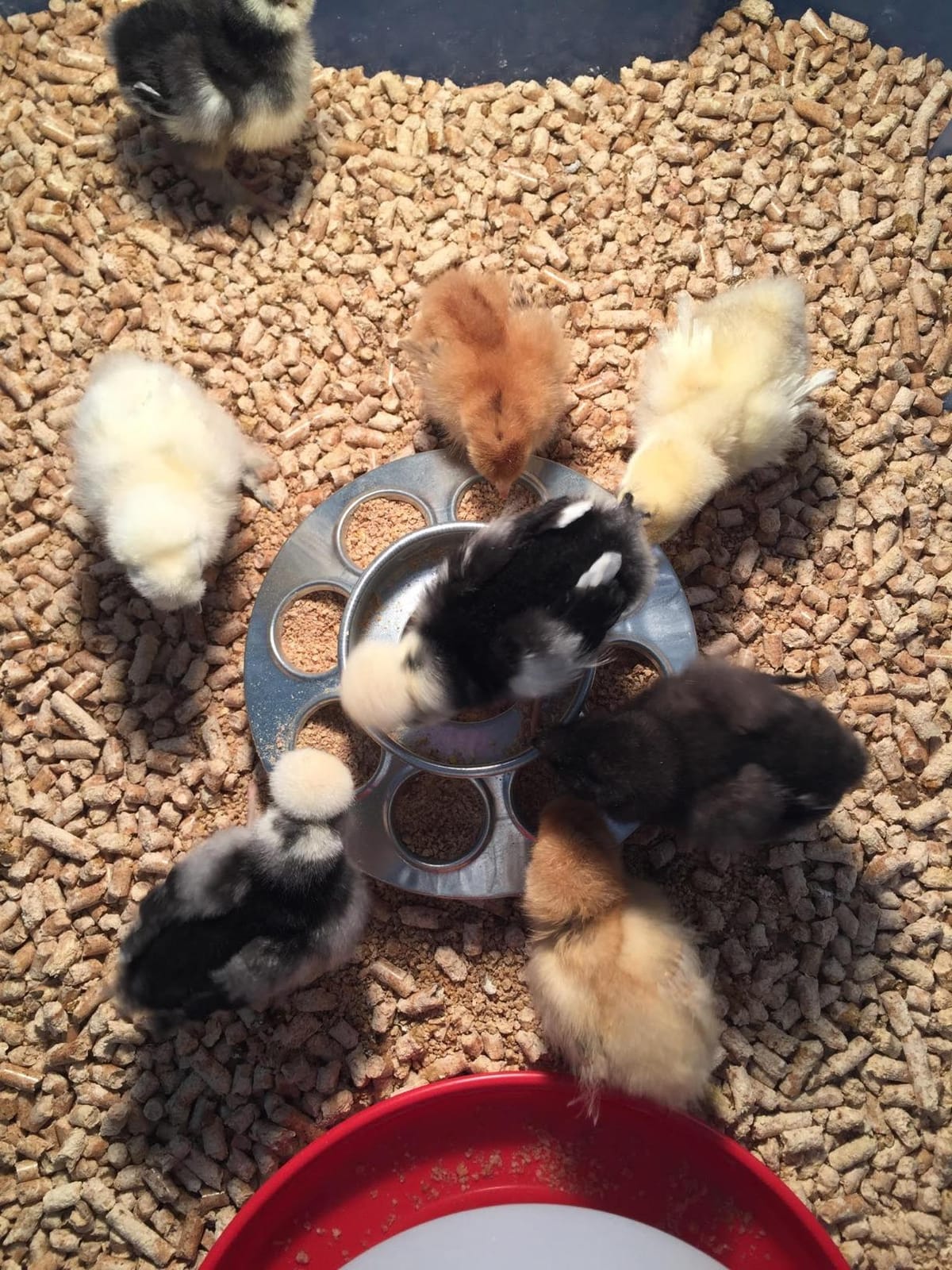
Top-fill 1.5 kg feeder plus 1.5L waterer
Three adjustable leg heights
1.4 lb
Model XJTZ-01
The top-fill lid is the feature that changes daily work in a brooder. Most gravity feeders need to be flipped to refill, which spills feed and lifts bedding into the base. This one has a removable lid on top and a patented filling design, so you scoop feed in without touching the base at all.
Both units have three folding leg heights and anti-tip bases, and the waterer reservoir is narrow and deep, which is the geometry that keeps a brooder waterer clean. The steel handle gives you the option of hanging either unit to open up floor space.
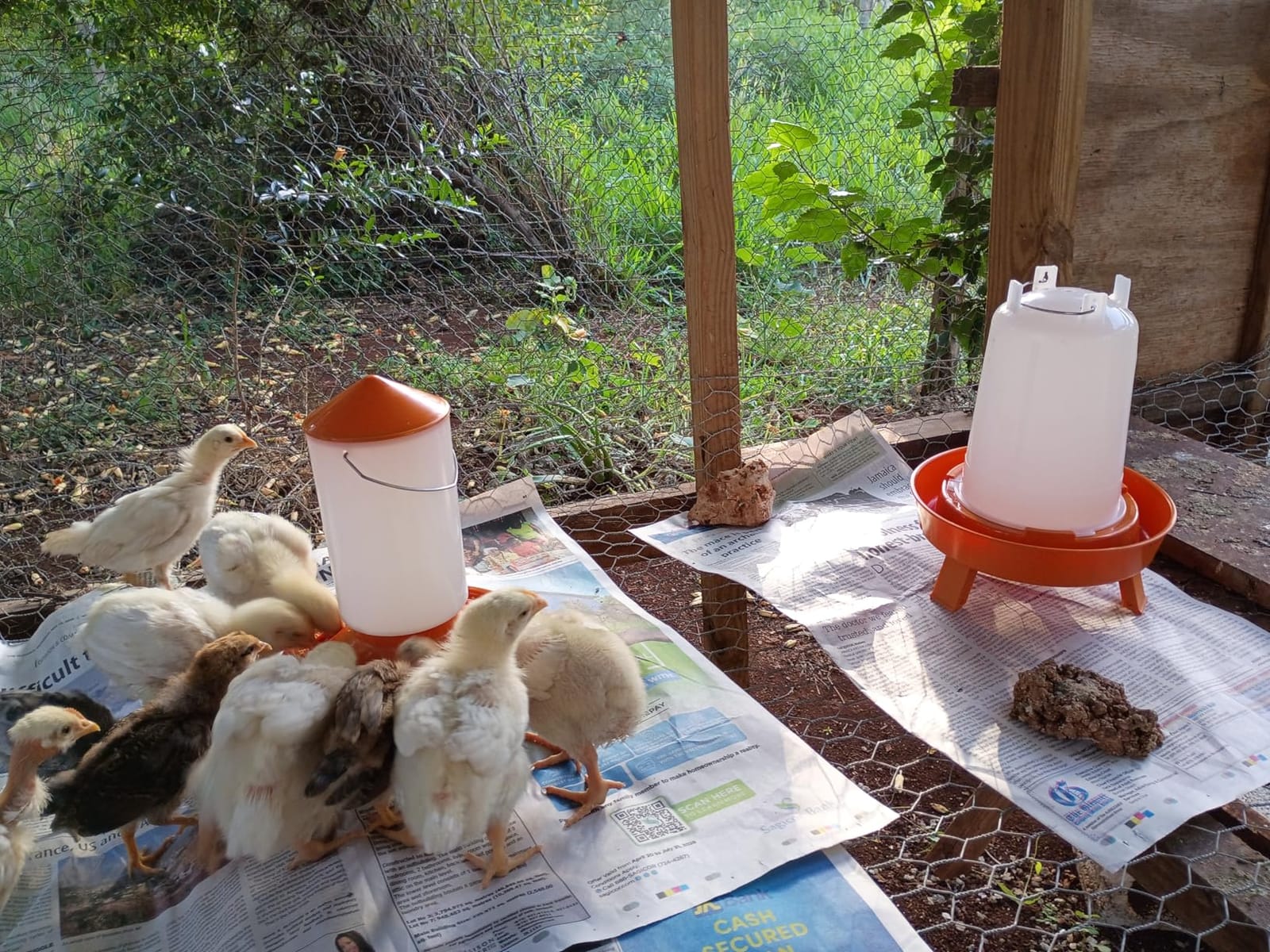
Reviewers are consistent about the waterer being the stronger half of this kit. The narrow channel, the lack of leaks, and the adjustable legs come up again and again. The waterer is the part we would keep if we could only keep one.
The feeder draws more criticism, specifically about crumble waste once chicks start scratching and kicking. That is a stage problem rather than a defect. It is fine for the first two weeks and needs a supplement by the time the birds are actively scratching feed everywhere.
The 1.5 kg and 1.5 L capacities give the kit real staying power for a brooder batch of a dozen to two dozen chicks, more than most of the smaller sets on this list. The included feed scoop is a small quality-of-life touch that most kits skip.
The handle is the durability weak point. Some owners report it flexing or detaching, so we would hang the pieces by the legs rather than rely on it once birds are large enough to swing on it.
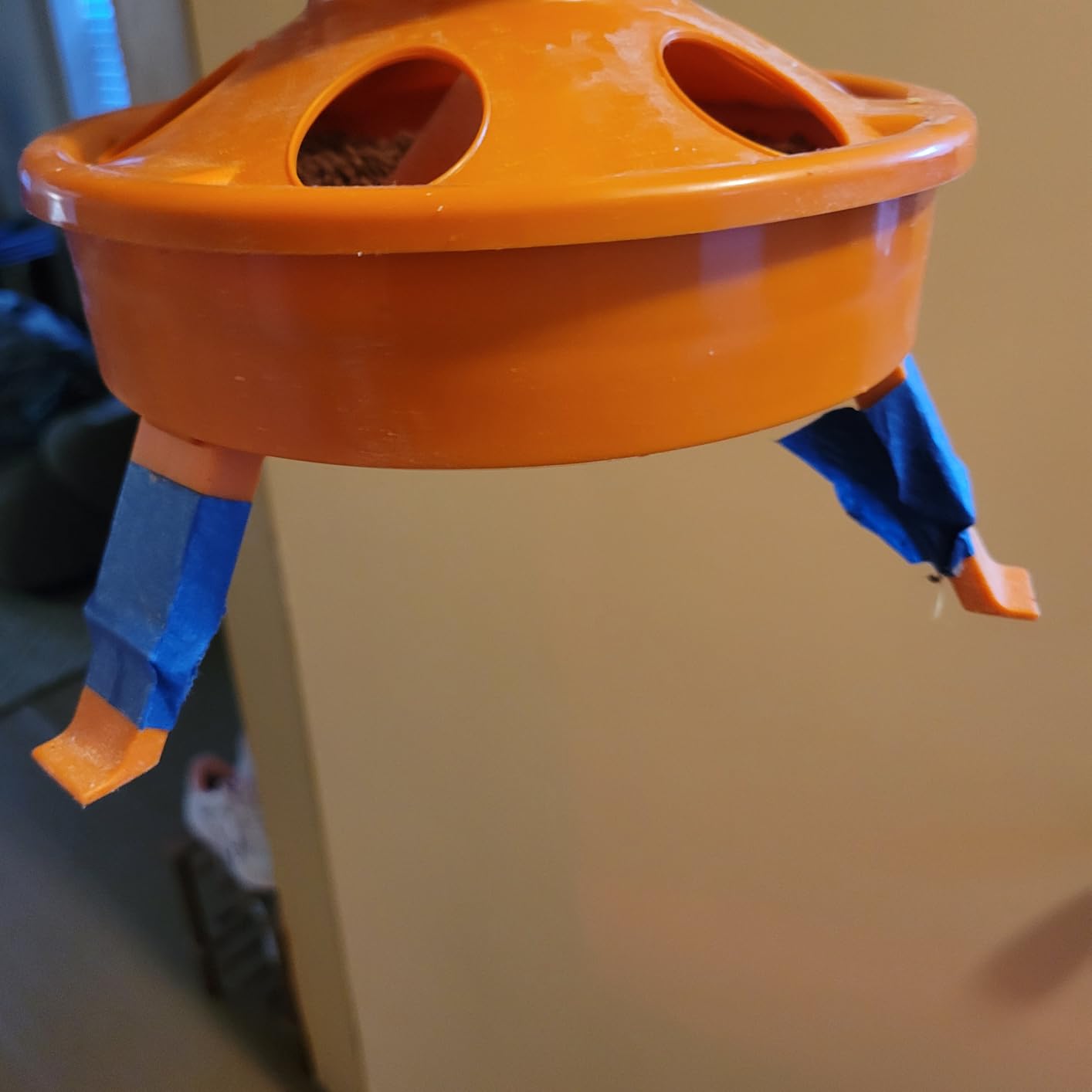
1 liter feeder plus 1.5 liter waterer
Three adjustable leg heights
BPA-free plastic
0.41 kg
This kit is built around the specific hazards of the first week. The waterer has an anti-drown moat, the base is anti-tip, and the feeding holes are arranged to reduce scratching and spillage. If you are starting chicks straight from a hatchery and cannot supervise every hour, those details are worth more than raw capacity.
Three adjustable leg heights on the waterer let the same unit cover newly hatched chicks and slightly older birds, and the handle means you can hang either piece when floor space gets tight. It is also listed as working for quail and ducklings.
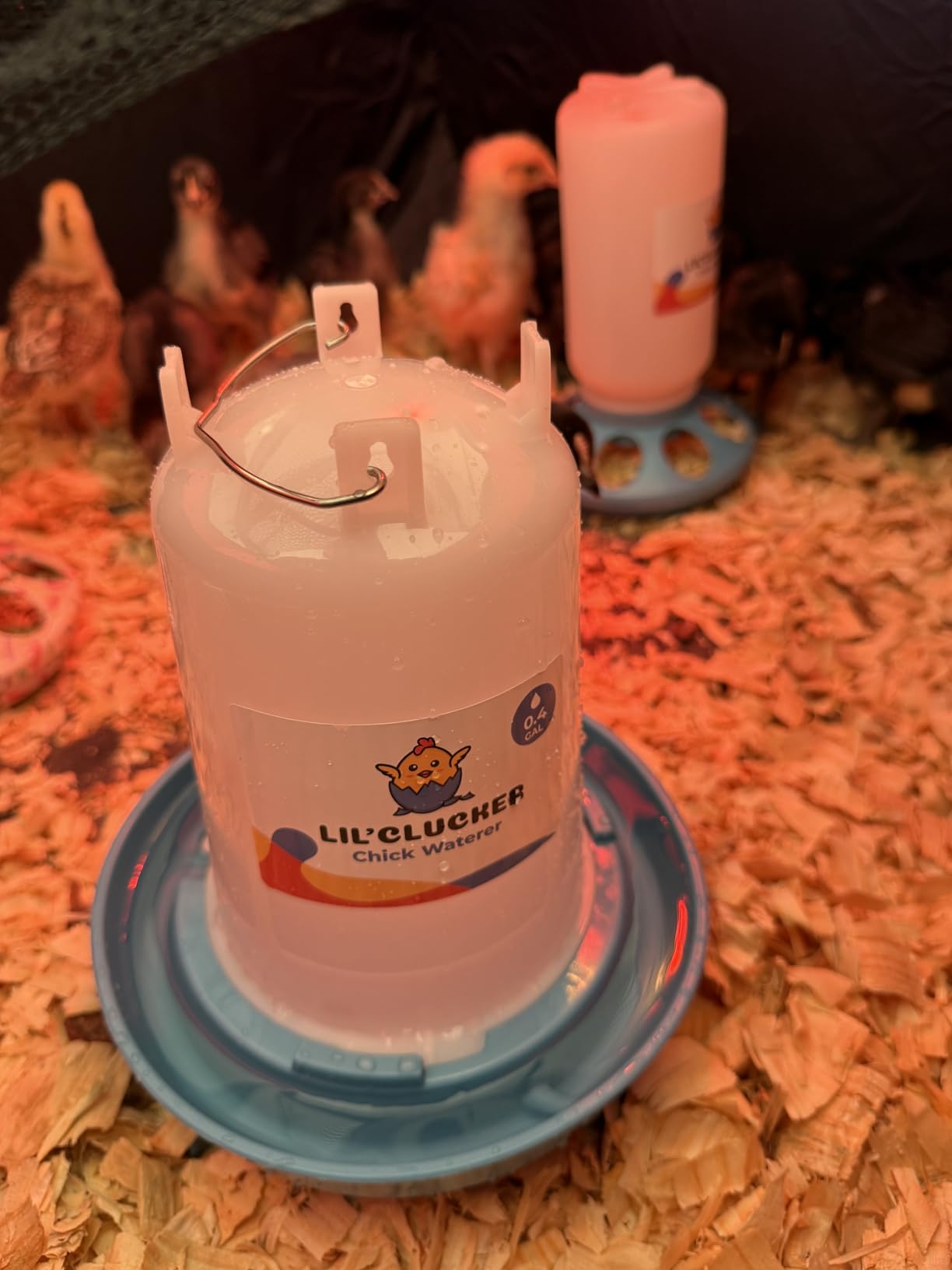
The moat around the waterer base is the clearest example of day-one thinking. Newly hatched chicks are clumsy, and a wide open trough in a dark brooder is an invitation. Owners consistently point to the moat and the three height settings as the reasons the set works past the first week.
Port arrangement matters just as much. Feed that sits too exposed gets kicked out and soiled, so a controlled hole pattern reduces both the mess in the brooder and the cost of the feed itself.
These are manual gravity-fed pieces with no automatic dispensing, and cleaning is hand wash only. There is also no top-fill mechanism, so refilling follows the usual flip-and-twist routine.
Capacity is sized for up to about a dozen chicks, or roughly three adult birds. Beyond that, add a second feeder rather than stretching this one.
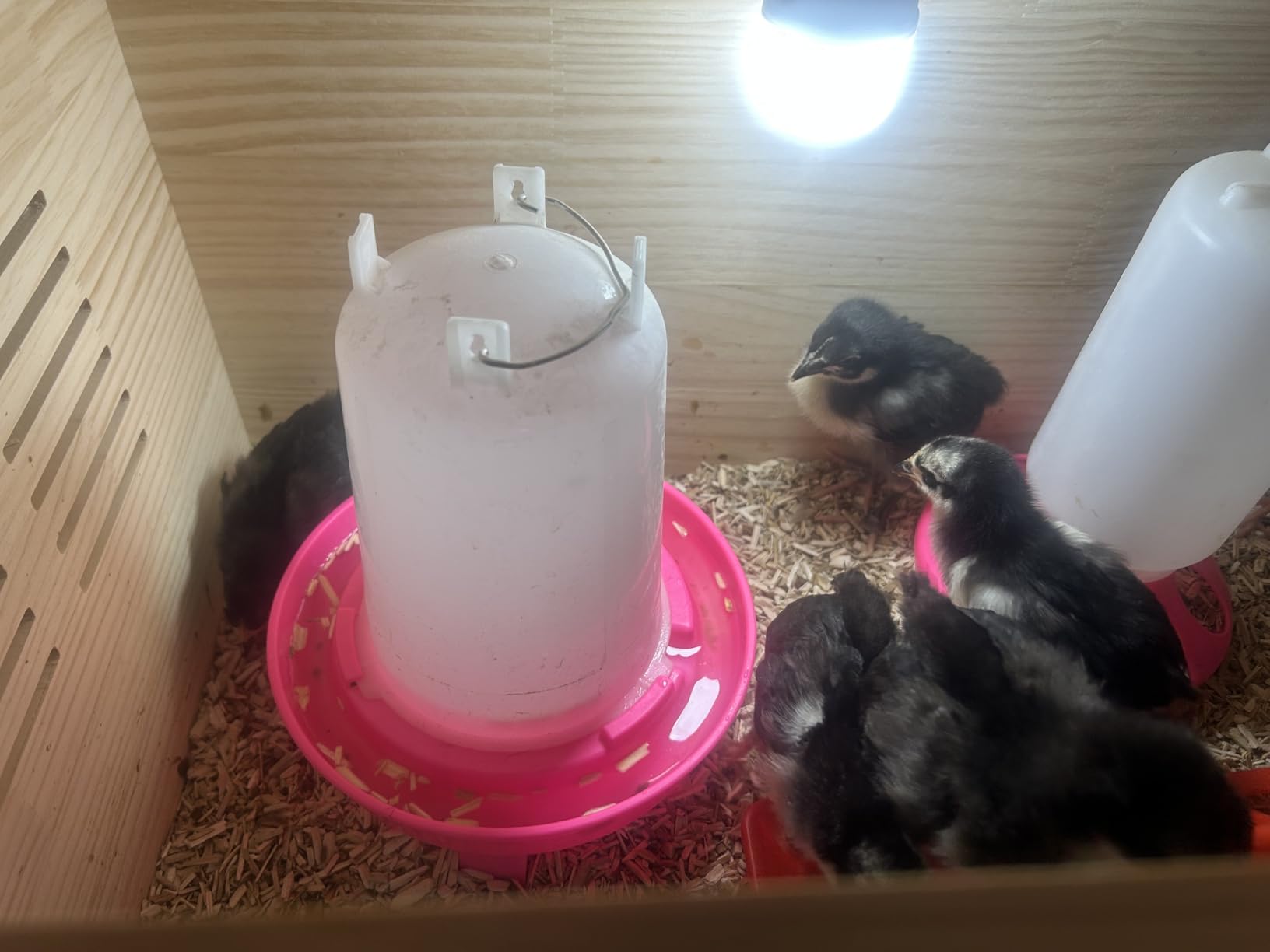
1L feeder plus 1L waterer
Eight feeding ports
13.44 oz
7.8 x 7.2 x 6.34 inch
This is the set for a brooder built from a storage box, where every inch of floor matters. At under 8 inches across, it leaves walking room for the chicks and puts the waterer where you can reach it without lifting half the flock out.
The wide-bottomed waterer is easier for small chicks to drink from than a narrow trough and easier to scrub, and the eight feeding ports on the feeder are enough for a dozen birds to eat at once. The automatic water outlet keeps the trough topped up from the inverted bottle.
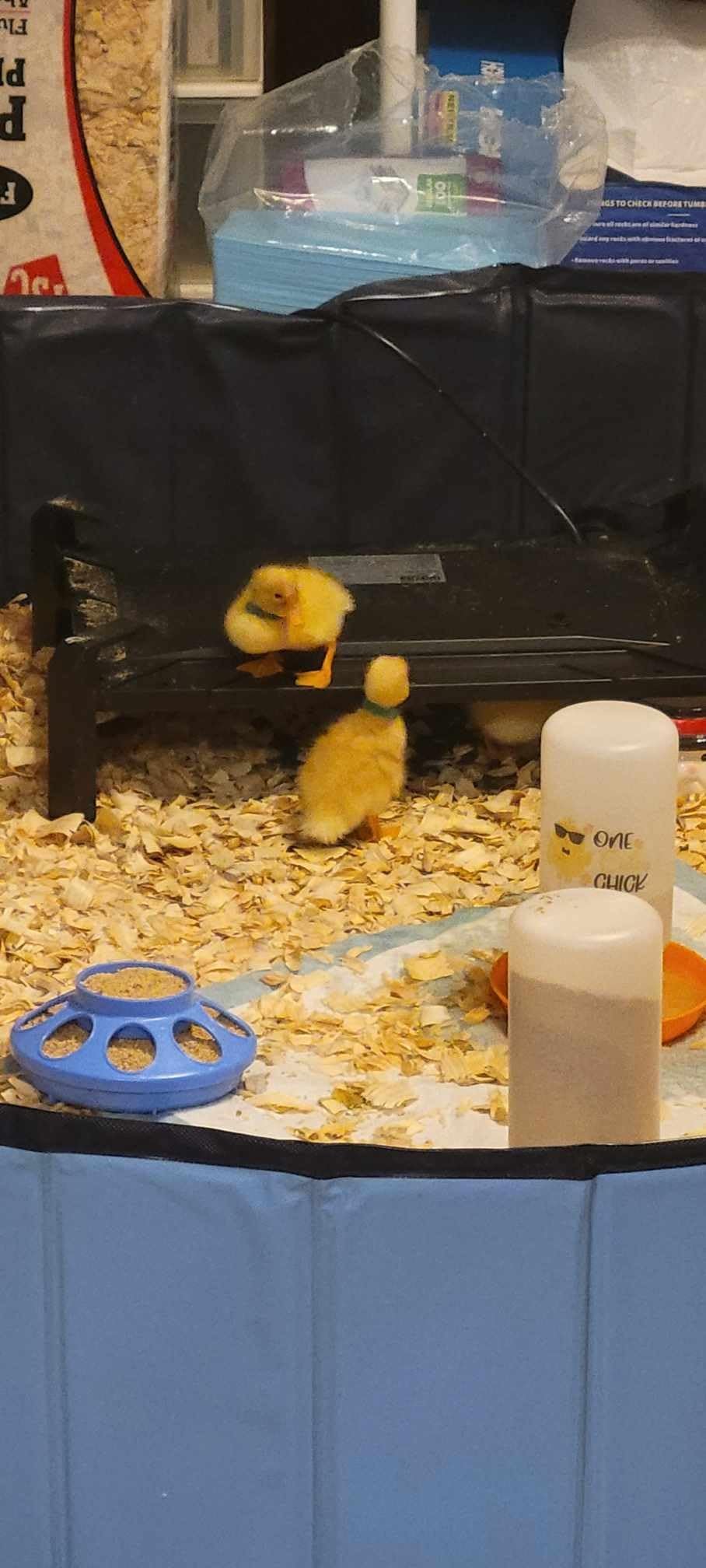
A wide, shallow water surface is easier for a day-old chick to find and easier for you to clean with a cloth, and that combination shows up repeatedly in owner feedback. The feeder and waterer bodies are also straightforward to fill.
Install is a screw of the base onto the bottle followed by inversion. Do not overtighten, because crossed threads are the most common assembly complaint and leave the unit unusable until the base is back off.
At 1 liter per unit, this runs dry quickly with more than four or five birds. It suits a first brooder of a small group where the whole setup needs to fit in a small footprint, and it is where the wide waterer base earns its keep.
Two other practical notes: the narrow bottle neck is hard to wash out internally, and the decorative graphics are stickers rather than printed mouldings, so expect them to wear off over repeated cleaning.
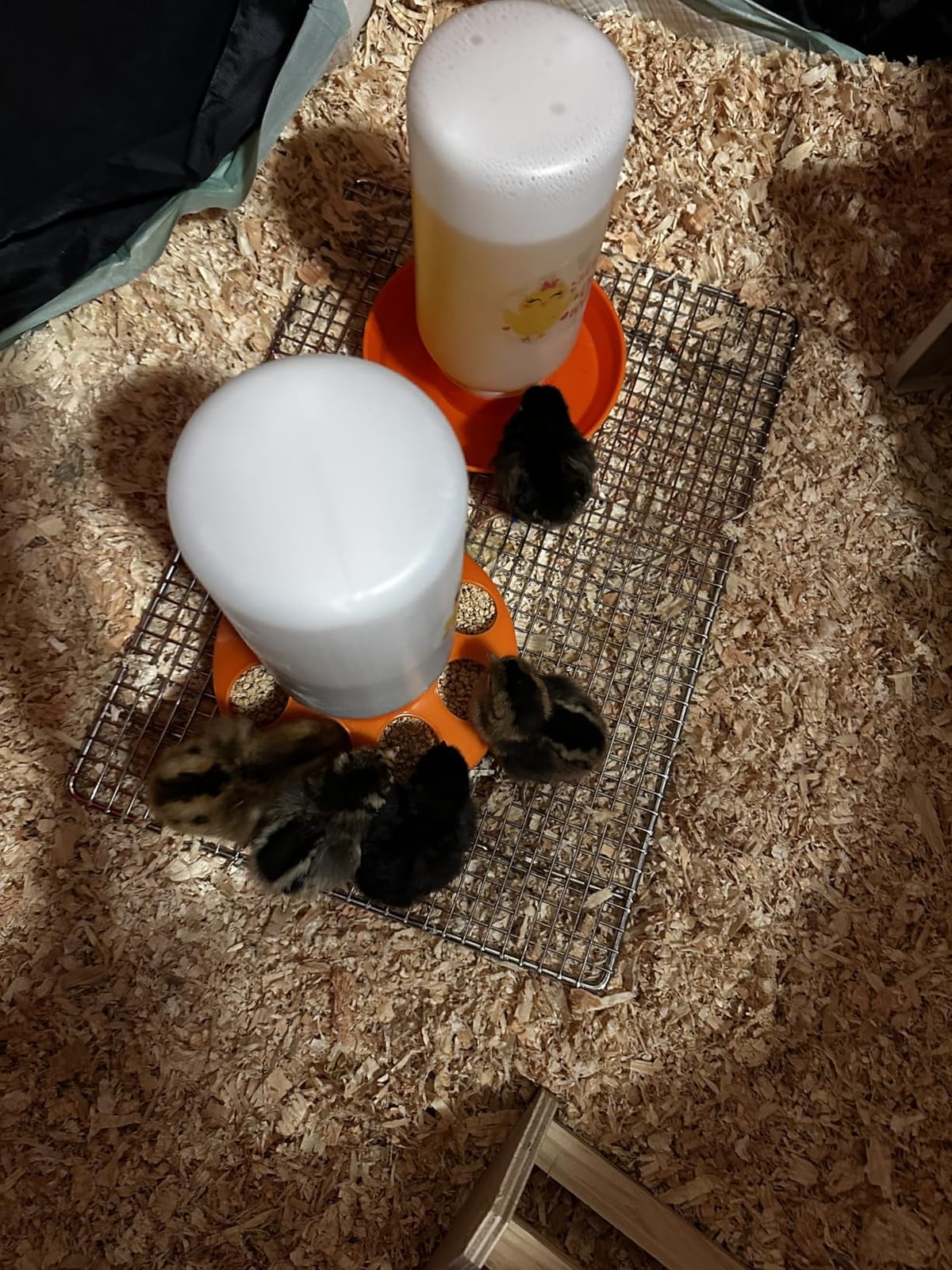
2.5 lb capacity
11.81 x 3.94 x 2.8 inch
Polyethylene plastic
Freestanding
Sometimes the right brooder feeder is the boring one. This is a 2.5 lb capacity polyethylene trough on a flip-top lid, and it does the one job a trough does well: putting a long, open feeding edge in front of every chick at the same time. No learning curve, no assembly, no moving parts.
It is also the gentler option in plastic terms, and that matters when chicks peck at the rim all day. The protective grille design over the feed is meant to keep chicks from kicking feed over or fouling it.
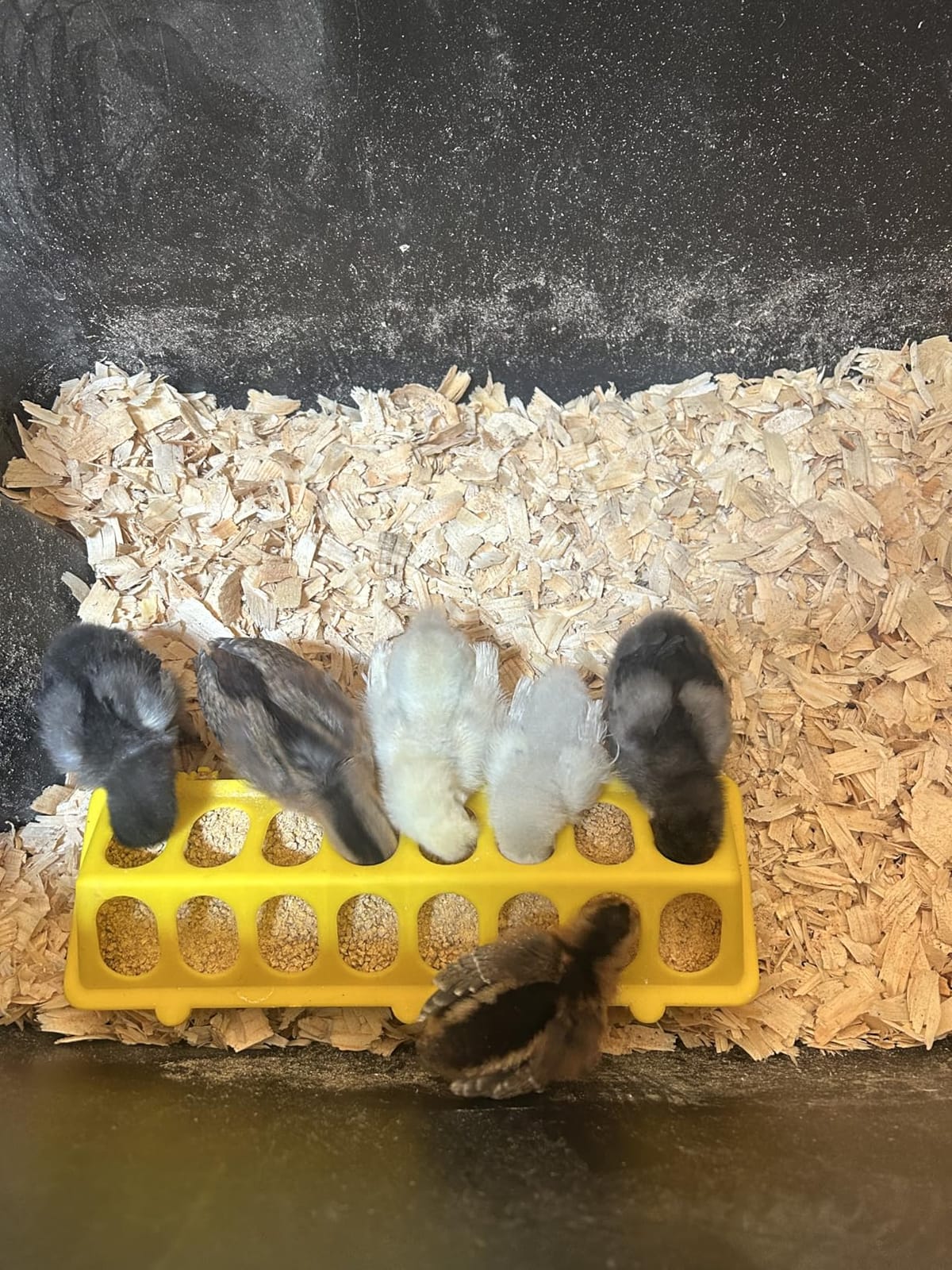
An 11.81 inch open trough gives a large number of chicks simultaneous access, which reduces the crowding and pecking-order scuffles you get around a narrow gravity port. For a brood that is already eating well and where you refill twice a day anyway, that is a perfectly reasonable trade.
It wipes clean in seconds. Open troughs have no threads, no lid gasket, and no tube to clog, so daily maintenance takes almost no time, which is a real advantage in damp bedding.
An open design cannot keep feed dry if chicks splash water into it or roost on the lid, and that is the exact scenario the other feeders on this list are engineered against. Bedding dampness plus exposed feed is also the fastest route to caked feed and mould.
It is feeder only, so a waterer is a separate purchase, and it is not gravity-fed, so you must add feed by hand. Treat it as a feed-out pan for chicks past the first week or two rather than a full-time system.
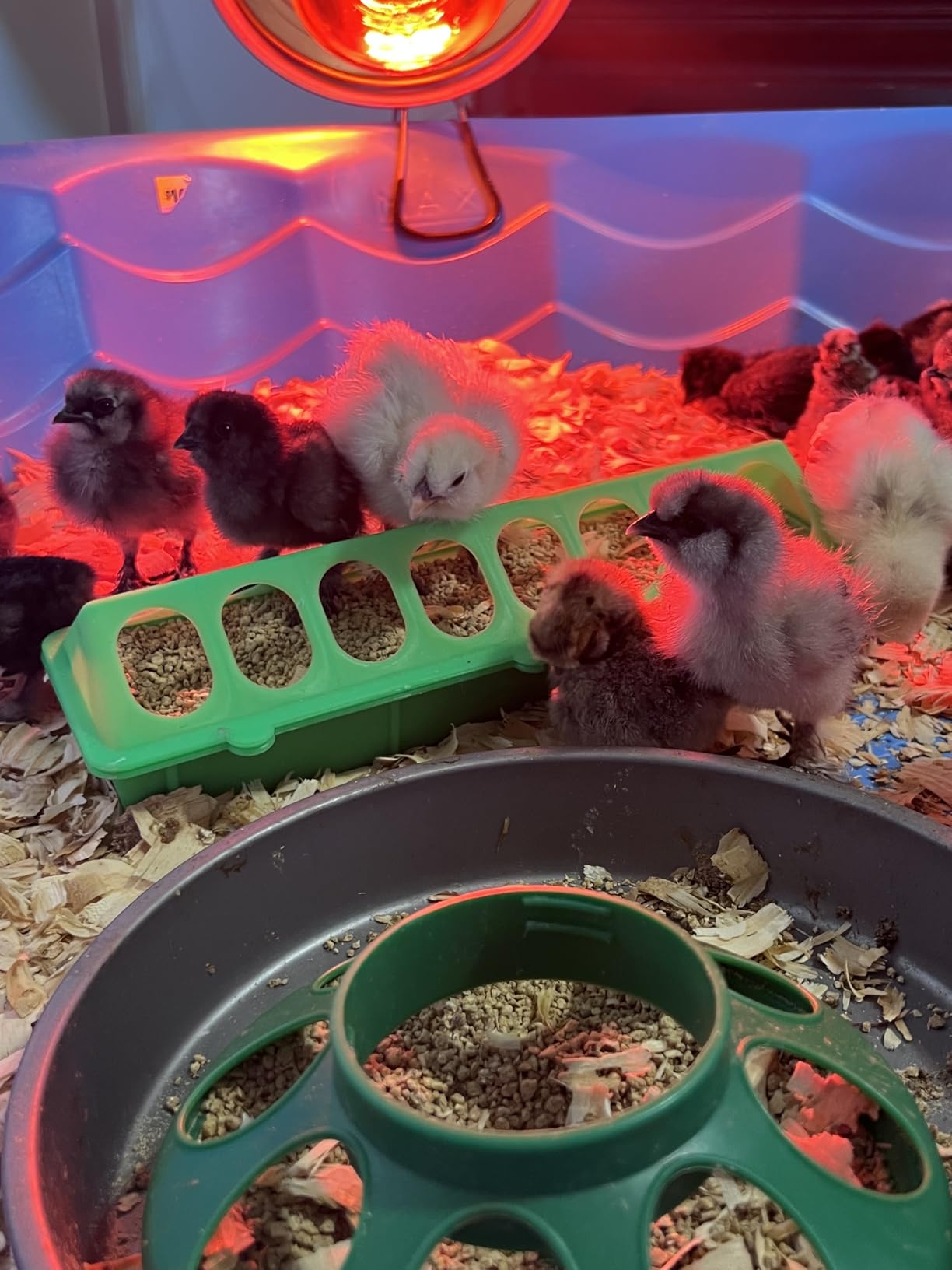
1 liter feeder plus 1 liter waterer
Feeder 9.45 x 6.1 inch
Hanging mount
Serves 12 chicks, 25 to 3 weeks
This pair is designed with an eye on what happens after the brooder. The same bottles that sit on the brooder floor in week one can be hung in the coop later, so you are not buying a second set of hardware. Mounting type is listed as hanging, and the handles make that a one-step change.
The gravity-fed design keeps water fresher and feed drier than an open trough, and the no-waste hole pattern is the feature owners mention most when they explain why they bought it.
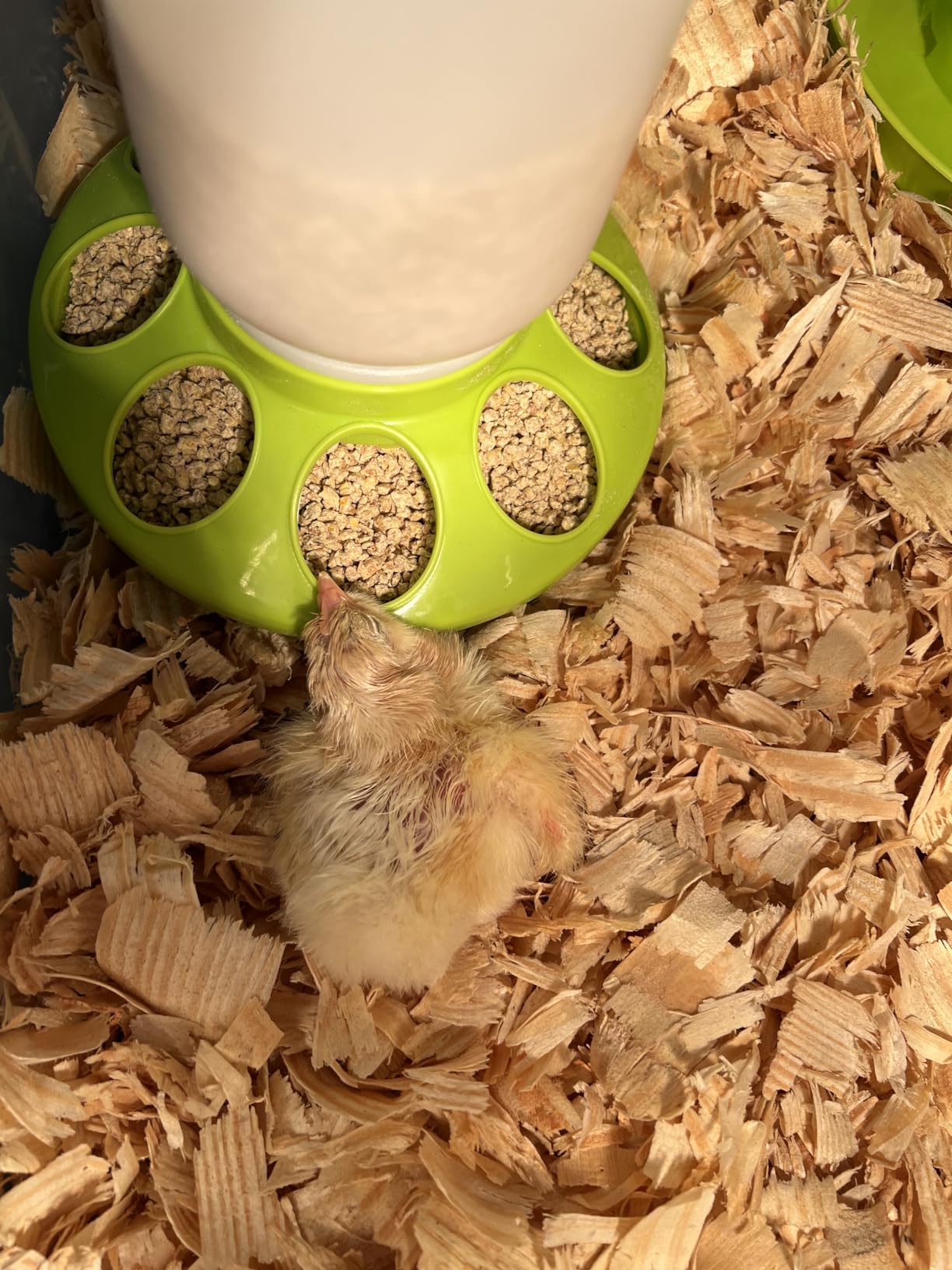
The manufacturer rates this set for up to 12 chicks, or up to 25 chicks through three weeks of age. That second number is the honest one for planning. A 1 liter reservoir shared across 25 chicks works in the first fortnight and then needs topping up more than once a day.
It works well for quail and ducklings too, which makes it a useful one-unit solution if you brood more than one kind of small bird in the same box.
Installation is a manual screw of the base onto each bottle, which is simple but does mean two pieces to assemble before day one. Cleaning is also manual, and there is no automatic dispensing on either half.
Owners generally accept both trade-offs, particularly if they already have bottles or plan to reuse the pieces in the coop.
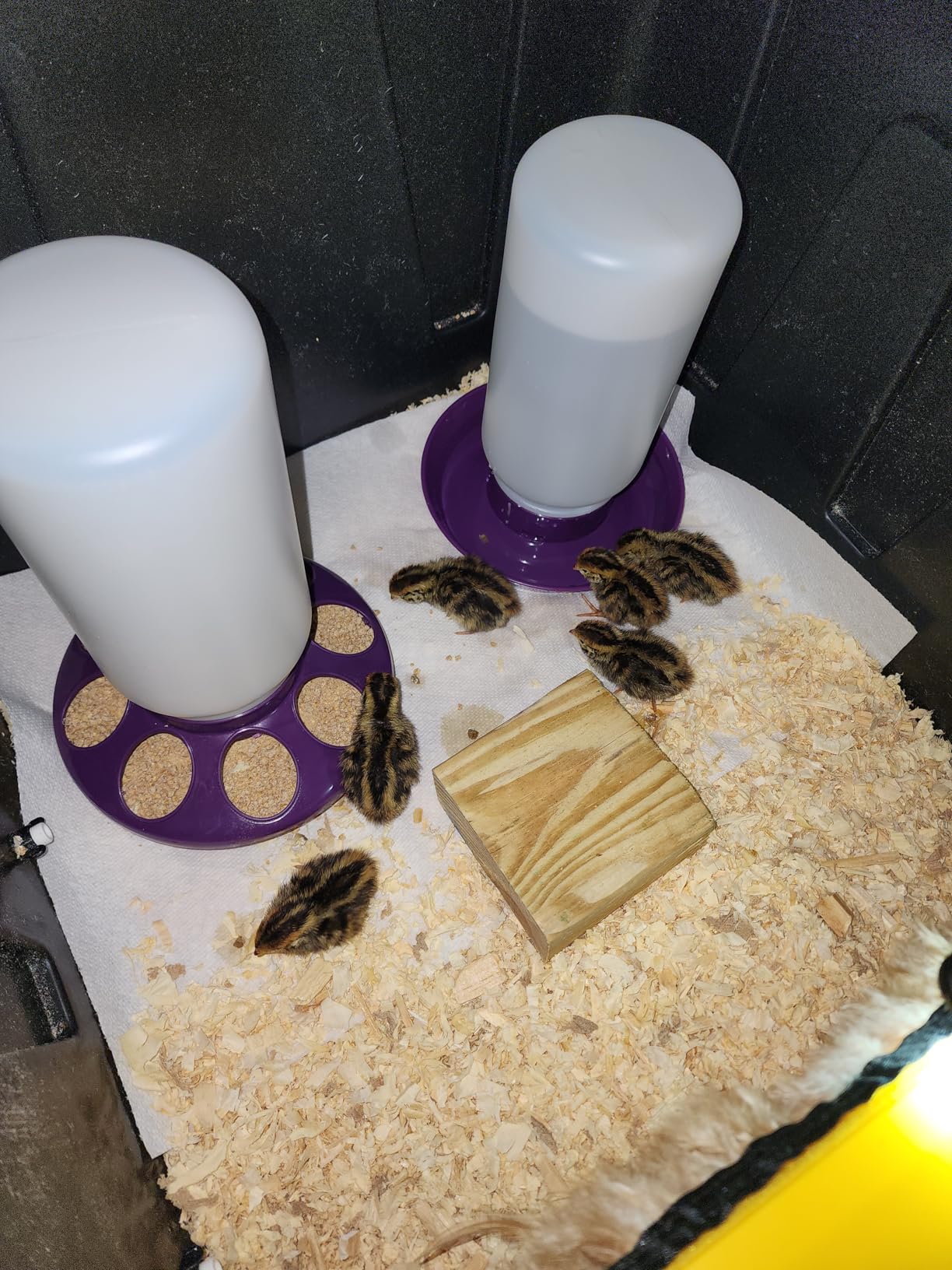
6.5 lb feeder plus 1.5L waterer
Three height settings on both units
1.52 lb
12 x 7.5 x 7.5 inch
This is the set to look at if you are brooding a large batch, or if you would rather not check the brooder more than twice a day. A 6.5 lb feeder and a 1.5 liter waterer is the largest capacity combination in this group by a clear margin, and the feeder refills from the top under a lid.
The no-perch lid is the design detail that matters most in a brooder. Chicks instinctively look for a high spot to sit, and a flat lid invites them straight into the feed. A pointed or shaped top turns the lid into something they slide off.
Both units adjust to three heights, which stretches the usable life of the set as chicks grow, and the feeder holes are designed to stop chicks from scratching food out. The wire handle allows hanging, so you can lift the pair into place or hang them clear of the bedding.
For a large brooder, the capacity means you are not opening the box on an hour-by-hour schedule. That is a real welfare benefit as well as a convenience one, since chicks that are not disturbed settle and rest more.
This is the lowest rated set here at 4.2, with a larger share of three-star feedback than the alternatives. The most common complaint is the waterer, which needs full inversion to refill rather than a top fill, so it is slower to service than the top-fill kits.
It is worth weighing that against the refill frequency. If you are not filling twice a day, the inversion is a smaller issue than it would be in a small brooder.
1L waterer plus two-piece trough
11.99 oz
2.5 x 3.3 x 7.9 inch
Model chick-03
This is the kit for small birds rather than a full-size brood. It comes with a 1 liter waterer and a two-piece food trough, and the trough format is well suited to bantams, quail, and ducklings because their size suits a low open edge better than a narrow gravity port.
Owners value the completeness and the translucent bodies, which let you check feed and water levels without opening anything or lifting chicks off the edge. The gravity feed system keeps a steady supply with less spill than a plain dish.
Bantams and quail eat low and often, and an open trough matches that. It is also a simpler unit to sanitise between broods, which matters if you are the kind of keeper who reuses the brooder box for successive hatches.
The troughs are made from food-grade material with rounded edges, which is the right call for birds that peck at the rim constantly. There is no hardware to install.
Scale is the limit here. A 0.3 gallon waterer and small troughs mean regular refilling for more than a handful of birds, and two troughs may not be enough feeding edge for a large brooder once chicks reach the stage where they eat steadily.
If you are brooding standard chicks, treat this as a small-group or quarantine unit. For bantams and quail, it is a sensible complete kit.
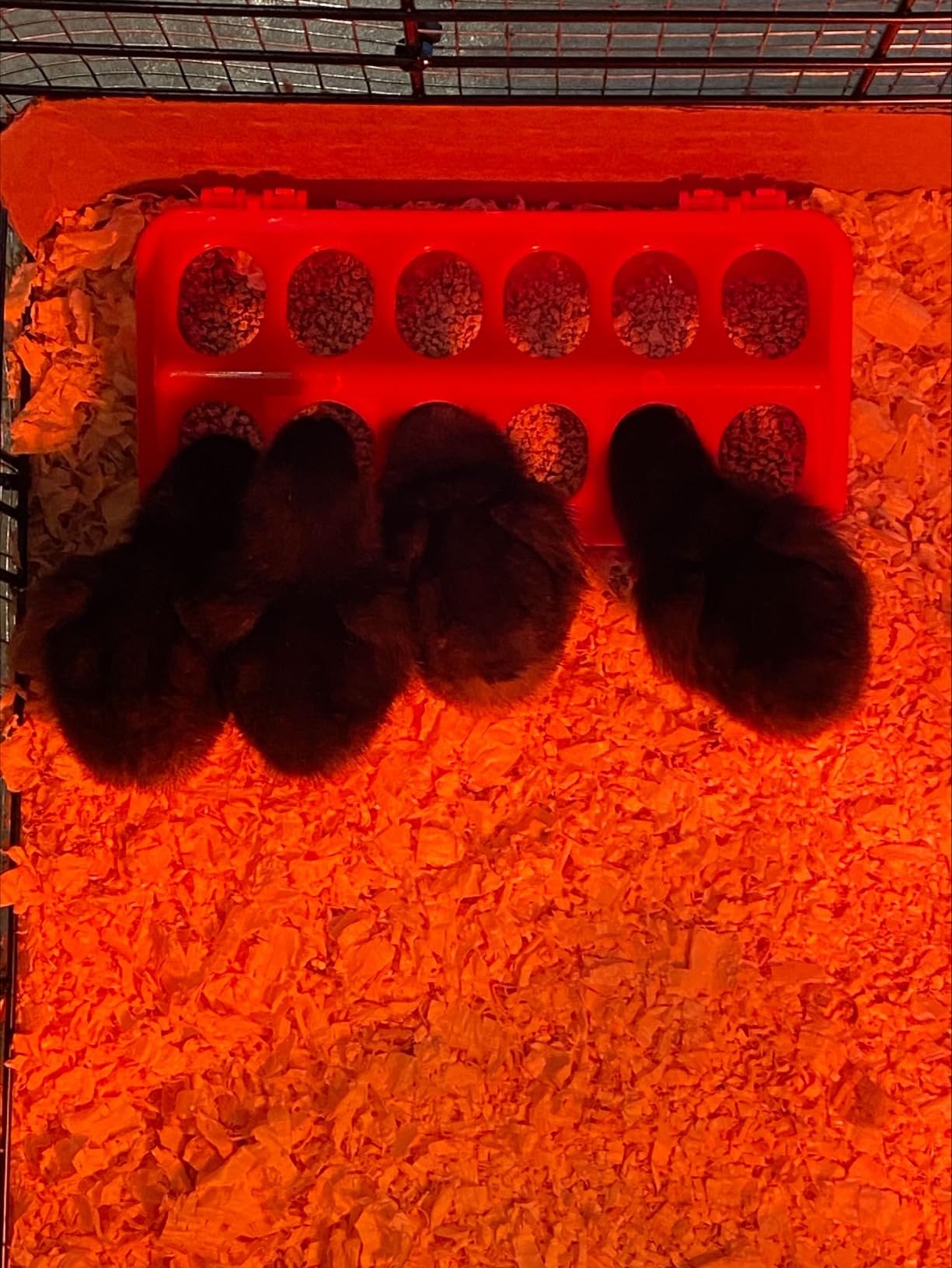
Feeder space means the linear inches of feeding edge where chicks can actually reach feed, not the capacity of the reservoir. Colorado State University 4-H guidance is 1 inch of feeder space per chick through four weeks of age, so a 12 inch trough handles about 24 chicks in that window. University of Alaska Fairbanks Extension gives broilers 1 linear inch up to two weeks, 2 linear inches from two to six weeks, and 3 linear inches after six weeks.
Those numbers are the fastest way to avoid buying too few. For 20 chicks in the first month you need roughly 20 inches of edge, which means two 12 inch troughs or a pair of jar feeders. For 50 chicks you would be looking at four or five units rather than one large one, and the reason is behavioural as much as physical: a single feeder lets the boldest chicks control access.
Run the number for each age stage and buy for the tightest one. Chicks grow fast, and a setup that is adequate in week one is usually short by week three.
Pre-starter feed is a finer crumb than standard chick starter, and it is fed in the first days after hatch. Feeder ports have to match that particle size. Ports that are too small mean chicks cannot get feed out, and ports that are too large mean they lose the crumb into the bedding, which is how caking and mould start.
For the first two or three days, plenty of keepers skip the feeder entirely. One recurring piece of advice on Backyard Chickens is to start with a small dish of mash and a separate dish of dry feed, then introduce a proper feeder once the chicks are standing steadily and reaching for it. That is a reasonable approach, and it costs nothing.
Whichever way you go, check the port against your actual feed before you fill the feeder. A crumb that falls straight through the holes is feed you are paying for twice.
Chicks climbing onto the feeder and soiling the feed is the most cited brooder feeder complaint, and it is the reason anti-roost design exists. Pointed lids, no-perch lids, and adjustable roofs all push chicks off the top so they cannot stand in the feed. One keeper on a Backyard Chickens brooder thread specifically credits an adjustable-roof feeder for keeping chicks out of the feed.
The general design principle worth remembering comes from adult feeder experience: deep, narrow ports discourage birds from reaching in and scratching feed out. A chick that cannot rake its foot through the port cannot dump the contents. Feeders with wide open troughs do the opposite, which is why they waste more.
If you already own a feeder with a flat top, a simple fix is to fit a length of poultry netting over the lid with a small spacer, or to place the feeder where the top is unreachable. Both stop the perching without buying a new unit.
Place feeders away from the corners and away from the outer edge of the heat source, so the hottest driest part of the brooder stays clear. Feed near a heat lamp edge invites wet bedding, and wet bedding near feed is what turns a feeder into a mould problem.
Run at least two feeding points for any brood over about 12 chicks, spread apart rather than side by side. This is the direct fix for dominant chicks guarding a single unit, and it is the same reason multi-roost systems work in coops.
Hanging a feeder saves floor space, but leave a few inches of clearance underneath so chicks can feed from the base edge. A feeder flush against the bedding is a feeder that picks up droppings.
For a mixed-age brooder, feed the smaller birds in a lower trough set and keep them away from the older birds, which will take the best spots and crowd the young ones out. A second, lower feeding point aimed at the small end of the box does more than any feeder design.
Feed caking happens when fine feed sits in a damp trough for days. Refill rather than top up, because a lot of old feed buried under fresh feed is where caking starts, and check the base at least once a day in a garage brooder. Open plastic troughs wash in seconds, which is a genuine advantage over screw-together units with threads and narrow bottle necks.
Between broods, disassemble everything you can, wash with hot soapy water, and let it dry fully before storing. A feeder that is still damp when chicks arrive is a feeder that will smell within a week.
Move to a pullet or grower feeder between four and six weeks of age, which is when chicks start reaching over a chick feeder and a deeper port design becomes more efficient. Up to that point a chick feeder is the right tool, and buying a full adult feeder for a six-week brooder is money spent on hardware you will use for a month.
The same first-week logic applies to the rest of a starter setup. Our guide to choosing the right bird feeder covers the difference between a hanging hopper and a platform style, which is a useful comparison once your chicks outgrow the brooder.
Provide 1 inch of feeder space per chick through four weeks of age, according to Colorado State University 4-H guidance. University of Alaska Fairbanks Extension adds that broilers need 1 linear inch up to two weeks, 2 linear inches from two to six weeks, and 3 linear inches after six weeks. A 12 inch trough therefore serves about 24 chicks in the first month.
For 20 chicks in the brooder you need about 20 inches of total feeding edge in the first month, so two 12 inch troughs or two jar feeders. Run two separate feeding points rather than one large unit, because a single feeder lets dominant chicks control access. Move to a grower feeder between four and six weeks.
Not in the first weeks. Adult feeders have ports and rims that are too high and too large for hatchlings, so chicks peck at the edge, lose feed into the bedding, and roost on the rim. A chick feeder with low, small ports or a shallow trough keeps feed reachable and waste down until you switch at four to six weeks.
Choose a feeder with a pointed lid, a no-perch lid, or an adjustable roof so there is no flat surface to sit on. Hanging the feeder also helps. If you already own a flat-topped feeder, fit poultry netting over the lid with a small spacer so chicks cannot balance on it.
Check and refill at least once a day, and wash the base every two or three days during brooding. Refill rather than top up, because old feed buried under fresh feed is the main cause of caking. Between broods, disassemble, wash in hot soapy water, and let the parts dry fully before storing.
The most common mistakes are using one feeder for a whole brood, placing feeders in the corners or right under the heat lamp where bedding is damp, and buying a tall adult feeder instead of a low chick feeder. Topping up feed instead of replacing it, and leaving a flat lid for chicks to perch on, cause most of the rest.
If you want one feeder that has been proven over thousands of broods and doubles as a waterer, the Lixit reversible unit is our pick for a brood of 12 to 15 chicks. For a first brooder where you need both a feeder and a waterer in one box, the ZenxyHoC set covers both jobs in one purchase. If you already own Mason jars and want something that outlives the brooder, the Little Giant steel base is the better long-term buy.
For a brood above 30 chicks, the Hen’s Choice set has the capacity to keep the brooder supplied without constant checking, and the top-fill Eggluuz feeder is the one to choose if refilling without inverting the jar matters to you. For bantams, quail, or ducklings, the Kculehtlla trough kit or the open MACGOAL trough suit small birds better than a narrow gravity port. And for anyone raising chicks past the first fortnight, whatever you choose should be backed by a second feeding point and a lid nothing can perch on.
Whichever unit you settle on, size it with the one-inch-per-chick rule for the first four weeks, and you will get through the brooder stage without buying a second feeder. That is the whole goal of a 2026 chick season.