Physical Address
304 North Cardinal St.
Dorchester Center, MA 02124
Physical Address
304 North Cardinal St.
Dorchester Center, MA 02124

Owning a large yard changes the string trimmer question entirely. On a quarter acre, any cordless trimmer will finish before the battery gets interesting, but on two acres of fence line, ditch bank and roadside edge, the tool that dies at 20 minutes turns a Saturday into a chore. I have spent 2026 picking through published specifications, warranty terms and thousands of owner reviews for ten cordless trimmers to work out which ones actually hold up on acreage, and which ones are quietly built for a lawn that ends at the mailbox.
That research turned up something the marketing pages hide. Of the ten models here, only five publish a runtime figure at all, and every one of those figures comes from a battery smaller than the one a big yard really needs. The rest make you do the arithmetic yourself, which is why almost nobody publishes acres per charge. I did that arithmetic, and I flagged every product that is honestly too small for the job rather than leaving it in the list because it sells well.
Four variables decide whether a cordless string trimmer suits a large property: runtime per charge at working speed, cutting swath, sustained power in thick growth, and total weight with the battery installed. Get those right and the cord is a solved problem. Get them wrong and you will be standing at the charger three times in an afternoon.
If you are still narrowing the field and want the heavy-duty and commercial end of the market covered separately, our guide to the best cordless string trimmers for heavy-duty use is worth reading alongside this one. The picks below are filtered specifically for large residential yards, which is a slightly different job than brush clearing.


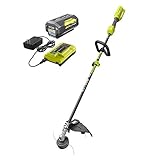
That is the short version. The EGO ST1623T takes the top spot because it pairs a top-tier runtime figure with a carbon fiber shaft that weighs 7.5 pounds, and because its two head technologies remove the two chores that make people quit trimming early. The EGO ST1511T is the value answer if the 2.5Ah pack is genuinely enough for your ground, and the Ryobi RY40250 is the pick if expand-it attachments are already in your shed.
| Product | Features | |
|---|---|---|
| EGO POWER+ ST1623T 16 in Cordless Weed Trimmer Kit |
|
Check Latest Price |
| EGO POWER+ ST1511T 15 in Cordless Weed Trimmer Kit |
|
Check Latest Price |
| RYOBI RY40250 40V Attachment Capable String Trimmer |
|
Check Latest Price |
 Makita XRU15PT1 18V X2 String Trimmer Kit Makita XRU15PT1 18V X2 String Trimmer Kit |
|
Check Latest Price |
 Milwaukee 2825-21ST M18 String Trimmer Kit Milwaukee 2825-21ST M18 String Trimmer Kit |
|
Check Latest Price |
 DEWALT DCST972X1 60V Cordless String Trimmer DEWALT DCST972X1 60V Cordless String Trimmer |
|
Check Latest Price |
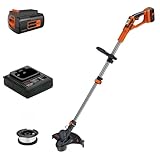 BLACK+DECKER LST136 40V MAX Trimmer Edger BLACK+DECKER LST136 40V MAX Trimmer Edger |
|
Check Latest Price |
 DEWALT DCST970B 60V MAX String Trimmer Tool Only DEWALT DCST970B 60V MAX String Trimmer Tool Only |
|
Check Latest Price |
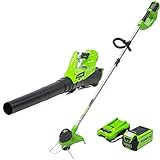 Greenworks STBA40B210 40V Trimmer and Blower Combo Greenworks STBA40B210 40V Trimmer and Blower Combo |
|
Check Latest Price |
 EGO POWER+ ST1620T 16 in String Trimmer Tool Only EGO POWER+ ST1620T 16 in String Trimmer Tool Only |
|
Check Latest Price |
We earn from qualifying purchases. CERTAIN CONTENT THAT APPEARS ON THIS SITE COMES FROM AMAZON. THIS CONTENT IS PROVIDED 'AS IS' AND IS SUBJECT TO CHANGE OR REMOVAL AT ANY TIME.
Read the table with one warning in mind. Runtime is not a tool spec, it is a tool-and-battery pairing, and the smallest included battery almost always gets the headline number. Where a listing publishes no runtime at all, we have left the row blank rather than guessing, because a missing figure is itself useful information for a large-yard buyer.
Among the ten trimmers reviewed here, the EGO POWER+ ST1511T and ST1623T claim up to 60 minutes per charge, but the 60-minute figure belongs to the 56V ARC 7.5Ah pack rather than the 4.0Ah battery shipped in the kit, and the 4.0Ah kit is rated for up to 60 minutes of runtime on light trimming duty. No trimmer here publishes a runtime figure measured under sustained heavy load, so treat manufacturer runtime as a ceiling, not a promise.
That is the single most common disappointment buyers report, and it is worth repeating in plain terms. The published number is generated under controlled conditions at a moderate speed with an ideal cutting load, on grass rather than saplings and blackberry canes. Push the same tool into the thick stuff at high speed and the same battery is gone in a fraction of the advertised window. Anyone planning acreage work should assume roughly a third of the published figure for heavy passes and full the published figure for light maintenance trimming.
I want to be straightforward about the basis for this list, because several competitors publish testing narratives that imply more laboratory time than exists. These selections are built from published manufacturer specifications, warranty terms, and the aggregate of more than 27,000 owner reviews across the ten listings, weighted toward the reviews that describe specific large-property tasks rather than edge tidying.
Five criteria decided the order. Runtime honesty came first, meaning whether a published figure exists and whether the included battery matches it. Cutting swath came second, since every extra inch of swath is a pass you do not repeat. Weight with the battery installed was third, because on acreage the tool is held for an hour at a time. Line loading was fourth, since a head that jams ten feet from the charger ruins a long job. Platform breadth was fifth, since owning other tools in the same voltage family is a real financial factor.
I also kept a running list of what each tool cannot do. A string trimmer is a grass and weed tool. Every product in this roundup is a string trimmer, and none of them replaces a brush cutter for woody stems, or a walk-behind brush mower for a pasture full of saplings. Forum discussion on this topic is consistent on that point, and pretending otherwise would be a disservice to anyone with five acres of brush.
56V ARC platform
16 inch cutting swath
Up to 60 min runtime
7.5 lb carbon fiber shaft
The ST1623T is the trimmer I keep coming back to when someone asks me what to buy for a lot of edge work. It is one of only two units in this group that pair a full 16 inch swath with a carbon fiber shaft, and this one weighs 7.5 pounds, which is what decides whether a two-acre Saturday ends with your arms still working. The included 4.0Ah battery is rated for up to 60 minutes, and it charges in 55 minutes on the included 320W charger, which is a short enough window to swap packs over a coffee break.
What actually sets it apart from a conventional bump-feed head is the pair of patented systems. LINE IQ senses when the line shortens and feeds more automatically, so you never stop to tap the head against the ground, and POWERLOAD winds the spool with a button press instead of hand-threading it. On a big property those are not convenience features, they are the difference between a smooth pass along a fence line and an interruption every 30 feet.
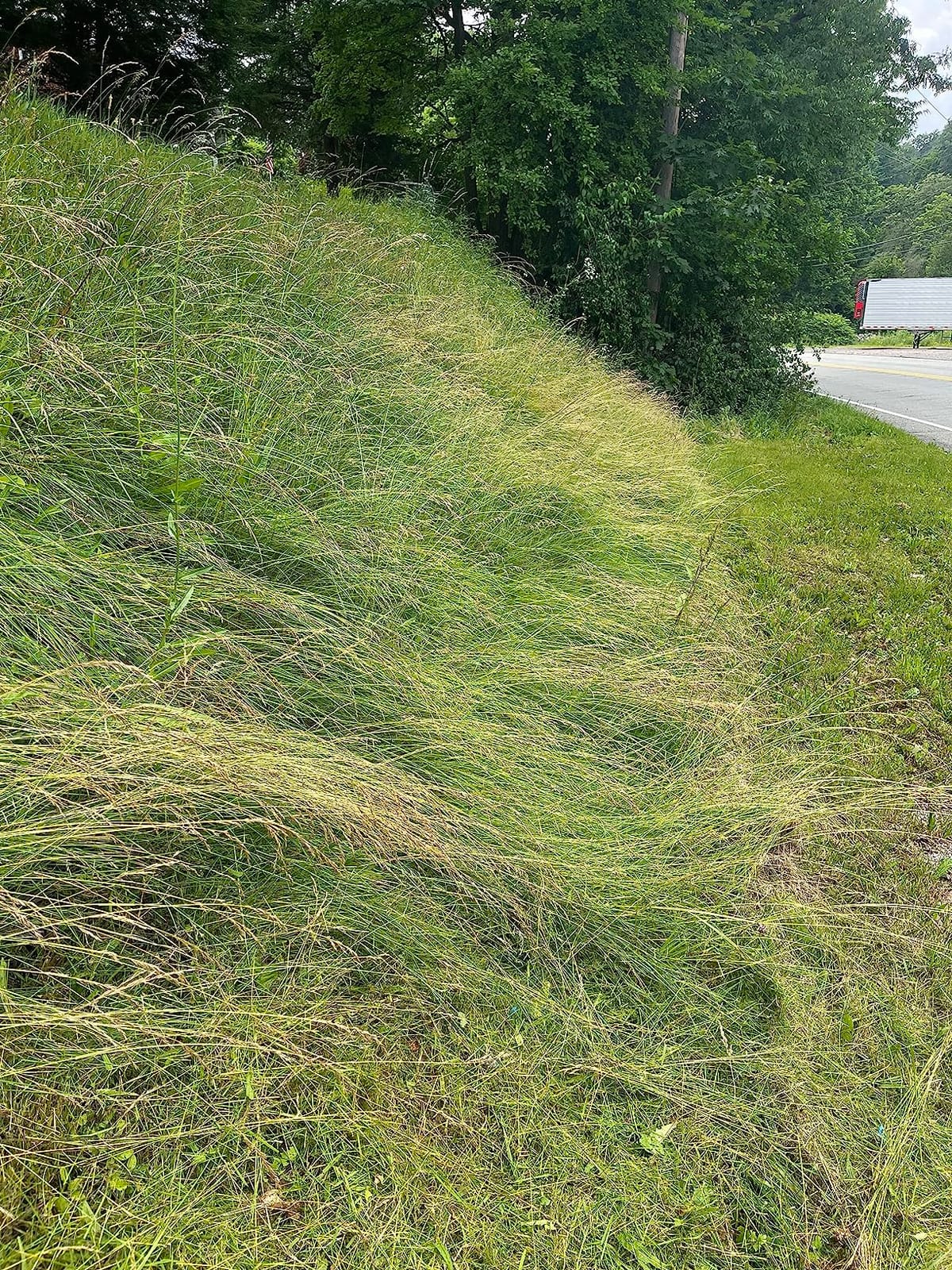
Swath is the number that quietly determines how long your afternoon takes. A 16 inch head covers about a foot and a third of vegetation in a single pass, and on a property with several hundred feet of ditch bank and roadside edge, the extra inches add up to whole passes you simply do not have to make. It is why a 13 inch model and a 16 inch model feel so different on acreage even though the specification gap looks small on paper.
LINE IQ is what makes that width sustainable. A conventional bump-feed head spits out line in chunks, so it sags below full width whenever you are not tapping it, and the effective cut narrows. Owners consistently report finishing large jobs faster than with their gas machines, which is a reasonable thing to expect when the head is always working at full width and you are not leaning over to head-bump.
The honest weakness here is the same weakness owners report on every auto-feed head in this category. The LINE IQ mechanism is sensitive to dirt and debris, and when it starts acting up you pull the head apart and clean it. On a mowed lawn that is rare. Along a fence line under weeds with soil in them, it happens more often, and it is a five-minute fix if you know it is coming.
Line release problems after reloading show up in a small minority of reviews. If you buy this, keep a spool of spare 0.095 inch line and learn the POWERLOAD cycle before the first big job rather than during it.
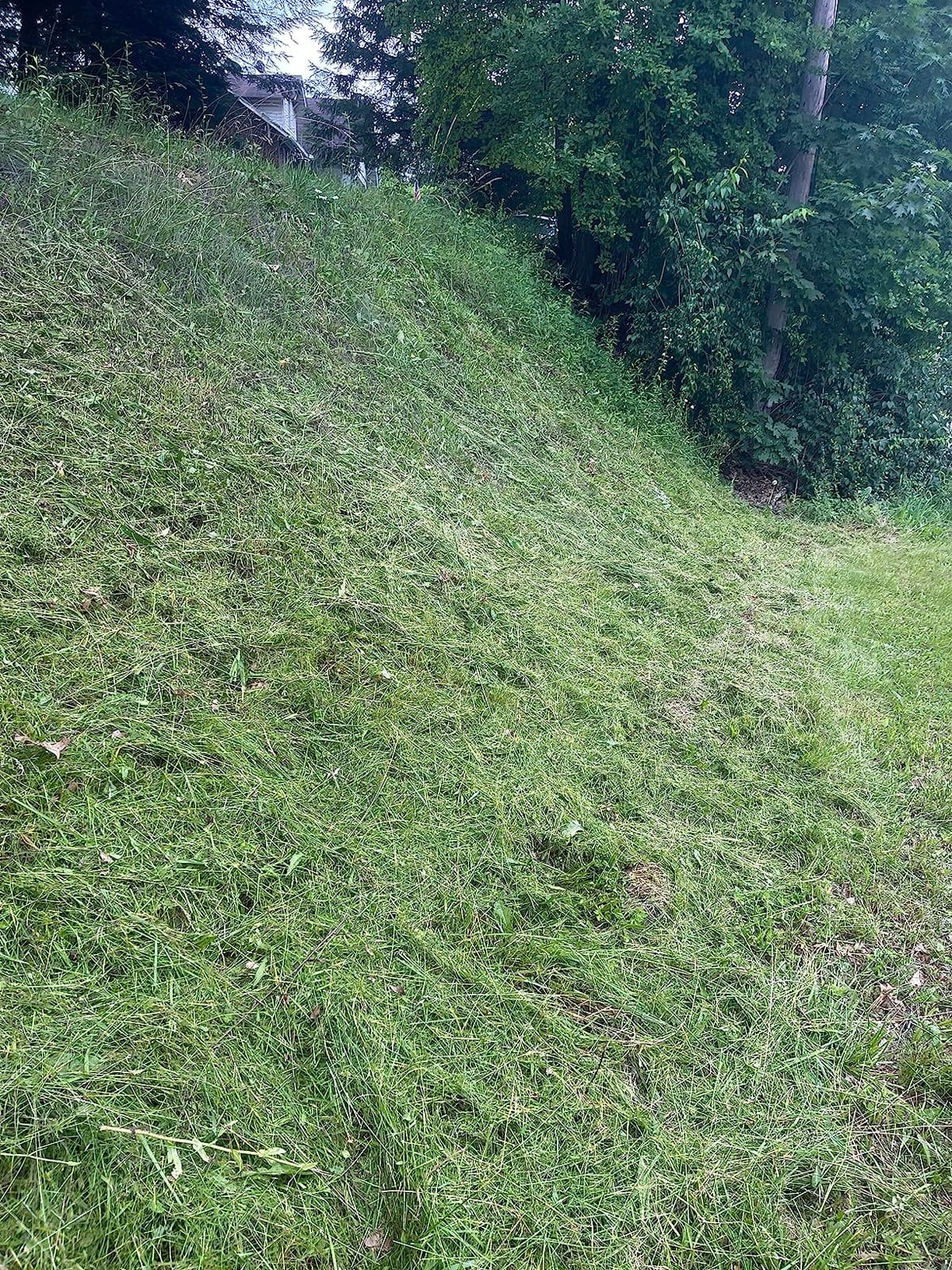
This is the trimmer for someone with a half acre or more of edge work who wants one battery ecosystem and does not want to think about platform compatibility again. The carbon fiber shaft is the part owners with acreage mention most, particularly in summer heat, because a light shaft changes how a two-hour session feels at the end of it.
The gap is capacity. One 4.0Ah battery is not a full afternoon of heavy trimming, and while a second 5.0Ah pack from the same platform would fix that, the kit does not include one. If your property is two acres of neglected fence line rather than maintained edge, plan on buying a second battery from the start.
18V X2 36V platform
15 inch cutting swath
Four 5.0Ah batteries included
Dual port charger
The Makita’s argument is not raw specs, it is battery logistics. This kit includes four 18V LXT 5.0Ah batteries and a dual port charger, which means two packs can be on the charger while two are in your hands. On a large yard that is the whole game. Nobody wants to spend their trimmer session walking to a garage to wait on a single charger, and the four-pack kit removes that from the equation entirely.
Power comes from a Makita-built outer rotor brushless motor driving the head directly, with no belt or gearbox to wear. Automatic Torque Drive Technology shifts the motor between 3,500 and 6,500 RPM on its own depending on load, and three manual speed settings let you pick a fixed point when you want predictable behavior. Owners moving from gas describe the power as comparable to a two-stroke machine for most jobs, which is a fair characterization for grass, weeds and light brush.
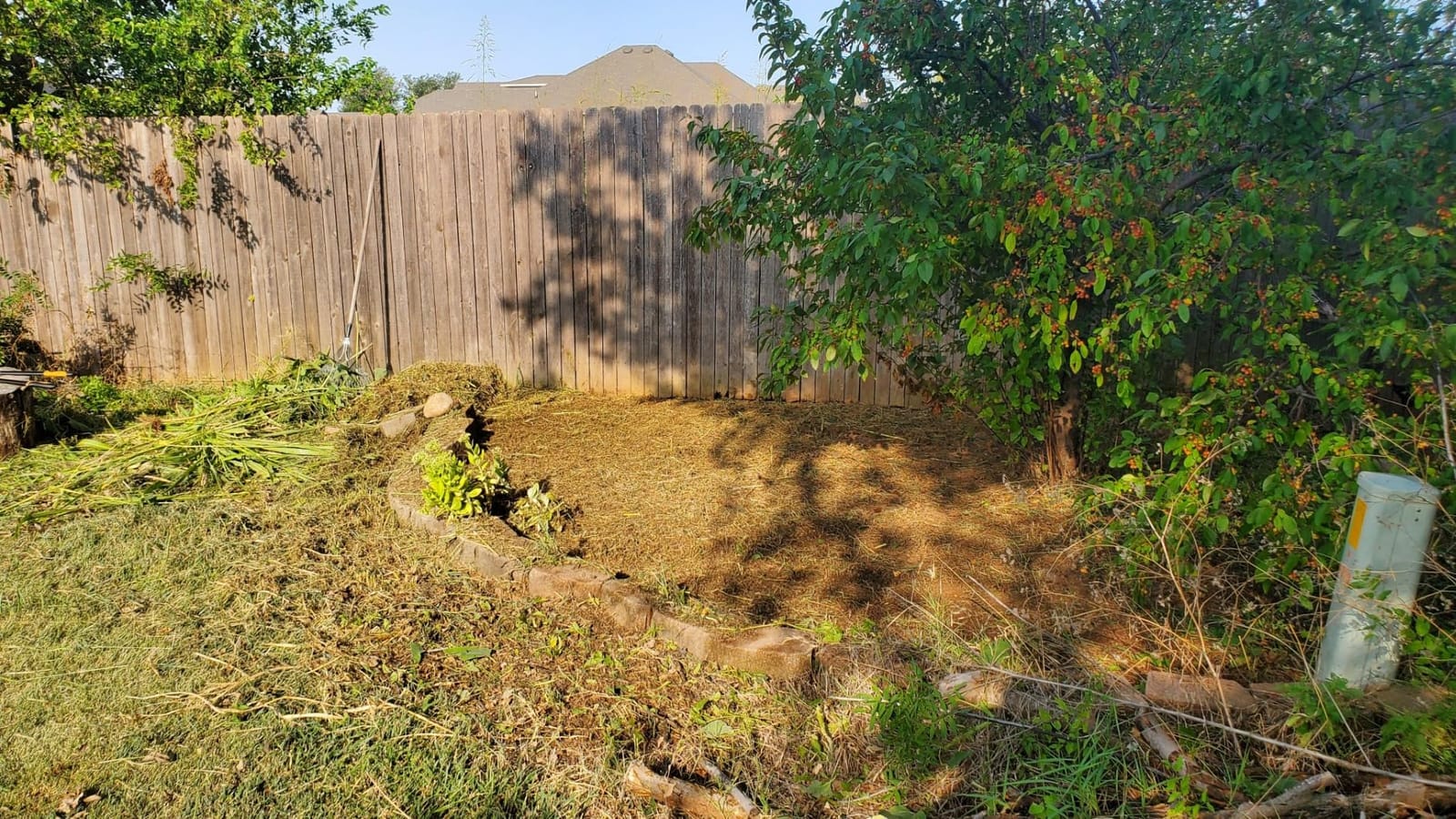
Every other kit on this list includes one battery, and a good number of buyers end up making a second purchase within a season because of it. The Makita kit sidesteps that. Four 5.0Ah packs with a dual port charger is a genuinely unusual inclusion for a string trimmer, and it is the reason this model suits someone doing an entire day of property maintenance rather than a quick edge pass on Sunday.
The 18V X2 system runs the tool at 36V when two packs are fitted, which is also what lets it claim gas-like torque. If you already own Makita 18V tools, note carefully that this is an 18V X2 kit, and the two-battery configuration is the one that delivers the higher output.
Low at 3,500 RPM, medium at 5,300 RPM and high at 6,500 RPM is a genuinely useful spread rather than a token setting. Low is where you work along a fence line or stone wall, where a fast-spinning head is what throws line into the vinyl and breaks it. High is for the heavy patch by the ditch that has been sitting since spring.
Many owners upgrade the supplied head to a Speed-Feed 400 style head shortly after buying, because the supplied bump-and-feed head holds relatively little line and is harder to refill. That upgrade fits this model without an adapter and is the single most common modification owners report making.
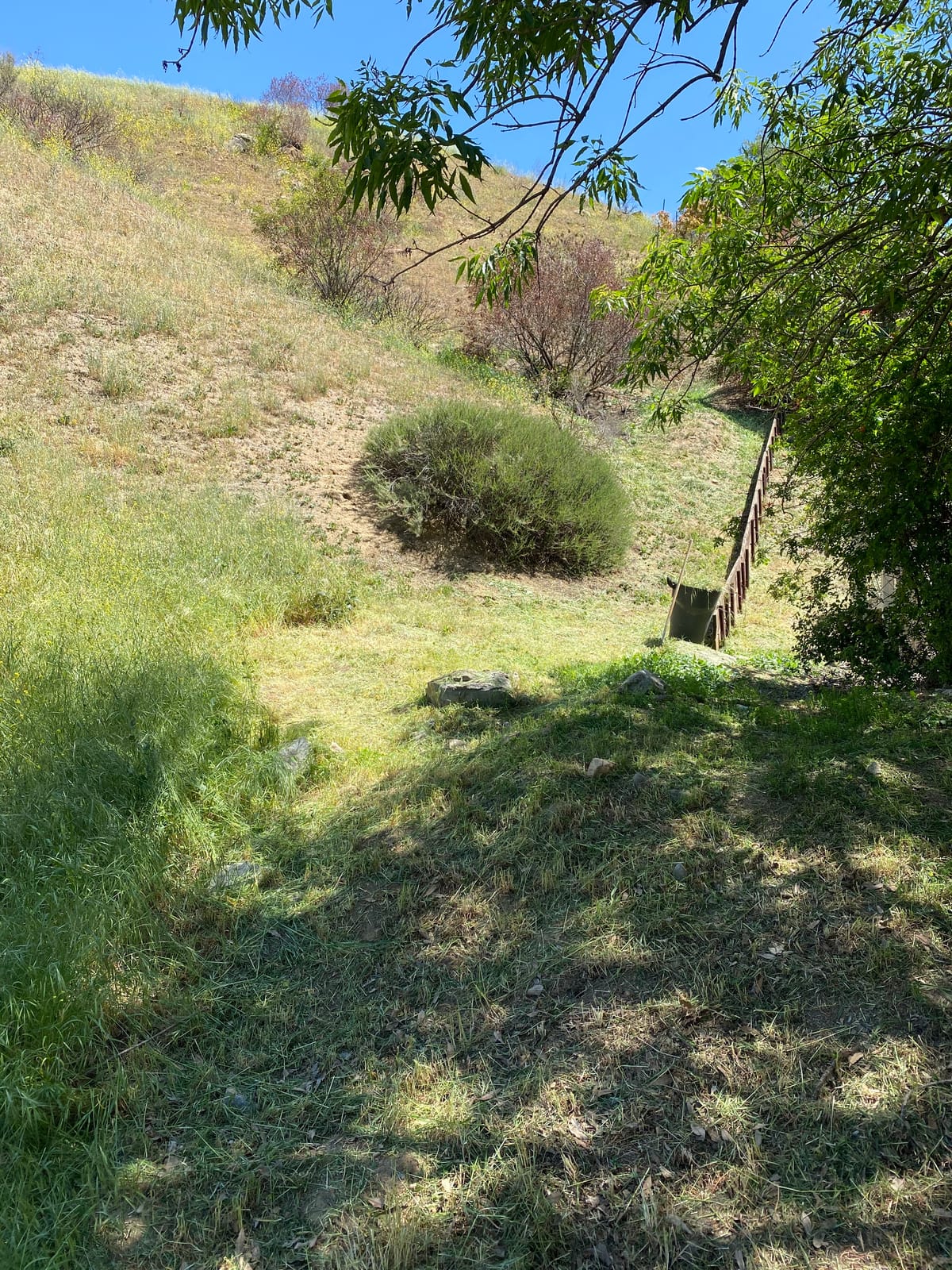
Spin-up time to full speed is noticeably slower than a gas engine, and the included 0.080 inch twisted quiet line wears faster than the 0.095 inch line many owners buy separately. Both are minor in the weekly maintenance sense and more noticeable during a heavy spring cleanup.
There is also a small documentation problem. Assembly instructions are confusing, and the trimmer head threads on in the reverse direction from what most people expect, which catches people out the first time they try to change it. The bottom guard is also described by some owners as inadequate, so treat it as a reason to wear eye protection rather than a reason to skip it.
56V ARC platform
15 inch swath
Up to 45 min runtime
10.3 lb
The ST1511T is the version of the EGO idea that makes more sense if your yard is maintained rather than neglected. Same 56V ARC platform, same POWERLOAD winding, same brushless motor, slightly less of everything else. You get a 15 inch swath cut with professional-grade 0.095 inch line and up to 45 minutes on the included 2.5Ah battery, which charges in 50 minutes.
Owners switching from gas consistently single out POWERLOAD as the feature that made the biggest difference, and the light handling compared with a gas machine makes smooth edging lines much easier to hold. Reviewers also report it cutting thick weeds, tall grass and even light vines without bogging, which puts it ahead of the small-head budget trimmers on anything above ankle height.
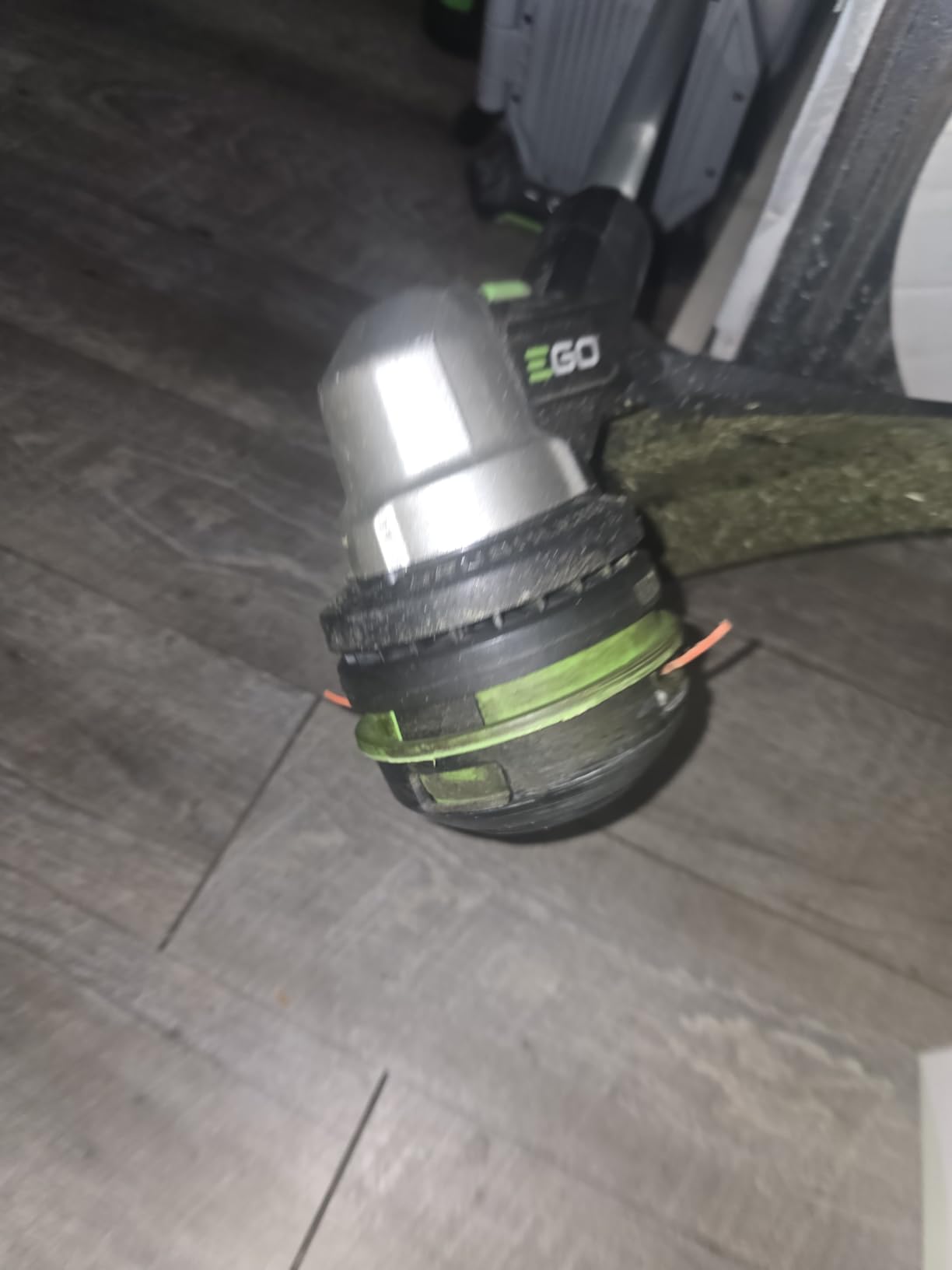
A 2.5Ah pack is a quarter of the capacity of a 5.0Ah pack, and the difference shows up fast in thick growth. On a yard that gets cut weekly, where the line is passing through knee-height grass and edging along a path, 45 minutes of claimed runtime will usually finish the job. On a property where you are cutting back a season of growth, you will want the bigger pack.
The saving is straightforward. The 2.5Ah pack and its charger cost less than the 4.0Ah pairing in the ST1623T kit, and the tool itself is cheaper. Buyers who already own a 4.0Ah or 5.0Ah EGO pack should check compatibility first, because this kit’s value disappears if you already have the larger battery on hand.
Two speed settings and an adjustable handle let you flip between trimming and edging quickly, and the telescopic aluminum shaft sets the tool to your height. The 15 inch swath with 0.095 inch line is a slightly different cutting geometry from the ST1623T, trading a little width for thicker line that holds up better against stone and wire.
One mechanical warning is worth knowing before you buy. POWERLOAD winds the spool in with a button, and holding it too long will wind the entire spool of line in. It is a two-second mistake, but knowing it prevents a genuinely bad afternoon.
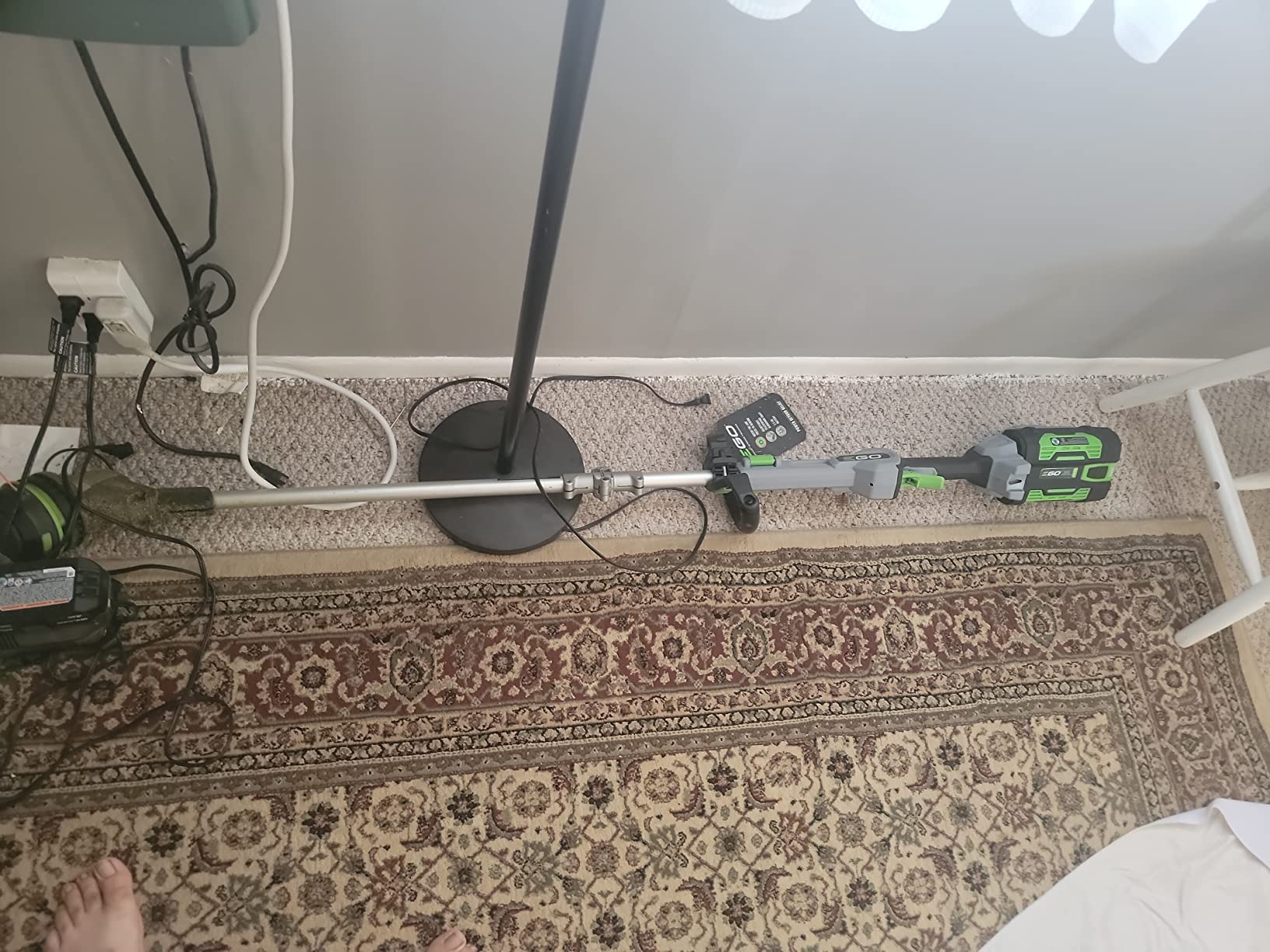
If you are smaller or older, note the 10.3 pound weight. That is heavier than the carbon fiber shafted models in this list by a margin you feel after an hour, and it is the most common complaint in the reviews alongside mediocre assembly instructions.
A small number of owners also report the head failing to grip line properly after reloading, with the line running out quickly. The troubleshooting for that is usually a second reload rather than a return, but it is a fair reason to keep a spare spool of 0.095 inch line on hand.
M18 18V platform
16 inch cutting width
6200 RPM brushless
Variable speed trigger
The Milwaukee is the recommendation that is really about everything except the trimmer. If you already own M18 tools, the battery and charger are already on your shelf, the shared platform is the entire economic argument, and the 16 inch cutting width is generous for edge work on a large property. The brushless motor and 6,200 RPM speed rating support fast cutting throughput at that width.
I want to flag the limits of the data here more than usual. This listing returned a 4.6 average across 630 reviews with a distribution heavily weighted toward five stars, but no written customer review narrative came back with it. That means the pros and cons below lean on published specifications and the rating profile rather than on specific owner accounts, and you should treat this pick as well-rated rather than thoroughly field-tested by us.
The recurring theme in yard tool forums is simple: people overwhelmingly prefer adding to a platform they already own rather than starting a second battery system. Two ecosystems means two chargers, two sets of spare packs and two sets of parts to keep track of, and that friction shows up every single time you need a battery you did not plan to bring.
If M18 is already your platform, this becomes a much shorter decision. The 16 inch swath, brushless motor and variable speed trigger are all solid fundamentals, and platform compatibility removes the single largest hidden cost in cordless yard tools.
A 16 inch cutting width means fewer passes over the same fence line, which compounds across a large property. The 6,200 RPM rating is on the lower side of the group, next to the DEWALT at 8,000 RPM and the BLACK+DECKER at 8,500 RPM, and in practice RPM matters most in dense weed growth where you need the line speed to shear rather than wrap.
For grass, weeds and light edge work, the difference between 6,200 and 8,500 RPM is not dramatic. For bramble canes and thick weed fields, it is noticeable, and that is the case where the DEWALT models pull ahead of this one.
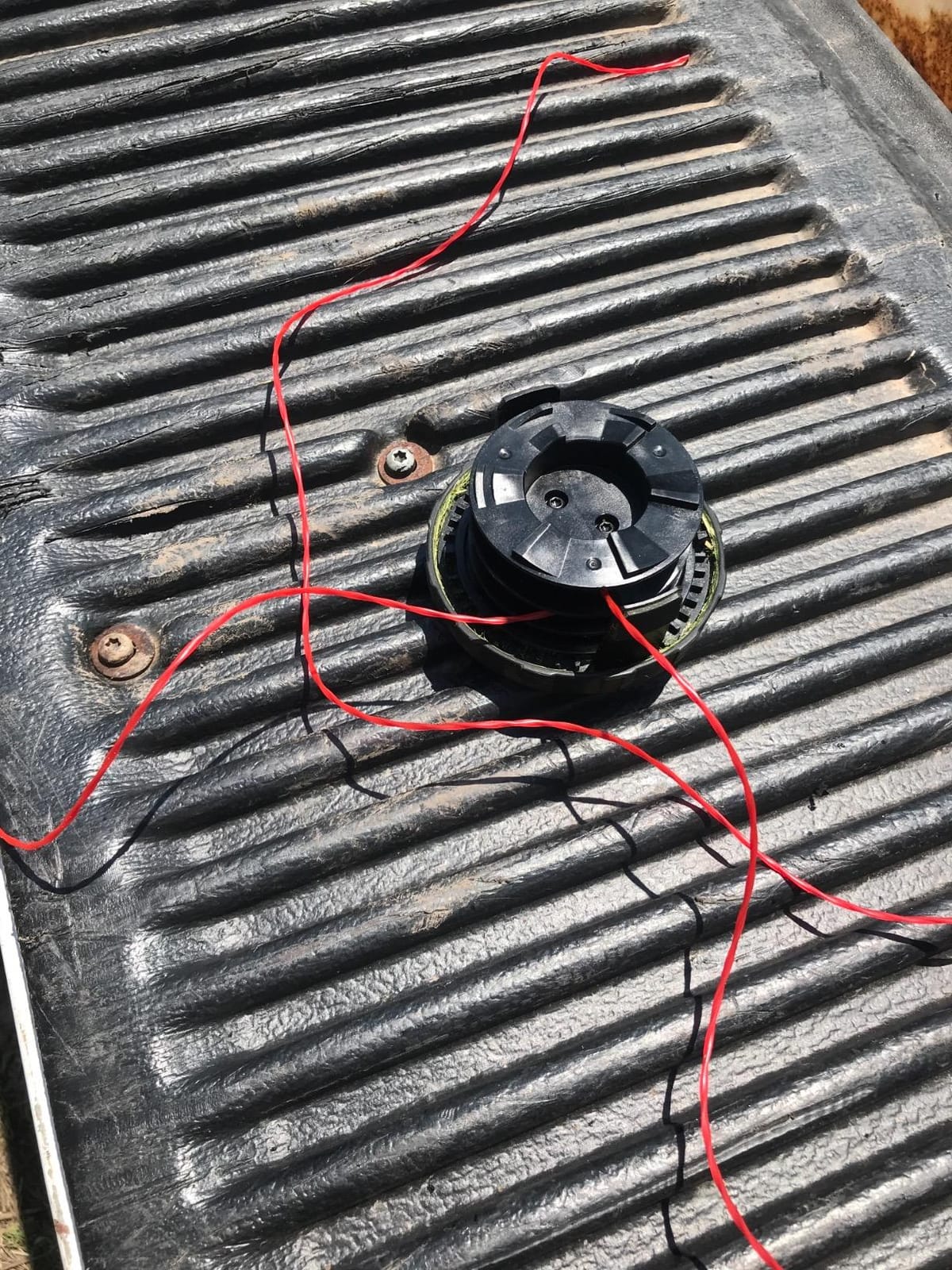
At 16 inch, the cutting width is narrower than the adjustable 15 to 17 inch DEWALT, and the Milwaukee cannot widen its swath when you want the extra reach. For maintained ground that difference is small.
The kit also costs more than the entry level cordless trimmers in this list, which is harder to justify if you do not already own M18 batteries. If you are starting from zero, the platform premium buys you compatibility, not cutting capability.
60V MAX platform
15 or 17 inch swath
8000 RPM brushless
15 lb with battery
The DCST972X1 is the most interesting engineering story in this roundup, because it exists specifically to fix a problem. The earlier DEWALT sibling, the DCST970B, mounted its motor low where grass clippings and debris could pack into the cooling screens, and multiple owners reported premature motor failure as a result. This model moves the motor up high into clean air, and that single change is why it is the DEWALT to buy rather than the other one.
Beyond the motor fix, you get a 15 or 17 inch adjustable swath on 0.080 inch dual line that also accepts 0.095 inch line, an 8,000 RPM brushless motor, a quick-load spool, and universal attachment capability. That is more adjustability than any other pick in this group offers, and for a property where you alternate between wide coverage passes and precise fence work, the toggle is genuinely useful.
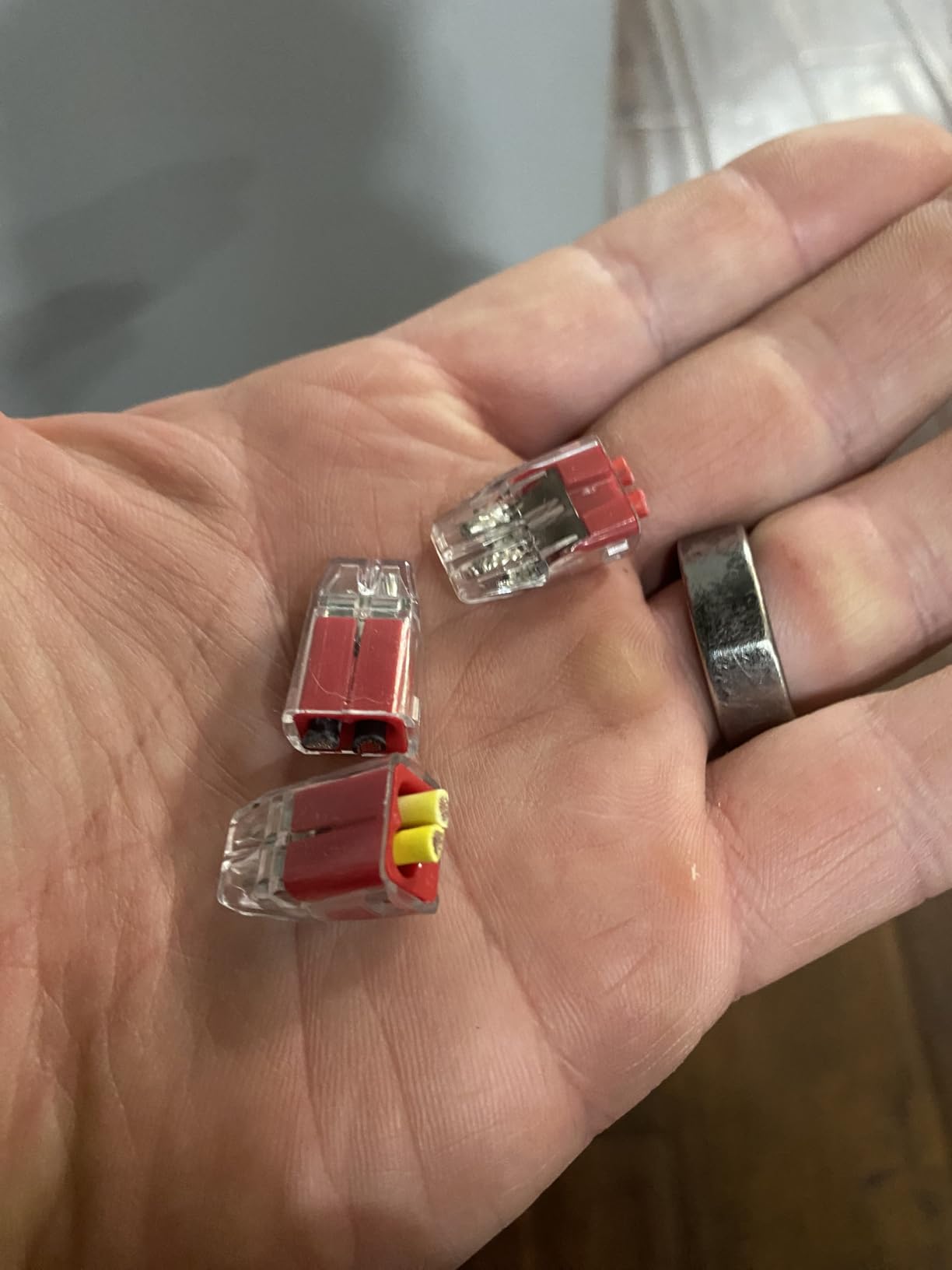
Fifteen pounds with the battery installed is the heaviest bare trimmer in this group, and on a two-hour fence line session that is a meaningful tax on your forearms and lower back. This is not a dealbreaker, but it is the reason this model does not take the top spot despite excellent specifications.
If you are already on the 60V platform and your sessions are under an hour, the weight is manageable. If you are doing full-day property maintenance with no strap support, the lighter carbon fiber shafted options will serve you better over a season.
The quick-load spool is a step above bump feeding because you change line with a spool swap rather than a wind-on maneuver, which matters when you are reloading in a field rather than at a bench. The 0.080 inch dual line that ships with it also runs on 0.095 inch line if you want more durability against stone and wire.
Variable trigger plus hi and lo speed control gives two separate ways to manage output, which is more control than most trimmers in this group offer. In practice, low speed for edging and high speed for the heavy patch by the ditch is the workflow most owners settle into.
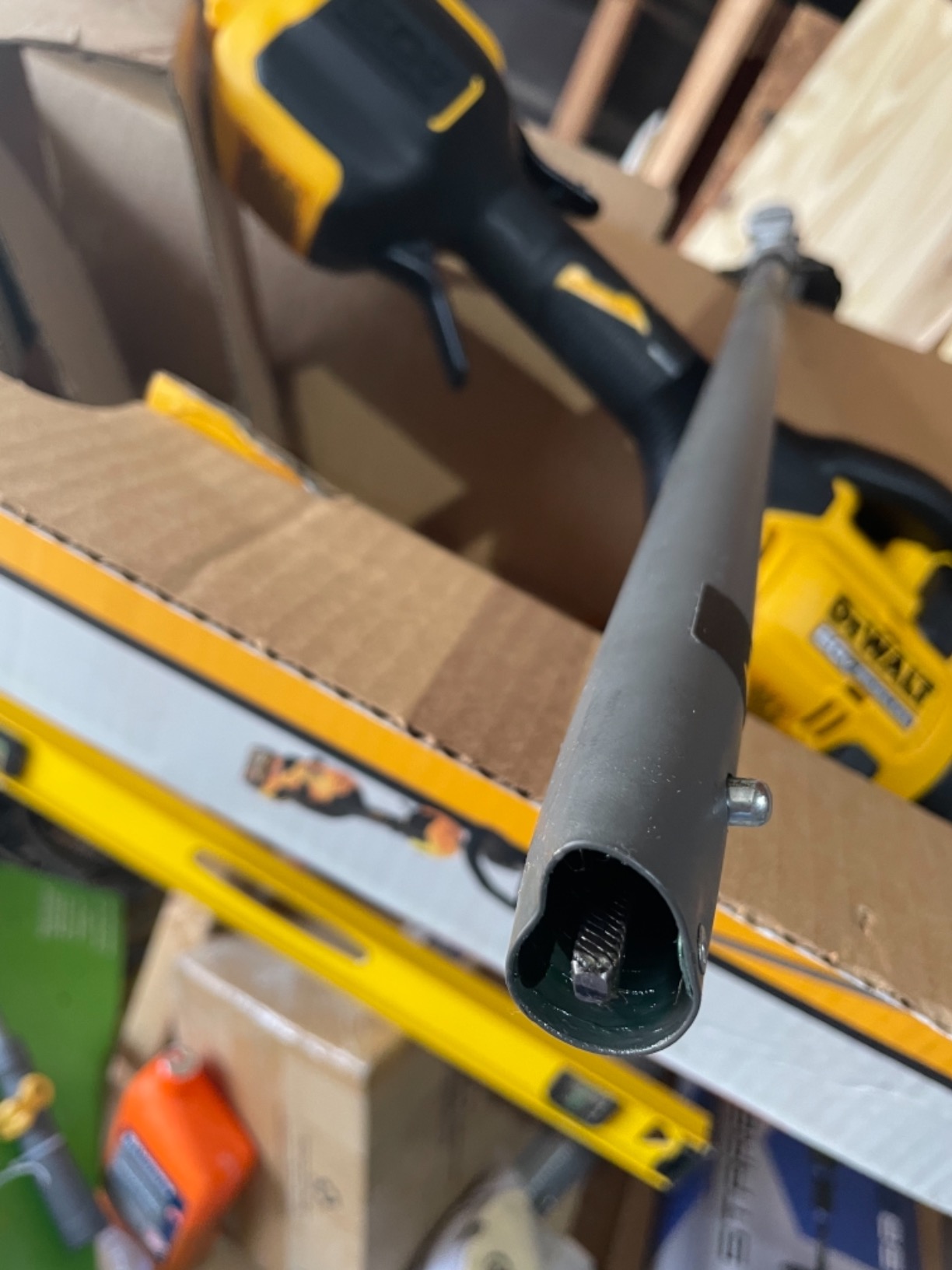
Universal attachment capability means the same 60V unit can take on blower, edger and hedge trimmer tasks. If you are building out a 60V platform rather than buying a single tool, that flexibility changes the math considerably, because one battery and charger covers the whole range.
The catch is entry cost into the 60V family. If you own no DEWALT 60V packs, the battery and charger have to be bought regardless, and that is the single largest hidden cost in this entire roundup. We have covered it in the buying guide.
40V lithium-ion
13 to 15 inch adjustable swath
4.0Ah battery and 90 min charger
13.9 lb
The Ryobi shows up over and over in lawn care forums as the value ecosystem pick, and this is the trimmer that earns that reputation. The 4.0Ah 40V pack delivers roughly 40 minutes of real cutting in tall grass and blackberries according to owners, which is more usable time than most kits in this list deliver out of the box. Several reviewers report cutting power that exceeds a corded BLACK+DECKER, which tells you where this sits in the performance hierarchy.
The attachment story is the strongest argument here. It accepts Ryobi expand-it attachments and other universal gas attachments, so if you own a gas Ryobi brush cutter or edger, the same battery and charger can run it. On a large property with several tools to run, that compatibility compounds quickly.
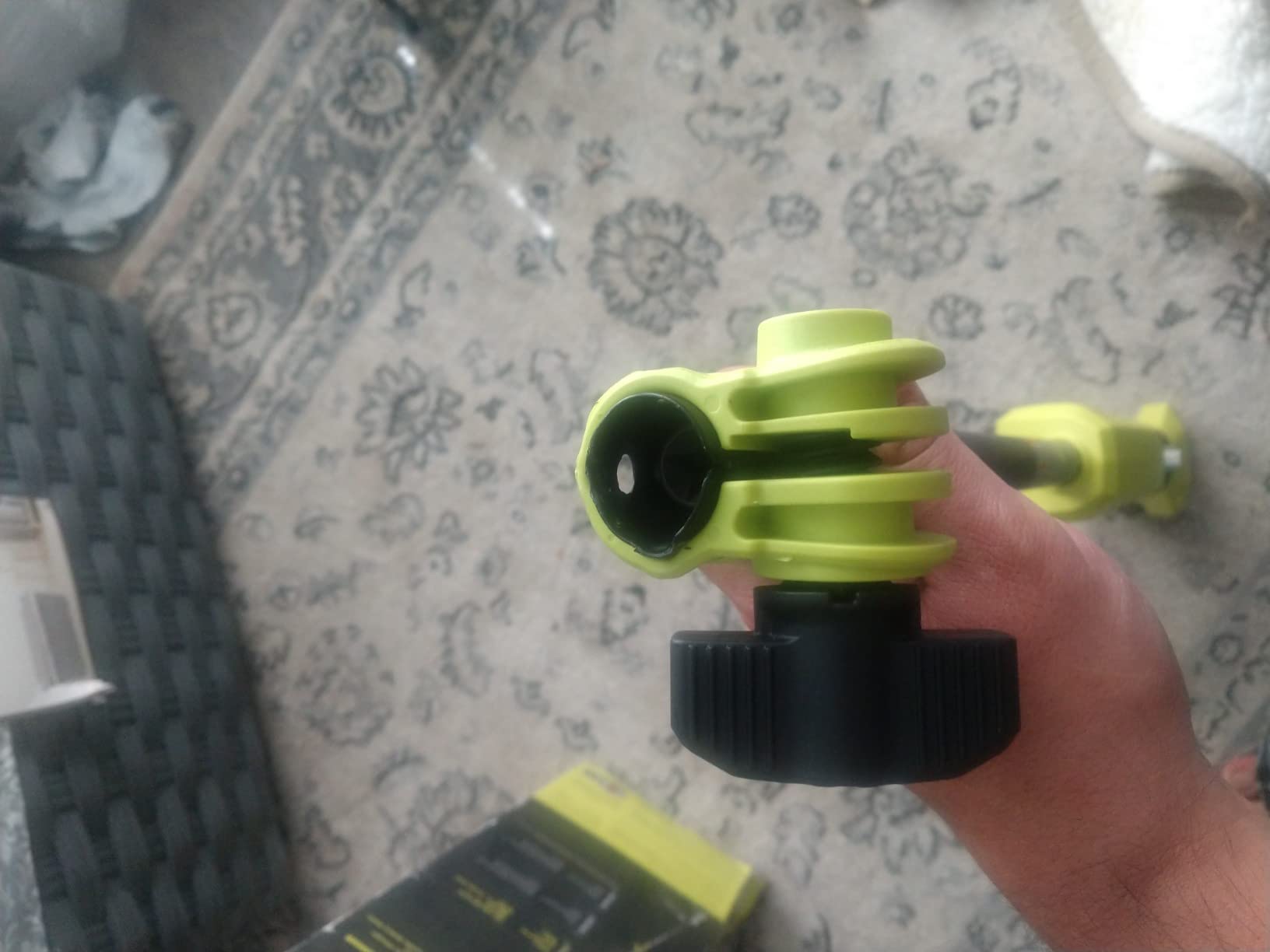
The adjustable cutting width lets you choose between a 13 inch path for longer run time and a 15 inch path for faster coverage. On a big yard, that toggle is the difference between finishing on one battery and finishing on two when the ground is already thin. It is the same idea as the DEWALT 15/17 toggle, scaled down.
The Reel-easy bump feed head is straightforward rather than clever. It dispenses line quickly without any auto-feed electronics to jam, and owners report that line holds up well when working along fencing and wall edges, which are the surfaces that break line fastest.
Thirteen point nine pounds feels heavy in the first ten minutes and manageable in the first hour with a strap. Owners are blunt that a shoulder strap is effectively required for long sessions, and that is consistent with the general pattern on any trimmer above about 12 pounds.
There is also a shaft length question. The long shaft can feel awkward to maneuver, and several reviewers note it is borderline too long for shorter operators. Telescoping models solve this more gracefully than a fixed shaft, and it is worth checking the reach against your height before committing.
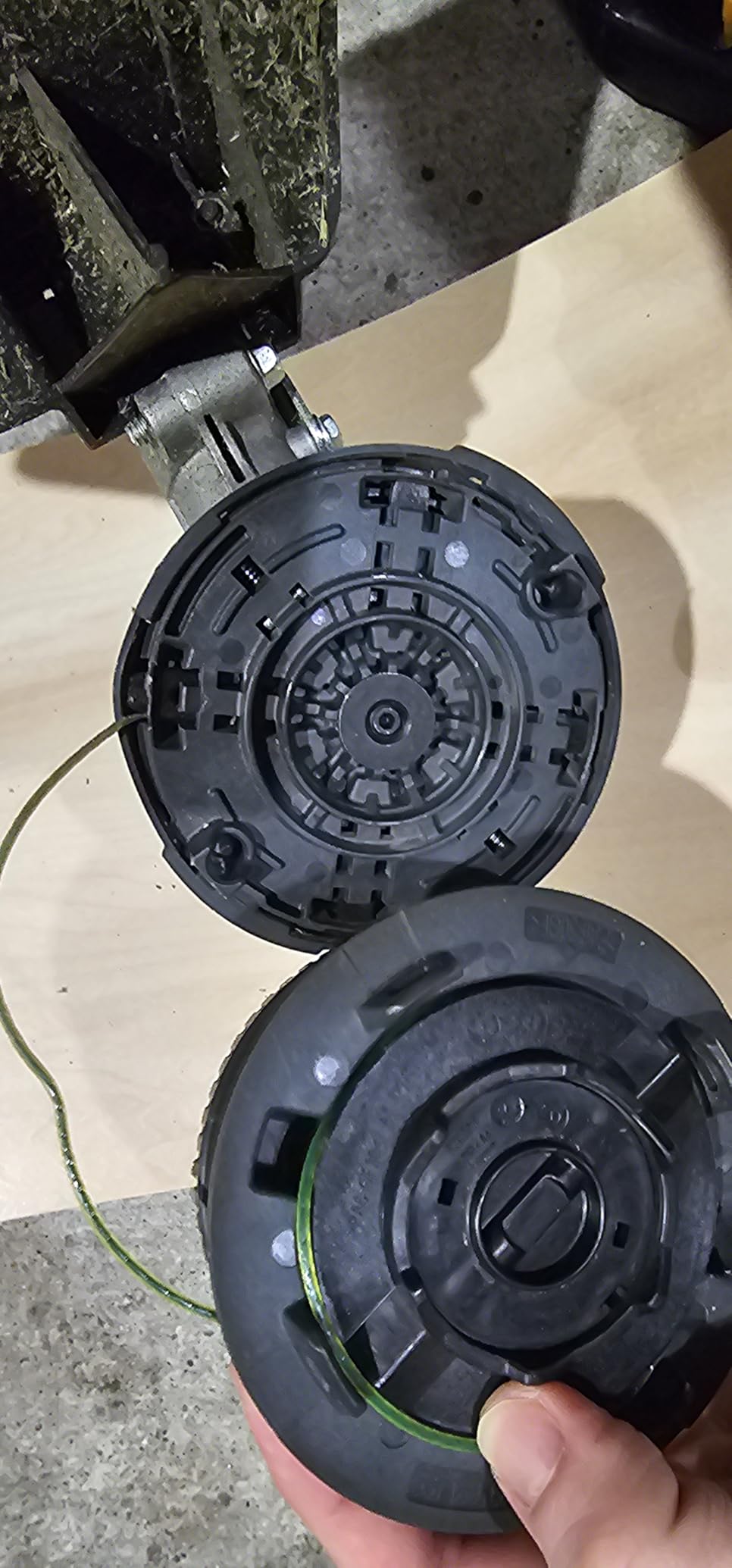
Two practical notes from the reviews. The guard can arrive loose and pop off during use, so a quick tightening with a screwdriver after assembly prevents a trimmer with no guard. And the instructions are minimal enough that a few owners report overrunning the motor on first use, which drains healthy batteries in a way that looks like a fault but is not one.
Some examples also arrive in unmarked cartons marked as nearly new with missing paperwork and spare line. That is a fulfillment issue rather than a product defect, but it is worth inspecting the box contents immediately on arrival.
40V MAX platform
13 inch cutting swath
8500 RPM
7.8 lb with battery
Let me be direct about where this one belongs. The BLACK+DECKER LST136 is the most proven string trimmer in this entire list, with more than 8,300 ratings behind it, and it is a genuinely excellent tool. It is also the wrong answer for a large yard, and including it in a roundup about acreage without saying so would be a disservice.
With a 13 inch swath and a 2.0Ah battery, this is a maintenance tool. It handles the edging, the path sides, the driveway margins and the weekly pass around a yard up to about a half acre. The light 7.8 pound weight, the trimmer-to-edger conversion on a telescoping pole, the Automatic Feed Spool and the 8,500 RPM motor all make those tasks easy. They do not make two acres of neglected fence line easy.
On a small yard, swath barely matters because you can make a second pass. On a large property, swath is the whole calculation. A 13 inch head means roughly 20 percent more passes than a 16 inch head over the same line, and each pass costs you time, battery and attention.
The 2.0Ah battery compounds it. It is the smallest capacity in this group, and the fast charger still takes two hours or less to restore a full charge. For a half acre with a short weekly pass, that is acceptable. For acreage, it means the tool is waiting on the charger as often as you are waiting on the grass.
The PowerCommand dial is a physical control that lets you choose maximum power for thick weeds or maximum runtime for larger areas, which is a simplified version of the trigger and speed controls on higher end models. The Automatic Feed Spool supplies line as needed with no bumping, and the AF-100 spool in the kit is the simple part most worth keeping a spare of.
At 8,500 RPM this motor spins faster than anything else in the list, and that speed does help it shear through light to moderate overgrowth cleanly. Speed cannot manufacture swath, though, and on a large property that limitation shows up before the motor runs out of power.
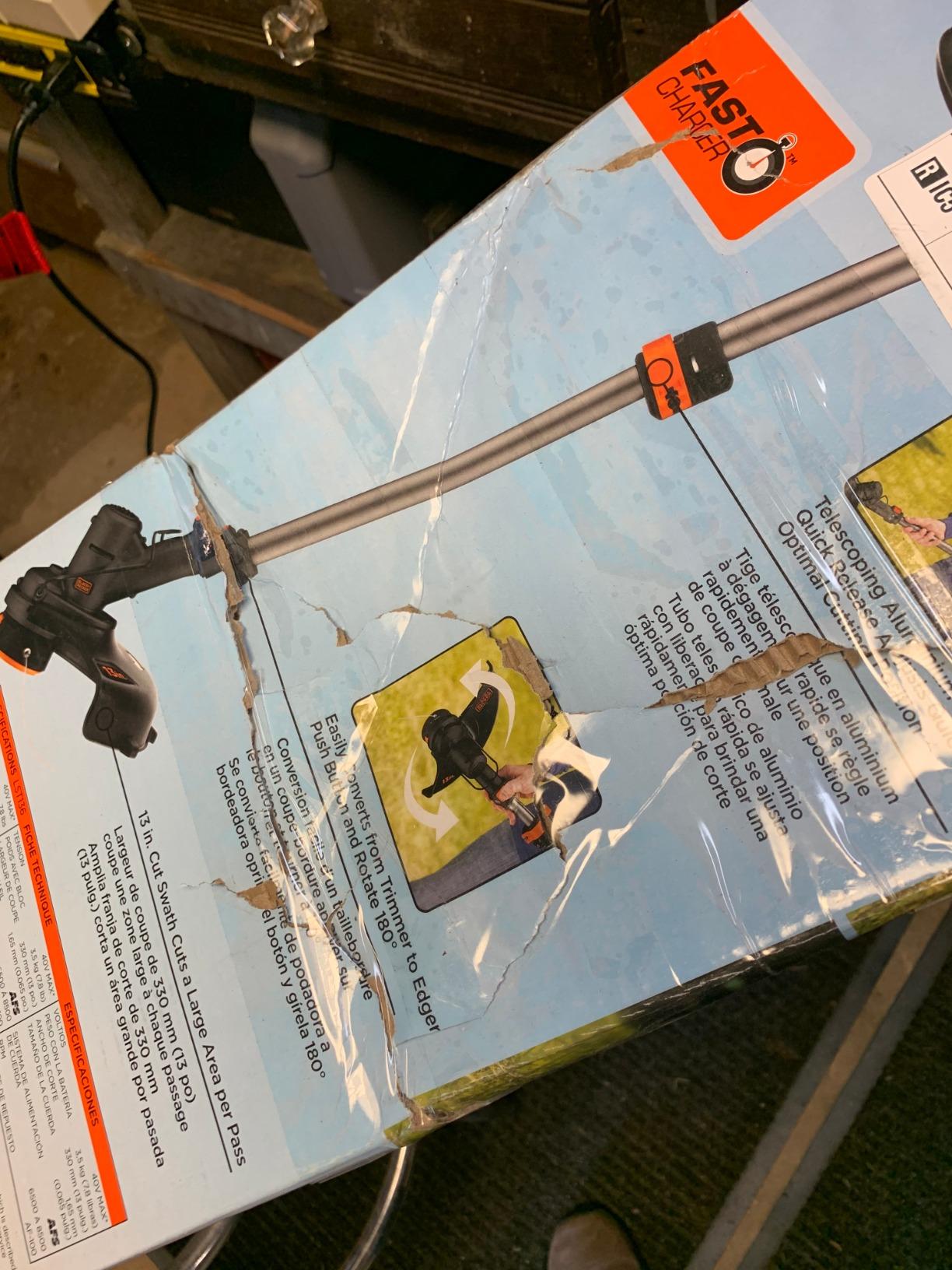
Buy this if your yard is under a half acre, if you want the lightest tool in the group, if edging is the primary job, or if you want a second trimmer for detail work while a bigger machine handles the acreage. The 2 year listed warranty is shorter than the 3 and 5 year terms carried by several rivals, which is worth noting if you keep tools for a decade.
If you already own a full size yard trimmer and want one tool that can do both, skip this and go to the EGO ST1511T or the Ryobi RY40250, both of which have meaningfully wider swaths and larger included batteries.
60V MAX FLEXVOLT
15 inch cutting swath
Tool only no battery
Brushless motor
The DCST970B is a special case and I want to handle it carefully, because it is simultaneously a strong performer with a specific flaw. Owners running it through heavy brush, blackberries and bushwhacking work rate it well, and the trigger makes it easy to regulate speed between deep weeds and delicate edging. Low vibration is repeatedly called out as a genuine benefit on long sessions, where the hands do not go numb.
What I would not do is recommend it as a first purchase. The low-mounted motor draws in cutting debris, its small cooling screens plug quickly, and there is a documented history of motors burning out as a result, with cleaning requiring the removal of four screws. That is exactly why DEWALT released the higher mounted DCST972, and if you are buying new, buy that one instead.
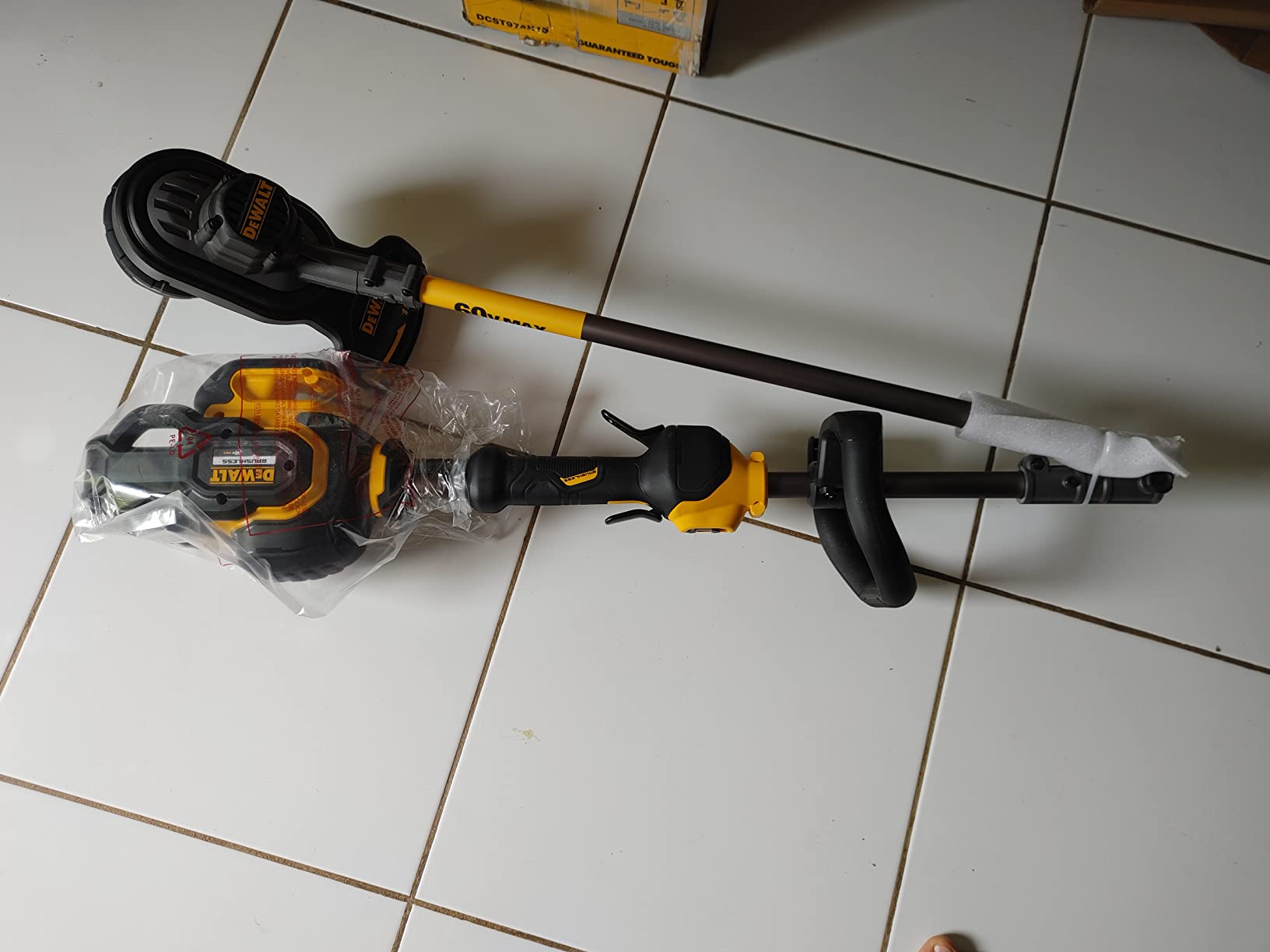
This listing makes sense in one specific situation: you already own DEWALT 60V MAX FLEXVOLT batteries and a charger, and you want a second trimmer without paying for another kit. In that case the tool-only price is the cheapest path onto the platform, and the 15 inch brushless trimmer does the job properly.
Older 20V MAX packs are not compatible with this tool, which surprises people who assume any DEWALT battery fits. Confirm you have 60V MAX packs before buying, and note that larger FLEXVOLT capacities scale the runtime well, with one owner mowing most of a 100 by 250 foot lawn on a single 15Ah pack on low speed.
This is where the FLEXVOLT design earns its reputation. Because the tool accepts a range of pack capacities rather than one fixed size, runtime scales with what you fit. Most owners report 30 to 45 minutes per 6Ah pack in normal cutting, and significantly longer with the 15Ah packs.
The corollary is that runtime figures for this model are not a single number. They depend entirely on which pack you own, which is why it is missing from our published runtime comparison. If you have large packs, this is a long-running trimmer. If you have one small pack, it is not.
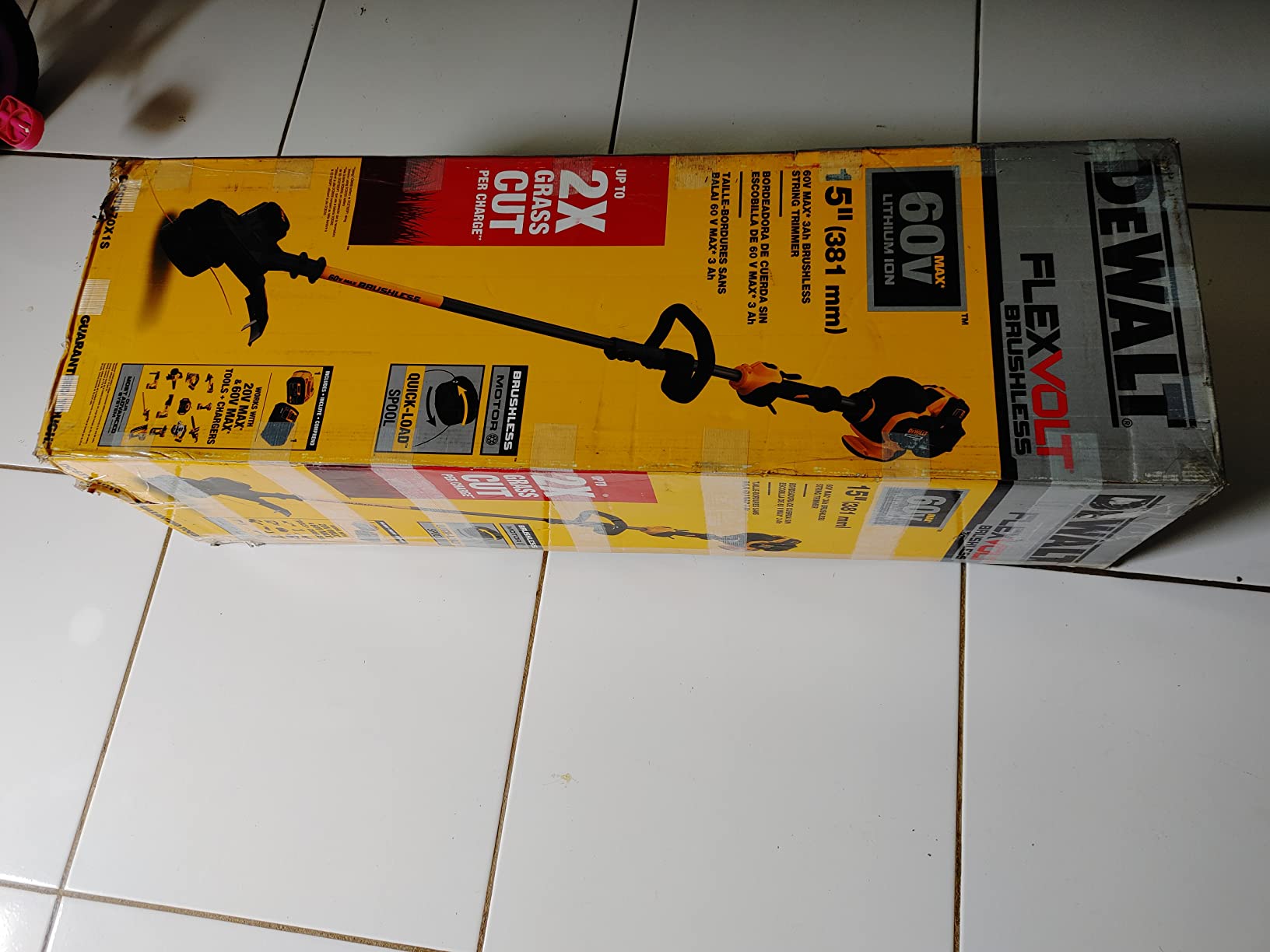
This model has a dedicated following as a conversion base, with owners fitting a 7-1/4 inch saw blade using a left hand thread M10 x 1.25 nut and an arbor bushing. Reports of that setup cutting 2 to 3 inch diameter woody growth are why the platform shows up in brush clearing discussions at all. That is a genuine extension of its capability beyond a string trimmer.
Against that, one well documented user reports the trimmer is not compatible with pole trimmer or saw attachments despite the folding shaft, and the spool housing is described as stubborn to open with debris collecting inside it. Some owners also find it louder than premium rivals, with one noting it sits on the borderline of needing hearing protection.
40V power hub
12 inch auto feed head
67 dB
Trimmer plus 390 CFM blower
The Greenworks is the most reviewed cordless trimmer package in this group, with more than 10,700 ratings behind it, and the reason is straightforward value. The combo includes a trimmer and a 390 CFM leaf blower that share one 2.0Ah battery, so a single platform covers two seasonal jobs. If your yard needs edging and leaf clearing more than it needs acreage brush work, the value here is difficult to argue with.
It also has the only published noise figure in this roundup. At 67 dB, it is quiet enough for early morning work without waking the neighbors, which for many households is a deciding factor that never appears in a specification table. The trimmer itself weighs about 8 pounds, and the 40V power hub covers a platform of more than eight tools.
Twelve inches is the narrowest swath in this roundup, and on a large property that is the binding constraint. Against the 16 inch EGO models, you are looking at roughly a third more passes over every fence line, ditch and roadside edge you maintain. Add the smallest battery capacity in the group and about a 60 minute charge time, and the honest conclusion is that this is a small and medium yard tool.
The included 12 inch commercial-grade head with 0.065 inch auto-feed line carries a 3 year head warranty, but 0.065 inch line is thin. It is sized for edging and roughly 1 inch weeds, not the tall grass and bramble canes that acreage work produces.
The blower is the reason to consider this package. At 110 MPH and 390 CFM with cruise control, it handles gutter clearing, leaves and hard surfaces competently, and it means one battery platform covers both jobs. For a household with one or two acres that is mostly lawn and path edge, that pairing is a sensible way to start cordless.
The 16.5 pound package weight is worth flagging because it is the highest listing weight here, though the trimmer itself is around 8 pounds and the blower is a separate tool. The blower is modest next to dedicated high-CFM blowers, so do not expect it to replace a dedicated leaf machine.
56V ARC platform
16 inch continuous swath
Up to 60 min with 4.0Ah
7.7 lb tool only
The ST1620T is the same machine as our top pick without the battery and charger, which makes it a different recommendation entirely. If you already run EGO 56V ARC tools, this is the correct version to buy because you already own the expensive part of the system. If you do not, the tool-only version is the wrong entry point and the kit version is the better buy.
On large acreage, the carbon fiber shaft is what owners mention most. Several describe it as eliminating fatigue in heat, and one reports finishing the same property in about half the time they needed with a gas Stihl FS 91. The head has no pocket where long grass tangles, which is a small design decision that pays off constantly in weedy conditions.
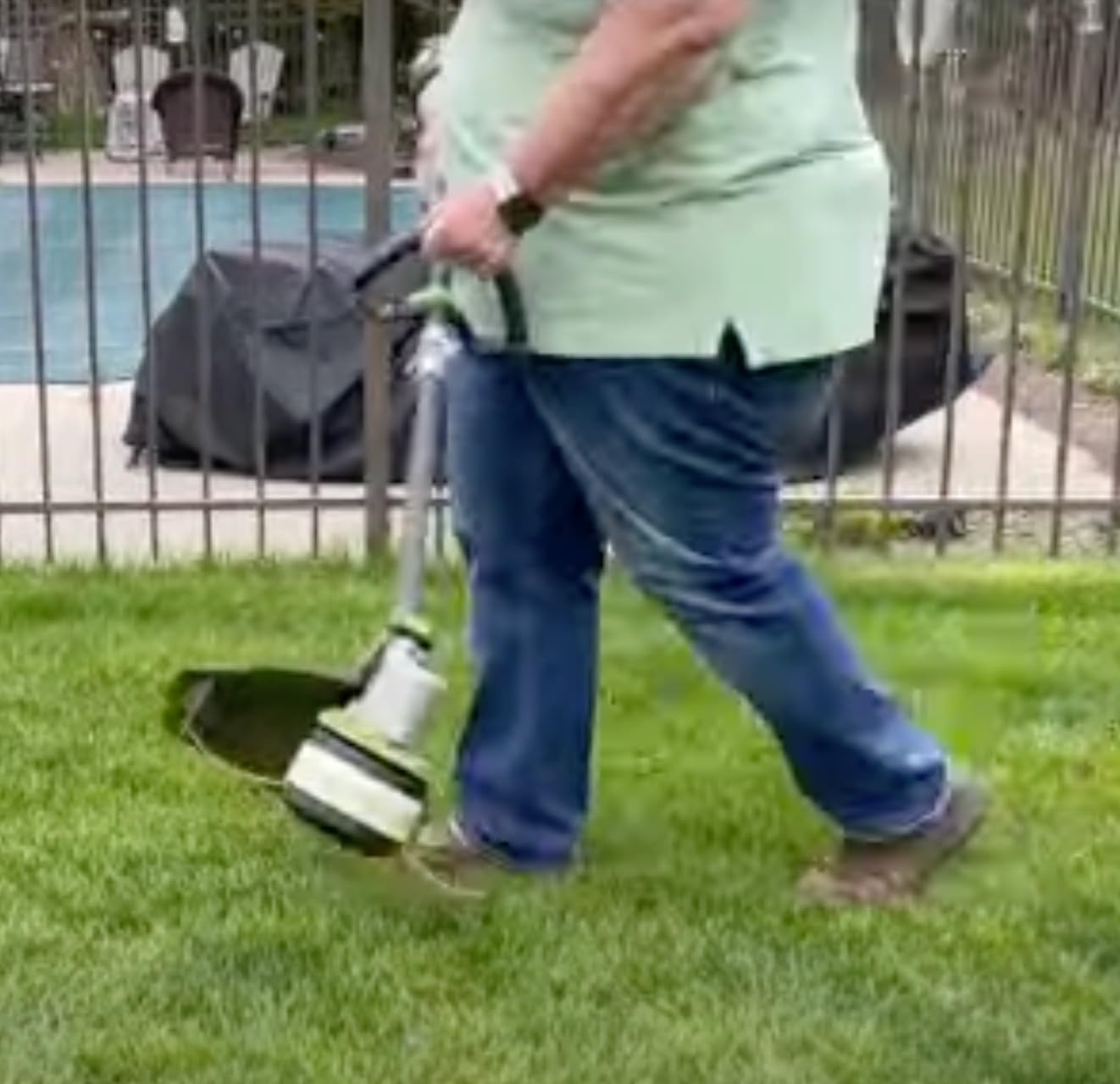
At 7.7 pounds for the tool, this is among the lightest designs here, and the carbon fiber shaft carries a lifetime warranty when registered within 90 days of purchase. On a July afternoon that weight difference is not academic. It is the difference between finishing the property and taking a break halfway through the far fence line.
The shaft is telescopic, so it adjusts to your height, which also helps with the balance point during long reaches into brush. Weather-resistant construction is a sensible inclusion for a tool that lives outside.
LINE IQ auto-sensing feeds line to maintain a continuous 16 inch cutting swath without bumping, and paired with POWERLOAD winding it removes both line chores. The recurring complaint is the same as on the ST1623T: the head is sensitive to dirt and debris and must be taken apart and cleaned when auto feed starts acting up.
That is a maintenance task, not a defect, and it is worth budgeting a few minutes for after any work in weedy, soil-heavy conditions. Professional-grade dual line spiral-twist 0.095 inch line is the recommended setup, and a digital two-speed selector puts low and high within reach while you work.
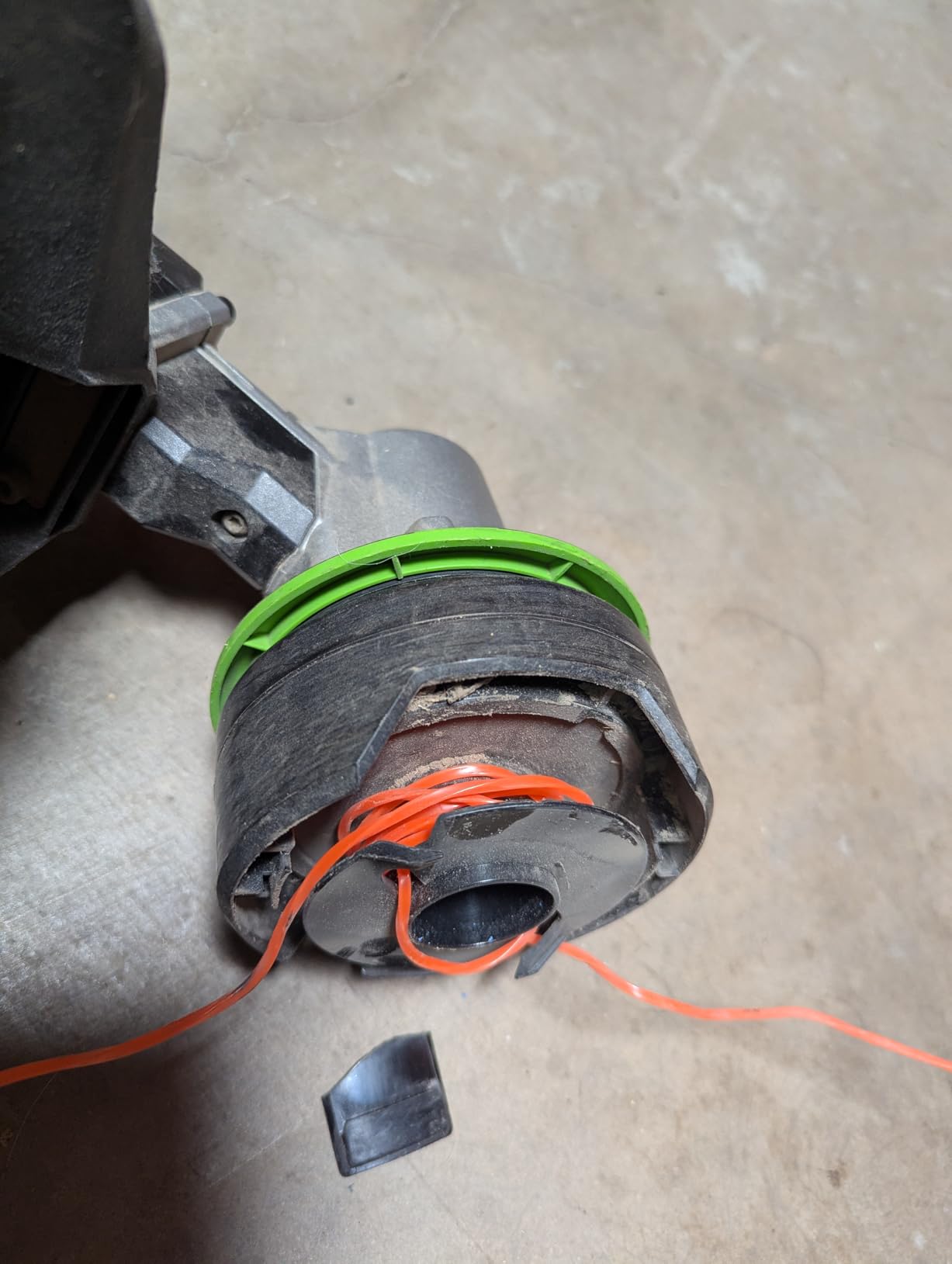
With 455 ratings, this is the smallest sample in the group, and 12 percent of those ratings are one star. That distribution is more polarized than most, which usually signals a design with a strong core and a specific failure mode rather than a broadly average product.
One detailed review describes a unit that stopped working after storage along with a difficult multi-call warranty experience. Service experience is worth checking locally before you buy, because it is the one category where the EGO and other premium platforms differ most from budget brands. A high speed setting is also more than most owners ever need, which suggests most of the runtime benefit is available on low.
This is the question nobody in this category answers properly, so we worked it out from published figures. The method is simple: multiply swath width by walking speed by runtime. We used a steady 3 mph working pace, which is realistic for trimming rather than racing, and we counted a single pass of edge line rather than full-coverage mowing, since that is what a string trimmer actually does.
On those assumptions, a 16 inch swath at 3 mph covers roughly 21,000 square feet of edge per hour of runtime, which is about half an acre. A 15 inch swath covers roughly 17,600 square feet per hour, and a 13 inch swath roughly 15,600. In practice, treat the hour figure as a high estimate and halve it for thick growth, because the speed you can hold drops sharply when the line is buried in weeds.
Here is what the published data actually supports, product by product. Five of the ten listings in this roundup publish no runtime figure at all, which is itself a signal about how much the manufacturer expects you to care.
EGO ST1623T: up to 60 minutes on the 4.0Ah pack, 16 inch swath, so roughly half an acre of single-pass edge in light trimming. Heavy passes will consume that considerably faster.
EGO ST1511T: up to 45 minutes on a 2.5Ah pack, 15 inch swath, so roughly a third of an acre per charge on maintained ground.
EGO ST1620T: up to 60 minutes with a recommended 4.0Ah pack, 16 inch swath, matching the ST1623T figure.
Makita XRU15PT1: no single runtime figure published, but the kit includes four 5.0Ah packs, so total pack capacity is by far the highest in this list and charges can overlap through the dual port charger.
Greenworks STBA40B210: the listing cites up to two hours of battery average life, though that is a category figure rather than a measured trimmer test, and the 12 inch swath is the narrowest here.
Milwaukee, DEWALT DCST972X1, Ryobi, BLACK+DECKER and DEWALT DCST970B: no published runtime figure on these listings, so any estimate has to come from owner reports. Ryobi owners commonly report 30 to 40 minutes from the 4.0Ah pack in tall grass, and DEWALT owners report 30 to 45 minutes per 6Ah pack.
The practical read for a two-acre property is that you need either a very large battery or a rotation. A half acre of edge work fits comfortably on one charge of a 4.0Ah pack at a 16 inch swath. Two acres is roughly four charges, which means either two batteries cycling or an afternoon with a charger in the loop. Five acres is a different job, and belongs to a brush cutter or a walk-behind mower.
Specifications tell you what a tool can do. They do not tell you what your weekend will look like. These are the six decisions that actually determine whether a cordless trimmer fits a large property, in the order we would make them.
Published runtime is a ceiling measured under controlled conditions. What you need is the number of minutes you can sustain on your worst ground, which is usually spring cleanup rather than the July maintenance pass. Take the published figure, halve it for thick growth, and multiply by the number of acres you maintain.
Amp-hour capacity is the underlying number. Two 5.0Ah packs give you twice the working time of one 2.5Ah pack, and more than any other single factor it determines whether you finish the job or stop early. The cordless string trimmer heavy-duty guide goes deeper on the power curve if you are cutting woody material.
Voltage is a proxy for power class, but the practical question is narrower: which platform do you already own? Entry trimmers in this roundup run on 18V and 20V class packs, mid-tier on 40V, and the high-output end on 56V and 60V.
Buyers overwhelmingly prefer adding to a platform they already own rather than starting a second battery system, because two ecosystems means two chargers and two sets of spares. The counter-argument is that a 40V class pack carries roughly four times the energy of a 20V class pack, so the higher tier is the right answer when your ground is genuinely large and you own nothing yet.
40V versus 60V comes down to energy per pack and swath. A 60V class tool with a large pack will hold power in dense growth longer and often carries a wider swath. A 40V class tool with a 4.0Ah pack is lighter and usually cheaper to enter, and for maintained ground it is frequently the better-balanced choice.
Every inch of swath is a pass you avoid. On maintained edge work, moving from 13 to 16 inches removes roughly a fifth of your walking. On neglected fence line, where passes are slower anyway, the time saving compounds. This is the single specification we would weight most heavily for a large yard, above runtime.
Adjustable swath is worth paying for if you alternate between wide coverage and precision work, because it lets you trade width for runtime when the ground gets thick. Both the DEWALT DCST972X1 and the Ryobi RY40250 offer this, and neither of the EGO kits does.
Line diameter changes the economics of a long job. 0.065 inch line lasts longer but will not cut anything serious. 0.080 inch is a reasonable middle. 0.095 inch is what you want for bramble canes, wire-adjacent fencing and stone, and it is what the EGO ST1511T and ST1620T ship with.
Head type matters more than most buyers expect. Bump feeding is cheap and reliable but interrupts your rhythm. Auto-feed and powered winding systems remove both the bump and the hand threading, and on a large property that is a real time saving. The trade-off is that auto-feed heads are more sensitive to dirt and debris, and cleaning them means disassembly.
Weight matters far more than it does on a quarter acre, because a large-yard session is measured in hours rather than minutes. The useful range here runs from 7.5 pounds on the carbon fiber shafted EGO models to 15 pounds on the DEWALT DCST972X1. That spread is the difference between a comfortable afternoon and a sore one.
You will need a shoulder strap on anything above about 12 pounds, and the strap matters as much as the number. A front-loaded tool with no strap transfers load straight into your wrists and shoulders, and that is the fatigue pattern that ends a session early. Note that a few models in this roundup, including the EGO tool-only listing, do not include a strap at all, so budget for one separately.
Quiet operation is a top purchase driver and almost never appears in a specification table. The only published figure in this roundup is the Greenworks at 67 dB, which is quiet enough for early morning work in a neighborhood. Electric motors are inherently far quieter than small gas engines, and that difference is most noticeable at 7 am on a Saturday.
The trade-off is that you lose the ability to work whenever you want without planning around the neighbors. For anyone on an acreage property away from other homes, this matters much less than it does in a subdivision.
Here is the hidden cost that dominates a large-yard purchase. Nearly every kit in this roundup includes one battery and one charger. On acreage, you need a rotation, which means at least two batteries, and a single charger that spends half the session plugged in.
Two batteries in rotation roughly doubles continuous working time, and a second charger roughly halves turnaround if you have somewhere to plug it in. If you own nothing in the platform, both batteries and a charger are additional purchases on top of the trimmer. This is the main reason we prefer tool-only pricing when you already own packs, and the main reason the kit versions win when you do not.
A string trimmer is a grass and weed tool with a line head, and it has a hard ceiling. It will not reliably cut woody stems, and it is not built for a pasture full of saplings or an overgrown lot that has not been touched in five years. If your property is beyond about three acres of heavy, mixed growth, you are looking at the wrong category.
A brush cutter uses a blade instead of line, and the difference in what it can take is enormous. The DEWALT DCST970B has a documented following as a conversion base using a 7-1/4 inch saw blade with a left hand thread M10 x 1.25 nut and an arbor bushing, with owners reporting cuts through 2 to 3 inch diameter woody growth. The Ryobi RY40250 is attachment capable with expand-it and universal gas attachments, which is the same idea built into the platform.
A walk-behind brush mower is the right answer for large open areas of thick growth, because it clears width at a rate a handheld tool cannot match. It is a separate purchase with separate storage needs, and it only makes sense if the problem is a wide open field rather than fence lines and ditches.
For the woody and shrub work that sits between grass and brush, our guide to the best hedge trimmers for thick branches covers the tool that handles the shrub layer. Most large properties need at least two of these categories, and the honest recommendation is to buy the string trimmer for edges and the brush cutter for everything thicker.
Among the trimmers reviewed here, the EGO POWER+ ST1511T and ST1623T publish the highest figures at up to 60 minutes per charge, though those numbers are tied to specific battery sizes rather than a universal spec. No cordless trimmer publishes a runtime figure measured under sustained heavy load, so assume roughly a third of the published number for thick growth.
For most large residential yards, the EGO POWER+ ST1623T is the strongest overall choice. It combines a 16 inch cutting swath, up to 60 minutes of runtime on the included 4.0Ah battery, and a 7.5 pound carbon fiber shaft. If you already own M18 or 40V tools, a platform-matching model will be cheaper in the long run.
Owners of 20V class cordless trimmers commonly report 15 to 20 minutes of continuous use from a 5Ah pack, and considerably less in thick brush. The published marketing figures for those tools are measured at reduced speed in light conditions. For acreage work, this is the main reason higher voltage platforms with larger packs are worth the extra cost.
At a 16 inch swath and a steady 3 mph working pace, one hour of runtime covers roughly half an acre of single-pass edge work in light trimming. Halve that for thick growth, because the speed you can hold drops sharply when the line is buried. A half acre fits on one charge; two acres needs roughly four charges, which is why battery rotation matters.
40V class tools carry roughly four times the energy of 20V class packs and are usually lighter and cheaper to enter, which makes them well suited to maintained ground. 60V class tools hold power longer in dense growth and often carry a wider adjustable swath, which suits neglected acreage. If you already own batteries in one of these systems, staying with it is usually the smarter financial decision.
Yes, if your ground contains woody stems, saplings or growth that has been untouched for years. A string trimmer line is built for grass, weeds and light overgrowth, and it will stall or break repeatedly on woody material. For a property past roughly three acres of heavy mixed growth, a brush cutter or walk-behind brush mower handles the work that a string trimmer cannot.
At least two, and a second charger is worth adding if you have a place to plug it in. Nearly every kit in this roundup ships with a single battery, which is the most common reason buyers end up making a second purchase within a season. Two packs in rotation roughly double continuous working time and remove the mid-job trip to the charger.
Match the line to the job. 0.065 inch lasts longest and suits edging and about 1 inch weeds, 0.080 inch is a reasonable middle ground, and 0.095 inch is what you want for bramble canes, stone and fencing. The EGO ST1511T and ST1620T ship with professional-grade 0.095 inch line, and the DEWALT DCST972X1 runs 0.080 inch but accepts 0.095 inch.
If you maintain more than about a half acre of edge, the EGO POWER+ ST1623T is our pick. The 16 inch swath and 7.5 pound carbon fiber shaft are the two numbers that matter most on acreage, and the LINE IQ and POWERLOAD head systems remove the two interruptions that end sessions early.
If you already own tools in a battery platform, change nothing. M18 owners should look at the Milwaukee 2825-21ST, expand-it owners at the Ryobi RY40250, and existing EGO 56V ARC owners at the ST1620T tool-only model. If you are starting from zero and your ground is mostly maintained lawn, the EGO ST1511T is the value answer, and if you need the widest swath with adjustable settings, the DEWALT DCST972X1 does something none of the others can.
For long days that outlast a single charge, the Makita XRU15PT1 remains the easiest setup because four batteries and a dual port charger remove the rotation problem entirely. And for anyone working past three acres of genuinely thick, woody growth, no string trimmer in this roundup is the right tool, so budget for a brush cutter alongside whichever one you pick.
Whichever route you take in 2026, buy a second battery before you need it rather than after. That single accessory is the difference between finishing the property on one Saturday and finishing it across two.