Physical Address
304 North Cardinal St.
Dorchester Center, MA 02124
Physical Address
304 North Cardinal St.
Dorchester Center, MA 02124

A heavy thatch layer is the one lawn problem that punishes lazy tool choices. Water runs off, fertilizer never reaches the roots, and the turf goes straw-colored in patches. That is why the best dethatchers for thick thatch are decided by one number, not by brand.
I built this list around one question: how thick is the thatch, and which tool class actually moves it? We pulled ten dethatchers across every class, from a hand rake to a 48 inch tow-behind, and weighed them on motor output, tine material, depth range, and the complaints owners repeat most often.
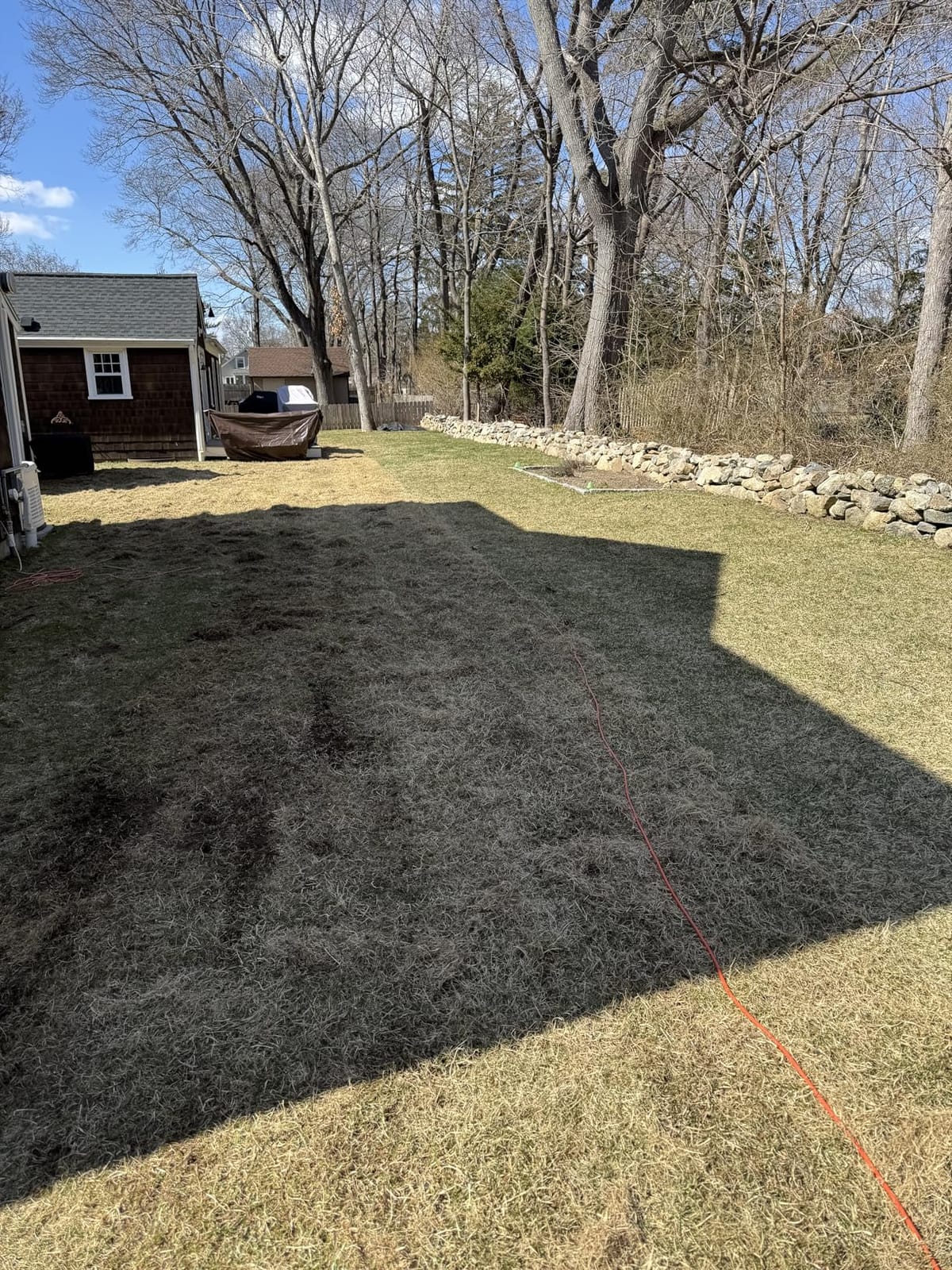
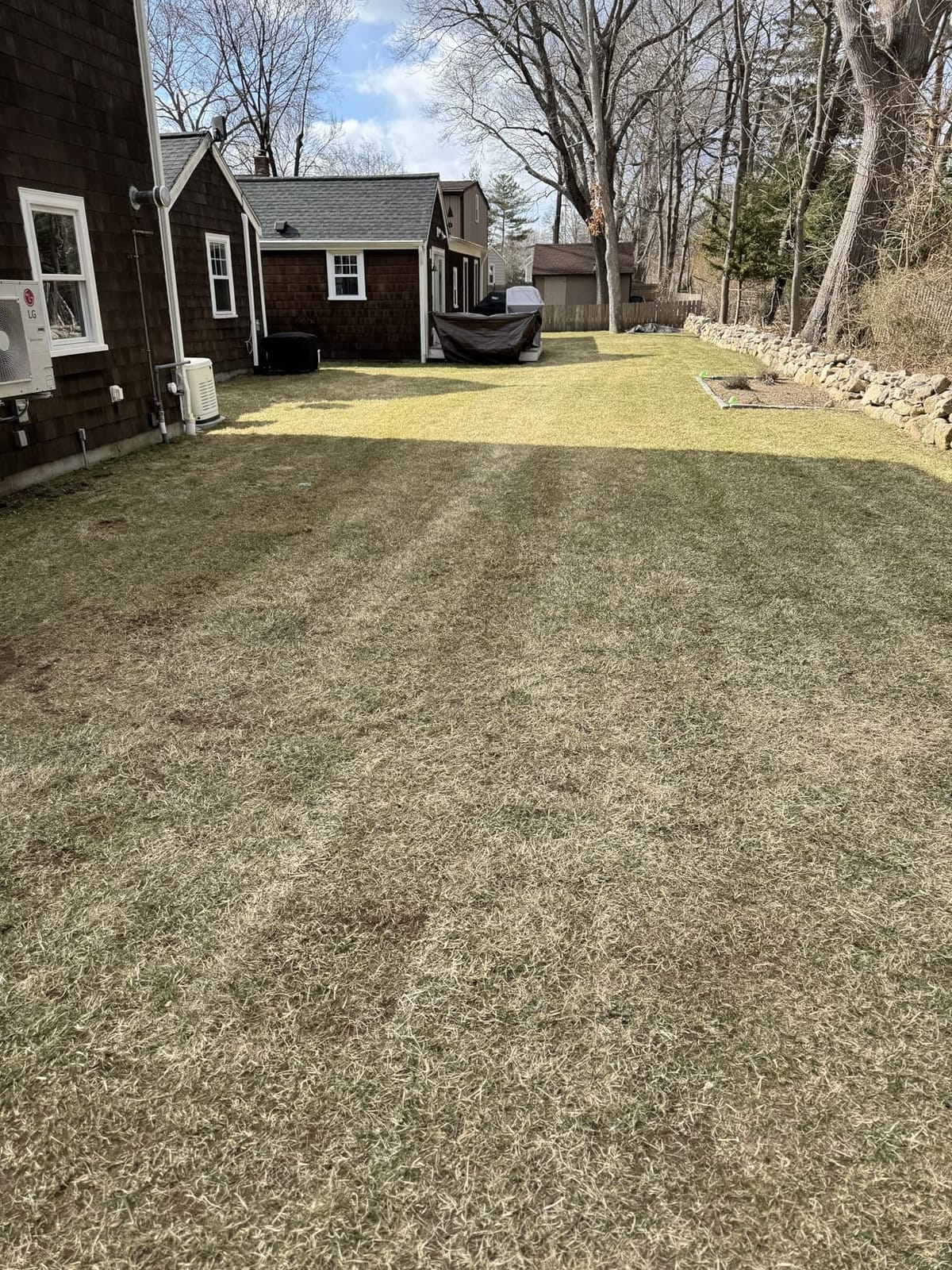
A post on r/lawncare captures the situation perfectly. A New England homeowner with rocky soil, a heavy spring thatch layer, and a plan to dethatch, then aerate, then overseed. That is a renovation-scale job, and it is where most buying guides quietly go wrong.
One warning before we start. If your thatch measures a quarter inch or less, you probably do not need any of this. Our heavy-duty hedge trimmer guide covers the same thick-material problem for shrubs, but for lawns the threshold is thatch depth, measured before you buy anything.
Thatch blocks water, oxygen, and fertilizer from reaching the roots, which is what drives the pale, patchy turf. Removing it lets the lawn breathe and take up water and fertilizer normally. Here is what we cover, and how to match each tool to the layer you are actually dealing with.
The Sun Joe AJ805E takes our top slot because it combines the highest review volume in the category with a 13-amp motor and five depth positions. Greenworks is the cleaner run on mossy ground, and the Walensee thatch rake covers small yards where a machine makes no sense.


Push a ruler or a screwdriver straight down into the turf until you hit soil, and read where the thatch layer starts. Under a quarter inch, rake by hand or skip it entirely. A quarter to half inch, a manual thatch rake or a light electric unit will clear it. Half an inch to three-quarters inch, you need a powered dethatcher at 13 amps or more with three or more depth positions. Above three-quarters inch, plan on multiple passes and consider a tow-behind unit.
Two quick checks before the ruler. Rub your knuckles across the lawn: if the thatch puffs into a visible pad, it is thick. Then push a garden trowel straight down. If it stops in a dense brown mat before reaching soil, you are over the half-inch line.
The reason measurement matters is that a manual thatch rake is honest about its limit. It strips a seasonal layer well and will not touch a genuinely thick mat. A homeowner in the r/lawncare thread was already shortlisting machines, and the harder question was whether anything on the market handles his ground conditions.
Every machine below is rated to pull thatch rather than just comb the surface. Rows are ordered by how well each one handles a heavy mat, starting with the corded walk-behinds and ending with the hand tools and tow-behinds for big ground.
| Product | Features | |
|---|---|---|
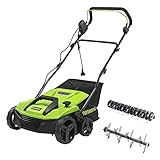
| Sun Joe 15-Inch AJ805E Dethatcher and Scarifier |
|
Check Latest Price |
 WEN DT1516 16-Inch 15-Amp Dethatcher WEN DT1516 16-Inch 15-Amp Dethatcher |
|
Check Latest Price |
 TIECTOWN 16-Inch 15.5A Dethatcher and Scarifier TIECTOWN 16-Inch 15.5A Dethatcher and Scarifier |
|
Check Latest Price |
 BUCOTOD 16-Inch 15A Dethatcher and Scarifier BUCOTOD 16-Inch 15A Dethatcher and Scarifier |
|
Check Latest Price |
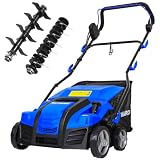 BILT HARD 16-Inch 15-Amp Dethatcher Scarifier BILT HARD 16-Inch 15-Amp Dethatcher Scarifier |
|
Check Latest Price |
| Greenworks 14-Inch Corded Dethatcher Scarifier |
|
Check Latest Price |
 Agri-Fab 40-Inch Tow Behind Dethatcher Agri-Fab 40-Inch Tow Behind Dethatcher |
|
Check Latest Price |
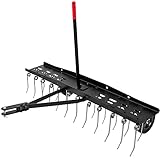 Suchtale 48-Inch Tow Behind Dethatcher Suchtale 48-Inch Tow Behind Dethatcher |
|
Check Latest Price |
| Walensee 15-Inch 19-Tine Thatch Rake |
|
Check Latest Price |
 MZK 15-Inch Electric Dethatcher Scarifier MZK 15-Inch Electric Dethatcher Scarifier |
|
Check Latest Price |
We earn from qualifying purchases. CERTAIN CONTENT THAT APPEARS ON THIS SITE COMES FROM AMAZON. THIS CONTENT IS PROVIDED 'AS IS' AND IS SUBJECT TO CHANGE OR REMOVAL AT ANY TIME.
13-amp corded motor
5-position depth control
13.2-gallon bag
2-in-1 dethatcher/scarifier
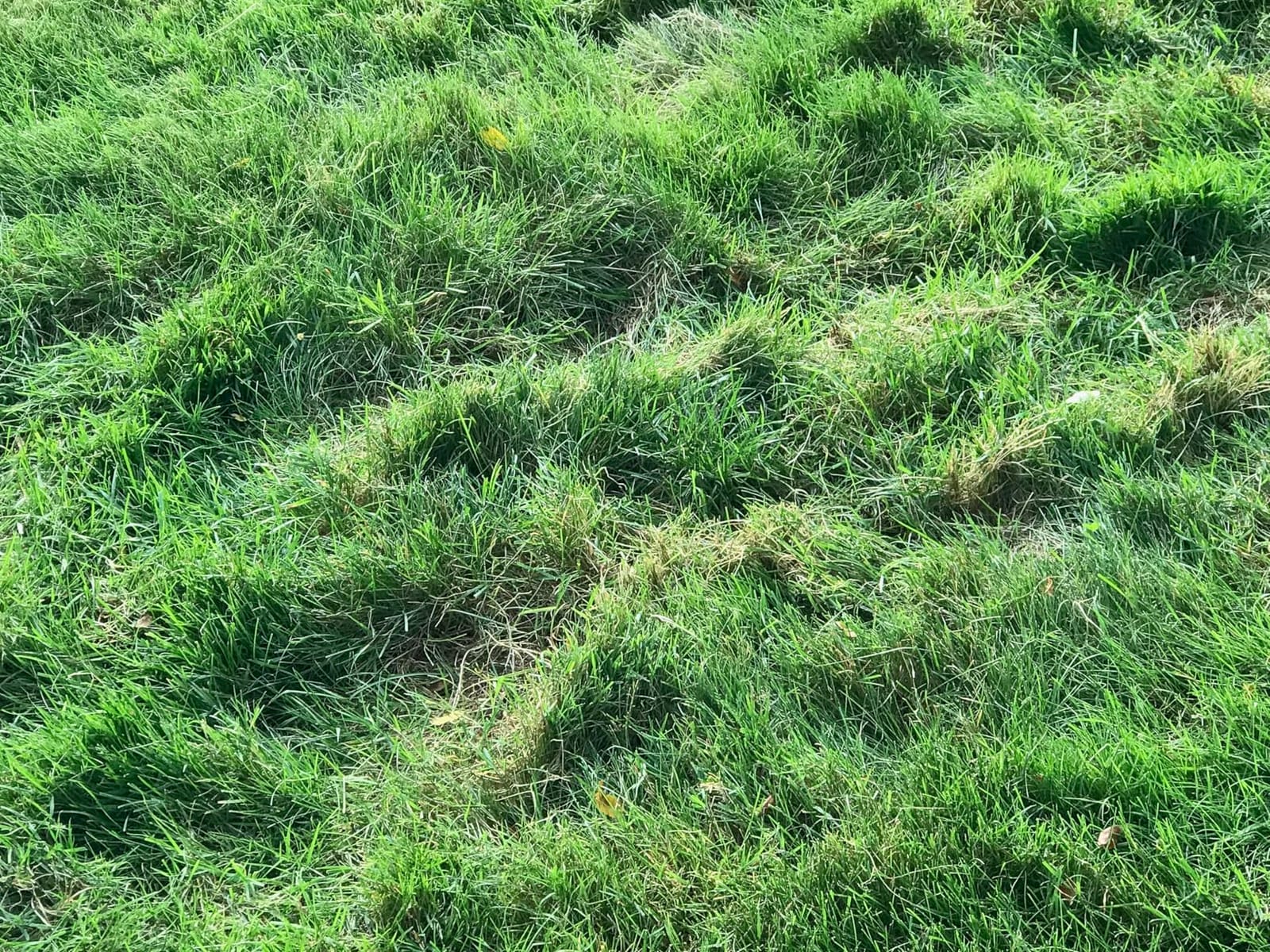
Roughly 19,000 reviews sit behind this machine, and that kind of history tells you something a spec sheet cannot: it has been run on every kind of neglected lawn a homeowner can produce. The 13-amp motor is the reason it belongs at the top of a thick thatch list rather than a light seasonal cleanup list.
It pulls a full mat of straw-colored debris up and into the bag in a single pass, which is the part that separates it from light-duty tools. Owners on neglected Bermuda and fescue report dramatic results within a couple of hours.
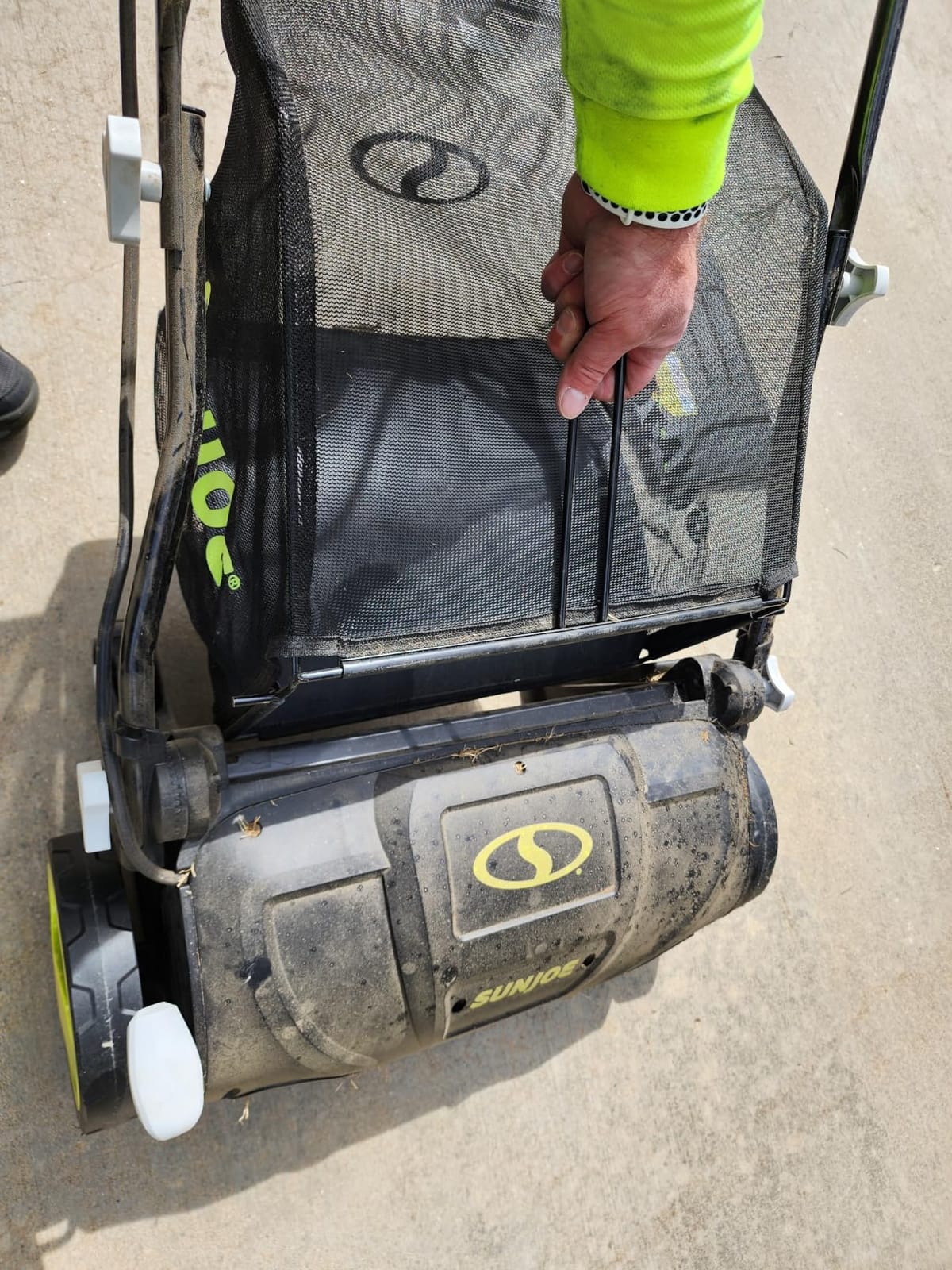
The five depth positions matter more on thick thatch than anywhere else. Set the machine at its highest setting, make a pass, then step down one notch per run. A 13-amp machine set too low on a heavy mat will bog down rather than cut cleanly.
The removable bag is a genuine convenience but a real limitation on heavy work. Owners on neglected lawns empty it far more often than they would like. Removing the bag and raking the debris is the common workaround.
At 27.1 pounds the machine sits mid-group and turns at the end of a row without straining. Four easy-glide wheels keep it tracking straight across uneven ground, which makes it comfortable on a lawn under roughly a quarter acre.
Power access is the one non-negotiable. A standard household extension cord will choke a 13-amp motor on deep thatch, so a heavy-gauge cord is part of the purchase for any lawn past a few thousand square feet.
15-amp motor to 3300 RPM
16-inch path
24 steel dethatching tines
5-position height
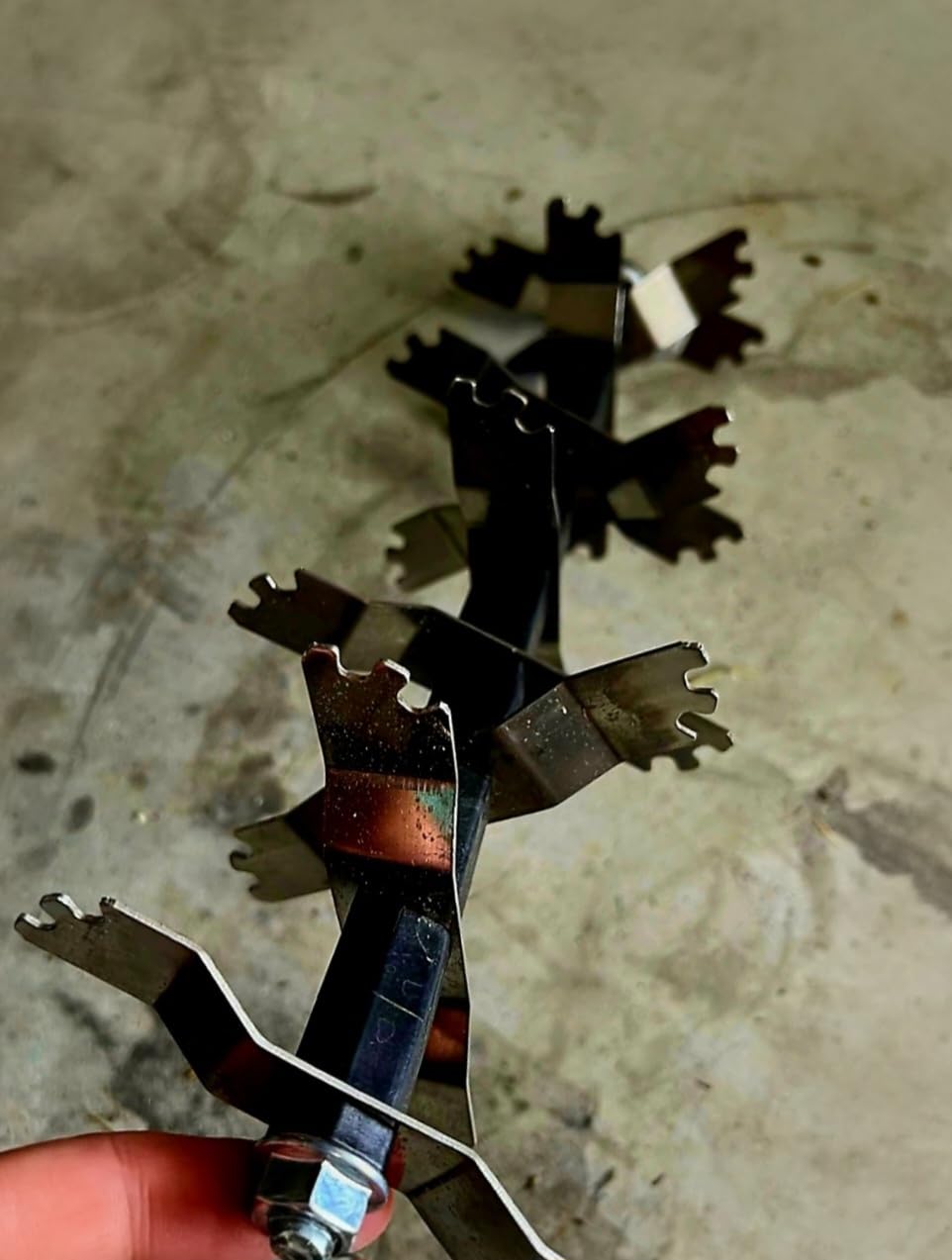
Where the Sun Joe leads on proven volume, the WEN leads on motor output. A 15-amp motor spinning to 3300 RPM with 24 steel tines across a 16-inch path is a serious corded configuration for heavy mat, and the dethatching head carries the most tines of the group.
Owners on neglected lawns describe pulling out large volumes of debris in single sessions, and several report the machine paying for itself within two or three uses compared with renting. The 16-inch width is a real time saver over the 14-inch class.
The five-position adjustment runs from +1/4 to -1/2 inch, giving you a shallow scratch pass before committing to real depth. On a lawn headed for overseeding, owners report the scarifying head cuts deeply enough to prep bare patches properly.
Built-in overload protection is unusual at this size and matters on thick thatch. When the tines jam in a dense mat, the motor shuts down instead of burning out. It does not fix the jam, but it keeps a heavy pass from becoming a dead machine.
At 33.7 pounds it is heavier than most walk-behinds here yet still light enough to lift with one arm. The handle folds down for storage. Small rear wheels are the one ergonomic complaint, since rolling it over a garage threshold takes a little effort.
Watch the factory setup. The scarifier blade ships installed, which strips live grass if you run it without switching. Swap to the 24-tine dethatching head before your first pass, and the two-year warranty covers you if something gives out.
15A motor peaking at 15.5A
3600 RPM, 16-inch path
14.5-gallon bag
Five-position depth
This is the machine to buy if the single worst part of dethatching is stopping every thirty feet to shake out a full bag. The 14.5-gallon bag is the answer to the complaint that sinks most of the corded class.
Underneath, the motor is no slouch. Fifteen amps nominal and 15.5 amps peak at 3600 RPM on a 16-inch path puts it firmly in thick-thatch territory rather than at the light seasonal end.
The depth lever runs from -0.47 inch in scarifying mode to +0.24 inch in dethatching mode, and a separate three-position rod adjusts the operator handle. Having two independent adjustments means you can set the tines deep without walking bent over the machine.
Switching between the dethatching and scarifying blades takes no tools, and the whole machine folds for storage. Assembly is also tool-free. For owners who already fought with hex bolts on a previous dethatcher, that is a meaningful difference in the first ten minutes.
The written guidance on blade use and depth settings is thin, and the three-year warranty is the strongest in this group. Corded power remains the limiting factor on large lawns, where you need a serious extension cord.
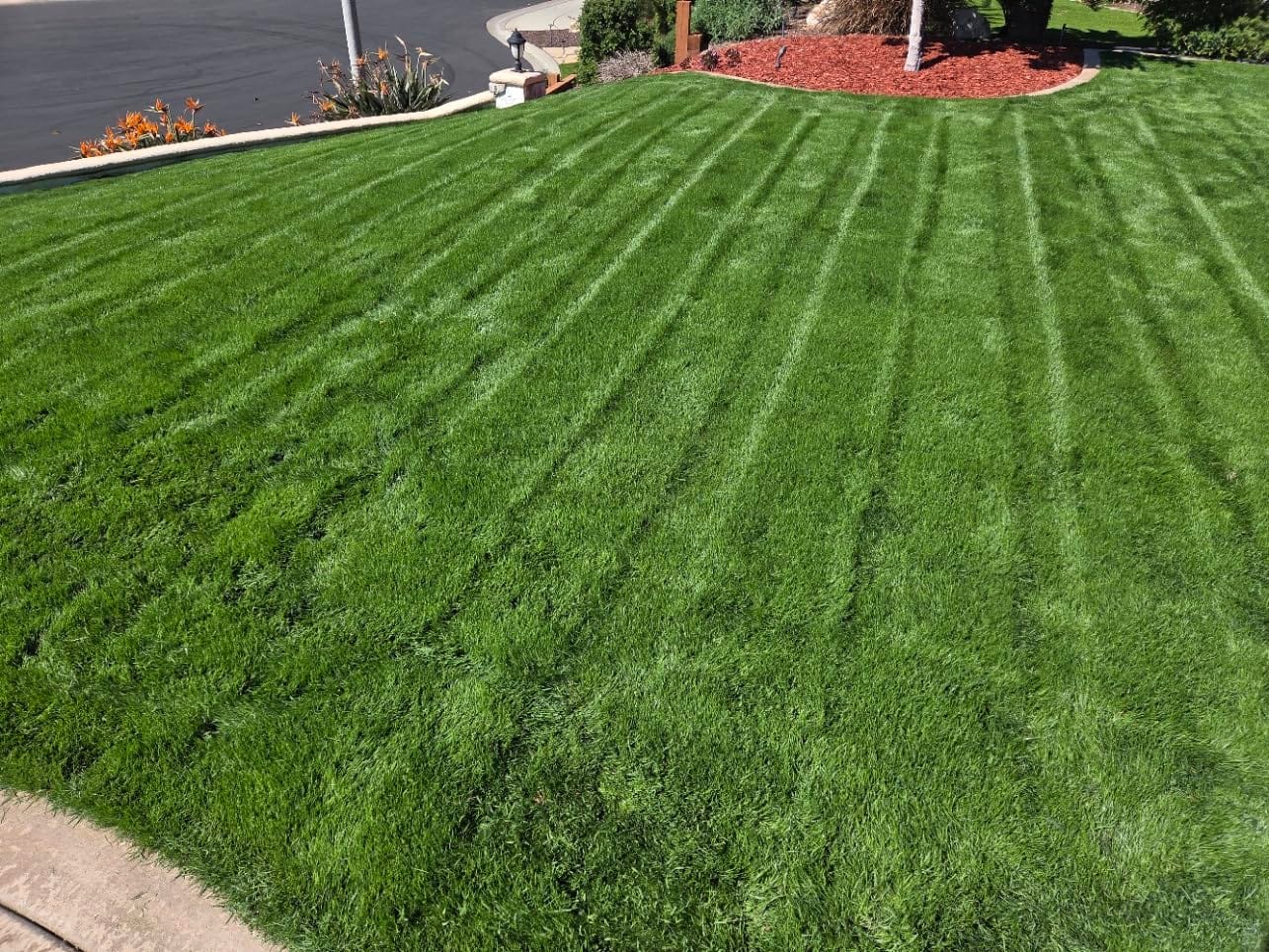
One small detail worth noting: the waterproof plug and cord clip keep the connection secure in damp early-spring conditions, when the lawn is often dewy and thatch removal is at its most useful.
15-amp motor to 3500 RPM
16-inch rake path
55L bag
Five-position depth control
The build weight works in your favor here. More mass over the tines means more downward force on a packed mat, and that is what separates a dethatcher that penetrates from one that rides over the top. At 35 pounds it is still manageable to reposition at the end of a row.
One owner logged 4.75 hours of continuous work across 14,000 square feet of heavy moss and thatch. That is the endurance figure you want from a machine meant for a full-property cleanup rather than a flower bed border.
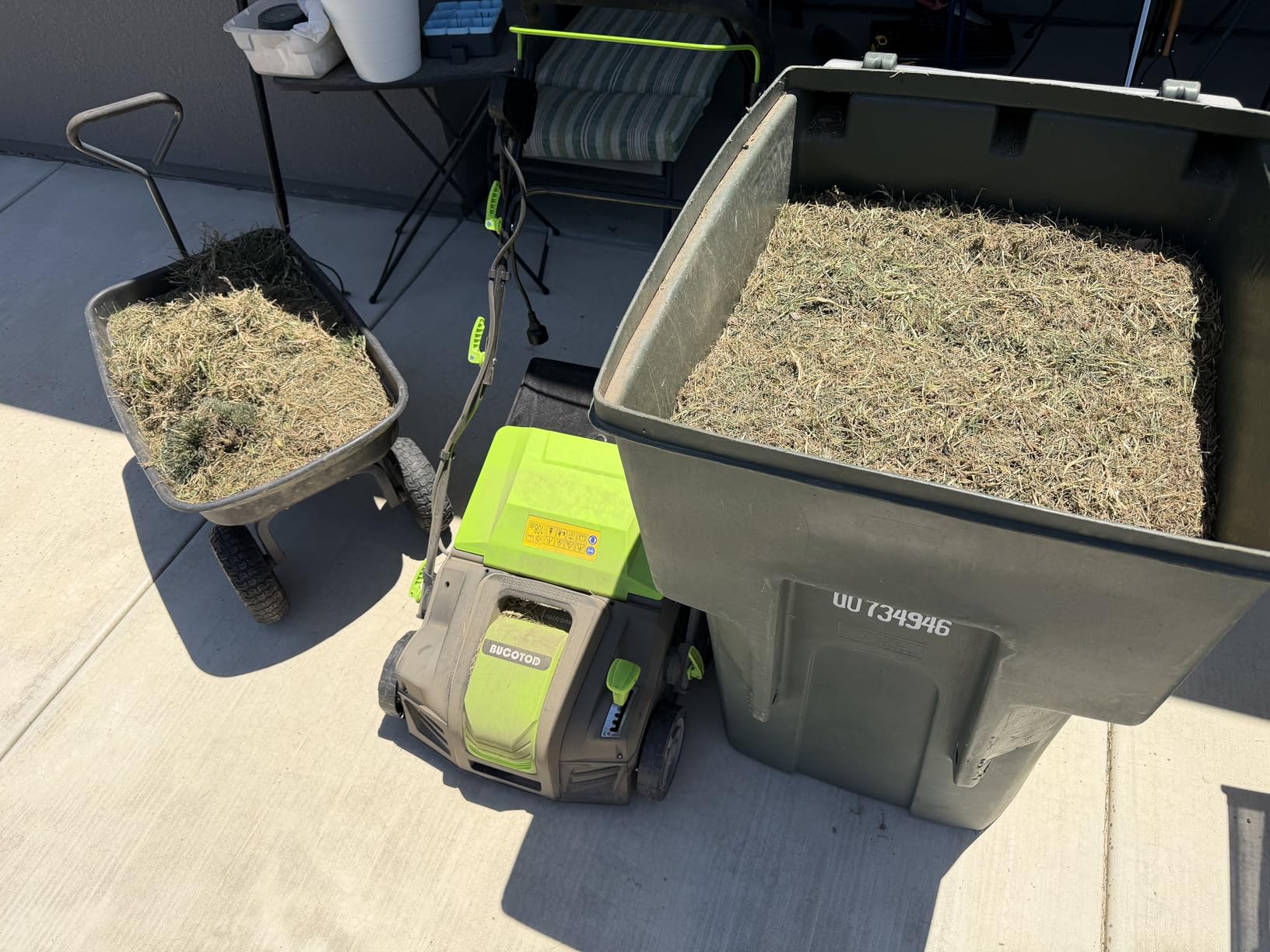
The 55L bag is the largest here and fills only about halfway on ordinary lawns. On a neglected property it still fills every 10 to 30 feet, which is a fair warning to plan your route around dump points before you start.
Positions are numbered rather than marked in inches, and the full range runs from -0.47 to +0.4 inch. Learn the feel of the first two settings on a hidden corner before crossing the visible lawn, because a heavy mat rewards patience on the first pass.
Owners compare the noise favorably to an electric mower, which matters if you are working before neighbors are awake. Two safety switches and a three-position handle rod round out a well-considered control layout.
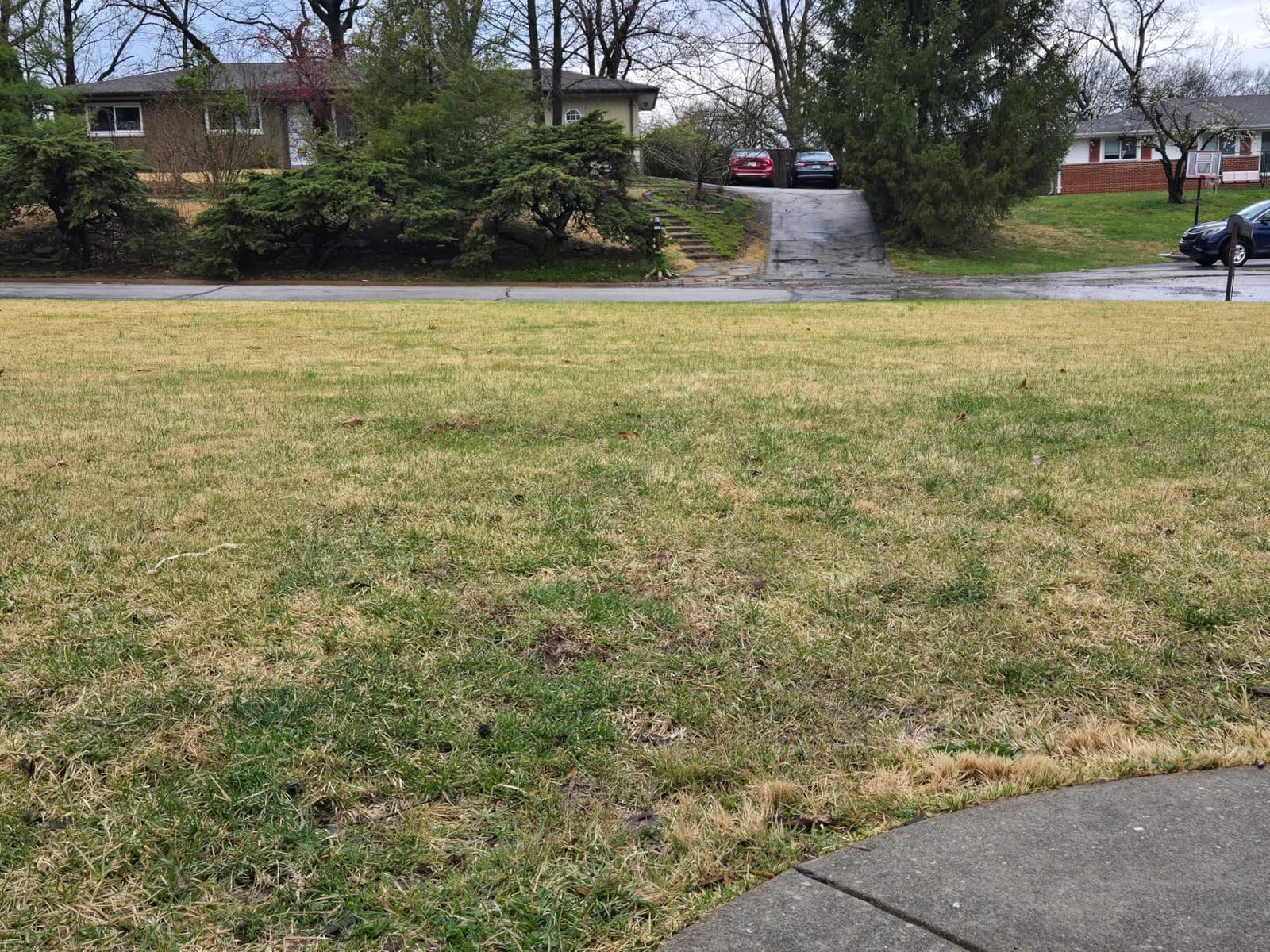
The factory-installed scarifier blade is the same trap as the WEN. Swap it to the dethatcher head before starting, or the first pass will pull healthy turf along with the thatch.
15-amp copper motor to 3300 RPM
20 spring steel tines
16-inch path
14.5-gallon bag
Bermuda and other warm-season lawns build thatch fast, and this is the machine owners in that group reach for. The spring steel tines dig through moss-heavy stolons where lighter machines skim the surface.
One owner’s cleanup pulled 45 bags from a 7,200 square foot yard. That single report is the clearest demonstration of the tool’s appetite in the reviews we read, and it matches what heavy thatch jobs actually produce.
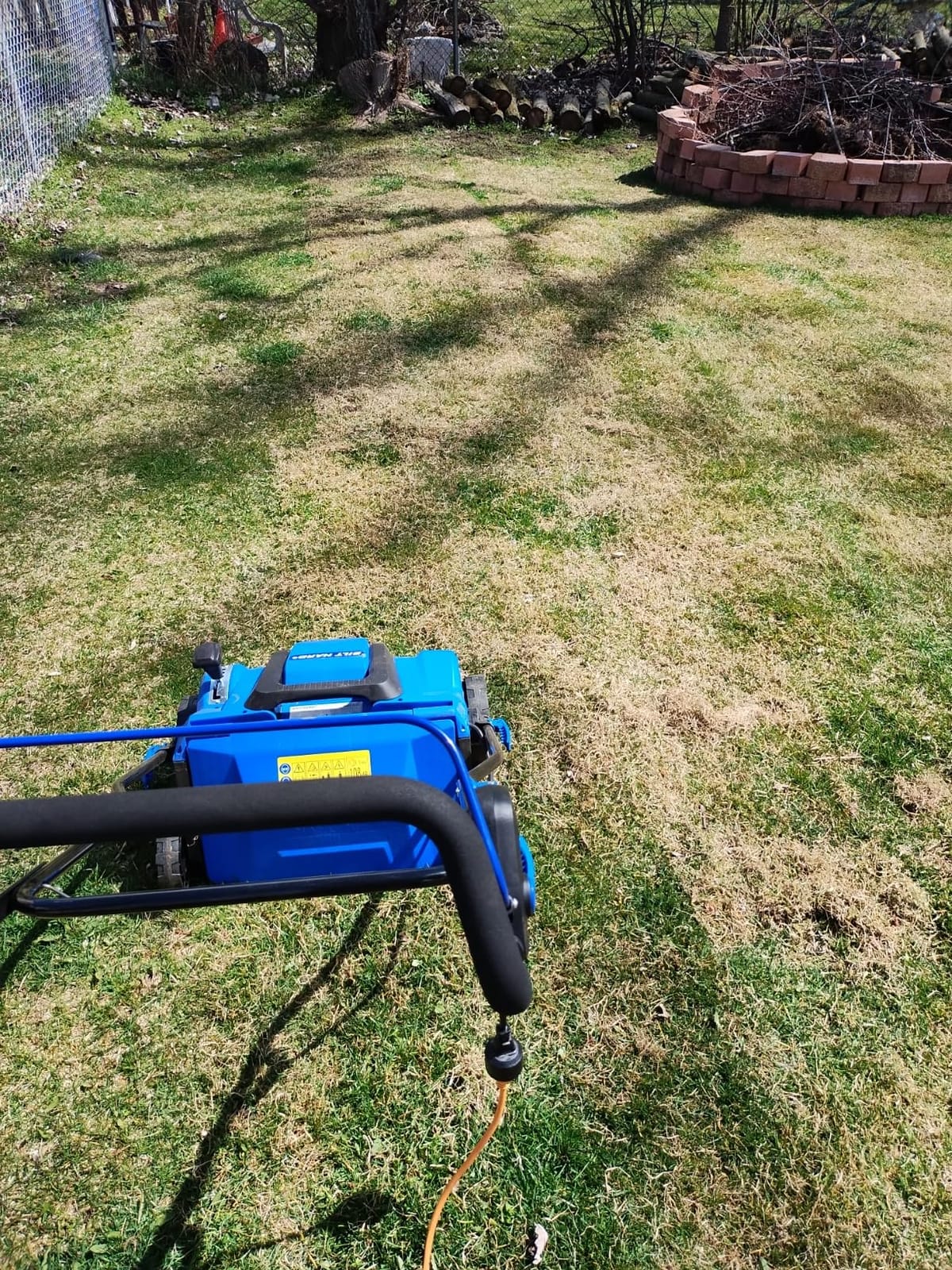
Spring steel tines flex on contact rather than snapping, which is a real advantage on rocky ground where a rigid tine wheel can bend or break. The tradeoff is slightly less aggressive slicing on hard-packed soil than a fluted blade offers.
This is the heaviest walk-behind in the group, and the extra mass is exactly what adds penetration. It is also the reason owners recommend it for lawns under a quarter acre. On a large property, the fatigue adds up fast and a tow-behind is the smarter call.
Seven-inch front and six-inch rear flat-free wheels roll over roots and uneven ground without going flat. The foldable handle rod means the whole unit collapses to something you can carry to the side yard rather than wrestling across a patio.
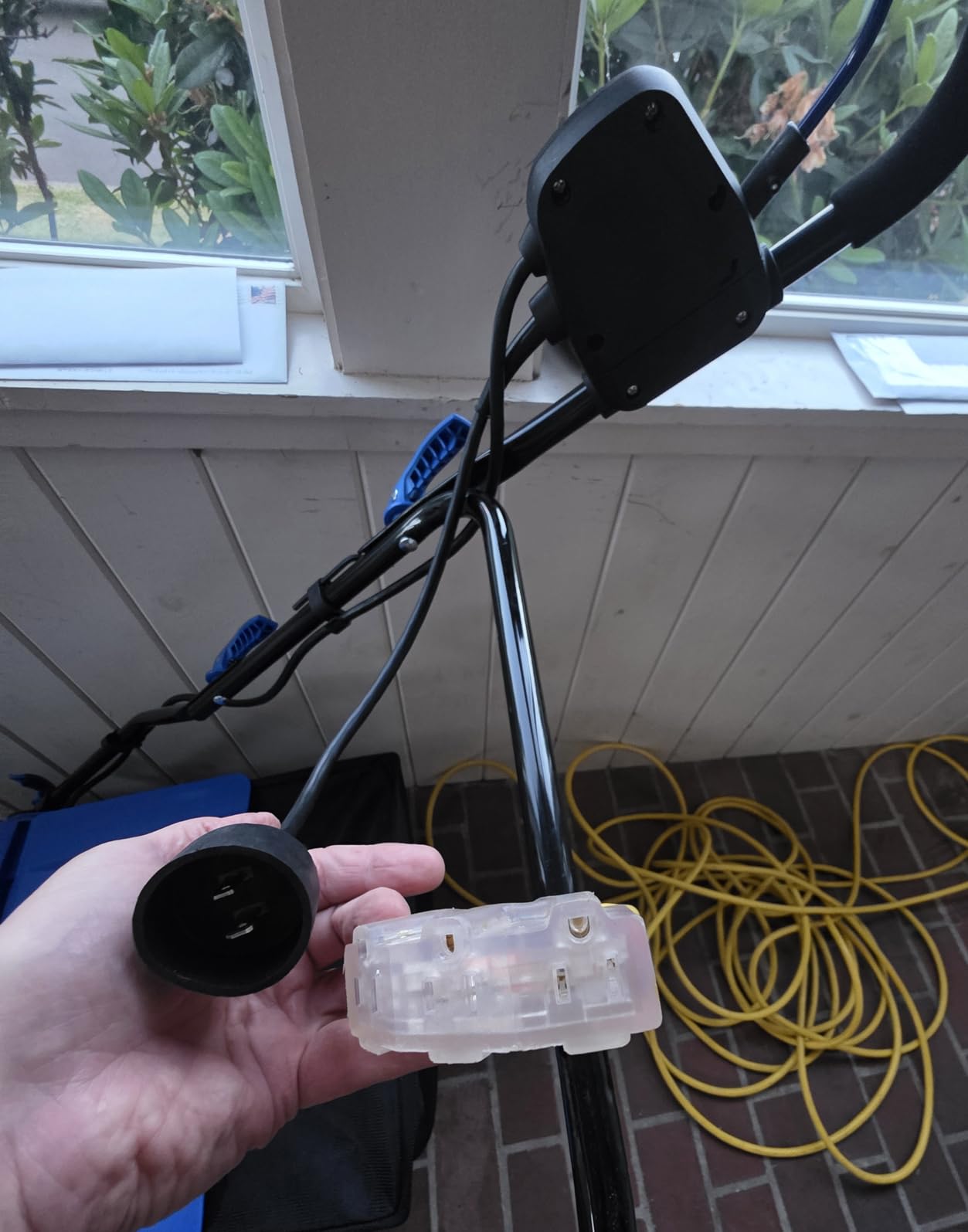
The 14.5-gallon bag is generous in size but still backs up quickly on a neglected lawn, and owners note debris lands on the turf regardless. Plan on a raking pass afterward for a clean finish.
13A motor at 3200 RPM
14-inch rake path
3-position tine depth
Quick-release head swap
If your problem is moss more than straw thatch, this is the one to shortlist. Reviewers consistently report it stripping thick moss out of cool-season lawns where other machines leave the mat sitting there.
The handling is the other standout. At 28.7 pounds with a 14-inch path, it turns and repositions far more easily than the 16-inch machines, and it assembles without a single tool.
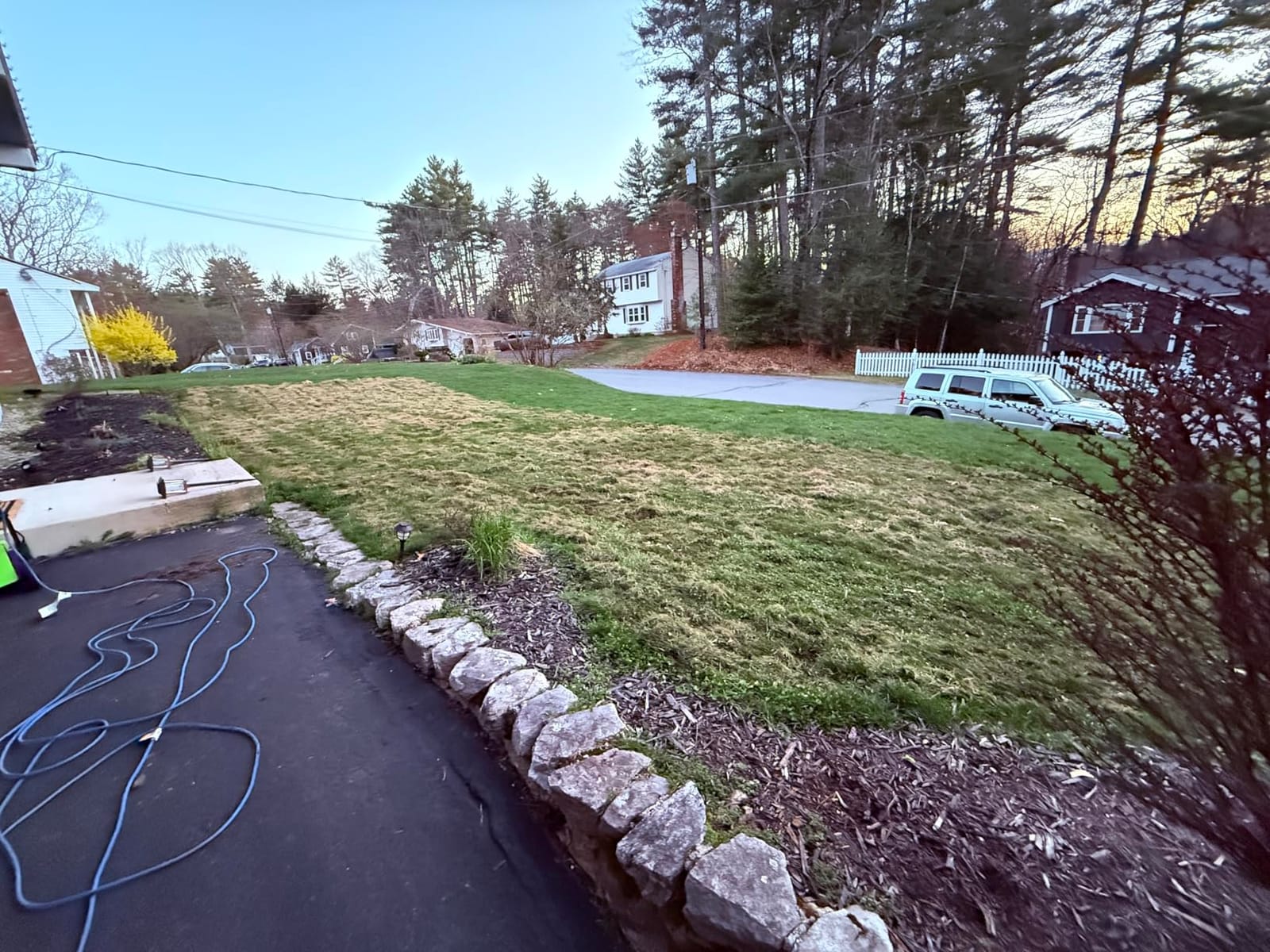
Three positions is fewer than the five offered by the 16-inch machines, so you have less fine control on the first pass. Set it shallow, watch the result, then step down. Reviewers report pulling up 8 cubic yards of material once the depth was right.
The throttle and switch sit in the opposite arrangement to a lawnmower, which catches out nearly everyone the first time. Get used to it for a minute at the start of the job rather than mid-pass with a loaded head.
The collection bag is the most common complaint, and many owners remove it and rake instead. Several also note the tines and tine column look like modest-gauge steel, which matters if your ground has rocks or the machine will live in the bed of a truck.
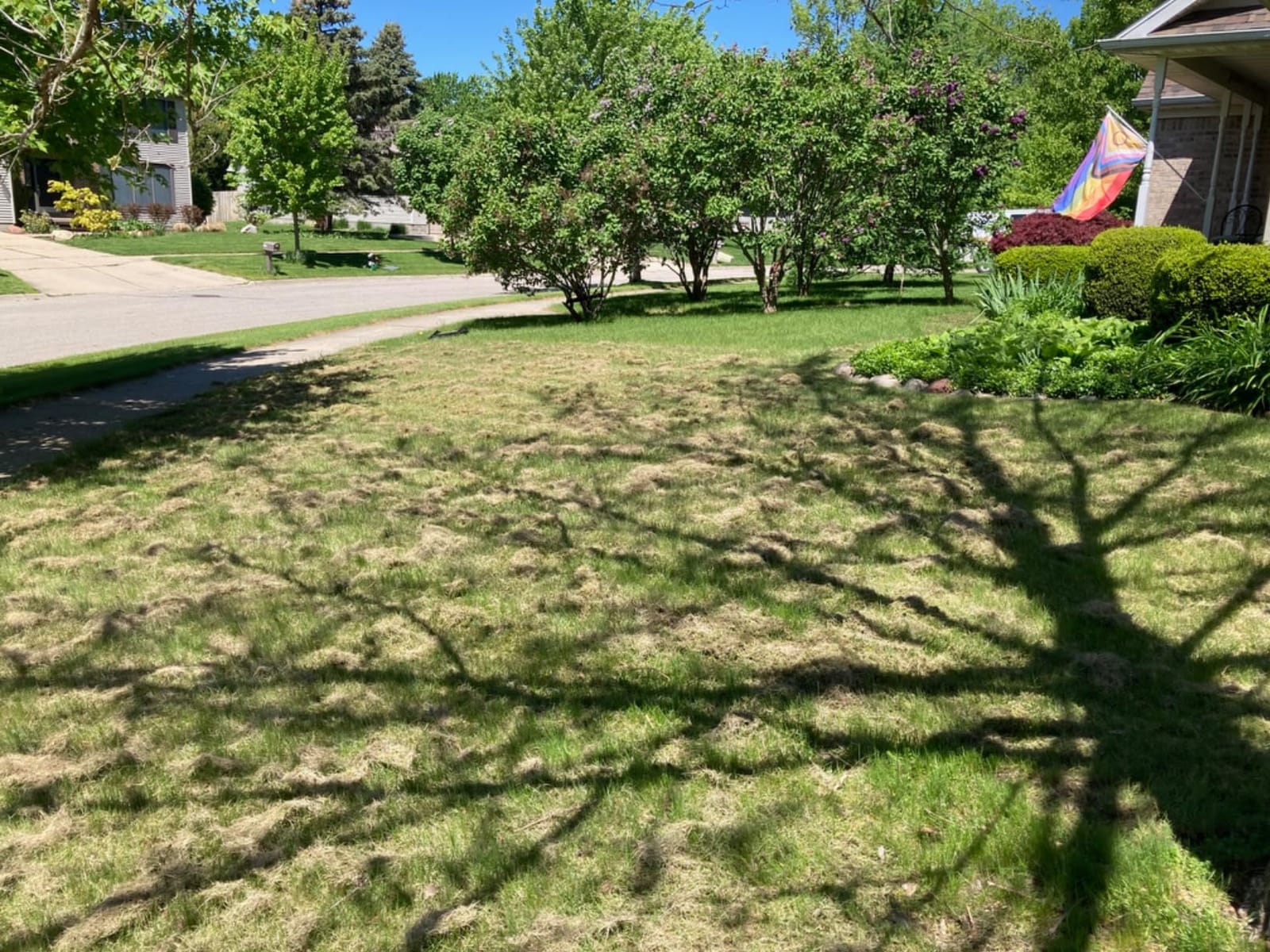
Owners consistently note that a heavy-duty extension cord is required for anything beyond a modest lot. Budget for that separately, because a light cord will trip the motor on dense thatch.
40-inch working width
20 spring steel tines
Heavy gauge steel deck
3-year warranty
Once a lawn passes an acre, walking a dethatcher stops being practical. The Agri-Fab converts your riding mower into a dethatching machine with a 40-inch working width, and 20 spring steel tines doing the cutting.
Long-term owners highlight the build. A heavy gauge steel deck, grade 5 bolts, and a made-in-the-USA frame are why a 3,034-review history skews toward durability rather than disposability.
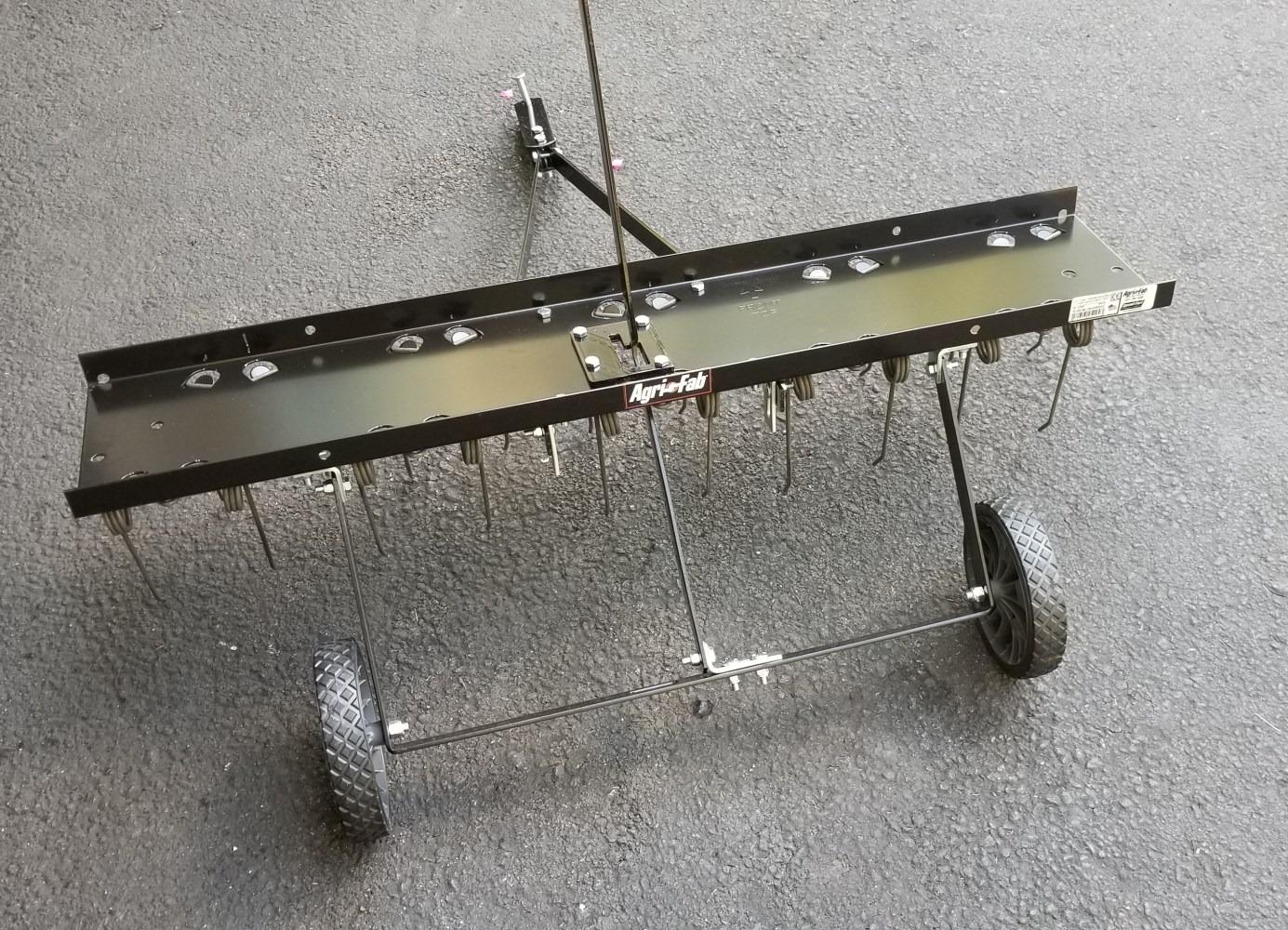
Forty inches is more than twice the width of a 16-inch walk-behind, so the same lawn takes a fraction of the passes. On large properties that difference is the entire argument, and owners pair it with a mower bagger to handle debris in the same trip.
The 20 spring tines flex over uneven terrain and keep contact without added ballast. They do clog with heavy thatch, so clearing the tine housing every few passes keeps the machine cutting at full depth instead of riding up over the mat.
Expect 45 minutes to 2 hours of assembly with a video guide, the most common source of frustration. Some owners also find the drawbar too short for certain riding mower hitch points. Measure before you commit.
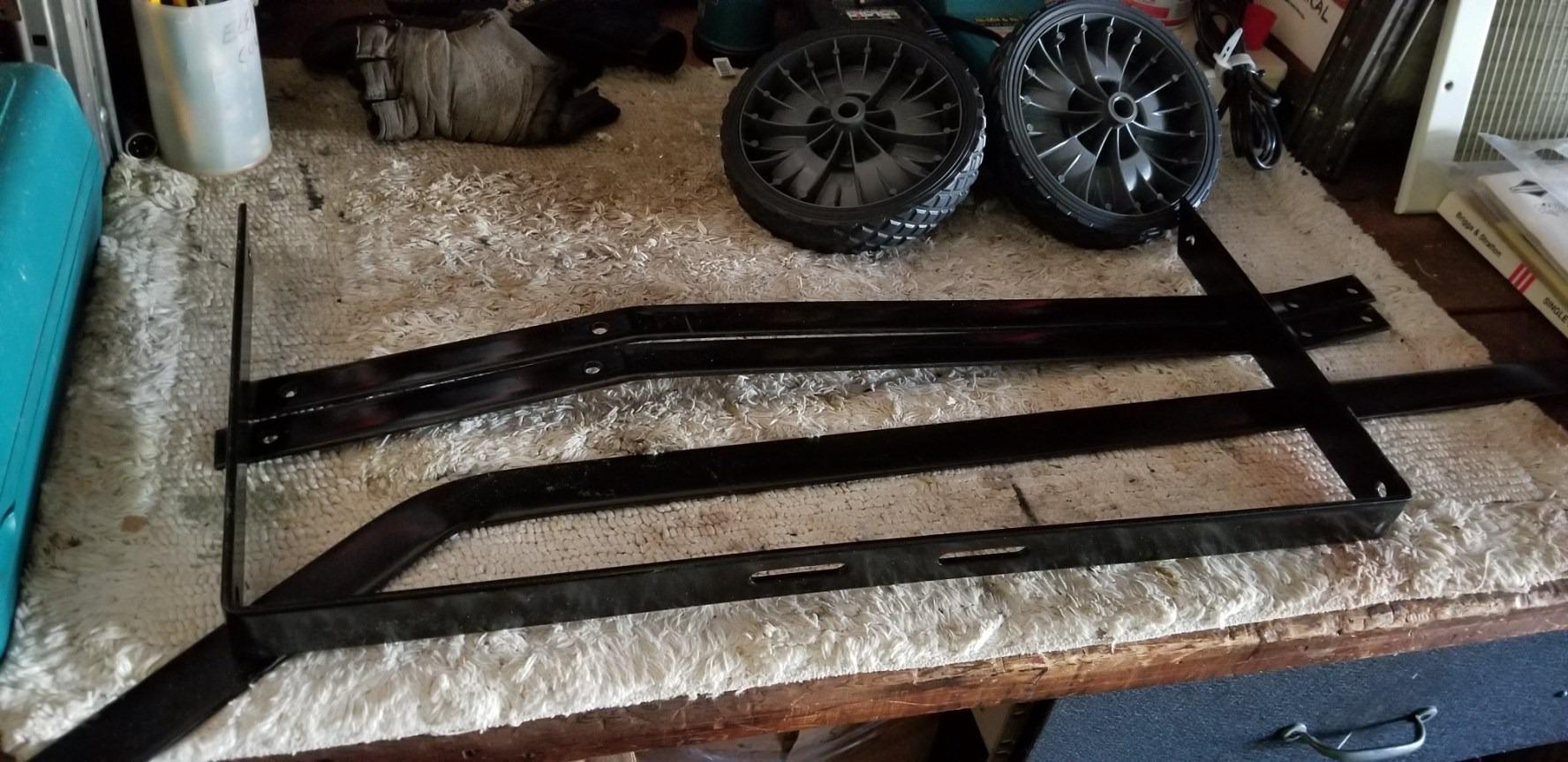
Unlike the self-propelled walk-behinds, this is a passive attachment. Your tractor sets the pace, which is the trade for the width. The 7 inch semi-pneumatic tires roll over soft ground without sinking.
48-inch working width
24 heat-treated tines
Full steel frame
70 lb ballast platform
Twenty inches wider than the Agri-Fab, this covers a big property in fewer passes than any other unit here. The 48-inch working width and 24 tines mean you are moving along the lawn rather than walking it.
The ballast platform is the feature that separates it from a plain tow-behind. Adding weight there presses the tines deeper into a dense mat, which is how you get penetration without a heavier machine.
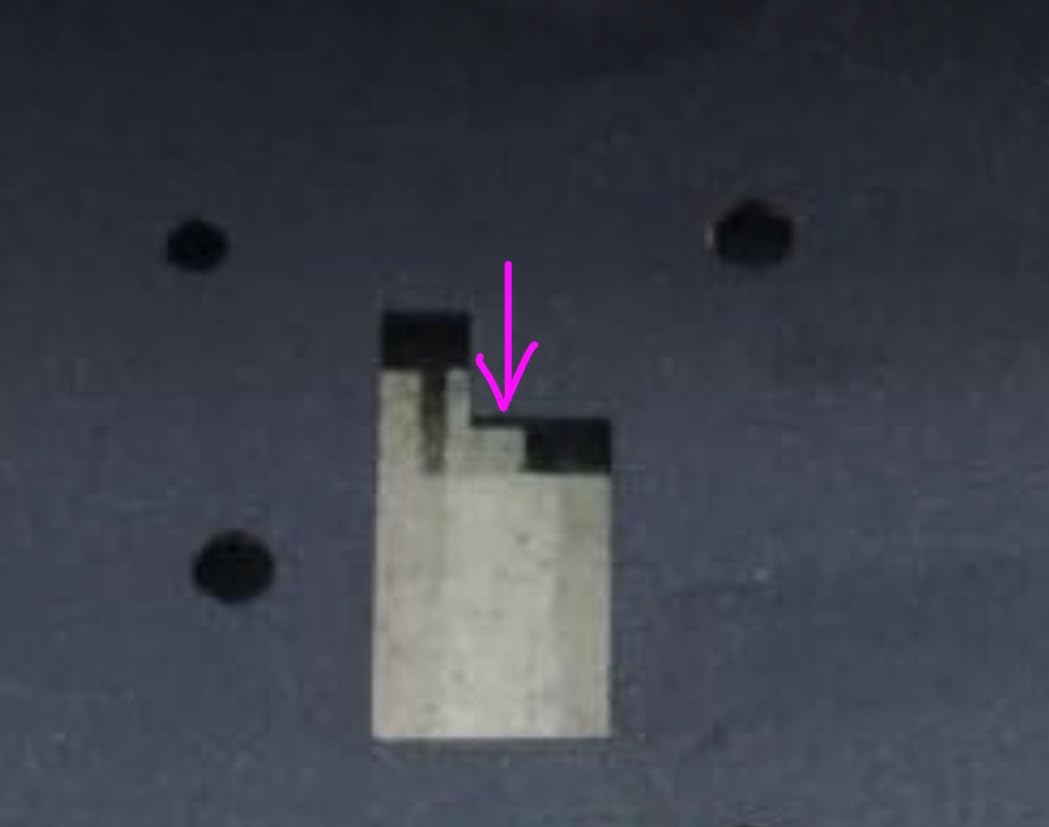
The tines are heat-treated and rust-resistant, and the frame is powder-coated. At 35.6 pounds the whole unit is light enough to handle behind a mower without straining, yet owners report the bolted-in tines outlasting comparable models.
Seventy pounds of ballast capacity sounds impressive until you realize the weight is added separately. Treat it as a second step after assembly. Once loaded, it is the answer to thick thatch on a large property.
The transport wheel lever is the weakest part, with some owners modifying it themselves. Assembly runs 1 to 2 hours with instructions that leave a lot to interpret, and a small number report bent tines or surface rust after long exposure.
The pin-style hitch works with riding mowers and ATVs, which makes it more flexible than a fixed drawbar. The transport handle raises and lowers the tines for travel, which is essential given the width.
Dual-sided 19-tine head
Quenched manganese steel
40/55/70 inch handle
4.6 pounds
No motor, no cord, no extension lead. For a small yard with a seasonal layer of thatch, the Walensee is the honest answer, and owners say it pulls up genuinely heavy material for a fraction of what a machine costs.
The head flips. One side lifts dead grass, the other loosens topsoil, which turns a single tool into both a thatch rake and a scarifying rake without buying two.
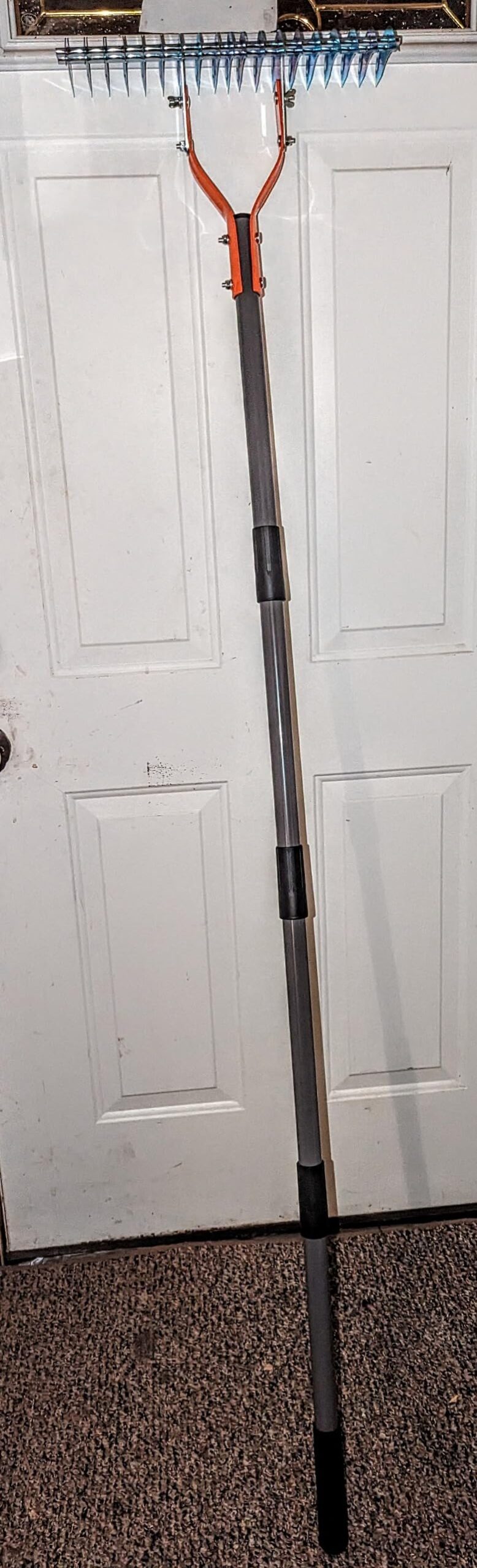
The head is quenched manganese steel with a powder-coated finish, which is the material that keeps tines from bending or snapping in rocky ground. That durability is the whole reason this rake belongs on a thick thatch list at all.
Sections lock together at approximately 40, 55, or 70 inches with a cushioned non-slip grip. Set it to your height before you start. A handle too short means bending, and bending over a 15-inch rake across a full lawn is what turns a job into a lost weekend.
Owners describe a full-body workout, and the 15-inch width means far more passes than any powered unit here. On a small yard that trade is worth taking. On anything approaching half an acre, it is not.
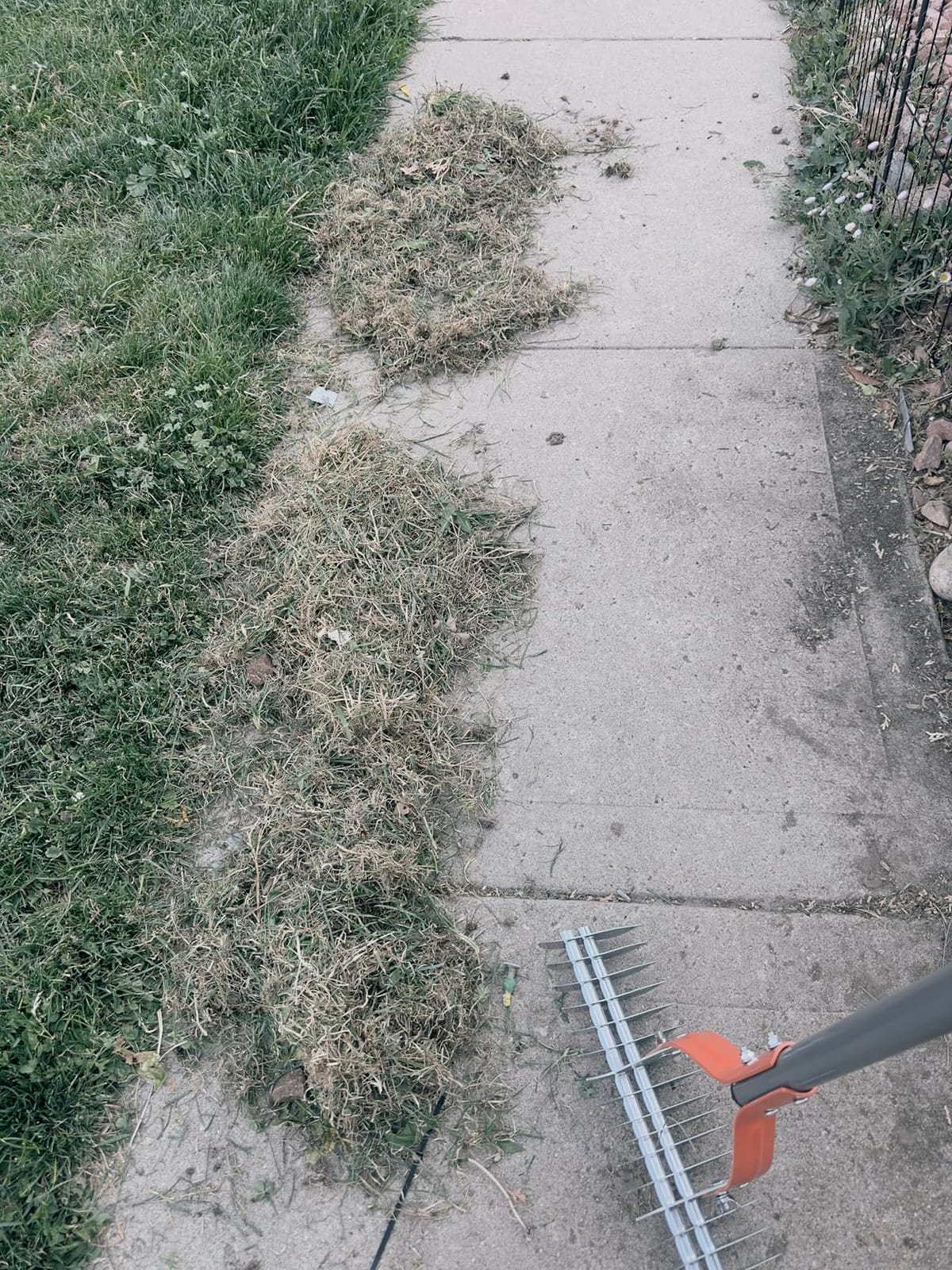
Two honest weaknesses: the included assembly hardware frustrates buyers because several bolts lack hex holes, and the handle threads feel cheap next to the excellent head. Budget five minutes with a better hex key before you start.
13-amp motor at 3700 RPM
15-inch rake path
Depth -0.47 to 0.24 inch
45L bag
The 3700 RPM motor is the highest no-load speed among the powered walk-behinds here, and owners report visible thatch coming up on the first pass. At 27.5 pounds it is light enough to move without wrestling, which several reviewers compare favorably to self-propelled handling.
Its 4.9 rating across 50 reviews is the highest average in this group, though on a much smaller sample than anything else here. We would treat that number as encouraging rather than decisive.
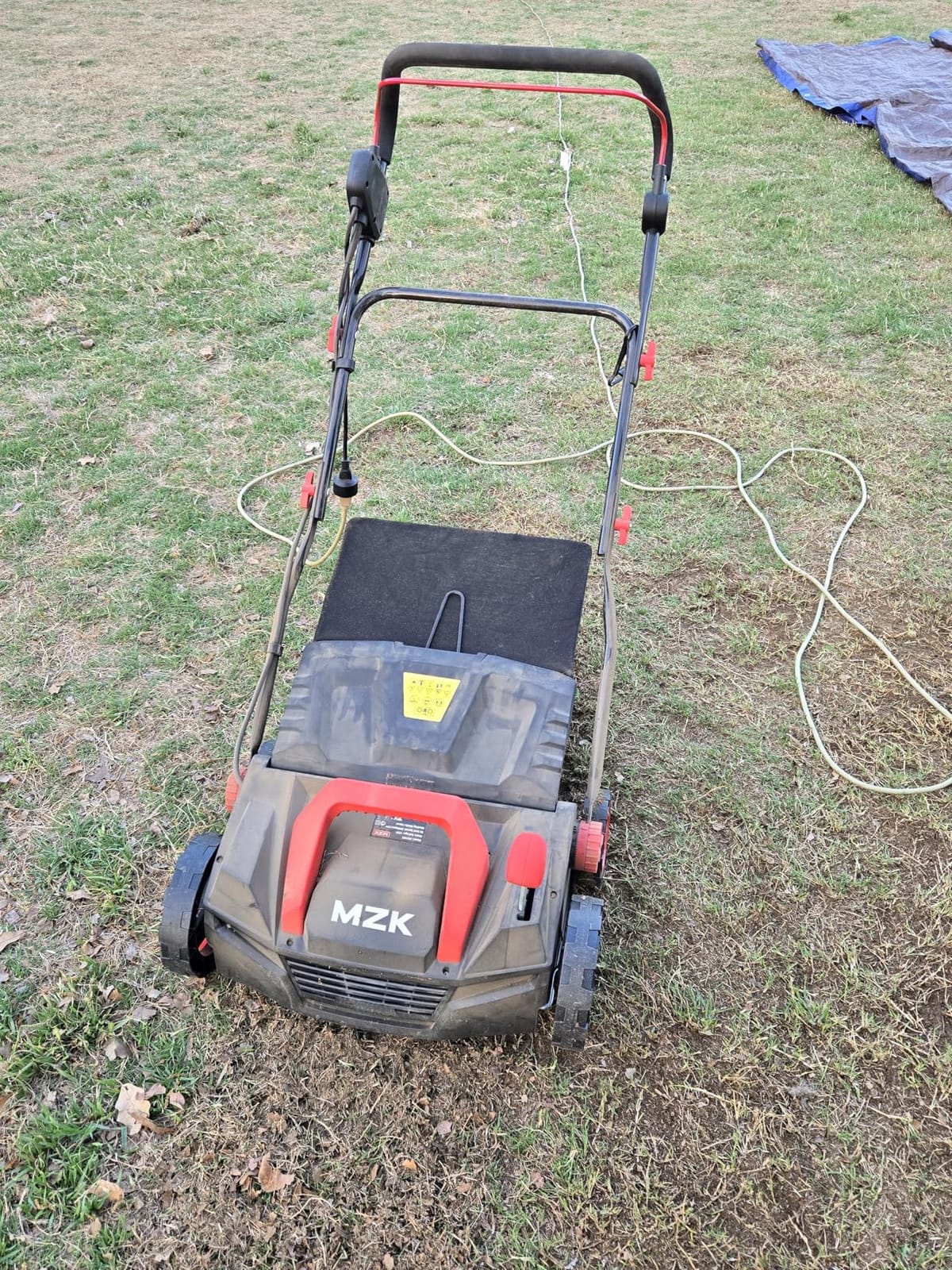
That speed figure is the spec that matters for dense material. Combined with a 15-inch rake path and a 13-amp copper motor, it has the hardware for a genuinely thick layer rather than just combing the top of the canopy.
The handle folds and detaches, so the machine fits in a closet corner between seasons. At 27.5 pounds it carries to a different lawn without a cart, which is the practical advantage for anyone tending more than one property.
Owners note the scarifier tines can tear up healthy turf if used too aggressively. Save that attachment for bare patches and pre-overseeding work. For routine thatch removal, the dethatcher blade at a shallow setting is the right combination.
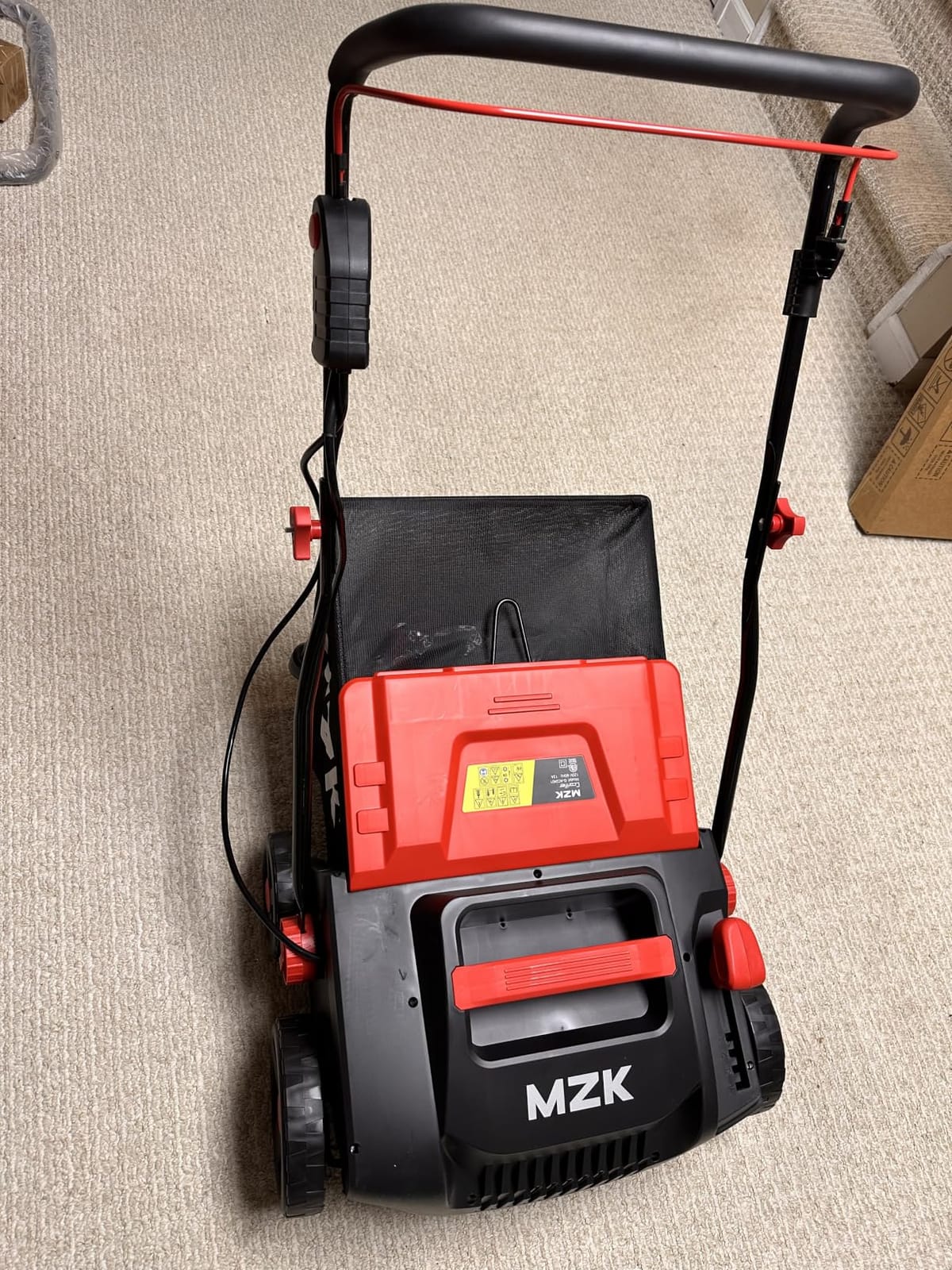
A few units stalled at startup until the operator slowed the pace. If that happens, ease off rather than forcing it, and check the depth setting first, since a deep setting on wet ground is the usual culprit.
Here is how we would narrow the best dethatchers for thick thatch. Match the tool class to the thatch depth, then judge the machine on tine material, depth range, and bag size. Motor amperage matters, but it is not the first filter. A 15-amp machine set too deep will bog down exactly like a 13-amp machine set too deep.
Quenched manganese steel, spring steel, and heat-treated steel all flex rather than snap, and all three handle stones better than plain stamped steel. If your ground is rocky, that flexibility is worth more than extra horsepower. This was the concern raised in the r/lawncare thread, and it is a legitimate one.
Five positions give you a way to start shallow and work down without guessing. Three positions work, but you take bigger steps and risk scalping healthy turf. The full range should reach at least half an inch below the surface.
Fourteen inches suits a lawn under a quarter acre. Sixteen inches is the sweet spot for a half acre. Above an acre, a 40 or 48 inch tow-behind turns a day of walking into an afternoon. Width is the single biggest time variable in this list.
Every corded machine here ships with a bag that fills fast on neglected turf. A 14.5 or 55 liter bag measurably cuts interruptions. Some owners simply remove the bag and rake, which is fine for a small yard and miserable for a large one.
Corded electric wins on continuous power and never runs out mid-pass, but you are at the mercy of your extension cord rating. A cordless platform removes the cord entirely, though none of the ten machines here are battery powered, so you would be switching platforms rather than staying with the brand you already own. Tow-behind wins on width and loses on maneuverability. A 13-amp motor tolerates a 100 foot 12 AWG cord; anything beyond that needs a heavier gauge.
A telescoping or sectional handle adjusts to your height and reduces the bending that makes dethatching miserable. Folding handles matter if the machine lives in a garage. Larger wheels roll over roots without snagging. For heavy multi-hour work, our heavy-duty lopper guide covers the same ergonomic logic for pruning work, and if you spend long stretches kneeling on hard ground, our thick yoga mat picks are worth a look for the same joint-friendly comfort reasons.
Mow the lawn short first, let it dry until it is not damp, then set the depth to its highest position and step down one notch per pass. Work in rows, empty the bag often, and rake the debris when you finish. A straw-colored lawn afterward is normal; bare soil is scalping.
Cut the lawn to its lowest comfortable height a few days beforehand. Long grass hides what the machine is actually doing and makes it harder to see where the mat has been lifted. Dethatch when the lawn is dry, because wet thatch gums up the tines and clogs the housing.
Start at the shallowest setting and make a full pass before changing anything. The goal is thatch coming up in a mat, not green grass disappearing. If you are pulling live turf, go back up a notch. Five positions exist for exactly this reason.
Run in straight rows rather than loops, overlapping each pass slightly so you do not leave untouched stripes. Stop when the bag is half full rather than packed, since a compressed bag is far heavier to lift. On a large property, plan your route around where you can dump the debris.
Rake or bag the debris, then water the lawn lightly. Do not overseed immediately; give the turf two to three weeks to recover before seeding. If you plan to aerate, wait until the dethatched area has recovered so you are not running a spike aerator over fresh wounds.
An electric dethatcher stalls when it is set too deep, moved too fast, or fed a cord that cannot carry the current. Raise the depth one notch, slow your pace so the tines cut rather than push, and use a heavy-gauge extension cord rated for the motor’s amperage. If it still bogs, the thatch is past what a corded unit can handle and you need a heavier class.
Stalling is also a signal about the job itself. If the machine will not clear a mat at a shallow setting, you are likely above three-quarters inch, which is the range where tow-behind units and multiple passes stop being optional.
One safety note no competitor covers. Spinning tines can wound hands and feet, so never reach into the housing while the machine is powered, and always shut off before clearing a clog. Wear eye protection and closed-toe shoes, and with a tow-behind, disconnect the PTO before you dismount. A tine spinning loose in a clog can travel further than you expect.
A dethatcher lifts the thatch layer sitting on the soil surface and handles up to about half an inch. A scarifier uses sharper blades that cut into the thatch and the top layer of soil, reaching roughly three-quarters inch and deeper. A power rake is the same machine as a dethatcher. They are two names for the same category of tool.
For thick thatch, work the dethatcher head first to remove the bulk of the mat, then run the scarifier head to cut the remaining thatch and prepare the surface. Skipping straight to the scarifier on a heavy layer tends to scalp the lawn.
Dethatch when thatch exceeds half an inch and the lawn is actively growing. For cool-season lawns such as fescue and bluegrass, early fall is the best window. For warm-season lawns like Bermuda, late spring works best, after the grass has fully greened up. Dethatching in dormancy is what leaves you with bare ground instead of recovery.
Skip it on a newly seeded lawn, on drought-stressed turf that has not recovered, and on any lawn under a quarter inch of thatch. A light thatch layer is normal organic matter and it insulates roots through winter. The goal is to remove a barrier, not to strip the lawn.
One seasonal note that catches people out. After a dry summer, thatch often spikes because the grass thins while the dead layer stays. Check depth first, then dethatch, then feed and water. Removing thatch without addressing the drought stress that created it just repeats the problem next year.
The Sun Joe AJ805E is the best overall dethatcher for thick thatch, pairing a 13-amp motor with five depth positions and a removable 13.2-gallon bag across roughly 19,000 reviews. The WEN DT1516 has the most power at 15 amps and 3300 RPM, the BUCOTOD WR5028 handles the largest jobs on one charge of cord, the Agri-Fab 45-0294 covers acre-plus lawns, and the Walensee 19-tine rake covers small yards on a manual budget.
Use a tow-behind dethatcher on an acre or more, since a 40 or 48 inch working width covers ground far faster than any walk-behind. Mow short and let the lawn dry, set the tines shallow and step down one setting per pass, work in straight overlapping rows, and clear the tines every few passes so they do not clog. Plan on multiple sessions and empty the debris as you go.
Dethatch when your lawn is actively growing. For cool-season grasses such as fescue and bluegrass, early fall is the ideal window. For warm-season lawns like Bermuda, late spring after full green-up works best. Avoid dormancy entirely, since dethatching a sleeping lawn removes living crown tissue and leaves bare soil that recovers slowly.
For thick thatch, dethatch first to lift the bulk of the mat, then scarify to cut what remains and prep the surface. A dethatcher handles roughly a half inch of thatch; a scarifier uses sharper blades to reach deeper and cut into the topsoil, making it the right tool for pre-overseeding prep. Running a scarifier first on a heavy layer tends to scalp the lawn.
Measure first. Push a screwdriver into the turf and read the depth of the brown layer. Under a quarter inch, skip the dethatcher entirely. A quarter to half inch, a manual thatch rake handles it. Above half an inch, you need a powered dethatcher with three or more depth positions, and above three-quarters inch a tow-behind with multiple passes.
Under half an inch, the Sun Joe AJ805E is the safest all-round choice and the most proven. Past half an inch on a big lawn, the WEN DT1516 or the BUCOTOD WR5028 supply the power and endurance. Over three-quarters of an inch, move up to the Agri-Fab 45-0294 or the wider Suchtale 48-inch and plan multiple passes. For a small yard, the Walensee 19-tine rake does the job without a motor.
Measure your thatch first, work shallow, and raise the depth gradually. Get that right and the best dethatchers for thick thatch in 2026 become the least interesting part of the job.