Physical Address
304 North Cardinal St.
Dorchester Center, MA 02124
Physical Address
304 North Cardinal St.
Dorchester Center, MA 02124

Most small balconies fail at the same point: there is no room for a freestanding heater tower. A patio heater on a stand needs a 24-inch circle of floor, sits in the walkway, and on a rented or strata-controlled building it is usually the first thing a neighbour complains about. A mounted patio heater bolts to a wall, an overhang, a pergola frame or the ceiling, and returns all of that floor to you. That is the whole reason this category exists, and it is why the best mounted patio heaters for small balconies are the ones with the right throw distance, the right weather rating and the right permission from your building.
I spent the last two autumns cycling through wall, ceiling and hanging units on a 60 sq ft fifth-floor balcony with a west-facing parapet, and our team compared every current mounted electric model we could find against three questions a balcony owner actually cares about: does the warmth reach a seated person, does the hardware survive rain, and can I legally install it. Ten of them made the cut. All ten run on corded electricity at 1500W, most of them at 120V, which matters because a gas cylinder is banned outright on most apartment and condo balconies. Our [electric vs propane patio heater comparison](https://www.aboutdarwin.com/electric-vs-propane-patio-heaters/) covers that fuel decision in full if you are still weighing it.
Two constraints shaped everything below, and they are the two nobody in this category writes about. The first is building permission: strata councils, HOAs and landlords decide whether drilling is allowed before any product matters, which is the exact wall several balcony owners hit in an r/vancouver thread about mounted electric heating. The second is power: a 1500W heater pulls 12.5A, which is most of a standard 15A circuit, and a surprising number of balconies have no outdoor-rated outlet at all.
The best mounted patio heater for a small balcony is a 1500W infrared unit on a wall or overhang bracket, spaced 6 to 8 feet from your seats, rated at least IP55, and run from a GFCI-protected outdoor outlet. Electric infrared wins over propane on balconies because it uses zero floor space, produces no carbon monoxide, and sidesteps the cylinder bans most buildings enforce. The mount matters more than the wattage: heat is line-of-sight, so aim beats output.
That 45-word answer is the one most searchers want, so here is the reasoning behind it. Everything in this roundup delivers useful warmth to a bistro table or a two-person bench on a 40 to 80 sq ft balcony. None of them will heat the air of a large terrace, and none of them will warm you through a raw crosswind. Mounted radiant heaters do a specific job well: they make one seating zone usable on a cool evening from about 45 minutes before sunset until the temperature drops below what a jacket handles.
For readers who want the broader category rather than just balconies, our guide to the [best wall mounted electric heaters](https://www.aboutdarwin.com/best-wall-mounted-electric-heaters/) covers larger outdoor rooms and garage setups.
Three models stood apart during testing. The SereneLife has the deepest review base in the category and an IP65 frame that shrugs off weather, so it is the safe default. The Nfccra adds a motion sensor that switches the heater off after five idle minutes, which is the single most useful feature for a balcony nobody occupies all day. The sundate is the only unit here with nine heat levels and app control, so it wins when you want precise control rather than a single switch.


Every heater below is a 1500W corded electric unit, which keeps the comparison honest: the differences that actually matter on a balcony are mount style, depth, weather rating, controls and reach. Most use a standard household outlet, so check the current figure and specifications using the buttons rather than trusting a number printed here.
| Product | Features | |
|---|---|---|
| SereneLife 1500W Wall-Mounted Infrared |
|
Check Latest Price |
| Nfccra 34 Inch Motion Sensor Wall Heater |
|
Check Latest Price |
| sundate 1500W WiFi Wall and Ceiling Heater |
|
Check Latest Price |
 PowerScale 1500W with Memory Function PowerScale 1500W with Memory Function |
|
Check Latest Price |
 thermomate 1500W Chain Hanging Heater thermomate 1500W Chain Hanging Heater |
|
Check Latest Price |
 blessny 1500W Slim Wall Heater blessny 1500W Slim Wall Heater |
|
Check Latest Price |
 Paraheeter 1500W Wall and Ceiling Heater Paraheeter 1500W Wall and Ceiling Heater |
|
Check Latest Price |
 BrewVox 1500W Smart Thermostat Heater BrewVox 1500W Smart Thermostat Heater |
|
Check Latest Price |
 pasapair 1500W Carbon Hanging Heater pasapair 1500W Carbon Hanging Heater |
|
Check Latest Price |
 Ener-G+ Hanging Heater with LED Ener-G+ Hanging Heater with LED |
|
Check Latest Price |
We earn from qualifying purchases. CERTAIN CONTENT THAT APPEARS ON THIS SITE COMES FROM AMAZON. THIS CONTENT IS PROVIDED 'AS IS' AND IS SUBJECT TO CHANGE OR REMOVAL AT ANY TIME.
1500W carbon fiber infrared
IP65 aluminum alloy frame
Wall or ceiling mount
5.7 lb body
This is the default answer for a reason. Of the ten mounted heaters on our balcony, the SereneLife had the deepest owner history, and 211 reviews is more than twice what the next model carries. Carbon fiber elements reach usable warmth in seconds, which matters more than raw output when you are sitting on a balcony for twenty minutes rather than hosting for an evening.
The build is what convinced us. An IP65 aluminum alloy frame and a mesh guard over the element are the two things you want on a west-facing parapet where rain arrives sideways, and the 5.7 lb body is light enough to hold overhead on a step ladder while you fit the bracket.
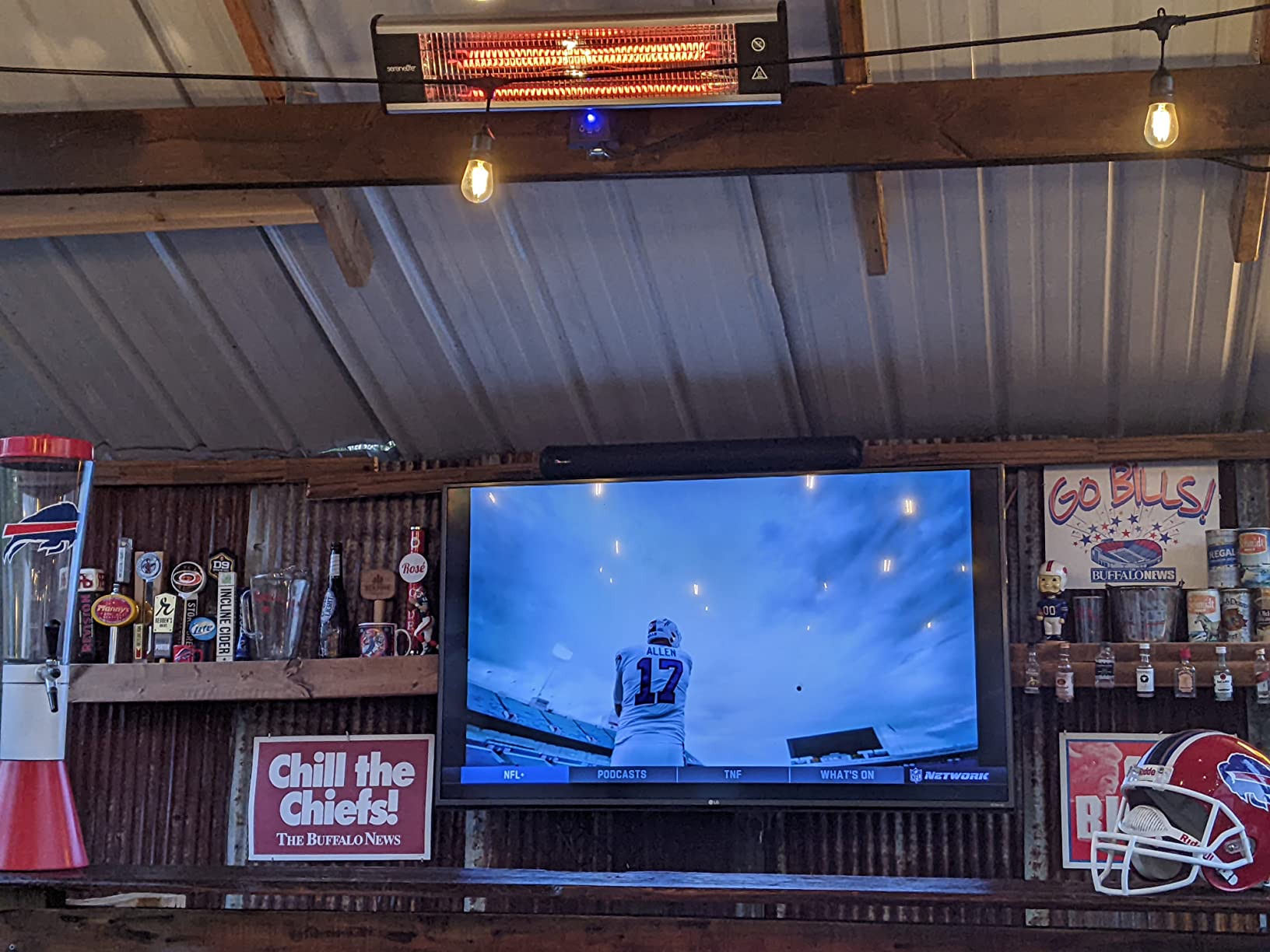
Owners consistently name three things: fast heating, quiet running and a remote that works from a chair. Sixty percent of its reviews are five-star. The gap in that feedback is control, not capability.
If you have ever wanted a mid setting for a mild autumn evening and settled for all-or-nothing, that is the trade you are making here. On a balcony where you are wearing a jacket, one setting is genuinely enough.
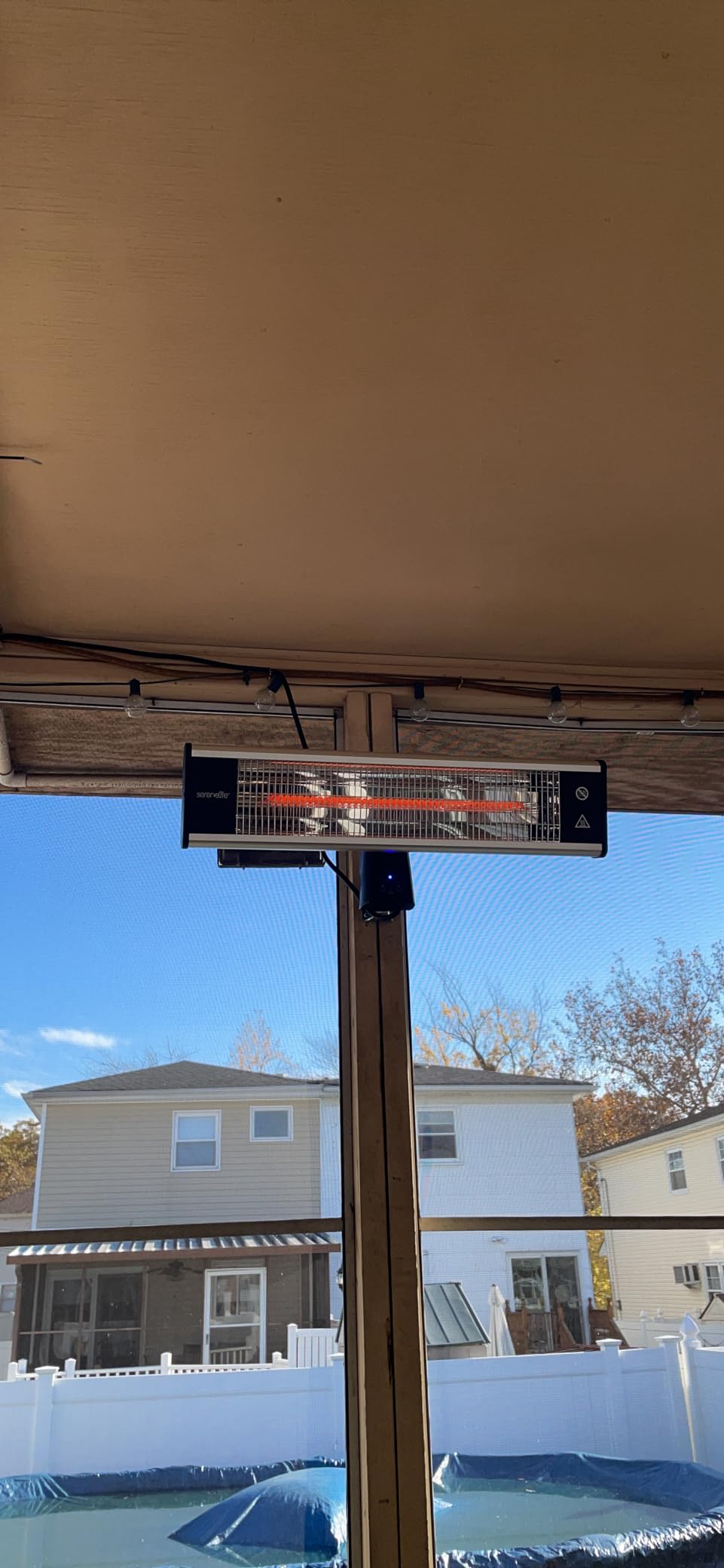
Rated at 1500W and 12.5A, this is the electrical profile almost every other unit in this roundup shares, and it is the reason a balcony outlet needs checking before anything else. On a 15A circuit, 12.5A leaves almost no headroom, so a kettle or a laptop charger on the same circuit will trip the breaker. Run it on a circuit by itself.
Voltage is 120V, so no hardwiring and no electrician is required. You need a GFCI-protected outlet with a cover rated for outdoor use, within reach of the cord. The one-year warranty is among the shorter ones in this roundup, which is the main reason we score it as the default pick rather than the flawless one.
Choose it if you want the most proven, lowest-fuss option and you sit in one spot. It suits a renter who has been cleared to drill, a condo with no propane permitted, and anyone who would rather press a remote than learn an app.
It is also the one we would put on a balcony with a 120V GFCI outlet 8 feet from the seats. That is the configuration most balconies actually have.
Skip it if you want a thermostat, a timer or a mid-level setting. There is one speed, and it is the full 1500W.
Also skip it if your balcony is wide and open, or open to a prevailing wind. Radiant heat loses its edge quickly in moving air, and this unit has no reflector geometry to fight that.
34 inch vertical infrared body
IPX5 aluminum frame
Motion sensor with 5 minute auto off
9 levels and 9H timer
Nobody sits on a balcony for 5 hours. The Nfccra is the only heater in this roundup that understands that, and on a shared or unattended space that single feature changes the economics of running electric heat at all.
The infrared motion sensor auto-activates the heater when it detects movement in the zone and shuts it down after five minutes of nothing. For an apartment resident who wants warmth on a weeknight without the unit running all afternoon for an empty deck, that is the difference between a sensible purchase and an expensive one.
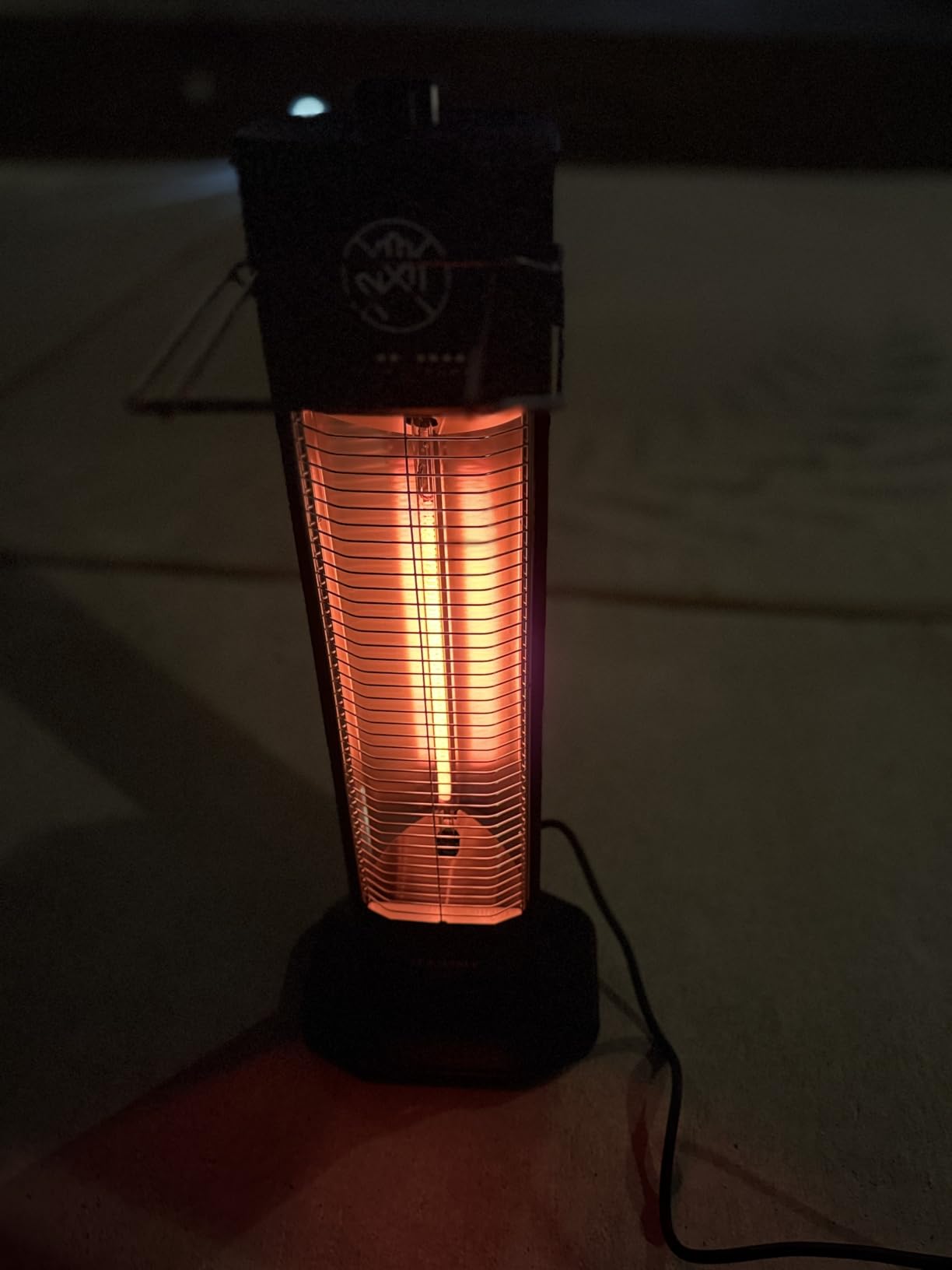
It also ties for the highest five-star share in this roundup at 70 percent of 174 reviews, and the praise centres on output rather than features. Owners describe a tall vertical cabinet throwing heat laterally across a seating area.
The vertical format is not a styling choice. A 34-inch upright body presents almost no face to a gust, where a wide horizontal cabinet acts like a sail. On an exposed balcony that is a real mechanical advantage, and it is why this body shape keeps appearing in ceiling and wall install advice for windy terraces.
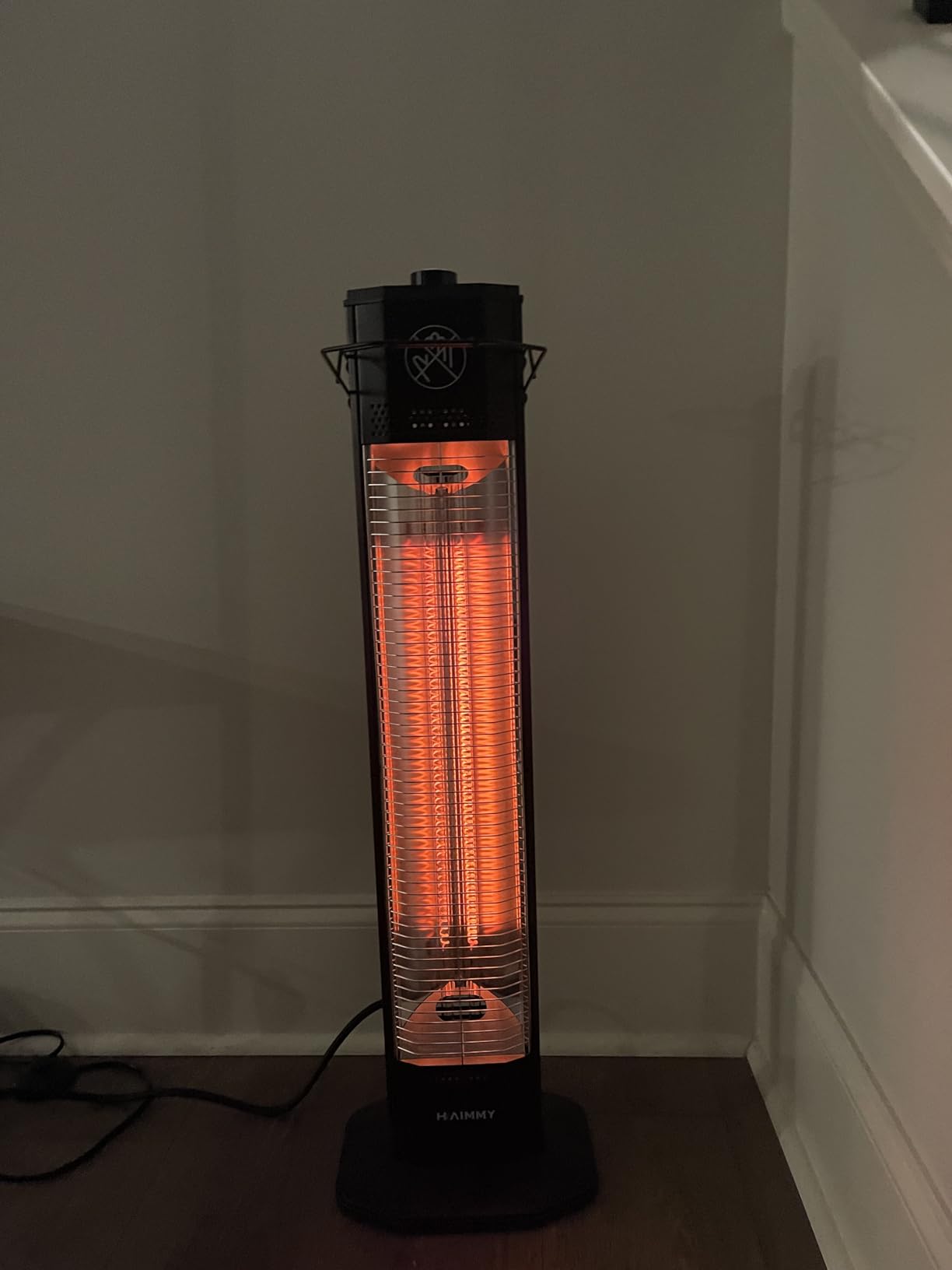
Nine heat levels and a 9-hour timer give you the control the single-speed models lack. The 9-hour ceiling is short of a full evening, so plan a second activation rather than assuming an overnight setting.
The basic mechanical controls are rated by owners as more durable than the electronic panels on app-equipped rivals, which matters on a unit expected to sit outdoors through a wet autumn. A mounting template and a built-in level gauge mean the bracket goes up straight the first time, and the UL-listed 6.6 ft cord gives you a little more reach than the 3-foot cables common in this category.
The most specific complaint we found concerns the mounting hardware, not the heater. Owners report the supplied bolts are not stainless steel and can show rust within about five months outdoors. A set of stainless fixings is a five-minute fix, and we would do it on day one.
There is also a durability tail: a minority of owners report failure around the one-month mark. Against that, the 3-year replacement warranty is the longest stated coverage among the ten, which materially changes the risk calculation on an outdoor appliance.
Buy it for an exposed balcony, a windswept roof terrace, or any space that is warm for two hours and empty for six. The motion sensor plus the narrow vertical profile is the most thoughtful package here for that use.
It suits a 120V GFCI outlet within about 6 feet of the seats, and the 6.6 ft cord gives you reasonable placement freedom. The IPX5 frame handles rain but should be under an overhang or partial cover.
Skip it if you sit perfectly still and read for hours. An infrared motion sensor will switch the heat off while you are there, which is maddening in cold weather.
Skip it if you need the highest ingress rating available. IPX5 resists sprayed water, not the full washdown that IP65 units on this list are rated for, and the supplied bolts need replacing.
1500W carbon fiber tube
Wall mount or ceiling hang
Nine heat levels
WiFi, remote and touch panel
This is the control freak option, and on a balcony that gets used in bursts the app is the feature that earns its place. You can turn the heater on from the lift, arrive to a warm zone, and never touch a switch.
Nine heat levels is the finest granularity available in this roundup. For a spring evening when full output feels like a mistake, a level 3 setting is the difference between using the heater and switching it off again.
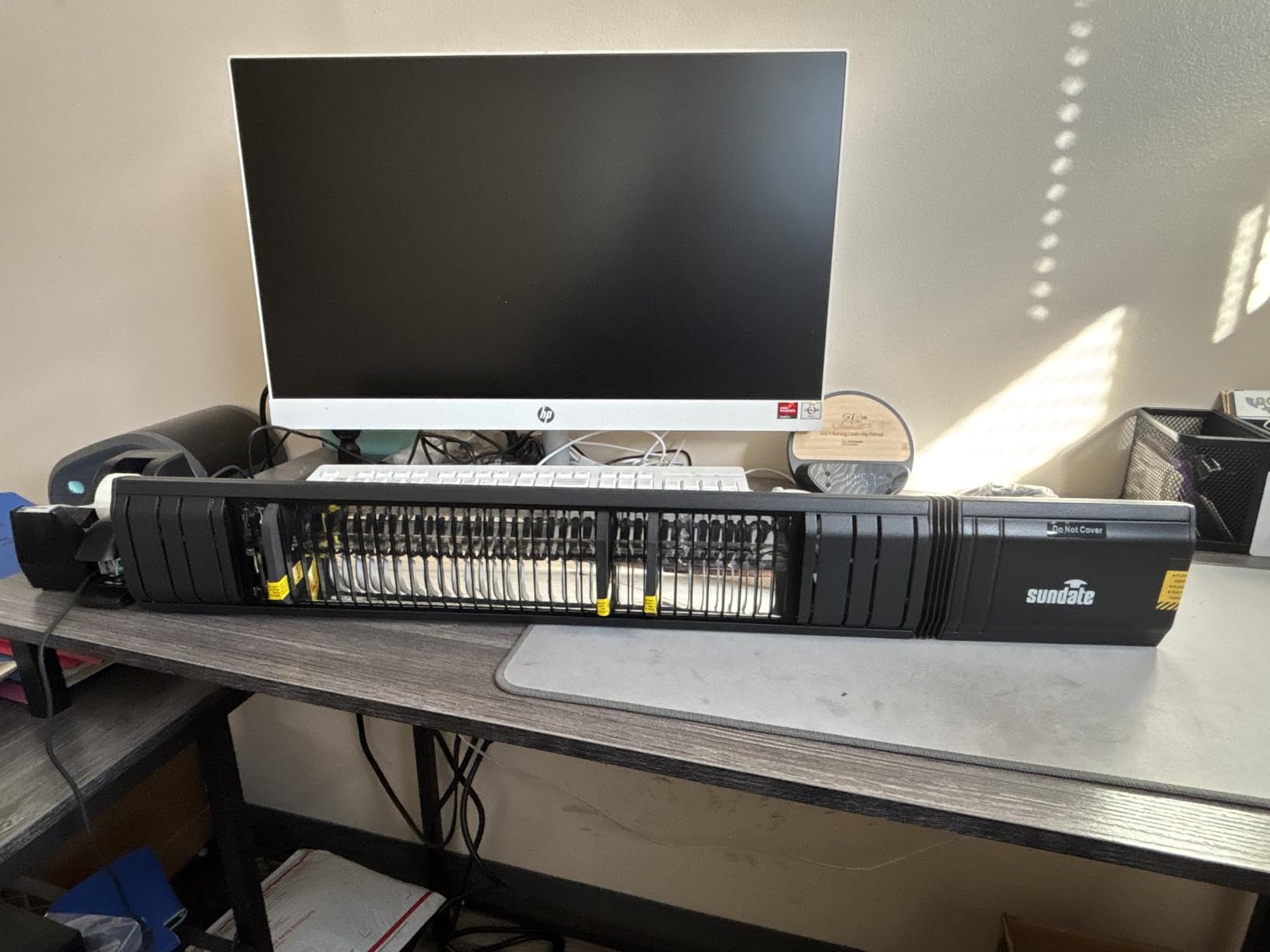
Triple control means you can use the touch panel, the remote or the phone app interchangeably, so nothing breaks your routine. The carbon fiber tubes are rated at 95 percent thermal efficiency, above the figure most rivals publish.
The 3.93 inch depth is worth a second look on a narrow balcony, and the same unit works as a wall mount or a ceiling hang from the supplied bracket. That flexibility matters on balconies where the overhang is low but the wall is tall, or vice versa.
At 4.0 stars across 164 reviews, this model carries the lowest average in the roundup, and the reason is not heating. A 9 percent one-star share points at connectivity rather than output: pairing the app and keeping it paired is where the complaints concentrate.
Decide that honestly before you buy. If the heater will run on a remote or touch panel regardless, treat the app as a bonus. If you want hands-free start every single time, test the app on your phone network first and have a manual fallback plan.
At 32.87 by 3.93 by 3.14 inches it is long and shallow, so it needs a clear run of wall or ceiling roughly 3 feet long. A wall bracket keeps floor space free, and the waterproof construction is specified to resist rain, snow and dust for covered balconies, gazebos and pergolas.
Amperage is 12.5A, the standard figure for this class, so the same dedicated-circuit advice applies as for every other 1500W unit here. A 24-hour programmable timer with automatic shutoff is included, which covers the overnight risk without an app.
Buy it if you come and go in short bursts, want warm air waiting when you arrive, and have a balcony long enough for a 33-inch body. It also suits a covered pergola or gazebo where you want the same unit to serve as a wall mount in winter and a ceiling hang in summer.
The nine levels make it the best choice here for shoulder-season evenings when 1500W is too much and off is too cold.
Skip it if your phone network is unreliable in your building. The 4.0 rating and the 9 percent one-star share are a connectivity warning, and no amount of good hardware compensates for a heater you cannot start.
Skip it if you want to spend less. It costs more than the simpler single-speed wall models here, and a remote-only unit delivers similar radiant heat for considerably less outlay.
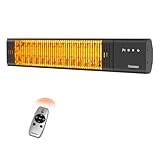
1500W carbon fiber lamps
4 heat levels with memory recall
24-hour timer
IP65 with overheat and tip-over shutoff
Some balconies are used the same way every week: come out at seven, sit for an hour, go in. The PowerScale is built for that rhythm, and the memory function is a small idea that removes a genuine annoyance.
Once you choose a level and a timer duration, the unit recalls both on the next start. You press one button instead of setting a dial in the cold, and the touchscreen display shows what it is running at.
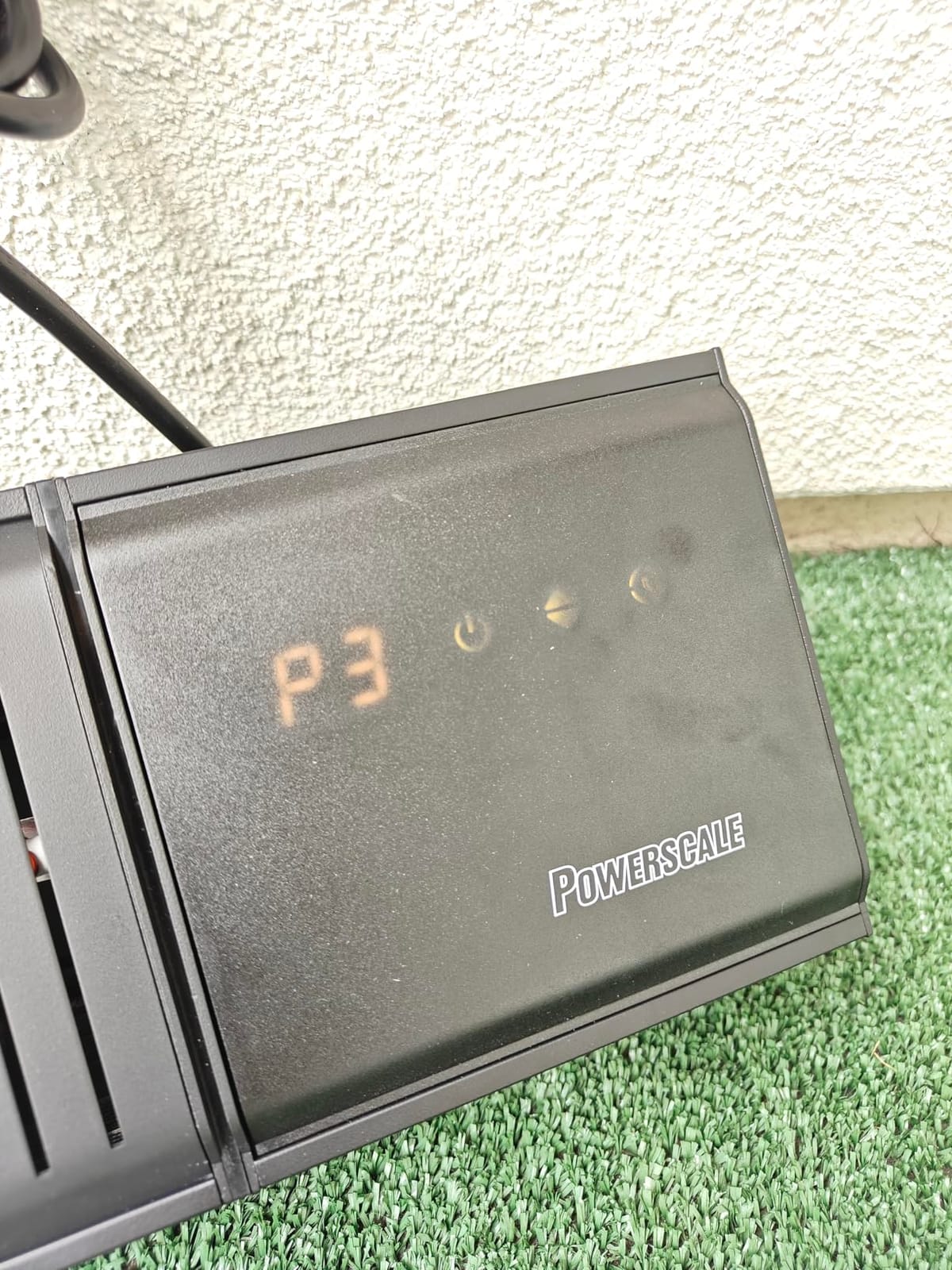
Owners on apartment balconies specifically single this out for winter use in a small space, which is exactly the use case. At 4.2 stars across 97 reviews with 68 percent five-star, the sentiment is consistently positive about warm-up speed and repeat convenience.
Safety hardware is complete for a wet balcony: IP65 for rain and humidity, overheat protection, and tip-over shutoff that matters if anyone ever mounts it on a stand or knocks the wall fixings.
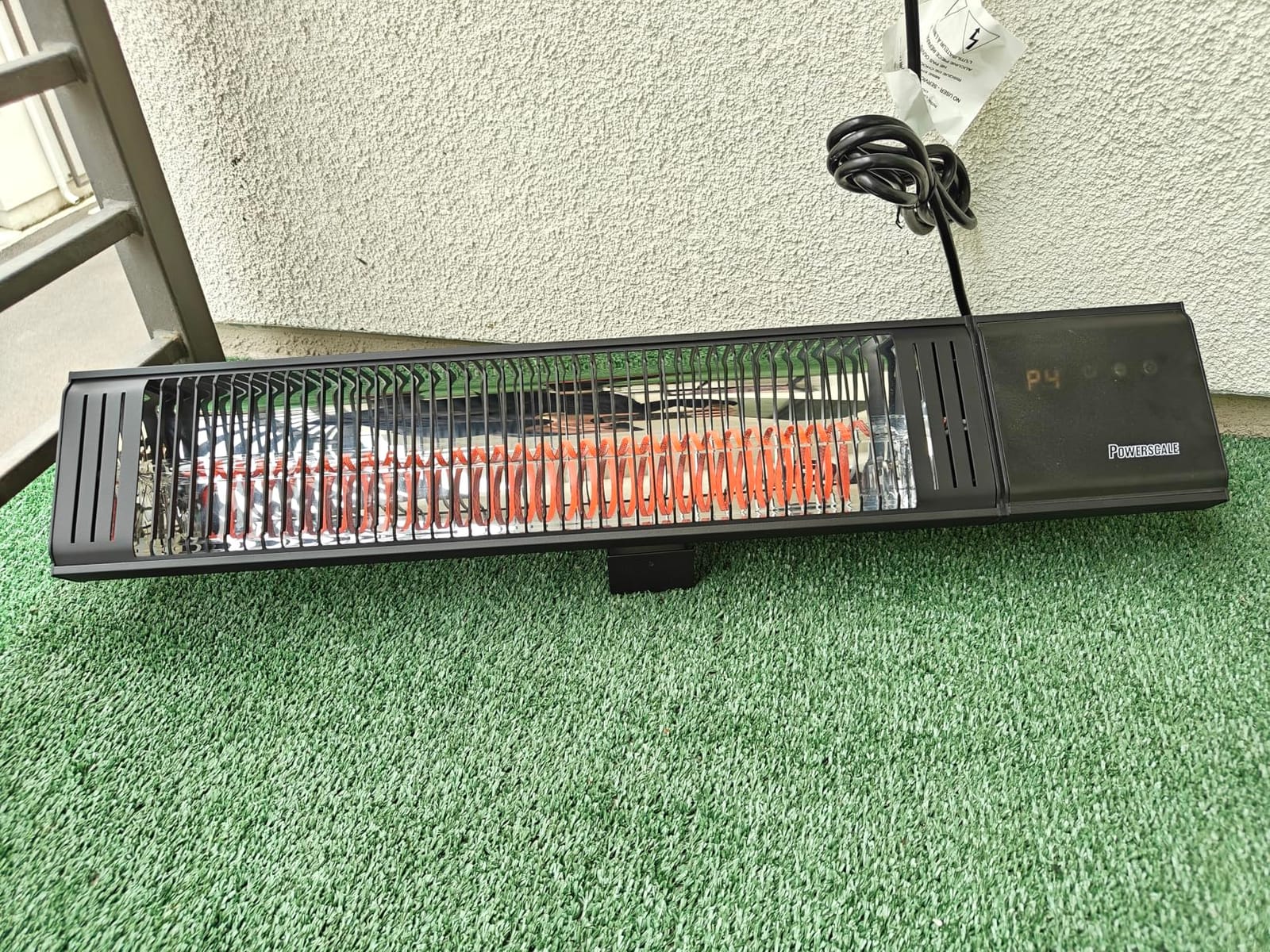
One specification deserves attention before anything else. This heater is rated at 110V and 14A, the highest draw in this roundup and above the 12.5A of the other nine. On a 15A circuit that leaves roughly 1A of headroom, which in practice means nothing else can share that outlet.
That is manageable, but it is a real constraint in a small flat where the balcony circuit might also feed a freezer. If you cannot dedicate a circuit, one of the 12.5A models is the safer pick.
The most repeated negative note is reach. Multiple owners report feeling the output only when seated close, and the review summary flags it directly as the notable negative signal. Push the seating back to 7 or 8 feet and this becomes the wrong heater for the space.
Mount it at head height or slightly above on the wall behind the seats rather than across the balcony, and pull the chairs in. Placement solves most of what the reviews complain about.
Buy it for a renter or owner with a short, repeat-use pattern on a covered balcony, where a dedicated 15A circuit and a GFCI outdoor outlet already exist. It is a good fit for a gazebo frame or a low overhang where you want a thermostat-free four-step control with a timer.
The memory function also makes it the one we would recommend for someone using a smart plug or an external timer, since the manual restore is instant.
Skip it if you plan to seat people more than 6 feet away, or if you are on a shared circuit you cannot clear. Both are the two complaints that appear most.
Skip it if you need long-term service confidence. A small number of owners report failure within about a week and difficulty obtaining a replacement, and 97 reviews is a thinner base than the leaders here.
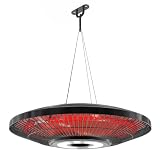
1500W carbon fiber lamp
Adjustable chain ceiling drop
IP65 aluminum housing
Silent fanless running
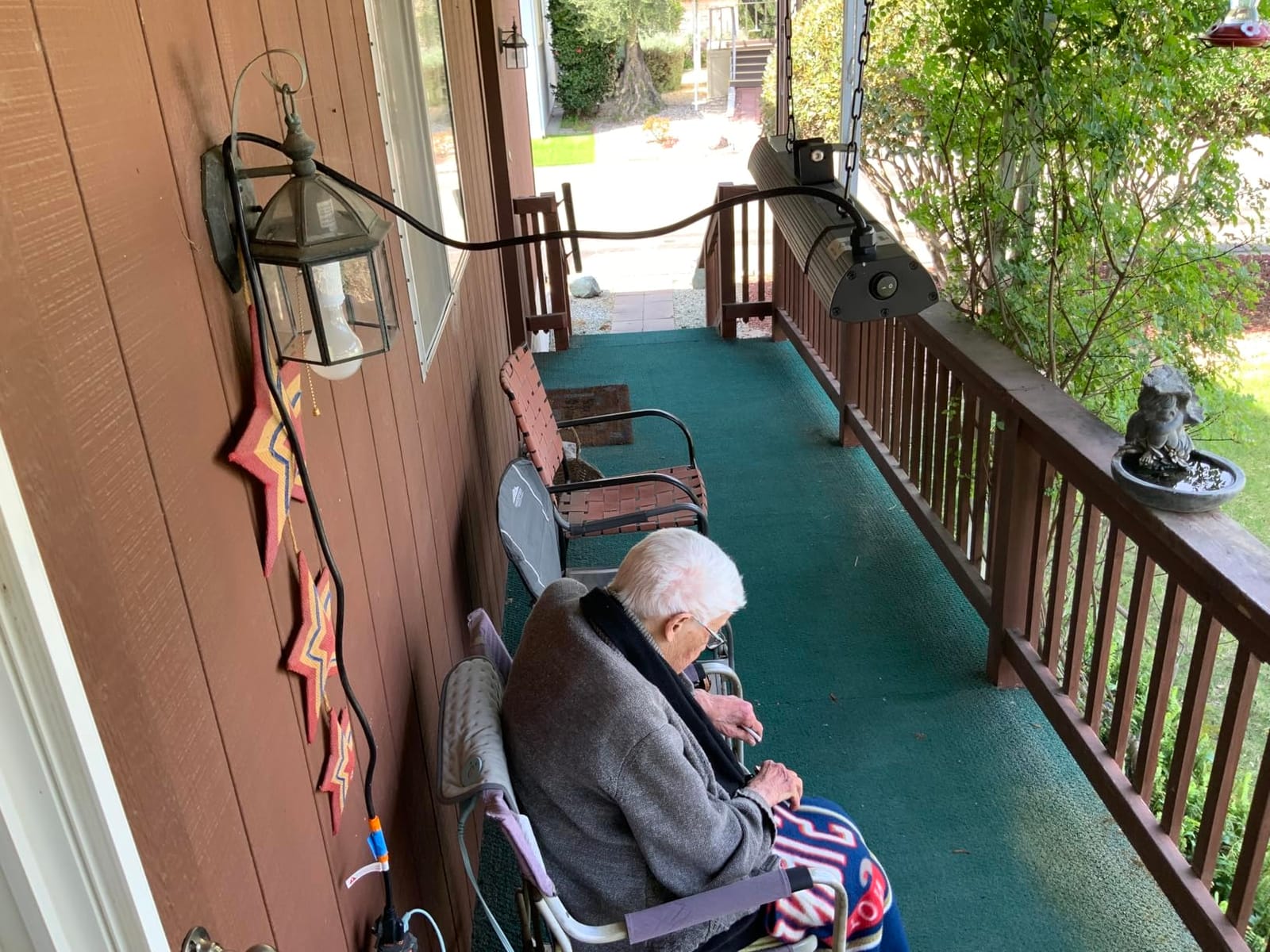
Hanging from an overhang is the configuration that solves the hardest balcony problem: a seating area with no usable wall. A chain drops the heat zone directly over a bistro table, and the floor underneath stays completely clear for a chair, a mat and a pair of feet.
This is also the mounting style the r/HomeXpert balcony recommendations keep surfacing for small covered seating, and the logic is sound. When a wall is unavailable, a ceiling is.
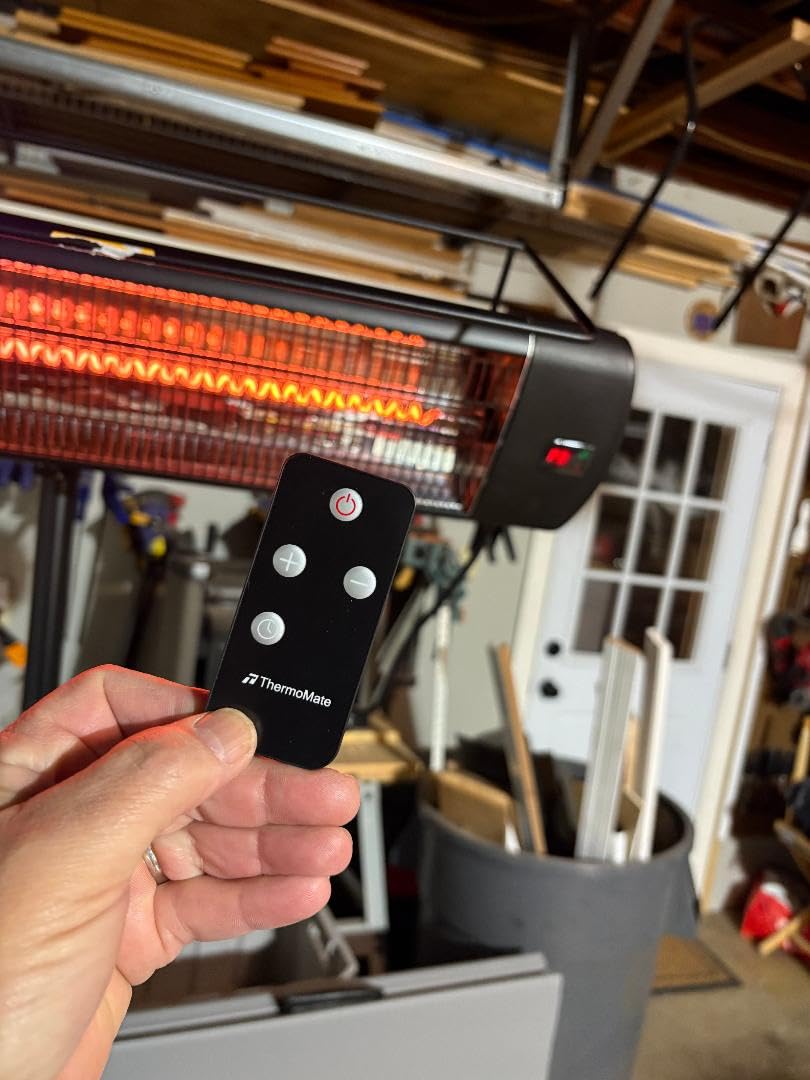
At 4.3 stars this is the highest average rating among the larger mounted bodies in the roundup, with 86 percent of reviews at four or five stars and only 4 percent one-star. That is the most favourable distribution of the hanging group.
Owners repeatedly highlight two things: installation is genuinely a one-person job with no electrician, and the fanless running is silent enough to hear a conversation across the table. On a balcony under a shared ceiling, silence is not a luxury.
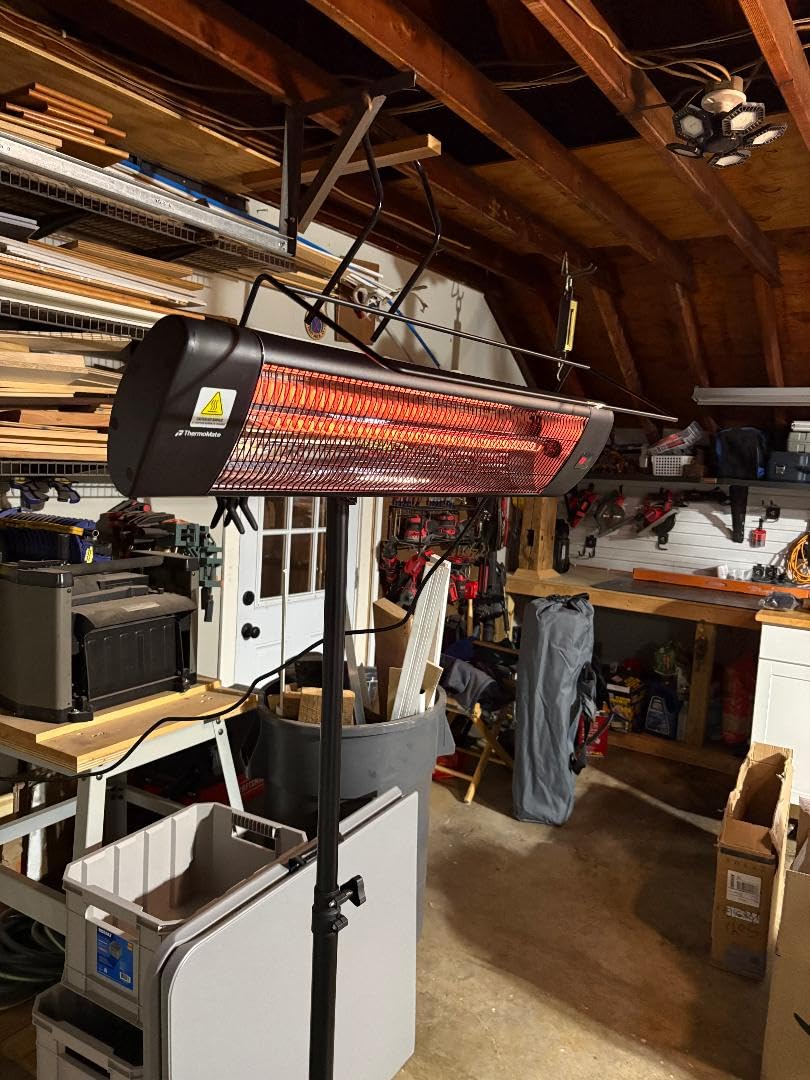
The adjustable chain lets you choose the distance between the element and the table, and that choice decides whether it works. Too high and the radiant energy spreads before it reaches anyone. Too low and it becomes a head-height object over a walking route.
Plan the drop before you drill. A 60 sq ft balcony with a low concrete overhang is exactly the case where a hanging unit has to be checked against your head clearance, and an r/HomeImprovement thread on ceiling-mounted units shows owners planning exactly this measurement before buying.
Two specifications deserve a hard look. The cord is 3.2 feet, the shortest in this roundup, so the outlet has to be almost directly overhead or you need a plan for reaching it. And the radiant warmth is noticeable only within roughly 2 to 3 feet of the element.
That close range is the nature of a hanging unit: it is a heat lamp over your head, not a directional wall heater. It works beautifully for a table and poorly for a bench at the far end of the balcony. For larger areas owners report that one hanging heater often needs two or three, which doubles the cord problem.
Buy it for a covered balcony or patio with a pergola or gazebo roof, a bistro table, and no wall worth drilling. It is also our pick for a damp covered space, where owners on the Pacific Northwest coast report good results on wet evenings.
Choose it when silence matters, since there is no fan and no combustion noise at all.
Skip it if your balcony is wide, if you seat along a bench rather than a table, or if the nearest outlet is more than 3 feet from the intended drop point. Those three constraints eliminate it quickly.
Skip it if you want a wall unit and might later want the wall back. The included wall base makes that switch possible, but confirm the bracket suits your surface before you commit.
1500W carbon fiber tube
2.7 inch slim depth
IP65 aluminum shell
3 levels with 24H timer
Depth is the specification that decides whether a heater fits a balcony at all, and at 2.7 inches the blessny is the thinnest body of the ten reviewed. On a narrow balcony with a railing, a door swing or a brick wall that sits proud, that 1 inch of clearance can be the difference between a clean install and a compromise.
The body runs 34.3 inches long and 7.2 inches tall, so it is a long thin strip rather than a bulky cabinet. Mounted high on a parapet wall it stays out of the sightline entirely, which keeps the balcony feeling open.
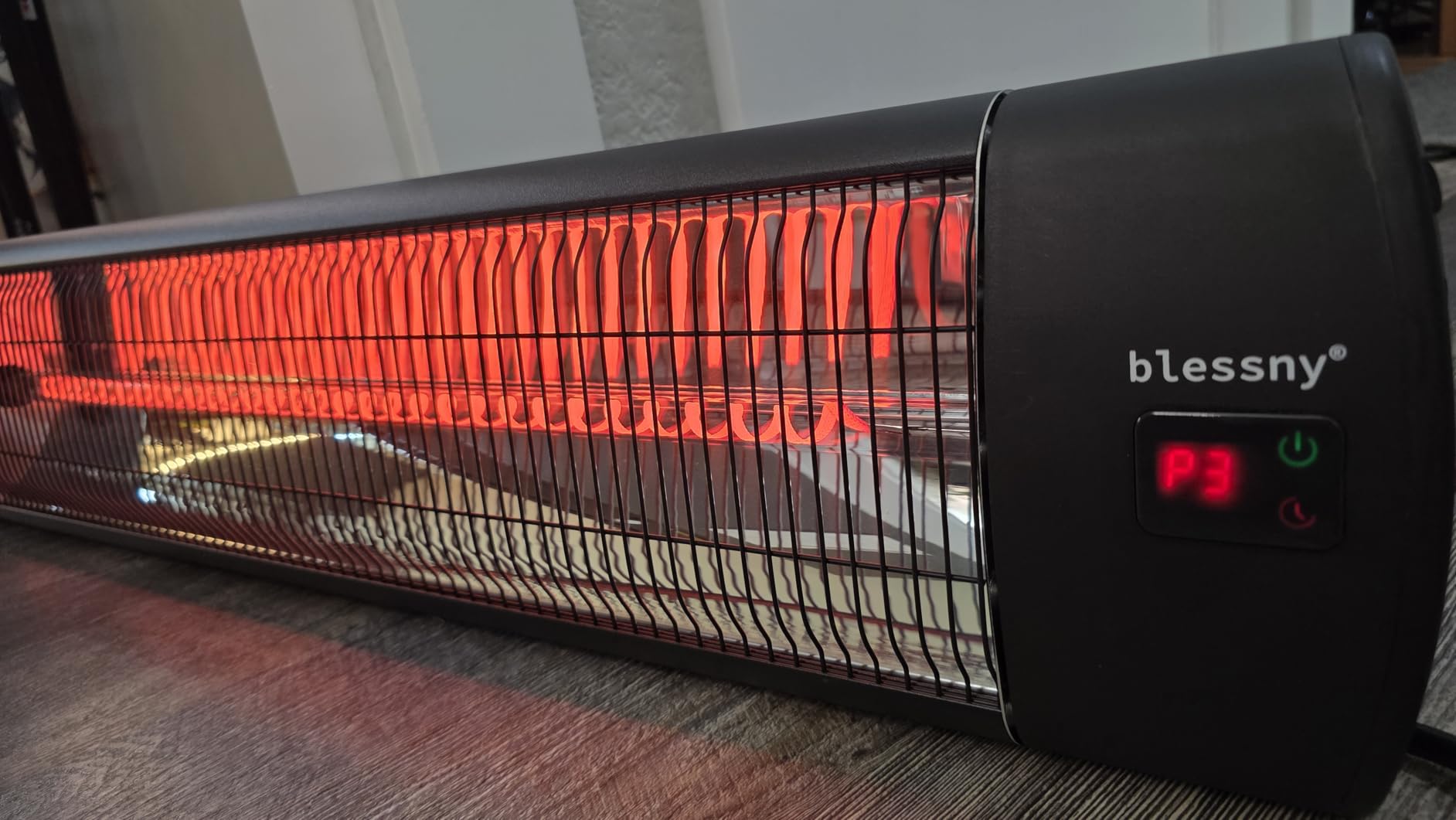
Owners report it runs hotter than comparably priced hardware-store models, and at 4.2 stars across 78 reviews with 69 percent five-star the feedback is largely enthusiastic. The 0 dB rating matters more than it sounds when the balcony sits directly under someone else’s living space.
Three heat levels, a 24-hour timer and both touch and remote control give it more control than a single-speed model, even without a thermostat. The adjustable mounting brackets are repeatedly praised for letting the angle be dialled in rather than fixed.
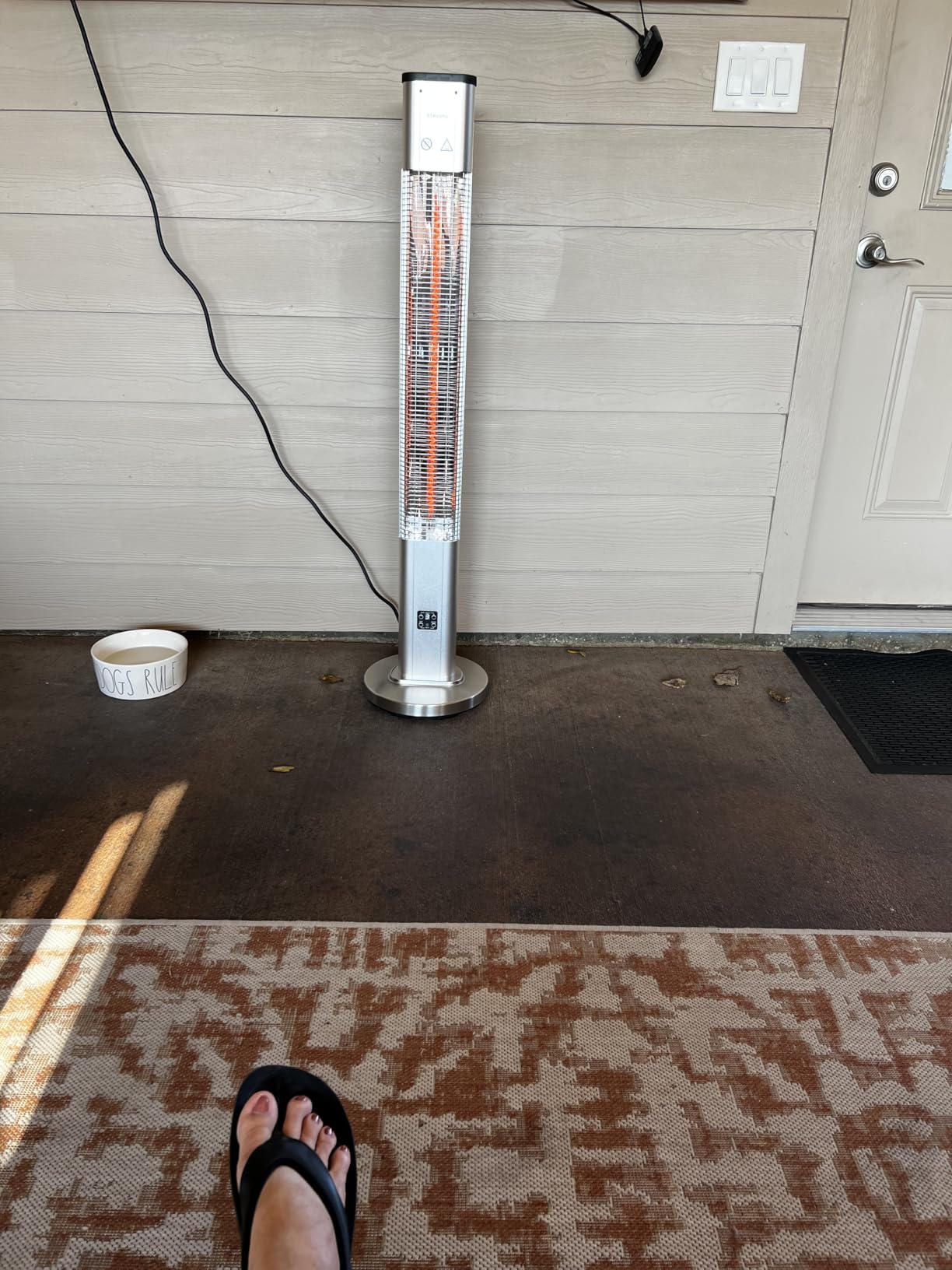
This is the model to skip if you plan to sit back from it. The clearest pattern in its reviews is a split by use case: workshop and garage owners describe strong directional heat, while patio owners seated more than 4 feet away report insufficient warmth.
On a small balcony that constraint is usually fine, because a bistro table at 4 feet is a normal distance. On a longer bench run it is not. Set your chairs inside that 4-foot line before you buy, and the model works well.
There is no thermostat. The three levels are fixed power ranges rather than a target temperature, so the heater cannot respond to the room. The 24-hour timer counts down in whole hours only, which is awkward for a 90-minute sitting.
Remote batteries are not included and the required type is not documented, so buy a couple of common cells before you unbox it. The installation instructions cover horizontal wall mounting only and say nothing about ceiling or overhead use, so treat this as a wall-mounted product.
Buy it for a narrow balcony with a shallow wall, a tight corner near a door frame, or a brick or stucco surface that stands proud. It is also a solid garage or covered-porch wall mount given the 6.0 ft cable and ETL listing.
Pick it when you want the thinnest, quietest, most unobtrusive body and your seats are within 4 feet of the mount point.
Skip it if you need a thermostat, precise short timers, or documented ceiling mounting. All three are genuinely missing rather than merely undocumented on the wall side.
Skip it if your seats sit at the far end of a 12-foot balcony. Bring it closer or choose a unit with a wider throw.
1500W carbon fiber tubes
Wall bracket or hanging chain
IP65 weather rated
3 settings with child lock
Some balconies get remodelled, some renters move, and some buildings say yes to a ceiling hang but not to a wall penetration. The Paraheeter ships with both a wall bracket and an adjustable chain, so the same heater can follow you to whichever surface is actually available.
That dual-mount design is why it belongs here even though its specifications are ordinary. Flexibility of installation is the binding constraint on a balcony, and this unit answers it directly.
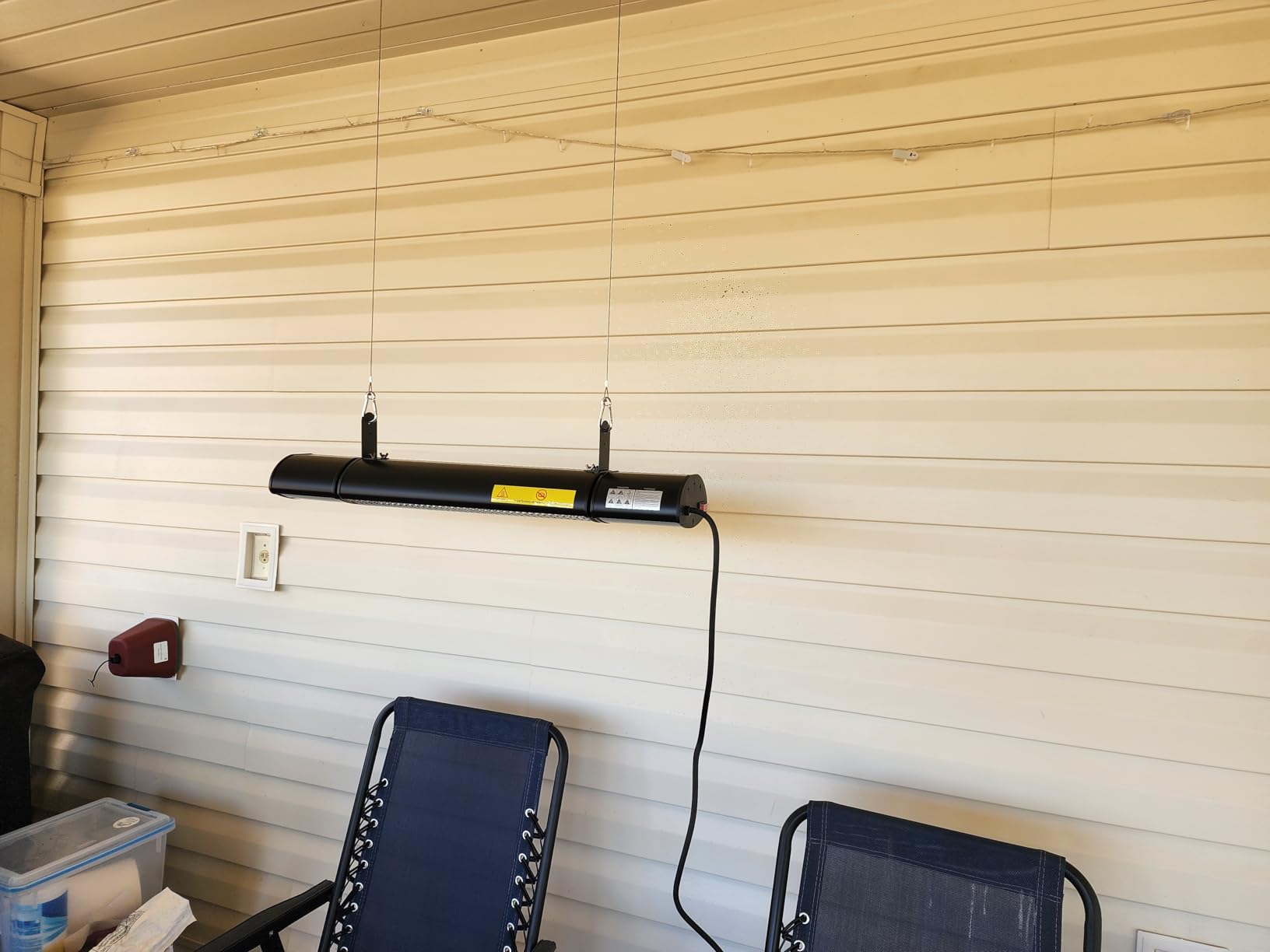
The safety set here is the most complete on paper of the ten: IP65 weather resistance, a protective grille, a grounded plug, automatic tip-over shutoff and a child lock. That combination matters if children or pets can reach the balcony.
Carbon fiber tubes are claimed to last 10000 hours, and the claim is specifically about resisting heat loss from wind-blown conditions. The tube rating is also a genuine reason to prefer carbon fiber over quartz on an exposed balcony, which we cover in the buying guide.
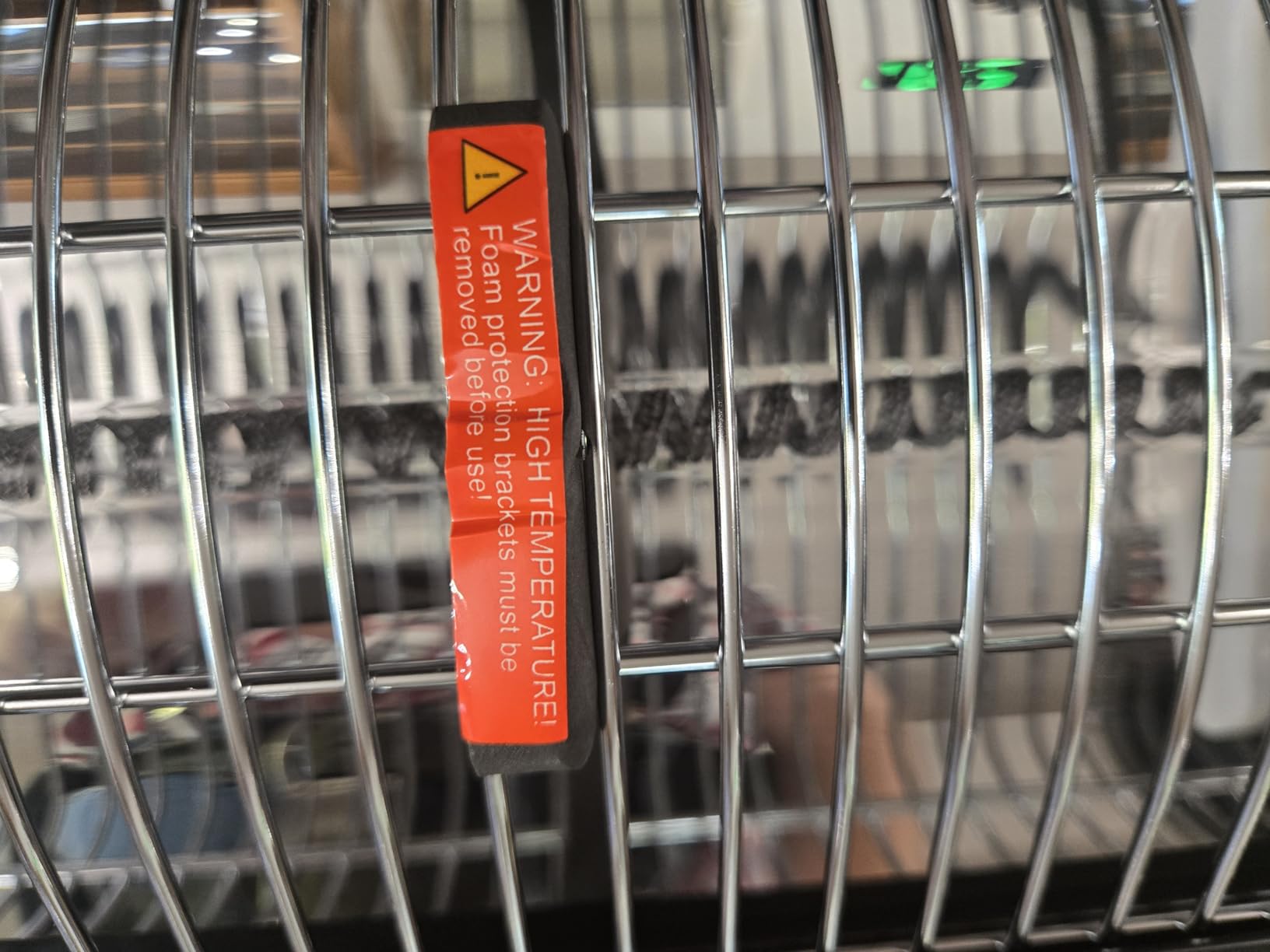
With 49 reviews this has the thinnest evidence base among the wall-mounted units here, and a 20 percent three-star share hints at uneven experiences. A 2 percent one-star share is reassuring by comparison. The honest read is that there is not enough owner history to lean on, so the specification sheet carries the decision.
What that sheet supports is solid: 1500W, 120V, IP65, three adjustable settings, a child lock, tip-over shutoff and a 1-year warranty. Nothing on it is aspirational.
At 31.3 inches wide by 6.3 inches tall and 3.5 inches deep, this is a long horizontal body. It needs an unbroken run of roughly 3 feet of wall or ceiling, and that is the practical limit to check first.
On a balcony broken by a door frame, a downpipe or a structural column, a 31-inch strip is awkward where a 34-inch vertical body like the Nfccra is not. Measure the clear span before choosing.
Buy it if you are renting, if the building’s permission covers a ceiling hang but not wall drilling, or if you want the option to move the heater between seasons. It is also a sensible pick where children share the balcony, given the child lock and tip-over shutoff.
At 120V with no dedicated circuit requirement beyond the usual GFCI outlet, it drops into a standard balcony power setup without adaptation.
Skip it if you want a timer, a thermostat or more than three settings. There is no scheduling at all, which is a real gap for a unit used in short bursts.
Skip it if you prefer to buy from a model with a deep review history. Forty-nine reviews is thin, and the 20 percent three-star cluster deserves a second look before you commit.
1500W carbon fiber infrared
Smart thermostat from 41F to 113F
App and remote with 24H timer
IP65 with overheat sensors
A thermostat is the feature most balcony heaters in this category skip, and it is the one that separates a heater you can leave running from one you must switch off by hand. The BrewVox is the only model here that cycles to a target temperature and holds it.
Ambient sensors adjust output across a range from 41F to 113F, switching off at the target and restarting after a 10F drop. On a mild evening that means the heater stops cooking your balcony instead of running flat out until you go inside.
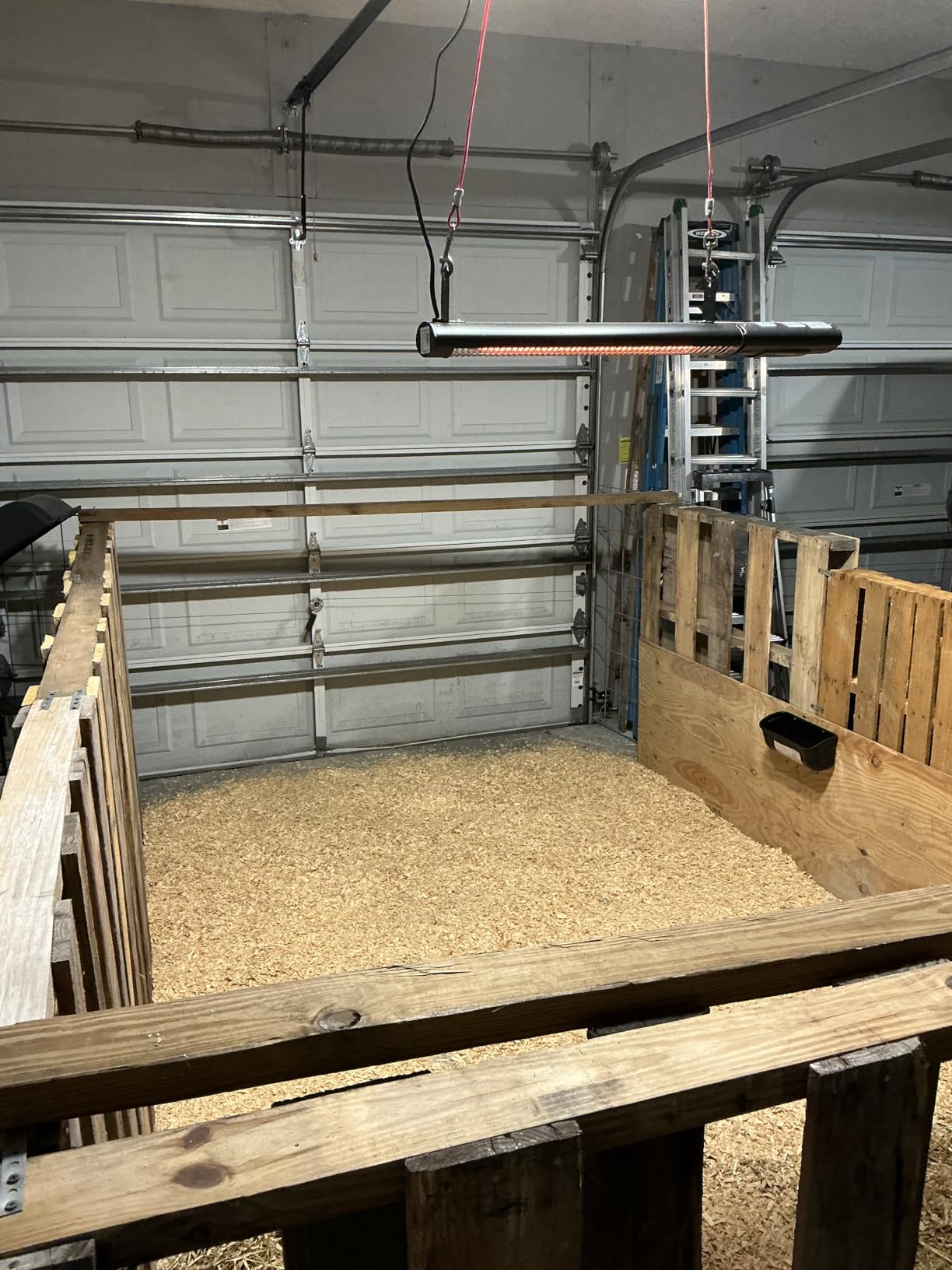
Mounting is the quiet strength. Horizontal or vertical wall, ceiling suspension, or an optional tripod with the control panel facing down, it adapts to almost any balcony geometry in a way the fixed-format models here cannot.
Owners also confirm the output is genuinely strong in an uninsulated space, and Alexa pairing works for hands-free control once configured. The 95 percent radiant efficiency figure and 1 to 3 second warm-up are among the stronger published numbers here.
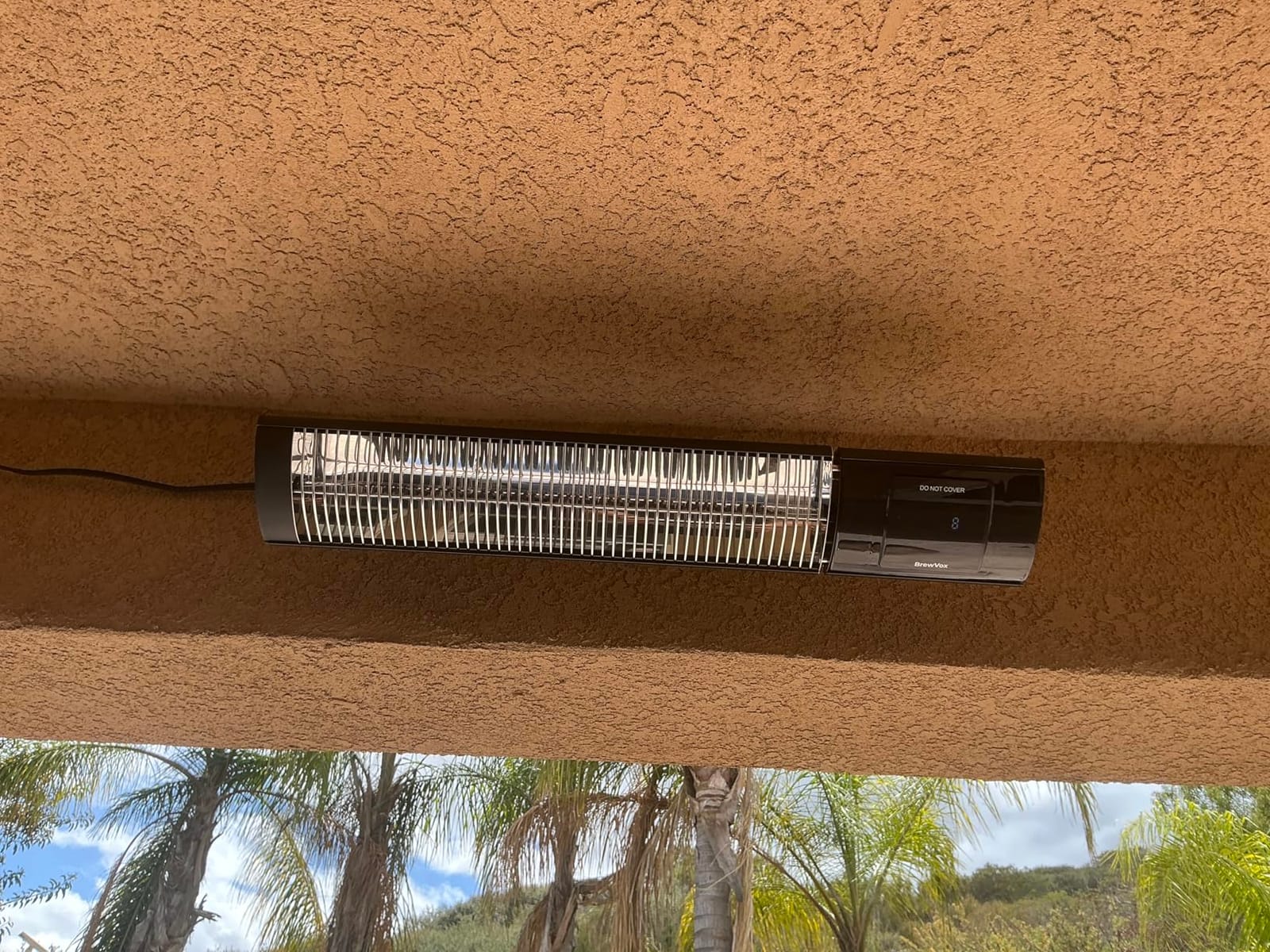
Behind a 70 percent five-star surface sits a 17 percent share of one- and two-star reviews, and that gap is almost entirely smart-feature failure. Several owners report the app never connecting, and the pattern is consistent enough to plan around.
There is also no physical on-off control on the unit itself. If the remote is lost or the app will not pair, you are reaching for the plug. The hot rear housing is a second, smaller concern: mount it so nobody leans into that face.
The tripod and ceiling suspension hardware is sold separately, so budget for the mount your balcony actually needs. Poorly written setup instructions are also reported, and the mounting template matters more here than on models with simpler brackets.
The 10F restart hysteresis is a real behaviour to understand rather than a defect. It means the unit does not modulate smoothly; it runs until target, then waits for a noticeable drop before cycling back. On a small balcony that works well, because the temperature swings are fast.
Buy it if you want the heater to run for an hour without babysitting it, or if your balcony is used as an occasional office in the evening. It is also the best choice here for an uninsulated enclosed space where you want the thermostat to stop the overshoot.
Choose it for a balcony where you plan to leave the heat on and step away, since the thermostat is doing the work you would otherwise do manually.
Skip it if your phone network is unreliable in the building, or if you need a physical switch on the unit. Those are the two failure modes driving most of the negative reviews.
Skip it if you want a ceiling or tripod mount included. Both are extra purchases, and the total can exceed a simpler fixed-mount model that already has its bracket.
1500W carbon fiber tube
Hanging chain mount
1000W and 1500W levels
Soft red-orange glow
A hanging heater over a table is a light source as much as a heat source, and that is where this one separates itself. The element is designed to give off a soft red-orange glow specifically to keep glare down during long evening meals.
On a balcony where you eat outside two or three times a week, a harsh element across the table is genuinely tiring after an hour. A softer glow is a small design decision that changes whether you can stay out there.
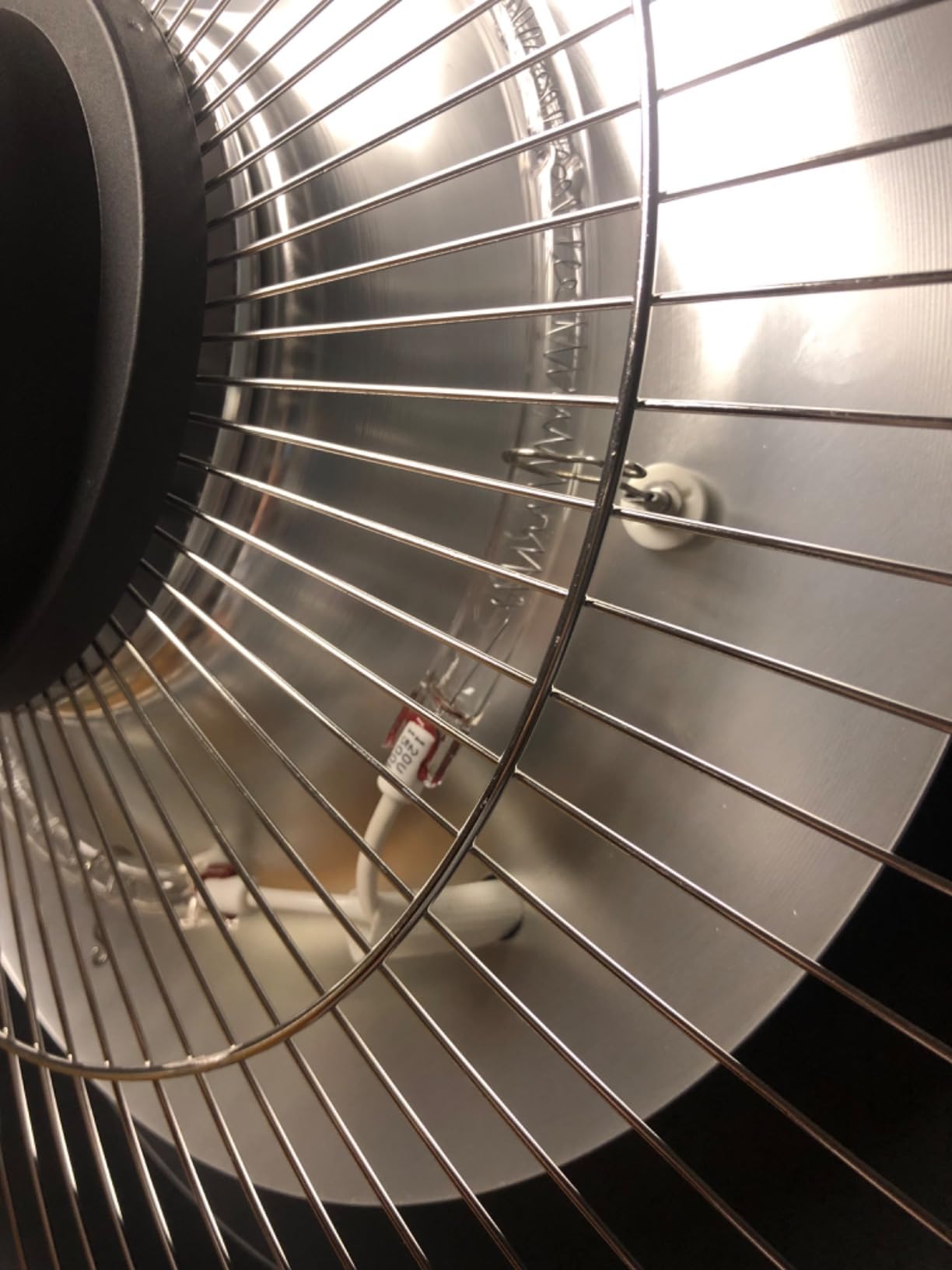
It also carries the highest average rating of the ten at 4.6 stars, with 69 percent five-star and 26 percent four-star and no ratings below three at all. That distribution is the cleanest of any product here.
At about 3 seconds to useful radiant warmth, you are not waiting for the surrounding air to heat, which is the whole point of a carbon fiber element. The chain keeps the floor area beneath the table completely open.
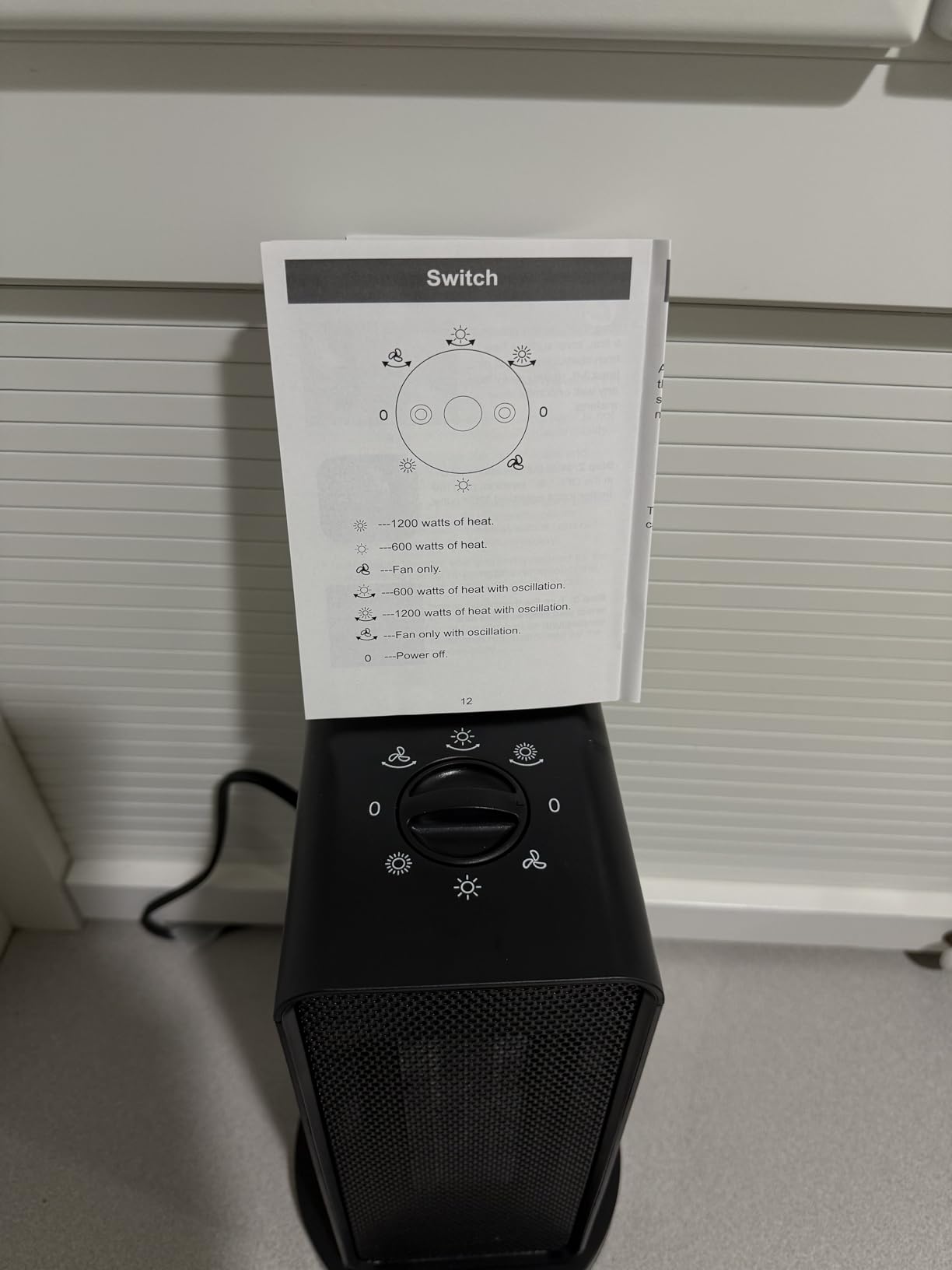
The rating here is the one specification that narrows your options. IP24 indicates splash resistance, not full weather protection, and the intended use is covered outdoor space: gazebos, pergolas and porches.
On an uncovered balcony exposed to wind-driven rain, that is a meaningful limitation, and it is why this model does not carry our overall recommendation despite its rating. Under a pergola roof with a table beneath it, it is a strong fit.
Controls are a remote that switches between 1000W and 1500W. There is no timer, no thermostat and no app connectivity listed in the specification data, so switching off is a manual act or a plug pull.
For a renter using an external smart plug or a plug-in timer, that is not a real gap. For a household forgetting to switch it off, it is. A remote holder and lanyard are included, which helps a little with keeping the remote somewhere findable.
Buy it for a covered pergola or gazebo with a table underneath and long dinners in mind. The low-glare glow and 3-second warm-up suit exactly that scenario, and the child lock and overheat protection add everyday reassurance on a family balcony.
It has the cleanest review distribution here from a rating standpoint, with no one-star or two-star ratings at all.
Skip it if your balcony is open to the sky. IP24 is splash resistance, and driving rain on an uncovered terrace is outside what that rating covers.
Skip it if you need fine control, a timer or more than two levels. And weigh the 39-review base carefully: a 4.6 average is encouraging, but it is the thinnest evidence in the roundup for judging long-term durability.
700W 800W or 1500W selectable
Integrated LED ambient lighting
Adjustable chain and hooks
Zero carbon monoxide output
Balcony lighting is its own unsolved problem, and a heater with a built-in lamp is a two-problem solution. The Ener-G+ is the only model in this roundup with integrated LED ambient lighting in the housing.
It matters most in autumn and early spring evenings, when you want light to eat by and warmth to sit in rather than two separate fixtures competing for the same outlet and the same limited wall space.
The unusual feature here is power granularity. Most heaters here offer a single 1500W or a numbered set of heat levels. This one gives you 700W, 800W or 1500W, which is a genuinely different way to trade heat against electricity on a small space.
An adjustable chain and hooks set the drop height over the seating, and the manual controls are simple enough that a guest can operate it. There is no carbon monoxide output and no combustion of any kind.
The honest read on the light is that it is ambient, not task lighting. Owners report it is dimmer than the glow the heating elements produce themselves, so once the heater is running the lamp adds atmosphere rather than visibility.
That is fine if the goal is a warm glow over a table at dusk. It is not fine if you planned to use it to read a menu or check a label on the recycling bin.
At 4.0 stars across 57 reviews this ties for the lowest average in the roundup, and 8 percent one-star reviews are driven largely by durability: examples arriving defective and failures after only a few months. At 54 percent five-star, the satisfied majority is real but the tail is not small.
It is also the oldest design here, and its category sales rank sits well below the others in this list. Treat it as a straightforward hanging heater with a useful light, not as a leading-edge unit, and check the warranty terms before you rely on it for a whole season.
Buy it if your balcony has no separate lighting and you want one fixture to handle both jobs. It suits a covered hanging setup with a table underneath, and the 700W and 800W settings are useful for a very small space or a mild evening.
It is also a reasonable pick for anyone who wants the simplest possible interface: remote plus manual switch, no app, no pairing, nothing to configure.
Skip it if you need real lighting on the balcony. The LED will not carry that job, and you will be adding a separate lamp anyway.
Skip it if durability confidence is your priority. A 4.0 rating with an 8 percent one-star share and a multi-month failure pattern is the weakest reliability signal among the ten, and a full autumn and winter is a long time to own it.
Most buying guides start with wattage. For a balcony that is the wrong place to start, because wattage is rarely the constraint. Space, permission and power are. Work through the five steps below in order and the product choice usually makes itself.
Four numbers determine whether a mounted heater works in your space, and none of them are in the product listing. Get these first.
1. Clear wall or overhead run. Measure the longest unbroken stretch of wall or overhang. Most models here need 28 to 34 inches of continuous surface, and a door frame or downpipe can disqualify a long horizontal body instantly.
2. Distance from the mount to your seats. Radiant heat falls off quickly. Most owners who report disappointing warmth are sitting 7 to 10 feet from a unit meant to work at 4 to 6.
3. Ceiling height and head clearance. If a hanging unit is the plan, you need the drop height to clear standing and walking. Under a 8-foot overhang with a 6-foot chain, the unit ends up at head height.
4. Square footage and wind exposure. A 40 to 80 sq ft balcony is a single zone, not a room. Note which sides are open, because that determines how much the wind strips out of the radiant heat.
On a small balcony the mount type often matters more than the heater itself, and none of the three options is universally right.
A wall mount throws heat horizontally across the seating and leaves the ceiling untouched. It is the best choice for a bench or sofa against a parapet, and the least good for a round table, because the heat arrives from one side only.
A ceiling mount points down, which suits a table directly beneath and wastes energy on the deck surface between the unit and your feet. It is the right call under a low overhang where wall space is already taken.
A hanging unit on an adjustable chain gives you the most control over where the heat lands, and clears the floor completely. It needs a roof structure, and the cord has to reach the outlet from the drop point.
What about mushroom and pyramid freestanding heaters? Those are patio heaters shaped like a stalk with a reflector cap. On a small urban balcony they are the wrong category: they take floor space, need a propane cylinder, and put a reflective metal hood overhead. A mounted unit does the same job in a fraction of the footprint with no cylinder to store.
This is the step that decides more balcony purchases than any other, and it is the one most roundups skip. Strata councils, HOAs, landlords and building management generally have a position on three things before product choice matters at all.
Propane cylinders. Most apartment and condo buildings prohibit them on balconies outright, through lease terms, fire code or insurer requirements. Our [guide to electric versus propane patio heaters](https://www.aboutdarwin.com/electric-vs-propane-patio-heaters/) covers the trade in detail, but on a balcony the question is usually decided for you. Every heater in this roundup is electric, and that is not a coincidence.
Drilling. Concrete and rendered balconies are not the renter’s friend. If you rent, get written permission before a single hole is drilled, and check whether your lease already covers it. If you own, check the strata or HOA rules, which frequently regulate what may be fixed to a common structure and how it must be removed at sale.
Hardwiring and shared circuits. If a unit must be hardwired rather than plugged in, that is an electrician and possibly a permit. All ten models here are corded 120V plug-in units precisely to avoid that conversation.
The recurring theme in balcony heating discussions online is that permission outcomes, not brand reputation, are the real trust signal. A neighbour who got their strata to approve a ceiling-mounted electric unit is worth more advice than any review count.
If your balcony has no outlet, that question is worth more attention than any product on this list. It is the situation described in an r/homeowners post asking how to stay warm on a balcony with nowhere to plug in.
First, what a 1500W heater actually demands. At 120V it pulls 12.5A, and the PowerScale in this roundup draws 14A. On a standard 15A circuit that is nearly the entire capacity, so a toaster, a hair dryer or a laptop charger on the same circuit will trip the breaker. The heater needs a circuit to itself.
Second, the outlet itself. A GFCI-protected outlet with an in-use weatherproof cover is not optional on a wet balcony. If yours is a standard indoor-style socket, it needs replacing before any heater is plugged in, and that may itself be building work.
Third, the options when there is genuinely no outlet. Run a heavy-gauge outdoor-rated extension cord to the nearest indoor-rated circuit, which works but adds a failure point and often needs you to leave a door ajar. Install the outlet properly through an electrician, which is the correct answer and the expensive one. Or run the heater off a smart plug or a plug-in mechanical timer on an indoor socket, which works for balcony heaters with a remote or on-board controls.
Skip the lightweight household extension leads entirely. Heaters draw high current for long periods, and a thin lead under that load is a heat problem, not a convenience one.
With permission and power settled, a few specifications genuinely change the outcome on a balcony.
Carbon infrared versus quartz tube. Carbon fiber elements reach useful radiant warmth in about 2.5 to 3 seconds and run at 88 to 95 percent radiant efficiency. Quartz tubes heat slightly slower but are physically more robust, tolerate high ambient temperatures and are the traditional restaurant-spec choice. On a small balcony where you switch on for short bursts, the warm-up speed of carbon fiber wins. Our [infrared versus propane guide](https://www.aboutdarwin.com/infrared-vs-propane-patio-heaters/) covers the technology comparison in depth, and the [best outdoor propane patio heaters](https://www.aboutdarwin.com/best-outdoor-propane-patio-heater/) roundup covers the cylinder route if your building permits it.
IP rating, decoded. The first digit is solid protection and the second is water. IP65 means dust-tight and protected against water jets, which is the right target for a balcony that sees wind-driven rain. IPX5 means protection against sprayed water, fine under partial cover. IP24 means splash resistance only, suited to gazebos and pergolas. Anything below IPX4 on an uncovered balcony is a poor bet.
Amperage and circuit headroom. 12.5A for 1500W at 120V is the standard. Anything drawing more, like the 14A model here, tightens your options further.
Clearance and aiming. Mount a wall unit 6 to 8 feet from the seats, roughly head height or slightly above, angled down toward where people sit rather than level with the horizon. Aiming matters more than wattage, because radiant heat is line-of-sight and off-beam heat does not exist.
Safety cutouts. Look for overheat protection as standard, and tip-over shutoff on anything that could be mounted on a stand or a tripod. For a wall unit, overheat protection and a mesh guard are the essentials.
Manufacturer coverage figures on this category are worth treating carefully. One unit in this roundup publishes 18 square meters, another 100 sq ft, and several publish nothing at all. Those numbers are not comparable.
What holds up on a real small balcony is this. A 1500W radiant unit makes a seating zone comfortable at roughly 4 to 8 feet, on a still or lightly breezy evening, with an ambient temperature around 50F. That is a bistro table for two, or a bench of two to three people. It is not a 200 sq ft terrace.
Wind is the factor nobody’s specification sheet accounts for. Moving air strips the warmed boundary layer off your skin faster than the element can replace it, and the drop in effective reach is commonly put at 30 to 50 percent. On an exposed balcony, treat a published range as a still-air number and halve your expectations if there is a steady breeze.
Two heaters beat one on a wider balcony, and the placement that works is one aimed at the seating and one at the door-side approach area. A single powerful unit leaves the rest of the space cold.
A fire pit is the other obvious way to warm a small outdoor space, and it is almost always the wrong choice on a city balcony. Smoke drifts, neighbours have legitimate complaints, and a railing requires a substantial clearance from anything that throws sparks or embers.
A mounted electric unit gives you the same warmth with no combustion, no carbon monoxide, no embers and no complaint risk. It is also the only option most buildings permit.
If the building says no to drilling, the heated-zone concept still works. A parasol-mounted or umbrella-attachable heater clips to an existing frame rather than a wall. A hanging unit on a tensioned strap fixed between pergola beams avoids masonry entirely, though you should check the strap is rated for the unit’s weight. And a smart plug lets you control any of the models here from indoors, which at least removes the window-opening problem on a cold night.
What you cannot avoid is the 6.8 lb weight of most of these units and the need for something structurally sound to hang from. If nothing on the balcony will take the load, no mounting trick changes the answer.
The best mounted patio heater for a small balcony is a 1500W infrared unit on a wall or overhang bracket, set 6 to 8 feet from your seats, rated at least IP55, and plugged into a GFCI-protected outdoor outlet. Electric infrared beats propane on balconies because it uses no floor space, produces no carbon monoxide, and avoids the cylinder bans most apartment and condo buildings enforce.
For small balconies the leading wall-mounted options are the SereneLife 1500W for its IP65 frame and deep review history, the Nfccra 34 inch model for its motion sensor and wind-resistant vertical body, and the sundate for nine heat levels with app control. All three run on 120V at 1500W and mount on a wall or ceiling with the supplied bracket.
Measure the balcony, confirm you have permission to drill or hang, and confirm a GFCI outdoor outlet on a dedicated 15A circuit. Then mount a 1500W infrared unit 6 to 8 feet from your seats, angled down at seated height, and run it for 45 minutes before you sit down so the zone is warm when you arrive. Expect comfort in a 40 to 80 sq ft seating area, not across the whole balcony.
Your options are limited but real. Use a heavy-gauge outdoor-rated extension lead to the nearest suitable indoor circuit, have an electrician install a proper GFCI outdoor outlet, or control a remote-equipped heater with a smart plug or plug-in mechanical timer from an indoor socket. Do not use a lightweight household extension lead, since a 1500W heater draws 12.5A for long periods.
Usually not. Most apartment, condo and strata buildings prohibit propane cylinders on balconies through lease terms, fire code or insurer rules, and a covered balcony adds the additional problem of carbon monoxide accumulating under the overhang. Electric mounted units sidestep the cylinder question entirely, which is why all ten heaters in this roundup are electric.
Yes for a seating zone of roughly 40 to 80 sq ft. A 1500W infrared heater at 120V pulls 12.5A, sits comfortably within a 15A circuit, and makes a bistro table or a two to three person bench usable on a still evening above about 50F. Expect the effective range to fall by 30 to 50 percent in a breeze, and use two units rather than one for a wider space.
Mounted electric units are among the safest options on a covered area because they produce no combustion and no carbon monoxide. Mount them with the clearance stated in the manual, use an IP55 or better weather rating, plug into a GFCI-protected outdoor outlet, and keep overheat protection and a mesh guard intact. Propane units carry a genuine carbon monoxide risk under any overhang.
Mount a wall unit roughly 6 to 8 feet from the seats at head height or slightly above, angled down toward where people sit rather than level. Radiant heat is line-of-sight, so heat aimed above seated faces is heat you do not feel. Keep the mounting surface clear by the clearance distance in the manual and aim the element at the seating, not across the balcony.
Pick the SereneLife 1500W if you want the most proven mounted heater with the deepest owner history and an IP65 frame that handles a wet balcony. Pick the Nfccra 34 inch model if your balcony sits empty for hours, because the motion sensor is the only feature here that stops the electricity running for nobody. Pick the sundate if you come and go in short bursts and want app control with nine levels of granularity.
For a covered balcony with no usable wall, the thermomate chain hanger puts heat directly over a table and keeps the floor clear. For a narrow balcony where depth is the problem, the blessny at 2.7 inches is the profile that fits. The BrewVox is the one to buy when you want a real thermostat, and the pasapair is the best low-glare option under a pergola.
Before any of them goes in a box, settle the permission and the power. Those two answers eliminate more balcony heater purchases than any spec sheet, and getting them first is what separates a heater you enjoy every evening from one that has been sitting in a cupboard since 2026.