Physical Address
304 North Cardinal St.
Dorchester Center, MA 02124
Physical Address
304 North Cardinal St.
Dorchester Center, MA 02124

Most of the advice online about garage heaters ignores the one detail that decides whether the thing ever gets installed: the circuit behind your wall. A 240V electric garage heater draws between roughly 21 and 42 amps, which means a dedicated double-pole breaker and copper wire sized for it. Plug it into the wrong receptacle, or run it on 8 AWG where the manual calls for something heavier, and you get a breaker that trips every time you start the fan.
That is why I built this list around the best electric garage heaters for 240V outlets specifically. Every unit below is a genuine 240V shop heater. Nothing here runs on a 120V household outlet, and nothing here is a propane unit in disguise. I spent weeks reading install manuals, customer review patterns, and forum threads about breaker trips, wire gauge mistakes, and heat-up times in drafty garages, then matched that against the electrical specs on each listing.
Before the picks, here is the short version of the electrical facts that govern this whole category. A 5,000W heater pulls about 21 amps, a 7,500W heater about 31 amps, and a 10,000W heater about 42 amps. Each one wants its own two-pole breaker, not a shared circuit. Some models ship with a NEMA 14-50P plug and an 8 foot cord so you can skip an electrician entirely if a matching NEMA 14-50R receptacle already exists. The rest are hardwired with no cord included, and the manual will tell you exactly which gauge to use.
If your garage is a mixed bag of circuits and you are not sure what you have, start with our 120V and 240V garage heater comparison before you commit to a circuit upgrade. If you are still weighing fuel types altogether, our electric versus propane cost and safety guide breaks down the running-cost difference honestly.


| Product | Features | |
|---|---|---|
| DR Infrared DR-975 7500W Hardwired |
|
Check Latest Price |
 Comfort Zone CZ220BK 5000W Comfort Zone CZ220BK 5000W |
|
Check Latest Price |
| Comfort Zone CZ230ERBK 7500W |
|
Check Latest Price |
 TEMPWARE GR7500ER-EC 7500W TEMPWARE GR7500ER-EC 7500W |
|
Check Latest Price |
| InoKraft 7500W NEMA 14-50P Plug |
|
Check Latest Price |
 CTSC MGH1056-02 5600W Plug-In CTSC MGH1056-02 5600W Plug-In |
|
Check Latest Price |
 ROVSUN 5000W Wi-Fi Ceiling Mount ROVSUN 5000W Wi-Fi Ceiling Mount |
|
Check Latest Price |
 VEVOR BGP2102-75R 7500W VEVOR BGP2102-75R 7500W |
|
Check Latest Price |
 Omberr 7000W Graphene Heater Omberr 7000W Graphene Heater |
|
Check Latest Price |
 VEVOR BGP2102-100R 10000W VEVOR BGP2102-100R 10000W |
|
Check Latest Price |
| VEVOR BGP2102-50R 5000W |
|
Check Latest Price |
 CTSC MGH10100-02 10000W CTSC MGH10100-02 10000W |
|
Check Latest Price |
We earn from qualifying purchases. CERTAIN CONTENT THAT APPEARS ON THIS SITE COMES FROM AMAZON. THIS CONTENT IS PROVIDED 'AS IS' AND IS SUBJECT TO CHANGE OR REMOVAL AT ANY TIME.
7500W forced air
25575 BTU equivalent
800 sq ft coverage
31.25A draw at 240V
The DR-975 is the unit I keep coming back to because it has the deepest installed base of anything in this roundup, and in a category where reliability matters more than features, that matters. It throws 7500W of forced air, covers about 800 square feet, and steers heat with five louvers on a tilting head. Owners on Home Improvement forums describe running one through multiple winters in a two-car shop without drama.
Its manual specifies 8 AWG copper for connection, and no cord ships in the box. That is a straightforward job for an electrician, less so for a first-time DIYer. Our broader garage heater roundup covers the hardwired versus portable question in more depth.
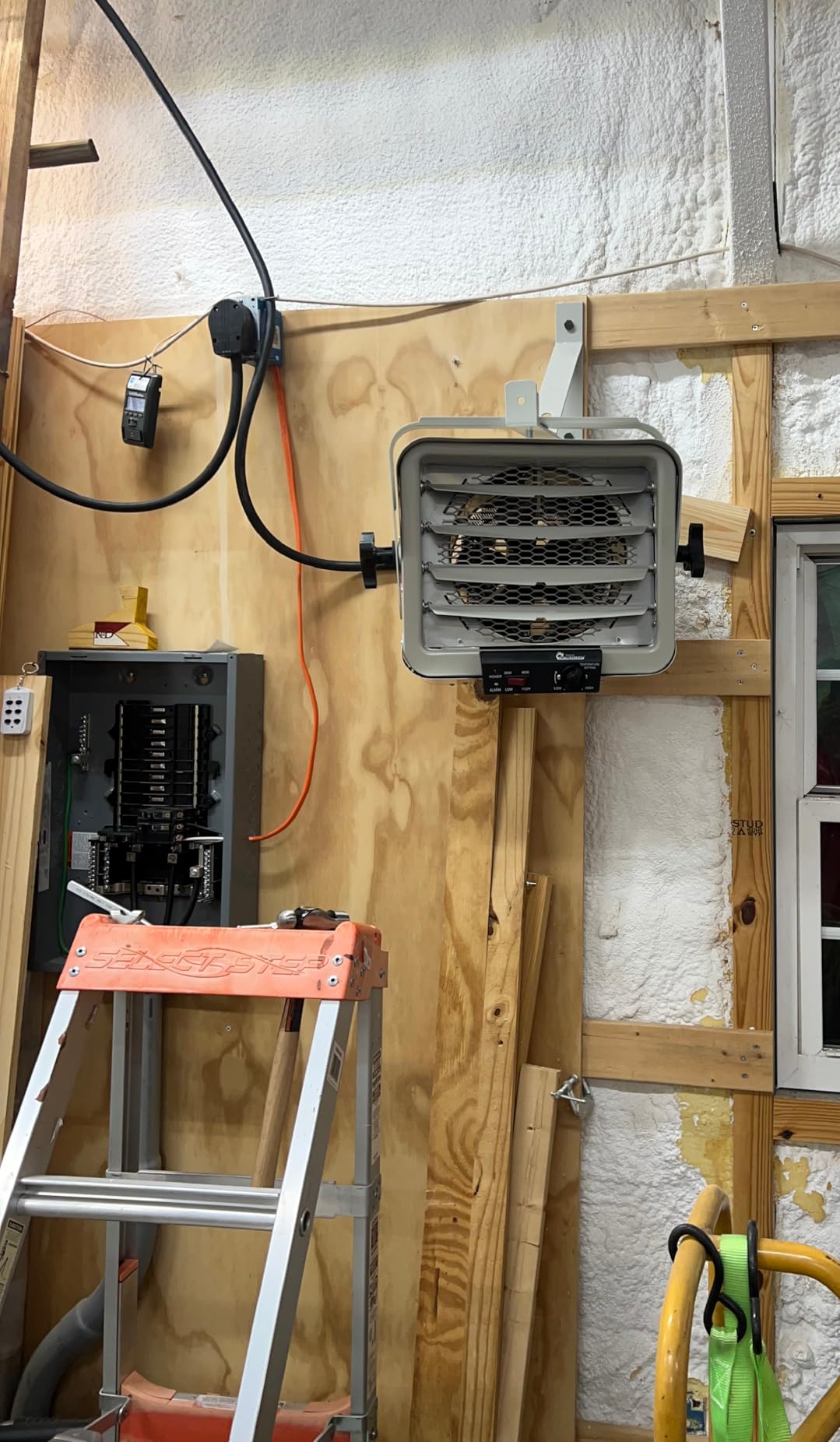
At roughly 800 square feet of rated coverage, this is sized for a standard two-car bay with normal ceiling height, not a three-car shop. The tilt head plus louvers let you aim the discharge away from the door and toward the workbench, which matters more than raw wattage in a room with a cold slab.
If you want remote control, adjustable aiming, and a proven track record, this is the safe pick. If you want a cord you can plug into an existing receptacle, or a low-power mode to cut your bill on mild days, keep reading. The thermostat here spans 50 to 85 degrees and there is no ECO setting on this model.
5000W forced air
17065 BTU
1000 sq ft rated coverage
20.9A draw at 240V
This is the unit I recommend to someone with a one-car or small two-car garage who wants a real 240V circuit heater without spending much. It pulls 20.9 amps, so it fits on a more modest breaker than most of the 7500W picks, and the rating sits at 4.4 stars across more than 3,500 reviews.
The ceiling mount is the real reason owners like it. You hang it, aim the louvers and the mounting angle, and the floor stays clear for a shop jack or a lift. The trade-off is control: dual mechanical knobs, on and off plus temperature, and nothing else.
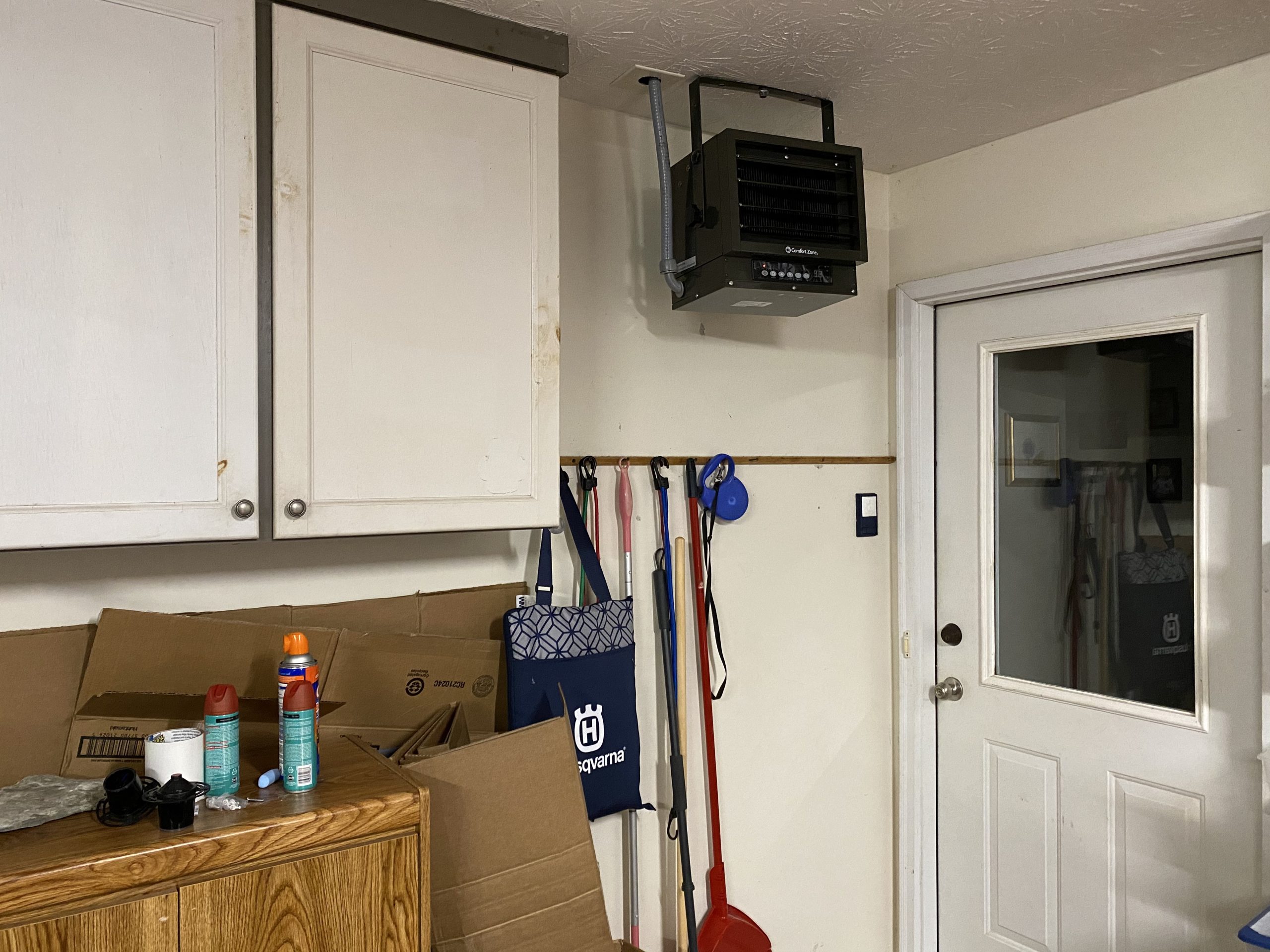
At 5000W, this heater is a room warmer than a building warmer. In an insulated attached garage it will hold a comfortable temperature on a cold afternoon. In a drafty detached shop in the middle of a hard winter, reviewers report it running continuously without ever reaching setpoint, which is exactly the scenario forum owners warn about with older units too.
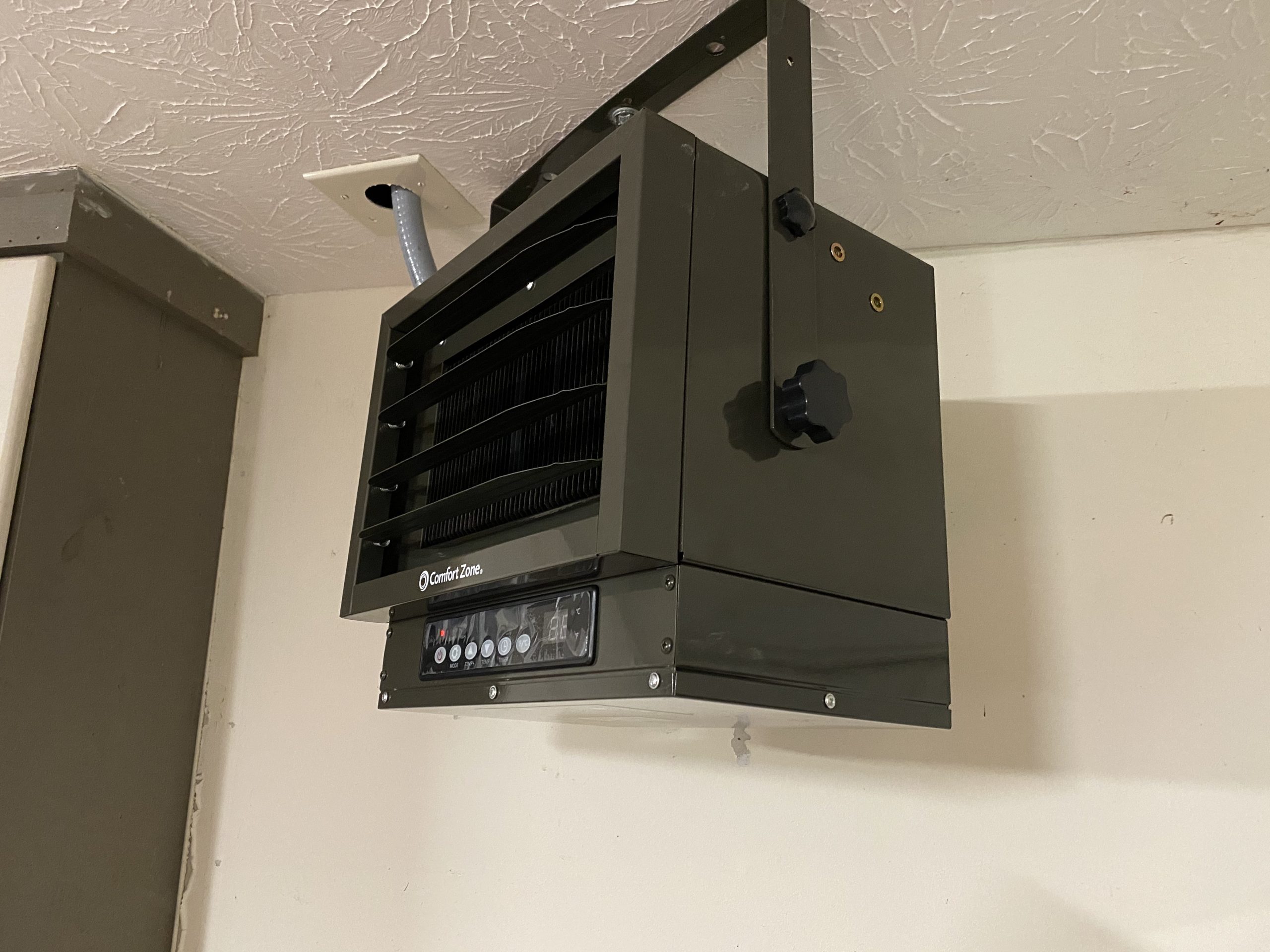
Choose it if your garage is small, your budget is the deciding factor, and you can reach the unit to adjust it. Skip it if you need remote start, scheduled heating, or enough output for a three-car space. A built-in temperature sensor does auto shutoff if it overheats, and a power indicator light shows it is live.
7500W coil forced air
25600 BTU
1250 sq ft coverage
31.3A draw at 240V
This is the pick I would install in my own shop, and the reason is the combination of coverage and control at a mid-range price point. It delivers 25600 BTU of coil-element heat, rates coverage at up to 1250 square feet, and pairs a digital thermostat with a handheld remote and a 12-hour timer.
Owners in insulated two-car garages report fast warm-ups even with temperatures in the 30s outside. A word of caution from the reviews: a number of units shipped from this batch need the NTC and NTC1 circuit board connectors swapped during installation to stop an early shutdown, and the supplied lag bolt is often too short for a drywall ceiling. Buy a longer fastener before you start.
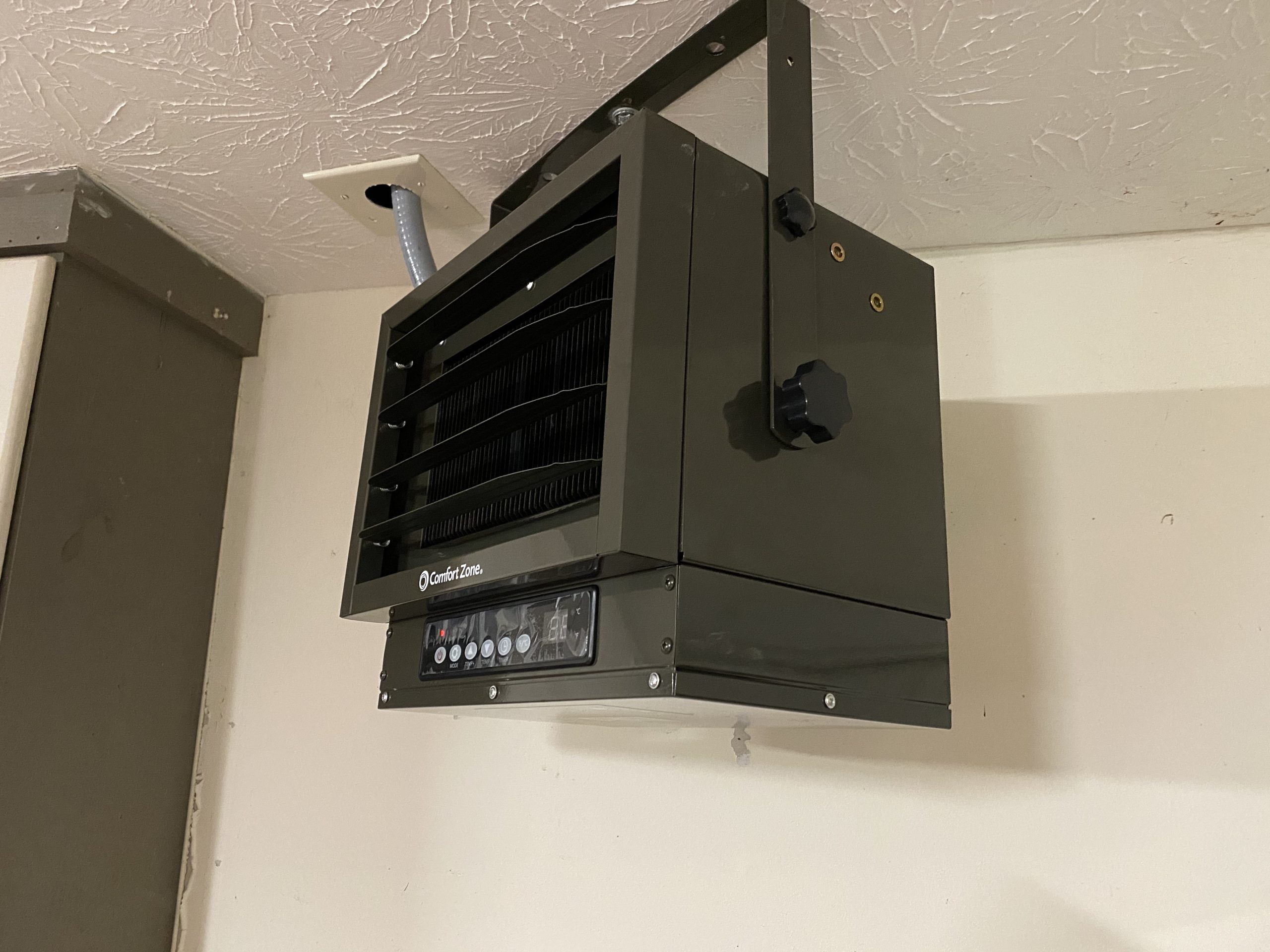
Having a remote changes how you use the heater. You can start it from the bench, shut it down at the end of the day without walking to the unit, and use the timer to warm the space before a Saturday morning project. Heavy-gauge steel holds up to the temperature swings in a poorly insulated bay, and a built-in sensor handles overheat shutoff.
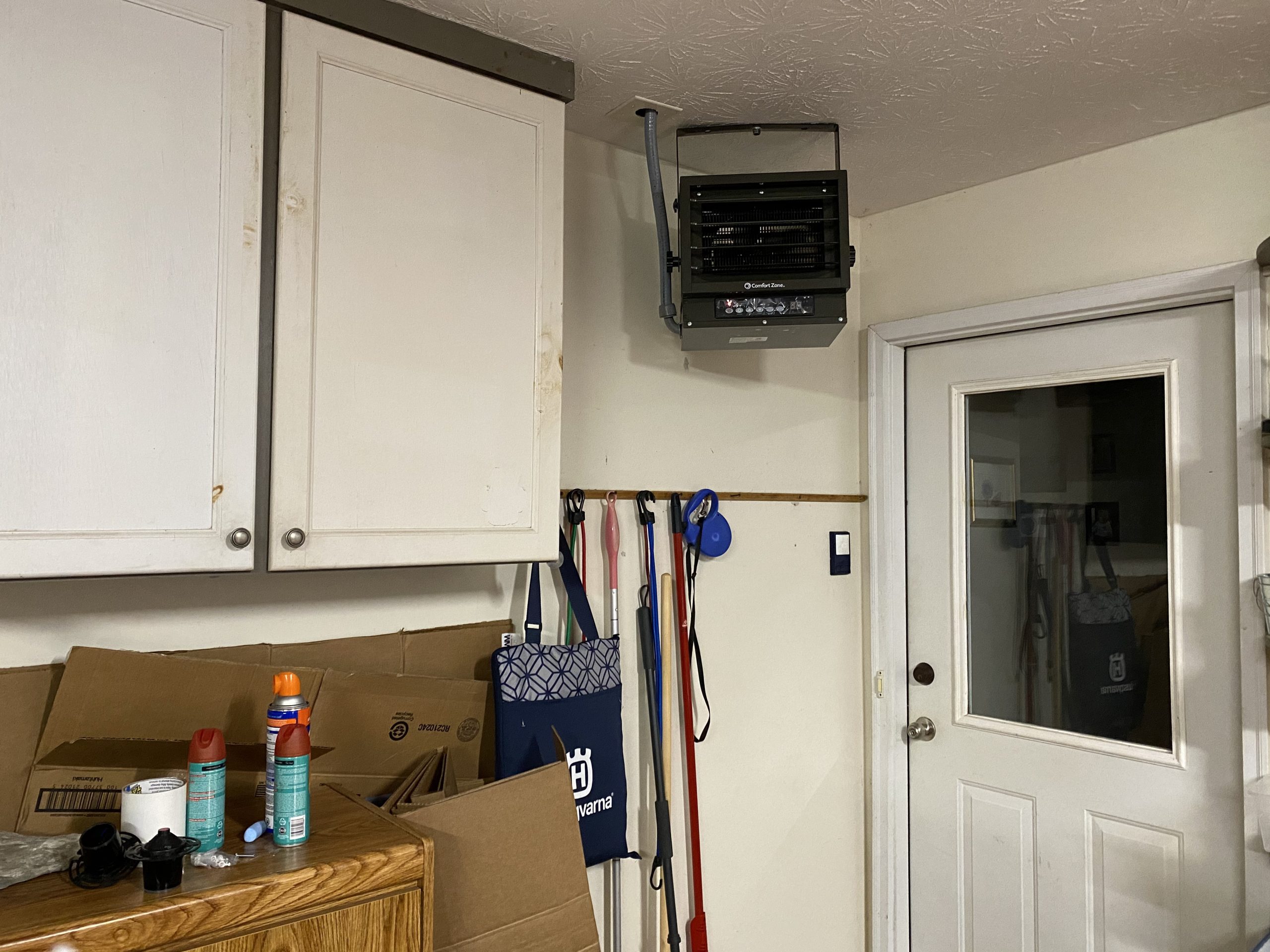
Pick this one if you want scheduled heating and remote adjustment without stepping up to the top of the range. Watch for the blower noise if you plan to work in total silence, and note that a few owners reported E1 fault codes after a couple of years, often cleared by blowing dust out of the housing. Check the warranty terms if you are outside the US.
7500W hardwired
25590 BTU
up to 1250 sq ft
31.25A draw at 240V
What separates this model is the control range. The digital thermostat runs from 45 to 95 degrees, which is wider than most competitors, and the ECO mode cycles the element down once setpoint is reached instead of holding full draw. For someone running scheduled heat in a garage gym, that cycle logic is the whole ballgame.
Output is 25590 BTU with adjustable power between 5000W and 7500W, rated for up to 1250 square feet. The multi-angle bracket handles ceiling installation, and both a remote and a touch panel are included, so you are not dependent on one control path.
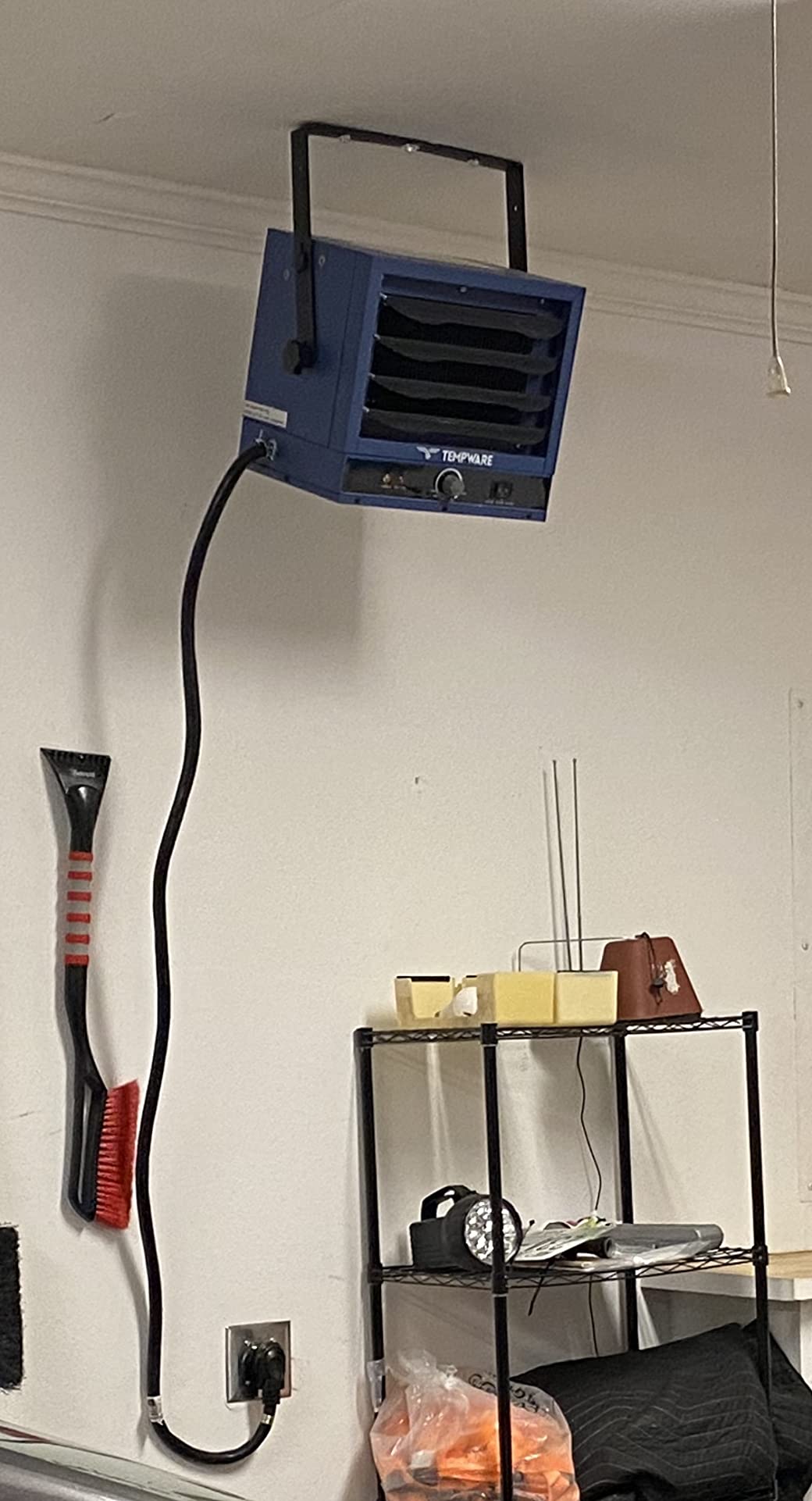
Having a genuine low-power setting changes running cost math. A 7500W element on a 240V circuit at 31.25 amps will warm a cold bay fast and then hold it. Running the same unit at its lower setting for a mild day costs meaningfully less energy for a small comfort trade. Buyers who track their bills mention this as the reason the unit pays for itself over a season of evening use.
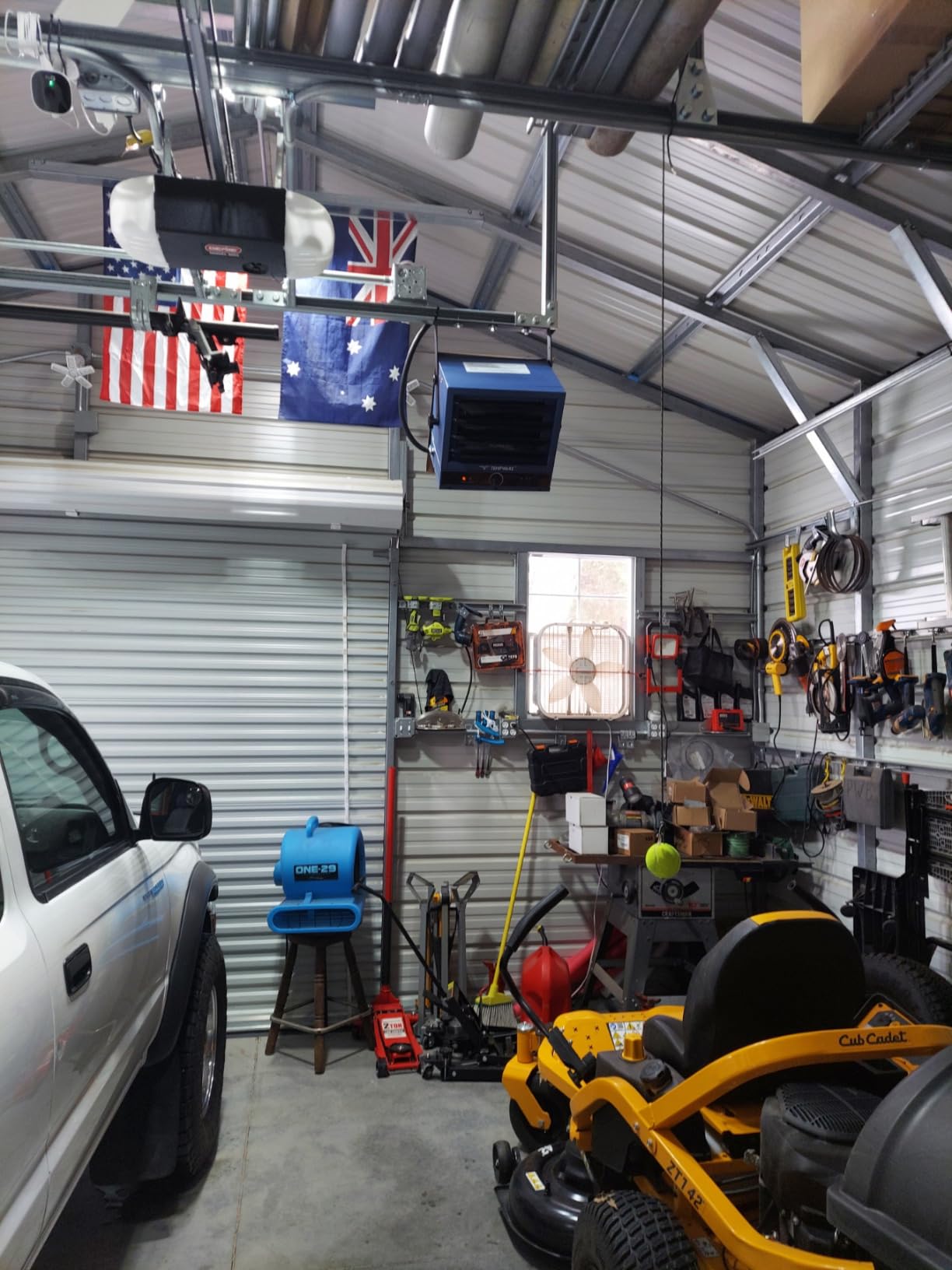
This suits a garage gym or a shop where you want precise control and the option to dial power back. It is hardwired with no cord included, and the manufacturer recommends professional installation. The review base is smaller than the Comfort Zone models, so treat the specification sheet as more reliable than the star count. Our electric furnace picks cover the fixed-install side if you want more options.
7500W forced air
750 sq ft coverage
31.25A draw at 240V
65 dB operating level
This is the direct answer to the most common question in this category: which 240V garage heater has a plug. The InoKraft ships with an 8.2 foot cord and a NEMA 14-50P plug, so if your garage already has a matching NEMA 14-50R receptacle, you hang the unit and turn it on. No electrician, no opening a wall.
It carries the highest star rating of the twelve at 4.6 with 82 percent five-star ratings, and it is also the quietest of the 7500W group at a stated 65 dB. The digital thermostat spans 40 to 99 degrees with high and low modes, an automatic ECO mode, and a timer you can set from 1 to 24 hours.
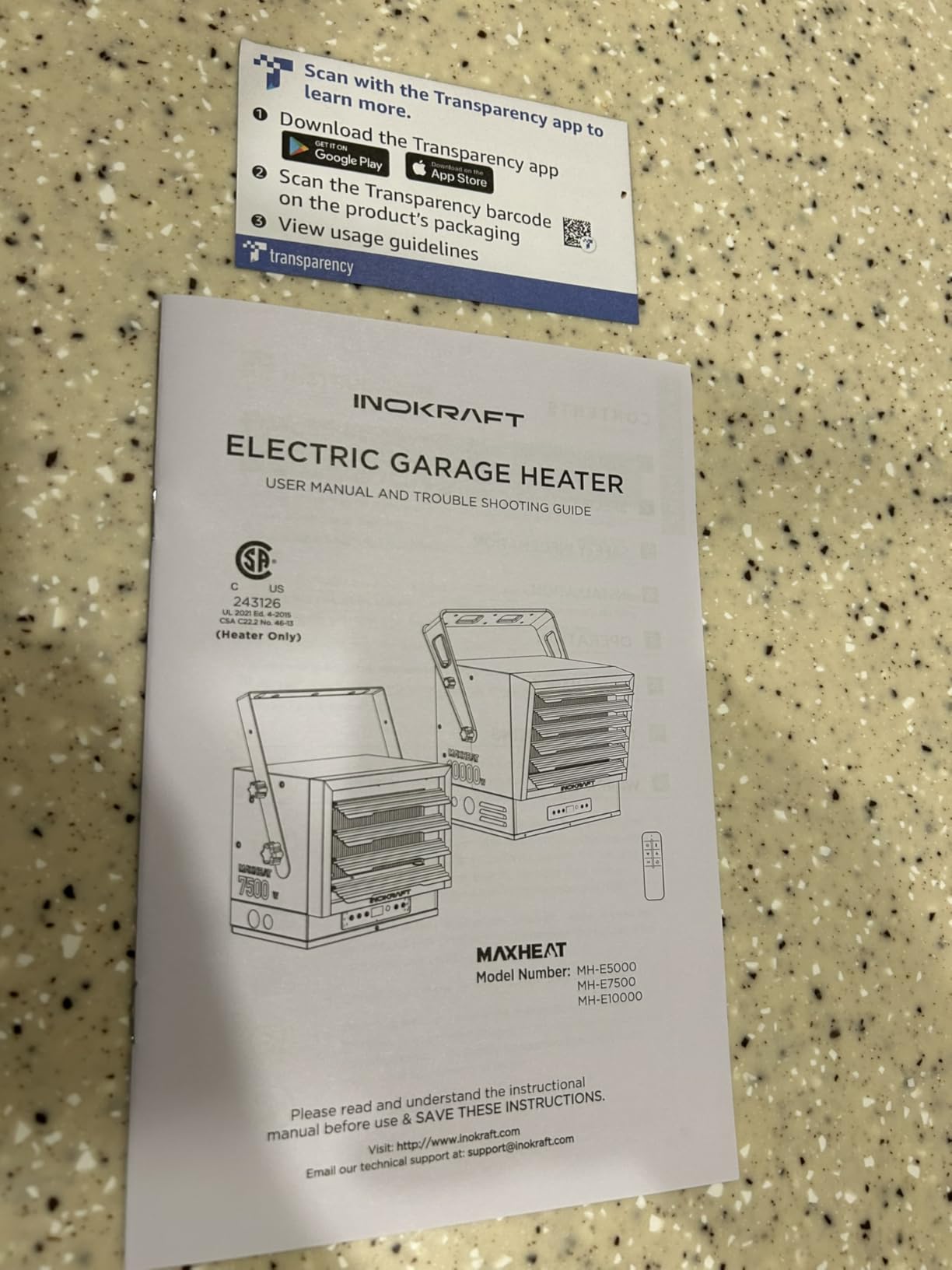
The plug is not just a convenience feature, it changes who can install the heater. Hardwired units require a qualified electrician and a permit in most jurisdictions. A plug-in unit on an existing dedicated 240V receptacle does not. That difference is why plug-in 240V heaters come up so often in garage owner forums, and why this model is the most requested pick in the roundup.
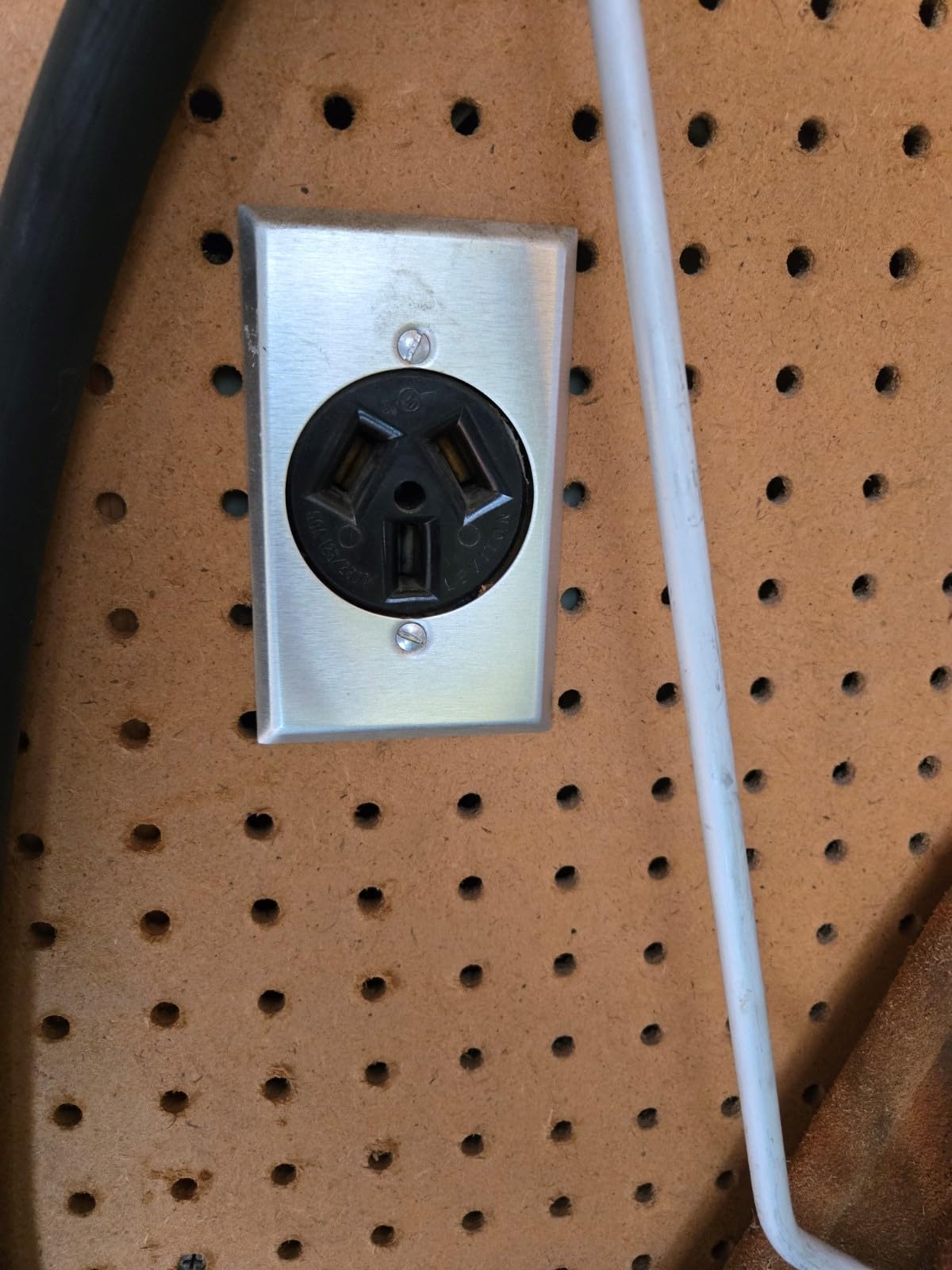
The catch is honest and worth stating plainly: if you do not already have a NEMA 14-50R outlet, you still need an electrician to add one. The plug removes the wiring step, not the circuit step.
It suits a one-car or two-car garage, a garage gym, or a rental space where you cannot modify the electrical panel. Rated coverage is 750 square feet, smaller than some hardwired rivals, so a three-car bay is a stretch. Five angle adjustments plus flexible louvers let you wall mount or hang it from the ceiling, and the automatic fan delay helps spread heat before shutdown.
5600W forced air
19096 BTU
560 sq ft coverage
58 dB operating level
This is a second plug-in option, and it competes on a different axis: noise. At a stated 58 dB it is the quietest heater in this group, which matters if you run tools, record audio, or simply work in silence while the heater runs all day.
It comes fully assembled with a 6.2 foot cord and a matching 240V socket on a NEMA 6-30P 30A plug, plus a remote with a one-touch AUTO button that jumps straight to full output. A built-in temperature sensor handles the 1 to 10 hour timer, and the SPCC cold-rolled steel body is UL certified with overheat protection.
At 5600W and 19096 BTU, rated coverage is about 560 square feet, the smallest of the twelve. That is a one-car garage or a workshop corner, not a full two-car bay in an uninsulated building. Reviewers consistently describe it as a well-behaved unit that simply lacks the headroom larger spaces need.
Pay attention to the clearance note: with the bracket unused, the unit needs at least 7.3 inches from the wall or the overheat protection can trip. Plan the mounting position before you drill.
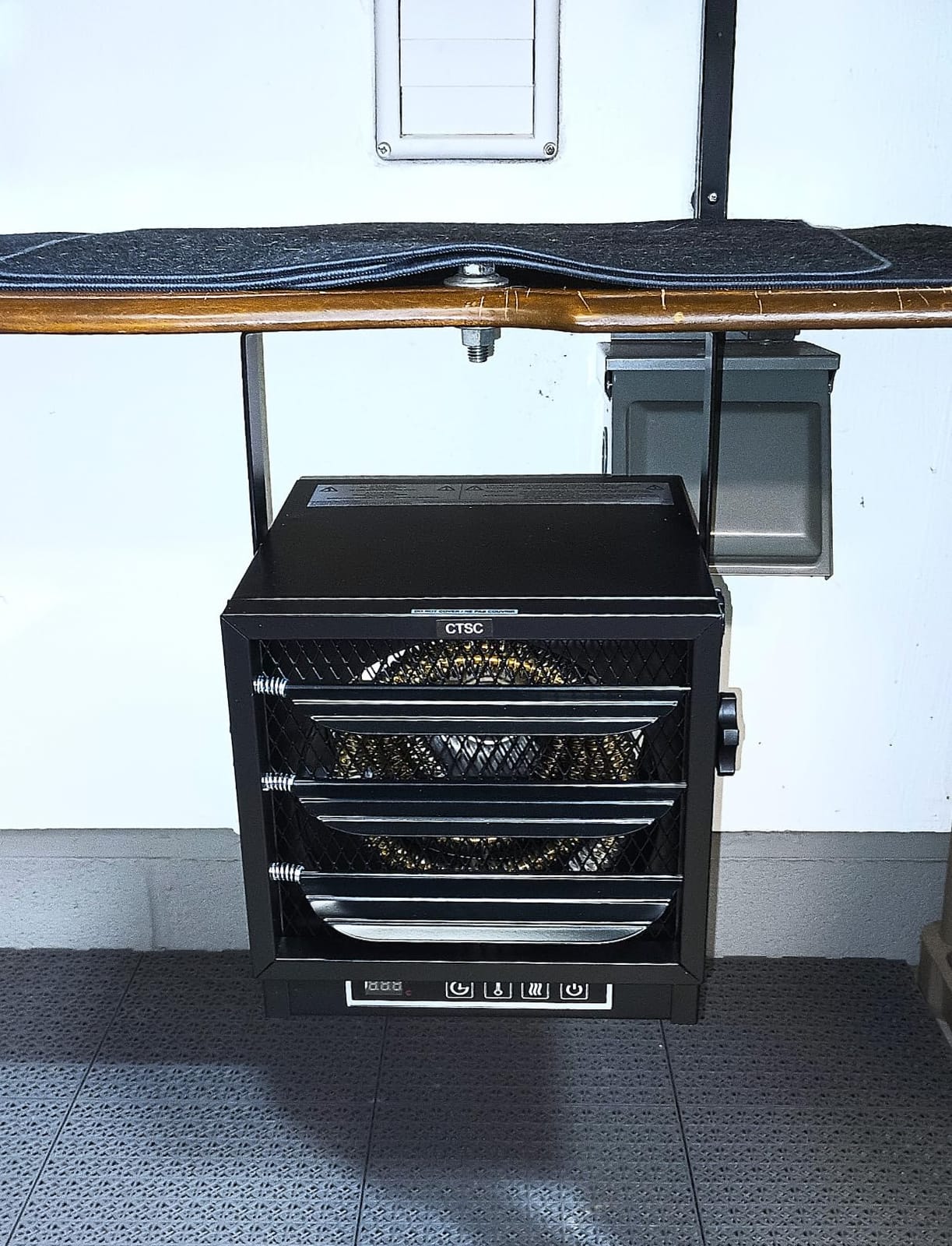
Choose it for a small garage gym or a basement workshop where noise is the priority and space is compact. Pass if you need to heat a large bay, if you need a remote with a long timer, or if a 4.1 star average with a noticeable share of critical reviews gives you pause. The NEMA 6-30P plug is also a different receptacle than the NEMA 14-50, so check what is on your wall.
5000W forced air
17060 BTU
1000 sq ft coverage
20.83A draw at 240V
Scheduled warm-up is the idea that won me over on this one. You leave for work in the morning and the garage is already at temperature when you arrive, which matters enormously for a 6am start in winter. It is the only heater in this roundup with real app control alongside a panel and a remote.
Output is 17060 BTU of fan-driven heat rated for up to 1000 square feet, with adjustable 0, 20, and 40 degree air outlets so you can aim discharge at a bench rather than the ceiling. There is a 12-hour timer and app-based temperature adjustment, and the steel frame is ETL certified with overheat protection.
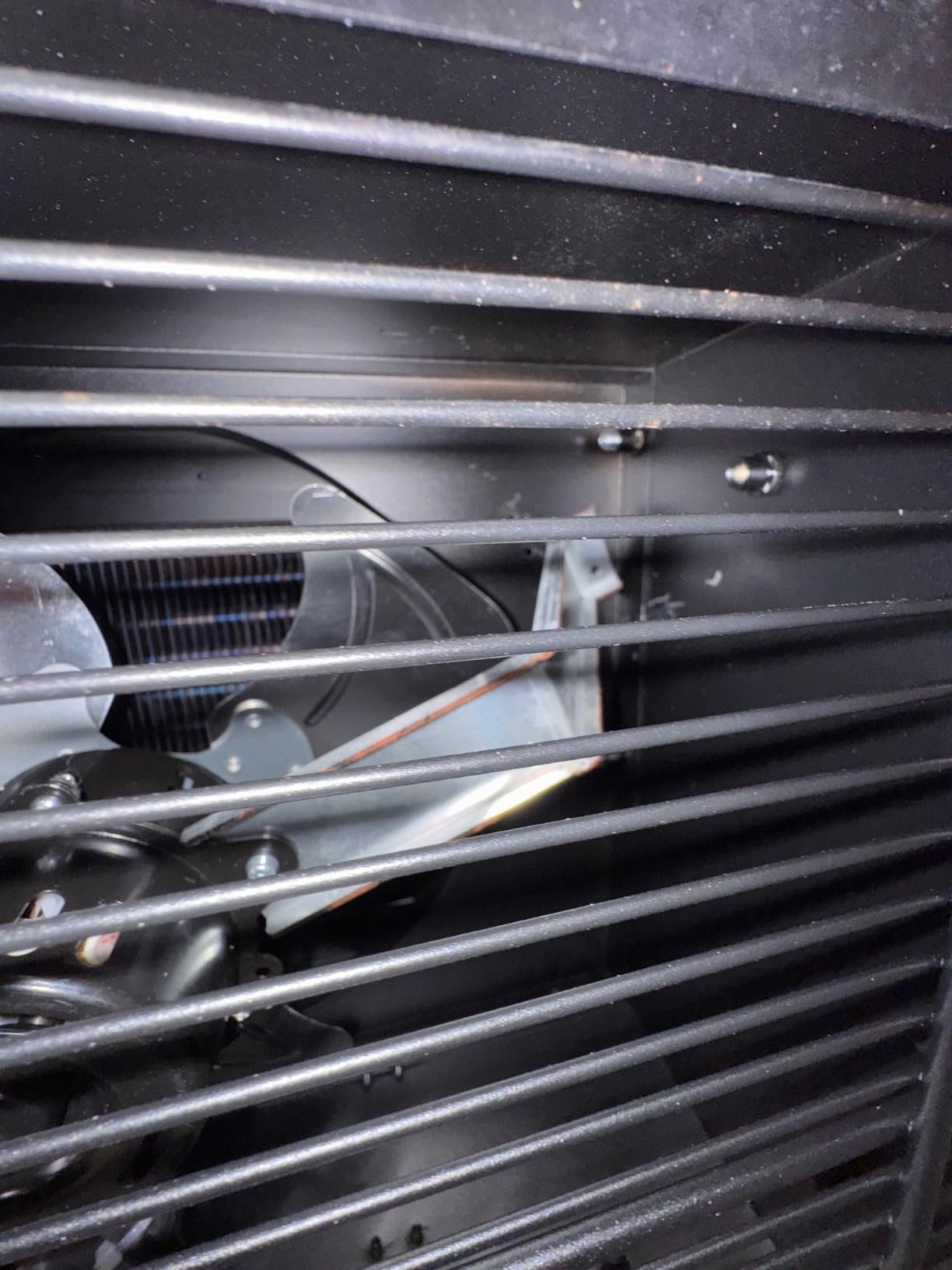
Owners like the concept and report friction with the execution. Wi-Fi pairing instructions are unclear, setup takes patience, and the on-unit thermostat reads roughly 10 degrees higher than the actual garage temperature. If accuracy matters to you, learn the offset in the first week and set your target accordingly.
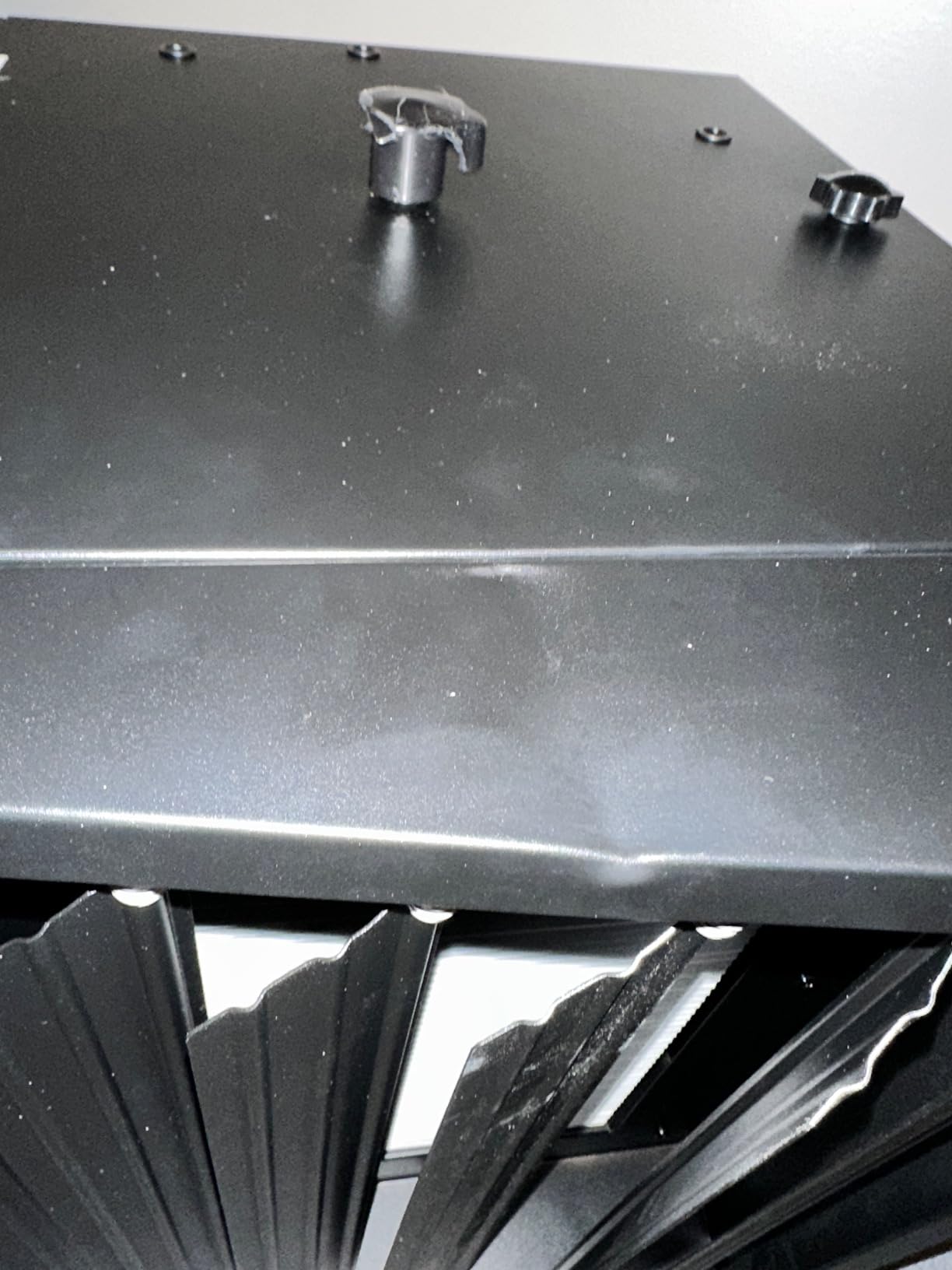
It suits someone who already has a hardwired 240V circuit and wants the garage warm before they walk out to it, or who wants supplemental heat alongside existing ducted garage heat. The install calls for a 12 AWG connection by an electrician with no cord included. A few units also arrive with a cracked mounting knob or dented enclosure, so inspect the box before you install.
7500W forced air
25600 BTU
732 sq ft coverage
31.25A draw at 240V
This is the pick if wall space is at a premium and you want 7500W of output from a unit that is smaller than most of its class. Owners confirm strong, even heat across a two-car garage, and the airflow turned out better than some buyers expected based on past experience with the brand.
Two adjustable power levels let you drop output on a mild day, and the multi-angle installation adjustment plus flexible louvers handle both wall-mounted and hanging setups. The spec sheet calls for a circuit breaker rated above 32A, which lines up with the 31.25 amp draw at 240V.
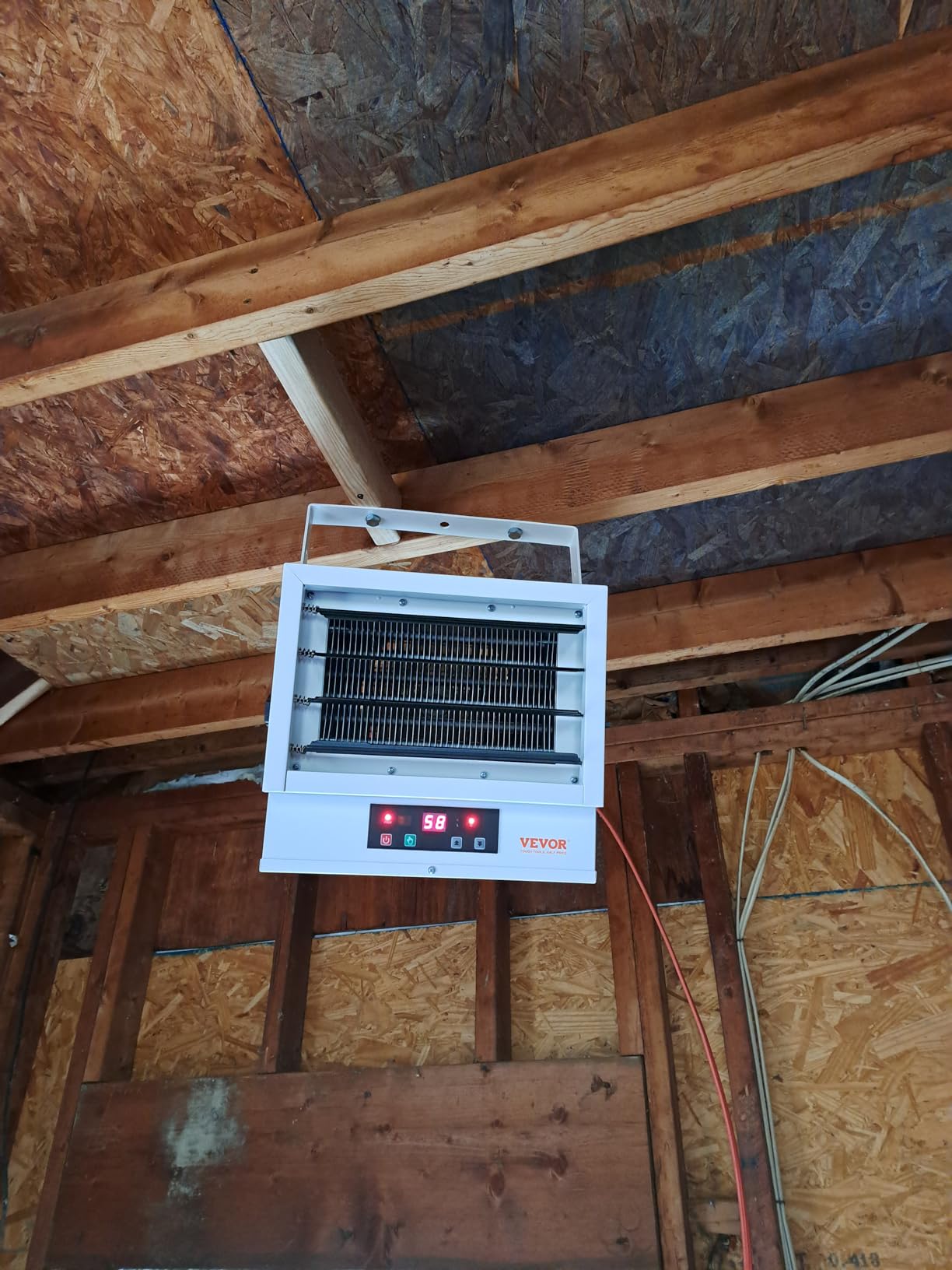
Two behaviors show up repeatedly in reviews. The thermostat holds temperature within a narrow band but cycles roughly 4 to 6 degrees above your setting, so expect a warmer room than the display suggests. And after a power outage the unit does not restore its previous setting, meaning you walk out to a reset button. Neither is dangerous, but both are annoying if you rely on unattended scheduling.
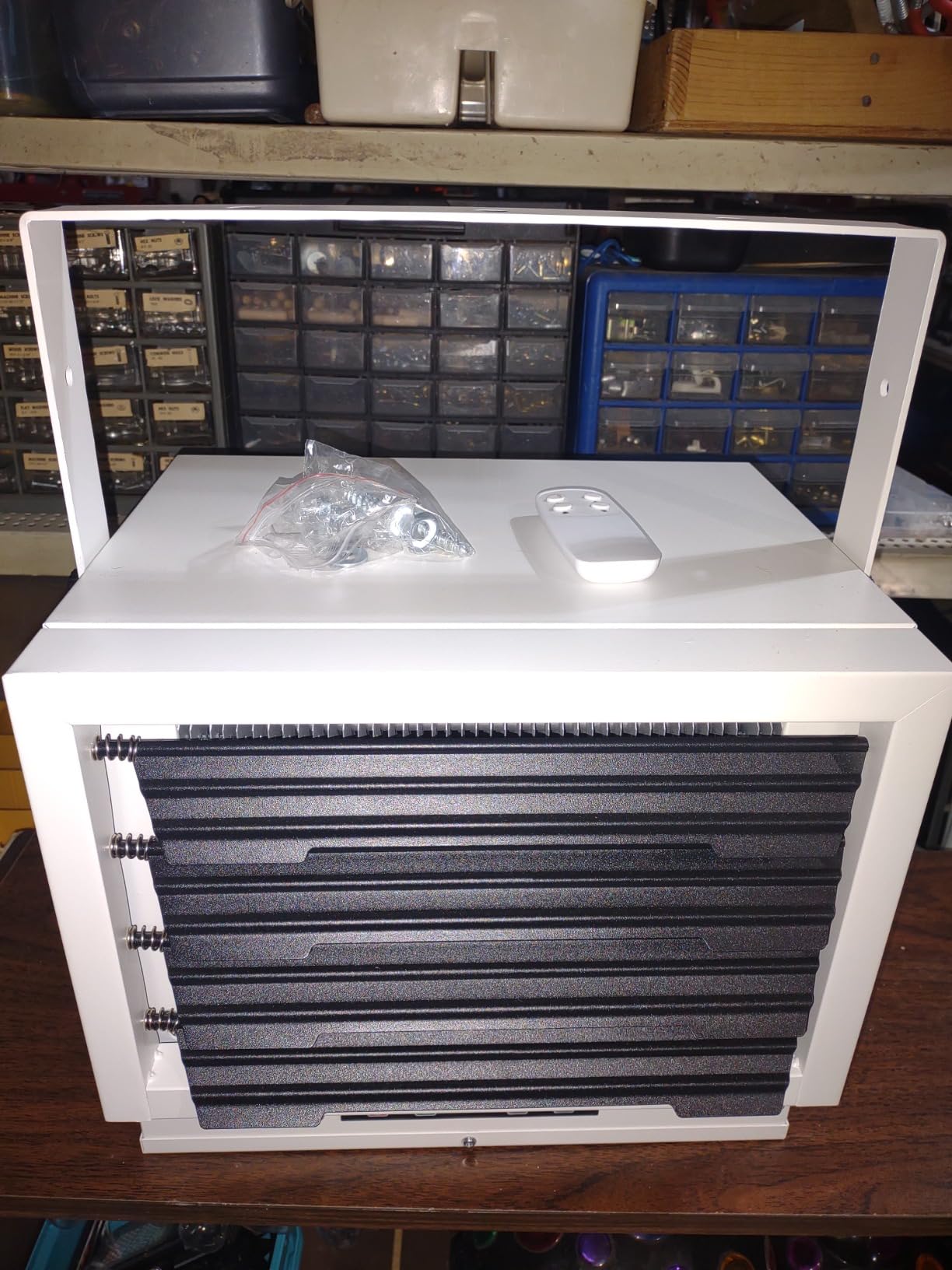
It suits a two-car garage or a shop where you want remote start and a timer without spending at the top of the range. Remote batteries are not included, so pick those up first. The 4.2 star average with a 63 percent five-star share is the weakest of the VEVOR models here, so read recent reviews before committing.
7000W graphene element
29.2A draw at 240V
Remote setpoint 40 to 95F
0.5 to 9 hour timer
The mounting flexibility is unusual for a 240V shop heater. This one gives you two height levels, four wall-mount angles from 0 to 40.5 degrees, and directional louvers spanning 0 to 130 degrees, and it can also sit on a table or the floor. That makes it the one pick here you can reposition as your layout changes.
Heat comes from graphene elements in an iron sheet body, and the horizontal blades with a wider outlet are designed for even distribution rather than a narrow blast. Overheat protection raises an H–1 alert above 95 degrees, stops heating, and keeps the fan running to cool the housing. Output is 7000W at 29.2 amps.
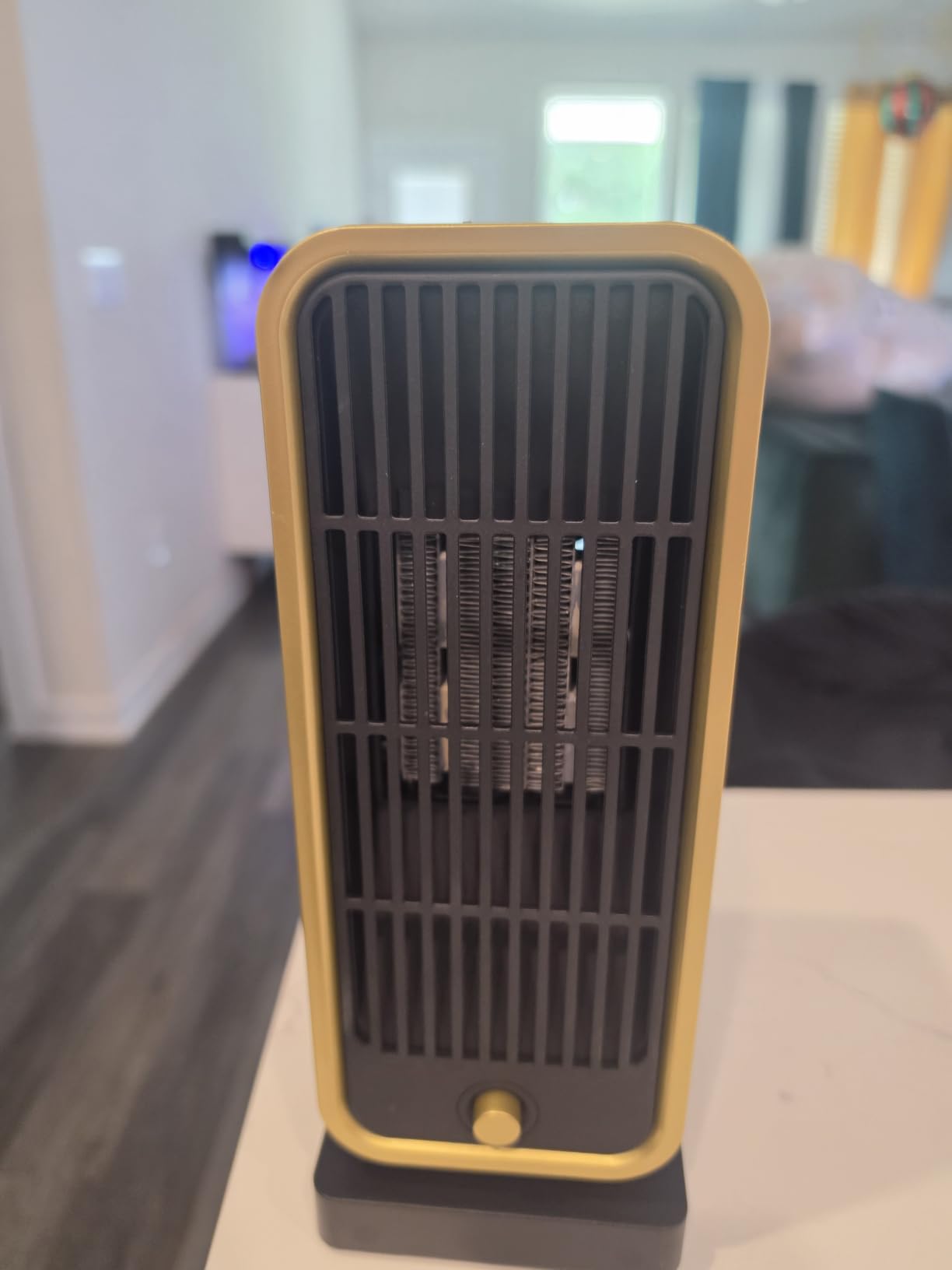
Element material changes response time. Graphene conducts heat quickly, so the unit starts delivering warm air sooner after the fan spins up than a conventional coil design, and the wide outlet spreads that air across a broader area. For spot heating at a bench rather than heating the whole volume, that difference shows up in how usable the space feels.
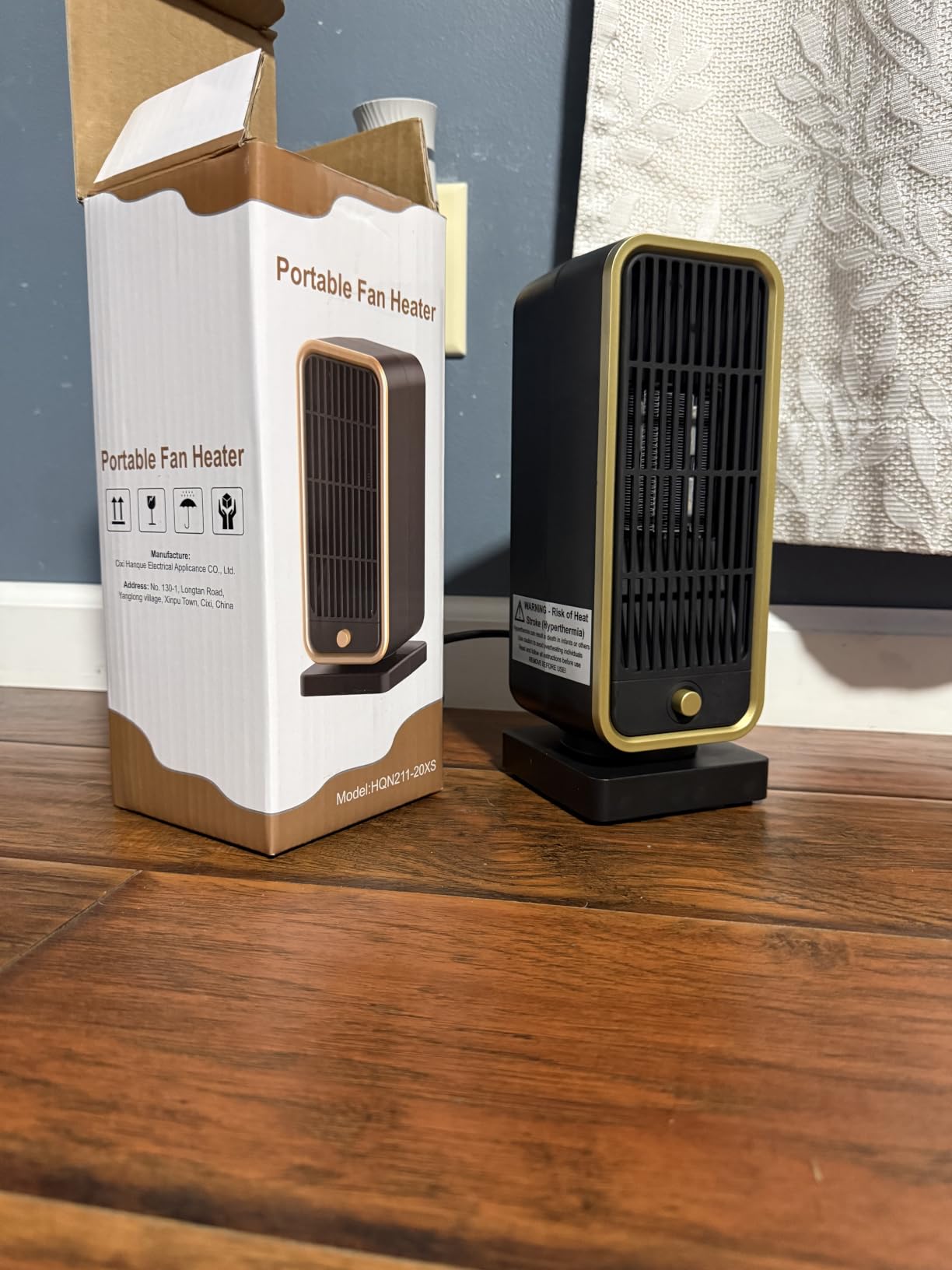
It suits a workshop where the bench moves, or a garage you use for different things across seasons. Be aware that the written reviews mostly describe compact portable room heaters rather than this 7000W hardwired model, so treat the 4.6 rating as less informative than the others here. It is also the most expensive per watt in the group, and the connection is hardwired with no cord.
10000W forced air
34129 BTU
about 970 sq ft coverage
41.67A draw at 240V
This is the capacity leader of the group at 10000W and 34129 BTU, rated for about 970 square feet or 90 square meters. If you have a three-car garage, a shop with high ceilings, or a space you want genuinely comfortable on a bad day, this is the wattage you need.
The requirement that matters most is electrical. The spec sheet calls for a breaker rated 42A or higher, and the unit draws 41.67 amps at 240V. A 30 amp dryer circuit will not carry it, and the panel often needs work before this is even an option. At 30.2 pounds it is also the heaviest unit here, so the mount has to be solid.

Before anything else, confirm your panel has the capacity. A 42A double-pole breaker often means a panel upgrade or a subpanel, which is a much larger electrical job than adding a receptacle. Forum owners describe people ordering this class of heater expecting a simple install and discovering the panel cannot support it. Check first, order second.
The rest of the design is sensible: two adjustable power levels, high air circulation for even convection, a thermostat holding roughly a 2 degree difference, and an SPCC cold-rolled steel shell with automatic overheat power-off.
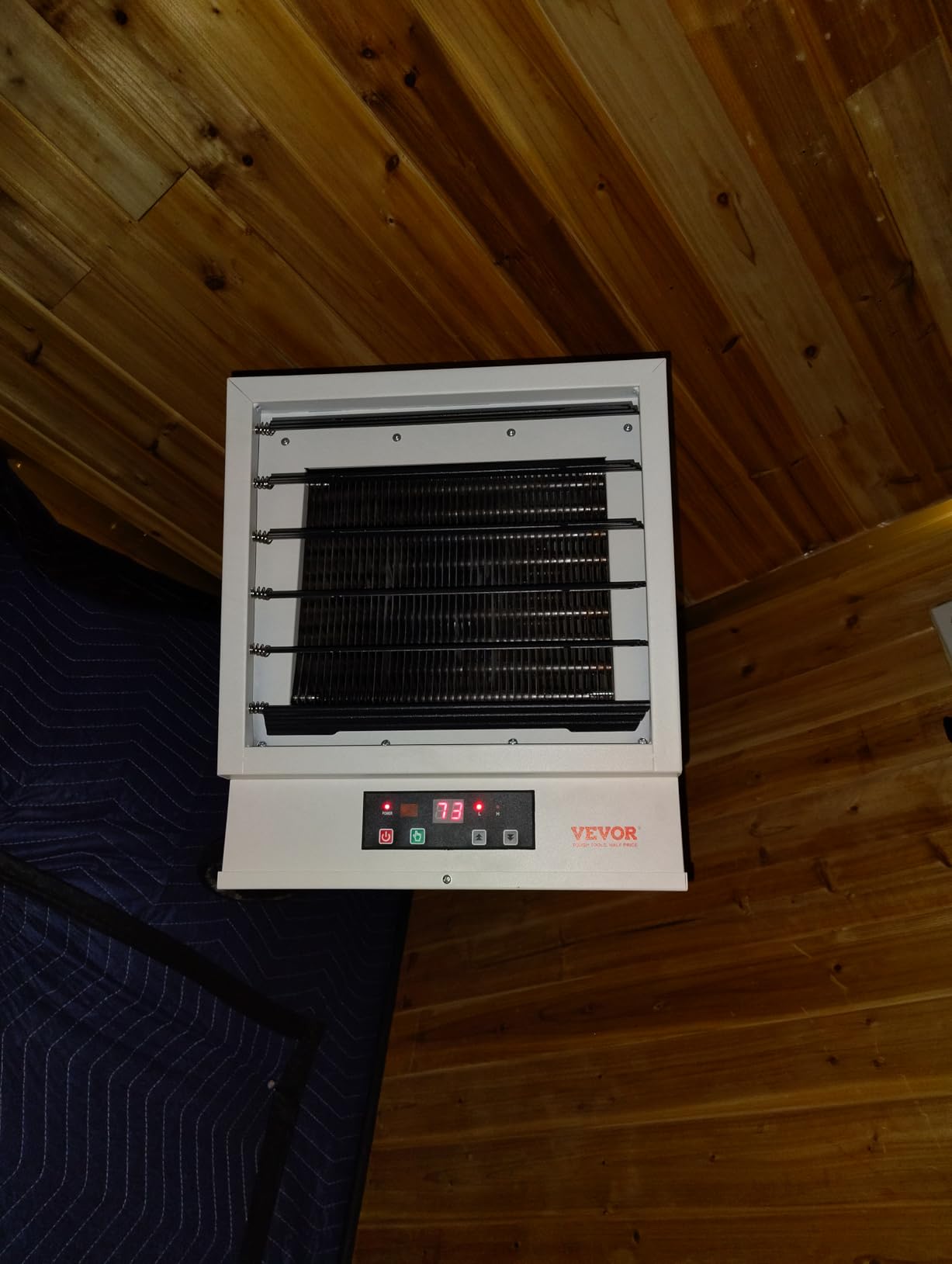
It suits a large insulated garage with a modern panel and the electrical headroom to spare. Pass if your existing circuit is 30A, if you are on a tight budget, or if you are not prepared to have an electrician assess the panel. Remote batteries are not included, which is a small but annoying omission at this level.
5000W forced air
17064 BTU
about 538 sq ft coverage
20.83A draw at 240V
If you have a one-car garage or a small workshop and you want remote control without stepping up in price, this is the most efficient match. At 20.83 amps it draws less than half what the 10000W units pull, which means it is far more likely to fit an existing 240V circuit without a panel change.
It shares the VEVOR platform with the 7500W and 10000W models: two adjustable power levels, an SPCC cold-rolled steel shell with automatic overheat power-off, ETL certification, multi-angle installation adjustment, flexible louvers, and automatic fan delay. The 9-hour timer and remote are included, though the remote does not come with batteries.
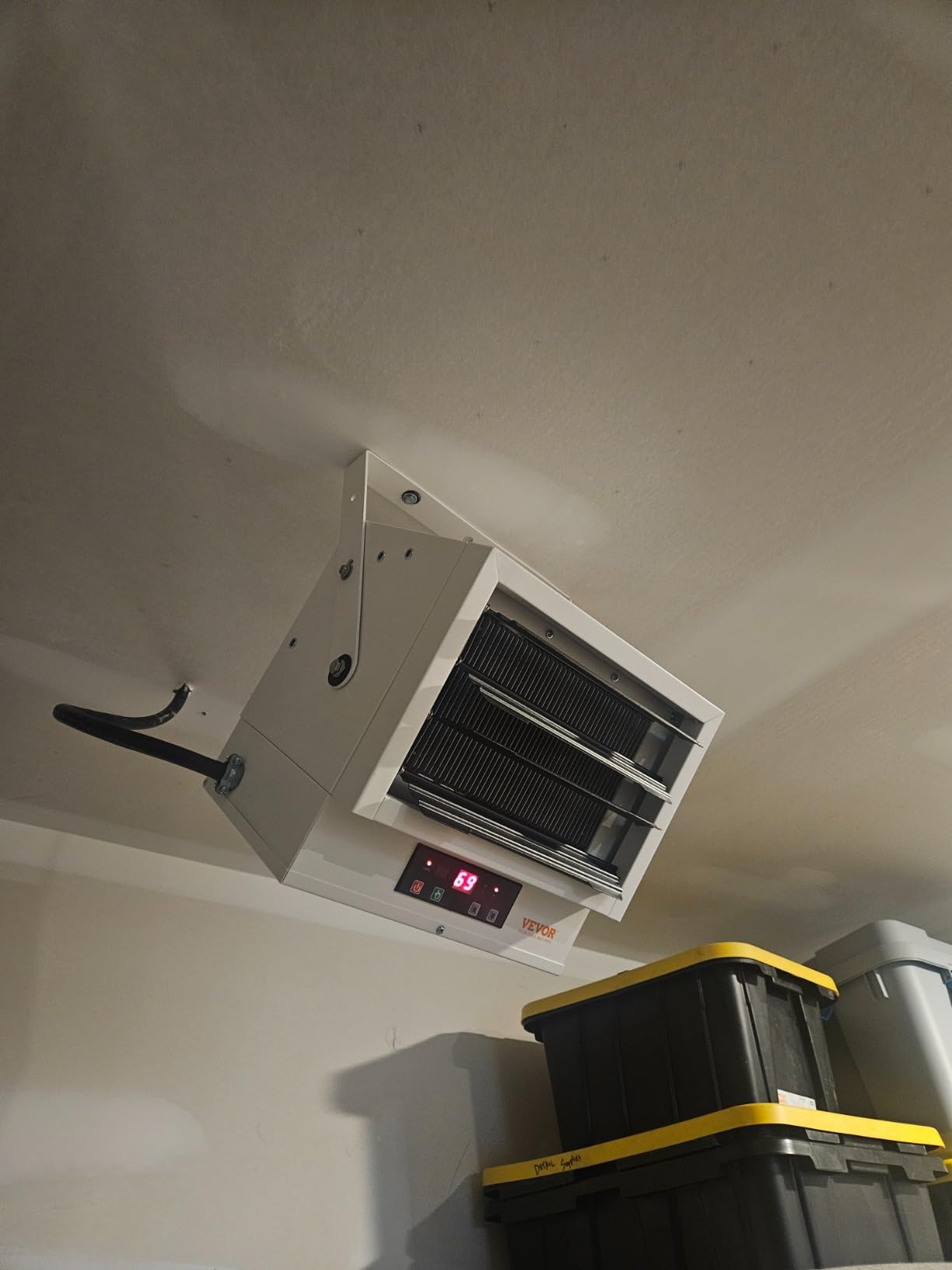
Rated coverage is about 538 square feet or 50 square meters. That is a one-car bay, a converted storage room, or the front half of a shop where you sit at a desk. In an uninsulated detached building in deep winter, no 5000W unit will hold a comfortable temperature, and reviewers on Home Improvement threads are candid about running those heaters continuously without reaching setpoint.
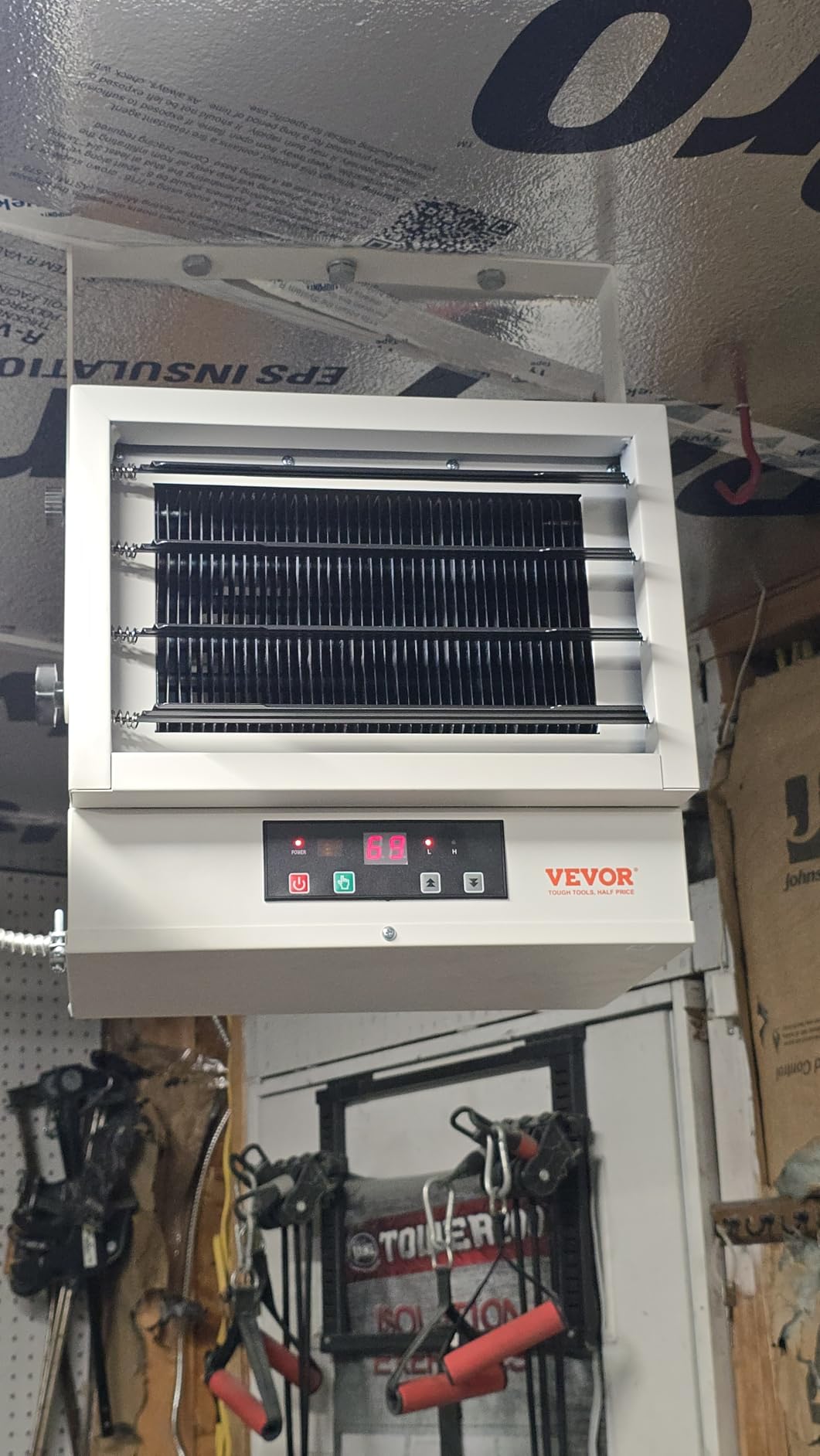
It suits a single-car garage on an existing 240V circuit where the goal is evening comfort rather than all-day heat. Pass if you need to heat a two-car or larger space, or if thermostat accuracy is critical, since the sibling models in this family show a habit of cycling above setpoint and forgetting settings after a power loss.
10000W forced air
34130 BTU
1000 sq ft coverage
42A draw at 240V
This is the one to consider if you already have a wired thermostat on the wall or plan to install one. It is pre-wired for an external wall thermostat through a simple wired connection, which no other heater in this roundup supports. That makes it the natural fit for a garage that is treated as a real room rather than occasional shop space.
Output is 34130 BTU with coverage rated up to 1000 square feet or 93 square meters. Four heat settings cover 10000W high, 5000W low, AUTO in ECO mode, and fan only. The remote has a one-touch AUTO button, defaulting to 77 degrees and running full power when ambient temperature is 70 degrees or below. Operation is stated at no more than 58 dB.
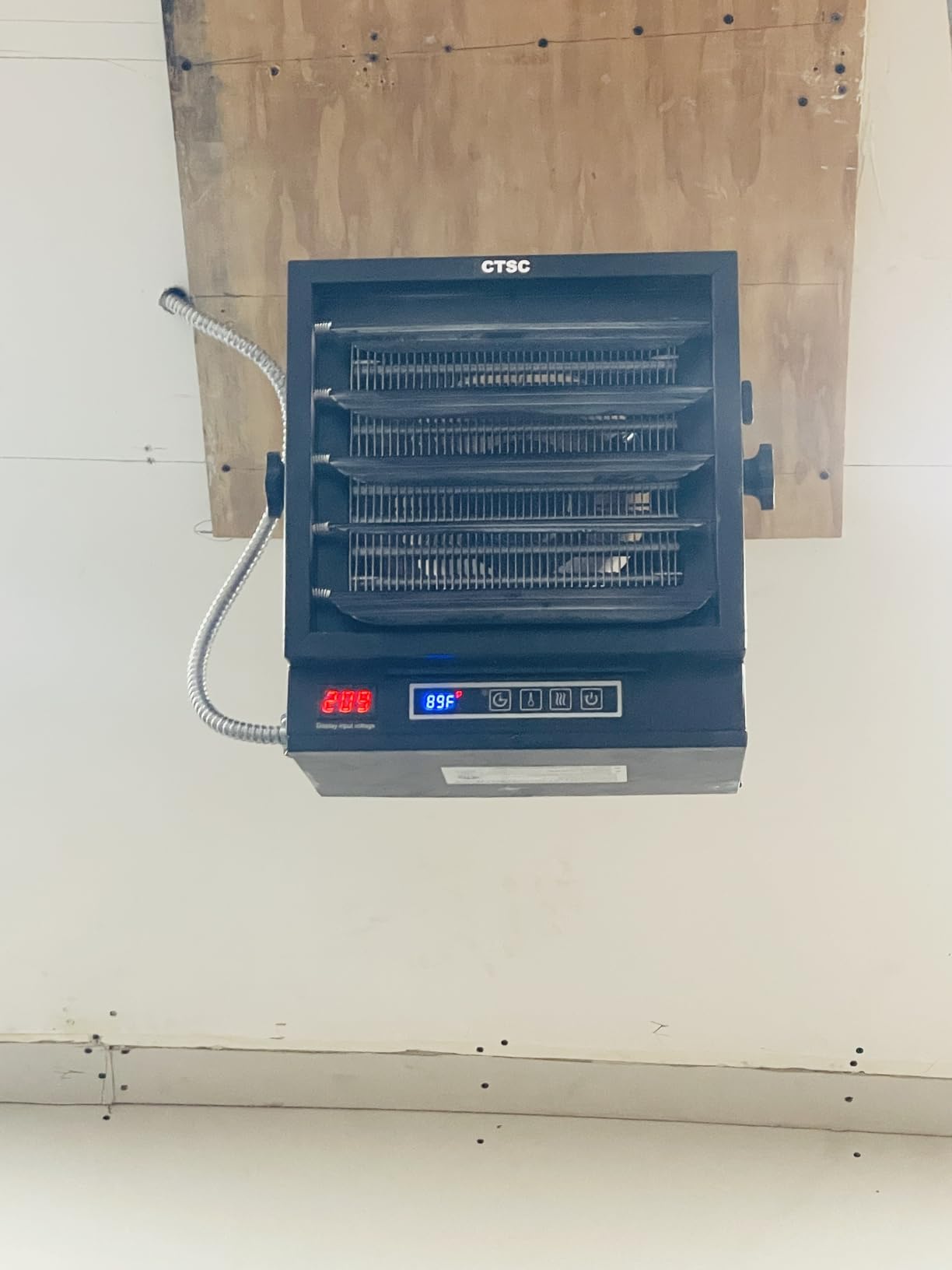
A wall thermostat gives you a physical readout at the door instead of at the ceiling, which is where you actually are. On a high-mounted unit, the temperature at the unit is warmer than the temperature at your head, and a thermostat mounted up there tends to leave the working zone cooler than the setpoint. Wiring one in fixes that, and this unit is the only one here set up for it from the factory.
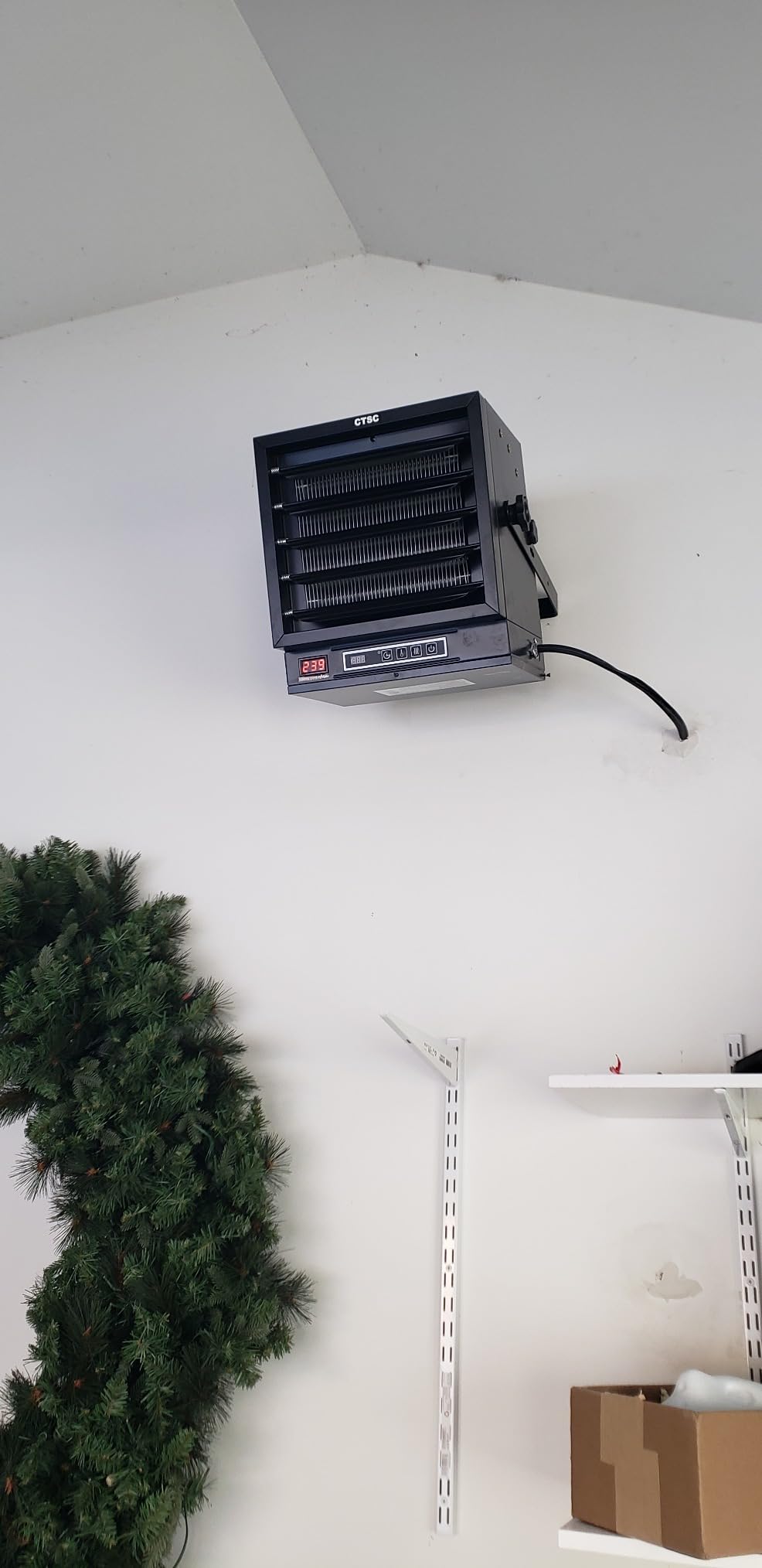
Choose it for a three-car garage or a finished room over a garage where a wall thermostat is already wired. The 42A hardwired requirement means a panel assessment first, and no cord is included. It is also the most expensive unit here, with a 4.2 star average and 9 percent one-star ratings, so read the recent reviews before installing.
Match the heater’s amperage to a breaker sized for it: roughly 21 amps for a 5000W unit, 31 amps for 7500W, and 42 amps for 10000W. Every one of these belongs on its own two-pole breaker rather than a shared circuit. If your panel has a 30A two-pole breaker, only the 5000W picks are realistic without electrical work.
The most common owner complaint, repeated across garage forums, is a breaker that trips as soon as the fan starts. Nearly always the cause is wire gauge: an installer ran 8 AWG where the manual specified something heavier. Follow the gauge the manual names, not the gauge that is already in the wall.
A NEMA 14-50P plug means you can hang the unit and plug it into an existing NEMA 14-50R receptacle, the same outlet type a clothes dryer uses. The CTSC models use a NEMA 6-30P plug and socket instead. Every other pick is hardwired with no cord included, which means hiring a qualified electrician.
Roughly 10 watts per square foot is the working rule. A 576 square foot two-car garage needs about 5000W, a 720 square foot space wants 7500W, and anything above 960 square feet points toward 10000W. Multiply watts by 3.412 to convert to BTU: 5000W is about 17000 BTU, 7500W is about 25600 BTU, and 10000W is about 34100 BTU.
Insulation changes the answer more than brand does. A 24 by 24 garage with insulated walls and a rated garage door will hold temperature with a mid-size unit. The same dimensions with bare walls and a thin door will not, and no heater on this list fixes a garage door that is losing heat faster than the element can supply it.
Fan-forced units move air, which means even room temperature and faster warm-up. Radiant and infrared units warm objects and people in line of sight, which feels good on a cold morning but does not heat the volume. For a full-room heated garage, fan-forced is the correct category, and every unit on this list is fan-forced.
Running cost is simple arithmetic. A 5000W unit burns 5 kWh per hour, a 7500W unit burns 7.5 kWh, and a 10000W unit burns 10 kWh. Multiply by your local rate per kWh, then by the hours you actually run it. Two evening sessions a week is a fraction of running a unit around the clock, and forum owners consistently describe using a heater only when they are out in the shop rather than heating continuously.
That is also the honest answer on 240V versus 120V. Both convert electricity to heat at effectively full efficiency, so the cost difference comes entirely from wattage and run time, not from the voltage itself. A larger 240V unit produces far more heat per hour; it is not cheaper per BTU.
Ceiling mounts keep the floor clear and push warm air down through the occupied zone, which is why most picks here are ceiling units. Wall mounts sit lower and can be aimed at a specific bench. Mount near the door if you want the whole volume mixed, and mount over the workbench if you only need spot heat. Always follow the clearance requirements in the manual.
Look for UL or ETL listing and a high-level or overheat cutoff on any unit you buy. Set the thermostat a few degrees below the manufacturer’s maximum, keep the unit clear of combustible storage, and never extend a power cord or use an adapter to reach a receptacle. Fixed 240V units are the safer choice for scheduled or unattended heating because nothing has to be plugged in each session.
Size the breaker to the heater’s wattage: a 5000W unit pulls about 21 amps and wants a 30 amp two-pole breaker, a 7500W unit pulls about 31 amps and wants a 35 or 40 amp breaker, and a 10000W unit pulls about 42 amps and needs 42A or higher. Every one of these belongs on its own dedicated circuit.
The InoKraft 7500W ships with an 8.2 foot cord and a NEMA 14-50P plug, and the CTSC models come with a 6.2 foot cord and a NEMA 6-30P plug plus a matching socket. Both can be installed without an electrician as long as a matching 240V receptacle already exists in the garage.
In practice most 240V heaters run on a nominal 220V supply without complaint, because residential service sits around 230V. What you cannot do is plug one into a 120V outlet or run it on a smaller breaker than the manual specifies, which is the cause of most tripped-breaker complaints.
A 24 by 24 garage is 576 square feet, and the working rule is about 10 watts per square foot, so roughly 5000W or 17000 BTU. Multiply watts by 3.412 to convert. If the garage is uninsulated or the door is thin, step up to 7500W and fix the insulation first.
The usual cause is wire gauge rather than the heater itself. Owners who installed with 8 AWG where the manual called for something heavier report repeated trips, as do people who put a 5000W or 7500W heater on a shared or undersized circuit. Verify the wire size against the manual and confirm the unit has its own two-pole breaker.
If you want the most proven all-round choice for a two-car shop, the DR Infrared DR-975 is the one I would put in my own garage: 7500W, remote thermostat, aiming louvers, and the deepest review history in the group. For the best combination of control and coverage at a mid-range price, the Comfort Zone CZ230ERBK gives you a digital thermostat, a remote, and a 12-hour timer across 1250 square feet of rated coverage.
If you want no electrician involved, the InoKraft 7500W is the pick, provided a NEMA 14-50R receptacle already exists in the wall. For a small garage on a tight budget, the Comfort Zone CZ220BK or the VEVOR BGP2102-50R cover a one-car space with the lowest amp draw in the set. For a three-car space, the VEVOR BGP2102-100R or the CTSC MGH10100-02 deliver 10000W, and only after you confirm your panel supports a 42A circuit.
Before any of them, check the circuit, follow the wire gauge in the manual, and consider whether insulated walls and a rated garage door would do more for your comfort than extra watts. We keep this roundup current, and you can revisit the picks any time in 2026 as new models land.