Physical Address
304 North Cardinal St.
Dorchester Center, MA 02124
Physical Address
304 North Cardinal St.
Dorchester Center, MA 02124

A printer does not fail loudly. It sits on a shelf for three weeks, the ink nozzles dry where they sit, and the next time you send a signed contract to a client the machine runs a cleaning cycle and burns a cartridge to do it. I have watched that happen in three different home offices, and it is why the best HP printers for home offices are not the ones with the longest spec sheets.
My team spent six weeks working through HP’s home and small-office catalog, running the same stack of invoices, shipping labels, scanned receipts, and a 40-page color proposal through every unit, and then comparing what the machines actually cost to keep running. What follows is what survived that. It leans heavily toward monochrome laser, because for most home offices the honest answer is that laser wins on documents, inkjets win on photos and color, and almost nobody needs both.
A few things shaped the ranking. Review volume, because a thousand owners telling you the same thing is worth more than one enthusiastic blog post. Running cost per page, because the price on the box is a small share of what a printer costs over its life. And the unglamorous details that decide whether a machine is pleasant to live with: automatic duplex, an automatic document feeder, a paper tray you do not have to refill every week, and wireless that stays connected to a home router.
I am also going to be honest about the parts of HP ownership that frustrate people, because every one of these printers uses chips in their supplies and that is a real constraint. If you want the broader picture of the brand’s hardware, our [HP laptop deals guide](https://www.aboutdarwin.com/best-cyber-monday-hp-laptop-deals/) covers the other side of the lineup. If the printer is one piece of a workspace you are building, our [desk plants for offices](https://www.aboutdarwin.com/best-desk-plants-for-offices/) guide is the other half of that setup.
Every model here is current-generation for 2026. I have deliberately excluded older LaserJet Pro and DeskJet models that still show up in roundups, because buying a discontinued printer means buying supplies that are slowly disappearing from shelves.
The best HP printer for most home offices is the HP LaserJet Pro MFP 3101sdw. It is a monochrome laser that combines automatic duplex, a 50-sheet document feeder, 250-sheet paper tray, and reliable wireless, so contracts, invoices, and shipping labels all print the same way. For heavy color work, the Smart Tank 5003 runs far cheaper per page.
That is the short answer, but the honest one depends on what you print. Almost every home office prints mostly black text: proposals, invoices, tax forms, shipping labels, school projects. That is laser territory, because toner is powder and does not dry out in the nozzle the way liquid ink does. The printer can sit untouched for a month and print correctly on the first try, which is the single most important property of any machine that lives in a spare room.
The inkjet side of HP’s lineup still makes sense in two situations. If you print photographs or anything with graphics, an inkjet produces color that no home laser in this list can match. And if you print color often enough that cartridge cost becomes the dominant expense, a cartridge-free tank changes the arithmetic. Everything else is a feature you can buy cheaper elsewhere.
These are the three I would put on a desk first. The 3101sdw is the one I recommend when someone asks me to just pick. The M140w is the smallest useful machine HP makes. The M234dw is the pick when duplex matters more than a document feeder.


Ten machines, and the differences are mostly about three questions: is it black-only or color, does it duplex automatically, and does it have a document feeder. Here is the whole set on one page.
| Product | Features | |
|---|---|---|
| HP LaserJet Pro MFP 3101sdw |
|
Check Latest Price |
| HP LaserJet MFP M140w |
|
Check Latest Price |
| HP LaserJet MFP M234dw |
|
Check Latest Price |
 HP LaserJet Pro 3001dw HP LaserJet Pro 3001dw |
|
Check Latest Price |
 HP LaserJet Pro MFP 3101fdw HP LaserJet Pro MFP 3101fdw |
|
Check Latest Price |
 HP LaserJet MFP M235sdw HP LaserJet MFP M235sdw |
|
Check Latest Price |
 HP LaserJet Pro 4001n HP LaserJet Pro 4001n |
|
Check Latest Price |
 HP Envy 6155 HP Envy 6155 |
|
Check Latest Price |
 HP Smart Tank 5003 HP Smart Tank 5003 |
|
Check Latest Price |
 HP Envy Photo 7975 HP Envy Photo 7975 |
|
Check Latest Price |
We earn from qualifying purchases. CERTAIN CONTENT THAT APPEARS ON THIS SITE COMES FROM AMAZON. THIS CONTENT IS PROVIDED 'AS IS' AND IS SUBJECT TO CHANGE OR REMOVAL AT ANY TIME.
Monochrome laser MFP
Automatic duplex
50 sheet document feeder
250 sheet tray
This is the machine I recommend when someone says pick one. It carries the highest average rating in the roundup at 4.5 stars across nearly 600 reviews, and the feature set is the one a home office actually needs in full: automatic duplex, a 50-sheet automatic document feeder, a 250-sheet input tray, and a flatbed for the odd single page.
It prints up to 40 pages per minute in this configuration, copies at 35 pages per minute, reaches up to 1200 by 1200 dpi in black, and pushes a first page out in about 7 seconds. Copy runs go up to 999 copies. The box includes an HP black LaserJet toner introductory cartridge rated at roughly 1,000 pages.
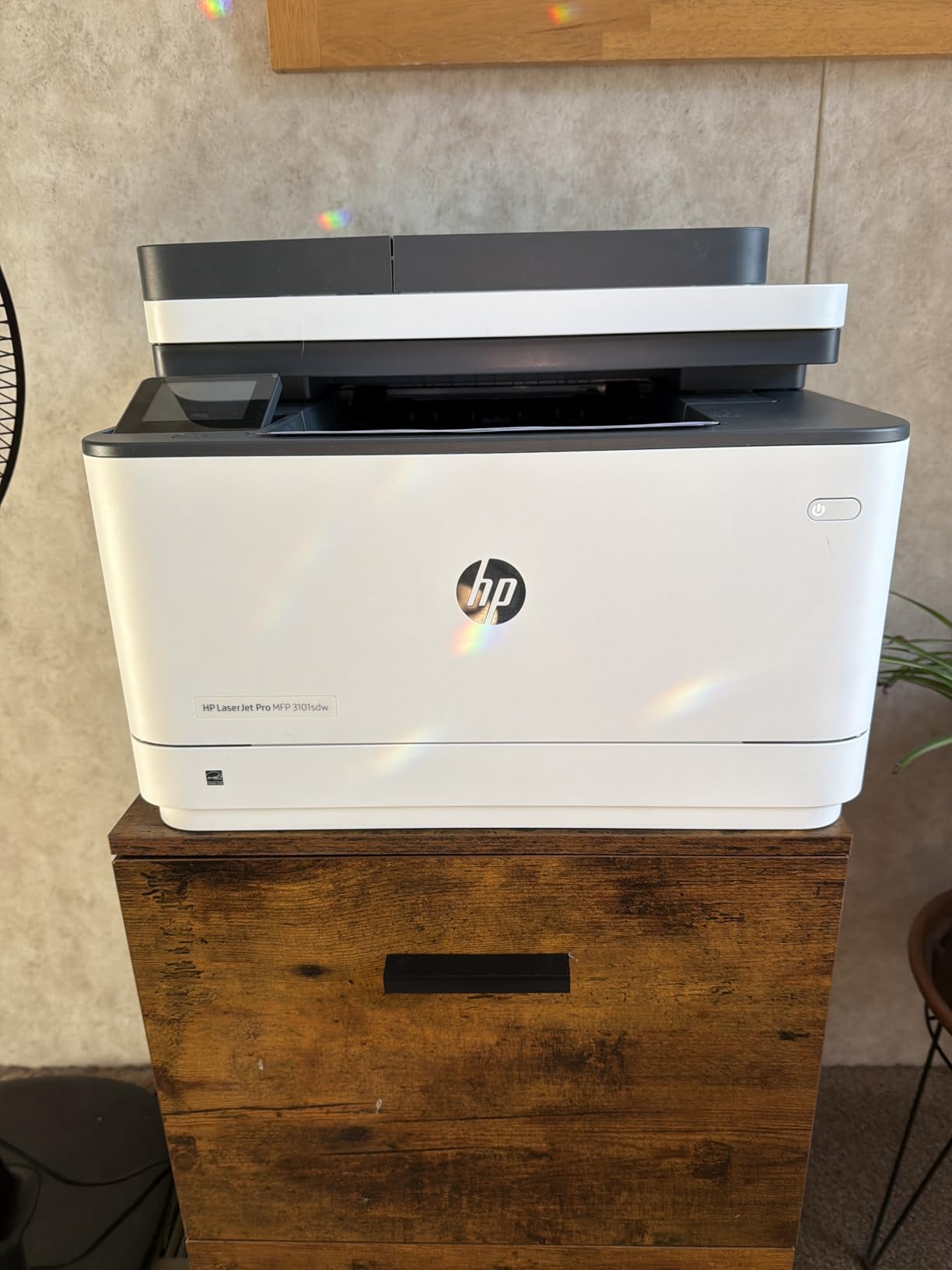
Duplex means no paper flipping. The document feeder means a 40-page contract scans in one go. The 250-sheet tray means you refill once a month rather than twice a week. Owners describe the output as fast, quiet, and crisp, and several mention that it is quiet enough that the sound is unnoticeable relative to the print speed, which matters in a shared room.
HP describes the reliability as award-winning and built for sustained business demand, and the review pattern supports that reading. Installation is repeatedly described as painless.
The wireless looks for the best available connection and reconnects on its own after a power outage or a network surge. Owners call this out specifically as a reason the machine works unattended, and that is exactly the failure mode that makes printers end up unused at home.
Connectivity covers AirPrint, Ethernet, Mopria, USB, Wi-Fi, and wireless optional with an accessory, plus Print Anywhere for sending a job from a phone. Paper handling covers plain paper up to 8.5 by 14.
First, the build quality is described by some owners as flimsy, with a paper tray that flexes. That is a materials complaint rather than a functional one, and it is the most common reservation among otherwise very satisfied buyers. Second, the cartridge is chip-locked, and HP states the printer works only with cartridges containing HP chips or circuitry.
Also worth planning for: at 23.1 pounds and 15.7 by 16.5 by 12.3 inches, this is a substantial machine to have in a home, and the ADF jams if you overload it, with about 25 sheets being the practical limit.
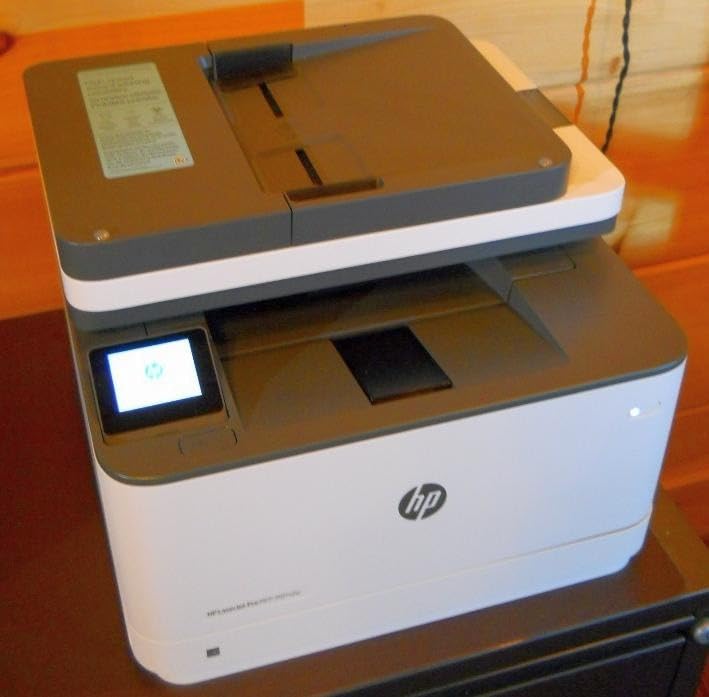
For a home office printing contracts, invoices, forms, and labels several times a week, this is the machine I would buy. It carries the highest average rating in the group, it does every job without a manual step, and it recovers from network interruptions on its own.
21 ppm monochrome laser
Scan and copy built in
11.9 lb compact body
Flatbed scanner, no ADF
At 11.9 pounds it is a compact body for a machine that prints, scans, and copies, and HP markets it for teams of one to three people, which is roughly a single freelancer or a couple working from home.
What you notice first is that it just works after setup. It connects on Wi-Fi, it prints from a laptop or a phone through AirPrint, and the HP Smart app handles scan-to-cloud. The output is plain, crisp black text at up to 21 pages per minute, with a first page out in about 8.3 seconds, which is fast enough that a stack of forms does not feel like a production job.
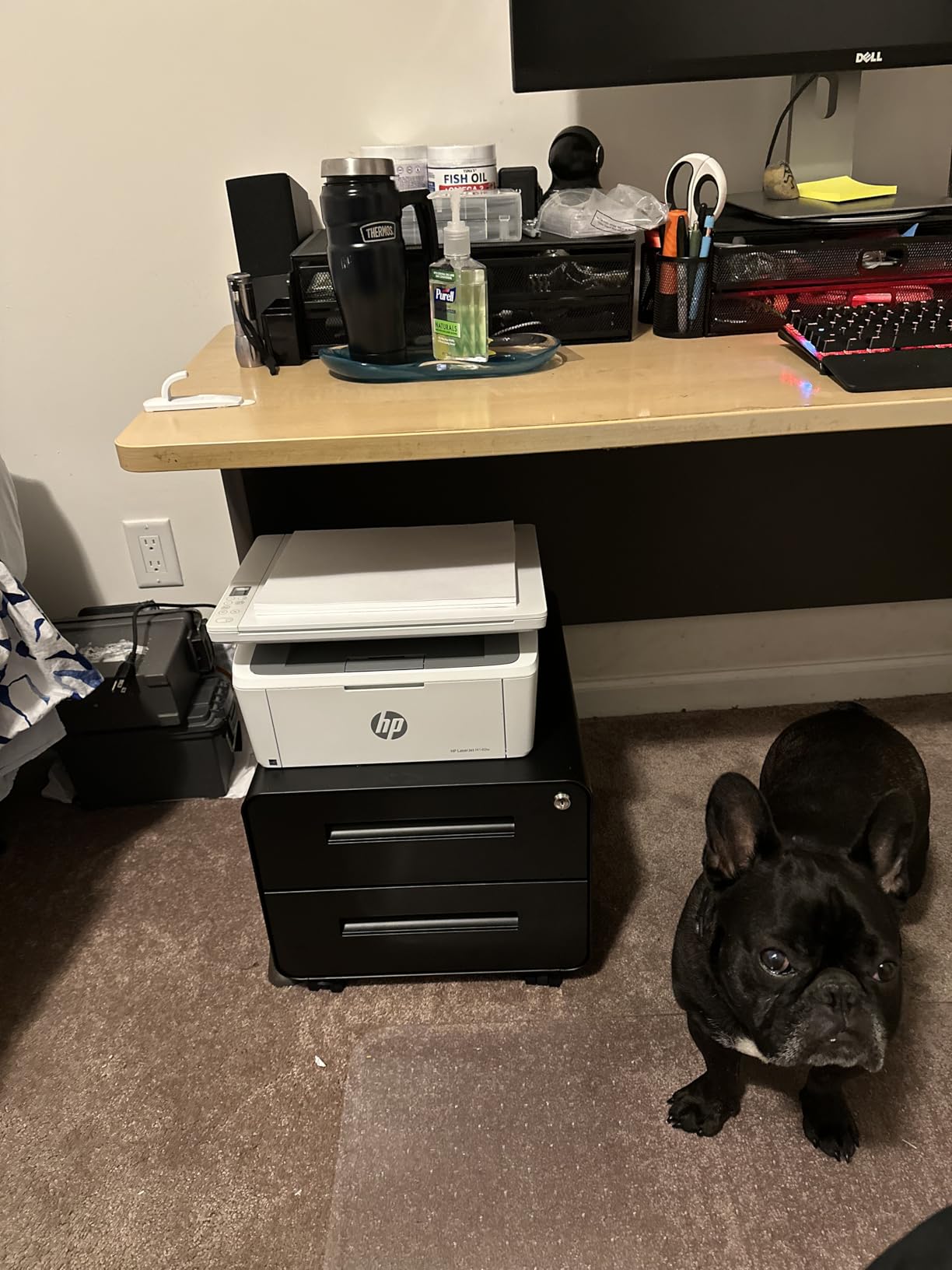
I also like that the scanner is a genuine flatbed rather than a claim of scanning that turns out to be a single sheet of plastic. It handles ID cards and other small documents copied onto one sheet, and the media range runs from 4.13 by 5.83 inches up to 8.5 by 14 legal.
With close to 1800 ratings averaging 4.0, this is the most examined printer in the list, and the pattern in those reviews is consistent rather than enthusiastic. Owners describe crisp text, a footprint that disappears into a corner, and wireless setup that takes minutes. Nobody describes it as fast, because 21 ppm is not fast compared with the 30 and 35 ppm machines further down.
The scale is what makes it work at home. HP lists it for small teams printing professional black and white documents, and that is exactly the right expectation. Set a realistic ceiling and it will never let you down.
There is no automatic duplex and no automatic document feeder. That means a two-sided contract prints one side, you flip the stack, and it prints the other. For a few pages a month that is a non-issue. For a 30-page proposal it is an irritation, and it is the single strongest reason to move up to the M234dw or the 3101sdw.
Scanning is also flatbed only, so a stack of receipts has to go on the glass one page at a time. If you file paperwork regularly rather than occasionally, that is the deciding factor.
HP states plainly that this printer works only with cartridges containing original HP chips or circuitry. That is not unusual in the range, but it is the reason we would not call this the cheapest printer to own, only the smallest useful one. The box includes a preinstalled HP Original introductory black toner cartridge, and the introductory yield is lower than the yield of a standard replacement.
Treat the introductory cartridge as setup material, not as a working cartridge, and size your expectations on the standard yield when you do the running-cost math. The warranty is a one-year limited hardware warranty, which is the same coverage most models here carry.
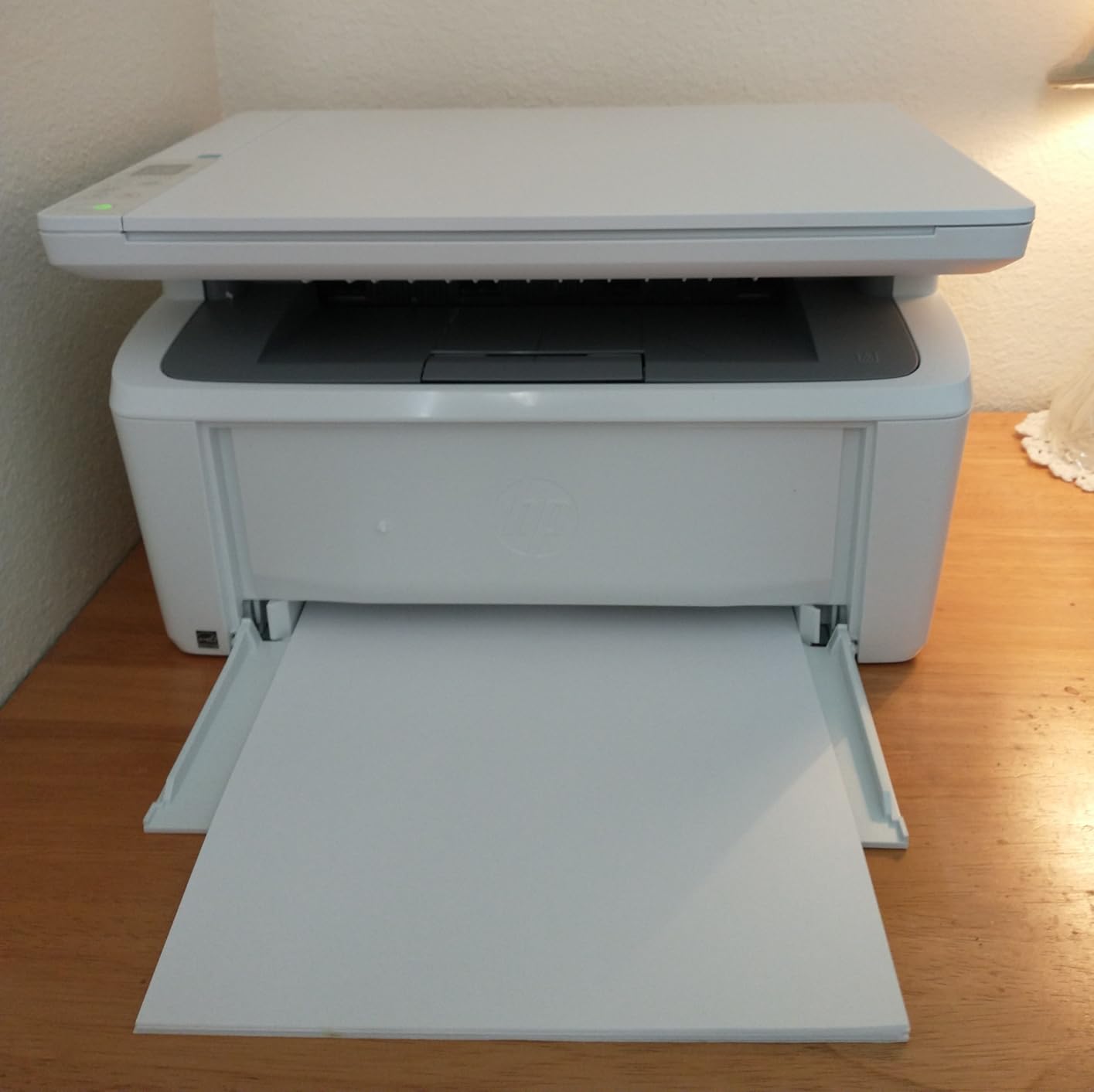
For anyone whose printing is intermittent and whose desk space is genuinely tight, this is the one I would buy. For anyone printing multipage documents regularly, the extra money for duplex buys back more time than it costs.
Automatic duplex laser
30 ppm black and white
19 ipm two-sided
Ethernet and dual-band Wi-Fi
The M234dw is the answer to the most common complaint about compact laser printers. It does two-sided printing by itself. For a home office that prints contracts, reports, and anything longer than a page, that one feature changes how the machine feels to own, because you stop reloading paper by hand after every document.
Speed is the other reason to like it. Thirty pages per minute single-sided and 19 images per minute two-sided puts it ahead of the M140w, and the output resolution of 600 by 600 dpi is clean for standard office text. The paper tray holds 150 sheets, which is a week or two of normal printing before you touch it.
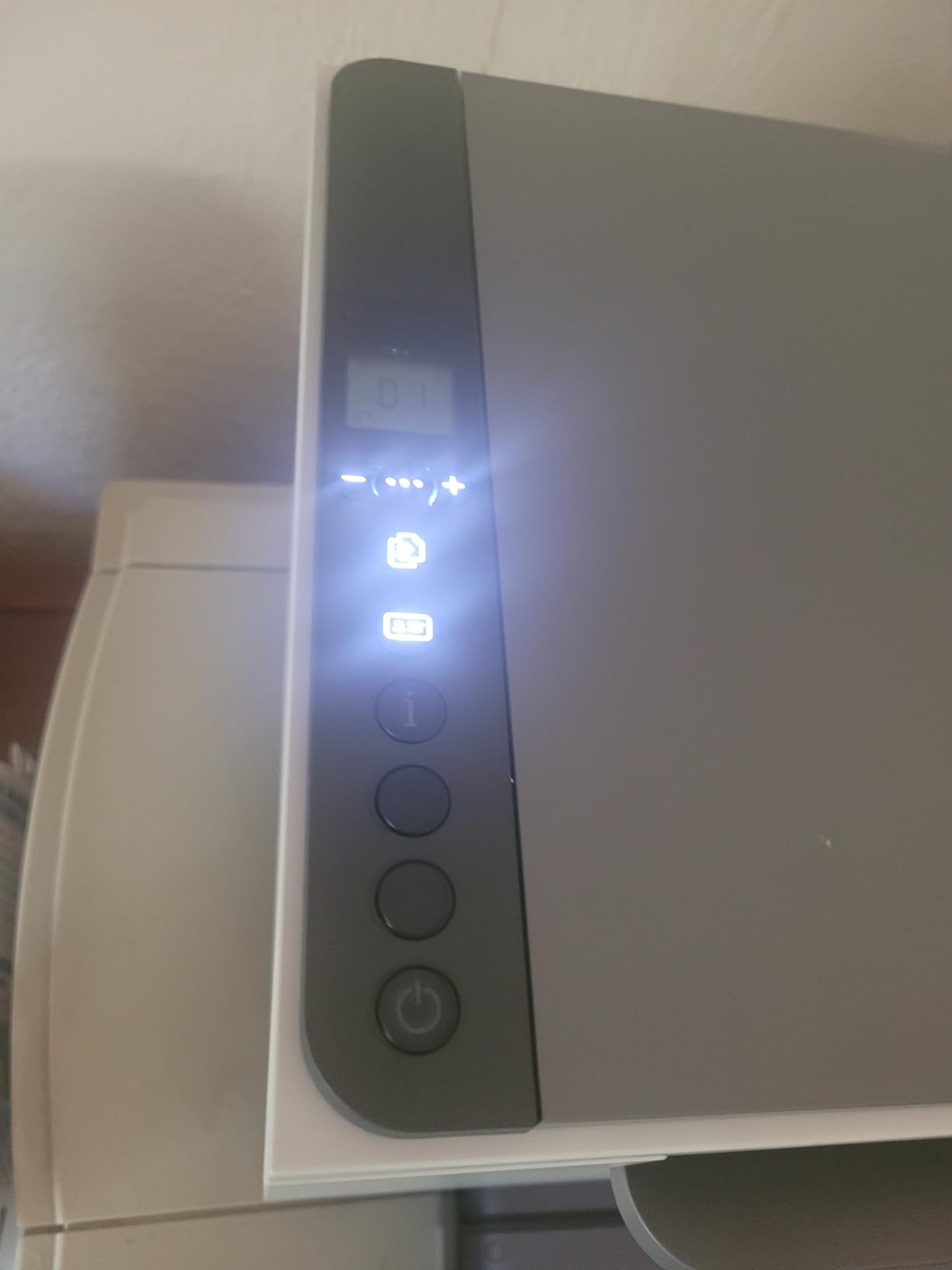
HP describes the wireless as dual-band with self-reset, meaning it selects a connection and can resolve some connectivity problems on its own. In practice this is the feature that matters most in a home, where printers tend to live in a spare room and routers tend to broadcast on both 2.4 and 5 GHz. It will still lose connection if you put it behind a wall with metal framing, but it behaves better than most office printers on a mixed home network.
Connectivity here covers AirPrint, Ethernet, Mopria, USB, Wi-Fi, and wireless direct printing. That range of options means the machine works even if the network is being uncooperative, because wireless direct does not need the router at all.
Scanning and copying are both there, on a flatbed, and both are quick. But there is no automatic document feeder, so multi-page scanning is one page at a time. Copy speed is listed at 30 pages per minute with a maximum of 100 copies per run, which is a limit worth knowing if you are duplicating a packet.
If you already have a scanner app on a phone and only need the occasional page, this is fine. If you file paper weekly, the 3101sdw at the top of the list is the better answer.
The box includes an HP black LaserJet toner cartridge rated at roughly 700 pages. That is a real yield figure to divide by, and it is the number to use when you compare running cost against the inkjets in this list. HP also ships built-in security features intended to protect the printer from attacks, which is unusual at this size.
One genuine friction point in the reviews is the HP Smart app, which requires an HP account for some functions. If you would rather not create one, note that before you buy. There is no printed operating manual in the box either, so budget a few minutes with the reference guide.
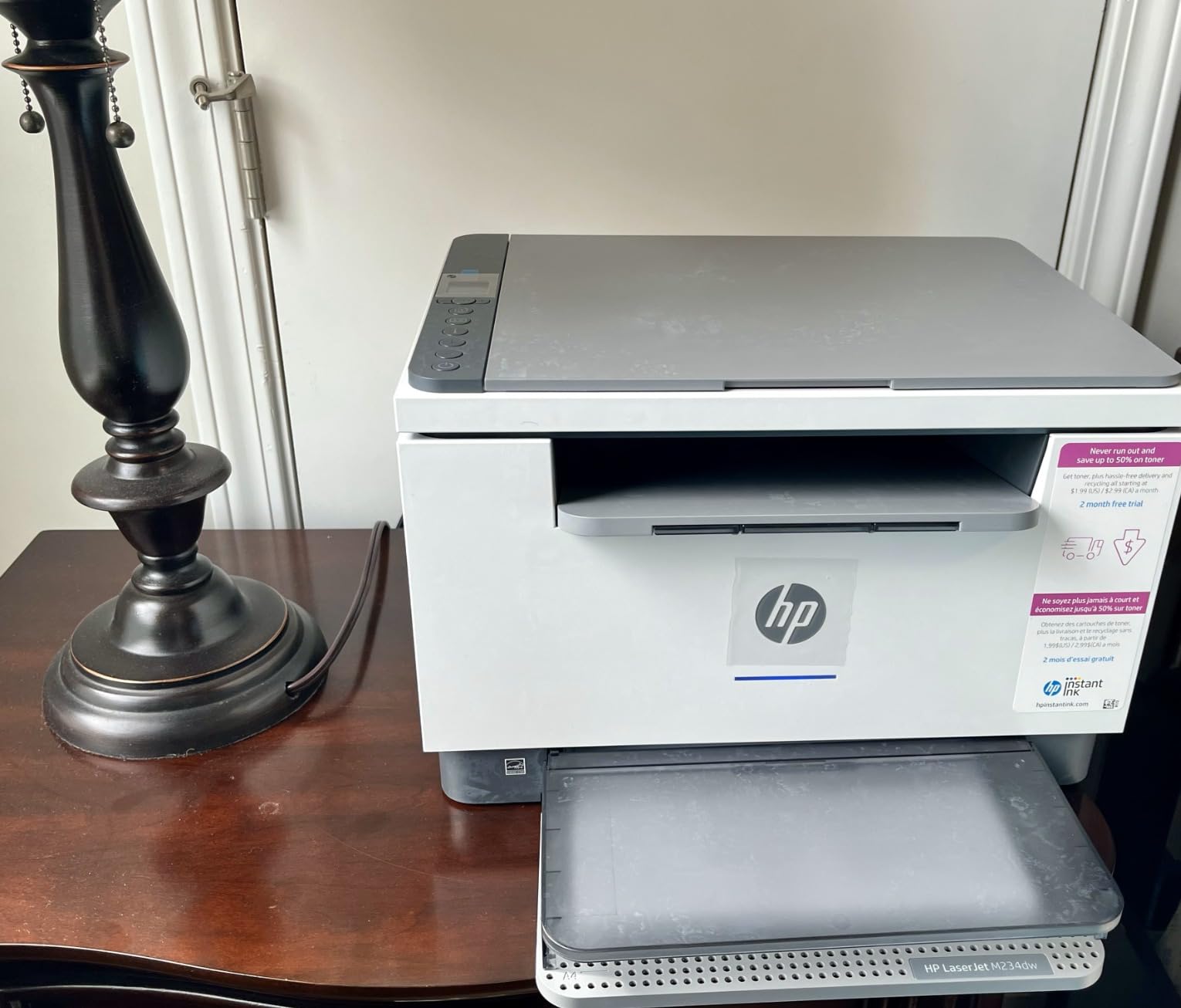
For a small team of one to five people who want duplex without the bulk of a larger machine, this is the pick. It is a step up from the M140w in speed and features and a step down from the 3101sdw in scanning convenience.
35 ppm monochrome laser
Automatic duplex
250 sheet paper tray
Print only, no scanner
The 3001dw makes a simple bet: if you print and never scan, you should not pay for a scanner. It is a print-only monochrome laser, and at 35 pages per minute it is among the fastest machines here that still fits under a normal home desk height. HP targets teams of up to seven people, which is generous for a home office but sensible if you occasionally produce a large batch of invoices or a full contract pack.
Automatic duplex is standard, and the 250-sheet tray means you can load a real stack and walk away. Output resolution is listed at 1200 by 1200 dpi, which matches the top resolution among the mono machines here, and the first page lands in about 6.6 seconds.
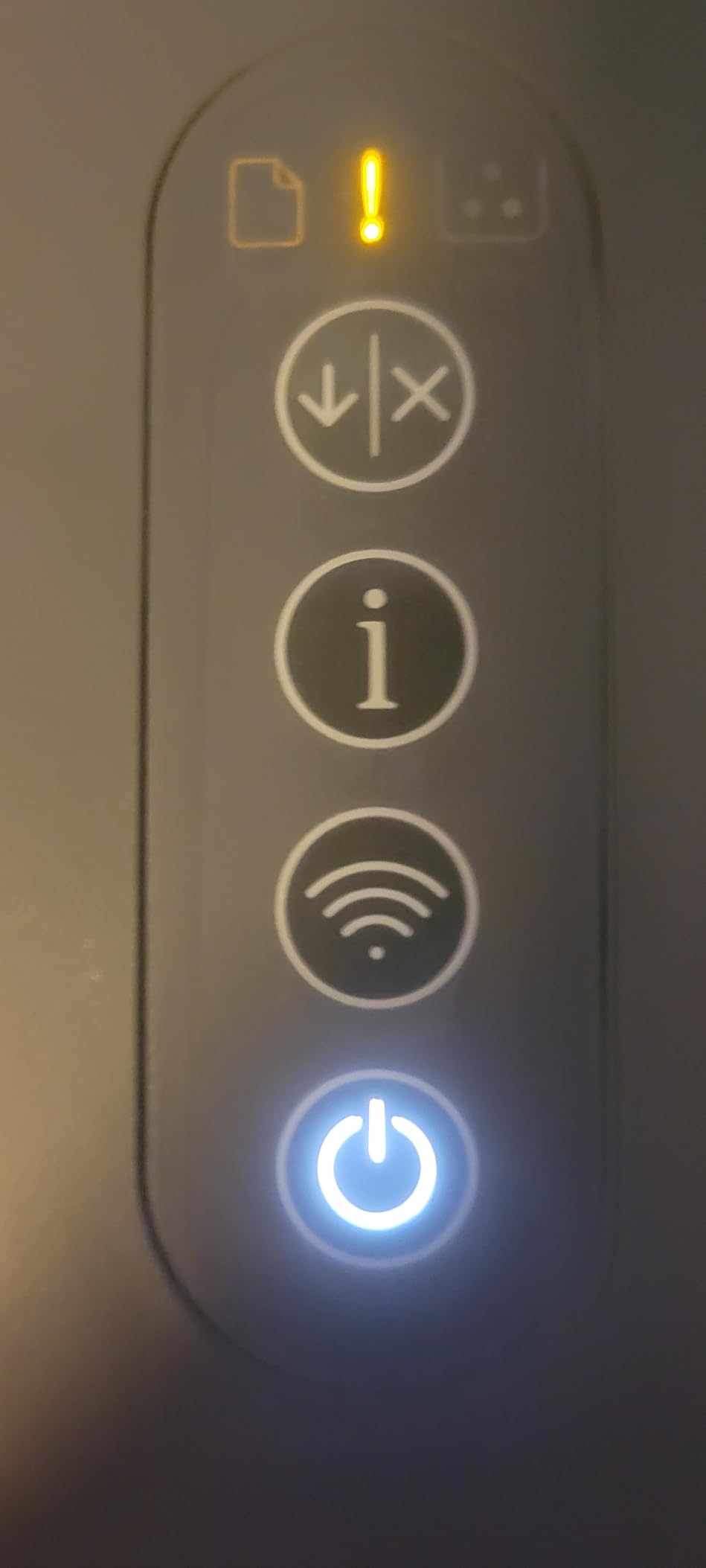
Speed and paper capacity are the entire story. Thirty-five pages per minute means a 100-page document takes roughly three minutes instead of five, and the 250-sheet tray is larger than the 99-sheet tray in the M140w and matches the 150-sheet tray in the M234dw with room to spare. If you print shipping labels in bulk or run monthly statements, that is the difference between a smooth job and a job interrupted by refills.
It also handles thicker paper, which owners mention for school projects and craft work. Maximum media size is 8.5 by 14 inches, so legal paperwork is covered.
This is the machine to think carefully about if your printer will sit far from the router. Owners report difficulty staying connected on mesh Wi-Fi systems, and signal strength degrades with distance and walls. HP calls it intelligent Wi-Fi that selects the best connection, which helps, but the reviews are clear that this is where frustration concentrates.
There is Ethernet and USB, so a wired connection solves the problem entirely if you can run a cable. A few owners also report that firmware updates have broken connectivity, which is an argument for keeping the printer on a wired connection if you are in a difficult spot.
There is no flatbed, no copier, no feeder. If your home office currently handles signing, filing, or sending documents by email, you will need a phone or a separate scanner. That is not a reason to avoid this machine, but it is a reason to be sure you do not need it.
The box includes a toner cartridge, a getting started guide, a power cord, and a warranty guide. HP intends this model to work only with cartridges containing original HP chips, so keep that in mind alongside the low per-page economics that make it attractive.
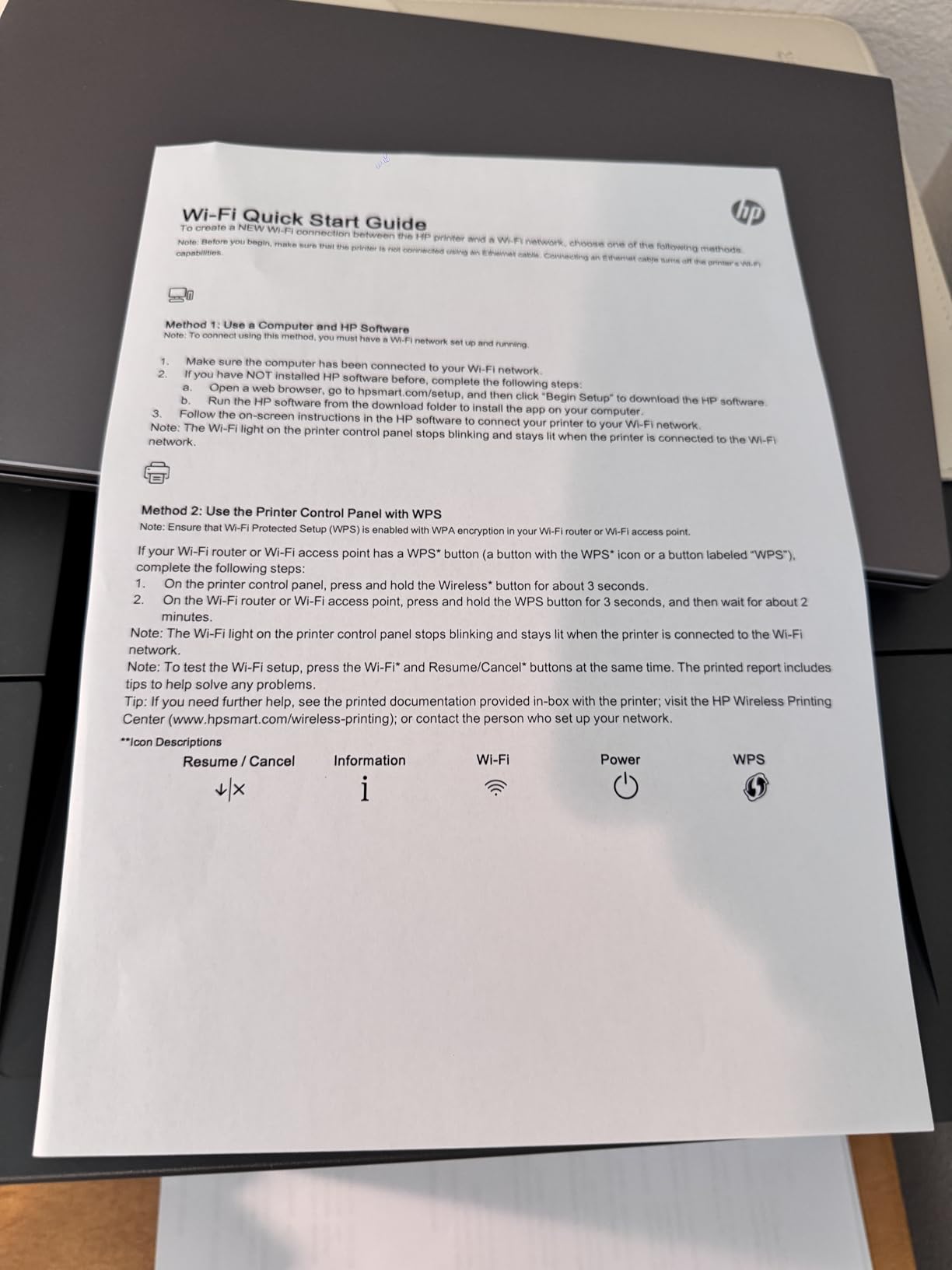
If you never scan, this is a strong document machine for the desk space and paper capacity it gives you. If you do scan, look at the 3101fdw or the 3101sdw instead.
Print scan copy and fax
35 ppm with auto duplex
Document feeder included
250 sheet tray
Fax is the feature that distinguishes this one, and it is not nostalgia. Plenty of home offices still deal with insurance claims, medical paperwork, school administration, or government forms that require a fax number. The 3101fdw handles that without a separate machine, which also means one less box on the shelf and one less supply line to manage.
Underneath the fax it is a serious monochrome machine. Thirty-five pages per minute with automatic duplex, a 250-sheet tray, and a copy speed of 35 pages per minute with runs of up to 5000 copies. The document feeder handles multi-page stacks hands-free, which is the feature that separates this from the flatbed-only models.
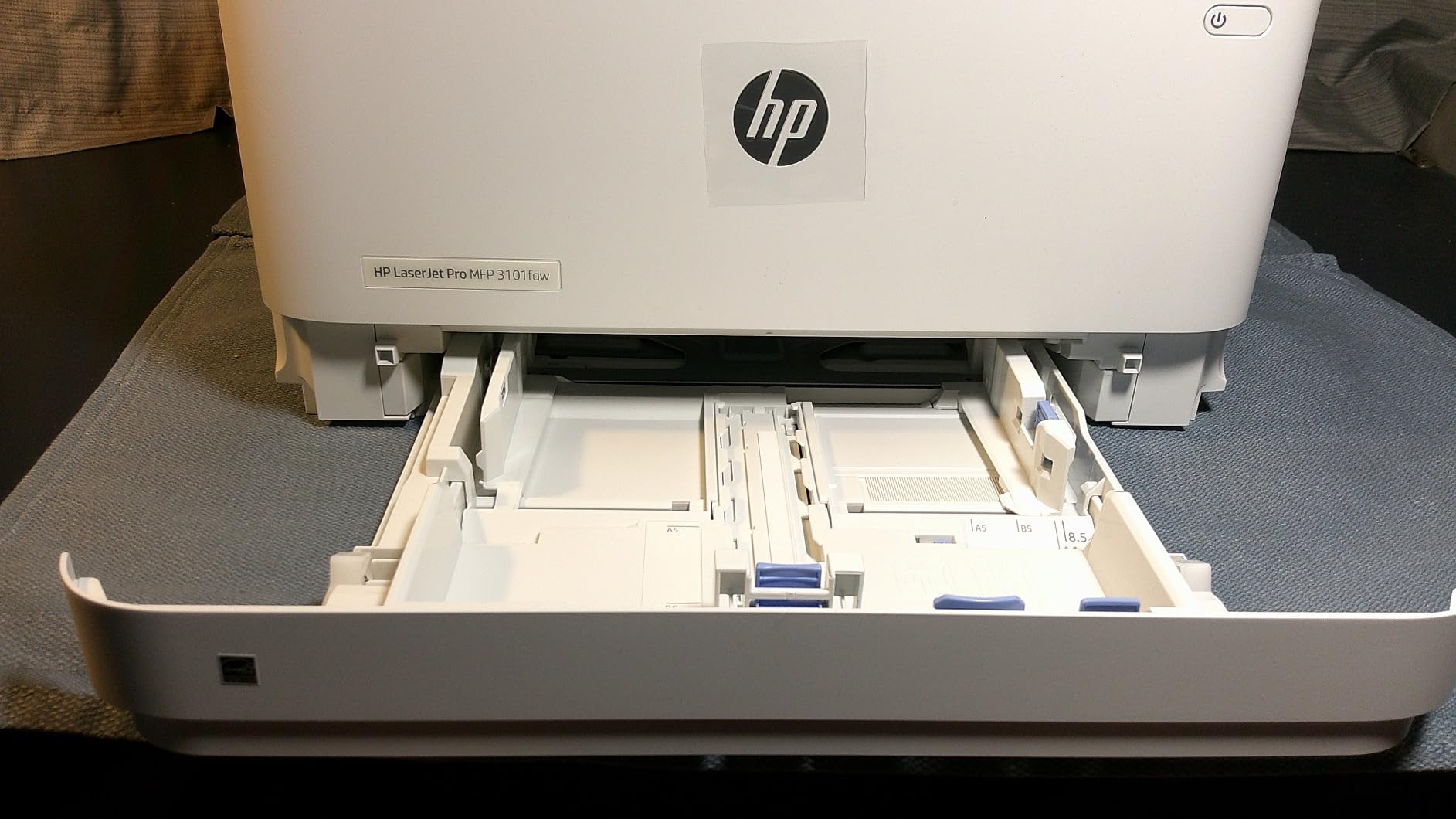
Most people in a home office scan receipts, signed forms, and pages from a book. A feeder turns that from a one-page-at-a-time chore into a stack operation. The catch is that the feeder here is single-sided, so for a two-sided document you scan one side, flip the stack, and scan again. It is still dramatically faster than the glass.
Display is a simple LCD with touch control, which is enough to set copy counts and start jobs without reaching for a phone.
At 10.5 kilograms and 16.5 by 12.3 by 15.7 inches, this is one of the larger machines here. It is built for office settings, small team collaboration, and remote work, and it assumes a dedicated spot rather than a bookshelf. Plan where it goes before you buy, because a machine you have to move every time you use it is one you will avoid using.
Paper sizes run from 3.54 by 5.12 inches up to 8.5 by 14, and media include glossy photo paper and glossy film as well as plain paper and labels. Maximum media size is listed as letter in one field and 8.5 by 14 in another, so check the manual for the exact tray limits if you rely on legal paper.
Owners frequently mention that network scanning configuration is awkward, and a few report occasional fuzzy or uneven output. Both are worth preparing for: have the router password ready during setup, and if scans come out inconsistent, clean the glass before blaming the machine.
Setup itself is generally praised, with many buyers reporting that non-technical partners managed it quickly. HP Wolf Pro Security with customizable settings is included, along with Wi-Fi, Bluetooth, Ethernet, and USB.
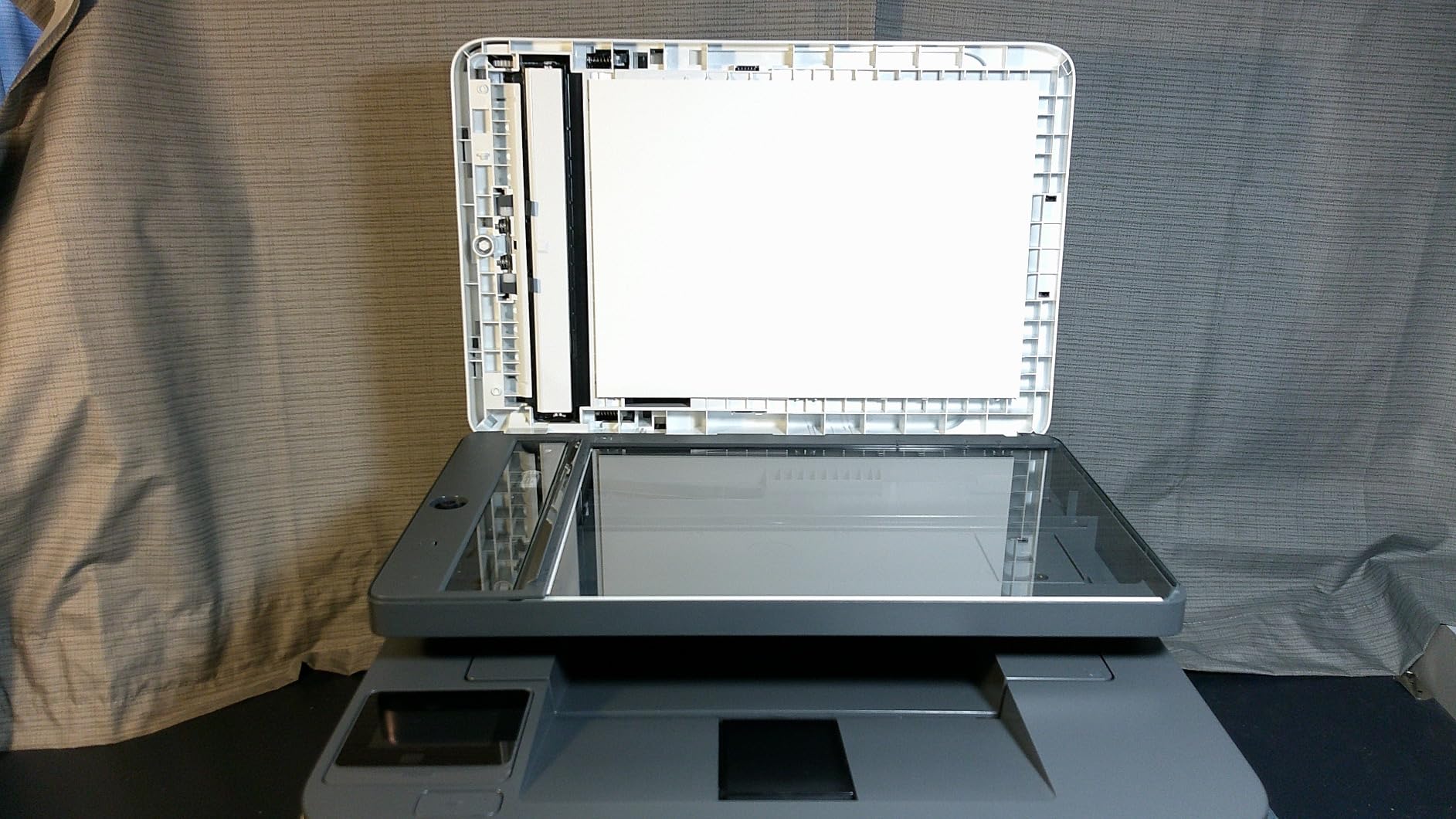
Choose this if fax or high-volume copying is part of your week. For plain printing and scanning, the 3101sdw at the top of this list does the same job without the fax board and carries a higher rating among owners.
Automatic duplex laser
30 ppm black and white
Feed scanner, no flatbed
7 second first page
The M235sdw is the newer generation in HP’s compact multifunction laser line, positioned for offices of one to five people. Its defining feature is that the scanner is an automatic document feeder rather than a flatbed, in a body smaller than most machines that have a feeder. That combination is rare and genuinely useful in a home.
It prints up to 30 pages per minute with automatic two-sided output, and HP describes the two-sided speed as the fastest in its class. First page out is about 7 seconds. The input tray holds 150 sheets with a 150-sheet output capacity, and the tray handles plain paper up to 8.5 by 14 inches.
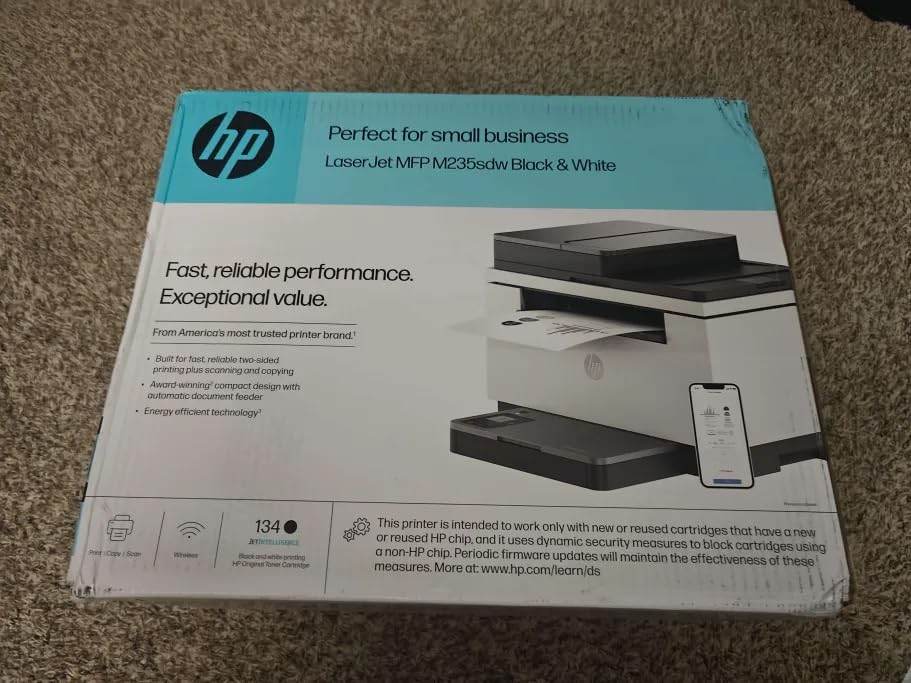
At 21 pounds and 12.13 by 16.46 by 11.59 inches, it takes up noticeably less floor space than the 3101fdw while still feeding paper automatically. HP specifies copy and scan through the feeder as single-sided only, up to 14 pages per minute for copies and 99 copies per run. For receipts and forms, that is a workable speed.
Because the scanner is a feeder rather than a flatbed, this is a feed scanner only in practice. If you need to scan a passport page, a photograph, or anything that must sit flat, this machine cannot do it, and that is a real limitation to weigh before buying.
HP lists scan to email and scan to PDF among the special features, alongside two-sided printing and a mercury-free design. For a home office that sends signed paperwork to a client or files a record, sending a PDF straight from the machine is faster than finding a file, attaching it, and writing the message. Maximum paper size here is 8.5 by 11.7 inches.
Out of about 260 ratings at 4.1 stars, the recurring gripes are software-related rather than hardware ones: the HP Smart app and network scanning setup are fiddly, and some buyers were surprised by how costly and hard-to-find the replacement toner is. That software friction, combined with the thinnest review pool in the roundup, is why this is not my first choice despite a good specification sheet.
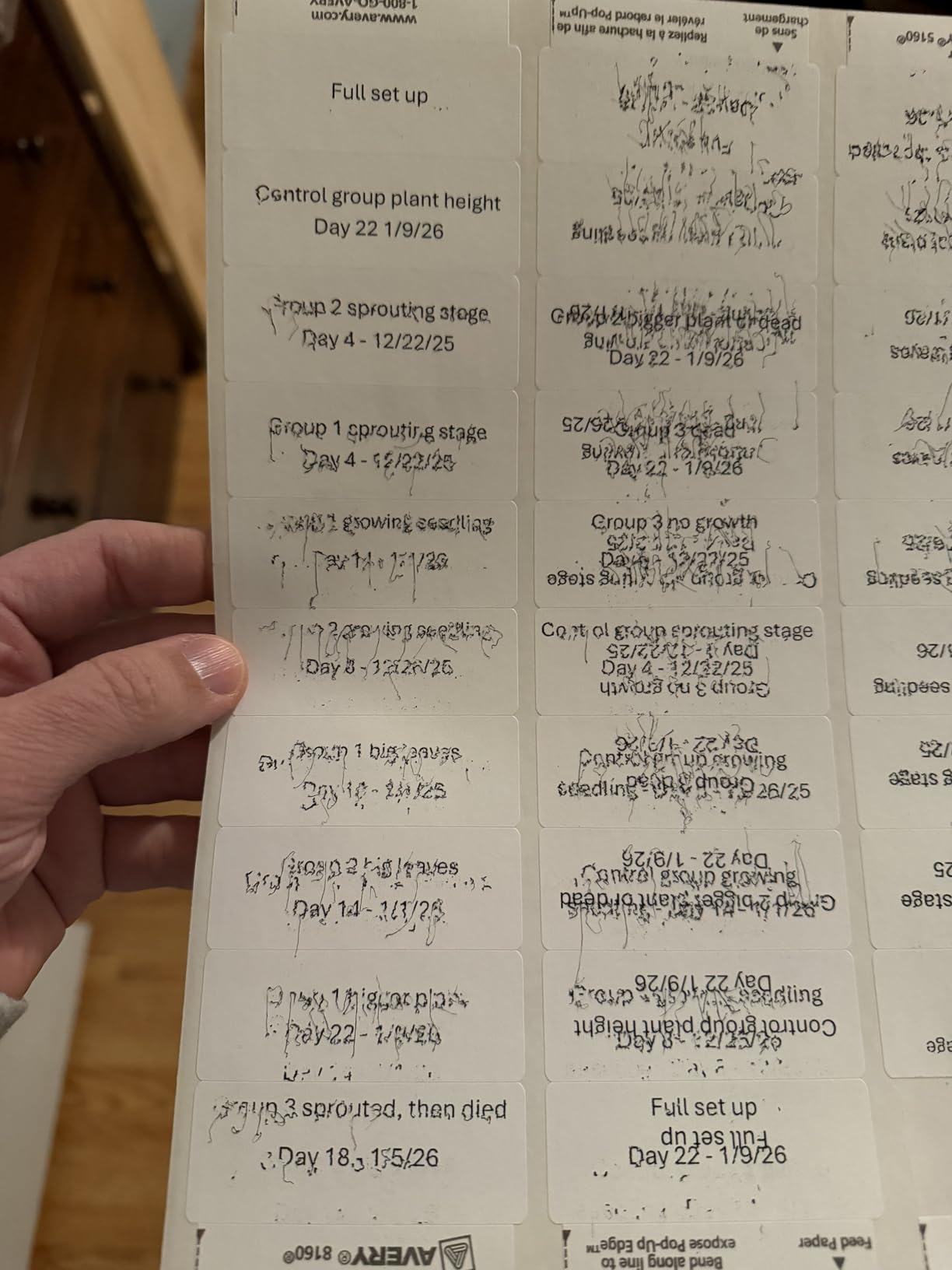
Pick this if you want a feeder, duplex, and scan-to-email in the smallest package in the roundup. Skip it if you need to scan anything that must sit flat on a glass bed.
Fast monochrome laser
350 sheet paper tray
Ethernet and USB
Print only, manual duplex
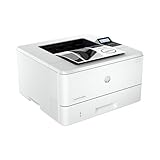
Out of roughly 440 reviews at 4.4 stars, the second-highest average in this group, the pattern is consistent: it does a narrow job extremely well. It is a print-only monochrome laser built for small teams of up to ten users, and it runs black-and-white pages faster than any other machine here.
Speed is rated for a class up to 63 pages per minute, with copy speeds referenced at 42 pages per minute and a first page in about 6.1 seconds. HP says the 350-sheet tray has the highest capacity of the mono machines here, and it accepts media from 5 by 14 inches up to 8.5 by 14.
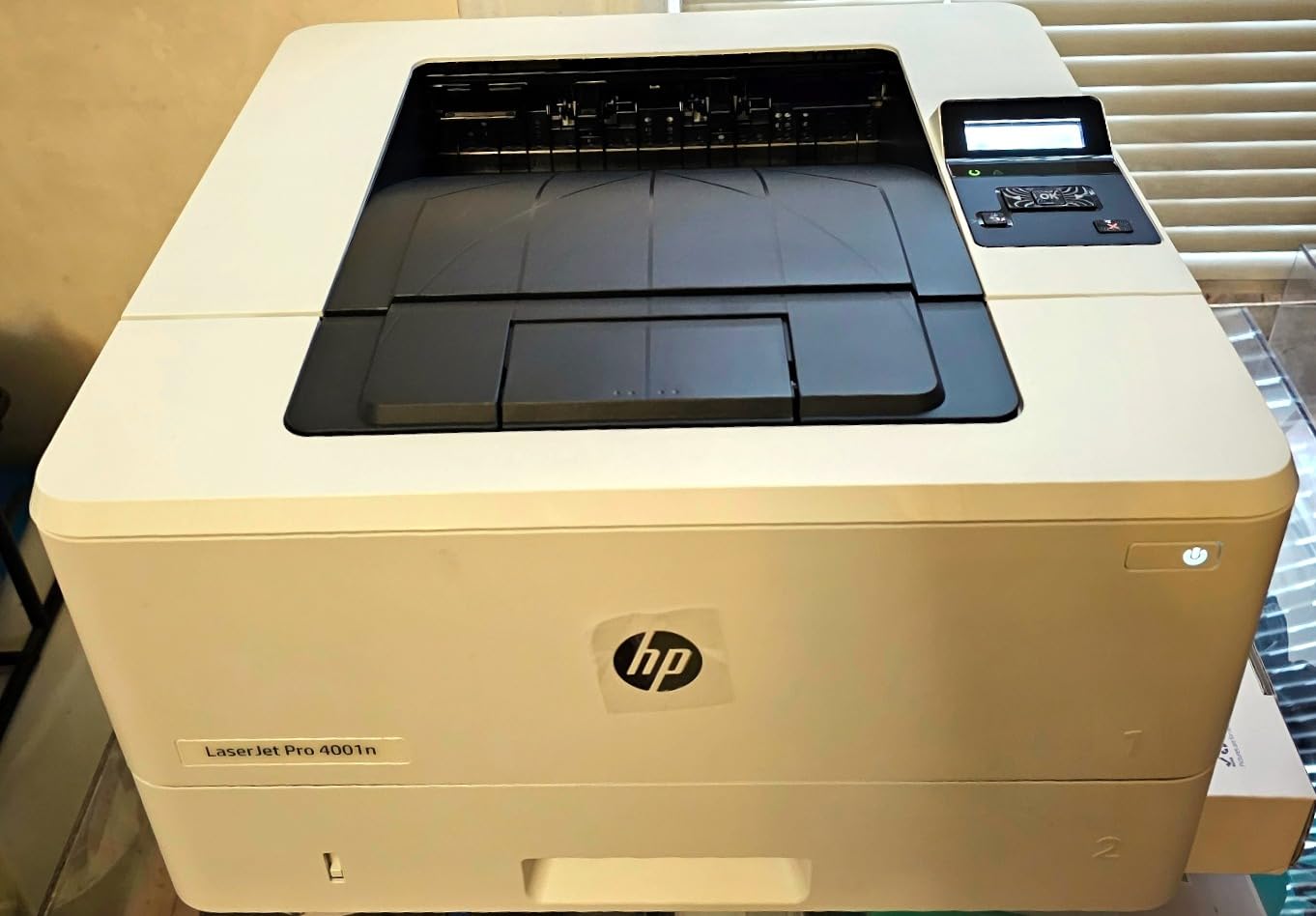
This is the one machine in the roundup with no built-in Wi-Fi. It connects over Ethernet and USB, and HP is explicit that the 4001dw is the wireless sibling. If your home network is entirely wireless, this model needs a cable run or an adapter, and that is a real barrier for a lot of home offices.
For a wired setup, though, a wired laser is the more reliable choice. There is no DHCP negotiation, no band selection, and no reconnection after a power outage. It also ships with HP Wolf Pro Security with customizable settings.
HP lists compatible cartridges for this unit at roughly 2,900 pages for the 148A standard toner, roughly 9,500 pages for the 148X high-yield version, and around 10,000 pages for a 10,000-page high-yield cartridge. Those yields are the number to divide by when you compare against the inkjets here.
The cartridge is also chip-locked: HP states the printer is intended to work only with cartridges containing original HP chips or circuitry. Plan on genuine supplies, and do the running-cost math with the standard and high-yield yields rather than with the introductory cartridge in the box.
Duplex is manual, so two-sided documents need a paper flip, and there is no scanner or copier at all. For a home office that only prints, those are acceptable. For one that files paper, they are not.
Two smaller notes: the web interface requires a PIN to sign in, and the unit powers down fully when idle, so you switch it back on rather than finding a sleep button. Owners also praise the quiet operation, which matters if the machine lives in a room you work in.
This is the fastest machine here, and for a wired home office that only prints, it is very hard to argue with. For a typical wireless home, the LaserJet Pro 4001dw variant is the one to look at instead.
Color inkjet all-in-one
Automatic duplex
2.4 inch color touchscreen
100 sheet tray
The Envy 6155 exists for a specific situation: you need color, you need two-sided printing, and you do not want to spend much to get them. At 11.2 pounds it is a light machine, and unlike most entry-level inkjets it includes automatic duplex and a color touchscreen, which are two features people assume require spending far more. The 415 reviews averaging 4.2 come from written reviews rather than owner photos, so judge the build from the specification rather than from a gallery.
Output is 10 pages per minute black and 7 pages per minute color, up to 4800 by 1200 dpi optimized, and it does borderless photo printing on top of everyday documents. The chassis is made with at least 60 percent recycled plastic, and HP includes a three-month Instant Ink trial on this model.
Most budget inkjets force you to flip the paper by hand. This one does not, and for homework, worksheets, and two-sided handouts that is the difference between a machine you use and one you avoid. The 2.4-inch color touchscreen handles setup and job selection without an app, and HP P3 color technology is there for screen-matched output.
The dual-band Wi-Fi that detects and resolves connection issues is a genuine plus in a home, and HP AI print formatting trims web pages and email down to what you actually want on paper.
The box includes HP 68 setup cartridges rated at roughly 120 pages of black and 75 pages of tri-color. Those are setup yields, not working yields, and HP 68 cartridges are among the most expensive per page in this roundup. Owners report them drying out when the printer sits unused, which is the classic inkjet failure that pushes people toward laser in the first place.
There is no automatic document feeder, and the 100-sheet input tray is among the smallest here. If you only print a handful of pages a month, the cartridges will often sit in the machine long enough to cause exactly the problem inkjets are known for.
HP describes a three-month Instant Ink trial, after which a monthly fee can apply. The cartridge is also chip-locked and accepts only cartridges with original HP chips or circuitry. If you do not want a subscription and you do not want to gamble on cartridges going stale, this is not the machine for you, and we would rather say so than let you find out later.
Paper sizes run from letter and legal to 4 by 6 and 5 by 7, and media include envelopes, labels, and transparencies. The warranty is a one-year limited hardware warranty.
Choose the Envy 6155 for color, duplex, and a low purchase price. If your color printing is more than occasional, the Smart Tank 5003 is the better long-term move, because a refill bottle costs far less per page over its life than a cartridge.
Cartridge-free ink tank
About 6000 pages of ink included
10 ppm black and 5 ppm color
Flatbed scan and copy
When you print color regularly, a cartridge inkjet on refill economics loses out quickly, and the Smart Tank 5003 is built for exactly that case. There are no cartridges to replace. The printer arrives with up to three years of HP ink, roughly 6,000 pages in the box, and when it runs dry you pour in a bottle rather than swapping a sealed plastic brick.
The tank itself holds an HP 32XL black bottle of 135 milliliters and HP 31 color bottles of 50 milliliters each. Owners consistently describe the refill system as clean and simple, which answers the most common question about ink tank printers, and the printhead is a separate included component rather than being part of the tank.
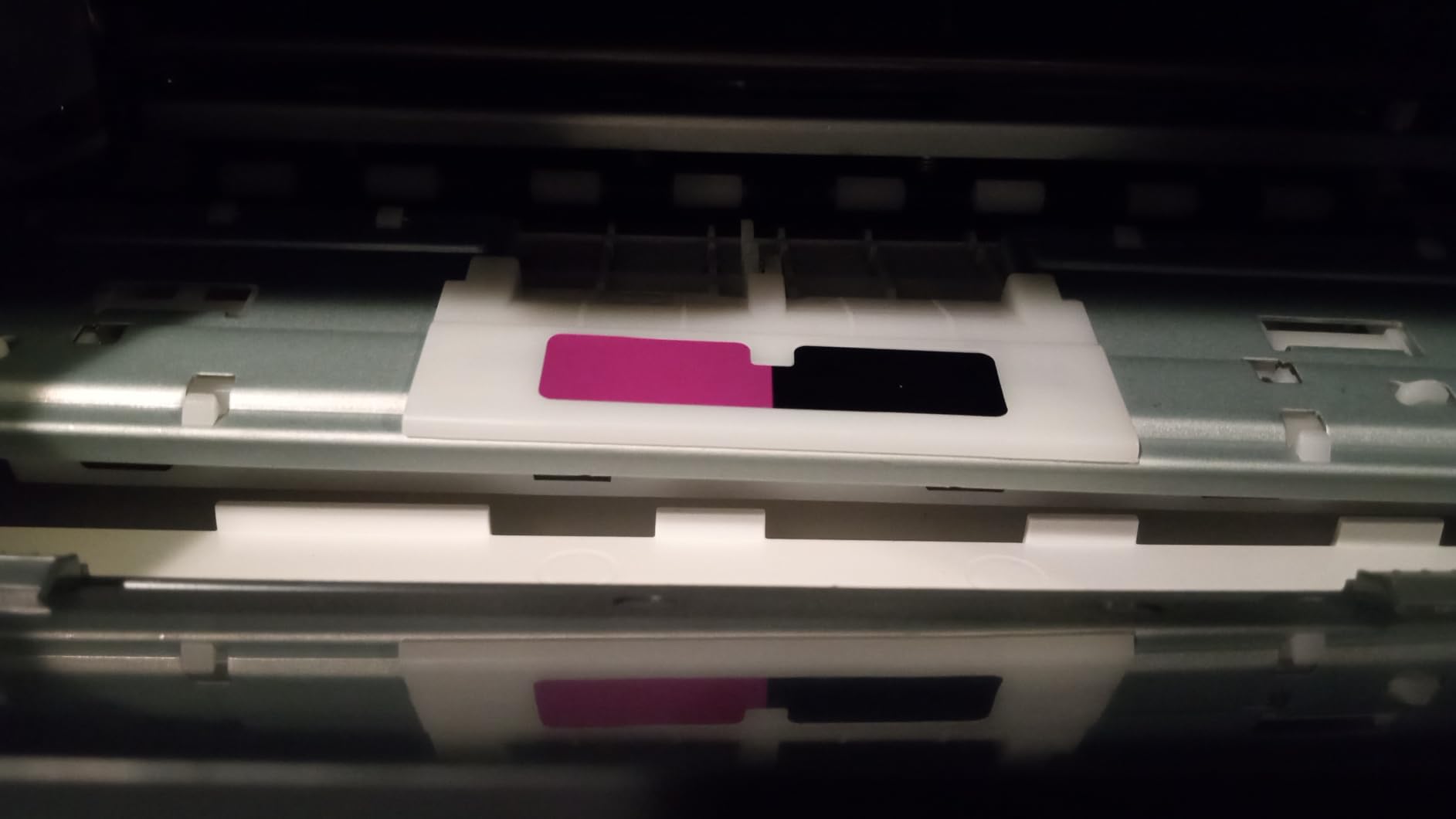
Divide the cost of a refill bottle by its page yield and compare that figure with the cartridge yield math from the Envy models, and the crossover is not close. That is the reasoning behind every recommendation of a tank printer, and it holds up for anyone printing color weekly or more.
It also holds for black-and-white printing, where liquid ink on a tank still costs more per page than toner on a laser but far less than ink on a cartridge machine. If your volume is genuinely high and mostly monochrome, read the step on volume in the buying guide below before settling on a tank, because a laser will still win on both speed and cost.
Ten pages per minute in black and 5 in color is slow next to any laser here, and first page takes about 21 seconds. Duplex is manual only, with driver support provided, meaning you load the second side yourself. The flatbed scanner has no document feeder, and the input tray holds 100 sheets.
Media support is decent: plain paper, envelopes, and glossy photo paper, at up to 1200 by 1200 rendered dpi in black and 4800 by 1200 optimized in color, with borderless printing. Maximum media size is legal at 8.5 by 14.
The warranty runs one year or 30,000 pages, whichever comes first, and this is the only warranty in the group that states a page allowance.
There are three real drawbacks, and none of them are hidden. First, an inkjet still needs to be used regularly, and a tank sitting unused for months can still develop problems. Second, pouring ink is a task you can spill if you rush it, even with the plug-in bottles. Third, on TechPowerUp forum threads users make no secret of their doubts about the longevity of budget tank inkjets, preferring a straightforward toner swap.
Those are legitimate arguments. The counter is simple: a tank that you keep in use prints color far more cheaply than a cartridge inkjet, and a laser that you use intermittently never needs a nozzle cleaned. Choose based on how often you actually print, not on which technology is newer.
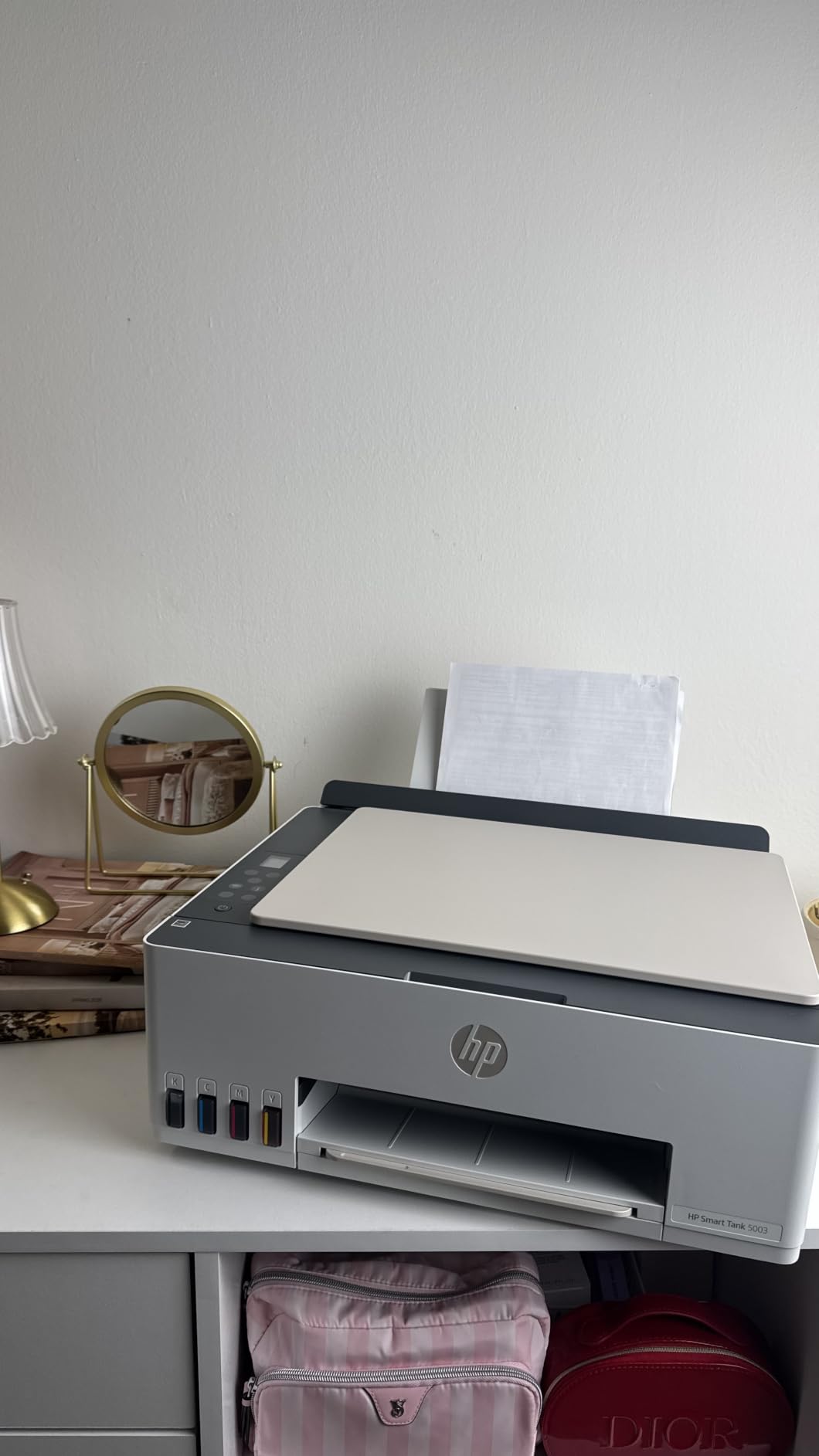
The 5003 is the right pick if you print color every week and want to stop thinking about ink. The right caveat is that its 226 reviews are a smaller evidence base than the machines near the top, and it prints at inkjet speed rather than laser speed.
Color inkjet with photo tray
35 sheet document feeder
Automatic duplex
2.7 inch touchscreen
The 7975 is the machine in this roundup that treats color as the main event rather than an occasional extra. It carries a dedicated photo tray, photo-enhanced ink, borderless photo printing, and output up to 4800 by 1200 optimized dpi in color. It is the pick for anyone printing scrapbook pages, listing images, marketing materials, or anything where the color has to look right.
What surprised me is that it is also a competent office machine. It has automatic duplex and a 35-sheet automatic document feeder, which the cheaper Envy models do not, and a 2.7-inch color touchscreen for driving it. It handles print, copy, scan, and duplex in one chassis with two paper trays.
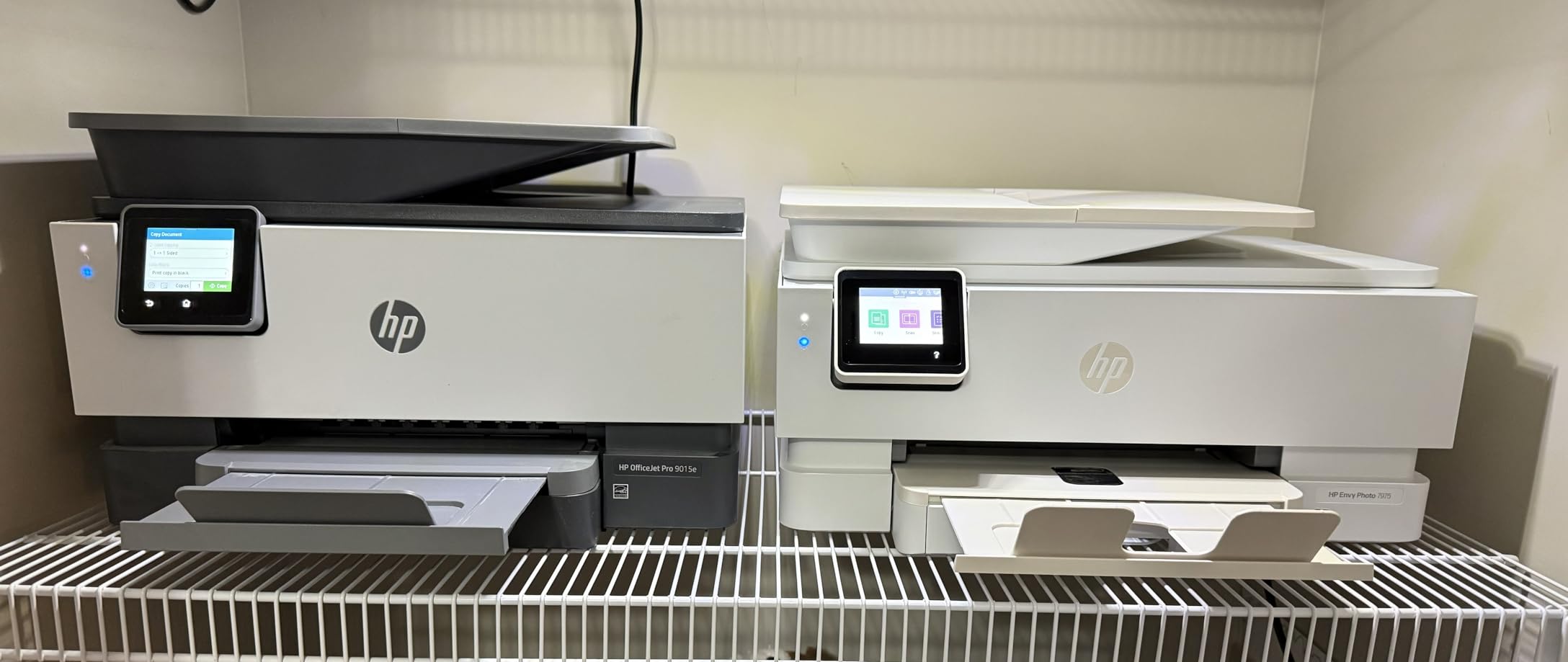
The second tray means you can keep plain office paper loaded in one and photo paper in the other without swapping media every time you change jobs. The document feeder takes 35 sheets, so scanning a signed packet is a single operation rather than a stack of individual glass scans.
Print speed is 15 pages per minute in black and 13 pages per minute for copying, with a first page time of about 22 seconds. Maximum media size is 8.5 by 11.7 inches and the two trays total 125 sheets, which is on the small side for long document runs.
At 17.9 pounds and 15.08 by 18.11 by 9.17 inches, this is the widest machine in the roundup, and the heaviest is the LaserJet Pro MFP 3101sdw at 23.1 pounds. Either way, the 7975 needs a real shelf rather than a printer shelf. That is the price of a wide color-capable chassis with two trays, and it is worth planning around before the box arrives.
HP AI print formatting is included and cleans up web pages and email before printing, which saves more time than it sounds like when you are printing a recipe or a newsletter from the browser.
Supplies are HP 64 black and tri-color cartridges with 64XL high-capacity versions. Owners describe the per-page cost as expensive, and that is the honest assessment for a cartridge inkjet. The three-month Instant Ink trial converts to a monthly subscription unless you cancel it, so set a reminder if you do not intend to keep it.
Print media support is genuinely broad, including envelopes, glossy photo paper, high-resolution paper, and labels, and power draw is a modest 14 watts. The warranty is a one-year limited warranty. If color volume is the deciding factor, compare this against the Smart Tank 5003 before you commit.
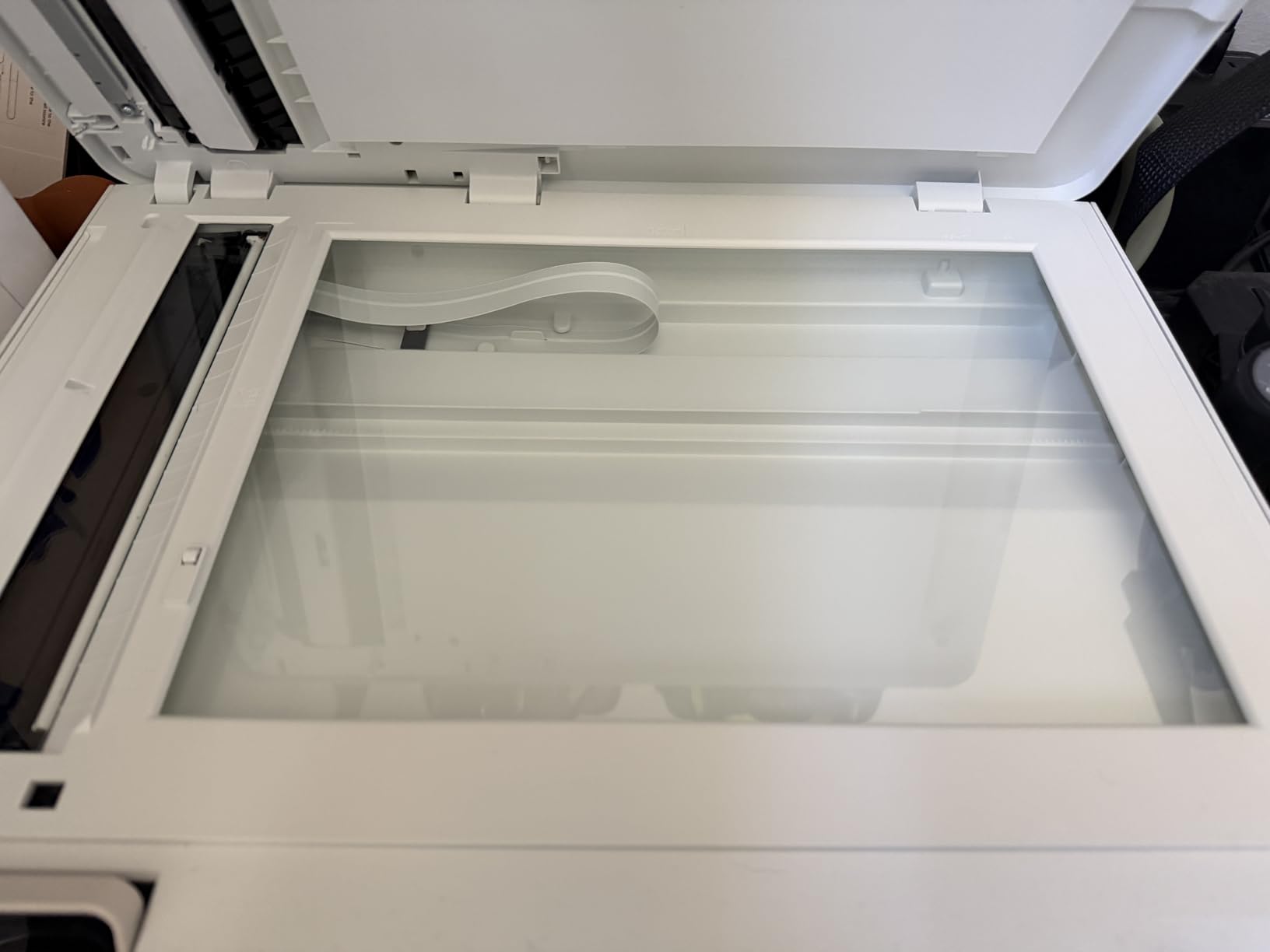
The 7975 is for a home office that is also a creative studio. For documents alone it is heavy and slow, and the cartridge economics will be the thing that decides it for you.
Most buying mistakes come from answering the wrong question first. People shop by price or by feature list when the decision actually turns on three numbers: how many pages you print in a typical month, how many of those are color, and how long the machine sits unused between jobs. Work through those and the rest of the specification sheet mostly takes care of itself.
Count pages, not documents. Ten invoices at three pages each is 30 pages, and a monthly bookkeeping export can be 200 pages on its own. Then separate black from color, because the two are priced and engineered completely differently.
On r/printers, the pattern users follow is to state a monthly page range before they state a preference, which is the right instinct. A thread recommending an HP LaserJet Pro MFP M479fdn framed it as 400 to 4000 monthly pages, and that framing is the useful part. The reason is that manufacturers publish two different numbers and they are not interchangeable. The duty cycle is the absolute ceiling a machine can hit in a month under ideal conditions. The recommended monthly page volume is the number at which the machine is designed to run without straining. Size against the second number.
Under about 100 pages a month, you are in intermittent-use territory and a laser is the right answer, because toner does not dry out. Between 100 and 400 pages, both technologies work and duplex starts to matter more than speed. Above 400 pages a month, running cost dominates everything and a tank or a laser beats any cartridge inkjet.
Color printing is the most expensive thing a home office printer does, and most offices over-estimate how often they need it. Contracts, invoices, tax forms, shipping labels, and internal documents are all black and white. If your color output is a handful of pages a month, a monochrome laser is the cheaper machine to live with in every sense, including reliability.
If you genuinely print color weekly, the choice moves to cost per page. There is a simple formula: divide the cost of a replacement supply by its page yield. Use the standard replacement yield, not the starter cartridge yield that ships in the box, because they are frequently different numbers and the starter figure makes cartridges look better than they are. HP’s Smart Tank 5003, for instance, arrives with roughly 6,000 pages of ink in the box, which changes the calculation before you buy a single refill.
A related formula worth keeping: divide your purchase cost by the difference between the cost of supplies over a year and nothing. If a machine’s annual supply cost is less than its purchase price, you are under one year from a point where running costs exceed what you paid. That is the moment a tank or a laser becomes obviously correct.
Automatic duplex prints both sides without manual flipping, and it is the feature that most changes day-to-day experience. Every machine that has it in this roundup is a better home office partner than an otherwise similar machine without it. Three of the ten picks here have manual or no duplex, which is worth knowing before you fall for a lower number.
This is the single clearest upgrade path in the whole category. If you are choosing between two printers of otherwise equal capability, take the one with automatic duplex and give up a little speed for it.
An automatic document feeder scans or copies multi-page stacks hands-free. A flatbed requires one page at a time on the glass. That difference is invisible until you have filed three months of receipts, at which point it becomes the reason you stop scanning entirely.
Buy a feeder if you scan or copy weekly. Skip it if scanning is a once-a-month event, because a flatbed handles that fine and you will never think about the difference. Note that some machines with feeders, including the M235sdw, scan through the feeder only and cannot handle anything that must sit flat.
Letter is 8.5 by 11 inches and legal is 8.5 by 14. If you handle legal paperwork, filters the choice, because a machine rated only for letter will not take it. Wide format at 11 by 17 exists in HP’s lineup for resellers and crafters, and no machine in this roundup reaches it.
Tray capacity matters more than people expect. A 100-sheet tray is a refill every week for a moderately busy office; 250 sheets is a refill a month. Two separate trays, as on the Envy Photo 7975, are worth a lot if you switch between office paper and photo paper daily.
Home wireless is not office wireless. Printers usually sit in a room the router is not in, and mesh systems can behave differently from single routers. Models with dual-band Wi-Fi and self-reset connectivity, which the M234dw, the Envy 6155, and the 3101sdw all have, handle this better than the rest.
Two practical rules. If a machine has Ethernet, use it and remove the problem entirely. And if you cannot run a cable, place the printer where a phone holds a strong signal rather than in the most convenient corner of the house. Before you buy, check the specific model against your router, because several owners of the 3001dw report trouble with mesh networks specifically.
This step prevents the most common long-term regret. Older LaserJet Pro and DeskJet models still appear in roundups and listings, and buying a discontinued printer means buying supplies that are increasingly hard to source and a warranty that is increasingly hard to claim. Every model in this roundup is current-generation for 2026.
Model numbers also vary by region, and the same family can carry a different suffix in different countries. Confirm the exact model number, not just the family name, before you buy, and confirm the supply part numbers for that model while you are still deciding.
No HP home office purchase is complete without understanding this, and it is the topic most roundups skip. Three things affect what you pay after you buy, and all three are on the machine, not on your account.
The first is chip-locked supplies. Every printer in this roundup states that it works only with cartridges or toner containing original HP chips or circuitry. HP calls this Dynamic Ink Security. In practice it means non-HP supplies may be refused, and on some models a cartridge that has been paired to a different printer will not work until it is paired again. The practical workaround owners describe is storing cartridges sealed so they retain their pairing.
The second is HP+. It is HP’s subscription program, and enrollment requires an HP account, an internet connection, and original HP ink. Several machines here, including the M234dw, require an HP account for some app functions even without enrolling. The trade is a discount on ink in exchange for a recurring commitment, and the honest way to evaluate it is to divide the annual subscription cost by your actual annual page volume.
The third is Instant Ink. The Envy 6155 and the Envy Photo 7975 both ship with a three-month Instant Ink trial. After the trial, a monthly fee can apply unless you cancel it. That is the single most common source of surprise on HP inkjets, and the fix is trivial: set a calendar reminder for the end of the trial period the day the machine arrives.
None of this makes these printers bad machines. It means the running-cost math has to be done on your own printing volume, with genuine supplies, rather than on a headline discount. A subscription that looks cheap at 300 pages a year can cost more than standard cartridges at 60 pages a year.
The HP LaserJet Pro MFP 3101sdw is the best all-round choice, combining automatic duplex, a 50-sheet document feeder, a 250-sheet tray and self-healing Wi-Fi. For a tight desk, the LaserJet MFP M140w is smaller. For frequent color printing, the Smart Tank 5003 has by far the lowest cost per page.
For documents, yes. Laser printers use toner powder that cannot dry out, print faster, and cost less per black-and-white page, which makes them better for intermittent home use. Inkjets win on photo and color quality and cost less to buy, but liquid ink can dry in the nozzles during long gaps between jobs and cartridges cost more per page.
The LaserJet Pro MFP 3101sdw is the best overall for duplex and scanning, the LaserJet MFP M234dw is the compact automatic duplex option, and the LaserJet MFP M140w is the smallest useful print, scan and copy unit. If you need fax, the LaserJet Pro MFP 3101fdw adds it with a document feeder.
Ink tank printers print more slowly than laser, typically 10 pages per minute in black and 5 in color, and first page can take around 21 seconds. Duplex is usually manual, and most models have a flatbed scanner with no document feeder. Owners also report that budget tank inkjets raise longevity questions compared with a simple toner swap.
Divide the cost of a replacement supply by its page yield, and use the standard replacement yield rather than the starter cartridge figure that ships in the box. Monochrome laser pages are the cheapest, tank inkjet color pages come next, and cartridge inkjet color pages are the most expensive. Above roughly 100 pages a month, running cost outweighs purchase price.
If you print mostly black-and-white documents several times a week, buy the HP LaserJet Pro MFP 3101sdw. It is the best-rated machine in this roundup, it has automatic duplex, a document feeder, and wireless that reconnects on its own, and it is the one I would put on a desk without hesitation.
If your desk space is the constraint, the HP LaserJet MFP M140w gives you print, scan, and copy in a 11.9 pound body, and you will accept manual duplex for the footprint. If you print high volumes of monochrome and never scan, the HP LaserJet Pro 3001dw is faster and cheaper per page, provided you can live with a wired or strong wireless connection. If you need fax, the HP LaserJet Pro MFP 3101fdw is the only one in this list that has it.
If you print color every week, the HP Smart Tank 5003 changes the economics, with refillable tanks and roughly 6,000 pages of ink in the box. If color is occasional and you want duplex and a touchscreen cheaply, the HP Envy 6155 does it, with cartridge cost as the trade. If color is the point rather than a byproduct, the HP Envy Photo 7975 is the machine, with a photo tray and a 35-sheet feeder.
Whichever you choose, do the running-cost math on your own page volume with genuine supplies, set a reminder for the end of any Instant Ink trial, and confirm the exact model number is current in your region. Those three steps prevent almost every regret we have seen with HP printers in 2026.