Physical Address
304 North Cardinal St.
Dorchester Center, MA 02124
Physical Address
304 North Cardinal St.
Dorchester Center, MA 02124

Short answer: the Xbox Elite Series 2 is the best gaming controller overall in 2026 because adjustable-tension sticks, swappable parts and 40-hour battery life make it the most repairable pad in this roundup. For pure value, the standard Xbox Wireless Controller in Electric Volt leads on comfort and 4.6-star owner satisfaction. Competitive PC players should look at the 8Bitdo Ultimate 2C for 1000Hz polling at a budget price.
I have been living with these pads across PS5, Xbox Series X, Switch 2 and PC for the past several months, swapping them mid-session on the same game to see which one survives contact with a real play queue. The most important thing that testing revealed has little to do with haptics or trigger stops. Stick durability decides whether a controller is a five-year purchase or an eighteen-month one.
Stick drift is the single most common reason players replace a pad, and it is the number one complaint across the controller forums. It shows up as a character walking slowly sideways when you have not touched the stick, or a menu cursor creeping on its own. That is why six of the twelve pads below use magnetic sensing, either Hall Effect or the newer tunneling magnetoresistance (TMR) design.
Here is how we tested. Every controller was used for regular play on at least two platforms, not a fifteen-minute unbox. We tracked stick centering over weeks, measured response consistency in the same three games, and noted how each pad behaved when the game did not cooperate. Ratings and review counts below are copied from the product listings, so you can see how much real-world history sits behind each pick.
We also kept track of what each pad cost in attention rather than money: firmware updates that reset your mappings, remapping that only works in one app, and battery cells you cannot swap. Those details decide whether a controller stays pleasant or becomes a chore.
If you are still shopping, our gaming monitor deal guide covers the other half of a competitive setup, but the controller below is where your aim actually lives.


The Elite Series 2 takes the top slot on repairability rather than raw spec sheet dominance. It is the only pad in this list where the wear-prone parts are user-replaceable by design, and it carries the largest review base of any controller here at more than 47k reviews.
The standard Xbox Wireless Controller earns the value badge because it does the fundamentals unusually well. It holds a 4.6 average with 84% five-star ratings across nearly 20k reviews, which is the highest rating among the conventional non-premium pads in this roundup.
The DualSense rounds out the top three because the adaptive triggers still do things no other controller on this list does.
| Product | Features | |
|---|---|---|
| Xbox Elite Series 2 |
|
Check Latest Price |
| Xbox Wireless Controller |
|
Check Latest Price |
 GameSir G7 SE GameSir G7 SE |
|
Check Latest Price |
 8Bitdo Ultimate 2C 8Bitdo Ultimate 2C |
|
Check Latest Price |
 PlayStation DualSense PlayStation DualSense |
|
Check Latest Price |
 PlayStation DualSense Edge PlayStation DualSense Edge |
|
Check Latest Price |
 8Bitdo Ultimate 2 8Bitdo Ultimate 2 |
|
Check Latest Price |
 GameSir G7 Pro GameSir G7 Pro |
|
Check Latest Price |
 Nintendo Switch 2 Pro Controller Nintendo Switch 2 Pro Controller |
|
Check Latest Price |
 GameSir Nova Lite 2 GameSir Nova Lite 2 |
|
Check Latest Price |
 Backbone Pro Backbone Pro |
|
Check Latest Price |
 Hyperkin The Competitor Hyperkin The Competitor |
|
Check Latest Price |
We earn from qualifying purchases. CERTAIN CONTENT THAT APPEARS ON THIS SITE COMES FROM AMAZON. THIS CONTENT IS PROVIDED 'AS IS' AND IS SUBJECT TO CHANGE OR REMOVAL AT ANY TIME.
Two things stand out in that table. Six of the twelve pads use magnetic stick sensing, and nine of the twelve work on a PC without any special driver or adapter.
The other pattern is battery. Only the Elite Series 2, the Backbone Pro and the 8Bitdo Ultimate 2C pair wireless play with a battery most players will not think about weekly.
Adjustable-tension sticks
3-step hair trigger locks
Up to 40 hours battery
3 stored profiles
The Elite Series 2 is the one controller here I can recommend as a long-term ownership decision rather than a spec comparison. Six thumbsticks, four paddles and two D-pads come in the box, and swapping them takes seconds. When the sticks finally wear, you replace a module instead of the whole controller.
Adjustable-tension thumbsticks are the feature that changes daily play. The default setting feels conventional, the higher tension setting resists accidental deflection during fast flicks, and the low setting makes slow tracking in shooters feel smoother. Being able to tune that per profile is something no other pad in this roundup offers with the same granularity.
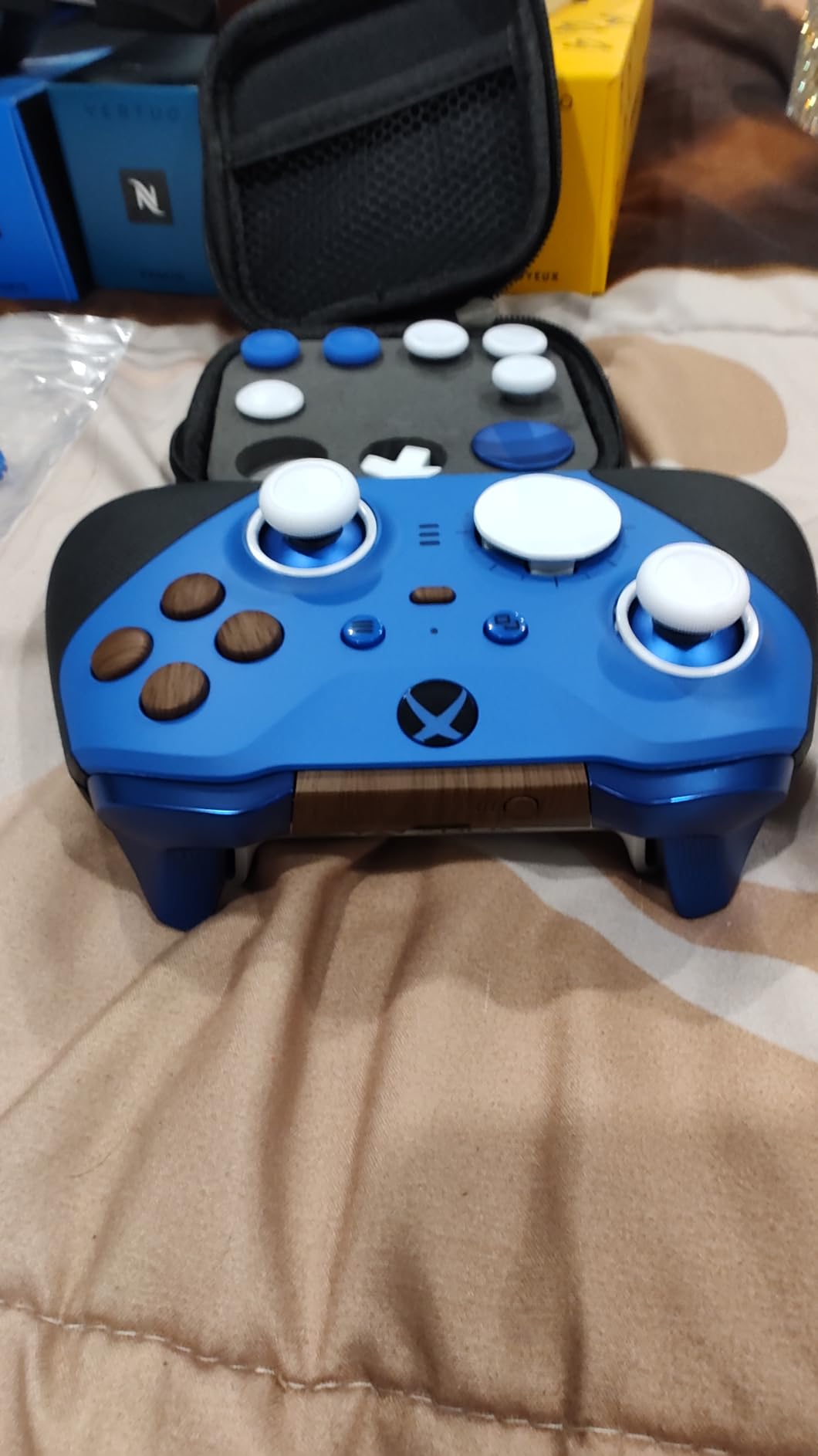
The Xbox Accessories app handles mapping, dead zone adjustment and profile storage, and up to three profiles live on the controller itself. That onboard storage matters more than it sounds: you can switch paddles from a shooter layout to a Souls-style layout without opening anything.
The dead zone slider is the quiet star. If a stick has developed a slight pull, raising the inner dead zone in software can keep it usable for months before you swap the module. Owners on r/XboxController treat that slider as the first line of defence against drift rather than a new purchase.
Three-step trigger locks reduce trigger travel from long to medium to short. In shooters, the short setting is the reason this pad stays competitive despite its age, because a shorter pull means a faster shot without changing your muscle memory on other controllers.
The trade-off is that a short pull can make the trigger feel twitchy in games where you are holding it down. Switching profiles per game is easier than it sounds, and it is the workflow the design pushes you toward.
Battery life is quoted at up to 40 hours, which in practice means most players charge weekly or less. Connectivity covers Xbox Wireless, Bluetooth and USB-C, and the 3.5mm jack sits on the top edge, so wired headsets need no dongle.
The honest drawback is bulk. At 16 ounces it is heavier than a standard Xbox pad, and long sessions on a couch can make the weight noticeable. Owners also report that the premium accessory components wear over time, which is exactly the point: those are the parts you can replace instead of the whole pad.
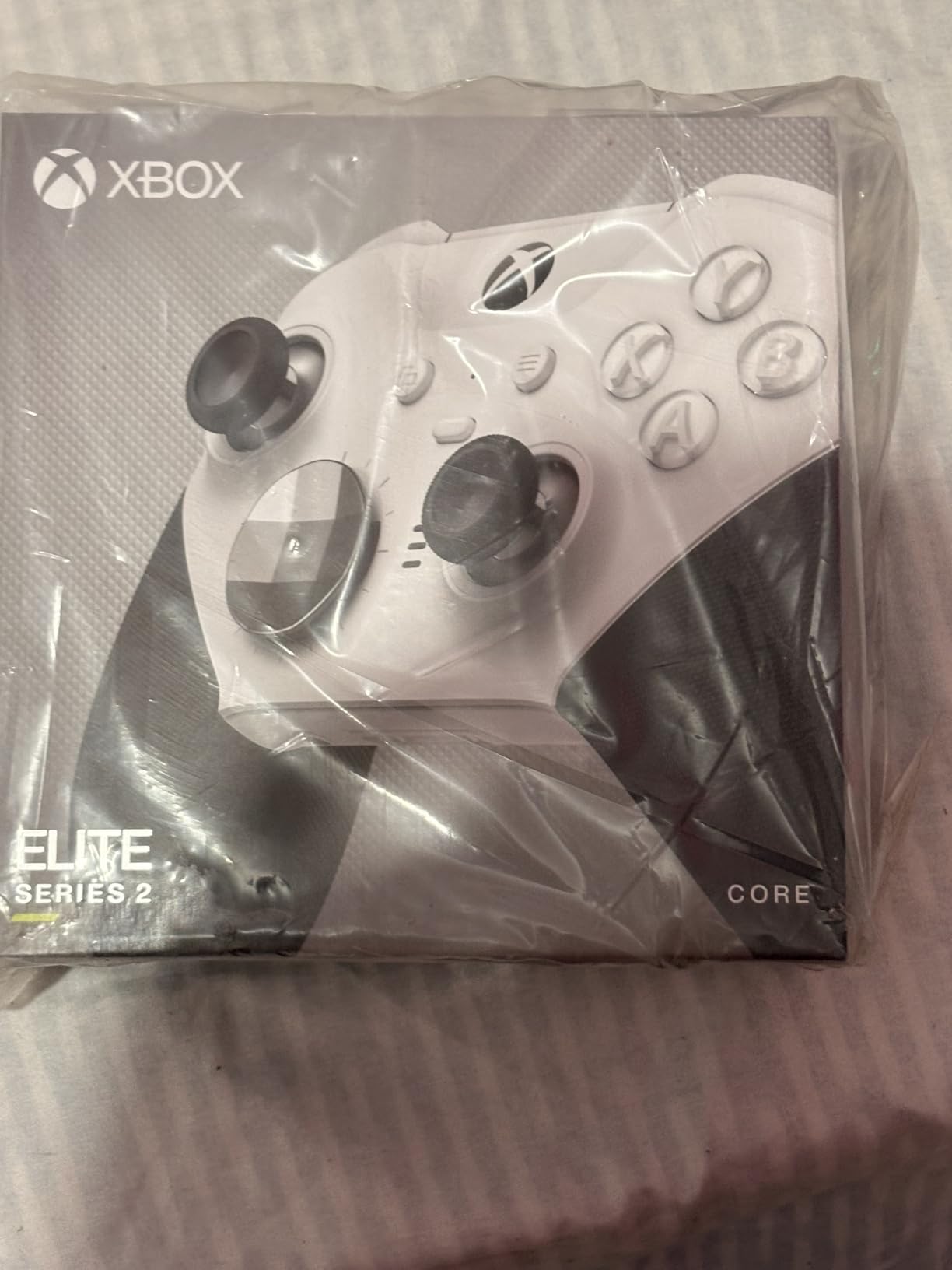
Buy this one if you play competitive shooters, prefer fine control over defaults, and intend to keep the same controller for years. Skip it if you want something light and simple for platformers and party games, because you would be paying for tuning hardware you never touch.
4.6 average rating
84 percent five-star reviews
Hybrid D-pad
USB-C Bluetooth and Xbox Wireless
This is the pad I hand to friends who ask what to buy and do not want to think about it. At 15.84 ounces with sculpted surfaces and updated geometry, it is the most comfortable conventional controller in this roundup, and owner ratings back that up with 84% five-star reviews across nearly 20k ratings.
It is also the most honest recommendation in the list, because the sticks are not magnetic. A potentiometer stick can and does drift on this controller, and that is the trade-off you accept for buying the platform’s standard pad rather than a specialist one.
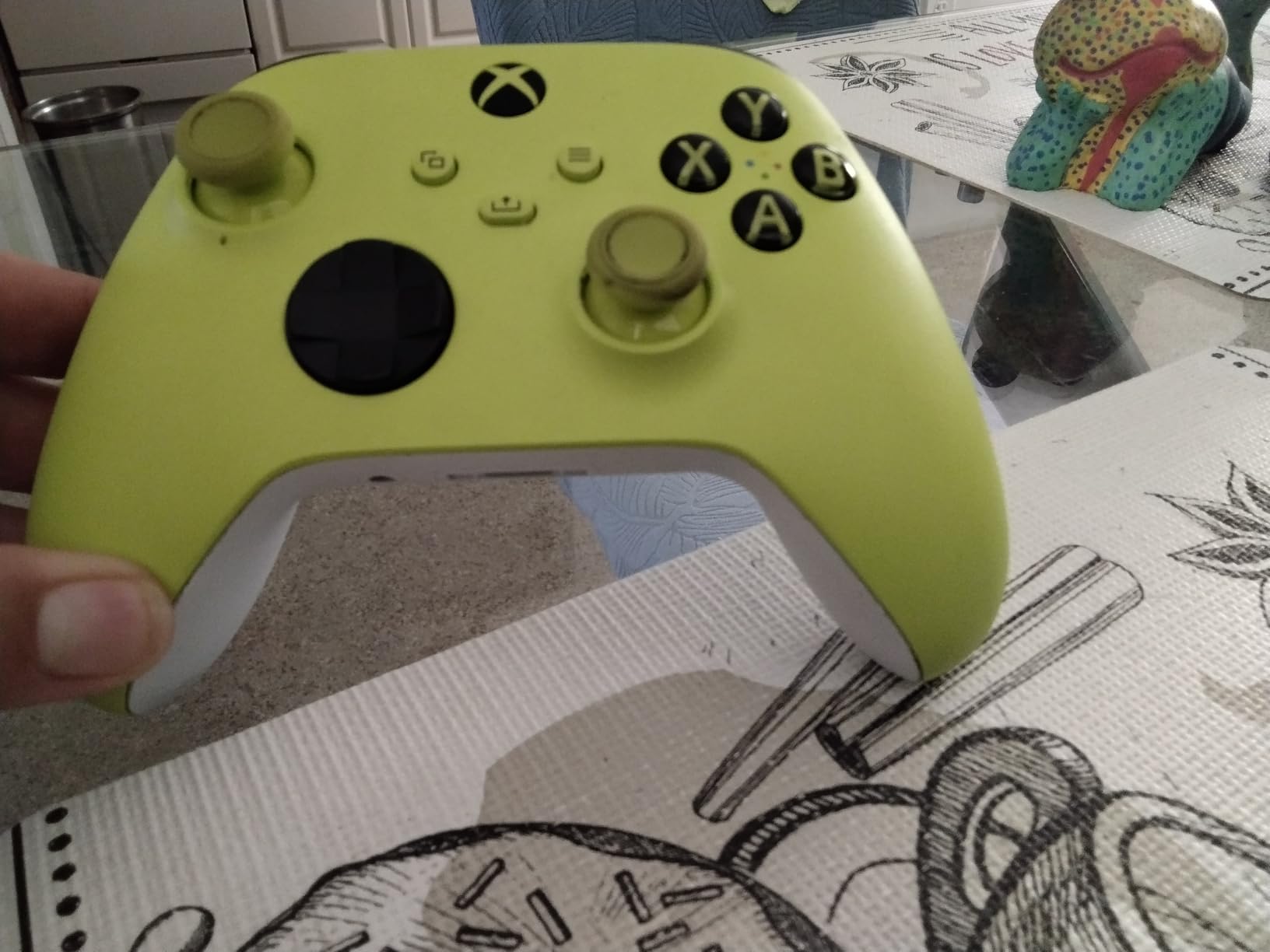
The updated geometry reshapes the grips and triggers so the pads sit slightly deeper in the palm. Over multi-hour sessions that difference shows up as less hand fatigue, particularly in games that mix aiming and camera control constantly.
Textured grips on the triggers, bumpers and back case add a layer of purchase security. In humid weather or during a sweaty session, that texture is the difference between a controlled grip and a controller sliding out of your hands.
The hybrid D-pad is a round disc with a directional click, which gives it both a nub you can roll and discrete directional inputs. For 2D platformers and menu navigation it feels precise, and for a game that wants a hard left-then-up diagonal it registers cleanly without double-firing.
It will not satisfy a fighting-game player who wants a full lever-style lever or a segmented pad. For those, a dedicated arcade stick is still the better tool, and no standard controller in this roundup closes that gap.
Connectivity is the reason this pad works nearly everywhere: Xbox Wireless, Bluetooth and USB-C means it also drives a Windows PC and a phone. The 3.5mm jack on the top edge handles wired headsets directly, which is one less adapter to lose.
The drift reality is straightforward. Standard potentiometer sticks wear through contact degradation, and this controller is not exempt. If you have already been burned by drift, look at the GameSir G7 SE or the 8Bitdo Ultimate 2C instead. If you play ten hours a week and want the best-shaped standard pad made, this is still the one.
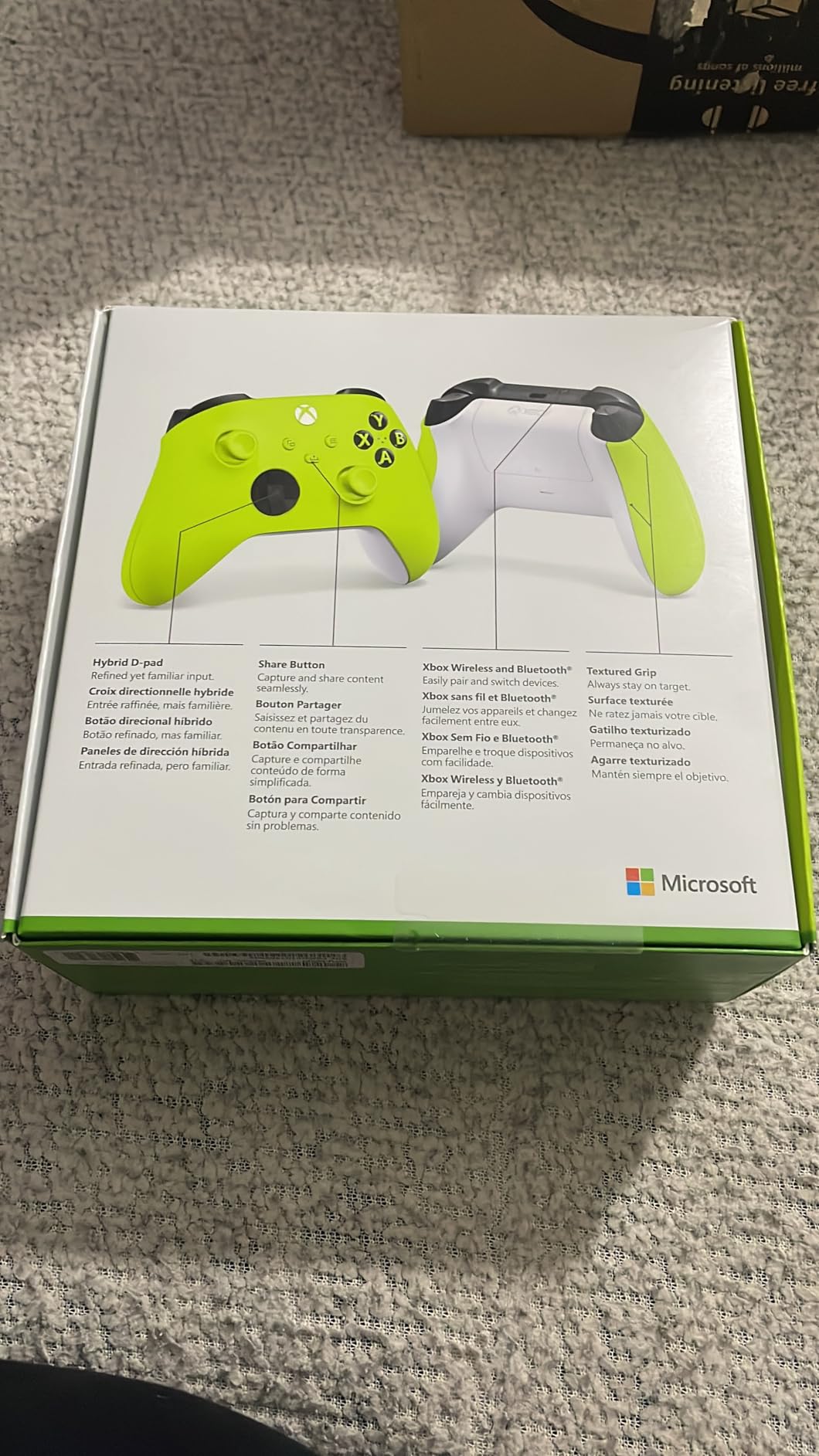
Best for console-first players, co-op sessions on the couch and anyone who wants one controller that covers Xbox, PC and mobile. Skip it if you have a history of stick problems or you specifically need rear paddles and trigger stops.
Hall Effect sticks and triggers
Lockable back buttons
Removable braided USB cable
The G7 SE is the controller I recommend to anyone who has replaced three pads to drift and is tired of doing it again. Hall Effect joysticks and Hall Effect triggers replace the physical contact wear that causes most drift, and at 250 g it stays planted on the desk without feeling like a brick.
It is wired, and for a lot of players that is the point rather than a compromise. A removable braided USB cable means the strain-relief point, the first thing to fail on a cheap wired pad, can be swapped instead of the whole controller.
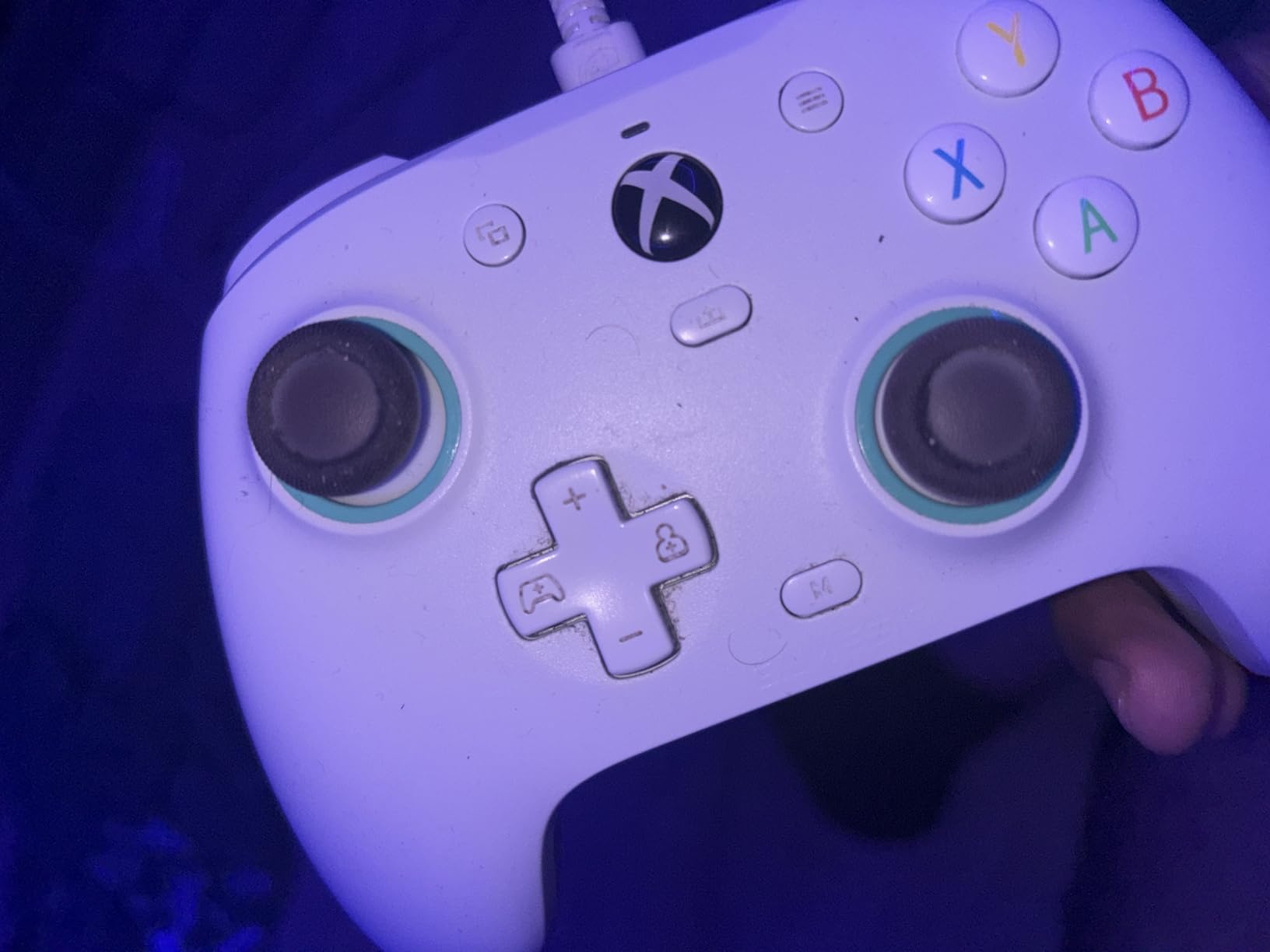
Instead of a potentiometer that reads a wiper position across a resistive track, a Hall Effect stick reads the magnetic field of a magnet moved by the stick. There is no contact surface to wear, so there is nothing to degrade and nothing producing phantom input when the pad sits still.
In practice the difference is that stick centering stays put. On the G7 SE, the stick returned to center the same way at week six as it did on day one. The stick modules are also friction-ringed, which keeps the outer edge smooth rather than scratchy as the rubber wears.
Two rear buttons each have a lock, which is the feature that separates this from a generic third-party pad. In a shooter where you bind a paddle to jump, a face button slipping open mid-fight is a real problem, and a lock removes it entirely.
The braided cable that comes in the box is long and detachable, and it works out of the box on Xbox Series X, Xbox One and Windows 10 or 11 with no drivers. Steam recognizes it as a standard input device, so PC library titles work without a configuration step.
The pulsating vibration trigger plus an asymmetric grip motor gives layered feedback that reviewers single out as stronger than most wired pads in this range. It is not the same as a console haptic system, but it communicates hits and impacts clearly.
Two software quirks are worth knowing. Raising the polling rate in the Nexus app has been reported to cause input spasms and disable the 3.5mm headset jack, so the default settings are the safer starting point. Some titles also do not register the rear buttons at all, so check your most-played game before committing.
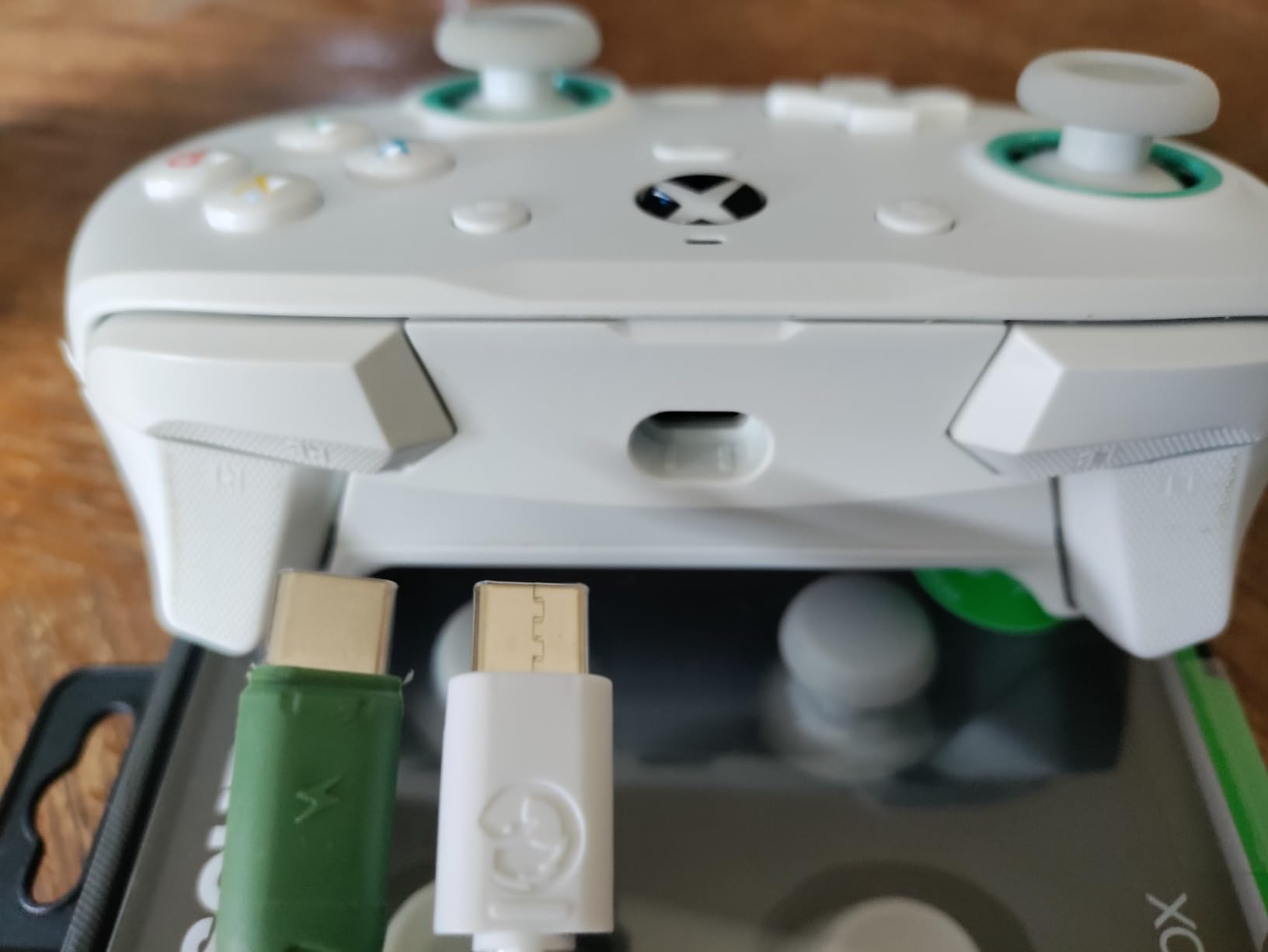
Buy it if drift is your top concern, you play at a desk and you like the idea of a cable you can replace. Skip it if you play on a couch away from the console, or on a platform where wireless is a requirement.
1000Hz polling
Hall Effect sticks
2.4G dongle and Bluetooth
The Ultimate 2C is the pick I keep reaching for when someone wants a serious PC controller without a serious spend. At 280 g with Hall Effect sticks and 1000Hz polling over both 2.4G and wired, it packs the two specs that matter most for competitive PC play into the least expensive body here.
It ranks first in PC Gamepads, and owners describe it as the best value PC controller they have owned. The 84% share of positive-to-top ratings across more than 7.4k reviews is not an accident; this is a controller that does specific jobs well and stays out of the way otherwise.
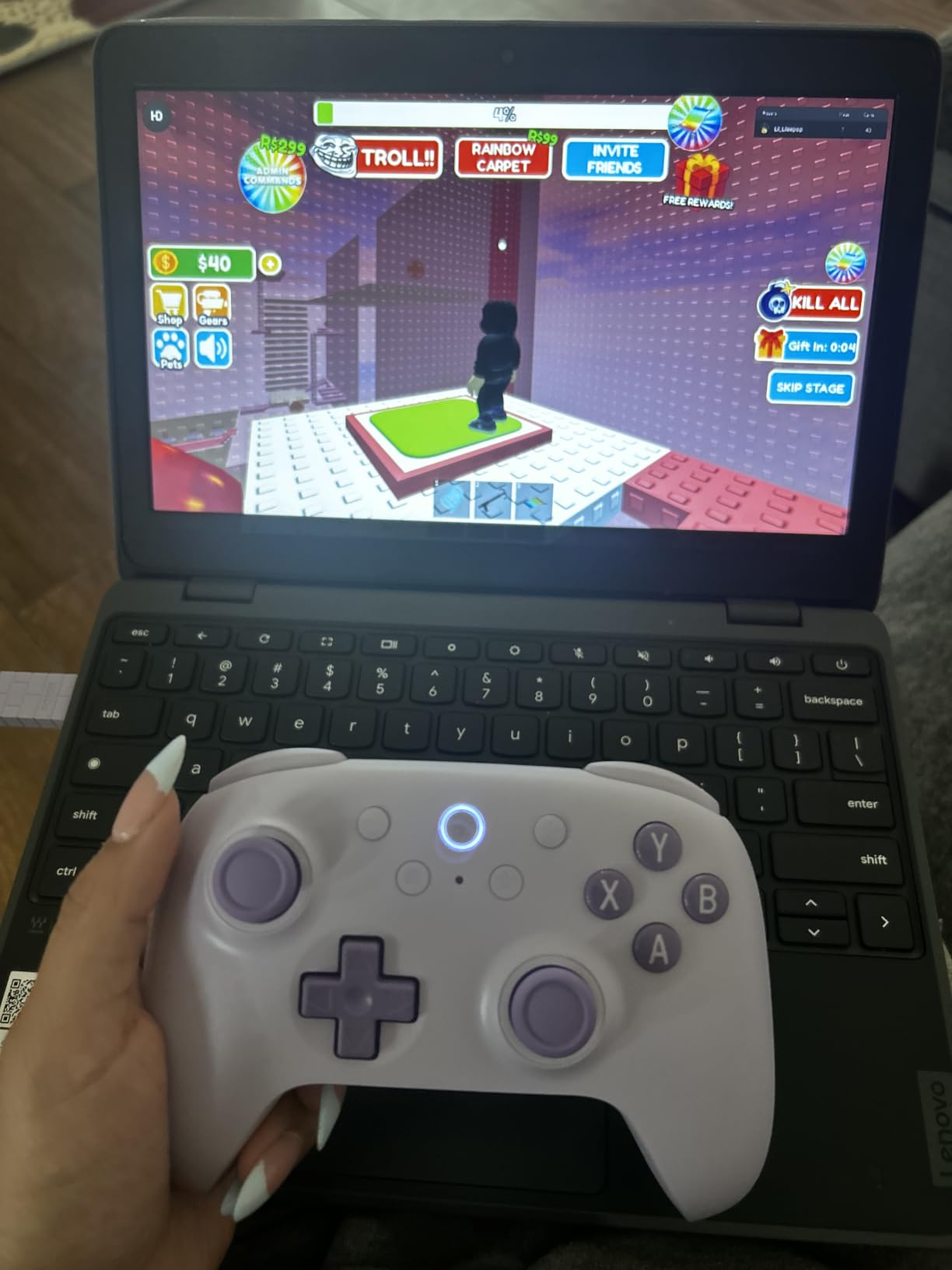
Polling rate is how often the controller reports your inputs to the PC. At 1000Hz the pad samples every millisecond, which removes most of the delay introduced by a slower reporting loop. On a fast shooter at low ping it is a small gain, but it is a real one and it costs nothing to have.
The catch is that the number only means something on the connection that carries it. The 1000Hz figure applies to 2.4G and wired, and it is the 2.4G dongle and the cable that deliver it. Bluetooth is a different story, and reviewers report noticeable input delay on that mode depending on the host device.
Hall Effect joysticks and triggers with wear-resistant metal rings mean the same thing as on the G7 SE: no contact wear, so no drift. Anti-friction rings around the stick modules keep the outer ring smooth, which matters after a year of daily use rather than on day one.
The practical difference versus a magnetic pad without rings is small but real. Unrung sticks develop a slightly gritty edge, and that texture is what makes some players overcorrect their aim. Rings delay that stage.
This is where the trade-offs live. At 280 g with compact dimensions it suits smaller hands, and larger players regularly note it feels cramped. The included USB cable is also too short for comfortable charging from a desk, which is a small thing you notice every week.
Two extra bumpers, L4 and R4, remap without any companion software, and turbo works out of the box. Only those two buttons can be remapped, though, and the 2.4G dongle occasionally disconnects mid-session. Owners also mention that the D-pad is a touch easy to hit up when pressing sideways, which matters in games that demand clean diagonals.
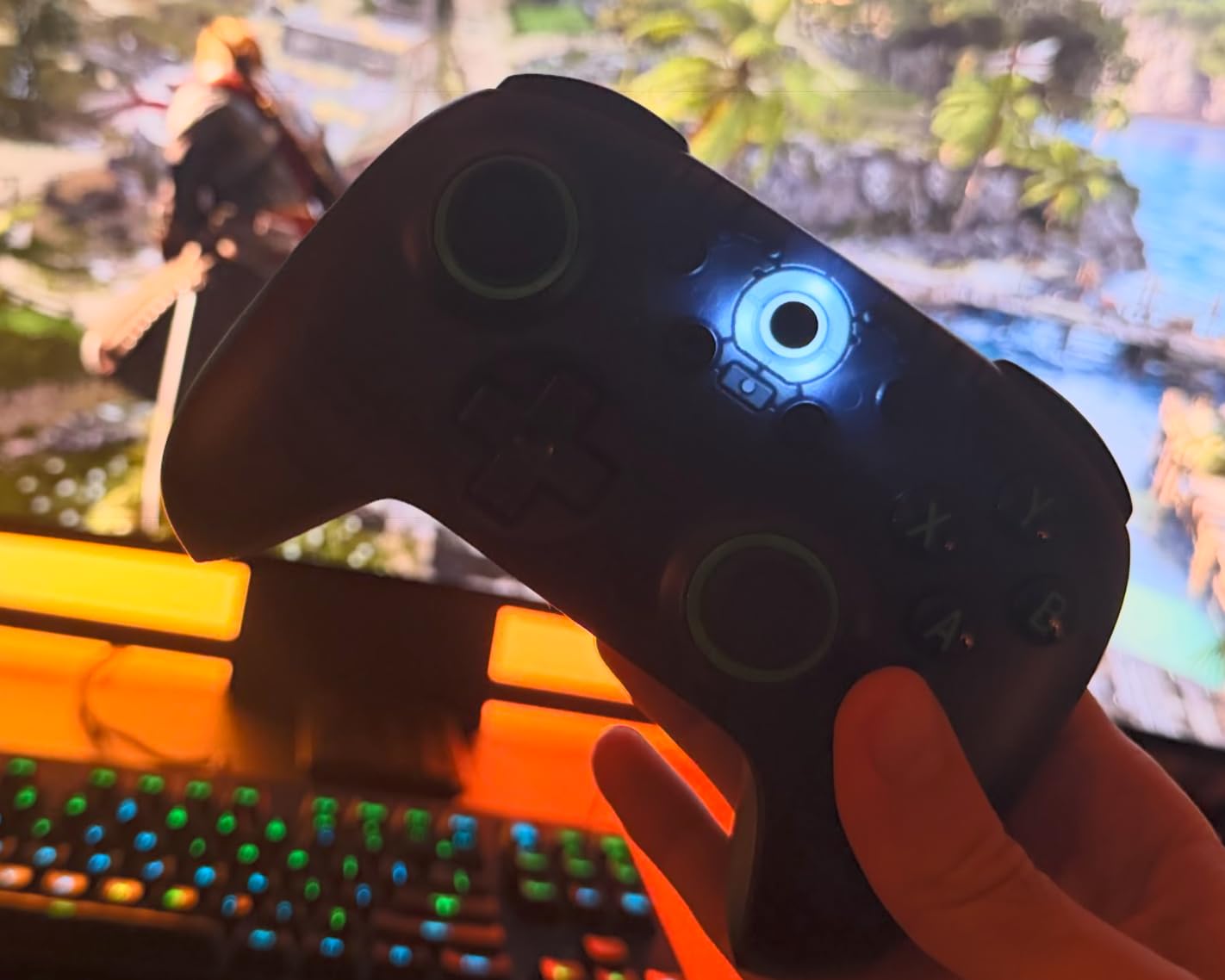
Best for PC players who want low latency and drift resistance on a modest budget. Skip it if you have large hands, need full button remapping, or want to play the same pad on a console.
4.7 average rating
Adaptive triggers
Built-in speaker mic and jack
The DualSense is the best-selling console pad in this roundup and holds a 4.7 average, with 86% of owners giving five stars. Nothing else here reproduces its haptic vocabulary, and on games that use it properly that difference is not subtle.
It also works on PC and Mac over USB-C and Bluetooth, which means the same pad covers a PS5 session and a Windows game. The layout is the reference point most other pads are measured against, including the Hyperkin later in this list.
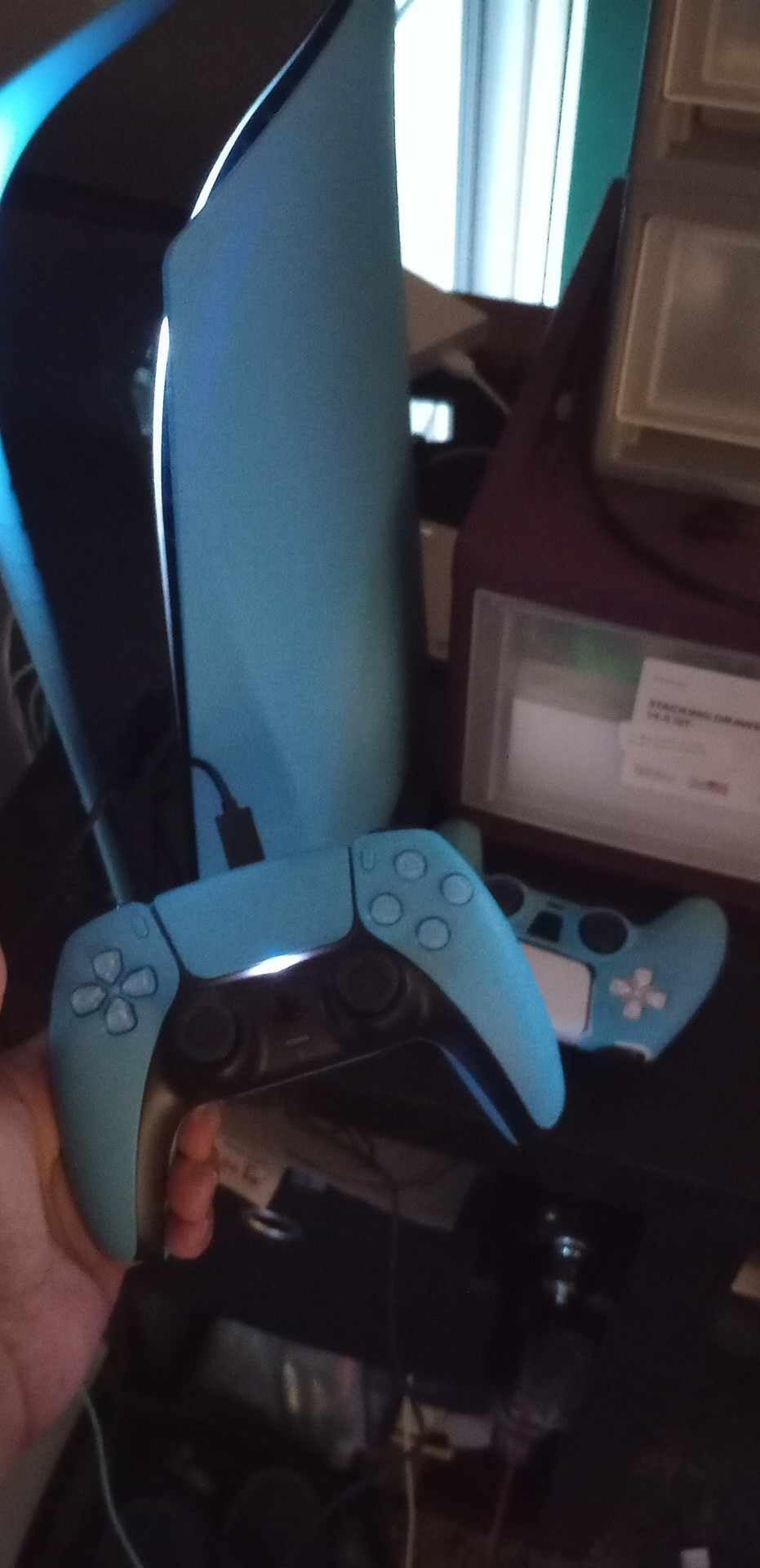
Adaptive triggers change resistance along the pull depending on what the game asks for, so a bowstring feels different from a gun recoil. Haptic feedback covers the finer sensations: footstep texture, the click of a mechanism, the thump of an engine at high rpm.
Support is uneven, and that matters more than the hardware. In games built with it, the difference is obvious; in a title that ignores triggers, you are holding an expensive pad with two ordinary switches. Check whether your top game supports them before treating that as a deciding factor.
A built-in speaker, microphone and 3.5mm headset jack live in the shell, so a wired headset connects directly and you can hear game audio and chat without a dongle. The Create button captures and broadcasts a gameplay moment in one press, which is genuinely useful for clips.
The built-in speaker is louder and higher-fidelity than the ones in older pads, and it covers menu navigation and voice chat if you have nothing else connected. It is a convenience, not a replacement for a headset in a shooter.
Two real limitations shape this pick. The battery is sealed and no charging cable is included in the box, so plan for a USB-C cable before first use. And the analog sticks can develop drift after a couple of years, which is the same potentiometer wear discussed earlier.
On PC it works out of the box over USB-C or Bluetooth, and the PS Remote Play app streams console games to PC and other devices. Buttons map to keyboard inputs, so most games behave sensibly, though PlayStation-specific features like the touchpad and gyro aiming need per-title support.
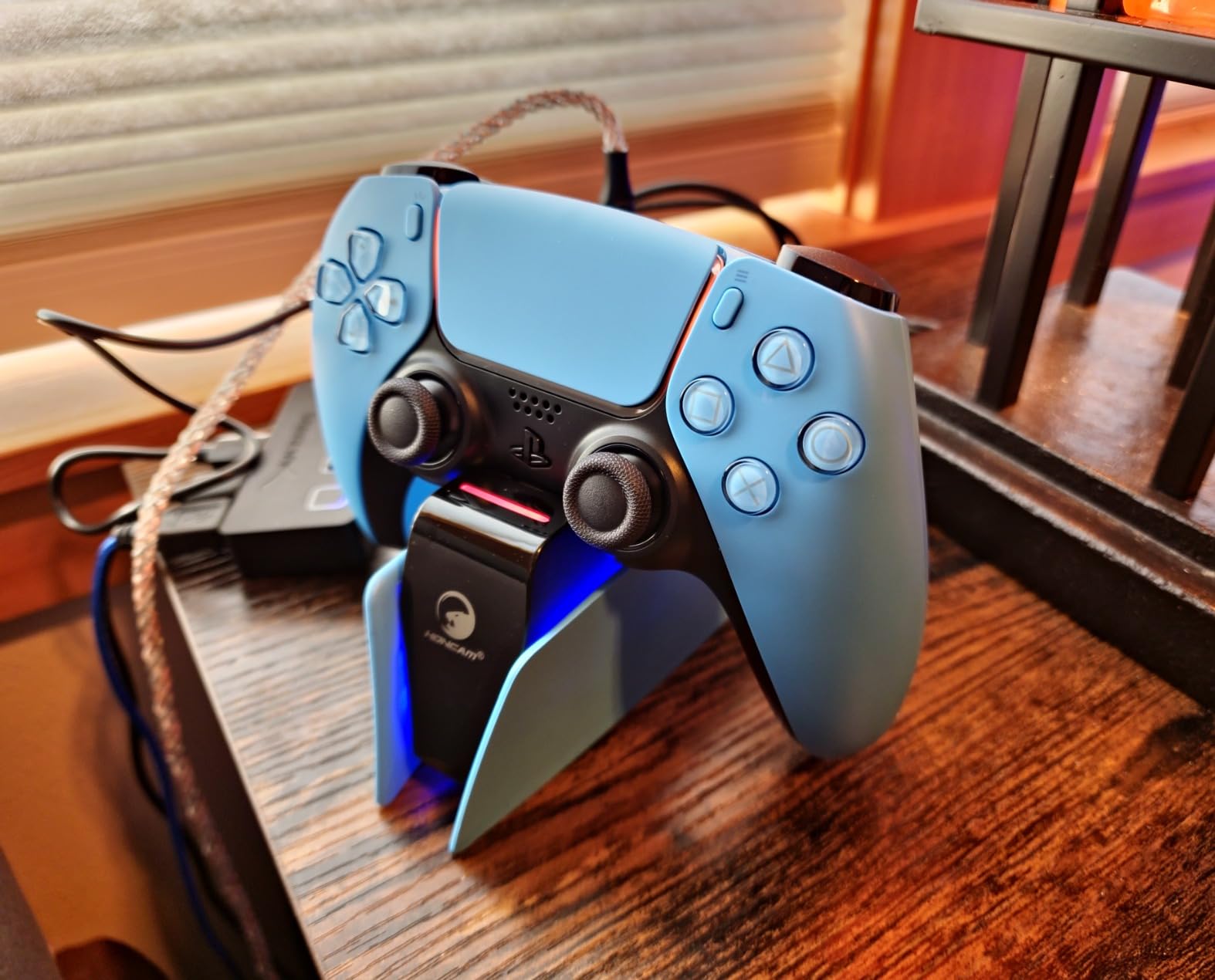
Best for PS5 players, for anyone who plays a haptics-heavy game, and for people who want one pad across PS5 and PC. Skip it if drift has burned you before, since the sticks are not magnetic and the battery cannot be replaced.
Swappable stick modules
Three stick cap styles
Two sets of back buttons
Adjustable trigger travel
The DualSense Edge takes the repairability idea that wins the Elite the top spot and applies it to PlayStation. Swap-in stick modules and three types of stick caps mean the two parts that wear out first are user-replaceable, which extends the life of an expensive controller in a way no other PS5 pad can.
At 4.6 with 81% five-star reviews across more than 6.5k ratings, satisfaction centers on exactly those features. The complaints are about weight, bulk and the cost of extra parts, not about performance.
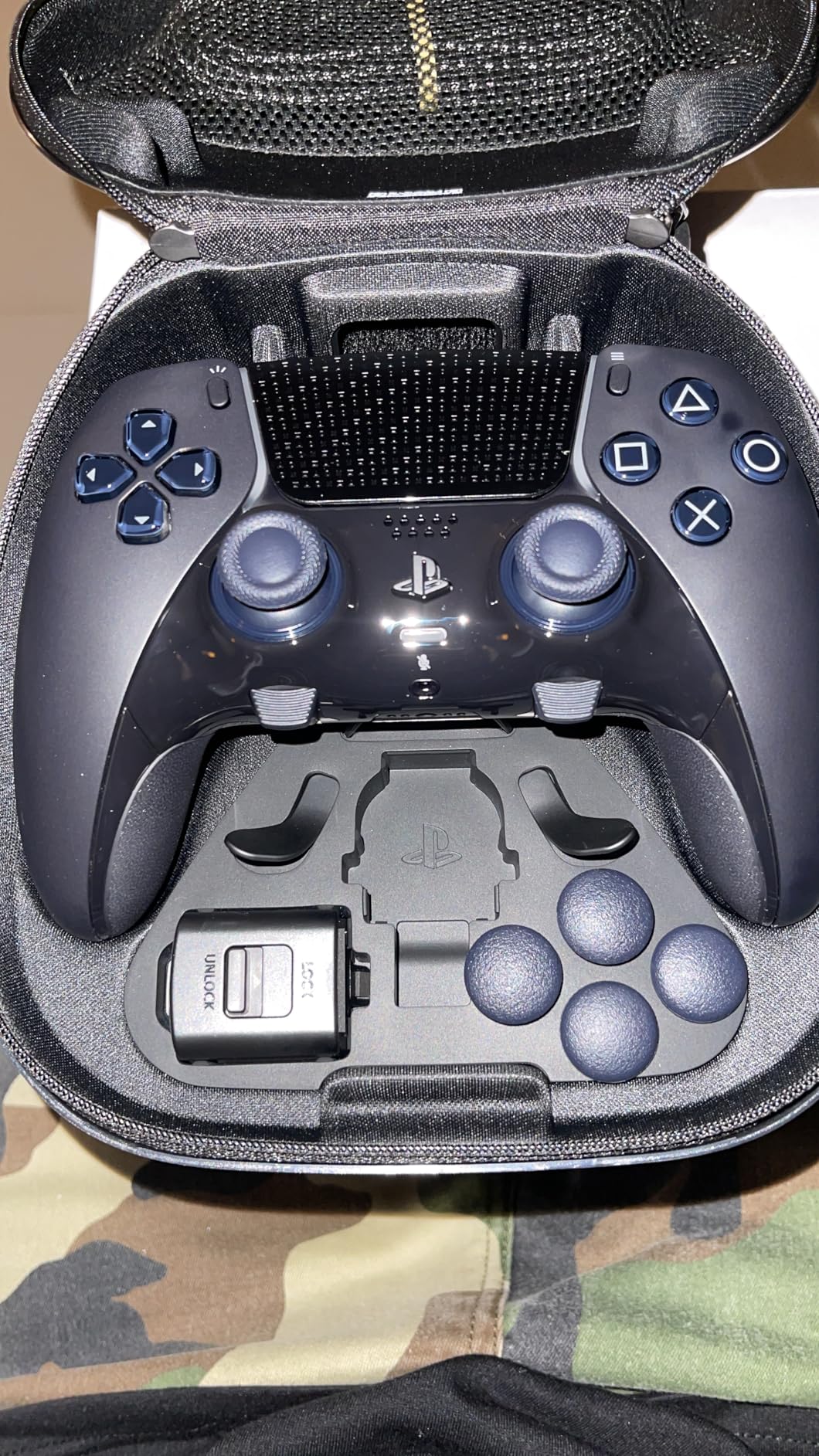
Three stick cap styles cover different aims: a low-profile cap for smooth swipes, a domed cap for precision, and a classic textured cap for grip. Swapping caps takes no tools, and the modules themselves unclip when the stick is worn rather than being soldered into the shell.
That is the difference between a controller that lasts and one that gets replaced. On a standard pad, a drifting stick ends the controller’s life. On this one, it ends the module’s life.
Two swappable sets of back buttons come in the box, and each can be remapped to any other input. The standard set is a low-profile paddle pair for shooters, and the raised set gives you more surface to find without looking down.
Both sets are remappable to face buttons, shoulder triggers or keyboard keys, which means the same pad can run a shooter layout and a platformer layout. The learning cost is real, though: new paddles need muscle memory, and forum users switching from other brands warn that it takes a week or more to stop thinking about it.
Trigger travel on each side is adjusted manually, so you can set a short pull for shooters and a longer one for racing games. Quick-swap profiles store those settings on the controller and recall them without a PC.
The weight is the honest drawback. At 2.6 pounds this is a noticeably heavy controller, and long sessions can make the forearms tired in a way a standard DualSense does not. Replacement parts are sold separately, which is a running cost that has to be weighed against how long a standard pad lasts before drifting.
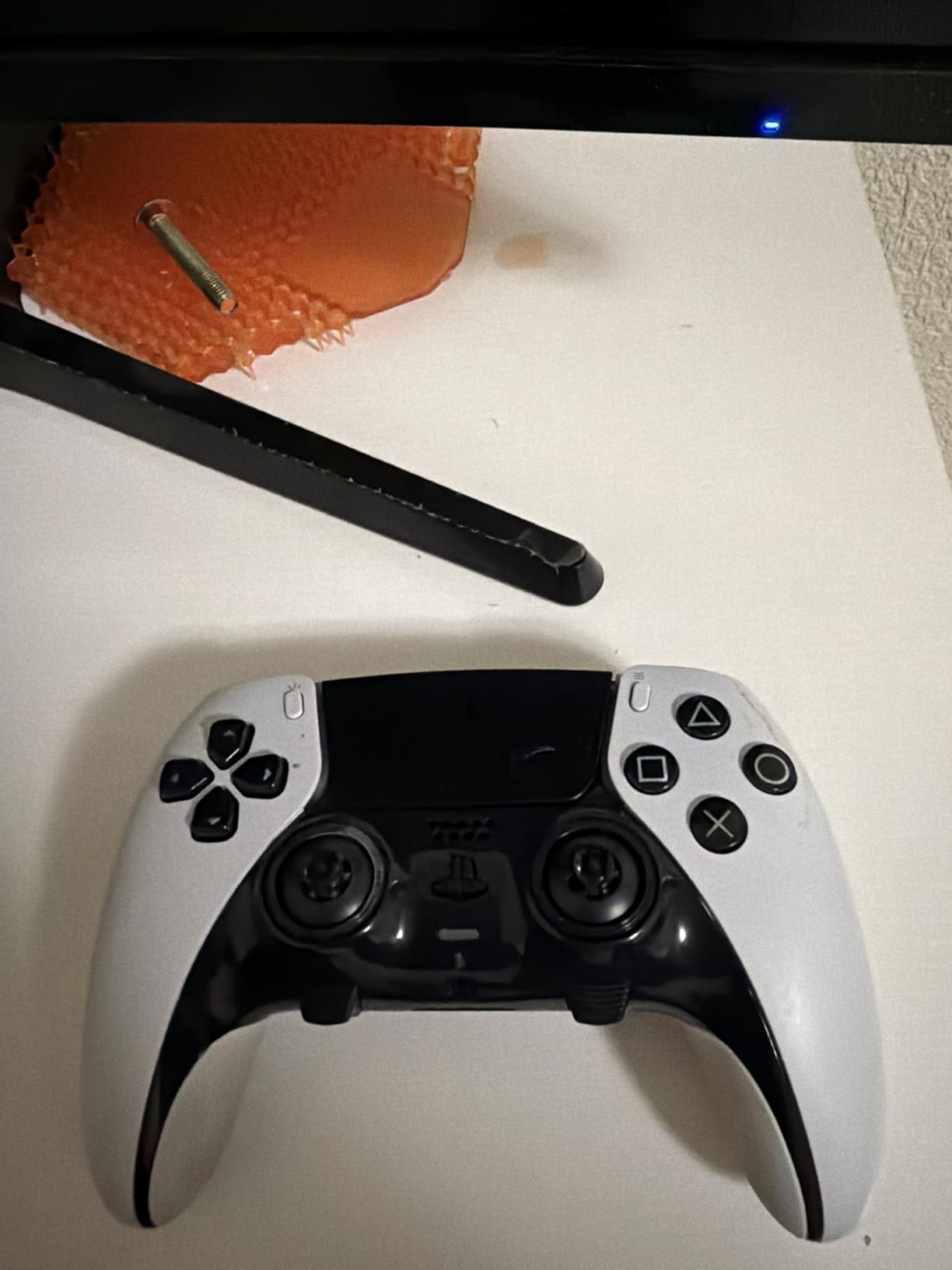
Buy it if you play PS5 regularly, want rear paddles and adjustable trigger travel, and intend to keep the controller for years. Skip it if your sessions are short, you play couch multiplayer, or you only need one good pad for occasional use.
TMR joysticks
8Speed 2.4G under 1ms latency
1000Hz polling
Onboard memory and dock
The Ultimate 2 is the more complete of the two 8Bitdo pads here. It adds TMR joysticks, 6-axis motion control and a charging dock, and it is the one I would pick for a wireless-only PC setup where cable management already lost an argument.
Owners describe it as a premium-feel controller at a middle-tier outlay with an unusually generous bundle. The dock doubles as a 2.4G receiver and USB-C adapter, so it handles charging, wireless pairing and wired fallback in one object.
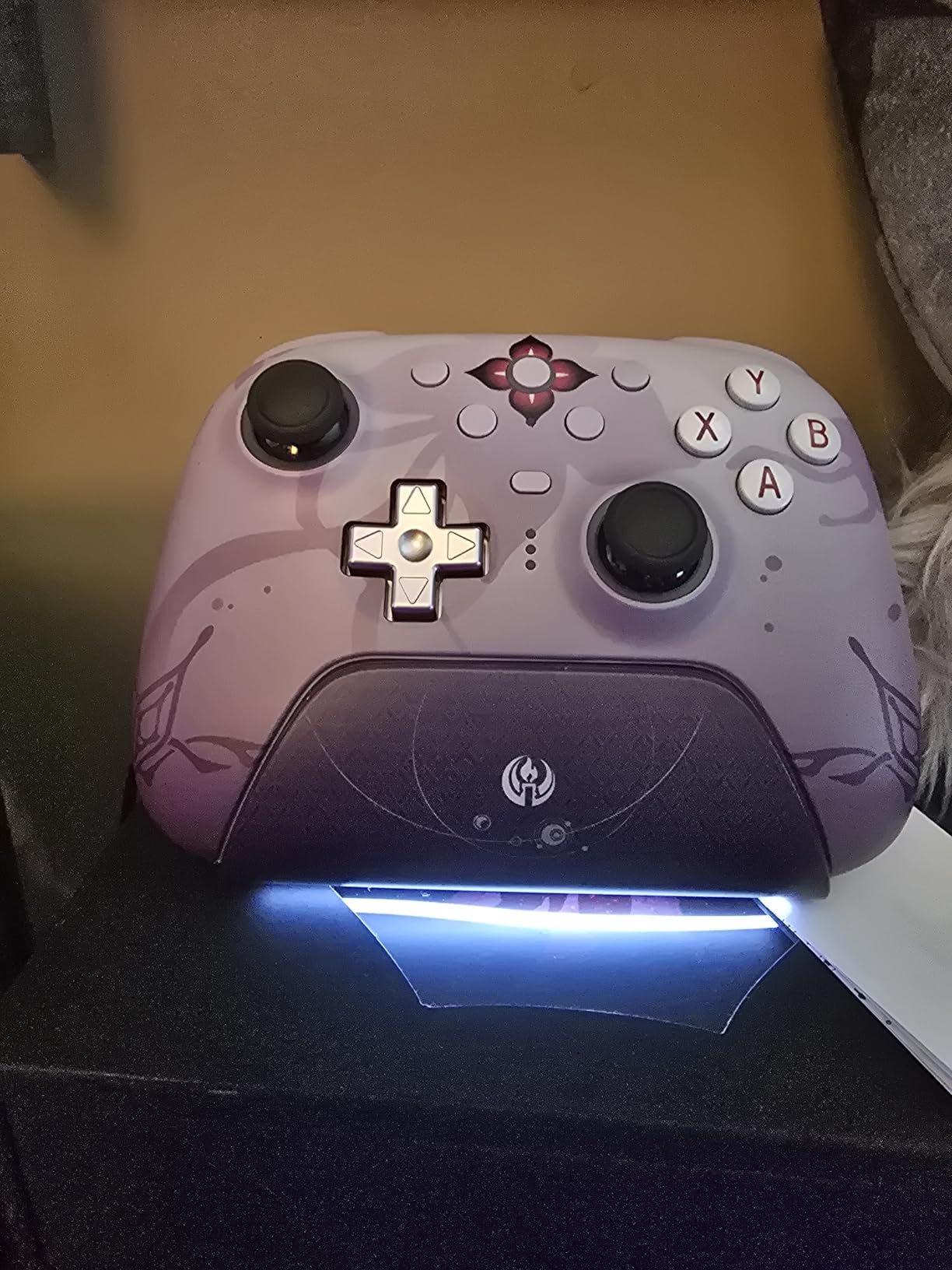
TMR, or tunneling magnetoresistance, is the higher-precision branch of magnetic sensing. Like Hall Effect it has no contact wear, so no drift; unlike Hall Effect it resolves smaller changes in field strength, which shows up as finer control near the center of the stick and a very low natural dead zone.
The 8Speed 2.4G link is rated at under 1ms latency with anti-interference and a 10m range. In practice that means the wireless mode is competitive with a cable for shooters, which removes the usual reason to own a wired-only pad. Bluetooth remains the weak mode, as it is across this category.
A physical switch on the back toggles between linear Hall effect triggers and non-linear tactile triggers. Linear triggers are what competitive shooters want, because the pull is consistent from the first millimeter; tactile triggers feel better for action games where the resistance curve adds to the fantasy.
Customizable 6-axis motion control is a genuine differentiator on PC, giving gyro aiming support in the games that allow it. Two pro back paddles plus extra R4 and L4 bumpers fill the rear, and turbo and rumble round out the base feature set.
Onboard memory stores button mappings, macros and lighting profiles, and they survive without the companion software running. For a controller used across several machines, that is the difference between a working setup and a setup you rebuild every time you change PCs.
The limitations are real. Square and star face buttons cannot be remapped, the companion app offers limited stick curve options, and holding the Home button too long powers the controller off, which breaks emulator hotkeys. There is no user-replaceable battery, and the body is slightly small for larger hands.
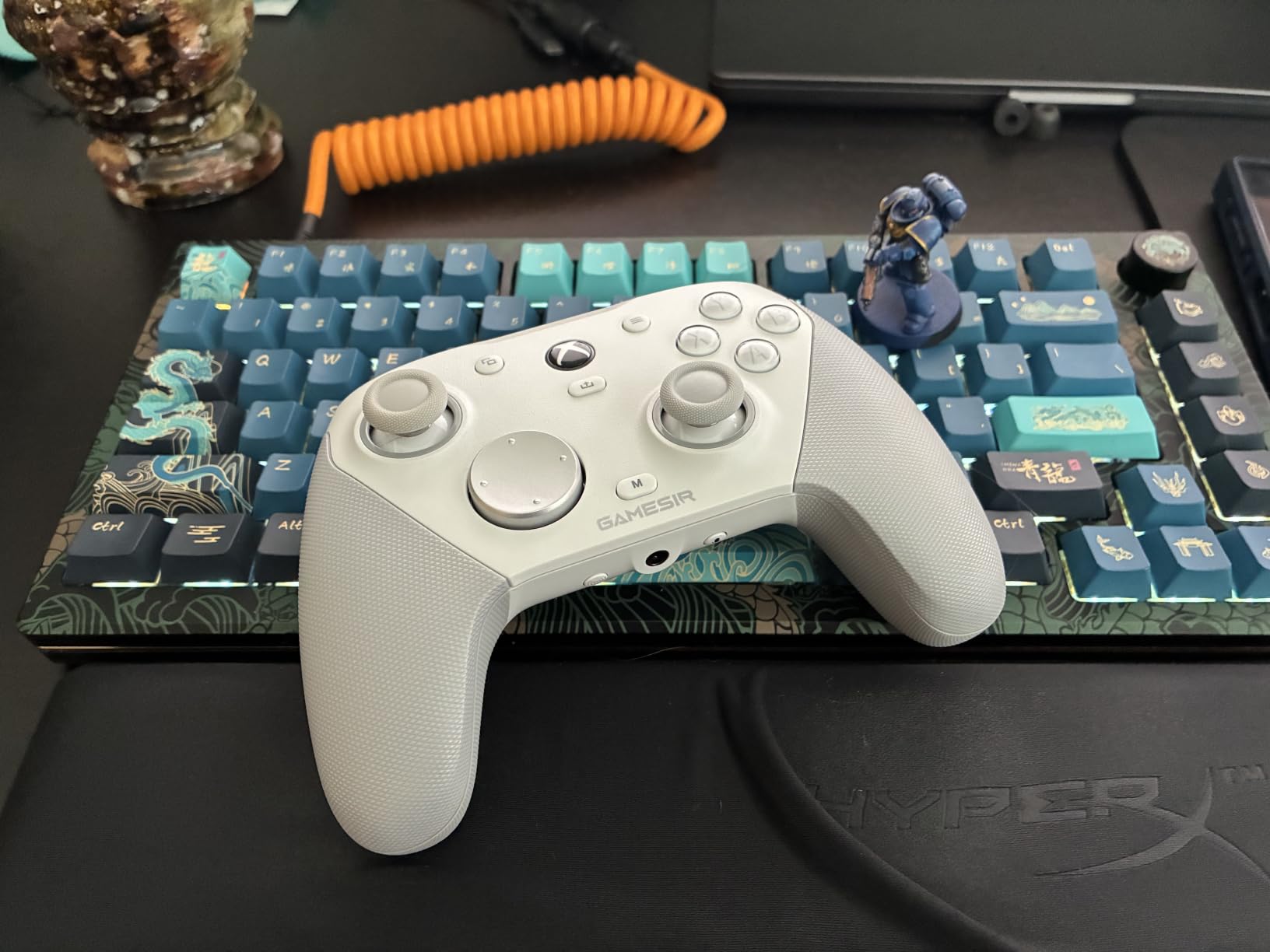
Best for PC players who want wireless, TMR stick precision, motion control and a dock in the box. Skip it if you need full remapping freedom, an easily replaced battery, or a body sized for large hands.
TMR Mag-Res sticks
Hall effect triggers with swappable stops
1000Hz polling
Tri-mode connectivity
The G7 Pro is the controller that gets recommended when a player wants competitive stick feel without moving up to a premium pad. Its Mag-Res TMR sticks are the closest thing here to a potentiometer feel with none of the contact wear, and owners frequently compare it to Elite and SCUF pads at a fraction of the outlay.
It is rated 4.3 across more than 5k reviews, with the lower score reflecting real complaints about the fully clicky button feel and the wired-only console experience rather than accuracy.
Mag-Res TMR combines magnetic sensing with a response curve that feels conventional. The practical benefit is a very low dead zone, which in a shooter means the stick starts moving your aim at the smallest possible tilt, with no dead band to fight.
One detail catches people out. TMR sticks have a small natural offset of roughly 1-2% that reads as drift until you calibrate the dead zone in the GameSir Nexus app. The app also handles gyro settings, stick curves and button-to-mouse mapping, which makes this a pad that improves once configured.
Hall effect analog triggers remove the contact wear on the trigger switches, and the clicky trigger stops are micro-switch based and replaceable. A worn trigger stop is a thirty-second fix rather than a controller replacement, which is the same repairability logic that wins the Elite its badge.
There is a quality variance worth flagging. Some controllers arrive with an inconsistent right trigger-stop micro switch, and some reviewers report the faceplate button holes running slightly tight, which can cause squeaks under pressure.
Connectivity is genuinely tri-mode: wired for Xbox, 2.4G and wired for PC, and Bluetooth for Android. On PC you get 1000Hz polling over both wired and 2.4G, and four customizable inputs plus four onboard profiles cover most competitive setups.
On Xbox consoles the controller must be wired, because its wireless mode is reserved for PC and Android. On a TV that is a real constraint, and it is the single biggest reason to choose a different pad. The smart auto start-stop charging station and its 1200mAh battery soften the cable problem at a desk.
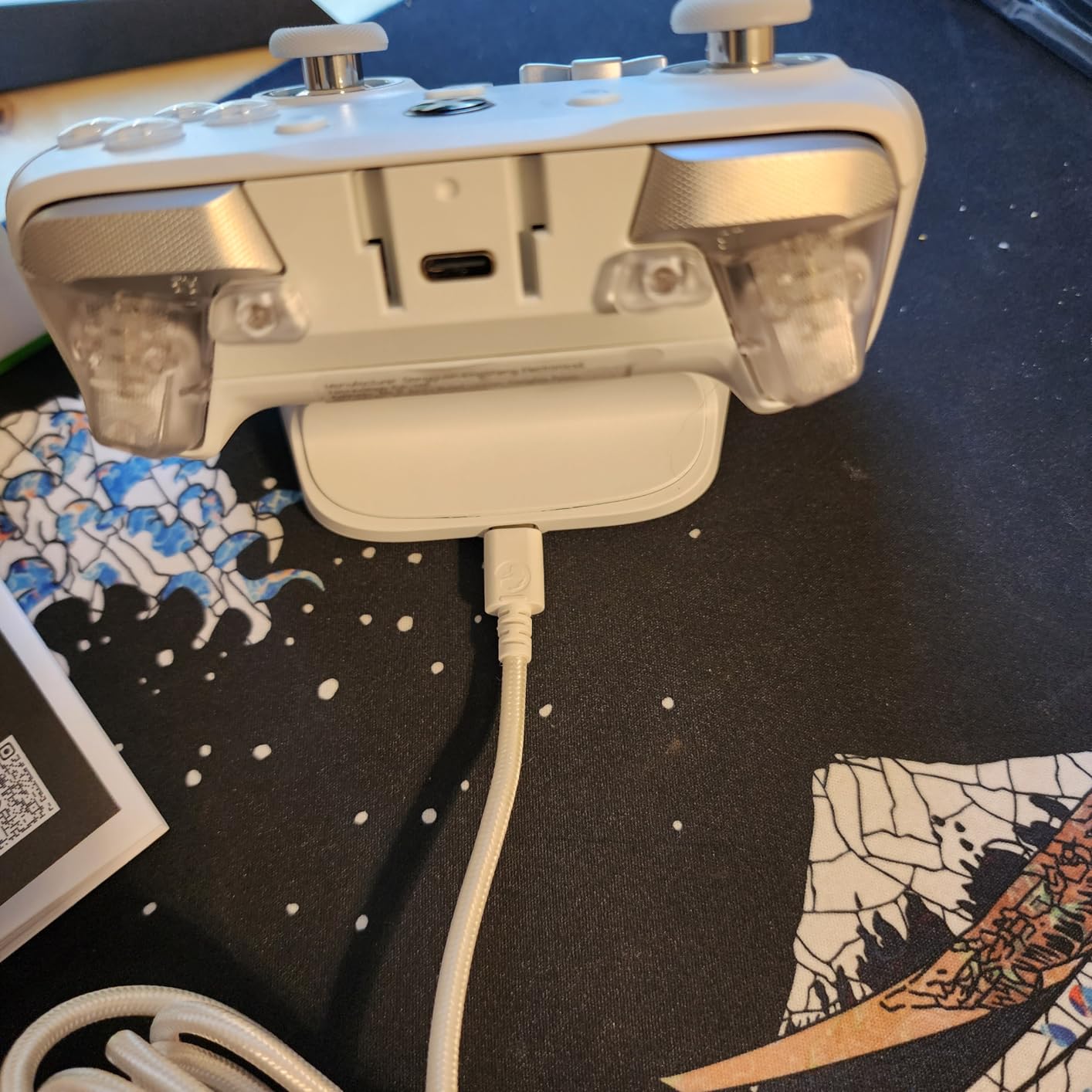
Best for competitive PC players who care most about stick precision and trigger feel. Skip it if you play Xbox on a couch, prefer the softer feel of membrane-style buttons, or want a controller that works wirelessly on a console.
4.8 average rating
90 percent five-star reviews
HD Rumble 2
Motion control and built-in amiibo
At 4.8 with 90% five-star ratings, this is the highest-rated controller in the roundup. That score comes down to one thing: HD Rumble 2, which is the most nuanced haptic system on any pad here and the clearest reason most Switch 2 owners never look at third-party alternatives.
The GL and GR back buttons map to any button you choose, and motion control support keeps motion-based Switch gameplay fully usable. For a platform where those two features define the experience, the closed ecosystem matters less than it does on other systems.
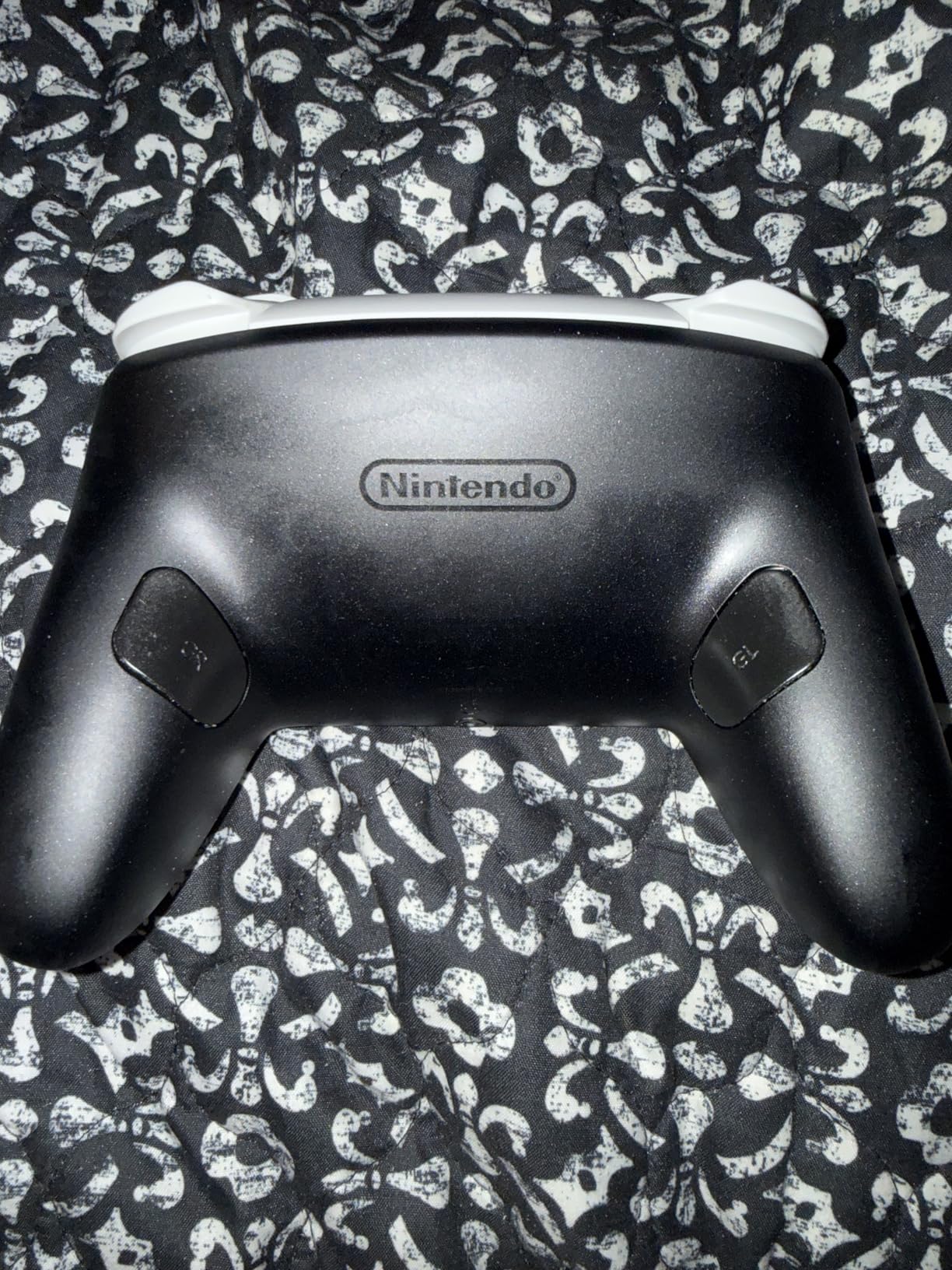
HD Rumble plays a range of frequencies rather than a single buzz, so a footstep on gravel reads differently from a footstep on stone. On games that use the system well, that difference is felt more than heard, and it is the reason this pad scores highest in the group.
At 13.12 ounces it is also one of the lightest controllers here, which makes it comfortable for long handheld-switched sessions. Anyone who finds the Elite Series 2 too heavy after a few hours will not have that problem here.
The GL and GR buttons sit on the back and can be mapped to any button the game exposes, which is more flexibility than most standard pads offer without a paid accessory. For players who want jump or item-throw on a rear button, that mapping does the job.
Motion control is supported, so gyro aiming and tilt-based mechanics work as they do on the console. Built-in amiibo functionality removes the need to carry separate NFC tags, and the C Button handles GameChat voice while the Capture Button grabs screenshots.
There is no adjustable trigger travel, no trigger stops and no remappable back buttons beyond the GL and GR pair. The sticks are not magnetically protected, so drift is still possible over years of use, and third-party accessory options are limited by licensing.
It also only works with the Nintendo Switch 2 platform. If you want one controller across a console and a PC, this is not the pad. For Switch 2 players, though, the haptics and the feature set justify the choice on their own.
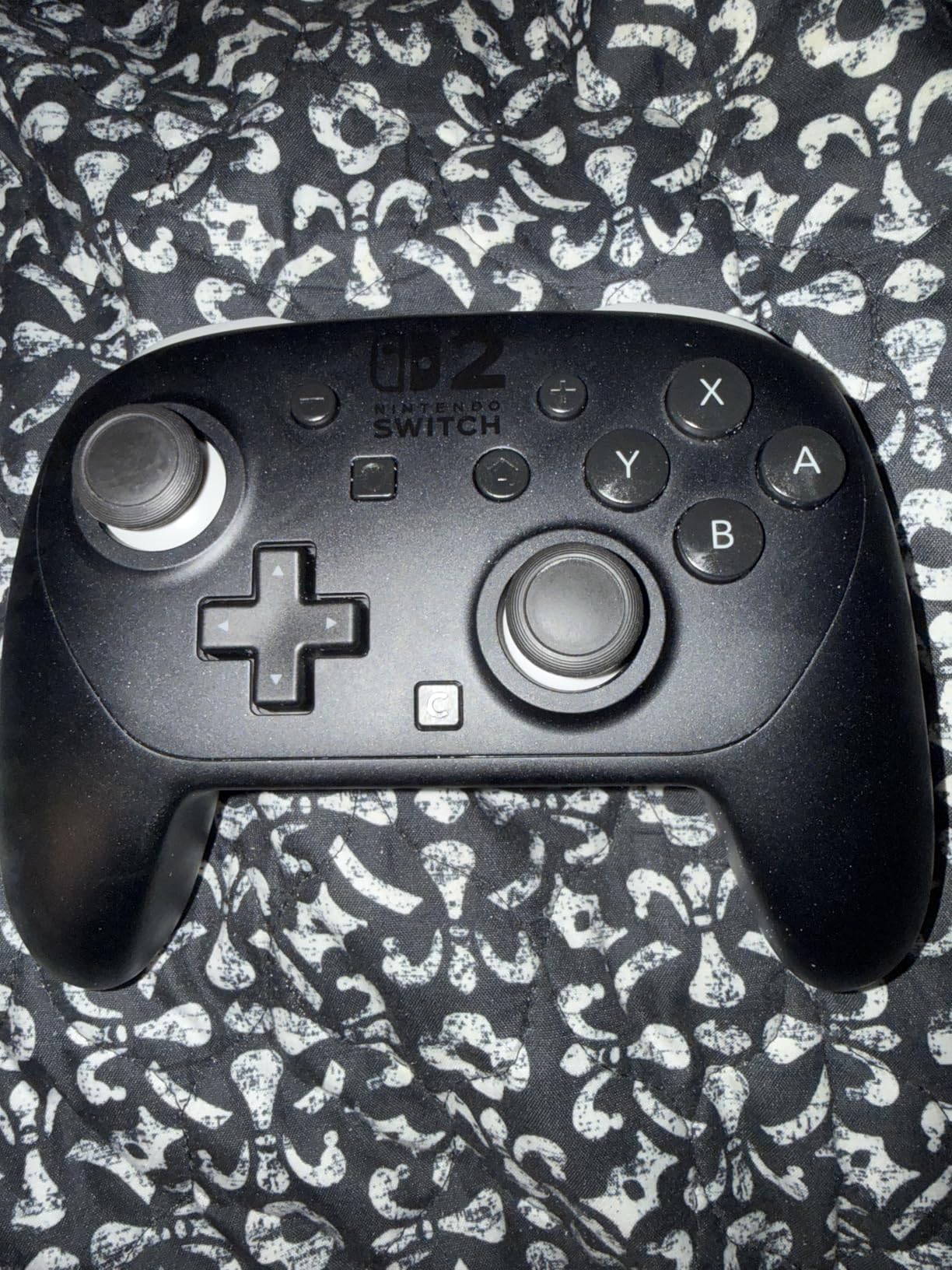
Best for Nintendo Switch 2 players who care about haptics, motion control and a light grip. Skip it if you need the pad to work on PC or Xbox, or if rear paddles and adjustable triggers are requirements.
Hall Effect sticks
1000Hz polling
Switch PC Android iOS support
Dual vibration motors
The Nova Lite 2 is the travel answer in this roundup. At 0.24 kg it disappears into a bag, and it works across Switch, Switch 2, PC, Android and iOS over Bluetooth, wired and a 2.4G dongle, so it is genuinely one device for a trip rather than a compromise at home.
Owners report it punches well above its price tier, holding a 4.4 average after months of use. The single most-cited complaint is the small non-replaceable battery, which is the one thing a travel pad cannot hide.
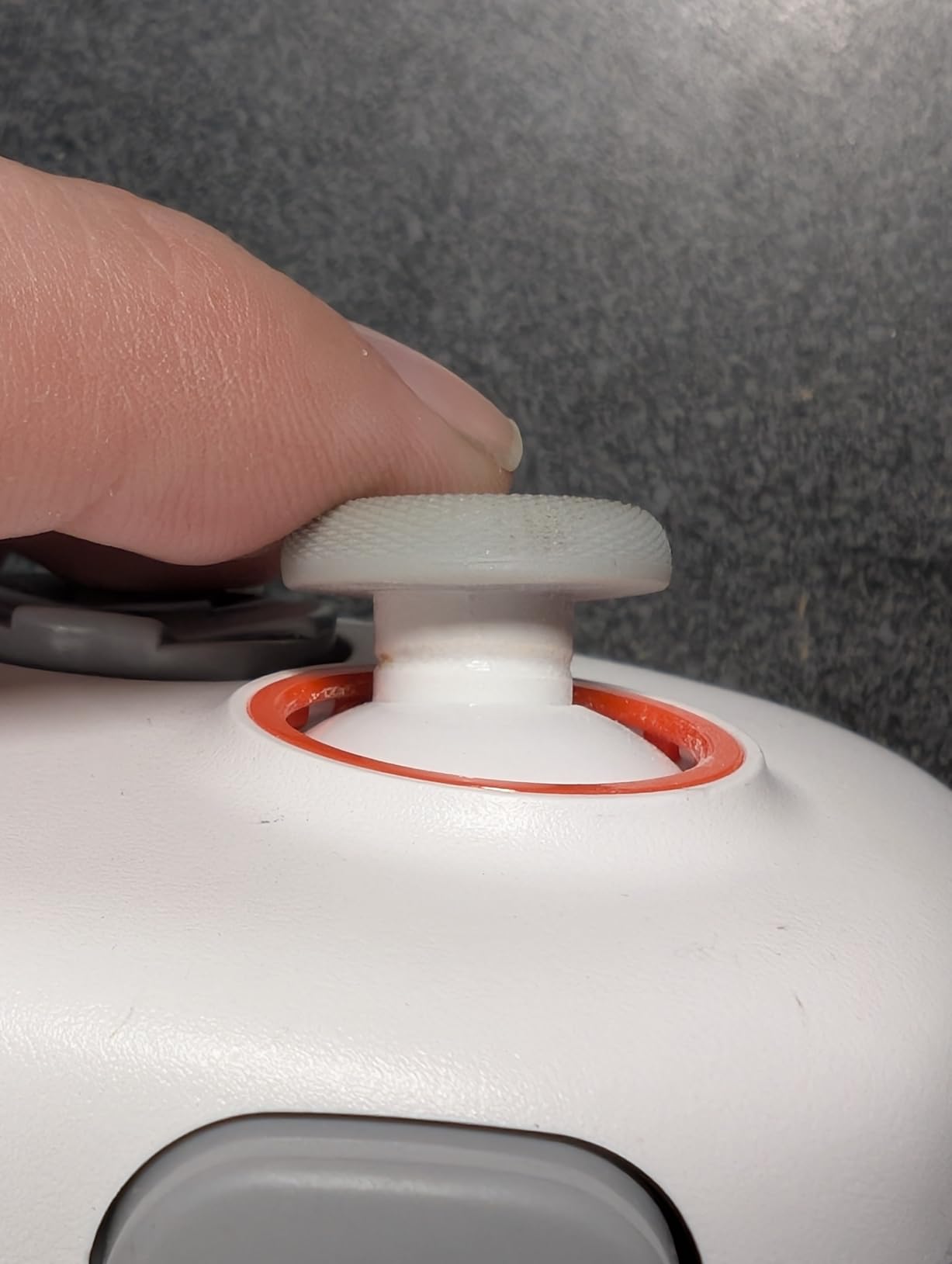
Hall Effect joysticks with anti-friction rings give the same drift immunity as the more expensive magnetic pads. Reviewers note the sticks glide smoothly rather than catching at the edge, which is the friction ring doing its job as the rubber wears.
1000Hz polling is a spec most people in this price range do not get, and it applies over the dongle and wired connections. That makes it a credible competitive option on PC rather than just a casual pad, which is a stronger position than its size suggests.
Multi-platform support is the core argument. The controller works with Switch and Switch 2, PC, Android and iOS, and the GameSir app plus GameSir Connect handle firmware, dead zones, vibration intensity and button testing across all of them.
The mechanical circular D-pad uses micro switches for a tactile, arcade-like feel, which suits platformers and fighting games. A two-way trigger lock and a hair trigger mode triggered by the M plus LT or RT combination give you a short pull without an app.
The 600mAh battery is the weak point. Owners put real-world play at roughly 4 to 6 hours, and it is not user-replaceable, so a long trip without a charger ends the session. There is also a reported quirk where the controller powers itself back on when the charging cable is unplugged.
Bluetooth re-pairing to a new device is described as difficult and can require a firmware rollback, so pair it with the devices you will actually use before you travel. The back buttons have no lockout switch, which is worth remembering in games where accidental presses are costly.
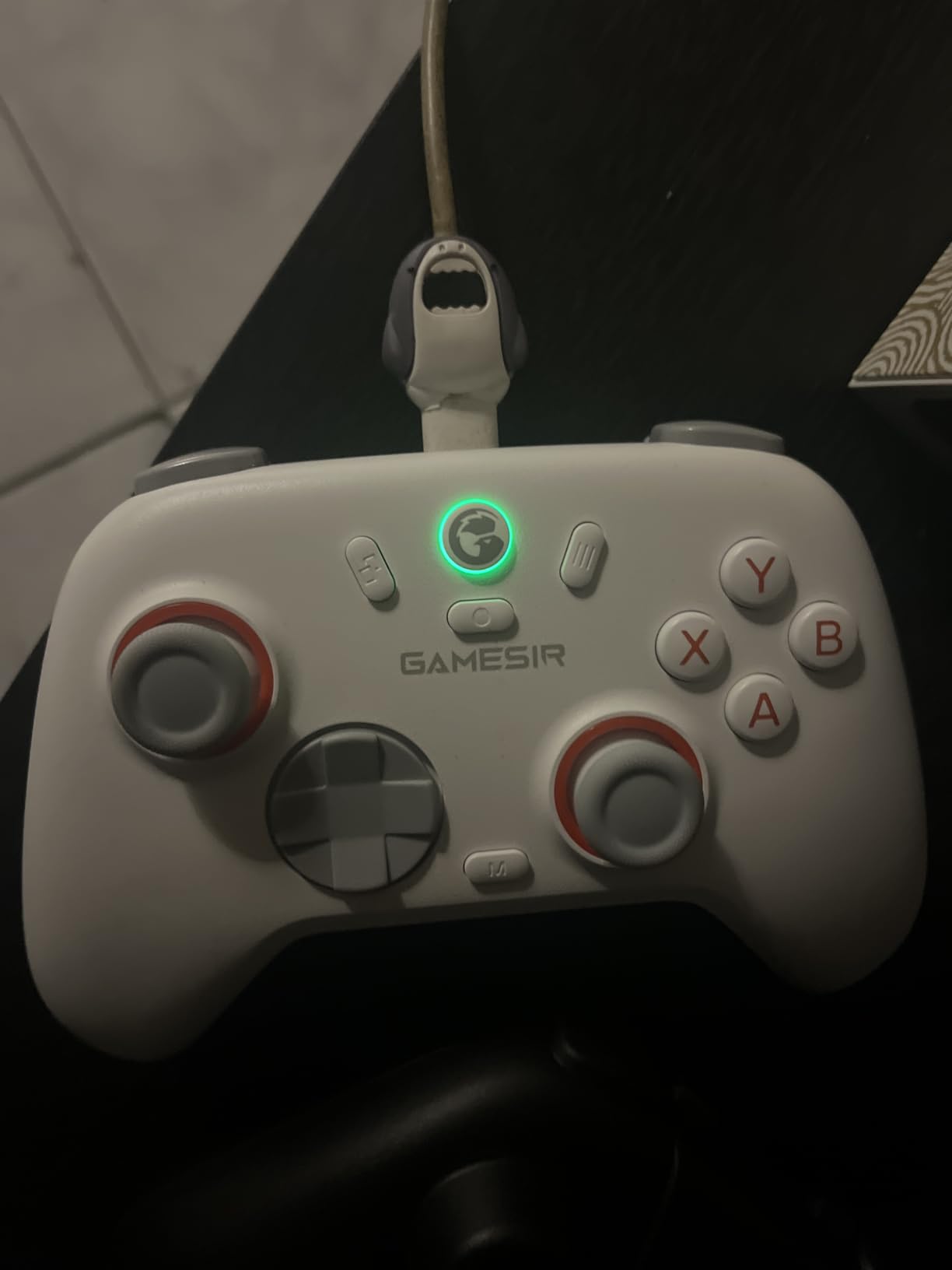
Best for travelers and multi-device players who want drift-free sticks at a modest outlay. Skip it if your sessions run long without a charger nearby, or if you play on Xbox consoles.
Full-size ALPS analog sticks
Remappable rear buttons
Docked BLE and wired modes
40 hour battery
The Backbone Pro solves a specific problem: on-screen touch controls are imprecise, and most mobile pad accessories use thumbsticks small enough to feel worse. The Pro uses full-size ALPS analog sticks, a precision D-pad and tactile face buttons, which makes it the most accurate phone controller here.
The review base is the smallest in this roundup at 494 ratings, so treat the owner feedback as thinner evidence than the rest of the list. What those owners do agree on is stick quality and the flexibility of the three-mode design.
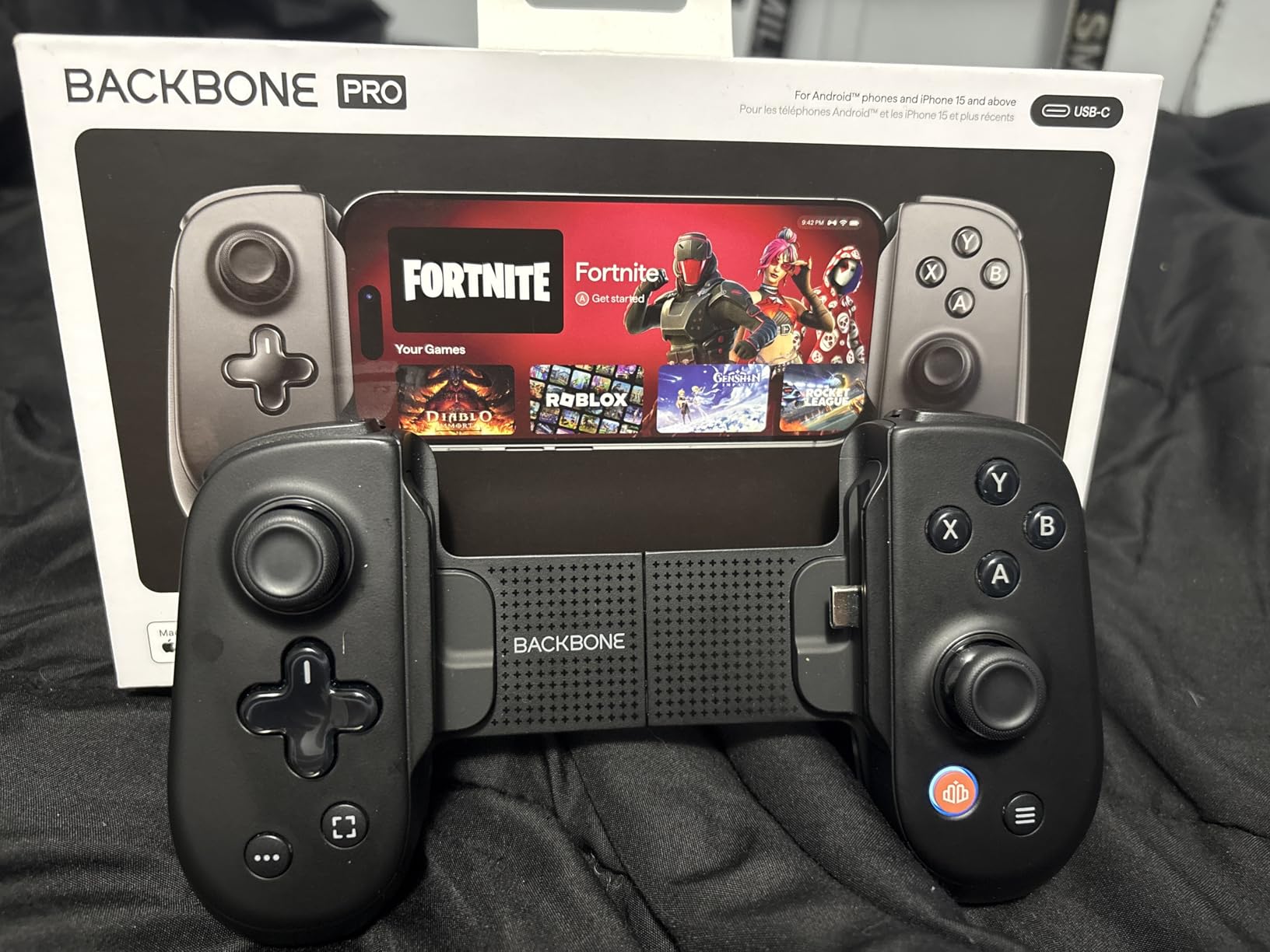
Full-size ALPS analog sticks are the reason this pad exists. They match the scale of sticks on a console controller, so muscle memory transfers directly from PS5 or Xbox. A precision D-pad and tactile face buttons complete the layout, and the sticks glide rather than drag.
Rear buttons are remappable and the grips are shaped for longer holds, which helps in games where you are bracing for a fight. They do sit close to the grip, and owners report they can be pressed during intense play, so bind them to actions you can live with losing.
Docked, wireless Bluetooth and wired USB-C are the three modes. Docked means the phone powers the controller, so battery life is not the constraint. Wireless BLE gives up to 40 hours. Wired USB-C is the low-latency option for competitive titles where input delay matters.
Magnetic adapters are a practical detail that matters more than expected: they let the controller fit a phone with a case installed, which removes a very common reason mobile pads sit unused in a drawer.
You need a compatible phone, meaning an iPhone 15 series or newer, or a USB-C Android device. Streaming Xbox and PlayStation console games through the controller requires the optional Backbone+ subscription, so check that before assuming console streaming is included.
There are also no trigger stops or adjustable trigger travel, and some games still need on-screen touch input for menus and shops. For pure mobile games, this is a strong setup; for console streaming, budget for the subscription as part of the decision.
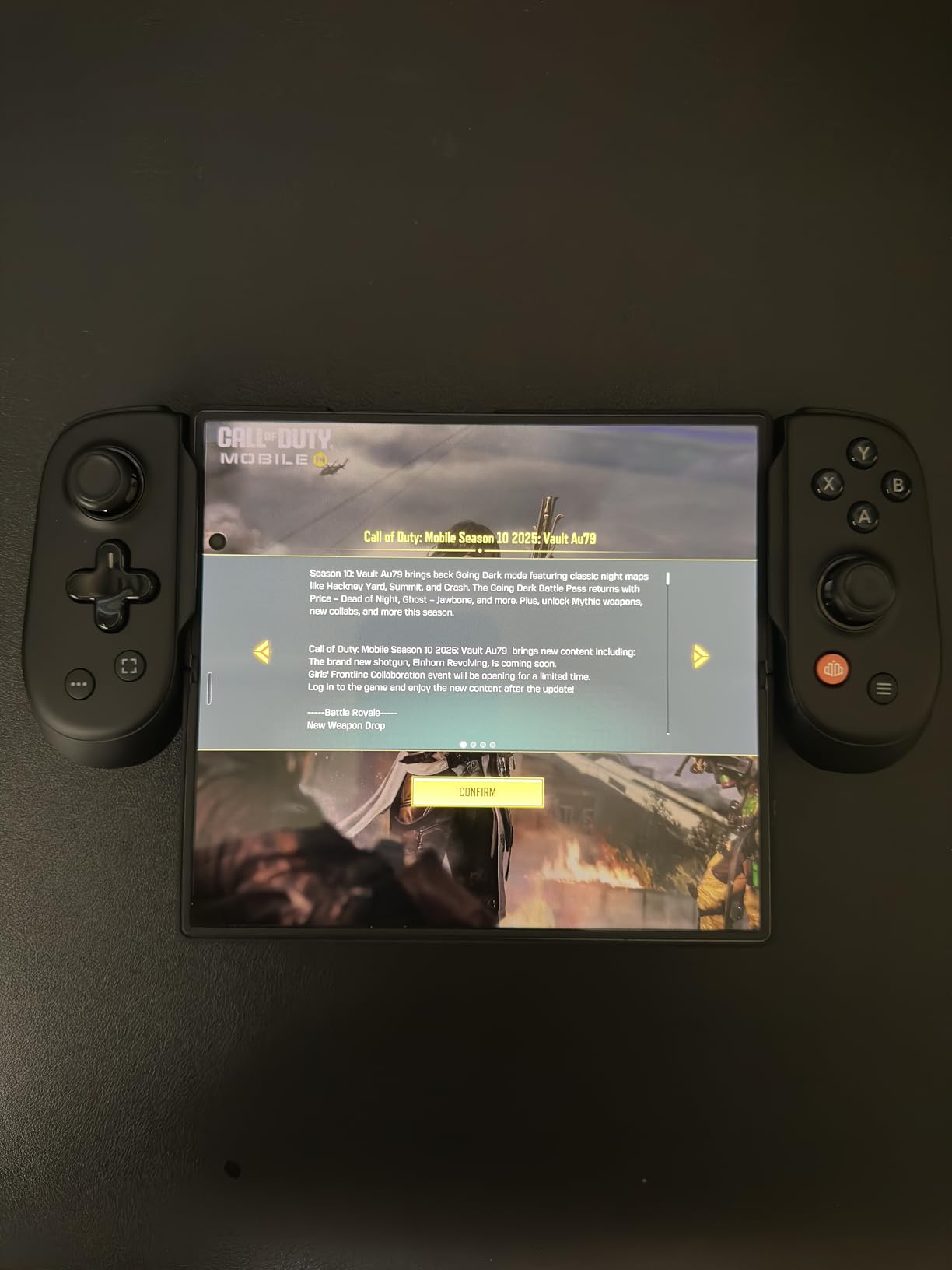
Best for mobile players who want console-quality controls, and for people who travel and game on a phone. Skip it if you do not own a compatible phone, or if you want console streaming without a subscription.
Officially licensed Xbox
Hall Effect joysticks
Symmetrical stick layout
Precision D-pad
The Competitor exists for a specific player: someone who prefers the symmetrical stick layout but plays Xbox. Officially licensed, with Hall Effect joysticks and impulse triggers, it is a DualSense-shaped pad for a Microsoft console, and PlayStation converts are the loudest advocates.
With 538 ratings at 4.3, satisfaction centers on the layout and on a precision D-pad that registers diagonals cleanly. The recurring gaps are no wireless mode, no trigger stops and no gyroscope.
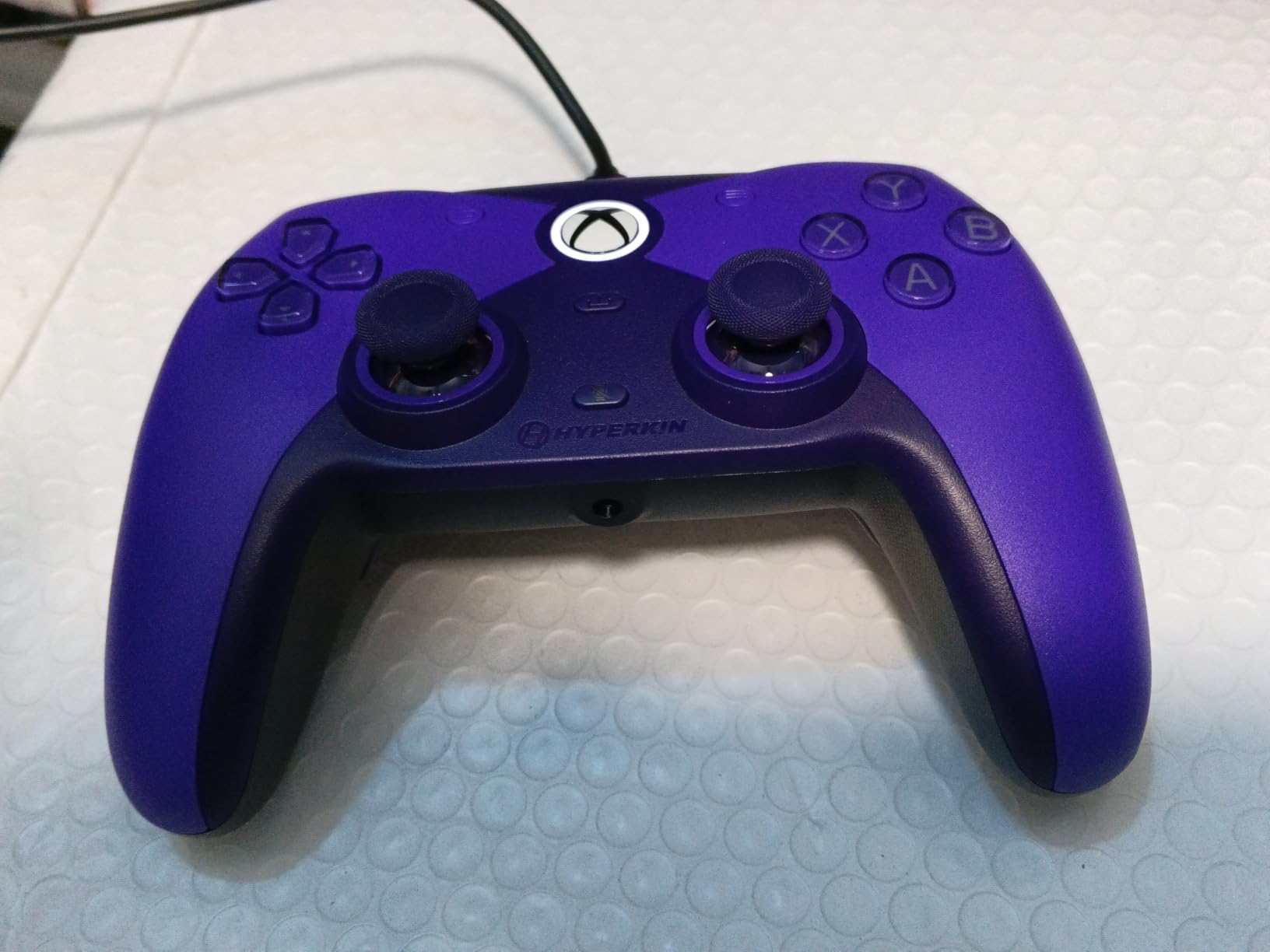
Symmetrical analog sticks sit in the same positions as the PlayStation arrangement rather than the offset Xbox one. If you grew up on that layout, the switch to Xbox’s offset sticks takes a few weeks of adjustment that most people describe as the main barrier to switching brands.
Hall Effect joysticks with friction rings handle the drift question the same way the other magnetic pads do, with no contact wear to degrade. That makes this an unusual combination: an official-style licensed pad with magnetic sticks at a mid-tier outlay.
The translucent D-pad is the standout. Owners single out that it registers diagonals without double or missed inputs, which is the specific complaint aimed at the round, wobbly D-pads that dominate this category. For platformers and isometric games, that is worth more than it sounds.
The face buttons are quiet and tactile, avoiding the loud mouse-click switches common on rival third-party pads. The trade-off is a lighter feel. Some players describe the quietness as a lack of feedback after the first month rather than a feature.
This is a wired-only pad with no wireless or Bluetooth option, which is the biggest practical limit. On a TV-based Xbox setup it means sitting near the console or running a cable, and it rules the pad out for a lot of living-room play.
There are no trigger stops, no instant trigger mode and no mouse-click trigger option, so it will not satisfy a player who wants hair-trigger response. There is also no gyroscope or touchpad, and the textured plastic can feel slippery over long sessions. Swappable stick caps and a long USB-C cable are included, which helps with longevity and setup.
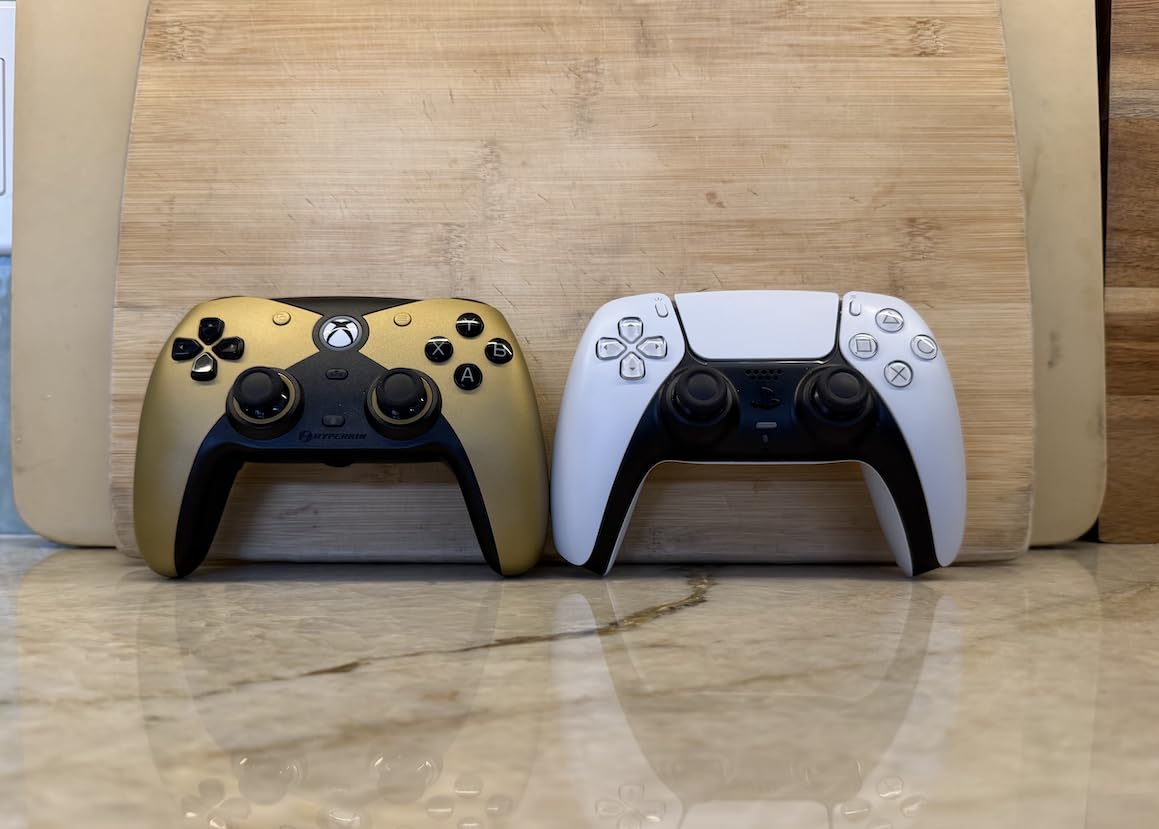
Best for Xbox players coming from PlayStation, and for anyone who wants a quiet, precise D-pad with drift-free sticks at a modest outlay. Skip it if you play on a couch, need trigger stops, or want motion controls.
Start from the platform, not the spec sheet. Your console determines the button layout you have learned, and it decides whether a controller’s extra features will be exposed by games or ignored. Then pick your stick type, your trigger style, and only then look at connectivity and battery. The order matters because it stops you paying for a feature the platform will not use.
PlayStation players get adaptive triggers and haptics on the DualSense and DualSense Edge, and those features are the reason many PS5 players never leave the first-party pad. Xbox players have the deepest third-party support of any platform, which is why so much of this roundup is Xbox-layout.
Nintendo is the exception, because the Switch 2 Pro Controller only pairs with that console and its third-party options are limited. PC is the most permissive: any pad that speaks the Xbox layout or standard USB HID will work, and Steam Input can map almost anything.
Licensing matters most on PlayStation and Nintendo. Officially licensed pads get firmware support, button prompts and accessory compatibility. Unofficial pads work but often show guest-controller prompts and miss platform features. On PC, licensing is largely irrelevant.
Potentiometer sticks read position from a wiper sliding across a resistive track. They are cheap, they feel familiar, and physical contact wear eventually causes drift. Every official first-party pad in this roundup uses this mechanism, including the DualSense and the standard Xbox Wireless Controller.
Hall Effect sticks read the magnetic field of a magnet instead of a contact. Nothing touches, so nothing wears, and drift from the sensor is essentially eliminated. The trade-off is that some players find the very stable magnetic sticks slightly less “floaty” than a worn potentiometer they are used to.
TMR sticks, short for tunneling magnetoresistance, are the higher-precision magnetic option. They detect smaller field changes, which means a lower natural dead zone and finer control near center. The 8Bitdo Ultimate 2 and the GameSir G7 Pro use TMR. Expect to run a one-time dead zone calibration, because TMR sensors can read a small natural offset.
Does a Hall Effect controller get drift? Not from sensor wear, which is the point. The remaining issues are physical: spring loosening in the stick module, or debris around the housing. Those are real but far less common than potentiometer failure.
Drift happens when a potentiometer’s resistive contact point degrades, letting the controller report a small movement when nothing is touching the stick. It shows up as a character walking on their own, a menu cursor drifting, or a camera that will not sit still.
The cost is not the controller, it is the cycle. Players on r/Controller and r/pcmasterrace describe replacing pads on a repeat schedule for exactly this reason, and the recurring frustration is buying a new standard pad every year or two. A magnetic controller changes the calculation, because the wear mechanism is removed rather than managed.
Two cheaper mitigations exist if you are not ready to switch. Raise the dead zone in the companion app, which masks a small offset and can keep a pad usable for months. And clean around the stick base with a dry cloth, which fixes debris-related input. Neither addresses worn contacts, so both are delays rather than fixes.
Polling rate is how many times per second the controller reports your inputs to the device. 125Hz is the old default, 500Hz is common on modern pads, and 1000Hz is the top of the consumer range. Higher is not always better, but it never adds delay.
What does 1000Hz buy you in real play? At typical internet ping, a few milliseconds of input delay is hard to isolate by feel. In offline shooters, or when you are comparing two pads back to back, the lower reporting delay shows up as slightly more immediate aim correction. The 8Bitdo Ultimate 2C, the 8Bitdo Ultimate 2 and the GameSir G7 Pro all reach 1000Hz.
One nuance most roundups miss: on Xbox consoles, polling is managed by the console and is not user-configurable, so a 1000Hz pad does not give you 1000Hz on a Series X. The spec matters most on PC, where you control the connection.
Trigger travel is the distance a trigger moves before it registers. Long travel is forgiving; short travel fires sooner and suits competitive shooters. Hair trigger locks, which appear on the Elite Series 2, let you step between the two on one controller.
Rear paddles and back buttons bind an action to a finger you are not using for movement, which is why they show up in almost every competitive recommendation. The G7 SE, the 8Bitdo Ultimate 2, the GameSir G7 Pro and the Backbone Pro all include them. The lockout function matters more than most buyers expect, because a paddle that slips mid-match is worse than no paddle.
Be realistic about the learning cost. New paddles require a muscle-memory adjustment, and forum users switching brands warn it takes a week or more. If you play mostly single-player or co-op games, the payoff is small and the adjustment is real.
Wired is the lowest-latency option and needs no battery. It also means a cable at a desk and a limited reach at a TV, which is why the G7 SE, the G7 Pro and the Hyperkin Competitor are desk-first designs.
2.4GHz dongles are the compromise most people should pick. They deliver low latency, they keep the controller’s own battery for input, and the 8Bitdo Ultimate 2C, the 8Bitdo Ultimate 2 and the GameSir Nova Lite 2 all include one. The failure mode is a dropped connection, which the 8Bitdo Ultimate 2C owners report occasionally.
Bluetooth is the most convenient and the least consistent. Reviewers across several of these products report noticeable delay on Bluetooth depending on the host device. Treat Bluetooth as a convenience mode, not a competitive one, and keep a 2.4G or wired option available for the games that demand it.
Battery life quoted as hours is usually measured at low brightness and no vibration. Real play shortens it. Treat 40 hours as roughly two weeks of casual evening sessions, and shorter figures as a monthly charge. The Elite Series 2 and the Backbone Pro lead this group on quoted endurance, and 8Bitdo Ultimate 2C owners report charging about monthly.
Repairability is the axis no roundup covers and the one that decides cost over five years. A controller with swappable stick modules, trigger stops or cables gets repaired. One with a sealed battery and soldered sticks gets replaced. The Elite Series 2 and the DualSense Edge lead on replaceable parts; the Backbone Pro and the 8Bitdo Ultimate 2 do not, because their batteries are internal.
Hand size comes up repeatedly in controller forums and is rarely addressed. The compact pads here, the 8Bitdo Ultimate 2C and the GameSir Nova Lite 2, suit smaller hands and are regularly criticized by larger players for feeling cramped.
Full-size bodies such as the Elite Series 2, the standard Xbox Wireless Controller and the DualSense fit larger hands but are heavier over long sessions. The Nintendo Switch 2 Pro Controller sits in a useful middle ground at 13.12 ounces. If you are between sizes, the deciding factor is whether you play with a tight or loose grip, and a loose grip favors a larger body.
The Xbox Elite Series 2 is the best overall gaming controller because adjustable-tension thumbsticks, swappable stick modules and up to 40 hours of battery life make it the most repairable option. For pure value the standard Xbox Wireless Controller is the pick, and for 1000Hz polling on a modest budget the 8Bitdo Ultimate 2C leads.
Hall Effect controllers do not develop drift from sensor wear, because they read a magnetic field instead of a physical resistive contact, so there is no surface to degrade. Residual problems are mechanical instead, such as spring loosening inside the stick module or debris around the housing. Drift still happens from software dead zone settings, which need calibrating on TMR sticks.
There is no single answer, and it varies by title. Competitive shooters on Xbox commonly favor pads with rear paddles such as the Xbox Elite Series 2. Counter-Strike and Valorant players on PC frequently choose low-latency wired pads with Hall Effect or TMR sticks and 1000Hz polling. Fighting games use dedicated arcade sticks rather than any controller on this list.
The GameSir G7 SE is the best Hall Effect controller for wired play on Xbox and PC, combining magnetic sticks and triggers with lockable rear buttons and a removable braided cable. For wireless PC use the 8Bitdo Ultimate 2C offers Hall Effect sticks with 1000Hz polling over 2.4G, and the Hyperkin The Competitor covers Xbox players who want magnetic sticks in an officially licensed symmetrical pad.
Buy wired if you play competitive shooters on PC, sit at a desk, or want the lowest possible input delay with no battery to manage. Buy wireless with a 2.4GHz dongle if you want low latency without a cable, and treat Bluetooth as a convenience mode only, since reviewers report noticeable delay on that connection across several of these controllers.
If you want the best gaming controller overall and plan to keep it for years, the Xbox Elite Series 2 wins on repairability, adjustable sticks and battery life. If you want one dependable pad that covers Xbox, PC and mobile without fuss, the standard Xbox Wireless Controller in Electric Volt is the one, with the highest owner rating among conventional pads at 4.6.
If drift has burned you before, the answer is a magnetic stick. The GameSir G7 SE is the wired desk option, the 8Bitdo Ultimate 2C is the budget PC option with 1000Hz polling, and the 8Bitdo Ultimate 2 adds TMR precision, motion control and a charging dock for wireless setups. Competitive PC players who want the tightest sticks should look at the GameSir G7 Pro, while Xbox console players who need wireless should stay with the Elite or the standard pad.
PS5 players get the adaptive triggers and haptics only the DualSense and DualSense Edge offer, and Switch 2 players get the smoothest haptics in the roundup from the Nintendo Switch 2 Pro Controller. If you play away from home, the GameSir Nova Lite 2 covers Switch, PC and mobile in one light body, and the Backbone Pro is the right pick if your gaming happens on a phone.
Whatever you choose, the two things worth checking before you settle are the stick type and the parts you can replace. Those two decisions decide whether the controller is a five-year tool or another item in a replacement cycle. Check the current details for any of these picks before you buy, since controller bundles change more often than the hardware does.