Physical Address
304 North Cardinal St.
Dorchester Center, MA 02124
Physical Address
304 North Cardinal St.
Dorchester Center, MA 02124

The single most common reason a home hatch fails has nothing to do with the incubator’s heater, its fan, or the turning mechanism. It is humidity, and it usually fails silently because the gauge built into the machine is telling you a comforting lie.
That is why I treat the incubator hygrometer as the cheapest insurance in the whole operation. It is a small sensor that decides when you add water, when you stop, and when lockdown begins, and it does that job roughly 500 times across a 21-day chicken hatch. A sensor that is off by 10% RH is not a minor inconvenience. It slowly pulls moisture out of the egg, and the embryo dies late, right when you thought everything was going fine.
Over the last few seasons our team has run ten different humidity meters through tabletop and cabinet incubators, cross-checked them against each other, and watched what the readings did overnight while the eggs were doing their slow, invisible work. What follows is the shortlist, plus the placement and calibration methods that matter more than any spec sheet.
If you want the wider picture first, our general guide to the best hygrometers for every room in the house covers the non-incubation categories, and the full hygrometer roundup goes deeper on accuracy testing. This one is only about eggs.
Three products earned a place here. One is the most dependable reading you can get, one is the only one that logs your whole run to a phone, and one is built by people who sell nothing but incubation equipment.


Every pick below appears in this table with the feature that actually matters for a hatch. Read the accuracy column first, because that is the one that decides your hatch rate.
| Product | Features | |
|---|---|---|
| TempPro TP50 Digital Hygrometer Thermometer |
|
Check Latest Price |
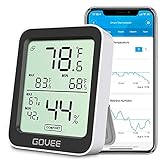 Govee H5075 Bluetooth Hygrometer Govee H5075 Bluetooth Hygrometer |
|
Check Latest Price |
| IncuTherm Plus Digital Thermo-Hygrometer |
|
Check Latest Price |
 JEDEW 2 Pack Mini Hygrometer JEDEW 2 Pack Mini Hygrometer |
|
Check Latest Price |
 Zoo Med TH-31 Digital Gauge Zoo Med TH-31 Digital Gauge |
|
Check Latest Price |
 Zoo Med Economy Analog Gauge Zoo Med Economy Analog Gauge |
|
Check Latest Price |
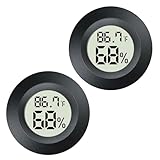 MEGGSI 2 Pack Mini Digital Meter MEGGSI 2 Pack Mini Digital Meter |
|
Check Latest Price |
 Dual External Probe Thermo-Hygrometer Dual External Probe Thermo-Hygrometer |
|
Check Latest Price |
 QPEUIM 2 Pack Mini Meter QPEUIM 2 Pack Mini Meter |
|
Check Latest Price |
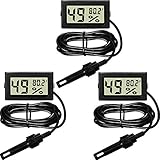 Weewooday 3 Pack With Probes Weewooday 3 Pack With Probes |
|
Check Latest Price |
We earn from qualifying purchases. CERTAIN CONTENT THAT APPEARS ON THIS SITE COMES FROM AMAZON. THIS CONTENT IS PROVIDED 'AS IS' AND IS SUBJECT TO CHANGE OR REMOVAL AT ANY TIME.
±2-3%RH and ±1°F
High and low records
Magnetic back and stand
AAA battery included
This is the meter I put in first. It carries a 4.6 rating across more than 155,000 reviews, and more important than the star count, owners consistently report that the ones they own agree with each other to within about a degree and a percent.
That repeatability is what you actually need in an incubator. You are not chasing a laboratory reference, you are chasing a number that does not wander between hour four and hour five, because a drifting reading is worse than no reading at all.
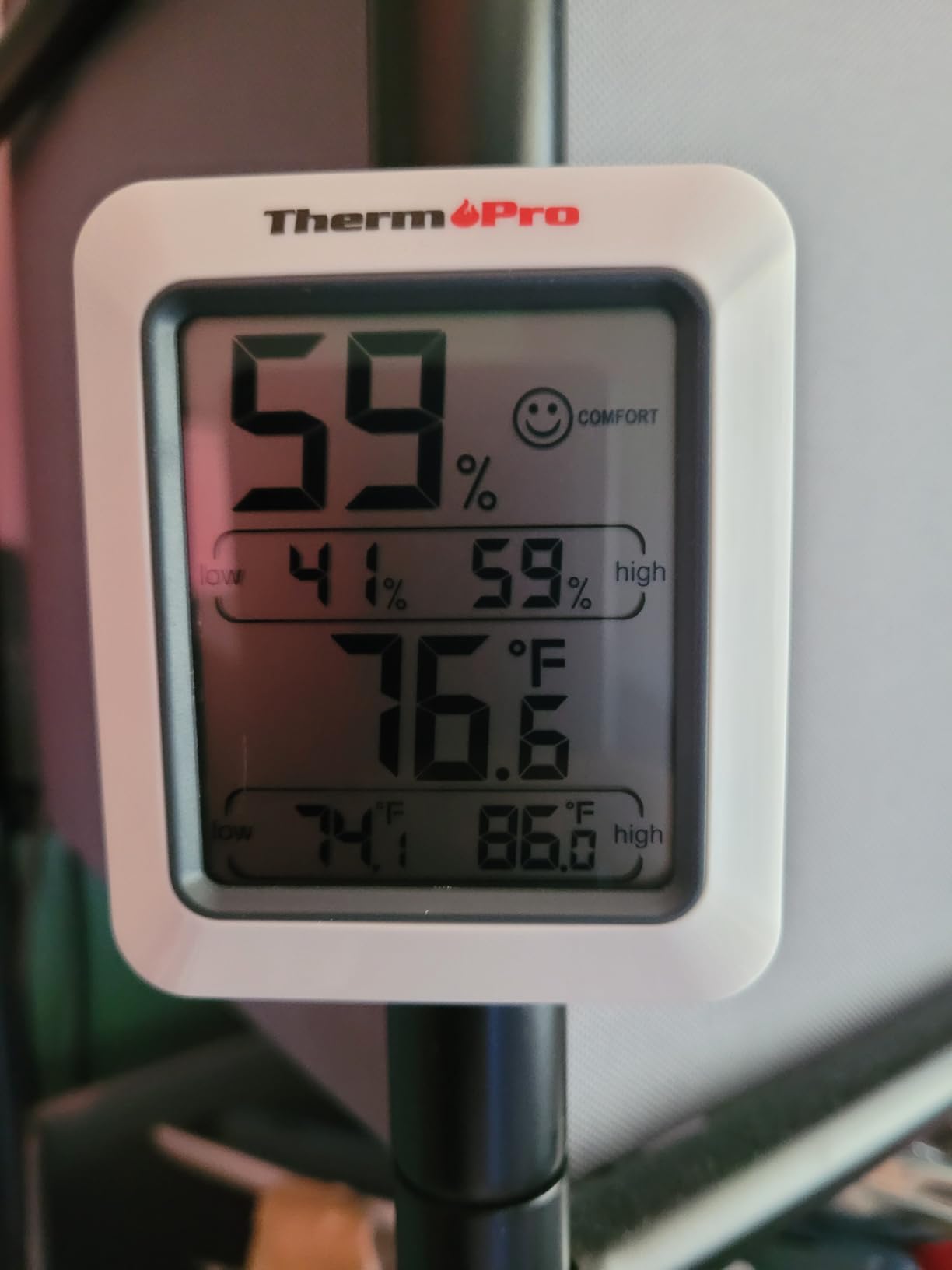
The stated tolerance here is ±1°F on temperature and ±2-3%RH on humidity, with the screen refreshing every 10 seconds. Over a 21-day chicken incubation, three percent on either side of your target is the difference between a normal 11-13% egg weight loss and an embryo that runs short on moisture in the last week.
The high and low record function is the part most owners underrate. If you come back in the morning and the high reads 74% when you set lockdown for 65-70%, you know the water pan or a vent adjustment is doing something you did not intend.
This is an indoor-rated body gauge with no remote probe, so the whole meter has to sit inside the incubator, at egg height, away from the water pan and away from any vent or damp wall that would skew the reading. The magnetic back and fold-out stand make that positioning easy to adjust as the eggs rise through the run.
One AAA battery is included, which is the least fiddly power arrangement in this list. The trade-offs are real: no logging, no alerts, and a display that is not backlit, so late-night checks mean a flashlight.
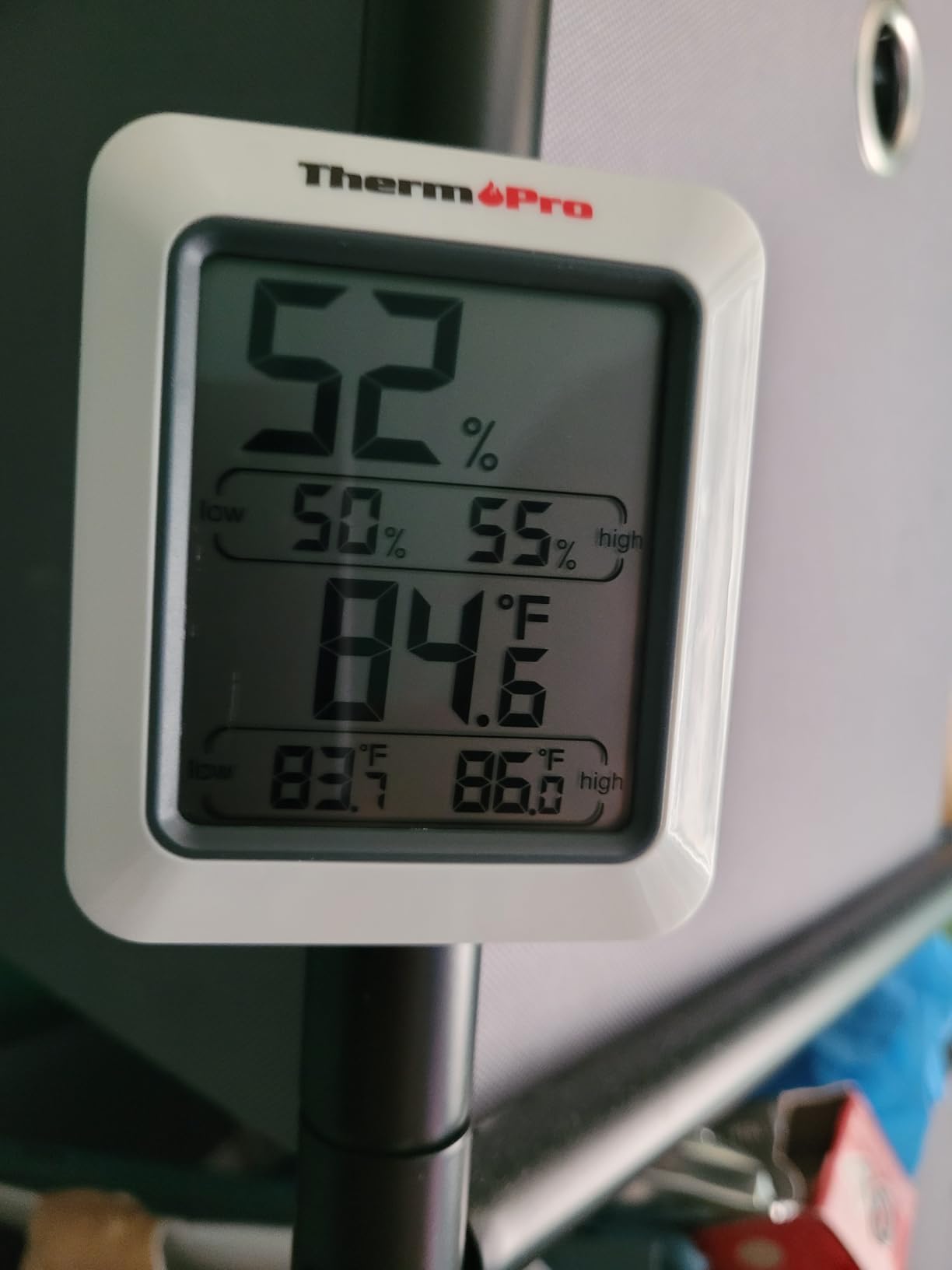
Buy this one if you run a single incubator, want a single trustworthy number, and value high and low history over graphs. It is also the smartest cross-check purchase in the category, because you can seat it next to a cheaper sensor and see whether the pair agrees.
Skip it if you need remote monitoring, if you cannot open your incubator to check a reading, or if you want a record of humidity through the night without writing anything down.
±3%RH Swiss sensor
2-second refresh
164ft Bluetooth
10-90%RH operating range
This is the only pick in the group that produces a real record of your hatch. Instead of remembering to glance at a screen, you open an app and see a curve of every reading the sensor took, which is how you catch a slow leak or a blocked vent on day nine instead of day nineteen.
On Backyard Chickens threads, the Govee is the name that comes up most often when people ask what to put in an incubator, mostly because the phone chart makes a whole 21-day run visible at a glance instead of a stack of handwritten numbers.
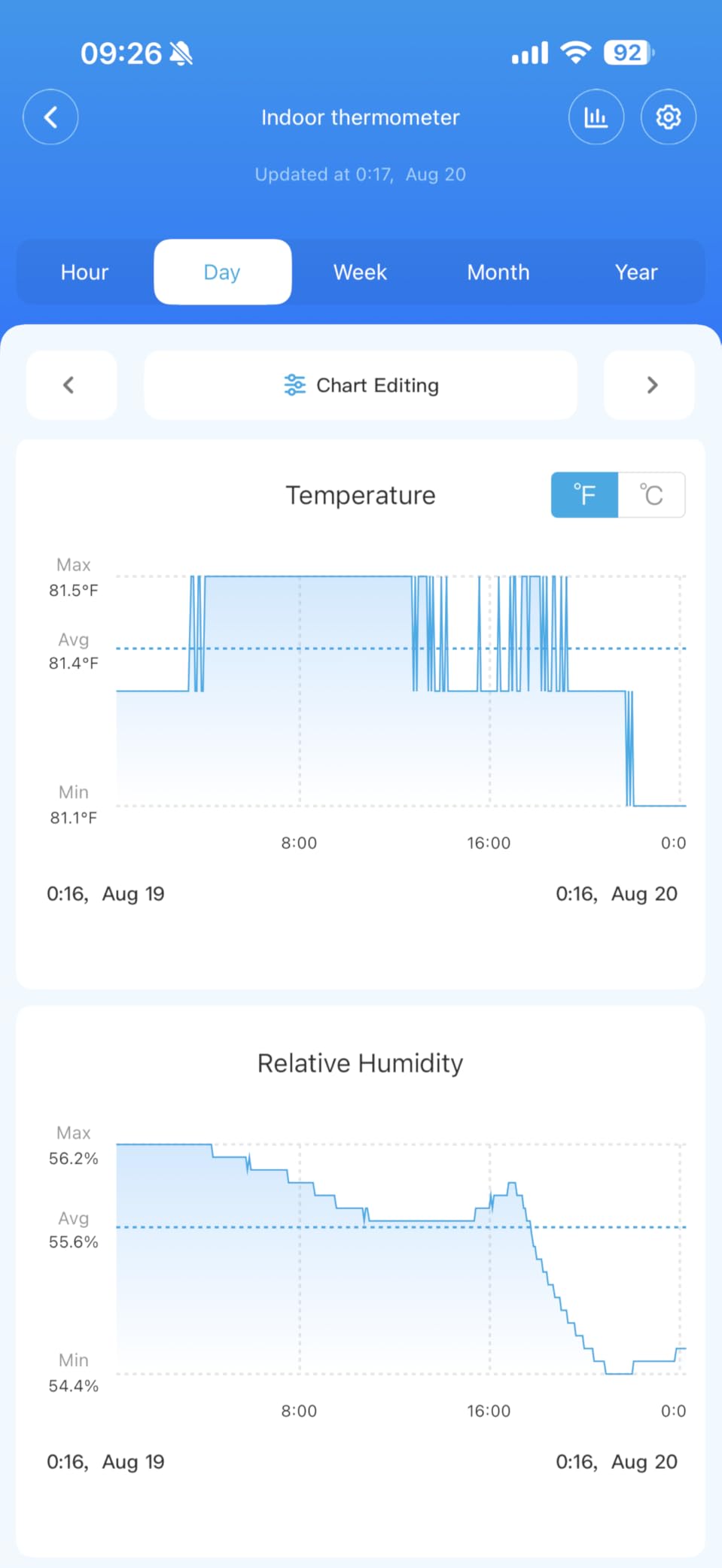
The H5075 uses a Swiss-made sensor rated to ±0.54°F and ±3%RH, and it refreshes about every two seconds. On paper that is the tightest temperature figure here, and in practice the humidity sensor is the part that matters, sitting comfortably inside the ±3% band that experienced hatchers accept.
Alerts push to your phone when the reading crosses the range you set. Set a lockdown band of 65-75% and the phone tells you when something moved, which means you can stop checking the incubator every hour out of pure anxiety.
The specified operating humidity is 10-90% RH, and that ceiling is the one genuine limitation. Goose and Muscovy setups, and any chamber with heavy condensation on the walls, can push a small incubator above 90%, at which point the display is reading past what it was designed to measure.
For chicken, duck and quail eggs, 90% is far above where you should be and the ceiling never comes into play. Reptile work in wet-dry setups is where you would start watching it.
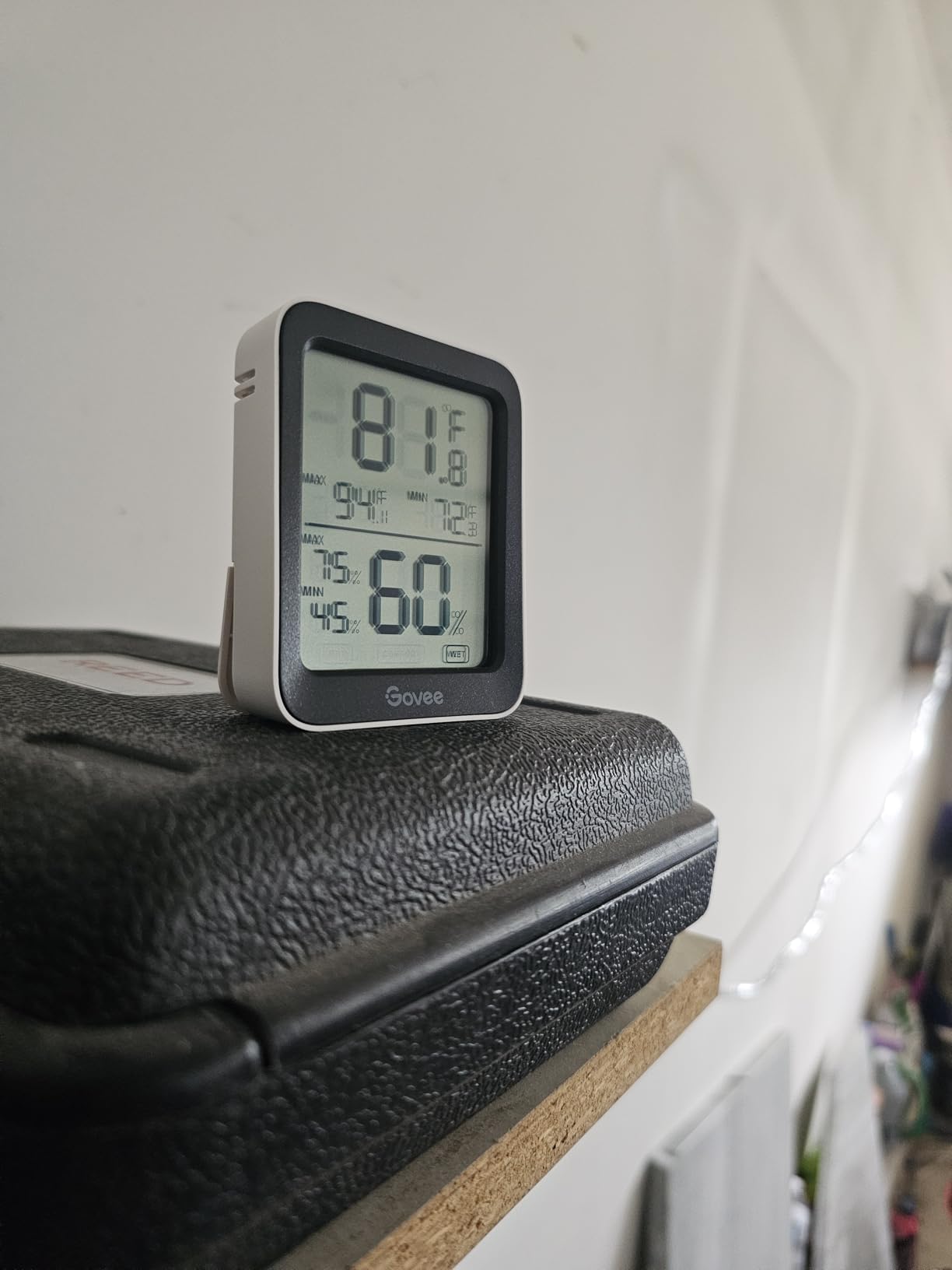
Buy the Govee if you cannot check the incubator regularly, if you want a documented humidity history for a large batch, or if you enjoy seeing the data as much as the hatch. It pairs well with a probe-style gauge: one inside, one logging.
Skip it if your phone will not be in Bluetooth range for most of the day, or if you are running very high-humidity reptile or waterfowl setups where the 90% ceiling becomes a real constraint.
Remote probe with external LCD
Min/max memory for both readings
Celsius and Fahrenheit
2 year battery life
Every other meter on this list is a household humidity gauge that happens to fit inside an incubator. The IncuTherm Plus is the reverse, and you can feel it in the design: a remote probe sized to pass through a vent hole, a display that lives outside, and min/max memory for both channels.
That arrangement solves a real problem. On still-air incubators the whole body of a digital meter inside the chamber takes up egg space, blocks air movement, and puts condensation directly on the electronics.
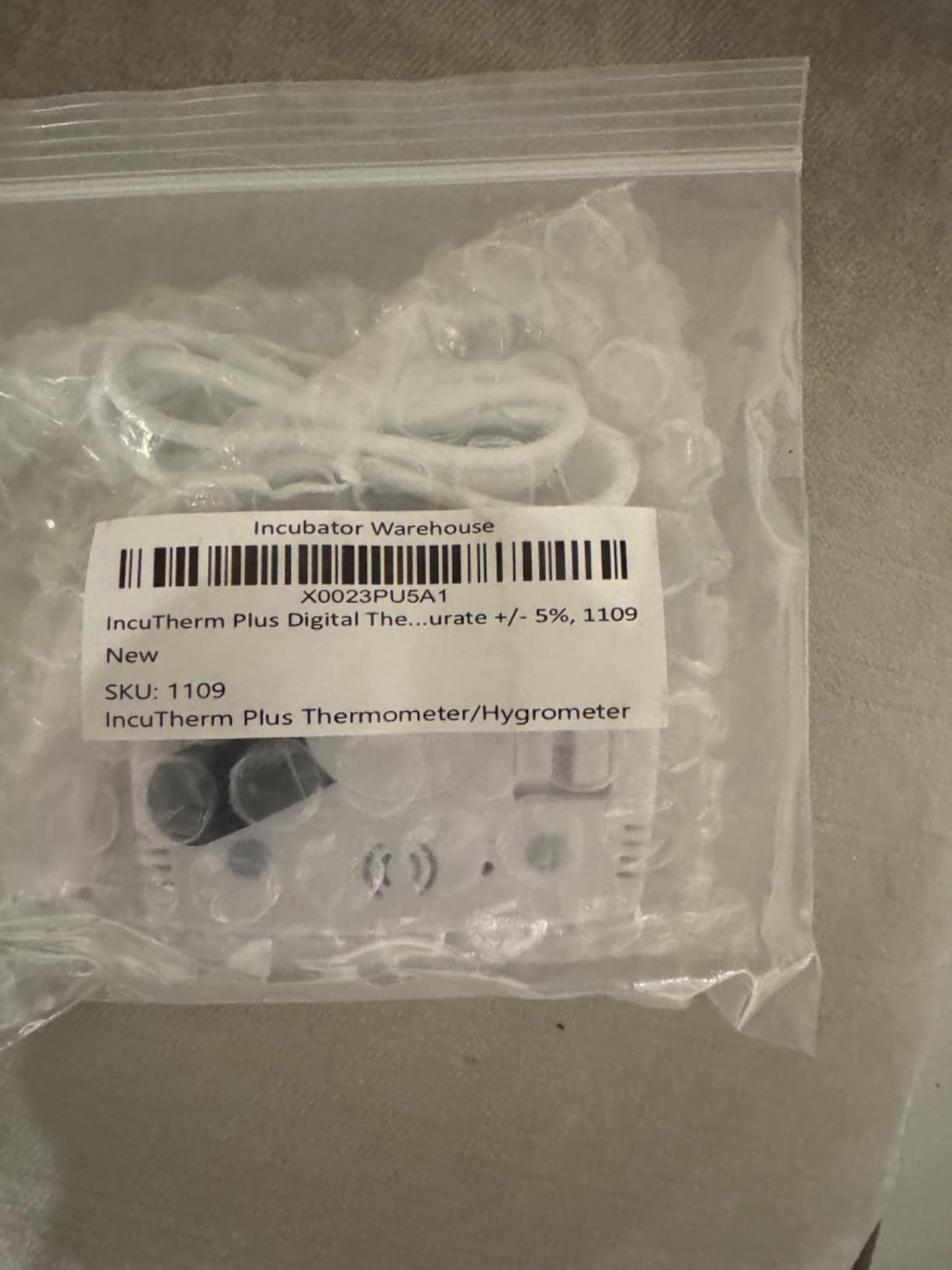
With the probe inside and the screen outside, you check humidity without cracking the lid, which matters more than it sounds. Every lid opening dumps warm, moist air and lets the chamber start recovering, and on a still-air machine that recovery is slow and uneven.
The trade-off is physical. The cable is the shortest path between the sensor and the reading, but it also fixes where the sensor can sit, and the probe needs to end up at egg height, near the middle of the mass of eggs, not in a corner or above the water channel.
Tracking the high and low of both temperature and humidity across the run is the feature that earns this meter its place for larger batches. Hatch rate problems are usually events, not states, and a single overnight spike you slept through is exactly the kind of thing that shows up as a band of late hatches.
The stated battery life is 2 years, and a battery is included in the box. A long battery life is not a gimmick in this category, because a dead sensor in week two means you finish the whole incubation trusting the incubator’s own reading again.
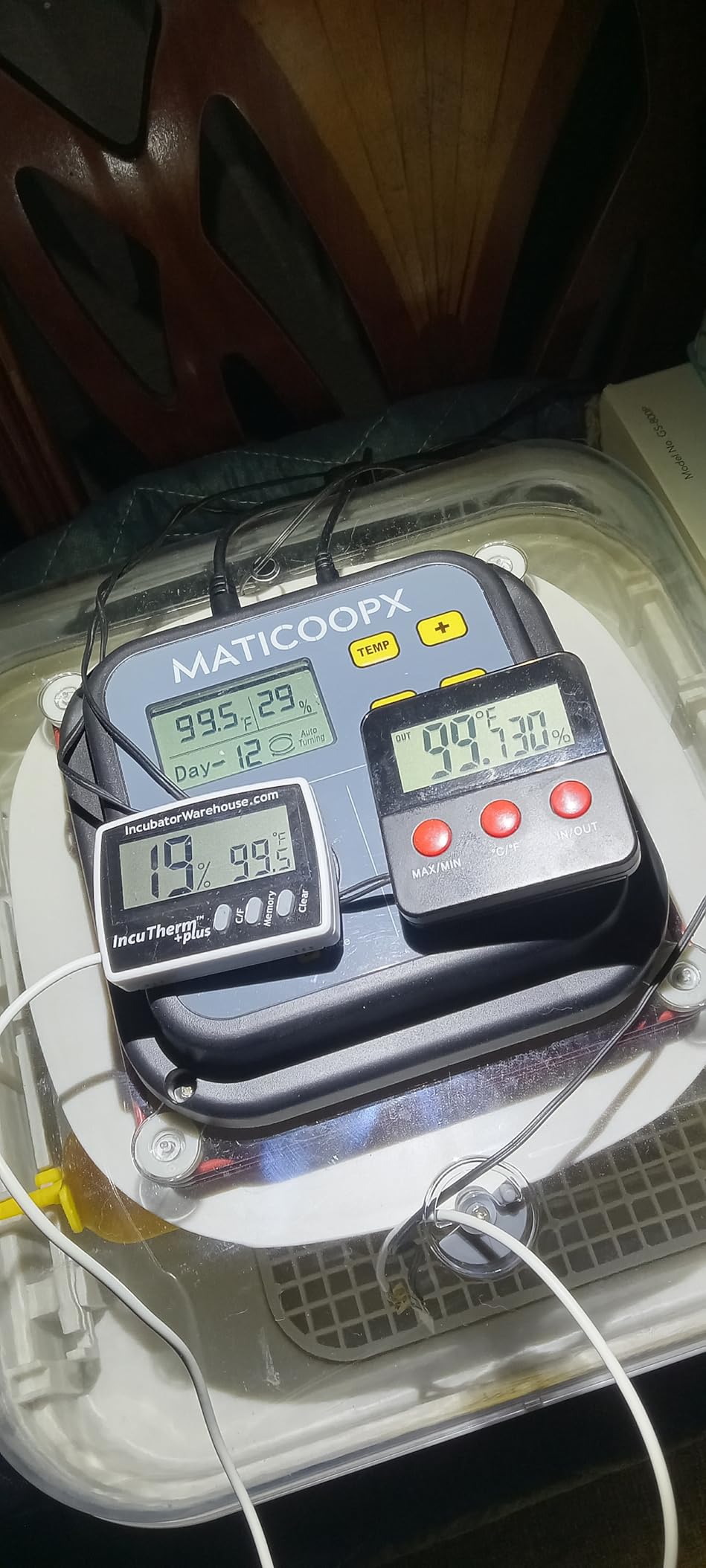
Buy the IncuTherm if you run a still-air incubator, if you hatch larger batches where an internal display would steal egg space, or if you simply do not want to open the lid to check humidity at all.
Skip it if you need a long cable to reach a distant chamber, or if app logging matters more to you than a wired, battery-light setup.
±1°F and ±3%RH
10-second refresh
Two meters in the pack
LR44 cell plus a spare
The JEDEW pair is the buy I recommend most often, and the reason is the second unit rather than the first. Cross-checking two gauges turns a cheap sensor into a more trustworthy number, because when two independent meters read within a couple of percent you can stop second-guessing the reading.
Across more than 15,000 reviews it holds a 4.5 rating, with buyers pointing to the size, the sealed-chamber friendliness and the battery life rather than anything exotic.
Among experienced keepers, running two or three hygrometers and comparing readings is a well-established habit. A single sensor can drift, sit in a bad spot, or simply be wrong from the factory, and none of those failures announce themselves.
Two meters from the same pack share the same weakness, so put one at egg height in the middle of the chamber and the other low in a corner. If the corner reads several percent lower, that is airflow telling you something, not the sensor failing.
Stated accuracy is ±1°F and ±3%RH over a 10-99% RH working range, refreshing every 10 seconds. Three percent is a real but manageable tolerance, which is why we keep coming back to pairing it with a second reading rather than trusting it alone.
There is no calibration control, so if the pair reads consistently low against your salt test reference, you correct by adding or removing water against what the display says, not by adjusting the display. That works fine as long as you know the offset is constant, which it usually is.
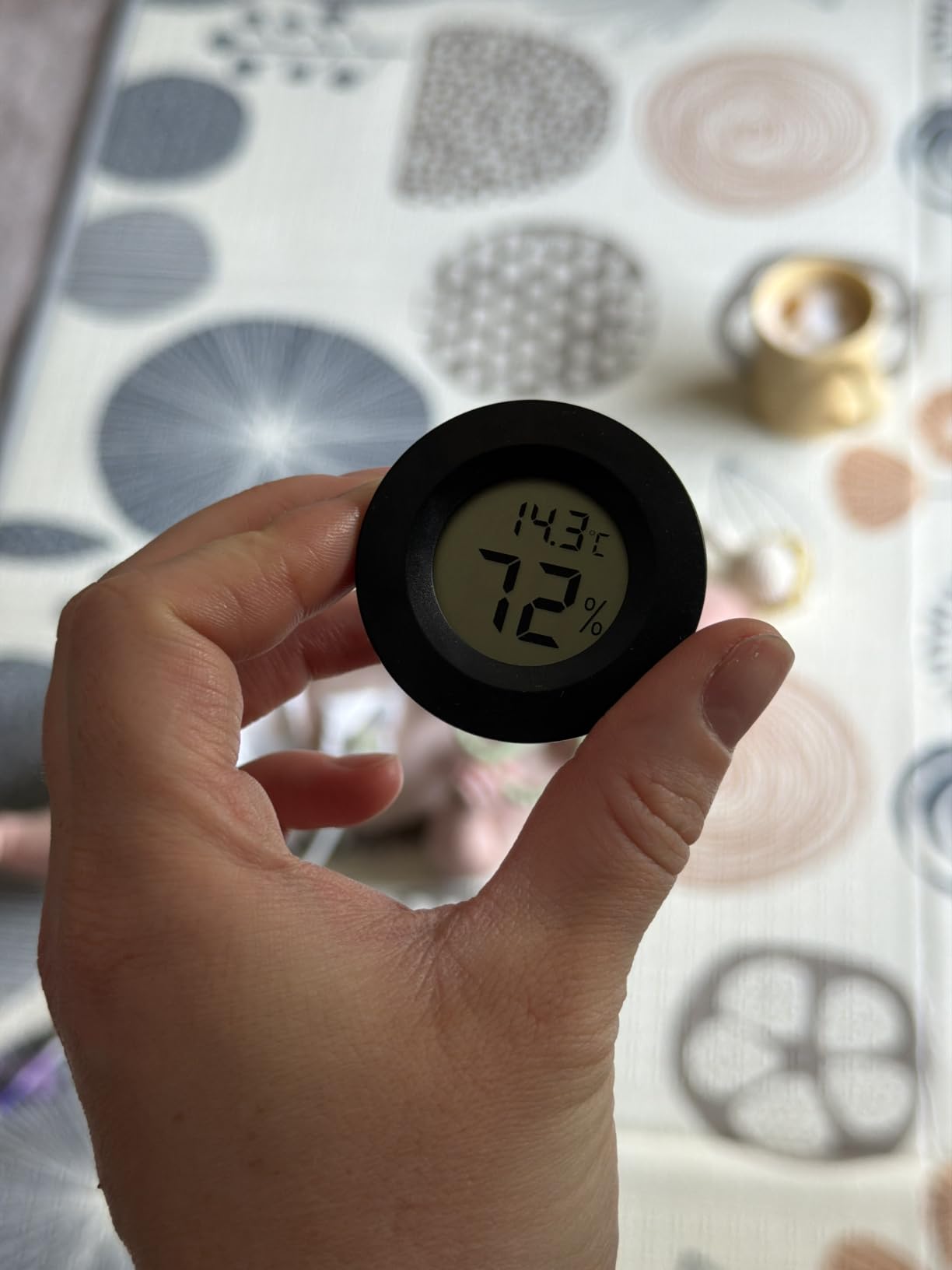
Buy the pair if you are hatching your first batch, if you run two incubators, or if you want a cheap second opinion beside a more expensive primary gauge. The dual LR44 arrangement, one cell plus a backup, also means a flat battery does not end your logging mid-hatch.
Skip it if you need recorded data, alarms, or a reading you can check without opening the incubator.
Digital temperature and humidity readout
Waterproof probe to 1 inch
LR44 battery
0.1 resolution
This is the meter to look at if your hatching happens in jars, small still-air boxes, or reptile-style enclosures where a full-size monitor will not go. The probe is short and rated for immersion to 1 inch, so it can sit in a water channel or rest against egg mass without any fuss.
It is also the gauge many small-scale reptile and amphibian keepers already own, and it reads temperature and humidity together on a single clear face, which is what you want when a species has a narrow safe band.
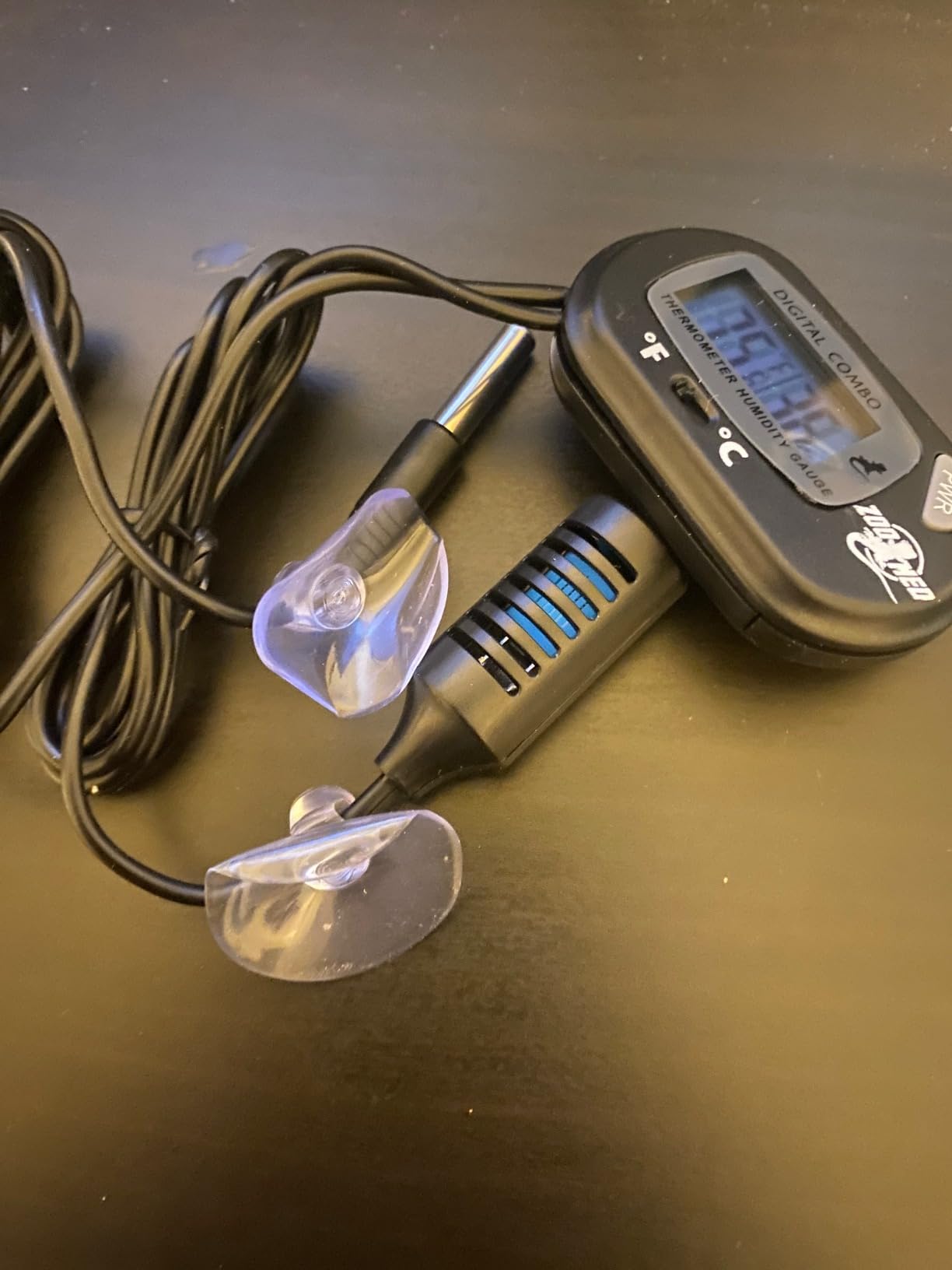
The stated response time is 30 seconds, which is slower than the 2-second refresh on the Govee or the 10-second cycle on most budget meters. In practice that is not a problem for incubation, because you check humidity on a scale of hours, not seconds.
Resolution of 0.1 gives you a display that looks precise, but do not mistake decimal places for accuracy. A meter that shows 66.3% RH and is really at 61% is no better than one showing 63.
The waterproof probe is the quiet advantage here. Most budget sensors are not rated for moisture, and a condensate droplet on a non-waterproof element can shift readings for the rest of the run without any visible sign.
The limitation is quantity. This is a single meter, so monitoring a second chamber means buying a second gauge. For a one-incubator setup that is fine; for a multi-chamber hobby, a pack makes more sense.
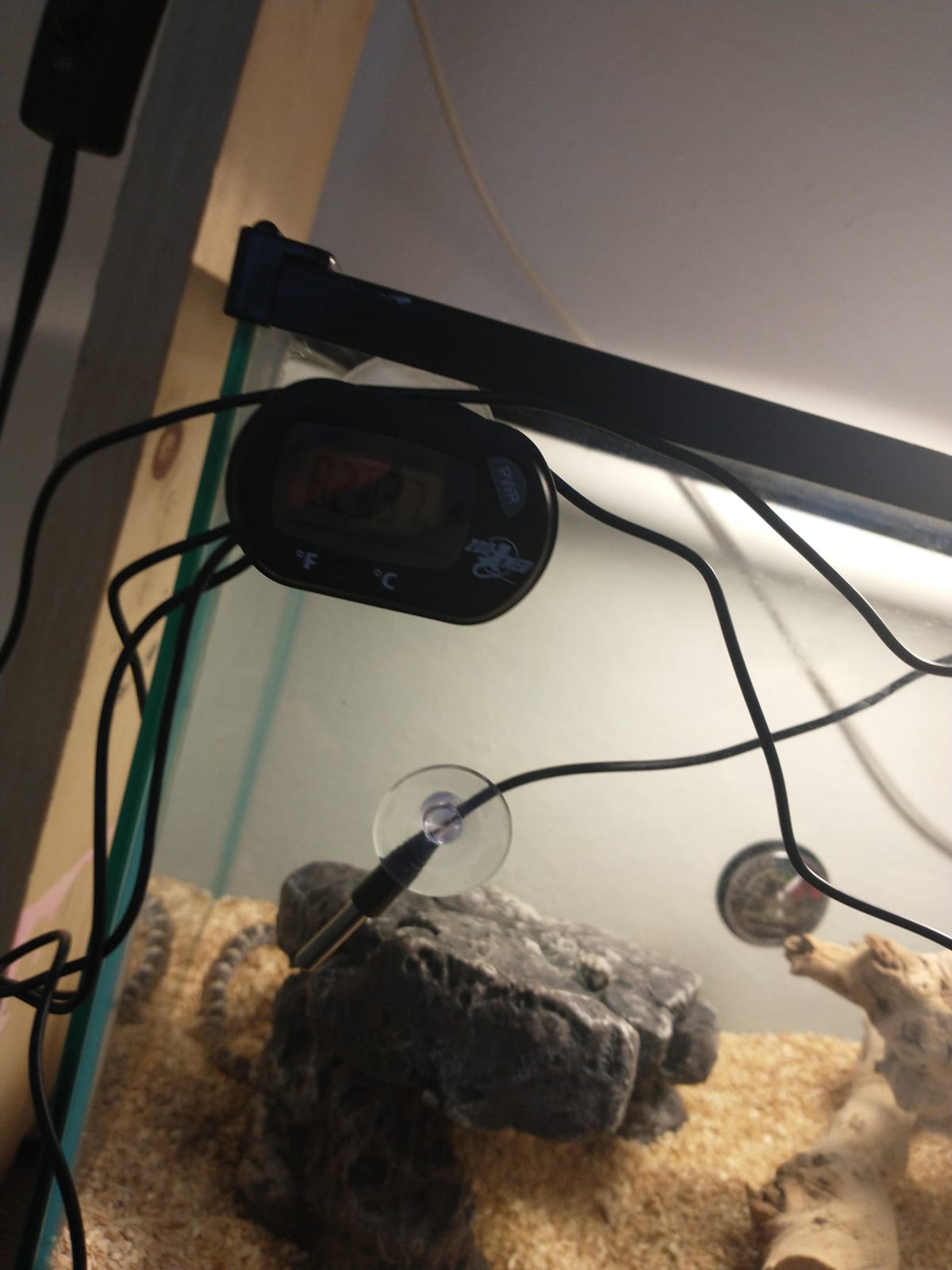
Buy the TH-31 for jar incubating, small still-air boxes, and reptile or amphibian work where condensation is constant. It is a strong first hygrometer for a beginner who wants a simple readout and a probe that tolerates water.
Skip it if you need fast refresh, two chambers at once, or any kind of logging or alerting.
Analog temperature and humidity dials
Velcro backing
No batteries required
6 x 4 inch face
Every digital meter on this list will eventually fail, usually with a flat battery at the worst possible moment. This one has no battery, no electronics, and nothing to go wrong, which makes it a genuinely useful thing to keep in a drawer and stick inside the chamber as a sanity check.
It also carries a 4.4 rating built on more than 3,600 reviews, and it is the best-documented analog option we found, so the dial is at least consistent from meter to meter.
A dial is honest about its own limits. You can read a coarse humidity number, you can see the needle sweep when you add water, and you can glance at it from across the room through a fogged-up lid, which is sometimes the only reading you will get at three in the morning.
What you cannot do is chase a set point. If your target is 55% and the dial sits between 50 and 60, the difference between a good day and a bad one is smaller than the resolution of the instrument.
The Velcro strip is the reason this gauge still works. You can stick it to a wall inside a still-air incubator at egg height, pull it off to wipe condensation away, and move it up as the eggs grow, without glue, screws, or a shelf that takes up space.
Place it in the middle of the egg mass, away from the water pan. Analog hair or coil elements are also slow to respond, so give it time to settle after you add water rather than reacting to the immediate needle twitch.
Buy this as a second opinion next to a digital gauge, or as the primary meter if you run a very simple still-air setup and only need to know whether humidity is roughly in the right neighbourhood.
Skip it if you need a precise number, a record of the run, or alarms. This is a reference and a backup, not a control instrument.
1.7 inch freestanding body
10-99% RH range
10-second refresh
LR44 cell included
The MEGGSI pair solves a specific problem: getting a sensor into a very small incubator at all. At 1.7 inches on a side, these are among the most compact meters in the group, and they stand upright on their own without adhesive or a shelf.
That size makes them useful well beyond hatching, which is why the same meters turn up in greenhouses, guitar cases, and humidor cabinets. For eggs, they are the practical choice when space is the constraint.
Stated humidity accuracy is ±3-5% RH, the loosest band among the small meters here. In a larger cabinet incubator that is acceptable, because the air mass is big and swings average out. In a small still-air box, a 5% swing is a meaningful fraction of your entire set point.
The honest way to use these is as a paired indicator. Put one at egg height and one low in the corner, compare the two, and treat the difference between them as airflow information rather than sensor error.
Working range is 32°F to 158°F and 10-99% RH with a 10-second refresh, and one included LR44 cell gives up to 10 months. That is more than enough for a single hatch, and a fresh cell before each season removes the main failure mode entirely.
There is no backlight, which matters more in incubation than in a living room, because incubator checks at night are exactly when condensation fogs the display and exactly when you are tired.
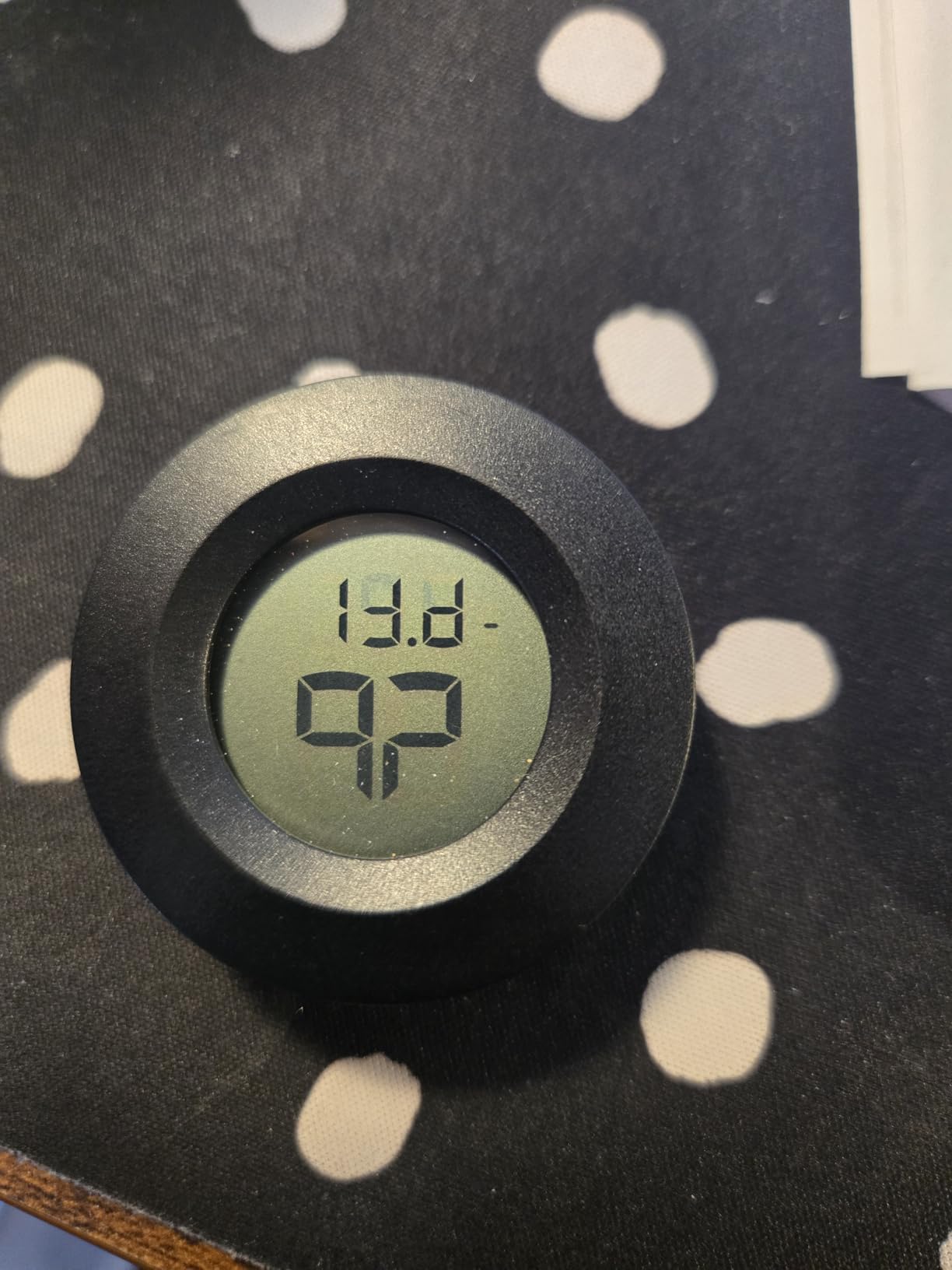
Buy the MEGGSI pair for mini incubators, jar setups, and multi-chamber operations where you want three or four monitoring points without clutter. It is also a sensible first purchase for a beginner who will not be hurt by a few percent of tolerance.
Skip it if humidity control is the deciding factor in your hatch, or if you need recorded data or a remote readout.
Two external probes
±1°C temperature accuracy
20-99% RH range
AAA battery included
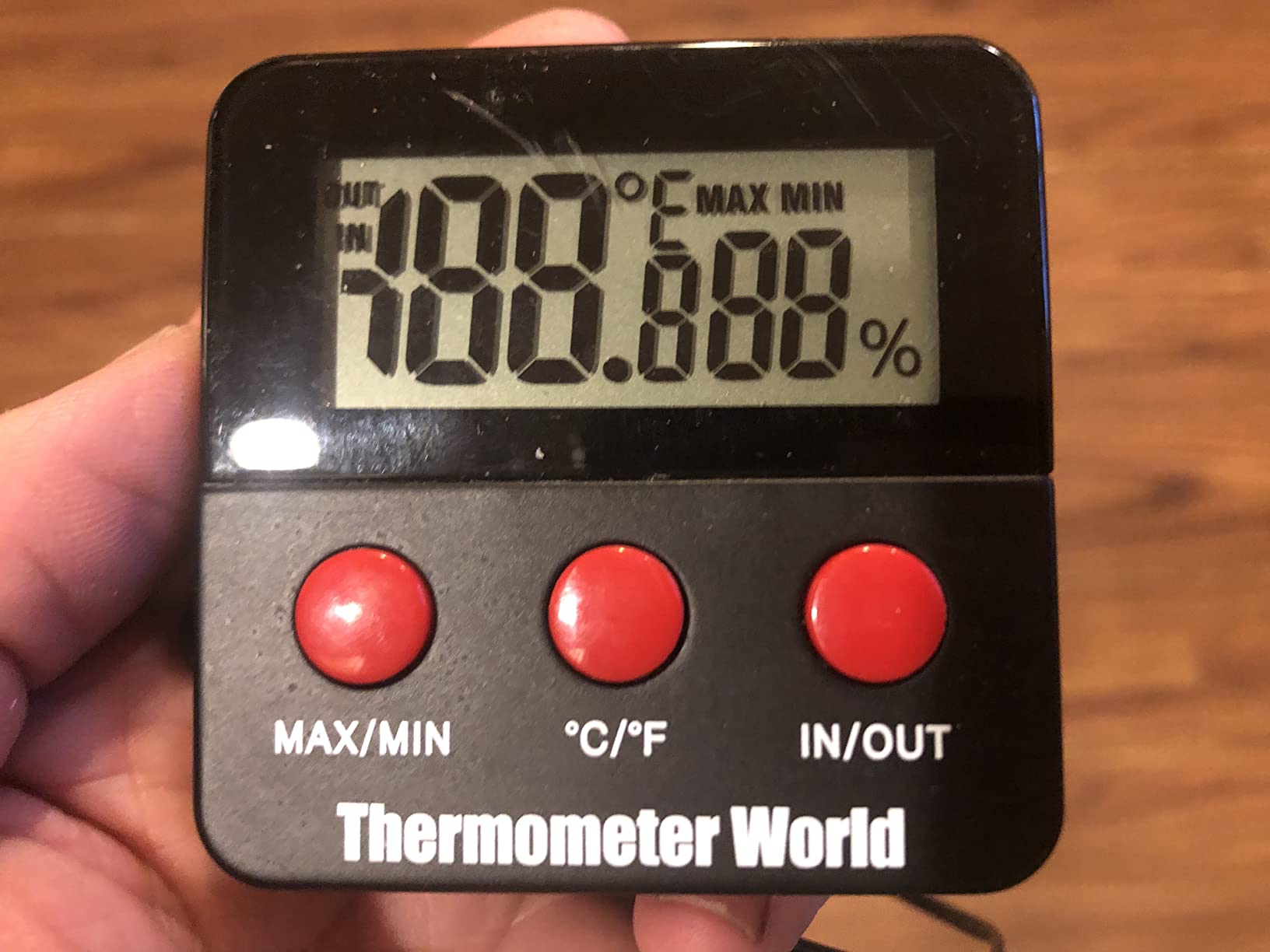
The idea here is simple and genuinely useful: one humidity probe and one temperature probe, both on leads, both feeding a single display you keep outside the chamber. For anyone running two incubators or a two-tier cabinet, that is two measurement points without two batteries to chase.
Long-term owners report several years of service on a single AAA cell, which makes this one of the lowest-friction options to leave running through a long breeding season.
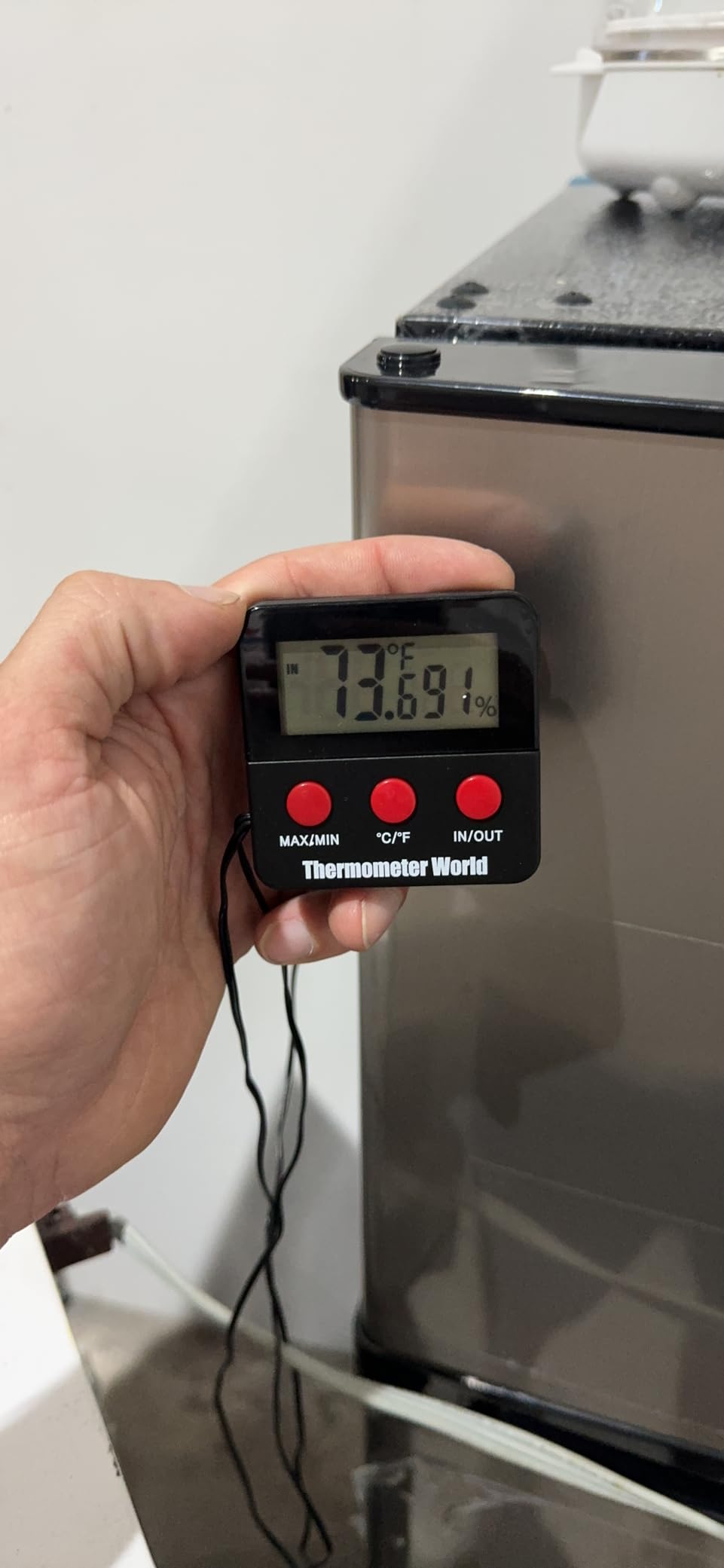
There is no humidity calibration adjustment on this meter, and reviews document an uncalibrated sensor reading meaningfully low in one lab test. That is workable, but it means you should confirm the offset before a hatch rather than discover it at lockdown.
Some probes ship with the in and out labels reversed. A quick warm-water test, with one probe in warm water and the other in cool, tells you in thirty seconds which cable is which, and getting that wrong early is how people conclude the sensor is faulty.
Two probes in a single incubator answer a question one probe cannot: is the chamber stratified? If the upper probe reads noticeably higher than the lower one, you have an airflow problem, and on a still-air machine that stratification is exactly what damages the eggs closest to the top.
Across two separate incubators, the same feature simply doubles your monitoring. The clip-style mount is the small compromise, because it does not sit flat against a curved terrarium wall, though it grips a flat incubator edge without trouble.
Buy it if you run two chambers, want to check for stratification in a single incubator, or keep reptiles alongside poultry and want one meter for both jobs.
Skip it if you need a gauge you can trust completely out of the box, or if you would rather not run a reference check before committing to a hatch.
1.7 inch upright body
±2°F and ±5% RH
10-99% RH range
Two LR44 cells per meter
This is the pair to consider when your incubator is a small still-air box and every cubic inch of floor area is holding eggs. The body is 1.7 inches across and stands upright on its own, so it can sit in a corner beside the eggs without touching anything.
It is also one of the few budget pairs that arrives with spares. Two LR44 cells per meter, up to about 8 months of working time, plus extra batteries and adhesive pads in the box, removes the most common cause of a mid-hatch failure.
Stated humidity accuracy is ±5% RH, and reviewers report a salt test showing readings about 10% low against an analog reference. That is a meaningful offset, so treat this as a relative indicator rather than an instrument of record.
It works well as a second reading. Run the more accurate primary gauge you already own, add one of these at a different height, and you get a comparison point for very little money, which is more useful than a single number you have no way to verify.
Because the two meters come from the same batch, they tend to read close to each other but can still separate by roughly half a degree to several degrees. Seating one high and one low in the same chamber turns that into a free stratification check instead of a flaw.
There is no backlight and no clip, and the supplied adhesive pad does not hold well on fabric. If you need the meter to stay put, tape or a small wire clip is more reliable than the included pad.
Buy the QPEUIM pair for small incubators, first-time hatchers who want a backup gauge ready in the box, and anyone who wants two monitoring points on a tight budget. One owner reports using them in a chicken incubator for two years with the temperature tracking the incubator’s own dial.
Skip it as your only gauge if you need a verified absolute humidity number.
Three remote probe gauges
-58°F to 158°F range
10-second refresh
ABS housing
Three remote sensors in one box is a genuinely different proposition from a single meter, because it lets you treat humidity as something you map rather than something you assume. One gauge in the incubator, one on the shelf, one as your reference.
The probe design is the part that earns the three-pack. The stainless steel sensor sits inside the chamber while the display stays outside and readable, which is the same logic that makes the IncuTherm work so well, just at three meters instead of one.
Temperature range is -58°F to 158°F and humidity range is 10-99% RH with a 10-second refresh, so the probe will not choke in a warm cabinet incubator. The long cable is what lets you reach a sensor into the middle of the egg mass without dragging the display in with it.
The probe is not waterproof, and the housing is ABS. Keep it out of any direct water channel and away from condensation, because a non-waterproof sensing element that wicks moisture will read high long after the chamber is dry.
This is the honest limitation, and it is why the pack carries the lowest average rating of the ten. Reviewers note that meters from the same pack can read several percent apart out of the box, and there is no adjustment to bring them together.
The workaround is the one experienced keepers already use: average them. If your three probes read 58, 62 and 64, the chamber is at roughly 61, and the spread tells you the probe positions are seeing slightly different air, which is information in itself.
Buy the Weewooday three-pack if you run more than one incubator, if you want to place gauges at three heights in a tall cabinet, or if you want to compare your own readings against a cheap meter you do not fully trust.
Skip it if you need a single verified number from one instrument, or if condensation inside the chamber is a constant condition, since the probe is not rated for it.
Most of the wrong purchases in this category come down to three decisions: where the sensor will sit, how you will read it, and how you will know it is telling you the truth. Get those right and the brand barely matters.
Our general home humidity monitor testing covers accuracy in more general terms, and our broader hygrometer guide explains why cheap sensors drift. Here we stick to what changes in a hatch.
Ignore how many digits a display shows and look at the stated tolerance. A meter reading 0.1% resolution with ±5% RH accuracy is a decoration with a number on it, and one reading 0.1% with ±2-3% RH accuracy is a usable instrument.
For chicken eggs, ±3% RH is comfortable. For quail and smaller species with less shell buffer, stay at ±3% or better. For goose and Muscovy, where you work nearer the top of the range, a wide-open 10-99% RH specification matters more than the tolerance figure.
A body gauge goes inside with everything else. It is simple, cheap, and it must be opened to read. A probe gauge puts a sensor on a lead inside the chamber and keeps the display out, which preserves egg space, avoids condensation on the electronics, and lets you check without cracking the lid.
Probes cost more and their cable length fixes the sensor position. For a small still-air incubator where lid-opening disrupts recovery, the probe is worth the extra. For a forced-air cabinet, a body gauge is usually simpler.
Incubation problems are events, not states. A vent that blocked at hour 30, a lid propped open while you fetched wood, a power cut that let the room warm up, none of these are visible in a spot reading taken once a day.
Min/max memory catches all three and costs nothing extra. An alarm catches the ones that happen while you are asleep. App logging catches everything but ties you to a phone and, on the Govee specifically, a 90% RH ceiling. Pick the level of record-keeping that matches how often you actually check.
Most of these run on coin cells, LR44 or CR2032, or a single AAA. Service life ranges from about 8 to 10 months for the small packs, to a stated 2 years for the IncuTherm Plus.
The practical rule is simple: fit a fresh cell before every hatch, and never start a run on a battery you found already installed. A dead sensor does not announce itself, it just stops updating, and a frozen reading looks exactly like a stable one.
You will read this display at night, in a damp room, often with the incubator lid fogged. A backlit display is worth real money here, and a large LCD with big digits is the next best thing.
Give up on the tiny one-inch screens entirely. If you have to hold a flashlight at an angle to read it, you will stop checking, and the readings you skip are the ones that would have told you something was wrong.
In a still-air incubator, air does not circulate, so temperature and humidity stratify and the top of the chamber runs warmer and wetter than the bottom. That is why the sensor goes at egg height in the middle of the mass of eggs, never in a corner, never above the water pan, and never on the wall.
In a forced-air cabinet, a fan evens the air out, so you have far more freedom about position. It also means the eggs are more sensitive to small air changes, so a probe near the fan inlet and one near the exhaust are the pair worth owning.
Before you buy, check that the probe stem actually fits through your vent opening. Many cabinet incubators have a narrow cone or ring where a fat probe will not seat, which is why purpose-built units like the IncuTherm Plus exist.
Numbers matter more than adjectives here, so here they are in plain form. Chicken eggs run 50-55% RH through the first 17 days, then 65-75% for the final three days of lockdown. Duck and goose eggs want roughly 55-60% during incubation and about 70-75% at lockdown, and their larger shells lose water differently.
Quail eggs sit higher, around 55-60% through incubation and 75-80% at lockdown, because the small shell gives the embryo less margin. Reptile eggs are species-specific and often want a stable figure rather than a rising set point, which is a different measurement problem entirely.
Yes, 75% is high, and during lockdown it is correct. For three days you are deliberately reducing evaporation so the chick does not stick to the shell membrane, and the window is short, so check more often rather than less once you cross into it.
Mix saturated salt solution: stir fine table salt into warm water until no more dissolves and a layer of solid salt remains.
Seal it in a small rigid container, wide enough for the sensor to sit in the liquid without touching the sides or the salt crust.
Place the sensor so its sensing element is fully immersed, and close the container. Do not let the salt touch the electronics directly.
Leave it sealed for 30 minutes so the trapped air reaches the fixed humidity a saturated salt solution holds.
Read the display. It should read close to 75% RH. A reading within about 3% of 75% needs no correction; further off, note the offset and correct your water additions against it.
The salt test tells you where your sensor sits, not whether it is good. Most budget meters in this roundup land somewhere near 75%, and reviewers of several report readings 10 to 12% low, which is exactly the kind of thing you want to know before the hatch rather than after.
The most reliable check available does not involve any meter at all. Weigh a small sample of eggs on day one and again on day 17, and compare the loss. Chicken eggs should be down roughly 11-13% by the end of incubation, and a run sitting meaningfully under that was too dry.
Digital egg scales make this a five-minute job, and doing it once tells you far more about your actual humidity than any single display reading ever will.
If your reading is suddenly several points high, check for condensation on the sensor, a water channel that has crept closer, or a vent you closed too far. If it is suddenly low, look for a dry sensor element, a sponge that needs squeezing out, or a lid propped open for a while.
If a reading drifts gradually over days, suspect the battery before the sensor, then suspect placement near a heat source. If two meters disagree by more than a few percent, move them to different heights and see whether the difference is position rather than accuracy, which is the fast diagnostic most people skip.
For egg hatching, the most accurate choice is a digital thermo-hygrometer with a stated tolerance of ±2-3% RH, used alongside a second gauge. The TempPro TP50 in our tests held a 4.6 rating across more than 155,000 reviews at ±2-3% RH, and owners report several units agreeing within 1°F and 1% RH. A remote probe model like the IncuTherm Plus adds accuracy in practice because you check without opening the lid. Verify any of them with a salt test before a hatch.
For the first 17 days, yes. Chicken eggs need roughly 50-55% RH during incubation so the embryo can exchange gas and lose moisture. During the final three days of lockdown you deliberately raise humidity to about 65-75%, and 75% is correct there. Goose and Muscovy eggs work at slightly higher set points, and quail often need 75-80% at lockdown because the smaller shell offers less margin.
A good egg incubator hygrometer is a digital thermo-hygrometer reading at least 10-99% RH with a stated tolerance of ±3% RH or better. Look for min/max memory so overnight excursions show up, a battery you can replace, and a large display readable through a fogged lid. Add a remote probe if your incubator is small or still-air, and a second gauge so you can cross-check readings rather than trusting one device.
Cheap digital sensors benefit from a check even if they have no adjustment. A salt test confirms where your meter actually reads: mix saturated salt solution, seal it in a small container with the sensor immersed, wait about 30 minutes, and expect a reading near 75% RH. Reviewers of several budget units found readings 10-12% low. If your meter has no calibration control, just note the offset and adjust your water additions against it.
Rarely on its own. Built-in incubator gauges commonly read 10-20% RH away from the true value, and many are simply a dial on the water level rather than a measured humidity. Use them as a rough indicator, then add a separate calibrated meter positioned at egg height in the middle of the chamber, away from the water pan and any wall or vent. Confirm the result with egg weight loss, targeting 11-13% loss by day 17.
If you want one product and no caveats, take the TempPro TP50. It is the only gauge here rated to a 2-3%RH band, it has the highest rating in the group, and its high and low memory is the combination that most reliably translates into a normal hatch rate.
If you cannot check the incubator regularly, take the Govee H5075 instead. The phone alerts and multi-day humidity curves do something no other meter here does, and they turn a hatch from a series of spot checks into a documented run. The 90% RH ceiling only matters above where most chicken, duck and quail work sits.
If your incubator is small, still-air, and precious about egg space, the IncuTherm Plus is the more sensible buy. The probe goes inside, the display stays out, and you stop opening the lid. For anyone hatching their first batch, add a JEDEW or MEGGSI two-pack as a cross-check, because two meters reading within a couple of percent of each other is the closest thing to confidence you can buy cheaply.
Whichever you choose, run the salt test before the eggs go in, place the sensor at egg height away from the water, and confirm the result with an egg weight check on day 17. In 2026, that routine matters more than any model on this list.