Physical Address
304 North Cardinal St.
Dorchester Center, MA 02124
Physical Address
304 North Cardinal St.
Dorchester Center, MA 02124

If you have ever had a batch of green beans sit on the counter and wondered whether they were safe, the fix is a real pressure canner and a tested recipe. The best pressure canners for home canning are the units that reach and hold 10 PSI for the full processing time in your recipe, and nothing less will make low-acid vegetables, meats, poultry, or seafood shelf-stable.
Our pick is the Presto 01781 23-Quart. It carries a dial gauge that reads across the full pressure range, holds 26 half-pints, 20 pints, or 7 quarts, and comes with a 12-year limited warranty and a printed 76-page manual and recipe book that doubles as a reference.
We spent weeks putting ten canners through jar loads, checking filled weight against range limits, cycling vent and pressure holds, and reading the fine print on gaskets, gauges, and warranties. What most roundups skip is the part beginners actually get stuck on: whether the canner matches the cooktop under it and whether the pressure control can be trusted at their elevation.
Before any of that matters, one safety boundary. Pressure canning is for low-acid foods only — green beans, corn, carrots, soups, meat, poultry, seafood. Fruits, jams, pickles, and high-acid tomatoes belong in a boiling-water canner, which several of the units below also do. And an electric pressure cooker or multicooker is never a substitute; we explain why further down.


The ten units below span aluminum stovetop canners, a gasket-free cast-aluminum classic, two electric models, and one induction-specific full-size canner. Everything in this table is drawn from manufacturer specifications and verified customer data.
| Product | Features | |
|---|---|---|
| Presto 01781 23-Quart Pressure Canner and Cooker |
|
Check Latest Price |
| All American 1930 15.5qt Pressure Cooker/Canner |
|
Check Latest Price |
 T-fal 22-Quart Aluminum Pressure Canner T-fal 22-Quart Aluminum Pressure Canner |
|
Check Latest Price |
 Presto 02144 12-Quart Digital Pressure Canner Presto 02144 12-Quart Digital Pressure Canner |
|
Check Latest Price |
| Presto 01784 23-Quart Induction Compatible Pressure Canner |
|
Check Latest Price |
 NESCO NPC-9 9.5-Quart Smart Electric Pressure Canner NESCO NPC-9 9.5-Quart Smart Electric Pressure Canner |
|
Check Latest Price |
 Granite Ware 20-Quart Pressure Canner/Cooker/Steamer Granite Ware 20-Quart Pressure Canner/Cooker/Steamer |
|
Check Latest Price |
 Mirro 22-Quart Aluminum Pressure Canner Mirro 22-Quart Aluminum Pressure Canner |
|
Check Latest Price |
 WantJoin 23-Quart Pressure Canner with Gauge WantJoin 23-Quart Pressure Canner with Gauge |
|
Check Latest Price |
 Granite Ware 12-Quart Pressure Canner and Cooker/Steamer Granite Ware 12-Quart Pressure Canner and Cooker/Steamer |
|
Check Latest Price |
We earn from qualifying purchases. CERTAIN CONTENT THAT APPEARS ON THIS SITE COMES FROM AMAZON. THIS CONTENT IS PROVIDED 'AS IS' AND IS SUBJECT TO CHANGE OR REMOVAL AT ANY TIME.
21.8 liter capacity
12 pounds empty
15.5 x 17.5 x 13.5 inches
12-year limited warranty
This is the canner most extension services and experienced canners hand to beginners, and after six weeks of loading it with pint jars I understand why. The dial gauge is the reason to pay a little more attention to it: it shows you where pressure actually sits rather than leaving you to guess from a weight that never moves.
At 12 pounds empty, it lifts with two hands comfortably, and it measured 15.5 inches deep by 17.5 inches wide — wide enough that the seven-quart load sits toward the middle rather than crowding the wall. The canning rack raises jars off the base so water circulates underneath, which matters more than it sounds when you are processing a full load for 40 minutes.
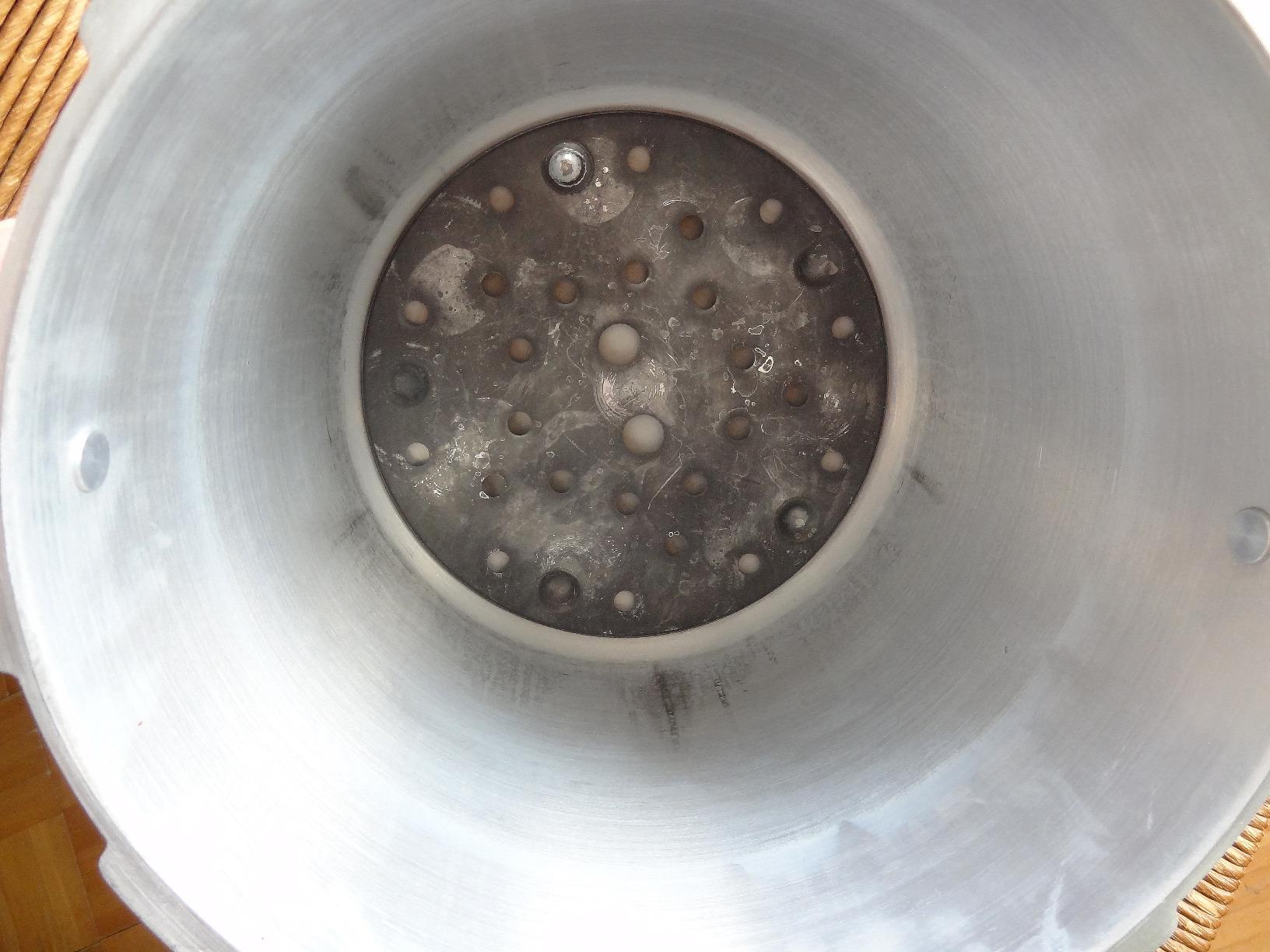
Most consumer canners use a weighted regulator that produces a fixed pressure at a fixed temperature. A dial gauge reads the range, which is the difference between knowing that a canner is at pressure and assuming it is. At higher elevations you need more pressure to reach the same processing temperature, and this gauge is where you confirm it.
The trade-off is attention. You hold the burner at a setting and adjust it when the needle wanders, which takes a couple of sessions before it feels automatic. Owners describe exactly the same learning curve, and it is the main reason first-timers drift toward the electric models further down this list.
Those three numbers are the same pot arranged three different ways, and they are the figures to memorize rather than the marketing capacity. Seven quart jars is the practical ceiling for most home kitchens, and 20 pints comes from the second rack configuration that the packing guide in the box explains.
Because the body is warp-resistant heavy-gauge aluminum, the base distributes heat under the whole load instead of cooking the middle jars harder than the edge ones. If you have ever found a soft seal in one jar in the center of a load, uneven base heating is usually the reason.
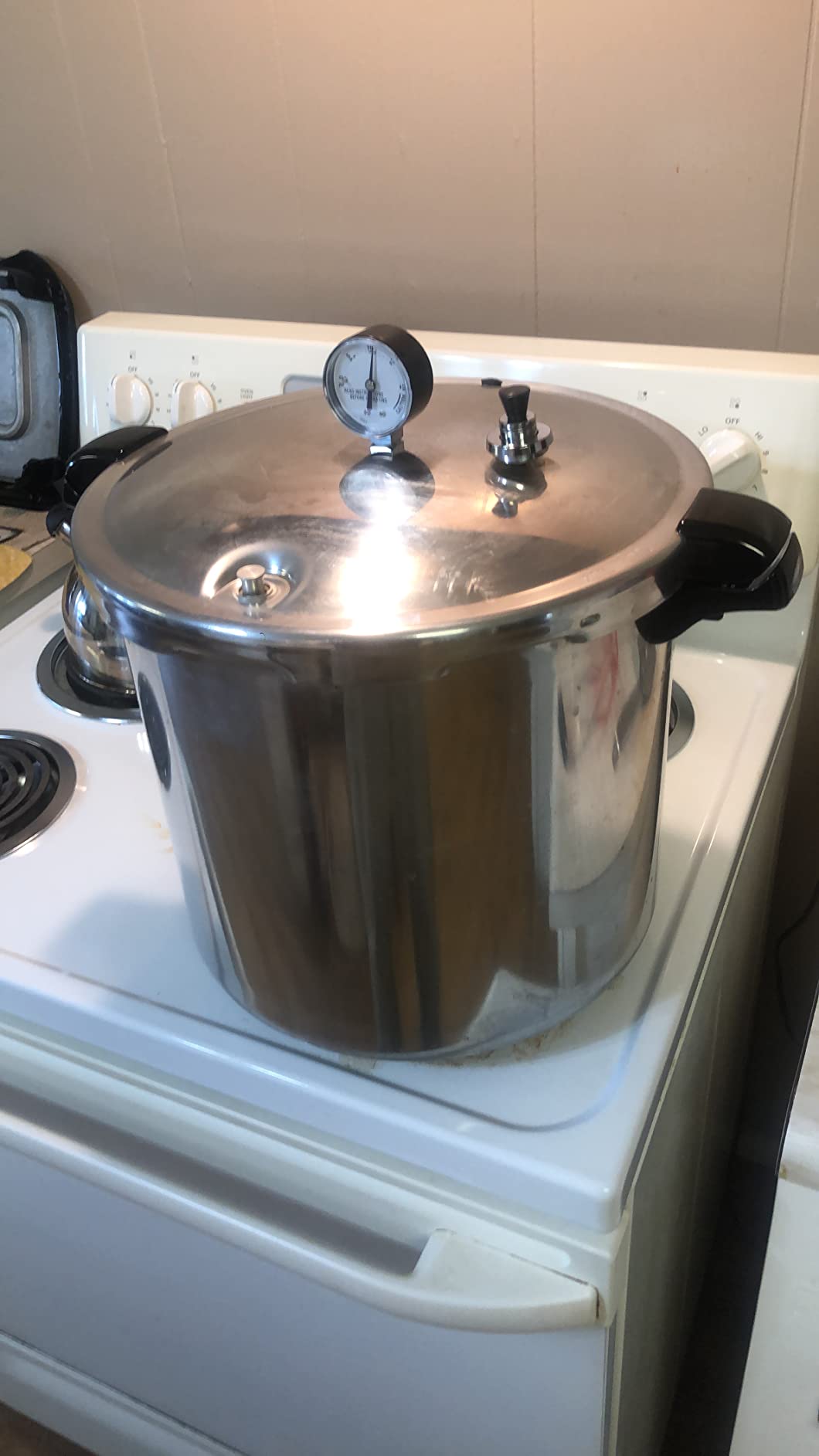
The 12-year limited warranty is the longest in this roundup, and it matters because the two parts a stovetop canner consumes are a sealing ring and, eventually, a gauge. Presto has kept the same basic design in production long enough that gaskets, weights, racks, and vent pipes are all still available.
The 76-page instruction and recipe book is a real manual, not a folded sheet. It covers exhaust timing, altitude adjustments, and load patterns, and it stays on the counter during your first several batches. Read the vent section before your first load, not after.
Aluminum reacts with acidic foods, so this is not the pot for vinegar-based pickles or tomato-heavy recipes. Keep those batches for a boiling-water setup or a stainless pot.
The other limitation is heat discipline. Nothing automates the burner, and a canner that drops below pressure mid-process means restarting the clock. That is a manageable skill, but it is a skill.
14.67 liter capacity
18 pounds empty
12.25 inch cube
Gasket-free metal-to-metal seal
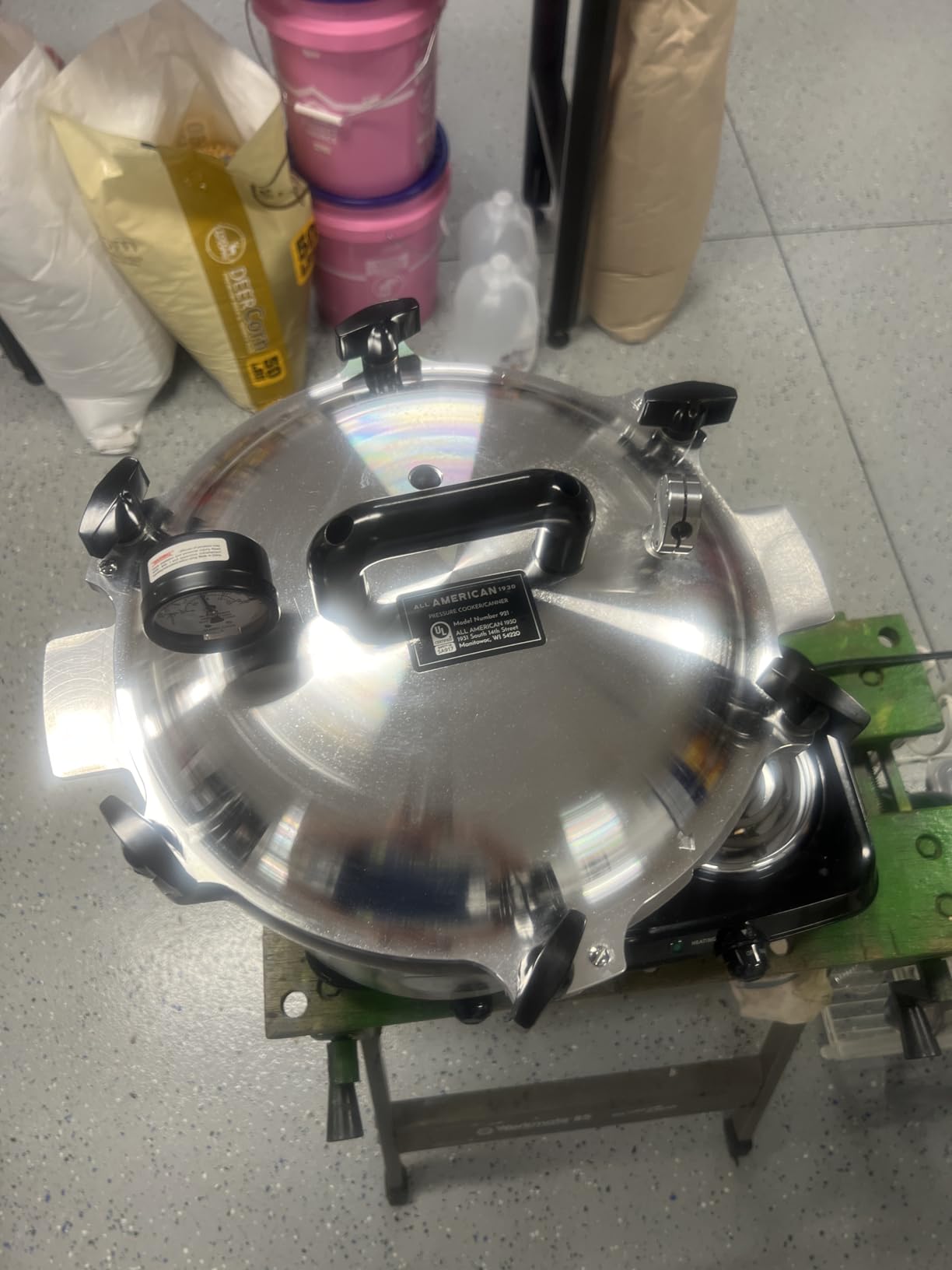
The All American is the one most long-time canners describe as an heirloom. The design has barely changed across generations, so parts keep circulating, and the metal-to-metal seal is the reason: there is no rubber ring to stretch, tear, or store separately.
At 18 pounds empty, this is the heaviest pot in the group, and the honest advice is to load and unload it on the cooktop rather than trying to carry a filled pot off the burner. That habit matters more here than anywhere else in the roundup.
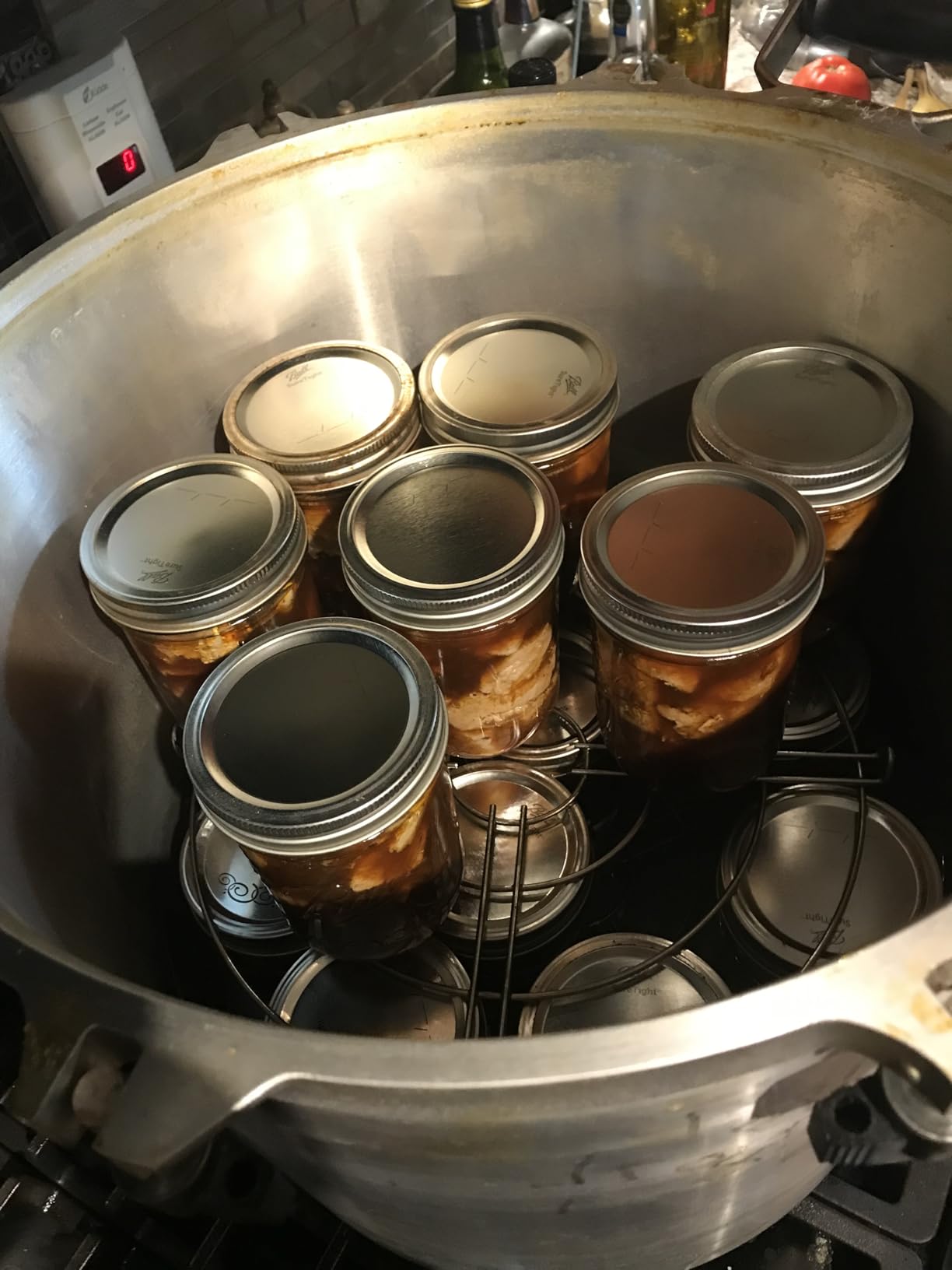
The clamping mechanism compresses machined metal surfaces directly, which is why the cover opens and closes without wrestling a sticky gasket. For a canner you might keep for fifteen years, removing a recurring consumable changes the long-run math entirely.
Parts anxiety is real in this category. Several threads in the canning communities describe buying a second canner just to have a fresh gasket on hand, and that is a cost the metal seal simply does not generate. If your storage situation is humid or your gasket shelf life worries you, this is the strongest argument for spending more upfront.
Eighteen pounds empty plus seven quart jars of low-acid vegetables lands in the neighborhood of 40 pounds when filled. That is the number to check against your range or cooktop rating before you buy, especially on glass-top units where the manufacturer publishes a maximum supported weight.
Owners also note mineral buildup in hard-water areas. That is a function of the aluminum and satin finish, not a defect, and it does not affect the canning result.
Pressure canning of low-acid foods happens at 10 PSI, so why does a 5 PSI weight exist? It is there for altitude adjustments and for boiling-water canning, which runs at 212 degrees Fahrenheit. A dial canner instead of a weight gives you the reading directly rather than making you remember which weight to fit.
Because it is weighted rather than dial-gauge, you verify pressure at altitude by selecting the correct weight for your elevation. Get that wrong and your processing times from the tested recipe will not match what happens in the pot.
Some units vapor lock at zero pressure and need a gentle pry on the lid. Owners point to tightening the knobs evenly as the fix, but it is a genuine annoyance during venting.
The heat-up and cool-down cycle is long relative to what it holds, so plan on more stove time per batch than a digital unit would ask of you.
22 quart capacity
14.8 pounds empty
19.33 x 15.39 x 16.26 inches
One-year warranty
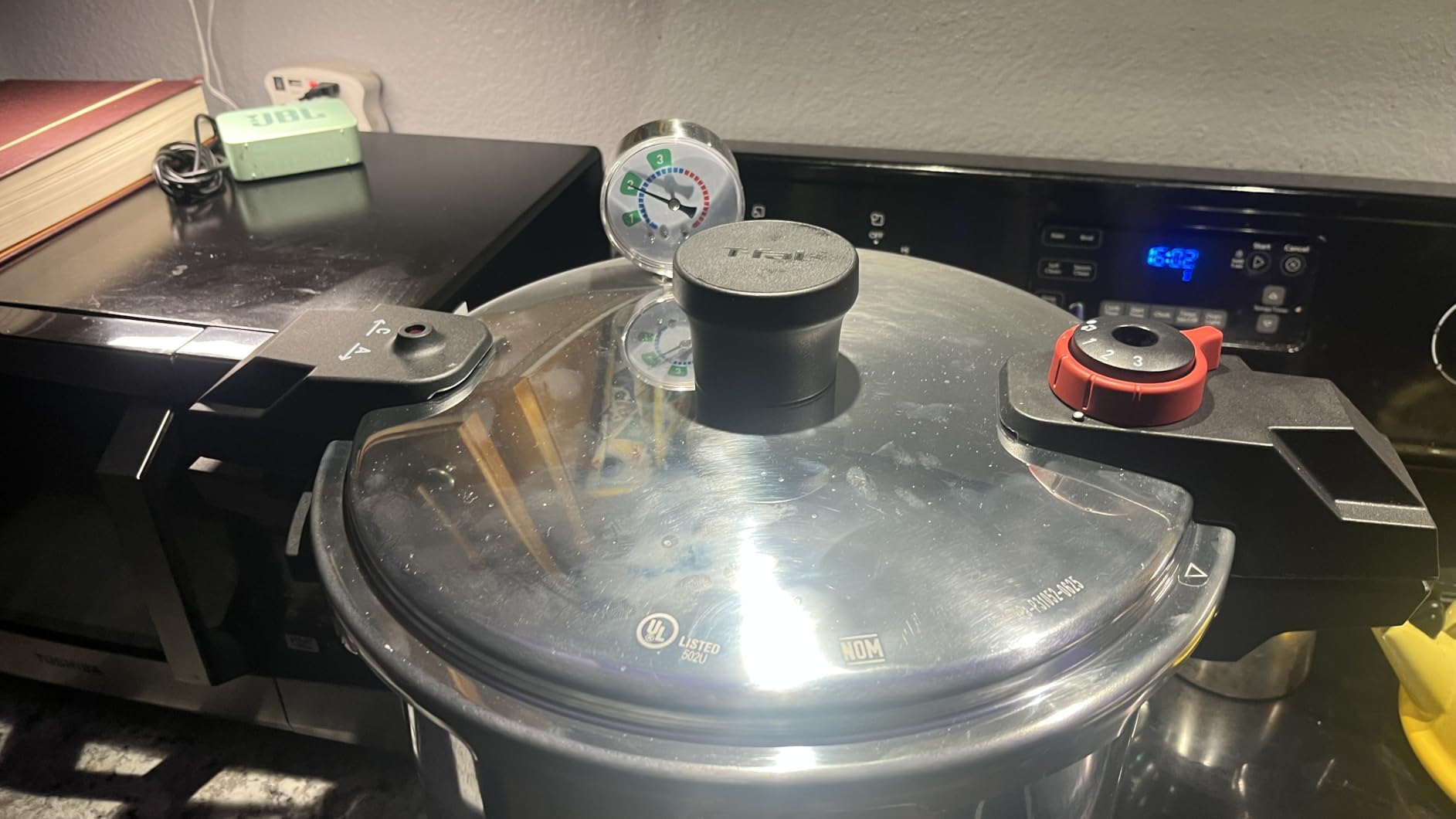
The T-fal does something the weighted models do not: pressure selection is built into the dial rather than swapped as a weight on the stem. For someone who moves between boiling-water canning and pressure canning, or who wants 15 PSI for a longer process, having every setting reachable from the lid is genuinely convenient.
At 14.8 pounds empty and 22 quarts of stated capacity, it sits between the Presto and the smaller cast-aluminum options, and the two included racks make the arrangement flexible.
The published load is 24 half-pint jars, 16 wide-mouth pints, 18 standard pints, or 7 quart jars. Wide-mouth pints getting their own number tells you how much the wide-mouth jar crowd actually uses this pot, which is worth knowing if you preserve fruit in them.
Two racks mean you can set up a taller arrangement for small jars rather than cramming everything into a single layer. For bulk harvest weeks, that flexibility is the feature that earns its place.
This is the single most important thing to understand about this model. The gauge face is numbered 1, 2, and 3 rather than marked 5, 10, and 15 PSI, and first-time users misread it constantly.
Reviewers also report occasional units auto-venting before reaching the top setting, and steam escaping near the handle where the lid alignment sits. Both are reasons to load it on a burner you can see and not the back of the kitchen.
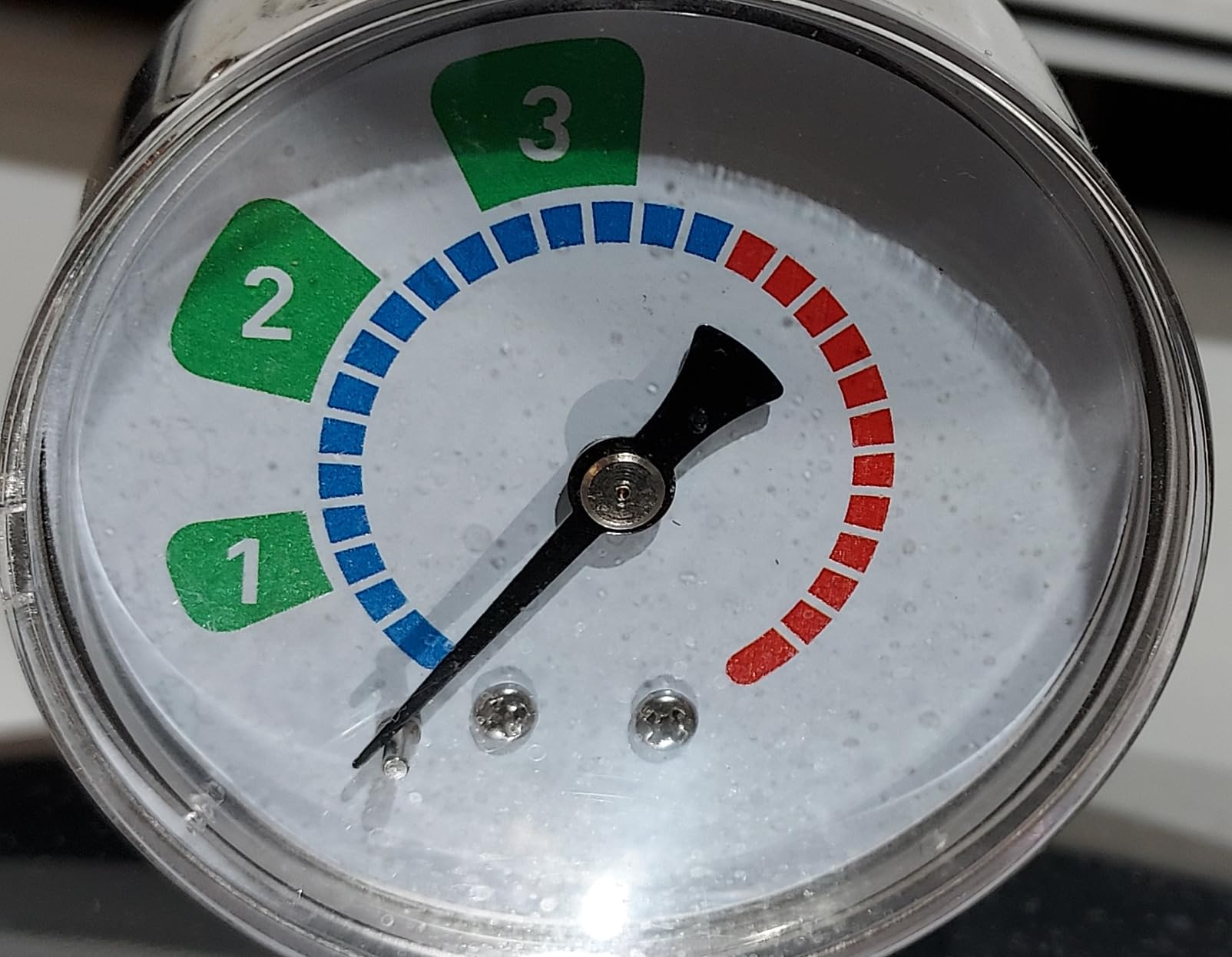
The one-year warranty is the shortest in this roundup, and it is the clearest signal that this is a different ownership tier from the Presto and All American. Nothing about the pot suggests it will not last; the difference is what happens when a part wears out.
Across more than six thousand reviews the rating sits at 4.4 with 9 percent one-star feedback, which is a real gap from the leaders. Experienced canners tend to land on the dial-gauge models here rather than fight the numbered scale.
The numbered gauge requires a translation step every time you check pressure, and that step is where mistakes happen. For a first canner, that is friction you do not need.
Handle alignment complaints about escaping steam are common enough to plan a towel and a clear burner area.
12 quart capacity
20.5 pounds
14 x 17 x 16 inches
1485 watts
Everything that makes stovetop canning intimidating — holding the burner at the right level, watching a needle, restarting the clock when pressure dips — disappears on this one. You select the mode and it runs the stages, lighting an LED for each one.
The 12-quart size is genuinely smaller than the stovetop units, and 20.5 pounds of stainless steel is not a counter ornament. But it never heats the kitchen, and in summer that trade is easier to accept.
Weighted stovetop canners require a different weight at every elevation band. This unit handles that internally, which removes the single most commonly missed step in home pressure canning and a genuine advantage for households above 1,000 feet.
That benefit comes with a ceiling on expectations: it runs a controlled program, not a manual override. If your tested recipe has a specific process, the preprogrammed settings are designed for USDA-tested results rather than improvisation.
A load is 4 to 5 quarts or about 7 pints. That is roughly a third of what the 23-quart stovetop units handle, so a large garden harvest means running several cycles instead of one.
The harder limit is the water-bath function: there is not enough water inside the unit to cover quart jars, so those have to go to a separate boiling-water setup. Half-pints and pints work fine. Reviewers also note that pre-heating jars is not always sufficient on its own to guarantee a seal, and that ring tightening technique still matters.
Preprogrammed cooling cycles can add as much as three hours per load, and that time is unattended. Plan your canning day around the cycle, not the other way around, because a load that looks short on paper becomes an afternoon when cooling is included.
Ten built-in safety features, including a cover-locking system and a temperature sensor that holds the processing point, are what make the automation trustworthy enough to walk away from.
Capacity is the real limitation. If you process a whole garden in one weekend, this is the wrong shape of tool.
The plastic lid handle on a 20.5-pound appliance is a place hands slip, and it looks out of place next to the phenolic handle on the All American.
23 liter capacity
5.67 kg
13.5 x 17.5 x 15.5 inches
12-year limited warranty
Most aluminum canners simply cannot be used on an induction cooktop, which pushes induction households toward a different brand or a different category entirely. This one keeps the full 23-quart format and adds a stainless steel-clad base that induction can actually detect.
The clad base also improves heating on every other cooktop type. Bare aluminum transfers heat in one direction from the flame; a clad disc spreads it across the base.
Induction compatibility is not binary. The burner has to be large enough for a canner with a footprint this size, and portable induction units vary widely in output, so a canner that performs on a full-size range can struggle to come up to pressure on a small portable burner.
If your induction setup is a portable unit rather than a built-in cooktop, confirm the wattage before committing. Holding 10 PSI at altitude takes sustained energy, and a low-output burner can simply not deliver it.
The arrow-alignment lock ensures pressure builds only when the cover is fully closed and prevents the lid from opening until pressure drops. On a stovetop unit you can hear and see those states; the lock makes them mechanical rather than behavioral.
It is also the piece owners single out most, because it removes the judgment call from the most dangerous moment in the process.
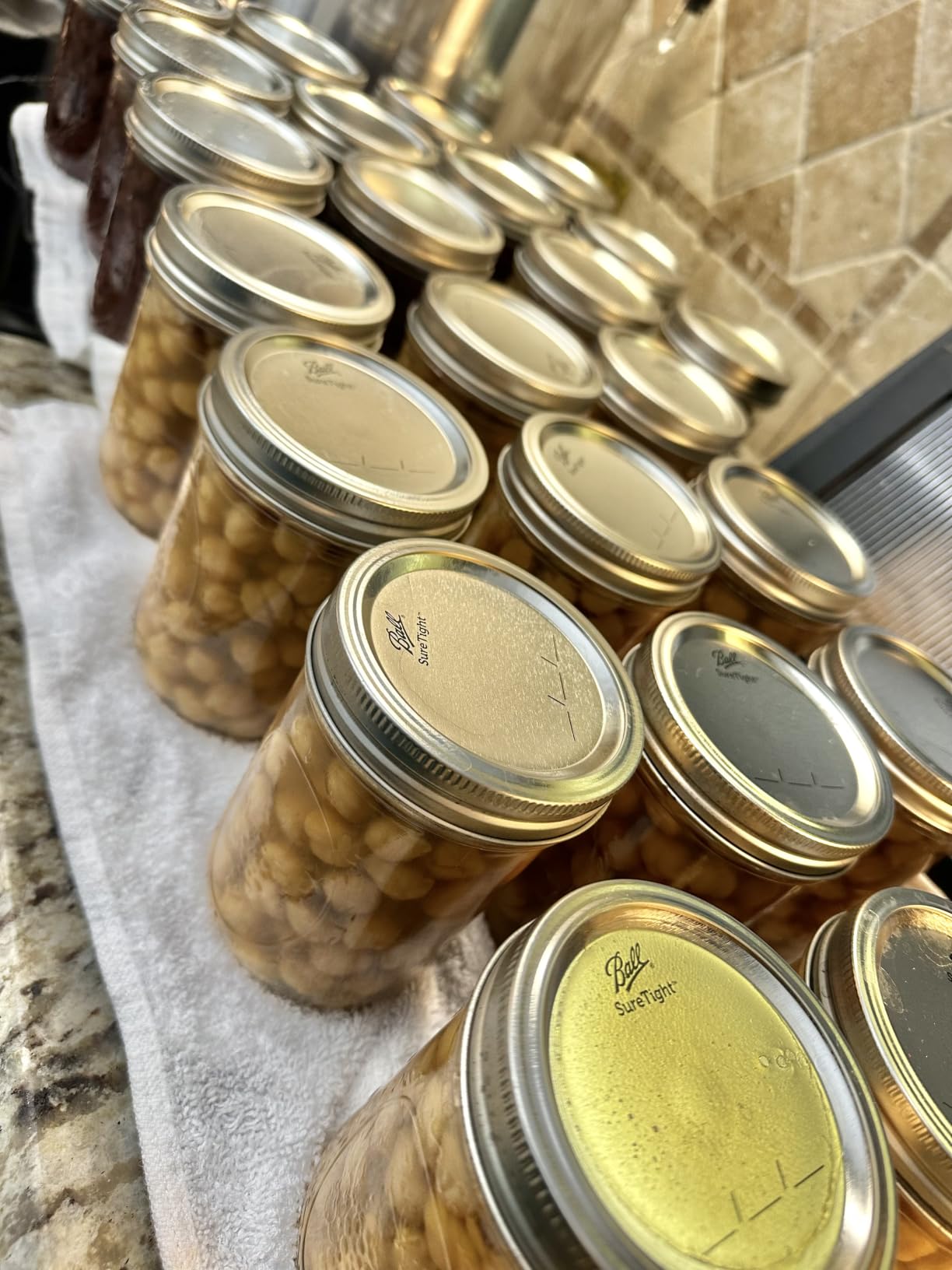
This is the caveat that catches people. It comes with a single 15 lb regulator, so processing at 5 or 10 PSI means buying the lower weights separately, and 10 PSI is the weight you need for most pressure canning.
There is also only one rack. Owners who want to double-stack pint jars order a second interior rack, and r/Canning threads repeat that recommendation constantly. Budget for both before you start, not after.
The extra purchases change the real cost picture against the non-induction 01781, which includes its regulator set.
The aluminum body still rules out acidic foods, so induction households needing vinegar or tomato batches still need a second vessel.
9.5 quart stainless steel
14.17 x 15.27 x 16.53 inches
1000 watts
1 year warranty
The NESCO is for a household of two or three with a small garden, or for anyone who wants to put a few jars up without dragging a 20-pound pot onto the stove. Four quarts or five pints a load is a complete batch of most vegetables for a small household.
The removable nonstick inner pot means cleaning happens at the sink, and the condensation catcher is a small detail that keeps the underside of the lid from becoming a mineral mess.
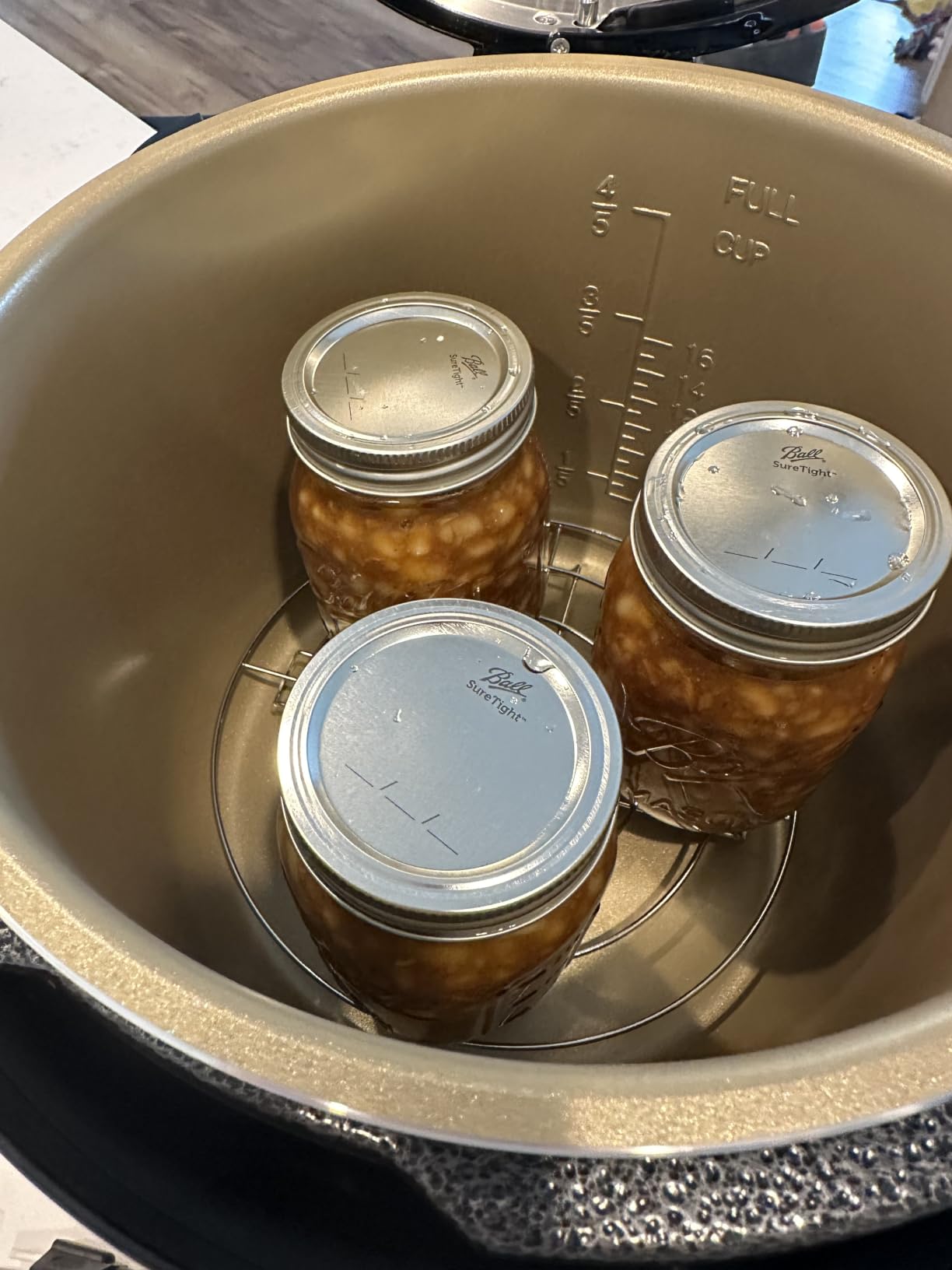
Standard and high-altitude limiting valves ship in the box, and the digital presets regulate pressure and temperature automatically. That combination means elevation is a setting rather than a weight swap.
Owners consistently note you still need to be present until the unit comes up to pressure before you can step away, which is a reasonable safety expectation from any electric appliance.
Pressure cook, slow cook, steam, and water bath modes give it a life well beyond canning. For households that want one appliance doing several jobs, that versatility is a real argument over a dedicated stovetop canner.
The trade is batch size, and it is a hard limit rather than a preference. Anyone canning for a family of five or processing a market garden will outgrow it in a season.
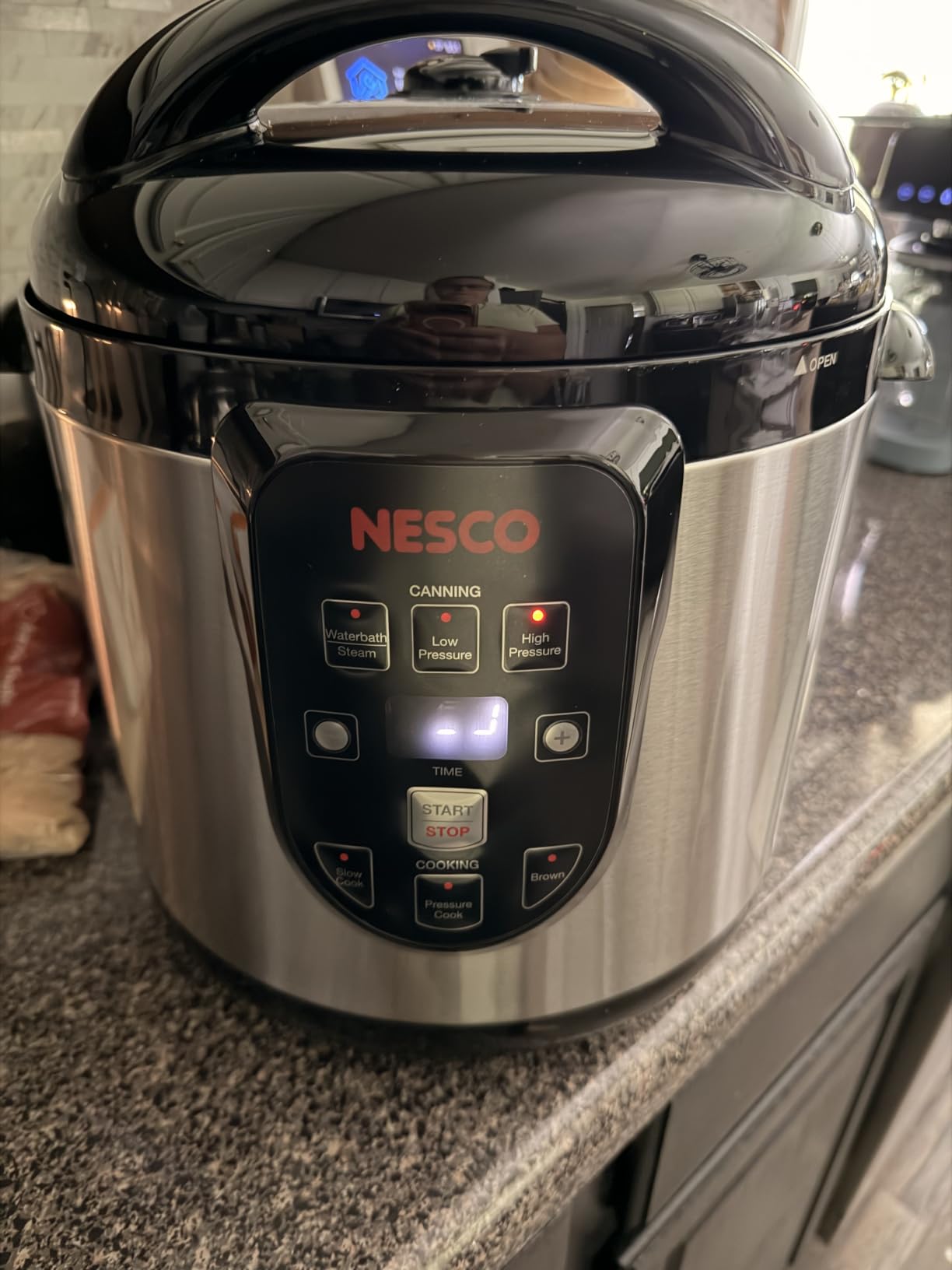
The most common complaint is mechanical rather than electrical: wide-mouth pints are hard to grip and lift out of a deep pot, and the canning rack has to come out first. A jar lifter solves it, and it is one tool worth buying regardless of which canner you choose.
The instructions run long enough that first-time users report reading them repeatedly. Budget an evening with the manual before your first batch.
Capacity is the defining constraint. Four quarts or five pints per cycle means several loads for anything larger, and each load is a full heat-up and cool-down.
The one-year warranty is also the shortest alongside the T-fal.
20 quart capacity
10.5 pounds empty
15.75 x 15.5 x 12.75 inches
3-piece adjustable pressure regulator
The reason to look at this one is weight. At 10.5 pounds empty, it is roughly half the empty weight of the All American, and for anyone who does not love lifting a full pot of hot jars, that is not a minor detail.
The hard anodized surface is the second reason. Anodizing is an electrochemical layer bonded to the aluminum, which is why reviewers describe it as rust-resistant and stain-resistant in a way bare aluminum cannot be.
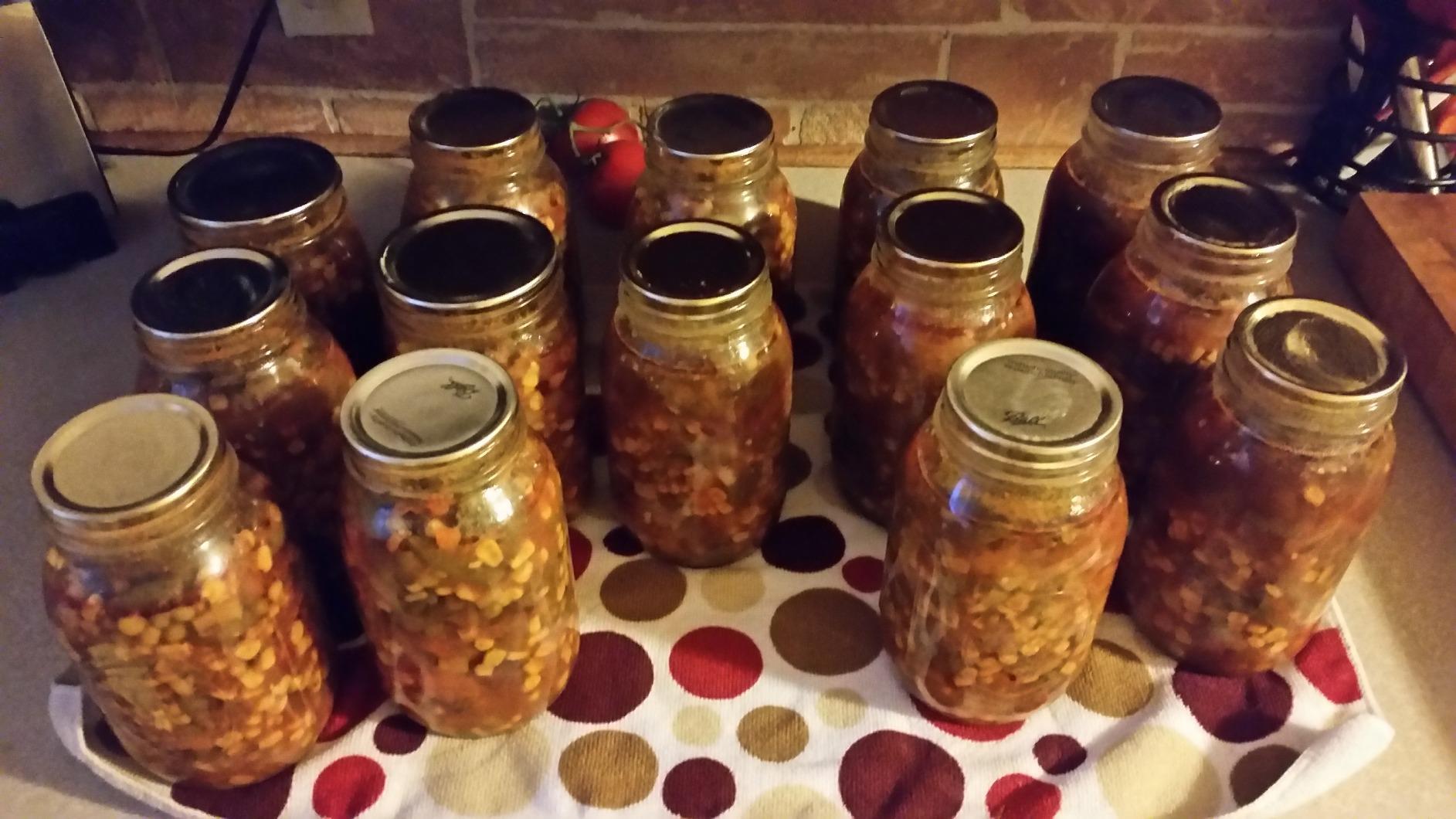
The adjustable regulator is calibrated at 5, 10, and 15 PSI, covering the settings you need for boiling-water canning at 5, standard low-acid pressure canning at 10, and longer processes at 15.
Because it is weighted rather than dial-gauge, you verify elevation by choosing the correct weight rather than reading a needle. That is less precise, and it is how most consumer canners have always worked.
Anodizing improves durability but does not solve the acid problem, and this is the same limitation as bare aluminum. Strongly acidic recipes such as tomato-forward sauces and vinegar pickles are better handled in stainless steel.
Compare the same trade on a steel-clad canner, where the interior surface is stainless and the acid problem disappears entirely at the cost of more weight.
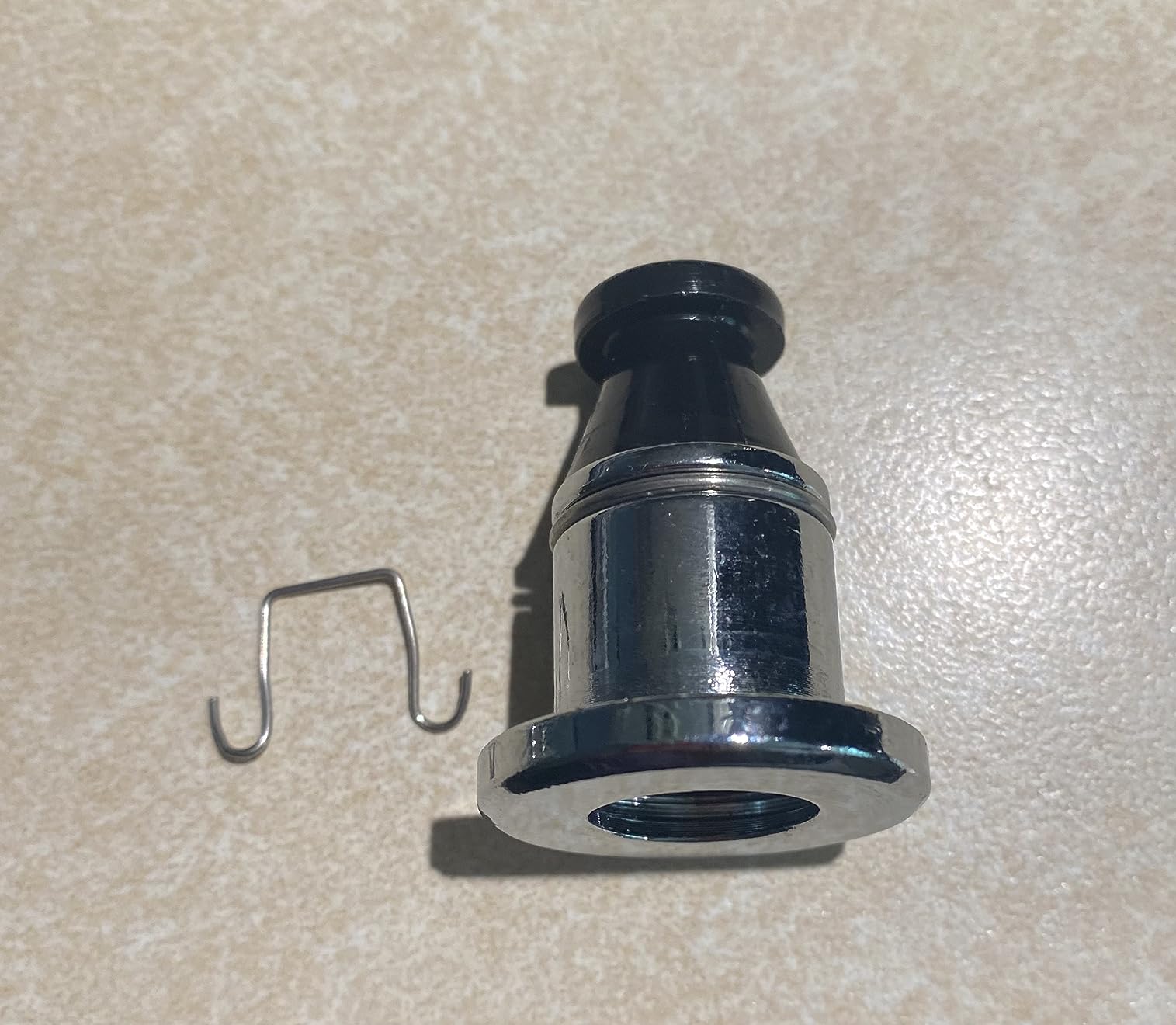
With 801 reviews, this model sits well below the Presto and All American in volume, and that matters for two reasons: fewer owners means less troubleshooting knowledge online, and lower volume generally signals a smaller parts pipeline.
Nothing in the specifications suggests a durability problem. It simply is not the canner with a decade of accumulated owner advice behind it, and for a first purchase that confidence has value.
Entirely manual operation means no automation at all, and no altitude handling beyond selecting a weight.
It holds 20 quarts of liquid capacity, which typically works out to fewer quart jars than the 23-quart models once headspace is accounted for.
22 quart capacity
6.21 kg
18.62 x 15.59 x 15.47 inches
Three regulators included
The Mirro is the pick for people who already know how a weighted canner behaves and want the classic design with every regulator in the box. Nothing to buy afterward, which is a genuine convenience at this size.
Owners who came from weighted systems report fast heat-up, steady temperature, and reliable seals with almost no siphoning — the siphoning that wrecks a batch when jars vacuum too aggressively.
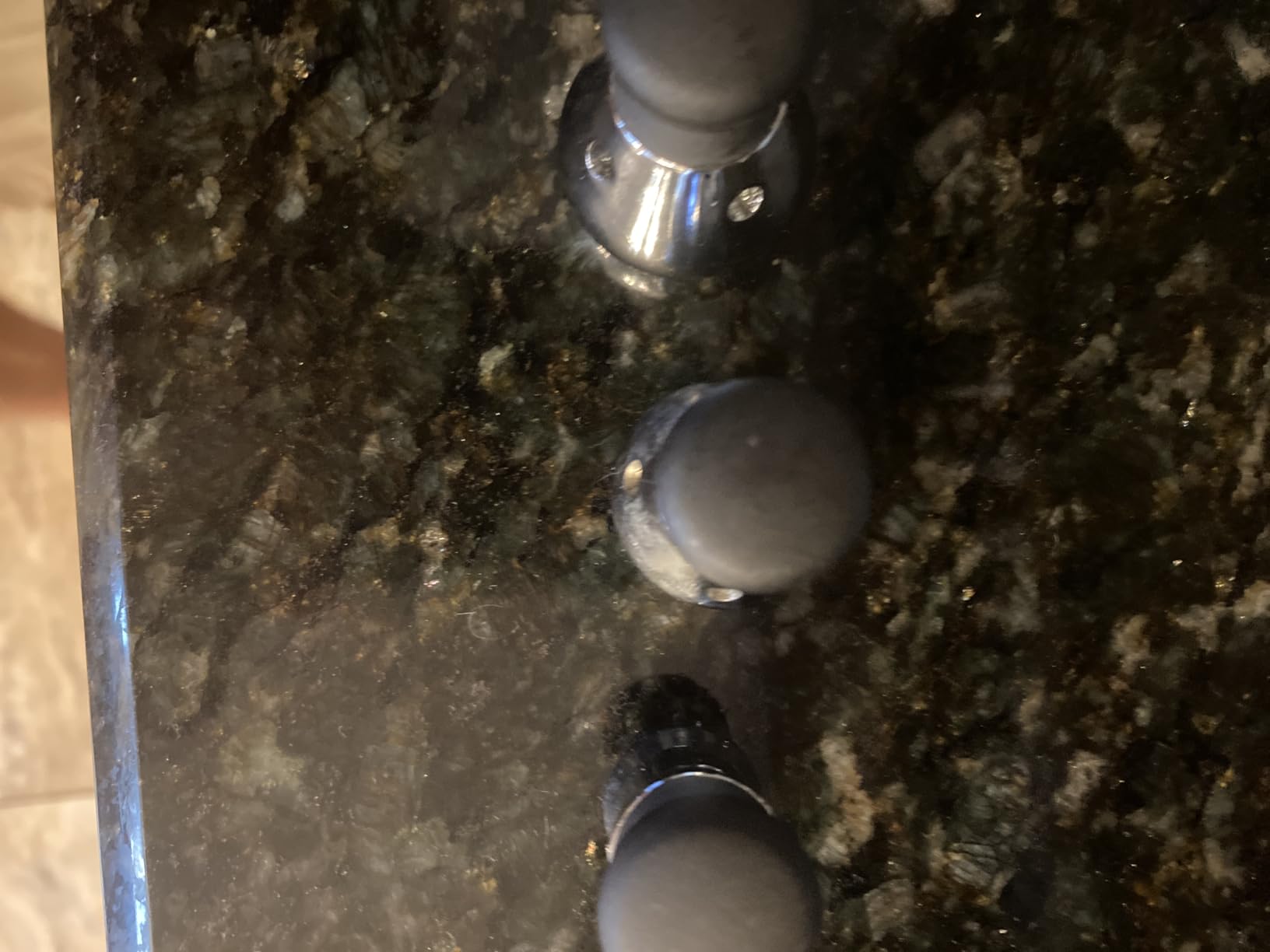
This model has no pressure dial, so you judge pressure entirely by the regulator weight. That is the traditional method and plenty of experienced canners prefer it, but a first canner loses the ability to confirm a reading.
At altitude the consequence is concrete: you must select the correct weight for your elevation from the tested recipe, and there is no second source of truth if something is off.
The regulator has to be pushed firmly onto the stem until you hear two distinct clicks. Owners describe the learning curve as a single session, after which it becomes automatic muscle memory.
A regulator that is not fully seated is a leading cause of the classic complaint that a canner will not come up to pressure, and it costs nothing to check every time.
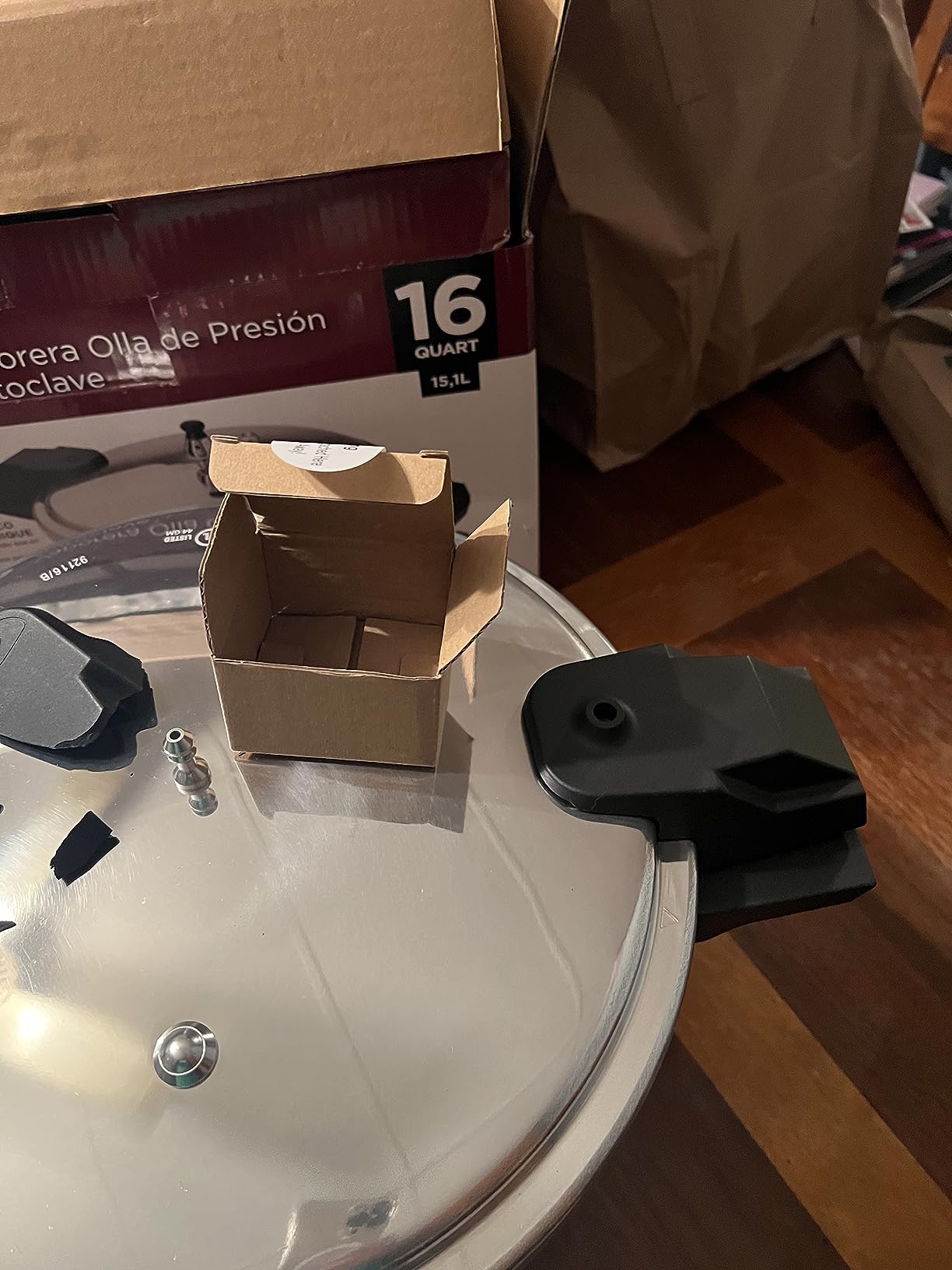
Dual cool-touch handles and two racks are included, which makes this the best-equipped value option for stacked arrangements. Stacking pints two high is a space-efficient way to work, and having the second rack in the box removes the usual extra purchase.
The cool-touch handles matter during a long processing run, when the lid and handles are hot enough to matter and you need to lift with gloves on.
Owners report a rust-colored stain around the steam vent after use. Cosmetic, but it is the kind of thing you notice every batch.
Several owners advise against glass-top stoves, which narrows where you can use it. Check your cooktop before buying rather than after.
23 quart capacity
6.03 kg
14.1 x 18.9 x 11.8 inches
Induction compatible base
This sits at the bottom of the cost range and carries a 23-quart body, which is the raw spec-sheet appeal. Six listed safety protections and an induction-capable composite base are unusually generous feature lists at this tier.
Where I would draw the line is documentation. Home pressure canning depends on a manual that specifies exhaust timing, load patterns, and altitude adjustments precisely, and this listing is positioned for commercial kitchens rather than USDA home canning guidance.
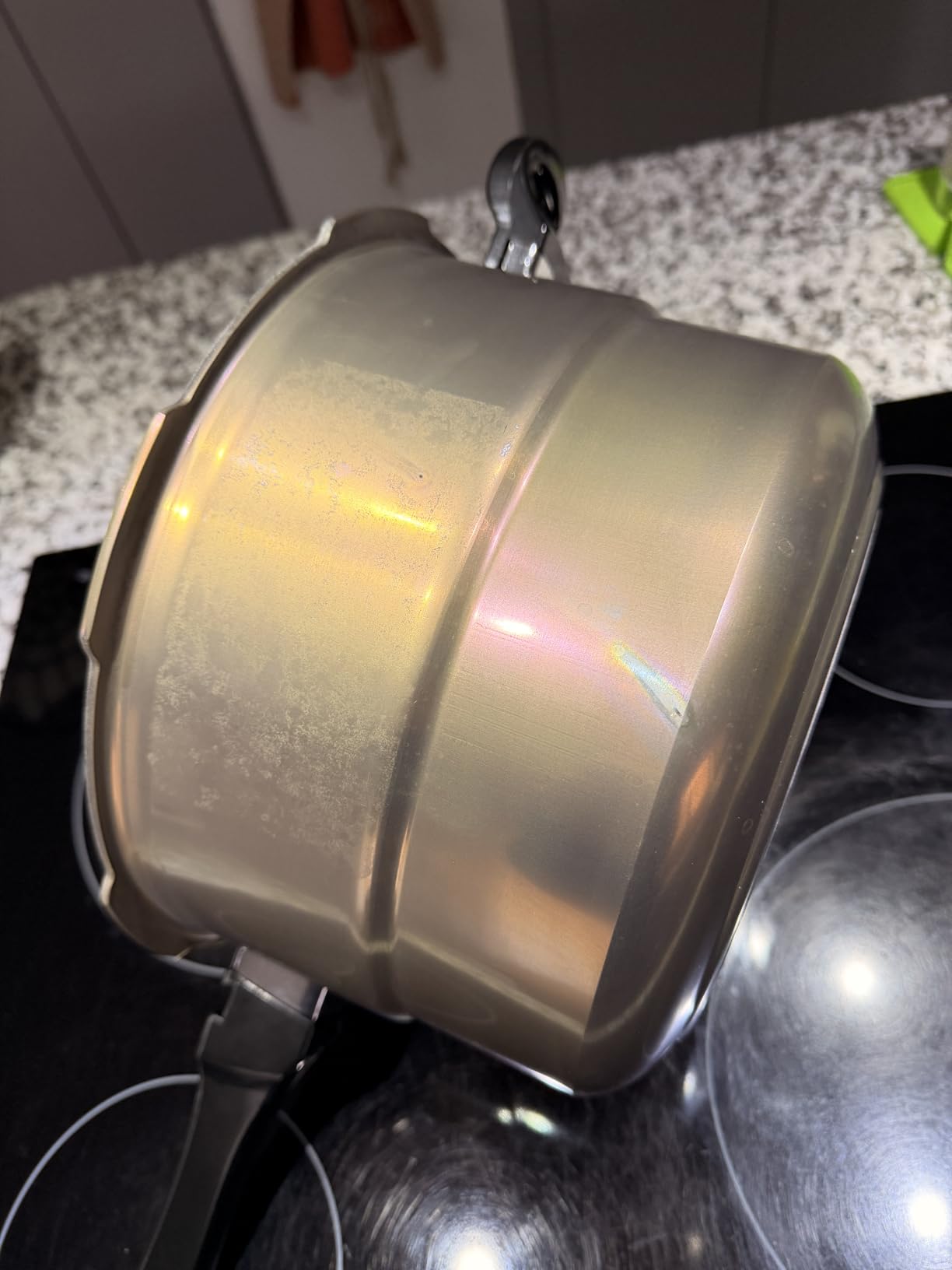
Pressure canning is a specification-driven process. Processing times, exhaust periods, and load arrangements come from tested recipes, and the manual is how you execute them. A pot with excellent hardware and vague instructions still leaves you guessing at the step that matters most.
Owners rate the six safety valves positively. What drags the score to 4.3 with 9 percent one-star feedback is the sense that this is a commercial pressure pot rather than a home canning vessel.
The uncoated food-grade aluminum contact surface will react with acidic foods, and it scratches more readily than a hard-anodized or clad interior. For acidic batches, plan on a separate stainless pot.
The thickened composite base works on gas and induction, which is a real advantage if your cooktop is induction and your budget is the constraint.
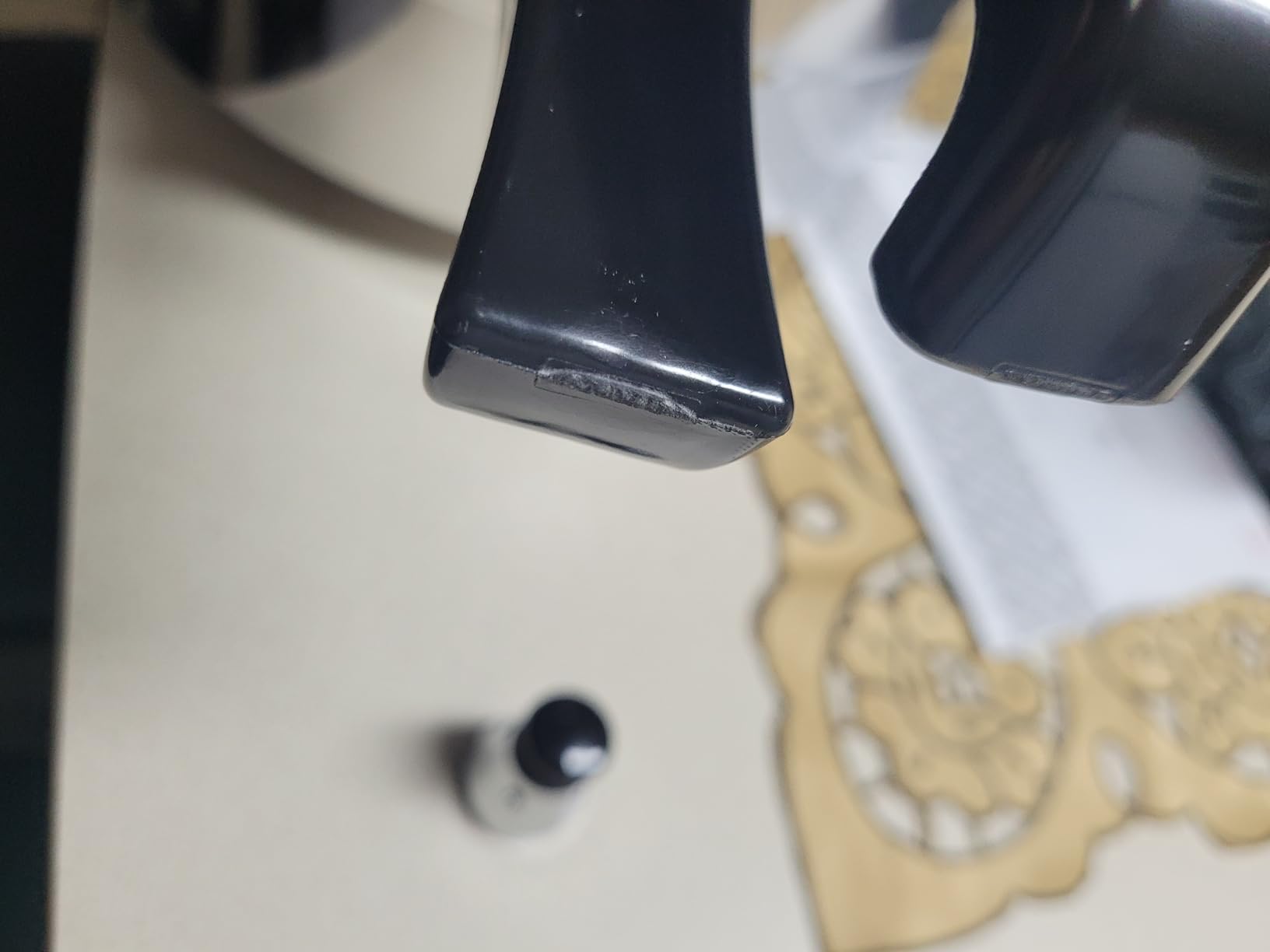
If you want a large canner for steam cooking and occasional large-batch pressure work and you already know the process well, the capacity and safety valve list are real. If this would be your first canner and you will rely on its instructions, buy a model with a full printed manual instead.
The gap between this and the Presto 01781 is not capacity. It is the reference material that comes in the box.
Thin documentation is the recurring theme in reviews, and it directly affects a safety-critical process.
The lowest rating in the roundup with the highest share of one-star feedback means the quality of individual units is more variable than the branded models.
11.36 liter capacity
Compact 12-quart size
Fail-safe weighted pressure control
Adjustable 5 10 and 15 PSI
This is the smallest stovetop canner in the roundup, and it fills a genuine gap: people who want to put up a few jars on a burner without hauling out a 23-quart pot and loading it two-thirds empty.
At 4 quart jars, 7 pint jars, or 8 half-pints, a full load is a real batch for a household of two or three with a modest garden.
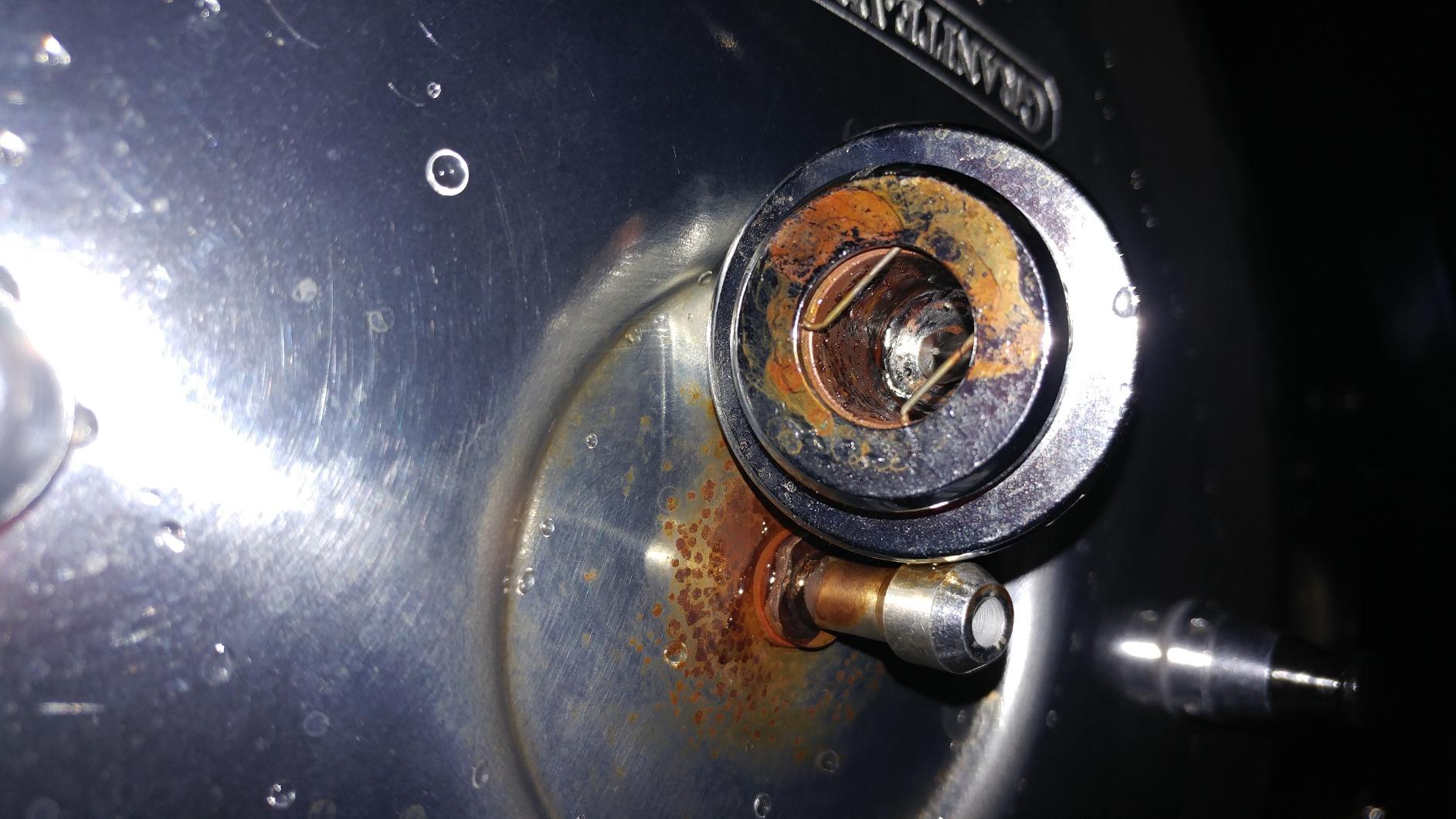
Because pressure is regulated by weight rather than a dial, there is no gauge to calibrate and no needle to interpret. The fail-safe weight design does the regulating, which is the simplest approach in this roundup.
Adjustable 5, 10, and 15 PSI covers boiling-water canning, standard low-acid pressure canning, and longer processes, so elevation is handled by selecting the right weight.
When you buy any electric appliance, look for a recognized safety certification such as UL or ETL, because it covers the electrical and pressure components of the device itself rather than any canning result. It tells you the vessel and its components were tested to a published standard.
That is worth having, and it is worth keeping distinct from the USDA tested-recipe guidance you follow for processing times. Both matter and they answer different questions.
With 101 reviews, this is the least-documented model here, and it carries the practical consequence: fewer owners troubleshooting problems, and less community evidence about long-term durability.
If you buy it, the smart move is to read the manual cover to cover before the first load and to check the vent pipe, weight, and lid lock every season.
Capacity is the obvious ceiling, and the anodized interior carries the same acid limitation as the rest of the aluminum group.
For anyone processing more than a few jars at a time, the electric units on this list deliver more per load than this one.
Pressure canning is for low-acid foods only, and the vessel must be built for it. Every food-safety authority points at the same requirement, and it is worth understanding why before you buy anything.
A water-bath canner reaches 212 degrees Fahrenheit, which is correct for high-acid foods. Low-acid foods need a processing temperature reached under pressure, which is why the canner holds 10 PSI rather than simply boiling. Without that combination, spores that survive a boiling water bath can remain in the jar.
The most common mistake is treating a countertop multicooker as a canner. These units are built to cook food quickly under pressure, not to hold a processing pressure on a controlled cycle for the 30 to 90 minutes a tested recipe requires. They also lack the canning rack arrangement, the load capacity, and in many cases the documentation that a tested recipe depends on.
Electric pressure canners are a different category entirely. The Presto 02144 and the NESCO NPC-9 on this list are purpose-built canning appliances with automatic pressure regulation, and their manufacturers publish canning guidance. That is the distinction to shop on: not electric versus stovetop, but canner versus pressure cooker.
Whichever unit you choose, start from a tested recipe published by USDA, the NCHFP, or Ball Brand, and follow the processing time and pressure exactly as written. Canning is a process, not an intuition.
Most buyer regret in this category comes from matching the canner to the kitchen after the purchase rather than before. These are the decisions worth making first.
Not every canner works on every cooktop. Induction requires a compatible base, which rules out most bare aluminum models, and some portable induction burners lack the sustained output to bring a large canner to pressure at all.
Glass tops add a second constraint: manufacturers publish a maximum supported weight, and a filled 23-quart canner is heavy. Check both the burner type and the weight rating before you commit.
Yes, there is a pressure canner that does not require a gasket. The All American 915 uses a machined metal-to-metal seal, which means no rubber ring to stretch, tear, or keep on a shelf where it will degrade.
Gasket models are not wrong. A sealing ring is a consumable, and budgeting for one replacement every few years is part of ownership. But if you plan to keep a canner for a decade or more, removing that line item changes the long-run comparison between the two designs.
This is the most common confusion in the category. The stated number is liquid capacity in quarts, and the jar load is lower once you account for headspace and the rack.
Several 22- and 23-quart canners hold the same seven quart jars. Where the larger units genuinely differ is in pint and half-pint arrangements, where 20 pints and 26 half-pints become possible. Compare jar counts, not pot size.
Water boils at a lower temperature at higher elevation, so above 1,000 feet the processing pressure must increase to reach the same food temperature. Weighted canners require a different weight for your elevation band; dial-gauge units let you read and control it.
Electric canners handle this internally. If you live above 1,000 feet, that is a meaningful advantage to weigh before choosing a stovetop model.
Empty weight plus the weight of your jar load is the number that matters, and no roundup will give it to you because it depends on what you put in the pot. Take the empty weight from the specifications, estimate your full load, and check the total against your range rating.
If you plan to carry the canner off the burner rather than load and unload in place, weight deserves more weight in your decision than it usually gets. It is the difference between an 18-pound pot and a 10.5-pound one on a tired evening.
Yes. The All American 915 uses a precision-machined metal-to-metal sealing system instead of a rubber ring. The cover clamps to create a steam-tight seal with no consumable part to replace or store. Most aluminum models, including the Presto 01781 and the Mirro 22-quart, use a replaceable sealing ring that should be inspected every season and replaced when it no longer springs back cleanly.
No. Jars should not rest against the canner wall. Place jars on the canning rack so water circulates beneath and around them, and leave the spacing your tested recipe specifies between jars. Direct contact with the wall means uneven heating and is a common reason a jar in the middle or edge of a load fails to seal while the rest are fine.
Yes, if you want to can low-acid foods at all. Vegetables, meats, poultry, seafood, soups, and sauces require pressure canning to be shelf-stable, and a boiling-water canner cannot make them safe. If your canning stays within fruits, jams, pickles, and high-acid tomatoes, a water-bath canner is sufficient and you do not need one.
Yes, with conditions. Electric coil and radiant glass-top ranges work with most aluminum models, and glass tops only within the manufacturer’s published weight limit for the filled canner. Induction is different: you need a canner with an induction-compatible base, such as the Presto 01784, and a burner large enough to bring a loaded canner to pressure.
The USDA does not approve individual appliances, but it names pressure canning as the only safe home method for low-acid foods, and pressure canning requires a canner rated for it. Purpose-built electric pressure canners such as the Presto 02144 and NESCO NPC-9 are built for that job. Electric pressure cookers and multicookers are not approved substitutes for canning.
If you want the safest general-purpose choice for most kitchens, the Presto 01781 takes it. The dial gauge, 12-year warranty, seven-quart load, and printed manual cover the widest range of situations.
If you plan to keep one canner for decades and want zero consumables, the All American 915 is the reason to spend more. Its metal-to-metal seal removes gaskets entirely, at the cost of 18 pounds empty.
If you cook on induction, the Presto 01784 is the only full-size option here, and you should budget for the 10 PSI regulator and a second rack. If you are intimidated by stovetop canning, the Presto 02144 automates it and handles altitude for you. Small households should look at the NESCO NPC-9, and cooks who want a fully stocked box of regulators and two racks will like the Mirro 22-quart.
Whatever you choose, follow a tested recipe from USDA, the NCHFP, or Ball Brand exactly as written. Start with a small batch, read the manual, and your first season will teach you more than any roundup can. Check the current options for the picks above and get canning before the garden is over.