Physical Address
304 North Cardinal St.
Dorchester Center, MA 02124
Physical Address
304 North Cardinal St.
Dorchester Center, MA 02124

If you keep backyard chickens, the fastest route to clean eggs is rarely the machine the ads push at you. We spent weeks running eggs from a mixed flock of hens, ducks and guinea fowl through silicone brushes, enzyme soaks, foaming pumps and hypochlorous sprays to find the best egg washers for backyard flocks in 2026, and the winning kit costs less than a single dinner out.
Our short version: an egg washer is anything that removes dirt, droppings and bedding debris from a shell through friction, an enzyme solution or a food-grade sanitizer. For most home flocks the right answer is a silicone brush plus a bottle of enzyme wash, and the whole wet-wash routine takes under fifteen minutes for a normal morning collection.
What separates a good egg washer from a disappointing one is rarely the tool itself. It is whether you understand the bloom, the cuticle your hen laid over the shell pores, because that layer decides whether you should be washing at all. Get that decision right and the tool choice becomes obvious. Get it wrong and you can make your eggs less safe than you found them.
Below we cover the wash-or-don’t-wash ruling first, then ten products across the four tool families that actually exist, then the protocol, the DIY batch build and the honest answer on electric machines.
Most backyard eggs should not be washed, and the exceptions are narrow: eggs caked with manure or mud, eggs you are selling or gifting under local rules, and eggs headed for incubation from a known-dirty nest. Everything else should be dry cleaned or collected clean and refrigerated untouched.
The bloom, also called the cuticle, is a proteinaceous seal the hen applies as the egg passes through the oviduct. It closes the shell pores and lets the egg hold water and gas for weeks without refrigeration. Washing with water strips that seal, and a washed egg has to be treated like any other refrigerated food from the moment it hits the sink.
Here is the mechanism that changes how people wash. Shell pores are open, and the inside of a fresh egg sits under slight negative pressure. If your wash water is cooler than the egg interior, that pressure differential pulls water and whatever is dissolved in it inward through the pores. Cool water plus detergent can drive surface bacteria into an egg that would otherwise have stayed sealed, which is why improperly washed eggs can be less safe than unwashed ones.
So wash dirty, and wash warm. We use the same rule commercial hatcheries use: water noticeably warmer than the egg, a food-grade solution rather than detergent, and no extended soaking once the soil is loose.
One diagnostic number is worth keeping. If more than about a tenth of your daily collection arrives visibly soiled, the problem is nest management, not the washer. Wet bedding, cracked eggs and a crowded laying box will soil eggs faster than any brush can rescue them, and until that is fixed a better tool only slows the loss. If you want to attack the coop side of the problem rather than the egg side, our guides to electric pressure washers for home use and pressure washer surface cleaners cover the equipment that keeps a coop and its run from becoming the source of the mess in the first place.
Our top three cover the three situations keepers actually face: heavy soil, dry cleaning, and incubation eggs. Each has a large review history behind it, which matters more in this category than almost any spec sheet.


Every product below sits in one of four families: mechanical brushes, enzyme soak washes, fast no-soak washes and sanitizing sprays. The family matters more than the brand, because each one solves a different problem.
| Product | Features | |
|---|---|---|
| CareFree Enzymes Egg Washer and Cleaner |
|
Check Latest Price |
| GoodEgg The Original Egg Brush |
|
Check Latest Price |
| Manna Pro Egg Cleanser |
|
Check Latest Price |
 GoodEgg Enzyme Egg Wash Foaming Pump GoodEgg Enzyme Egg Wash Foaming Pump |
|
Check Latest Price |
 Clean Republic Good Salt Egg Wash Clean Republic Good Salt Egg Wash |
|
Check Latest Price |
 Rite Farm Products Egg Scrubbing Brush Rite Farm Products Egg Scrubbing Brush |
|
Check Latest Price |
 Lumkew Egg Washer Cleaner and Scrubber Lumkew Egg Washer Cleaner and Scrubber |
|
Check Latest Price |
 Rite Farm Products Egg Scrubbing Pads Rite Farm Products Egg Scrubbing Pads |
|
Check Latest Price |
 Fresh Eggs Daily Enzyme Egg Wipes Fresh Eggs Daily Enzyme Egg Wipes |
|
Check Latest Price |
| Good Salt Life Egg Wash Spray |
|
Check Latest Price |
We earn from qualifying purchases. CERTAIN CONTENT THAT APPEARS ON THIS SITE COMES FROM AMAZON. THIS CONTENT IS PROVIDED 'AS IS' AND IS SUBJECT TO CHANGE OR REMOVAL AT ANY TIME.
33.9 fl oz concentrate
Plant-based enzymes
5-15 min soak
Made in USA
This is the wash we keep reaching for first when a batch arrives bad, and the one that has survived the most scrutiny. CareFree Enzymes uses plant-based food-grade enzymes, and the review history behind it is the deepest in the category at 883 reviews averaging 4.7 stars, which means the formula has been used through far more seasons than anything newer on this list.
Half a cap in about two and a half gallons of warm water is the dilution keepers report, and roughly fifteen minutes of soak loosens poop, bedding fines and protein residue without any scrubbing pressure at all. The smell afterwards is a clean neutral scent rather than a chemical one, which matters in a kitchen next to your breakfast eggs.
What we like most is that it is a concentrate rather than a ready-to-use spray. One 33.9 ounce bottle washes hundreds of eggs at dilution, so a flock producing eight to nine dozen a week gets through a bottle slowly. The manufacturer is family-owned in Wisconsin and claims a formula refined over more than thirty years, and the ingredient list is free of bleach, alcohol and parabens.
An enzyme wash is not a disinfectant. It works on organic matter, mainly the protein and carbohydrate films that manure, blood and bedding leave behind, and it does that by loosening the bond between the soil and the shell so water carries it away. That is why the soak time matters more than the concentration, and why a fifteen-minute soak in a weaker solution beats a five-minute dip in a stronger one.
Because the formula is that gentle on the cuticle, a light rinse will often leave a visibly cleaner shell than an aggressive brush pass that scours the bloom away and leaves the egg looking dull.
Soaked eggs, waterfowl eggs, eggs from a wet nest and any batch heading for incubation where you want a clean shell without chemicals. It is also the wash most often recommended to keepers who want to sell or gift without handling a chlorine-derived product.
It is not fast, and on a weekday morning with soaked eggs the fifteen minutes is the whole reason people reach for a no-soak foam instead. It is also not a standalone sanitizer. If you sell eggs, your state or local health department may require an approved chlorine-based cleanser, and this does not satisfy that requirement on its own.
650+ silicone nubs
Food-grade silicone
Dishwasher safe
1.5 x 1.5 x 2.4 inch
Of the ten products here, this brush is the one that most changes the decision to wash at all. A lot of eggs that arrive slightly smeared come out of a dry pass with a silicone brush looking presentable, and that means the bloom is never stripped and the egg goes straight into the carton with its protection intact.
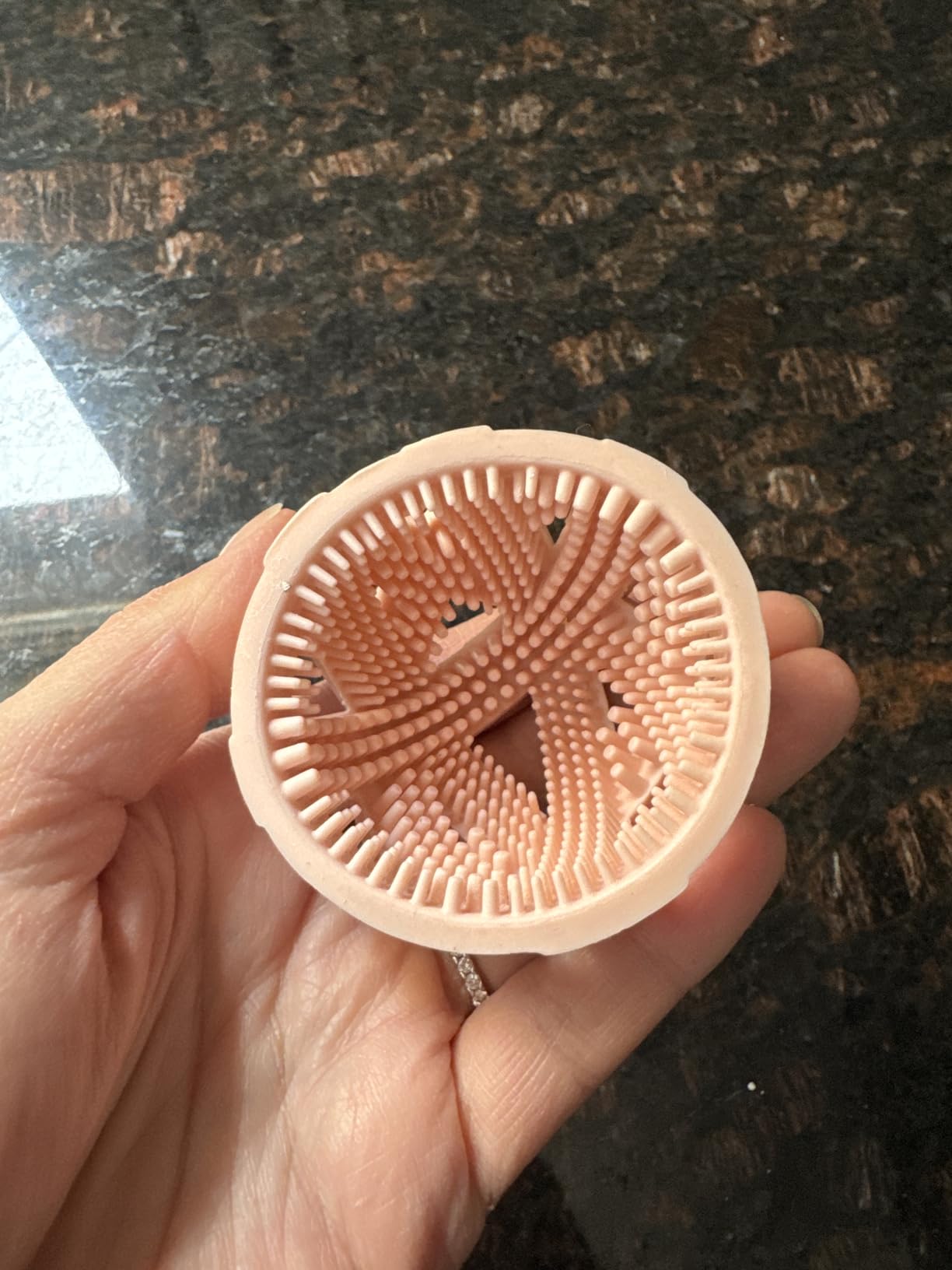
The mechanism is different from a bristle brush. Silicone nubs make broad surface contact that conforms to the curve of the shell, so you rotate the egg rather than scrub hard against it. The ribbed edges act as mini squeegees for stubborn bits, and the hollow center means the brush drains instead of sitting in a puddle of wash water on the counter.
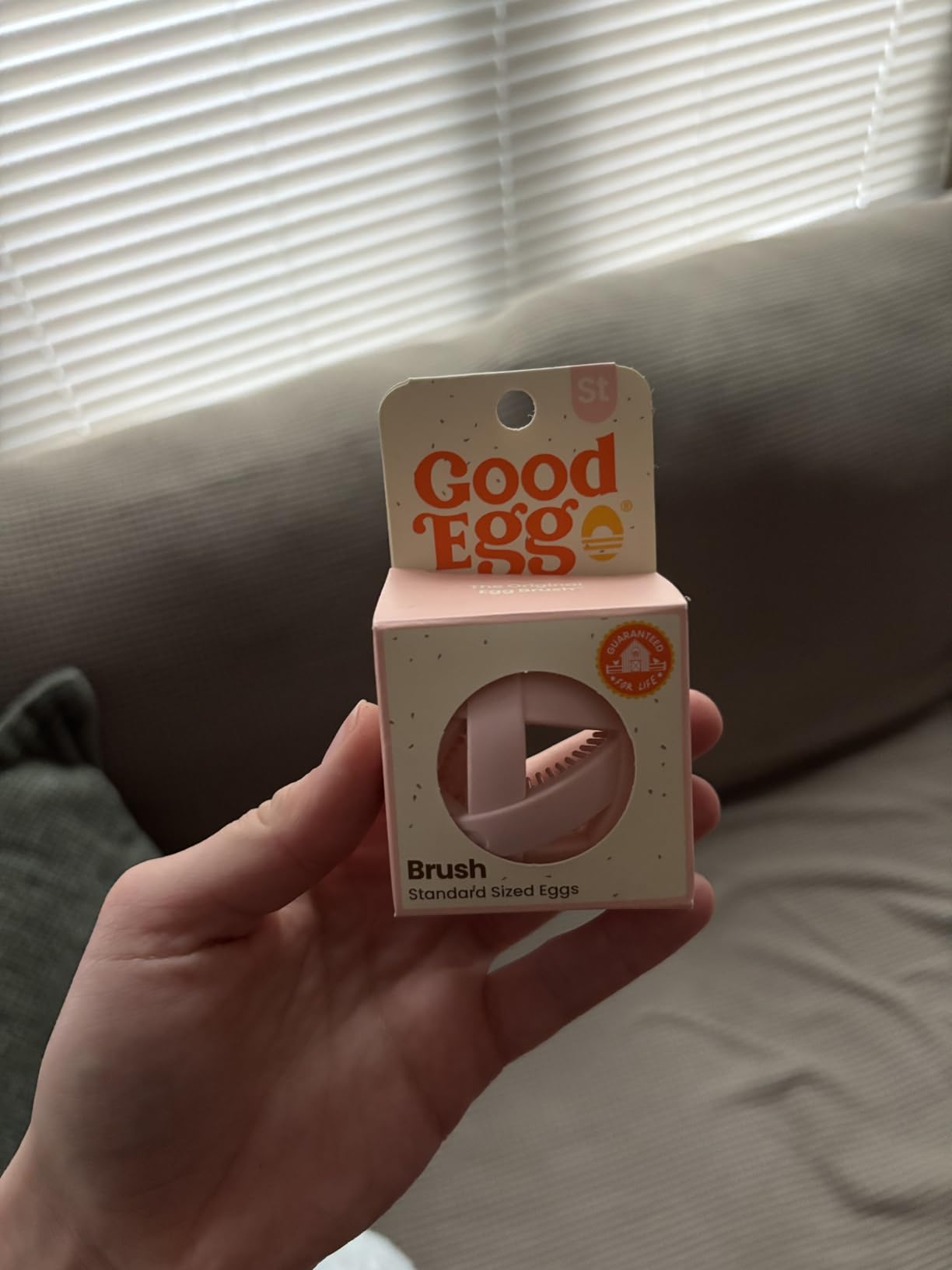
Build quality is what survives daily use. At 1.6 ounces with food-grade silicone, it does not crack, flatten or warp, and it goes straight in the dishwasher or flips inside out under the tap to rinse. At 642 reviews and 4.5 stars it is also one of the highest-ranked items in Fruit and Vegetable Cleaning Brushes, so this is not a niche poultry tool that got padded with poultry reviews.
Dry cleaning means rubbing the egg with a dry brush or a dry pad, with no water anywhere near it. It is the only method that leaves the bloom completely intact, and for eggs carrying a light film of bedding dust it is usually enough. Keep a brush at the nest box and do this while you collect.
It is not enough for anything sticky. Dried manure, mud or a wet feather smear needs water and either an enzyme soak or a sanitizer, because dry friction alone smears the soil rather than removing it.
Bristles make point contact, which is why they are effective and also why they crack eggs when a keeper presses hard. Nubs spread the load. On a soft shell from a young pullet, that difference is the gap between a clean egg and a broken one, and it is the main reason we recommend silicone for anyone with a mixed-age flock.
Every flock, honestly. This is the default first tool for dry cleaning lightly soiled eggs, and it pairs directly with the GoodEgg foaming pump for a wet routine that needs no soak. It is also the safest choice for eggs you plan to incubate when you only need the surface tidy.
It is sized for standard and large or XL eggs. Quail eggs and very small pullet eggs sit loosely in the cup and can pop out, so small-egg keepers need a different brush. On its own it also does nothing for a caked egg, which is friction without a solvent.
16 fl oz concentrate
All-natural enzymes
Safe for incubation eggs
2.5 x 2.5 x 8 inch
Manna Pro is the wash most often named in hatching circles, and the reason is not marketing, it is that the product is explicitly suitable for eggs destined for incubation when used as directed. At 4.7 stars across 269 reviews with 86 percent five-star ratings, it has the highest five-star share of any wash in this roundup.
The formula is all-natural enzymes in a concentrate you dilute yourself, which is the trade-off to understand before you buy. The 16 ounce bottle is not 16 ounces of usable wash, and the recommended soak is around fifteen minutes. Users report that a soak followed by light rubbing leaves eggs clean with almost no effort, and that it performs like bleach at a far smaller dose without the residue.
A fertile egg you intend to incubate is a developing animal with a porous shell, and the surface has to be clean enough that bacteria do not get in during a 21-day hold. The enzyme approach suits that because it removes organic contamination without leaving a residue that could interfere with gas exchange or with the hatch.
Several reviewers specifically report improved hatch rates on washed duck eggs, where the oily, thick cuticle makes the shells dirtier and more fragile than chicken eggs in the first place.
Follow the label ratio rather than guessing, because the whole value of a concentrate is the multiplication. Mixed at the correct dilution in warm water, it handles a full basin of eggs in a single soak and saves you running a fresh solution for every small batch, which is the mistake that quietly pushes keepers toward bottled ready-to-use sprays.
Hatchers, waterfowl keepers and anyone who wants one bottle to cover both washing and shell tidying before incubation. The listing has been available since February 2012, so this is a formula with a long track record rather than a recent formulation.
The soak time makes it a poor fit for fast weekday routines, and commercial sellers should check their health department rules first, since several reviewers note that a chlorine-based cleanser may be mandated for eggs leaving the property. For a one-bottle answer to both cleaning and sanitizing, keep reading, because that product family comes later in this list.
12 fl oz refillable
Foaming pump dispenser
No soak required
2.88 x 2.88 x 6 inch
This is the fast-morning answer. The 12 ounce refillable bottle dispenses a controlled foam directly onto an egg or onto the silicone brush, you rub, you rinse, and the egg goes in the carton. No basin of soak water to set up and no fifteen minutes of waiting before you can start your day.
That solves the single most common failure mode keepers describe on the forums, where washing is treated as a chore with no system and therefore gets skipped on busy mornings. A routine that takes ninety seconds survives a weekday. A routine that takes twenty minutes does not.
At 206 reviews and 4.6 stars with 80 percent five-star ratings, the pump dispenser is the most-praised feature, and the refillable design is what keeps the per-egg cost reasonable over a season. The formula is 99 percent food-grade ingredients with plant-based enzymes and no dyes, bleach, synthetic soaps or artificial foaming agents, made in the USA.
Foam on its own is a cleaning aid, not a complete system. The strongest reviews describe using it with a silicone egg brush, where the foam carries enzymes to the shell and the nubs lift the loosened soil. Purchase it as a half of a pair, and you have converted a soaking job into a rotating job.
Once the pump bottle runs dry, you refill it rather than discarding it, and the same format works for a spray bottle at the coop door. Reviewers running larger flocks refill small spray bottles from a larger container, which keeps the dispensing consistent across the whole wash station.
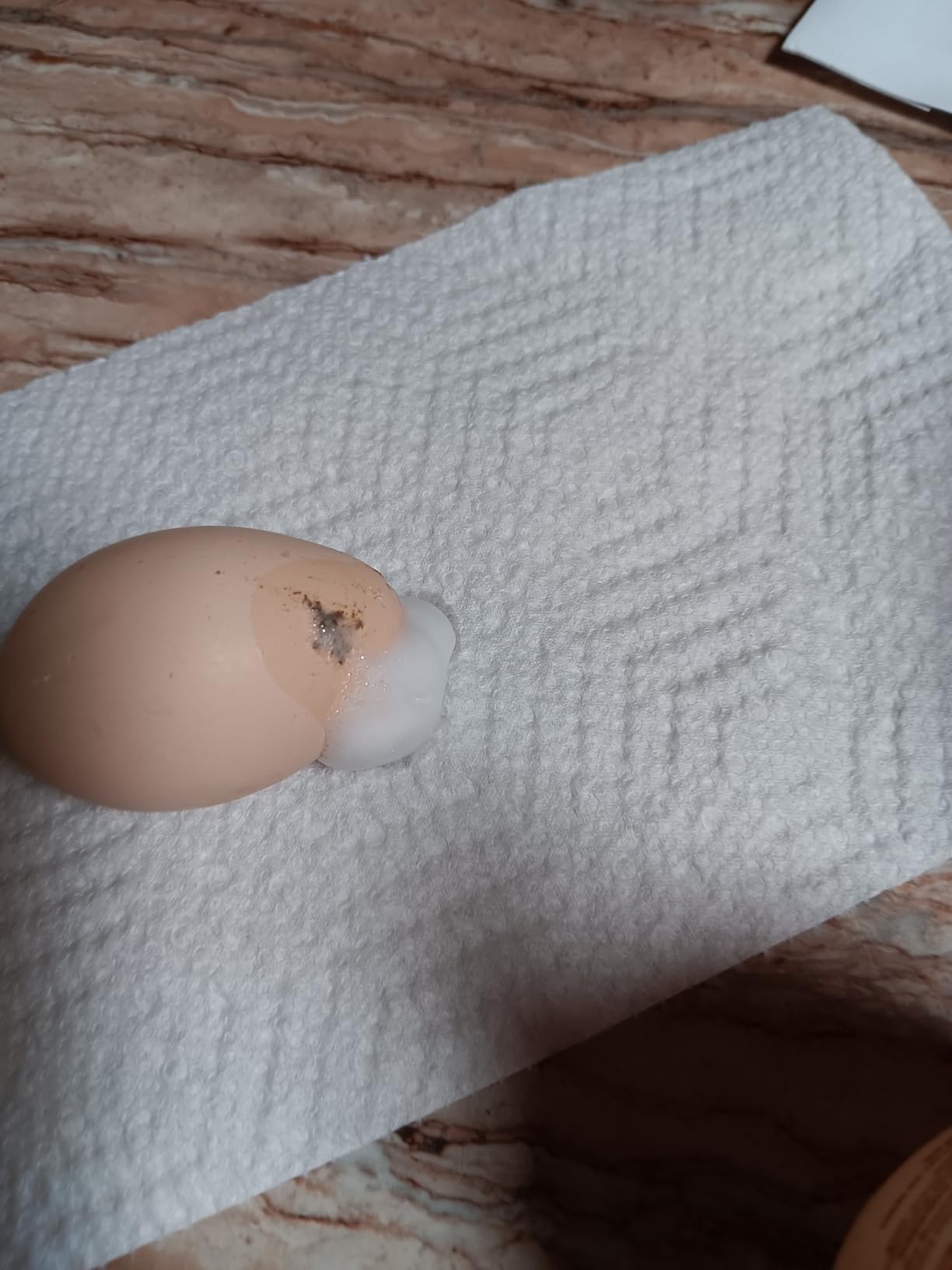
Small to medium flocks on a daily routine, anyone washing eggs indoors near a sink, and keepers who want the cleaning power of enzymes without the soak clock. It is the product we recommend to anyone who tells us they skip washing because they do not have time.
It is not a concentrate, so 12 ounces of foam does not deliver the per-egg coverage of a diluted enzyme bath, and on heavily caked eggs you will still want a soak first. The brush is sold separately, which means the advertised all-in-one routine is really a two-item kit.
Hypochlorous acid 0.015%
32 fl oz spray
30-second contact time
Two ingredients
Clean Republic is the sanitizing half of the category, and understanding what it does prevents the most common disappointment. This is hypochlorous acid at 0.015 percent in ionized water, two ingredients total, and it kills bacteria on contact rather than dissolving manure. If your eggs are dirty, wash them first and then sanitize them, or expect the spray to feel underwhelming.
The protocol is short: spray and rub for 30 seconds before rinsing, or soak a whole batch in a quarter cup for 30 seconds. Thirty seconds is the contact time that makes the sanitizing claim real, and cutting it short is the single most common way people decide these products do not work.
The distinction is real and it is also the source of most of the confusion. Hypochlorous acid is generated by electrolysis of salt water and works at a near-neutral pH, so it does not produce the fumes, residue or corrosive feel associated with sodium hypochlorite. That is why reviewers describe washing eggs in it and then eating them with no aftertaste.
The honest counterpoint is that it is still a chlorine-derived active, and a recurring minority objection on keeper forums is a principle-based refusal to put any chlorine chemistry on organic eggs, regardless of concentration or rinsing. We think that is a legitimate choice, not a mistake.
Selling and gifting, and any egg that has sat in a nest with a cracked neighbor. If you want the short version: sanitizing is about killing what is on the shell, cleaning is about removing what is on the shell, and only one of those two problems makes an egg look dirty.
Keepers who sell eggs, keepers with a recurring flock-health problem, and anyone who wants a fast wipe-down step for a partially cleaned batch. The 32 ounce and 128 ounce sizes cover both a spray bottle and a refill station, and the shelf life is one year from manufacture.
Some owners question whether it cleans better than warm water alone, which is a fair criticism given the chemistry. And if you wash eggs to sell them across state lines, check your local rules first, because this is a sanitizer and it does not replace a cleanser under most commercial codes.
Palm-size brush
Medium-firm bristles
Reusable
2.25 x 4.5 x 2.25 inch
The Rite Farm scrubber is the tool the waterfowl crowd swears by. At 154 reviews and 4.3 stars with 65 percent five-star ratings, it has the widest spread of any tool here, which tells you something real: it is excellent on the eggs it suits and unsatisfying on the eggs it does not.
Medium-firm bristles in a palm-sized body, sold directly by the manufacturer, reusable, plastic handle. What makes it work is the washboard technique described repeatedly on chicken-keeping forums: hold the brush upside down on the wet basin floor and roll the egg across it instead of rotating it in your palm. The motion puts the shell against many bristle tips at once and it is noticeably faster on a full batch.
Out of the box the bristles are stiff enough to feel aggressive. Soak the brush head in your warm wash water for a few minutes first and they soften to the working consistency, which is enough pressure to shift dried mud without cutting into the shell. Skipping that softening step is the most common reason a buyer concludes the brush is too harsh.
The 4.3 average also reflects wear. Some users report the centre bristles wearing down within a few weeks, and a few report removing little to no debris at all. Treat it as a consumable you will replace rather than a tool you buy once.
Waterfowl eggs are larger, thicker-shelled and coated with a naturally oily cuticle that grabs bedding and mud. That oil also means water alone beads off them, so a mechanical brush that physically lifts the soil is more effective here than any spray. The trade-off is that the shells are strong but the eggs are heavy and easy to pop out of a wet hand.
Ducks, geese and any batch with real caked-on soil. If you keep waterfowl alongside chickens, this is the tool that handles what the silicone brush will not touch.
It is point contact, so it can crack eggs when you press rather than roll, and for standard chicken eggs at light soil it is more tool than you need. Several reviewers point to a standard vegetable scrubber as the better comparison for heavy mud.
Soft nylon bristles
Semi-wrapped oval shape
Standing draining feet
2.6 x 2.2 x 4.3 inch
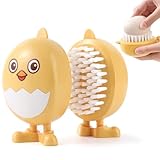
Lumkew solves a problem the other brushes in this roundup do not: one tool for a mixed flock. The semi-wrapped oval shape cups a standard chicken egg, a jumbo egg and a goose egg, which means a household keeping birds at three different sizes does not need three implements sitting by the sink.
At 4.6 stars across 147 reviews with 82 percent five-star ratings, it punches above its weight, and it ranks very high in Fruit and Vegetable Cleaning Brushes despite being sold as a coop tool. The soft nylon bristles clean thoroughly without damaging the shell, and the raised grip dots plus curved handle stay comfortable through a full batch, which is a smaller thing than it sounds at egg number forty.
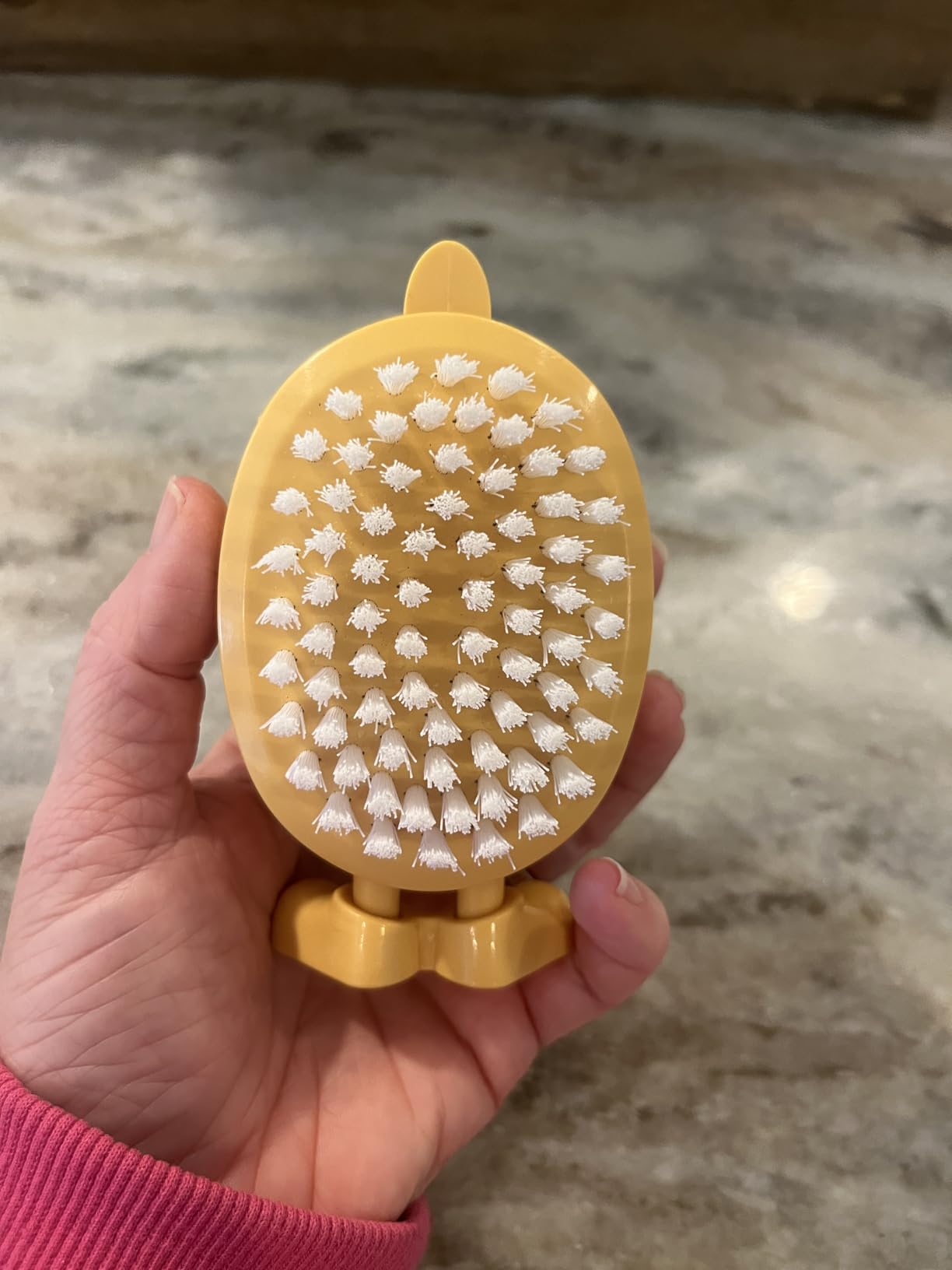
Most brushes sit in a puddle of used wash water on the counter because the handle geometry does not allow them to stand. That is a sanitation problem, not a tidiness problem, and it is a common forum complaint about countertop egg washing setups. This one has standing draining feet, so it sits up, drains and air dries instead of growing biofilm in a damp handle well overnight.
We would still stand any brush up to dry after use. But a design that drains by default removes the reason people forget.
Soft is the right call for small eggs and thin shells, and it is the wrong call for a dried mud crust. On a badly soiled egg the bristles work the surface without enough bite to lift it, and you end up adding a drop of enzyme wash to help. That combination is fine, it just means soft is not a substitute for a soak.
Mixed-species flocks, small eggs, and anyone who wants a brush that drains itself. It is also the one we would put in a washing station that multiple people use, because the grip stays comfortable and the shape handles whatever comes in.
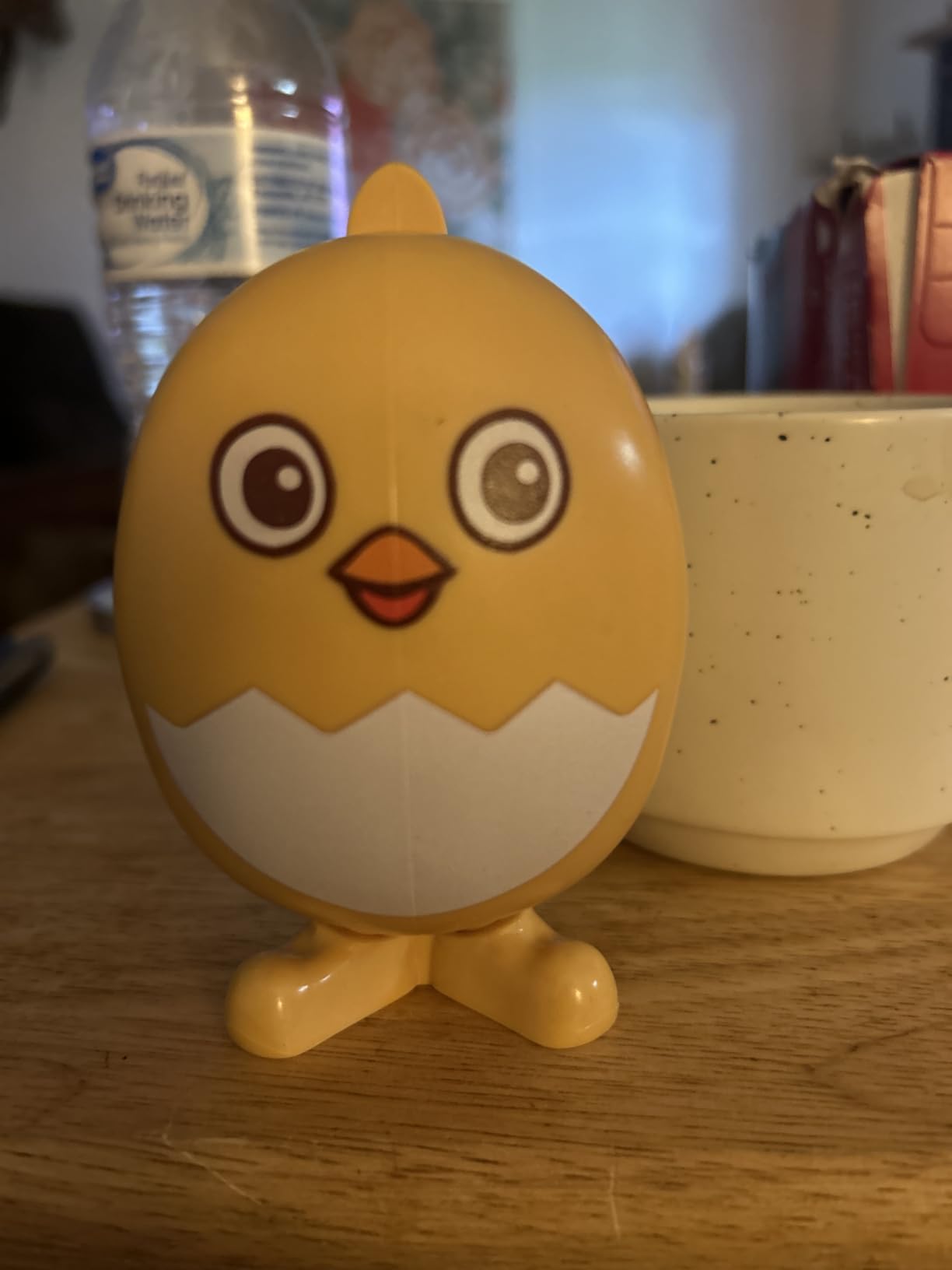
It is the softest option here, so it is not the answer for mud-caked waterfowl eggs, and nylon bristles will need replacing sooner than food-grade silicone. If your flock is chickens only and lightly soiled, the GoodEgg silicone brush is the better buy.
Ten hand-size pads
Abrasive texture
Assorted colours
3 oz pack
Scrubbing pads are the odd one out in this category because they are the only consumable tool here. Ten hand-size pads in assorted colours, sold directly by the manufacturer, at 72 reviews and 4.4 stars with 69 percent five-star ratings.
The honest case for them is throughput and hygiene rather than cleaning power. If two or three people are washing at once during a big collection day, a shared brush becomes a bottleneck and a sanitation problem at the same time. Ten pads solve both without anyone arguing about whose turn it is to rinse.
The texture is closer to a pot-scrubbing pad than to a soft brush. On lightly soiled eggs it picks up farm soil effectively, and the durability means one pad handles several eggs. On thin shells from young pullets, on quail eggs and on anything you plan to incubate, that same abrasiveness is a genuine risk, and we would not use pads on those.
Several critical reviews make a comparison that is difficult to argue with, which is that these are functionally similar to low-cost generic scouring pads with a different colour. That is probably fair, and it is a reason to think of them as a bulk consumable rather than a specialist tool.
Seasonal surges, egg-selling days where several people help, and any wash station where you would rather not pass a single brush around a group. The disposable format also suits a household that does not want to deal with a soaked brush at the end of a long day.
It is the weakest choice in this roundup for a single household that washes daily, because the per-egg cost is higher than a reusable brush and the abrasive texture adds risk on thin shells. Buy them for the surge, not for the routine.
40 enzyme-based wipes
No rinse needed
Fragrance-free
8.03 x 3.35 x 3.27 inch
Wipes exist because the real problem is not deep soil, it is that you are standing in a muddy run holding an egg you cannot put down. This is a 40-count container of enzyme-based wipes in distilled water with no fragrances or additives, and you wipe an egg and put it straight in the refrigerator with no rinse and no bowl to wash afterwards.
It is a newer listing, first available in June 2025, and at 32 reviews with a 4.6 average and 72 percent five-star ratings and no one-star ratings at all, we would treat that rating cautiously. A short history is a short history, and reviewers themselves note the thin base when the chemistry question comes up.
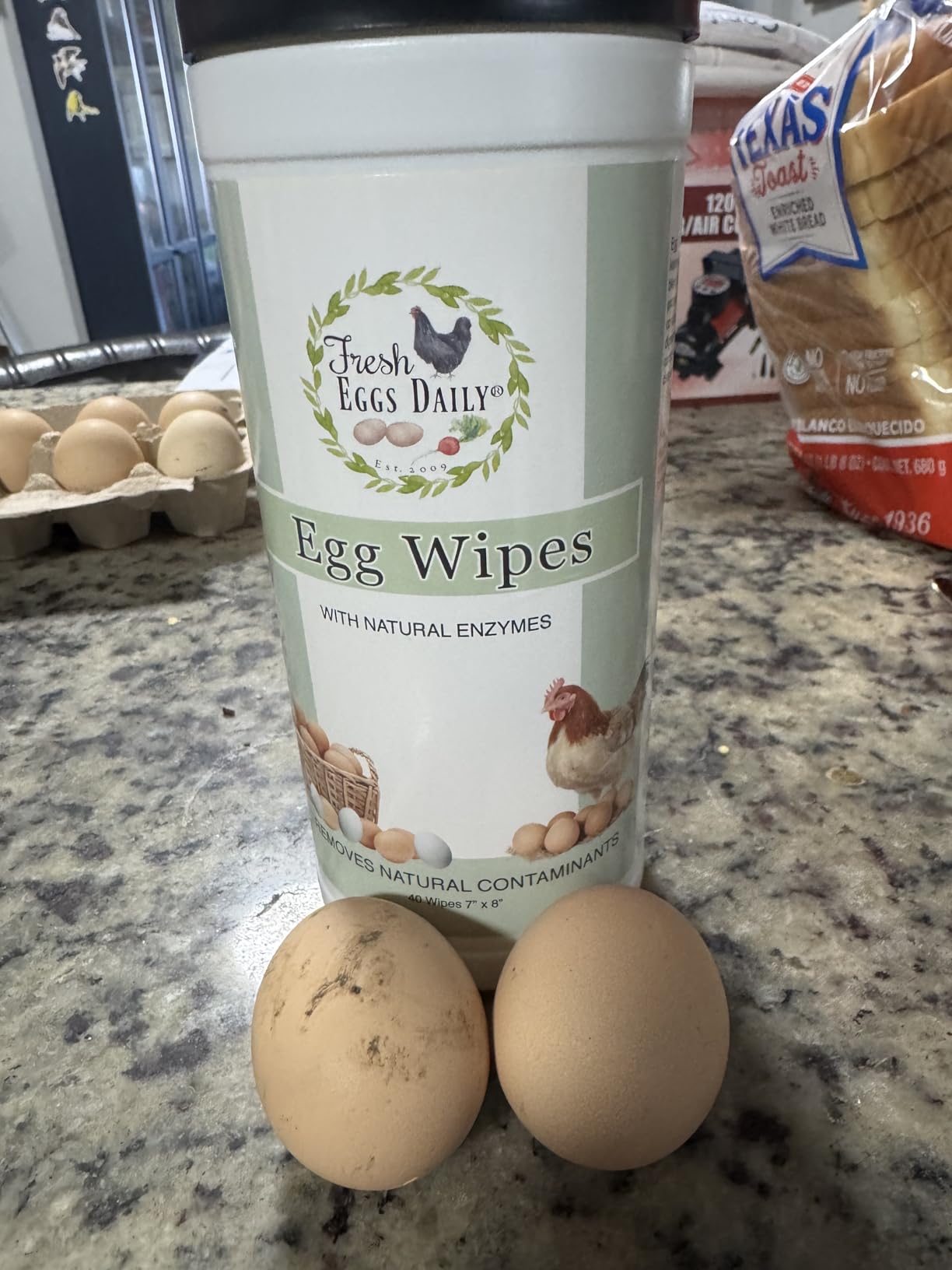
One wipe can be reused across several lightly soiled eggs, and the manufacturer rates a single container at up to 40 dozen eggs. For a flock of six to ten hens doing a daily collection, that maths works. It also works well as a finishing wipe after an egg has already been washed, to handle the eggs you noticed had a smear on them.
Here is the calculation keepers never see in a listing. A diluted enzyme bath washes hundreds of eggs from one bottle. A foam pump is somewhere in between. A wipe-per-egg format costs more per dozen than either of those, and on a flock producing more than a few dozen a week the difference compounds across a season. The convenience is real, but so is the arithmetic.
Small daily collections, coop-side touch-ups, and anyone who wants to avoid a wet wash station entirely. For a flock of fewer than about six hens it is a complete solution. The ingredient list is short and additive-free, which some organic-minded keepers will care about more than the convenience.
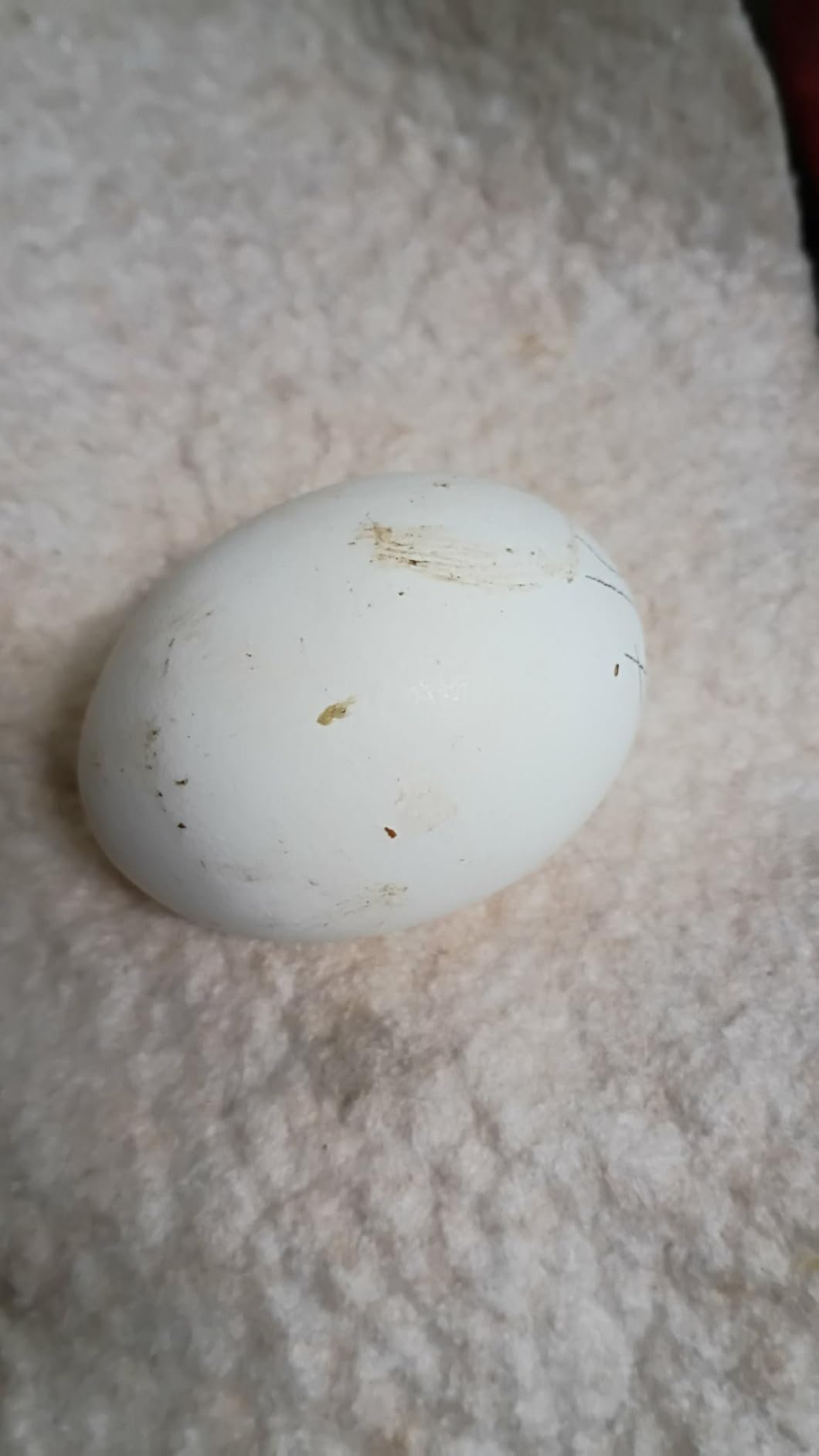
Heavily soiled eggs still need a soak and a brush, and the per-egg cost is higher than a reusable brush or a diluted enzyme bath. It is a supplement to a wet routine for most people, not a replacement for one.
Hypochlorous acid 0.015%
32 fl oz and 128 oz
30-second contact time
Two ingredients
Good Salt Life is the same chemistry as the Clean Republic spray in a different package, and the reason it earns a slot is the 128 ounce size. A backyard flock that washes every day goes through a 32 ounce bottle quickly, and the bulk format lets you refill spray bottles at a station rather than opening a new container each morning.
The formula is two ingredients, ionized water and hypochlorous acid at 0.015 percent, free of bleach, alcohol and synthetic chemicals. The protocol is 30 seconds of contact time by spray and rub or a 30-second batch soak, and the same warning applies as with the other hypochlorous products, which is that it sanitizes and does not clean.
This listing first appeared in July 2025 and carries 32 reviews at 4.3 stars, with a 9 percent one-star share, the highest among the wash products in this roundup. Nearly all of that negative feedback is about the chemistry itself rather than the performance. Organic keepers describe hypochlorous acid as bleach and water and prefer a dish-sanitizing product for heavily soiled eggs, and some say they would rather not put any chlorine-derived active on food at all.
That is a values decision rather than a performance one, and it deserves a straight answer. If you keep truly organic eggs and would not use a chlorine-derived product on them, skip both hypochlorous options and use an enzyme wash instead. You lose very little.
Medium flocks washing daily, sellers who want a consistent sanitizing step, and anyone building a refill station where one bottle feeds several spray bottles. First-time egg farmers in the reviews find it effective and easy to work into a daily routine.
It is a sanitizer, so a dirty egg still needs an enzyme soak or a brush first. And the 4.3 average with a 9 percent one-star share tells you the fit is narrower than the headline rating suggests, mostly for keepers who reject chlorine chemistry outright.
Route by eggs per day first, then by soil level, then by species. Hen count alone is a poor guide, because a flock of 40 in dry summer weather and a flock of 40 in wet autumn bedding are two completely different washing problems.
A good backyard hen lays roughly five to seven eggs a week, so about 0.75 eggs per hen per day. To produce two dozen eggs a week you need eight to ten healthy hens, which is the most common flock size for a household that takes eggs seriously. Under six eggs a day, everything in this roundup is more than sufficient. Six to 15 a day is where a bottle of enzyme wash and one brush become non-negotiable. Fifteen to 30 a day is where the no-soak foam pump starts saving real time every morning. Above 30 a day, one-at-a-time brushing stops scaling and the DIY batch build becomes worth the afternoon it takes to set up.
Light film of bedding dust calls for dry cleaning with a silicone brush and nothing else. Sticky or smeared eggs need an enzyme soak, because dry friction smears what water would lift. Caked manure or mud needs a soak followed by mechanical work, and that is the one case where a bristle brush earns its place. Visible bacteria concerns or a cracked neighbor in the nest call for a sanitizer step after cleaning, not instead of it.
Chickens are the easy case. Duck and goose eggs are large, oily and heavily soiled, so they want a soak plus a stiff brush and the washboard roll. Quail and bantam eggs are small and thin, so they want gentle silicone or soft nylon and no abrasive pad. Guinea fowl eggs are thick-shelled and speckled, and their firm shells tolerate firm bristles better than a chicken shell does.
Quail and Serama keepers are the most underserved group in this category. If that is you, the wipe format and the soft Lumkew are safer than a cup-style silicone brush, because a small egg in a large cup is a broken egg waiting for the wrong morning.
Dish soap is the most widespread mistake on keeper forums, and the reason more detergent does not mean cleaner eggs is that soap is formulated to leave a residue on food surfaces. Household bleach strips the cuticle, dries the shell and leaves a residue that you would need to rinse very thoroughly. Both belong on a coop wall, never on an egg. A pressure washer on an egg is a good way to meet the inside of a shell.
If you want the coop itself under control, that is a different equipment list than this one, and pressure washer accessories will not fix a wet nest box.
How should you wash eggs from your backyard chickens? Dry clean first, only wet wash what is still dirty, and use water that is warmer than the egg. The whole sequence is six steps and about fifteen minutes for a normal morning collection.
1. Collect. Check each egg at the nest box and set anything caked aside. Handle eggs with clean, dry hands or clean gloves, because the dry surface resists bacteria transfer.
2. Dry clean. Rub lightly soiled eggs with a silicone brush or a dry pad. If an egg comes clean here, stop. It keeps its bloom and it never enters the wet routine.
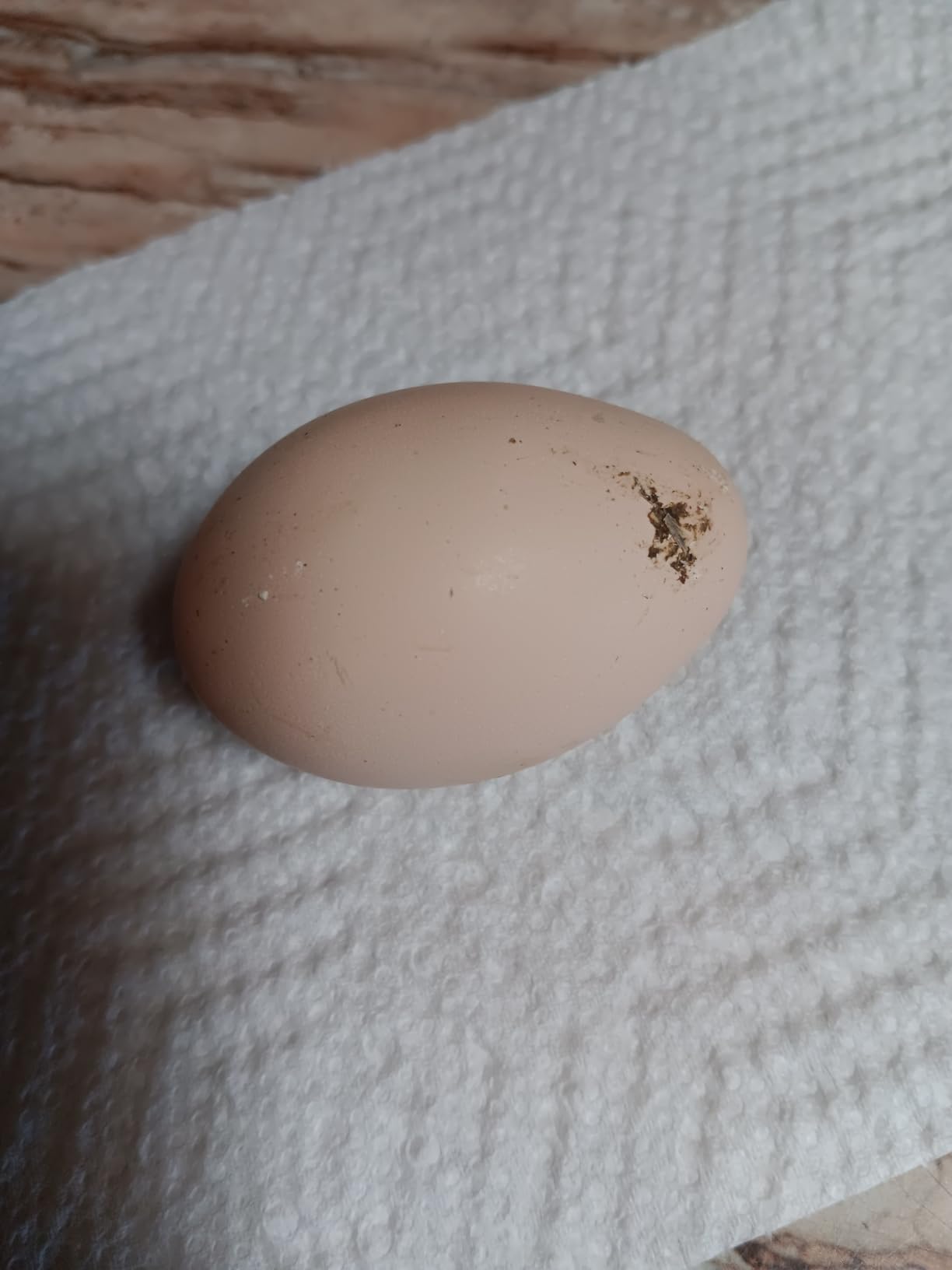
3. Warm the water. Fill a basin with water noticeably warmer than the eggs, not cooler. This is the food-safety step, and the reason is the pressure differential described earlier.
4. Pre-soak. Add enzyme wash at the label dilution and soak for 5 to 15 minutes. Skip the soak for lightly soiled eggs and go straight to the wash step. Do not extend soaking time; the enzymes work early and extended soaking weakens the shell.
5. Wash. Foam and rub, or roll the egg across a bristle brush, or rotate it in a silicone cup under the water. Use the tool that matches the soil, and keep pressure light.
6. Rinse, dry and refrigerate. Rinse in the same warm water, then let eggs dry fully on a rack or towel before they go anywhere near the refrigerator. Then refrigerate at 45F or below and date the carton.
You will see three different numbers for wash water temperature: a 90F minimum in DIY bucket builds, a 120F cap recommended by some keepers, and a 130F to 150F range quoted by commercial guidance. All three appear in credible sources and they are answering different questions.
The 90F figure is a floor for a manual basin, not a target. It is roughly body temperature and comfortably warmer than a freshly laid egg, which satisfies the safety requirement. The 120F figure is a cap, included because water much hotter than that starts cooking the albumen near the shell and dulls it. The 130F to 150F range comes from commercial hatchery equipment running sanitizing baths at temperature with tighter controls than a kitchen sink can offer.
Our ruling: for a backyard flock, anything from 100F to 120F in the basin is correct. Above 120F you gain very little in a home setting. Below the temperature of the egg you are creating a pressure differential that can pull contaminated water inward, and that is the mistake worth avoiding.
Sanitizing products add their own ceiling. Hypochlorous acid loses activity quickly in genuinely hot water, which is why a 30-second contact time at warm basin temperature is the standard rather than a 30-second contact time in near-boiling water.
How do you make a homemade egg washer? You need a food-safe five-gallon bucket, an aquarium air pump, an air stone, a thermometer and a drying rack. The agitation does the scrubbing, which is what lets one setup handle a batch of 60 to 70 eggs.
1. Choose the bucket. A plain food-safe five-gallon container, no paint or unknown lining, that you will use for nothing but eggs. Do not use a bucket that held chemicals or fertilizer.
2. Add the air pump and air stone. A basic aquarium air pump sits under or beside the bucket, with the air stone on the bucket floor. The bubbles lift and roll the eggs gently, which reproduces the agitation of a commercial washer with no contact and no bristle wear.
3. Add warm water and enzyme wash. Water from 100F to 120F, at the label dilution of your enzyme wash. Attach the thermometer to the rim so you are not guessing.
4. Load lightly. Sixty to 70 eggs in a five-gallon bucket leaves enough room for them to move. Overloading stops the circulation and leaves eggs sitting against the wall with no action.
5. Run for 5 to 10 minutes. Turn the pump on and let the bubbles do the work. Eggs should be visibly rolling, not sliding in one spot.
6. Drain, dry and refrigerate. Pour the eggs onto a towel or drying rack, let them dry fully, then refrigerate.
Forum keepers describe this as faster than hand brushing for batches of 60 to 70 eggs at very low parts cost, and we agree for anything above 15 eggs a day. Below that, the setup is more trouble than it is worth. Change the solution after every batch, because a reused bath concentrates the soil it just removed, and rinse the air stone and bucket before the next run.
Probably not. Electric egg washers and conveyor washers are built for commercial volume, and a backyard flock produces a fraction of what a grading line handles per hour. The honest threshold is somewhere above 30 to 40 eggs a day, sustained, plus a commercial reason to wash at all.
The case for one becomes real when you are selling at a farmers market at volume, when you are hatching at scale where egg hygiene affects hatch rates, or when a state or local code requires a specific sanitizing step your manual setup cannot document. Below that threshold, a machine adds a wash cycle, a drying cycle, a sanitizing step and a lot of parts to clean, in exchange for throughput you do not need.
The stronger argument is time and consistency. A conveyor washer is repeatable, which matters if you are producing a product for sale. A basin is not repeatable unless you write your protocol down, which is exactly what the six steps above are for. If you are unsure where you fall, count your eggs per week for a month before spending anything on hardware.
How long can eggs go without being washed? An unwashed egg stored at room temperature keeps for weeks because the bloom is intact. A washed egg has to be refrigerated at 45F or below and used faster, because washing removed the seal that made room-temperature storage safe.
The first rule is that washed eggs never go back to the counter. Once an egg is wet, it is a refrigerated food. Let it dry fully first, because putting a wet egg into a cold box creates condensation, and condensation on a shell is a better bacterial surface than dirt.
The second rule is to date the carton. Commercial cartons carry a packed date, and for home eggs marking the collection date with a pencil is the single most useful habit, because it converts a guess into a fact at breakfast time.
The third rule covers the question keepers ask most: washing eggs that are already refrigerated. If your eggs are in the fridge and you intend to keep them there, washing them buys almost nothing. Dry clean and leave the bloom alone. Wash only the specific eggs that are dirty or that are going somewhere they need to look clean.
One more, and it is the reason to do the wash properly in the first place. If more than about a tenth of your collection arrives soiled, fix the nest boxes before you buy another tool. Dry bedding, more nesting material, fewer cracked eggs and more laying space will do more for your flock’s output than any washer on this list. And for storing finished eggs and keeping the run itself in order, our hanging egg chair picks cover collection-side storage that keeps eggs out of the coop traffic entirely.
Usually not. Most backyard eggs should be dry cleaned or collected clean, because washing strips the bloom, the cuticle the hen seals over the shell pores. Wash only eggs that are caked with manure or mud, eggs you are selling or gifting under local rules, and eggs headed for incubation from a known-dirty nest.
For most backyard flocks the best egg wash is a plant-based enzyme wash such as CareFree Enzymes, used as a dilute soak for 5 to 15 minutes in water warmer than the eggs. Enzyme washes break down organic soil without stripping the cuticle or leaving chemical residue. If you need sanitizing rather than cleaning, a 0.015 percent hypochlorous acid spray applied for a full 30-second contact time does that job.
Between 100F and 120F for a home flock. Water cooler than the egg creates negative pressure inside the shell that can draw contaminated water inward through the open pores, so cool water is the dangerous mistake. Water above 120F begins to set the albumen near the shell, so extra heat buys very little in a kitchen setting.
Mechanical washers cup the egg in a flexible silicone or bristled surface and rotate it under warm water so contact points conform to the shell curve. Enzyme washes soak the egg so plant-based enzymes break down organic matter before any friction is applied. Sanitizing sprays kill bacteria on the shell after a fixed contact time rather than removing soil.
An unwashed egg with an intact bloom stored at room temperature keeps for weeks. A washed egg has lost the protective seal, so it must be refrigerated at 45F or below and used faster. Once an egg has been washed it should never return to room-temperature storage, and it should be dried fully before refrigeration.
If you keep a single flock of chickens and want one purchase that solves the most problems, start with the CareFree Enzymes egg washer. It has the deepest review history in the category, it handles the heavy soil that a brush cannot touch, and it is gentle enough to use on eggs you plan to hatch. Add a silicone egg brush for dry cleaning and you have a complete two-item system that covers light soil, dirty soil and incubation eggs.
If your mornings are the problem, choose the GoodEgg foaming pump instead and pair it with the same silicone brush. A ninety-second routine is the difference between washing eggs every day and never washing them.
If you keep waterfowl, the Rite Farm bristle brush and the washboard roll are what actually shift mud off a thick, oily shell. If you keep quail or bantams, go with the soft Lumkew or the wipes, and avoid abrasive pads entirely. If you sell eggs, add a 30-second hypochlorous sanitizing step and check your local health department rules first.
Above 30 eggs a day, skip the hand routine and build the bucket-and-airstone batch washer. It costs less than one hen and it handles a full batch in ten minutes.
Whichever route you take, fix the nest boxes first. A washer is a rescue tool, and dry bedding will save you more eggs in a year than any bottle on this list. For gift and presentation ideas once you have a surplus, our egg donor thank you gift picks cover what to do with the extras.
That is the complete 2026 roundup of the best egg washers for backyard flocks, tested across silicone, enzyme, foam and hypochlorous families. Pick the one that matches your soil level, respect the water temperature, and keep the bloom on everything that does not need washing.