Physical Address
304 North Cardinal St.
Dorchester Center, MA 02124
Physical Address
304 North Cardinal St.
Dorchester Center, MA 02124

Most office chairs are engineered around a 5 ft 9 in to 6 ft reference body, and that mismatch is exactly why the best office chairs for petite women are hard to find by browsing. A standard task chair starts its seat at 17 to 18 inches, its seat pan runs 17 to 18 inches deep, and its armrests sit 17 to 18 inches apart. Sit a 4 ft 11 in to 5 ft 4 in woman in one of those and three things happen at once: her feet dangle, the front edge of the seat digs into the back of her knees, and her shoulders hover above armrests she cannot get under.
I have spent the last several months working through the fit specs on dozens of listings for this roundup, and the pattern is consistent. The brand rarely tells you the number that matters, which is the lowest point the seat can drop. Instead you get a marketing label, a hero photo of a tall person, and a lumbar pad engineered for a longer spine. So I read the published dimensions on every chair here and compared them against the same four measurements: minimum seat height, seat depth, arm width, and where the lumbar support actually lands.
That process turned up something worth saying early. Most of these chairs were not purpose-built for a petite female frame; they are standard chairs in a smaller box, or standard chairs with a low back. The genuinely useful picks are the ones that solve a specific fit problem for a specific proportion, and I have named that problem for each one so you can match it to your body in seconds. Over on 12 best office coffee mugs for the office we take the same spec-first approach, because a desk setup only works when the pieces agree with each other.
Two more framing notes before the picks. First, your weight matters as much as your height: a light body does not compress a firm foam cushion, and a weight-sensing tilt calibrated for an average frame can feel broken underneath roughly 110 pounds. Second, the biggest complaint I read from petite chair users is not lower-back pain, it is shoulder and upper-back ache by mid-afternoon, and that almost always traces back to arm width rather than the backrest. If your shoulders ache, look at the arms before you look at the lumbar knob.
Here is the short version. If your feet reach the floor in the Amazon Basics low-back chair and you want under-desk clearance, take it. If you need a soft seat and no arms at all, the Sweetcrispy armless chair is the highest-rated pick in the set. If your problem is a chair that is simply too big for the room, the Misolant small chair solves that. Keep reading for the full breakdown, the measurement protocol, and the desk-height trap that catches almost everyone under 5 ft 6 in.

The table below is the shortlist in full. Every row is a real listing with published dimensions, and the four columns that decide fit for a smaller body are called out in each review. A word of warning before you read it: several of these chairs do not publish a minimum seat height at all, which is itself useful information.
| Product | Features | |
|---|---|---|
| Amazon Basics Low Back Mesh Chair |
|
Check Latest Price |
| BestOffice Mid-Back Mesh Chair |
|
Check Latest Price |
| Sweetcrispy Armless Compact Chair |
|
Check Latest Price |
 Misolant Small Curved-Back Chair Misolant Small Curved-Back Chair |
|
Check Latest Price |
 Brick Attic Short-People Chair Brick Attic Short-People Chair |
|
Check Latest Price |
 Serta Armless Mesh-Back Chair Serta Armless Mesh-Back Chair |
|
Check Latest Price |
 DUMOS Armless Low-Seat Chair DUMOS Armless Low-Seat Chair |
|
Check Latest Price |
 DUMOS PU Leather Task Chair DUMOS PU Leather Task Chair |
|
Check Latest Price |
 COMHOMA Winged Mid-Back Chair COMHOMA Winged Mid-Back Chair |
|
Check Latest Price |
 Nexthro Adjustable Lumbar Chair Nexthro Adjustable Lumbar Chair |
|
Check Latest Price |
We earn from qualifying purchases. CERTAIN CONTENT THAT APPEARS ON THIS SITE COMES FROM AMAZON. THIS CONTENT IS PROVIDED 'AS IS' AND IS SUBJECT TO CHANGE OR REMOVAL AT ANY TIME.
Mesh back, padded foam seat
16.8 lb, 275 lb capacity
21.25 D x 22.5 W x 38 H in
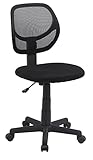
This is the chair I keep coming back to for shorter bodies, and the reason is the overall height rather than any single number. At 38 inches tall it is the most compact full task chair in this set, and reviewers in the 5 ft 4 in to 5 ft 6 in range consistently report that the seat fits them properly. That is not a marketing claim, it is the pattern across a very large review pool.
It is also the least fiddly chair here to get working. Most owners finish assembly in under ten minutes with the supplied hardware, the casters are replaceable rather than moulded into the base, and the pneumatic lever is smooth and reachable without standing up.
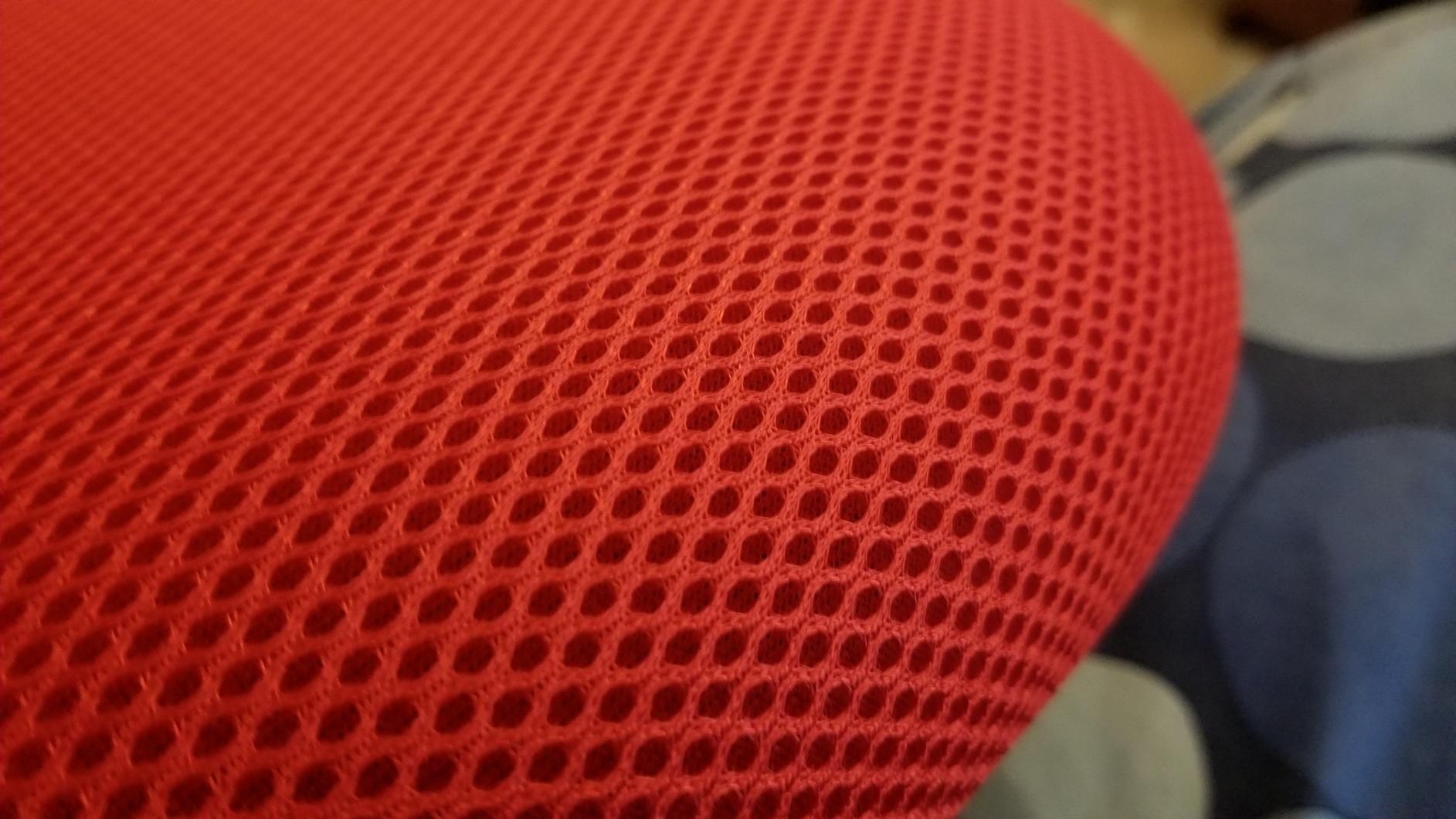
The mesh back is the real ergonomic story. It does not have a lumbar pad, but it flexes with your spine and keeps air moving, which matters in a home office that heats up in the afternoon. The backrest also slides slightly as you lean, and several owners credit that with easing lower-back strain over long sessions.
Now the honest caveat. The seat is padded foam, not mesh or webbing, and reviewers report it flattening under daily all-day use. If you are planning eight-plus hours a day, expect to add a thin seat pad or replace the cushion within a couple of years.
A shorter backrest means your shoulders clear the top of the chair instead of being swallowed by it, and the backrest height stops being something you have to lean around. Combined with the 21.25-inch depth and 22.5-inch width, it is one of the few chairs here that does not force a compromise between thigh room and desk clearance.
The breathable mesh back is a genuine win for anyone who runs warm or works in a warm room. The foam seat is a milder version of the same problem: a lighter body compresses firm foam less, so you can end up perching on an uncompressed cushion by hour six. Under roughly 110 pounds, treat the seat as something you may want to add padding to rather than assume it will mould to you.
There is no tilt and no recline. That is fine for focused work and a problem the moment you want to lean back, and it means the chair gives you posture on your terms rather than on the mechanism’s terms. The missing lumbar is the other gap, though the flexing mesh partly compensates. For upright, budget-conscious, small-desk work this is the one I recommend first.
Mesh back, sponge seat
Seat height 17.1-20.3 in
19.7 in seat depth, 250 lb capacity
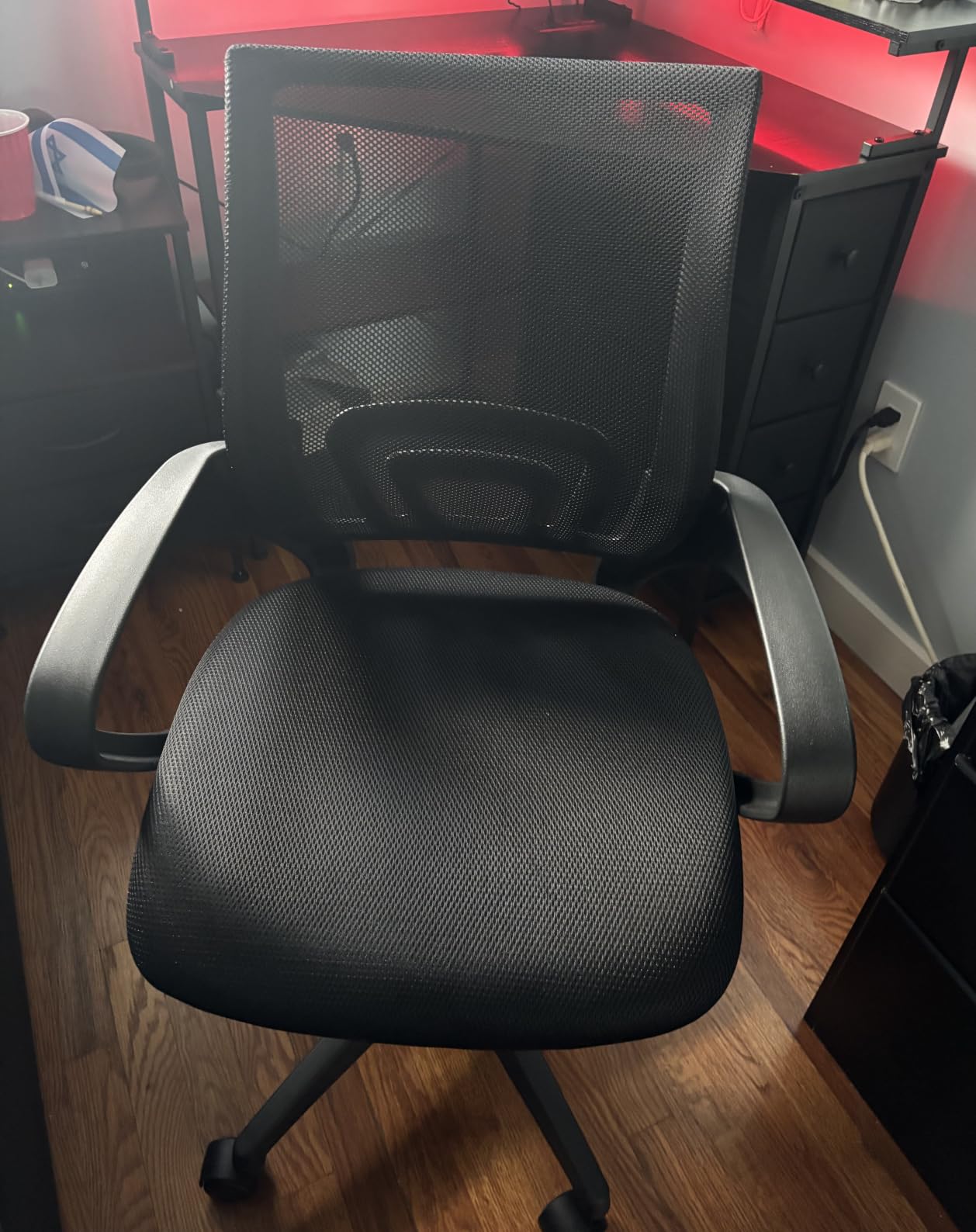
With more than 64,000 reviews this is the highest-volume listing in the roundup, and it is genuinely well made for what it is. Owners praise the cool mesh, the smooth swivel, the casters that roll on carpet and hard floors alike, and a colour range that runs from soft pink tones through to neutrals that suit a real office.
I want to be straight with you about the fit, though, because the published numbers are not subtle. The seat height starts at 17.1 inches and the seat depth is 19.7 inches. That seat depth is longer than a lot of full-size executive chairs, and for a woman with shorter thighs it means the front edge lands behind your knees and pushes you forward off the backrest.
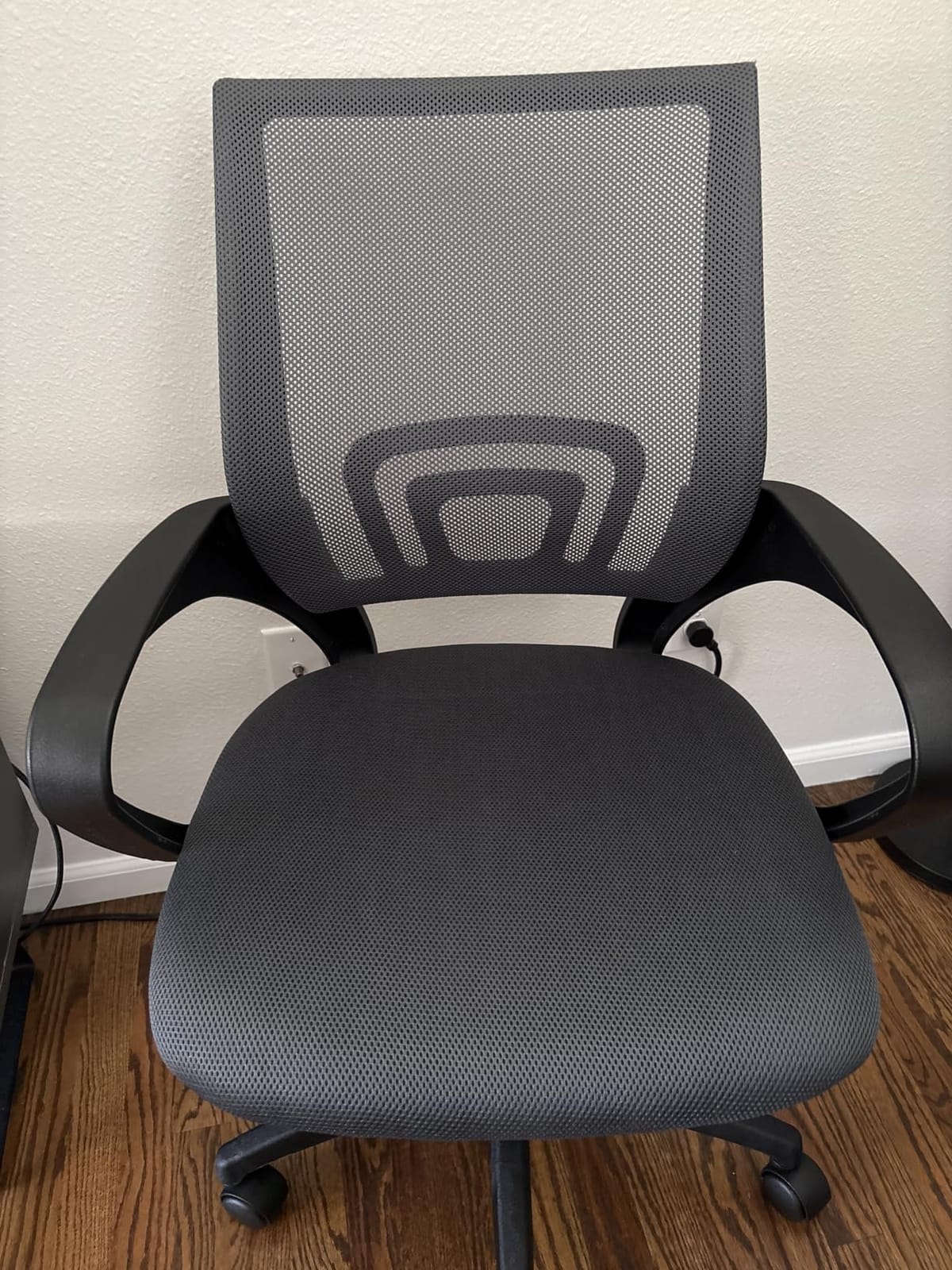
Owners also note the seat cushion is thin enough that many add a seat pillow, and that the low centre of gravity makes reclining feel a little tippy. Those are real trade-offs rather than defects, but they are the reason this is not the top pick here for a petite frame.
Listing positions from 90 to 125 degrees is generous, and it is the reason the chair earns repeat purchases. If your work involves thinking rather than typing, a real recline changes how you use the chair, and plenty of buyers say as much in reviews.
The rule of thumb for seat depth is simple: leave a two-to-three inch gap between the front edge and the back of your knees. On a 19.7-inch pan, a shorter user has to slide forward to get that gap, which takes them off the backrest entirely and cancels out the recline the chair otherwise does well. If you have already worked out that your thigh length is under 18 inches, skip this one.
Assembly takes 10 to 15 minutes with the included hardware, and owners mention spare screws in the box, which matters more than it sounds on a plastic-frame chair. The manufacturer warranty is 90 days, which is the shortest in this set and the one spec to factor in if you expect a daily driver.
PU leather, thick foam cushion
Armless, 17.71-21.45 in seat height
250 lb capacity, 34.25 in tall
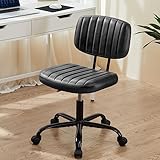
This is the chair I send people to when their main complaint is a hard, thin seat. It carries a 4.6 average across more than 2,400 reviews with an unusually high share of five-star ratings, and the cushion is the reason: a wide, thick slab of high-density foam on both the seat and the backrest.
Then there is the armless design, which for a petite woman is a genuine feature rather than a saving. If your shoulders ache by mid-afternoon because armrests sit too far apart, removing them removes the problem entirely. The trade is no forearm support while typing, and you feel that after the first long document.
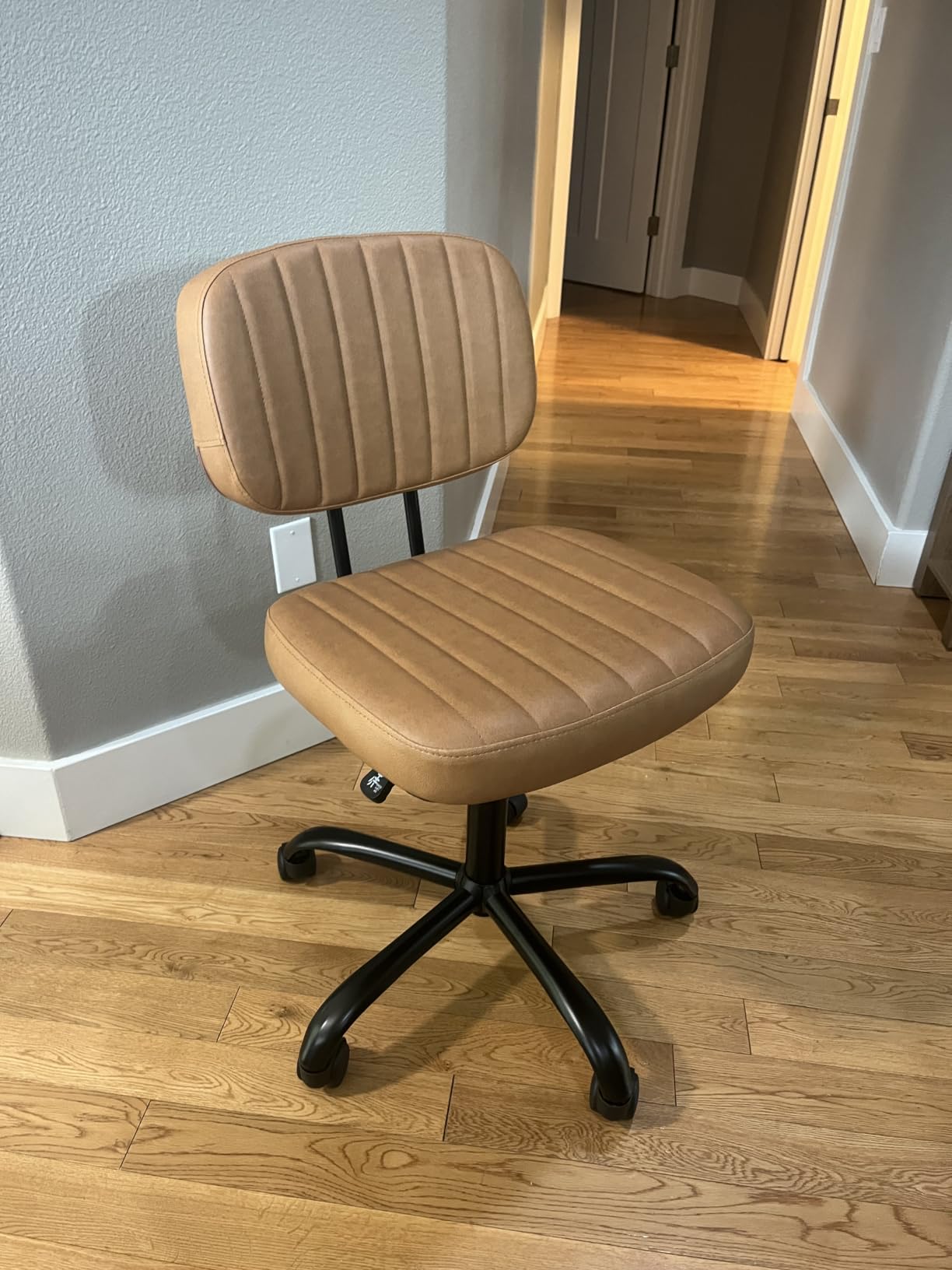
The footprint is genuinely small, 16.33 inches deep by 18.11 inches wide, which is why it keeps showing up in bedroom and vanity setups as much as home offices. The PU leather has a vertical grain that reviewers say stays breathable in warm weather, and the gas cylinder is SGS-certified with BIFMA certification on the frame.
Shoulder ache in short users is usually a geometry problem, not a strength problem. When the armrest centre sits 17 inches from your midline and your shoulder is 14 inches wide, you hold your arms up and slightly out for the whole day. An armless chair deletes that geometry. If you have been blaming your posture for shoulder pain, this is the cheapest test of the theory available.
The thick foam here is the trade-off point. Reviews describe it as wide and plush, and for a light body the risk is that it stays firm rather than moulding. Counter that by sitting in it for a full working day before you commit, and by adding a thin memory-foam topper if it feels unyielding. The leather surface is also easier to wipe clean than fabric, which matters in a shared room.
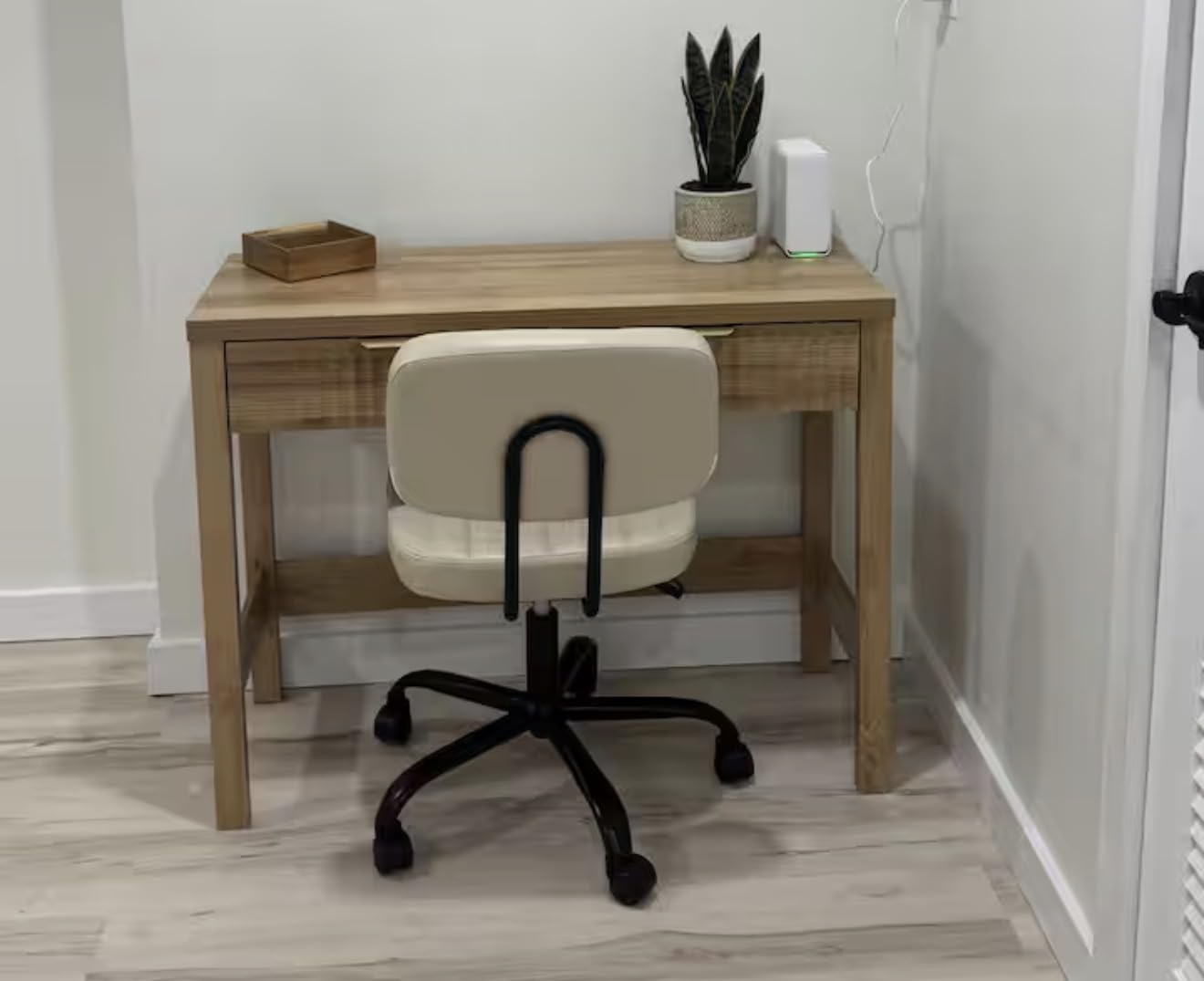
Reviewers are clear that the lumbar sculpting is modest for very long all-day sessions, and that the low-back profile is designed around shorter sitters. At 4.6 stars with 81 percent five-star, this is the most consistently well-liked chair in the set, but its comfort ceiling sits in shorter sessions rather than eight-hour days.
Curved wrap-around back
Square sponge seat cushion
19.68 D x 17.32 W x 31.5 H in, 1-year warranty
At 19.68 by 17.32 by 31.5 inches, this is the smallest chair in the roundup by overall height, and the design follows from that. The back is a wrap-around curve rather than a flat panel, which gives a shorter spine a continuous surface to sit against instead of a lumbar pad floating at the wrong height.
The seat is a square cushion rather than the round ones you see on vanity chairs, and that is not a cosmetic choice. A square seat gives you the full width of the frame to sit across, which spreads your weight instead of concentrating it on a narrow front edge. Owners specifically call that out as better for their hips.
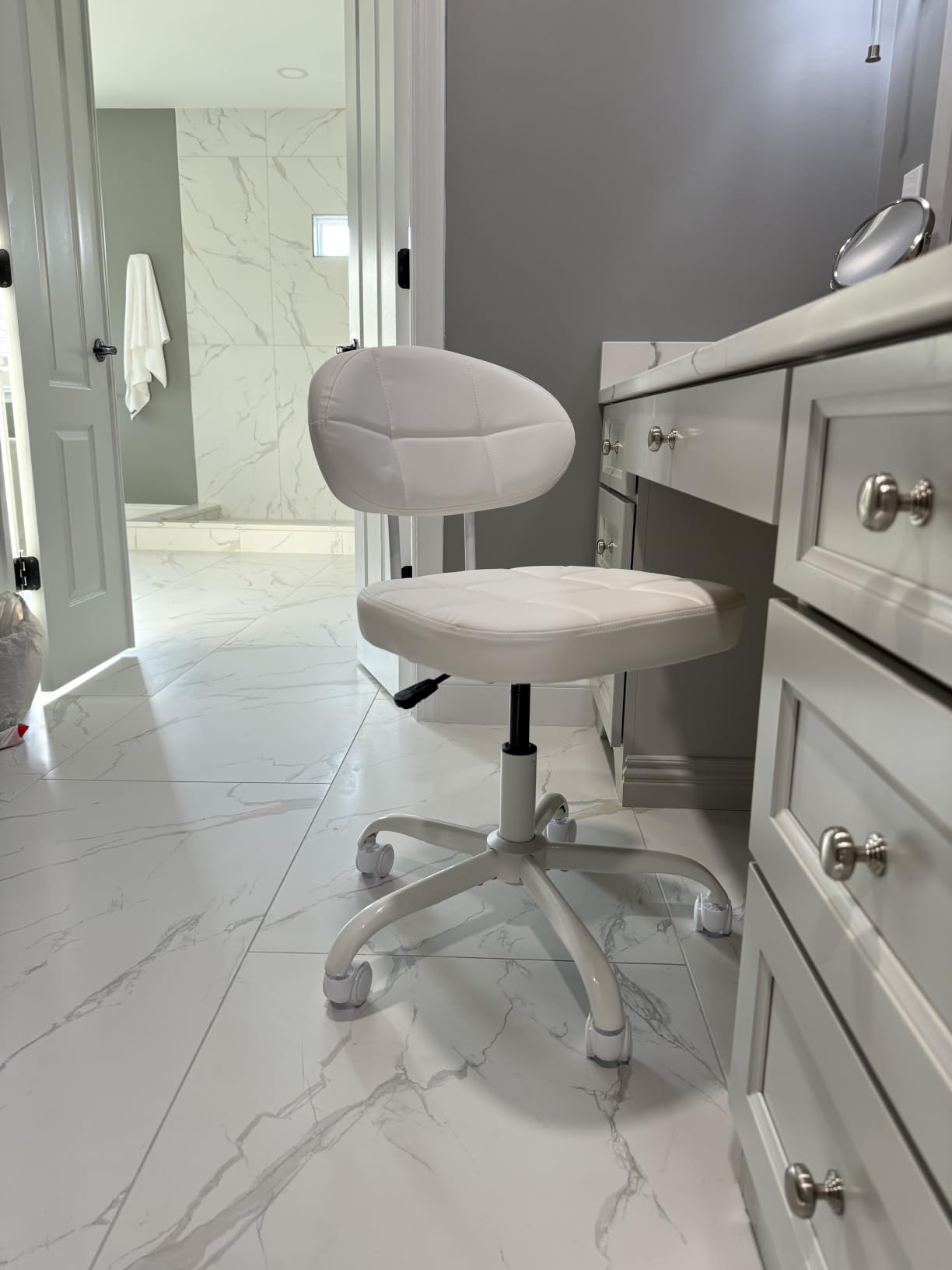
Assembly takes about ten minutes and the manufacturer includes gloves so the parts stay free of fingerprints, which is a small touch that tells you the packing is considered. The frame is BIFMA-tested with an SGS-certified gas lift, and there is a one-year warranty, the longest stated coverage among the budget picks here.
A fixed curved back works well precisely because it has nothing to misalign. There is no pad to set at a height your back does not have, so a shorter torso gets contact across the whole lower back. The cost is control: the back angle is fixed and cannot be moved upright, which is fine for reading and light desk work and frustrating for long typing sessions where you want a slightly reclined posture.
Six colours ship, including a navy that hides stains well and a pink that suits a bedroom setup. What to watch is the maximum seat height, which several owners describe as modest. A 5 ft 4 in reviewer noted the top of the range still felt low, so if you are at the taller end of petite, step through the options before ordering.
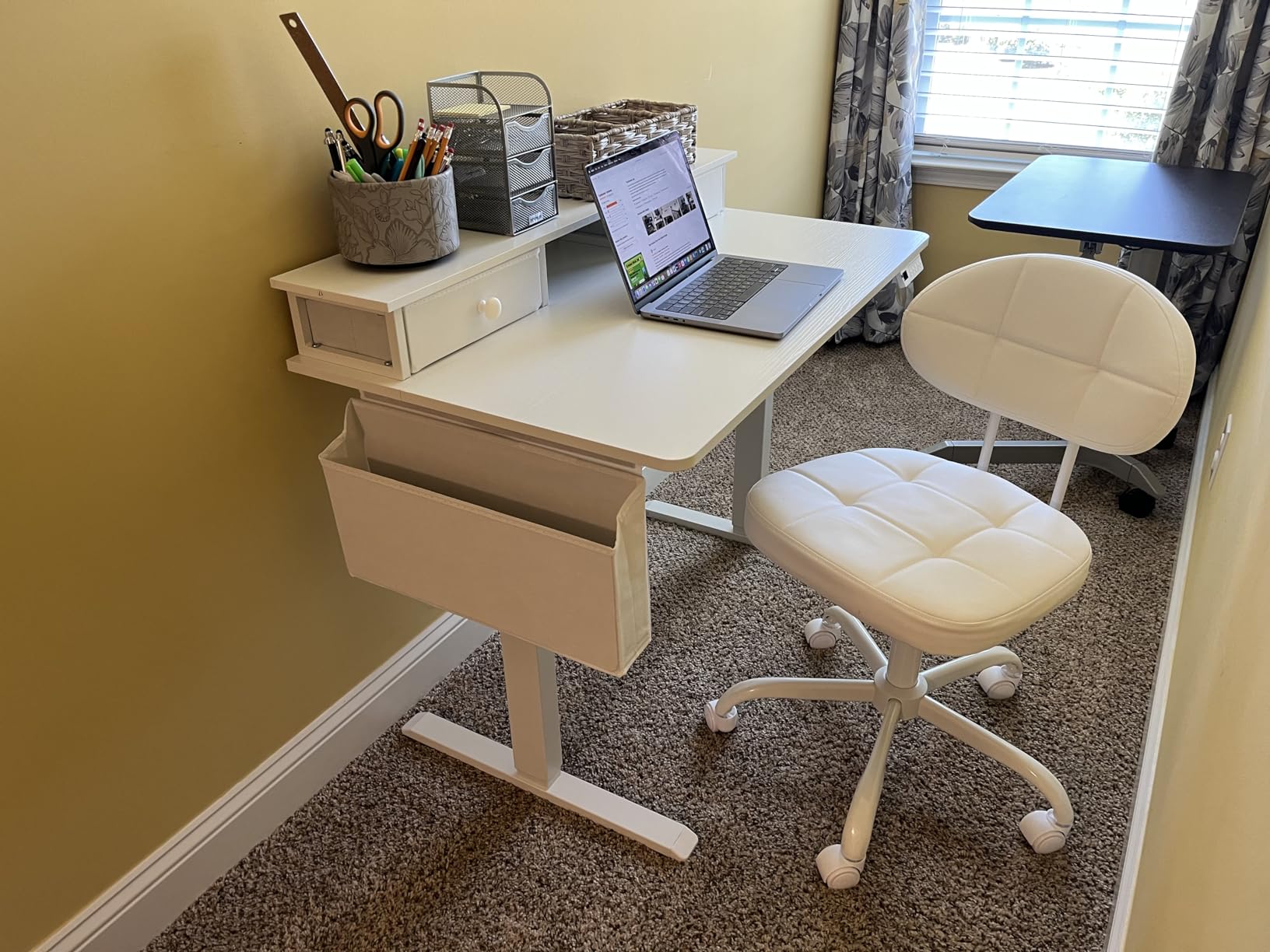
With no arms and a modest range, this reads better as a bedroom, sewing room or dressing-table chair than as an eight-hour professional seat. Several owners bought two or three for different rooms for exactly that reason. As a compact solution to a chair that is physically too big for your space, it is one of the more thoughtful designs in this group.
PU leather, flip-up arms
3.94 in height travel
Rocking function, 275 lb capacity, 26 lb
This chair is marketed for short people, and the flip-up armrests are the feature that genuinely delivers on that. Arms that swing up through 90 degrees let the whole chair slide under a desk with the arms out of the way, which on a small desk is the difference between fitting and not fitting.
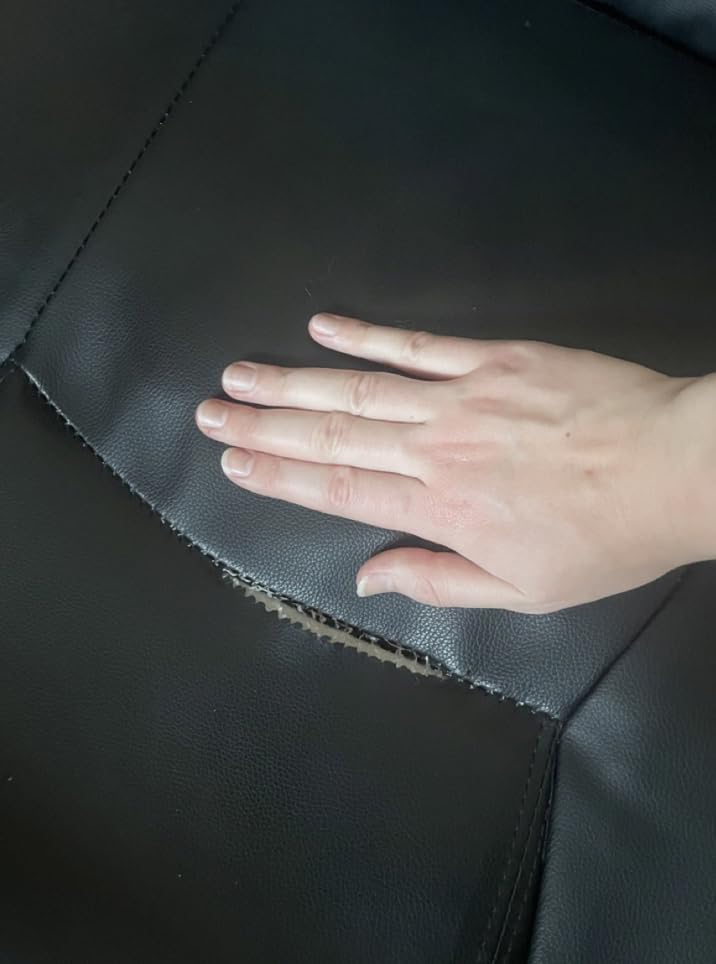
The rocking function is the other draw. Owners describe it as a genuinely relaxed way to sit, and for anyone whose day involves reading rather than typing, rocking at a low tension gives you movement that a rigid chair does not. The lever under the seat engages it, and the PU leather wipes clean and resists cracking.
Be aware of the 41.7-inch overall height and the 26-pound weight. That back height is tall for a short user, which is the mismatch several reviewers flag against the short-fit marketing, and the weight makes it awkward to move between rooms on your own. A Level 3 certified gas lift is rated to 275 pounds, so the mechanism itself is solid.
Arm width is one of the four fit numbers, and flip-up arms solve half of it in an unusual way. You keep the armrests for the times you want them, and reclaim the full desk width for everything else. For a petite woman working in a corner of a room, that is often worth more than a deeper adjustment range.
The high-density foam starts firm and takes time to soften. Sit in it for a week before you judge it, and if you are around 110 pounds or under, the firm start is more noticeable because foam compresses less. The tilt and rock settings are lever-controlled rather than tension-dial, so you get on-off positioning without fine calibration.
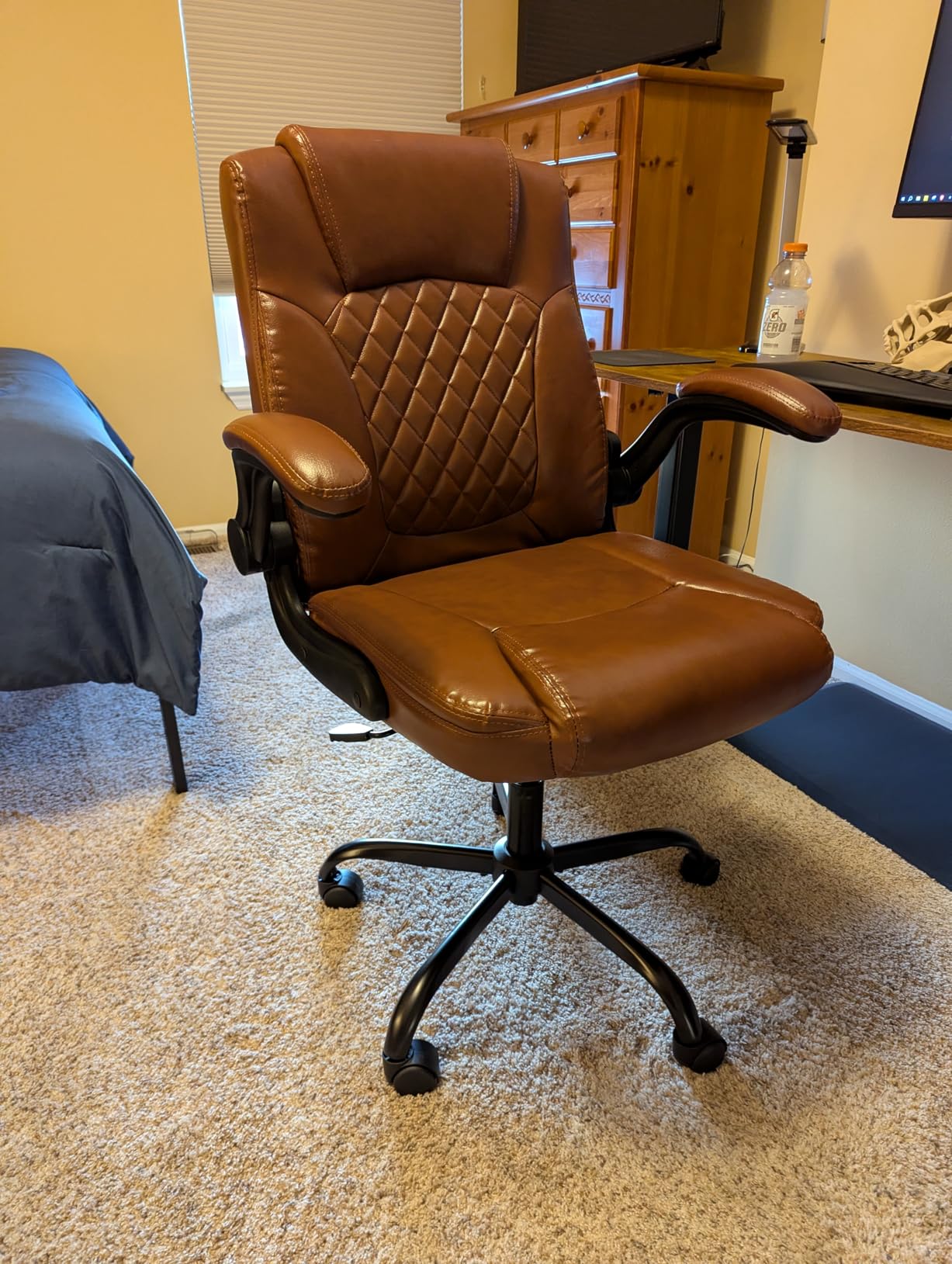
If your top priority is the lowest possible seat or the smallest footprint, this is the wrong chair, and the 41.7-inch height gives it away. It also comes in multi-packs, which is useful if you are furnishing a shared room and less useful if you are buying one chair for one person. The nylon frame flexing when you lean back is a minor annoyance rather than a safety issue.
Armless mesh back, foam seat
17.6 lb, 275 lb capacity
23 D x 18.5 W x 32.75 H in
This is the chair I recommend when the desk is small, awkward, or tucked under something roll-top. The armless frame is narrow enough to slide under desks that swallow most task chairs, and at 17.6 pounds it is the easiest of the chairs here to carry up stairs or move between rooms alone.
The seat is foam-layered faux leather with gentle lumbar shaping, and the metal base with dual-wheel casters rolls smoothly. Seven colours ship, including cream and pink, which is why this one turns up in home offices as often as in craft rooms and dressing areas.
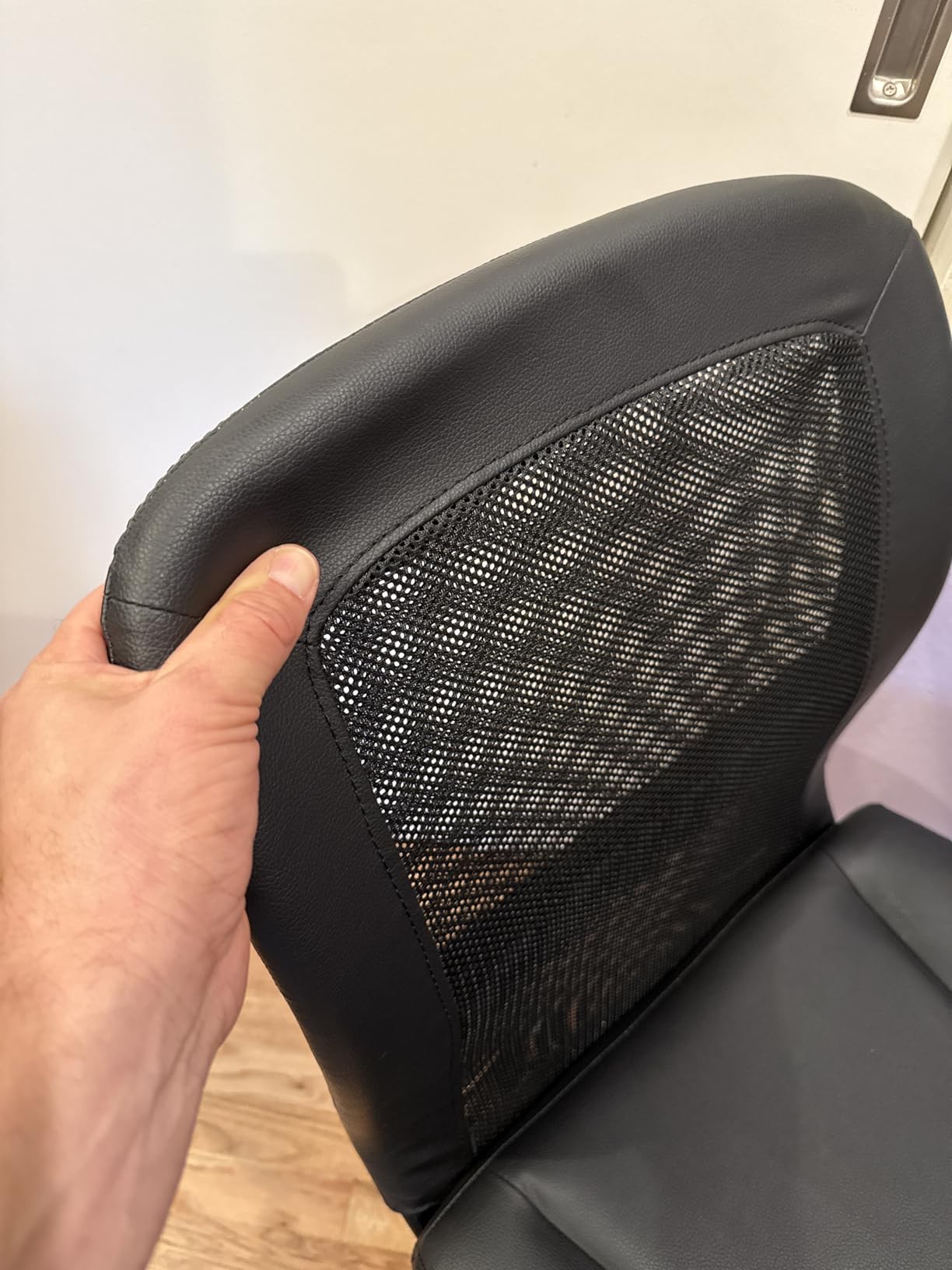
The split in reviews is instructive and worth reading before you buy. People who wanted a small chair for a specific corner rate it well. People who expected an ergonomic all-day seat rate it hard, because the mesh back has no padding and you can feel the frame bar when you lean back, and because height adjustment is the only control you get.
The unpadded mesh keeps air moving and is easy to clean, which is a real advantage in a warm room. The cost is that there is no cushion between your shoulder blades and the frame, and the shaping is described as gentle rather than supportive. If you plan to recline, put a small lumbar cushion behind you.
At 17.6 pounds, this is one of the two chairs in the roundup light enough for one person to reposition casually, and that changes daily life in a small apartment. You can pull it out for company, move it to a table for a project, and put it back without asking for help. The metal base also feels more stable than plastic at that weight. If the same corner also doubles as a packing and planning spot, our travel gifts for women picks follow the same rule of measuring the space before you buy.
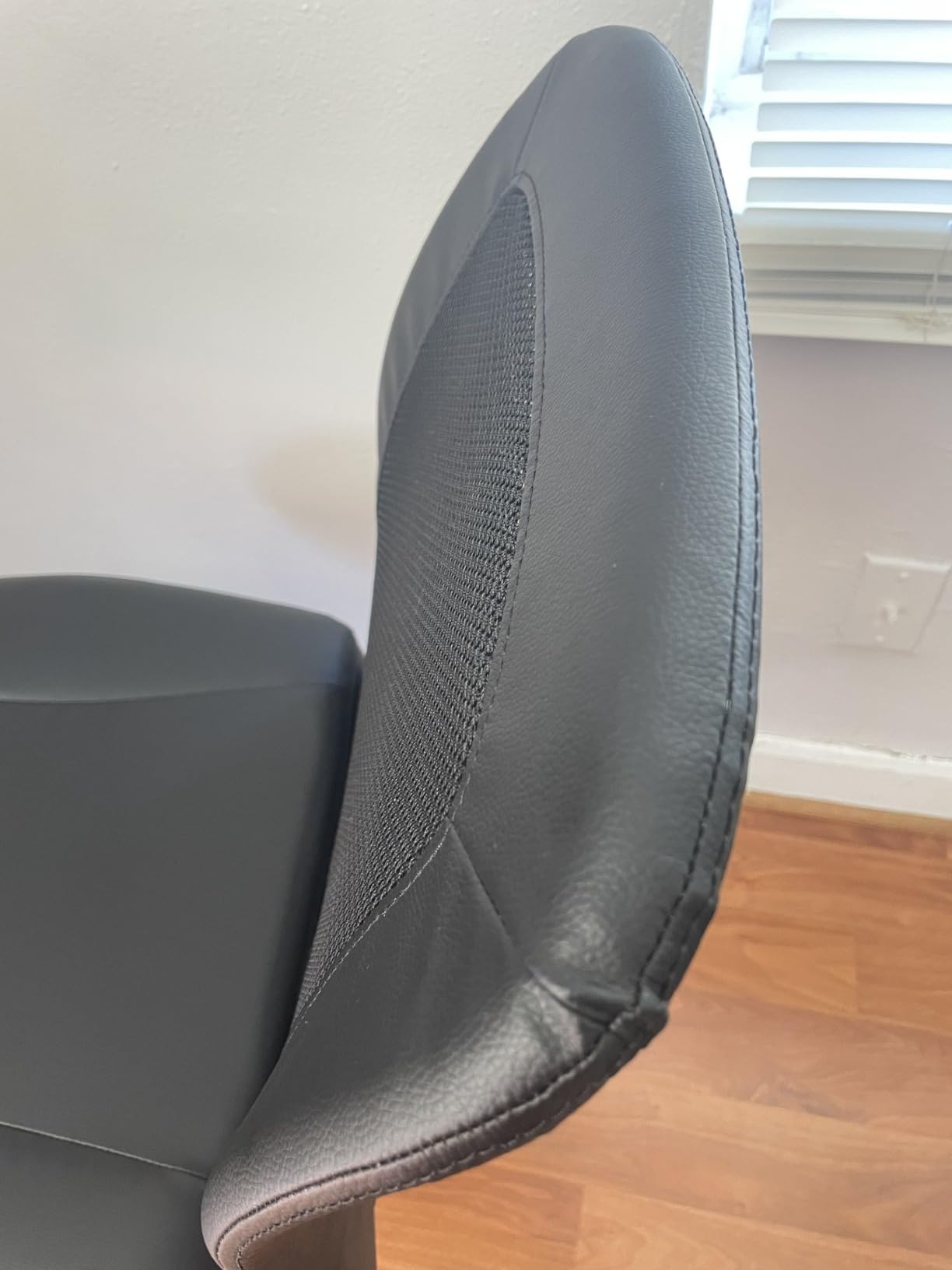
There is no recline and no tilt, so you are locked into an upright working posture, and the cushion is thin by the standards of a full ergonomic chair. A one-year limited warranty is standard here. If you sit at this desk for eight hours a day, look at a chair with a tilt mechanism; if you sit for two, this is comfortable and the footprint is the selling point.
Armless mesh, foam seat
11.9 lb, 250 lb capacity
16.33 D x 16.54 W x 34.25 H in
At 11.9 pounds this is the lightest chair in the roundup, and the manufacturer specifically states that the low seat height suits shorter users and keeps the feet flat. That single line is the reason this is a budget pick worth pointing at, because low seat height is the number that matters most and it is rarely printed on a listing.
The backrest is a Y-shape designed to support the spine and lumbar region, and the mesh has a removable washable cushion cover. Reviewers repeatedly say the build quality exceeds what the category usually delivers at this tier, which tells you where the margin went.
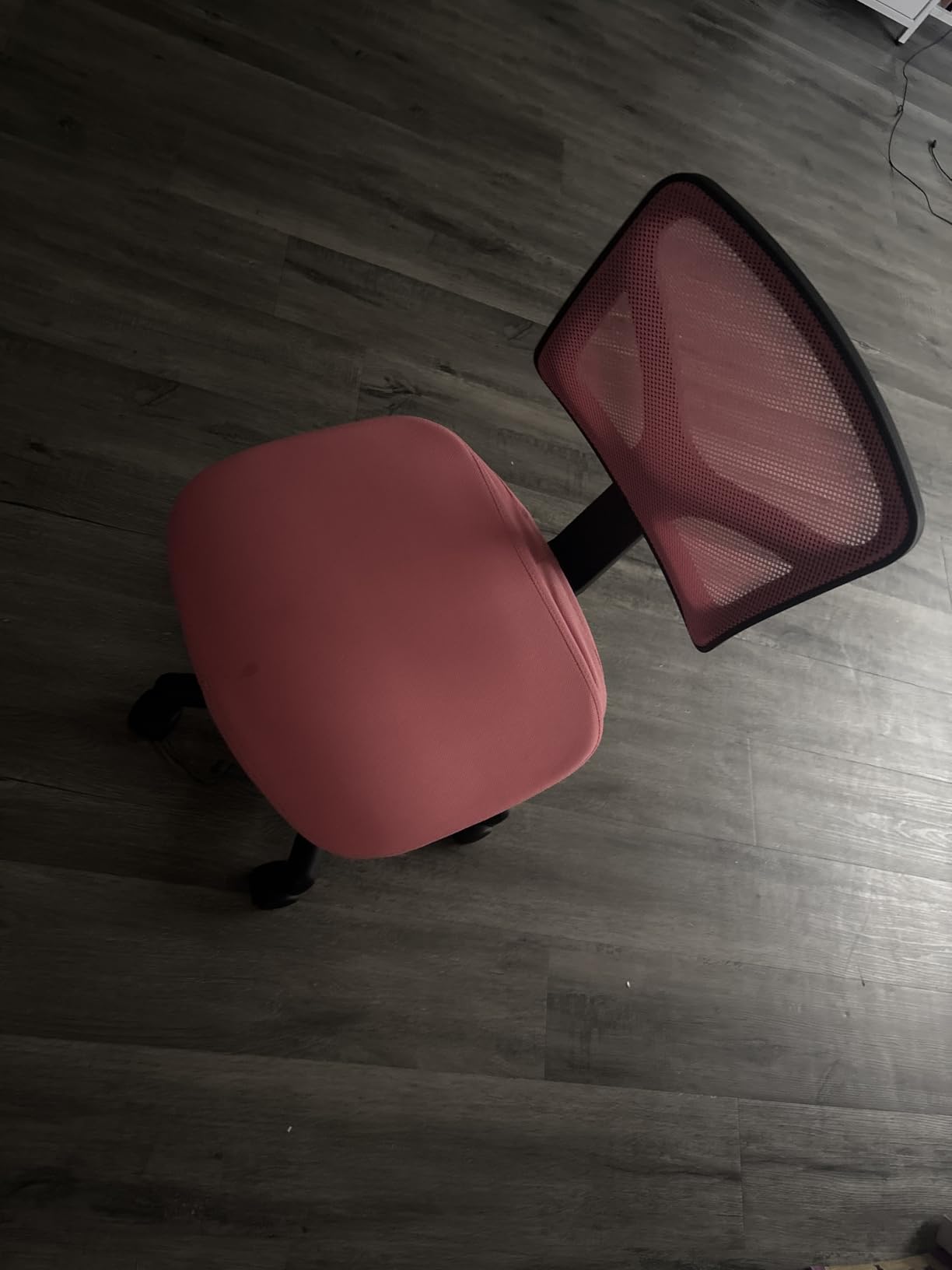
Assembly is two screws and push-on casters with the tool included, so it is genuinely a one-person job. The mesh back keeps it cool. The frame is metal with a 250-pound gas lift, and the footprint at 16.33 by 16.54 inches is small enough for a corner desk or a bedroom workspace.
Feet flat on the floor is the whole ballgame for a short user, and it is the first thing to test in a showroom. This chair is specified for a low sit, and the armless frame means there is nothing pushing your legs forward or outward. If your feet dangle in a chair you currently own, moving to a lower one typically relieves low-back strain faster than any lumbar adjustment.
The cushion here is basic foam, and the most common review criticism is that it will not survive constant daily use. For a light body, under roughly 110 pounds, foam compresses less, so the seat may feel harder than the photos suggest. Test it properly for fifteen minutes rather than sixty seconds, which is the single most repeated piece of advice in the owner feedback across this category.
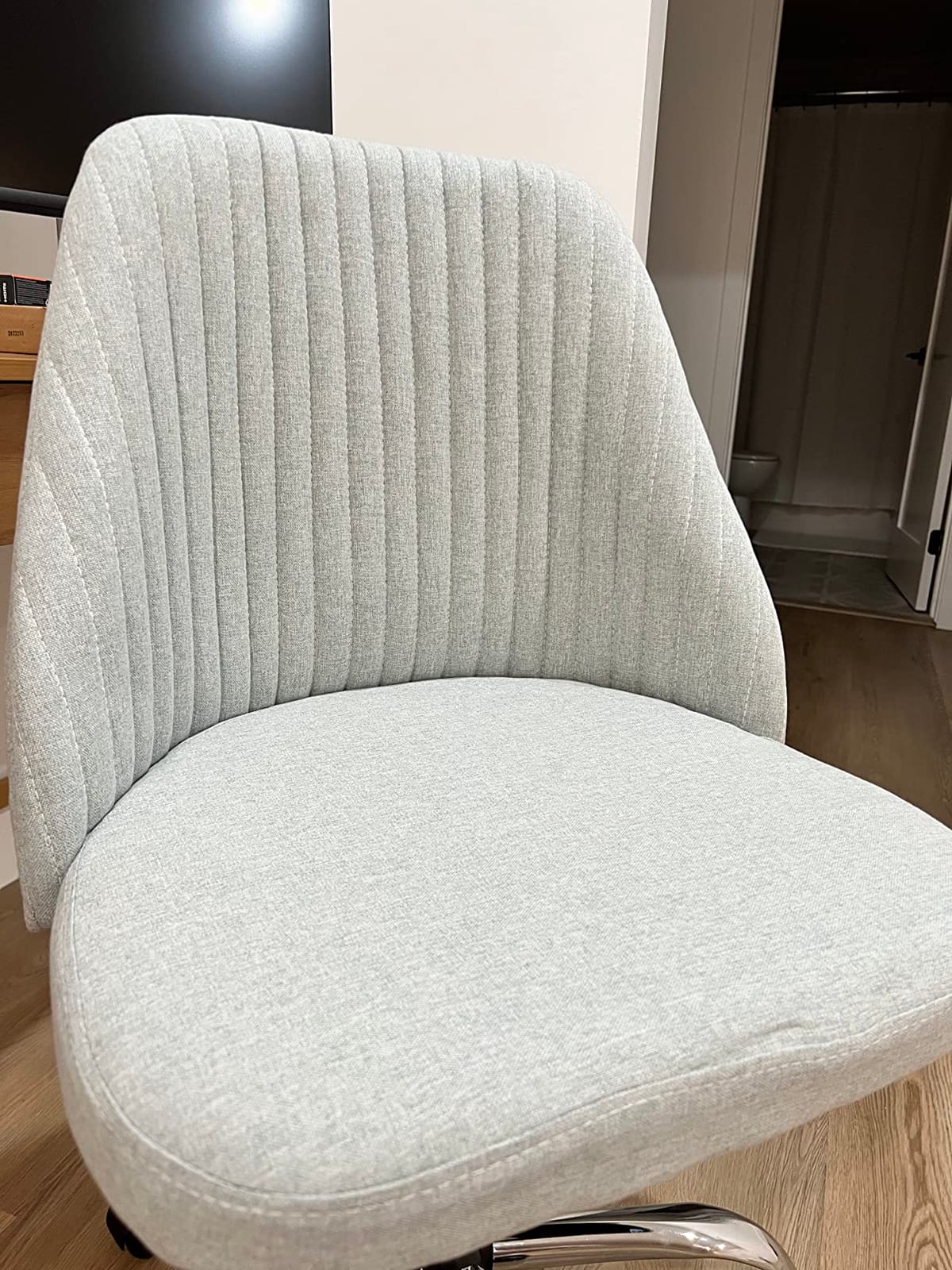
The backrest does not move in or out or up and down, so you cannot fine-tune the gap between the seat edge and the back of your knees. Attaching the back to the base is also the fiddliest part, and a second pair of hands helps. Treat this as a chair for a hobby corner, a student room, or a second desk rather than your primary all-day seat.
2.5 in high-density sponge cushion
Armless, 360 degree swivel
250 lb capacity, 19.2 lb
This is the highest-rated chair in the roundup at 4.7 stars, with 85 percent of reviews at five stars, and the cushion is the reason. It is a 2.5-inch slab of high-density sponge, which is the one cushion depth any brand in this set actually publishes, and it makes a real difference for anyone who finds thin seats uncomfortable.
The armless shape tucks under a desk without trouble, and the height adjustment reaches a lower, short-person-friendly range that reviewers call out directly. Multiple buyers mention ordering several at once, which usually means a shared room, a studio, or a small business outfitting desks in batches.
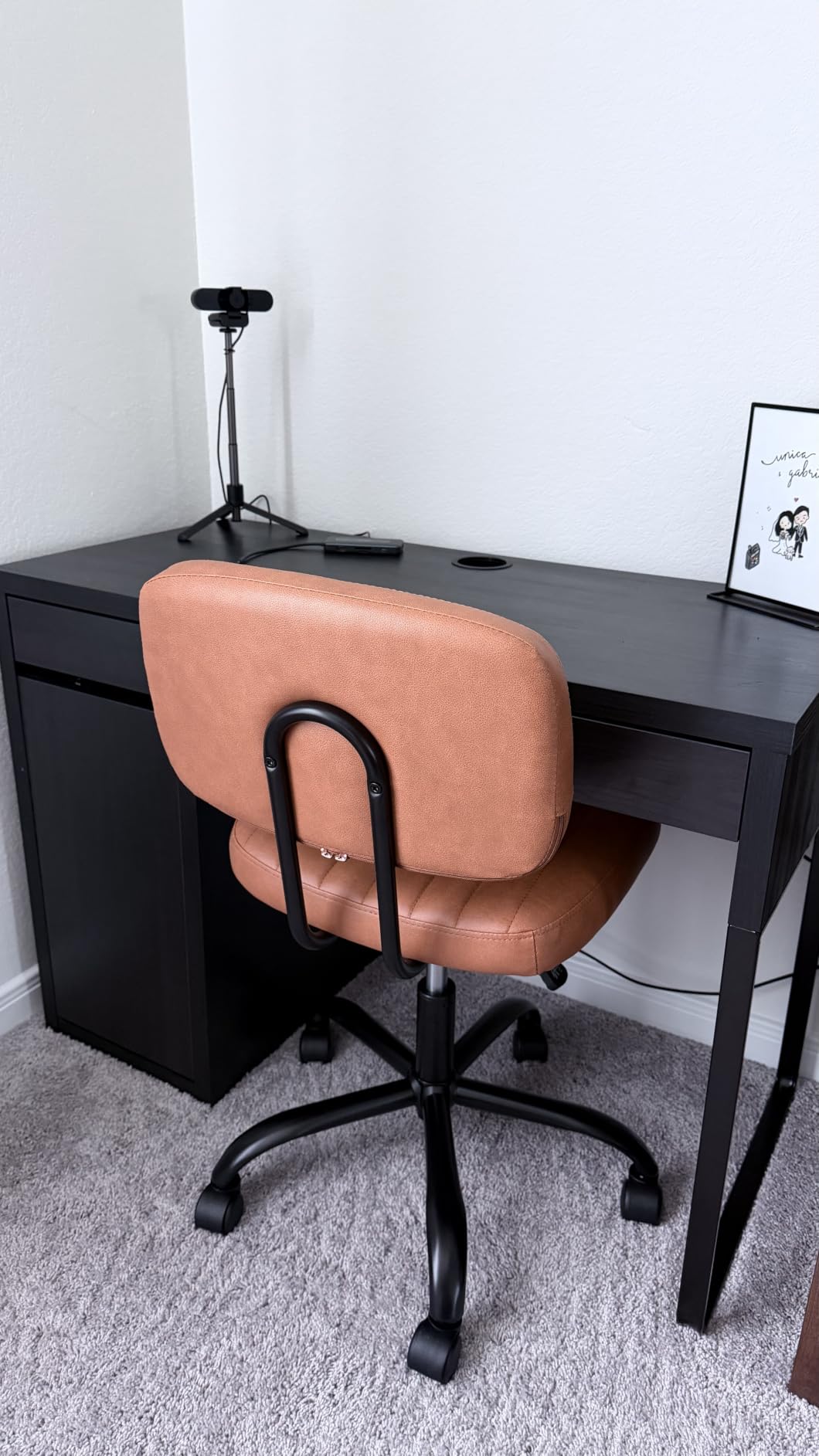
The PU leather is a twill weave that reviewers find breathable and water resistant, the backrest is padded foam on a U-shaped metal support frame, and the cylinder is SGS-certified on a BIFMA-certified frame rated to 250 pounds. It weighs 19.2 pounds and is offered in New Black, Beige and Brown.
Cushion depth and body weight interact. A deeper foam cushion gives a lighter user more material to compress into before the seat stops giving, and it also spreads pressure more evenly across a smaller sitting surface. A shallow cushion on a light frame feels like a bench. The trade is firmness in the first few weeks, and the honest fix is to add a thin gel or memory-foam layer rather than to return a chair you can already feel working.
Six-step assembly takes about ten minutes with the tool and spare parts included, though owners count roughly twenty bolts per chair, so budget more time than the step count suggests. At 24.21 inches long by 16.33 inches wide it is deeper than the other armless models here, so check the depth under your desk before you commit.
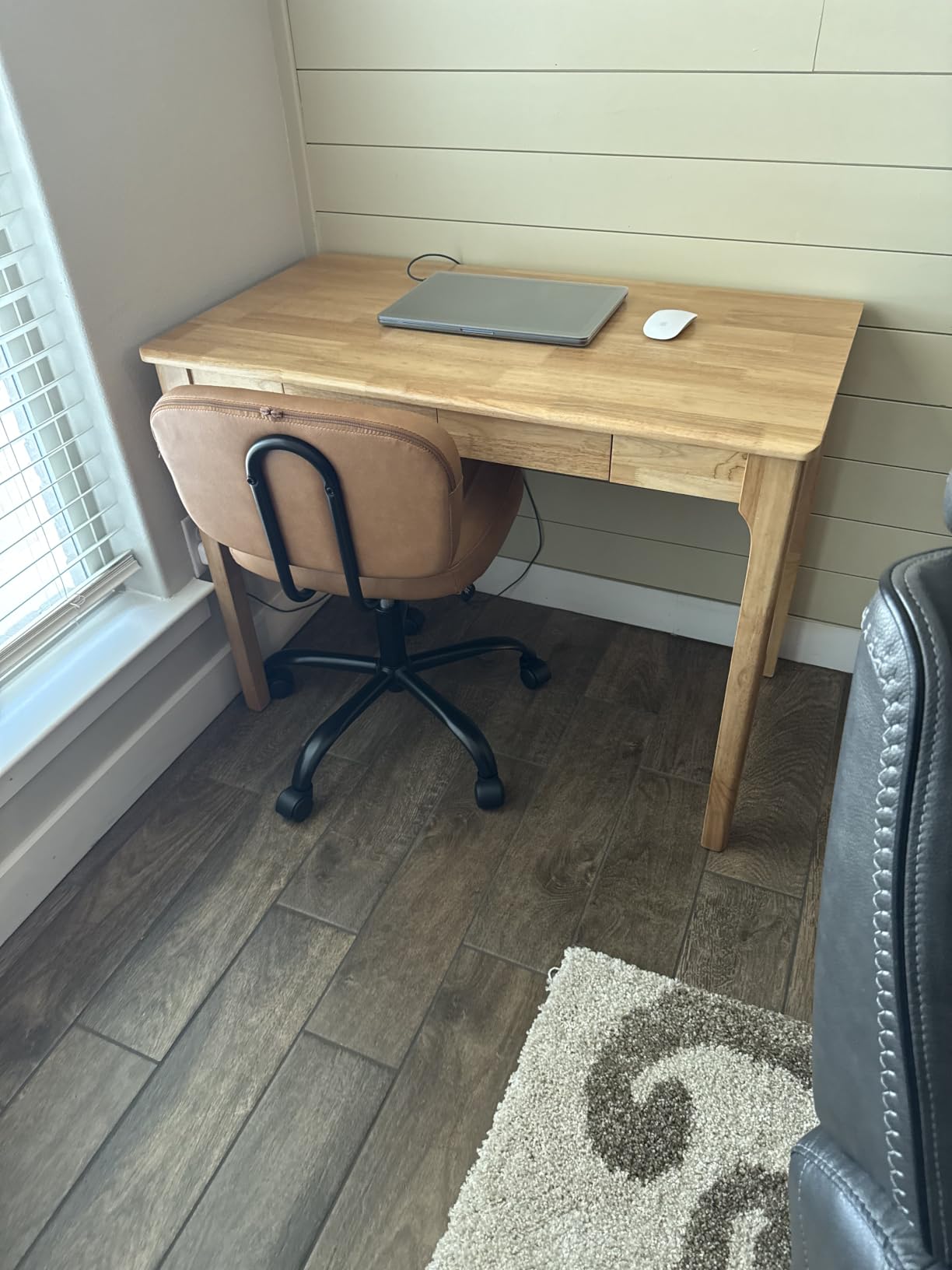
There is no recline and no lumbar depth adjustment on the backrest, so the comfort comes entirely from the cushion and the height range. Sit in it for a full working day with your actual desk setup, adjust the height so your feet are flat and your knees near 90 degrees, and if the seat edge crowds the back of your knees, that is a return signal, not something you should talk yourself out of.
Winged mid-back with built-in lumbar
Flip-up padded arms
300 lb capacity, 25.59 in wide
The winged mid-back is the feature here. Rather than a small pad sitting at one height, the wings wrap forward from the sides and the built-in lumbar follows the curve of the lower spine, so there is less chance of it landing in the wrong place on a shorter back. Owners consistently credit it with easing lower-back pressure over long sessions.
The seat is built differently from most of the chairs in this roundup, using high-resilience foam over elastic webbing. Webbing is the detail worth knowing: a light body under roughly 110 pounds generally sinks into webbing more than into a solid foam slab, which reduces the perching problem that haunts budget foam seats.
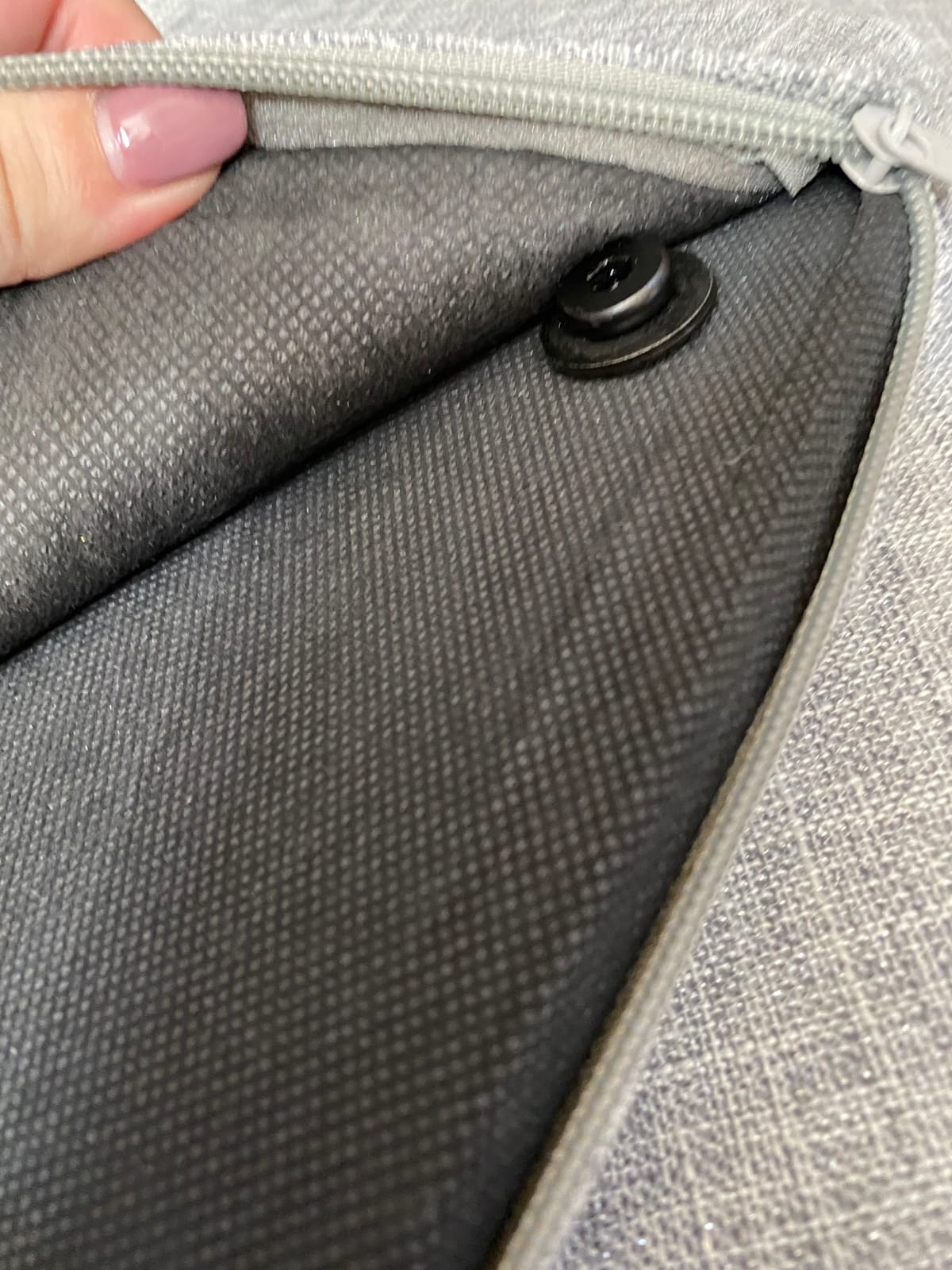
Padded armrests flip up through 90 degrees, and there is a rocking mechanism alongside swivel and height adjustment, so you have three ways to change posture. The reinforced metal base is rated to 300 pounds with BIFMA-certified casters and a Class 3 gas lift, which makes this the sturdiest build in the group.
A knob or slider moves a pad along a track, and on a shorter back the pad still has a range of wrong positions. A built-in lumbar is shaped into the backrest, so it either suits your back curve or it does not, with no settings to get wrong. For a petite frame, fewer adjustment positions is often the safer bet.
At 25.59 inches wide, this is the widest chair in the roundup, and reviewers in small rooms say so plainly. If your desk area is tight, the flip-up arms recover some width when the chair is pushed in, but you are still sliding a broad base under a desk. Check the room before you order rather than after.
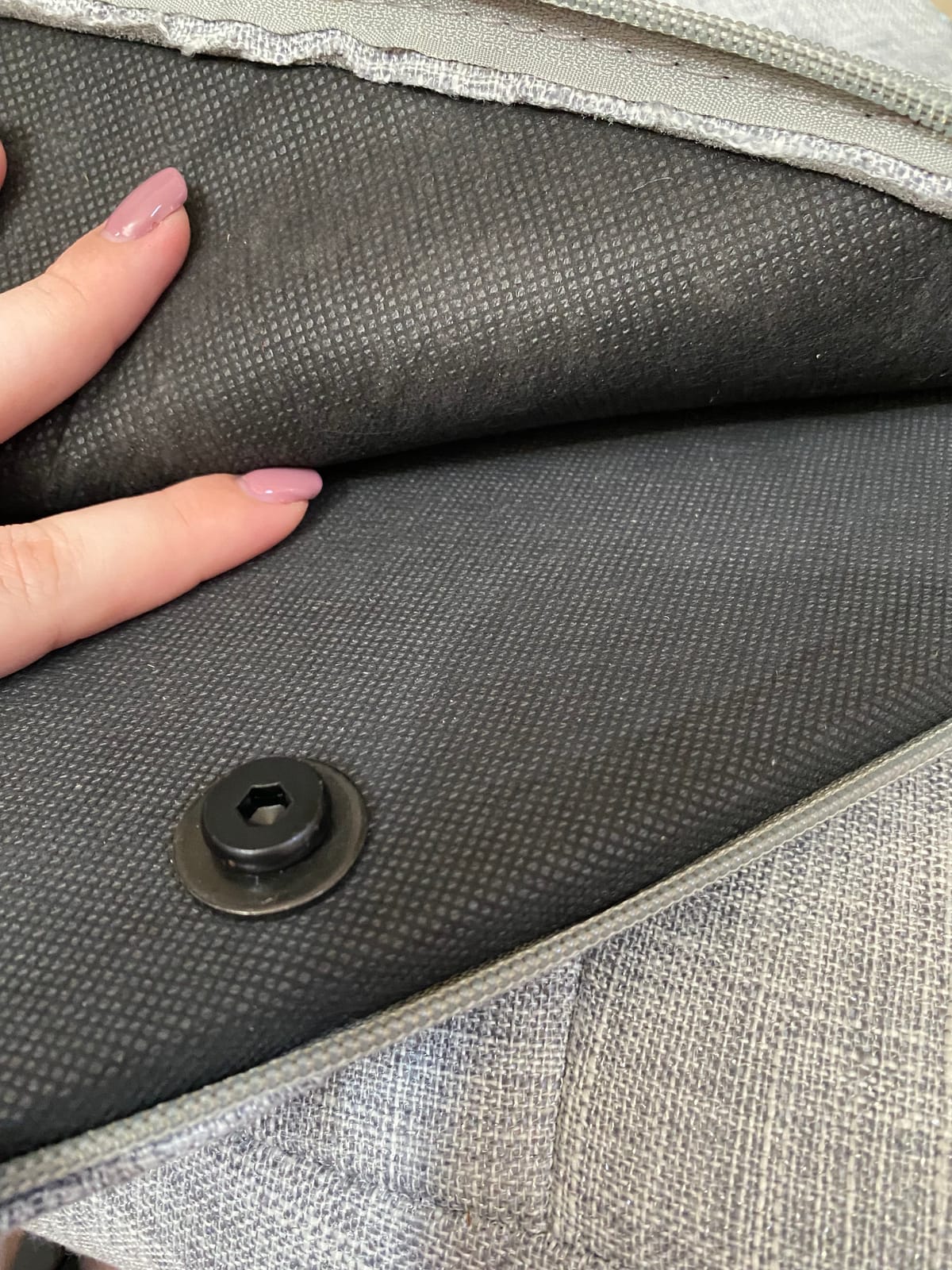
Assembly takes 20 to 30 minutes and is a tougher one-person job, and the casters reportedly roll poorly off carpet, which is a common complaint in home offices. Some owners note a slight squeak during movement and find the seat padding thinner than the rest of the chair implies. It weighs 29.1 pounds, so plan the move before you order.
Adjustable PU lumbar pillow
Knob-controlled rocking
400 lb capacity, 42.52 in tall
This is the only chair in the roundup with a lumbar pillow you can reposition, and for a shorter torso that is the feature that matters. Where a fixed pad sits at the manufacturer idea of lower back, a movable pillow goes where your lower back actually is, which for many petite users is lower than the default.
The rocking amplitude is set with a knob under the seat rather than a lever, so you can dial the movement to something gentle. A shorter person often over-corrects into recline because the seat pushes them back, and a light rock with a set amplitude is a way to keep moving without sliding forward.
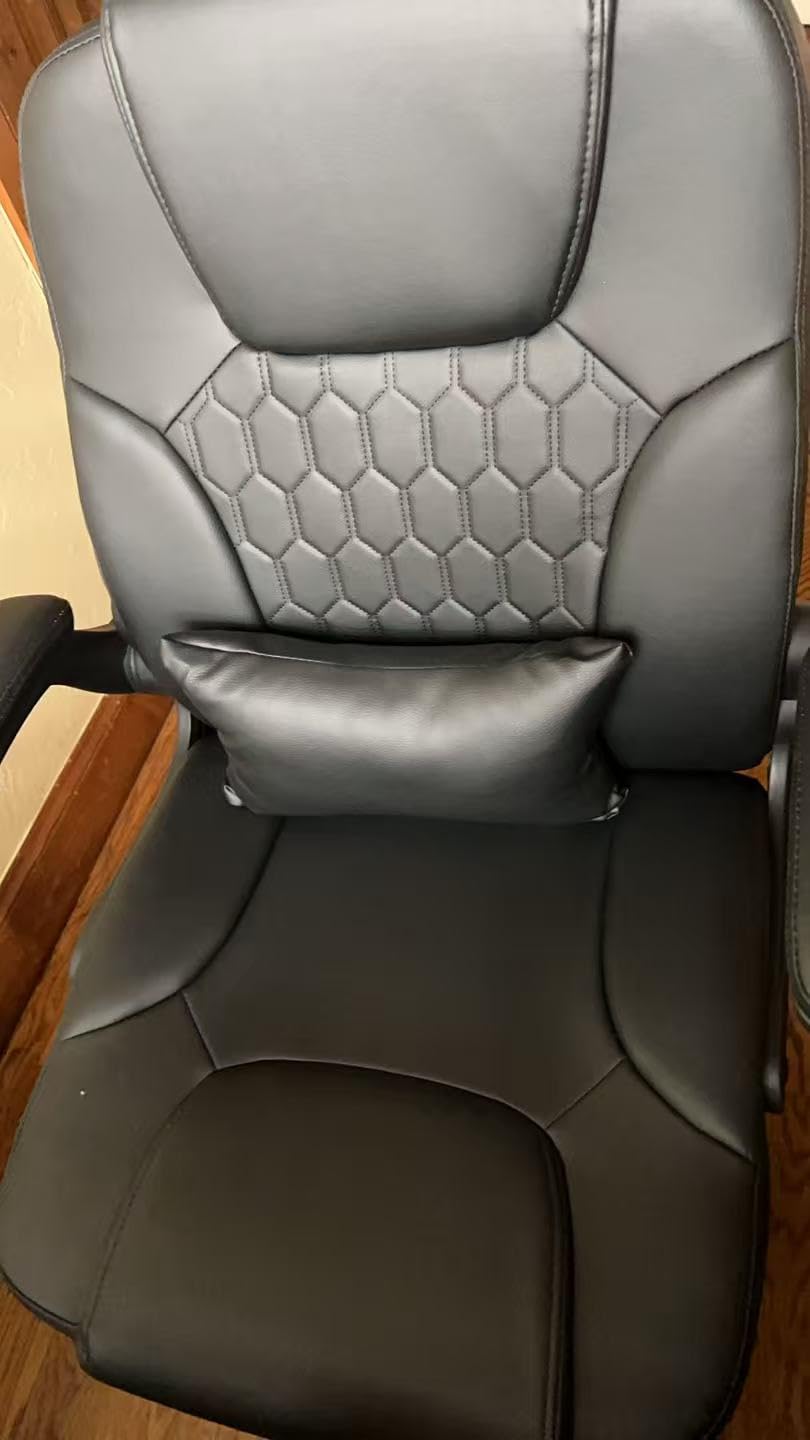
The arms are padded and flip up through 90 degrees, and the backrest has a honeycomb-relief pattern with a curved profile. 400 pounds maximum weight recommendation, which is the highest capacity figure published by any chair in the set, on a chair that weighs 28.9 pounds and stands 42.52 inches tall.
Set the pillow so it sits in the curve of your lower back, not against the flat of it, and adjust it after you have set your seat height rather than before. Move it in small increments and lean back into it each time. If you find the correct spot immediately and it stays there for a full day, that is a good sign the chair geometry matches your proportions.
Most budget chairs use a lever to lock or release a fixed tilt. A knob-controlled amplitude is finer: you can set a small movement for thinking and a larger one for reading, without hunting for a second lever. Reviewers who use the chair for long reading sessions rate this well. Just set the tension low before you first lean back, because the travel is generous.
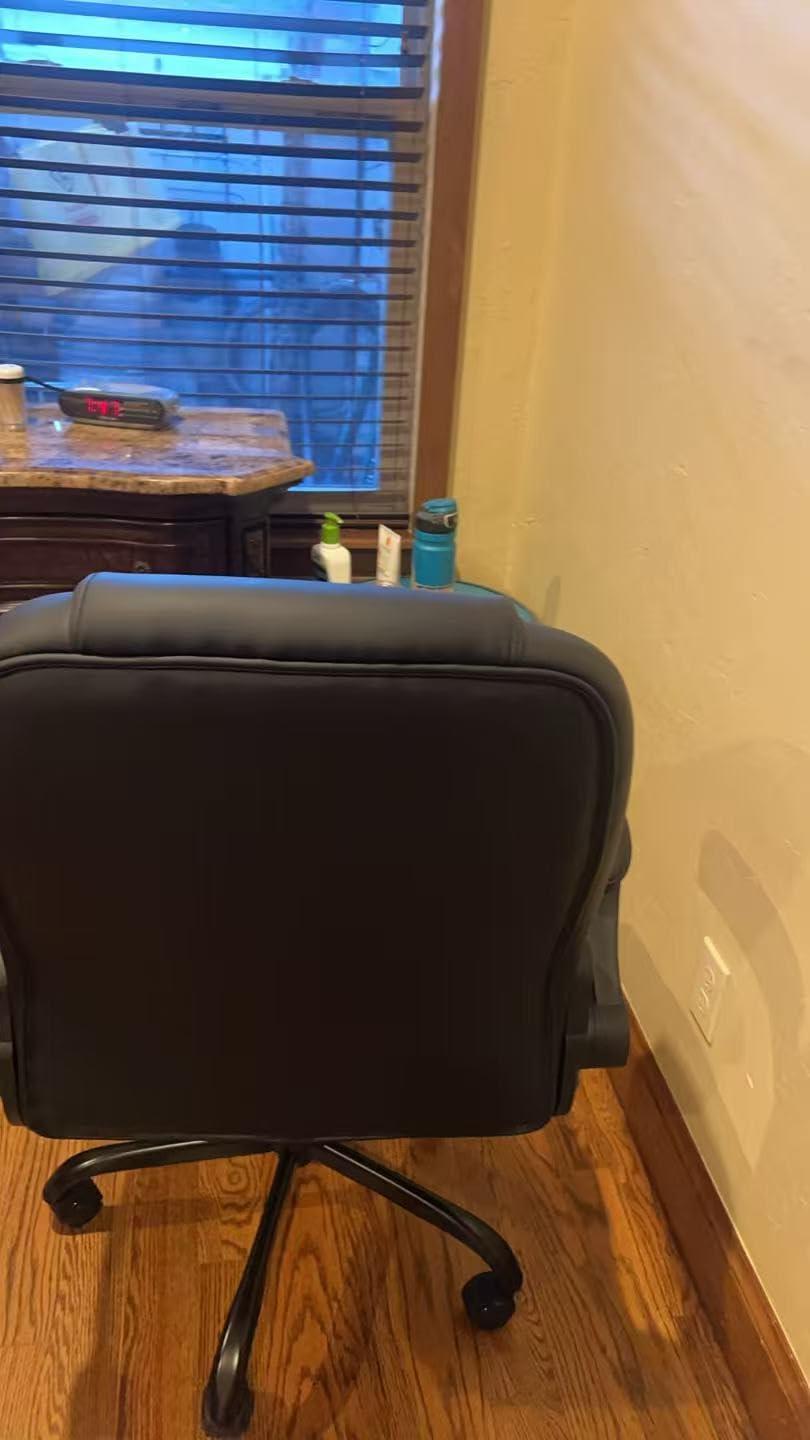
The seat cushion is thinner than the back padding, and some owners add a separate seat pad, so treat the lumbar as the selling point rather than the whole seat. The 42.5-inch height makes this a full-size chair rather than a compact one, and the plastic frame reads as less substantial than the metal-frame models. It also carries by far the fewest reviews here, so weight the owner feedback accordingly.
Everything above comes down to four measurements, and none of them are the ones usually printed on a product page. If you take nothing else from this roundup, take these: the lowest point the seat can drop, the front-to-back depth of the seat pan, the distance between the armrest centres, and the height at which lumbar support meets your back. Everything else is preference.
This is the single most important number for a short user, and it is measured from the floor to the top of the seat cushion at the chair’s lowest setting. Your target is your popliteal height, which is the distance from the floor to the underside of your thigh behind the knee. Sit with your feet flat and your knees at roughly 90 degrees and you will find it in about two minutes. A chair that only drops to 17 inches leaves a 4 ft 11 in user on tiptoe, and tiptoe posture compresses the spine for the entire day.
Very few chairs on the market go below about 14 inches, so if you are under 5 ft tall, a footstop or a footrest is not a luxury, it is part of the system. More on that below.
Seat depth is measured from the front edge of the seat pan to the backrest, and your target is your buttock-popliteal length, which is effectively your thigh length, minus two to three inches. That gap is what keeps the seat edge out of the back of your knees. Miss it and you will slide forward to escape the pressure, which takes you off the backrest and undoes whatever lumbar support the chair offers.
For most women in the petite range, a target seat depth sits between 15 and 17 inches. Adjustable seat depth is a genuine advantage, but a shallow fixed depth is not a defect for a short user, so do not reject a chair over a number that turns out to be a benefit. A 19.7-inch pan, by contrast, is disqualifying.
Arm width is the distance between the two armrest centres, and standard chairs run 17 to 18 inches. If your shoulder breadth is narrower than that, you hold your arms slightly abducted all day, and the result is the mid-afternoon shoulder and upper-back ache that petite users describe as worse than their back pain. Look for 16 inches or narrower, 13 inches or under if you are below 5 ft, or armless entirely, which is why several of the picks above have no arms at all.
If you type for hours, forearms need support and armless is not free. If your pain is in the shoulders and neck, armless may be the single best change you make.
Lumbar support should meet the curve of your lower back, roughly the belt line. On a shorter torso, a pad set at the manufacturer’s height frequently lands between the shoulder blades, which produces discomfort rather than relief. A movable pillow, a wrap-around curve, or a flexing back with no fixed pad at all all avoid the problem in different ways, and a chair with no lumbar is not automatically worse than one whose lumbar misses you.
Headrests get less credit than they deserve. Many push a short user’s head forward because the headrest sits at the height of a taller neck, and forward head posture is a fast route to upper-back pain. Treat a headrest as optional, and none of the ten chairs here include one, which for a petite frame is arguably a plus.
Weight is the least discussed variable. Under roughly 110 pounds, foam does not compress much under you, so you can end up perching on an uncompressed cushion, and weight-sensing tilt mechanisms calibrated for an average frame can feel wrong out of the box. Mesh and webbing seats give under a light body in a way thick foam does not, and if you do choose foam, plan on adding a thin topper rather than expecting it to mould.
You can get accurate numbers with a tape measure, a wall, and about six minutes, and this is the protocol that removes all the guesswork from the rest of this guide.
Here is the trap almost everyone under 5 ft 6 in falls into. You buy a genuinely low chair, you sit down in it correctly with your feet flat, and now your desk is too high, because a standard desk top sits near 29 to 30 inches while your seated elbow height is a good 10 inches lower than that. Raising the chair to fix the keyboard puts your feet back in the air, which is where the whole problem started.
The fix is to lower the desk rather than raise the chair. A sit-stand desk is the clean answer. A keyboard tray is the cheap one, and it works because it drops the typing surface to your elbow height while the chair stays low. A footrest is the third option: it raises the effective floor so a chair with a higher minimum seat height becomes usable, which effectively converts a 4-inch footrest into 4 inches of extra seat height range.
So decide in this order. Check whether your desk can come down. Then pick a chair with a minimum seat height at or just under your popliteal height. Then, only if the numbers still do not work, add a footrest. Multiple forum users describe a footrest solving a problem they had assumed required a completely different chair, and that matches what the numbers do.
The best office chair for a petite frame is the one whose minimum seat height is at or just below your popliteal height, whose seat depth leaves a two-to-three inch gap behind your knees, whose armrests are 16 inches apart or narrower, and whose lumbar support can reach your actual lower back. In this roundup the Amazon Basics low-back chair is the strongest all-round fit, the Sweetcrispy armless chair suits anyone who wants a soft seat with no arm-width problem, and the Misolant small chair solves a genuinely cramped room.
You need a seat height that puts your feet flat on the floor with your knees bent at about 90 degrees. Measure your popliteal height, which is the distance from the floor to the underside of your thigh behind the knee, and look for a chair whose lowest published seat height is that number or slightly under. Very few chairs drop below about 14 inches, so anyone under 5 ft tall should expect to add a footrest or footstop.
For most women under 5 ft 5 in, a target seat depth sits between 15 and 17 inches. The way to find yours is to measure your buttock-popliteal length, which is effectively your thigh length, then subtract two to three inches. That gap keeps the front edge of the seat out of the back of your knees. A 19.7-inch seat pan, like the one on the BestOffice chair above, is too deep for a shorter frame.
Look for armrests 16 inches apart or narrower, and 13 inches or under if you are below 5 ft. Standard task chairs run 17 to 18 inches apart, which forces a narrower frame to hold its arms slightly abducted all day and is the usual reason petite users report shoulder and upper-back ache by mid-afternoon. If your pain is in the shoulders rather than the lower back, an armless chair is the simplest fix available.
A footrest is a good idea whenever your feet cannot reach the floor at the chair’s lowest setting, and it is not a workaround for a badly fitted chair. It raises the effective floor to meet the seat, which makes a chair with a higher minimum seat height usable and adds inches of usable height range. It also solves the desk-height problem, since you can keep the chair low and raise your feet rather than raise the chair and lose contact with the floor.
Yes. Under roughly 110 pounds, foam seat cushions do not compress much under you, so a thick foam seat can feel harder and less supportive than the same seat does for an average frame. Mesh and webbing seats give under a light body where solid foam does not, and weight-sensing tilt mechanisms calibrated for an average frame can feel wrong out of the box. If you choose foam, add a thin topper rather than expecting the cushion to mould to you.
If your feet reach the floor in the Amazon Basics low-back chair and you need a compact, upright task seat, that is the one to start with, and it is the pick I recommend first. If your main problem is a hard thin seat, take the Sweetcrispy armless chair, which pairs a genuinely thick cushion with the armless geometry that removes the shoulder problem entirely.
If the room is the issue rather than the body, the Misolant small chair is built for it, with the smallest overall footprint in the roundup and a wrap-around back that needs no lumbar adjustment. If you are very light and want the lowest sit, the DUMOS armless chair is the lightest and specified for shorter users, and it is also the easiest to move around on your own.
If you want arms and real lower-back support, the COMHOMA winged mid-back is the strongest built-in lumbar here, and the Nexthro is the only chair with a lumbar pillow you can actually move to your own lower back. The Serta armless mesh chair is the pick when your desk is small and awkward, and the Brick Attic chair suits anyone who wants flip-up arms and a rocking function at the cost of a taller back.
Whatever you choose, measure yourself first, check the minimum seat height against your popliteal height, and make sure your desk can come down to meet you. Those three checks eliminate most of the bad purchases in this category before you spend an hour on them. If you are still torn between two, sit in each for a full fifteen minutes with your actual keyboard and desk, not a sixty-second showroom check, and let your own body pick. And if the desk itself is the last piece missing, our pick of The Office merchandise is a better use of the leftover budget than another chair you will not sit in correctly.
This roundup covers the best office chairs for petite women in 2026, from the lowest-sitting armless models to winged mid-backs with adjustable lumbar pillows.