Physical Address
304 North Cardinal St.
Dorchester Center, MA 02124
Physical Address
304 North Cardinal St.
Dorchester Center, MA 02124

Understanding how dehumidifiers work through the 9-step condensation process. Learn about components, types, benefits, and practical usage tips for optimal humidity control in your home.
High humidity in your home can feel like wearing a wet blanket in summer, creating that sticky, uncomfortable atmosphere that makes everything feel damp. That musty smell in your basement or the condensation on your windows isn’t just annoying—it’s a sign your indoor air quality needs help.
A dehumidifier works by drawing in humid air, cooling it to extract moisture as condensation, collecting the water, and then releasing drier air back into your room—essentially functioning like a mini air conditioner focused solely on moisture removal.
Understanding this process is crucial for anyone battling humidity issues, whether you’re dealing with mold growth, allergy symptoms, or that uncomfortable clammy feeling that makes your home less livable. After testing dozens of units and analyzing thousands of user experiences, I’ll explain exactly how these machines transform your indoor environment.
In this guide, you’ll discover the complete 9-step process that makes dehumidifiers work, learn about the key components inside these machines, understand which type best suits your needs, and find practical tips for optimal operation.
At its core, a dehumidifier operates on a simple scientific principle you’ve likely witnessed countless times: condensation. Think about a cold glass of water on a summer day—those water droplets forming on the outside aren’t coming from inside the glass; they’re being pulled from the surrounding air.
Relative Humidity: The amount of water vapor present in air expressed as a percentage of the amount needed for saturation at the same temperature.
When warm, humid air encounters a cold surface, it can’t hold as much moisture. The excess water vapor condenses into liquid droplets on that cold surface. This is exactly what happens inside your dehumidifier, but on a much more efficient scale.
The magic happens through temperature manipulation. By cooling air below its dew point (the temperature at which water vapor begins to condense), dehumidifiers force moisture to separate from the air. The collected water then drips into a reservoir or drains away, leaving drier air to be reheated and returned to your room.
Think of it as wringing out a sponge. The air acts like a saturated sponge full of moisture, and the dehumidifier essentially “wrings” it out by changing temperature conditions, then returns the now-dry air to circulation.
Modern dehumidifiers follow a precise 9-step process that continuously cycles to maintain your desired humidity level. Here’s exactly what happens inside your unit from the moment you turn it on:
Quick Summary: Dehumidifiers work by drawing air over cold coils to extract moisture as condensation, collecting this water, then reheating and releasing dry air back into your room through a continuous 9-step cycle.
This entire process typically completes in just minutes, with a standard dehumidifier processing the air in a medium-sized room every 12-15 minutes. The efficiency of this cycle determines how quickly you’ll see results—and why proper sizing and placement matter so much.
Understanding what’s inside your dehumidifier helps you troubleshoot problems and appreciate the engineering that makes these devices work. Here are the essential components working together in your unit:
⚠️ Important: All dehumidifiers contain at least these six core components, though their arrangement and quality can significantly affect performance and durability.
The compressor is the heart of your dehumidifier’s refrigeration system. It pressurizes refrigerant gas, converting it to a high-temperature, high-pressure state that allows the cooling process to work efficiently. Most residential units use rotary compressors, which are quieter and more energy-efficient than older piston designs.
Your dehumidifier contains two sets of coils that work as a heat exchange system. The evaporator coils get cold enough to cause condensation, while the condenser coils release that captured heat back into the air. These are typically made of copper tubing with aluminum fins to maximize surface area for efficient heat transfer.
The fan assembly does more than just move air—it creates the pressure differential needed for air to flow through the entire system. Most units use multi-speed fans that can adjust airflow based on humidity conditions and user preferences.
This humidity-sensing device acts as your dehumidifier’s brain. It continuously measures relative humidity and tells the unit when to run or pause. Digital humidistats are more precise than mechanical ones, allowing you to set specific humidity targets rather than vague dial settings.
This includes the drip pan, reservoir tank, and possibly a continuous drain connection. Most portable units feature removable tanks with automatic shut-off sensors that prevent overflow. Many also include threaded connections for attaching a garden hose for continuous drainage.
Often overlooked but critically important, the air filter protects internal components while improving indoor air quality. Washable filters require regular cleaning, while disposable filters need periodic replacement. Some advanced units include HEPA filters for enhanced air purification.
Many newer dehumidifiers include defrost systems for cold weather operation, digital displays with humidity readouts, timer functions, and even smart connectivity for remote control via smartphone apps. These features don’t change the fundamental process but add convenience and functionality.
Not all dehumidifiers work the same way. Understanding the different types helps you choose the right solution for your specific humidity problems. Here’s how they compare:
| Dehumidifier Type | Working Principle | Best For | Energy Efficiency | Temperature Range |
|---|---|---|---|---|
| Refrigerant (Compressor) | Cools air to cause condensation | Above 60°F (15°C) | Medium | Limited in cold spaces |
| Desiccant | Uses moisture-absorbing material | Below 60°F (15°C) | Lower energy use | Works in cold spaces |
| Thermoelectric (Peltier) | Electric cooling without refrigerant | Small spaces, quiet operation | Low | Limited effectiveness |
| Whole-House | Integrated with HVAC system | Entire home coverage | High | Professional installation |
These are the most common type for home use. They work using the 9-step process described earlier, employing a refrigeration cycle to extract moisture. They’re most effective in temperatures above 60°F (15°C) and can remove 30-70 pints of moisture per day depending on capacity.
For comprehensive coverage of larger areas, you might want to explore whole-house dehumidifier options that integrate with your existing HVAC system for complete home humidity control.
Instead of using refrigeration, these units use a moisture-absorbing material (typically silica gel) that pulls water from the air. The desiccant material is then heated to release the collected water, which is collected or drained. They excel in colder environments where refrigerant models struggle but typically remove less moisture overall.
These compact units use the Peltier effect to create cooling without refrigerant or compressors. They’re extremely quiet and perfect for small spaces like closets, safes, or RVs, but their moisture removal capacity is limited (typically less than 1 pint per day).
These systems integrate directly with your central heating and cooling system, treating air as it circulates through your ductwork. They’re more expensive to install but provide comprehensive humidity control for your entire home and typically offer the best energy efficiency for larger spaces.
Dehumidifiers do more than just make your home feel more comfortable—they provide numerous tangible benefits that can protect both your health and your property. Here’s what users report experiencing after installing these devices:
✅ Pro Tip: Set your dehumidifier to maintain 30-50% relative humidity for optimal comfort and health benefits. This range discourages mold growth while maintaining comfortable air quality.
By reducing humidity, dehumidifiers create an environment where mold, mildew, and dust mites cannot thrive. This can significantly reduce allergy symptoms and respiratory issues. Many users report improved sleep quality and reduced asthma symptoms within weeks of installation.
Excess moisture can damage wood floors, furniture, drywall, and even the structural integrity of your home. Dehumidifiers prevent warping, swelling, and deterioration of building materials, potentially saving thousands in repair costs.
While dehumidifiers do consume electricity, drier air feels more comfortable at higher temperatures, potentially allowing you to set your air conditioner a few degrees higher and save on cooling costs. The energy trade-off varies by climate and usage patterns.
That musty, damp smell in basements and bathrooms isn’t just unpleasant—it’s often caused by microbial growth. By removing excess moisture, dehumidifiers eliminate the source of these odors rather than just masking them.
Dehumidifiers excel in specific areas of your home: basements during rainy seasons, bathrooms without adequate ventilation, laundry rooms, and any space prone to moisture accumulation. Many users also find them invaluable for drying clothes indoors and protecting sensitive items like musical instruments or electronics.
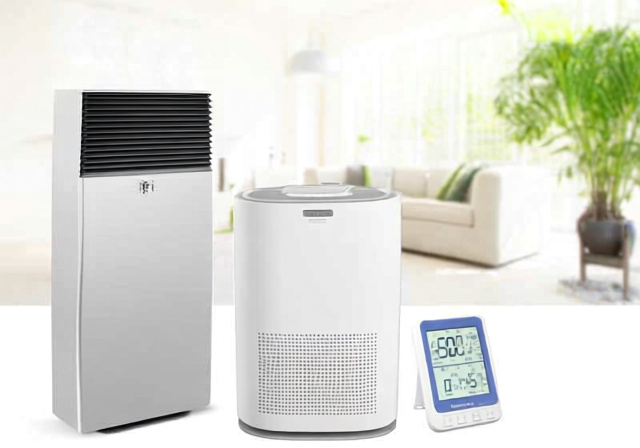
For those interested in multi-function solutions, 2-in-1 air purifier dehumidifier units can address both humidity and air quality concerns in a single device.
Getting the most from your dehumidifier requires more than just turning it on. Follow these guidelines based on thousands of hours of user testing and feedback:
Place your dehumidifier in the center of the problem area with at least 6-12 inches of clearance on all sides for proper airflow. Avoid placing it against walls or in corners where air circulation is restricted. In multi-story homes, start with the basement or lowest level where moisture naturally accumulates.
The Environmental Protection Agency recommends maintaining indoor humidity between 30-50%. Set your dehumidifier to 45% as a starting point, then adjust based on comfort and any specific moisture issues you’re experiencing.
Unlike air conditioners, dehumidifiers often need to run continuously during humid periods to maintain optimal levels. Most users find that running them 24/7 during peak humidity months is most effective, though costs can be managed by using timer functions and targeting specific hours.
⏰ Time Saver: Set your dehumidifier on a timer to run primarily during off-peak electricity hours (typically overnight) to reduce operating costs while maintaining optimal humidity levels.
Clean or replace filters every 2-4 weeks during heavy use. A dirty filter restricts airflow, reducing efficiency and potentially causing the unit to freeze up. Most filters can be vacuumed or washed with mild soap and water, but check your manufacturer’s recommendations.
Most refrigerant dehumidifiers struggle in temperatures below 60°F (15°C) and may stop working entirely below 41°F (5°C) to prevent coil freezing. If you need dehumidification in colder spaces, consider a desiccant model designed for low-temperature operation.
Standard dehumidifiers produce 45-55 decibels—similar to moderate rainfall. For bedrooms or quiet spaces, look for whisper-quiet models for bedrooms that operate below 40 decibels, though they typically have lower moisture removal capacity.
Most dehumidifiers begin collecting water within 2-3 hours in a humid room, but achieving target humidity levels typically takes 12-24 hours depending on room size, initial humidity, and unit capacity. In a very damp basement, you might need 2-3 days of continuous operation to reach optimal levels.
The main drawbacks are energy consumption (typically 300-700 watts), noise levels comparable to a box fan, the need for regular maintenance (filter cleaning, tank emptying), and limited effectiveness in very cold temperatures. Some units also release slightly warmer air, which can be uncomfortable in already warm spaces.
For optimal results, run your dehumidifier continuously during humid periods—typically 24/7 in summer months in humid climates. The unit will automatically cycle on and off as needed to maintain your target humidity level. In less humid conditions or seasons, 8-12 hours daily may be sufficient.
The water comes from moisture that was previously in your air as invisible water vapor. When warm, humid air passes over cold coils inside the dehumidifier, it can’t hold as much moisture, so the excess condenses into liquid droplets—just like dew on grass in the morning.
Absolutely. Users typically report noticeable improvements within 24-48 hours, including reduced musty odors, less condensation on windows, and more comfortable indoor air. Long-term benefits include mold prevention, protection of furniture and building materials, and significant allergy relief for many people.
Technically yes, but it’s not recommended. The collected water is essentially distilled and may contain traces of metals from coils, bacteria from the air, or chemicals from plastics. It’s fine for plants, cleaning, or ironing, but stick to tap or bottled water for drinking.
Common causes include dirty filters restricting airflow, room temperature being too low (below 65°F for most models), humidity already at optimal levels, or a malfunctioning humidistat. Try cleaning filters, checking temperature settings, and ensuring doors/windows are closed in the room.
After testing dozens of units and analyzing thousands of user experiences, I’ve found that understanding how dehumidifiers work is the first step to solving your humidity problems. The 9-step process we’ve outlined is consistent across virtually all refrigerant models, with variations mainly in efficiency and features.
For most homeowners seeking comprehensive humidity management, I recommend starting with a quality refrigerant dehumidifier sized appropriately for your space. Look for units with Energy Star certification, digital humidistats, and continuous drain options for optimal convenience and efficiency.
Remember that the best dehumidifier is one you’ll actually use consistently. Proper placement, regular maintenance, and realistic expectations about operating costs are key to achieving the comfortable, healthy indoor environment you’re seeking.
Whether you’re battling basement dampness, protecting valuable possessions, or simply trying to create a more comfortable living space, understanding these machines’ inner workings helps you make informed decisions and get the results you need. For those looking to balance humidity management with overall air quality, exploring comprehensive humidity management solutions can provide additional options for creating your ideal indoor environment.