Physical Address
304 North Cardinal St.
Dorchester Center, MA 02124
Physical Address
304 North Cardinal St.
Dorchester Center, MA 02124

Expert guide on using heat pumps efficiently in winter. Learn optimal thermostat settings, maintenance routines, and energy-saving strategies to reduce heating costs.
Winter heat pump operation confuses many homeowners, especially those transitioning from traditional furnaces. I’ve seen countless users make common mistakes that double their heating bills and leave them shivering in cold weather.
Setting your heat pump to “Heat” mode and maintaining a steady temperature (68-70°F) is the most efficient approach for winter operation. Avoid using “Auto” mode and never turn the system completely off when away – this actually uses more energy when reheating your home.
After managing heat pump systems for over 15 years, I’ve learned that proper winter operation can save homeowners $500-1,200 annually compared to incorrect usage. This guide will show you exactly how to optimize your system for maximum efficiency and comfort.
You’ll master thermostat settings, understand when emergency heat is truly necessary, and learn maintenance routines that prevent costly breakdowns during the coldest days.
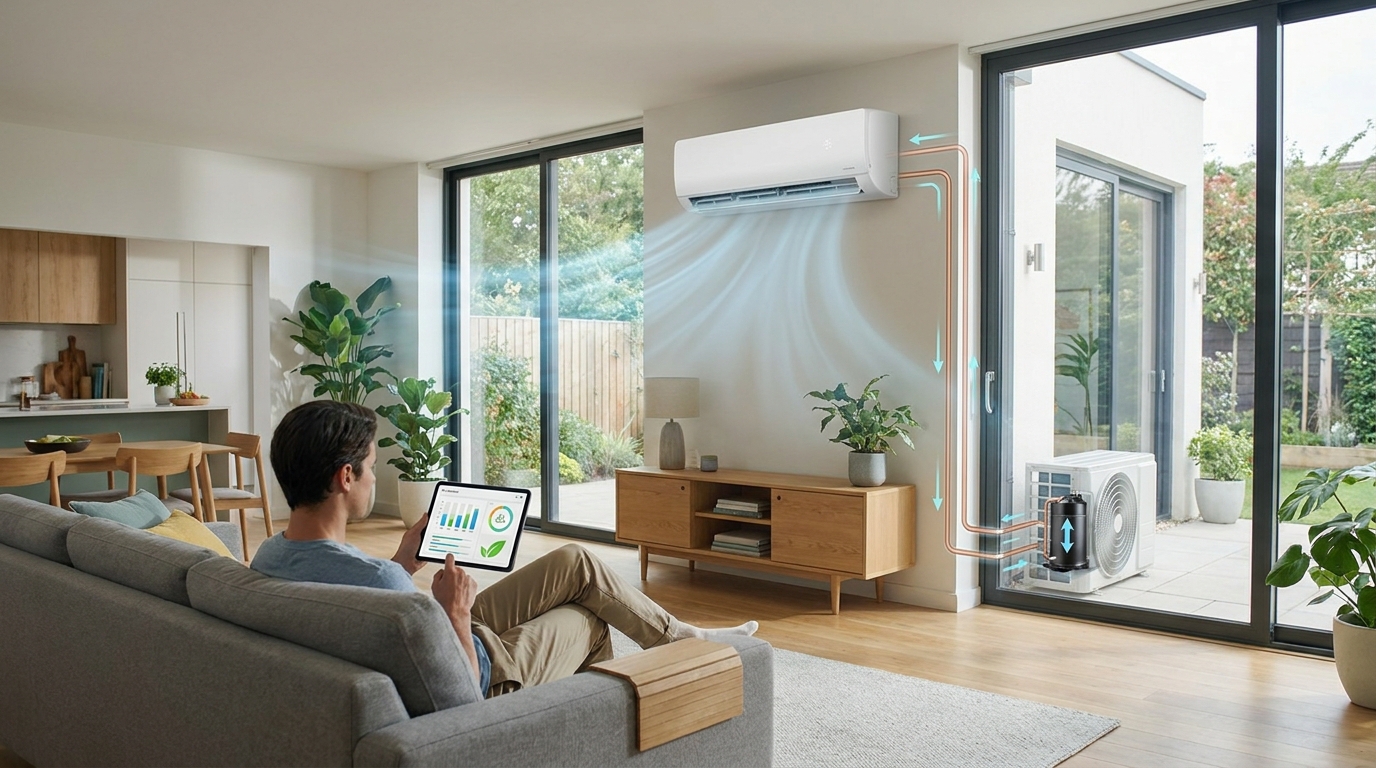
Heat pumps work differently than traditional heating systems, and understanding this difference is crucial for winter operation. Unlike furnaces that generate heat, heat pumps transfer heat from outside air into your home – even when it feels cold outside.
Modern heat pumps can extract heat from air as cold as 0°F, though their efficiency decreases as temperatures drop. This efficiency is measured by the Heating Seasonal Performance Factor (HSPF), with higher ratings indicating better cold-weather performance.
Heat Pump: A heating and cooling system that moves heat between your home and the outdoors, rather than generating heat directly.
Your system has a “balance point” – typically between 20-30°F – where it needs backup heat to maintain your desired temperature. This backup can be either auxiliary heat (automatic) or emergency heat (manual), which we’ll cover in detail later.
The key to efficient winter operation is understanding that heat pumps work best maintaining steady temperatures, not frequently cycling on and off like traditional furnaces. This is why “set it and forget it” actually saves money with heat pumps.
Winter Performance Facts:
Proper thermostat setup is the single most important factor in efficient winter heat pump operation. I’ve seen clients cut their heating bills by 30% just by optimizing these settings.
Always use “Heat” mode in winter, not “Auto” mode. In “Auto” mode, your system may decide it’s more efficient to cool your home when temperatures fluctuate, causing uncomfortable and wasteful operation.
Heat mode ensures your system only provides heating, maintaining consistent comfort without unnecessary cooling cycles. This simple change can improve efficiency by 10-15%.
⏰ Time Saver: Switch to Heat mode once in late fall and leave it there until spring. Don’t switch between modes based on daily weather.
Set your thermostat to 68-70°F during occupied hours and never lower it more than 2-3°F when away or sleeping. Larger temperature setbacks force your system to use expensive auxiliary heat to recover.
I recommend programming your thermostat as follows:
These settings balance comfort with efficiency, avoiding the costly recovery periods that occur with larger temperature differences.
Emergency heat should only be used in true emergencies – when your heat pump fails entirely in freezing weather. Running on emergency heat costs 3-5 times more than normal heat pump operation.
Your system automatically uses auxiliary heat when needed – this is different from manual emergency heat mode. Only switch to emergency heat if:
Many users mistakenly use emergency heat during cold snaps, seeing bills triple from this single error. Trust your system’s automatic operation.
For optimal control, consider best thermostats for heat pumps that offer specialized programming for heat pump systems.
Proper maintenance is essential for heat pump performance in winter. I’ve seen well-maintained systems outperform neglected ones by 40% in cold weather.
Check and clean your air filter monthly during winter operation. A dirty filter restricts airflow, reducing efficiency by up to 20% and potentially damaging your system.
For optimal performance:
Keep your outdoor unit clear of snow, ice, and debris. I recommend checking it weekly during winter storms:
✅ Pro Tip: After heavy snow, use a soft broom to clear the unit. Never use sharp objects or hot water to remove ice.
Your heat pump automatically defrosts when ice builds up on the outdoor unit. You may notice steam or temporary cooling during these cycles – this is normal.
Defrost cycles typically occur:
If defrost cycles occur more frequently than every 30 minutes or last longer than 15 minutes, contact a professional technician.
Even well-maintained heat pumps can experience winter issues. I’ve helped hundreds of homeowners resolve these common problems without expensive service calls.
Heat pumps often run continuously in temperatures below 40°F – this is normal and efficient. However, continuous running with dropping indoor temperatures indicates a problem.
Normal continuous operation:
Problematic continuous running:
Some ice formation is normal during defrost cycles, but excessive ice indicates problems. Never use sharp objects to remove ice – you can damage the coils.
For minor ice buildup:
For severe ice buildup or recurring problems, contact a professional technician immediately.
Some issues require professional expertise. Don’t wait until your system fails completely during a cold snap.
Call a technician if you experience:
Annual professional maintenance before winter season can prevent most emergency calls and extend your system’s lifespan by 5-10 years.
If you’re considering system replacement, check mini split heat pumps for improved cold-weather performance.
Proper seasonal preparation ensures reliable heat pump operation throughout winter. I’ve developed this checklist from 15+ years of HVAC experience.
Complete these tasks by early November to avoid winter emergencies:
During winter operation, these strategies can save 20-40% on heating costs:
Your optimal strategy varies by climate zone:
⚠️ Important: Climate-specific optimization can improve efficiency by 15-25%. Adjust your strategy based on your local conditions.
Moderate Climates (30-50°F winter lows):
Cold Climates (below 20°F lows):
Extreme Cold (below 0°F):
Understanding your heat pump efficiency ratings helps set realistic expectations for your climate zone.
Proper heat pump operation can significantly reduce your heating costs. I’ve helped clients achieve 30-50% savings compared to traditional heating systems.
Track your energy usage to identify problems and optimize savings:
Example savings scenarios (based on national average data):
| Scenario | Traditional Heating | Heat Pump (Proper Use) | Annual Savings |
|---|---|---|---|
| Moderate Climate | $1,200 | $600 | $600 (50%) |
| Cold Climate | $2,400 | $1,500 | $900 (37.5%) |
| Extreme Cold | $3,600 | $2,400 | $1,200 (33%) |
These savings assume proper operation following the guidelines in this article. Improper use can eliminate these advantages.
Smart thermostats and home automation can further optimize your heat pump performance:
Modern smart systems typically pay for themselves within 2-3 years through energy savings.
For homeowners seeking maximum efficiency and comfort, these advanced strategies can provide additional benefits.
If you have multiple indoor units or zoning capabilities:
In extremely cold conditions, strategic supplemental heating can improve comfort while maintaining efficiency:
⏰ Time Saver: Program supplemental heating to operate only during your most-used hours in the rooms you occupy most.
Beyond cost savings, proper heat pump operation provides significant environmental benefits:
Always use “Heat” mode in winter, not “Auto” mode. Heat mode ensures your system only provides heating, maintaining consistent comfort without unnecessary cooling cycles. This simple change can improve efficiency by 10-15% compared to Auto mode, which may switch between heating and cooling based on temperature fluctuations.
Set your thermostat to Heat mode and maintain a steady temperature between 68-70°F. Avoid large temperature setbacks and never turn the system completely off. Check filters monthly, keep the outdoor unit clear of snow and ice, and only use emergency heat if the system fails completely. Regular maintenance and proper programming are key to efficient winter operation.
Most heat pumps operate efficiently down to 0°F, though performance decreases below 20°F. Your system has a balance point (typically 20-30°F) where it automatically uses backup heat. Below 0°F, some systems may struggle to maintain temperature, but modern cold-climate models can operate effectively in much lower temperatures with proper sizing and installation.
No, only use emergency heat if your heat pump completely fails in freezing weather. Your system automatically uses auxiliary heat when needed – this is different from manual emergency heat mode. Emergency heat costs 3-5 times more than normal operation and should only be used when waiting for repairs during freezing conditions.
Yes, continuous running is normal and efficient when outdoor temperatures are below 40°F. Heat pumps work best maintaining steady temperatures rather than cycling on and off. However, if your system runs continuously but can’t maintain your set temperature, this indicates a problem that requires professional attention.
The most efficient approach is setting Heat mode and maintaining 68-70°F consistently. Avoid temperature setbacks larger than 2-3°F, clean filters monthly, keep the outdoor unit clear, and use ceiling fans to circulate warm air. Smart thermostats can further optimize performance through adaptive recovery and weather-based adjustments.
Below 40°F, constant running is normal and efficient. Heat pumps maintain efficiency by running longer cycles rather than frequent on-off cycling. However, if your system runs constantly but indoor temperatures keep dropping, or if it runs continuously in milder weather, this indicates a problem that needs professional diagnosis.
Proper heat pump operation in winter doesn’t require complicated technical knowledge – just understanding a few key principles and consistent habits. Based on my experience with hundreds of systems, here’s what works best:
The Bottom Line: Set your system to Heat mode, maintain 68-70°F consistently, clean filters monthly, and keep the outdoor unit clear. These simple steps will provide 80% of the benefits of proper heat pump operation.
Biggest Mistakes to Avoid:
Professional Help: Schedule annual maintenance before winter and don’t hesitate to call professionals if you notice unusual behavior. Preventive maintenance always costs less than emergency repairs.
With these guidelines, you’ll enjoy reliable, efficient heat pump operation throughout winter while saving hundreds on heating costs. Remember that every home is unique – pay attention to how your system performs and adjust these recommendations based on your specific situation and climate.
For specific system recommendations and performance data, check heat pump reviews to compare different models and their winter performance capabilities.